• Skip to primary navigation
  • Skip to main content
  • Skip to primary sidebar

Carnegie Museum of Natural History

One of the Four Carnegie Museums of Pittsburgh

  • Visit
    • Buy Tickets
    • Visitor Information
    • Exhibitions
    • Events
    • Dining at the Museum
    • Celebrate at the Museum
    • Powdermill Nature Reserve
    • Event Venue Rental
  • Learn
    • Field Trips
    • Educator Information
    • Programs at the Museum
    • Bring the Museum to You
    • Guided Programs FAQ
    • Programs Online
    • Climate and Rural Systems Partnership
  • Research
    • Scientific Sections
    • Science Stories
    • Science Videos
    • Senior Science & Research Staff
    • Museum Library
    • Science Seminars
    • Scientific Publications
    • Specimen and Artifact Identification
  • About
    • Mission & Commitments
    • Directors Team
    • Museum History
  • Tickets
  • Give
  • Shop

We Are Nature

May 14, 2018 by wpengine

Texas Solar

By Patrick McShea

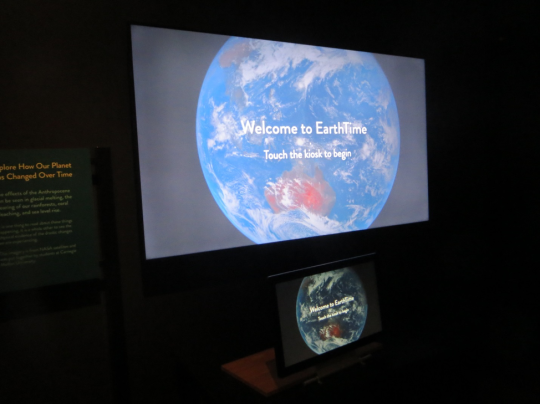
Within We Are Nature an interactive kiosk known as EarthTime documents alarming change over recent decades in glacial melting, the clearing of rainforests, and coral bleaching. The imagery, which was generated by NASA satellites and compiled by students at Carnegie Mellon University, is simultaneously displayed on a table-mounted touchscreen and a towering adjacent display screen.
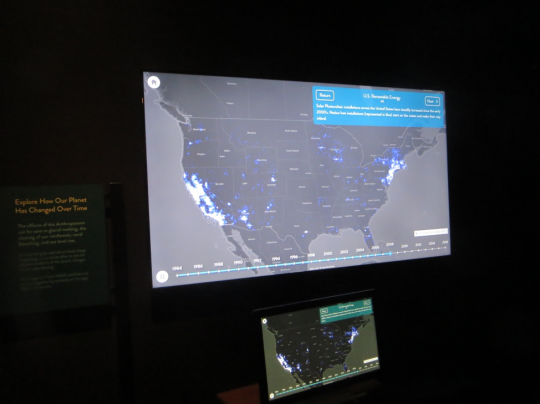
Literal glimmers of hope appear on both screens when visitors select the digital loop that documents the increase in the installation of solar energy panels across the US between 1984 and 2016. A textbox message directs viewers to, “Notice how installations start on the coasts and make their way inland.”
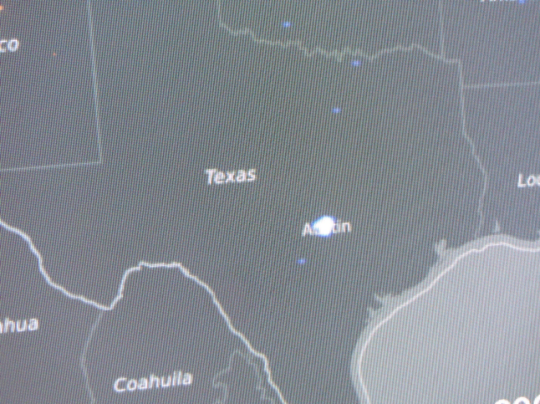
A recent visitor who replayed the seven-second simulation a few times voiced her state-focused perspective to a companion: “Watch this. Solar energy blooms in Austin before it does in Houston or Dallas.”

Patrick McShea works in the Education and Visitor Experience department of Carnegie Museum of Natural History. Museum employees are encouraged to blog about their unique experiences and knowledge gained from working at the museum.
Filed Under: Blog Tagged With: Anthropocene, Patrick McShea, We Are Nature, We Are Nature: Living in the Anthropocene

May 7, 2018 by wpengine

Is Plastic Natural?

By Rachael Carlberg

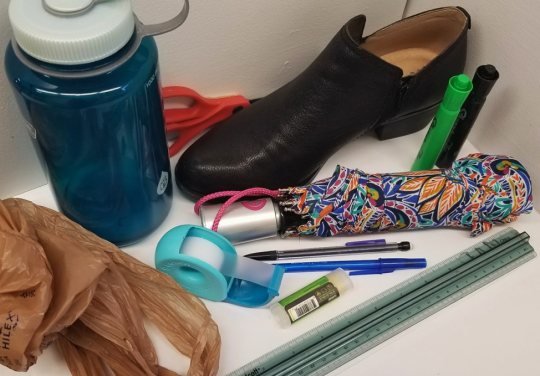
Items made with plastic: water bottle, shoe, scissors, umbrella, pens, chapstick, grocery bag, tape dispenser.

Nothing seems more man-made than plastic.  It surrounds us everywhere, indoors and out. How many of the things around you right now have plastic in them?  Do your clothes, electronic devices, furniture, and other everyday objects have plastic parts?  All of us can answer “yes” to that.  At first thought, the only connection plastic has with nature is that it often mistakenly ends up in nature.  So does plastic have any connection to the earth besides the one that humans so frequently create by creating waste?

What many of us don’t realize is that the production of plastic has beginnings in nature.  To begin making plastic, companies harvest crude oil, a naturally occurring fossil fuel from the earth.  That oil (or sometimes natural gas) is converted through different processes into chemicals that are used to make products we recognize and rely upon.

It may seem unlikely that plastic, which looks and feels like it should have no connection to nature, has its beginnings in natural substances.  But, like many other aspects of our lives, it is intertwined with and dependent on nature for its existence.

As an intern in the Education department of Carnegie Museum of Natural History, Rachael Carlberg wrote blog posts related to ideas presented in We Are Nature. Museum employees are encouraged to blog about their unique experiences of working at the museum.

Filed Under: Blog Tagged With: Anthropocene, plastics, We Are Nature, We Are Nature: Living in the Anthropocene

May 1, 2018 by wpengine

Deadliest Catch

By Patrick McShea

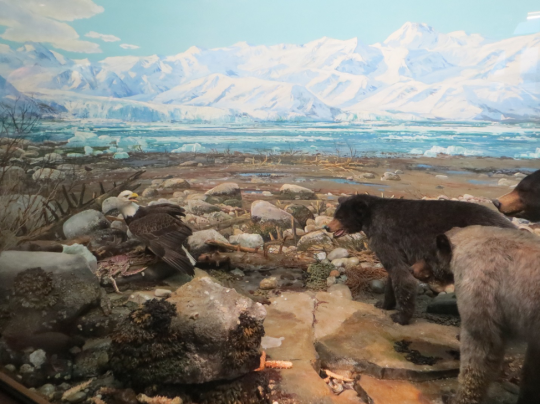
Diorama in the Hall of North American Wildlife with an Alaskan King Crab and bears.

Some guided tours of We Are Nature begin outside the actual exhibit.  A diorama in the Hall of North American Wildlife, for example, recently provided a challenging starting point for a handful of Carnegie Mellon University students. While facing a meticulously detailed scene from a remote section of Alaskan coast, they were invited to begin collective consideration of human impacts on the Earth.

“There’s no sign of people anywhere in this three-dimensional scene,” began their guide, “but imagine if you were in the scene, a safe distance away from the bears, the eagle, and the Alaskan King Crab. Imagine if you were facing out to sea. “

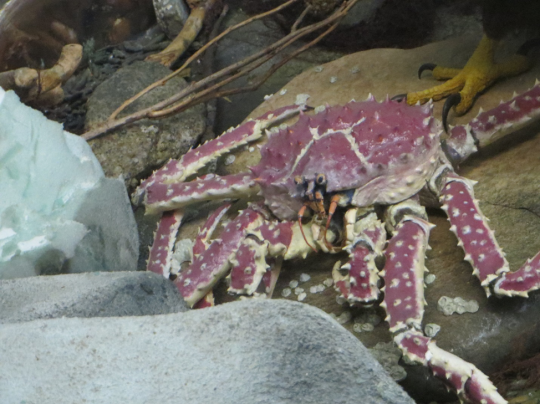
Alaskan King Crab

At the mention of the crab one of the students spoke-up. “Deadliest Catch,” she said,“the cable TV show about crab fishing. If we were in the scene and facing the ocean we might see a fishing boat, or the lights of a fishing boat!”

The connection shifted conversation to the scale and reach of commercial fishing, leading to recognition that the tasty long-legged crabs, which provoke the diorama’s bird versus bears confrontation, have long been available in Pittsburgh stores and restaurants. The resulting conversation about wild creatures as commercial commodities continued during the short walk from the diorama to the entry way of We Are Nature.

Patrick McShea works in the Education and Visitor Experience department of Carnegie Museum of Natural History. Museum employees are encouraged to blog about their unique experiences and knowledge gained from working at the museum.
Filed Under: Blog Tagged With: We Are Nature, We Are Nature: Living in the Anthropocene

April 25, 2018 by wpengine

City Nature Challenge Arrives in Pittsburgh

Take the City Nature Challenge 2018 April 27 - 30

City Nature Challenge has arrived in Pittsburgh! Carnegie Museum of Natural History’s Urban Bird Conservation Coordinator Matt Webb has been coordinating Pittsburgh’s participation in an international biodiversity challenge using the iNaturalist app. Kicking off April 27, the challenge runs to the end of the day April 30. For both budding and veteran citizen scientists, participation is easy.

Find wildlife in the Pittsburgh region, take a photo noting the location of where exactly you found the specimen and share your observations by uploading your findings through the iNaturalist application on your phone.

Identification of the photographed species will be crowd-sourced through the online community May 1-3 and results will be announced May 4. For more details, visit citynaturechallenge.com.

Filed Under: Blog Tagged With: City Nature Challenge, Pittsburgh, We Are Nature, We Are Nature: Living in the Anthropocene

April 23, 2018 by wpengine

The Importance of Connections

By Joylette Portlock

Earth Day this year, April 22nd, was the nation’s forty-ninth (though many were calling it the “48th Anniversary”), and my first as Associate Director of Science and Research at Carnegie Museum of Natural History. Even in the short time I’ve been in my role here, this place has afforded me fascinating new ways to think about this very special, extremely wet, rocky ball in space that we, and many millions of other species of mainly surface-and-ocean-dwelling living things call home.

You can’t talk about Earth as a whole without talking about connections. Especially when it comes to the Anthropocene, upon which our museum is newly focused, “connection” is a critically important concept.  We often think of our actions and how they affect Earth as though the planet and nature were somehow separable from us, or we from it. Our option, urgent and essential, is to see ourselves as we are: an integrated part of the world around us. Only then can we imagine and build a responsible future. And, to get to that future, one that fulfills the promise of the first Earth Day, we must connect to each other, ask and answer tough questions, spark conversation, learn and work together.

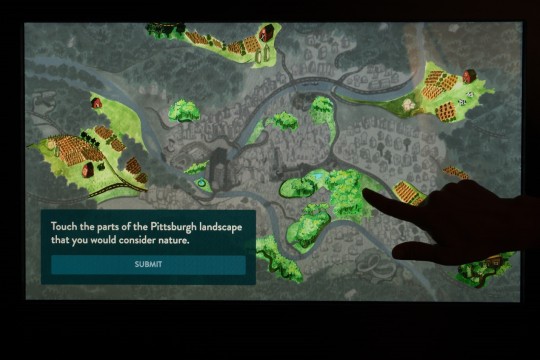
computer screen showing a map of green spaces
Screenshot taken from an interactive in the museum’s temporary exhibit, We Are Nature; Credit Joshua Franzos

Here, we live in a place with a very strong sense of identity and pride; Steeler Country is also a beautiful region of rivers, trees, and hills. And, it is a place inextricably marked, and in some ways defined, by human manipulation of our resources. It’s possible to see the cultural achievements, the sheer natural beauty, and the presence of expansive industry all at once, see the connections between them, and understand how these things exist, in the same place and at the same time, here and around the world.

It’s true that fossil fuel extraction and use has historically led to economic success in the region. (Fun fact, with apologies to Dippy: coal and natural gas, fossil fuels, generally existed long before the dinosaurs.) However, many of our local wild places still bear the scars from our use of these resources in the form of degraded streams, partitioned forests, poor air quality, changing climate, and shifting, sunken land.

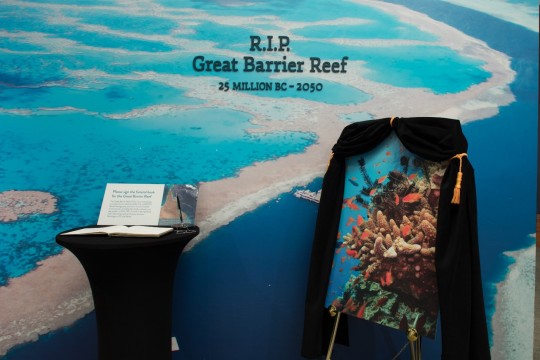
“Connection” also means, of course, understanding connections between Earth systems – connecting our actions to global impact. As but one of many examples shown eloquently in the We Are Nature exhibition, rising temperatures and increasing carbon dioxide in the air from burning fossil fuels (atmosphere) are both absorbed by water, leading to warmer, more acidic oceans (hydrosphere), which in turn leads to marine ecosystem damage and danger to coral reefs (biosphere) – a long way away from Pennsylvania.

Memorial to the great barrier reef
Photo taken from We Are Nature; Credit Joshua Franzos

There is much to remain hopeful about, however. These are all stories that are still being written. This Earth Day, I’m remembering that this is a beautiful planet… and it’s the only one we’ve got. The systems that govern it are interconnected, complicated, and in some ways, surprisingly delicate. I’m also remembering that the solutions to many of today’s environmental challenges lie in our thoughtful reevaluation and improvement of all the kinds of connections, starting with the first one I mentioned: exploring, learning, and working together.

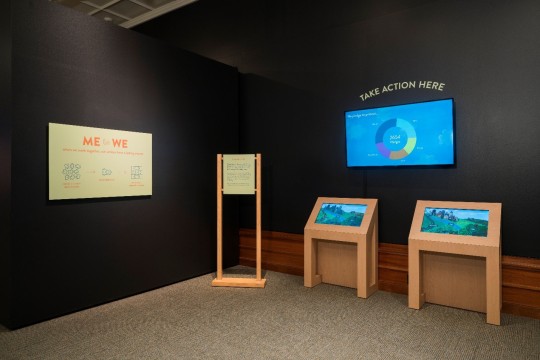
Take action area in We Are Nature
Photo taken from We Are Nature; Credit Joshua Franzos

I invite you to both check out We Are Nature before it leaves this fall and stay tuned for what’s next as more work on the Anthropocene at the museum ramps up.

Or, should I say, stay connected.

–Joylette Portlock, Ph.D., is associate director of science and research at Carnegie Museum of Natural History. She is also executive director of Communitopia, a nonprofit focused on climate change communication, and holds many other roles in the community.

Filed Under: Blog Tagged With: earth day, We Are Nature, We Are Nature: Living in the Anthropocene

April 20, 2018 by wpengine

Riverbank Beavers

By Patrick McShea

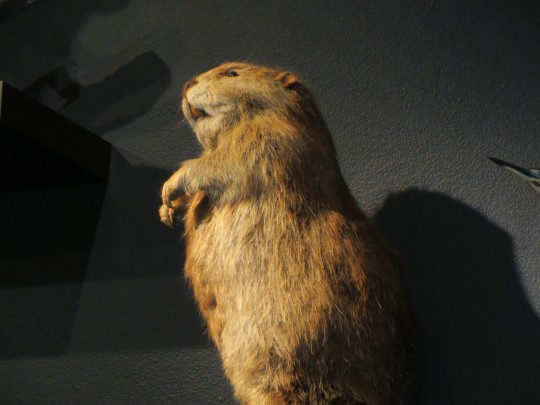
beaver taxidermy

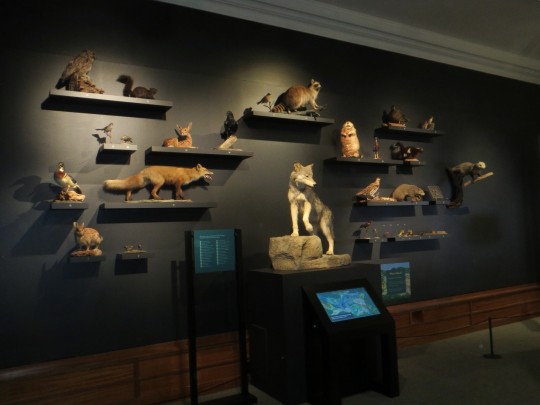
The mid-April news of cut redbud saplings along a Pittsburgh riverfront trail served as a public announcement that beavers reside in the city. The very same message is conveyed in We Are Nature, where a beaver taxidermy
mount holds position #25 in a wall display of thirty-three diverse species of
Pittsburgh wildlife.

Pennsylvania mammals on display in We Are Nature

The display and an accompanying interactive panel invites visitors to consider how Nature is always around us, even in urban areas. In the case of Pittsburgh’s beavers, the species’ reputation as a dam builder is not reinforced along the Allegheny, Monongahela, and Ohio. The city’s rivers are deep enough year-round to allow beavers to construct bankside lodges with underwater entrances.

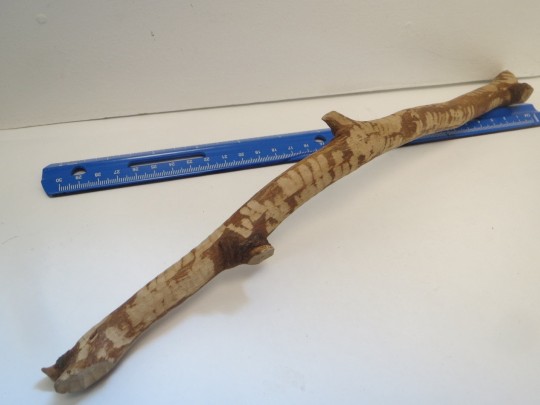
beaver stick shown next to a ruler

Although the nocturnal habits of beavers keep them out public view, the big rodents leave evidence of their presence. The next time you’re on one of Pittsburgh’s riverside trails, look at the water edge for bark-stripped sticks that bear sets of parallel gnaw-marks made by beaver incisors.

Patrick McShea works in the Education and Visitor Experience department of Carnegie Museum of Natural History. Museum employees are encouraged to blog about their unique experiences and knowledge gained from working at the museum.

 

Filed Under: Blog Tagged With: Pat McShea, We Are Nature, We Are Nature: Living in the Anthropocene

  • « Go to Previous Page
  • Page 1
  • Page 2
  • Page 3
  • Page 4
  • Page 5
  • Interim pages omitted …
  • Page 8
  • Go to Next Page »

sidebar

About

  • Mission & Commitments
  • Directors Team
  • Museum History

Get Involved

  • Volunteer
  • Membership
  • Carnegie Discoverers
  • Donate
  • Employment
  • Events

Bring a Group

  • Groups of 10 or More
  • Birthday Parties at the Museum
  • Field Trips

Powdermill

  • Powdermill Nature Reserve
  • Powdermill Field Trips
  • Powdermill Staff
  • Research at Powdermill

More Information

  • Image Permission Requests
  • Science Stories
  • Accessibility
  • Shopping Cart
  • Contact
  • Visitor Policies
One of the Four Carnegie Museums | © Carnegie Institute | Privacy Policy | Terms of Use | Accessibility
Rad works here logo