• Skip to primary navigation
  • Skip to main content
  • Skip to primary sidebar

Carnegie Museum of Natural History

One of the Four Carnegie Museums of Pittsburgh

  • Visit
    • Buy Tickets
    • Visitor Information
    • Exhibitions
    • Events
    • Dining at the Museum
    • Celebrate at the Museum
    • Powdermill Nature Reserve
    • Event Venue Rental
    • Gift Cards
  • Learn
    • Field Trips
    • Educator Information
    • Programs at the Museum
    • Bring the Museum to You
    • Guided Programs FAQ
    • Programs Online
    • Climate and Rural Systems Partnership
  • Research
    • Scientific Sections
    • Science Stories
    • Science Videos
    • Senior Science & Research Staff
    • Museum Library
    • Science Seminars
    • Scientific Publications
    • Specimen and Artifact Identification
  • About
    • Mission & Commitments
    • Directors Team
    • Museum History
  • Tickets
  • Give
  • Shop

Behind the Scenes

June 12, 2019 by wpengine

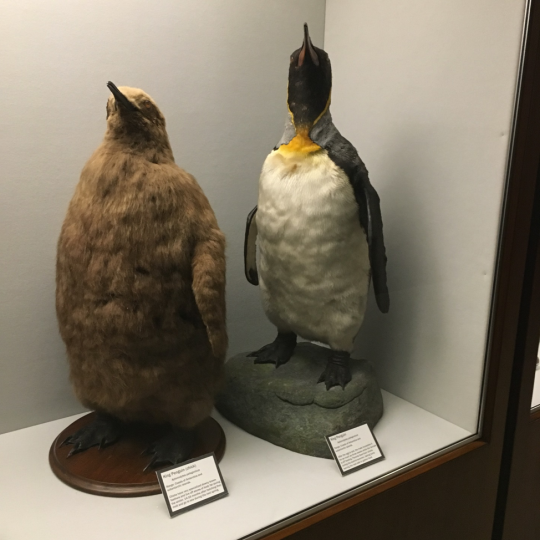
Why Do the King Penguins in Bird Hall Look so Different from Each Other?

king penguin chick and adult in Bird Hall

Visitor comments often offer insight into the effectiveness of museum displays. The most candid comments are overheard snatches of conversation, some as touching as they are humorous.

The setting: Bird Hall at Carnegie Museum of Natural History, 2:00 p.m. on a summer afternoon.

Three siblings, the oldest about nine, were studying a pair of king penguin taxidermy mounts while their mother, a few display cases away, looked at a different group of birds.

The mother walked toward her children as the nine-year-old explained the birds to his younger brother and sister, “This one is the girl penguin, and this one is the boy penguin. They really look different. The girls are brown and fuzzy, and the boys are black and white.”

The mother quickly surmised the misinterpretation and offered a gentle correction without any trace of ridicule: “The brown one’s a young bird. The label says ‘chick,’ but that doesn’t mean it’s a girl.”

Patrick McShea works in the Education and Visitor Experience department of Carnegie Museum of Natural History. Museum employees are encouraged to blog about their unique experiences and knowledge gained from working at the museum.
Filed Under: Blog Tagged With: bird hall, Birds, Education, Pat McShea, Patrick McShea

June 7, 2019 by wpengine

Collected 189 Years Ago: Strawberry Bush

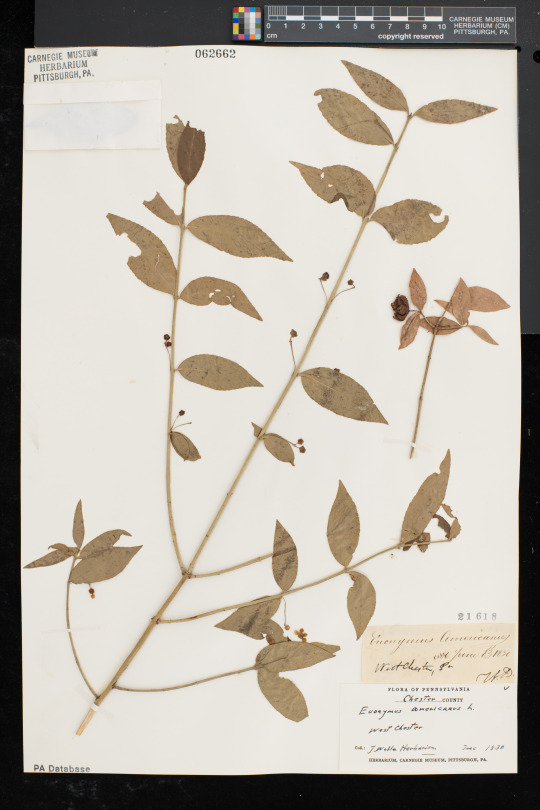
strawberry bush specimen

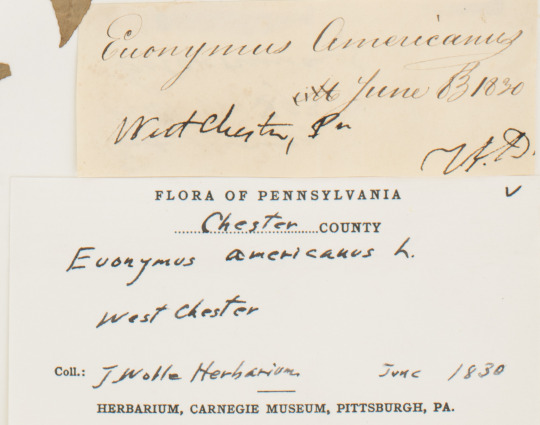
This is a special specimen. The Carnegie Museum of Natural History herbarium is full of specimens of scientific and historical importance. And this is a notable one, collected in June 1830 by William Darlington in West Chester, Pennsylvania. William Darlington (1782-1863) was an important figure in the history of Pennsylvania botany. Darlington was a physician, politician (US House of Representatives 1815-1823), and as you might guess – a botanist! At the University of Pennsylvania, Darlington studied botany under Benjamin Smith Barton, a well-known botanist who also trained Meriwether Lewis (of the Lewis & Clark Expedition). He spent most of his life in West Chester, PA. He wrote some of the earliest botanical works, including a flora of Chester County in 1826 and others on agriculture. Many of his specimens are among the earliest documentation of Pennsylvania’s flora and are preserved in the William Darlington herbarium at West Chester University.

This particular specimen is of the native shrub Euonymus americanus, commonly called “strawberry  bush.” Despite the name, it is not related to strawberries, but is in the bittersweet/spindle family, Celastraceae. You may recognize some similarities with the related species from East Asia, burning bush (Euonymus alatus), which is commonly planted due to its bright red fall color (around Cathedral of Learning in Pittsburgh, and many other places).  However, burning bush should not be planted, as it is invasive, spreading into natural areas.

label from strawberry bush specimen

In the Carnegie Museum herbarium, there are 62 specimens collected by Darlington between 1828 and 1840, mostly from Chester County, PA.

How’d some of Darlington’s specimens end up at the Carnegie Museum? This specimen is part of Jacob Wolle’s personal collection, who was the grandfather of William Holland, the first director of the museum.

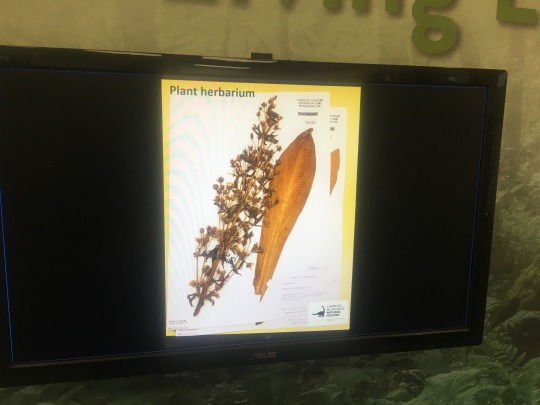
This specimen image is now publicly available online.

Read more about Darlington and  other influential figures in the history of botany in Pennsylvania at Herbarium World.

Check back for more! Botanists at the Carnegie Museum of Natural History share digital specimens from the herbarium on dates they were collected. They have embarked on a three-year project to digitize nearly 190,000 plant specimens collected in the region, making images and other data publicly available online. This effort is part of the Mid-Atlantic Megalopolis Project (mamdigitization.org), a network of thirteen herbaria spanning the densely populated urban corridor from Washington, D.C. to New York City to achieve a greater understanding of our urban areas, including the unique industrial and environmental history of the greater Pittsburgh region. This project is made possible by the National Science Foundation under grant no. 1801022.  

Mason Heberling is Assistant Curator of Botany at the Carnegie Museum of Natural History. Museum employees are encouraged to blog about their unique experiences and knowledge gained from working at the museum.
Filed Under: Blog Tagged With: Botany, Mason Heberling, plants, William Darlington

May 31, 2019 by wpengine

Poison Ivy – Collected on This Day

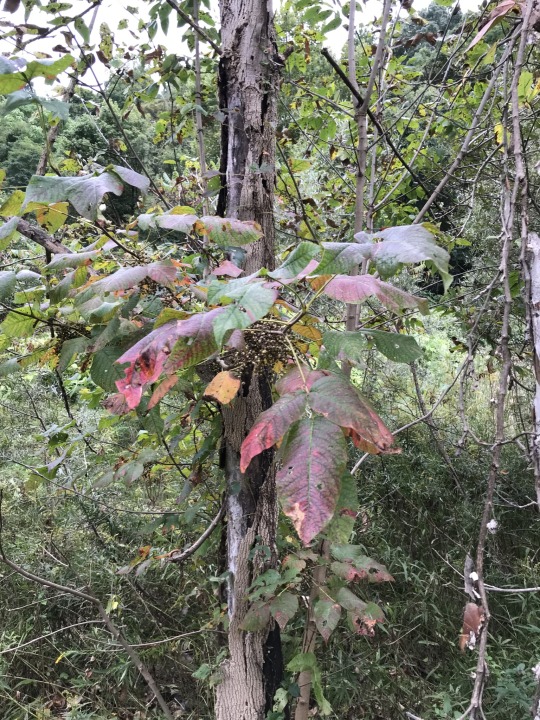
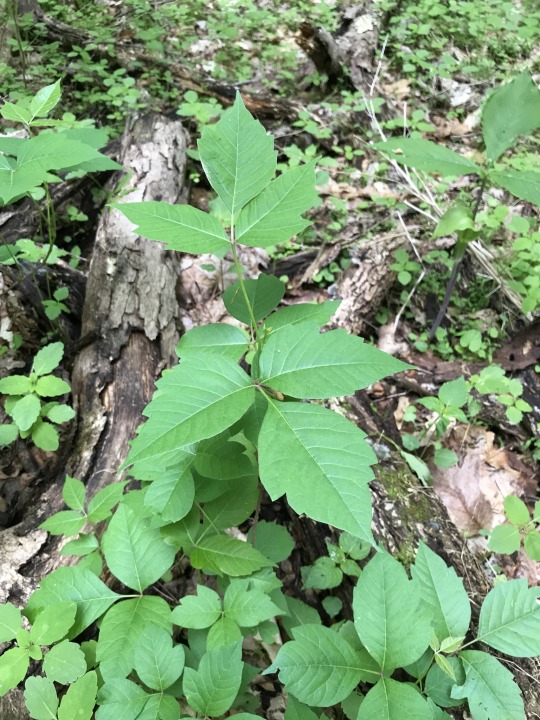
poison ivy growing as a shrub

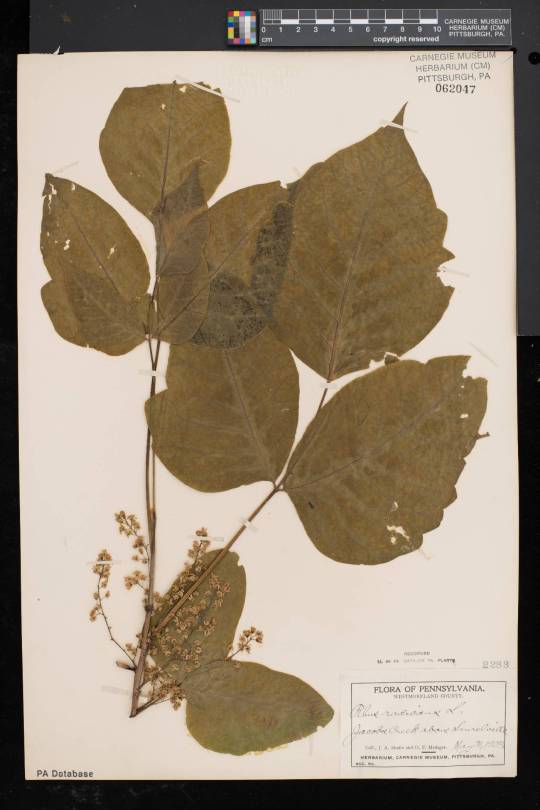
Watch out for poison ivy!  It is a fascinatingly cool plant but can also be dangerous.  This flowering specimen of poison ivy was collected on May 31, 1903 by John Shafer (the first curator of botany at Carnegie Museum) and O.P. Medsger in the Laurel Highlands of southwestern PA.

poison ivy herbarium sheet

What is Poison Ivy?

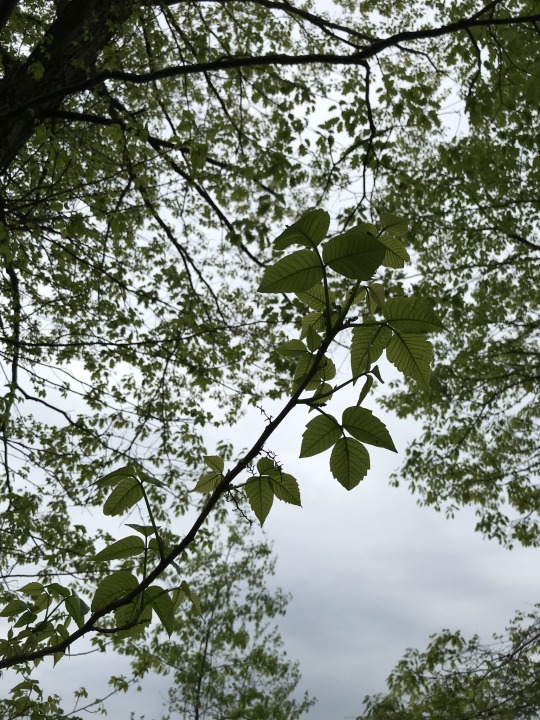
Poison ivy (Toxicodendron radicans) is a woody vine found in forest understories, but does especially well on forest edges. It is very common in urban and suburban areas. It takes many forms, climbing high up a tree, along the ground, or even a short shrubby thing. The leaves take a range of shapes, but as the adage goes (“leaves of 3, let it be”), it has three leaflets.

poison ivy in a tree

Poison Ivy Chemistry – What Causes the Rash?

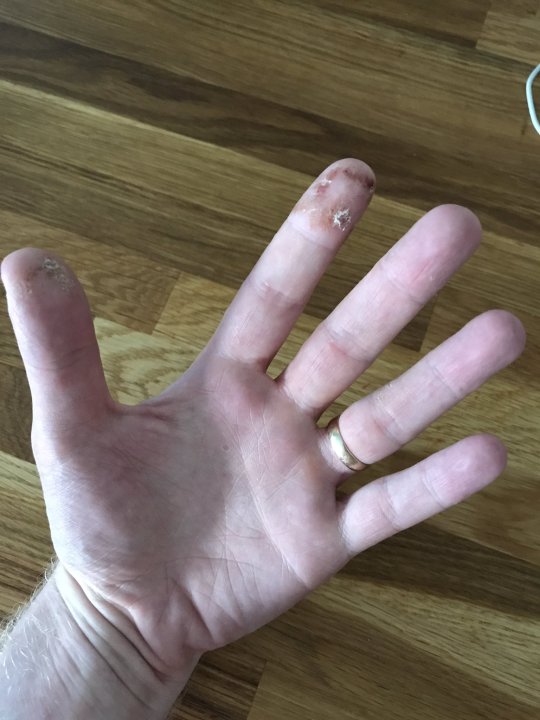
Poison ivy is known for its chemistry, producing a class of organic compounds call urushiol. These are found in the plant’s sap and on leaves/stems/roots. Urushiol causes a nasty rash to those who touch it. Not all people have a reaction (but most are sensitive). Don’t be too confident if you haven’t had a rash before – it can develop with repeated exposure.  Incredibly itchy, the rash can become a serious health issue if infected, especially if its oils get in contact with your eyes, face, or throat.  The rash can appear days after exposure and can last for weeks.

poison ivy rash

Research indicates poison ivy will get more poisonous with climate change, both in terms of growth and producing higher quantities of forms of urushiol particularly toxic to humans.

Is Poison Ivy a Weed?

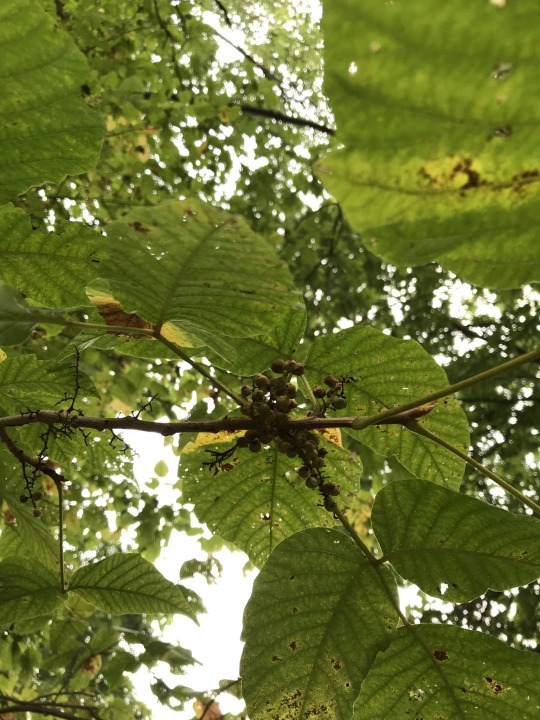
Some people call Poison ivy because of its fear-causing rash, but it is native to eastern North America.  The species has a wide distribution across our region, and across the world (native subspecies in China). Although native, the species seems to be getting more common as we create more forest edge habitat.   The colorful foliage can be quite beautiful in the fall, and the berries are a food source for birds and other animals. Humans seem to be the only ones allergic to it.

poison ivy colored foliage in autumn
poison ivy berries

Plants Similar to Poison Ivy

Poison ivy is often confused with other non-poisonous and poisonous plants.

Some common confusions:

  1. Virginia creeper (Parthenocissus quinquefolia), a vine in the grape but different leaves, and not with leaves of three
  2. Box elder maple (Acer negundo), a tree that has compound leaves unlike most stereotypical maples,  but with samaras (aka “helicopter” seeds)

Poison ivy and some other rash-causing plants are in the cashew family (Anacardiaceae) – which also includes poison oak (not found in Pennsylvania, but in western USA), staghorn sumac (not rash causing), poison sumac (rash causing, but you likely won’t come across it unless in very wet habitats)….and even a few familiar species like  pistachio,  cashew, and mango (some people are allergic).

What an amazing plant.

This specimen image is now publicly available online: http://midatlanticherbaria.org/portal/collections/individual/index.php?occid=12232529&clid=0

Check back for more! Botanists at the Carnegie Museum of Natural History share digital specimens from the herbarium on their collection dates. They have embarked on a three-year project to digitize nearly 190,000 plant specimens collected in the region (like Poison ivy!) making images and other data publicly available online. This effort is part of the Mid-Atlantic Megalopolis Project (mamdigitization.org), a network of thirteen herbaria spanning the densely populated urban corridor from Washington, D.C. to New York City to achieve a greater understanding of our urban areas, including the unique industrial and environmental history of the greater Pittsburgh region. This project is made possible by the National Science Foundation under grant no. 1801022.  

Mason Heberling is Assistant Curator of Botany at the Carnegie Museum of Natural History. Museum employees are encouraged to blog about their unique experiences and knowledge gained from working at the museum.
Filed Under: Blog Tagged With: Botany, conservation, herbarium, Mason Heberling, pennsylvania, plants

April 26, 2019 by wpengine

One of the Best Kept Secrets:  The Collaboration of the Carnegie Museum and Shady Side Academy Middle School 2014 – 2019

Each spring, when the Robin first appear on the landscape, 70 students from Shady Side Academy Middle School in Fox Chapel, descend upon the Carnegie Museum for their yearly four-hour tour. Led by National Earth Science Teacher of the Year Award Winner, Matt Brunner, the seventy students are divided into four groups that partake in arranged educational activities that last 45 minutes each. One of the most important activities is lunch, without which, the entire school visit would collapse – seriously!  Each group is toured by museum educators and staff i.e., interpreters for the natural history exhibits and CMOA art staff for that class. A unique, behind the scenes fossil and geology workshop in invertebrate paleontology is the highlight of the visit. After Mr. Brunner started teaching at Shady Side Academy in 2004, we developed a behind the scenes Earth Science learning/activities class. Years later, the class has become very popular with the students, chaperones and school administrators. Continuing with this collaboration, Matt developed an energy debate class for his sixth graders, which focuses on fossil fuels and other sources of energy in the student’s daily lives. To help address the student’s questions on energy, Matt invited Ray Follador and me, and other scientists to come to Shady Side Academy to talk about the use of fossil fuels, nuclear, and renewables in energy production. Each January, 70 bleary eyed sixth graders wait in anticipation for our 8 AM to 8:45 class in the school auditorium. The class is divided into two ten-minute PowerPoint presentations, a Question and Answer session, and the use of a 200-foot long rope, that fully engage the entire class to help visualize the depth of the Marcellus Shale Gas Deposit below the school parking lot.

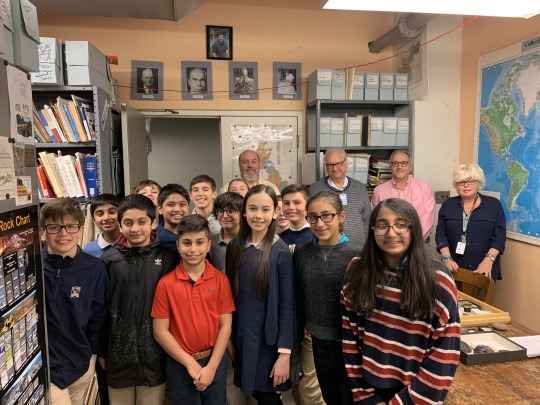
Shady Side Academy Middle School visit to the Section of Invertebrate Paleontology, April 03, 2019. Back row. left to right, Matt Brunner, Albert Kollar, Ray Follador, Tara Pallas-Sheetz

Behind the Scenes in Invertebrate Paleontology:  As each class of 18 students enter the Invertebrate Paleontology office, they are asked to sit down on the carpeted floor for a brief introduction to the section’s staff, and to sign their names to a gallon-size zip-lock plastic bag and a copy of the section’s Geology and Fossils Coloring Book.  The class is then divided into three equal groups that rotate among the three scheduled activities that last approximately ten – twelve minutes each.  The fossil activities include, 1. Breaking fossil rocks on the one-hundred-year-old rock breaker coordinated by Tara Pallas-Sheetz. 2. Building a fossil and rock kit from duplicate (non-accessioned) fossils with geologist Ray Follador. 3.  Learning about the evolution of trilobites, the state fossil of Pennsylvania, Phacops rana (a trilobite) and fossil arthropods such as, eurypterid, horseshoe crab, and cockroach with Albert Kollar. In activity 3, some of the fossils shown on the table are naturally preserved in various colors of yellow, red, gray and black. Keeping in mind the fossil colors, each student is asked to use colored pencils to color in the black and white illustrations of arthropods on page 35 in the coloring book. For many students, this activity showcases their artistic talents. All students are encouraged to handle fossils and ask questions. Each group keeps their fossil kits and each student keeps the fossils collected from the rock trimmer activity (the reason for the plastic bag). The invertebrate paleontology learning activity class is later reviewed by Mr. Brunner in his Earth Science classes at Shady Side Academy.

Albert D. Kollar and Tara Pallas-Sheetz, Section of Invertebrate Paleontology

Ray Follador, Pittsburgh Geological Society

Matt Brunner, Shady Side Academy Middle School

Filed Under: Blog Tagged With: Albert Kollar, invertebrate paleontology, Ray Follador

April 12, 2019 by wpengine

Otto Emery Jennings Honored in New Exhibit at Jennings Environmental Education Center

Carnegie Museum of Natural History herbarium specimen from Jennings EEC. (Photo credit: Bonnie Isaac)

I had the privilege of attending the opening of the new exhibit at Jennings Environmental Education Center on Saturday April 6th.  The new exhibit is in honor of our very own Otto Emery Jennings. The exhibit highlights Jennings and the research he did while employed by The Carnegie Museum.

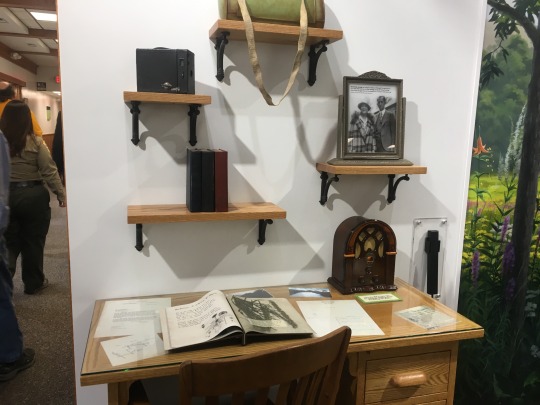
Reproduction of Jennings’ desk. (Photo credit: Bonnie Isaac)

There is a desk with reproductions of items from Jennings’ career on it and a small speaker that plays an actual voice recording.  This was the first time I got to hear the voice of Otto.

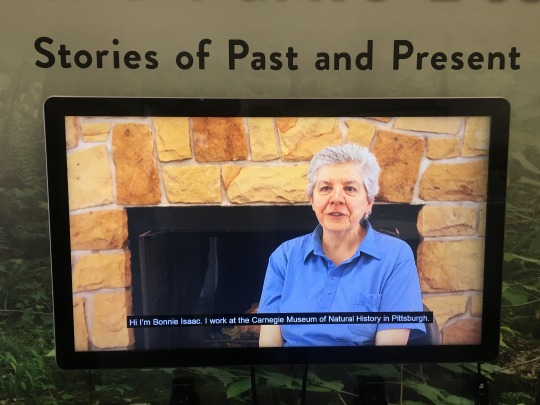
Video of Bonnie Isaac talking about Otto Jennings. (Photo Credit: Bonnie Isaac)

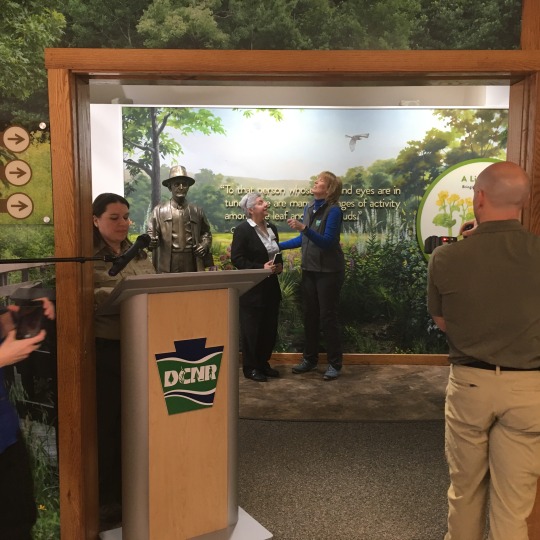
There is also an interactive video with folks talking about why Jennings EEC is an important place. I am one of those talking heads, which is why I was invited to the opening. Secretary Cindy Adams Dunn of the Department of Conservation & Natural Resources attended to thank the people who helped with the exhibit, which took about 3 years to create.

Bonnie Isaac talking to DCNR Secretary Dunn. (Photo Credit: Joe Isaac)

It was an honor and a privilege for me to help these great folks.  Carnegie Museum of Natural History is given credit throughout the exhibit for helping with content.  If you get a chance to get out to Jennings EEC you should check out the exhibits about Otto and the prairie that is named after him. They did a great job!

Bonnie Isaac is the Collection Manager in the Section of Botany. Museum employees are encouraged to blog about their unique experiences and knowledge gained from working at the museum.
Filed Under: Blog Tagged With: Bonnie Isaac, Botany

August 1, 2018 by wpengine

Black Bears at Powdermill

By Andrea Kautz

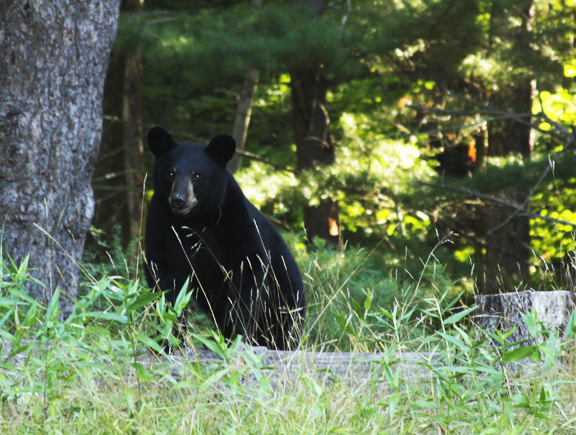
Recently, the PA Game Commission brought a black bear to Powdermill to release in the nearby state forest. It was a healthy, 300-pound male that was relocated because it was becoming a nuisance on a farm more than 30 miles away. Powdermill staff were grateful to have the opportunity to watch as the game wardens sedated and tagged the animal before release. The bear received two ear tags and a lip tattoo for identification. A small milk tooth was extracted which will be used later to determine his age. An infected claw was treated, but otherwise he appeared to be in good health.

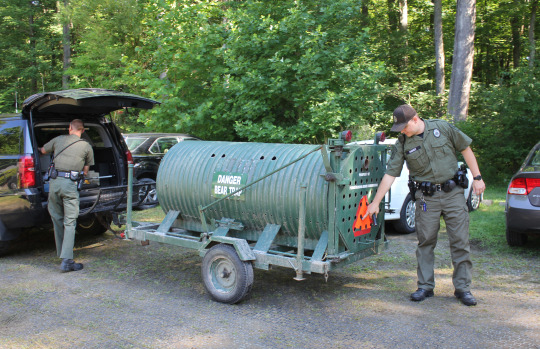
Game Wardens arrive at Powdermill
Game Wardens Barron (left) and Harvey (right) arrive at Powdermill with the trap, which is on wheels for easy transport.

The Game Commission estimates the Pennsylvania bear population to be thriving at around 20,000 individuals. Compared to neighboring states, Pennsylvania black bears breed earlier and have more cubs. Bear populations are managed through seasonal harvesting, although only about 2% of those receiving permits are successful hunting a bear. In 2017, the largest bear taken was a 707-pound male from Monroe County!

black bear in Pennsylvania
American black bear. Photo credit: George Pankewytch

Hopefully, this male will find another place to call home, but relocating these animals can be tricky as they have a very good sense of direction and can cover long distances. At this time last year, one radio-collared male walked from Johnstown to Grove City to Pittsburgh, then east along the turnpike and up through the Laurel Highlands and back to Johnstown in about a month.  We give special thanks to the game commission for putting so much effort into maintaining a healthy population of bears that can live in harmony with humans and ensuring that Pennsylvania can continue to be a supportive environment for these spectacular beasts.

Andrea Kautz is a Research Entomologist at Carnegie Museum of Natural History’s Powdermill Nature Reserve. Museum employees are encouraged to blog about their unique experiences and knowledge gained from working at the museum.
Filed Under: Blog Tagged With: Andrea Kautz, conservation, mammals, nature, Powdermill, Powdermill Nature Reserve

  • Page 1
  • Page 2
  • Go to Next Page »

sidebar

About

  • Mission & Commitments
  • Directors Team
  • Museum History

Get Involved

  • Volunteer
  • Membership
  • Carnegie Discoverers
  • Donate
  • Employment
  • Events

Bring a Group

  • Groups of 10 or More
  • Birthday Parties at the Museum
  • Field Trips

Powdermill

  • Powdermill Nature Reserve
  • Powdermill Field Trips
  • Powdermill Staff
  • Research at Powdermill

More Information

  • Image Permission Requests
  • Science Stories
  • Accessibility
  • Shopping Cart
  • Contact
  • Visitor Policies
One of the Four Carnegie Museums | © Carnegie Institute | Privacy Policy | Terms of Use | Accessibility
Rad works here logo