• Skip to primary navigation
  • Skip to main content
  • Skip to primary sidebar

Carnegie Museum of Natural History

One of the Four Carnegie Museums of Pittsburgh

  • Visit
    • Buy Tickets
    • Visitor Information
    • Exhibitions
    • Events
    • Dining at the Museum
    • Celebrate at the Museum
    • Powdermill Nature Reserve
    • Event Venue Rental
  • Learn
    • Field Trips
    • Educator Information
    • Programs at the Museum
    • Bring the Museum to You
    • Guided Programs FAQ
    • Programs Online
    • Climate and Rural Systems Partnership
  • Research
    • Scientific Sections
    • Science Stories
    • Science Videos
    • Senior Science & Research Staff
    • Museum Library
    • Science Seminars
    • Scientific Publications
    • Specimen and Artifact Identification
  • About
    • Mission & Commitments
    • Directors Team
    • Museum History
  • Tickets
  • Give
  • Shop

Birds

August 12, 2016 by wpengine

An Appalachian Research Hub

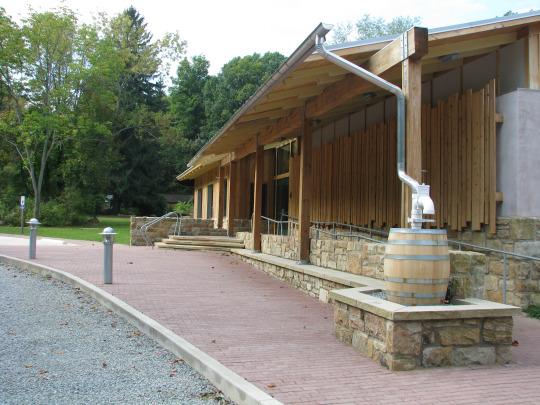
Powdermill Nature Reserve Visitor's Center

Researchers at Powdermill Nature Reserve, the environmental research center of Carnegie Museum of Natural History, are documenting the health of Western Pennsylvania’s flora and fauna with bird banding, long-term studies, and other key environmental research out of Rector Pa.

Those efforts will be bolstered thanks to a recent $700,000 grant from the Richard King Mellon Foundation, which will further position Powdermill as an ecological research powerhouse of the Appalachian region. The grant will fund new technology like drone imagining and radio frequency “nanotags” to study and protect birds. The focal species groups that will be studied are birds, pollinators, salamanders, and forest trees.

Powdermill scientists are eager to use nanotag radio telemetry to improve their tracking of migratory birds, attaching tiny radio beacons to birds that will track their migration as they fly by special towers equipped with sensors.

The sensors will log the tagged birds in a central database, allowing scientists to track birds from South America to Canada without recapturing them. Since only about one in 1,000 birds banded at Powdermill are ever recaptured, the new technology is sure to improve the reserve’s data collection efforts.

“As this grant strengthens our scientific activities, Powdermill will accordingly improve its educational outreach regarding pressing environmental issues of interest to concerned citizens,” said Powdermill Director John Wenzel.

Check out Powdermill Nature Reserve’s Facebook page for beautiful images and snapshots of some of the important working happening there that will benefit the entire Western Pennsylvania region.
Filed Under: Blog Tagged With: Birds, conservation, nature, pennsylvania, Powdermill

June 22, 2016 by wpengine

What’s up with the dead birds?

A study skin displayed below a taxidermy mount in Bird Hall.

by Patrick McShea

Museum visitors sometimes offer spontaneous testimony to the deceptive power of taxidermy.

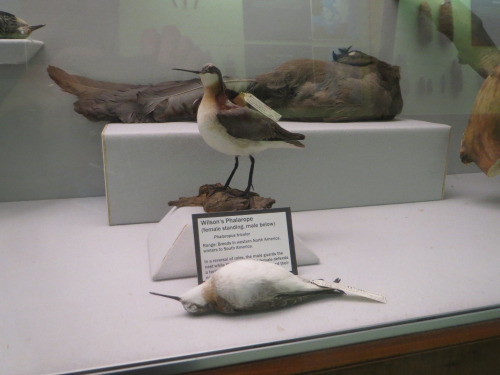
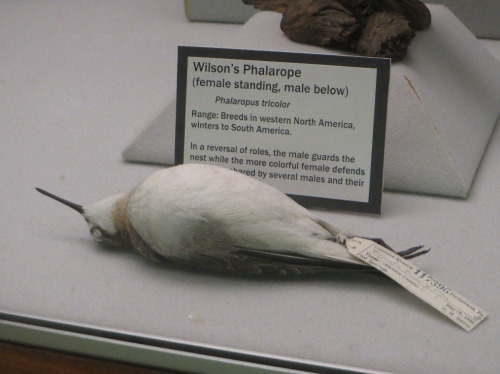
“There’s a dead bird!” is a comment frequently voiced by people encountering a bird specimen lying on its back in Bird Hall, such as the Wilson’s phalarope pictured below. These specimens, so often called “dead birds”, are actually called study skins.

study skin of a Wilson's Palarope bird

Study skins are a traditional form of specimen preparation for birds in scientific collections. Unlike taxidermy mounts, which attain a pretense of life through concealed body forms, strategically positioned wires,
and glass eyes of the appropriate size and color, the cotton-stuffed study skins appear lifeless.

The more than 154,000 bird study skins in the museum’s research collection have all undergone similar preparation. For each specimen the full skin of the bird was carefully removed from the underlying muscle,
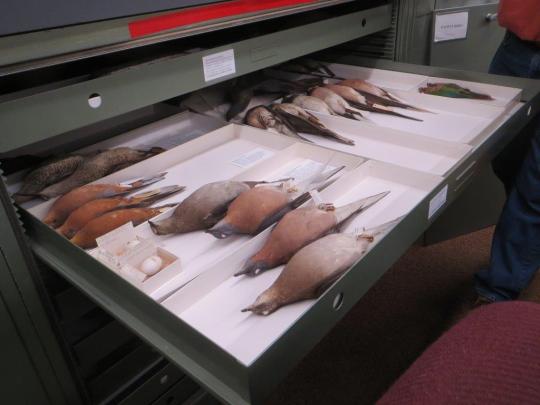
skeleton core, and internal organs, preserving every feather of the creature. Such Uniform preparation creates a standard for comparisons of features between both similar and strikingly different specimens. In addition, the low profile of study skins allows for their storage in shallow cabinet drawers in the manner of the passenger pigeon study skins pictured below.

bird study skins in a drawer

Although taxidermy mounts far outnumber study skins in Bird Hall display cases, the “skins” play an important role by representing the most numerous form of preserved specimens in the museum’s vast bird collection. Whether or not adjacent taxidermy mounts seem more alive because they share display space with the skins is something you may judge for yourself during your next museum visit.

Patrick McShea works in the Education and Visitor Experience department of Carnegie Museum of Natural History. Museum employees are encouraged to blog about their unique experiences of working at the museum.

Carnegie Museum of Natural History Blog Citation Information

Blog author: Patrick McShea
Publication date: June 22, 2016

Share this post!

  • Share on Twitter Share on Twitter
  • Share on Facebook Share on Facebook
  • Share on Pinterest Share on Pinterest
  • Share on LinkedIn Share on LinkedIn
  • Share on Reddit Share on Reddit
  • Share via Email Share via Email

Filed Under: Blog Tagged With: bird hall, Birds, museums, nature, Patrick McShea, Pittsburgh, research

April 26, 2016 by wpengine

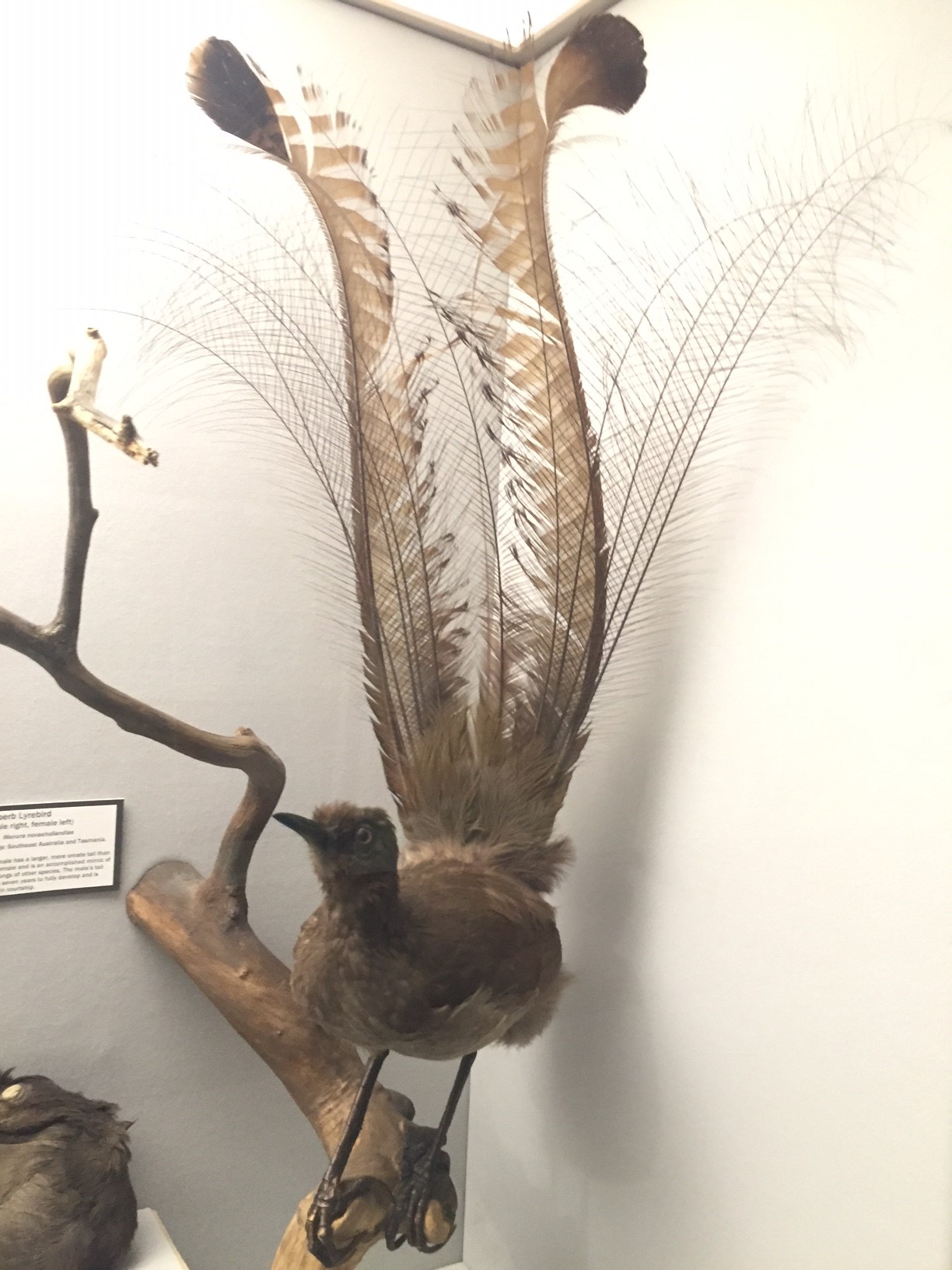
Superb Lyrebird

Superb LyrebirdIf you thought you were having a great hair day, check out the  in Carnegie Museum of Natural History’s Bird Hall.

Males Superb Lyrebird attract females with their ornate tails, which can take up to seven years to fully develop.

Filed Under: Blog Tagged With: bird hall, Birds

  • « Go to Previous Page
  • Page 1
  • Interim pages omitted …
  • Page 8
  • Page 9
  • Page 10

sidebar

About

  • Mission & Commitments
  • Directors Team
  • Museum History

Get Involved

  • Volunteer
  • Membership
  • Carnegie Discoverers
  • Donate
  • Employment
  • Events

Bring a Group

  • Groups of 10 or More
  • Birthday Parties at the Museum
  • Field Trips

Powdermill

  • Powdermill Nature Reserve
  • Powdermill Field Trips
  • Powdermill Staff
  • Research at Powdermill

More Information

  • Image Permission Requests
  • Science Stories
  • Accessibility
  • Shopping Cart
  • Contact
  • Visitor Policies
One of the Four Carnegie Museums | © Carnegie Institute | Privacy Policy | Terms of Use | Accessibility
Rad works here logo