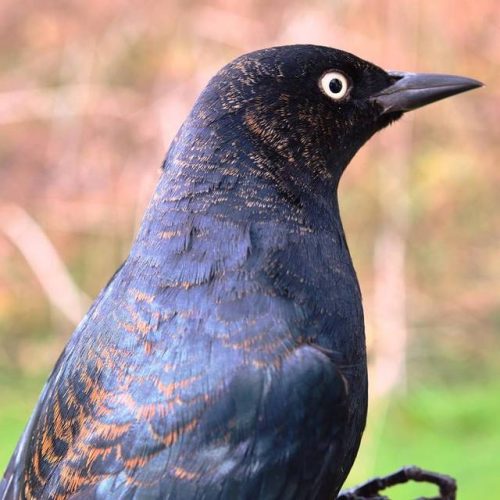
This adult male rusty blackbird was banded March 29, 2017 at Powdermill Nature Reserve, Carnegie Museum of Natural History’s environmental research center.
Carnegie Museum of Natural History
One of the Four Carnegie Museums of Pittsburgh
This adult male rusty blackbird was banded March 29, 2017 at Powdermill Nature Reserve, Carnegie Museum of Natural History’s environmental research center.
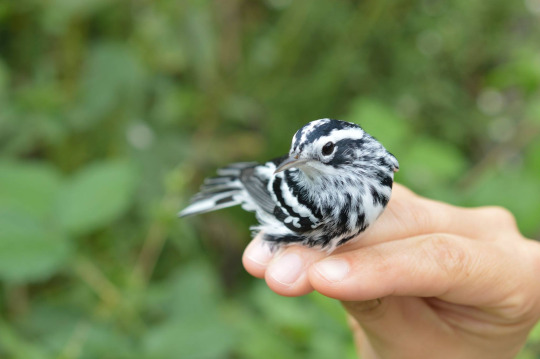
Boldly striped Black and White Warblers (Mniotilta varia) are easily identified by their unique plumage. They often build their cup-shaped nests on the ground in eastern forests.Their song is sometimes described as sounding like a squeaking wheel. Unlike other warblers, they feed by creeping up and down trees searching for insects behind bark.
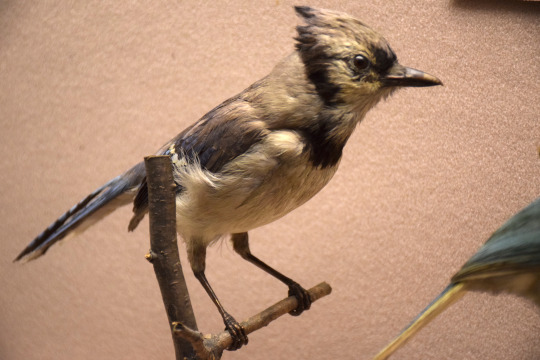
Known for their bright color and intelligence, Blue Jays (Cyanocitta cristata) are found near the edges of forests across the eastern United States. These birds are very social and are often found in small, noisy groups. Blue Jays often imitate other animals like hawks, cats, and even humans. Like any other blue bird, their bright color is caused by reflective structure of its feathers, not pigments.
by Jonathan Rice
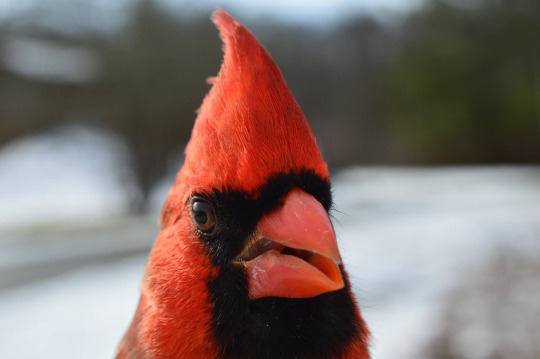
Many of us are excited that spring is just around the corner, and that includes the birds. As springtime comes into view, male birds, both residential and migratory, begin setting up and fighting over territories for the breeding season. This means males are more likely to call at and scold (an aggressive-natured call) other males of any species until they leave the territory.
This poses interesting problems for song birds, such as northern cardinals whose breeding plumage is bright red and can
often be reflected in windows (on cars or homes) and even side view mirrors. There have been reports of northern cardinal males flying into windows or side view mirrors over and over and over again, multiple times a day.
This may seem confusing and counterproductive to us, but to an enraged male, seeing another male in his territory can mean the end to his breeding season. So he fights the intruder—who is actually his reflection—but as he fights, his reflection fights back. This often causes a loop to form where the male fights his reflection, getting angrier as the reflected intruder never leaves.
While this sort of behavior does not normally end in fatality, it is a good representation of how windows can be deadly to birds. If a reflection is real enough to confuse a cardinal into attacking itself, other birds are likely to fly into windows thinking that vegetation or sky reflected in them are real.
Jon Rice is a seasonal tech at Carnegie Museum of Natural History. Museum employees are encouraged to blog about their unique experiences of working at the museum.
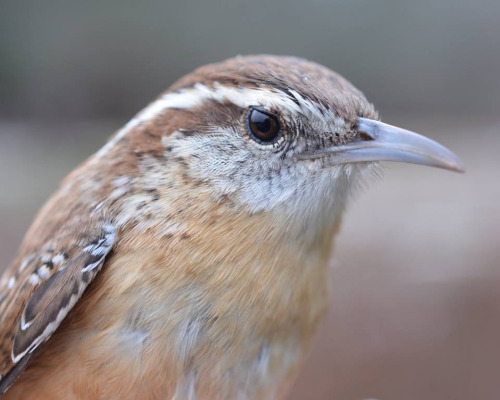
Researchers banded this Carolina Wren in February at Powdermill Nature Reserve.
Birds cannot see clear glass, and as a result it is estimated that up to 1 billion birds are killed by window collisions each year.
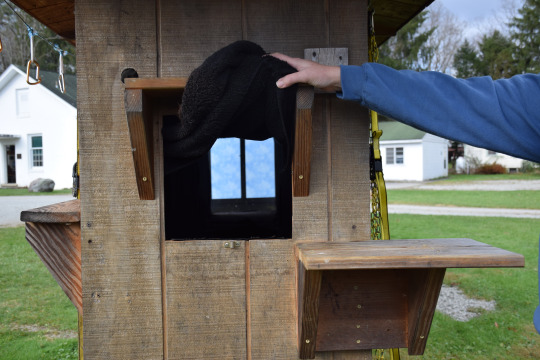
To help curb the problem, researchers at Powdermill are using this bird flight tunnel to safely test bird responses to different types of glass designed to be visible to birds.
Researchers test glass visibility by gently placing birds in one end of the tunnel. At the other end are two different types of glass panes. The bird chooses its “exit,” revealing to researchers what glass they can see and what glass they cannot see.
Before the birds hit the glass, a net gently stops them, and they are released.
If you see a dead or injured bird near a building or glass façade, contact BirdSafe Pittsburgh, who is gathering data on window collisions. For more information about found birds, visit BirdSafe Pittsburgh’s website.
