• Skip to primary navigation
  • Skip to main content
  • Skip to primary sidebar

Carnegie Museum of Natural History

One of the Four Carnegie Museums of Pittsburgh

  • Visit
    • Buy Tickets
    • Visitor Information
    • Exhibitions
    • Events
    • Dining at the Museum
    • Celebrate at the Museum
    • Powdermill Nature Reserve
    • Event Venue Rental
    • Gift Cards
  • Learn
    • Field Trips
    • Educator Information
    • Programs at the Museum
    • Bring the Museum to You
    • Guided Programs FAQ
    • Programs Online
    • Climate and Rural Systems Partnership
  • Research
    • Scientific Sections
    • Science Stories
    • Science Videos
    • Senior Science & Research Staff
    • Museum Library
    • Science Seminars
    • Scientific Publications
    • Specimen and Artifact Identification
  • About
    • Mission & Commitments
    • Directors Team
    • Museum History
  • Tickets
  • Give
  • Shop

Birds

February 14, 2019 by wpengine

Getting Ready for the Great Backyard Bird Count

So you want to take part in the Great Backyard Bird Count? You’ve got your nature notebook ready and you’ve found the perfect spot to birdwatch.  What do you do next?  The Great Backyard Bird Count website has a lot of resources to help you organize your bird counts and submit your information, so you should check those out before the bird count starts.  This post will give you a basic picture of how to document the birds you see and submit your observations properly.

Make a List, Check it Twice
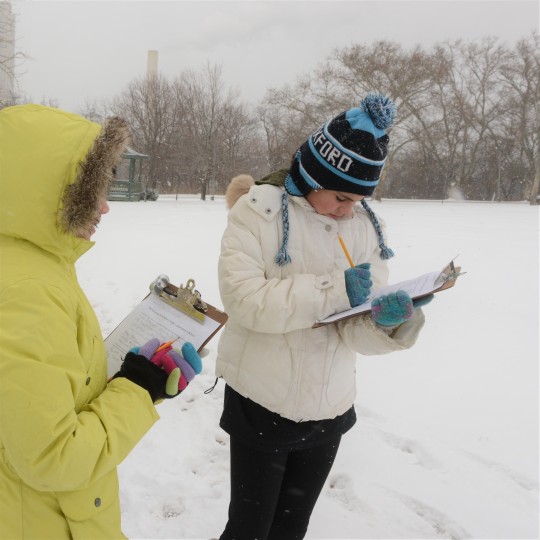
two people taking notes outside in winter
Photo credit: Jim Judkis

Creating a checklist before you start birdwatching will be really helpful in organizing your research.  You can print out this template, enter your location on the count’s website to create a checklist, or create your own guide using a list of birds found in your area.  When you enter your observations online, you will submit a “checklist” for each different session of birdwatching. These lists will document where and when you observed, what species you noticed, and how many individual birds you estimated per species.  A bird guide like the Merlin Bird ID app can help you identify birds you see.

You will want to make a new checklist for each new day, new location, or new time that you look for birds.  For example, you’ll need two checklists if you observe in the same location on two different days, in two different locations on the same day, or in the same location but at two separate times.  When you go to submit your observations, you will be asked to enter the location, date, time, and duration of your expedition.  You will also be asked whether you were walking, standing, sitting, or even riding in a car while you were counting.  Now go forth and count those birds!

Data Ready

Once you have collected your data, all you need to do is go online and enter in the number of birds you saw next to the name of the birds you noticed!  You can also add details about each bird species and if you were able to take pictures of any birds, you can include them as well.
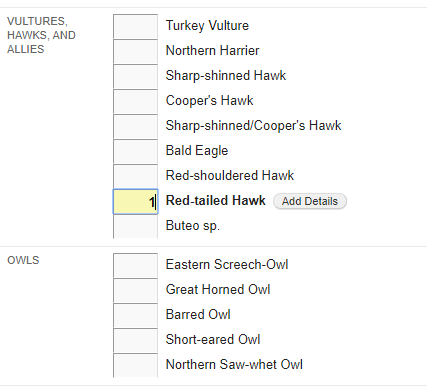
excerpt of data from bird count

Keep in Mind

The submission form will have a question at the end, “Are you submitting a complete checklist of the birds you were able to identify?” which can be confusing to some.  You should only click “no” if you are deliberately excluding a species from your list (for example you counted everything except crows).

Explore nature together. Visit Nature 360 for more activities and information.

Blog post by Melissa Cagan. 
Filed Under: Blog Tagged With: bird banding, bird hall, birding, Birds, Nature 360, Powdermill

February 7, 2019 by wpengine

Bird is the Word

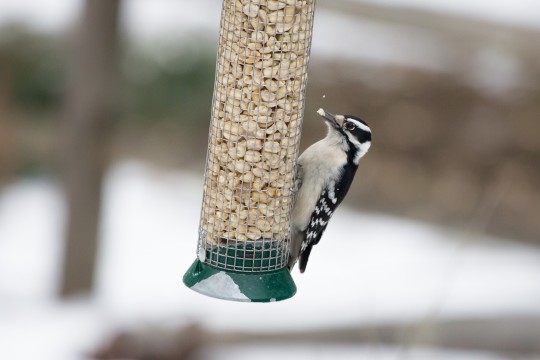
bird at bird feeder

February’s here and you know what that means… it’s time for the Great Backyard Bird Count!  Since 1998, people all over the world have participated annually in the Great Backyard Bird Count to collect information on wild birds by observing areas in their own neighborhoods.  Last year people from over 100 countries participated!  The Great Backyard Bird Count gathers data to help scientists figure out what is happening to bird populations around the globe.  That means YOU can contribute to science just by taking time to look outside your windows.  Scientists can’t be everywhere, and that’s where you come in!

Birds, Birds, Everywhere

The best part about the bird count is… it’s really easy (and free) to join in!  All you need is a way to note your observations (a task perfect for your handy nature notebook), access to the internet, and your enthusiasm!  You can look at a local park, your yard, or anywhere you want to go — data from everywhere is useful!

Ready, Set, Count!

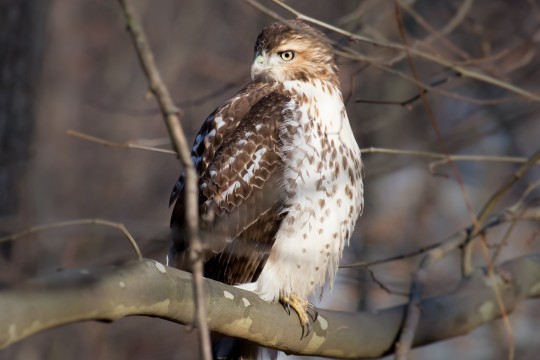
bird on a branch

Before you start looking for birds, you’ll want to set up an online account through the Great Backyard Bird Count’s website.  Once that is ready, all you have to do is spend at least 15 minutes looking outside at any time between February 15th and February 18th.  Count the number of birds and different species you see, and then submit your observations through your online account. Scientists will use the data, and you can use the information to explore what kinds of birds other people have seen nearby.

Some questions you might help scientists answer are:

-“How does weather and climate change affect bird populations?

-“How are diseases that birds can catch, like the West Nile virus, affecting birds in different areas?”

-“Are there bird species that only live in certain locations such as cities or rural areas?”

Lord of the Wings

The Christmas Bird Count, which happens at the end of December, found over 24,000 birds in Pittsburgh in 2018.  There were 71 different species represented in the total count.  Let’s see if we can find even more birds this February!  Follow this link to get ready!

Explore nature together. Visit Nature 360 for more activities and information.

Blog post written by Melissa Cagan and Rachel Carlberg.

Filed Under: Blog Tagged With: Anthropocene, bird hall, birding, Birds, Education, Melissa Cagan, Nature 360, Rachel Carlberg

November 8, 2018 by wpengine

Ask a Scientist – How Are Birds Like Dinosaurs?

How are birds like dinosaurs? Assistant Curator of Birds, Chase Mendenhall, and Urban Bird Conservation Coordinator, Jonathan Rice, introduce the bird collection in the latest Ask a Scientist. Learn how the Section of Birds works with paleontologists to understand dinosaur behavior.

Ask a Scientist is a video series where we ask our research staff questions about the millions of amazing objects and specimens stored in our museum collection. Tune in on YouTube, and submit your own questions via Twitter @CarnegieMNH!

Filed Under: Blog Tagged With: Ask a Scientist, Birds, Chase Mendenhall, dinosaurs, Section of Birds

November 2, 2018 by wpengine

Doves of Peace

by Chase Mendenhall

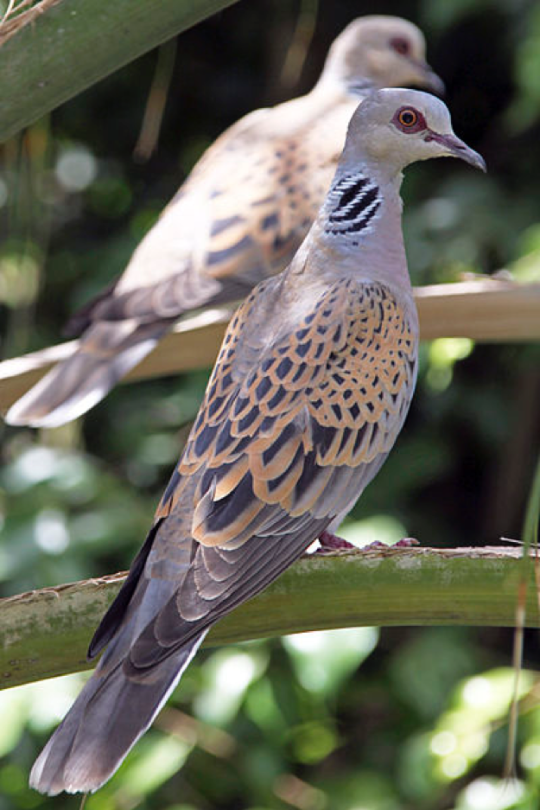
two doves on branches

In the wake of a tragedy that took the lives of 11 people in Pittsburgh, we reflect on the the collections housed at the Carnegie Museum of Natural History and find comfort among the doves — symbols of the people of Israel (Song of Songs Rabbah 2:14). Doves are of immense importance symbolizing human souls, sacrifice, and peace.

From the collection we share the European Turtledove (Streptopelia turtur) because it is listed as a species vulnerable to extinction and frequently written about in cultural texts. In fact, it was the stamina and swiftness of the Turtledove that aided Noah in his search for the holy land after the floods (Genesis 8:11). It is also the Turtledove’s loyalty as a mate that mused William Shakespeare to write poetry of an ideal love between a Turtledove and a Phoenix. But, perhaps the most fitting description and scientific namesake of the Turtledove is its cooing call, or the biblical Hebrew word “turtur,” which is a sound of mourning and a call for universal peace.

Together, we mourn the loss of so many innocent lives in Squirrel Hill and hope for peace alongside loved ones and family.

Chase Mendenhall is Assistant Curator of Birds, Ecology, and Conservation at Carnegie Museum of Natural History. Museum employees are encouraged to blog about their unique experiences and knowledge gained from working at the museum.

Filed Under: Blog Tagged With: bird, Birds, Chase Mendenhall

October 24, 2018 by wpengine

A Striking Success in Protecting Birds

by John Wenzel

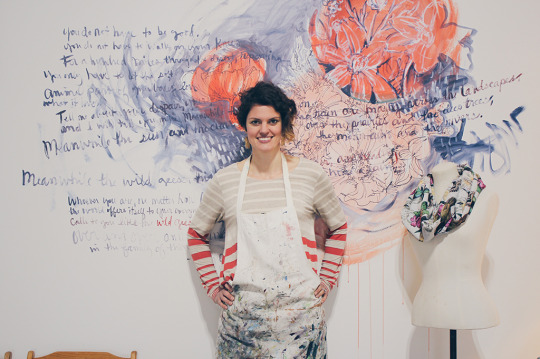
A particular point of pride of our bird research is the BirdSafe Pittsburgh program. A consortium of environmental groups and concerned citizens is working to create a more bird-friendly city, from restoring urban habitat to advising builders and architects on designing structures that will be less dangerous to birds. One of our prime collaborators has been Ashley Cecil, who was Artist in Residence at Carnegie Museum of Natural History. Ashley’s art is bird-themed, including one work that was reproduced on adhesive film that reflects UV light and is highly visible to birds. This film can be applied to windows so that birds will see Ashley’s pattern and avoid collision rather than see a reflection of a distant tree they would approach, striking the window. The film is available in color, making the window look like a stained glass, and in transparent form, resembling lace.

Ashley Cecil in front of her art work

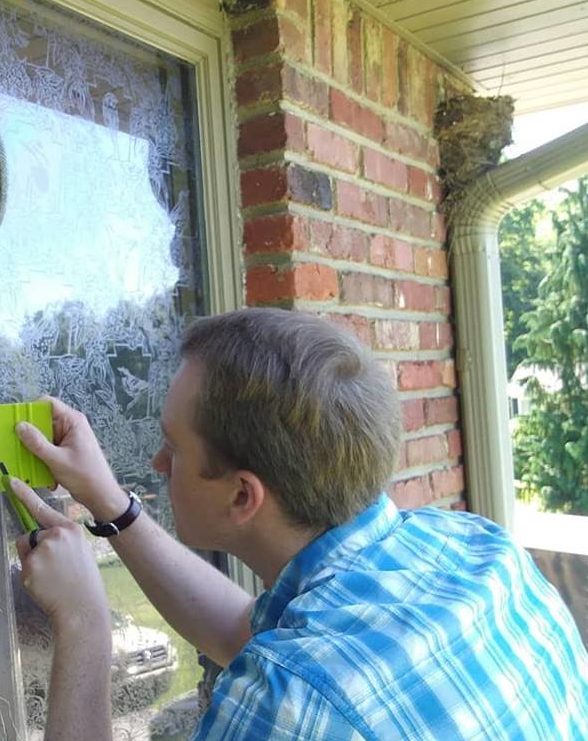
But does the film work? If you put the film on the window, does it reduce bird strikes? As the Director of Powdermill Nature Reserve, I thought I should lead by example and test the film on my own house. I have been monitoring bird strikes at my home since August of 2015. From about 6:00 am to 8:00 am, three or four days a week (at total of six to eight hours a week), I listened for strikes and recorded them. They are not random, nor evenly distributed. Certain windows seem to be a repeated problem, while others never seem to get hit. My house has 15 windows of various dimensions, plus a cathedral window that is 11 feet high and 21 feet wide. No bird has ever hit that window as far as I know. Most strikes occur when migrating birds are coming through, usually April and May, or September and October. When there is a flush of migration, it shows: I had seven strikes from August 27 to 31 in 2015, in only 10 hours of observation. Ignoring seasonal variation, and averaging across the entire data set, a rough estimate is that I observed about one strike for every 20 hours of observation. On June 14, 2018, our Urban Bird Conservation Coordinator, Jon Rice, installed the transparent film on the five most dangerous windows, leaving the others bare.

Jon rice applying birdsafe window

We have had zero bird strikes since the film was installed. To assess the effect of the film, consider that in the same period in 2017 we had seven strikes, in 2016 we had four, and in 2015 we had nine. Years have some random variation, but clearly, there is a reduction from these earlier three years’ average of 6.7 down to 0. More than that, my wife Donna and I became more vigilant since the installation of the film, and we logged about 10 or 12 hours of observation per week rather than six or eight we did for the baseline. If we use the baseline expected frequency of one bird per 20 hours of observation, then with the more thorough observations we would have expected a little more than one bird every two weeks, or about 10 birds in the 18 elapsed weeks, rather than 6.7. Using a simple “chi-square” statistic to estimate the difference between an expectation of 10 birds and an observation of zero, the probability is one in a thousand that we would get zero birds by random variation from an expectation of 10 birds. In other words, if our recent sample differs from our baseline probability purely by chance, we would have to measure 1,000 years to get one year as far from expectation as we got in 2018 following application of Ashley’s film. According to our scientific standards, we reject proposals that have a probability of less than one in 20. Our analysis is less than one in 1,000. We conclude that the film works very well to prevent birds from hitting windows.

You can contact Urban Bird Conservation Coordinator Jon Rice at RiceJ@CarnegieMNH.org.

John Wenzel is the Director at Powdermill Nature Reserve, Carnegie Museum of Natural History’s environmental research center. Museum employees are encouraged to blog about their unique experiences and knowledge gained from working at the museum.

Filed Under: Blog Tagged With: Anthropocene, Ashley Cecil, birdsafe pittsburgh, conservation, John Wenzel, Powdermill Nature Reserve

July 20, 2018 by wpengine

Powerlifting Poultry and Mallards that Marathon

By Chase D. Mendenhall

Fried, roasted or barbequed—most of us have a preference for cuts of light or dark meat when chicken is for dinner. But why the striking differences between dark and light meat?

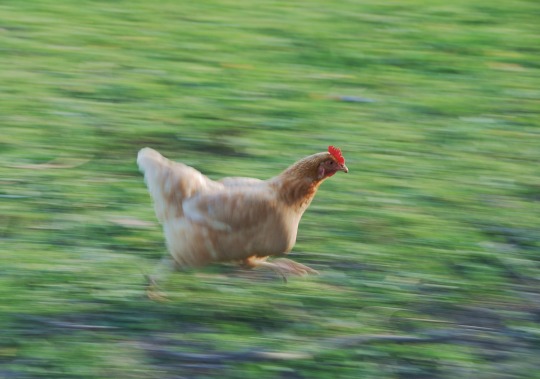
Chickens are gallinaceous birds, meaning they belong to a group of heavy-bodied, ground-feeding birds that generally prefer not to fly. Their leg muscles are used for standing, walking, and running throughout the day. Like a marathon runner, chickens build muscles in their legs that are highly resistant to fatigue and require lots of oxygen for the aerobic exercise being on foot all day. In fact, drumsticks and thighs get their color from the iron held in a special muscle fiber, myoglobin. The myoglobin in the dark muscles breaks down during cooking, giving the cooked meat a brownish color.

chicken running

Chickens build muscles in their wings and breasts for explosive bursts of flight from a resting position, similar to a bodybuilder maxing out their bench press. The flight of a chicken is mostly an anaerobic exercise, meaning that muscles are reacting quickly and doing extremely hard work in the absence of oxygen. Lighter muscle fibers take up sugars to fuel the explosive movement of flight from a standstill, but these muscles fatigue very quickly. When muscles with very little myoglobin muscle fibers are cooked, the proteins in the muscle fibers denature and coagulate, resulting in the white, opaque appearance we associate with a chicken breast.

But what about duck breast, isn’t it dark meat? Duck à l’orange and Pan Roasted Duck only have darker cuts of meat for us to choose from—including the breasts. Because ducks use their flight muscles to sustain long-distance flights, they stock their flight muscles with myoglobin to sustain aerobic flight. The aerobic demands of flight for a duck means that their meat is a darker color when served for supper.

Chase Mendenhall is Assistant Curator of Birds, Ecology, and Conservation at Carnegie Museum of Natural History. Museum employees are encouraged to blog about their unique experiences and knowledge gained from working at the museum.

Filed Under: Blog Tagged With: Birds, Chase Mendenhall, Section of Birds

  • « Go to Previous Page
  • Page 1
  • Page 2
  • Page 3
  • Page 4
  • Interim pages omitted …
  • Page 10
  • Go to Next Page »

sidebar

About

  • Mission & Commitments
  • Directors Team
  • Museum History

Get Involved

  • Volunteer
  • Membership
  • Carnegie Discoverers
  • Donate
  • Employment
  • Events

Bring a Group

  • Groups of 10 or More
  • Birthday Parties at the Museum
  • Field Trips

Powdermill

  • Powdermill Nature Reserve
  • Powdermill Field Trips
  • Powdermill Staff
  • Research at Powdermill

More Information

  • Image Permission Requests
  • Science Stories
  • Accessibility
  • Shopping Cart
  • Contact
  • Visitor Policies
One of the Four Carnegie Museums | © Carnegie Institute | Privacy Policy | Terms of Use | Accessibility
Rad works here logo