• Skip to primary navigation
  • Skip to main content
  • Skip to primary sidebar

Carnegie Museum of Natural History

One of the Four Carnegie Museums of Pittsburgh

  • Visit
    • Buy Tickets
    • Visitor Information
    • Exhibitions
    • Events
    • Dining at the Museum
    • Celebrate at the Museum
    • Powdermill Nature Reserve
    • Event Venue Rental
    • Gift Cards
  • Learn
    • Field Trips
    • Educator Information
    • Programs at the Museum
    • Bring the Museum to You
    • Guided Programs FAQ
    • Programs Online
    • Climate and Rural Systems Partnership
  • Research
    • Scientific Sections
    • Science Stories
    • Science Videos
    • Senior Science & Research Staff
    • Museum Library
    • Science Seminars
    • Scientific Publications
    • Specimen and Artifact Identification
  • About
    • Mission & Commitments
    • Directors Team
    • Museum History
  • Tickets
  • Give
  • Shop

Birds

June 21, 2018 by wpengine

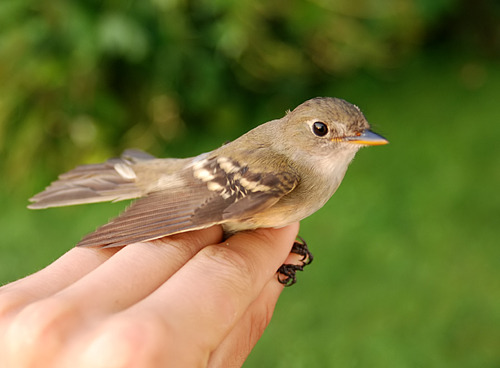
Trail’s Flycatcher

Trail's Flycatcher

This bird has an indistinct eye ring, dark gray legs, lack emargination on primary 6, and has a yellow-orange mouth lining.


Powdermill Nature Reserve’s avian research center is part of Carnegie Museum of Natural History’s biological research station in Rector, Pennsylvania.  The research center operates a bird banding station, conducts bioacoustical research, and performs flight tunnel analysis with the goal of reducing window collisions.
 

Filed Under: Blog Tagged With: birding, Birds, parc, Powdermill, Powdermill Nature Reserve

June 14, 2018 by wpengine

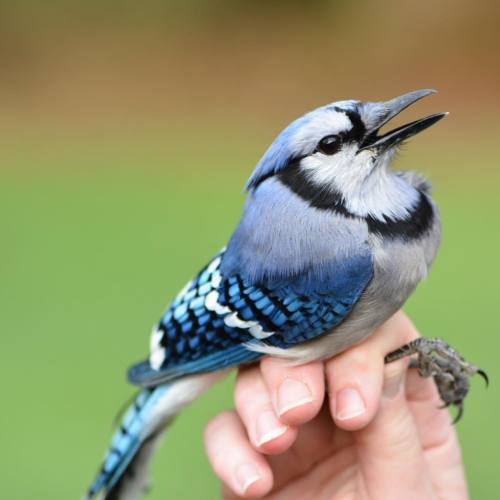
Why Are Blue Jays Blue?

Did you know that the pigment of Blue Jays is actually brown but they appear blue because the barbules which feathers are composed of scatter blue wavelengths; much like a prism hung in a window.

Filed Under: Blog

June 12, 2018 by wpengine

Bard Birds

By Pat McShea

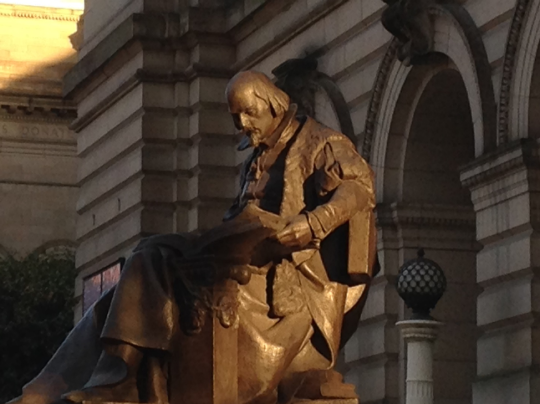
Statue of William Shakespeare along Forbes Avenue entrance to Carnegie Music Hall

Visitors to We Are Nature are challenged to make connections between short-sighted human actions and a range of persistent wide-ranging negative impacts.

If the displays profiling the unintended consequences of such practices create interest in an example with literary connections, the William Shakespeare statue outside the museum building and a Common Starling taxidermy mount within the exhibit provide requisite props.

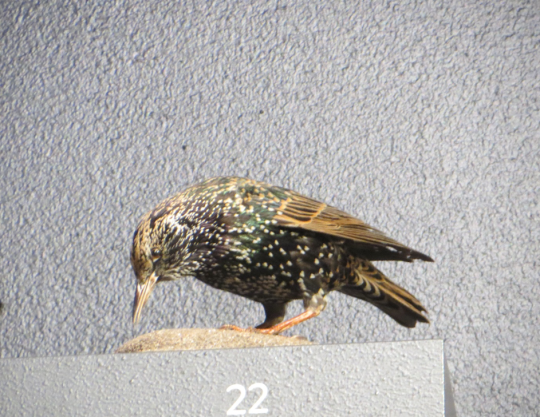
Common Starling on display

The Common Starling, also known as the European Starling, is number 22 in a wall-mounted array of 33 creatures whose assemblage celebrates the diversity of wildlife found in Pittsburgh.

Unlike most of its display neighbors, however, the starling is not native to North America. The species was deliberately introduced to the continent, beginning in New York City’s Central Park, during the 1890s through the efforts of the American Acclimatization Society. Members of this group attempted to introduce every bird mentioned, more than two centuries earlier, in the works of William Shakespeare. The starling was their only “success.”

The species’ population in territory ranging from Alaska to Mexico is now measured in hundreds of millions, and starlings, which frequently congregate in enormous flocks, are considered agricultural pests and airport navigation hazards.

Ironically, although Shakespeare’s works frequently mention nightingales and several other bird species, starlings are only mentioned once, in the play Henry IV Part I.

Patrick McShea works in the Education and Visitor Experience department of Carnegie Museum of Natural History. Museum employees are encouraged to blog about their unique experiences and knowledge gained from working at the museum.

Filed Under: Blog Tagged With: Anthropocene, Pat McShea, We Are Nature

April 16, 2018 by wpengine

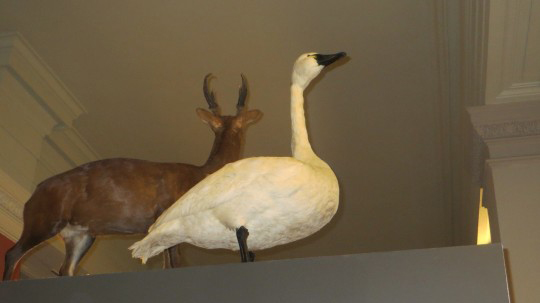
Swan Symbol

taxidermy swan

By Pat McShea

A Tundra Swan taxidermy mount recently left its perch above the touchable attractions of Discovery Basecamp to add a natural history strand to a literary discussion.

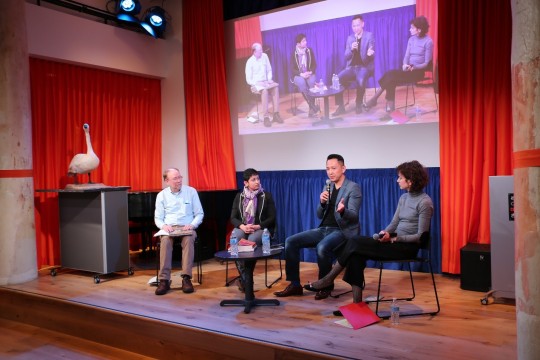
The big white bird played a supporting role in an event whose main attraction was Pulitzer Prize-winning author Viet Thanh Nguyen. The site was Alphabet City, the City of Asylum’s literary center on Pittsburgh’s North Side that is bookstore, performance space, and restaurant. The topics under consideration by four panelists in front of an audience of some 170 guests included migration, immigration, and status of refugees.

Becoming Migrant

is the title of a current series of events sponsored by Carnegie Nexus, an initiative of Carnegie Museums of Pittsburgh that seeks to utilize the resources of the four component museums and outside expertise to present insightful programming across the arts and sciences. As the discussion panelist representing the Museum of Natural History, I brought the taxidermy mount and
justified its presence as an important symbol in the wide- ranging discussion.

discussion pannel
(Above, from the left, Tundra Swan, Patrick McShea, Divya Heffley, Viet Thanh Nguyen, and Edith Doron)

My remarks were set-up by co panelist Edith Doron, the senior program manager of Carnegie Nexus Projects. She quoted a former professor who once said: “All of literature tells one of two stories: ‘I left my home.” or ‘A stranger came to town.’”

I explained how some forty years ago, the “stranger” arriving in this town was more than 2,000 migrating Tundra Swans forced by a November storm to spend half a day resting on the Allegheny River just eight miles upstream from Pittsburgh’s Point. The event, I argued, positively changed all who witnessed it.

The Tundra Swan is back on its perch, but events in Carnegie Nexus series will continue through April 27. For a schedule and further information, please visit: https://nexus.carnegiemuseums.org/


Patrick McShea works in the Education and Visitor Experience department of Carnegie Museum of Natural History. Museum employees are encouraged to blog about their unique experiences and knowledge gained from working at the museum.


Filed Under: Blog Tagged With: Pat McShea

April 16, 2018 by wpengine

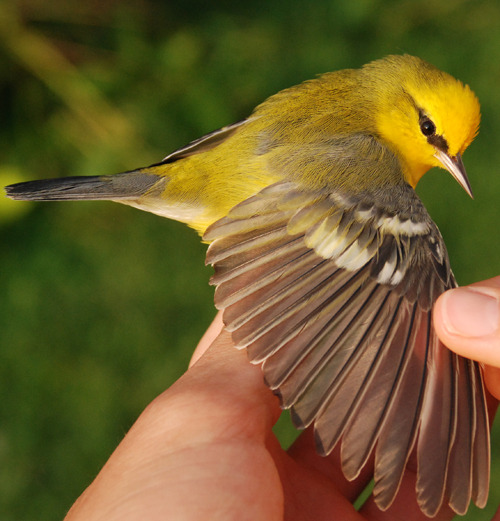
Male Blue-winged Warbler

Male Blue-winged Warbler, a brown and yellow bird

This species is relatively uncommon at Powdermill.  The lack of a molt limit in the alula feathers (A1,A2,A3) indicates this is an adult bird. Its closest relative, the Golden-winged Warbler, is much less common. The rapidly declining Golden-winged Warbler is currently being petitioned to be granted Federal protection under the Endangered Species Act.


Powdermill Nature Reserve’s avian research center is part of Carnegie Museum of Natural History’s biological research station in Rector, Pennsylvania.  The research center operates a bird banding station, conducts bioacoustical research, and performs flight tunnel analysis with the goal of reducing window collisions.
 

Filed Under: Blog Tagged With: bird, bird banding, parc

April 16, 2018 by wpengine

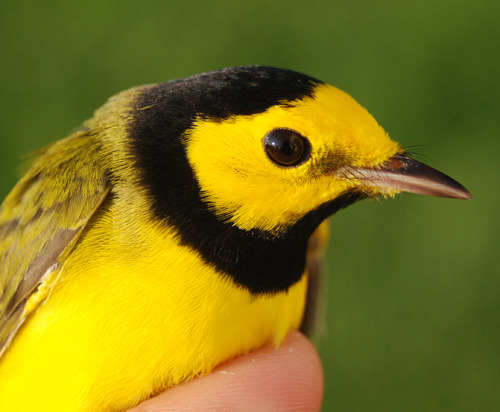
Male Hooded Warbler

Male Hooded Warbler, a bright yellow and black bird

The age of this bird is usually identifiable with a quick examination of the throat feathers.  If the black throat has extensive yellow tipping it is a hatching-year and if it lacks this tipping (or has very little) it is an after-hatching-year.


Powdermill Nature Reserve’s avian research center is part of Carnegie Museum of Natural History’s biological research station in Rector, Pennsylvania.  The research center operates a bird banding station, conducts bioacoustical research, and performs flight tunnel analysis with the goal of reducing window collisions.
 

Filed Under: Blog Tagged With: bird, bird banding, parc

  • « Go to Previous Page
  • Page 1
  • Page 2
  • Page 3
  • Page 4
  • Page 5
  • Page 6
  • Interim pages omitted …
  • Page 10
  • Go to Next Page »

sidebar

About

  • Mission & Commitments
  • Directors Team
  • Museum History

Get Involved

  • Volunteer
  • Membership
  • Carnegie Discoverers
  • Donate
  • Employment
  • Events

Bring a Group

  • Groups of 10 or More
  • Birthday Parties at the Museum
  • Field Trips

Powdermill

  • Powdermill Nature Reserve
  • Powdermill Field Trips
  • Powdermill Staff
  • Research at Powdermill

More Information

  • Image Permission Requests
  • Science Stories
  • Accessibility
  • Shopping Cart
  • Contact
  • Visitor Policies
One of the Four Carnegie Museums | © Carnegie Institute | Privacy Policy | Terms of Use | Accessibility
Rad works here logo