• Skip to primary navigation
  • Skip to main content
  • Skip to primary sidebar

Carnegie Museum of Natural History

One of the Four Carnegie Museums of Pittsburgh

  • Visit
    • Buy Tickets
    • Visitor Information
    • Exhibitions
    • Events
    • Dining at the Museum
    • Celebrate at the Museum
    • Powdermill Nature Reserve
    • Event Venue Rental
    • Gift Cards
  • Learn
    • Field Trips
    • Educator Information
    • Programs at the Museum
    • Bring the Museum to You
    • Guided Programs FAQ
    • Programs Online
    • Climate and Rural Systems Partnership
  • Research
    • Scientific Sections
    • Science Stories
    • Science Videos
    • Senior Science & Research Staff
    • Museum Library
    • Science Seminars
    • Scientific Publications
    • Specimen and Artifact Identification
  • About
    • Mission & Commitments
    • Directors Team
    • Museum History
  • Tickets
  • Give
  • Shop

Birds

October 5, 2017 by wpengine

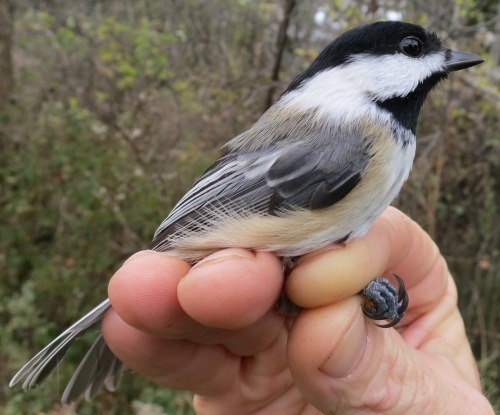
8½-year-Old Black-capped Chickadee at Powdermill

black-capped chickadee, a black, white, and tan bird

Residents of western Pennsylvania are familiar with the small and spunky black-capped chickadees that often visit their birdfeeders. These fearless birds are also frequent visitors at our banding lab at Powdermill Nature Reserve.

Last winter, this chickadee was one of the oldest of his species banded at the lab. It was first banded as a hatch-year bird at the end of August 2007, which means its age was 8½ years!

This individual has been captured 42 times in its life (so far!), at least twice every year, most often in the winter months.
It has shown up in every month of the year except June and July. In 2011, the only year that we saw this bird in May, it had a cloacal protuberance, an enlargement of the cloaca indicating breeding condition in males. So we know it is a male and that his territory is obviously not near our nets.

We are hoping to see this individual in the future. The oldest known black-capped chickadee was 11½ years old when it was banded in Minnesota in 2002.


Powdermill Nature Reserve’s avian research center is part of Carnegie Museum of Natural History’s biological research station in Rector, Pennsylvania.  The research center operates a bird banding station, conducts bioacoustical research, and performs flight tunnel analysis with the goal of reducing window collisions.
Filed Under: Blog Tagged With: bird, parc, Powdermill

October 5, 2017 by wpengine

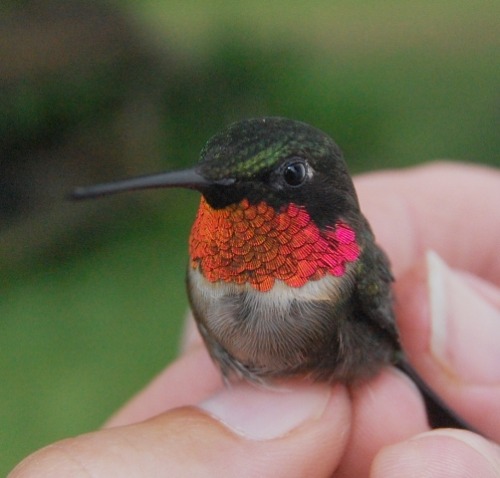
1,400 Miles in Three Weeks

hummingbird with a bright red throat and black head

We received word this spring from the National Banding Lab that a young male ruby-throated hummingbird banded at Powdermill Nature Reserve on September 18, 2014 was recaptured three weeks later (October 10) in Lake Jackson, Texas.

A journey of 1,425 miles in three weeks is pretty astounding when one considers that this male weighed in at just 3.5 grams, not much more than a penny. His wings measured 42 mm (a little over 1.5″).

The hummingbird’s wing beat has been measured at 50 times per second. Now we’re not sure exactly when he left our banding area or if he was caught the day he arrived in Texas, but if he used every day in the interval to fly south, he would have averaged 65 miles per day. Pretty impressive!

Once the data was collected in Texas, the bird was released and probably spent a few days fattening up for the next leg of its migration—a nonstop crossing of the Gulf of Mexico!


Powdermill Nature Reserve’s avian research center is part of Carnegie Museum of Natural History’s biological research station in Rector, Pennsylvania.  The research center operates a bird banding station, conducts bioacoustical research, and performs flight tunnel analysis with the goal of reducing window collisions.
Filed Under: Blog Tagged With: bird, parc, Powdermill

October 5, 2017 by wpengine

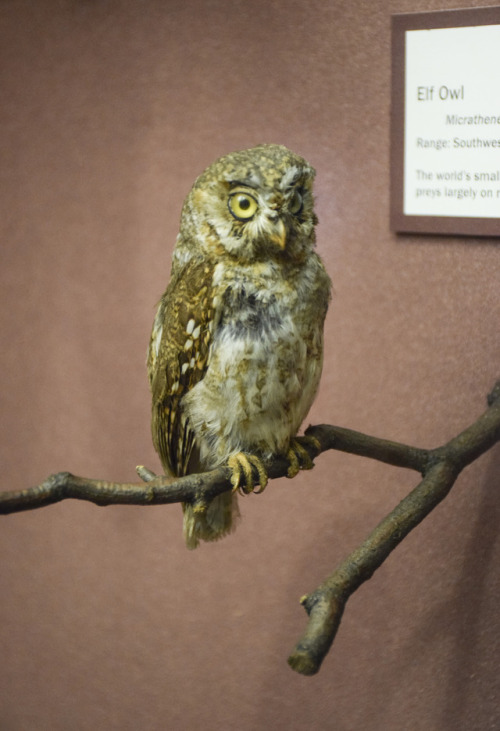
The elf owl

elf owl specimen in Bird Hall

The elf owl, found from the southwestern United States to central Mexico, is the world’s smallest owl. Examine this taxidermy specimen up close, and see just how tiny these little birds are in Bird Hall!

(photo by Hayley Pontia)

Filed Under: Blog Tagged With: bird hall

August 21, 2017 by wpengine

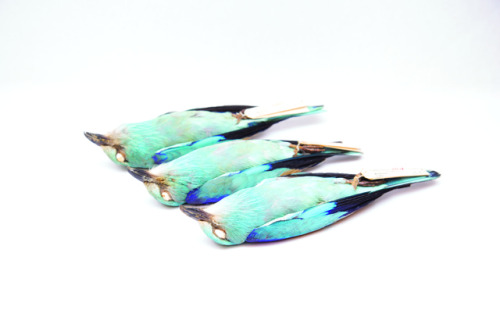
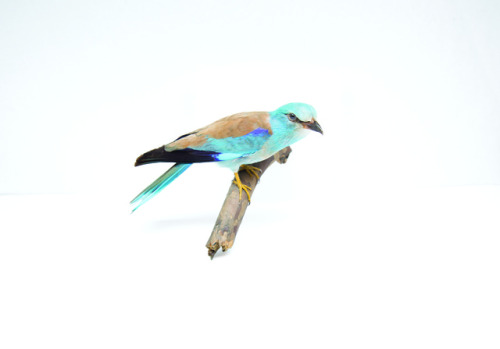
European Roller

European Roller (Coracias garrulus) taxidery mount

European Roller study skins

The bright blue European Roller (Coracias garrulus) breeds in southern and eastern Europe through to Siberia and winters in Africa.

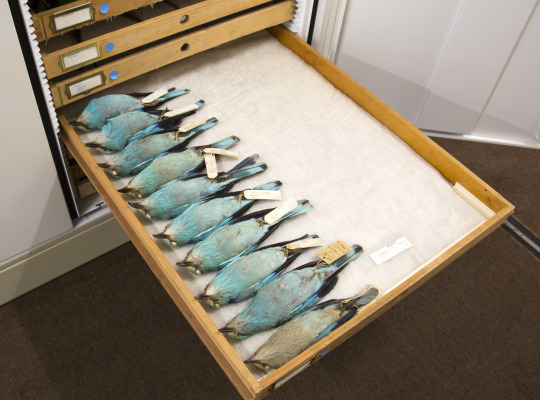
These specimens from Carnegie Museum of Natural History are preserved as both study skins and a taxidermy mount. The Section of Birds is home to several drawers of eight species of rollers in the genus Coracias, which are part of the museum’s large holding of birds from Africa and Europe and were collected between 1891 and 1982.

European Roller study skins in a drawer

Filed Under: Blog Tagged With: Birds

August 18, 2017 by wpengine

Surprisingly Poisonous

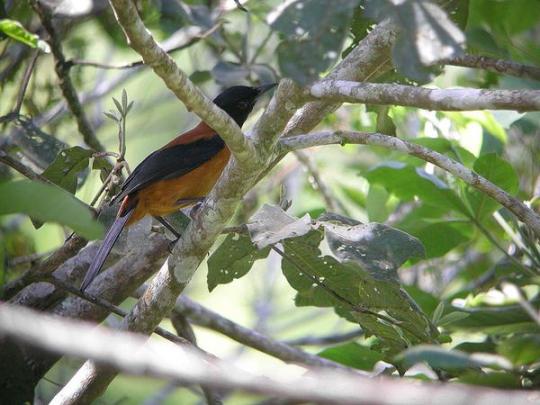
bird in a tree
Hooded pitohui (photo from Wikimedia Commons)

Blogger Kate St. John from Outside My Window recently visited our summer blockbuster exhibition The Power of Poison, and blogged about her experience! Check it out.

Did you know that your fingers will go numb or burn if you handle this bird?  You’ll be lucky that’s all that happens.  This bird is poisonous!

Though it superficially resembles our orchard oriole the hooded pitohui (Pitohui dichrous) is an Old World oriole that lives on the islands of New Guinea. Its skin and feathers are poisonous to touch though not as deadly as the golden poison frog of South America shown below. Both animals exude batrachotoxin, a deadly neurotoxin that kills by paralysis and cardiac arrest. The frog is 50 times more poisonous than the bird. He contains enough poison to kill 10 men!

Read the full blogpost on Kate’s blog! 

Filed Under: Blog

July 7, 2017 by wpengine

The great green macaw

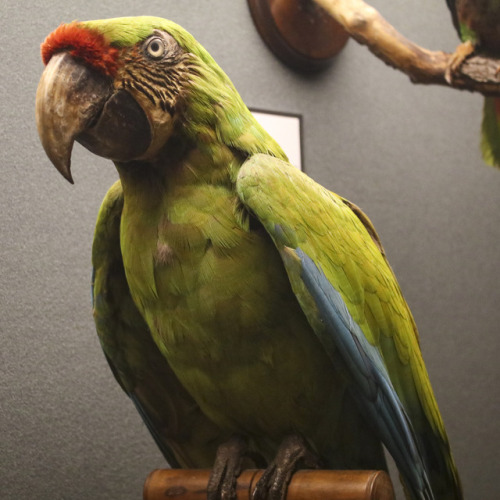
great green macaw

The great green macaw, an inhabitant of tropical rainforests, is dependent upon certain species of old-growth trees for food and nest sites. Unfortunately, neotropical rainforests are being destroyed at an alarming rate. This taxidermy mount is on display in Carnegie Museum of Natural History.

(photo by Hayley Pontia)

Filed Under: Blog Tagged With: Birds

  • « Go to Previous Page
  • Page 1
  • Interim pages omitted …
  • Page 5
  • Page 6
  • Page 7
  • Page 8
  • Page 9
  • Page 10
  • Go to Next Page »

sidebar

About

  • Mission & Commitments
  • Directors Team
  • Museum History

Get Involved

  • Volunteer
  • Membership
  • Carnegie Discoverers
  • Donate
  • Employment
  • Events

Bring a Group

  • Groups of 10 or More
  • Birthday Parties at the Museum
  • Field Trips

Powdermill

  • Powdermill Nature Reserve
  • Powdermill Field Trips
  • Powdermill Staff
  • Research at Powdermill

More Information

  • Image Permission Requests
  • Science Stories
  • Accessibility
  • Shopping Cart
  • Contact
  • Visitor Policies
One of the Four Carnegie Museums | © Carnegie Institute | Privacy Policy | Terms of Use | Accessibility
Rad works here logo