• Skip to primary navigation
  • Skip to main content
  • Skip to primary sidebar

Carnegie Museum of Natural History

One of the Four Carnegie Museums of Pittsburgh

  • Visit
    • Buy Tickets
    • Visitor Information
    • Exhibitions
    • Events
    • Dining at the Museum
    • Celebrate at the Museum
    • Powdermill Nature Reserve
    • Event Venue Rental
    • Gift Cards
  • Learn
    • Field Trips
    • Educator Information
    • Programs at the Museum
    • Bring the Museum to You
    • Guided Programs FAQ
    • Programs Online
    • Climate and Rural Systems Partnership
  • Research
    • Scientific Sections
    • Science Stories
    • Science Videos
    • Senior Science & Research Staff
    • Museum Library
    • Science Seminars
    • Scientific Publications
    • Specimen and Artifact Identification
  • About
    • Mission & Commitments
    • Directors Team
    • Museum History
  • Tickets
  • Give
  • Shop

Erin Southerland

September 6, 2022 by Erin Southerland

An Intern’s Point of View

by Jia Tucker

A week before accepting a summer internship with Carnegie Museum of Natural History, I found myself standing on Forbes Avenue in front of Diplodocus carnegii, the statue that is an emblem of the vast institution.

I had never even stepped foot inside of the museum before June 2022. The career path I had formed in my head over the past few years had been wiped clean by a change of heart. To be honest, I only applied to this museum studies internship because of a moderate interest in the field — and it was paying. 

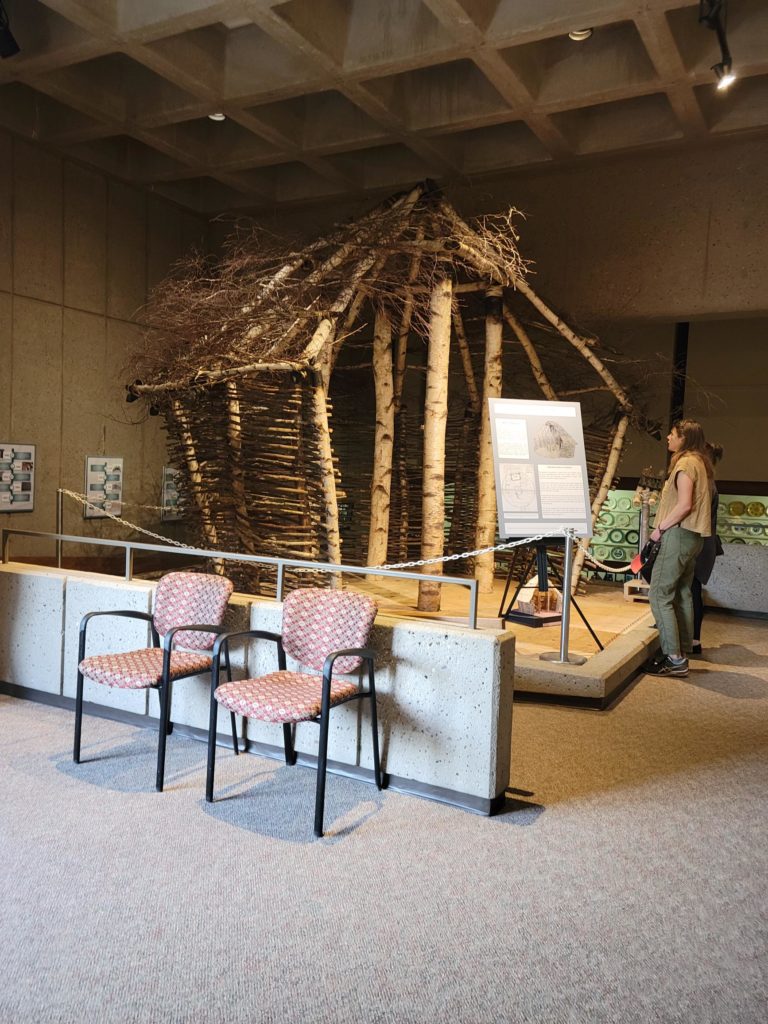
I was placed in the Education and Exhibitions departments. While beginning work in the Education Department, Program Officer Pat McShea tasked me with streamlining and modernizing one of the museum’s “Ed Loan” kits. These kits are borrowed by educators and used to create lesson plans that encompass a variety of subjects from paleontology to anthropology to zoology and beyond. He’d given me a popular, but complicated-to-use kit that focused on what we call the Monongahela, a precontact People whose settlements were concentrated in Western Pennsylvania, eastern Ohio, and northern West Virginia. The kit had a lengthy, approximately seventy-page manual and over thirty objects meant to be used for a lesson plan spanning two to three weeks. I had to pare it down to a dozen objects and two to three days of lessons. 
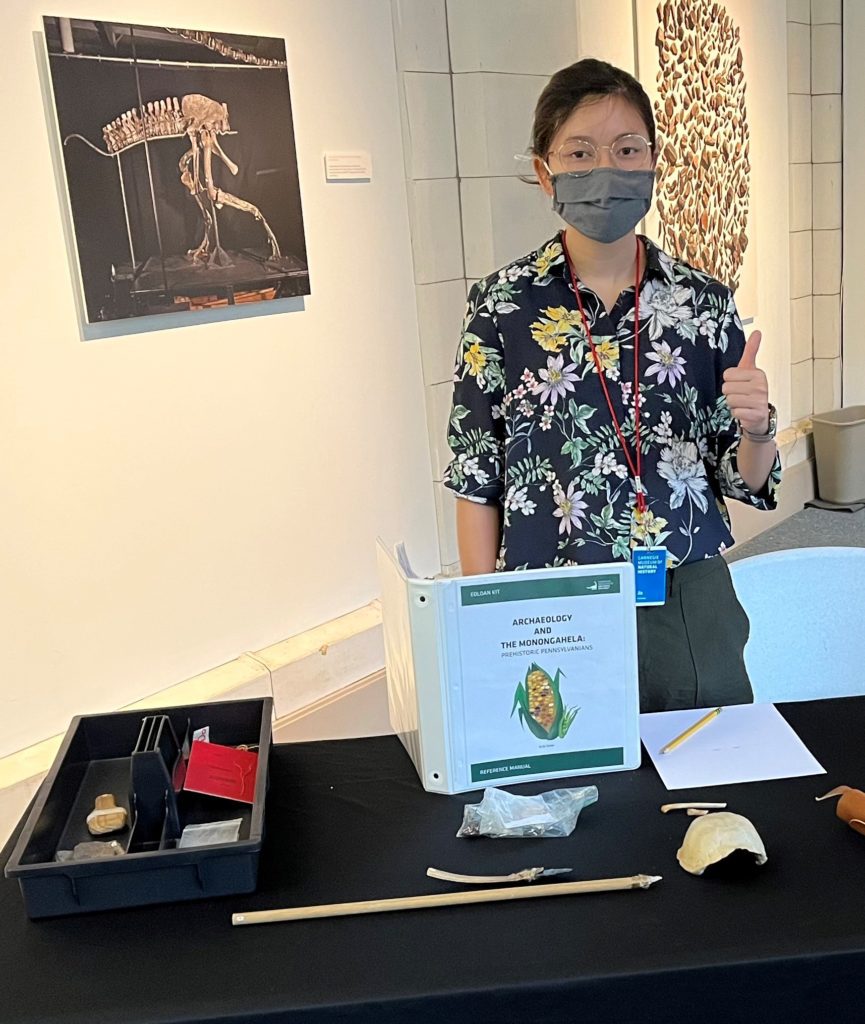
Preparing to engage museum visitors in discussions about Monongahela artifacts.

Coming from an undergraduate perspective with limited experience in workspaces like the Carnegie, I was new to this kind of responsibility. It wasn’t just an essay that would only go through the eyes of a professor, but a tool for the public. The whole time I worked on the kit and my other project in the Exhibitions department, I questioned my ability to complete my tasks adequately. Although I have an intermediate background in anthropology and am no stranger to doing research, curating an educational resource with such free rein seemed beyond my expertise. It was overwhelming, but in a good way. That’s not to say that my Internship Supervisor, Renee, or Pat left me hanging high and dry. Early in the internship, Renee set me up with a list of the people I should reach out to in the museum, and that was, well, everyone. She had firmly yet kindly suggested that I not let this chance slip away. 

So, I didn’t.
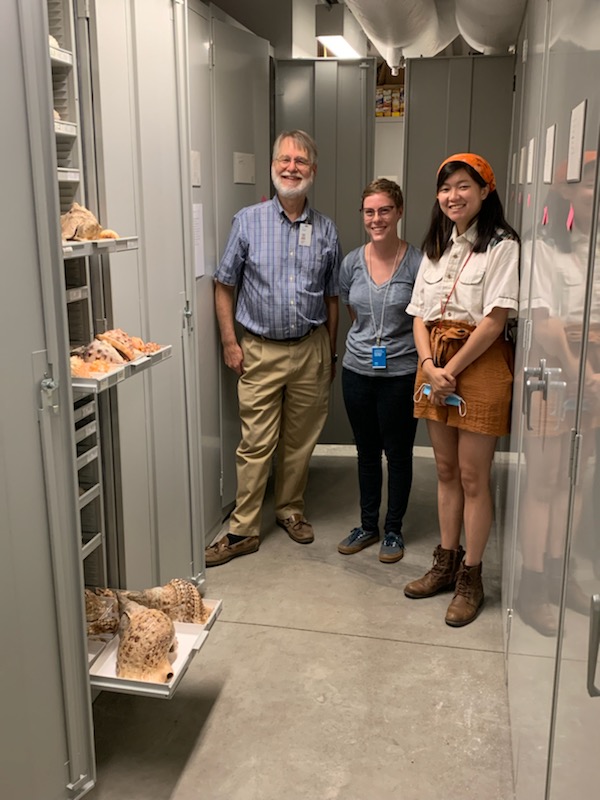
Visiting the Mollusk Collection at CMNH.

With some help, I started contacting program managers from various departments and setting up tours with curators of different collections. I got the chance to hear from people who are passionate about their field of study and eager to learn about what I had to say. It was a reciprocal learning environment that I hadn’t experienced until now. It wasn’t about a LinkedIn connection or a line in a resume. The person who printed all the posters had a name as did the person who developed all the content. What was to me one singular entity fractured into a chorus of different voices all striving to keep the museum alive, and all I wanted to do was contribute a verse. It’s always the people that make the effort worth it. Each person I spoke with would playfully try to convince me to join their field and indulge in their same joys. Although perhaps they were not-so-subtly disguising sincerity. Regardless, for the first time, I felt that flicker of potential. The smorgasbord of an undergraduate degree that I had been haphazardly holding together, hoping that eventually it would be “useful,” could finally stand on its own. The technicalities of it aren’t the important part anyways. Everyone I met came to the museum by both conventional and unconventional means. I’m no exception to the chaos of finding a purpose. 

It’s a shame that as my bones started to settle and my shoulders relaxed into an office chair that was only ever meant to be temporary, I now have to take my leave. Even so, this has been the kind of chance that reminds me that there’s always more to explore up ahead. If you’re seeking a push or some great nugget of enlightenment, here it is. Meet as many perspectives as you can, ask as many questions as you can think of, and be brave. Don’t let it slip away.

Jia Tucker’s summer internship at Carnegie Museum of Natural History was part of the PA Museums Qualifying Diversity Program.

Related Content

How I Became an Archaeologist

Pitt Outreach Efforts Enriched with Museum Materials

A Summer Internship at Powdermill

Carnegie Museum of Natural History Blog Citation Information

Blog author: Tucker, Jia
Publication date: September 6, 2022
Share this post!

  • Share on Twitter Share on Twitter
  • Share on Facebook Share on Facebook
  • Share on Pinterest Share on Pinterest
  • Share on LinkedIn Share on LinkedIn
  • Share on Reddit Share on Reddit
  • Share via Email Share via Email

Filed Under: Blog Tagged With: Education, Educator Loan Program, Jia Tucker

August 26, 2022 by Erin Southerland

Encounter With an Orb Weaver Spider: Is It Predator or Prey?

by Brady Karg

It was an early afternoon on a late spring day, and I was out trying to photograph any last stragglers for spring bird migration. The day was going well as I checked off a pair of Great Crested Flycatchers, Indigo Buntings, Black-throated Green Warblers, Black-throated Blue Warblers, Ovenbirds, a Broad-winged Hawk, and some recently fledged Barred Owls! As I was making my way back on the trail, I felt the strong pull of a spider web brush against my arm. I stopped and looked around to see a tiny spider dangling below a leaf beside me in the tangled remains of its web. As I leaned in closer, I noticed what looked to be a predator and prey encounter with the spider holding a large insect in its grasp. I soon realized the situation was something much more sinister. 

Upon closer inspection, it was apparent the bug was feasting on the spider! The mystery creature was obviously some kind of parasite, but what kind exactly? What kind of spider was being preyed upon? I then did some digging to find out more about this parasitic relationship.

In a conversation with Andrea Kautz, an entomologist at Powdermill Nature Reserve, I learned that this spider is in the subfamily Araneinae or Typical Orb weavers. After posting my observation to iNaturalist, a narrower ID was suggested, the Genus Eustala. This genus covers a large variety of orb weavers, spiders found in a wide variety of habitats including fields, forests, and marshes. The colors and patterns of these spiders vary, but the females are noted for having a distinct dorsal hump. 

So, what was eating this spider? Andrea informed me that the parasite is likely the larva of a parasitic wasp in the family Ichneumonidae. These are slender wasps, with many bearing orange and black coloration. The Ichneumonidae are known to parasitize both egg sacs and adult spiders. 

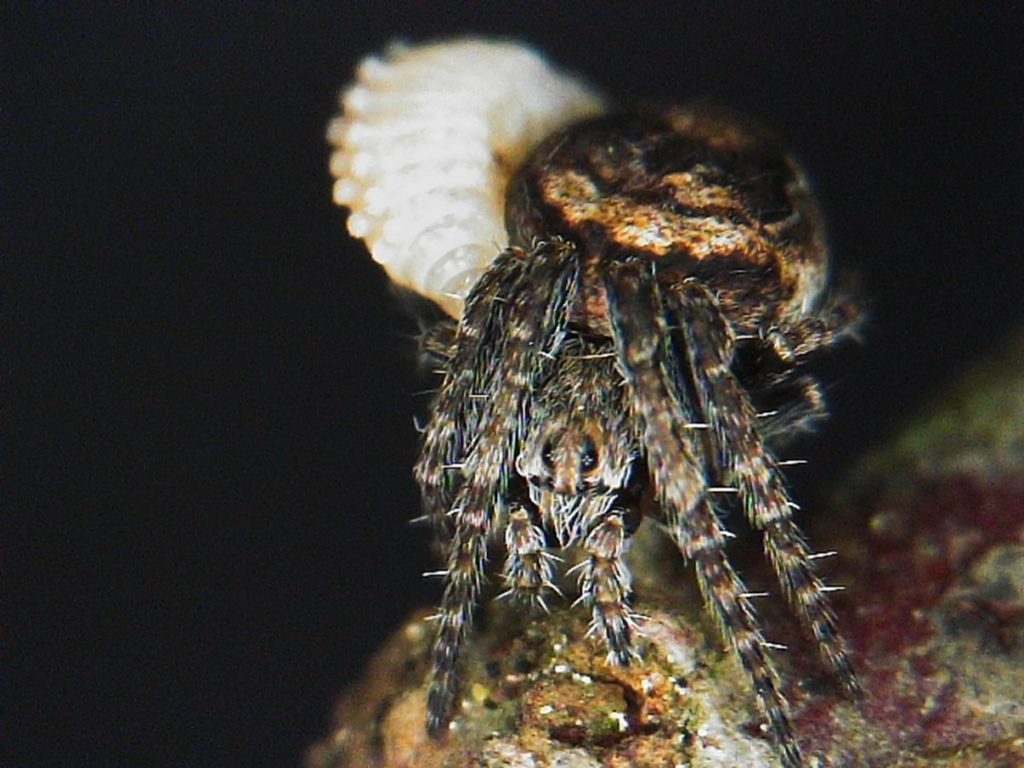
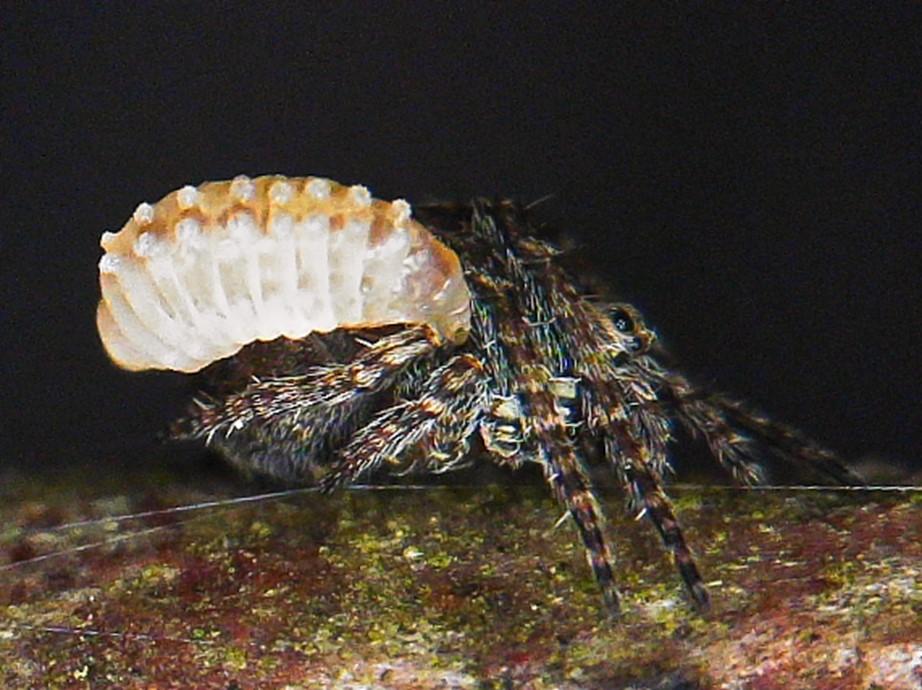
This information explained much of what I had seen. Below are two pictures I took using a digital microscope camera.

parasite on an orb weaver spider
side view of a parasite on a spider

In each you can see the larva of the parasitic wasp attached to the orb weaver spider. This situation is the result of an adult wasp in the Pimplinae subfamily laying an egg in this spider. The egg hatched, and the now much larger larva is continuing to feast on nutrients from the spider. The larva will continue to feed on the spider until it is ready to metamorphose into its pupal stage, and then into its adult form. The spider, unfortunately, will not survive this parasitic relationship. 

Our natural world is full of fascinating and unique relationships such as this wasp and spider. Always keep your eyes peeled in case you happen to stumble upon something such as this!

Brady Karg is an intern at Powdermill Nature Reserve, Carnegie Museum of Natural History’s environmental research center.

Related Content

Oh Deer, That’s A Lot of Parasites!

Natural History Discoveries

Can’t Touch This

Carnegie Museum of Natural History Blog Citation Information

Blog author: Karg, Brady
Publication date: August 26, 2022

Share this post!

  • Share on Twitter Share on Twitter
  • Share on Facebook Share on Facebook
  • Share on Pinterest Share on Pinterest
  • Share on LinkedIn Share on LinkedIn
  • Share on Reddit Share on Reddit
  • Share via Email Share via Email

Filed Under: Blog Tagged With: Brady Karg, liocf, Powdermill Nature Reserve, Science News

August 23, 2022 by Erin Southerland

GETTING FROM THE FERN HOLLOW BRIDGE TO THE FRICK FAMILY

by Lisa Miriello 
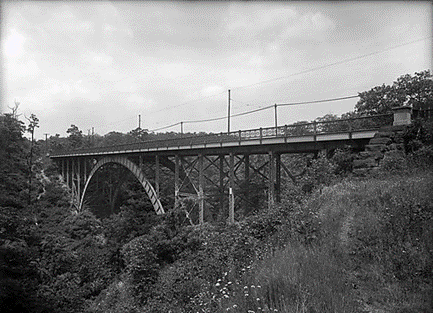
A view of Forbes Avenue bridge crossing over Fern Hollow in Frick Park, 1914. Pittsburgh City Photographer Collection, University of Pittsburgh.

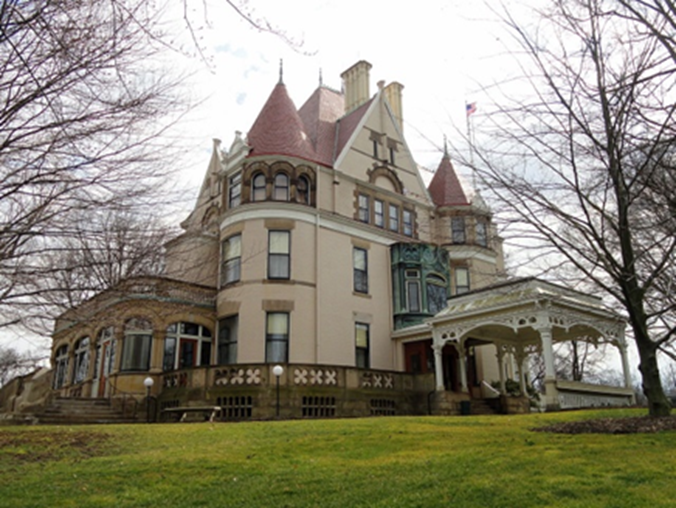
After the Fern Hollow Bridge collapse on January 28, 2022, many commuters found themselves experiencing some traffic headaches as they scrambled to find different ways to and from work or school. My new route takes me past The Frick Pittsburgh, a museum complex in the Point Breeze section of Pittsburgh that includes Clayton, the former home of industrialist Henry Clay Frick.

As someone who works in the Section of Mammals, my thoughts while passing the stately grounds often turn to Frick’s son Childs (1883-1965), who grew up here exploring the woods surrounding the estate and attending Sterrett School (now Sterrett Classical Academy), less than a third of a mile away.

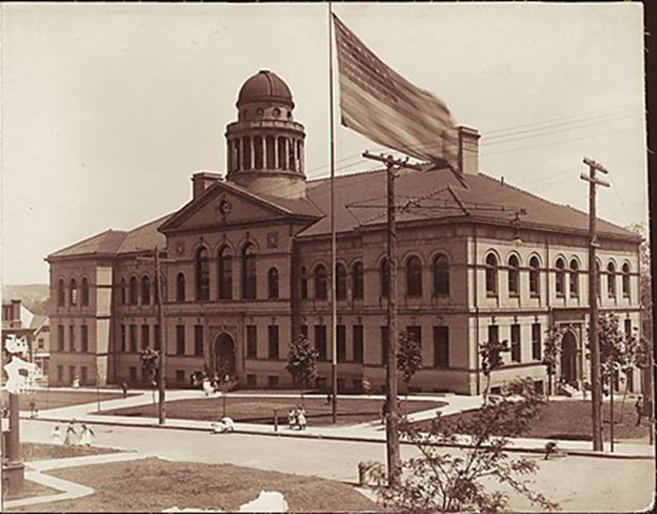
Photographer unknown, American, Sterrett School, c. 1900, gelatin silver printing-out paper print, H: 7 1/2 in. x W: 10 5/8 in., Carnegie Museum of Art, Pittsburgh, Second Century Acquisition Fund, 1999.34.2, Photograph © 2021 Carnegie Museum of Art, Pittsburgh.

As Childs grew older his early interest in the natural world turned to more scientific pursuits, and he embarked on a series of collecting expeditions in North America followed by visits to Africa, first in 1909 and again in 1911. But Childs wasn’t looking for “trophies.” By collecting animals at different life stages his goal was to further the knowledge of the lifestyle and habitats of these unfamiliar animals. Many of these specimens were gifted to the Carnegie Museum, and as the shipments arrived from overseas the staff taxidermists had their hands full. 

Led by brothers Remi and Joseph Santens these skilled artisans created expressive animal likenesses rather than the static displays that were seen in most museums at the time. Both Santens even visited zoos in New York and Washington, DC, to study the movements of living animals. Preserved plant life from Africa provided even more authenticity to the displays. The African Buffalo (Syncerus caffer) group was especially notable in how it was depicted. The animals appear to be spattered with mud and tramping through brush, a display then-Director W. J. Holland believed to be the first instance in which exhibition specimens had been accurately placed within their supporting environment. In the Carnegie Museum’s 1913 Annual Report he wrote that the group “may possibly provoke comment and criticism, but it is believed to be a step in the right direction, and will likely be followed by the leading taxidermists of the future.“  You can see the African Buffalo, along with other specimens collected by Frick, in the museum’s Hall of African Wildlife.

Carnegie Museum of Natural History, photo by Mindy McNaugher.

While Childs enriched the collection of the natural history museum, other family members left an impact on the city of Pittsburgh as well. His father, Henry Clay Frick (1849-1919), bequeathed 151 acres of land that would become Frick Park. Expanded by hundreds of acres over the years, it’s now the largest of the city’s parks.

Childs’ sister, Helen Clay Frick (1888-1984), was an art collector like her father and helped establish the Henry Clay Frick Fine Arts Library at the University of Pittsburgh. She later had the Frick Art Museum constructed on Clayton’s grounds to showcase her collection of art. This cultural resource opened to the public in 1970.

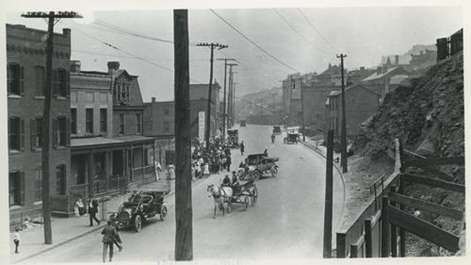
At the end of the day, as my car inches past the peaceful grounds of Clayton, I imagine traffic must have looked a little different over a hundred years ago when “horseless carriages,” horse-drawn vehicles, trolleys, and bicycles all shared the same road in a free-for-all. Today, with traffic signals and defined lanes, at least it’s more of an ordered chaos.

A view of a portion of Grant Boulevard populated with a mixture of automobiles, a horse with buggy, and a bicycle in the background. Grant Boulevard was renamed Bigelow Boulevard in 1916. Thomas Mellon Galey Photographs, Detre Library & Archives, Senator John Heinz History Center
Grant Boulevard | Historic Pittsburgh

Museums and parks can provide welcome relief in a chaotic world, and the Frick family’s contributions to these sanctuaries of art, science, and nature will be enjoyed for generations to come. 

Public domain image of Clayton.

Lisa Miriello is the Scientific Preparator for the Section of Mammals. 

Related Content

Finding Answers: From Museum to Mountains and Back Again

Meet the Mysterious Mr. Ernest Bayet

A Gorilla For Our Imagination

Carnegie Museum of Natural History Blog Citation Information

Blog author: Miriello, Lisa
Publication date: June 10, 2022

Share this post!

  • Share on Twitter Share on Twitter
  • Share on Facebook Share on Facebook
  • Share on Pinterest Share on Pinterest
  • Share on LinkedIn Share on LinkedIn
  • Share on Reddit Share on Reddit
  • Share via Email Share via Email

Filed Under: Blog Tagged With: Hall of African Wildlife, Lisa Miriello, mammals, Science News

August 5, 2022 by Erin Southerland

Chimney Swift Conservation

by Patrick McShea

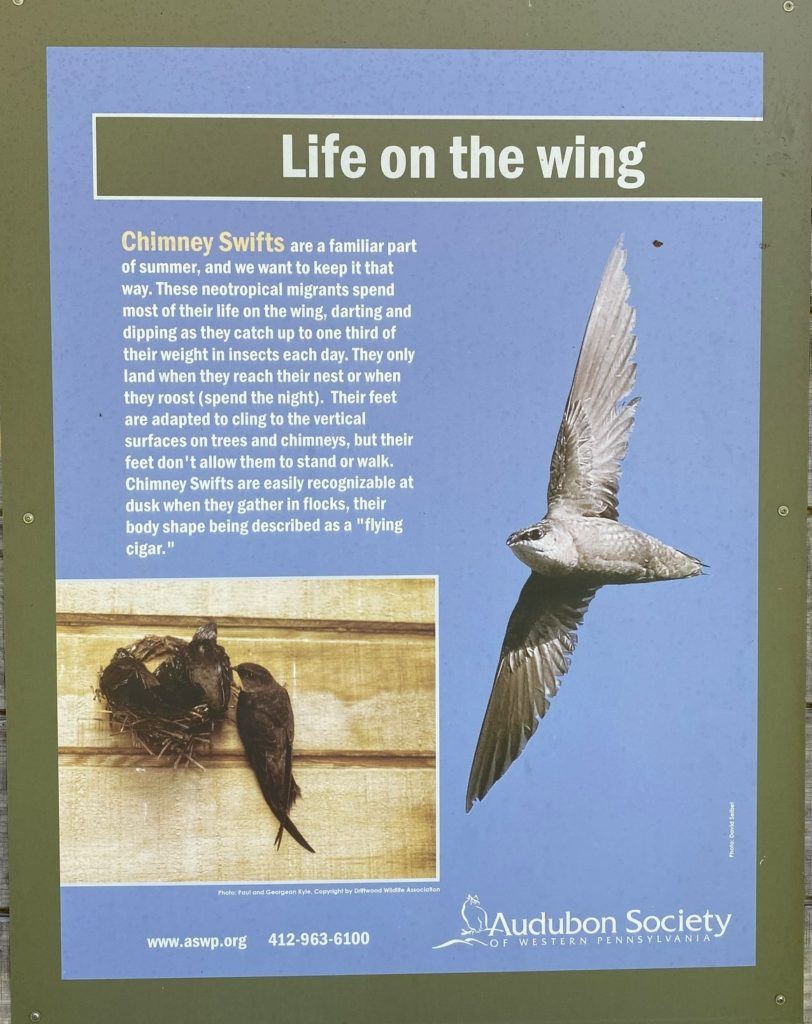
In urban, suburban, and even rural areas of southwestern Pennsylvania, the high-pitched twittering cries of circling Chimney Swifts create a soundtrack for summer days. The birds’ aerial maneuvers are a mix of rapid wing beats and dynamic glides, and much of the action relates to feeding. Chimney Swifts eat on the wing, using their unusually large mouths to capture up to 5,000 flying insects per day. (A summary of a Powdermill Aviation Research Center study of the birds’ diet preferences can be found here:  Chimney Swift Research – Powdermill Nature Reserve.)

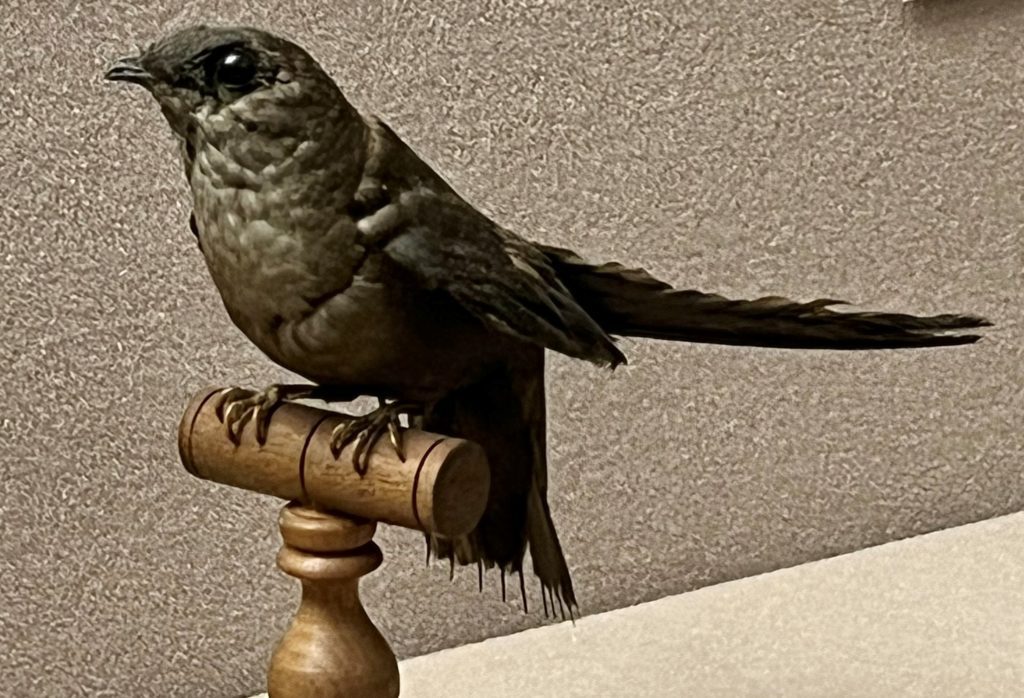
chimney swift taxidermy mount

When observed overhead, passing swifts are frequently described as resembling “flying cigars,” a visual analogy attributable to the birds’ five-inch-long, tube-shaped bodies, comparatively long, narrow wings, and muted grey-brown plumage. Our region is part of the species’ summer range, an enormous portion of eastern North America stretching from the Gulf Coast to just north of the Great Lakes. In South America, an equally large region of the upper Amazon Basin in Peru, Ecuador, and Brazil supports the population during the winter.

The architectural reference in the species’ common name alludes to commensalism involving birds and people that dates to the European settlement of eastern North America. As a biology term, commensalism denotes situations in which one species obtains benefits from another, without harming or benefiting the provider. Historic records indicate that before colonial times the species now known to science as Chaetura pelagica used hollow trees for roosting and nesting. Accounts in New England of the species nesting in chimneys date to the 1670s, and along the Atlantic coastal plain the birds’ exclusive use of chimneys for nest sites was established by 1800.

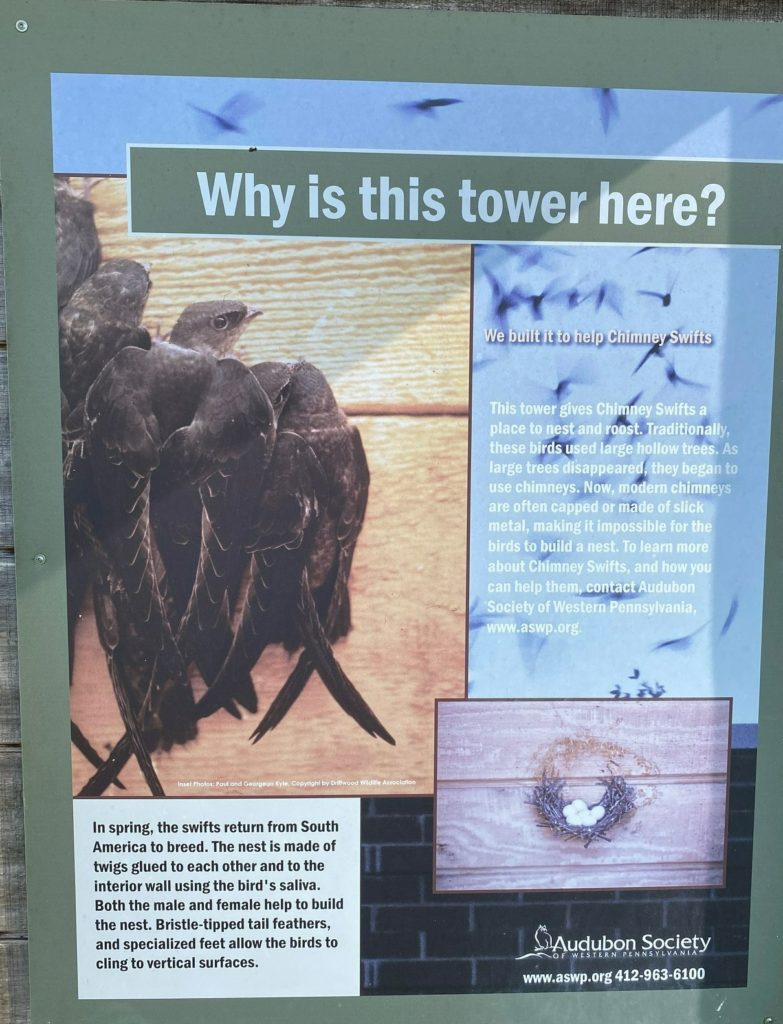
Within hollow trees and chimneys, sheltered interior walls meet the birds’ requirements for nesting and roosting. Chimney Swifts are unable to perch. Instead, they cling to vertical surfaces with their feet, and use the stiff shafts that protrude from the ends of their tail feathers as a brace. For nests, swifts collect branch-end twigs with their feet, in-flight, then use their quick-drying adhesive saliva to construct a narrow platform with the tiny sticks on an interior chimney or tree cavity wall.                                                                                                                           

In his landmark 1940 publication, Birds of Western Pennsylvania, CMNH curator W.E. Clyde Todd summarized the species’ association with chimneys as “more than accidental and connotes a remarkable adaptation to the changed conditions brought about by civilization.” In the eight decades since, changes in the built environment of modern civilization have become less welcoming to Chimney Swifts. 

The population of Chimney Swifts has declined over 70% since the 1960s. Although reductions in flying insect abundance, along with still undetermined threats during migration and on wintering grounds, appear to be critical factors in the decline, potential nest and roost sites have also decreased due to the widespread practice of capping viable chimneys and demolishing those no longer in use. 

In 2013, the Audubon Society of Western Pennsylvania (ASWP) launched a regional initiative to publicize the species’ plight and address reductions in Chimney Swift nesting and roosting habitat. The 106-year-old conservation organization has since led a broad coalition of partners in an ongoing effort to construct, install, and monitor more than 150 Chimney Swift towers at appropriate locations in southwestern Pennsylvania. Although Chimney Swifts are known to fly and roost in large flocks during migration, the birds’ behaviors are far different during the breeding season. Only one pair will nest in a chimney or tower, and research indicates the same pair will return to the same nesting location in subsequent years.

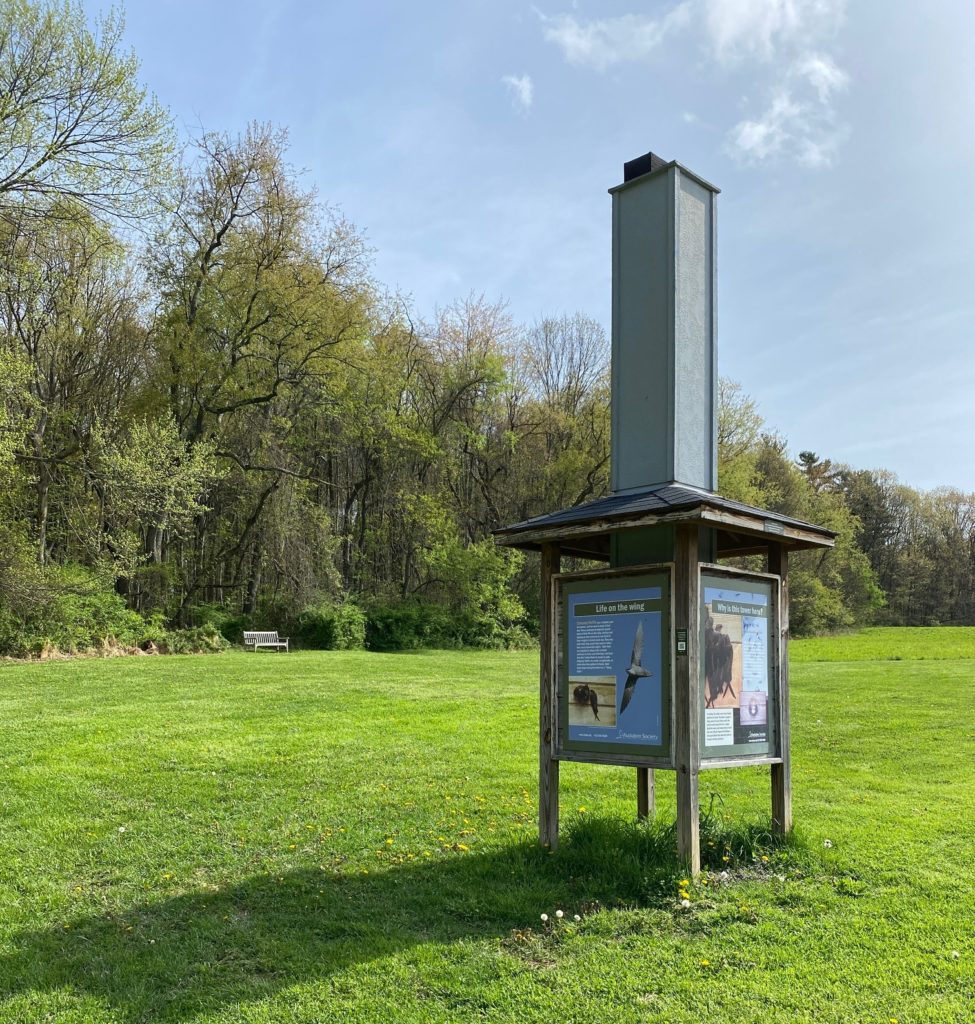
chimney swift tower

The design of these sturdy towers, which mimic actual chimneys, is based upon construction plans detailed in the 2005 publication, Chimney Swift Towers: New Habitat for America’s Mysterious Birds, by Paul and Georgean Kyle. The couple are project directors of the Texas-based Driftwood Wildlife Association’s North American Chimney Swift Nest Site Research Project, an all-volunteer effort to expand public awareness about the beneficial nature and the plight of the species.

educational sign about chimney swifts
educational sign about chimney swift towers

At sites where ASWP offers regular programming, five towers were constructed of stone to enable the structures to also function as entrance signs for the facilities. In Allegheny County’s seven parks, 12-feet high kiosk-style towers constructed of lumber, shingles, and other roofing materials are now familiar landscape features. Through a partnership with Allegheny County, the Allegheny County Parks Foundation, and the Peaceable Kingdom Fund of The Pittsburgh Foundation, a total of one hundred towers, most bearing colorful informational panels, have been installed to make these public properties more welcoming to Chimney Swifts.

Observations of Chimney Swift activity near any of the towers can contribute to the ongoing evaluation of this regional conservation initiative. Allegheny County Park Rangers have been monitoring towers within the parks where they serve, and towers elsewhere are monitored by ASWP staff and volunteers, however wider public participation is welcome. For more information about Chimney Swift conservation, including a map of tower locations and an online form for reporting observations, please visit the website of the Audubon Society of Western Pennsylvania.

Patrick McShea is an Educator at Carnegie Museum of Natural History. 

Related Content

Bird Architecture on Human Infrastructure

Teaching in the Parks

Sharing a City Park With a Resident Reptile

Carnegie Museum of Natural History Blog Citation Information

Blog author: McShea, Patrick
Publication date: August 5, 2022

Share this post!

  • Share on Twitter Share on Twitter
  • Share on Facebook Share on Facebook
  • Share on Pinterest Share on Pinterest
  • Share on LinkedIn Share on LinkedIn
  • Share on Reddit Share on Reddit
  • Share via Email Share via Email

Filed Under: Blog Tagged With: Birds, climate change, Pat McShea, We Are Nature 2

July 15, 2022 by Erin Southerland

A Deep Look Inside Reptiles and Amphibians

by Ian N. Roa

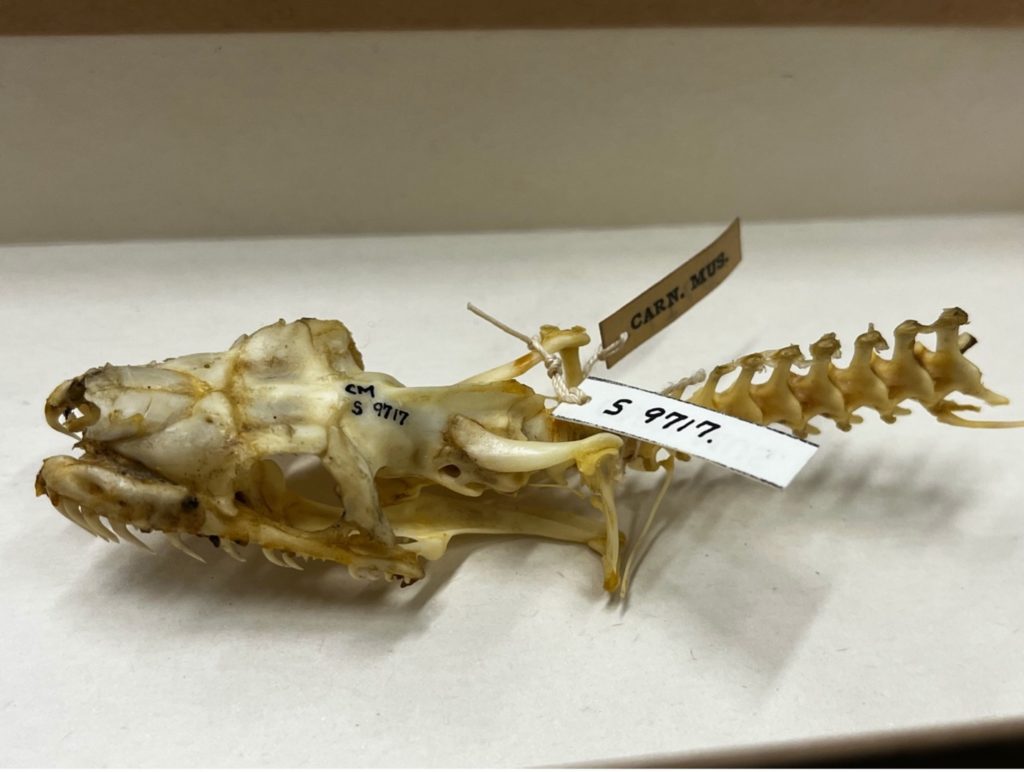
Fig. 1 – Head and neck portions of a Boa sp. skeleton.

Museums are integral to our communities because they are institutions that provide public education and outreach to better understand the world we live in. Visitors often think of museums in terms of displays, animal taxidermy mounts in dioramas, or jars of preserved amphibians, for example, but much of the important work of museums occurs behind the scenes. I developed a clear understanding of this situation through two different interactions with the Section of Amphibians and Reptiles at Carnegie Museum of Natural History.

I am an archaeology graduate student at the University of Pittsburgh (Pitt), and I met Stevie Kennedy-Gold, the Collection Manager for the Section of Amphibians and Reptiles, in 2019 when her assistance helped me answer a research question. I specialize in zooarchaeology, that is the of study animals in archeological contexts, in the Maya lowlands of western Belize. Unfortunately, due to the wet, humid climate of the jungle, preservation of bone is not always the greatest. There exists, however, a necklace made of vertebrae that was found still clutched in the hand of an ancient Maya elite. Based upon several characteristics of each vertebra, I knew the necklace was made up of reptile but could not deduce anything more specific. When I reached out to Stevie, she helped me figure out that the necklace was made of bones from numerous snakes! The significance of finding out what kind of animal the necklace was made from helps us to understand the ways humans interacted with their environment, in this case animals who share the same landscape. Even more exciting is the cosmological importance of the serpent to the Maya culture where the creatures primarily symbolize rebirth and renewal.

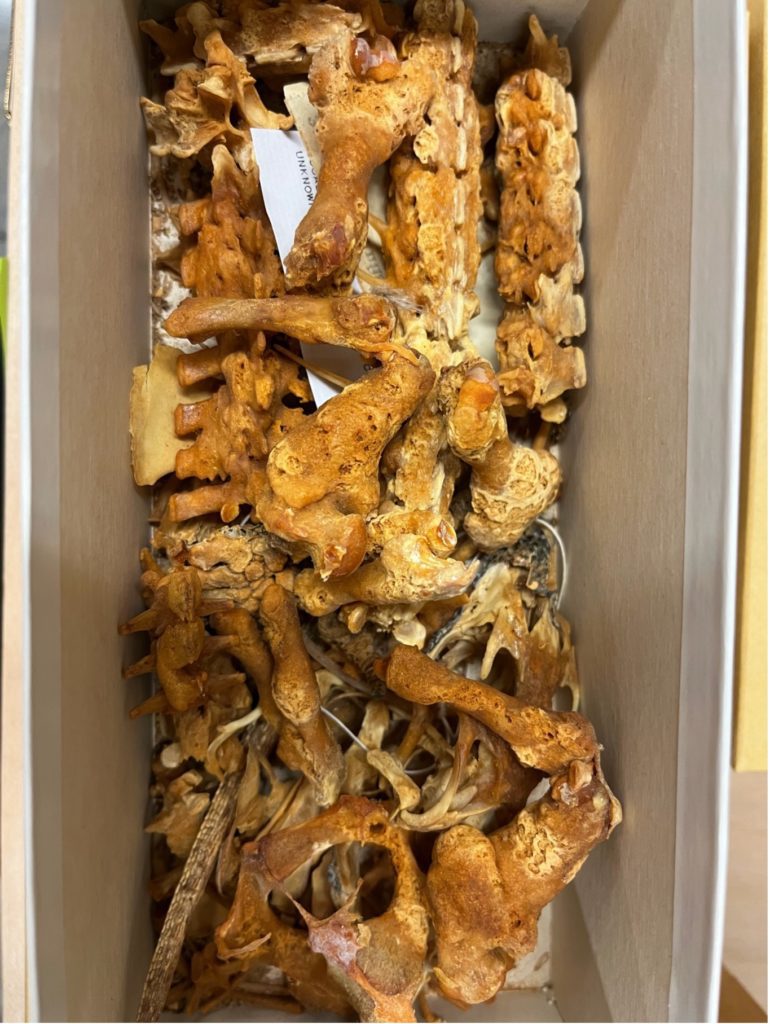
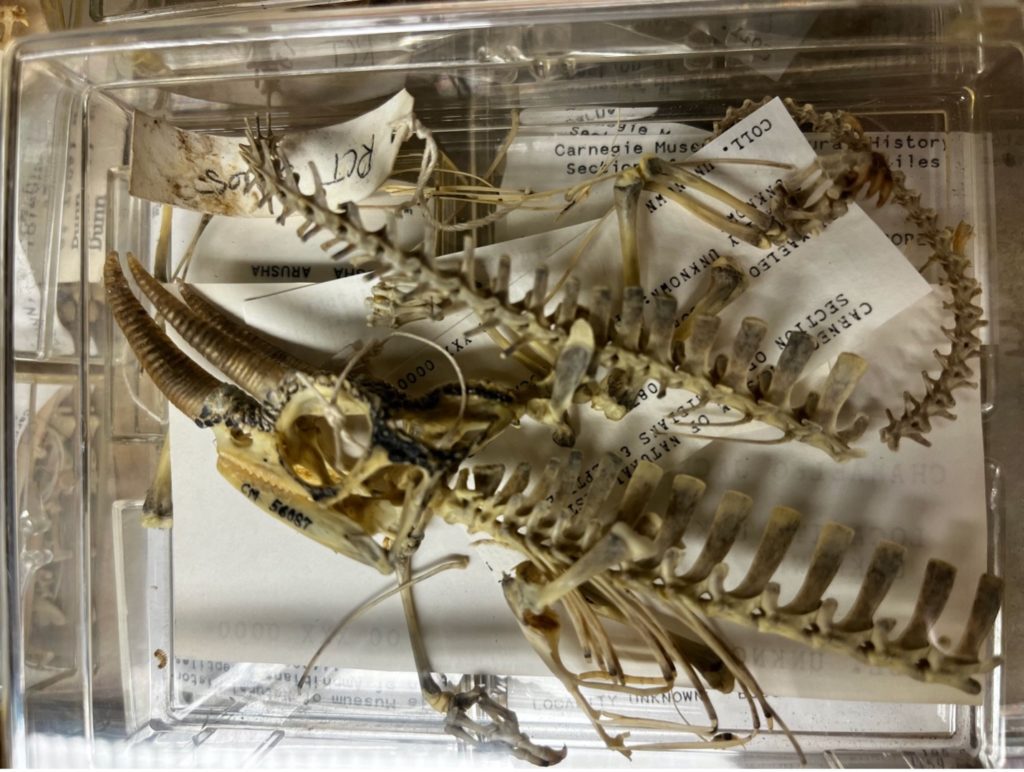
This positive experience of having my doctoral research aided by a museum collection convinced me of how important it is to make sure such resources are well managed for generations to come. When I reached out to Stevie for a second time, it was to offer my time in the Section of Amphibians and Reptiles for any project I could assist. When we got started, I was asked to help catalog the osteological inventory of reptiles and amphibians, which is fitting as Stevie has nicknamed me “the bone guy” for my specialty as a zooarchaeologist. The work involves locating each specimen, identifying which components of the skeleton are present, and noting any articulation or soft tissue (such as skin) that may be present. Any necessary steps for later upkeep to maintain preservation is also recorded, procedures such as cleaning skeletal pieces, removing dead dermestid beetles, and transferring specimens to new storage boxes. This experience has allowed me to further familiarize myself with diverse taxonomic groups and even inflammatory and autoimmune pathologies (Fig. 2)! 

Fig. 2 – Osteological inflammatory growth along the axial and appendicular parts of this squamate skeleton due to disease.

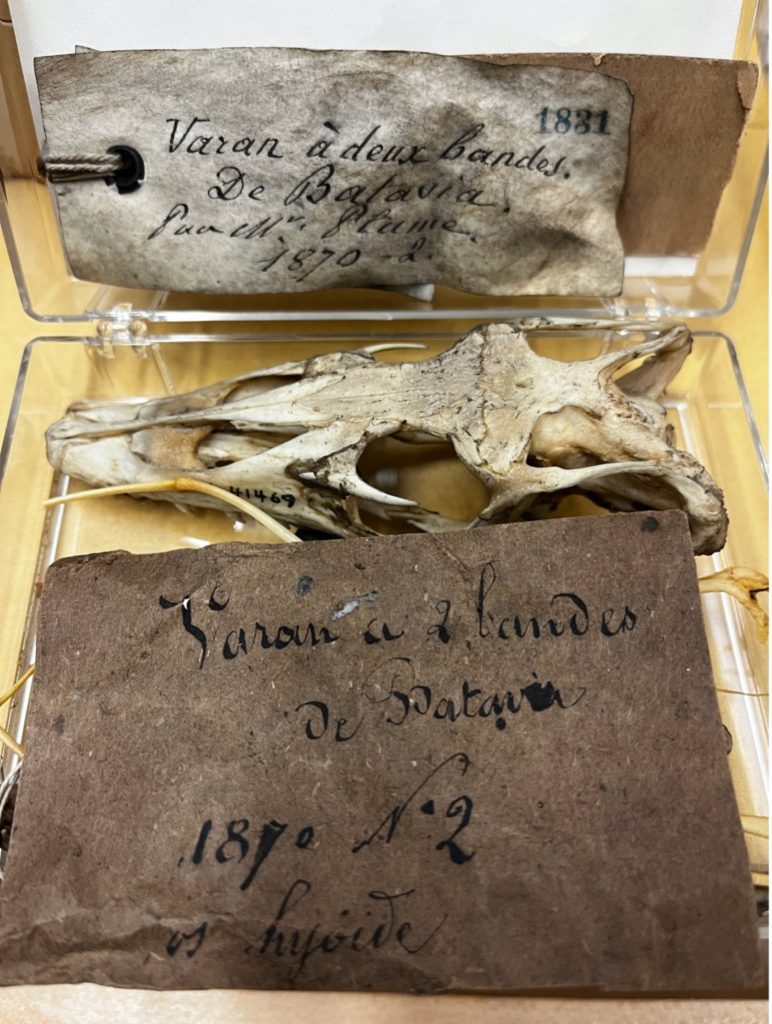
Though it is an arduous task to organize and record the entire osteological collection between Stevie, a couple of section work-studies, and myself, it is also a load of fun (or perhaps torturous levels of organization is my crazy idea of fun). No, really! As we go through each cabinet, drawer, and box we stumble across some really fantastic skeletons of lizards, snakes, crocodiles, turtles, and more (Fig. 3). One of my favorites was of an Asian water monitor (Varanus salvator), because it is the oldest specimen in the entire herpetology collection at CMNH, and even includes a beautiful hand-written record of this original skeleton.

Fig. 3 – Trioceros jacksonii, commonly known as the Jackson’s chameleon. The males are easily identified by the three large horns protruding from their faces.
Fig. 4 – Commonly known as the Asian water monitor (Varan salvator), this skeleton was collected in 1870 and is actually the oldest specimen in the collection, wet or dry.

Ian N. Roa is an archaeology graduate student at the University of Pittsburgh.

Related Content

A Head Above the Rest: Unearthing the Story of Our Leatherback Sea Turtle

Meet the Fossil Detectives in the Basement

Do Snakes Believe in the Tooth Fairy?

Carnegie Museum of Natural History Blog Citation Information

Blog author: Roa, Ian N.
Publication date: July 15, 2022

Share this post!

  • Share on Twitter Share on Twitter
  • Share on Facebook Share on Facebook
  • Share on Pinterest Share on Pinterest
  • Share on LinkedIn Share on LinkedIn
  • Share on Reddit Share on Reddit
  • Share via Email Share via Email

Filed Under: Blog Tagged With: amphibians and reptiles, Ian Roa, Science News

July 14, 2022 by Erin Southerland

A Trip to Grave Creek Mound

by Amy L. Covell-Murthy

It was my pleasure to organize a field trip for Anthropology and Anthropocene staff, students, and friends to the Grave Creek Mound Archaeological Complex in Moundsville, West Virginia. Our gracious host, Dr. Olivia Jones, who is the facility’s lead curator showed us around the complex while explaining the history of the facility and of the mound. She also provided us with plenty to explore on our own.

Maintaining a relationship between Carnegie Museum of Natural History and the Grave Creek Mound Complex has been a highlight of my responsibilities as collection manager over the past five years. Dr. Jones and I work hard to keep each other informed of current research and initiatives in our institutions, while sharing resources that pertain to the history of the region. 

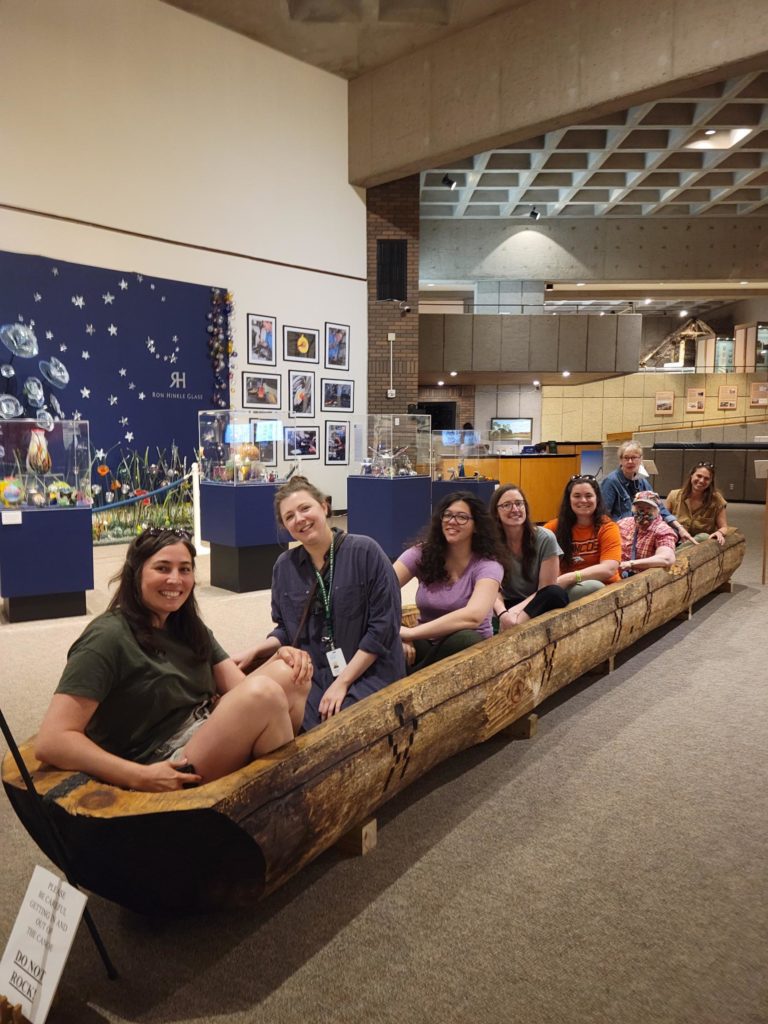
Group of people in a canoe in a museum
This picture shows the Carnegie crew posing in a dugout canoe that was commissioned from artists of the Seneca Nation/Onöhsagwë:de’ Cultural Center.

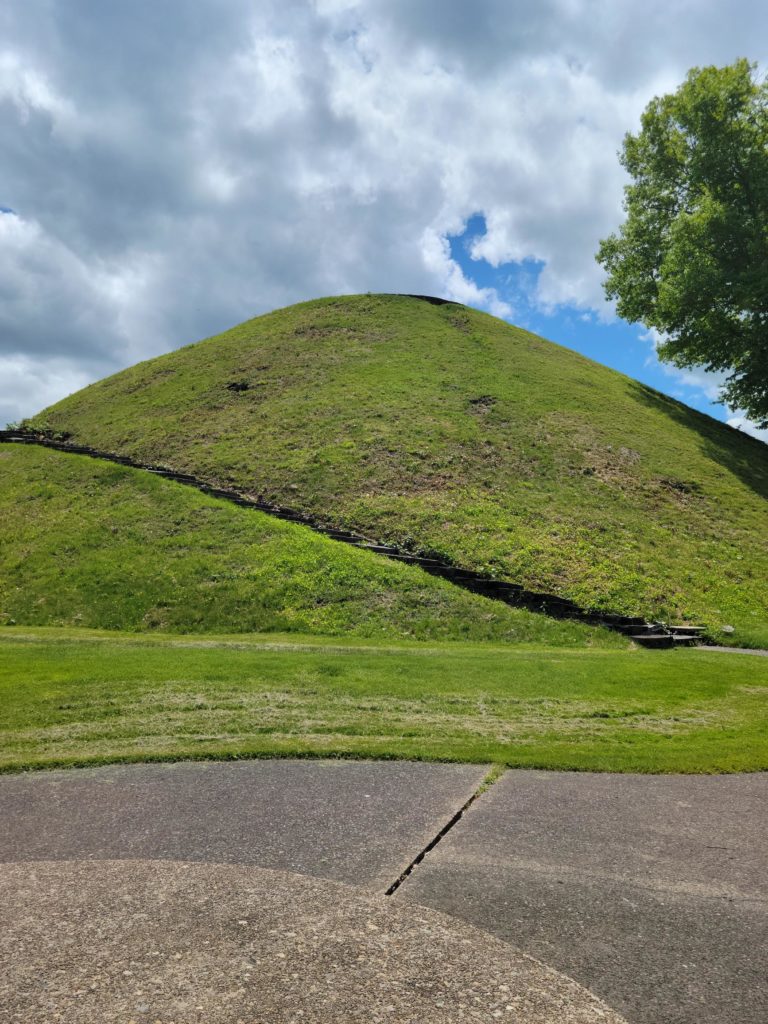
Adena is the name given by archaeologists to the mound building cultural group who developed around 2500 years ago in the Ohio River Valley and many of its major tributaries. The Grave Creek Mound, now located in the center of a town whose name references the structure, is one of the largest of the conical Adena burial mounds. Dr. Jones, curator Hank Lutton, and the staff of the Archaeological Complex work to maintain the integrity of this National Historic Landmark. According to their website, the mound was constructed between 250 and 150 B.C.E. and in 1838 it was measured as being 69 feet tall, and 295 feet in diameter. 

The Grave Creek Mound from a walkway near the base of the 2,000-year-old structure.

In addition to the mound, the complex consists of an archaeological research and collection facility, and the Delf Norona Museum, which interprets lifeways of the Adena people for the public. The museum, named for the author of the mound’s definitive history, opened its doors in 1978, and the research facility was constructed later in 2008. This facility is the repository for all of West Virginia’s State-owned collections and artifacts. 

Although our exhibits do not explain the arrangement, Carnegie Museum of Natural History once served as a repository for the State Museum of Pennsylvania for all cultural material excavated in Western Pennsylvania.  This material remains in our care at our collection facility and is used for research. As we try to reconcile our institutional past and bring equity and inclusion into our storytelling, these collections will help us interpret the pre-contact narratives of the region. 

Dr. Nicole Heller viewing the Adena Structure replica in the Delf Norona Museum. 

I am very lucky to be able to offer these educational experiences to my students and volunteers and I encourage those of you who can, to take the 90-minute drive from Pittsburgh to Moundsville, West Virginia to check out the Archaeology Complex. And the next time you find yourself in the North Eastern section of the Alcoa Hall of American Indians at CMNH, take some time to think about the mound builders who were here before the Haudenosaunee, Lenape, and Shawnee in Western Pennsylvania. 

Amy L. Covell-Murthy is the Collection Manager for the Section of Anthropology and Archaeology at Carnegie Museum of Natural History.

Related Content

Celebrating Indigenous Peoples’ Day

Grass Baskets of the Chumash

Queer Eye for Lakota Art

Carnegie Museum of Natural History Blog Citation Information

Blog author: Covell-Murthy, Amy L.
Publication date: July 14, 2022

Share this post!

  • Share on Twitter Share on Twitter
  • Share on Facebook Share on Facebook
  • Share on Pinterest Share on Pinterest
  • Share on LinkedIn Share on LinkedIn
  • Share on Reddit Share on Reddit
  • Share via Email Share via Email

Filed Under: Blog Tagged With: Amy Covell-Murthy, anthropology, archaeology, Science News

  • « Go to Previous Page
  • Page 1
  • Interim pages omitted …
  • Page 12
  • Page 13
  • Page 14
  • Page 15
  • Page 16
  • Interim pages omitted …
  • Page 25
  • Go to Next Page »

sidebar

About

  • Mission & Commitments
  • Directors Team
  • Museum History

Get Involved

  • Volunteer
  • Membership
  • Carnegie Discoverers
  • Donate
  • Employment
  • Events

Bring a Group

  • Groups of 10 or More
  • Birthday Parties at the Museum
  • Field Trips

Powdermill

  • Powdermill Nature Reserve
  • Powdermill Field Trips
  • Powdermill Staff
  • Research at Powdermill

More Information

  • Image Permission Requests
  • Science Stories
  • Accessibility
  • Shopping Cart
  • Contact
  • Visitor Policies
Stay in the loop! Sign up for our newsletter(s).
One of the Four Carnegie Museums | © Carnegie Institute | Privacy Policy | Terms of Use | Accessibility
Rad works here logo