• Skip to primary navigation
  • Skip to main content
  • Skip to primary sidebar

Carnegie Museum of Natural History

One of the Four Carnegie Museums of Pittsburgh

  • Visit
    • Buy Tickets
    • Visitor Information
    • Exhibitions
    • Events
    • Dining at the Museum
    • Celebrate at the Museum
    • Powdermill Nature Reserve
    • Event Venue Rental
  • Learn
    • Field Trips
    • Educator Information
    • Programs at the Museum
    • Bring the Museum to You
    • Guided Programs FAQ
    • Programs Online
    • Climate and Rural Systems Partnership
  • Research
    • Scientific Sections
    • Science Stories
    • Science Videos
    • Senior Science & Research Staff
    • Museum Library
    • Science Seminars
    • Scientific Publications
    • Specimen and Artifact Identification
  • About
    • Mission & Commitments
    • Directors Team
    • Museum History
  • Tickets
  • Give
  • Shop

wpengine

June 26, 2020 by wpengine

Indiana Jones and the Rosetta Stone

Have you ever watched a film about archaeology and wondered how characters like Indiana Jones or Evelyn from The Mummy (1999) can run their fingers along a carved wall or slab, translating Egyptian hieroglyphs smoothly as they go?

The ability to read ancient Egyptian hieroglyphic writing today is all thanks to the Rosetta Stone. You may have heard of the Stone before, perhaps in the context of a popular language learning software, or you may know about the Stone itself, but do you know why it was such an incredible archaeological find?

The Rosetta Stone is a black granodiorite (similar to granite) slab standing 4 feet tall, 2 ½ feet wide, and 11 inches thick. It is part of a larger stele, a stone or wooden slab erected to commemorate occasions, act as territorial markers, or for funerary purposes. The Stone bears three blocks of text written in three different languages- Egyptian hieroglyphs, Egyptian Demotic, and Ancient Greek.
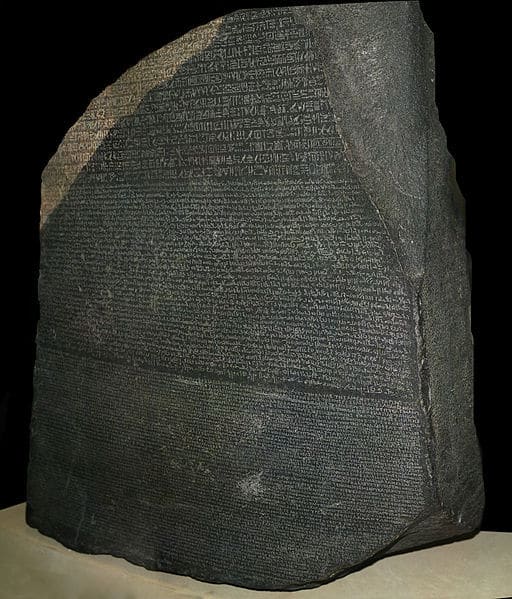
Rosetta Stone

The Rosetta stone was carved during the Hellenistic period and moved at some later point. It was eventually used as construction material for a wall of Fort Julien in Rashid (or Rosetta). It was rediscovered there in 1799. While the history of its discovery is not particularly well-documented it is typically attributed to Pierre-Francis Bouchard, a French soldier on a Napoleonic campaign in Egypt. The Rosetta Stone was taken by British troops after they defeated France and transported to London. It has been on display at the British Museum since 1802.
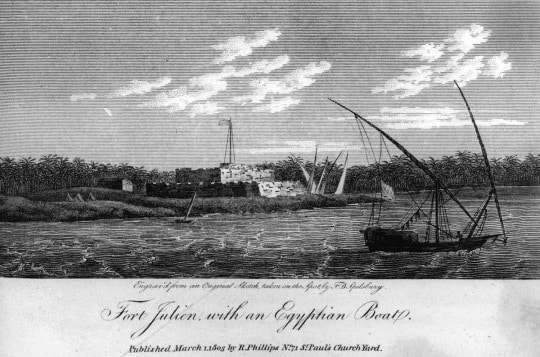
black and white image of boat in the water

The reason the Rosetta Stone is so significant is because it was the key that unlocked our understanding of ancient Egyptian hieroglyphs, giving us a window into the ancient civilization. The text on it is pretty mundane and of no great historical significance. It is a decree (called the Decree of Memphis), outlining the achievements and good leadership of King Ptolemy, who ruled Egypt from 204-181 B.C.E. The decree was made and copied onto several stelae which were placed in temples throughout Egypt, the Rosetta Stone being just one of them. Since the discovery and eventual translation of the Rosetta Stone, several other more intact stelae inscribed with the Decree of Memphis have been found.

Ancient Greek was already well known to scholars, so the translation of that section happened fairly quickly, though unknown religious and administrative jargon delayed the process. Hubert-Pascal Ameilhon published the first translation of the Greek text in 1803. Before the discovery of the Rosetta Stone, there had been little success in translating Demotic and even less in translating hieroglyphs. Having all three languages together was an incredible resource for scholars because for the first time, they could study whether there was a direct link between the languages, and use their translation of the Ancient Greek text to translate the other languages on the stone.

Swedish scholar Johan David Åkerblad had already been working on translating an unknown script found in Egypt. He called this script “cursive Coptic” though it did not share many similarities to Coptic, a language derived from the Greek alphabet and used in Egypt through the 17th century C.E. The language he was studying was actually Demotic, and the discovery of the Rosetta Stone aided his research. He, along with Antoine-Isaac Silvestre de Sacy, set to work translating this larger text. Having the Greek text side by side, they were able to locate where names lined up, and begin deciphering Demotic. Åkerblad proposed an alphabet of 29 letters, half of which were correct, but they failed to identify the remaining characters.
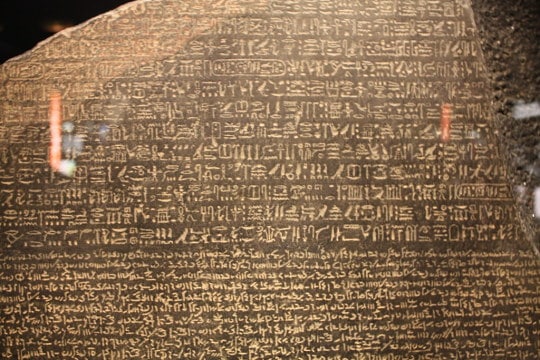
close up of the Rosetta Stone

The translation of the hieroglyphic text similarly revolved around proper names. As early as 1761, scholars believed that characters enclosed in cartouches (or ovals with a line at one end) were proper names. By sorting through the Greek text and comparing where names would most likely be Thomas Young, foreign secretary of the Royal Society of London, was able to discover phonetic characters that aligned with Greek names. This discovery was incredibly important, as Young found these phonetic characters were similar to the Demotic characters in proper names, and then further discovered about 80 other similarities between Demotic and hieroglyphic writing. This shows that Demotic is actually a mix of phonetic characters and ideograms, which is what prevented Åkerblad and Silvestre de Sacy from progressing further with their translation, they had assumed Demotic used only phonetic characters.
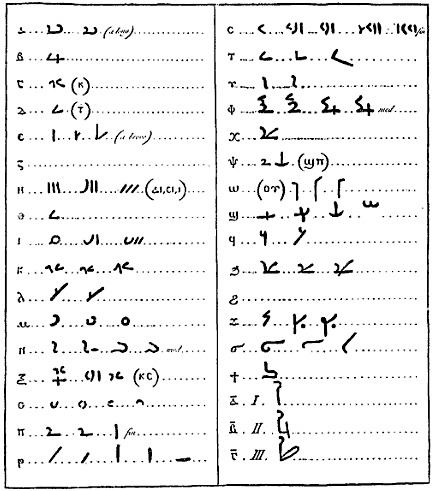
series of letters and symbols in various languages

In 1814, Young corresponded with Jean-François Champollion, a teacher at Grenoble who had done scholarly work on Ancient Egypt. Champollion was able to construct an alphabet of phonetic hieroglyphs, which was announced publicly on September 27th, 1822. From there, Champollion went on to develop an Ancient Egyptian grammar and hieroglyph dictionary, which was published after his death in 1832. Other scholars drew upon the work done by Åkerblad, Silvestre de Sacy, Young, and Champollion to delve deeper into the text on the Rosetta Stone and create a full translation.

Indiana Jones and the Raiders of the Lost Ark takes place more than 100 years after Champollion’s dictionary was published. We can assume that during his studies and explorations, Indy studied this dictionary, and any others that followed, giving him the ability to read Egyptian hieroglyphs at any moment. While Indiana Jones is a fictitious archaeologist and scholar, we have real scholars to thank for the fact that we can enjoy films about this character today!

Jo Tauber works in LifeLong Learning at Carnegie Museum of Natural History. Museum employees are encouraged to blog about their unique experiences and knowledge gained from working at the museum.
Filed Under: Blog Tagged With: Education, Educators, Jo Tauber, Museum from Home

June 25, 2020 by wpengine

Behind the Scenes with the Baron de Bayet and L. W. Stilwell Collection Part 3:  The Wild West Formed Million of Years Ago

New to this series? Read Part 1 and Part 2.

photo of Badlands National Park
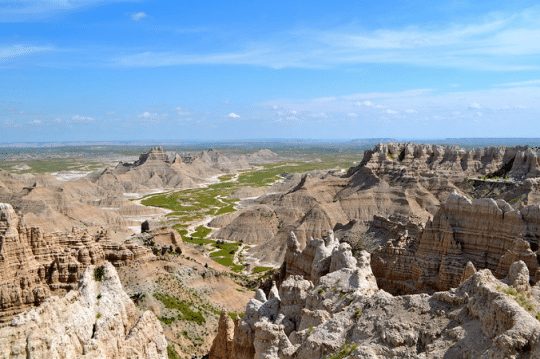
Figure 1:  Badlands National Park today, National Park Service photo, 2014.   This view of the Badlands topography illustrates the erosion that took place over the last 2 million years.

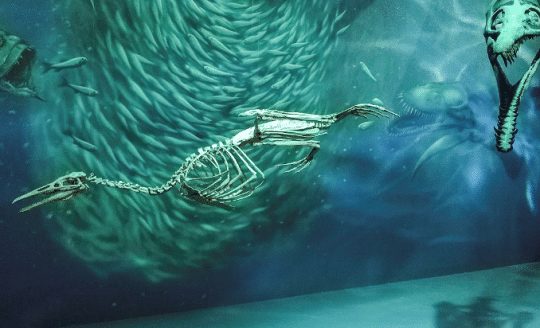
The Lakota called the Badlands “Mako Sica” or “land bad.” The early French-Canadian trappers referred to it as “les mauvais terres pour traverse” or “bad lands to travel through.”  Seventy-five million years ago, this area was a lush underwater seaway filled with creatures such as mosasaurs, plesiosaurs, diving birds, fish, baculites, and ammonites (Figure 2).

Figure 2: Taxa that swam in the Western Interior Seaway from Dinosaurs in Their Time exhibit at Carnegie Museum of Natural History.  Photo by Patty Dineen.

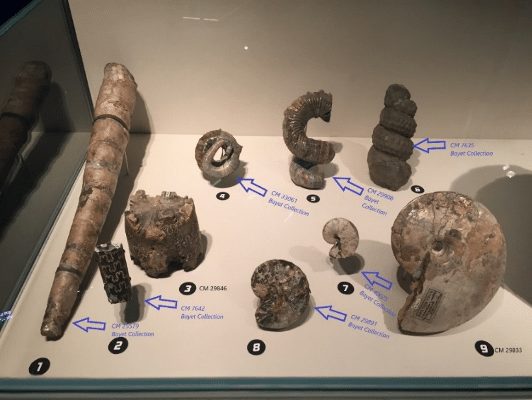
The Stilwell fossils of Cretaceous age (Figure 3) were deposited in a black mud that accumulated on the sea floor from 82 to 70 million years ago (Figure 4).  The Pierre Shale is part of the extensive Western Interior Seaway of North America (Figure 5).  Museum visitors can view a changing geographic representation of the seaway on a wall-mounted flat screen monitor within the Dinosaurs in Their Time exhibit.  The seaway extended from the Gulf of Mexico, Florida, and southern Gulf Coast, north through Texas, Kansas, Colorado, Wyoming, Montana, the Dakotas, and the Canadian Provinces of Alberta and Saskatchewan. This vast waterway terminated in the Artic region of Canada.  At the time of the Pierre Sea, the ice sheet-free greenhouse to hothouse paleoclimate was much warmer than it is today, creating the highest sea levels in earth’s history.  Sea level rises and falls were primarily controlled by the presence or melting of glaciers in the polar regions, the shifting of the continents, and the uplifting of proto-Rocky Mountains by plate tectonics.

Figure 3:  Western Interior Seaway fossils on display at Carnegie Museum’s Dinosaurs in Their Time exhibit.  Stilwell fossils are highlighted in blue.

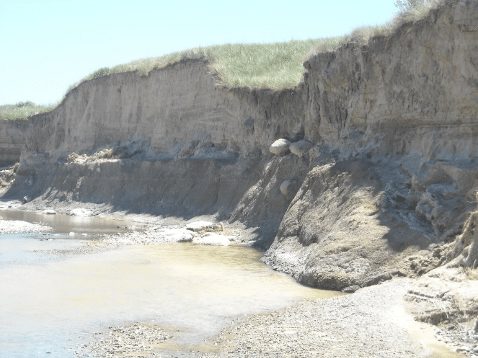
Figure 4: Outcrop photo of Pierre shale.

Figure 5:  Western Interior Seaway approximately 75 million years ago. Red dot locates Deadwood, South Dakota today.

Fast forward to the Wild West of the 1890’s, and dealers such as Stilwell found and sold fossils to museums and private collectors.  Knowledge of Badlands fossils spread as far as Europe, and by 1889 Bayet wanted some for his own collection.

Next, in our final post of this series, we will delve into the Stilwell-Bayet correspondence in search of clues about how fossils were bought and sold over a century ago.

Joann Wilson is an Interpreter for the Department of Education and a volunteer with the Section of Invertebrate Paleontology. Albert Kollar is Collections Manager for the Section of Invertebrate Paleontology. Museum employees are encouraged to blog about their unique experiences and knowledge gained from working at the museum.
Related Content

Trilobites in the Collection of the Carnegie Museum of Natural History

The Bromacker Project Part VI

Benedum Hall of Geology – A Teaching Lab for the Carnegie Interpreters

Filed Under: Blog Tagged With: Albert Kollar, Benedum Hall of Geology, Joann L. Wilson, Museum from Home, Science News

June 24, 2020 by wpengine

The Bromacker Project Part VI: Seymouria sanjuanensis, the Tambach Lovers

New to this series? Read The Bromacker Fossil Project Part I, Part II, Part III, Part IV, and Part V.

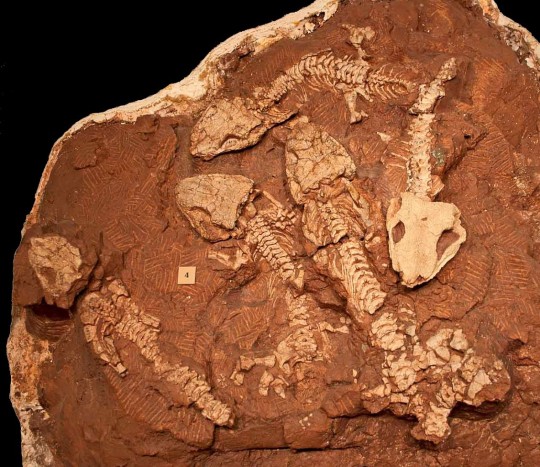
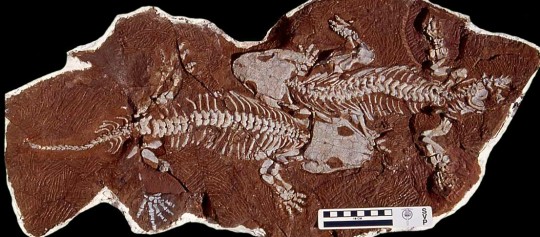
Seymouria sanjuanensis fossils
Two exquisitely preserved, nearly complete adult skeletons of Seymouria sanjuanensis that were discovered in the Bromacker quarry in 1997. Photo by Dave Berman.

At lunchtime on the last day of the 1997 field season, Thomas Martens discovered the two exquiste specimens shown above, the only fossils found that year. Thomas had uncovered a piece of the hip region with some attached vertebrae that resembled, once again, those of the ancient amphibian Seymouria. Because our work time was limited, we estimated the length of the specimen and rushed to extract it from the quarry. When we flipped the block over, a few pieces of rock fell out, revealing a series of vertebrae of a second individual in the block. We were thrilled to learn that Thomas had discovered two specimens of Seymouria. We put the rock pieces back in place and quickly finished plastering the block. There was just enough time for Dave, Stuart Sumida, and I to return to our hotel, clean up, quickly pack, and meet Thomas, his family, and his fossil preparator Georg Sommer for a celebratory dinner. What a great way to end the field season.

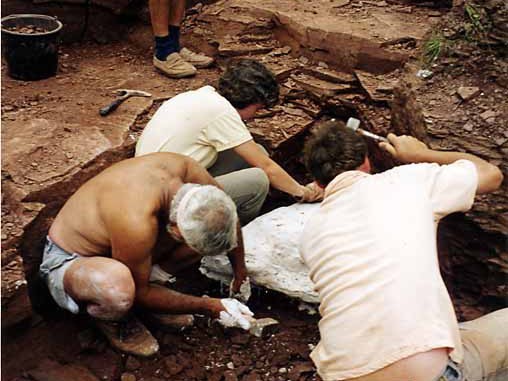
Working in tight quarters to quickly extract the Seymouria specimens discovered at lunchtime on the last day of the field season. Clockwise from right: Georg Sommer, Dave Berman, and the author. Photo by Stuart Sumida, 1997.

Seymouria had already been known from the Bromacker quarry. Thomas had discovered and identified two skulls in 1985, fossils he brought with him when he came to Carnegie Museum of Natural History (CMNH) in 1993 to study for six months with Dave Berman under a CMNH-financed fellowship. Both skulls were of juvenile individuals. Of the two known species of Seymouria, Dave and Thomas were excited to discover that the Bromacker skulls were nearly identical to those of Seymouria sanjuanensis. The 1997 lunchtime discovery of the two complete adult specimens confirmed the identification of the Bromacker Seymouria as S. sanjuanensis.

The first discovered species of Seymouria was Seymouria baylorensis, from near Seymour, Baylor County, Texas, from which its name was derived. Seymouria sanjuanensis was first found in San Juan County, Utah, by Dave Berman and the field team he was leading as a graduate student at the University of California, Los Angeles. Dave’s advisor, Dr. Peter Vaughn, named it Seymouria sanjuanensis in reference to the county of discovery. Another discovery of five specimens of this species preserved together was made by Dave in New Mexico in 1982.

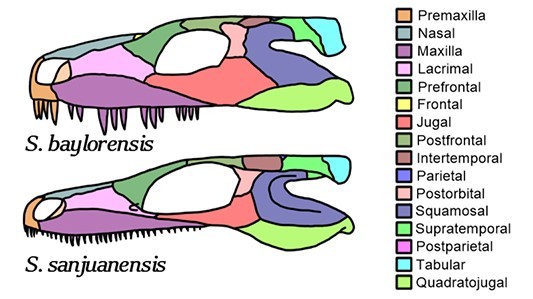
Comparison of the skulls of Seymouria baylorensis (top) and S. sanjuanensis (bottom). The individual bones of the skull are color coded. Skulls scaled to same size. Image from Wikimedia Commons.

Seymouria baylorensis is geologically younger than S. sanjuanensis and has a more robust skull, larger and fewer teeth of variable size, and a subrectangular postorbital bone compared to the chevron-shaped postorbital of S. sanjuanensis.

Seymouria is considered a terrestrial amphibian that only returned to water to breed. Its strongly built skeleton provided the support needed to move on land. With its numerous, slender, pointed teeth, S. sanjuanensis most likely ate insects and small land-living vertebrates. We know that the Bromacker Seymouria didn’t consume fish, because not a single fish fossil, scrap of fish fossil, or fish coprolite (fossil poop) has ever been found at the Bromacker quarry. Study of the rock deposits preserving the fossils at the Bromacker indicate a lack of permanent water, which would explain the absence of fish.

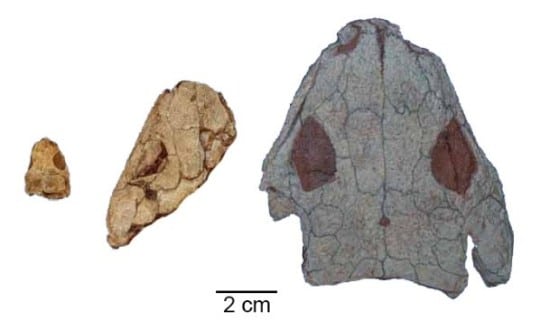
Growth series of skulls of Seymouria sanjuanensis from the Bromacker Quarry showing (left to right) early juvenile, late juvenile, and adult growth stages. Photos by the author, 2006.

Conditions for breeding must have been favorable in the Tambach Basin, the ancient basin where sediments preserving the Bromacker fossils accumulated, because several juvenile specimens of Seymouria are known. The smallest is a skull measuring about ¾ of an inch long. In a study led by our colleague Josef Klembara (Comenius University, Slovak Republic), we determined that the smallest individual was post-metamorphic—in other words, no longer a tadpole—based on the presence of certain ossified bones in the skull. In tadpoles, these skull elements are cartilaginous; that is, they haven’t yet turned to bone.

Seymouria sanjuanensis fossils
Five skeletons of Seymouria sanjuanensis preserved together were discovered in north central New Mexico by Dave Berman in 1982. These specimens are on display in CMNH’s Benedum Hall of Geology, in the “What is a Fossil?” case. Photo by the author, 2013.

The discovery in Germany of the same species of Seymouria previously known only from New Mexico and Utah has important implications in terms of paleobiogeography (the study of the distribution of species in space and time). At the time S. sanjuanensis was alive, the continents were merged to form the supercontinent Pangaea. The presence of S. sanjuanensis across Pangaea, north of a roughly east-west trending mountain range, indicates that climatic or physical barriers (e.g., deserts, inland seas, mountain ranges) didn’t prevent its dispersal.

Map showing the arrangements of the continents in the Early Permian. The locality where Seymouria occurs in present-day New Mexico, Texas, and Utah and the Bromacker locality in present-day Germany are indicated. Map modified from Scotese, 1987.

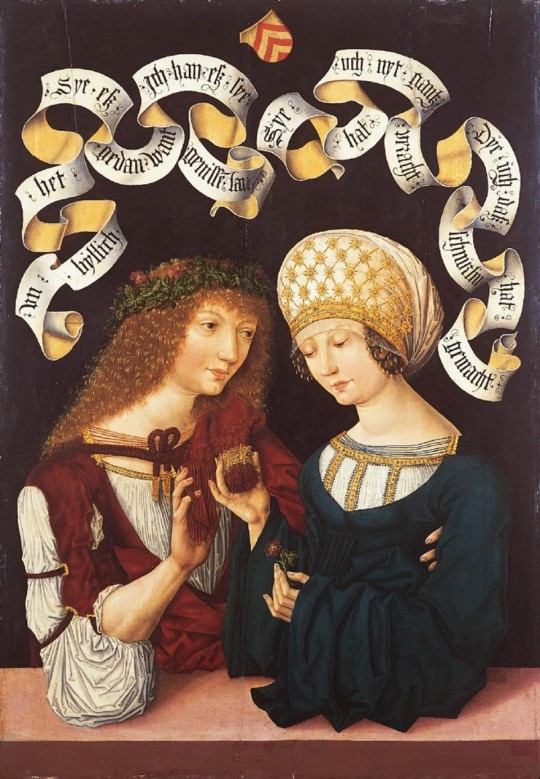
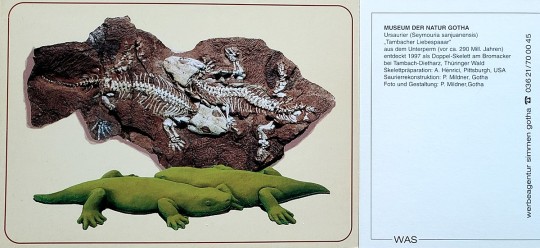
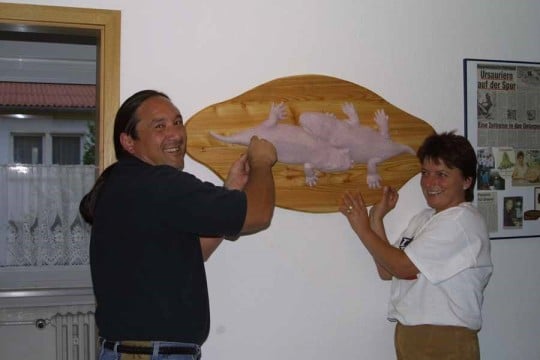
The two Seymouria specimens preserved together were a big hit in the local region in Germany. Museum der Natur (MNG) exhibit preparator Peter Mildner nicknamed them the “Tambacher Liebespaar” (“Tambach Lovers”) after a painting entitled “Gothaer Liebespaar” (“Gotha Lovers”) on exhibit in the Herzogliches Museum of the Stiftung Schloss Friedenstein (also the parent organization of MNG). This name caught on and is fondly used by our German friends and colleagues. Peter even made a fleshed-out model of the two Seymouria specimens in their death pose. The proprietor of the hotel in which we stayed hung a copy of the model of the Tambach Lovers and a framed collage of newspaper articles featuring the Bromacker on a wall in one of the hotel rooms, which she named the “Präparation Suite” (i.e. “Preparation Suite” in reference to the preparation of fossils). I often stayed in this room.

The painting entitled “Gothaer Liebespaar” (“Gotha Lovers”), which is on display at Herzogliches Museum of the Stiftung Schloss Friedenstein, Gotha, Germany. Image from Wikimedia Commons and provided by Thomas Martens.

Tambach Lovers postcard
Postcard showing the Tambach Lovers. The postcard was made for and sold by the Museum der Natur, Gotha. Photo of the postcard by the author, 2020.

Stuart Sumida (left) and Heike Scheffel, proprietor of the Hotel Wanderslaben where we stayed (right), with the model of the Tambach Lovers in the “Präparation Suite.” The framed collage to the right of the model holds newspaper articles featuring the Bromacker project. Photo by the author, 2003.

A cast of the Tambach Lovers specimen and a model of Seymouria sanjuanensis are exhibited in the Fossil Frontiers display case in CMNH’s Dinosaurs in Their Time exhibition. Be sure to look for them once the museum re-opens. And stay tuned for my next post, which will feature the unusual bipedal reptile Eudibamus cursoris.

For those of you who would like to learn more about Seymouria sanjuanensis, here is a link to the publication describing the 1997 specimens: https://www.tandfonline.com/doi/abs/10.1671/0272-4634(2000)020%5B0253%3AROSSSF%5D2.0.CO%3B2.

Amy Henrici is Collection Manager in the Section of Vertebrate Paleontology at Carnegie Museum of Natural History. Museum employees are encouraged to blog about their unique experiences and knowledge gained from working at the museum.
Keep Reading

The Bromacker Fossil Project Part VII: Eudibamus cursoris, the Original Two-legged Runner

Filed Under: Blog Tagged With: Amy Henrici, fossils, Museum from Home, Science News, The Bromacker Fossil Project, Vertebrate Paleontology

June 22, 2020 by wpengine

The Zebra Mussel and the Shopping Cart

Zebra mussels (Dreissena polymorpha) are eastern European freshwater bivalves that invaded North America. Something unusual about their biology facilitated this invasion.

In marine waters, many benthic (living on the bottom) animals add their babies to the plankton, the mix of small and microscopic organisms largely adrift in the water column.

The situation is different in freshwater where almost all benthic animals lay their eggs on the bottom. (Freshwater plankton exist, but the organisms that compromise it spend their whole lives as plankton.) I don’t know why marine and freshwater animals differ that way, but they do. Zebra mussels are a major exception to this rule; they live in freshwater, but they put their babies (larvae) in the plankton.

How did zebra mussels invade North America? Partially loaded ships require ballast to safely navigate at sea. Decades ago, ships were loaded with rocks and dirt (and slug eggs) as ballast, and when they reached their intended port these materials were removed and replaced with cargo. That is why so many invasive slugs (essentially all your garden slugs are non-native) arrived first in seaports and spread from there.  Ballast tanks that can be easily filled with water and drained are a design feature of modern ships, and depending upon some ship’s departure points, their ballast water sometimes contains larval zebra mussels. For many years, ships were slow enough that zebra mussel larvae arrived in North America dead, but eventually reductions in ocean crossing time worked in the invaders’ favor.  In 1988 some larval zebra mussels arrived alive in the ballast water pumped out into Lake St. Clair near Detroit. By 1990, zebra mussels had infested all the Great Lakes and now they occur in more than half of the 50 United States.

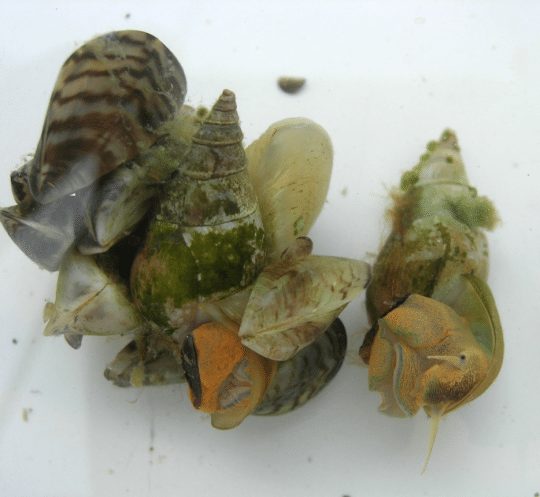
Fig. 1. Freshwater snail (Elimia livescens) colonized by zebra mussels (left) and uncolonized (right). From Douglas Lake, Michigan 30 Aug. 2015 (photo by T.A. Pearce).

The economic and ecological devastation caused by zebra mussels is legendary. Zebra mussels make threads (byssal threads) for attaching to hard objects. They clog intake pipes of city water supplies and power station cooling pipes, requiring costly removal. They compete with native mussels and young fish for food and can smother or hinder movements of our native mussels, snails (Fig. 1), and crayfish when they settle in large numbers.

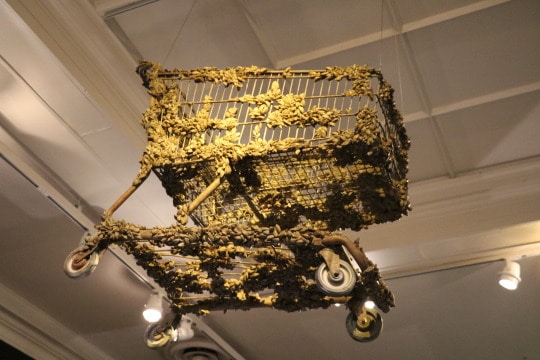
Fig. 2. Replica of shopping cart covered in zebra mussels.

A noteworthy item that became encrusted with zebra mussels is a shopping cart that was dredged out of Lake Superior in 2012. A replica of the shopping cart was on display during the We Are Nature exhibit at Carnegie Museum in 2018 (Fig. 2).

Lest you think I am biased against zebra mussels, I will note two possibly positive things you can say about them. First, they filter water efficiently and because they pump up to a liter (quart) per day, they cleaned up the formerly polluted water in Lake Erie. But even that can be negative, because they removed so much plankton from the water that our native species now have a hard time finding enough to eat. Second, because zebra mussels selectively concentrate certain toxic metals, including uranium, they have potential to be used in bioremediation efforts to clean water of this radioactive pollutant (Immel et al. 2016). But those are the only good things you can say about them. Mostly, they wreak havoc.

Literature Cited

Immel, F., Broussard, C., Catherinet, B., Plasseraud, L., Alcaraz, G., Bundeleva, I. & Marin, F. 2016. The shell of the invasive bivalve species Dreissena polymorpha: biochemical, elemental and textural investigations. PloS One, 11(5): e0154264. https://doi.org/10.1371/journal.pone.0154264

Timothy A. Pearce, PhD, is the head of the mollusks section at Carnegie Museum of Natural History. Museum employees are encouraged to blog about their unique experiences and knowledge gained from working at the museum.

Related Content

Oysters Swim Towards a Siren Soundscape

Slowest Process Ever Observed: A Trillion Times Longer Than the Age of the Universe

From Nebraska or Bust, a Truckload of Mollusks

Filed Under: Blog Tagged With: Anthropocene Living Room, Anthropocene Section, Museum from Home, Science News, Section of Mollusks, Tim Pearce

June 19, 2020 by wpengine

Behind the Scenes with the Baron de Bayet and L. W. Stilwell Collection, Part 2:  The Wild West a Century Ago

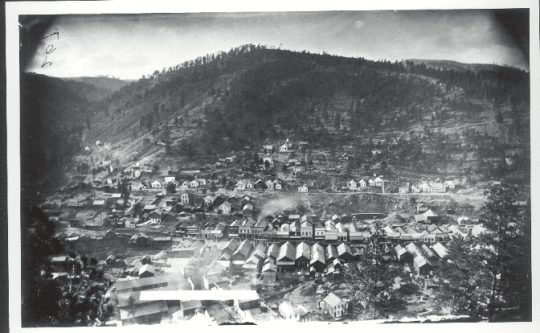
black and white photo of Deadwood from a distance
Figure 1:  Deadwood, Dakota Territories 1879.   Image courtesy of the Deadwood Historic Preservation Commission, City of Deadwood Archives.

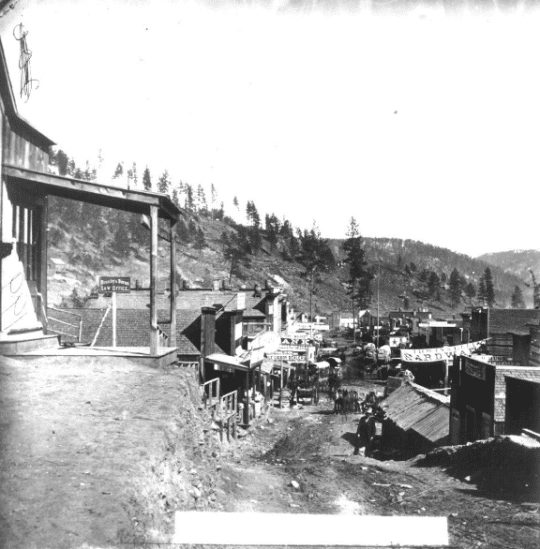
black and white photo of a Deadwood street
Figure 2:  Deadwood, Dakota Territories 1879.  Image Courtesy of Deadwood Historic Preservation Commission, City of Deadwood Archives.

Fancy yourself on the hottest day in summer in the hottest spot of such a place without water — without an animal and scarce an insect astir — without a single flower to speak pleasant things to you and you will have some idea of the utter loneliness of the Bad Lands.”   Thaddeus Culbertson, 1850

When Lucien Stilwell stepped off the stagecoach on September 25, 1879, he was not your typical visitor to Deadwood.  Photos of Stilwell in later years show a thin scholarly figure with glasses. In 1879, Deadwood, Dakota Territories was known for gold prospecting, gambling and lawlessness.  Just three years prior, Wild Bill Hickock had been shot in the back while playing poker here.  It would be a few more years until Seth Bullock, first sheriff of Deadwood, would begin to bring order to town.

As Stilwell stepped off the stagecoach, he was leaving a fifteen-year career in the grocery and grain business in Cairo, Illinois.  A yellow fever epidemic blanketing parts of the United Sates prompted him to uproot his life.  He arrived just one day before a fire destroyed over 300 buildings and displaced over 2000 people in Deadwood.   According to Michael Runge, City Archivist of Deadwood South Dakota, photos of Deadwood in 1879 (Figures 1 and 2), were taken just before the great fire.  If you look closely at Figure 2, you can see a law office, hardware store, liquor store, and city market.

Despite the great fire and the dangers of Deadwood, Lucien W. Stilwell found a job at a bank, brought his family to town and built a home.  Along the way, he became fascinated by the fossils in the surrounding Black Hills.   He began a careful study of the region and developed relationships with other fossil collectors.   Eventually, he turned his hobby into a side business.

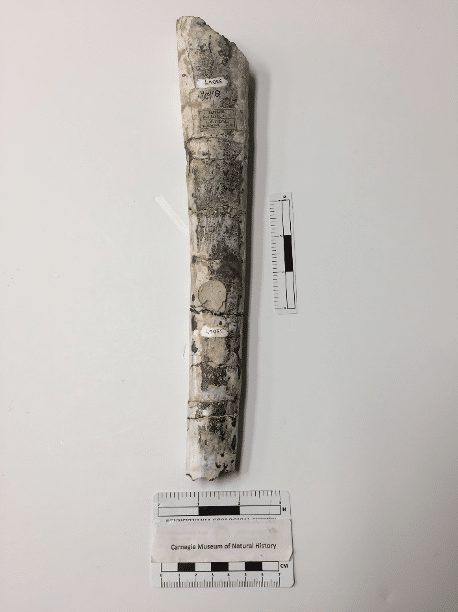
photo of faculties fossil

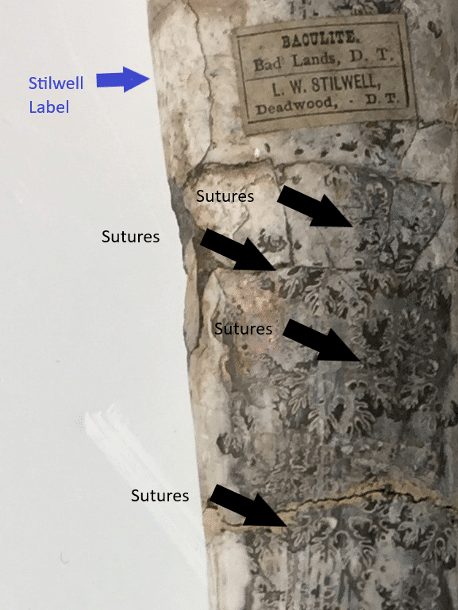
Figures 3 & 4:  CM 33067 – Baculites collected by Stilwell.  Baculites, translated as “walking stick rock”, are an extinct group of straight cephalopods that swam the seas 75 to 80 million years.  “Sutures” or growth lines are formed when the animal adds new shell material as it grows.  Sutures assist paleontologists in the identification of the genus and species.

Prior to leaving the bank in 1890, Stilwell began selling Badland fossils and minerals.  In a correspondence to the Baron de Bayet of Brussels dated January 12, 1889, Stilwell said, “I tried to catch your meaning in your last letter.  As I understand it, you wanted one of every specie and variety of fossils I had, excepting the large and costly specimens of mammals.”    

In one letter to Bayet, Stilwell wrote, “I put in a number of baculites, all of which have some different interest.  One is to show fine sutures another to show iridescence to rare degree, another to show size, another to show form so differing as to be a specie of baculite by another name…”   Albert Kollar of the Section of Invertebrate Paleontology explained that in circumstances when the exact stratigraphic locality is questionable, having the original fossil labels as seen in Fig. 4 are critical to accurate fossil identification.  Stillwell was a capable researcher because of his grasp of the geology and paleontology of the Badlands region.  Figures 3 and 4 show a baculites sold by Stilwell to Bayet.  There are 100 Stilwell fossils in the 130,000 specimen Bayet collection.

The next post in this series will explore why dealers such as Lucien W. Stilwell, found so many fossils in the Badlands.

Many thanks to the generous assistance of Michael Runge, Archivist for the City of Deadwood, South Dakota.

Joann Wilson is an Interpreter for the Department of Education and a volunteer with the Section of Invertebrate Paleontology. Albert Kollar is Collections Manager for the Section of Invertebrate Paleontology. Museum employees are encouraged to blog about their unique experiences and knowledge gained from working at the museum.
Related Content

Behind the Scenes with the Baron de Bayet and L. W. Stilwell Collection, Part 1: Crossing the Atlantic with a Boatload of Fossils

Bayet’s Bounty: The Invertebrates That Time Forgot

A Century Ago, a Donor Walked into the Carnegie Museum

Filed Under: Blog Tagged With: Albert Kollar, Benedum Hall of Geology, invertebrate paleontology, Joann L. Wilson, Museum from Home, Science News

June 18, 2020 by wpengine

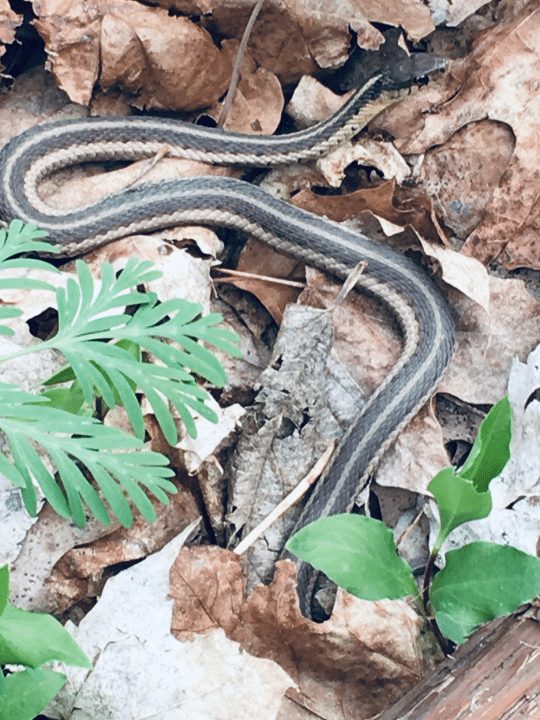
Eastern Garter Snake Encounter

photo of garter snake in leaves

The eastern garter snake never moved. I only noticed the harmless reptile because my hands were within inches of its sleek body as I crouched to photograph a large-flowered trillium. The image above is a result of an abrupt subject change, but rushing wasn’t necessary. I was later able to photograph the intended wildflower without disturbing its striped neighbor.

After perhaps 90 seconds of sharing space with the snake, I backed carefully away from the blooming patch of forest understory within the Allegheny Land Trust’s Barking Slopes Natural Area. Later that day, in the pages of a trusted reference book, I found an explanation for what seemed an unusually passive predator.

Amphibians and Reptiles of Pennsylvania and the Northeast, is a Cornell University Press publication from 2001 by three authors with deep ties to CMNH, Arthur C. Hulse, long a Research Associate for the Museum’s Section of Herpetology, the late C. J. McCoy, a curator within the Section between 1964 and 1993, and Ellen J. Censky, a curator within the Section between 1994 and 1998.

The 5 pages of the 400-page volume devoted to garter snakes includes a description of the snake’s wide range of reactions to close encounters with our species.

“At one extreme, some remain fairly quiescent and allow themselves to be picked up and will not attempt any defensive behavior. At the other extreme, individuals flatten the head and body, flare the lips to expose teeth, and strike violently.”

The authors cite research indicating that young garter snakes are more aggressive after eating a large meal, a behavior that might occur because recently ingested food reduces their mobility, and therefore their chances for successful escape.

By this line of reasoning, the docile creature I encountered might simply have been hungry.

Patrick McShea works in the Education and Visitor Experience department of Carnegie Museum of Natural History. Museum employees are encouraged to blog about their unique experiences and knowledge gained from working at the museum.
Related Content

Northern Ribbon Snake

Lost and Found

Flying Snakes? Unique Reptile Adaptations

Filed Under: Blog Tagged With: Education, Educators, herpetology, Museum from Home, Pat McShea, Patrick McShea

  • « Go to Previous Page
  • Page 1
  • Interim pages omitted …
  • Page 34
  • Page 35
  • Page 36
  • Page 37
  • Page 38
  • Interim pages omitted …
  • Page 206
  • Go to Next Page »

sidebar

About

  • Mission & Commitments
  • Directors Team
  • Museum History

Get Involved

  • Volunteer
  • Membership
  • Carnegie Discoverers
  • Donate
  • Employment
  • Events

Bring a Group

  • Groups of 10 or More
  • Birthday Parties at the Museum
  • Field Trips

Powdermill

  • Powdermill Nature Reserve
  • Powdermill Field Trips
  • Powdermill Staff
  • Research at Powdermill

More Information

  • Image Permission Requests
  • Science Stories
  • Accessibility
  • Shopping Cart
  • Contact
  • Visitor Policies
One of the Four Carnegie Museums | © Carnegie Institute | Privacy Policy | Terms of Use | Accessibility
Rad works here logo