• Skip to primary navigation
  • Skip to main content
  • Skip to primary sidebar

Carnegie Museum of Natural History

One of the Four Carnegie Museums of Pittsburgh

  • Visit
    • Buy Tickets
    • Visitor Information
    • Exhibitions
    • Events
    • Dining at the Museum
    • Celebrate at the Museum
    • Powdermill Nature Reserve
    • Event Venue Rental
    • Gift Cards
  • Learn
    • Field Trips
    • Educator Information
    • Programs at the Museum
    • Bring the Museum to You
    • Guided Programs FAQ
    • Programs Online
    • Climate and Rural Systems Partnership
  • Research
    • Scientific Sections
    • Science Stories
    • Science Videos
    • Senior Science & Research Staff
    • Museum Library
    • Science Seminars
    • Scientific Publications
    • Specimen and Artifact Identification
  • About
    • Mission & Commitments
    • Directors Team
    • Museum History
  • Tickets
  • Give
  • Shop

Blogs about Birds

Birds are incredibly important to Carnegie Museum of Natural History. The museum's Section of Birds contains nearly 190,000 specimens of birds. The most important of these are the 555 holotypes and syntypes. The Section of Birds staff also cares for approximately 196 specimens of extinct birds as well as specimens of many rare species collected decades—if not more than a century—ago.

December 4, 2017 by wpengine

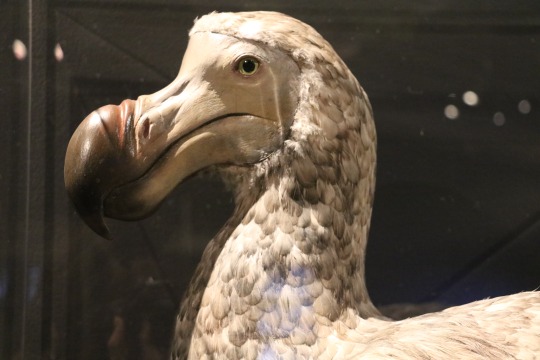
Rethinking the Dodo

Dodo found in the hall of birds

by Barbara Klein

History—not to mention humanity—has not been kind to the dodo bird. As the story goes, the demise of this flightless, clueless, graceless big galoot of a bird was no surprise (except, one imagines, to the dodos themselves).

A descendant of the pigeon, dodos were living the good life on the island of Mauritius (located east of Madagascar in the Indian Ocean), but that all changed when Dutch settlers began arriving in the late 1590s.

With no natural predators to fear, the feathered creatures greeted the new arrivals as friends. The settlers, however, were not quite as amicable. They soon realized how comically easy it was to walk up to an unsuspecting bird and club it over the head. Dodos, it’s what was for dinner.

Speaking of dinner. Where ships are docked, inevitably rats and cats disembark. From the dodo’s perspective, that just meant more mouths to feed. No longer ruling the roost, the dodo’s days were numbered. In fact, it took less than 100 years for the dodo to become a no go.

Back then, the idea of wiping out an entire species forever was inconceivable in the truest sense of the word. It was a concept no one considered.

But times have changed, right? Well, yes and no. Although we humans now understand the consequences of our actions, that knowledge is not always enough to quell our baser instincts.

With that in mind, the exhibition We Are Nature: Living in the Anthropocene is asking visitors to vote for the creature most likely not to succeed. Contenders for this dubious distinction are the black rhino, Sumatran elephant, pangolin, leatherback turtle, and mountain gorilla.

Votes are tallied in the form of donations to the World Wildlife Fund.

Admittedly, this sounds like a joke, and not a particularly funny one. But it is no laughing matter. The goal here is to help humans understand how their actions—or inactions—can make all the difference in the world. It is truly life or death for these animals.


The Anthropocene is the current geological era in which humans are making a profound impact on the geological strata. While the term itself is still being debated by geologists, the museum is embracing it as a social and cultural tool for exploring the broad sum effect humans are having on the planet in the exhibition We Are Nature: Living in the Anthropocene—open now through summer 2018.
Filed Under: Blog Tagged With: Birds, extinction, We Are Nature, We Are Nature: Living in the Anthropocene

December 4, 2017 by wpengine

Skeleton Preservation

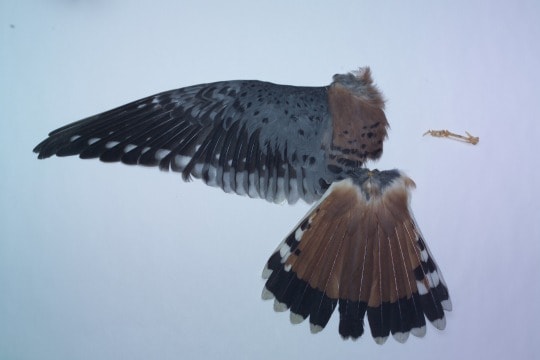
spread wing and tail of a bird

by Stephen Rogers

For many years beginning in the early 1980s, collection managers in Carnegie Museum of Natural History’s Section of Birds began keeping a spread wing and sometimes a tail for many of the skeletons we produced. The rational was that there were two sets of wing bones, and sacrificing one side to produce a spread wing and sometimes also a tail (not sacrificing the pygostyle), would produce a reference item that could be used to examine molt, verify identity, and as reference for morphology and artists who use the collection.

Above is an example of a spread wing and tail and the other corresponding wing parts from the other side of the wing. This photo was sent to a person wishing to have measurements of the pollex bone and the length of the alula—in this case we could provide measurements from the same individual. The pieces of tissue on the wing can also be used to supply dried tissue for DNA.

We did not and, even now, do not preserve tissue in ethanol or liquid nitrogen. Usually dried toe-pad material is used to get DNA when tissue is not available, but if we did not save skins of the specimens collected, a piece of tissue from the wing can be used. Another use of these specimens has been the extraction of wax like material that birds apply from the uropygial gland to keep the bird feather waterproof. One researcher extracted these chemicals from spread wings which was easier than doing so from study skins—dipping the feathers into a solution to dissolve off the material and running it through a gas chromatograph.


Stephen Rogers is a collections manager at Carnegie Museum of Natural History. Museum employees are encouraged to blog about their unique experiences and knowledge gained from working at the museum.

Filed Under: Blog Tagged With: Birds, Section of Birds, Stephen Rogers

October 20, 2017 by wpengine

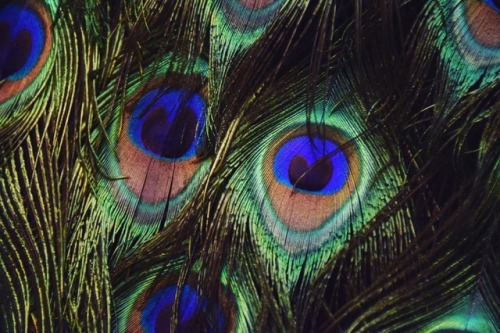
Peafowl Feathers

 This is a close up view of peafowl feathers. Although most people refer to this bird as a peacock, technically only males are called peacocks whereas females are called peahens.

This is a close up view of peafowl feathers. Although most people refer to this bird as a peacock, technically only males are called peacocks whereas females are called peahens.

Filed Under: Blog Tagged With: Birds

October 9, 2017 by wpengine

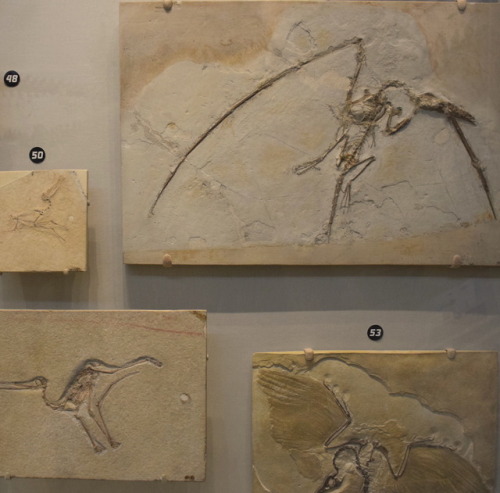
Solnhofen Fossils

These fossils were found in a quarry in Solnhofen, Germany, which was once a series of shallow, tropical lagoons. The environmental conditions at Solnhofen resulted in remarkably preserved fossils of Late Jurassic plants, invertebrates, fish, reptiles, and bird species.

These fossils were found in a quarry in Solnhofen, Germany, which was once a series of shallow, tropical lagoons. The environmental conditions at Solnhofen resulted in remarkably preserved fossils of Late Jurassic plants, invertebrates, fish, reptiles, and bird species like these fossils on display in Dinosaurs in Their Time.

Filed Under: Blog Tagged With: Birds, fish, fossils, reptiles

October 5, 2017 by wpengine

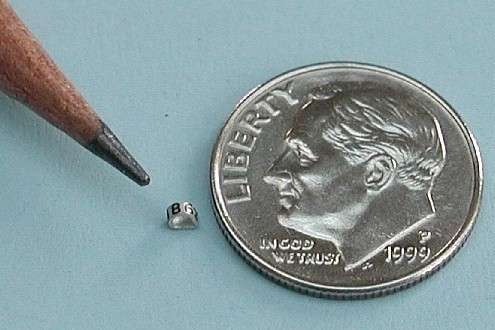
Hummingbird Bands

tiny hummingbird band similar in size to the point of a pencil

At Powdermilll Nature Reserve, researchers use different sized bands for different sized birds, which helps them track the movement and lifespan of populations.

The band pictured above is a hummingbird band. It is so small that the customary nine-digit band number is reduced to five digits with a letter prefix.


Powdermill Nature Reserve’s avian research center is part of Carnegie Museum of Natural History’s biological research station in Rector, Pennsylvania.  The research center operates a bird banding station, conducts bioacoustical research, and performs flight tunnel analysis with the goal of reducing window collisions.

Filed Under: Blog Tagged With: bird banding, Birds, parc, Powdermill Nature Reserve

October 5, 2017 by wpengine

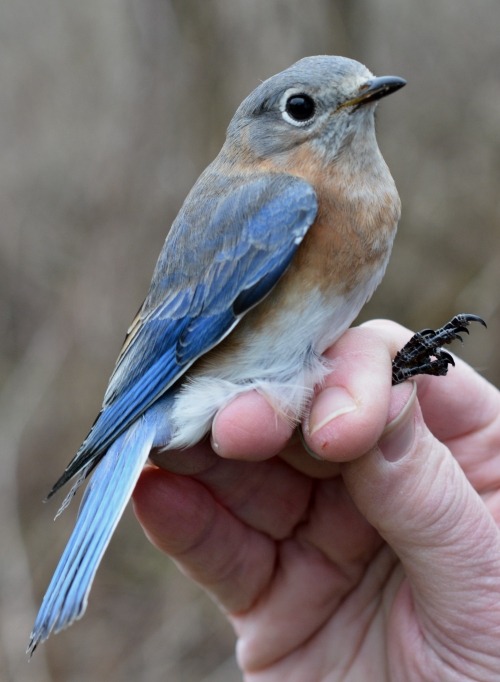
Eastern Bluebird

Eastern Bluebird, a small vibrant blue bird

This pretty little eastern bluebird was banded this year at Powdermill Nature Reserve’s bird banding lab in Rector, Pa.

Although they are common winter residents in a field just over the hill from the banding lab, eastern bluebirds only occasionally stray into the banding area, so it was a pleasant surprise to find this individual in one of our nets.


Powdermill Nature Reserve’s avian research center is part of Carnegie Museum of Natural History’s biological research station in Rector, Pennsylvania.  The research center operates a bird banding station, conducts bioacoustical research, and performs flight tunnel analysis with the goal of reducing window collisions.

Filed Under: Blog Tagged With: Birds, Powdermill

  • « Go to Previous Page
  • Page 1
  • Interim pages omitted …
  • Page 13
  • Page 14
  • Page 15
  • Page 16
  • Page 17
  • Interim pages omitted …
  • Page 20
  • Go to Next Page »

sidebar

About

  • Mission & Commitments
  • Directors Team
  • Museum History

Get Involved

  • Volunteer
  • Membership
  • Carnegie Discoverers
  • Donate
  • Employment
  • Events

Bring a Group

  • Groups of 10 or More
  • Birthday Parties at the Museum
  • Field Trips

Powdermill

  • Powdermill Nature Reserve
  • Powdermill Field Trips
  • Powdermill Staff
  • Research at Powdermill

More Information

  • Image Permission Requests
  • Science Stories
  • Accessibility
  • Shopping Cart
  • Contact
  • Visitor Policies
Stay in the loop! Sign up for our newsletter(s).
One of the Four Carnegie Museums | © Carnegie Institute | Privacy Policy | Terms of Use | Accessibility
Rad works here logo