• Skip to primary navigation
  • Skip to main content
  • Skip to primary sidebar

Carnegie Museum of Natural History

One of the Four Carnegie Museums of Pittsburgh

  • Visit
    • Buy Tickets
    • Visitor Information
    • Exhibitions
    • Events
    • Dining at the Museum
    • Celebrate at the Museum
    • Powdermill Nature Reserve
    • Event Venue Rental
  • Learn
    • Field Trips
    • Educator Information
    • Programs at the Museum
    • Bring the Museum to You
    • Guided Programs FAQ
    • Programs Online
    • Climate and Rural Systems Partnership
  • Research
    • Scientific Sections
    • Science Stories
    • Science Videos
    • Senior Science & Research Staff
    • Museum Library
    • Science Seminars
    • Scientific Publications
    • Specimen and Artifact Identification
  • About
    • Mission & Commitments
    • Directors Team
    • Museum History
  • Tickets
  • Give
  • Shop

Education

February 6, 2019 by wpengine

Red Bird

By Patrick McShea

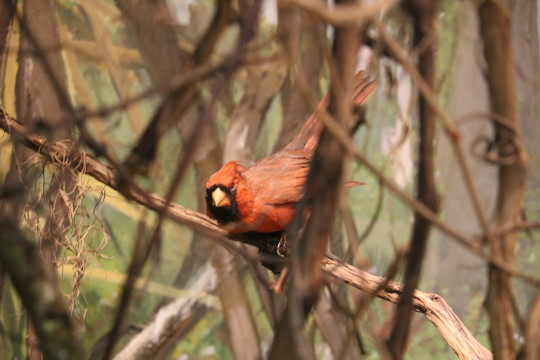
cardinal diorama

A detail in a Hall of Botany diorama can add much to our understanding of a popular songbird. Pictured above is a male Northern Cardinal, a species widely portrayed on cards and calendars amid snowy scenery.

Cardinals are certainly noticeable under winter conditions. The bright red of the male’s feathers and the reddish-brown plumage of the female stand out in snow covered landscapes. The range for this non-migratory species is enormous, however, and includes tropical regions.

The Hall of Botany bird, for example, adds color to a three-dimensional recreation of a tiny patch of Florida Everglades. Northern Cardinals have also long occupied suitable habitat much further south in Mexico and Guatemala.

The species, which has been deemed the official avian representative for seven U.S. states, was rarely seen anywhere in Pennsylvania until the 1890s. In Birds of Western Pennsylvania, the encyclopedic volume published in 1940 by the museum’s then Curator of Ornithology, W.E. Clyde Todd, growth of the local cardinal population is noted:

In recent years it has invaded the parks and residential sections of Pittsburgh in gradually increasing numbers, and it is seemingly as much at home there as it is in the wooded ravines in the vicinity of the city.”
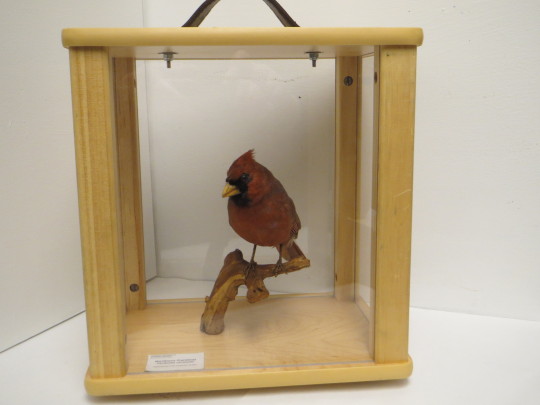
cardinal diorama
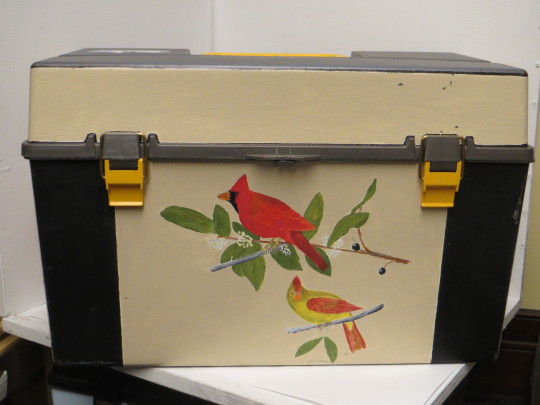
tool box with painted cardinals

One measure of the Northern Cardinal’s continued popularity is requests by elementary teachers to borrow taxidermy mounts of the species from the museum’s Educator Loan Collection. Pictured above are a taxidermy mount and the “toolbox” it travels in. The illustration on the box is a recreation of John James Audubon’s cardinal portrait by Museum Educator Assistant John Franc.

Patrick McShea works in the Education and Visitor Experience department of Carnegie Museum of Natural History. Museum employees are encouraged to blog about their unique experiences and knowledge gained from working at the museum.
Filed Under: Blog Tagged With: bird hall, Birds, botany hall, Education, Educator Loans, Hall of Botany, Patrick McShea, pennsylvania, western pennsylvania

February 1, 2019 by wpengine

Arctic Message

By Patrick McShea

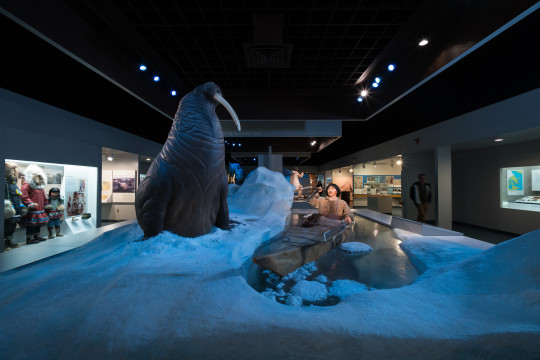
Polar World exhibition with animals and man in boat
Polar World at Carnegie Museum of Natural History. Photo credit: Josh Franzos

What happens in the Arctic effects all of us. The frozen seas of the northern hemisphere’s remotest territory influence the circulation patterns of ocean currents and air masses that support temperate climate conditions for land masses far to the south.

The urgent need for broader understanding of this sea ice-dependent system recently drew four dozen researchers and educators to the University of Rhode Island for a National Science Foundation -sponsored workshop titled ARISE, for Arctic Researchers and Informal Science Education.

The three-day program was designed to address two explicit goals – broadening the impact of Arctic research findings and increasing the informal science community’s engagement with Arctic scientists.

Paired sessions assured that big ideas were anchored to specific ongoing research. A formal review of proposed Polar Literacy Principles, for example, was followed by small discussion groups in which researchers explained their own observations of diminished sea ice or disrupted food webs. As an educator representing CMNH’s exhibit hall about Arctic life and extensive scientific collections from the region, I was an eager participant in every session.

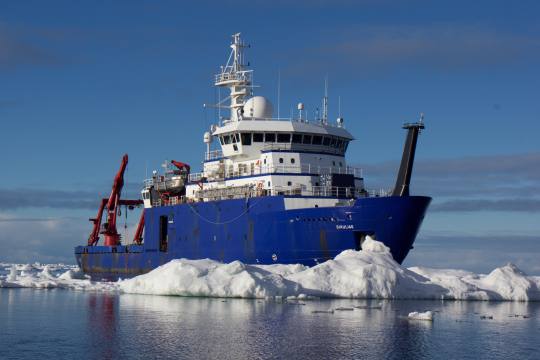
Ship in icy waters
Research ship Sikuliaq. Photo credit: Mark Teckenbrock

Existing National Science Foundation resources were the focus of several presentations. Profiled assets ranged from the digital archive known as the Arctic Data Center to a floating mobile research platform, the 261-foot blue-hulled ice capable research vessel Sikuliaq, which is operated by the University of Alaska Fairbanks.

I did more listening than talking, learning directly from scientists about research projects that included the study of thousand- year-old clay-lined food storage pits along hard-to-reach stretches of Alaskan coast, and a “citizen science” berry survey by middle school students in remote villages that will document climate driven vegetation changes on the tundra.

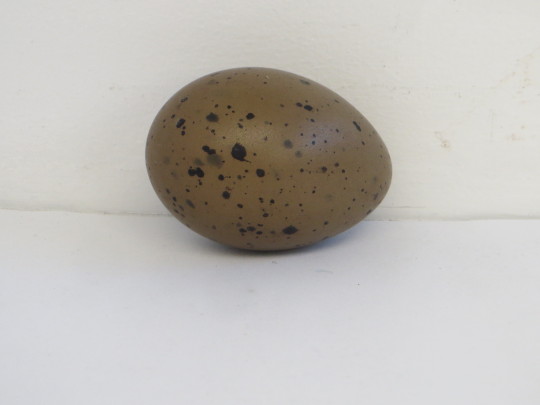
Arctic loon egg
Arctic loon egg.

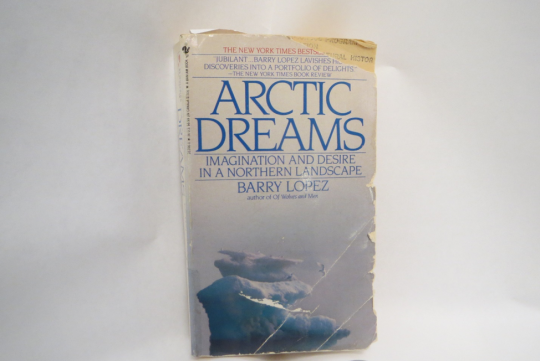
When discussion opportunities arose, I shared two items I carried with me each day, the preserved hollow egg of an Arctic Loon, and a copy of Barry Lopez’s now 32-year-old masterpiece, Arctic Dreams. The three-inch long egg, a dark mustard brown with chocolate-colored flecks, bore in tiny handwritten script a collection date of 6/19/24. This 94-year-old specimen, part of the museum’s teaching collection, and sturdy enough to be carefully passed hand-to-hand, served to represent and draw attention to the museum’s own Arctic archive, the portion of preserved plants, animals, minerals, artifacts, and fossils in the museum’s scientific collections that have Arctic origins.

Arctic Dreams book

Arctic Dreams, which bears the subtitle, Imagination and Desire in a Northern Landscape, is a poetic 372-page chronical of Lopez’s immersion in historical Arctic exploration accounts and his own travels in the region with Arctic indigenous people, biologists, oceanographers, geologists, and oil drilling crews. The work contains repeated alarm calls about threats to the region’s delicately balanced ecosystems, but on the occasions when I passed the paperback to a workshop colleague it was to note particularly eloquent passages about narwhals, snowy owls, or muskox.

The book also provided appropriate reading material to pass flight delays on my way home from the workshop. In the crowded confines of a Reagan National Airport terminal, I re-read a section that helped me better understand my conversations with Arctic researchers.

At the close of a Chapter titled “The Country of The Mind,” Lopez recounts conversations with paleontologists Mary Dawson and Robert West during a shared plane ride between remote Canadian Arctic islands. When Dawson, then Curator of Vertebrate Paleontology at Carnegie Museum of Natural History and now curator emeritus, leaves Lopez with letters to mail at one of the plane’s later stops, the packet spurs thoughts about how we share information. Lopez wrote:

I rode for hours with the letters on the seat beside me. I thought about the great desire among friends and colleagues and travelers who meet on the road, to share what they know, what they have seen and imagined. Not to have a shared understanding, but to share what one has come to understand. In such an atmosphere of mutual regard, in which each can roll out his or her maps with no fear of contradiction, of suspicion, or theft, it is possible to imagine the long, graceful strides of human history.

The ARISE Workshop, I realized, fostered such map unrolling by creating a forum where scientists shared what they had come to understand about the state of our planet’s northern reaches. The way their messages are received and acted upon will undoubtedly influence future strides of human history.

Patrick McShea works in the Education and Visitor Experience department of Carnegie Museum of Natural History. Museum employees are encouraged to blog about their unique experiences and knowledge gained from working at the museum.
Filed Under: Blog Tagged With: arctic, Barry Lopez, Education, Mary Dawson, Pat McShea, Patrick McShea, Polar World, Robert West

December 14, 2018 by wpengine

How Do Geodes Get Their Colors?

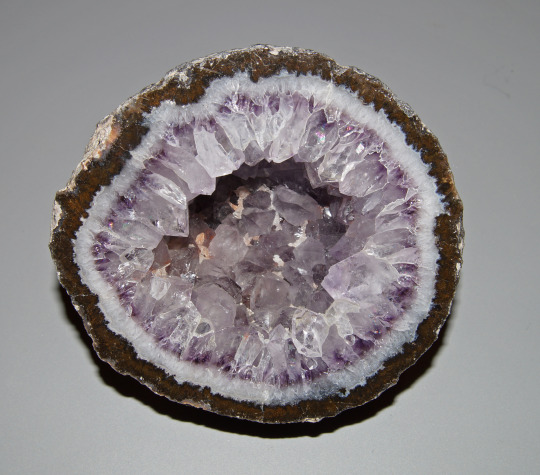
geode

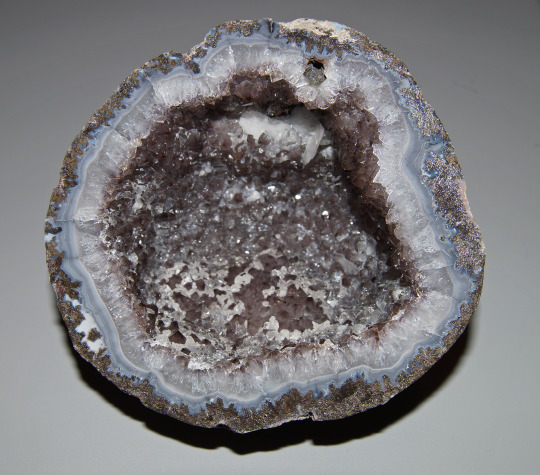
Geodes are stones with a secret–at first glance, they seem like nothing more than the grey rocks you might see on walk around your neighborhood. Then–crack!–once they’re broken open, they reveal their inner beauty: a tiny cave filled with some of the world’s most spectacular, colorful crystals.

Born out of lava

Geodes are formed when there are pockets of air within rocks. This often happens after volcanic eruptions when lava cools around air bubbles. These pockets leave space for groundwater to seep in. But the water itself doesn’t produce geodes–it brings along minerals which stay in the rock even after the water evaporates. The minerals then start to build on each other to form crystals. It can take thousands or even millions of years for these crystals to form. The larger the crystals are, the older the geode is.

So what gives them their color?

geode

The same minerals that form crystals can give them their glorious colors. Additional elements can also make their way into the mix and provide their own unique shades. Iron will give crystals a red or purple color, titanium will create blue, nickel or chromium leads to green, and manganese produces pink crystals.

While geodes can be naturally colorful some are artificially dyed. These dyed stones often have a brighter, more intense color than what appears naturally. Why do people dye geodes? Colorful geodes tend to sell well and can be a cheap way to imitate rare stones.

Come to the museum and check out the geodes of various colors on display in Hillman Hall of Minerals and Gems.

Explore nature together.  Visit Nature 360 for more activities and information.

Filed Under: Blog Tagged With: Education, gems and minerals, Hillman Hall, Hillman Hall of Minerals and Gems, minerals, Nature 360

March 2, 2018 by wpengine

People are part of Nature

Pat McShea, an educator at Carnegie Museum of Natural History, recently gave an excellent TEDx talk in the Strip District of Pittsburgh. Listen to his story, titled “People are part of Nature,” below.

Filed Under: Blog Tagged With: Education, nature, Patrick McShea

June 3, 2016 by wpengine

Play in the Savannah

Hall of African Wildlife at Carnegie Museum of Natural History

by Patrick McShea

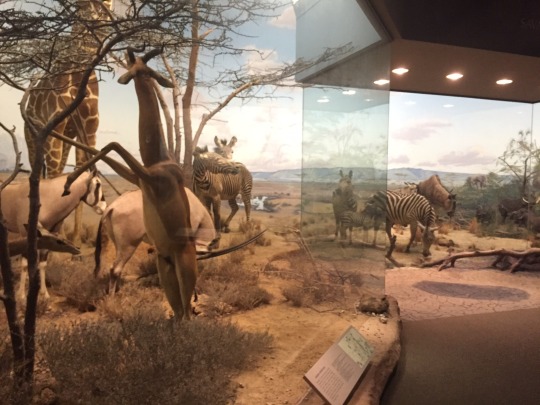
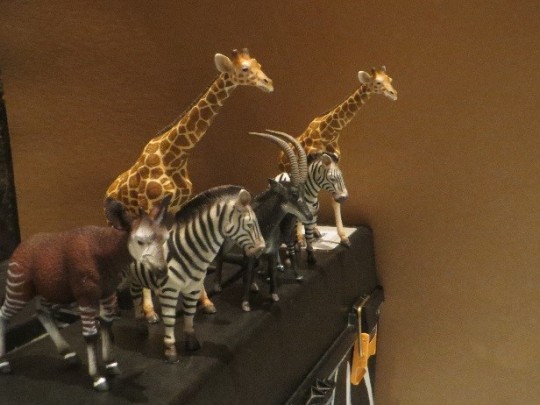
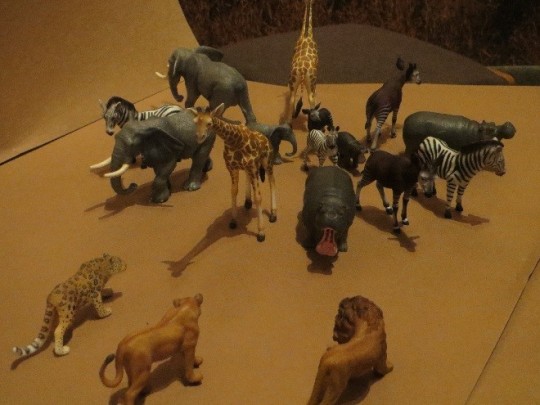
Amid the life sized, realistic diorama’s in Carnegie Museum of Natural History’s Hall of African Wildlife, there is a low table with adjacent seating that is reserved for play on a smaller scale.

Sturdy scale models of Africa’s emblematic species provide all that’s necessary for visitors to make associations, create scenes, simulate and imagine action, and engage in conversation.

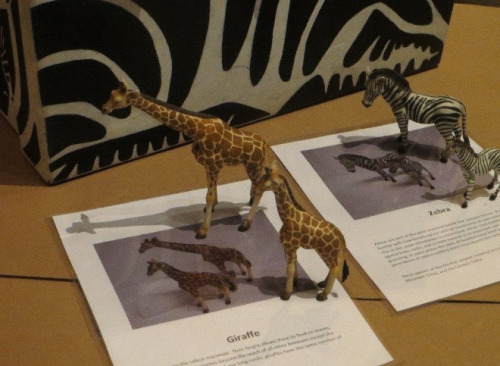
The plastic menagerie is housed in a zebra-striped toolbox, which also contains brief information sheets about featured creatures. Based upon the arrangements I’ve found while checking the table’s animal inventory, a popular pastime involves matching models with respective information sheets.

Giraffe and zebra miniature models

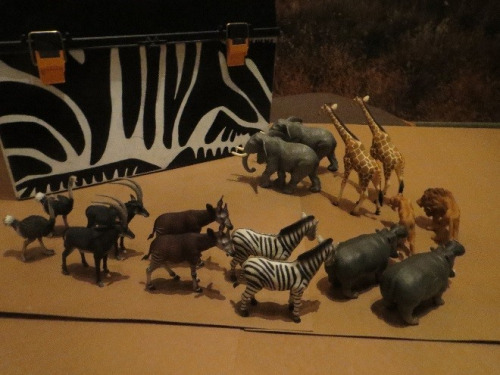
Novel uses include using the toolbox as a prop. Below the box stands-in for Noah’s Ark with the paired animal models in an orderly boarding line.

Savannah animals arranged in pairs

The creator of another scene appeared to imagine toolbox as a mesa with a line of grazers and browsers looking out to scout for predators or perhaps greener feeding grounds.

Savannah animal models

If the replicas’ proximity to dioramas containing life-sized taxidermy mounts invites discussion of scale, the plastic menagerie’s mix of carnivores and herbivores certainly leads to talk of predator and prey relationships. Below a dramatic visitor-constructed scene features a circle of full grown plant-eaters protecting their young from approaching meat-eaters.

Savannah animal models

Patrick McShea works in the Education and Visitor Experience department of Carnegie Museum of Natural History. Museum employees are encouraged to blog about their unique experiences and knowledge gained from working at the museum.
Filed Under: Blog Tagged With: African Wildlife, Education, Hall of African Wildlife, museums, Patrick McShea, Pittsburgh

April 30, 2016 by wpengine

Dippy Makes an Impression

child's clay dinosaur

By Laurie Giarratani

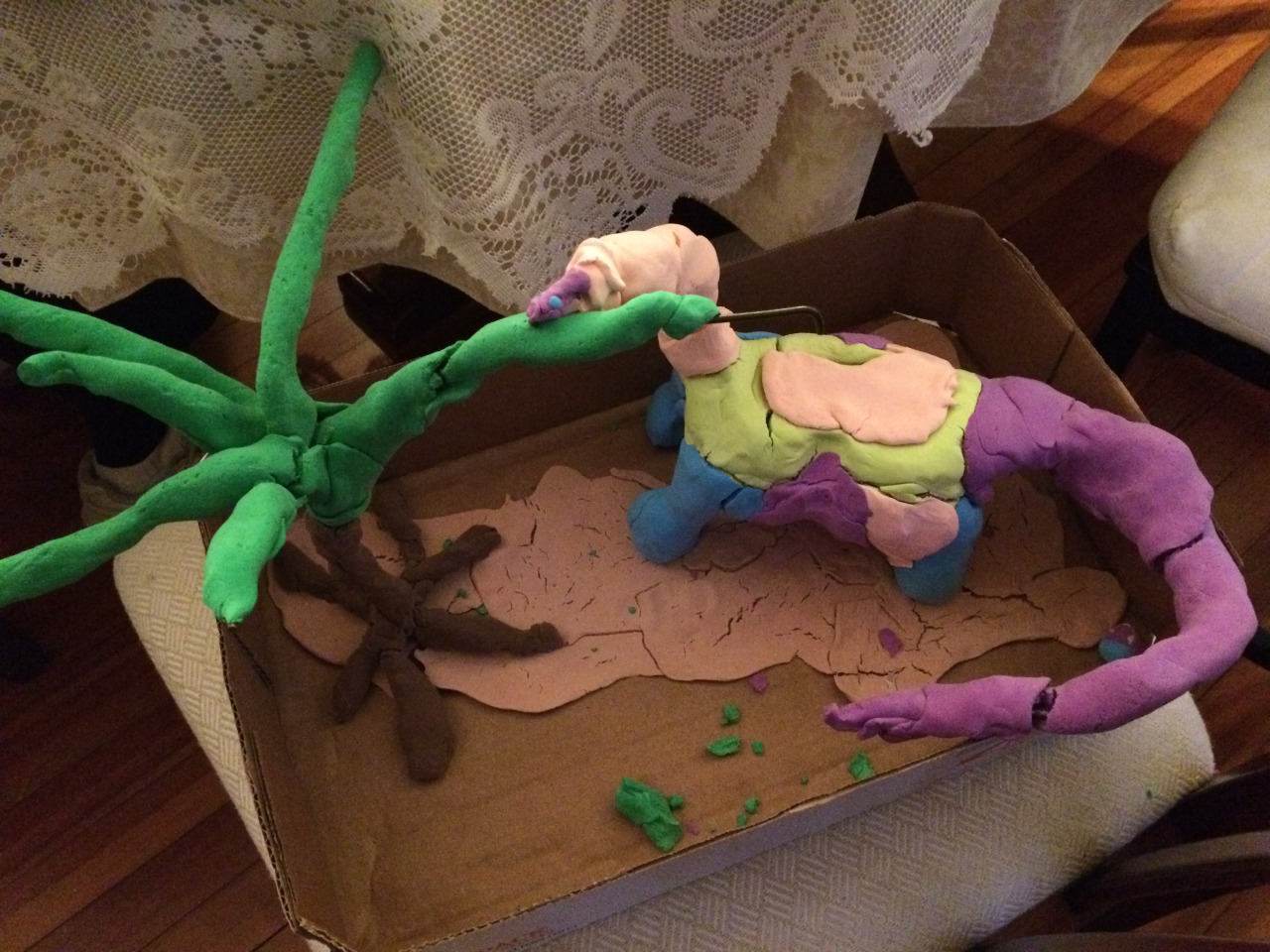
Recently I had dinner with friends, one of whom recently visited Carnegie Museum of Natural History on a school field trip. After dinner Mira Conti, age 5, showed me a project that she completed as homework after her visit. The task: to create a three dimensional dinosaur based on what she learned at the museum.

Mira chose Dippy as her model, shown above. Three things delight me about this creation:

1) It features a plant! In Mira’s mini diorama, Dippy gracefully grazes on a leafy tree top, showing that dinosaurs were part of a complex ecosystem and evolved alongside diverse plant life.

2) Dippy’s tail extends in a powerful arc, held high off the ground. Form and function are key evolutionary concepts that we strive to make accessible to every age level through the museum’s education programs. It’s nice to see how one such detail sticks in a young mind.

3) We welcome over 25,000 school children annually on field trips, and every day we are astounded by their joy, curiosity, and the unpredictable ways that they connect their existing knowledge to new discoveries at the museum. Very rarely do we get a window into what aspects of their museum experience resonate with them later at home, at school, and in their communities.

I’d like to thank Mira for showing me her project, and thank her teachers at Sacred Heart Elementary School for taking the time and effort to plan their field trip along with such a creative homework assignment. I hope to see you all again at the museum soon!

Laurie Giarratani works in the Education department at Carnegie Museum of Natural History. Museum employees are encouraged to blog about their unique experiences and knowledge gained from working at the museum. 
Filed Under: Blog Tagged With: dinosaur, dippy, Education

  • « Go to Previous Page
  • Page 1
  • Interim pages omitted …
  • Page 13
  • Page 14
  • Page 15

sidebar

About

  • Mission & Commitments
  • Directors Team
  • Museum History

Get Involved

  • Volunteer
  • Membership
  • Carnegie Discoverers
  • Donate
  • Employment
  • Events

Bring a Group

  • Groups of 10 or More
  • Birthday Parties at the Museum
  • Field Trips

Powdermill

  • Powdermill Nature Reserve
  • Powdermill Field Trips
  • Powdermill Staff
  • Research at Powdermill

More Information

  • Image Permission Requests
  • Science Stories
  • Accessibility
  • Shopping Cart
  • Contact
  • Visitor Policies
One of the Four Carnegie Museums | © Carnegie Institute | Privacy Policy | Terms of Use | Accessibility
Rad works here logo