• Skip to primary navigation
  • Skip to main content
  • Skip to primary sidebar

Carnegie Museum of Natural History

One of the Four Carnegie Museums of Pittsburgh

  • Visit
    • Buy Tickets
    • Visitor Information
    • Exhibitions
    • Events
    • Dining at the Museum
    • Celebrate at the Museum
    • Powdermill Nature Reserve
    • Event Venue Rental
  • Learn
    • Field Trips
    • Educator Information
    • Programs at the Museum
    • Bring the Museum to You
    • Guided Programs FAQ
    • Programs Online
    • Climate and Rural Systems Partnership
  • Research
    • Scientific Sections
    • Science Stories
    • Science Videos
    • Senior Science & Research Staff
    • Museum Library
    • Science Seminars
    • Scientific Publications
    • Specimen and Artifact Identification
  • About
    • Mission & Commitments
    • Directors Team
    • Museum History
  • Tickets
  • Give
  • Shop

Hall of African Wildlife

February 16, 2024 by Erin Southerland

World Pangolin Day 2024 – The Mysterious Mammalian “Wishbone”

by John Wible

World Pangolin Day 2024 is on February 17, a day to raise awareness of pangolins or scaly anteaters, one of the most unique and endangered mammals on Earth. Their scales are harvested for traditional medicines that see them as cure-alls, but their scales are made of keratin like your fingernails and hair. Their scales are as medicinally effective as biting your nails.

Although I will get to pangolins, I am starting with our feathered avian friends. Birds have a Y-shaped bone in their chest called a furcula (Latin for little fork). It is part of the flight apparatus and is thought to be formed by the fusion of the right and left clavicles (our collarbones). However, some researchers think it might be a different bone called the interclavicle, which in mammals is only found in monotremes, the egg-laying mammals. Some non-avian dinosaurs have a furcula, which is part of the evidence placing them on the bird family tree. The furcula is commonly called the wishbone because of the practice of making a wish on the bone! You grab one arm and someone else grabs the other; both make wishes and then pull; whoever gets the larger piece will have their wish come true.
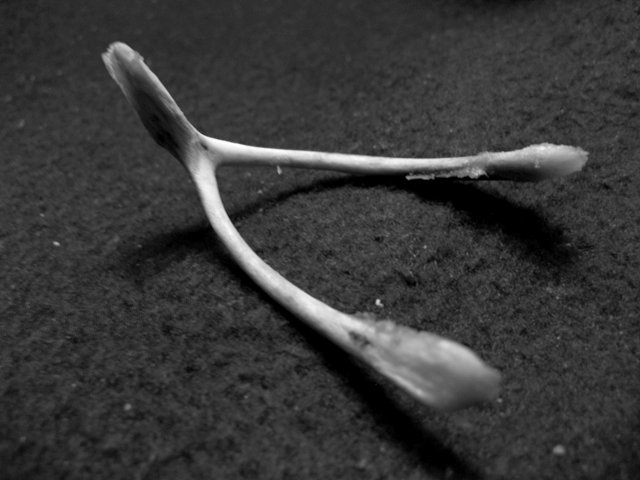
Chicken furcula. Photo credit: Clyde Robinson/Flickr Creative Commons

In celebration of World Pangolin Day, I want to introduce you to a mammal “wishbone.” If you search through the mammalian literature, you will not encounter a bone identified as a wishbone. Nevertheless, a small, select group of mammals have a pair of bones that looks, to me anyway, like a furcula. Here is an example.
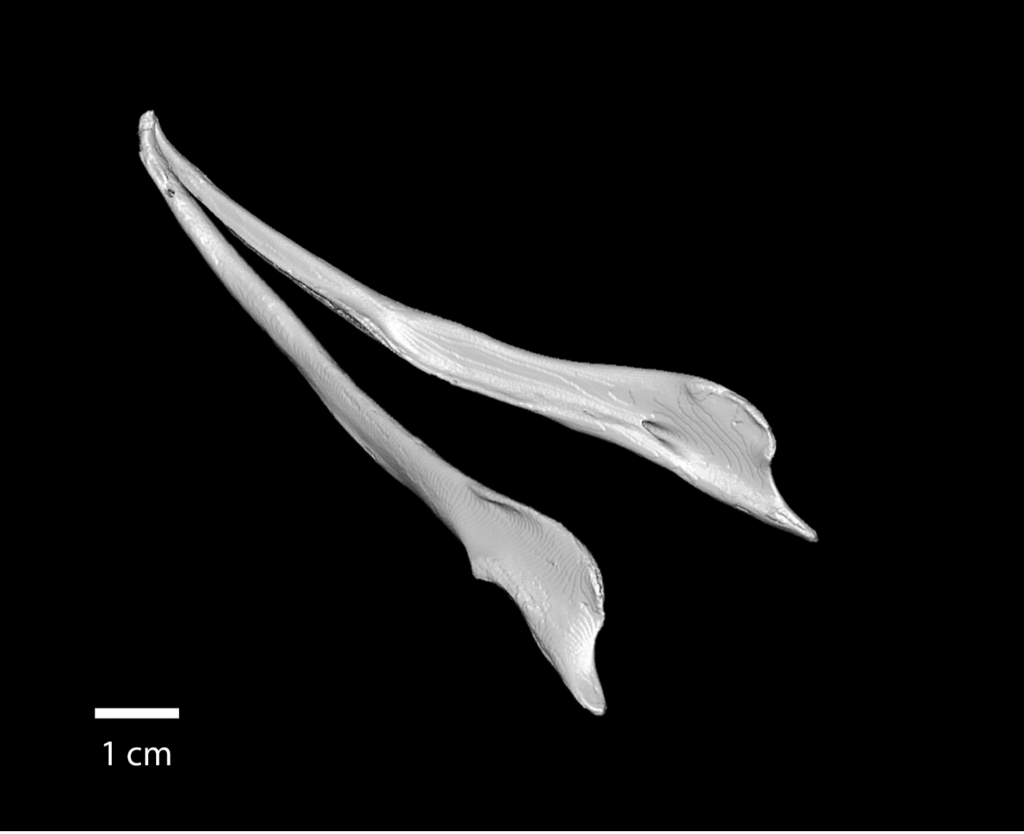
Lower jaw of the northern tamandua, Tamandua mexicana. American Museum of Natural History 23437 made from CT scan data by Hannah Barton, University of Pittsburgh.

The lower jaw, the mandible, is made up of right and left bones called dentaries. They meet on the midline at the chin. In humans, the right and left bones are filled with teeth, fused on the midline, and don’t look like a furcula! The northern tamandua from Central America differs in that there are no teeth, the right and left bones are held together only by soft tissues, and it looks like a furcula! How does the tamandua survive without teeth? Tamanduas are social insect feeders (ants and termites) that swallow their prey whole; tamandua parents don’t have to worry about their kids chewing with their mouths open. Now, although the tamandua lower jaw looks kind of like a wishbone, when pulled apart there won’t be a winner as the split will be down the middle with the two halves the same size.

The vast majority of the 6,500 species of living mammals have teeth; some have dentaries fused like humans and some have them unfused like the tamandua. Of the 6,500 species, there are 31 that are toothless as their normal condition. These 31 fall into two camps: 15 are baleen whales, including the Earth’s largest animal, the blue whale, which are filter feeders; and 16 are social insect feeders like the tamandua. However, all 31 have a mandible that is reminiscent of an avian wishbone. The 16 social insect feeders are from three unrelated lineages that have convergently adapted to eating ants and termites. The three lineages are:

  • Spiny anteaters or echidnas (monotremes) found in Australia and New Guinea (four species).
  • True anteaters (myrmecophagids) found in South and Central America (four species including two kinds of tamandua).
  • Pangolins (pholidotans) found in Africa and Asia (eight species).

The mandibles of the #1 and #2 look like that of the northern tamandua. The left and right sides are not fused and the mandible is skinny in the front and larger in the back where it articulates with the skull. #3, the pangolins, are really different. The left and right sides are fused at the midline and the mandible is larger at the front.
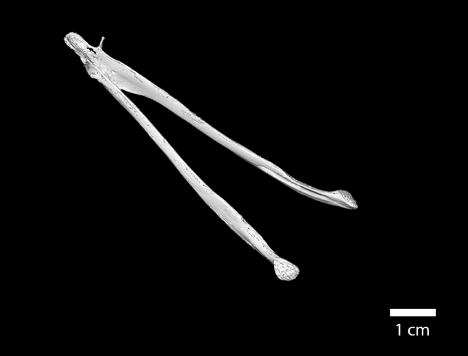
Lower jaw of the Sunda pangolin, Manis javanica, United States National Museum 144418 made from CT scan data by the author.
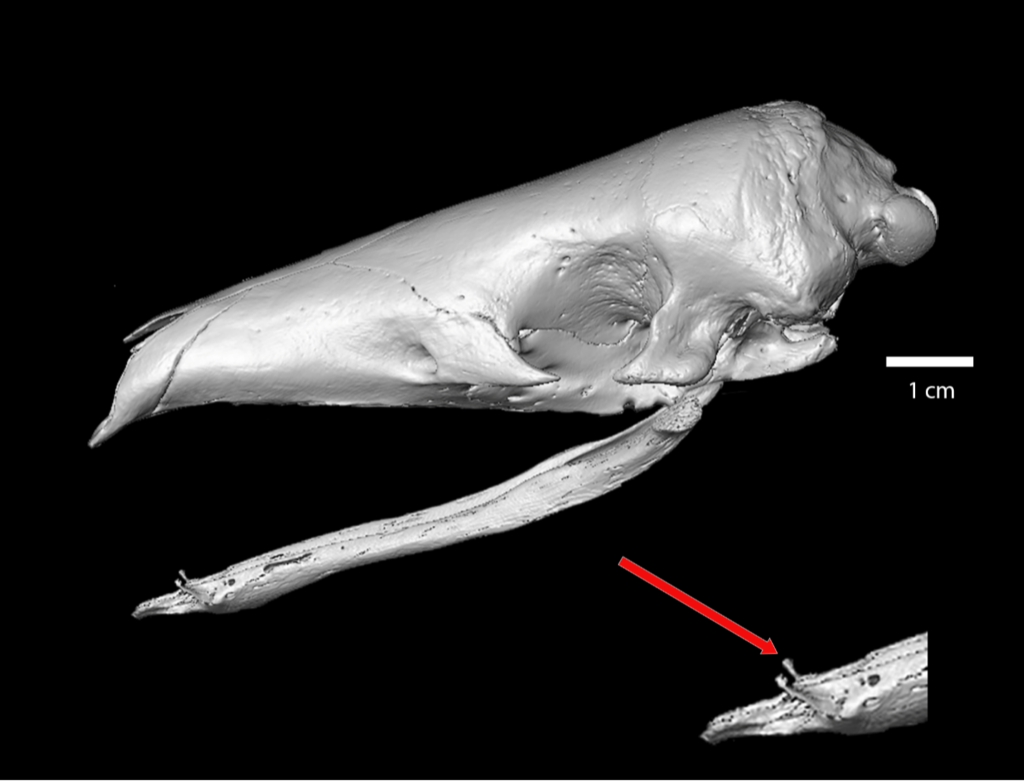
Skull of the Sunda pangolin, Manis javanica, United States National Museum 144418 made from CT scan data by the author. Red arrow points to the two bony mandibular prongs in the close-up.

The other very odd thing about the pangolin mandible is that it has a pair of bony prongs at the front that look somewhat like teeth (red arrow). Doran and Allbrook (1973: Journal of Mammalogy) dissected the pangolin tongue and reported that the lower lip was attached to these prongs, but they did not illustrate this or explain it further. Pangolins are clearly doing something different with their mandible than the tamanduas and echindas are, but what, I don’t know. Whatever it is, it has been around in pangolins for at least 35 million years! There was a pangolin that lived in the American West during the late Eocene named Patriomanis americana and it has a set of mandibular prongs just like those in the Sunda pangolin shown here. The other difference with the pangolin mandible is that when subjected to a wishbone pull, it might not break down the middle and be more like a furcula.

I have left the baleen whales until the end. Are their mandibles more like the tamandua, the pangolin, or neither?
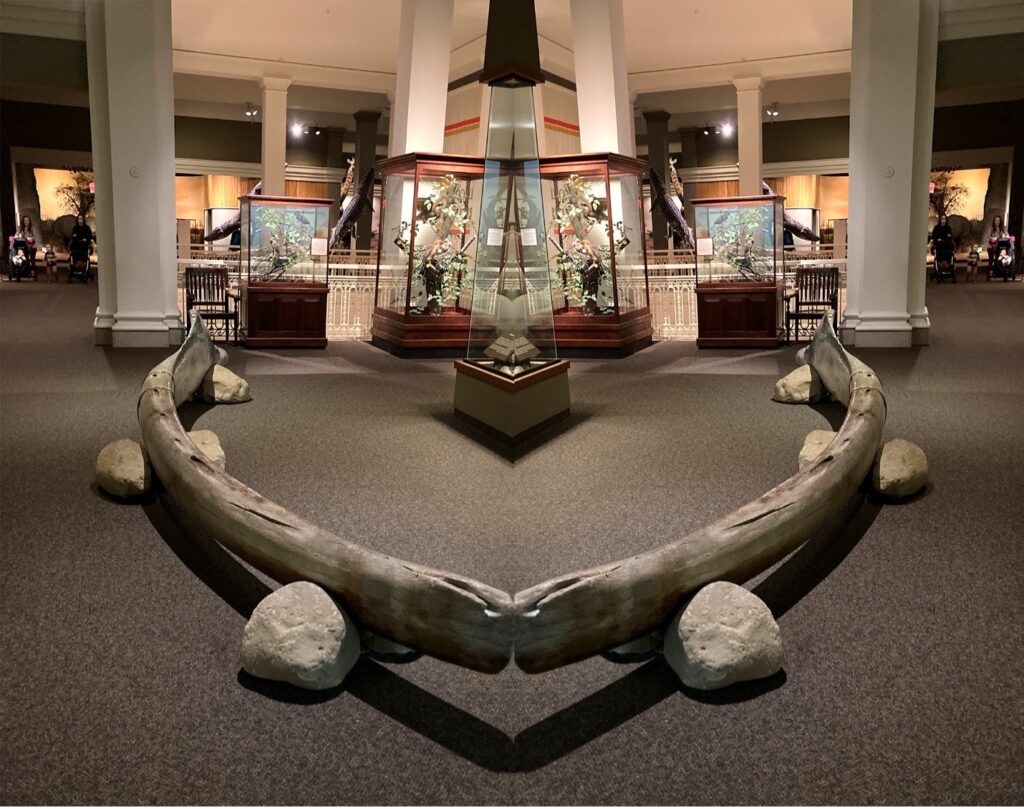
Mandible of the blue whale, Balaenoptera musculus. Only the left dentary is on display in the Hall of North American Wildlife at Carnegie Museum of Natural History. The author manipulated the photograph to create the world’s largest “wishbone.”

Baleen whales are more like the tamandua with the right and left sides unfused and the mandible larger in the back than the front. If you were able to do the wishbone pull on the blue whale, there would be no winner and someone would likely lose by throwing their back out!

John Wible is Curator of Mammals at Carnegie Museum of Natural History.

Related Content

World Pangolin Day 2023 – The Mysterious Brain Bone

World Pangolin Day 2022

E is for Echidna

Carnegie Museum of Natural History Blog Citation Information

Blog author: Wible, John
Publication date: February 16, 2024
Share this post!

  • Share on Twitter Share on Twitter
  • Share on Facebook Share on Facebook
  • Share on Pinterest Share on Pinterest
  • Share on LinkedIn Share on LinkedIn
  • Share on Reddit Share on Reddit
  • Share via Email Share via Email

Filed Under: Blog Tagged With: Hall of African Wildlife, John Wible, mammals, Science News

February 16, 2023 by Erin Southerland

World Pangolin Day 2023 – The Mysterious Brain Bone

by John Wible

The third Saturday in February marks World Pangolin Day, celebrating the scaly anteater that is sometimes called the pinecone mammal. Pangolins are covered with scales made of keratin, the same stuff in your fingernails and hair. Because some traditional medicines mistakenly impart curative powers to their scales, pangolins have become the most heavily illegally trafficked animal on the planet. Pangolins lack teeth and live exclusively on social insects, like ants and termites, which they catch with their very long sticky tongue. Today, there are eight species of pangolins, four in Asia and four in Africa. The fossil record reveals greater diversity and geographic distribution for these unusual creatures, including Europe and North America. 

I study the evolutionary relationships of mammals, building family trees based on the anatomy of living and extinct species. In the 1800s and 1900s, pangolins were grouped with other mammals that are toothless or have very reduced teeth, such as anteaters, aardvarks, sloths, and armadillos, in the aptly named Edentata (think edentulous, or “toothless”). In the last 25 years, the study of DNA has revealed a totally different set of relationships for these edentate mammals. Aardvarks are in an African group with elephants, elephant shrews, tenrecs, and hyraxes; anteaters, sloths, and armadillos are in a South American group; and pangolins are most closely related to Carnivora (dogs, bears, cats, hyaenas, raccoon, etc.). It is hard to imagine that the gentle, toothless pangolins are close kin to the ferocious meat-eater lineage that includes lions, tigers, and saber-toothed cats. 

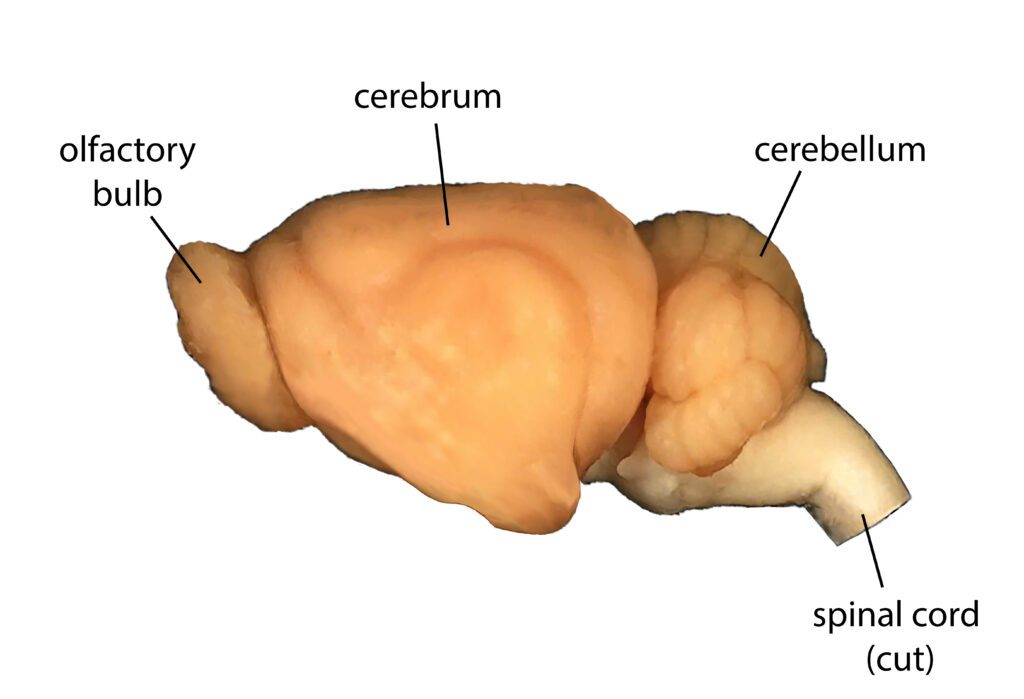
Although DNA supports relationships of pangolins and carnivorans, we are hard pressed to find anatomical features that link the two groups. One unusual feature shared by both and, therefore, hypothesized to be present in their common ancestor is the os tentorium or brain bone! A typical mammalian brain is composed of three parts delimited by deep grooves, termed sulci, the fore-, mid-, and hindbrain, which correspond respectively to the olfactory bulbs, cerebrum, and cerebellum. 

This brain of the African white-bellied tree pangolin, Phataginus tricuspis, is modified from Iman et al. (2018: Journal of Comparative Neurology 256: 2548-256), courtesy of Paul Bowden, Carnegie Museum of Natural History.

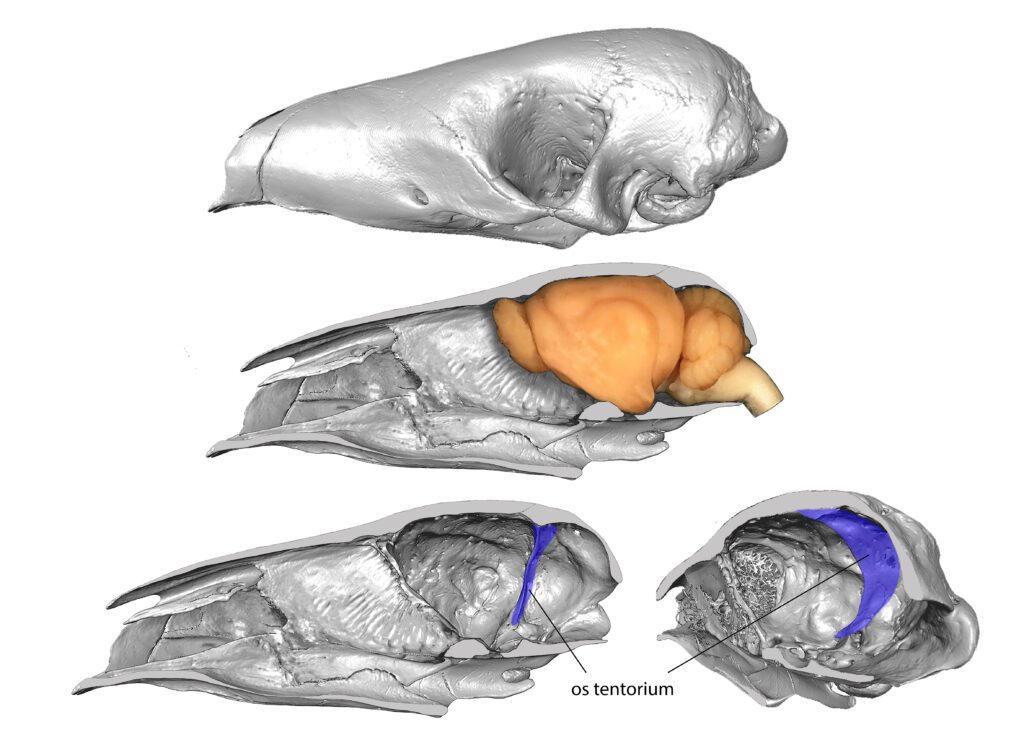
The human brain is dominated by its greatly enlarged cerebrum with tiny olfactory bulbs; pangolins and carnivorans have a much better sense of smell with well-developed olfactory bulbs and relatively smaller cerebrum. The brain in mammals is encased in a fluid-filled space surrounded by layers of connective tissue and within the bony braincase of the skull. One of the connective tissue layers, the dura mater, has a fold called the tentorium cerebelli (meaning the tent of the cerebellum) that fits in the deep sulcus between the cerebrum and cerebellum. In pangolins and carnivorans, the connective tissue tentorium has a layer of bone in it, creating a partial bony separation between the cerebrum and cerebellum. In pangolins and carnivorans, the os tentorium is not a single bone, but is made up of contributions from three or four skull bones. There are other mammals that independently have evolved an os tentorium, including horses, but it is not as extensive as that in pangolins and carnivorans. 

Chinese pangolin, Manis pentadactyla, CT scan data. Top, whole cranium; middle, sagittally sectioned cranium with brain added; bottom, sagittally sectioned cranium with blue indicating os tentorium.

Okay, so we have a nice anatomical feature allying pangolins and carnivorans. However, we are left with one very large unanswered question. Why? If it is such a good thing to partially separate the cerebrum and cerebellum by bone, why don’t all mammals do it? The os tentorium is said to be “protective” of the brain, but protective how? Did a random mutation some 60 million years ago in the common ancestor of pangolins and carnivorans lead to the formation of the brain bone in the living forms? Is the brain bone somehow linked to another innovation that is strongly selected for? Is there some function to the brain bone that our brains cannot fathom? As an anatomist, I can study the structure and distribution of the brain bone in living and extinct mammals but to get at the “why” question may require a deep dive into molecular biology. Understanding the genetics behind the os tentorium may be the only path forward on cracking this mystery.

John Wible is Curator of Mammals at Carnegie Museum of Natural History.

Related Content

World Pangolin Day 2022

A is for Aardvark

What Is in a Tail?

Carnegie Museum of Natural History Blog Citation Information

Blog author: Wible, John
Publication date: February 16, 2023

Share this post!

  • Share on Twitter Share on Twitter
  • Share on Facebook Share on Facebook
  • Share on Pinterest Share on Pinterest
  • Share on LinkedIn Share on LinkedIn
  • Share on Reddit Share on Reddit
  • Share via Email Share via Email

Filed Under: Blog Tagged With: Hall of African Wildlife, John Wible, mammals, Science News

August 23, 2022 by Erin Southerland

GETTING FROM THE FERN HOLLOW BRIDGE TO THE FRICK FAMILY

by Lisa Miriello 
A view of Forbes Avenue bridge crossing over Fern Hollow in Frick Park, 1914. Pittsburgh City Photographer Collection, University of Pittsburgh.

After the Fern Hollow Bridge collapse on January 28, 2022, many commuters found themselves experiencing some traffic headaches as they scrambled to find different ways to and from work or school. My new route takes me past The Frick Pittsburgh, a museum complex in the Point Breeze section of Pittsburgh that includes Clayton, the former home of industrialist Henry Clay Frick.

As someone who works in the Section of Mammals, my thoughts while passing the stately grounds often turn to Frick’s son Childs (1883-1965), who grew up here exploring the woods surrounding the estate and attending Sterrett School (now Sterrett Classical Academy), less than a third of a mile away.

Photographer unknown, American, Sterrett School, c. 1900, gelatin silver printing-out paper print, H: 7 1/2 in. x W: 10 5/8 in., Carnegie Museum of Art, Pittsburgh, Second Century Acquisition Fund, 1999.34.2, Photograph © 2021 Carnegie Museum of Art, Pittsburgh.

As Childs grew older his early interest in the natural world turned to more scientific pursuits, and he embarked on a series of collecting expeditions in North America followed by visits to Africa, first in 1909 and again in 1911. But Childs wasn’t looking for “trophies.” By collecting animals at different life stages his goal was to further the knowledge of the lifestyle and habitats of these unfamiliar animals. Many of these specimens were gifted to the Carnegie Museum, and as the shipments arrived from overseas the staff taxidermists had their hands full. 

Led by brothers Remi and Joseph Santens these skilled artisans created expressive animal likenesses rather than the static displays that were seen in most museums at the time. Both Santens even visited zoos in New York and Washington, DC, to study the movements of living animals. Preserved plant life from Africa provided even more authenticity to the displays. The African Buffalo (Syncerus caffer) group was especially notable in how it was depicted. The animals appear to be spattered with mud and tramping through brush, a display then-Director W. J. Holland believed to be the first instance in which exhibition specimens had been accurately placed within their supporting environment. In the Carnegie Museum’s 1913 Annual Report he wrote that the group “may possibly provoke comment and criticism, but it is believed to be a step in the right direction, and will likely be followed by the leading taxidermists of the future.“  You can see the African Buffalo, along with other specimens collected by Frick, in the museum’s Hall of African Wildlife.

Carnegie Museum of Natural History, photo by Mindy McNaugher.

While Childs enriched the collection of the natural history museum, other family members left an impact on the city of Pittsburgh as well. His father, Henry Clay Frick (1849-1919), bequeathed 151 acres of land that would become Frick Park. Expanded by hundreds of acres over the years, it’s now the largest of the city’s parks.

Childs’ sister, Helen Clay Frick (1888-1984), was an art collector like her father and helped establish the Henry Clay Frick Fine Arts Library at the University of Pittsburgh. She later had the Frick Art Museum constructed on Clayton’s grounds to showcase her collection of art. This cultural resource opened to the public in 1970.

At the end of the day, as my car inches past the peaceful grounds of Clayton, I imagine traffic must have looked a little different over a hundred years ago when “horseless carriages,” horse-drawn vehicles, trolleys, and bicycles all shared the same road in a free-for-all. Today, with traffic signals and defined lanes, at least it’s more of an ordered chaos.

A view of a portion of Grant Boulevard populated with a mixture of automobiles, a horse with buggy, and a bicycle in the background. Grant Boulevard was renamed Bigelow Boulevard in 1916. Thomas Mellon Galey Photographs, Detre Library & Archives, Senator John Heinz History Center
Grant Boulevard | Historic Pittsburgh

Museums and parks can provide welcome relief in a chaotic world, and the Frick family’s contributions to these sanctuaries of art, science, and nature will be enjoyed for generations to come. 

Public domain image of Clayton.

Lisa Miriello is the Scientific Preparator for the Section of Mammals. 

Related Content

Finding Answers: From Museum to Mountains and Back Again

Meet the Mysterious Mr. Ernest Bayet

A Gorilla For Our Imagination

Carnegie Museum of Natural History Blog Citation Information

Blog author: Miriello, Lisa
Publication date: June 10, 2022

Share this post!

  • Share on Twitter Share on Twitter
  • Share on Facebook Share on Facebook
  • Share on Pinterest Share on Pinterest
  • Share on LinkedIn Share on LinkedIn
  • Share on Reddit Share on Reddit
  • Share via Email Share via Email

Filed Under: Blog Tagged With: Hall of African Wildlife, Lisa Miriello, mammals, Science News

November 30, 2020 by wpengine

A Gorilla for Our Imagination

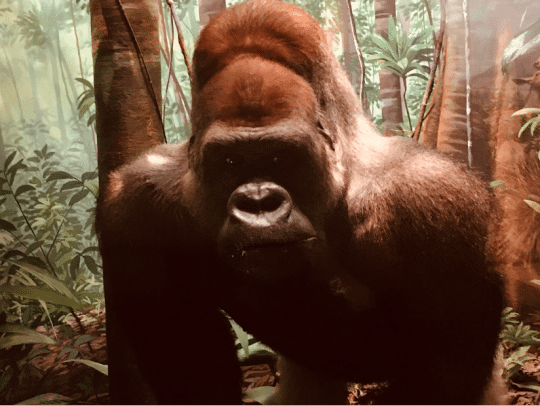
gorilla taxidermy mount

The lowland gorilla within the Hall of African Wildlife has a far different back-story than other large mammals in the exhibition’s dozen dioramas. All of the hall’s mammal taxidermy mounts are the preserved remains of creatures that once lived in the wilds of the African Continent. Most were collected between 1909 and 1912, during the course of two hunting safaris led by Childs Frick, son of Pittsburgh industrialist Henry Clay Frick. The gorilla was a far later addition to the stuffed menagerie, and its arrival occurred under entirely different circumstances.

The animal that grew to be a magnificent 350-pound silverback, was captured at a young age in Gabon, West Africa, sometime in the early 1960s. The gorilla lived in zoos afterward, initially in Copenhagen, Denmark, and later in Pittsburgh, where it died unexpectedly of natural causes in 1979.

Zoo staff offered the gorilla remains to museum curators, and through the efforts of a skilled team of taxidermists, an animal long known to zoo visitors as “George” came back into public view in an alert, but frozen stance.

Today it’s not unusual to occasionally hear museum visitors recalling the gorilla’s crowd-pleasing antics as a zoo attraction. The taxidermy mount’s far more important role, however, is as an educational tool capable of holding eye contact, and thereby encouraging contemplation. In staring contests that the glass-eyed mount never loses, the gorilla represents all of its wild living kind, the entire population of our planet’s largest primates, close relatives of modern humans, and a group whose continued existence is increasingly threatened by illegal hunting, habitat loss, and disease.

Scientists who study these great apes recognize two species of gorillas, each of which contain two sub-species, and all of which are considered critically endangered. The museum specimen, owing to its origin in Gabon, bears the echoing scientific name Gorilla gorilla gorilla to note its genus, species, and subspecies designation.

For anyone at a loss about what to contemplate while holding the gaze of this hall’s famous resident, consider some of what Terry Tempest Williams has to say in her 2019 work, Erosion: Essays of Undoing. The author begins an essay about a guided visit to observe mountain gorillas (Gorilla beringei beringei) in the Virunga Mountains of Rwanda with an appeal to senses that don’t come into play in museum exhibit halls. “We smelled them before we heard them. We heard them before we saw them.”

Later, amidst information about how members of the observed gorilla clan were refugees from an adjacent national park in war-torn Congo, and how their continued sanctuary in Rwanda is tenuous due to that nation’s rapidly growing population, relatively small size, and the discovery of oil deposits in the Virunga Mountains, Williams offers this thought:

“I wish there was a gorilla in every corner of our imagination to remind us what we are choosing to harm and ignore. I wish we could smell them, hear them, see them for who they are in place, and know them by name: the most gentle of creatures, with strength and power.”

For more information about gorillas, please visit this Wildlife Conservation Society site.

Patrick McShea works in the Education and Visitor Experience department of Carnegie Museum of Natural History. Museum employees are encouraged to blog about their unique experiences and knowledge gained from working at the museum.

Related Content

D is for Dugong

Scientist Takeover: Mammals! 

Ask a Scientist: Can you tell us the story of Harvey, the big rabbit? 

Filed Under: Blog Tagged With: Hall of African Wildlife, mammals, Museum from Home, Pat McShea

August 4, 2020 by wpengine

Big Cats, Big Personalities

You may have heard the phrase “big cat” before. No, it doesn’t refer to a particularly large house cat, but rather to a category of cats. “Big cat” is a term typically used to describe any member of the genus Panthera, though it can mean different things to different people.

Some consider every member of the larger subfamily Pantherinae to be big cats—for example, clouded leopards (genus Neofelis). Sometimes, the phrase “big cat” just refers to any member of the cat family (Felidae) that is large, such as the cougar (genus Puma), the cheetah (genus Acinonyx), and the Eurasian lynx (genus Lynx, species lynx).

Tigers, Lions, Jaguars, Leopards, and Snow Leopards are the extant (or currently living) members. You may be wondering how leopards and snow leopards are members of genus Panthera but clouded leopards are not. Clouded leopards are not true leopards—they branched off into their own genus roughly six million years ago; they are in the larger subfamily of Pantherinae, but not Panthera specifically.

One feature sometimes used to distinguish big cats from other cats is the ability to roar, but that ability is only found in the Panthera genus, not the additional species. Roaring itself is an important vocalization, but it isn’t a surefire way to distinguish what a “big cat” is. For example, snow leopards, in the family Panthera, cannot roar.

So, big cat can mean something different to everyone, but let’s learn a little bit more about each of the cats listed above:

Tigers

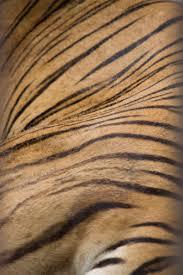
Tigers are the largest cat species on the planet! There are several subspecies and they are easily recognized by their orange color with black stripes (though Bengal tigers are occasionally white with black stripes).

close up of tiger stripes

They are solitary and territorial animals; cubs (big cat offspring are not called kittens) stay with their mother for 2 years. These cats are found throughout Asia—although they are endangered—and their population is dwindling.

Lions

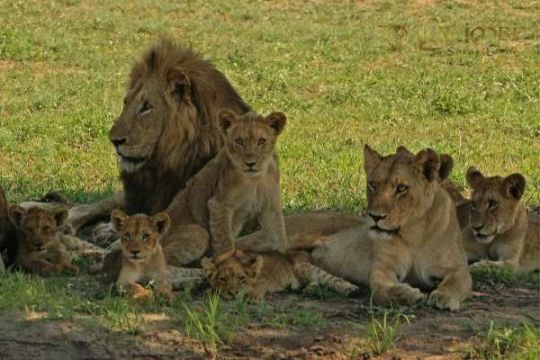
photo of a family of lions

Lions are a social species of large cats found in the grasslands and savannas of Africa. Males are recognizable by their long hair surrounding their necks, called manes. Lionesses do the hunting for the pride (social group of lions), which is comprised of several adult males, related females, and cubs. These animals are listed as vulnerable, which means they are close to becoming endangered.

Jaguars

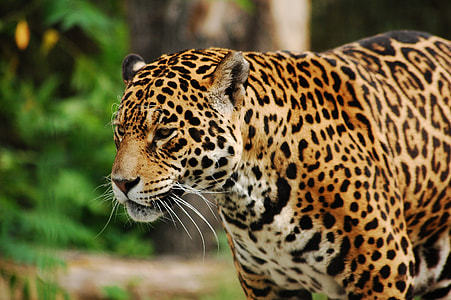
photo of a jaguar

Jaguars are the only member of the Panthera genus found in the Americas. Individual cats can be found in the Western United States, but they have had a reduced range in Central and South America since the early 20th century. They are solitary animals and ambush predators, hunting in tropical and subtropical forests and swamps. They are recognizable by their spots, which are black rosettes with spots in the middle. However, melanistic (or all black) jaguar occasionally appear; these cats are informally known as black panthers—although they are not a separate species—and the phrase “black panther” has been used to describe melanistic leopards as well. Jaguars are near-threatened, which means their numbers are decreasing and their populations are being closely monitored.

Leopards

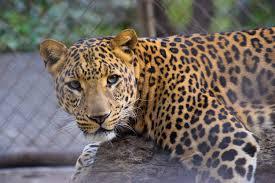
photo of a leopard

Leopards have a wide range and are found in Sub-Saharan Africa, in parts of Western and Central Asia and on the Indian subcontinent. They are recognizable by their spots; they look like jaguars with their spotted fur, but leopards are shorter with a smaller head, and their rosette-shaped spots do not have dots in the middle. Leopards are opportunistic hunters, hunting mostly on the ground at night; though in the Serengeti, they are known for attacking prey by leaping from trees. Leopards are listed as vulnerable, meaning they are potentially on their way to the endangered species list.

Snow leopards

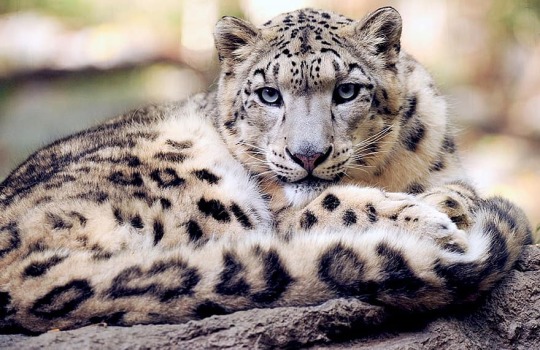
photo of a snow leopard

Snow leopards live in the mountain regions of Central and South Asia, living at elevations from 3,000 to 4,500 feet. Their fur is whitish grey, with black rosettes, distinguishing them from other leopards which are yellow or brown in color. Snow leopards have large nasal passages which helps warm the cold, dry air they breathe. Their tails are covered thickly with fur and provide fat storage; sleeping snow leopards use their warm tails like blankets to protect their faces when they sleep. They are listed as vulnerable, meaning they may appear on the endangered species list in the future.

Clouded leopards

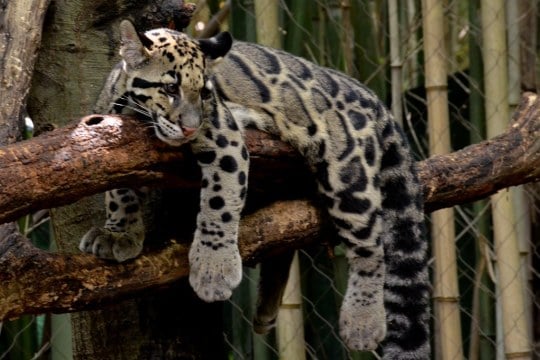
photo of a clouded leopard lounging on a branch

There are two species of clouded leopards—the mainland clouded leopard (Neofelis nebulosa) and the Sunda clouded leopard (Neofelis diardi). The mainland clouded leopard is found in the Himalayan foothills in Southeast Asia and southern China and the Sunda clouded leopard is found in Borneo and Sumatra. They are considered an evolutionary link between two cat families Pantherinae and Felinae. Their fur is dark grey with a black blotched pattern. Clouded leopards are solitary and hunt by stalking or ambushing prey. They are excellent climbers and use trees as rest sites.  Both species of clouded leopards are listed as vulnerable, meaning they can potentially end up on the endangered species list.

Cougar

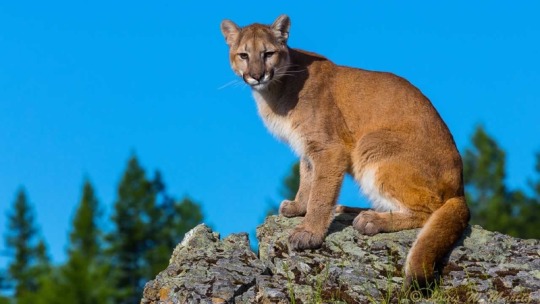
photo of a cougar sitting on a rock

The cougar (also known as a puma, mountain lion, red tiger, or catamount) is the only cat on this list that you may see in the wild around Pittsburgh; however, their populations are severely reduced in the eastern half of North America. These cats are adaptable to a wide variety of habitats, which is why they are found all throughout North and South America. This wide range is the reason people living in different regions have different names for them. They are ambush predators, preferring to hunt deer, though they will eat insects and rodents. While cougars are large, they are not always the apex (or top) predator and will occasionally give food they caught away to jaguars, grizzly bears, or even alligators! Cougars are listed as least concern, meaning their population is holding steady, though their range has shrunk.

Cheetah

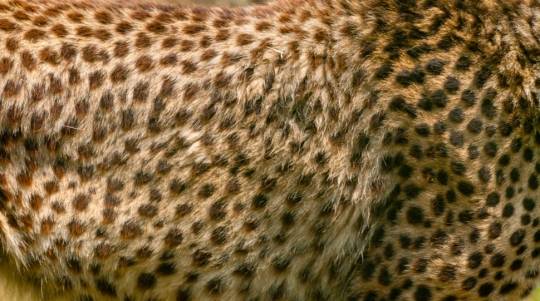
close up of a cheetah's spotted fur

Cheetahs are known for their speed; as the fastest land animal, they are capable of running up to 80 miles per hour! Cheetahs can be found in the Serengeti, Saharan mountain ranges, and in hilly areas of Iran. Cheetahs separate into three kinds of social groups—females with cubs, all-male groups, and solitary males. Females are more likely to travel further distances while males will establish and stay in smaller territories. They are active during the day and spend most of their time hunting for things like impala or springbok. Cheetahs are listed as vulnerable, with one of the main threats being a lack of genetic diversity, which makes it difficult for the species to adapt and evolve over generations, reducing the chance for individual animals to survive.

Eurasian lynx

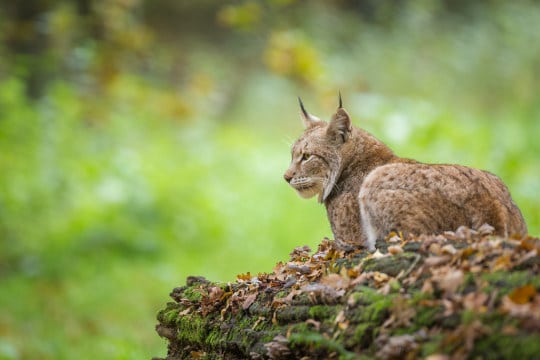
photo of a Eurasian lynx

The Eurasian lynx is found from Europe into Central Asia and Siberia, living in temperate or boreal (snow or Taiga) forests. They have short, red-brown coats, and are more colorful than most animals sharing their habitat. In the winter, their fur grows in thicker and greyer. These cats have relatively long legs and large webbed and furred paws that act like snowshoes, allowing them to walk on top of the snow. They have bobbed (or short) tails, much like one of their cousins you might see around Pittsburgh—the bobcat. They hunt small mammals and birds but will occasionally take down young moose or deer. The Eurasian lynx is listed as least concern, with a stable population.

Jo Tauber is the Gallery Experience Coordinator for CMNH’s Life Long Learning Department, as well as the official Registrar for the Living Collection. Museum staff, volunteers, and interns are encouraged to blog about their unique experiences and knowledge gained from working at the museum.

Related Content

Cats: The Archeological Site!

Meowfest: Museum Scavenger Hunt

Why Do Cat Eyes Glow in the Dark?

Filed Under: Blog Tagged With: cats, Educator Resources, Hall of African Wildlife, Hall of North American Wildlife, Jo Tauber, Museum from Home, Super Science Days, Super Science Meowfest

August 12, 2019 by wpengine

Travels with a Sketchbook: A Natural History Artist’s Observations at the Museum

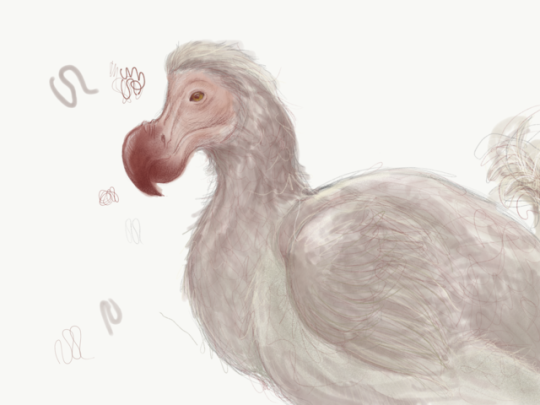
Carnegie Museum of Natural History has a large and expansive collection of artifacts, oddities, and wonders. It also has its fair share of mounted animals and skeletons on display, which makes it an ideal spot for the wandering artist. Where else can an artist study both extinct and extant species up close and in great detail? If, like me, you’re an illustrator who loves to draw animals, you could, for example, grab your sketchbook and head to the museum’s Bird Hall to get a close look at the flightless dodo (Raphus cucullatus). Driven to extinction by European colonists during the 1600s, early artists’ renderings provide some of the best evidence for the dodo’s appearance in life. Perhaps surprisingly, this bird is now known to be closely related to pigeons!

Dodo (Raphus cucullatus) in Bird Hall at Carnegie Museum of Natural History. Sketch by the author.

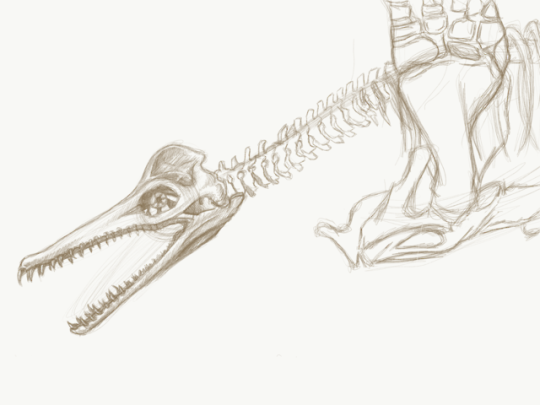
If your tastes are more prehistoric, check out the museum’s sprawling Dinosaurs in Their Time exhibition. Travel back in time to ancient seas and imagine the graceful movements of the plesiosaur Dolichorhynchops bonneri while the giant carnivorous mosasaur Tylosaurus proriger hovers ominously above you. These marine reptile groups vanished in the mass extinction that also wiped out non-avian dinosaurs roughly 66 million years ago.

Skeleton of the short-necked plesiosaur Dolichorhynchops bonneri in the Dinosaurs in Their Time exhibition at Carnegie Museum of Natural History. Sketch by the author.

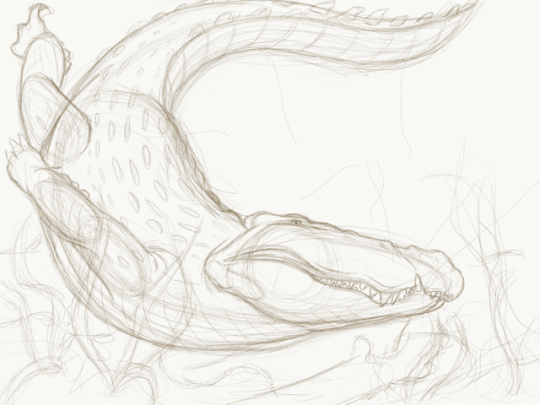
Or perhaps you’re more interested in observing and sketching modern day animals? If so, visit the Hall of North American Wildlife and Hall of African Wildlife on the museum’s second floor. Get up close and personal with the Nile crocodile (Crocodylus niloticus) trio and capture their anatomy in detail. It’s the safest way to do so – not to mention the only way to do so here in Western Pennsylvania! (Reports of alligators in our rivers notwithstanding.)

Nile crocodile (Crocodylus niloticus) in the Hall of African Wildlife at Carnegie Museum of Natural History. Sketch by the author.

So, my fellow artists and nature lovers, as I hope this post has shown, there are scores of species to inspire you here at the museum. Grab your sketchbook and come on over!

Hannah Smith is an intern working with Scientific Illustrator Andrew McAfee in the Section of Vertebrate Paleontology at Carnegie Museum of Natural History. Museum employees, interns, and volunteers are encouraged to blog about their unique experiences and knowledge gained from working at the museum.

Related Content

Celebrating Women in the Natural History Art Collection

Art and the Animal

New Vision of Old Rock Art

Carnegie Museum of Natural History Blog Citation Information

Blog author: Smith, Hannah
Publication date: August 12, 2019

Share this post!

  • Share on Twitter Share on Twitter
  • Share on Facebook Share on Facebook
  • Share on Pinterest Share on Pinterest
  • Share on LinkedIn Share on LinkedIn
  • Share on Reddit Share on Reddit
  • Share via Email Share via Email

Filed Under: Blog Tagged With: Andrew McAfee, bird hall, Birds, dinosaurs in their time, fossils, Hall of African Wildlife, Vertebrate Paleontology

  • Page 1
  • Page 2
  • Page 3
  • Go to Next Page »

sidebar

About

  • Mission & Commitments
  • Directors Team
  • Museum History

Get Involved

  • Volunteer
  • Membership
  • Carnegie Discoverers
  • Donate
  • Employment
  • Events

Bring a Group

  • Groups of 10 or More
  • Birthday Parties at the Museum
  • Field Trips

Powdermill

  • Powdermill Nature Reserve
  • Powdermill Field Trips
  • Powdermill Staff
  • Research at Powdermill

More Information

  • Image Permission Requests
  • Science Stories
  • Accessibility
  • Shopping Cart
  • Contact
  • Visitor Policies
One of the Four Carnegie Museums | © Carnegie Institute | Privacy Policy | Terms of Use | Accessibility
Rad works here logo