• Skip to primary navigation
  • Skip to main content
  • Skip to primary sidebar

Carnegie Museum of Natural History

One of the Four Carnegie Museums of Pittsburgh

  • Visit
    • Buy Tickets
    • Visitor Information
    • Exhibitions
    • Events
    • Dining at the Museum
    • Celebrate at the Museum
    • Powdermill Nature Reserve
    • Event Venue Rental
    • Gift Cards
  • Learn
    • Field Trips
    • Educator Information
    • Programs at the Museum
    • Bring the Museum to You
    • Guided Programs FAQ
    • Programs Online
    • Climate and Rural Systems Partnership
  • Research
    • Scientific Sections
    • Science Stories
    • Science Videos
    • Senior Science & Research Staff
    • Museum Library
    • Science Seminars
    • Scientific Publications
    • Specimen and Artifact Identification
  • About
    • Mission & Commitments
    • Directors Team
    • Museum History
  • Tickets
  • Give
  • Shop

Invertebrate Zoology

May 22, 2019 by wpengine

O-Do-nates or O-Don’t-nates—Dragonflies and Damselflies in the Section of IZ

Here, in the section of Invertebrate Zoology, we have a large collection of moths (order Lepidoptera: particularly in the families Sphingidae and Noctuidae), beetles (order Coleoptera: particularly in the family Carabidae), and fleas (order Siphonaptera: from all over the world). However, one of the most interesting groups we have in our collection is the order Odonata (pronounced oh-DOE-naw-ta), also known as dragonflies and damselflies (Figure 1). Aquatic in their juvenile stages, these masters of air and water are stunningly beautiful in overall design and coloration, and are phenomenal hunters. Truly, these delicate predators are impactful and under-appreciated among insect taxa.
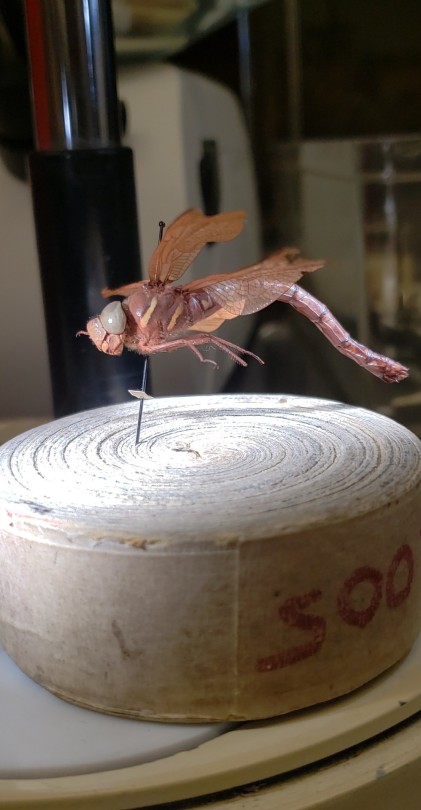
Figure 1. A pinned dragonfly, undetermined. Photograph taken by Catherine Giles.

Odonates are insects that undergo incomplete metamorphosis, and have three primary life stages: egg, nymph, and adult (or imago). Incomplete metamorphosis (also called hemimetaboly) is a process where juveniles look like miniature versions of the adults, but get larger over time. Organisms undergoing complete metamorphosis (also called holometaboly) have a pupal stage, and juvenile and adult stages appear very different. For example, a caterpillar turns into a pupa, before emerging as an adult moth or butterfly. Odonates can spend months or years in their nymphal stages, depending on the taxon. Most people (myself included!) are more familiar with the adult phase of an odonate’s life cycle, and see them darting around freshwater ponds and rivers, hunting to satiate their carnivorous diet.

Recently, I transferred our pinned and papered odonate material from one kind of drawer (USNM) into other drawers (Old Holland and Ortmann) due to space limitations in our collection. (For a refresher on drawer types found around the section, see the “Ants in our Pants and Bugs in Our Drawers” blog post!) Among much of our pinned material were numerous nymphal exuviae, or skins cast off by young, immature, juvenile odonates as they grew towards adulthood.

Pictured below is not a Hollywood monster, but rather a dragonfly nymph, Anax junius, in the family Aeshnidae, with the labium extended (Figure 2). While this image could be considered the stuff of nightmares, for an entomologist like me, it makes me excited! Nymphs use the labium to grab for prey in the water, and on the end of this particular specimen’s labium, you can clearly see additional pincers, used to grasp prey more securely. Pictured below is a close-up view of these pincers (Figure 3). Even as juveniles, dragonflies are top predators, making them masters of both water and air.
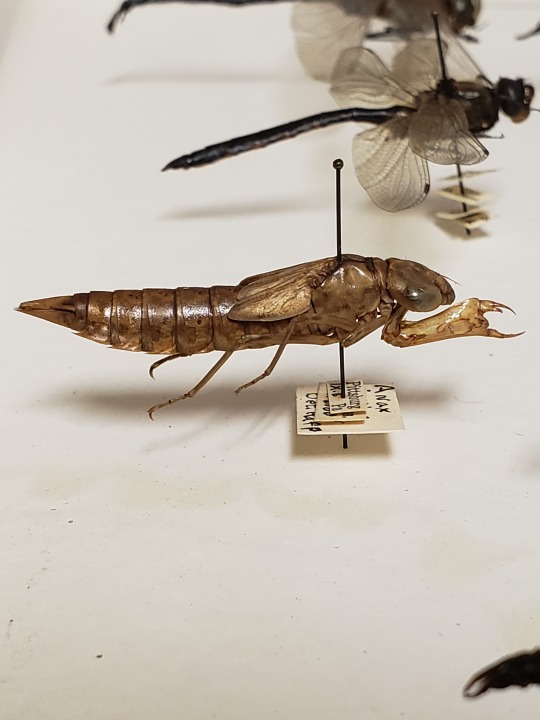
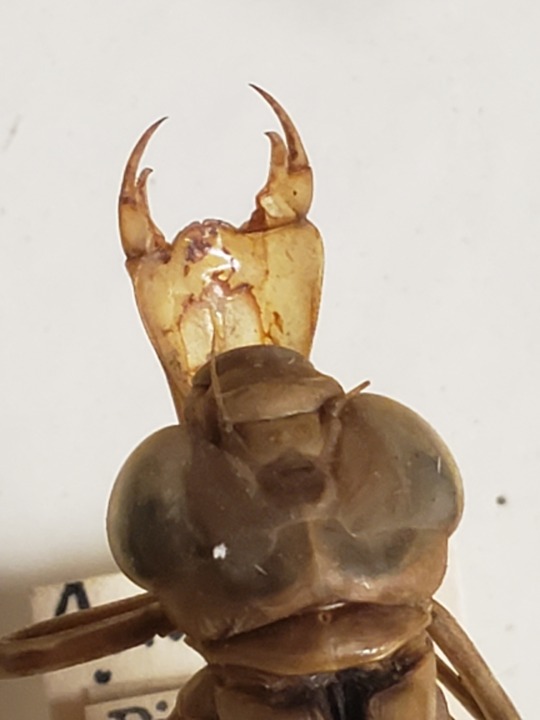
Figure 2. Nymphalexuviae of Anax junius. Photograph taken by Catherine Giles.


Figure 3. A close-up of pincers on Anax junius’s labium. Photograph taken by Catherine Giles.

At last count, we had approximately 40,000 pinned and papered odonate specimens in our collection. Having nymphal exuviae, like the ones pictured here, only enrich and enhance the diversity and magnificence of our insect collection here at the Carnegie.

Catherine Giles is the Curatorial Assistant of Invertebrate Zoology at the Carnegie Museum of Natural History. Museum employees are encouraged to blog about their unique experiences working at the museum.
Filed Under: Blog Tagged With: bugs, Catherine Giles, insects, Invertebrate Zoology

May 16, 2019 by wpengine

Learning to See, Seeing to Learn, Freshwater Insects

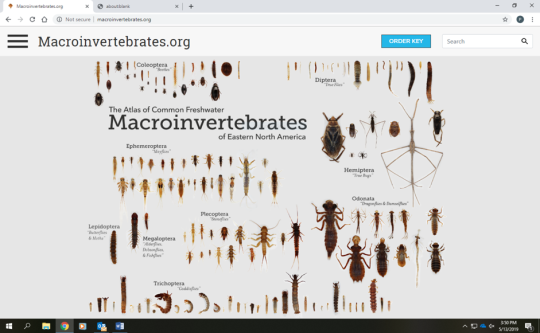
screenshot of macroinvertebrates.org

The Atlas of Common Freshwater Macroinvertebrates of Eastern North America is an online guide and accompanying set of teaching and learning resources designed to support water quality monitoring in citizen science projects and fresh water ecology education.

A suite of visual resources developed to help learners to identify fresh water insects.

For the team of entomologists, learning scientists, software engineers and designers who collaborated in the National Science Foundation-supported effort to plan, develop, test, and revise the site, six words guided the key design goals for this educational resource—Learning to See, Seeing to Learn. Team members aimed both to support the development of observational skills and provide the rich visual resources needed for observation and identification.

In freshwater environments the term macroinvertebrates refers to animals without backbones that can be seen with the naked eye. Because these insects, crustaceans, worms, and mollusks fill vital roles in aquatic food webs, their presence, absence, abundance, and diversity is key to assessing water quality in streams and freshwater bodies over time.

In early April, I spent several hours demonstrating www.macroinvertebrates.org at a table display during the Creek Connections Student Research Symposium held at the Campus Center of Allegheny College. The Meadville college has been providing opportunities for students to become stream researchers for more than 20 years, so I was confident the website would be well received by these budding young freshwater scientists.

The table displayed two iPads for visitors to explore the Macroinvertebrates.org site, a set of stream insects embedded in Lucite cubes, a traditional Riker mount of pond macros, a field microscope, and a stack of promotional postcards.

During the event I spoke with and handed-out information to approximately 100 people, a mix of middle school and high school students presenting their stream study projects, their teachers, Allegheny College students and faculty, and representatives from other organizations participating in the symposium.

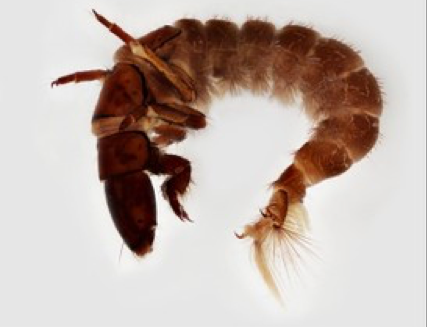
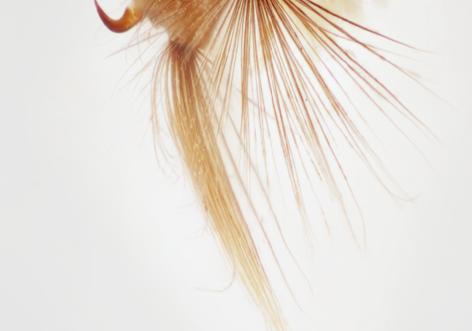
close up of caddisfly

Images showing dynamic zoomed and full-scale views of a caddisfly.

Table visitors were particularly impressed by set-ups on the paired iPads – one screen fully zoomed-in on the abstract art-like image on the “setal fan on a proleg” of a net-spinning caddisfly, the other featuring a whole-body image of the tiny beast. The companion images addressed the linked challenge of learning to see and seeing to learn.

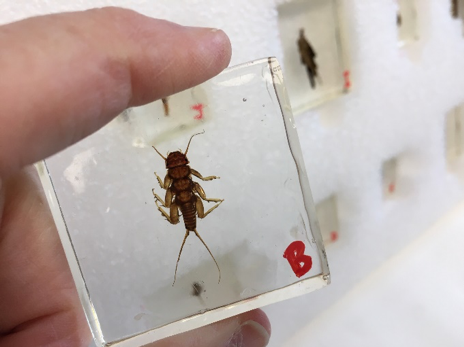
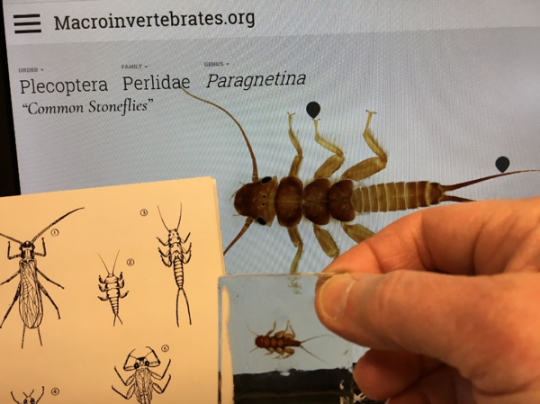
stonefly preserved in clear resin
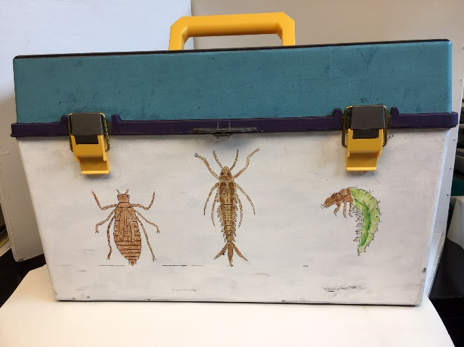
toolbox with macroinvertebrates painted on it

As teachers continue to experiment with ways for their students to use the online guide, the museum has added a set of preserved macroinvertebrates to the Educator Loan Collection. Pictured above is a stonefly embedded in a block of clear resin, and the colorfully-illustrated toolbox that contains a set of ten different specimens prepared in the same manner.

Partners involved in the development of www.macroinvertebrates.org include Carnegie Mellon University’s Human Computer Interaction Institute, University of Pittsburgh’s Learning Research & Development Center, Stroud Water Research Center, Clemson University, and Carnegie Museum of Natural History.

Patrick McShea works in the Education and Visitor Experience department of Carnegie Museum of Natural History. Museum employees are encouraged to blog about their unique experiences and knowledge gained from working at the museum.

Filed Under: Blog Tagged With: Education, Educator Loan Program, Educator Loans, Educator Resources, Invertebrate Zoology, Macroinvertebrates, Pat McShea, Patrick McShea

March 22, 2019 by wpengine

So, Just What is a Wheel Bug?

As March was approaching, I knew I was ‘on deck’ to produce a blog entry originating from our Section of Invertebrate Zoology. Looking at the calendar, I saw that the deadline would land around the 15th of the month, and something nagged at me about that date – what was the significance? Why, yes – the Ides of March was looming! Shakespeare’s Caesar failed to heed the warnings, and in the end… met his assassin…

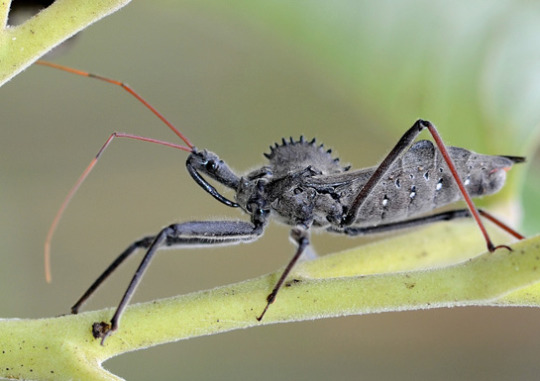
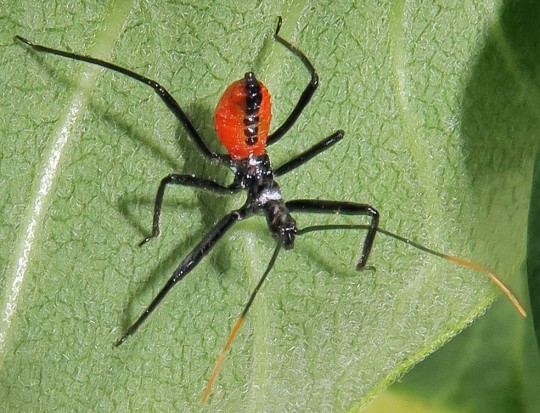
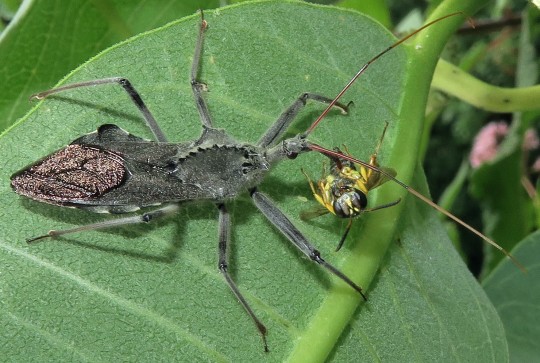
So, let’s take a look at an insect that carries the moniker of “assassin bug” – a species that possesses a bite of which everyone should truly beware. The insect is Arilus cristatus (Linnaeus), a species of ‘true bug’ in the order Heteroptera, in the family Reduviidae, collectively known as the assassin bugs. Arilus cristatus also carries the common name of ‘wheel bug’ due to the distinctive, serrated crest on its pronotum that in profile resembles a portion of a wheel or gear. No other insect in the United States possesses such a structure and the ‘wheel’ allows this species to be readily identified. In addition to the odd cog-like crest, the bug is large – nearly 1 ½ inches in length in mature adults and is dull gray in coloration. The immatures, or nymphs, look entirely different – they are small, bright red and lack the ‘wheel.’

Wheel bug, Arilus cristatus (Linnaeus) (Heteroptera: Reduviidae) (Image ©Rich Kelly, New Hyde Park, NY. Used with permission)

The wheel bug occurs throughout the southern half of the United States, ranging northward to the upper Midwest and southern New England. While Southwest Pennsylvania is within its natural distributional range, it appears to have become more common in our area over the last decade. People began bringing specimens into the museum for identification at an increasing rate starting around 10 or so years ago. While the evidence is anecdotal, the apparent increase in their abundance in our area could be a result of our changing climate – as our region becomes warmer on average, the environment becomes more suitable for the wheel bug, allowing it to thrive. Another potential factor for its increased numbers in our area is the introduction of an invasive species, the brown marmorated stinkbug, Halyomorpha halys Stål — a true bug species native to eastern Asia. With an increase in easily captured prey, the wheel bug may be exploiting this new food source. On a number of occasions, I have witnessed wheel bugs feeding on the introduced stinkbugs in the field.

Immature of the wheel bug, Arilus cristatus (Image ©Seth Ausubel, Washington Crossing, PA. Used with permission)

All of the reduviids are predatory on other invertebrates, using their beak-like mouthparts to pierce their prey and inject a powerful mix of enzymes that kills and begins digesting their prey from the inside, similar to the feeding habits of spiders. I can attest, from personal experience, to the extreme pain this insect can inflict by its bite. Wheel bugs, like many Insects, can be attracted to lights at night, and while collecting around some bright gas station lights some years ago, I foolishly decided to pick one up by the wheel with my bare fingers, assuming it could not reach me with its relatively short beak – and oh, how wrong I was! The initial bite was not terribly bad, but unusual, feeling like a tiny electrical shock. In less than a minute, however, a sharp, burning sensation began spreading the length of my thumb. The pain reached a crescendo in about 5 minutes and stayed at that level for several hours. The next day, the burning had subsided, but was replaced by a dull, throbbing ache that felt as if I’d smashed my thumb with a hammer. That discomfort persisted for a couple more days, yet oddly, there was no swelling and no obvious redness or sore at the site of the bite.

Arilus cristatus feeding on a hymenopteran (Image ©Seth Ausubel, Washington Crossing, PA. Used with permission)

While the bite of the wheel bug can certainly be a painful experience, and potentially worse in individuals that have a sensitivity or allergic reaction to the bite, they are rightfully considered a beneficial insect. Their predatory behavior helps rid gardens and forests of a wide variety of pest insects, from leaf-feeding beetles to caterpillars — a process of natural pest elimination known as biocontrol. So, if you should encounter a wheel bug — mid- to late summer is their peak time of activity — enjoy observing this odd insect and appreciate it for the role it plays in the environment. But heed my warning — resist any temptation to pick it up for a closer look!

Bob Androw is a Scientific Preparator in Invertebrate Zoology. Museum employees are encouraged to blog about their unique experiences and knowledge gained from working at the museum.

Filed Under: Blog Tagged With: Bob Androw, bugs, insects, Invertebrate Zoology

March 8, 2019 by wpengine

What are Seventeen-Year Cicadas and Why Does It Seem Like They Emerge More Than Once Every Seventeen Years?

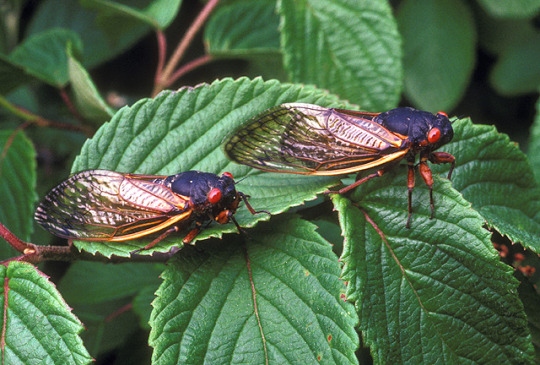
two cicadas on a leaf

There are different broods of periodical cicadas.  Any given brood has adults emerging only once in 17 years and has a defined range of occurrence.  The brood we will see in Allegheny County this year (2019) is Brood VIII.  It is a brood with a relatively small distribution, occurring mainly in eastern Ohio, the panhandle of West Virginia, and about a dozen counties in southwestern and western Pennsylvania.

Adults will emerge in a couple of months (mid-May, but with climate change issues this is becoming less predictable; when the subsurface soil reaches 64 degrees Fahrenheit, emergence will begin), females will lay eggs, nymphs will hatch 6-10 weeks thereafter, and those nymphs will drop to the ground, burrow into the ground below deciduous trees, tap into the roots to syphon the plant juices, and remain underground for the next 17 years.  The adults of this brood will not be seen for 17 years, emerging again in 2036.

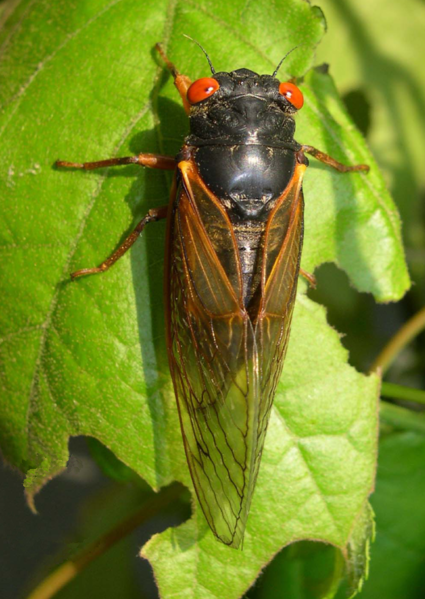
cicada on a leaf

Photo from Wikimedia Commons. 

Currently there are 12 broods of 17-year cicadas, each with a different aggregate distribution.  This means that in a 17-year period, adults will be emerging somewhere in 12 different years.  Some of these have a very small distribution; some have huge distributions.  For example, Brood X is nicknamed the Great Eastern Brood because it ranges from New York to Georgia, and west to Michigan. Brood X occurs over much of Pennsylvania, though not here in the southwest corner.  Its adults will emerge again in 2021 (and then 2038, etc.), but they are not related to or derived from the ones we will see this year. In a way, you can think of them as different clans or tribes that can’t interbreed or interact with one another because the adults are not in the same areas at the same time.

Of the 12 broods, 8 of them occur in Pennsylvania as a whole, though mostly to the east.  Here in the southwest, we get only 3 broods.  This means here in southwestern Pennsylvania, we will normally see adults emerging during 3 years out of 17.  Brood VIII, already mentioned, will be out this year and again in 2036.  Brood VII we saw here last year (2018), and it will be out again in 2035.  Both of these have been found in Allegheny County.  Brood V, last seen in 2016 and due again in 2033, has not officially been recorded from Allegheny County, but since it is known from nearby Greene, Washington, Westmoreland, and Fayette Counties, it is most likely here.

And, to be clear: there are other kinds of cicadas that come out every year.  These are usually called Annual Cicadas.  They don’t aggregate in big swarms, so there is just one here, one there.  Nymphs are underground only a year or two, so there are adults every year.  And they are active later in the season, mostly July-September rather than May-June. These are the solitary ones you hear singing in a tree in late summer.

Bob Davidson is Collection Manager of Invertebrate Zoology at Carnegie Museum of Natural History. Museum employees are encouraged to blog about their unique experiences and knowledge gained from working at the museum.

Filed Under: Blog Tagged With: Bob Davidson, Cicadas, Invertebrate Zoology, Robert Davidson

February 25, 2019 by wpengine

The Manticore

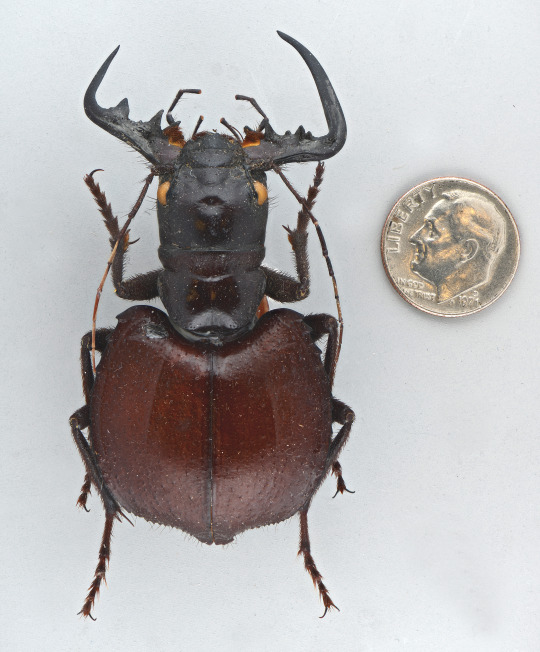
manticore specimen next to a dime for scale
Figure 1.  Adult male Manticora imperator, dorsal view (photo credit: V. Verdecia).

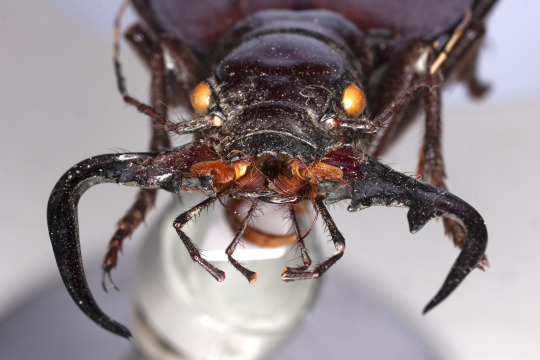
The Manticore.  In ancient Persia, a scary, man-eating monster with the head of a man, the body of a lion, and the tail and sting of a scorpion. In nature, one of the most spectacular of God’s favorite creatures, beetles (there are more beetle species than anything else living today).  The genus Manticora (“the one who devours men”) consists of 15 known species confined to the southern portions of Africa, mostly to the oldest geologic portions of that region, and mostly to open desert and dry savannah habitats. They are relatively primitive, flightless, predatory black tiger beetles of enormous size.  The males of some species are particularly spectacular, with huge asymmetrical mandibles, reaching the extreme in Manticora imperator, with a toothed left mandible and a larger right mandible bent like a sickle (Figures 1-2).  Mandibles in both sexes are used to attack prey, and, in males, also to combat other males and to clasp the female during copulation.

Figure 2.  Close-up of mandibles and maw of male M. imperator (photo credit: V. Verdecia).

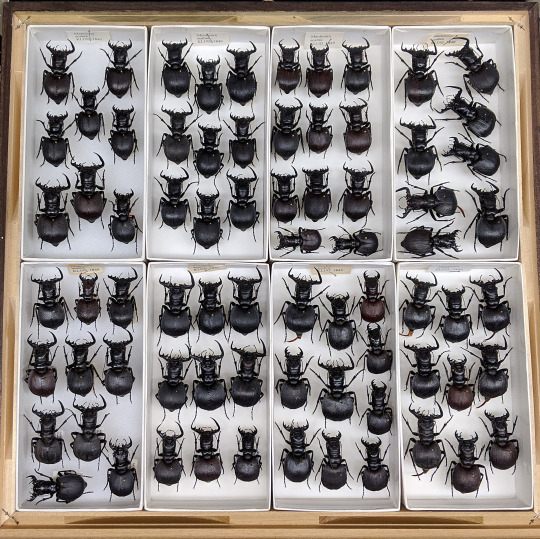
A recent donation gives Carnegie Museum of Natural History one of the best collections of these beetles in the world, nearly a thousand specimens, including all the species and subspecies.  This includes many of the types (specimens designated to represent the species when an author names a new animal or plant).  Long series of many of them (Figure 3) allows analysis of variation and distribution, addressing conservation issues, and has great potential for exhibit purposes.  Some of the species are now threatened, not by collecting, but by construction and development over their very limited habitats and ranges.

Figure 3.  Typical drawer from CMNH collection with several Manticora species (photo credit: V. Verdecia).

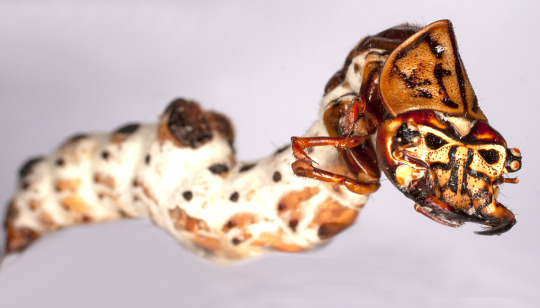
The larvae (Figure 4) look and behave more like tiger beetle larvae from other parts of the world, except that they are enormous.  They dig a vertical burrow up to a meter in depth, depending on substrate, which they can drop down into when disturbed.  The larval head is like a big armored plug with jaws attached.  In attack mode, they block the burrow entrance with the head (making the hole difficult to see) and wait.  There is also a large hook toward the rear on the larva’s back which makes it difficult for anything to dislodge it from the burrow. If something edible gets within striking distance, the larva throws its forebody out, grabs with its large jaws, and drags the prey into the burrow.

Figure 4.  Larva of M. mygaloides, antero-lateral view (photo credit: V. Verdecia).

Adults hibernate underground in a large chamber at the end of a tunnel that can be as much as a meter and a half in length.  Most are active from October to March after the summer rains, but they can wait a long time if necessary, until the unpredictable, erratic summer rains come. Activity is in the daytime, and they do not hesitate to attack other large armored beetles, or invertebrates that are larger than the attacker.  You have perhaps seen giant millipedes the size of a bratwurst in various insect zoos? There is a filmed instance of a Manticora finishing off and eating a 10-12 inch millipede, though the beginning of the event was missed, and it is possible the millipede was already injured. These are probably not the normal preferred prey of these aggressive beetles (the millipedes, that is, not the bratwursts, which are not known to occur in the wild).  But it still seems like quite a feat for an animal only about 20% the size of its dinner.

Bob Davidson is Collection Manager of Invertebrate Zoology at Carnegie Museum of Natural History. Museum employees are encouraged to blog about their unique experiences and knowledge gained from working at the museum.

Filed Under: Blog Tagged With: beetles, Bob Davidson, bugs, insects, Invertebrate Zoology

November 26, 2018 by wpengine

Ants in our Pants and Bugs in our Drawers: A Field Guide to Dry Specimen Storage in the Section of Invertebrate Zoology

By Catherine Giles

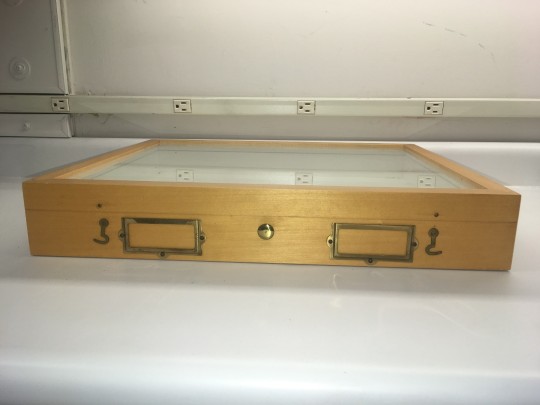
Welcome to the Field Guide to Dry Specimen Storage for the Section of Invertebrate Zoology (IZ)! Contained in this guide is a detailed listing of all storage containers used by IZ to store insects dry (i.e., those not placed into alcohol) for future study. This easy-to-use guide will specifically cover insect drawer storage, drawer identification, and their location within IZ. Using this guide will allow the reader to identify seven different storage containers we have utilized historically in IZ from the time the museum was founded. These drawers can be identified using their dimensions, coloration, and knob style.

Don’t Drop Your Drawers: A History of Drawer Usage In Invertebrate Zoology

There are many factors that limit where and how we store our insect drawers, but they are primarily dictated by physical space allocations, mainly because we have roughly 30,000 drawers to contend with. Our specimen storage containers range in size from a few square inches to roughly three square feet, and they all require specialized cabinetry for long-term protective storage. This cabinetry is currently divided among four large rooms. The IZ staff have done our best to incorporate technological advances to help with our ever-increasing collection, all while simultaneously maintaining the historical integrity of our museum workspace.  We have worked hard to provide our nearly 14.5 million specimens with safe, secure storage.

In the early 1980s, IZ received an NSF grant to construct a compactor in the Ulke Room. In the early 1990s, we received yet another NSF grant to install another compactor in the Avinoff Room. This enormous, movable, compact housing for storing our drawers freed up large volumes of space for us to acquire more drawers (and thus more bugs!). One range contains eight columns of 25 drawers, and can be rolled backwards or forwards to access either side of each range. A stationary range sits single-sided in the middle of each compactor, dividing it roughly in half, so that someone in the back of the compactor can work simultaneously with someone in the front. These compactors were built to store USNM drawers and Schmitt boxes.

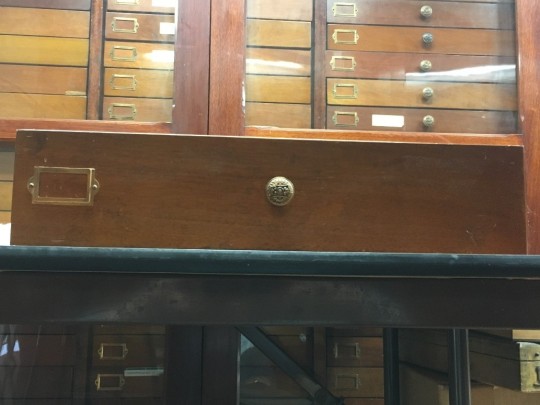
In the mid-2000s, IZ was awarded a grant to retrofit some antique wooden cabinetry in the Holland room. We retrofitted each wooden cabinet with steel inserts, making the entire room available for USNM and similarly-styled drawers. Previously, the Holland Room had quirky cabinets, fitted with slats of wood that only permitted Old Holland drawers to fit in at the mercy of humidity and warping. Now, with the new metal inserts, we can fit any combination of Old and New Holland Drawers, USNM, and Schmitt Boxes in the Holland Room.

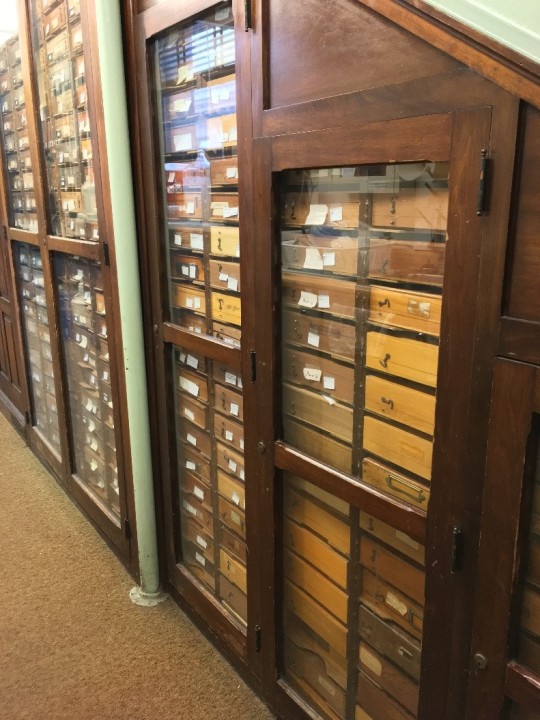
At one point in IZ’s history, mollusks (snails, slugs, and kin) were included in our section before it split off as the Section of Malacology. In the room formerly occupied by the Section of Mollusks, which now partly houses the Section of Education, you can find antique wooden cabinetry similar to that found in the Holland Room. These cabinets have not been retrofitted with steel inserts and thus can only hold Old Holland and Ortmann drawers. This space is colloquially known as the Sweadner Deck (pictured in part below), after a former Entomology staff member.

Detailed below are each individual storage method and their known habitats around the section. Measurements are given in approximate inches, and photographs are used when applicable. Rarity is used to indicate frequency of specimen storage and frequency of sightings around the section.

Text on a box that says: Please return this shipping box to Carnegie Museum of Natural History, Section of Entomology, 4400 Forbes Avenue, Pittsburgh, Pa. 15213, (412) 622-3259
drawers

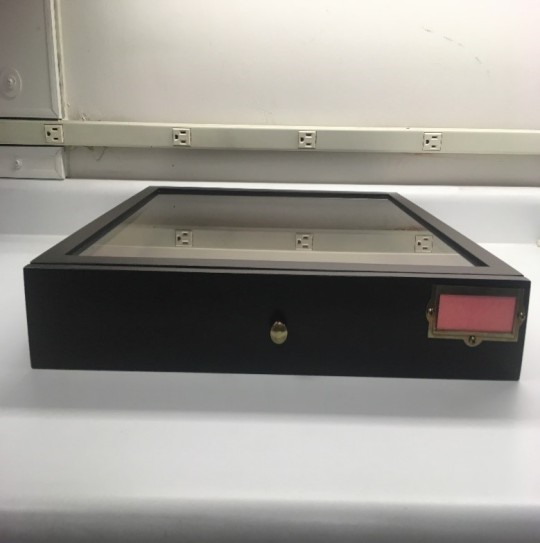
USNM (United States National Museum) Drawer

Rarity: Most Common

Length: 18in, Width: 18in, Depth: 3in

Coloration: Dark Brown to almost Black

Locality and Habitat: Avinoff, Ulke, and sometimes the Holland Room

empty drawer
line of drawers
drawers

Top photo: An empty USNM Drawer awaits usage; Middle photo: USNM drawers in their Avinoff Compactor Habitat; Bottom photo: USNM Drawers in their Ulke Compactor Habitat; Not Pictured: Holland Room Locality.

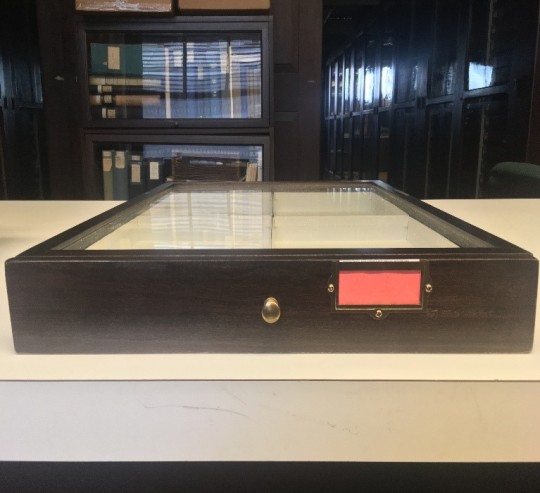
New Holland Drawers

Rarity: Common

Length: 23.75in, Width: 18in, Depth: 3in

Coloration: Dark Brown to almost Black

Locality: Holland Room

drawers
drawer

Top photo: New Holland Drawers await final curation in their cabinetry in the Holland Room; Top photo: At about six inches longer than a USNM drawer, the New Holland Drawer’s lengthier frame allows it to be seated only in the cabinetry of the Holland Room.

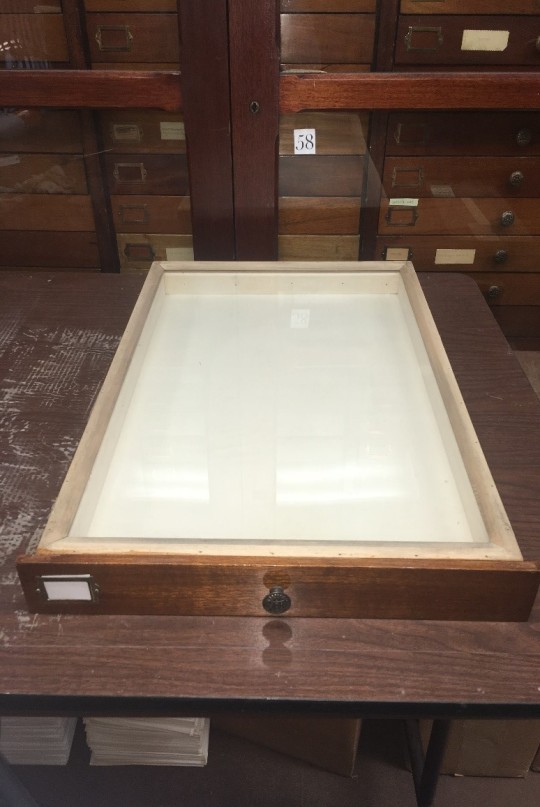
Old Holland Drawers

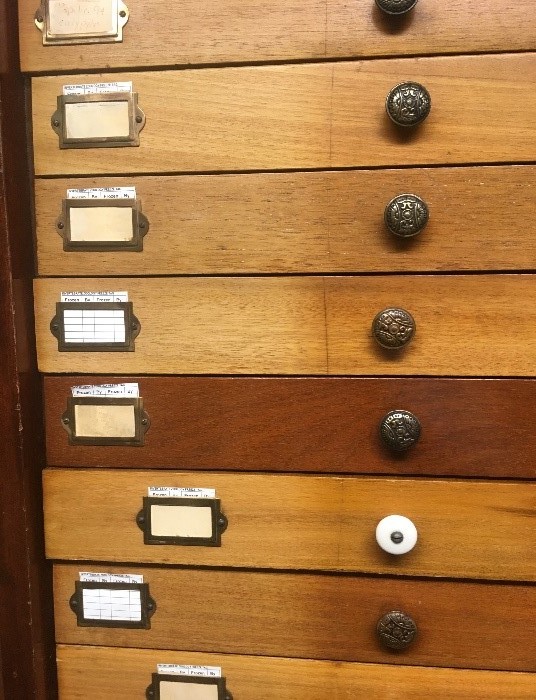
Rarity: Common

Length: 23in, Width: 18.15in, Depth: 2.25in

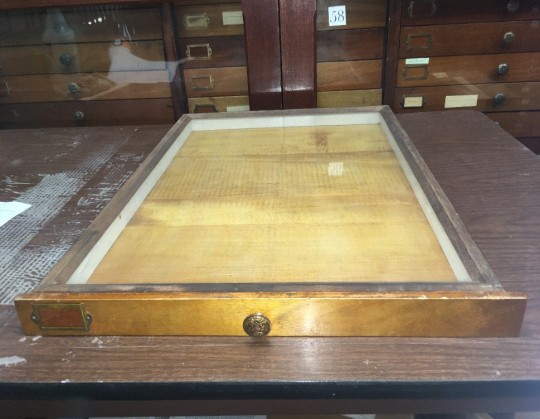
Coloration: Variable light tan, with 3 different style knobs and a pinning bottom

Locality: Holland Room, Sweadner Deck

drawer
detail of drawer handle

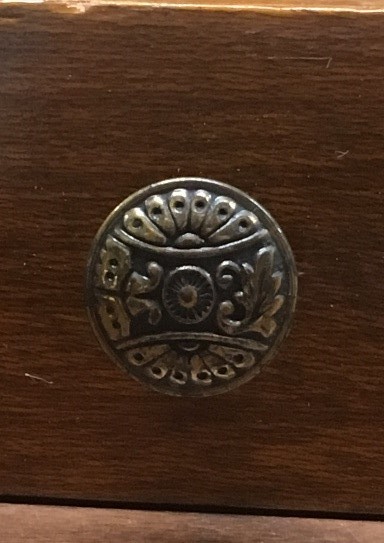
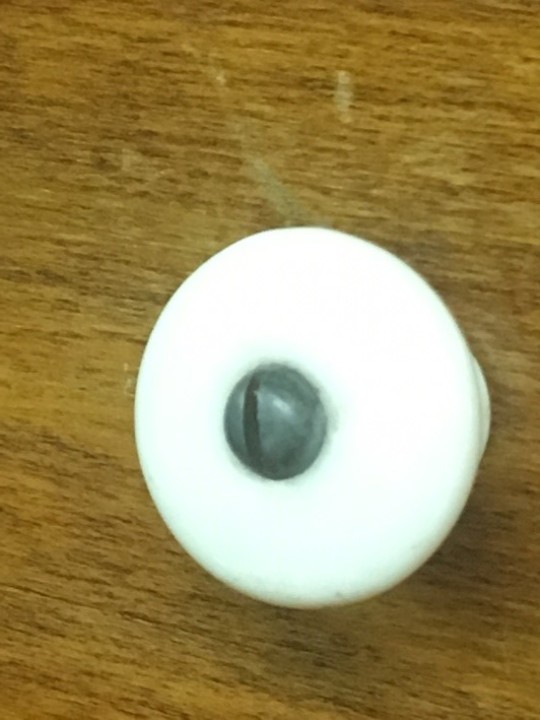
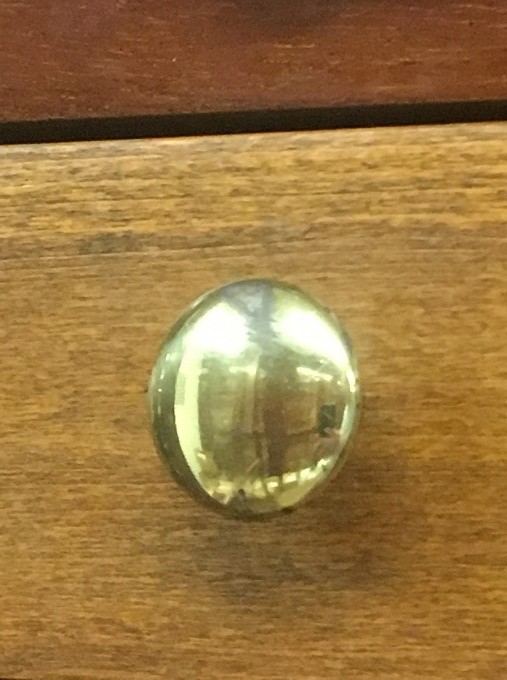
Pictured from top to bottom: An empty Old Holland Drawer, characterized by the wooden side slats and either a cork or foam pinning bottom, sits in the Sweadner Deck, one of only two places it can be housed. Ornate knobs like the one pictured in the middle were used up until World War II, when there was a strict recall on metal to be used in the war efforts. Knobs were then switched to the porcelain style, pictured at the far right. Sometime after the conclusion of World War II, knobs could once again be constructed of metal, this time smooth, as depicted at right.

Ortmann Drawers[FJ1]

Rarity: Extirpated

Length: 24.5in, Width: 18+in, Depth: 2.25in or 4in

Coloration: Variable Tan, with no pinning bottom

Locality: Stragglers may be found on the Sweadner Deck, but this style of drawer is no longer used

[FJ1]Note that the Ortmann drawers were not used by IZ, but were the drawers used by Malacology. We have used them more recently for wasp nests and papered materials.

drawer

A shallow Ortmann Drawer, characterized by a distinct lack of a pinning bottom and an additional half an inch or more in length, when compared to the nearly identical Old Holland Drawers.

drawers

Originally used exclusively in Malacology, Ortmann drawers have been repurposed to house some of our larger items, such as wasps nests and papered materials. A Deep Ortmann Drawer is pictured at right.

Cornell Drawers

Rarity: Uncommon

Length: 16.5in, Width: 19in, Depth: 3in

Coloration: Tan/yellow

Locality: Migratory (basement)

drawer

Cornell Drawers like the one pictured above are too long to fit into our standard cabinetry, but they are frequently used elsewhere in the entomological world. They are uncommonly used throughout our section but can be seen from time to time, especially in our basement storage unit. We often receive many Cornell drawers via donation and interaction with collections and collectors. They are generally too wide, much like the Mineral drawers, to fit into our storage units.

Schmitt Boxes

Rarity: Uncommon

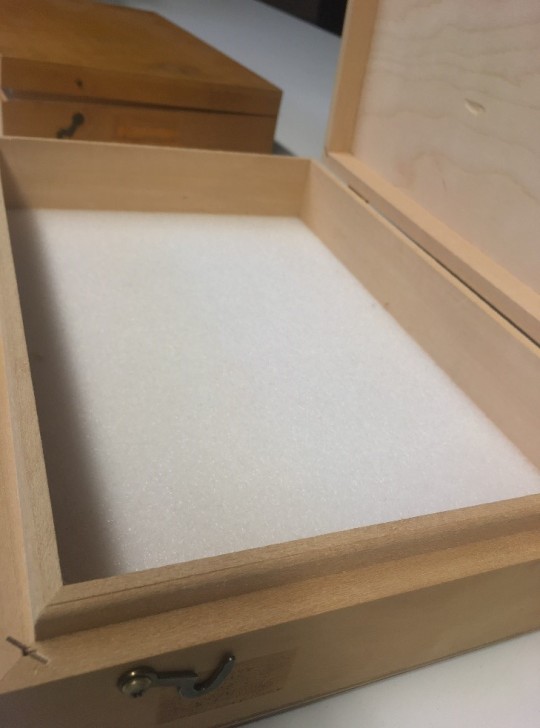
Length: 9in, Width: 13in, Depth: 2.5in

Coloration: Variable light tan

Locality: Holland Room

drawers
drawer

Schmitt Boxes were created by Jerome Schmitt. They are incredibly useful when conducting field work. In our section, they hold mostly loan returns and papered materials, and are located in the Holland Room, in intricate cabinets under the stairs. The Schmitt box pictured at the right has a foam pinning bottom, but many also contain cork.

Shippers

Rarity: Rare

Length: 9in, Width: 13in, Depth: 2.5in

Coloration: White or Brown

Locality: Preparatory Lab

open boxes

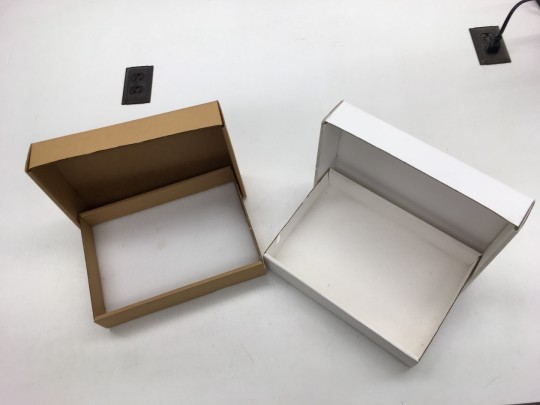
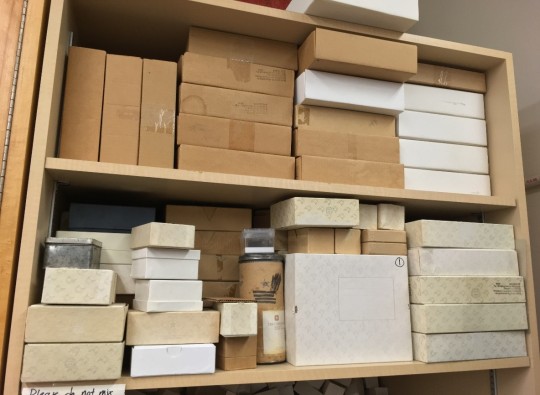
Our final storage method is our shipping containers. We typically do not store specimens here in the long-term, but while we are preparing to send a loan or have received one, specimens may be found here. Pictured above: Shippers, of similar dimensions to Schmitt Boxes. Pictured below: Shippers of a variety of sizes and shapes, in their home in the Preparatory Lab.

stacked boxes

Catherine Giles is the Curatorial Assistant of Invertebrate Zoology at the Carnegie Museum of Natural History. Museum employees are encouraged to blog about their unique experiences working at the museum.
Filed Under: Blog Tagged With: Catherine Giles, Invertebrate Zoology

  • « Go to Previous Page
  • Page 1
  • Interim pages omitted …
  • Page 3
  • Page 4
  • Page 5
  • Page 6
  • Page 7
  • Interim pages omitted …
  • Page 10
  • Go to Next Page »

sidebar

About

  • Mission & Commitments
  • Directors Team
  • Museum History

Get Involved

  • Volunteer
  • Membership
  • Carnegie Discoverers
  • Donate
  • Employment
  • Events

Bring a Group

  • Groups of 10 or More
  • Birthday Parties at the Museum
  • Field Trips

Powdermill

  • Powdermill Nature Reserve
  • Powdermill Field Trips
  • Powdermill Staff
  • Research at Powdermill

More Information

  • Image Permission Requests
  • Science Stories
  • Accessibility
  • Shopping Cart
  • Contact
  • Visitor Policies
One of the Four Carnegie Museums | © Carnegie Institute | Privacy Policy | Terms of Use | Accessibility
Rad works here logo