• Skip to primary navigation
  • Skip to main content
  • Skip to primary sidebar

Carnegie Museum of Natural History

One of the Four Carnegie Museums of Pittsburgh

  • Visit
    • Buy Tickets
    • Visitor Information
    • Exhibitions
    • Events
    • Dining at the Museum
    • Celebrate at the Museum
    • Powdermill Nature Reserve
    • Event Venue Rental
    • Gift Cards
  • Learn
    • Field Trips
    • Educator Information
    • Programs at the Museum
    • Bring the Museum to You
    • Guided Programs FAQ
    • Programs Online
    • Climate and Rural Systems Partnership
  • Research
    • Scientific Sections
    • Science Stories
    • Science Videos
    • Senior Science & Research Staff
    • Museum Library
    • Science Seminars
    • Scientific Publications
    • Specimen and Artifact Identification
  • About
    • Mission & Commitments
    • Directors Team
    • Museum History
  • Tickets
  • Give
  • Shop

Blogs by Mason Heberling

Mason Heberling is the assistant curator in the Section of Botany and co-chair of collections at Carnegie Museum of Natural History. Heberling is a plant ecologist and botanist whose research explores plant functional strategies in deciduous forest understories, especially in the context
of environmental change. Much of his current research focuses on the ecology
and evolution of non-native, invasive plants in the eastern United States, the ecophysiological strategies of the herbaceous layer in deciduous forests, and the impacts of climate change on the timing of leafing out and flowering in temperate deciduous forests.

September 13, 2018 by wpengine

A Herp Collection Mystery

by Jennifer Sheridan
snake specimen

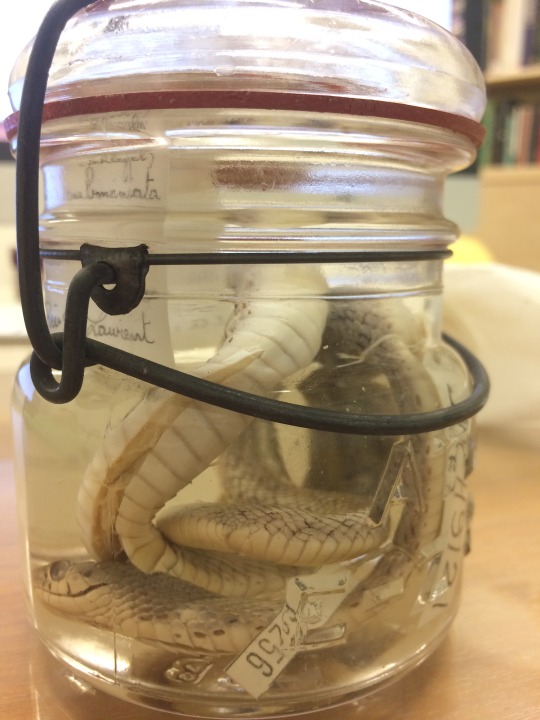
Part of the fun of being a new curator is getting to know the collections. In preparing for an upcoming talk (Scientists Live on Facebook on September 19th), I was sorting through our collections database to see what specimens we have from Southeast Asia, where I do most of my research. I came across a record that intrigued me: a fairly common snake (Rhabdophis subminiatus) from a potentially uncommon locality. The jar label says “Indonesia, Java”—Java being one of the islands in the Indonesian archipelago, which also happens to be the world’s most populous island. But the exact location detail is what caught my eye: Ternate.
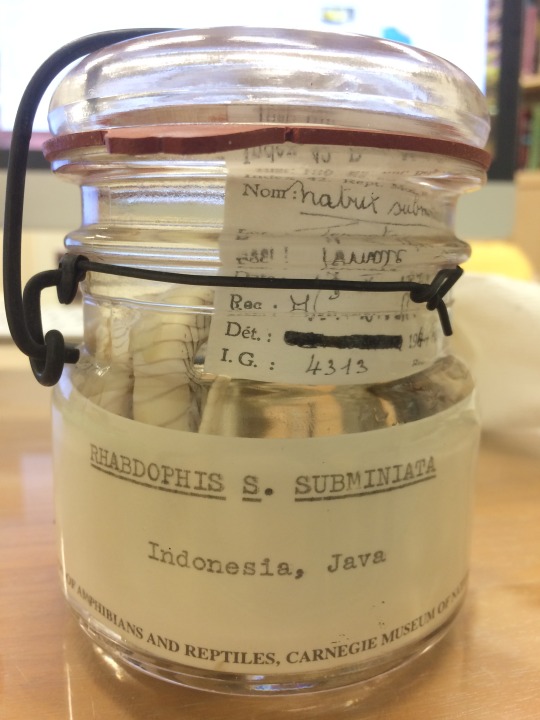
snake specimen from Indonesia

If you happen to be from Southeast Asia or you’re a biogeography buff, you may know that Ternate is not in fact on Java, but is itself a tiny island in eastern Indonesia, off the coast of Halmahera, which is part of the Maluku group. Biogeographically this area is interesting because it lies just east of Wallace’s Line, an imaginary dividing line that separates the flora and fauna of Sundaland (mainland Southeast Asia) from that of Austronesia (Australia, New Guinea, and associated islands). This area played a key role in our understanding of biogeography because it was while he was traveling across Indonesia that Alfred Russel Wallace noticed that there was a very distinct change in the species of plants and animals found in Borneo and Bali (west of the line), compared to those on Sulawesi and Lombok (east of the line), despite the fact that those islands are not separated by a large distance. He noted this in his journals and scientists later named this dividing line after him, once they learned that the plants and animals west of the line originated in mainland SE Asia, while those east of the line originated in Australia.

But Ternate is interesting not simply because of its geographic location, but because of Wallace’s relationship to it. Ternate is where Wallace was when he wrote his famous letter to Charles Darwin in 1858, while laid up in bed with fever, explaining to Darwin his idea of evolution by natural selection. Amazingly these two people had arrived at the same idea totally independently of one another, half a world apart. They had shared correspondence prior to 1858, and it was this letter from Wallace that prompted Darwin to jointly publish his own work alongside Wallace’s, thus introducing to the world for the first time the idea of evolution by natural selection, which has allowed us to understand the natural world.
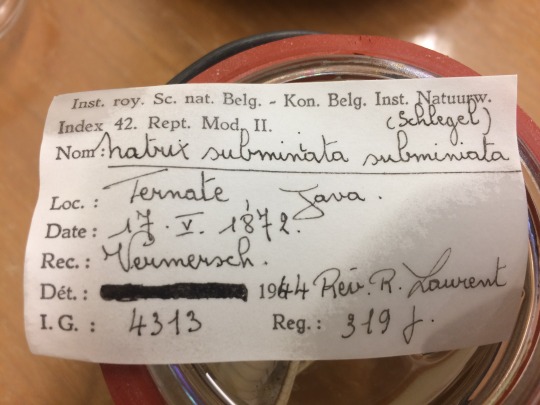
notes about the snake specimen from Indonesia

Coming back to the specimen, I had been hoping that perhaps it was collected by Wallace or one of his team, but the record is from 1872, ten years after Wallace had returned to England. The listed collector, Vermersch, is not a collector known to me or other herpetologists I’ve checked with who work in SE Asia, and we have no additional details on the specimen. Given that I cannot find a record of a city called Ternate on the island of Java, and the fact that all of Indonesia may have been known as the Java Sultanate at the time, my guess is that this specimen is actually from Ternate, and not Java proper. This specimen also has the distinction of being one of our oldest, so for me, and anyone else studying biogeography of SE Asia, this specimen becomes doubly interesting and valuable, and will definitely be one of the highlights of any upcoming tours of the Alcohol House! I’m looking forward to finding more secret treasures as I get to know our collection.

Jennifer A. Sheridan is the Assistant Curator in the Section of Herpetology at the Carnegie Museum of Natural History. Museum employees are encouraged to blog about their unique experiences and knowledge gained from working at the museum.
Filed Under: Blog Tagged With: Alfred Russel Wallace, amphibians, amphibians and reptiles, herpetology, Mason Heberling, reptiles, snakes

September 7, 2018 by wpengine

Collected on This Day in 2016: Japanese Stiltgrass

by Mason Heberling

Japanese Stiltgrass specimen

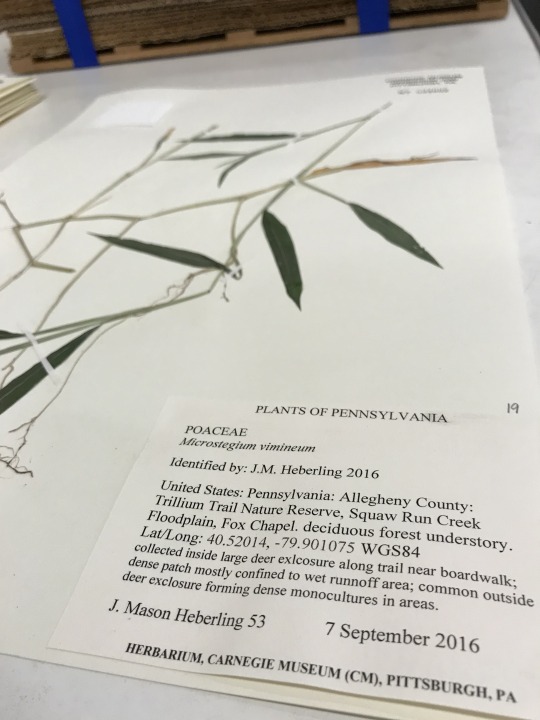
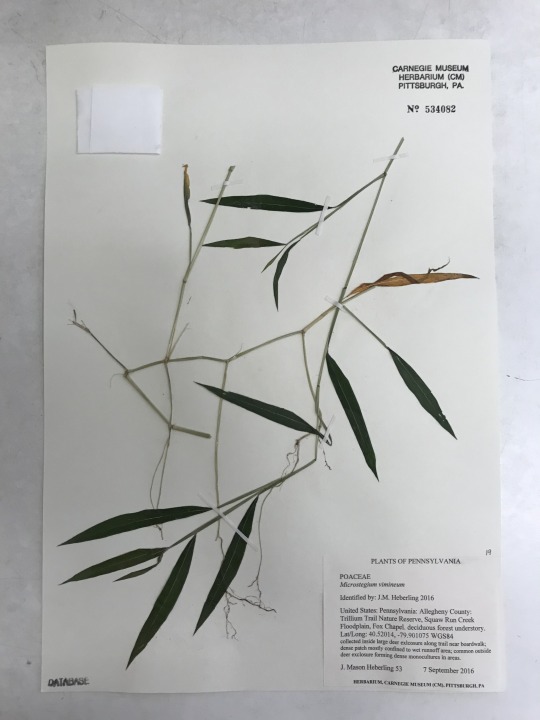
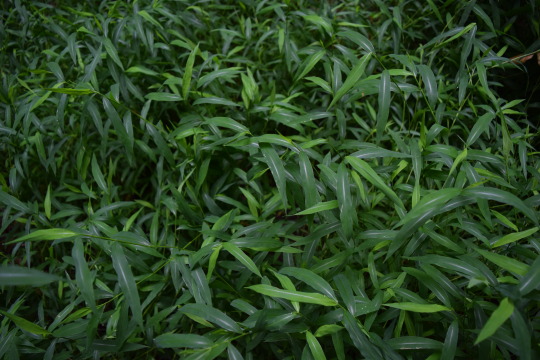
It is now a common plant in forests across Pennsylvania, but it wasn’t always.  This specimen of Japanese stiltgrass (Microstegium vimineum) was collected on September 7, 2016 by Mason Heberling (me!) at Trillium Trail, Fox Chapel, PA.  Native to East Asia, Japanese stiltgrass is an annual grass that is said to have first been introduced accidentally to Knoxville, Tennessee around 1919, used as packing material for porcelain dishes from China.  It has since become a major invasive species, spreading across forests of Eastern North America.  It is commonly found along trails, forest roads, and floodplains.  It has been shown to be facilitated by deer overabundance.  A recent study of unconventional gas well pads (such as “fracking”) in Pennsylvania by Penn State researchers found that recent hydraulic fracturing activities facilitates stiltgrass invasion (Barlow et al., 2017 Journal of Environmental Management).  Japanese stiltgrass is especially common in disturbed moist forests, where available light in the understory is higher.  Therefore, it often carpets the forest floor in disturbed forests.  High densities of deer have also been shown to facilitate stiltgrass invasions.  In fact, much of this research was done at Trillium Trail by Susan Kalisz (then at University of Pittsburgh, now at University of Tennessee Knoxville).  They used fences to exclude deer and found that stiltgrass was not present in fenced plots, but abundant when deer were allowed access. The Kalisz lab actively remains at Trillium Trail.

Japanese Stiltgrass specimen
Once  you  learn  to  recognize  this  grass,  you  are  likely  to  see  it  everywhere  in  forests  and  forest  edges  in  Western  Pennsylvania.  It  is  especially  obvious  in  the  Fall,  when  it  flowers  and  has  reached  its  peak  growth.  Note  the  faint  white  line  along  the  center  of  the  leaf  blades.

Although collected only two years ago, I was surprised to find that this specimen was the oldest Japanese stiltgrass specimen collected in Allegheny county!  There is a chance it had been collected earlier and exists in another herbarium. It was said to be uncommon (possibly absent) at Trillium Trail until 2002.

Japanese Stiltgrass
Microstegium  vimineum  carpeting  the  forest  floor  outside  deer  fences  at  Trillium  Trail.

What will our forests look like in another 10 years?  Herbarium specimens are important, verifiable sources to document our changing flora.  And ultimately, help conserve our flora.

Mason Heberling is a Postdoctoral Research Fellow in the Section of Botany at the Carnegie Museum of Natural History. Museum employees are encouraged to blog about their unique experiences working at the museum.

Filed Under: Blog Tagged With: Anthropocene, Botany, collected on this day, herbarium, Mason Heberling

September 6, 2018 by wpengine

Collected on This Day: September 6

by Mason Heberling

September 6, 1952: 66 years ago

…and recollected September 6, 2018

These specimens (and more) were collected on September 6, 1952 near Compton’s Mills (near Salisbury, PA, Somerset County) by Leroy Henry and Werner Buker. Henry was a long time Curator of Botany at the museum (1937-1973), and Buker was a math teacher at Perry High School, who was also a very active botanist at the museum.  Collectively, they collected nearly 50,000 specimens in the Carnegie Museum herbarium!

These specimens are part of a larger project ongoing in the Section of Botany at the Carnegie Museum.  Starting last year, we are revisiting historic sites across Western Pennsylvania, where former botanists have collected.  We are revisiting these sites in order to record and monitor biological change in the Anthropocene.  Are the same species present? (local extinction or persistence) Are new species present? (newly introduced invasive species)

We are also recollecting specimens from these historic sites to compare specimens collected decades to a century ago, to those collected today. For example, how are species affected by climate change? Are species flowering earlier? How are plant communities affected by invasive species and introduced pests? These are just a few of the many questions that can be answered.

Compton's Mills

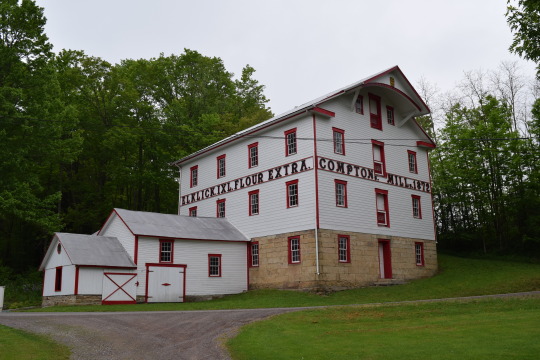
With generous permission of the current landowner, we are able to recollect specimens at Compton’s Mills. Compton’s Mills is a site of a family-run historic grist/flour mill built in 1872 on the foundation of an even earlier mill. We have done some recollections at this site last spring, including specimens of the endemic Appalachian violet (Viola appalachiensis).  Compton’s Mills is also of special importance, as specimens collected from this site were used by Leroy Henry to formally describe species new to science (known as “type” specimens).  Read about our recollection in Spring 2017.

This year we are revisiting in the late summer/early fall.

With data from Compton’s Mills, in addition to repeatedly revisiting other sites across Western Pennsylvania, we will be able to document and understand a century of past, present, and future impacts of humans on the landscape– a hallmark of the Anthropocene.  Some of our first recollections were featured in the We Are Nature exhibition.  Although this exhibition recently ended, specimens from this project will remain on display in the Hall of Botany.

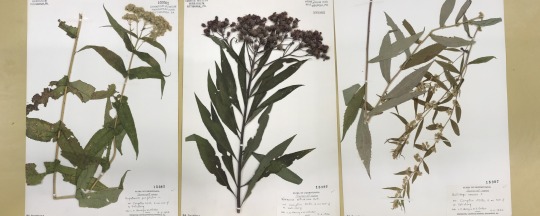
wildflower specimens

The wildflower specimens pictured here are welcomed signs of late summer and fall (left to right): common boneset (Eupatorium perfoliatum), tall ironweed (Vernonia altissima), wreath goldenrod (Solidago caesia).

Mason Heberling is a Postdoctoral Research Fellow in the Section of Botany at the Carnegie Museum of Natural History. Museum employees are encouraged to blog about their unique experiences working at the museum.

Filed Under: Blog Tagged With: Botany, collected on this day, Mason Heberling, pennsylvania, plants, western pennsylvania

September 4, 2018 by wpengine

Fire Destroys Brazilian Museum Once Called House of the Birds

by Chase D. Mendenhall

One of Latin America’s most important museums burned Sunday night —destroying up to 20 million scientific and historical artifacts. It is unclear how many of the irreplaceable treasures housed at the National Museum in Rio de Janeiro were lost. The museum was established in 1818 by the King of Portugal and in its early days was known as the “Casa dos Pássaros,” or House of the Birds, for its impressive bird collections.

Today, the museum was best known for its exhibits of the Americas consisting of mammals, birds, reptiles, amphibians, insects, minerals, aboriginal collections of utensils, Egyptian mummies, South American archaeological artifacts, meteorites, fossils and many other findings. Sadly, many of these invaluable objects are permanently lost.

Novelist Paulo Coelho described the reaction to the fire by saying, “the country is in tears.” Others have demonstrated their pain by carrying signs that say “200 years of history, 20 million items, reduced to ashes.”

We find comfort knowing that some pieces of Brazilian history are safely stored in other museums around the world. The Carnegie Museum of Natural History represents Brazil strongly in its collections, especially in the Section of Birds. We house one of the most comprehensive collections of Brazilian birds outside of Rio de Janeiro. We have 885 species of birds from Brazil, represented by 20,292 specimens—4,357 of which are on loan around the world.

Museums generate millions of data points and inform published scientific debates that are shared through networks. Today, these networks of knowledge and sharing define museum collections and exist precisely to safeguard against disasters.

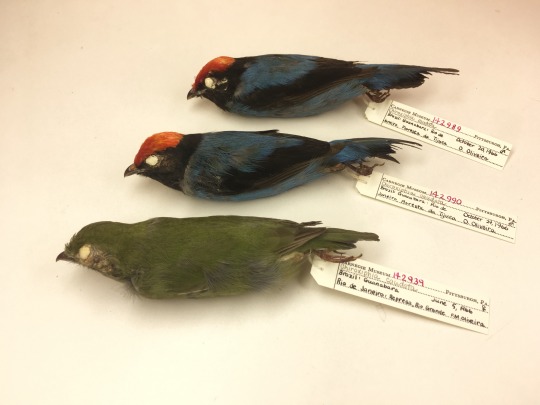
Chiroxiphia caudata study skins

Birds from the Carnegie Museum of Natural History collected from Rio de Janero include Blue Manakins (Chiroxiphia caudata), a species with one of the best examples of a cooperative breeding behavior. Males (red, black, and blue birds in background) meet in groups to dance in a coordinated, circular loop to breed with the solitary females (green bird in foreground) who raise the young on their own.

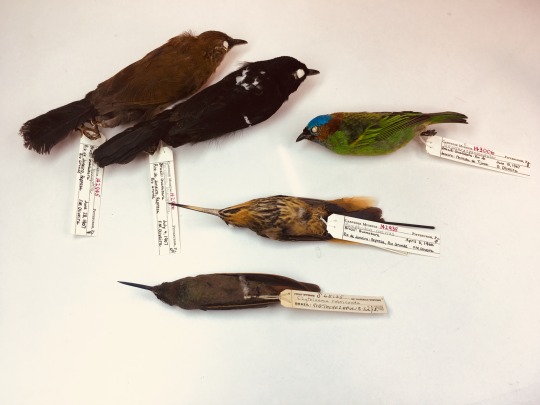
study skins of Brazilian birds

Other birds representing Brazil from the collections at the Carnegie Museum of Natural History include a pair of White-shouldered Fire-eye (Pyriglena leucoptera), a Red-necked Tanager (Tangara cyanocephala), a Saw-billed Hermit (Ramphodon naevius), and a Brazilian Ruby (Clytolaema rubricauda). Specimens are listed in the image from top to bottom.

Chase Mendenhall is Assistant Curator of Birds, Ecology, and Conservation at Carnegie Museum of Natural History. Museum employees are encouraged to blog about their unique experiences and knowledge gained from working at the museum.
Filed Under: Blog Tagged With: bird hall, Birds, Chase Mendenhall, Mason Heberling, Section of Birds

August 27, 2018 by wpengine

Sweet ‘n sassy, Sassafras

by John Wenzel

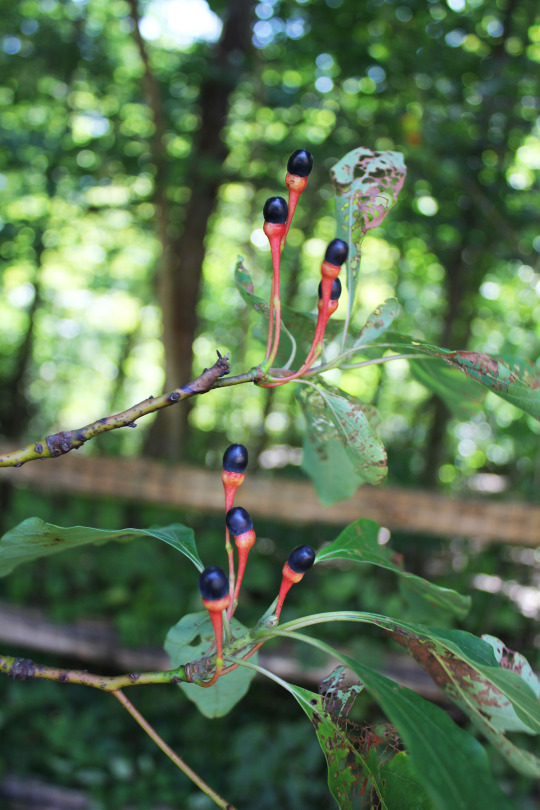
The flavoring of our popular root beer comes from the roots of sassafras, a common tree in open areas or at forest edges. Trees are either male or female, with the females producing interesting and attractive fruits in late August at our location.

sassafras fruit
Photo credit: Andrea Kautz

As is typical of members of the Laurel family, the leaves and twigs have a pleasant odor when crushed. The spice we call bay laurel is a relative of sassafras, and other relatives include our local spicebush and in the tropics avocados and cinnamon.

The leaves may be used in some Louisiana Creole cooking such as gumbo. The leaves are unusual in that the same tree may have simple leaves, or leaves with two lobes that resemble a mitten, or leaves with three lobes.

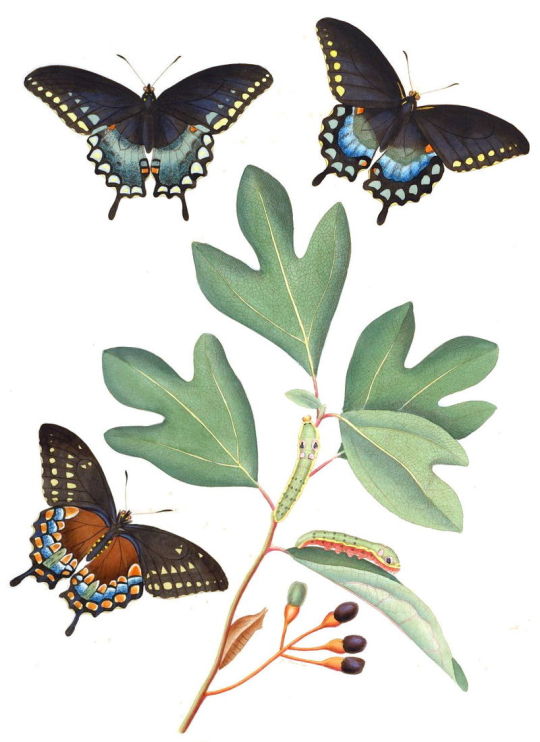
butterflies and sassafras

Sassafras is a traditional medicinal plant, and its oils were used in dentistry as both an anesthetic and disinfectant, although they are now banned in the USA due to carcinogenic properties. The tree is one of the main hosts of the attractive spicebush swallowtail butterfly, which was one of the first insects described from the New World by Linnaeus in 1758.

John Wenzel is the Director at Powdermill Nature Reserve, Carnegie Museum of Natural History’s environmental research center. Museum employees are encouraged to blog about their unique experiences and knowledge gained from working at the museum.
Filed Under: Blog Tagged With: Mason Heberling, Powdermill, Powdermill Nature Reserve

August 24, 2018 by wpengine

Celebrating the weed that engulfed western Pennsylvania?

by Mason Heberling

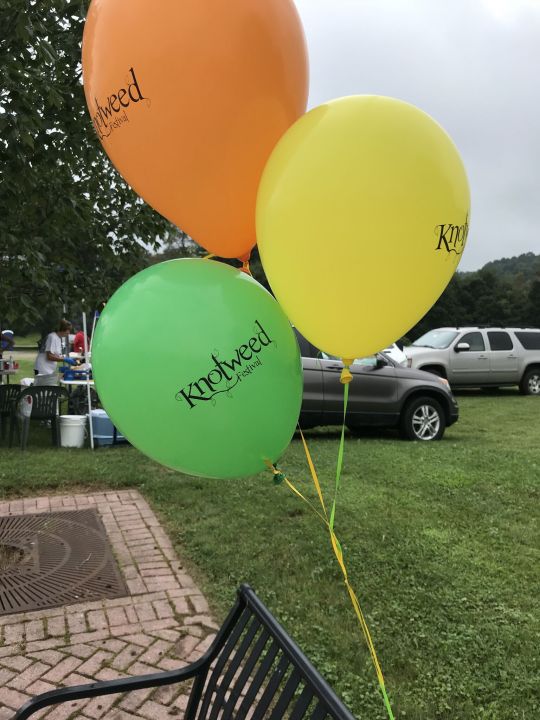
Knotweed Festival balloons

A few weekends ago, I went to the 7th annual Knotweed Festival in Blairsville, about 40 miles east of Pittsburgh in Indiana County.  Aside from reading a brief advertisement, I knew little about the festival before going. But, given I study non-native plant invasions, I had to go to a celebration named after a local weed that is a focus of my research! And this invader is one of the most aggressive and widespread ones in western Pennsylvania – Japanese knotweed.

Native to East Asia, Japanese knotweed (Fallopia japonica) is a large herbaceous perennial that was first introduced to the U.S. in the late 1800s as an ornamental.  As its name suggests, it eventually spread well outside of gardens to become a major nuisance. More troubling, the spread of the species displaces native vegetation and disrupts the natural function of the ecosystem.  The plant has thick hollow stems that somewhat resemble bamboo, although they are not related (knotweed is in the buckwheat family, Polygonaceae; bamboo in the grass family, Poaceae).  Knotweed spreads through persistent below-ground structures called rhizomes (below-ground stems), as well as by seed.  Small fragments of rhizomes can be washed downstream and easily establish, often forming dense stands along Pittsburgh’s many streams and rivers. Knotweed is among the most economically and ecologically problematic invasive plants in Pennsylvania.

So, why name a community festival after this invasive plant?!  Despite the dislike for the plant, the community of Blairsville named the festival partly as a tongue-in-cheek sentiment for the plant that has taken over the landscape and partly to recognize the weed as embedded into the local culture. The nearby Conemaugh River that runs throughs Blairsville has been transformed by this non-native species, completely covering the banks with stands so dense they completely block the view of the river along the community recreational trail.

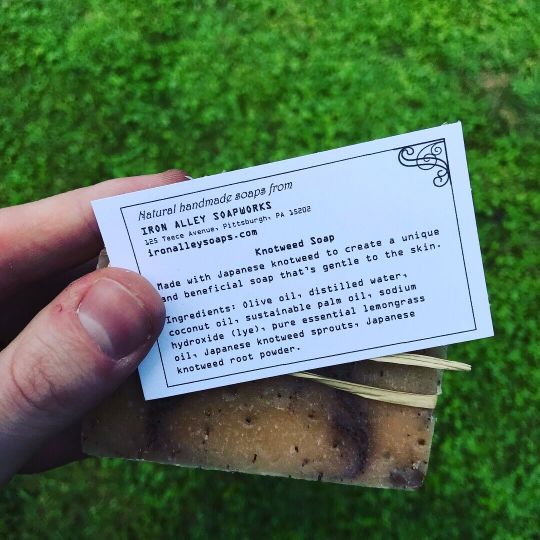
My family and I had a great time at the festival, visiting local craft and food vendors, listening to musicians and other entertainment, seeing a monarch butterfly display, and even a parade. I even bought soap made from the rhizomes and stems of knotweed collected by the river.

knotweed soap
Soap for sale at the Knotweed Festival made from young knotweed stems and rhizomes.

At first, I had mixed feelings about naming a festival after an aggressive invasive plant known to cause ecological harm. On one hand, it embraces the nature around us – whether we like it or not, non-native plants are part of the landscape around us. The global movement of plants is one of the defining features of the Anthropocene, the current era of pervasive human influence on the environment and Earth’s systems. But, on the other hand, naming a festival after an invasive species normalizes plant invasions and perhaps even embraces the change to the landscape as a good thing.  Despite my initial mixed feelings, I think the festival is a great community gathering that has the potential to raise awareness about the presence of the invasive plant in our community, its ecological effects, and in turn, nature around us (native and non-native).

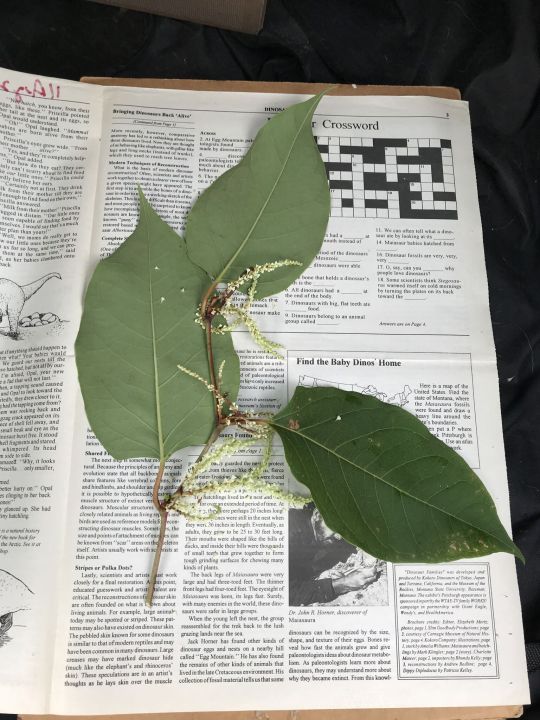
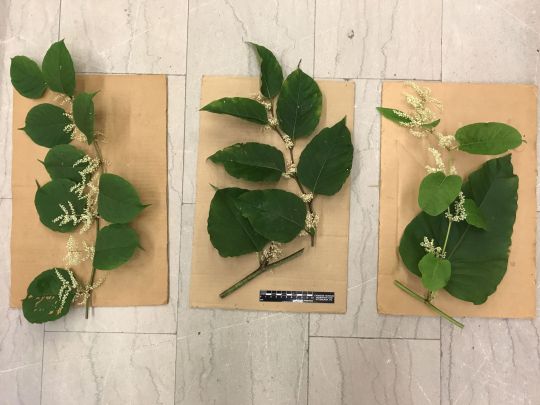
It turns out there is more than one species of invasive knotweed in western PA: Japanese knotweed (Fallopia japonica), Giant knotweed (Fallopia sachalinensis), and a hybrid between the two species, Bohemian knotweed (Fallopia xbohemica).  The hybrid was only recognized in the past several decades and likely originated when these two species “met” after they were introduced in Europe.  The three species are visually similar.  Giant knotweed can be distinguished by its large (usually much larger than your hand), heart-shaped leaves. Japanese knotweed and the hybrid Bohemian knotweed are much more difficult to distinguish, with much variation in leaf shape.  Japanese knotweed tends to be rounder in shape, while the Bohemian knotweed is intermediate between the other two species in leaf shape and size.  The leaf hairs are sometimes the only definitive identifying feature.

While I was at the Knotweed Festival, I collected some knotweed specimens for the Carnegie Museum of Natural History’s herbarium. Along the Conemaugh River in Blairsville, I collected both the Giant knotweed and Bohemian knotweed (the hybrid).  But, I did not find any Japanese knotweed. (I suspect my knotweed soap is actually made from Giant knotweed, after all.)

Bohemian knotweed
Bohemian knotweed specimen collected at the Knotweed Festival.

fresh knotweed specimens
Last year, I found all three knotweed species growing together at the same site near the Allegheny River and Barking Slopes Conservation Area, near New Kensington/Plum, PA.  Left to right: Japanese knotweed (Fallopia japonica), Bohemian knotweed (Fallopia xbohemica), Giant knotweed (Fallopia sachalinensis).

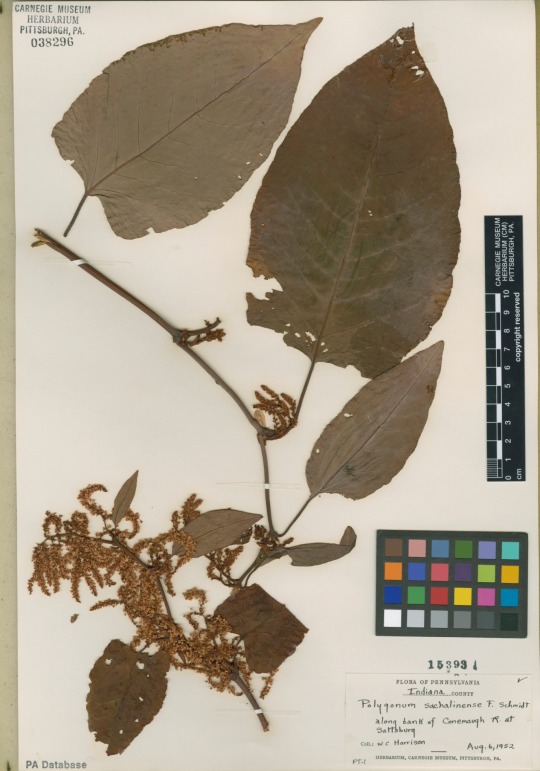
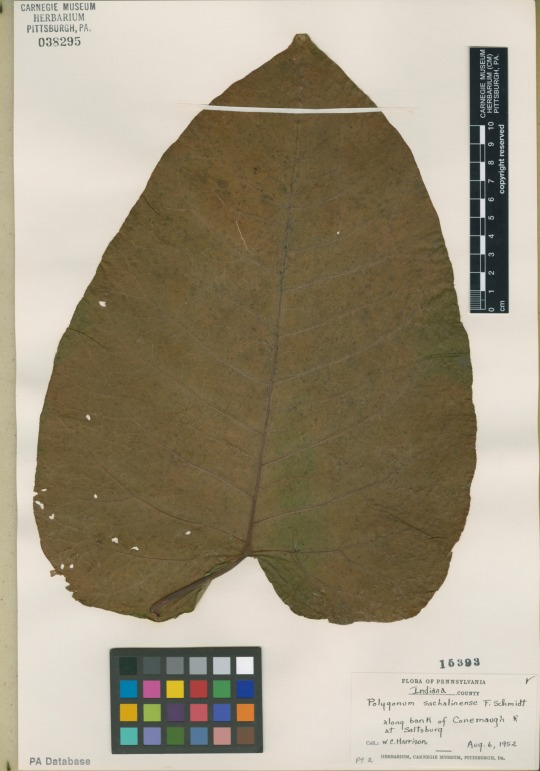
The earliest herbarium specimens from Indiana County were collected in 1952 along the Conemaugh River in Saltsburg (not far from Blairsville).  Interestingly, these specimens were of Giant knotweed and Bohemian knotweed – the same species I collected.

knotweed specimen
 

knotweed specimen
The two earliest specimens of knotweed recorded in Indiana County, collected in Saltsburg on August 6, 1952.  I recently recollected these same species not far from the same site, 66 years later.

Keep an eye out for knotweed.  If you live in western PA, chances are that you see it every day!

Mason Heberling is a Postdoctoral Research Fellow in the Section of Botany at the Carnegie Museum of Natural History. Museum employees are encouraged to blog about their unique experiences working at the museum.

Filed Under: Blog Tagged With: Botany, Mason Heberling, plants

  • « Go to Previous Page
  • Page 1
  • Interim pages omitted …
  • Page 10
  • Page 11
  • Page 12
  • Page 13
  • Page 14
  • Interim pages omitted …
  • Page 21
  • Go to Next Page »

sidebar

About

  • Mission & Commitments
  • Directors Team
  • Museum History

Get Involved

  • Volunteer
  • Membership
  • Carnegie Discoverers
  • Donate
  • Employment
  • Events

Bring a Group

  • Groups of 10 or More
  • Birthday Parties at the Museum
  • Field Trips

Powdermill

  • Powdermill Nature Reserve
  • Powdermill Field Trips
  • Powdermill Staff
  • Research at Powdermill

More Information

  • Image Permission Requests
  • Science Stories
  • Accessibility
  • Shopping Cart
  • Contact
  • Visitor Policies
One of the Four Carnegie Museums | © Carnegie Institute | Privacy Policy | Terms of Use | Accessibility
Rad works here logo