• Skip to primary navigation
  • Skip to main content
  • Skip to primary sidebar

Carnegie Museum of Natural History

One of the Four Carnegie Museums of Pittsburgh

  • Visit
    • Buy Tickets
    • Visitor Information
    • Exhibitions
    • Events
    • Dining at the Museum
    • Celebrate at the Museum
    • Powdermill Nature Reserve
    • Event Venue Rental
    • Gift Cards
  • Learn
    • Field Trips
    • Educator Information
    • Programs at the Museum
    • Bring the Museum to You
    • Guided Programs FAQ
    • Programs Online
    • Climate and Rural Systems Partnership
  • Research
    • Scientific Sections
    • Science Stories
    • Science Videos
    • Senior Science & Research Staff
    • Museum Library
    • Science Seminars
    • Scientific Publications
    • Specimen and Artifact Identification
  • About
    • Mission & Commitments
    • Directors Team
    • Museum History
  • Tickets
  • Give
  • Shop

Blogs by Mason Heberling

Mason Heberling is the assistant curator in the Section of Botany and co-chair of collections at Carnegie Museum of Natural History. Heberling is a plant ecologist and botanist whose research explores plant functional strategies in deciduous forest understories, especially in the context
of environmental change. Much of his current research focuses on the ecology
and evolution of non-native, invasive plants in the eastern United States, the ecophysiological strategies of the herbaceous layer in deciduous forests, and the impacts of climate change on the timing of leafing out and flowering in temperate deciduous forests.

October 1, 2018 by Kathleen

Scientists Live: Mason Heberling

Mason HeberlingPostdoctoral Research Fellow, Mason Heberling, will do a broadcast on Facebook Live to share the importance and power of museum specimen digitization! Botanists at the Carnegie Museum of Natural History have recently embarked on a three-year project to digitize nearly 190,000 plant specimens collected in the region. This effort is part of the Mid-Atlantic Megalopolis Project (mamdigitization.org), a network of thirteen herbaria spanning the densely populated urban corridor from Washington, D.C. to New York City to achieve a greater understanding of our urban areas, including the unique industrial and environmental history of the greater Pittsburgh area. How have the plants of Pittsburgh changed over the past century? In this interactive broadcast, Mason will introduce the plant collection at the museum (>0.5 million specimens strong, dating back the 1800s), the uses of these specimens to understanding the world around us, and the value of digitization and making specimens freely accessible to scientists, students, and the public. Each specimen has an important scientific and cultural story to tell.

The broadcast will begin at 10:30 a.m. and will include a question and answer segment.

Tune in at facebook.com/carnegiemnh. A recording will be posted later for those unable to watch live.
Tagged With: Botany, Mason Heberling, Scientists Live

October 1, 2018 by wpengine

Tiger beetle lost, tiger beetle found

by John Wible

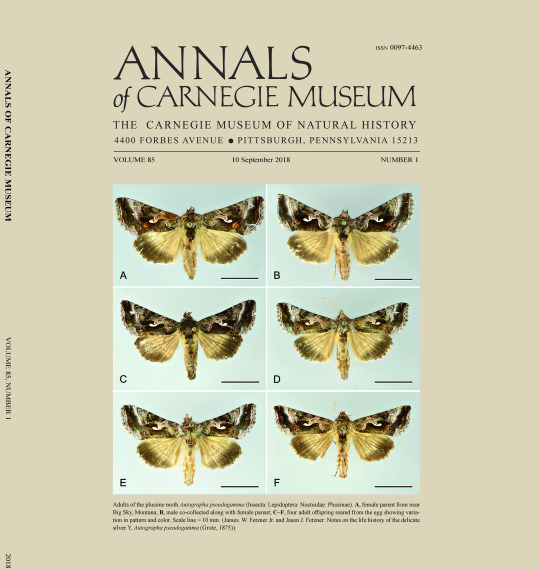
The newest issue of Annals of Carnegie Museum, our quarterly scientific journal highlighting museum research and collections, is hot off the presses. The cover is graced by photographs of a beautiful moth from Montana that was hand reared and studied by Curator James W. Fetzner Jr. and his nine-year-old son Jason. They report on this animal’s life history, previously unknown to science. Check out more about Jim and Jason’s study.

cover of Annals of the Carnegie Museum

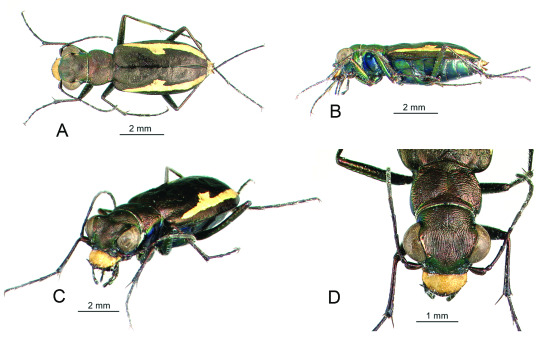
Another article by Research Associate Robert Acciavatti from the Section of Invertebrate Zoology and co-authors documents an amazing tale of scientific rediscovery regarding an extremely rare tiger beetle species from Durango, Mexico, named Cylindera nudata. The first and only known specimen of the species ended up in Germany where it was described in 1879. This beetle was one of the countless tragedies of World War II when it was lost from the Natural History Museum in Hamburg during the Allied bombing of that city. As the only known specimen, this one was designated as the holotype of the species, the specimen upon which the description and name of the species was based.

Holotypes are critically important because scientists compare other specimens to the holotype to discover if they belong to the same species or not. You can imagine that when the holotype is lost and no other specimens are known, making comparisons can only be done with whatever descriptions exist in the literature. And for this particular tiger beetle, there was only the original description in German and a line drawing that did not match the description!

Over the years, collecting expeditions to the locality of the holotype (or type locality) went searching for this beetle but came up empty or worse, being unable to reach the remote mountainous area of Mexico of the type locality. In a shipment of beetles collected from Mexico to Acciavatti, amazingly enough there was one specimen that matched the original description of Cylindera nudata. In this new article in the current Annals, that specimen is described, illustrated, and designated as the neotype of the species, which means it is the new type of the species as the old type no longer exists. Acciavatti has donated this specimen to Carnegie Museum of Natural History, and we will preserve it for future generations who will hopefully find more examples of this beautiful beetle and will need a neotype to compare to.

tiger beetle shown from four angles

John Wible, PhD, is the curator of the Section of Mammals at Carnegie Museum of Natural History and editor of Annals of Carnegie Museum. John’s research is focused on the tree of life of mammals, understanding the evolutionary relationships between living and extinct taxa, and how the mammalian fauna on Earth got to be the way it is today. He uses his expertise on the anatomy of living mammals to reconstruct the lifeways of extinct mammals. John lives with his wife and two sons in a house full of cats and rabbits in Ross Township. 

Filed Under: Blog Tagged With: Holotypes, James Fetzner, Mason Heberling

September 27, 2018 by wpengine

Badwater 20: Not So Bad After All

by Lauren Raysich

small fossil

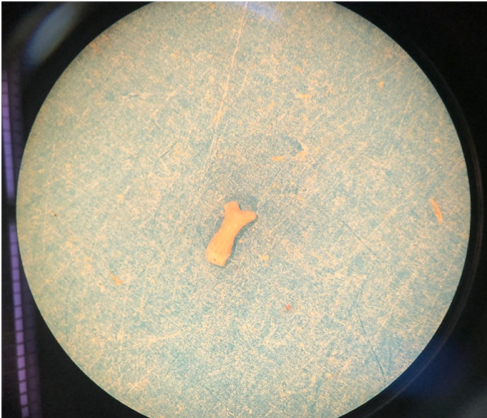
Although many people are familiar with fossilized bones of dinosaurs and other large extinct creatures, some fossils can be so small that a microscope is needed to see them. In Carnegie Museum of Natural History’s PaleoLab, volunteers like me use microscope stations to search for tiny fossils in different sediments collected from sites all over the world. Sediment from the Badwater 20 locality in Wyoming interests me more than any other. Sediment from this site dates to a time known as the Eocene Epoch. The middle of three epochs in the Paleogene Period, the Eocene lasted from 56 to 33.9 million years ago. Many fossils found from the Eocene belong to some of the oldest known members of modern mammal groups. Studying these fossils helps scientists trace the evolutionary histories of mammals we know today.

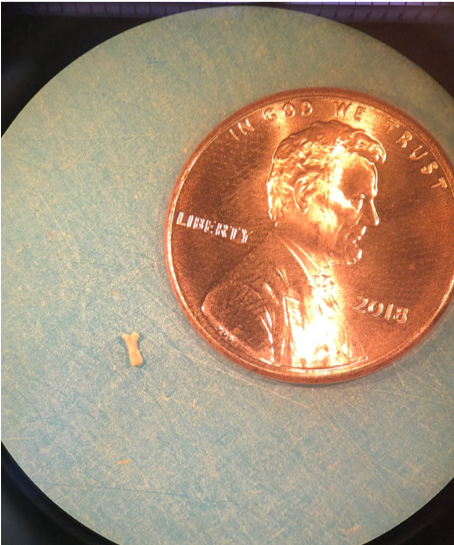
After searching through the Badwater 20 sediment for nearly two weeks, I had found only fragments of bones and teeth. Then, surprisingly, I came across a small, complete bone. It is not common to find complete fossil bones that are this tiny because they can be broken easily, whether by erosion or by being crushed by scavenging animals or water currents. Fossils are not immune to human-induced hazards either. After I found the bone, I was so excited that I accidentally dropped it on the floor of the lab and had to use a magnifying glass to relocate it! (Thankfully, it didn’t break.)

small fossil next to a penny for scale

This bone interested me more than any other because it was the first bone I’d found from the Badwater 20 site that wasn’t fractured in some way. Since the bone is so small, I figured it had to have come from a tiny mammal. Through research and the help of other museum volunteers and staff, I have concluded that this bone is a phalanx (finger or toe bone) of an Eocene rodent. The mouse-like animal to which it belonged most likely lived in a tree, a burrow, or the undergrowth more than 37 million years ago! Although, to some people, this little bone may not be as exciting as those of, say, Tyrannosaurus rex, it thus has an important story to tell in the history of life on our planet.

Lauren Raysich is an undergraduate student at the University of Pittsburgh who volunteers in the Section of Vertebrate Paleontology at Carnegie Museum of Natural History. Museum employees are encouraged to blog about their unique experiences working at the museum.

Filed Under: Blog Tagged With: fossils, Lauren Raysich, mammals, Mason Heberling, Paleolab, paleontology, Vertebrate Paleontology

September 21, 2018 by wpengine

Collected on this day in 1944

by Mason Heberling

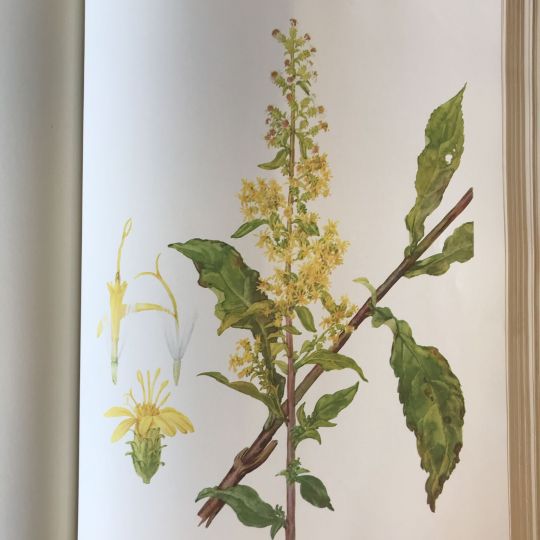
illustration of a wildflower

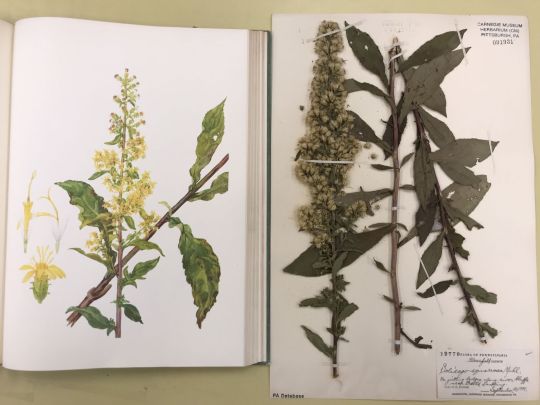
Herbarium specimens are both an art and a science.  This fact is no more apparent than in the collaborations between Andrey Avinoff and Otto Jennings, which culminated in the 1953 book Wildflowers of Western Pennsylvania and the Upper Ohio Basin.

Jennings was a longtime curator of botany, professor at University of Pittsburgh, and served many roles at the Carnegie Museum of Natural History (including director from 1945-1949).

Avinoff was a lepidopterist (studied butterflies) and artist, who was Director of the Carnegie Museum if Natural History from 1926-1945.

“Probably never again will there be two scholars, each a master in his own field, who can work together as did these two.” – Agnes L. Starrett

The book features a detailed, scientific manual describing plant species found in the region written by Jennings, along with 200 watercolor paintings of a subset of these species by Avinoff.  Jennings would travel across Western PA in search of the perfect specimen to return to the museum for Avinoff to paint while still fresh and unwithered.  Avinoff is said to have dropped everything he was doing upon Jennings’ return, and stay through the night to paint the flowers from still life.  Avinoff estimated that it took him about 1,600 hours to paint them all.

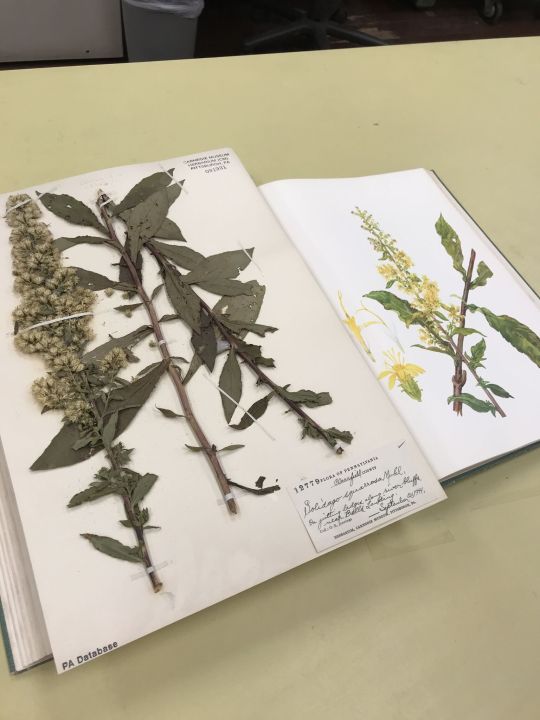
illustration of a wildflower next to a wildflower specimen

A. Avinoff, referring to his wildflower paintings: “These were my guiding principles: (1) accuracy in form and color; (2) portrayal of the individuality of the plant as to the character, position, arrangement, and venation of the leaves and the texture of their surfaces; (3) decorative arrangement, composition, and spacing; (4) strictly water color technique—only transparent pigment and no opaque colors, no whit paint anywhere, not a single stroke used in the high lights. The whit is the paper and all light parts are lighter washes of the pigment—thoroughbred aquarelle has been observed throughout.”

Some of these specimens were then pressed and remain in the Carnegie Museum’s herbarium today.  We know of 50 specimens that were used by Avinoff for his paintings.

illustration of a wildflower next to a wildflower specimen

This specimen of squarrose goldenrod (Solidago squarrosa) is one of those specimens.  It was collected by Otto Jennings on September 21, 1944 on a ledge along the river bluffs near Bell’s Landing, Clearfield County, Pennsylvania.

Both of scientific and cultural value, this specimen has a rich history, much more than “just” dried plants on paper.  While we know the history behind this particular one, each specimen has an important scientific and cultural story to tell.

Botanists at the Carnegie Museum of Natural History share digital specimens from the herbarium on dates they were collected. They have embarked on a three-year project to digitize nearly 190,000 plant specimens collected in the region, making images and other data publicly available online. This effort is part of the Mid-Atlantic Megalopolis Project (mamdigitization.org), a network of thirteen herbaria spanning the densely populated urban corridor from Washington, D.C. to New York City to achieve a greater understanding of our urban areas, including the unique industrial and environmental history of the greater Pittsburgh region. This project is made possible by the National Science Foundation under grant no. 1801022.  

Filed Under: Blog Tagged With: Andrey Avinoff, Botany, collected on this day, Mason Heberling, Otto Jennings, pennsylvania

September 18, 2018 by wpengine

Hidden Treasure of Pittsburgh Found

by Bonnie Isaac

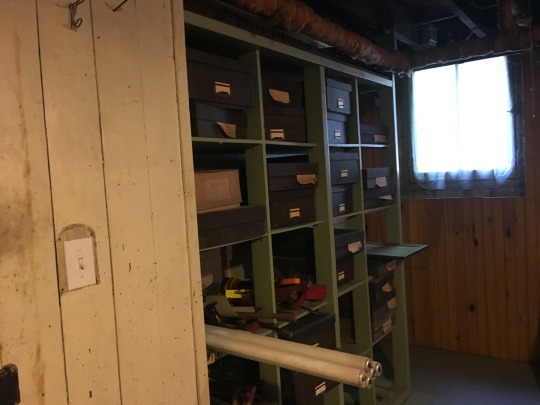
Recently I received a call from a woman who had bought an estate and discovered a hidden treasure in the basement. The basement contained 28 boxes of herbarium specimens. These boxes contained the private herbarium of Charles Boardman. Boardman was a research associate of Botany here at the museum from 1951 until his death on January 5, 1983. He had built his own herbarium space in his basement. These specimens are already mounted and in remarkably good shape for having been stored in a basement unattended for over 30 years.

Herbarium space built in the basement of Charles Boardman’s house with boxes of specimens.

Amazingly enough, there was also a letter with the collection with some details about his life. Charles Boardman was born in Buffalo, New York in 1903. Mr. Boardman attended the Massachusetts Institute of Technology and became a professional engineer. Charles was especially interested in mosses which led to his affiliation with Carnegie’s own Otto Jennings. Boardman accompanied Jennings on many field trips and collected specimens for the Manual of Mosses of Western Pennsylvania written and illustrated by Jennings. Boardman’s moss collection was donated to Duke University at his request shortly after his death. His vascular plant collection remained hidden in his basement until just a few weeks ago.

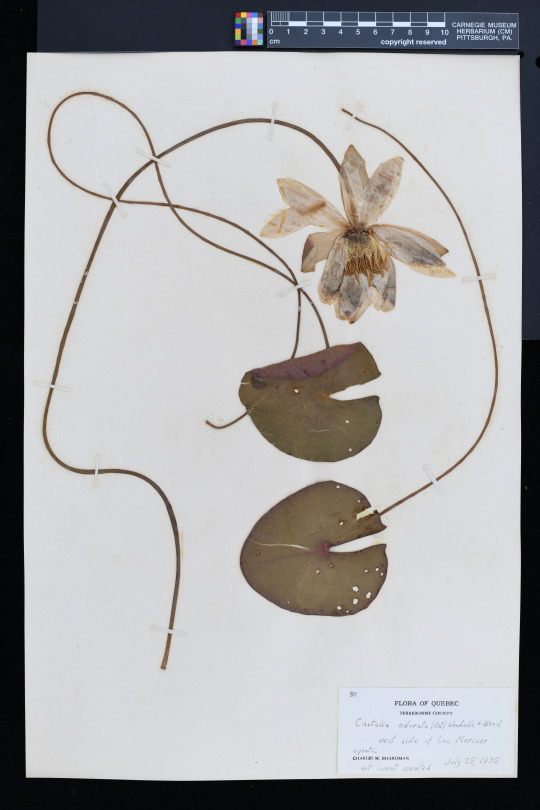
Water lily specimen
Water lily specimen found in Boardman’s personal herbarium.

Most of the specimens are from the 1930’s and 1940’s collected from Pennsylvania and beyond. In the coming weeks and months, we will process this amazing gift to see how many specimens are in this hidden treasure and put them into the main herbarium here at the museum for researchers to use in the future. You never know where a historic treasure may be lurking.

Bonnie Isaac is the Collection Manager in the Section of Botany. Museum employees are encouraged to blog about their unique experiences and knowledge gained from working at the museum.

Filed Under: Blog Tagged With: Bonnie Isaac, Botany, Charles Boardman, herbarium, Mason Heberling, Pittsburgh, plants

September 14, 2018 by wpengine

Collected on this day in 1989

by Mason Heberling

You can get see plants from all over the world without ever leaving the herbarium. Herbaria are powerful resources that enable research that would otherwise not be possible, comparing plant species collected from across the world, at different times of year.

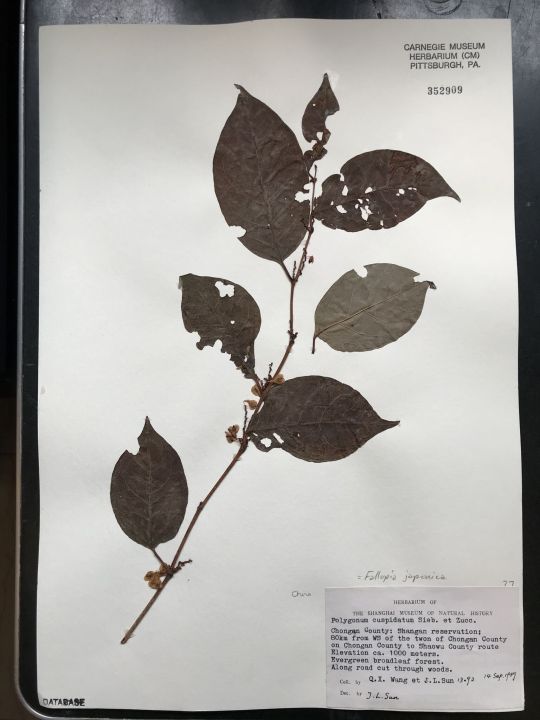
Japanese knotweed specimen

This specimen of Japanese knotweed (Fallopia japonica, formerly known as Polygonum cuspidatum) was collected in China on Sept 14, 1989 by Q.X. Wang and J.L. Sun.

Even if you’ve never been to East Asia, this species might be familiar to you.  Although native to China, Japan, and Korea, Japanese knotweed is now common across much of the temperate world, including the United States and Europe. In Pittsburgh, Japanese knotweed (and related introduced knotweed species) form dense stands along rivers, streams, and roadsides.

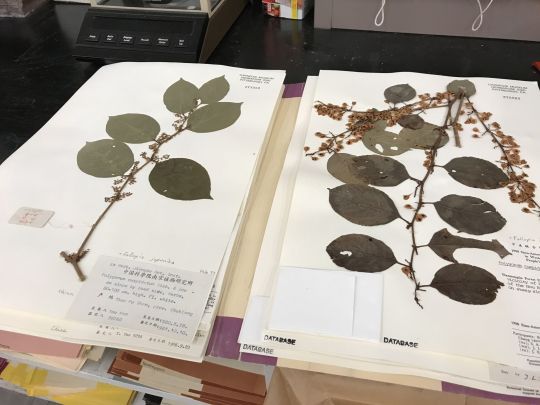
Japanese knotweed specimens

Specimens collected from both the native and introduced ranges can be compared to better understand plant invasions. For example, do invasive species look the same in their home range?

Although Collected On This Day posts tend to be biased towards specimens collected in Pennsylvania, the Carnegie Museum of Natural History herbarium includes specimens from many countries around the world. In fact, about one-third of the 530,000+ specimens are from outside the United States.

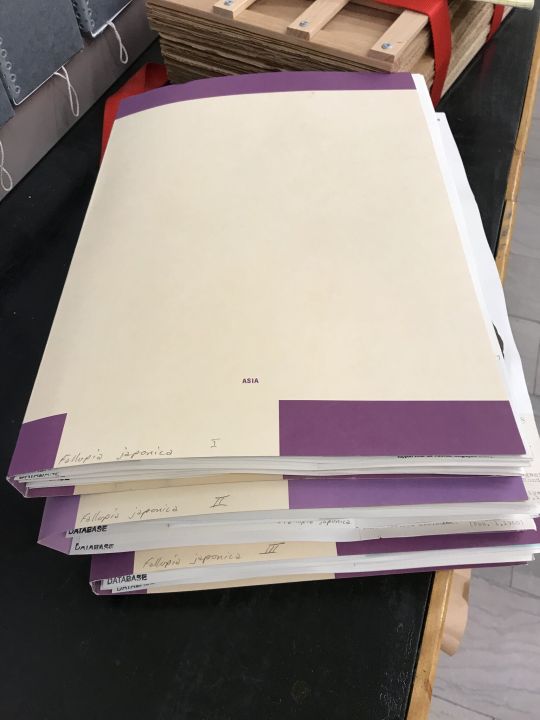
folders filled with Japanese knotweed specimens
47 of the 96 specimens of Japanese knotweed in the Carnegie Museum of Natural History’s herbarium were collected outside of the United States.

How do these species from far away regions end up at the Carnegie Museum?  Many are from expeditions from botanists affiliated with the museum – much in the same way locally collected specimens become part of the collection.  But many others are obtained through exchange with other herbaria.  Many plant collectors often collect duplicate specimens to send to several herbaria.  Most herbaria have exchange programs, where specimens (usually duplicates) are exchanged between institutions.  This practice functions to build the collection to include new species and specimens.  But it also has an important function to safeguard the future of the data.  In the case of damage (such as pest outbreaks or even fire, in the recent devastating case at the Museu Nacional in Brazil), having specimens spread across several institutions helps ensure the future of specimens.

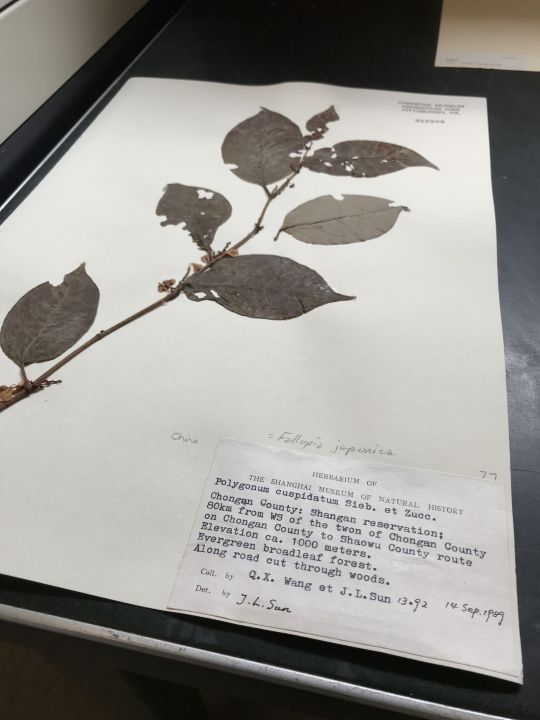
Japanese knotweed

Note the label on this specimen shows this specimen was at one time associated with the herbarium of the Shanghai Museum of Natural History.

Botanists at the Carnegie Museum of Natural History share digital specimens from the herbarium on dates they were collected. They have embarked on a three-year project to digitize nearly 190,000 plant specimens collected in the region, making images and other data publicly available online. This effort is part of the Mid-Atlantic Megalopolis Project (mamdigitization.org), a network of thirteen herbaria spanning the densely populated urban corridor from Washington, D.C. to New York City to achieve a greater understanding of our urban areas, including the unique industrial and environmental history of the greater Pittsburgh region. This project is made possible by the National Science Foundation under grant no. 1801022.

Filed Under: Blog Tagged With: Bonnie Isaac, Botany, collected on this day, herbarium, Mason Heberling

  • « Go to Previous Page
  • Page 1
  • Interim pages omitted …
  • Page 9
  • Page 10
  • Page 11
  • Page 12
  • Page 13
  • Interim pages omitted …
  • Page 21
  • Go to Next Page »

sidebar

About

  • Mission & Commitments
  • Directors Team
  • Museum History

Get Involved

  • Volunteer
  • Membership
  • Carnegie Discoverers
  • Donate
  • Employment
  • Events

Bring a Group

  • Groups of 10 or More
  • Birthday Parties at the Museum
  • Field Trips

Powdermill

  • Powdermill Nature Reserve
  • Powdermill Field Trips
  • Powdermill Staff
  • Research at Powdermill

More Information

  • Image Permission Requests
  • Science Stories
  • Accessibility
  • Shopping Cart
  • Contact
  • Visitor Policies
One of the Four Carnegie Museums | © Carnegie Institute | Privacy Policy | Terms of Use | Accessibility
Rad works here logo