• Skip to primary navigation
  • Skip to main content
  • Skip to primary sidebar

Carnegie Museum of Natural History

One of the Four Carnegie Museums of Pittsburgh

  • Visit
    • Buy Tickets
    • Visitor Information
    • Exhibitions
    • Events
    • Dining at the Museum
    • Celebrate at the Museum
    • Powdermill Nature Reserve
    • Event Venue Rental
    • Gift Cards
  • Learn
    • Field Trips
    • Educator Information
    • Programs at the Museum
    • Bring the Museum to You
    • Guided Programs FAQ
    • Programs Online
    • Climate and Rural Systems Partnership
  • Research
    • Scientific Sections
    • Science Stories
    • Science Videos
    • Senior Science & Research Staff
    • Museum Library
    • Science Seminars
    • Scientific Publications
    • Specimen and Artifact Identification
  • About
    • Mission & Commitments
    • Directors Team
    • Museum History
  • Tickets
  • Give
  • Shop

Enjoy the Museum from Home via our Blog

Can't make it to the museum in person? We've done our best to help cultivate resources for you to enjoy from home. Activities for the whole family, different ways to experience our exhibitions and more are included in these blogs.

April 29, 2020 by wpengine

Photogenic Fungi

by Sara Klingensmith

Often hidden in plain sight, mushrooms are silent drivers of forest ecosystems. They are busy decomposing the dead, but sometimes, they secretly steal nutrients from the living.  Underground, fungal mycelium networks are quietly abuzz with the latest arboreal gossip and tapped into nutrient supply chains that connect the forest in a “Wood Wide Web.” Occasionally, experienced foragers hunt for edible fruiting bodies; however, aesthetically, mushrooms are often outshined by wildflowers. Fungi are uniquely beautiful in their odd shapes and color. They deserve much more attention than simply “can I eat it?” So, grab your camera and keep a sharp eye out for these photogenic fungi (and more), many of which can be found at Powdermill Nature Reserve!

Be sure to share your findings on iNaturalist and social media during the City Nature Challenge on April 30 to  May 3!
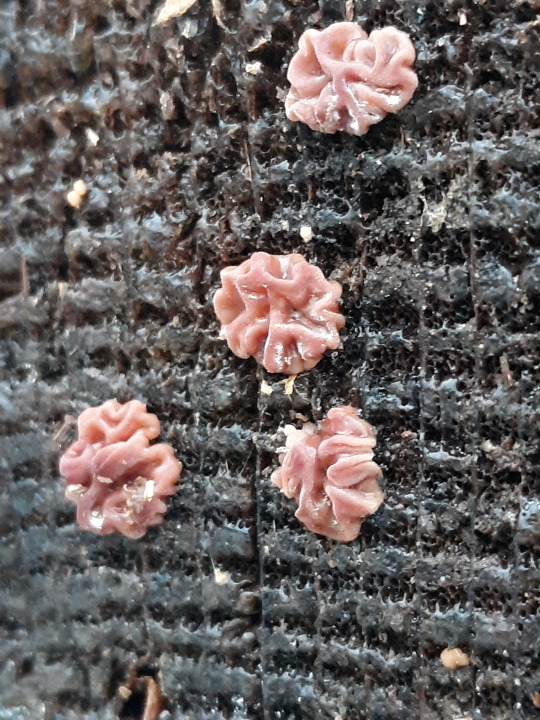
Red Tree Brain Fungus (Peniophora rufa

Hold on! Did that log sprout brains? Nope! This growth is not a part of the tree’s anatomy, but rather, it is an “intelligent-looking” crust fungus. It prefers to grow on aspens, but it can be found on other hardwood species. According to iNaturalist, the likelihood of observing this fungus peaks in April and November. (Note: The tree pictured is not the typical host species.)
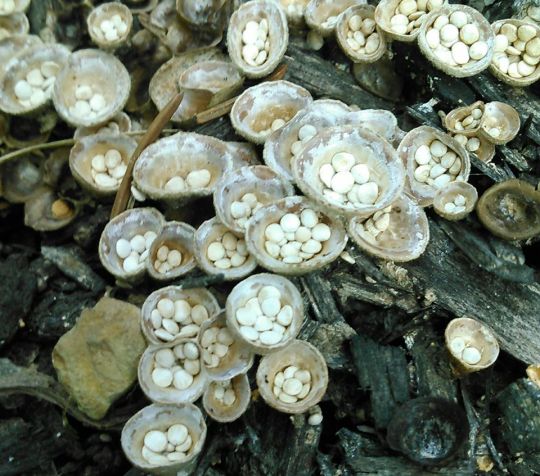
Common Bird’s Nest Fungus (Crucibulum leave)

Measuring just 4-10mm across, these infinitesimal “nests” look as though they have been built by itsy-bitsy birds. The spore-containing “eggs,” called peridoles, are kinetically dispersed by raindrops. These little mushrooms can be found growing on woody debris and even in your mulch bed! You just need to look closely.
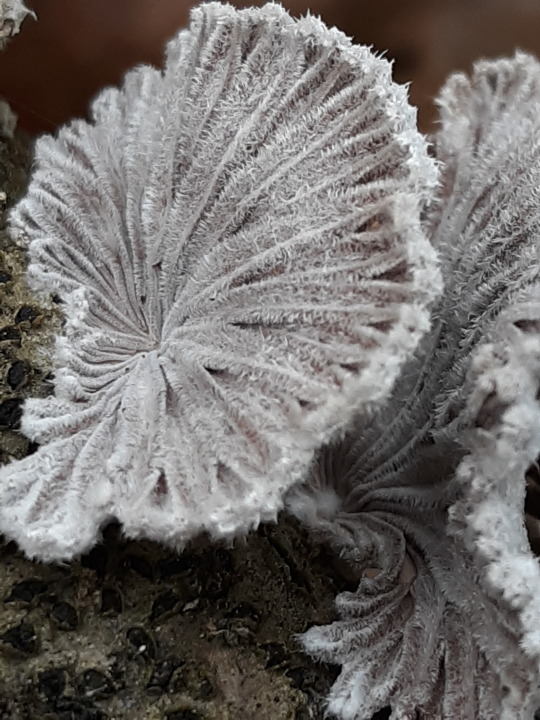
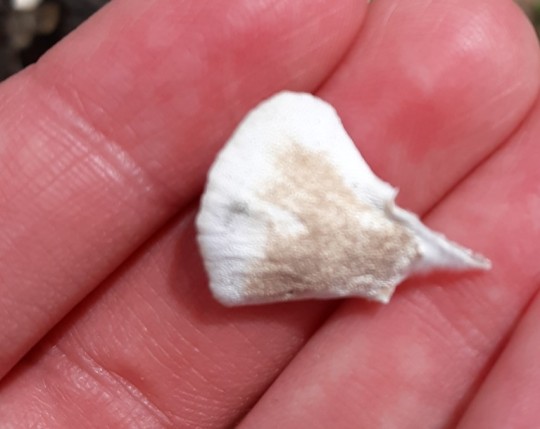
Splitgill Mushroom (Schizophyllum commune)

Spiltgill mushrooms are among the most widely distributed fungi. Beneath their plain caps lies a delicate fan containing basidiospores. These mushrooms have the unique ability to open and close their gills based on moisture levels. When the mushroom dries out, the gills split; hence the name. Look for this hidden beauty on fallen twigs and branches during your next hike.
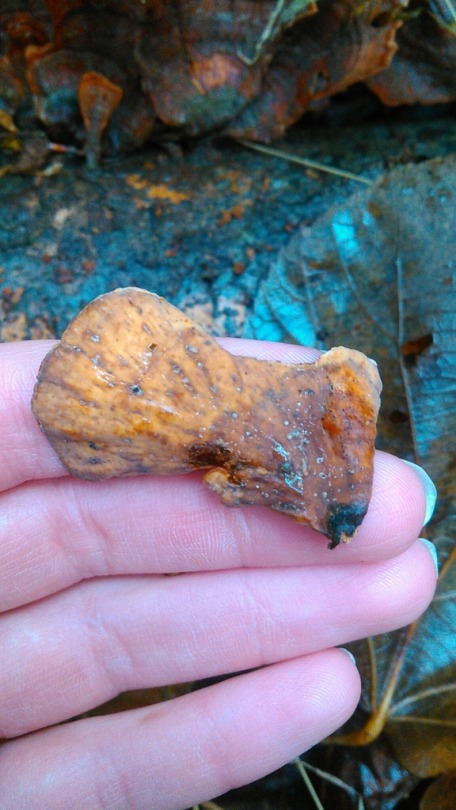
orange and brown mushroom held in a hand
close up of mushrooms
mushrooms growing on a tree
piece of white mushroom in hand
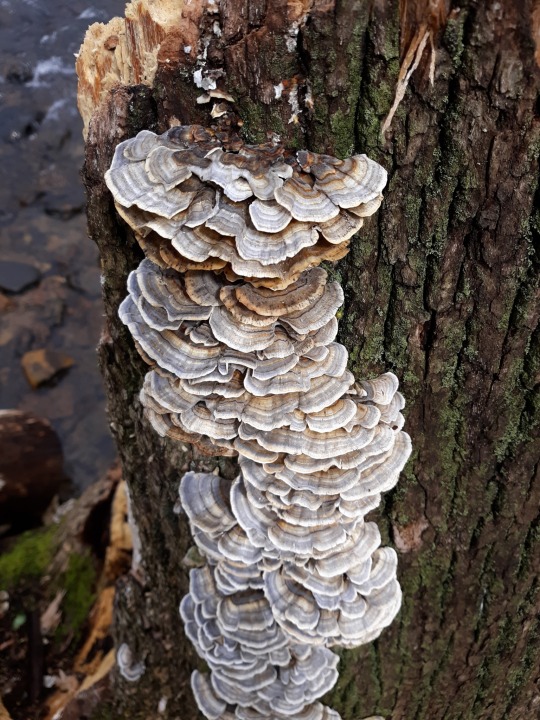
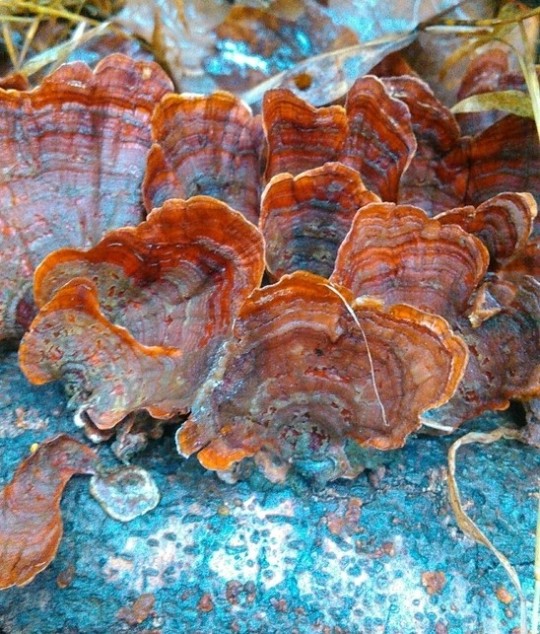
False Turkey-Tail (Stereum sp.) & Turkey-tail (Trametes sp.)


For starters, they look like a turkey’s tail! These seemingly ever-present fungi can be found growing on decaying hardwoods. False turkey-tail, with concentric rings that display deep hues of orange, red, or sometimes white, is often eye-catching. It is called “false” turkey-tail because of its similarity to another group of fungi colloquially called turkey-tail (Trametes sp.). One difference is that Trametes is a polypore (pores on the underside) and Stereum is a crust (smooth on the underside).
Sara Klingensmith is an Environmental Educator and Naturalist at Carnegie Museum of Natural History’s Powdermill Nature Reserve. Museum staff, volunteers, and interns are encouraged to blog about their unique experiences and knowledge gained from working at the museum.

Related Content

City Nature Challenge

Spring Birds in Your Backyard

Collected on This Day in 1998: Common Chickweed

Filed Under: Blog Tagged With: City Nature Challenge, fungi, Museum from Home

April 29, 2020 by wpengine

Mesozoic Monthly: Sophogramma

Welcome to April! Have you seen any flowers blooming yet? Often, when we think of flowers, we also think of their pollinating buddies, the bees. However, bees are not the only pollinating insects around today, and the same was true during the Mesozoic Era (the ‘Age of Dinosaurs’). One interesting prehistoric pollinator is Sophogramma lii, a beautiful pollen-eating lacewing from the Cretaceous, the third and final time period of the Mesozoic.

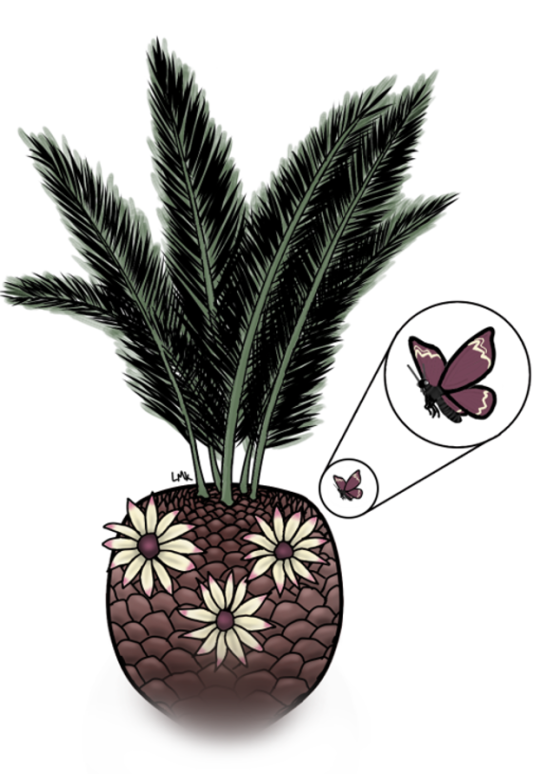
Sketch of Sophogramma lii alongside the Jurassic/Cretaceous seed plant Cycadeoidea by ginjaraptor on DeviantArt. Cycadeoidea was not a flowering plant, even though it looks like one; the flower-like structures are known as strobili and are actually types of cones!

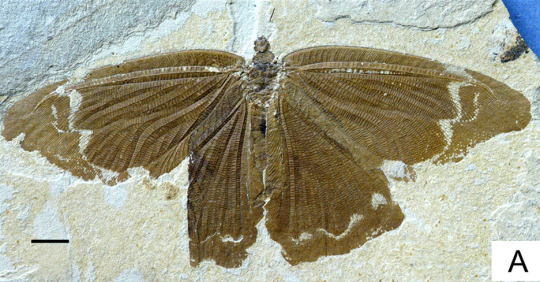
Modern lacewings, for those who aren’t familiar, are a group of small flying insects with two pairs of wings of about equal size. They get their common name from the net-like pattern of veins on their wings. Most of today’s lacewings are predators that eat other small insects. Sophogramma, however, belongs to an extinct group of relatively large lacewings called the Kalligrammatidae, which were not predators but rather pollen eaters and juice drinkers. This group is commonly called the “butterflies of the Jurassic” due to several similarities with modern butterflies: their mouthparts formed long, tube-like siphons for drinking plant juices; their feeding habits resulted in the transference of pollen between plants; and their wings had scales and were distinctly patterned to ward off predators. Astoundingly, we know that kalligrammatids had patterned wings because these patterns are actually preserved in their fossils! Sophogramma lii had whimsical winding stripes along the edges of all four wings. Although we don’t know the exact color of the wings, we do know that these stripes were lighter in color than the rest of the wing. Other kalligrammatids had large eyespots adorning their wings, like many butterflies today.

Beautifully preserved fossil of Sophogramma lii clearly showing the light-colored wavy stripes along the edges of its wings. Image from a research paper by Yang et al. (2014).

The plants that Sophogramma snacked on (and incidentally, pollinated) almost certainly lacked flowers. Flowering plants, technically called angiosperms, didn’t evolve until early in the Cretaceous, roughly 130 million years ago, but kalligrammatids had been around since at least the middle part of the preceding Jurassic Period, about 160 million years ago. So what plants were kalligrammatids eating for all that time? And why did these insects die out just as angiosperms were becoming common? Well, kalligrammatids’ host plants probably consisted of spore-bearing vascular plants such as ferns and non-flowering seed plants including conifers, cycads, ginkgos, and a variety of extinct forms. Before angiosperms burst onto the scene, these types of plants dominated land ecosystems. Despite lacking flowers, these plants would still have used spores and pollen to reproduce, providing kalligrammatids with plenty of food. Once angiosperms evolved their flowers, these plants rapidly diversified and presumably outcompeted the host plants that kalligrammatids such as Sophogramma would have relied upon.

With a wingspan of six inches (15.3 cm), Sophogramma lii was a relatively large insect. Its fossils have been found in the Yixian Formation, an Early Cretaceous-aged rock unit that crops out in northeastern China. The Yixian represents a forested environment that many dinosaurs, archaic birds, pterosaurs, and other hungry critters called home. The distinctive stripes of Sophogramma likely helped it survive attacks by drawing these predators’ attention to its relatively ‘expendable’ wingtips instead of vital parts such as the head or body. I wouldn’t personally be inclined to eat one of these ancient lacewings, but with so many of those polarizing Peeps® on the shelves at this time of year, I think some people might actually prefer a seasonal Sophogramma snack!

Lindsay Kastroll is a volunteer and paleontology student working in the Section of Vertebrate Paleontology at Carnegie Museum of Natural History. Museum staff, volunteers, and interns are encouraged to blog about their unique experiences and knowledge gained from working at the museum.

Filed Under: Blog Tagged With: Mesozoic Monthly, Museum from Home, Science News, Vertebrate Paleontology

April 29, 2020 by wpengine

Wind and Migration

Spring is just around the corner, even if it doesn’t feel like it the last few days.  In the Laurel Highlands, the trout lilies and trillium are blooming, the closed umbrella forms of May apples are poking through the leaf litter, and the migrating birds are on their way.  Some are already here.  For many birders, spring is the most exciting time of year.  We’ve waited months to see something different, all dressed up fancy and bright after growing new feathers over the winter.  We also get a chance to see some birds as they lay over, northward bound to the boreal forest or arctic tundra.   So, when will they be here?  That depends on two things: time and wind.

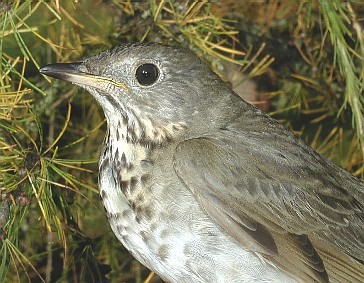
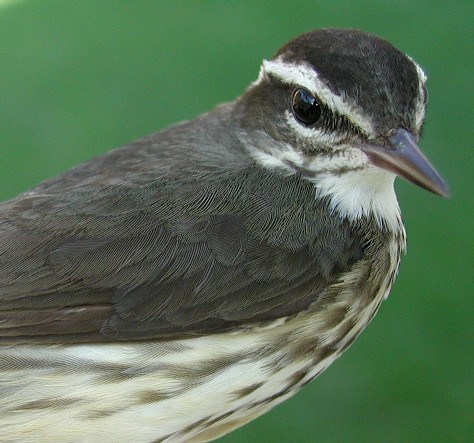
Birds want to arrive as soon as there’s food to eat so they can stake their claim on a nice plot of land to raise a family.  Since the tundra is still frozen, birds that breed there, like the Grey-cheeked Thrush, won’t be coming until around the second week of May.  Louisiana Waterthrushes on the other hand, arrived the beginning of April, as soon as insects were flying along the mountain streams they call home.  Both species know when to depart their wintering grounds based on daylength, honed over thousands of years through natural selection.

Gray-cheeked Thrush

Louisiana Waterthrush

The other thing birds base their decision to leave upon is weather, specifically wind.  And it effects how many migrants might be arriving on a particular day at a particular place.  Put another way, birds’ instincts effect the range of dates they arrive, weather influences the specific dates.

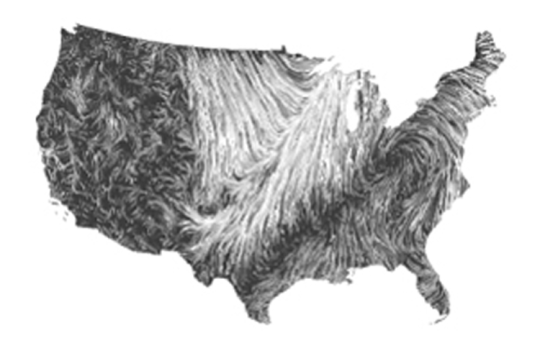
How is wind important? Hawks soar using thermals (warm air rising from heated land masses) or ridges (wind pushed up by ridges). Songbirds on the other hand, migrate at night and fly when the winds are light or are in the direction they are heading (when they literally have a tail wind). Because low pressure systems spin counter-clockwise fall migrants will move after a low front passes in the fall or before a low front arrives in the spring. We like to use Hint.fm wind maps to help predict when and where migrants can move. Besides being informative, these maps show the beautiful complexity of wind patterns.

You might now be wondering how we use these maps. Let’s use Sept 19th, 2012 as an example. At 1pm EST there are light, southerly winds along the eastern seaboard and throughout the Southeast. There are also strong southerly winds in the western part of the Midwest. If you imagine that these patterns will slowly move eastward (say half an inch by sunset) you might predict strong migration for the eastern seaboard, the southeast, and the Midwest.

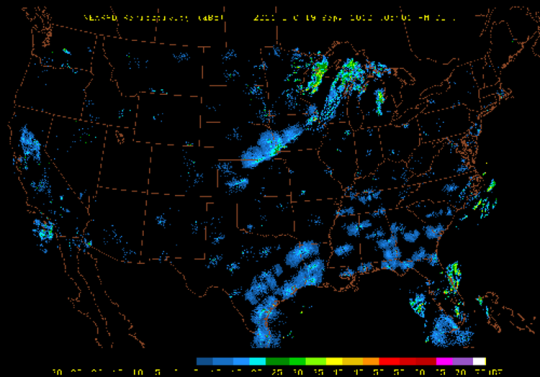
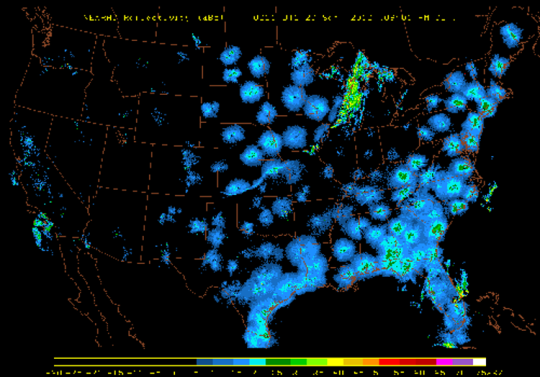
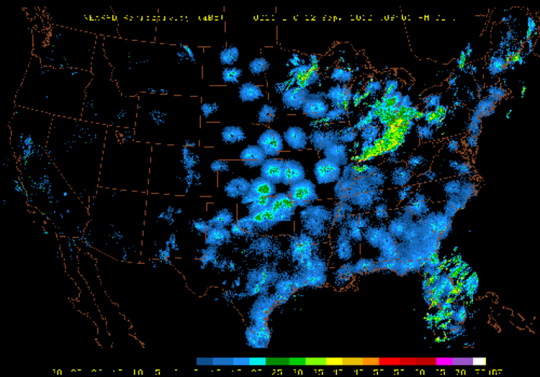
If you made such a prediction you would be right, but you don’t have to take our word for it. It turns out that birds taking off and migrating at night are picked up on radar. Here’s a radar loop from 5pm EST Sept 19th to 1:40am EST Sept 20th. At the very beginning you can see storm systems across Wisconsin and Iowa. As the frames progress you can see intense circular “clouds” appearing across the east, Southeast, and Midwest. These “clouds” are millions of birds taking off after sunset and continuing to migrate throughout the night. They’re circular because they are centered around each radar. We call these appearances “blooms” because they blossom around the radar sites.

Notice that where the storm system is and several hundred miles to the east (about an inch) there aren’t any blooms. That’s because this is the area which is experiencing strong northerly winds. Rather than fighting the headwind, birds in this area are staying put until more favorable winds come through. The winds along the gulf appear to be favorable for a trans-gulf crossing and you can see the clouds of birds take off and begin to move off the gulf coast shoreline (especially Texas). Looking at the longer loop from 3pm EST the 19th to 2pm EST the 20th you can also see birds taking off in Illinois and Iowa after the front has passed through.

What about the spring you ask?  Remember, since the low-pressure systems spin counter clockwise birds migrate ahead of a front.  A few days ago, the night of April 11th, there were southerly winds resulting in good movement northward across the southeastern U.S.  Looking ahead, the next significant warm-up with nightly, light, southerly winds won’t occur until next week, mid-week (around Tuesday April 21st). If piecing together wind patterns and radar isn’t your thing, Cornell Lab of Ornithology has you covered.  They’ve put together something they call BirdCast which puts combines weather, radar, and bird data (ebird) to forecast bird migration for the U.S.

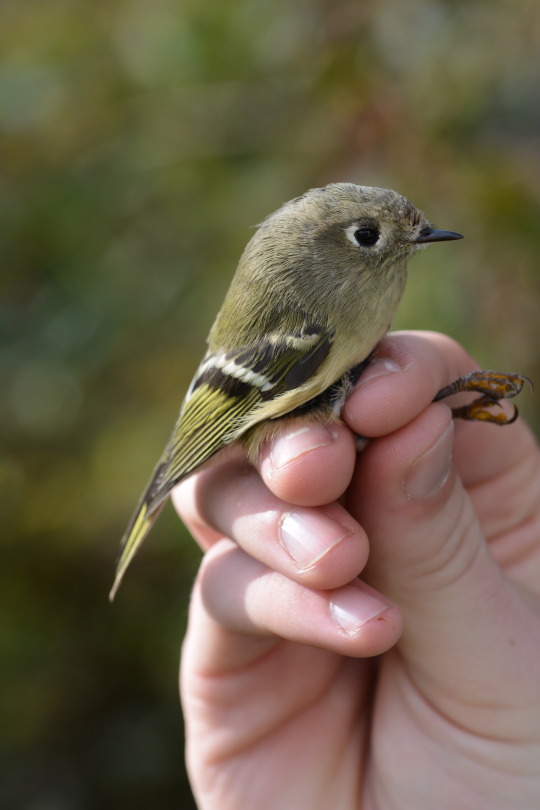
Ruby-crowned Kinglet

We may be quarantined but that doesn’t mean we have to miss the magic of migration.  As I write, there’s a ruby-crowned kinglet singing in a maple across the street.  We can bird, or learn birds, in our backyard or neighborhood.  We can bird a new local patch and contribute what we see to science by logging our sightings into ebird.com.  Over the last few years people in Pennsylvania have found some amazing birds in their own backyard.  A Black-backed Oriole from Mexico, a Painted Bunting which overshot the Carolinas by more than a few states, and even a Bahama Woodstar.  With migration, we never know exactly what we’re going to get.  To me that’s part of the magic.  That, and knowing that it’s time for them to come, carried hundreds or even thousands of miles by their wings and the wind.

Luke DeGroote is the avian research coordinator at Powdermill Nature Reserve, Carnegie Museum of Natural History’s environmental research center. Museum staff, volunteers, and interns are encouraged to blog about their unique experiences and knowledge gained from working at the museum.

Filed Under: Blog Tagged With: Birds, Luke DeGroote, Museum from Home, parc, Science News

April 29, 2020 by wpengine

Collected on this Day in 1998: Spontaneous mints in your backyard

by Mason Heberling

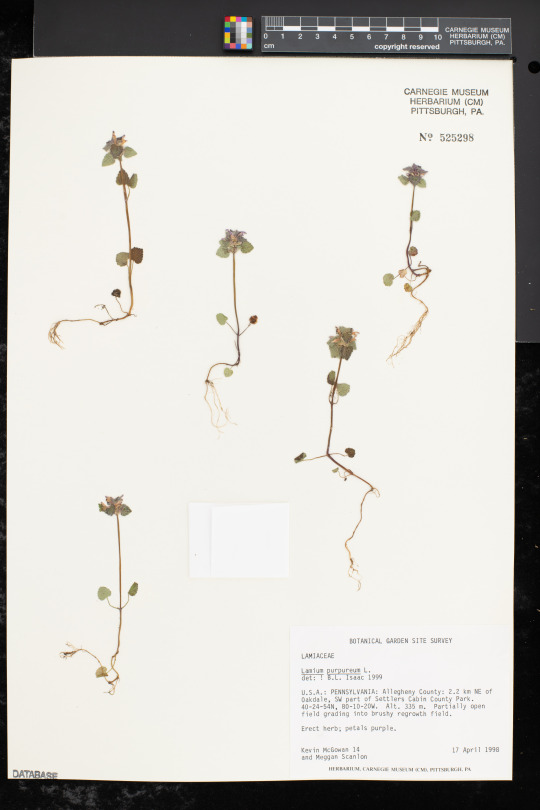
mint specimens on herbarium sheet

This specimen of purple dead-nettle  (Lamium purpureum) was collected on April 17, 1998 by Kevin McGowan and Meggan Scanlon near Settler’s Cabin County Park in Oakdale, PA on property that is now the Pittsburgh Botanic Garden.  As seen in the title of the specimen label, it was collected as part of a biological survey for the planning of the site, a large ongoing restoration of the formerly mined property.

Purple dead-nettle is probably in your backyard. Or if not, you likely don’t have to go far to find it in a lawn or sidewalk crack.   Some call it a “weed.” Or, in the case of in your lawn, “spontaneous vegetation” is a lighter hearted term. It is native to Europe and Asia but now widespread across the world, including North America.

Purple dead-nettle is not related to stinging nettle, despite the name.   It was named “dead-nettle” because is reminiscent to nettles (well, at least to whoever came up with the common name) but does not have stinging hairs.

Purple dead-nettle is in the mint family (Lamiaceae) with square stems often characteristic of mints.  Try rolling the stem between your fingers and you’ll notice the square stems.

The City Nature Challenge is just around the corner (April 30 – May 3, 2021)!

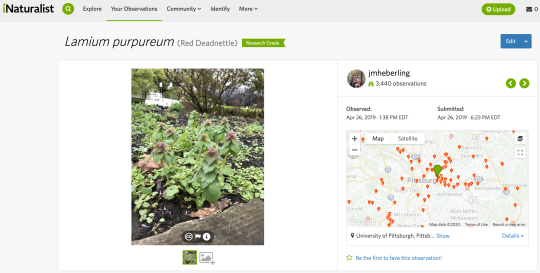
Lamium purpureum was the 9th most observed species in the Pittsburgh region for City Nature Challenge 2019.  Here’s an observation of purple dead-nettle from the 2019 challenge from the flower bed near the Dippy statue at the Carnegie Museum of Natural History.

The City Nature Challenge is a global event where cities come together to share the biodiversity seen in their urban areas. Your nature sightings are shared through the free community science platform, iNaturalist. If you have never used iNaturalist, the City Nature Challenge is a great way to introduce yourself to iNaturalist.  You’ll be hooked.

Past years have been (friendly) competitions among cities, competing for the most observations or species. But given the current pandemic, this year is different.  It is not about the number of observations you make. It is a celebration of nature, wherever you can safely be this year…which for most, is your backyard!  Or the sidewalk near your house. Or the parking lot. Or a local park. Or maybe even inside your house.

Keep a look out for purple dead-nettle.  You won’t have to go far! In City Nature Challenge Pittsburgh 2019, this species was the 9th most observed species!

Or if you can’t safely be outside, you can view other observations on iNaturalist.org at any time!  You can help identify photos or just click around and go for a virtual botanical hike around Pittsburgh!

Or look online at Carnegie Museum’s 185 herbarium specimens of purple dead nettle, going back to 1826 in England! Or this one growing 138 years ago collected in Beaver county.

However you can, there are plenty of ways to participate and connect with nature while staying safe!

Find this specimen of purple dead-nettle here.

Check back for more! Botanists at the Carnegie Museum of Natural History share digital specimens from the herbarium on dates they were collected. They are in the midst of a three-year project to digitize nearly 190,000 plant specimens collected in the region, making images and other data publicly available online. This effort is part of the Mid-Atlantic Megalopolis Project (mamdigitization.org), a network of thirteen herbaria spanning the densely populated urban corridor from Washington, D.C. to New York City to achieve a greater understanding of our urban areas, including the unique industrial and environmental history of the greater Pittsburgh region. This project is made possible by the National Science Foundation under grant no. 1801022.

Mason Heberling is Assistant Curator of Botany at the Carnegie Museum of Natural History. Museum employees are encouraged to blog about their unique experiences and knowledge gained from working at the museum.

Related Content

Collected on This Day in 1998: Common Chickweed

Spring Birds in Your Backyard

Botany Near Home

Carnegie Museum of Natural History Blog Citation Information

Blog author: Heberling, Mason
Publication date: April 17, 2020

Share this post!

  • Share on Twitter Share on Twitter
  • Share on Facebook Share on Facebook
  • Share on Pinterest Share on Pinterest
  • Share on LinkedIn Share on LinkedIn
  • Share on Reddit Share on Reddit
  • Share via Email Share via Email

Share this post!

  • Share on Twitter Share on Twitter
  • Share on Facebook Share on Facebook
  • Share on Pinterest Share on Pinterest
  • Share on LinkedIn Share on LinkedIn
  • Share on Reddit Share on Reddit
  • Share via Email Share via Email

Filed Under: Blog Tagged With: City Nature Challenge ID, collected on this day, Mason Heberling, Museum from Home

April 29, 2020 by wpengine

Egg Carton Seed Starter

If you’re anything like me, then you love eating eggs.  Fried, scrambled, boiled, poached, even pickled!  So, let’s take all those leftover egg cartons and do something fun.

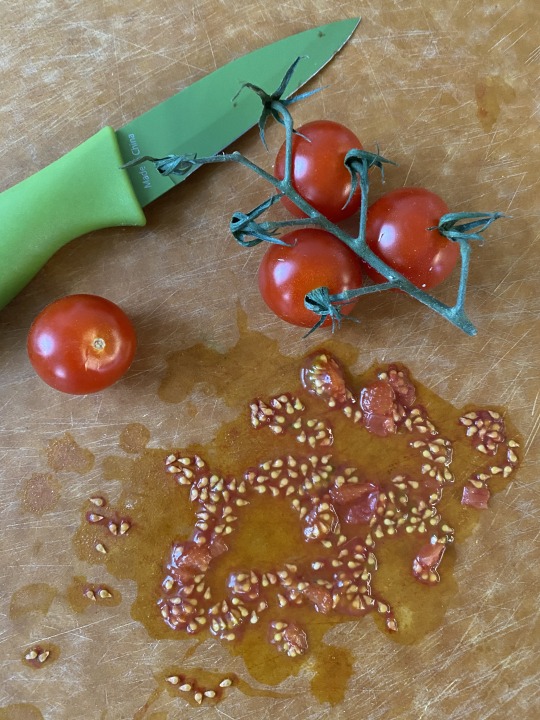
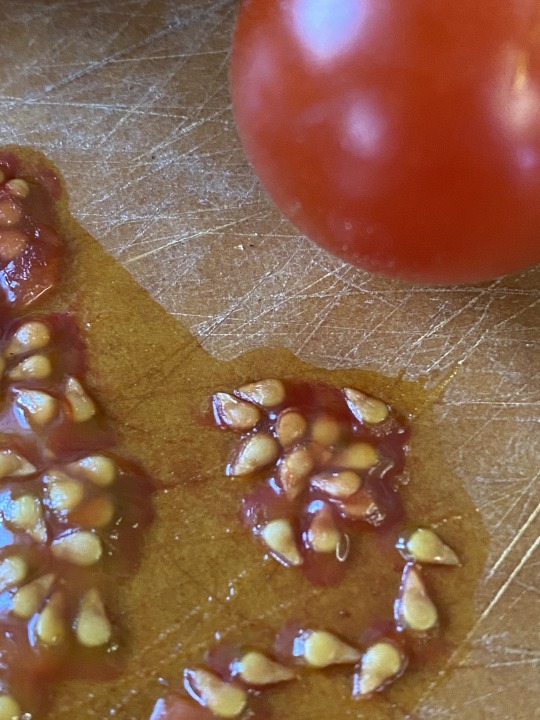
Another food I love is tomatoes.  Sometimes when I cut up tomatoes, I get a bunch of seeds left on the cutting board.  You can take those seeds or try some other vegetable or fruit seeds to start in an egg carton seed starter.  I like to use tomatoes because they’re easy to grow and don’t take up too much space in the garden.

A quick note about growing seeds from fruits and vegetables:  Most of the time seeds that come from fruits and vegetables that we eat aren’t as successful as the seeds that come from a packet.  For example, seeds from a big beefsteak tomato might turn out to make smaller tomatoes.

Before we get started, we’ll need some supplies.  Find some tomatoes (any variety) and cut them up for a BLT or a snack—we need some of those seeds.  Always ask an adult to help out with a knife.  We also need an egg carton and some soil.

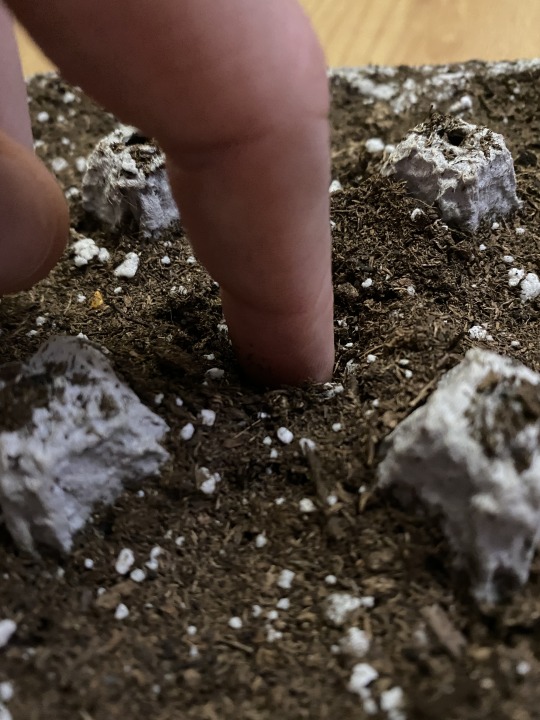
Let’s fill that egg carton with soil and gently pack it down.  You can use any gardening or potting soil.  Make sure there’s at least one to two inches of soil.  Poke the tip of your finger in the soil in each egg cup to make a hole—the hole doesn’t need to be deep.  You can put two or three seeds in each hole (make sure the seeds don’t touch) and then cover them up loosely.  Once all of your holes are filled in, you can gently sprinkle water over them until they’re really wet.

Set your egg carton in a plastic dish or on a plate to keep water from dripping out and place your planted seeds inside where they’ll be warm.  Keep an eye on them to make sure the soil doesn’t dry out too much.  Only water when the soil feels dry on top and watch out for mold growth—you can scoop the mold out of the soil if you see it.

After a week you might see little tomato plants poking up from the soil.  Make sure they get lots of light in a south-facing window.  You should plant them up to a bigger pot or into the garden when they’re about two or three inches tall.  Just cut or tear the carton away.

This is a fun way to reuse waste and to grow your own food.  It’s also a ton of fun to watch plants grow from a little seed into a big bush filled with fruit.  And what a reward that will be!

A few tips on tomato plants:

·      You can pinch off a few of your tomato seedlings so that there’s one strong one in each cup—tomatoes need a strong root system and don’t do well with too much competition.

·      Plant tomatoes or place potted tomatoes where they get at least six hours of direct sunlight.

·      When you plant them up, use a big, deep pot, like a five-gallon bucket with holes for drainage.  Plant the stem into the soil so the root system can really jump out.

·      Fertilize or provide rich compost, tomatoes love good soil.  Water your plants if the soil feels dry or if the plants look droopy.

Aaron Young is a museum educator on Carnegie Museum of Natural History’s Outreach team. Museum staff, volunteers, and interns are encouraged to blog about their unique experiences and knowledge gained from working at the museum.

Filed Under: Blog Tagged With: activities, Education, Museum from Home

April 29, 2020 by wpengine

Collected on this Day in 1906

(Not quite yet) flowering dogwood

This specimen of flowering dogwood (Cornus florida) was collected on January 21, 1906 in Fern Hollow, Frick Park, Pittsburgh by Otto Jennings. The specimen was collected 13 years before Frick Park became a city park, bequeathed by the well-known industrialist Henry Clay Frick after his death. Otto Jennings was an influential botanist in western Pennsylvania, serving as curator at the museum for many years.

I’ve said it before, but I’ll say it again –  specimens without leaves are cool!  Why did Jennings collect this specimen?

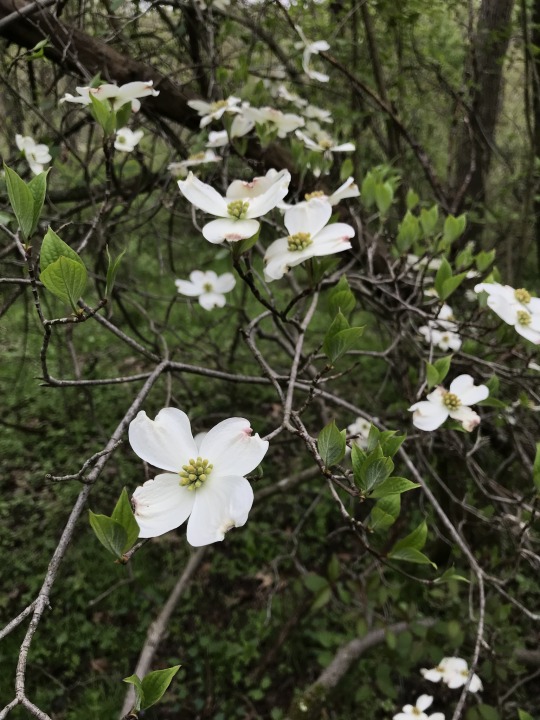
Flowering dogwood has distinctively big flower buds through the winter.  The flower is in there, remaining dormant, waiting to blossom in the spring.  Like many other woody species in our area, the leaf and flower buds are pre-formed  by the previous fall. They remain dormant until they reach their chilling requirement (number of cold days), the air temperature warms, and/or the days get longer (in plants, this is called “photoperiod”).  Different species have different requirements, with some species being more conservative than others to prevent premature leaf out in the middle of winter.

Only about two and half more months until flowering dogwood awakes in western Pennsylvania. In the meantime, you can admire the species in the spring diorama in Botany Hall, or look for their buds outside.

Find this specimen and more here.

Check back for more! Botanists at the Carnegie Museum of Natural History share digital specimens from the herbarium on dates they were collected. They are in the midst of a three-year project to digitize nearly 190,000 plant specimens collected in the region, making images and other data publicly available online. This effort is part of the Mid-Atlantic Megalopolis Project (mamdigitization.org), a network of thirteen herbaria spanning the densely populated urban corridor from Washington, D.C. to New York City to achieve a greater understanding of our urban areas, including the unique industrial and environmental history of the greater Pittsburgh region. This project is made possible by the National Science Foundation under grant no. 1801022.

Mason Heberling is Assistant Curator of Botany at the Carnegie Museum of Natural History. Museum employees are encouraged to blog about their unique experiences and knowledge gained from working at the museum.

Filed Under: Blog Tagged With: collected on this day, Mason Heberling, Museum from Home

  • « Go to Previous Page
  • Page 1
  • Interim pages omitted …
  • Page 21
  • Page 22
  • Page 23
  • Page 24
  • Page 25
  • Page 26
  • Go to Next Page »

sidebar

About

  • Mission & Commitments
  • Directors Team
  • Museum History

Get Involved

  • Volunteer
  • Membership
  • Carnegie Discoverers
  • Donate
  • Employment
  • Events

Bring a Group

  • Groups of 10 or More
  • Birthday Parties at the Museum
  • Field Trips

Powdermill

  • Powdermill Nature Reserve
  • Powdermill Field Trips
  • Powdermill Staff
  • Research at Powdermill

More Information

  • Image Permission Requests
  • Science Stories
  • Accessibility
  • Shopping Cart
  • Contact
  • Visitor Policies
Stay in the loop! Sign up for our newsletter(s).
One of the Four Carnegie Museums | © Carnegie Institute | Privacy Policy | Terms of Use | Accessibility
Rad works here logo