• Skip to primary navigation
  • Skip to main content
  • Skip to primary sidebar

Carnegie Museum of Natural History

One of the Four Carnegie Museums of Pittsburgh

  • Visit
    • Buy Tickets
    • Visitor Information
    • Exhibitions
    • Events
    • Dining at the Museum
    • Celebrate at the Museum
    • Powdermill Nature Reserve
    • Event Venue Rental
  • Learn
    • Field Trips
    • Educator Information
    • Programs at the Museum
    • Bring the Museum to You
    • Guided Programs FAQ
    • Programs Online
    • Climate and Rural Systems Partnership
  • Research
    • Scientific Sections
    • Science Stories
    • Science Videos
    • Senior Science & Research Staff
    • Museum Library
    • Science Seminars
    • Scientific Publications
    • Specimen and Artifact Identification
  • About
    • Mission & Commitments
    • Directors Team
    • Museum History
  • Tickets
  • Give
  • Shop

nature

October 27, 2022 by

We Are Nature Podcast

Season two out now!

We Are Nature thumbnail in black and yellow

The We Are Nature podcast features stories about natural histories and livable futures presented by Carnegie Museum of Natural History. Host Michael Pisano, a Science Storyteller, and invited guests discuss how humans can create–and are already working towards–a livable, just, and joyous future. 

Season one, which premiered in October 2022, centers on collective climate action through 30 interviews with museum researchers, organizers, policy makers, farmers, and science communicators about climate action in Southwestern Pennsylvania. Guests include Radiolab’s Jad Abumrad, US Representative Summer Lee, and Daniel G. and Carole L. Kamin Director of Carnegie Museum of Natural History Gretchen Baker, among others. 

Season two delves deep into Carnegie Museum of Natural History’s collection of more than 22 million objects and specimens. Fourteen Carnegie Museum of Natural History experts as well as special guests from Three Rivers Waterkeeper and the Royal Ontario Museum discuss collection items as windows into the science and ethics of the Anthropocene, a term for our current age, defined by human activity that is reshaping Earth’s climate and environments. What’s more, museum visitors will have the chance to hear clips from and see some of the objects discussed in episodes from season two inside our newest exhibition, The Stories We Keep: Bringing the World to Pittsburgh. 

Listen to Season 1 and Season 2 of the podcast below or on major podcast platforms including Apple and Spotify.


Season 1

Episode 1: This is an Emergency, Not an Apocalypse (with Jad Abumrad)

Release date: October 26, 2022

Why is it so hard to talk about climate change without plunging into an anxious doomscroll? How can we change the ways that we talk about the story of life on earth to emphasize hope over despair, and collaboration over competition? Featuring Radiolab’s Jad Abumrad and Nicole Heller, Associate Curator of Anthropocene Studies for Carnegie Museum of Natural History.


Bonus Episode: We Can Fix This

Release date: October 31, 2022

A behind-the-scenes chat between Taiji Nelson, Senior Program Manager for the museum’s Climate and Rural Systems Partnership (CRSP) and podcast producer, and Michael about effective climate change communication, plus our goals, hopes, dreams, and terrors for this first season.


Episode 2: Steel City (with Summer Lee)

Release date: November 4, 2022

Why should Pittsburghers care about climate change? What’s happening in our backyard, and how does it connect to the big picture? U.S. Representative Summer Lee joins us to talk about environmental racism, intersectional climate justice, and much more. Host Michael pops in and out with the natural history (and livable future?) of steel.


Episode 3: Carbon and Cattle

Release date: November 11, 2022

Monoculture is messing up the climate. Befriending biodiversity–especially in the soil– can help! Featuring interviews with Michael Kovach (Regenerative Farmer & President of the PA Farmers Union) and Dr. Bonnie McGill (an Ecosystem Ecologist).


Episode 4: Coal Country

Release date: November 18, 2022

There are less than 5,000 coal jobs left in the state of Pennsylvania, and that number is shrinking. That’s good news for the climate, but what’s next for the commonwealth’s coal communities? Join organizers from the Mountain Watershed Association for insight on building community, protecting public health, and creating new opportunities. Plus, the natural history of coal, water quality watchdogging, and much, much more! Featuring Ashley Funk, Executive Director of Mountain Watershed Association; Stacey Magda, Community Organizer with Mountain Watershed Association; and Eric Harder, Youghiogheny Riverkeeper with Mountain Watershed Association.


Episode 5: Mining and Microbes

Release date: November 25, 2022

Carla Rosenfeld, Assistant Curator of Earth Sciences at Carnegie Museum of Natural History, studies how pollutants and nutrients behave in environments like abandoned minelands, of which Pennsylvania has many. We chat about interspecies collaboration, soil science, the importance of diversity, and much more.


Episode 6: Bridges and Bivalves

Release date: December 2, 2022

Some freshwater mussels can live for over 100 years! During that time, they filter water and improve aquatic ecosystems. Today’s episode is about how aquatic life intersects with the human world. We’ll learn about everything from mussel charisma to climate-proofing infrastructure. Featuring Eric Chapman, Director of Aquatic Science at the Western PA Conservancy.


Episode 7: Food is Nature

Release date: December 9, 2022

Our globalized food system is already feeling the impacts of climate change. Today’s episode shows how decentralizing that food system can help us both be more resilient to extreme weather, and lessen industrial agriculture’s harmful effects. Featuring interviews with urban farmers at Braddock Farms.


Episode 8: Teens in the Wild

Release date: December 16, 2022

By taking care of greenspace, we care for ourselves. Hear about best practices for getting young people involved in land stewardship, and about how fostering a relationship with the outdoors is essential climate action. Featuring Naturalist Educator Nyjah Cephas and two of her students from the Pittsburgh Parks Conservancy’s Young Naturalists program.


Episode 9: Empowerment, Employment, Environment

Release date: January 6, 2023

How are labor and climate related? Today’s episode is all about supporting workers as the climate changes, and about work that supports climate action. Learn about labor history, a just transition, doughnuts and degrowth. Featuring Landforce’s Executive Director Ilyssa Manspeizer and Site Supervisor Shawn Taylor.


Episode 10: Greenways

Release date: January 13, 2023

Tiffany Taulton is a climate policy expert, community organizer, professor of environmental justice, and one of the authors of Pittsburgh’s Climate Action Plan. She joins the show to talk about how our region is preparing for climate change, how that resilience benefits public health, and how climate action can embrace justice and equity.


Episode 11: A Conservation Conversation

Release date: January 20, 2023

Biodiversity is key to our resilience as the climate changes. Our guest today is Conservation Biologist Charles Bier, Senior Director of Conservation Science at the Western Pennsylvania Conservancy. Charles has nurtured a deep relationship with Pennsylvanian nature since he was a six-year-old walking around with snakes in his pockets, and has spent his career trying to preserve our wonderful woods, wetlands and waterways.


Episode 12: Bee Kind

Release date: January 27, 2023

Bugs make the world go around. Well, bugs and fungi. And bacteria. And algae. And…ok, it’s all important. We humans rely on many tiny neighbors, and now more than ever, their future relies on us. Come along on a visit to Pittsburgh’s Garfield Community Farm, and travel back to the Cretaceous to learn about the origins of flowers. Featuring the farm’s Community Engagement Coordinator AJ Monsma, youth farmer Israel, and Israel’s friend Tommy the Bee.


Episode 13: We Are the Future

Release date: February 10, 2023

On today’s show, the last episode of Season 1, we look ahead at possible futures. Join us in imagining a planet with space and dignity for all earthlings. Featuring Daniel G. and Carole L. Kamin Director of Carnegie Museum of Natural History Gretchen Baker, Curator of Anthropocene Studies Nicole Heller, and Educator Taiji Nelson from Carnegie Museum of Natural History.


Season 2

Episode 1: A Thin Dusting of Plutonium

Release date: November 7, 2025

What is the Anthropocene, and when might it have started? What is the great acceleration? Can we expect, or engineer, a great deceleration? What can we learn from nuclear history about nuclear futures? Featuring Travis Olds, Assistant Curator of Minerals at Carnegie Museum of Natural History, and Nicole Heller, Associate Curator of Anthropocene Studies at Carnegie Museum of Natural History. Encounter Trinitite glass, mentioned in this episode, in the exhibition The Stories We Keep: Bringing the World to Pittsburgh.


Episode 2: Experimental Archaeology

Release date: November 14, 2025

What do we know about the early peopling of our continent and our region? What was the landscape and the climate like then? What can we learn from this natural history about interacting with the land and water today, and moving forward as good stewards? Featuring Amy Covell-Murthy, Archaeology Collection Manager and Head of the Section of Anthropology at Carnegie Museum of Natural History, and Kristina Gaugler, Anthropology Collection Manager at Carnegie Museum of Natural History.


Episode 3: The Institute of Insect Technology

Release date: November 21, 2025

What surprising biodiversity lives alongside us here in Pittsburgh? How can we befriend bugs? What could be awesome about having humans as neighbors? Featuring Ainsley Seago, Associate Curator of Invertebrate Zoology at Carnegie Museum of Natural History, and Kevin Keegan, Collection Manager of Invertebrate Zoology at Carnegie Museum of Natural History.


Episode 4: Hell Chicken Extinction

Release date: December 5, 2025

What dinosaurs and mammals survived the end of the Cretaceous, and why? What can we learn about resilience from survivors of past extinctions? What can we learn about adapting our culture and cities from the story of evolution? Featuring Matt Lamanna, Mary R. Dawson Curator of Vertebrate Paleontology at Carnegie Museum of Natural History, and John Wible, Curator of Mammals at Carnegie Museum of Natural History.


Episode 5: Loss in Lutruwita

Release date: December 12, 2025

A second serving of bone banter with two of the museum’s veteran vertebrate virtuosos. How are charisma, colonialism, and extinction linked? What is de-extinction, and will cloning mammoths save the tundra? Featuring Matt Lamanna, Mary R. Dawson Curator of Vertebrate Paleontology at Carnegie Museum of Natural History, and John Wible, Curator of Mammals at Carnegie Museum of Natural History.


Episode 6: Herbaria for Humanity

Release date: December 19, 2025

How do humans support some plants and endanger others? What do herbaria teach about climate change? How can people and plants collaborate towards livable futures? Featuring Mason Heberling, Curator of Botany at Carnegie Museum of Natural History, and Bonnie Isaac, Collection Manager of Botany at Carnegie Museum of Natural History.


Episode 7: A Real Good Slime

Release date: December 26, 2025

What would a snail scientist do with a blank check? What can we learn from snails and their kin? Why is the ocean getting more acidic, how do we know, and why does that matter? Featuring Tim Pearce, Curator of Mollusks at Carnegie Museum of Natural History.


Episode 8: Dirty Birds

Release date: January 2, 2026

How does urbanization impact nonhumans? What can we learn from Pittsburgh’s past and present air quality challenges? How do we make space for biodiversity in cities? Featuring Serina Brady, Collection Manager of Birds at Carnegie Museum of Natural History, and Jon Rice, Urban Bird Conservation Coordinator at Carnegie Museum of Natural History.


Episode 9: Jar of Frogs

Release date: January 9, 2026

Why is the museum hoarding alcoholic pickle jars? What kinds of research are made possible by the museum’s herpetology collection? How are organisms changing because of climate change, urbanization, and other anthropogenic pressures? Featuring Jennifer Sheridan, Associate Curator of Amphibians and Reptiles at Carnegie Museum of Natural History. Encounter frog specimens from Borneo mentioned in this episode in the exhibition The Stories We Keep: Bringing the World to Pittsburgh.


Episode 10: A Very Important Popsicle

Release date: January 16, 2026

What can we learn from lakes about livable futures? How can people in the Anthropocene find optimism and be moved to climate action? Featuring Soren Brothers, the Allan and Helaine Shiff Curator of Climate Change at the Royal Ontario Museum.


Episode 11: Pellets, Pellets Everywhere

Release date: January 23, 2026

What are plastics and how are they made? How do they get into our waterways? How do novel materials like plastics define the age we live in? What materials might replace them? Featuring Nicole Heller, Curator of Anthropocene Studies at Carnegie Museum of Natural History, and Heather Hulton VanTassel, Executive Director of Three Rivers Waterkeeper. Encounter nurdles, small plastic pellets, mentioned in this episode in the exhibition The Stories We Keep: Bringing the World to Pittsburgh.

Credits

Host, Writer, and Editor: Michael Pisano
Assistant Editor: Garrick Schmitt
Audio Recording: Matthew Unger and Garrick Schmitt
Voice Talent: Mackenzie Kimmel
Music: DJ Thermos
Producer: Nicole Heller
Producer: Sloan MacRae
Producer and Co-host (season one): Taiji Nelson
Field Reporters (season one): Di-ay Battad, David Kelley, and Jamen Thurmond
Filed Under: Uncategorized Tagged With: Anthropocene, climate, climate action, climate change, conservation, justice, nature, podcast, We Are Nature

August 26, 2019 by wpengine

Make Your own Cloud

Are you the kind of person who always has their head in the clouds? Come back down to earth, but bring the clouds with you. With just a few household items, you’ll get to see clouds form right in front of you!

Here’s What You Need:

  • A glass jar with a lid
  • Hot (almost boiling) water
  • Ice
  • Aerosol hairspray

Here’s What To Do:

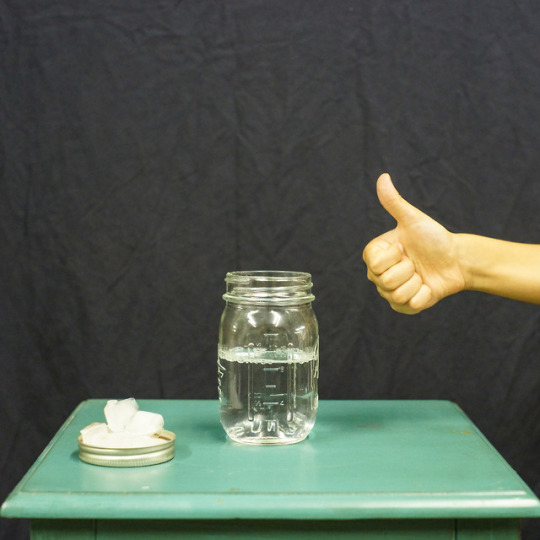
  1. Fill your jar about 1/3 full with hot water.
  2. Place the lid upside-down on top of the jar.
  3. Fill the lid with as many ice cubes as will fit.
  4. Let the jar sit for about 10 seconds.
  5. Quickly, lift the lid and spray some hairspray into the jar.
  6. Place the lid with ice back on top of the jar.
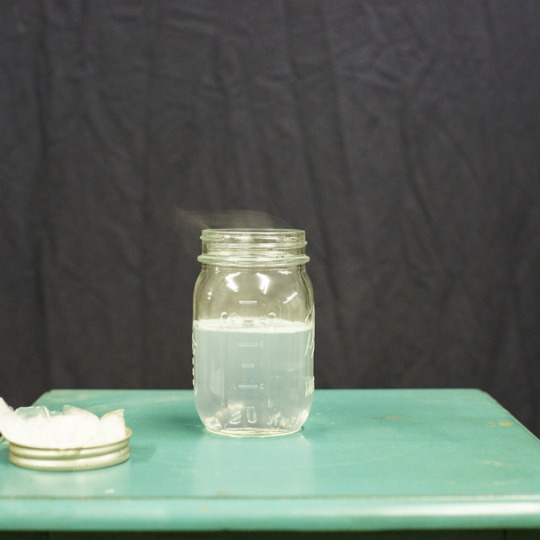
  7. Watch as a cloud forms above the water!

For step-by-step visuals, check out this quick animation!


https://carnegiemnh.org/wp-content/uploads/2019/08/Cloud-in-a-Jar-animation.mp4

Here’s How It Works:

Clouds are formed when water vapor (the gaseous form of water) condenses (turns from a gas into a liquid) into very small, visible droplets.  The water vapor condenses onto other particles in the air, like dust or smoke. In the jar, the hot water gives off water vapor that cools when it reaches the ice on the top of the jar. By spraying hairspray in the jar, we give the water vapor particles to condense onto.  The water vapor condenses into tiny droplets that we see as a miniature cloud.

Go outside and take a look at the clouds. How do they compare to the cloud you saw in your jar? What is the same? What is different?

mason jar filled with water, mason jar lid with ice, and thumbs up

mason jar filled with water beside mason jar lid with ice

Fun Fact:

Clouds are actually quite heavy. Those white, fluffy clouds that look weightless as they float through the air can contain millions, billions, or even trillions of pounds of water! Clouds float because they are not as dense or heavy  as the dry air beneath them. It’s similar to the way that oil floats on water.

Blog post by Eddie Phillips. 

Learn more in Nature Lab!

Filed Under: Blog Tagged With: Eddie Phillips, Education, Educators, nature, Nature 360, Nature Lab

March 4, 2019 by wpengine

Make Your Own Pinecone Bird Feeder!

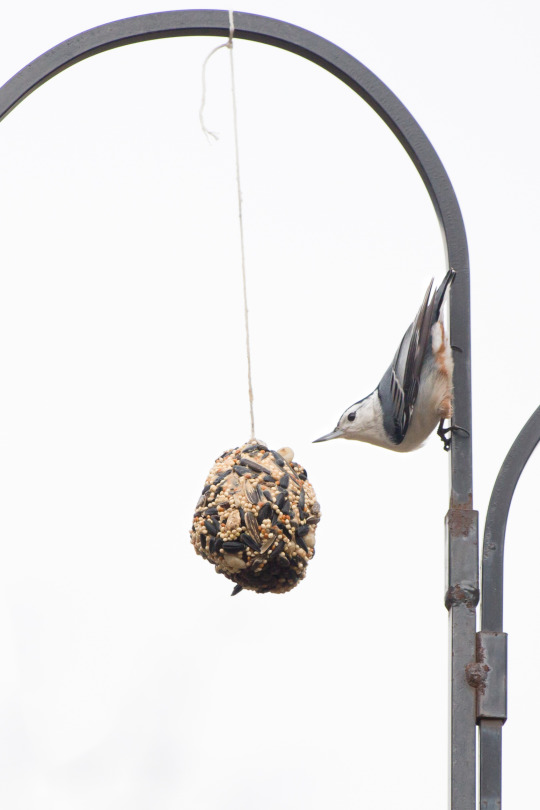
bird with pinecone bird feeder

Homemade bird feeders are a great way to attract many birds to your yard this winter…even when it seems like all the animals have disappeared!

What You’ll Need:

·      Large pinecones

·      String, wire, or pipe cleaners

·      Peanut butter or vegetable shortening

·      2 plates

·      Scissors

·      Butter knife

·      Store-bought or homemade* birdseed

*We recommend visiting https://feederwatch.org/learn/feeding-birds/#food-types for pointers on what seeds to use or avoid.

Directions:

1.    Gather large pinecones with open scales. Explore your backyard or find a nearby hiking trail.  This is a great opportunity to go on an adventure with your friends or family!

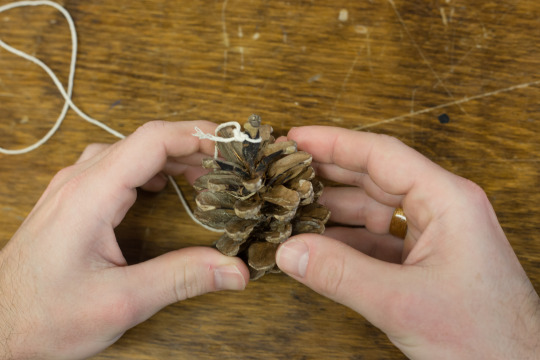
2.    Attach string, wire, or pipe cleaner to the top of the pinecone.  Make sure your string or wire is long enough to tie and hang from a high point.  You can use one attachment around the tip of the cone or you can tie two attachments to two different scales below the tip of the pinecone.  Do this first!  Your cone will get very messy and it will be hard to attach anything after you’ve rolled your pinecones in seed.

two hands holding pinecone

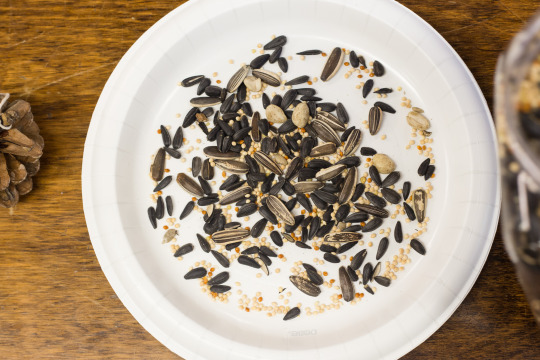
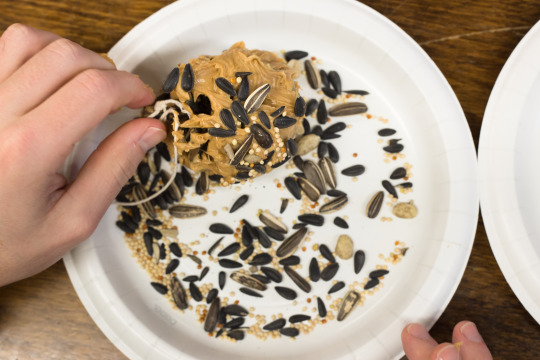
3.    Pour your bird seed onto a plate.  If you’re using a homemade mix, try mixing the different nuts and seeds together in a bowl before you pour them onto a plate.

birdseed on a plate

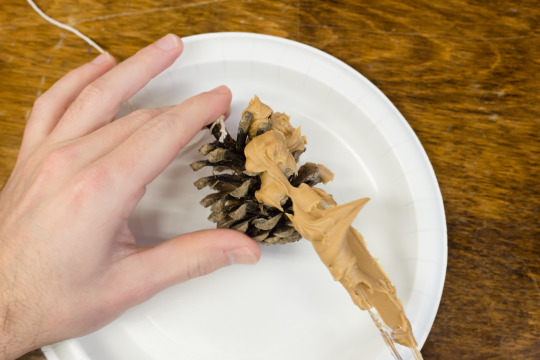
4.    Get ready to get messy!  Spread peanut butter or shortening all over a pinecone using a butter knife.  Make sure you get your “glue” in all the creases and crannies.

spreading peanut butter on pinecone with a knife

5.    Next, roll your sticky pinecone on your plate of seeds.  Press down and roll back and forth until the pinecone is mostly covered in your seed mixture.  Sprinkle more seeds in any areas that have been missed and roll one more time.

rolling peanut butter covered pinecone in bird seed

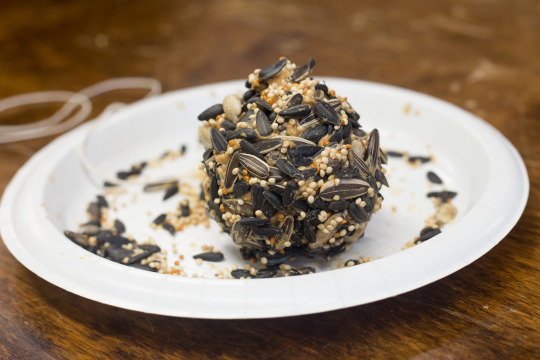
6.    When you’re happy with how the pinecone looks, place it on a plate to rest while you finish the rest of your pinecones. Repeat steps 4 and 5 with all the pinecones you want to make.

pinecone bird feeder on a plate

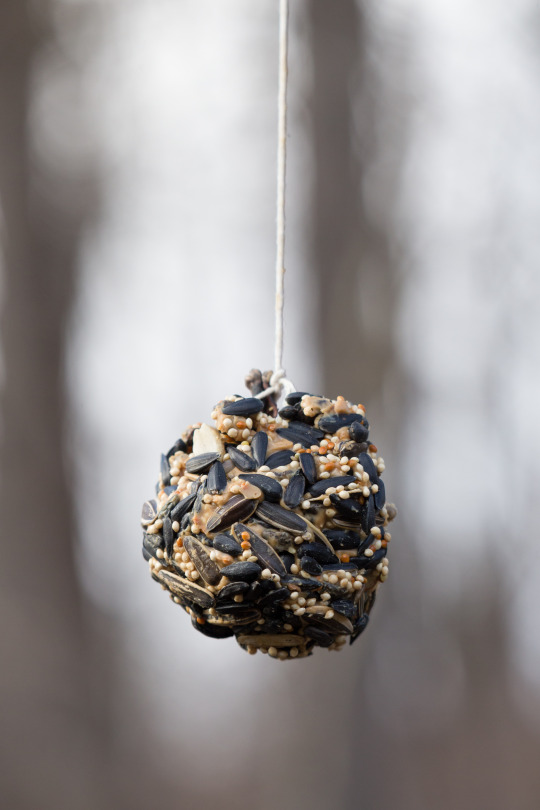
7.    Finally, go outside and look for places to hang your new birdfeeders!  Good places to hang your cones are on tree branches, the edges of buildings, or poles. It might be impossible to keep squirrels away from your pinecone, but hang your feeder high enough so that cats, dogs, and other animals can’t reach it.  You may need to tie extra string, wire, or pipe cleaners to your feeder to reach high enough.  Pick places that are easy for you to observe but are far enough away from a window that birds don’t hurt themselves by flying into windows!

finished pinecone bird feeder hanging

After you’ve made and hung your homemade bird feeders, take time every day to watch and see what kinds of birds come to snack! Make observations and sketches in your handy nature notebook. Are different birds visiting at different times of the day?  What birds are attracted to the type of seed you used?  What birds do you see more often than others?  When you see a bird you don’t recognize, use a bird guide like the Merlin ID mobile app and, if you can, take a picture!

Visit https://feederwatch.org/ to see how sharing your observations can help scientists learn more about birds visiting feeders.

Now You See(d) It:  The type of seeds you use in your birdfeeder can determine how many birds come to visit and what kinds.  Over 20 different types of seeds are often sold as birdseed!  To attract a diverse population of birds, try using a wide assortment of seeds.

Explore nature together.  Visit Nature 360 for activities and information.

Blog post by Melissa Cagan and Rachel Carlberg.

Filed Under: Blog Tagged With: Birds, Crafts, nature, Nature 360

January 24, 2019 by wpengine

Anthropocene Living Room

Welcome to the Anthropocene Living Room, a new space in the museum inspired by how humans have and will continue to shape natural history and nature. Hear Dr. Nicole Heller, Curator of the Anthropocene, share her vision for the space and introduce its various elements including items from our collections, books, and other tools for reflection and learning.

Filed Under: Blog Tagged With: Anthropocene, Anthropocene Living Room, climate change, nature, Nicole Heller

January 22, 2019 by wpengine

Woodlands in White

By John Wenzel

As we enter 2019, I start my ninth year here, and Powdermill Nature Reserve grows cold and quiet. The summer woodland is easy to appreciate, full of sounds of birds in the day, and frogs and insects at night, but for me the forest is most elegant in winter.

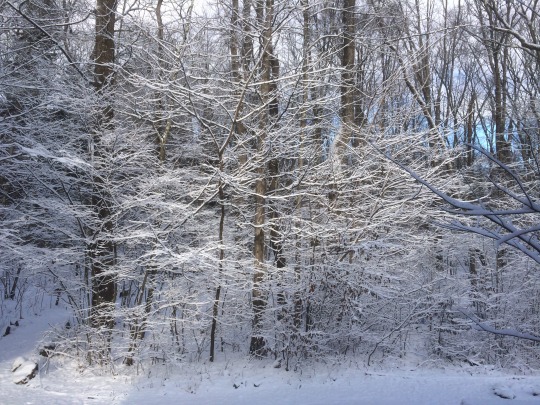
Powdermill woods covered in snow

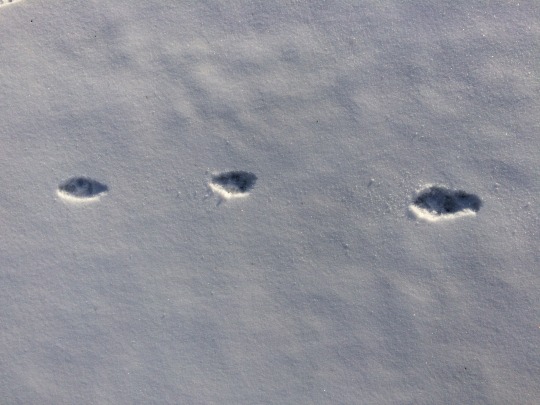
I moved to Powdermill in January, and at first I lived alone at the reserve. My first season was one of snow and solitude, of beauty and discovery.  The woods are never as striking as when every dark twig is lined in white, creating a world of infinite fragile lace. The naked branches let the explorer see much farther than when the woods are heavy with leaves.  We see deep into the forest, and through it entirely across a hilltop or when we are above the wooded valley.  Animal tracks in the snow allow us to feel the presence of the unseen wildlife more than we do in summer. Wet seeps from mountain springs melt away spots of snow and provide the occasional soothing view of bright green moss, which is very welcome and more readily admired in the starkness of winter.

coyote tracks in snow
Coyote tracks at Powdermill Nature Reserve.

Noise of the outside world is nearly absent when a blanket of snow covers the landscape.  This makes the bubbling flow of Powdermill Run all more distinct, and more focal in the outdoor experience. In daylight, we see the million crystal reflections beneath a bright blue sky. At night, far from town, we marvel at the inestimable number of brilliant stars in the onyx above.  Perhaps because visitors to the Nature Center are few in winter, I feel that the reserve is more “mine” than at other times. My Powdermill is the quiet, winter Powdermill, dressed in white and hushed by the cold.

John Wenzel is the Director at Powdermill Nature Reserve, Carnegie Museum of Natural History’s environmental research center. Museum employees are encouraged to blog about their unique experiences and knowledge gained from working at the museum.

Filed Under: Blog Tagged With: John Wenzel, nature, Powdermill, Powdermill Nature Reserve, Winter

October 8, 2018 by wpengine

Botany Near Home

by Mason Heberling

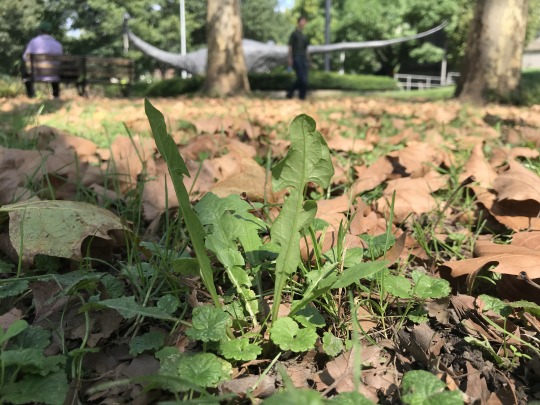
dandelion outside Carnegie Museum of Natural History

Human activities are changing our very notion of what is “natural.”  We are surrounded by nature, no matter whether we are in an asphalt parking lot in Pittsburgh or deep in the Allegheny National Forest.  This conclusion was a central theme (and namesake) of the recent exhibition at the Carnegie Museum of Natural History titled We Are Nature: Living in the Anthropocene.  The Anthropocene is an interdisciplinary, far-reaching conceptual framework for understanding, managing, protecting, and celebrating our natural heritage in a new era of global human influence on the Earth’s systems.

Is there value to nature in the city?  How about the mowed lawn in your backyard? Or the weeds in sidewalk cracks? It’s easy to overlook nature in human dominated environments, but it is something special.

While the Anthropocene as a formal term is quite new, many of the basic concepts behind it are far from it.

I recently stumbled across an inspiring, forward thinking essay by Otto Jennings entitled “Botany Near Home.”  I do not know the date or where it was published.

Affiliated with the Carnegie Museum from 1904 until his death in 1964, Jennings made many contributions throughout his career, serving as the Curator of Botany, Director of Education, and eventually Director of the museum.  He also was Professor and Head of the Department of Biological Sciences at the University of Pittsburgh, having advised many students.  His legacy remains to this day for his influence on the museum, botany, conservation, and environmental education.

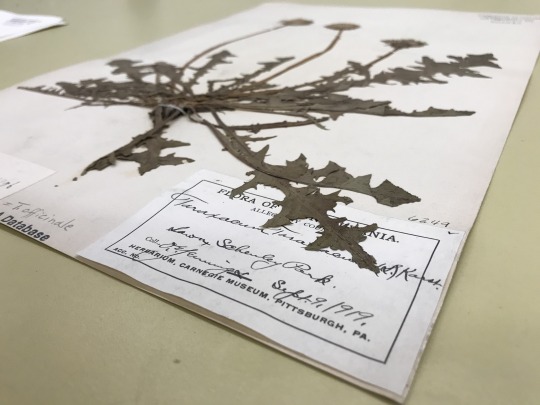
Specimen of Taraxacum offiniale (dandelion)
Specimen of Taraxacum offiniale (dandelion) collected by Otto Jennings on Sept. 9, 1919 in the lawn outside of the museum.

In his short essay, Jennings asserts that you do not need to go far to teach and learn botany hands-on. He writes, “…the teacher need not have to break up regular class schedules or to go to the trouble of organizing a field-trip to some more or less distant place.”

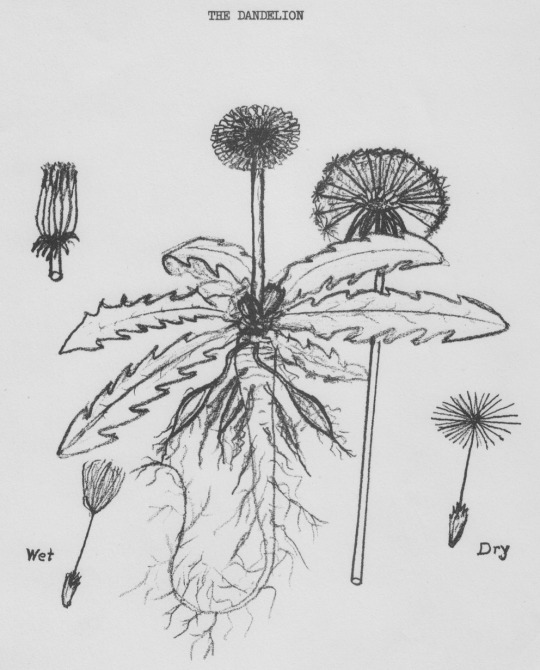
He continues, “Various plants grow in backyards and vacant lots which were not planted there by anyone. How did it get there?  Our back in a semi-business part of Oakland, in Pittsburgh, has had ailanthus trees, wild cherries, elderberries, southern fireweed, plantains, smartweeds, asters, a goldenrod, a thistle, and many dandelions. How did they get there?  Such a question might well be put to the school children as a quiz contest – and let them work out the answers.”  Jennings then focuses the rest of the essay on the fascinating biology of the common dandelion and advocates the use of this often overlooked, common plant to teach botany.

Drawing of dandelion by Otto Jennings 
Drawing of dandelion by Otto Jennings

While this basic essay may not seem like much, there is an important point.  We often think of “nature” as something far away, something you visit.  But indeed, you can find botany near home.  And once you look for it, it is a fascinating world. Even the common species aren’t as boring as you might think, once you take the time to look closely.

In the city blocks around the Carnegie Museum of Natural History alone, there are currently 104 species of plants recorded by citizen scientists in iNaturalist.  That’s right, 104! And I would presume this is far from a complete inventory.

Peruvian daisy in a sidewalk crack
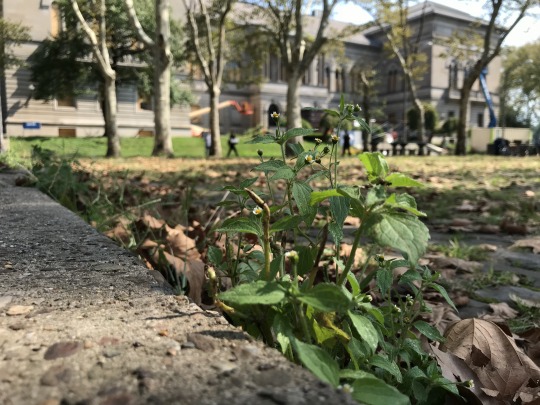
You can see a surprising amount of diversity in sidewalk cracks. Pictured here thriving in a sidewalk crack outside the museum is Galinsoga quadriradiata, commonly known as Peruvian daisy.  This species is common to urban environments.  So common to Pittsburgh, it is even known as “Pittsburgh Weed.”

What about urban diversity captured in the museum herbarium?  Of the 170,000+ plant specimens collected in Pennsylvania alone, over 15,000 (!) were explicitly described by the collector as growing in a human-made habitat (defined broadly, including words such as urban, sidewalk crack, vacant lot, roadside, railway, waste area, industrial, etc).

Despite the importance of appreciating life in human-dominated environments, it is also important to recognize the inherent and functional value of “pristine” nature. Managing for the “natural” is one of many difficult topics to tackle in the Anthropocene. What exactly is nature?  What should nature be?  Is there inherent value in all species? What species are priorities to conserve? How do we balance the perceived needs of human society with that of biodiversity?

These are just some of the many questions without easy answers.  But as we define our collective future in the Anthropocene, let’s always appreciate “botany near home.”

–

For more on the urban plants of Pittsburgh, be sure to check out the book Wild Urban Plants of the Northeast published in 2010 by Peter Del Tredici. https://librarycatalog.einetwork.net/Record/.b29413795

Also, be sure to check out the recent activity book published by the Cleveland Museum of Natural History.  It was designed for use by parents and teachers to engage young people with nature, even in the city.

Mason Heberling is a Postdoctoral Research Fellow in the Section of Botany at the Carnegie Museum of Natural History. Museum employees are encouraged to blog about their unique experiences working at the museum.

Botanists at the Carnegie Museum of Natural History have embarked on a three-year project to digitize nearly 190,000 plant specimens collected in the region, making images and other data publicly available online. This effort is part of the Mid-Atlantic Megalopolis Project (mamdigitization.org), a network of thirteen herbaria spanning the densely populated urban corridor from Washington, D.C. to New York City to achieve a greater understanding of our urban areas, including the unique industrial and environmental history of the greater Pittsburgh region. This project is made possible by the National Science Foundation under grant no. 1801022. Any opinions, findings, and conclusions or recommendations expressed in this material are those of the author(s) and do not necessarily reflect the views of the National Science Foundation.

Filed Under: Blog Tagged With: Anthropocene, Botany, Mason Heberling, nature, Otto Jennings, plants

  • Page 1
  • Page 2
  • Page 3
  • Interim pages omitted …
  • Page 5
  • Go to Next Page »

sidebar

About

  • Mission & Commitments
  • Directors Team
  • Museum History

Get Involved

  • Volunteer
  • Membership
  • Carnegie Discoverers
  • Donate
  • Employment
  • Events

Bring a Group

  • Groups of 10 or More
  • Birthday Parties at the Museum
  • Field Trips

Powdermill

  • Powdermill Nature Reserve
  • Powdermill Field Trips
  • Powdermill Staff
  • Research at Powdermill

More Information

  • Image Permission Requests
  • Science Stories
  • Accessibility
  • Shopping Cart
  • Contact
  • Visitor Policies
One of the Four Carnegie Museums | © Carnegie Institute | Privacy Policy | Terms of Use | Accessibility
Rad works here logo