• Skip to primary navigation
  • Skip to main content
  • Skip to primary sidebar

Carnegie Museum of Natural History

One of the Four Carnegie Museums of Pittsburgh

  • Visit
    • Buy Tickets
    • Visitor Information
    • Exhibitions
    • Events
    • Dining at the Museum
    • Celebrate at the Museum
    • Powdermill Nature Reserve
    • Event Venue Rental
    • Gift Cards
  • Learn
    • Field Trips
    • Educator Information
    • Programs at the Museum
    • Bring the Museum to You
    • Guided Programs FAQ
    • Programs Online
    • Climate and Rural Systems Partnership
  • Research
    • Scientific Sections
    • Science Stories
    • Science Videos
    • Senior Science & Research Staff
    • Museum Library
    • Science Seminars
    • Scientific Publications
    • Specimen and Artifact Identification
  • About
    • Mission & Commitments
    • Directors Team
    • Museum History
  • Tickets
  • Give
  • Shop

Blogs about Pittsburgh

Carnegie Museum of Natural History is in Pittsburgh, Pennsylvania. Many of the museum's collection specimens are from the local area, including our Botany, Invertebrate Paleontology, and Herpetology specimens. Our collections and our community often influence our work, whether that includes researching climate change, air pollution improvements from the closing of steel mills in the city, or invasive species.

September 28, 2016 by wpengine

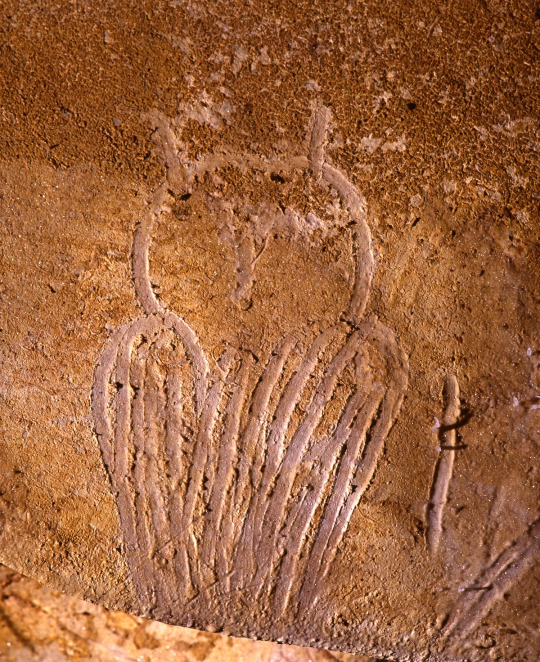
Ancient Owl Drawing

ancient owl drawing

by Patrick McShea

Could you finger-paint a more detailed owl than the one pictured above? In classes about owls at Carnegie Museum of Natural History students always answer with an enthusiastic “Yes.”

The question is a ruse, a simple trick to direct listeners to consider which features they would illustrate, or perhaps even exaggerate, to fashion a recognizable owl.

Any thoughts of competitive art-making subside when background information about the image is supplied. The owl portrait, which measures just over 18 inches in height, was scraped into the soft rock surface of a cave wall in southern France more than 30,000 years ago. Chauvet-Pont-d’Arc Cave, which was discovered in 1994 and named a UNESCO World Heritage site a decade later, contains more than 1,000 ancient images, most of which are animal depictions.

Before the owl lesson moves on from image to object, and the close examination of feathers, skulls, and study skins, some consideration is given to all that separates us from the anonymous artist. We easily recognize the cluster of ancient rock scrapes as an owl, but were the scraper to magically appear, that person would comprehend little of our world, particularly the electronic devices by which the cave art is increasingly shared.


Patrick McShea works in the Education and Visitor Experience department of Carnegie Museum of Natural History. Museum employees are encouraged to blog about their unique experiences and knowledge gained from working at the museum.
Filed Under: Blog Tagged With: Pittsburgh

September 18, 2016 by wpengine

Artist in residence

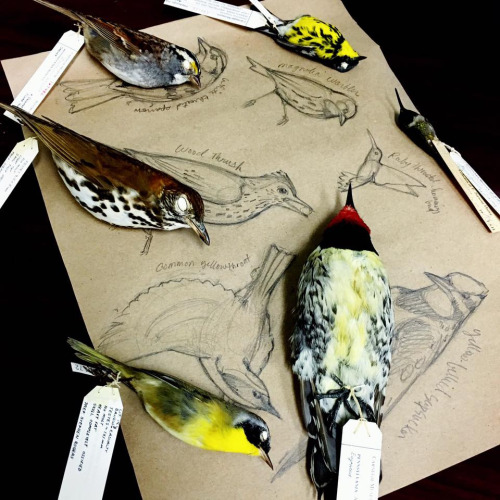
Study skins of birds with their drawings

Carnegie Museum of Natural History’s artist in residence Ashley Cecil brought these study skins from our collection back to life with her drawings that she’ll later paint in full color.  These six species of birds are often injured or killed when they collide with glass windows in urban areas where buildings and structures invade their flight space.

Carnegie Museum of Natural History is one of eight organizations who have joined the partnership BirdSafe Pittsburgh,which works to research and reduce bird-glass collisions in urban communities.

Filed Under: Blog Tagged With: art, Birds, conservation, Pittsburgh

September 11, 2016 by wpengine

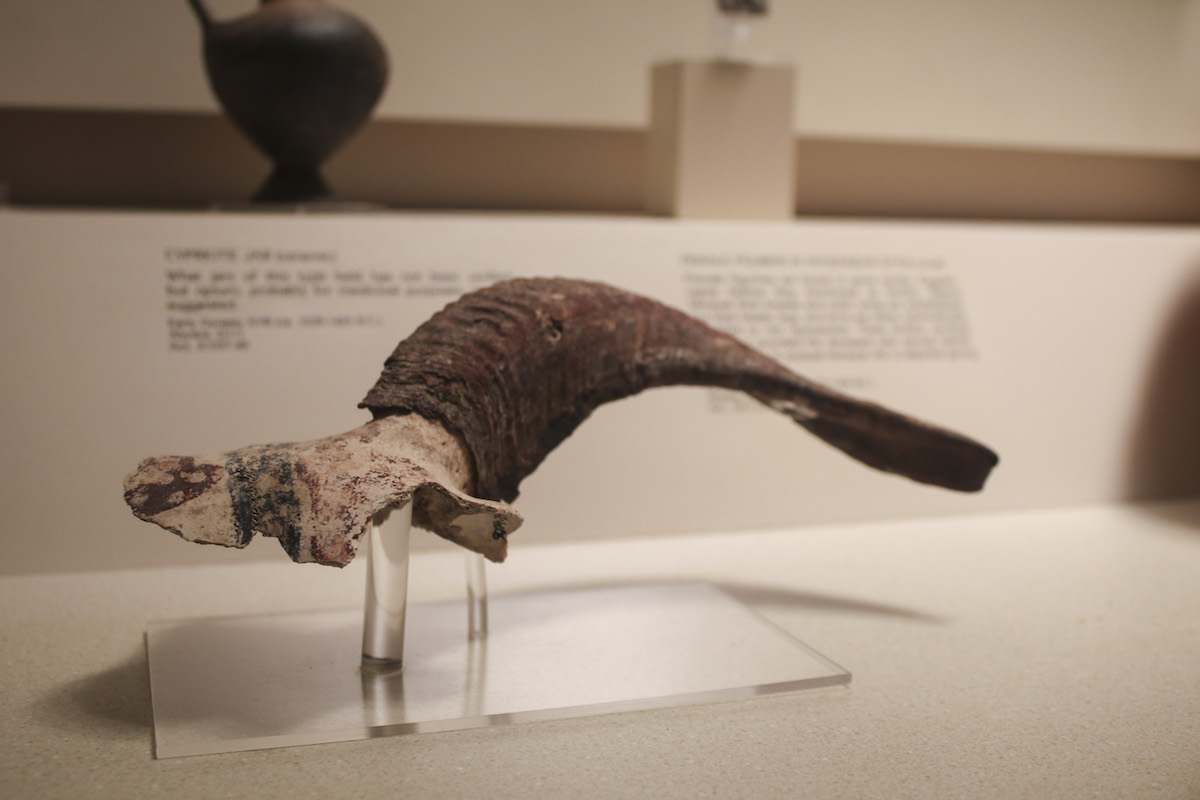
Decorated Horn

Decorated Horn (ca. 1627/1606-1539 B.C.) found in Walton Hall of Ancient Egypt

(Photo by Hayley Pontia)

Filed Under: Blog Tagged With: ancient egypt, anthropology, Pittsburgh, Walton Hall of Ancient Egypt

September 2, 2016 by wpengine

Selected for Speed

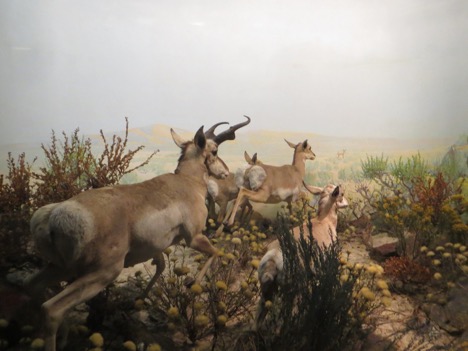
Pronghorn Antelopes in a diorama by Patrick McShea

At first it seems absurd to discuss speed in front of adiorama in which nothing moves. With appropriate prompts, however, this threedimensional snapshot of galloping pronghorn antelopes can generate an astonishing level of mind’s eye animation.

When viewed from dusty Wyoming roadsides, distant pronghorns appear to gallop without sound, even when their pace suddenly changes and their speed doubles for 100-yard stretches.

At the close vantage point offered by the diorama, such antelope maneuvers would undoubtedly produce a sensory mix of blurred furred forms, the staccato clatter of hooves against rock, and the powerful scent of crushed sage.

The species’ blazing speed invites speculation about its evolutionary history. Could pronghorn antelopes be adapted to elude a predator no longer found on western landscapes? A large extinct cat termed an American cheetah is sometimes cited as the missing participant in this natural selection process.

Fossil evidence examined during the past 25 years complicates this narrative. Paleontologists point to expansive ranges for these big cats that include mountainous areas and sea coasts, and the absence, to date, of sites containing both cat and antelope fossils.

With the identity of the pronghorn’s prehistoric predator unsettled, a viewing position in front of the diorama is a place to ponder possibilities.


Patrick McShea works in the Education and Visitor Experience department of Carnegie Museum of Natural History. Museum employees are encouraged to blog about their unique experiences of working at the museum.

Filed Under: Blog Tagged With: diorama, fossils, museums, Patrick McShea, Pittsburgh

September 2, 2016 by wpengine

Stegosaurus was as big as a bull elephant

Stegosaurus was as big as a bull elephant and the largest known plated dinosaur.

(Photo by Josh Franzos)

Filed Under: Blog Tagged With: dinos, dinosaur, fossils, Pittsburgh

September 1, 2016 by wpengine

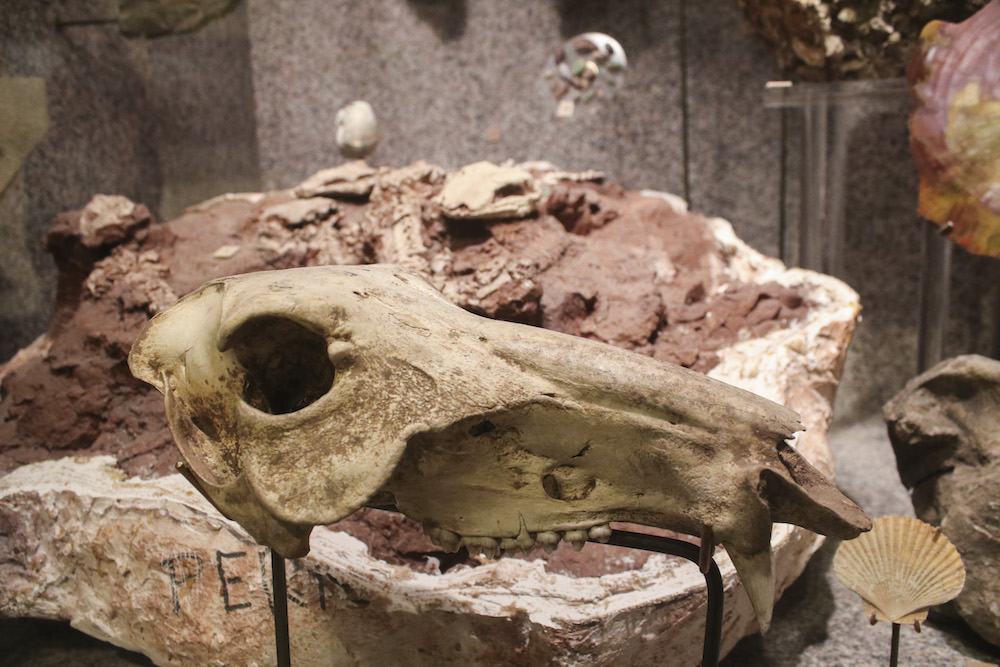
Unaltered remains of Peccary

Unaltered remains of Peccary

Unaltered remains of Peccary, a mid-sized hoofed pig-like mammal, found in Kentucky.

(Photo by Hayley Pontia)

Filed Under: Blog Tagged With: fossils, Pittsburgh

  • « Go to Previous Page
  • Page 1
  • Interim pages omitted …
  • Page 6
  • Page 7
  • Page 8
  • Page 9
  • Page 10
  • Interim pages omitted …
  • Page 18
  • Go to Next Page »

sidebar

About

  • Mission & Commitments
  • Directors Team
  • Museum History

Get Involved

  • Volunteer
  • Membership
  • Carnegie Discoverers
  • Donate
  • Employment
  • Events

Bring a Group

  • Groups of 10 or More
  • Birthday Parties at the Museum
  • Field Trips

Powdermill

  • Powdermill Nature Reserve
  • Powdermill Field Trips
  • Powdermill Staff
  • Research at Powdermill

More Information

  • Image Permission Requests
  • Science Stories
  • Accessibility
  • Shopping Cart
  • Contact
  • Visitor Policies
Stay in the loop! Sign up for our newsletter(s).
One of the Four Carnegie Museums | © Carnegie Institute | Privacy Policy | Terms of Use | Accessibility
Rad works here logo