• Skip to primary navigation
  • Skip to main content
  • Skip to primary sidebar

Carnegie Museum of Natural History

One of the Four Carnegie Museums of Pittsburgh

  • Visit
    • Buy Tickets
    • Visitor Information
    • Exhibitions
    • Events
    • Dining at the Museum
    • Celebrate at the Museum
    • Powdermill Nature Reserve
    • Event Venue Rental
    • Gift Cards
  • Learn
    • Field Trips
    • Educator Information
    • Programs at the Museum
    • Bring the Museum to You
    • Guided Programs FAQ
    • Programs Online
    • Climate and Rural Systems Partnership
  • Research
    • Scientific Sections
    • Science Stories
    • Science Videos
    • Senior Science & Research Staff
    • Museum Library
    • Science Seminars
    • Scientific Publications
    • Specimen and Artifact Identification
  • About
    • Mission & Commitments
    • Directors Team
    • Museum History
  • Tickets
  • Give
  • Shop

Blogs from Powdermill Nature Reserve

Powdermill Nature Reserve is Carnegie Museum of Natural History’s environmental research center. Located 55 miles southeast of Pittsburgh in Rector, Pennsylvania, Powdermill is a field station and laboratory where researchers do long-term studies of natural populations in western Pennsylvania. In addition to being positioned for Appalachian-specific studies in ornithology, ecology, invertebrate zoology, and botany, Powdermill is a great place to spend a fun-filled day outdoors with the family.

August 16, 2018 by wpengine

Mapping Pittsburgh’s Plastic Waste

By James Whitacre

If you have visited the museum recently, you have probably seen the We Are Nature: Living in the Anthropocene exhibition (if not, you have less than a month to check it out!!). When I walked through the exhibition the first time, I was struck by the image of the surfer gliding across a wave with plastic and other debris floating all around him. It is a bleak image of how the beauty and ecology of our oceans, rivers, and lakes is being tarnished and even destroyed by the accumulation of so much plastic waste.
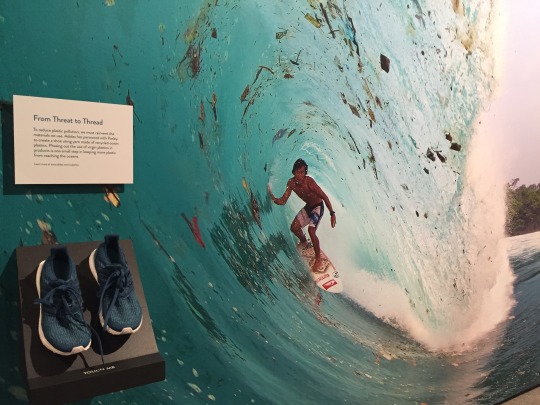
surfer in wave with plastic

Recently, I also came across an interesting 2017 article, ‘River plastic emissions to the world’s oceans,‘ in which the authors have developed a global model using spatial and temporal data on waste management, population density, and hydrology to measure the amount of plastic in rivers that makes its way into oceans. They found that the top 20 polluting rivers account for 67% of the global total of plastic waste, which is between 1.15 and 2.41 million tonnes of plastic a year. While most of the top 20 rivers are in Asia, and none are in the U.S., their findings have great implications for how plastic waste should be managed and mitigated at global and local scales.
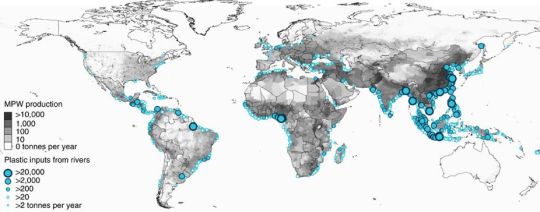
Diagram of mass of river plastic flowing into oceans in tonnes per year.
Mass of river plastic flowing into oceans in tonnes per year. This work is licensed under a Creative Commons Attribution 4.0 International License. Source: https://www.nature.com/articles/ncomms15611/figures/1


This article got me thinking…How can we, as humans living in the Anthropocene, do something to decrease and even eliminate the accumulation of plastic in our waterways? Many people are thinking about this, but what about our beloved three rivers of Pittsburgh? How much do we as a community contribute to the global plastic waste epidemic? Well, to start answering these questions, we need data to know where the plastic waste is…

How often have you walked through your neighborhood, a local or state park, or even been driving around, and noticed plastic waste (and likely other trash)? With this in mind, we’d like to invite you into an experiment…to help us map Pittsburgh’s plastic waste. The GIS Lab, located at Powdermill Nature Reserve, has developed a simple mapping survey to help track plastic waste in our area. To participate, all you have to do is fill out the form using your GPS-enabled smartphone or mobile device when you encounter plastic waste:

Plastic Waste Survey


What will we do with this data?

Well, right now this is just an experiment…But we are thinking of some cool ways to map and analyze this data. We will definitely share a map that shows the data, so stay tuned. We would also like to help our community understand what happens to the plastic if left in the environment. So, here are some example research questions we hope to shed some light on in the near future:

  • If you find some plastic near your house, what stream will it end up in, and what is the shortest path to the ocean from there?
  • How much rain or wind would it take to move that plastic to a stream or river?
  • Where is the nearest recycling center that I can take a few bags or a large heap of plastic (and other) waste?

Data can be very powerful, and sometimes more powerful than we can imagine on our own. So if you have any other ideas for how we could use this data, please email the GIS Lab!

What is Survey123?

The GIS Lab used Survey123 to build this survey, which is part of the ArcGIS platform. Survey123 for ArcGIS is a simple and intuitive form-centric data gathering solution that makes creating, sharing, and analyzing surveys easy using GIS software. Download the free Survey123 app to use the form we created.

James Whitacre is the GIS Research Scientist for Carnegie Museum of Natural History, where he primarily manages the GIS Lab at Powdermill Nature Reserve, the museum’s environmental research center. Museum employees are encouraged to blog about their unique experiences and knowledge gained from working at the museum.
Filed Under: Blog Tagged With: Anthropocene, GIS lab, Pittsburgh, Powdermill Nature Reserve, We Are Nature: Living in the Anthropocene

August 1, 2018 by wpengine

Black Bears at Powdermill

By Andrea Kautz

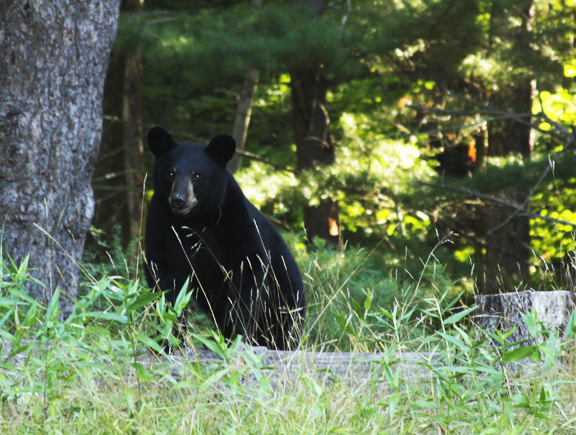
Recently, the PA Game Commission brought a black bear to Powdermill to release in the nearby state forest. It was a healthy, 300-pound male that was relocated because it was becoming a nuisance on a farm more than 30 miles away. Powdermill staff were grateful to have the opportunity to watch as the game wardens sedated and tagged the animal before release. The bear received two ear tags and a lip tattoo for identification. A small milk tooth was extracted which will be used later to determine his age. An infected claw was treated, but otherwise he appeared to be in good health.

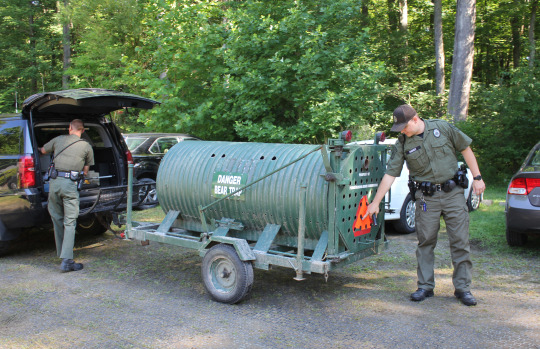
Game Wardens arrive at Powdermill
Game Wardens Barron (left) and Harvey (right) arrive at Powdermill with the trap, which is on wheels for easy transport.

The Game Commission estimates the Pennsylvania bear population to be thriving at around 20,000 individuals. Compared to neighboring states, Pennsylvania black bears breed earlier and have more cubs. Bear populations are managed through seasonal harvesting, although only about 2% of those receiving permits are successful hunting a bear. In 2017, the largest bear taken was a 707-pound male from Monroe County!

black bear in Pennsylvania
American black bear. Photo credit: George Pankewytch

Hopefully, this male will find another place to call home, but relocating these animals can be tricky as they have a very good sense of direction and can cover long distances. At this time last year, one radio-collared male walked from Johnstown to Grove City to Pittsburgh, then east along the turnpike and up through the Laurel Highlands and back to Johnstown in about a month.  We give special thanks to the game commission for putting so much effort into maintaining a healthy population of bears that can live in harmony with humans and ensuring that Pennsylvania can continue to be a supportive environment for these spectacular beasts.

Andrea Kautz is a Research Entomologist at Carnegie Museum of Natural History’s Powdermill Nature Reserve. Museum employees are encouraged to blog about their unique experiences and knowledge gained from working at the museum.
Filed Under: Blog Tagged With: Andrea Kautz, conservation, mammals, nature, Powdermill, Powdermill Nature Reserve

July 26, 2018 by wpengine

Before Powdermill Nature Reserve

By Bonnie Isaac

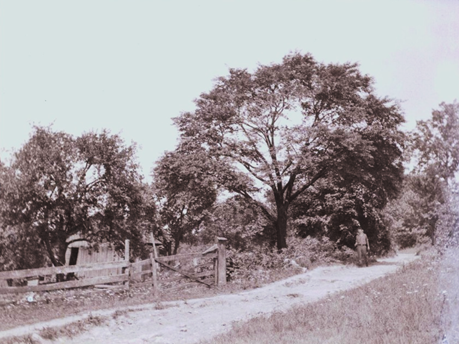
black and white photo of a dirt road and trees

While looking through some images in the archives in the section of Botany I came across this image from July 23, 1923 taken by Gus Link Jr. about 3 miles south of Rector, PA.  There is a good chance that this property later became part of our Powdermill Nature Reserve.

The museum began acquiring properties in 1956 to form Powdermill Nature Reserve. I wonder if the museum folks were out there surveying the area with a nature reserve in mind? What foresight the museum had to acquire properties that have over the past 60 plus years become a beautiful place for research.

In 1923 Gustav Link Jr. was an assistant preparator in Zoology for the natural history museum. Gus Link Jr. worked for the museum from 1912 to 1960.

Bonnie Isaac is the Collection Manager in the Section of Botany. Museum employees are encouraged to blog about their unique experiences and knowledge gained from working at the museum.
Filed Under: Blog Tagged With: Botany, conservation, museum history, nature, Powdermill, Powdermill Nature Reserve

July 23, 2018 by wpengine

Powdermill Flood Changes the Landscape

By James Whitacre

Here at Powdermill Nature Reserve, the Carnegie Museum of Natural History’s environmental research center, we were reminded of the ever-present forces of nature when a flood recently inundated the Ligonier Valley. Homes and buildings were damaged and numerous people had to be rescued by swift water rescue crews. At Powdermill, a few of our buildings also experienced damage (see the video at the bottom of this post).

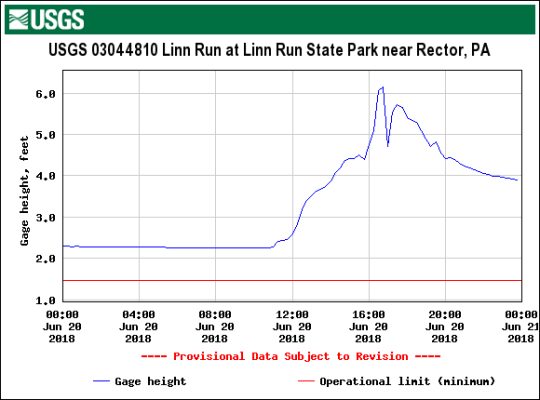
water level chart

On June 20, 2018, over 5.5 inches of rain fell on Powdermill and the surrounding area in about 6 hours. At the nearest USGS stream gauge at Linn Run State Park, the water level rose about four feet in five hours. The force of the flood waters was able to move large boulders, take down trees, and change the course of many streams, including Powdermill Run. The flood levels were so high that we have reason to believe that this was a very significant flood event. But was it a ‘100-year flood’?

The concept of the ‘100-year flood’ is quite familiar, but this concept is a bit misleading. It does not mean that a flood event rated as a ‘100-year flood’ occurs every 100 years. Rather, it means that every year, there is a 1% chance that a flood will reach the annual exceedance probability (AEP) (i.e. the height of the flood waters in a particular area). On average, the AEP will reach that level every 100 years. This definition was established for the National Flood Insurance Program. For more information, see the USGS page The 100-Year Flood—It’s All About Chance.

So the question still stands, was the flood at Powdermill a ‘100-year flood’? Using the power of maps an GPS, the GIS lab at Powdermill decided to compare the FEMA flood zones map to the flood levels observed in the field. As the map shows, it appears that is is very close, though more assessment is needed to be certain.

See the map here.

While the damage was extensive, this event will provide researchers at Powdermill the opportunity to study yet another instance of how natural disasters affect the ecology and landscape of the nature reserve. A similar event six years ago, in June 2012, was when a tornado touched down in the Ligonier Valley and blew down nearly 50 acres of forest in the nature reserve. Powdermill continues to utilize these areas in numerous on-going research projects to track succession and plant-animal interactions after a disturbance. While the flood event may not produce an obvious research project at the moment, Powdermill researchers will be keeping their eyes open to see how we may need to respond.

James Whitacre is the GIS Research Scientist for Carnegie Museum of Natural History, where he primarily manages the GIS Lab at Powdermill Nature Reserve, the Museum’s environmental research center. Museum employees are encouraged to blog about their unique experiences and knowledge gained from working at the museum.
Filed Under: Blog Tagged With: James Whitacre, Powdermill, Powdermill Nature Reserve

July 17, 2018 by wpengine

Cactuses, and the Spine of Appalachia

By John Wenzel

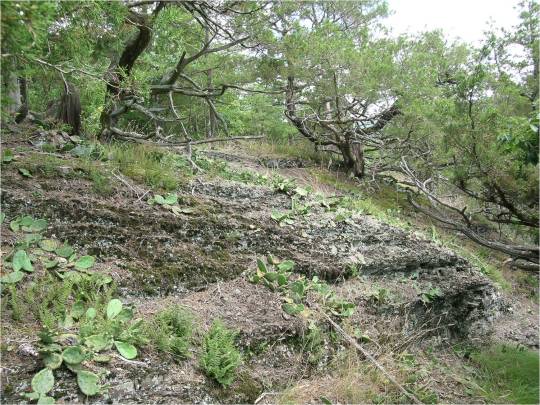
No one thinks of deserts in Pennsylvania, but we have one habitat that includes many plants typical of the western deserts. The “shale barrens” have formed over millions of years as the eroding crests of the Appalachian ridges open up areas where rock slides or exposed shale deposits create an area of very little soil that gets hot in the sun and that holds no water.

shale barren

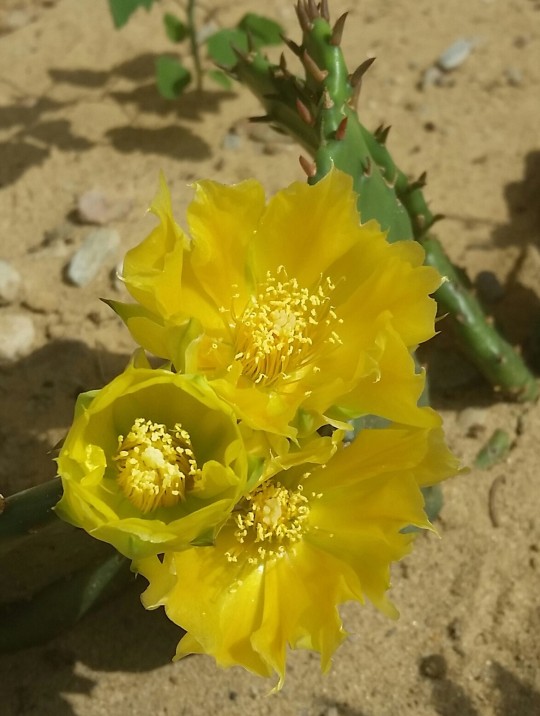
Plants such as the red cedar, barrens stonecrop, hen-and-chicks, or even prickly pear cactus thrive in these microdeserts, mostly on south-facing hillsides. These resemble more closely communities in west Texas than the eastern deciduous forest around them. Yet, unlike the West, there may be ferns alongside the cactuses, taking advantage of the rain.

prickly pear cactus

How do cactuses survive our winter?  Because they can tolerate being dried out, they dump their water when it gets cold and collapse like deflated balloons. With little water in them, they do not develop ice crystals internally, and so do not freeze! At Powdermill Nature Reserve, we maintain a small dry garden to show these unusual species to visitors.

John Wenzel is the Director at Powdermill Nature Reserve, Carnegie Museum of Natural History’s environmental research center. Museum employees are encouraged to blog about their unique experiences and knowledge gained from working at the museum.
Filed Under: Blog Tagged With: cactus, John Wenzel, pennsylvania, Powdermill Nature Reserve

July 10, 2018 by wpengine

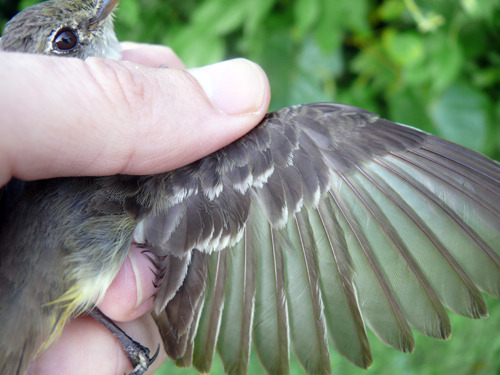
Adult Flycatcher

Adult Flycatcher

This adult Flycatcher undergoes the pre-basic molt of the wintering grounds. These adults can be readily identified by their white bars and wear on the feather tips.


Powdermill Nature Reserve’s avian research center is part of Carnegie Museum of Natural History’s biological research station in Rector, Pennsylvania.  The research center operates a bird banding station, conducts bioacoustical research, and performs flight tunnel analysis with the goal of reducing window collisions.


Filed Under: Blog Tagged With: avian research, bird banding, birding, Birds, nature, parc, Powdermill, Powdermill Nature Reserve, research

  • « Go to Previous Page
  • Page 1
  • Interim pages omitted …
  • Page 9
  • Page 10
  • Page 11
  • Page 12
  • Page 13
  • Interim pages omitted …
  • Page 17
  • Go to Next Page »

sidebar

About

  • Mission & Commitments
  • Directors Team
  • Museum History

Get Involved

  • Volunteer
  • Membership
  • Carnegie Discoverers
  • Donate
  • Employment
  • Events

Bring a Group

  • Groups of 10 or More
  • Birthday Parties at the Museum
  • Field Trips

Powdermill

  • Powdermill Nature Reserve
  • Powdermill Field Trips
  • Powdermill Staff
  • Research at Powdermill

More Information

  • Image Permission Requests
  • Science Stories
  • Accessibility
  • Shopping Cart
  • Contact
  • Visitor Policies
Stay in the loop! Sign up for our newsletter(s).
One of the Four Carnegie Museums | © Carnegie Institute | Privacy Policy | Terms of Use | Accessibility
Rad works here logo