• Skip to primary navigation
  • Skip to main content
  • Skip to primary sidebar

Carnegie Museum of Natural History

One of the Four Carnegie Museums of Pittsburgh

  • Visit
    • Buy Tickets
    • Visitor Information
    • Exhibitions
    • Events
    • Dining at the Museum
    • Celebrate at the Museum
    • Powdermill Nature Reserve
    • Event Venue Rental
    • Gift Cards
  • Learn
    • Field Trips
    • Educator Information
    • Programs at the Museum
    • Bring the Museum to You
    • Guided Programs FAQ
    • Programs Online
    • Climate and Rural Systems Partnership
  • Research
    • Scientific Sections
    • Science Stories
    • Science Videos
    • Senior Science & Research Staff
    • Museum Library
    • Science Seminars
    • Scientific Publications
    • Specimen and Artifact Identification
  • About
    • Mission & Commitments
    • Directors Team
    • Museum History
  • Tickets
  • Give
  • Shop

Blogs from our Scientific Researchers

Carnegie Museum of Natural History is home to active research and vast scientific collections. Our scientific researchers regularly contribute to the blog at the museum.

February 14, 2022 by Erin Southerland

Can Snails Feel Love?

by Dr. Timothy A. Pearce

A reader recently asked whether snails can feel love. I sometimes wonder that too; do my pet snails feel any affection for me? I don’t know the answer, but I’ll discuss this intriguing question from two perspectives: biochemical and philosophical.

Biochemically, many of our emotions are influenced by hormones. For example, higher levels of the hormone oxytocin are associated with greater trust and affection. Hormones in other species might have similar effects, for example, oxytocin in octopuses is associated with behaviors that are reasonably interpreted as affection. Humans and octopuses are very different evolutionarily – the common ancestor between our lineages occurred a very long time ago, at least 500 million years ago. The presence of oxytocin as an influencing hormone in both humans and octopuses could be interpreted as, (a) the ability to produce and respond to oxytocin might have been present in all or most animals living 500 million years ago and consequently is present in most modern animals that descended from those ancestors, or (b) the ability to produce and respond to oxytocin might have evolved independently in the lineage that led to humans and in the lineage that led to octopuses. A recent paper (Kumara et al. 2020) reported oxytocin-like proteins in a wide variety of vertebrates and invertebrates, suggesting the first possibility, that oxytocin might be widespread in animals due to shared common ancestry. If oxytocin, and other hormones that are associated with what we humans experience as love, are present in snails, then it could be reasonably argued that snails at least have the potential to feel love.

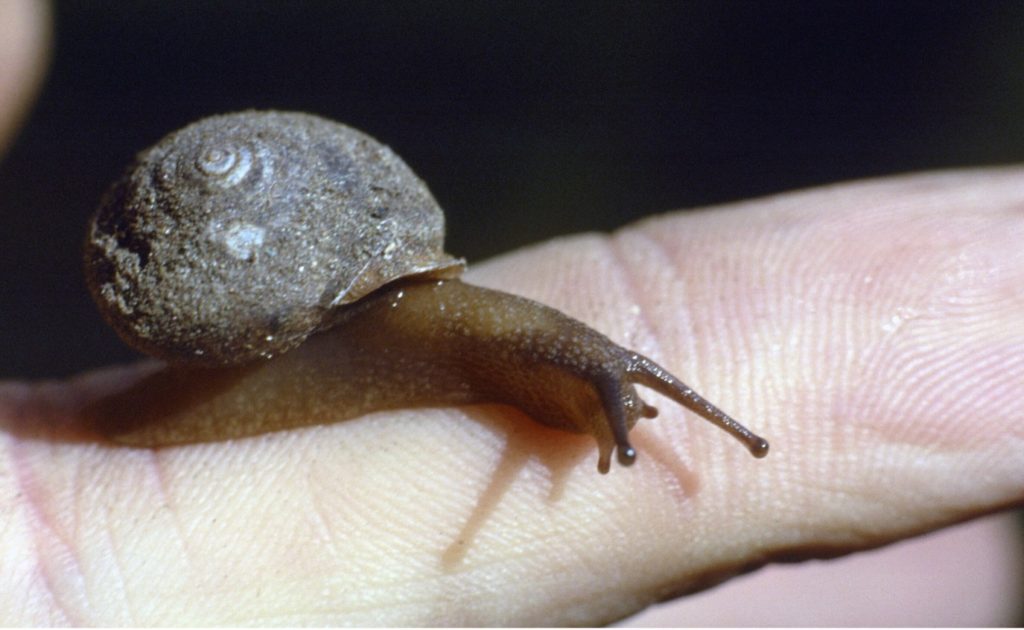
snail on a person's finger
Does my pet snail love me when it crawls on my finger? Vespericola sp. from Siskiyou County, CA. Photo by T.A. Pearce 31 Jul 1985.

Philosophically, in an evolutionary perspective, what would love be good for? Love in the broad sense might be useful in social organisms to strengthen bonds between individuals such as partners, parents and offspring, and group members working toward a common goal. Inter-species bonds, such as humans and their pets, or even between individuals of non-human species, are reasonably interpreted as manifestations of love. However, these evolutionary benefits of love are for social species, and I can’t think of any social snails. Snails do not show evidence of mate fidelity or parental care, and they do not seem to crave each other’s company. Although snails sometimes gather in large numbers, my study of such aggregations suggests mutually valued resources are the cause of such occurrences rather than a desire to be together (Pearce & Porter 2011). So, I can’t think how the capacity to experience love would be useful to a snail in a way that evolution could select for a snail’s ability to feel love.

Snails do copulate, for reproduction, and that can be interpreted as a form of love. Some snails use calcareous darts, often called “love darts” as part of a courtship dance before copulation (the darts themselves are not used in sperm transfer). Reproductive behaviors are probably influenced by hormones. I like to think that snails find reproduction to be a pleasurable experience, but we really don’t have much idea what is pleasurable to a snail.

We sometimes use the word love to mean intense liking. In this sense, snails might have the capacity to love. I have noticed some of my pet snails are so attracted to cucumbers that I commonly say, “Snails love cucumbers.” I interpret the consumption of cucumbers as being deeply satisfying to snails.

In summary, snails might have the biochemical potential to feel love, but they might not have a socially-mediated evolutionary reason to feel love. They engage in reproductive behaviors, but we don’t know whether they feel love or pleasure during reproduction. At least some snails seem to have an intense like for cucumbers. Maybe snails do feel love, and maybe they don’t; we don’t know. You are free to believe as you like. Your pet snail Fluffy might really love you!

Timothy A. Pearce, PhD, is the head of the mollusks section at Carnegie Museum of Natural History. Museum employees are encouraged to blog about their unique experiences and knowledge gained from working at the museum.

Literature Cited

Kumara, S., Vijayasarathya, M., Venkatesha, M.A., Sunita, P. & Balaram, P. 2020. Cone snail analogs of the pituitary hormones oxytocin/vasopressin and their carrier protein neurophysin. Proteomic and transcriptomic identification of conopressins and conophysins. Biochimica et Biophysica Acta (BBA) – Proteins and Proteomics, 1868(5): 140391

Pearce, T.A. & Porter, K.A. 2011. Do Philomycus carolinianus (Gastropoda: Philomycidae) prefer to congregate? Nautilus 125: 83-85.

Related Content

Do Plants Have Lips? No, But One Genus Sure Looks Like It Does!

Mesozoic Monthly: Thrinaxodon

Leaping Slugs! Did That Slug Just Jump?

Carnegie Museum of Natural History Blog Citation Information

Blog author: Pearce, Timothy A.
Publication date: February 14, 2022

Share this post!

  • Share on Twitter Share on Twitter
  • Share on Facebook Share on Facebook
  • Share on Pinterest Share on Pinterest
  • Share on LinkedIn Share on LinkedIn
  • Share on Reddit Share on Reddit
  • Share via Email Share via Email

Filed Under: Blog Tagged With: mollusks, Science News, Tim Pearce

February 2, 2022 by Erin Southerland

Groundhog as Archaeologist

by Dr. John R. Wible
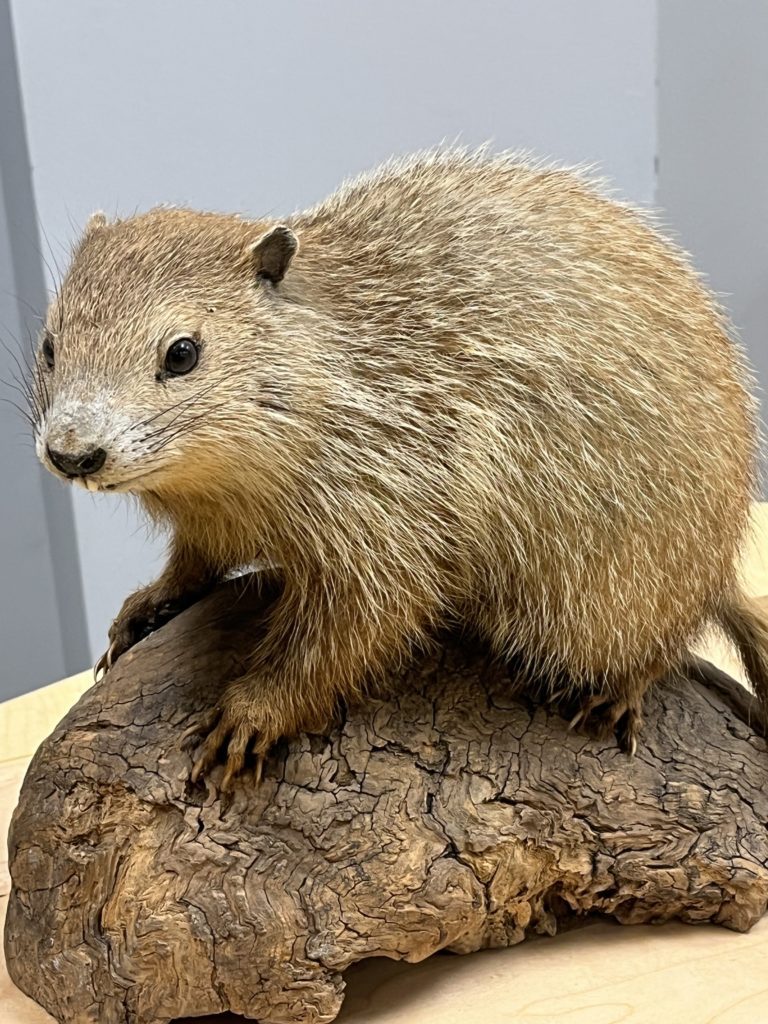
groundhog taxidermy mount

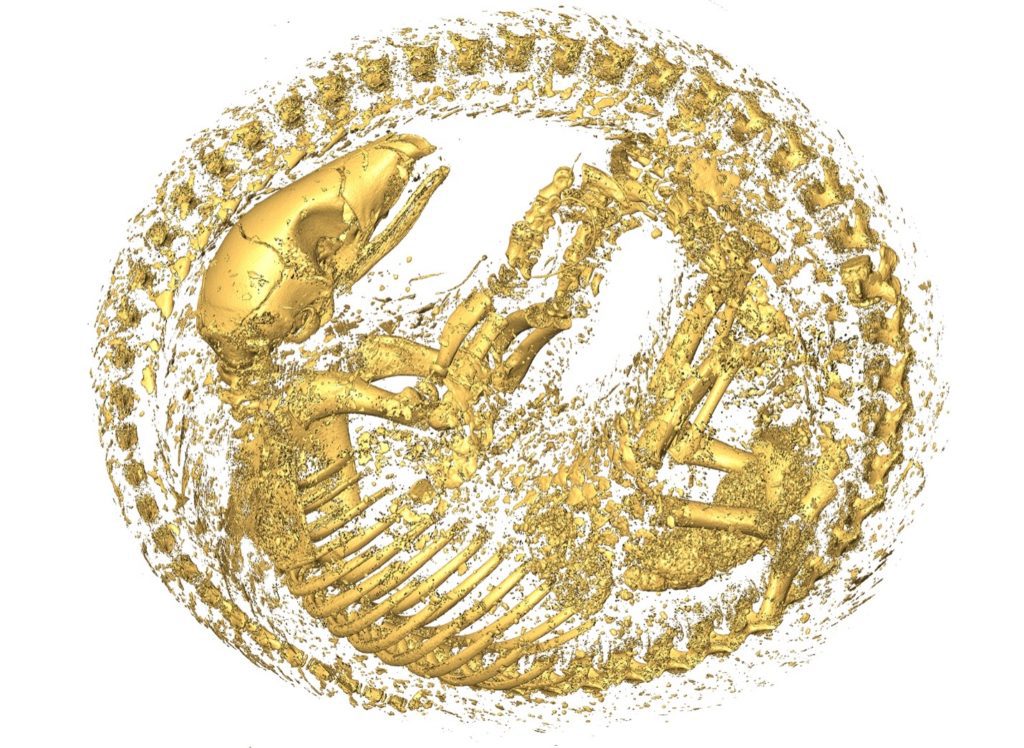
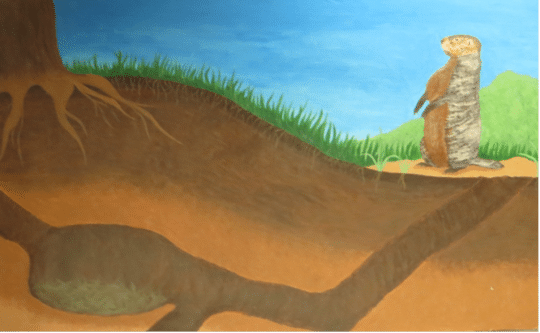
Groundhogs (Latin name: Marmota monax) are mostly solitary; they dig and spend a lot of time in elaborate burrows. There is usually a main burrow entrance, a foot across with a mound of excavated dirt marking it, and several auxiliary exits. The burrow is designed with twists and turns so that it will not flood. Side chambers serve as suitable places to hibernate and as latrine, which when “full” is sealed off. Because of their digging pastime and the holes they create, groundhogs are seen as pests by many homeowners, fearing property damage, and horse owners, fearing injury to their steeds.

illustration of a groundhog standing near the entrance to a groundhog burrow

Once a year, in early February, the pest label for groundhogs is ditched for that of a weather prognosticator, our own Punxsutawney Phil is the prime example. However, for Western Pennsylvanians, the so-called pest activity of one groundhog led to one of the most important scientific discoveries of our region: the renowned archaeological site of Meadowcroft Rock Shelter in Washington County. As a child growing up on the property, Albert Miller believed that Native Americans had been there. But proof did not come until 1955 when he was investigating an animal burrow and discovered stone and ceramic artifacts. The rest is local history so to speak!

Early on, the burrow was said to belong to a badger. But there is only a single record of a badger in Pennsylvania, believed to have been transported by train to Indiana County. Now, a groundhog is the suspected culprit responsible for the true discovery of artifacts at Meadowcroft. Perhaps Meadowcroft marmot would be an appropriate name!

John Wible, PhD, is the curator of the Section of Mammals at Carnegie Museum of Natural History. Museum employees are encouraged to blog about their unique experiences and knowledge gained from working at the museum.

Related Content

The Woodchuck…or Groundhog?

Groundhog Day 2020

Groundhog Architecture

Carnegie Museum of Natural History Blog Citation Information

Blog author: Wible, John
Publication date: February 2, 2022

Share this post!

  • Share on Twitter Share on Twitter
  • Share on Facebook Share on Facebook
  • Share on Pinterest Share on Pinterest
  • Share on LinkedIn Share on LinkedIn
  • Share on Reddit Share on Reddit
  • Share via Email Share via Email

Filed Under: Visitor Info Tagged With: Carnegie Museum of Natural History, John Wible, mammals, Science News

January 14, 2022 by Erin Southerland

How Do Minerals Get Their Names?

by Debra Wilson

The naming of minerals has changed over time from its alchemistic beginnings to the advanced science of today. During this span minerals have usually been named for their physical characteristics, the locality where they were discovered, or a person. I have often been asked, “why do most mineral names end in ite?” The suffix “ite” is derived from the Greek word ites, the adjectival form of lithos, which means rock or stone. 

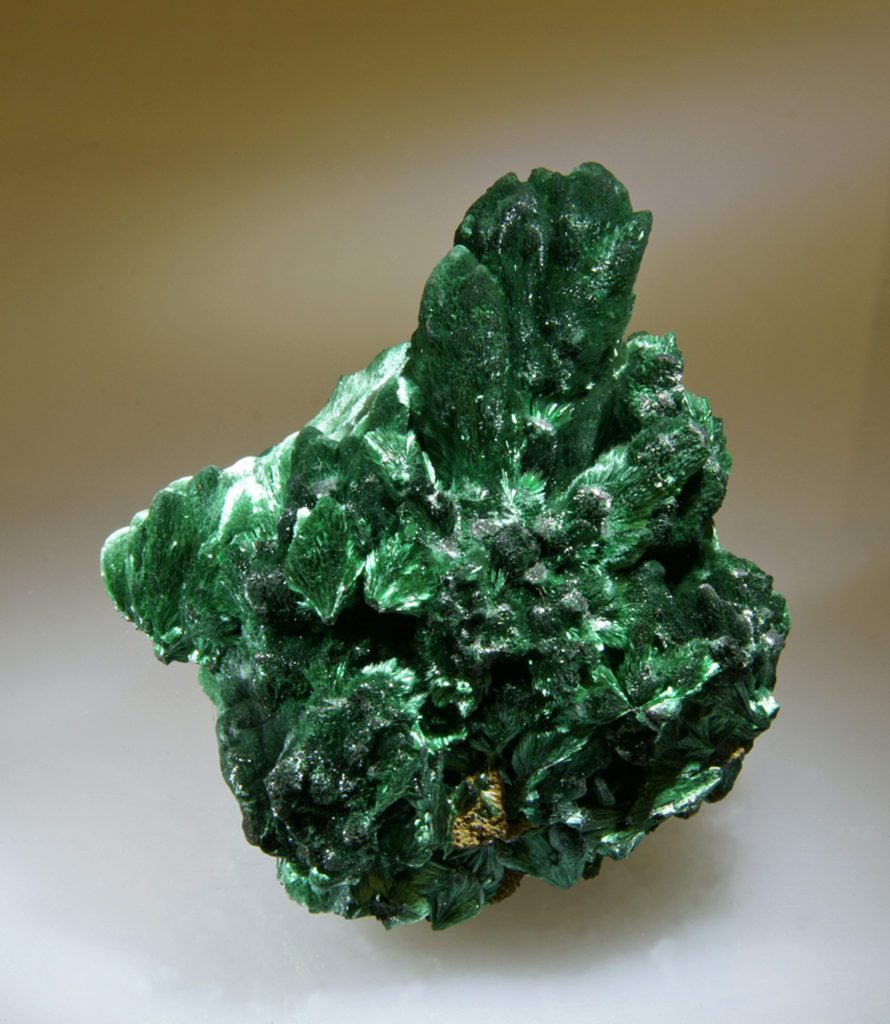
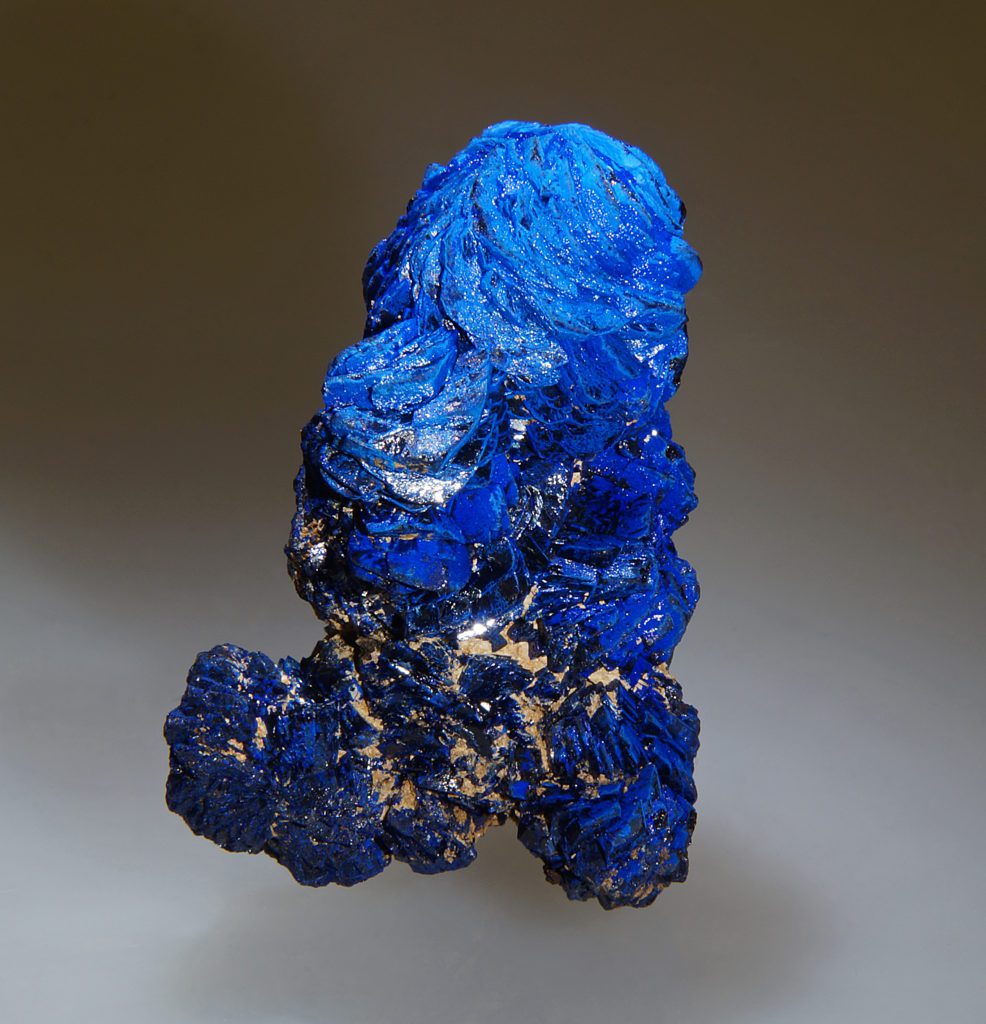
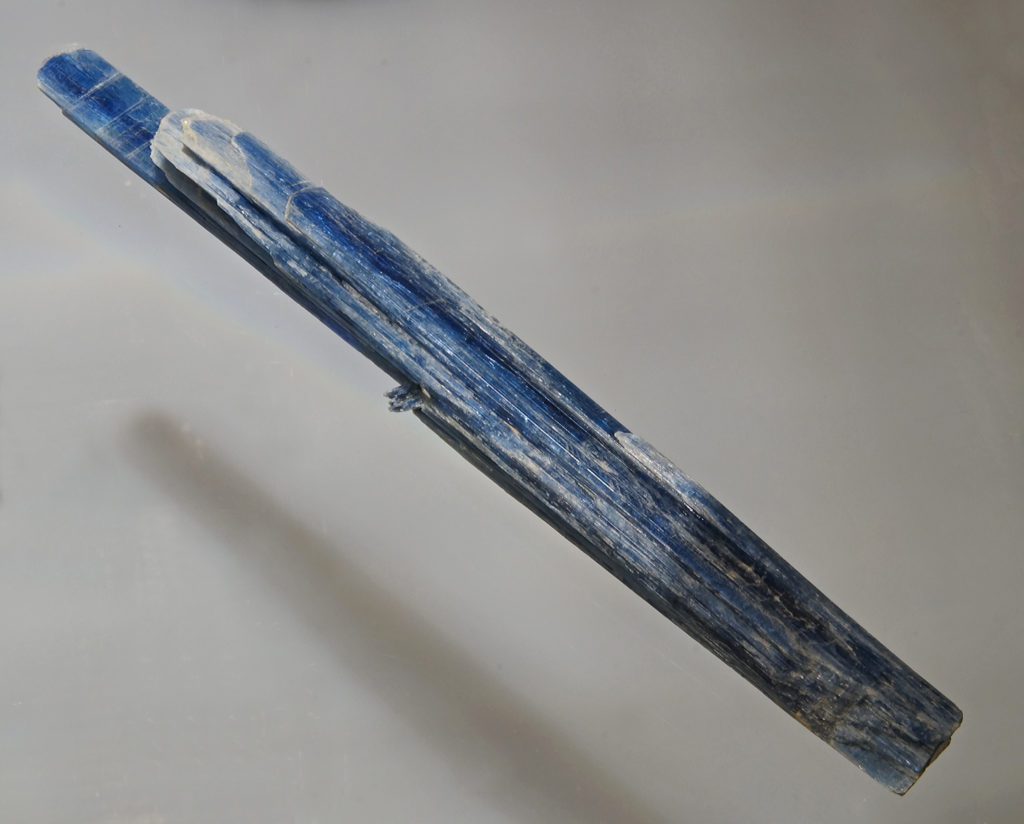
In antiquity, distinctive physical characteristics were often the source for the mineral name. One of these properties is color. For example, Malachite probably comes from the Greek word malakee or malache, used to describe the green leaves of the mallow bush. Azurite comes from azure, the Arabic word for blue, and Kyanite comes from kyanos, the Greek word for blue.  

green malachite mineral
Malachite
blue azurite mineral specimen
Azurite
blue kyanite specimen
Kyanite

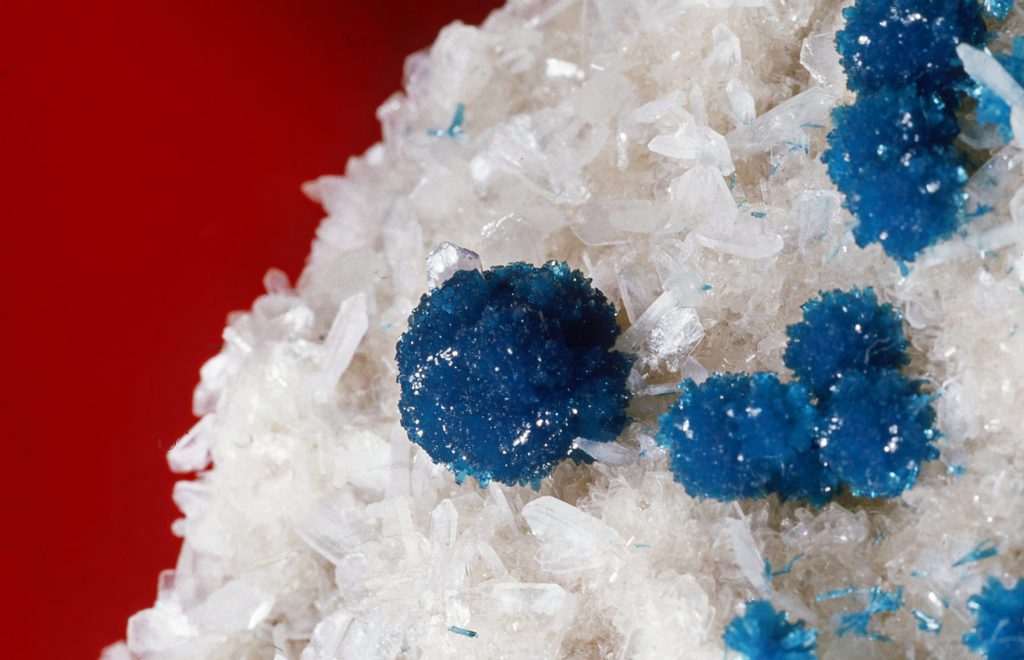
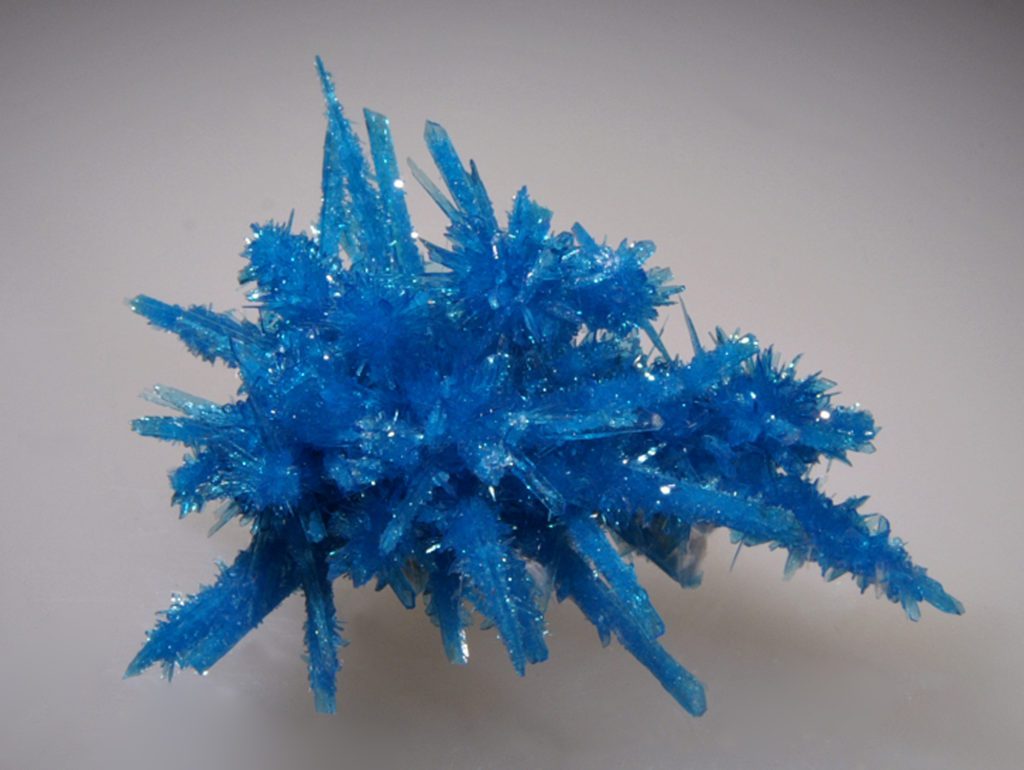
With the advancement of science, some minerals have been named for their chemistry or their structure. For example, Cavansite is named for its chemistry (calcium vanadium silicate), and Pentagonite is named for its five-fold symmetry (a pentagon is five-sided).

blue and white mineral specimen with red background
Cavansite
bright blue mineral specimen
Pentagonite

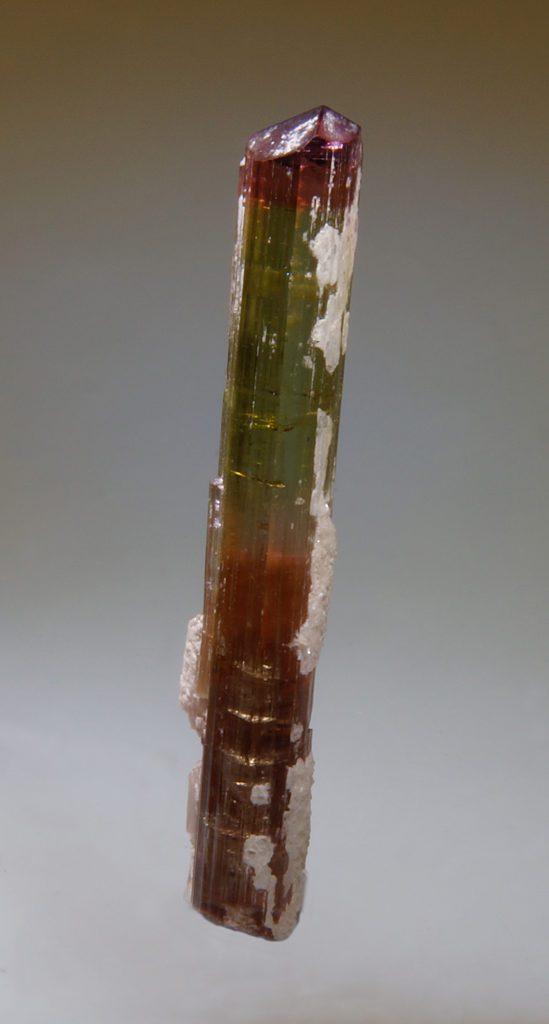
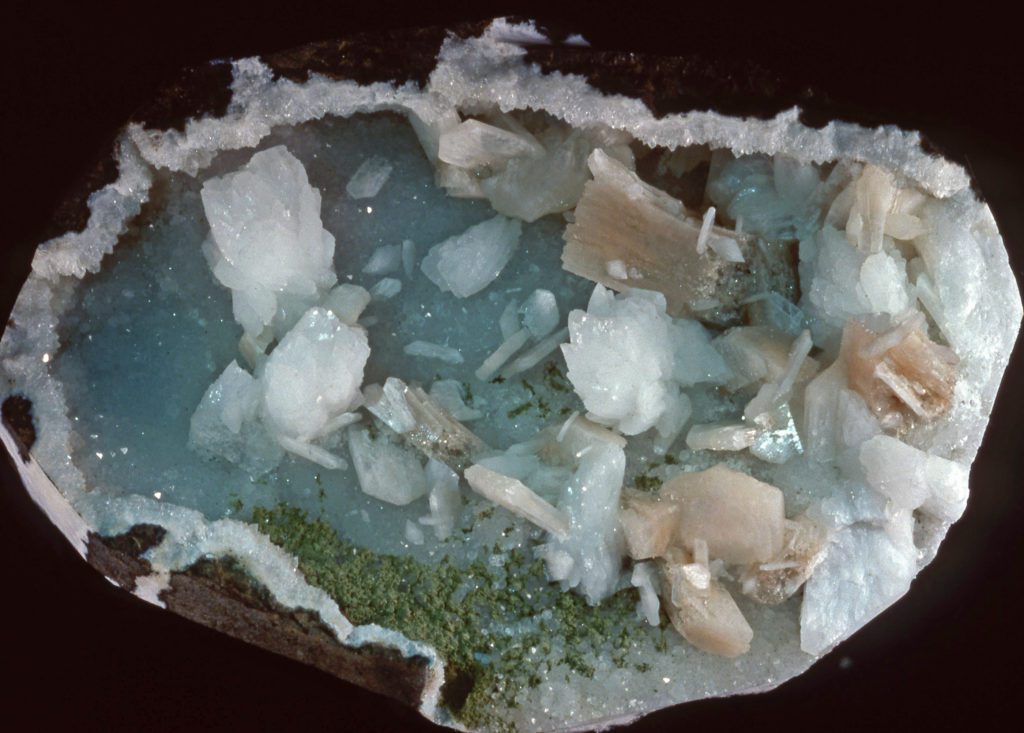
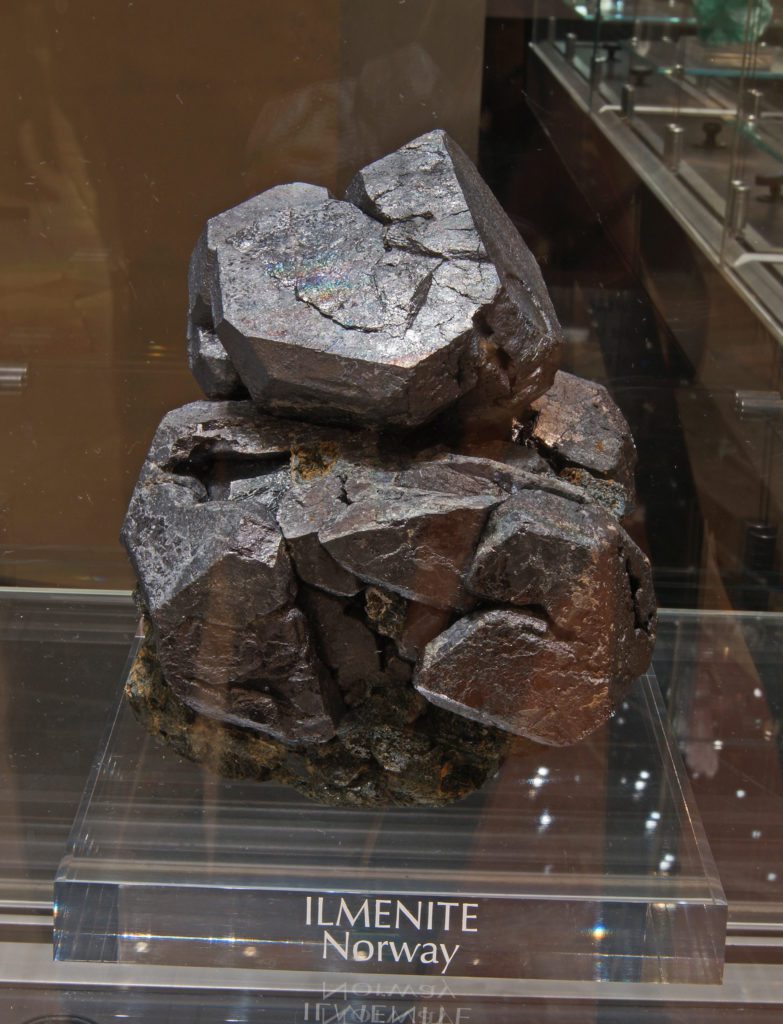
Minerals named for the first locality where they were found are quite obvious for those with a knack for geography: Elbaite was found on the Isle of Elba, Italy; Goosecreekite was found in the New Goose Creek Quarry in Leesburg, Virginia, and Ilmenite was found in the Ilmen Mountains of Russia; to name a few.

Elbaite
mineral specimen with white, pastel blue, pale pink, and mossy green coloration
Goosecreekite (white crystals)                                     
mineral specimen on a stand that says Ilmenite Norway
Ilmenite

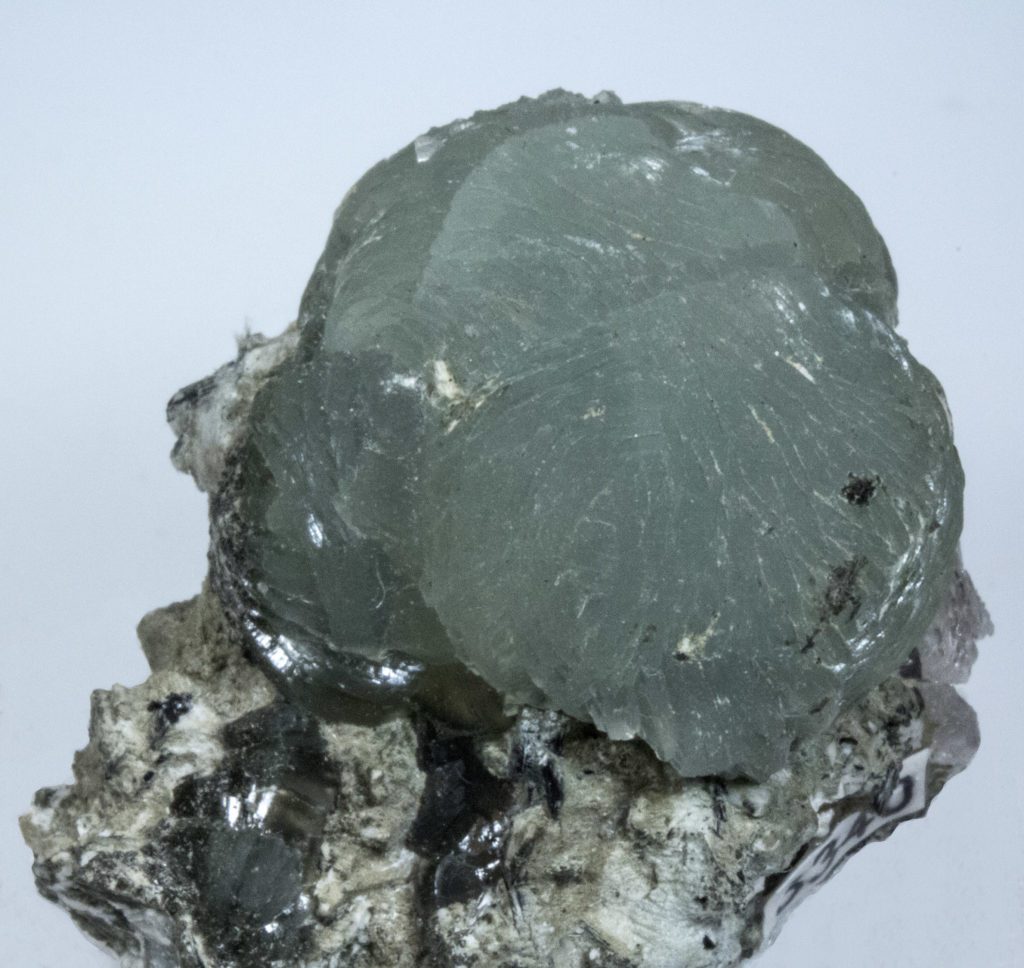
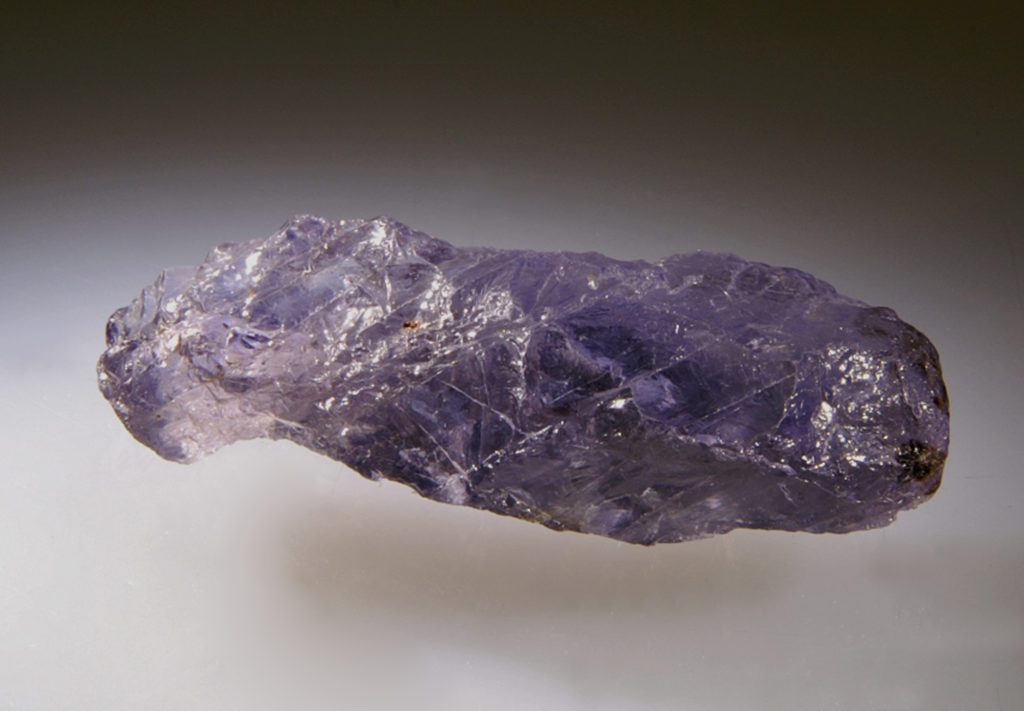
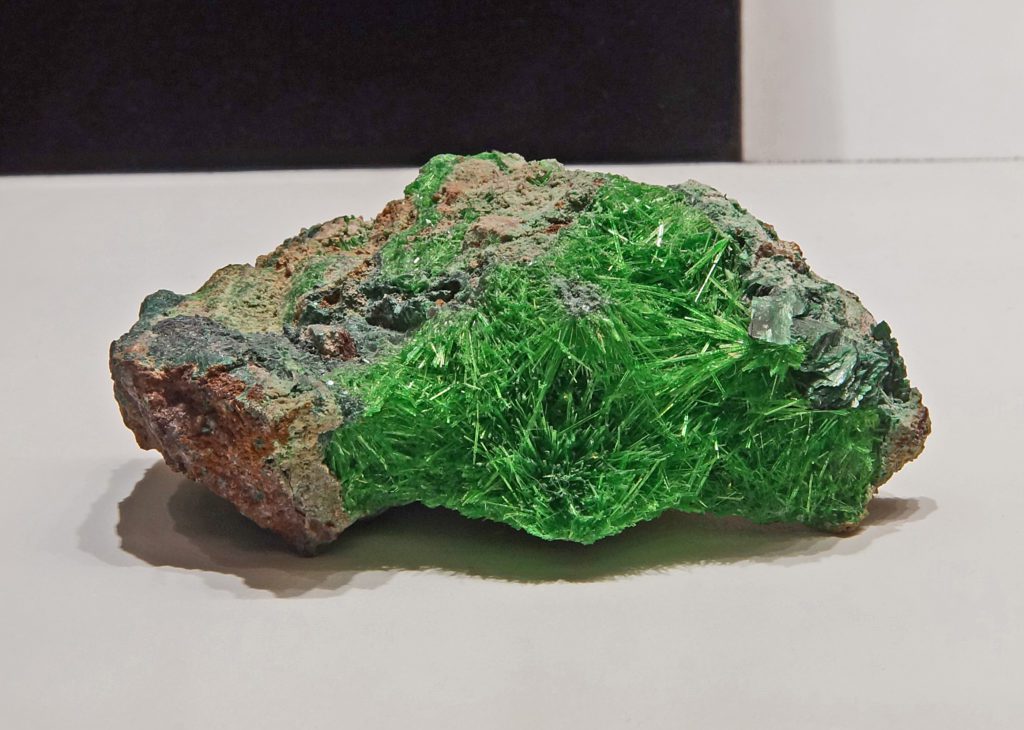
Minerals have also been named for people. Prehnite was the first mineral named for a person, Colonel Hendrik Von Prehn (1733-1785), who is credited with discovering the mineral in 1774 at the Cape of Good Hope in South Africa. Cordierite, a mineral known for its iolite gem variety, was named in 1813 for French mineralogist Louis Cordier (1777-1861), a pioneer in the field of microscopic mineralogy, and in honor of her pioneering research on radioactivity, Marie Sklodowska Curie (1867-1934) had two uranium minerals named for her, Sklodowskite (discovered in 1924) and Cuprosklodowskite (discovered in 1933).

Prehnite
Cordierite variety Iolite
yellow and white mineral specimen
Sklodowskite
Cuprosklodowskite

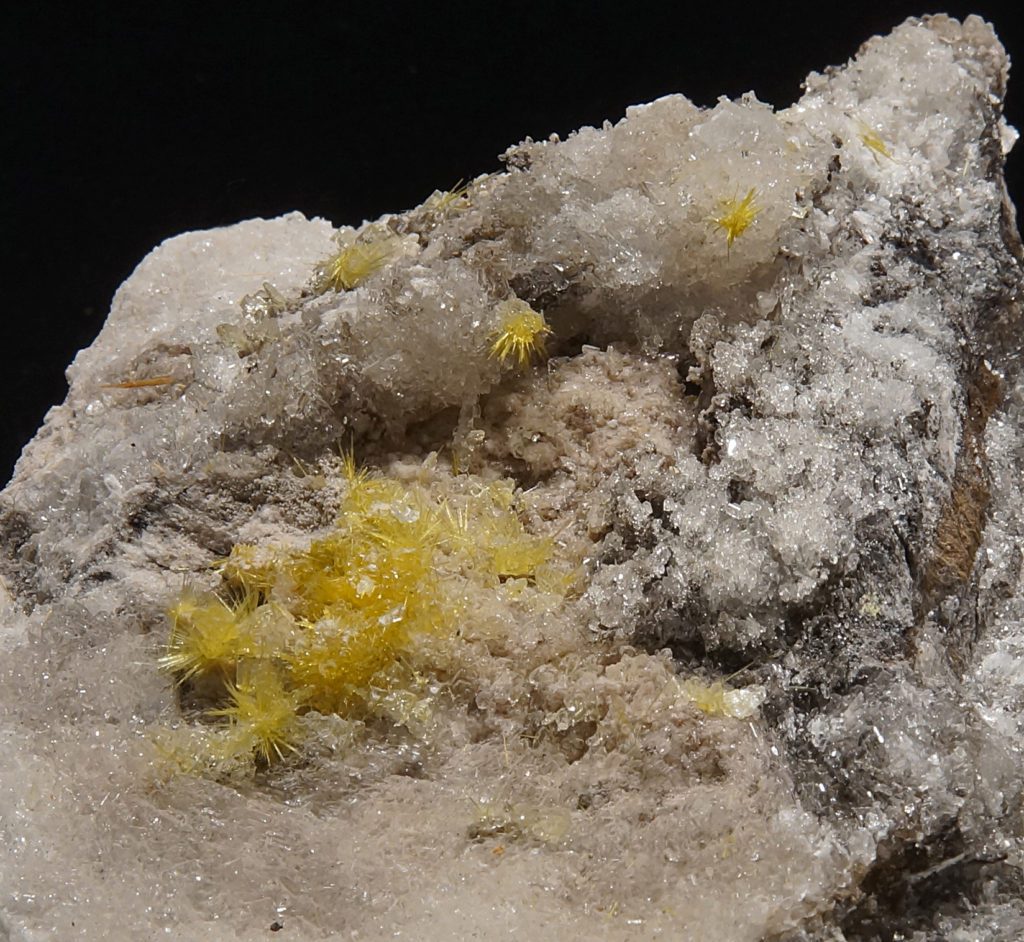
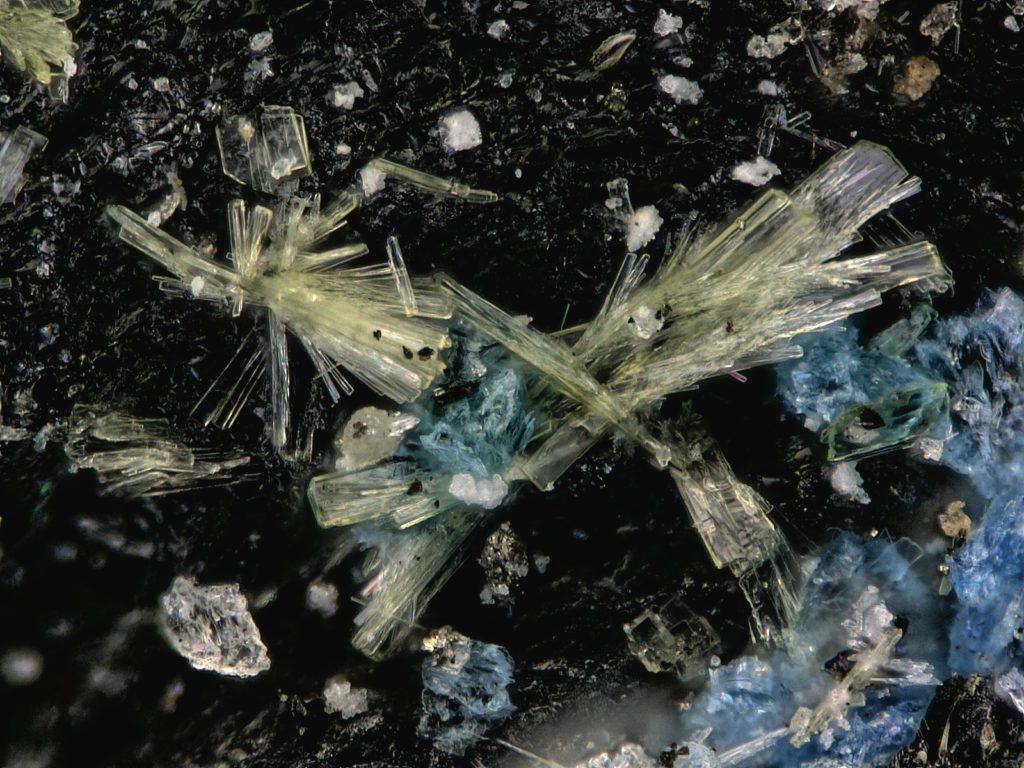
Today new minerals, including the proposed species name, are approved by the Commission on New Minerals, Nomenclature and Classification (CNMNC), under the purview of International Mineralogical Association (IMA), which was formed in 1958. As of November 2021, the IMA recognizes 5,762 official mineral species. In October 2021, one of those species, Oldsite, was named in honor of one of our own museum scientists, Travis Olds, Assistant Curator of Minerals, for his contributions to uranium mineralogy. 

Congratulations Travis!

Oldsite (yellow crystals). Photo by Dr. Anthony Kampf. 

More information on Oldsite

More information about Dr. Travis Olds

Debra Wilson is the Collection Manager for the Section of Minerals at Carnegie Museum of Natural History. Museum employees are encouraged to blog about their unique experiences and knowledge gained from working at the museum.

Related Content

Roll Out the Beryl

Master of Optical Illusion

The Mineralogy of Ice Cream

Carnegie Museum of Natural History Blog Citation Information

Blog author: Wilson, Debra
Publication date: January 14, 2022

Share this post!

  • Share on Twitter Share on Twitter
  • Share on Facebook Share on Facebook
  • Share on Pinterest Share on Pinterest
  • Share on LinkedIn Share on LinkedIn
  • Share on Reddit Share on Reddit
  • Share via Email Share via Email

Filed Under: Visitor Info Tagged With: Deb Wilson, Hillman Hall of Minerals and Gems, minerals, Science News

January 11, 2022 by Erin Southerland

Collected on this Day in 1951: Bittersweet

by Mason Heberling
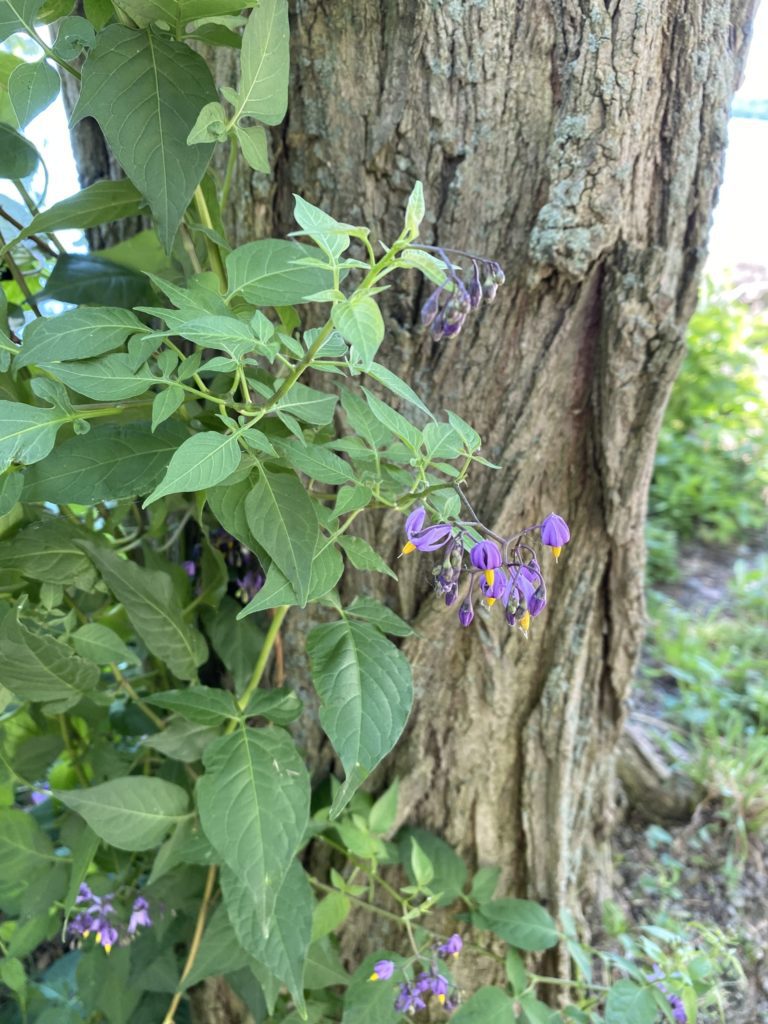
Bittersweet plant in spring

Leaves are gone, but fruits hang on

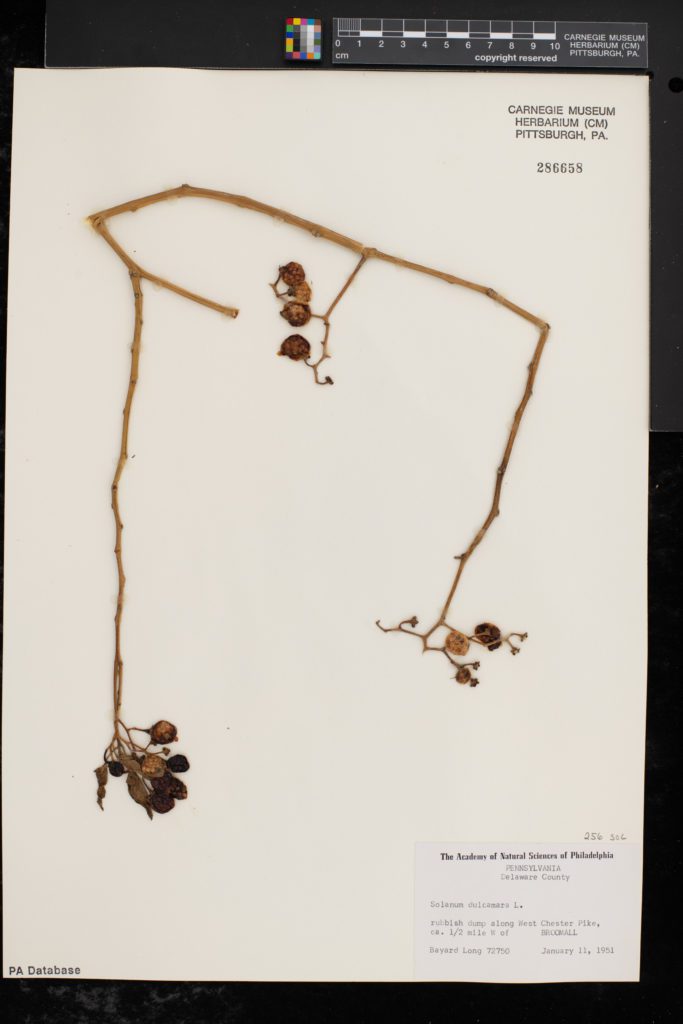
Bittersweet plant specimen on herbarium sheet

This specimen of bittersweet (Solanum dulcamara) was collected by Bayard Long on January 11, 1951 in a “rubbish dump” on West Chester Pike, near Broomall, Pennsylvania (outside of Philadelphia). Bayard Long (1885-1969) was a Philadelphia-area botanist and an active member of the Philadelphia Botanical Club (founded in 1891 and still an active organization). He was a prolific collector and for 56 years served as Curator of the Club’s Local Herbarium, which is housed at the Academy of Natural Sciences. 

Bittersweet nightshade (Solanum dulcamara) is in an herbaceous vine in the potato or nightshade family (Solanaceae), not to be confused with the similarly named Asian bittersweet (Celastrus orbiculatus), which is also a woody vine in the staff vine or bittersweet family (Celastraceae).

Bittersweet is an invasive species, introduced from its native range in Europe and Asia as early as the 1800s. It is common to see climbing along fences in urban areas and elsewhere across North America.

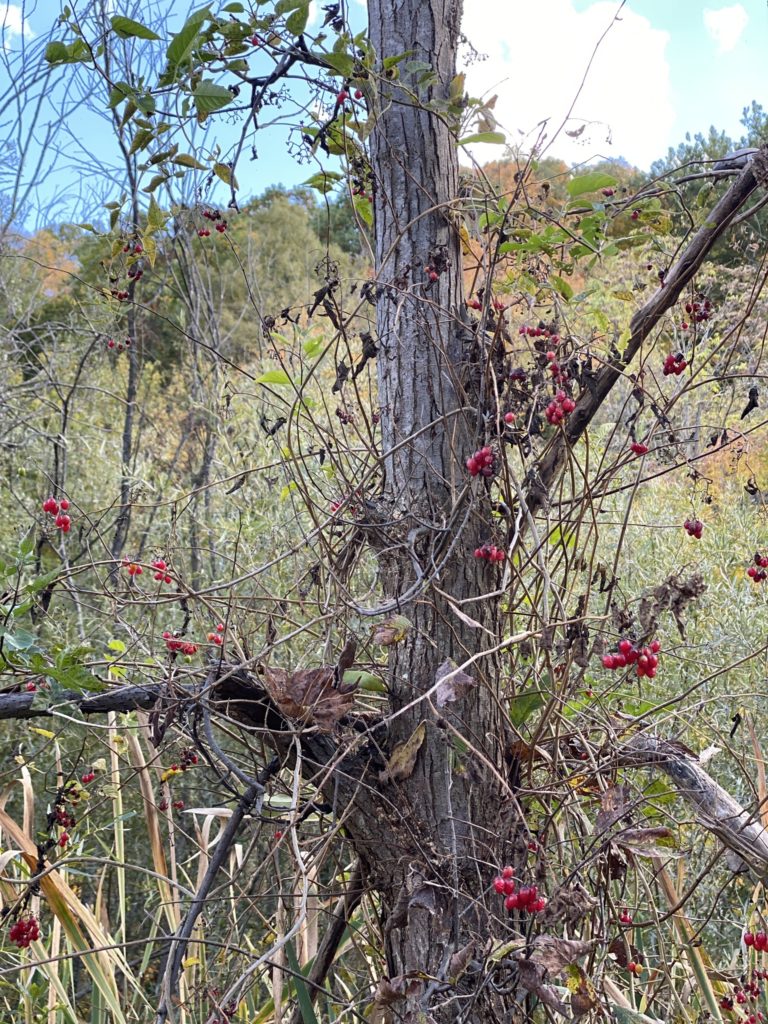
In the winter, its fleshy red berries are commonly still attached to the vines, long after the leaves are gone.

bittersweet plant in the fall

Find this specimen of bittersweet. 

Check back for more! Botanists at the Carnegie Museum of Natural History share digital specimens from the herbarium on dates they were collected. They are in the midst of a three-year project to digitize nearly 190,000 plant specimens collected in the region, making images and other data publicly available online. This effort is part of the Mid-Atlantic Megalopolis Project (mamdigitization.org), a network of thirteen herbaria spanning the densely populated urban corridor from Washington, D.C. to New York City to achieve a greater understanding of our urban areas, including the unique industrial and environmental history of the greater Pittsburgh region. This project is made possible by the National Science Foundation under grant no. 1801022.

Mason Heberling is Assistant Curator of Botany at Carnegie Museum of Natural History. Museum employees are encouraged to blog about their unique experiences and knowledge gained from working at the museum.

Related Content

Plants with Bladders?

Collected on this Day in 1998: Common Chickweed

Collected on this Day in 1925: A Flower with No Leaves?

Carnegie Museum of Natural History Blog Citation Information

Blog author: Heberling, Mason
Publication date: January 11, 2022

Share this post!

  • Share on Twitter Share on Twitter
  • Share on Facebook Share on Facebook
  • Share on Pinterest Share on Pinterest
  • Share on LinkedIn Share on LinkedIn
  • Share on Reddit Share on Reddit
  • Share via Email Share via Email

Filed Under: Blog Tagged With: Botany, Mason Heberling, Science News, Uprooted, We Are Nature 2

January 6, 2022 by Erin Southerland

2021 Rector Christmas Bird Count Results

by Annie Lindsay

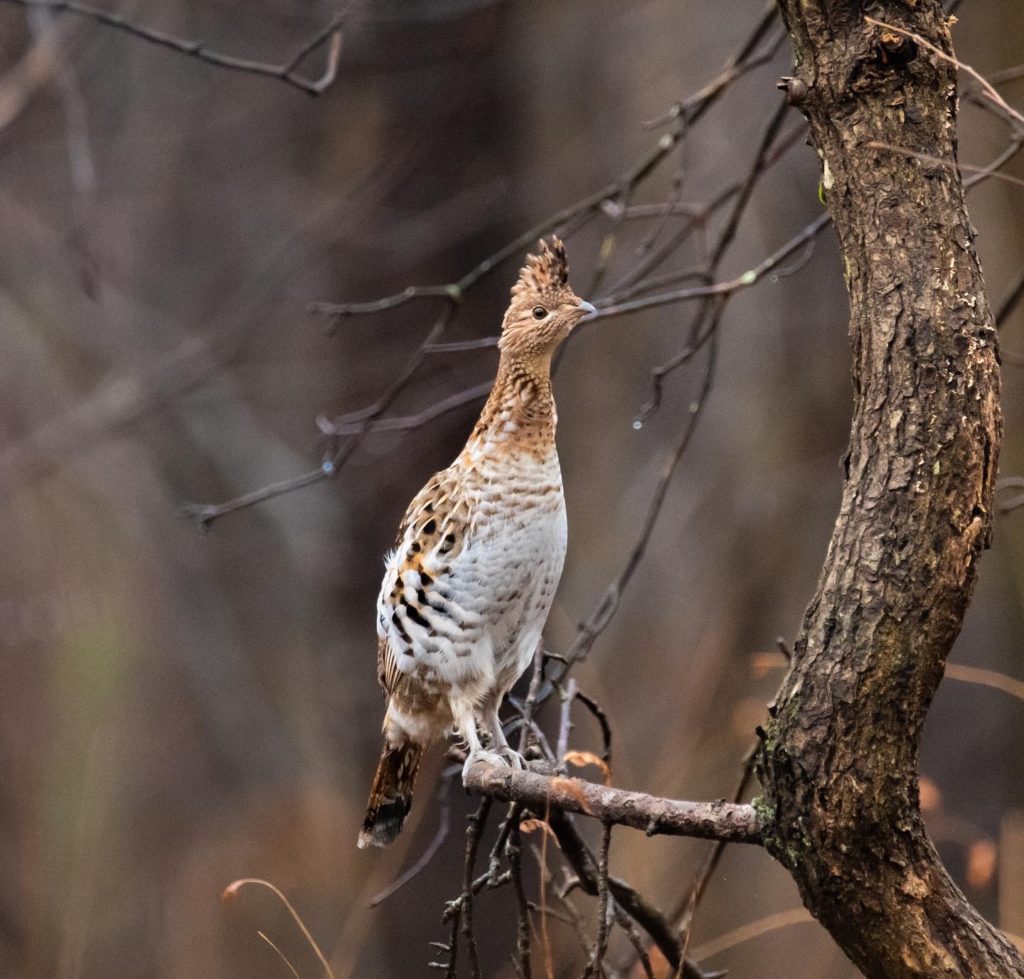
All week leading up to the Christmas Bird Count (CBC), the weather forecast threatened heavy rain for December 18, 2021, but that did not deter a group of 34 dedicated birders from going outside and counting birds all day! In fact, after a touch of rain before dawn, the weather cleared, and the day was mostly cloudy, pleasant, and perfect for birding. And what a Christmas Bird Count it was! The birders, along with six people who counted birds visiting their feeders and yards, tallied 7,239 birds of 79 species, broke the high-count records for several species, and added two new species that had never been seen during the Rector CBC before!

ruffed grouse on a branch in winter
Ruffed Grouse, photo by Alex Busato. Pennsylvania’s state bird can be difficult to find due to its well-camouflaged plumage and declining population, but one posed nicely on Laurel Moutain during this year’s Christmas Bird Count.

Christmas Bird Count History

The CBC is an annual tradition that began on Christmas in 1900. Participants counted birds they saw or heard all day, a step away from previous bird censuses during which people used shotguns to collect and count birds. The original group of 27 birders tallying birds in 25 count circles has now become an international event, sponsored by the National Audubon Society, with nearly 3,000 count circles spread across the Western Hemisphere. The compilers for each count circle choose a date between December 14 and January 5, and participants tally every bird they encounter within a designated 15-mile diameter circle. With such a large geographic range and over 100 years of data, the CBC is one of the largest community science projects. The data gathered has been used to study population trends and over 200 peer-reviewed publications have used CBC data.

The Rector count circle is centered just northwest of Powdermill Nature Reserve. Its variety of habitat types along an elevational gradient is excellent for species diversity. Begun in 1974, the Rector count has consistently tallied more than 50 species every year, with the highest species counts of 88 in 2012 and 80 in 2009. This year’s total of 79 species was the third highest in this count’s history! Although there are core species, like chickadees and cardinals, that we expect to see every year, rarities occasionally pop up, and Rector counters have tallied 131 species since 1974.

2021 Rector Christmas Bird Count Numbers and Highlights

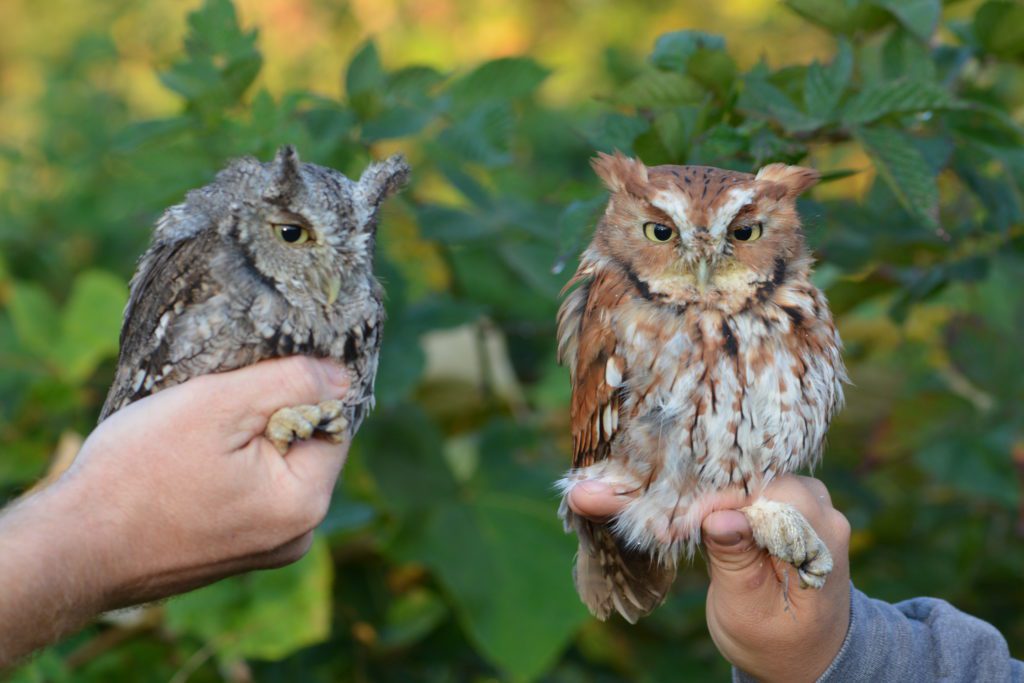
The 2021 count started at 4:30 a.m. with several birders searching for owls. Despite the drizzle, the owlers counted three Great Horned Owls, three Barred Owls, a surprise Northern Saw-whet Owl that was spotted in headlights as it flew across the road, and an incredible 17 Eastern Screech-Owls, a number that shattered the previous record of 11. Off to a great start, the owlers were joined by the bulk of the participants to survey their assigned sectors within the count circle, and there were many surprises in store.

two eastern screech owls held in hands
Eastern Screech-Owls, gray morph and red morph. Although not encountered as frequently due to their nocturnal habits, Eastern Screech-Owls are a common species in our area. CBCers shattered the previous high count record for this species during this year’s count, tallying a total of 17 individuals!

At the end of the day, counters met at Powdermill for the tally dinner to report what they’d seen and share stories from the field. As we tallied, we quickly noticed that we were setting new high-count records, or tying existing records, for many species, including Ring-necked Duck, Bufflehead, Red-breasted Merganser, Black Vulture, Eastern Screech-Owl, Northern Saw-whet Owl (tie), Red-bellied Woodpecker, Yellow-bellied Sapsucker, Northern Flicker, Merlin (tie), Common Raven, Ruby-crowned Kinglet (tie), Eastern Bluebird, Hermit Thrush, American Robin, Gray Catbird, Yellow-rumped warbler, White-throated Sparrow, and Eastern Towhee.

The owls certainly set new records due to the increased effort to find them this year: screech owls are a common species in our area, and saw-whets, although quite difficult to find and usually not vocal at this time of year, are likely here in the appropriate habitat.

gray catbird
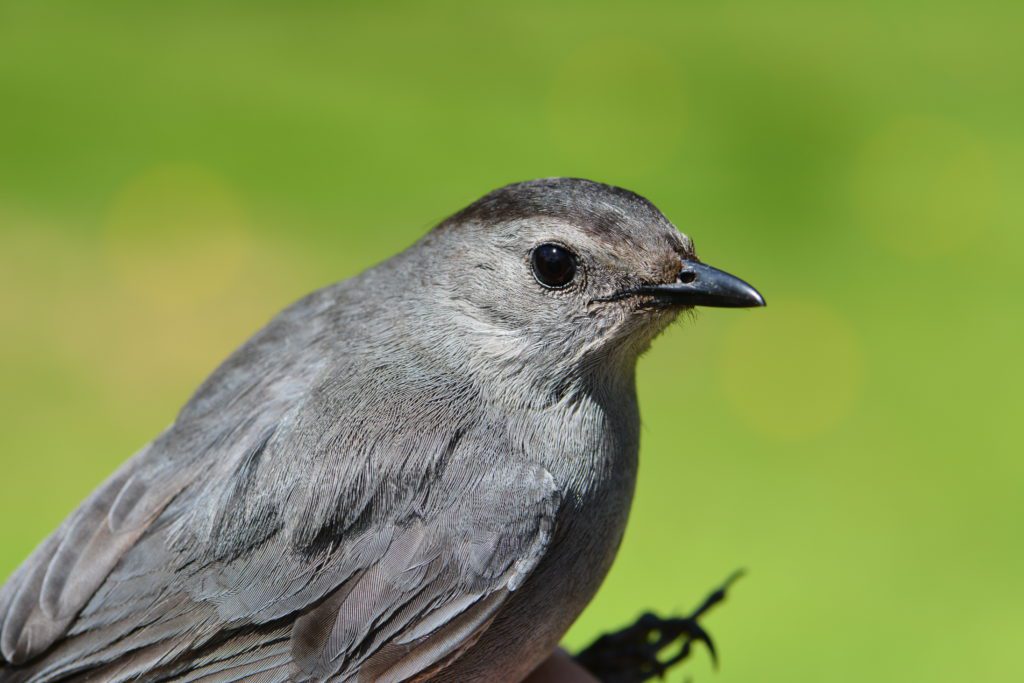
Gray Catbird. A species that winters from coastal Massachusetts through Central America, catbirds have popped up during the Rector Christmas Bird Count in the past. However, this year we tallied three catbirds, which is quite unusual.

We noticed an interesting trend in the species with high counts: most are species that tend to spend the winter a bit south of us, or if they are species that are expected during the Rector CBC, their winter range tends not to extend much farther north of us and we generally do not expect them in high numbers. We speculate that the combination of a late fall, mild temperatures through the end of 2021, and an abundance of berries may have contributed to some individuals of these shorter-distance migrants not migrating as far south as they usually do.

Our biggest surprises were two new species that had never been encountered during the Rector CBC before. The first was a Palm Warbler reported on a farm in Ligonier foraging with a flock of Yellow-rumped Warblers on the edge of a cow pasture. Palm Warblers are seen annually in our area during migration, and we band several of them at Powdermill every year. Many Palm Warblers spend the winter in the southeastern US, but it is not expected in southwest Pennsylvania in the winter. The second species was a Surf Scoter spotted at Donegal Lake. Surf Scoters are a species of duck usually seen in the ocean along the Atlantic and Pacific coasts in winter, or perhaps on the Great Lakes or human-made lakes if they’re forced down by bad weather during migration. This is a very unusual species for our area and an excellent find.

As we submit the Rector count’s data to Audubon and wrap up another CBC, we thank all of the participants and look forward to the 2022 count!

Annie Lindsay is the Bird Banding Program Manager at Carnegie Museum of Natural History’s Powdermill Nature Reserve. Museum employees are encouraged to blog about their unique experiences and knowledge gained from working at the museum.

Related Content

Milestones at Powdermill’s Banding Lab

Bird Safe Glass Installed at Carnegie Museums (Video)

Northern Saw-whet Owl (Video)

Carnegie Museum of Natural History Blog Citation Information

Blog author: Lindsay, Annie
Publication date: January 6, 2022

Share this post!

  • Share on Twitter Share on Twitter
  • Share on Facebook Share on Facebook
  • Share on Pinterest Share on Pinterest
  • Share on LinkedIn Share on LinkedIn
  • Share on Reddit Share on Reddit
  • Share via Email Share via Email

Filed Under: Blog Tagged With: Annie Lindsay, Powdermill Nature Reserve, Science News, We Are Nature 2

December 20, 2021 by Erin Southerland

Sea Snails from Christmas Island

by Timothy A. Pearce

There really is a Christmas Island. It is in the Indian Ocean about 250 km (155 mi) SW of Java and it is administered by Australia. Christmas Island, which was uninhabited by humans until the late 1800s, has a highly endemic flora and fauna, reflecting little human disturbance. Nearly two-thirds of the island is designated as a national park. 

Carnegie Museum of Natural History has two species of sea snails from Christmas Island. Neither of these species is endemic to the island, and neither is rare.

Money Cowries from Christmas Island

Ten Monetaria moneta snail shells from Christmas Island on a red background.
Fig. 1. Monetaria moneta, the money cowry, from Christmas Island. Views from top left: aperture, dorsal, left side, anterior, posterior. Specimen CM 123323 at Carnegie Museum of Natural History. Scale in mm. Photo by T.A. Pearce. 

These Moneteria moneta (Fig. 1), also known as money cowries, are from Christmas Island. They were donated to the museum by Casimir Potyraj, Jr. in September of 2012, although we don’t know when they were collected. These specimens are smaller than average M. monetaria. This species of cowry is used as decoration and was used as currency in many islands of the south Pacific Ocean region into the 1800s. Both the genus and the species names, Monetaria moneta, reflect their use as currency. This species occurs broadly in tropical areas of the Indian and Pacific Oceans, but not in the Atlantic. Monetaria moneta is in the cowry family, Cypraeidae, a group of snails appreciated around the world for their shiny, colorful shells, that look like they have a zipper underneath.

Castor Bean Shells from Christmas Island

Four castor bean shells from Christmas Island on a green background.
Fig. 2. Drupa ricina, the castor bean shell, from Christmas Island. Views from left: aperture, side, dorsal, spire. Specimen CM 62.29323 at Carnegie Museum of Natural History. Scale in mm. Photo by T.A. Pearce. 

This Drupa ricinus (Fig. 2), also known as the castor bean shell, is also a sea snail from Christmas Island. It came to Carnegie Museum of Natural History by way of the British Museum of Natural Science on July 25, 1935. It’s unclear whether that was the date the British Museum gave it to us, or the date it was collected; my guess is the former. Like the Monetaria moneta, Drupa ricinus also occurs broadly in tropical areas of the Indian and Pacific Oceans, but not in the Atlantic. Drupa ricinus is in the murex family, Muricidae, which includes snails that produce the purple dye prized by the Romans and Phoenicians.

Every day is Christmas on Christmas Island! We wish Merry Christmas to all the creatures there.

Timothy A. Pearce, PhD, is the head of the mollusks section at Carnegie Museum of Natural History. Museum employees are encouraged to blog about their unique experiences and knowledge gained from working at the museum.

Related Content

A Perfect Mineral for the Christmas Season

Ask a Scientist: How did snails evolve from living in water to living on land?

Collected on Christmas Eve 1883: Mistletoe

Carnegie Museum of Natural History Blog Citation Information

Blog author: Pearce, Timothy A.
Publication date: December 20, 2021

Share this post!

  • Share on Twitter Share on Twitter
  • Share on Facebook Share on Facebook
  • Share on Pinterest Share on Pinterest
  • Share on LinkedIn Share on LinkedIn
  • Share on Reddit Share on Reddit
  • Share via Email Share via Email

Filed Under: Blog Tagged With: Carnegie Museum of Natural History, mollusks, Science News, Tim Pearce

  • « Go to Previous Page
  • Page 1
  • Interim pages omitted …
  • Page 11
  • Page 12
  • Page 13
  • Page 14
  • Page 15
  • Interim pages omitted …
  • Page 43
  • Go to Next Page »

sidebar

About

  • Mission & Commitments
  • Directors Team
  • Museum History

Get Involved

  • Volunteer
  • Membership
  • Carnegie Discoverers
  • Donate
  • Employment
  • Events

Bring a Group

  • Groups of 10 or More
  • Birthday Parties at the Museum
  • Field Trips

Powdermill

  • Powdermill Nature Reserve
  • Powdermill Field Trips
  • Powdermill Staff
  • Research at Powdermill

More Information

  • Image Permission Requests
  • Science Stories
  • Accessibility
  • Shopping Cart
  • Contact
  • Visitor Policies
One of the Four Carnegie Museums | © Carnegie Institute | Privacy Policy | Terms of Use | Accessibility
Rad works here logo