• Skip to primary navigation
  • Skip to main content
  • Skip to primary sidebar

Carnegie Museum of Natural History

One of the Four Carnegie Museums of Pittsburgh

  • Visit
    • Buy Tickets
    • Visitor Information
    • Exhibitions
    • Events
    • Dining at the Museum
    • Celebrate at the Museum
    • Powdermill Nature Reserve
    • Event Venue Rental
    • Gift Cards
  • Learn
    • Field Trips
    • Educator Information
    • Programs at the Museum
    • Bring the Museum to You
    • Guided Programs FAQ
    • Programs Online
    • Climate and Rural Systems Partnership
  • Research
    • Scientific Sections
    • Science Stories
    • Science Videos
    • Senior Science & Research Staff
    • Museum Library
    • Science Seminars
    • Scientific Publications
    • Specimen and Artifact Identification
  • About
    • Mission & Commitments
    • Directors Team
    • Museum History
  • Tickets
  • Give
  • Shop

Blogs from our Scientific Researchers

Carnegie Museum of Natural History is home to active research and vast scientific collections. Our scientific researchers regularly contribute to the blog at the museum.

October 15, 2021 by Erin Southerland

Happy Highsmith Halloween! A review of two scary snail short stories by Patricia Highsmith

by Timothy A. Pearce and Alice W. Doolittle
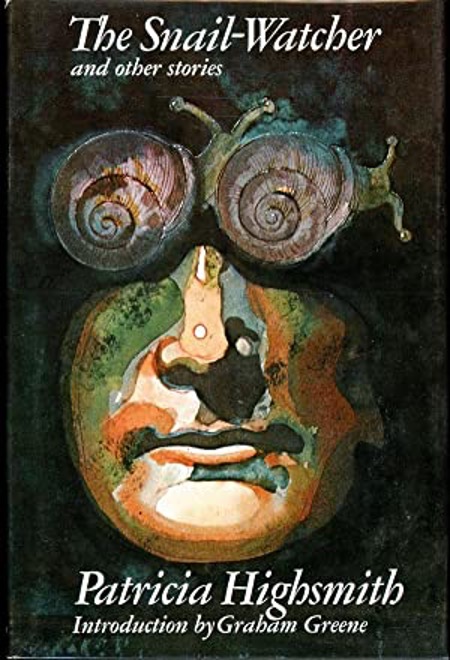
Book cover featuring a face with snails for eyes. Title "The Snail-Watcher and other stories." Author: Patricia Highsmith.

Patricia Highsmith was an accomplished author of thrillers and horror stories from the 1950s to the 1990s. Film buffs might be familiar with Alfred Hitchcock’s Strangers on a Train (1951), which was based on Highsmith’s first novel. The Talented Mr. Ripley (1999), starring Matt Damon, was also based on a Highsmith novel, as was Carol (2015), starring Cate Blanchett.

Highsmith was known to be enchanted with snails. Two short horror stories featuring snails, “The Snail-Watcher” and “The Quest for ‘Blank Claveringi’” are included in her collection The Snail-Watcher and Other Stories (1970, Doubleday, 177pp).

In “The Snail-Watcher,” readers meet Peter Knoppert who finds great delight keeping snails in terraria in his study, and enjoys watching them eat, mate, and reproduce. Scientifically accurate details in the story reflect Highsmith’s own careful observations of snails she kept. The snail population in Knoppert’s study grows rapidly through his diligent care and feeding (the story didn’t mention what the exorbitant weekly lettuce bill must have been) and he adds still more terraria to accommodate the mollusks. One day, after being otherwise occupied for a couple of weeks, Knoppert enters the study to find that the snails have escaped their terraria and are crawling on every surface in the room, including the ceiling. He slips on the slimy mucus and you can guess the gory ending.

In “The Quest for ‘Blank Claveringi,’” scientist Avery Clavering travels to a South Sea island where giant carnivorous snails are rumored to exist. Professor Clavering aims to collect one of this new species and name it after himself. Highsmith did not touch on the fact that among scientists, it is considered tacky to name species after yourself, so it is rarely done in the real world. Still, given Professor Clavering’s arrogant nature, it is believable that he could be egotistical enough to name a species after himself. He doesn’t yet know the genus of the snail, hence the “blank” in the title’s scientific name. He naively dismisses fears of locals from neighboring islands as superstitions, and considers stories of enormous snails to be exaggerations. When he encounters a snail the size of a Volkswagen, however, his plans to take one back alive quickly change. He can easily out-walk the giant beast, but when pursuer becomes the pursued, the slow-motion horror begins. 

It was refreshing to read Highsmith’s accurate anatomical descriptions of the snails: the thousands of teeth in the snail’s radula, the fact that land snails are hermaphrodites, and the descriptions of the snails’ lung being visible within the translucent shell. Even the mention that land snails don’t normally tolerate salt water is accurate, heightening the horror when Professor Clavering learned that the snails on this island did not hesitate to pursue him into the ocean.

So, next time you are in the mood for a thrilling snail horror story, consider one of Patricia Highsmith’s short stories.

Two scary snail jokes for you:

1. Two snails named Gaston and Shelly are telling scary stories. Gaston says, “Psycho Snail isn’t really a snail at all, he is really a hermit slug. He murders snails then wears their shells so he can blend in with other snails and kill again.” Shelly says, “I don’t believe in Psycho Snail.” Gaston says, “You better believe, because *I* am Psycho Snail!” Shelly screams, “Ahhhhh!” Gaston, seeing no reaction, says, “You were supposed to jump and run away in terror.” Shelly says, “I did and I am.”

2. The snail prophet warned that if the snails didn’t behave, the snail God would punish them with a rain of young chickens. Although the snails started behaving only slightly better, the rain of chickens didn’t materialize. One snail said to another, “Phew, looks like we dodged a slug this time!” (I bet you thought I was going to say dodged a pullet!)

Timothy A. Pearce is Curator of Collections and Head of the Section of Mollusks and Alice W. Doolittle is a volunteer in the Section of Mollusks at Carnegie Museum of Natural History. Museum employees and volunteers are encouraged to blog about their unique experiences and knowledge gained from working at the museum.

Related Content

Vampire Squid: Cutest Dracula

The Tell-Snail Heart

Land Snail Webbhelix multilineata Rediscovered Living in Pennsylvania After 72 Years

Carnegie Museum of Natural History Blog Citation Information

Blog author: Pearce, Timothy A.; Doolittle, Alice W.
Publication date: October 14, 2021
Share this post!

  • Share on Twitter Share on Twitter
  • Share on Facebook Share on Facebook
  • Share on Pinterest Share on Pinterest
  • Share on LinkedIn Share on LinkedIn
  • Share on Reddit Share on Reddit
  • Share via Email Share via Email

Share this post!

  • Share on Twitter Share on Twitter
  • Share on Facebook Share on Facebook
  • Share on Pinterest Share on Pinterest
  • Share on LinkedIn Share on LinkedIn
  • Share on Reddit Share on Reddit
  • Share via Email Share via Email

Filed Under: Blog Tagged With: Alice Doolittle, mollusks, Science News, Tim Pearce

October 14, 2021 by Erin Southerland

Grass Baskets of the Chumash

by Phillip Mendenhall

  • field under blue sky with puffy clouds
  • woven baskets on a shelf
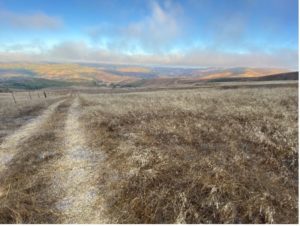
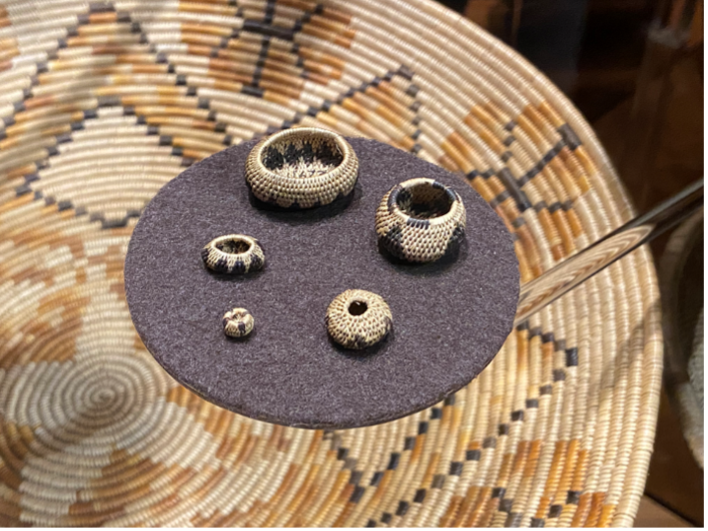
Left: Chumash archaeological site near Lompoc, CA. Right: Baskets from the Alcoa Hall of American Indians, CMNH.

On archaeological excavations we typically remove overlying vegetation as part of the process of looking for evidence of the past below ground. However, while on an excavation of a prehistoric lithic quarry near the southern California coast this past August, I was reminded of how much knowledge can be observed by orienting oneself in the surrounding landscape. 

Anyone who visits the interior corridors of Alcoa Hall will find themselves confronted by the central displays of grass-weaved baskets obtained from the throughout the US. If someone looks closely enough in the California Basket case, they will see five baskets that measure no larger than a person’s thumbnail. These tiny specimens made sometime before 1938 near Pomo, California, were never meant to be used in any practical way, but were rather meant to display the mastery of the artisan that created them. Without the use of mechanical aids or lenses, the rough, sea-weathered grasses of the central California coast were meticulously threaded with exact precision into a near-microscopic version of their functional counterparts. Motifs that emulate the larger versions are still visible and thoughtfully organized as if they were a hundred times greater than their actual size, a remarkable demonstration of skill that dates back at least 2,000 years in the region.

Baskets, due to their organic components, rarely survive in the archaeological record. We archaeologists are forced underground to look for more tangible artifacts, such as stone tools and pottery to understand past lifeways. This can cause bias in what we believe a group of people used as resources because only a few types of durable artifacts survive from so long ago. However, as many of the Chumash people that I worked with this summer will explain, we who seek to understand better what has happened in the past have only just touched the surface of what lies hidden from our knowledge. 

Phillip Mendenhall is a member of the Cherokee Nation of Oklahoma, a PhD candidate in anthropology at the University of Pittsburgh, and an interpreter at Carnegie Museum of Natural History. His work in North America and southeastern Europe focuses on how native cultures persist in the face of cultural change and colonization. 

Related Content

Celebrating Indigenous Peoples’ Day

An Indigenous Presence: Cultural Survivance and Contemporary American Indian Art and Design

Where the Heck Did That Come From?

Carnegie Museum of Natural History Blog Citation Information

Blog author: Mendenhall, Phillip
Publication date: October 14, 2021
Share this post!

  • Share on Twitter Share on Twitter
  • Share on Facebook Share on Facebook
  • Share on Pinterest Share on Pinterest
  • Share on LinkedIn Share on LinkedIn
  • Share on Reddit Share on Reddit
  • Share via Email Share via Email

Share this post!

  • Share on Twitter Share on Twitter
  • Share on Facebook Share on Facebook
  • Share on Pinterest Share on Pinterest
  • Share on LinkedIn Share on LinkedIn
  • Share on Reddit Share on Reddit
  • Share via Email Share via Email

Filed Under: Blog Tagged With: anthropology, Phillip Mendenhall, Science News

October 11, 2021 by Erin Southerland

Celebrating Indigenous Peoples’ Day

by Amy L. Covell-Murthy

Indigenous Peoples’ Day is observed in the City of Pittsburgh alongside Columbus Day and I would like to suggest some ways to observe the holiday for those who do not claim Indigenous heritage. In a state with no habitable federally recognized Indigenous land, Native people are all too often seen as existing only in the past. While educating yourself on the Indigenous history of the region is an important part of observing the holiday, it’s also important to recognize that many First Nations people live, work, and play in the Greater Pittsburgh Area. Indigenous Peoples’ Day should not be a memorial, but a recognition of the important history and cultural heritage of those who are the past, present, and future caretakers of this land. Here are some things you can do to respectfully celebrate on October 11, 2021. 

Educate Yourself

Learn about the people who have called Pittsburgh home. Many different cultural groups have occupied the Upper Ohio River Valley including but not limited to the Delaware/Lenape, the Haudenosaunee, the Shawnee, and the Wyandotte. The Osage Nation also claims origin in the Ohio River Valley, and you can learn about all these nations on their official websites. I also suggest hitting up your local library to check out books on these groups as well as the cultural traditions and ancestors who came before them. This region was home to those who are often referred to as the Adena, Hopewell, and Monongahela. But keep in mind, we have no idea what they called themselves. Here are some resources:

Haudenosaunee Confederacy

Lenape Nation of Pennsylvania

Eastern Shawnee History

Wyandotte Nation

The Osage Nation

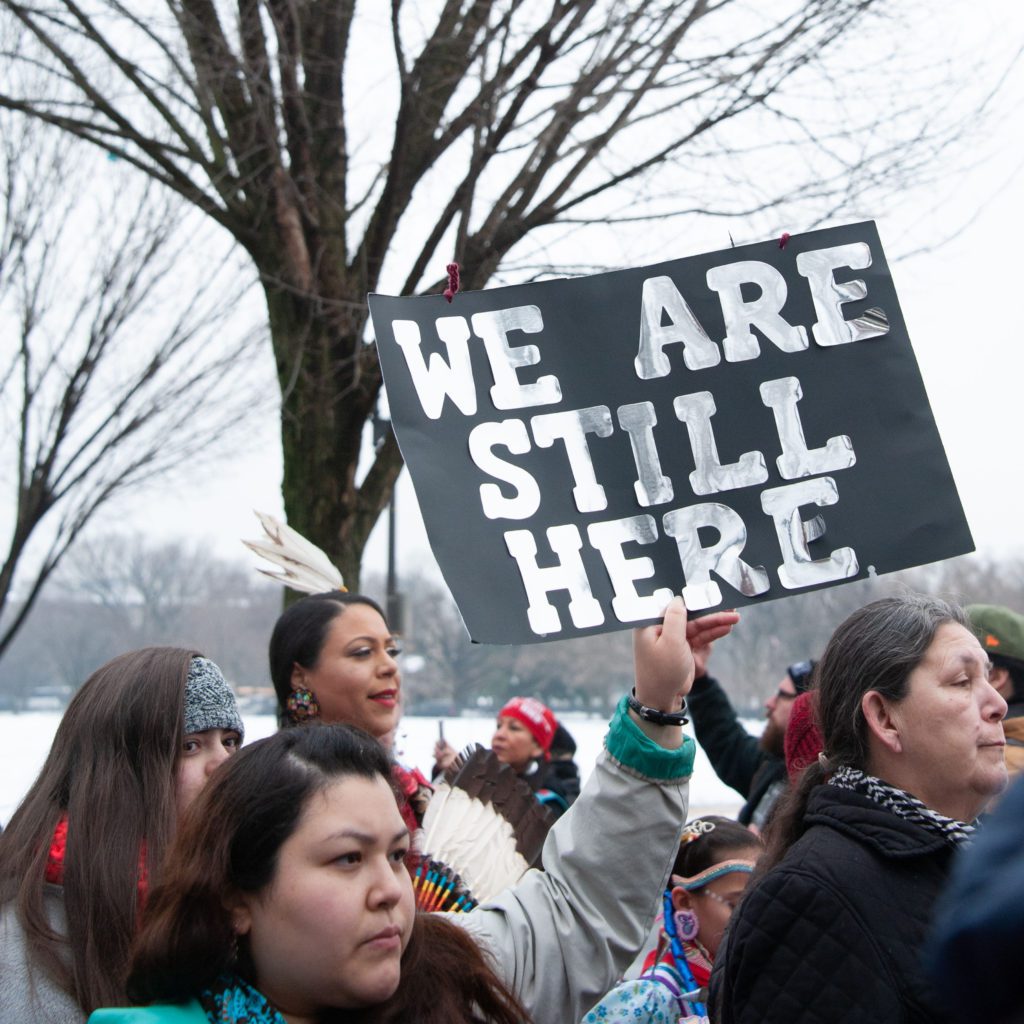
Person in a crowd holding a sign that says "We are still here"
Indigenous Peoples March, January 18, 2019

Educate Yourself Some More

Learn about the history that may have been left out of your primary and secondary school curriculums. You may be unaware of the atrocities that Indigenous people faced in the State of Pennsylvania. Many First Pennsylvanians were forced from their homelands and infected with unfamiliar diseases by colonizers. Later, beginning in 1879, the first assimilation school was created in Carlisle, PA and used as a model for 24 additional institutions whose primary goal was to force Indigenous children to abandon their Native languages and customs. In the 1960s, the building of the Kinzua Dam on the Allegheny River upstream from Warren, PA forced Seneca Nation citizens to move into the State of New York, breaking the 1794 Treaty of Peace and Friendship. Indigenous communities thrive despite these events and institutions, but it is important to recognize and not try to hide these gruesome parts of our shared American history. You can find more information about these examples on these websites: 

Kinzua Dam

Smallpox

Carlisle Indian School Project

Support Local Indigenous Groups

The Council of Three Rivers American Indian Center is a regional intertribal nonprofit that promotes the socio-economic development of the Native American community and others who experience the same type of economic difficulties in the Greater Pittsburgh metropolitan area. One way to support them is to plan to attend their annual Pow Wow that is held just outside of Pittsburgh in Dorseyville in late September. Learn more about their Early Childhood Education, Native American Elders, Veterans, and Employment programs here: 

Council of Three Rivers American Indian Center (website)

Council of Three River American Indian Center (Facebook page)

Honor the Land

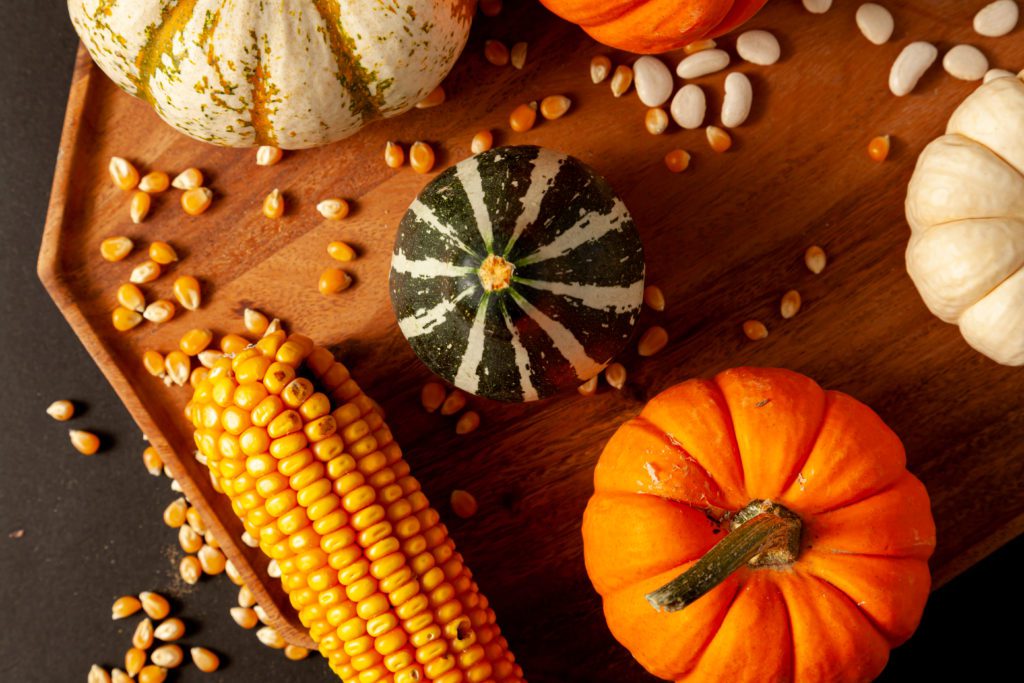
gourds, corn, and seeds on a wooden platter on a black counter

Planting Native Pennsylvanian plants is a wonderful way to honor our connection to the Earth and to provide food and shelter for the diverse species who live here. You can learn about how Indigenous People use trees, ferns, flowers, vegetables, fruits, and grasses to enhance their quality of life. The Pennsylvania Department of Conservation and Natural Resources and the Audubon Society of Western Pennsylvania offer suggestions for those who are interested:  

Landscaping with Native Plants

List of Western PA Native Plants

Attend an Online or In Person Event

Many cities around the United States hold events to celebrate Indigenous Peoples’ Day. A quick Google Search can point you in the right direction. I’m going to be learning about the current racial and social landscape from young Black-Indigenous activists at the Smithsonian.  You can tune in to the National Museum of the American Indian at 1 p.m. on October 11th to attend this free webinar titled, Indigenous Peoples’ Day: Black-Indigenous Youth Advancing Social Justice.                        

Support Indigenous Artists, Authors, Film Makers, and Musicians

You have so many options! The Sundance Institute has a version of its 2021 Indigenous Short Film Tour available to stream. It’s an 85-minute program featuring 7 short films. The Carnegie Library of Pittsburgh website offers staff picks and lists of Indigenous authors. My favorite is a list of Indigenous Science Fiction from 2020 which is intended for adults, but they also have lists of Indigenous books for children and teens. Independent Lens presented a list of Indigenous musicians you should know in 2019, which included Raye Zaragoza and Pamyua. You can support Indigenous artists by purchasing art through the online gift shop of the Seneca Iroquois National Museum/Onöhsagwë:de’ Cultural Center.                 

Help Change Derogatory Mascots and Place Names                                                                         

Sign petitions, attend community forums, and advocate for the changing of harmful stereotypes and offensive signage in our community.  From the Cleveland Guardians to Hemlock Hollow Road, there are many instances of this happening around us. The National Congress of American Indians offers a state tracker of schools with offensive mascots, and Pennsylvania has 45 districts and 115 schools who need a change. 

Consider Donating Time or Resources

The Seneca Iroquois National Museum/ Onöhsagwë:de’ Cultural Center is only a few hours’ drive from Pittsburgh and occasionally may be looking for volunteers. Check their website and follow their social media accounts (Instagram and Facebook) for more information.

If you are able, here are just a few organizations who can use your help:

Native American Agriculture Fund

NDN Collective

Honor the Earth

Indigenous Environmental Network

So, join me in unlearning some Columbus Day myths and celebrating the cultural diversity of Indigenous People throughout the history of our region. Remember that the best places to start educating yourself are the local libraries and museums. Carnegie Museum of Natural History offers guided tours of our cultural halls that strengthen the messages we wish to share with the community. Visit the Alcoa Hall of American Indians to learn more about the Tlingit, Lakota, Hopi, and Haudenosaunee, and keep in mind that there are so many other Indigenous groups, traditions, nations, and organizations for you to explore on your own!

Amy L. Covell-Murthy is Archaeology Collection Manager at Carnegie Museum of Natural History. Museum employees are encouraged to blog about their unique experiences and knowledge gained from working at the museum.

Related Content

An Indigenous Presence: Cultural Survivance and Contemporary American Indian Art & Design

Seldom Seen: Archaeological Textiles in the Eastern United States

Queer Eye for Lakota Art

Carnegie Museum of Natural History Blog Citation Information

Blog author: Covell-Murthy, Amy L.
Publication date: October 11, 2021

Share this post!

  • Share on Twitter Share on Twitter
  • Share on Facebook Share on Facebook
  • Share on Pinterest Share on Pinterest
  • Share on LinkedIn Share on LinkedIn
  • Share on Reddit Share on Reddit
  • Share via Email Share via Email

Share this post!

  • Share on Twitter Share on Twitter
  • Share on Facebook Share on Facebook
  • Share on Pinterest Share on Pinterest
  • Share on LinkedIn Share on LinkedIn
  • Share on Reddit Share on Reddit
  • Share via Email Share via Email

Filed Under: Blog Tagged With: Amy Covell-Murthy, anthropology, Science News

October 7, 2021 by Erin Southerland

Making Time Disappear

by Joann Wilson

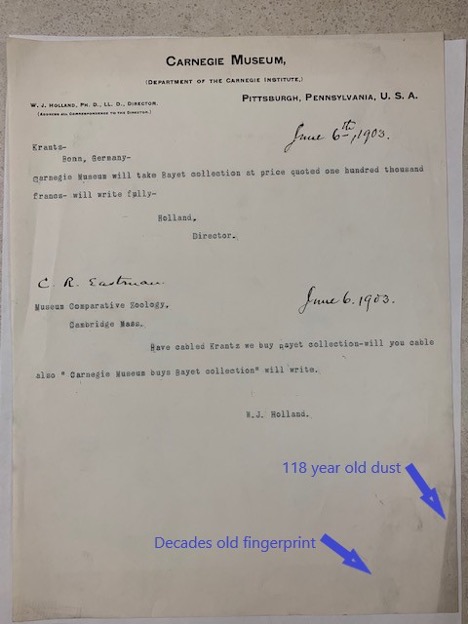
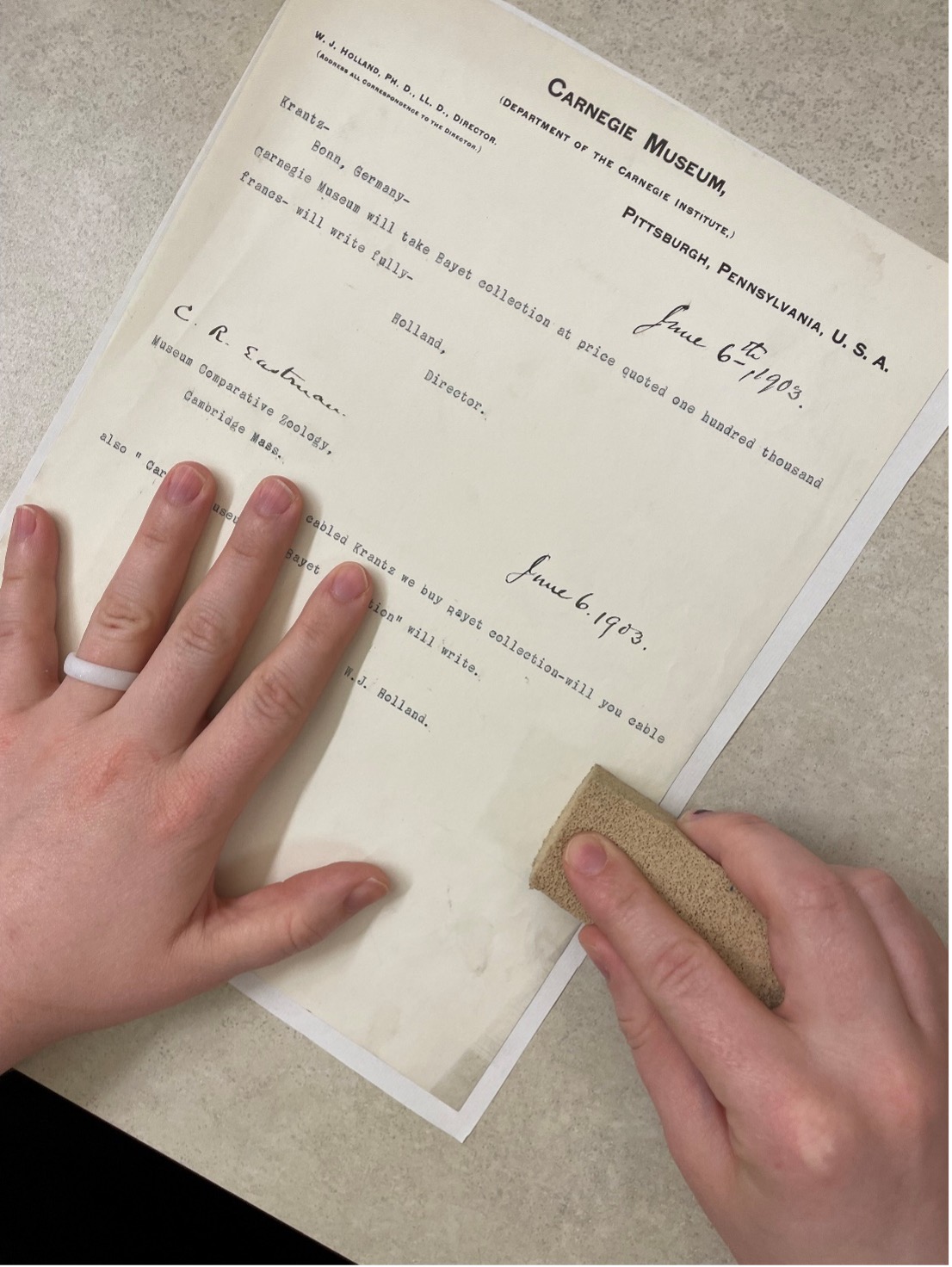
Archivists control time. During a recent visit to the Carnegie Museum of Natural History Library, Kelsea Collins, Carnegie Museum Library Cataloger, demonstrated the magic of archival restoration on a 118-year-old document.  Kelsea, along with Marie Corrado, Carnegie Museum of Natural History Library Manager, guided me to a windowless, climate-controlled section of the Natural History Library. In this room, rows of hand bound documents, and other archival materials, rest at a constant 65–68-degrees Fahrenheit.     

Cleaning Historic Documents

On a flat surface, ready for cleaning, lay an historic “wove” paper cable. “Wove” paper production was introduced in 1750 at a time when paper was made by hand. It is sometimes confused with another of material, known as “laid” paper. Both types are made from wood pulp. The type of mesh, used during manufacturing, generates the differing appearance. Wove paper has a more uniform look when held up to the light.  Laid paper has lines, grooves, and sometimes, watermarks. By the early 1800’s, machines were introduced to make paper in greater quantities. Kelsea indicated that our 118-year-old document was likely made by machine, not by hand.   

historic document with arrows pointing out dust and fingerprints on the bottom right corner
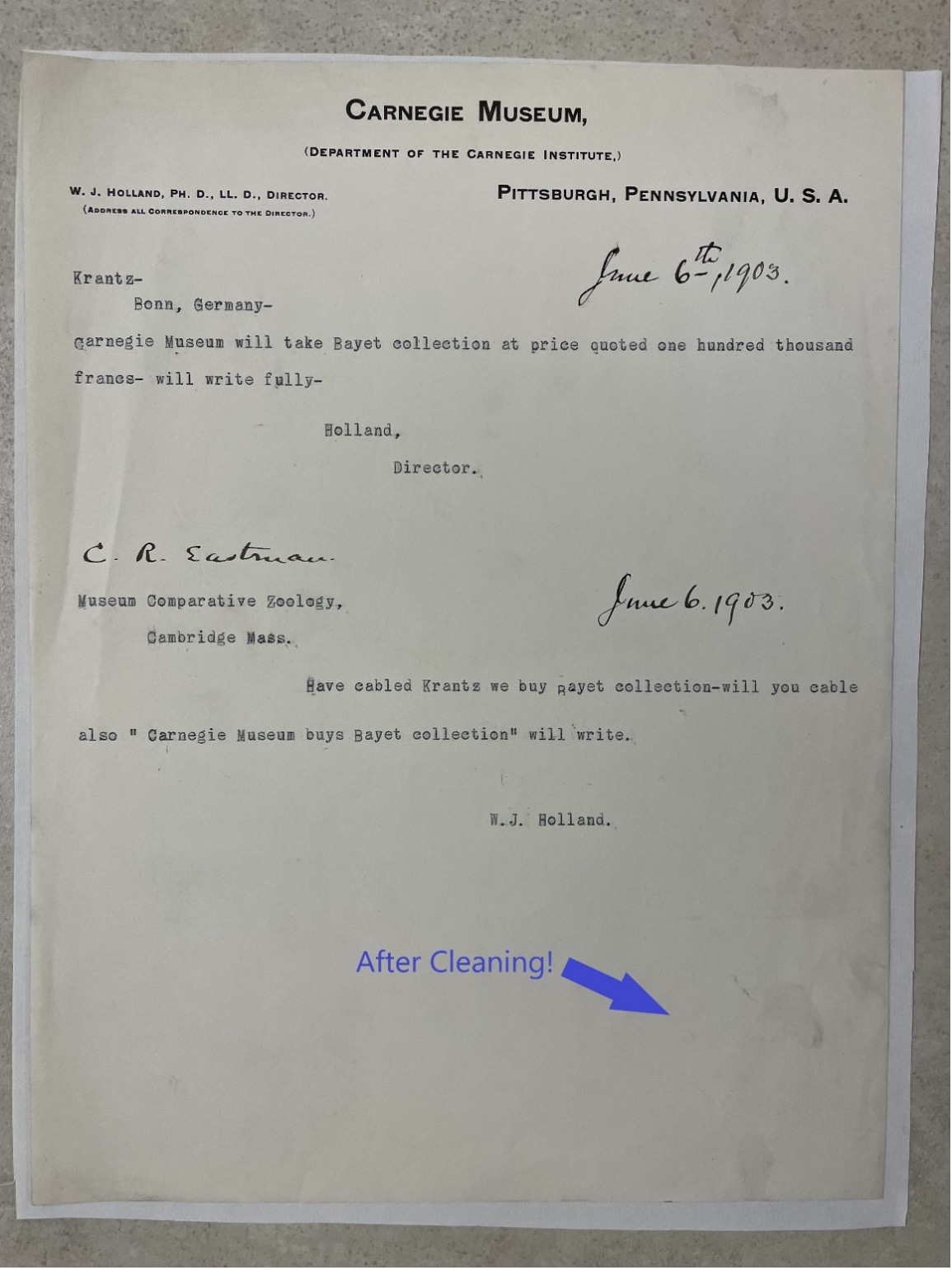
Before cleaning:  118-year-old document from the Carnegie Museum of Natural History Library.
historic document with arrow pointing to where there was previously much more dust and fingerprints
Same document after cleaning.

Having washed her hands, Kelsea was ready for restoration. Current practice from the Library of Congress recommends clean, dry hands, without gloves for the handling of rare and old documents. Nitrile and cotton gloves, used in previous decades, can easily rip fragile paper. In less than a minute, and with just a few gentle swipes of a dry, vulcanized rubber sponge, Kelsea removed discernible marks from the past. Long forgotten fingermarks faded and dust lines, possibly from coal, disappeared. Our document still has a trace of the century old fingerprints, but the dust lines are almost completely gone. Skilled archivists know when to stop.  

historic document being cleaned by hand with a vulcanized rubber sponge
Document cleaning with a vulcanized rubber sponge.  The Library of Congress recommends cleaning rare documents without gloves.

So, the next time you see an old document, take a moment to see if there are traces of fingerprints or other marks from the past. Then remember the archivists and librarians that deftly decide, whether or not, to make time disappear.   

Many thanks to Kelsea Collins, Carnegie Museum Library Cataloger and Marie Corrado, Carnegie Museum of Natural History Library Manager for taking the time to share this story. Joann Wilson is an Interpreter for the Education Department at Carnegie Museum of Natural History. Museum employees are encouraged to blog about their unique experiences and knowledge gained from working at the museum.

Related Content

Meet the Fossil Detectives in the Basement

A Deeper Look at Dioramas

Sharing Shipping Space with Amphibians and Reptiles

Carnegie Museum of Natural History Blog Citation Information

Blog author: Wilson, Joann
Publication date: October 7, 2021

Share this post!

  • Share on Twitter Share on Twitter
  • Share on Facebook Share on Facebook
  • Share on Pinterest Share on Pinterest
  • Share on LinkedIn Share on LinkedIn
  • Share on Reddit Share on Reddit
  • Share via Email Share via Email

Share this post!

  • Share on Twitter Share on Twitter
  • Share on Facebook Share on Facebook
  • Share on Pinterest Share on Pinterest
  • Share on LinkedIn Share on LinkedIn
  • Share on Reddit Share on Reddit
  • Share via Email Share via Email

Filed Under: Blog Tagged With: Joann Wilson, Science News

October 1, 2021 by wpengine

Sharing Shipping Space with Amphibians and Reptiles

by Stevie Kennedy-Gold

Your online orders of clothes and household goods might well have shared shipping space alongside preserved toads and snakes from the Carnegie Museum of Natural History. Don’t worry though – museum specimens are shipped following long-established rules and regulations, and the movement of herpetological freight is all in the service of science.

Wait, what?! Well, at a relatively low, but steady rate, natural history museums loan out specimens, and these materials are generally shipped, outgoing and incoming, via regular commercial carriers.

Why loan out a specimen?! Why, to ask and answer awesome scientific questions, to enhance an exhibit, or to use as artistic references! Just as every human has a story unique to their own life and experiences, etched in their wrinkles, freckles, and scars, the same is true for every specimen in the collection. Each frog and lizard, snake and turtle has experienced different environmental impacts, endured famine, parasites, pollution, or predation. Each specimen has its own story. Instead of being written down within the pages of a book, the animals’ stories are recorded within their muscles, organs, bones, and DNA. As such, an eastern fence lizard collected from Pennsylvania in 1893 will likely have a different body size, diet, or parasite load compared to the same species of lizard collected from the same town in 2005.

Scientists request loans from museum collections so that they can examine the specimens, unlock the stories hidden in each body, and answer their scientific questions. Alternatively, we receive requests from artists needing reference materials for their newest works of art, or to more accurately render images of a species they would otherwise not be able to see up close (I’m looking at you, venomous snakes, highly toxic frogs, or now extinct species!). And, of course, museums themselves loan from collections to use in displays as representatives of the far larger number of specimens housed behind-the-scenes. Walk through Dinosaurs in their Time towards Cenozoic – those bones can be considered as an inter-building loan from our Vertebrate Paleontology collection. Head up to the Foster Overlook and check out our hellbender who choked on a marshmallow – that specimen is certainly an inter-building loan from the collection I manage.

But how exactly are specimen loans arranged? The process varies from institution to institution and from section to section, so this description is the process specific to the Section of Amphibians and Reptiles at this museum. Overall, though, the process is a great deal easier than it would seem. Assuming a borrower knows what species to work with, a search of the Section’s online presence at iDigBio or VertNet will determine the specific specimens to request. After that, a formal request letter is required. This document must include details of borrower affiliation, the species and specimens requested, and the reason behind the request along with any planned examination techniques. The next step in the procedure is an email directed to me through the museum website (here), again providing a brief description of the borrower’s intent.

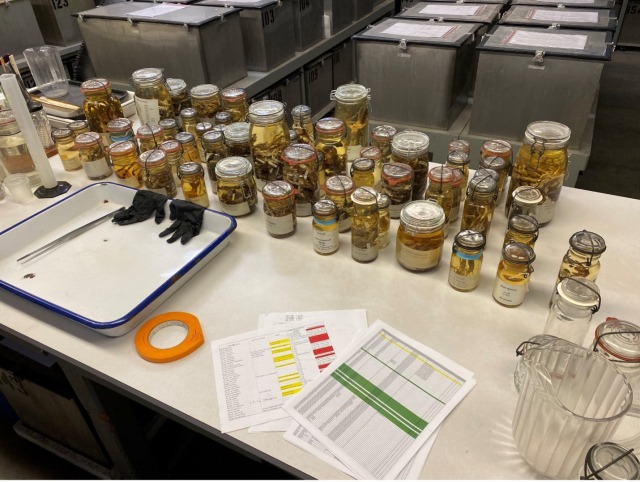
Table with specimen jars, paper, a metal tray, gloves, and other tools for herpetology work.
Image 1: Prepping a loan of anoles for a researcher. In the foreground are lists of specimen preferences from the researcher and specimens in the collection which fit the criteria.

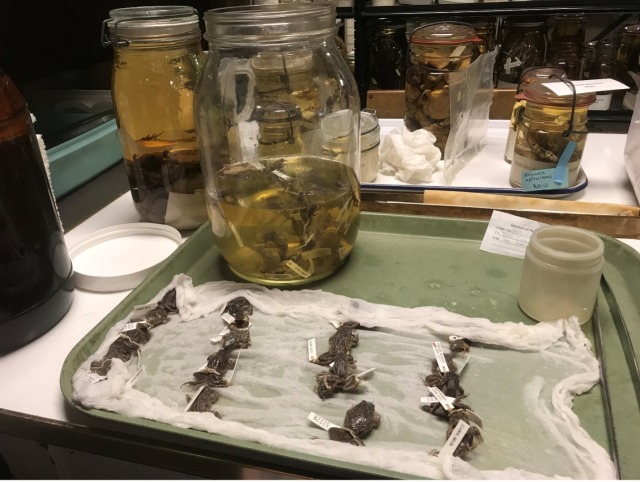
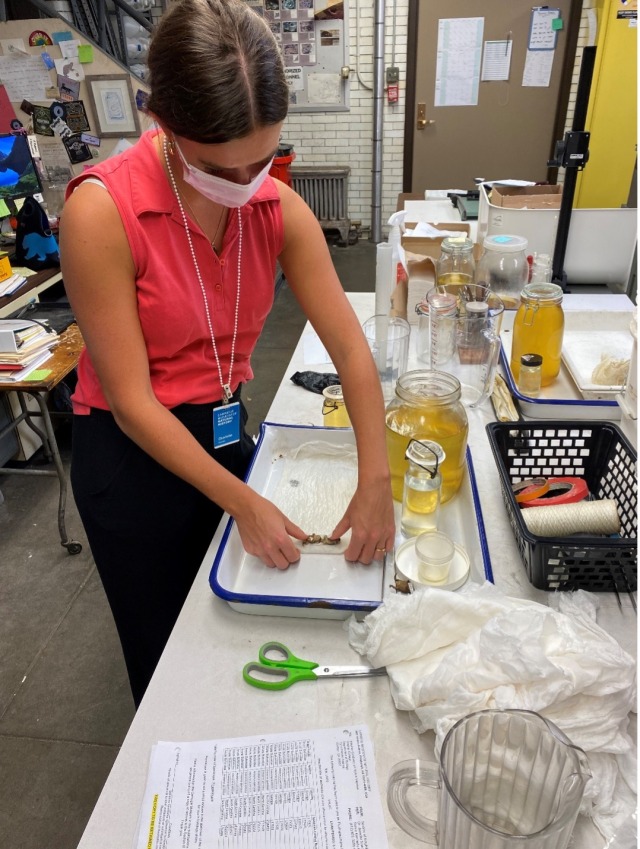
Assuming a request is reasonable (i.e., doesn’t involve the complete destruction of the specimen!), I then begin pulling the requested specimens from the collection, placing tiny loan slips in each jar as I go as place holders signifying the specimen’s loaned status (Image 1). The slip has the specimen’s catalog number, the loan number, and the requester. Paper trails are vital in loaning specimens. I also make a notation in my fancy new Loan database, as well as in the general Herp Section Specimen database. Finally, I draft up the loan contract which will be sent out with the specimens. I then wrap the specimens in cheesecloth (Images 2 and 3), give them a good soaking in alcohol, triple bag and heat seal them in, and slap the appropriate documentation on and in the box. The package then goes off to the mailroom!

Specimen jar and herpetology specimens laid on cheesecloth.
Image 2: Laying out the specimens on cheesecloth in preparation for shipping. A loan slip can be seen behind the cup on the right side of the image.
Woman wrapping a specimen in cheesecloth
Image 3: Charlotte, a recent intern in the section, helps package up a loan of toads.

Once someone has completed their work with the specimens, they normally notify me and ship the specimens back as soon as possible. Assuming all the specimens are returned in good order, the loan is closed, the specimens are returned to the collection, the slips of paper are pulled from the jars, and the specimens once again become available for other people to use.

Unfortunately, some specimen loans, like library books, become overdue. A typical loan duration is 6 months, at the end of which the borrower can request a loan extension (much like requesting an extension on a library book) or they can send the specimens back. If the loan period elapses without any communication, I don my imaginary “Lizard Librarian” hat and kindly request their return as soon as possible.

Due to the size of this collection, the responsibilities of a collection manager, the number of loans we send out annually (some years over 40!), and the recent (with respect to the general age of the collection) technological adoptions within the Section (i.e., creating digital databases), it is not surprising that the retrieval of some loans lapsed, and even the documentation of some specimen locations is unclear. As a result, I recently took it upon myself, with the aid of my fearless and tireless group of interns, work study students, and volunteers, to determine the “active status” for all loans sent out since 1925 (the earliest recorded loan in the section). We have nearly 2000 loan records to look through, but fortunately my predecessors did a decent job tracking when a loan was returned or when contact was made to request the specimens be returned.

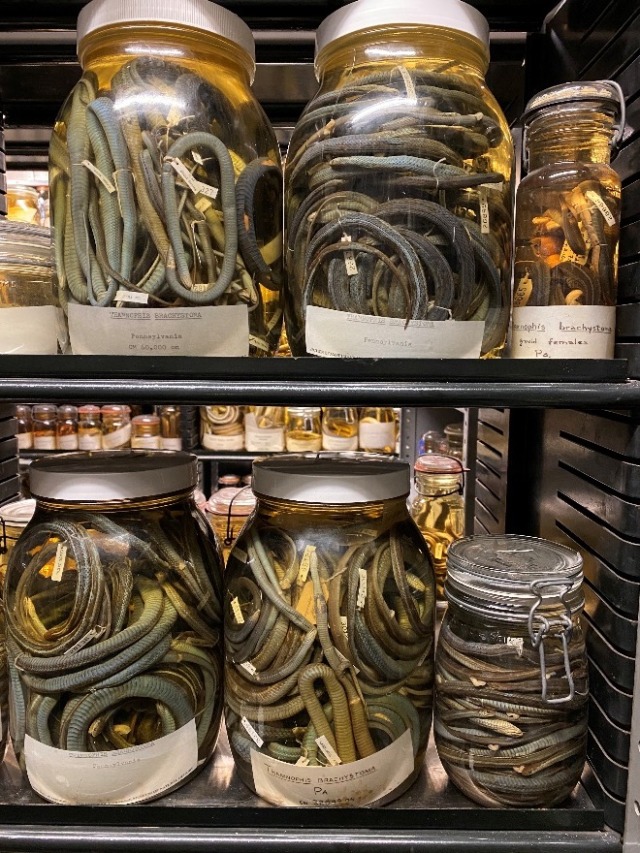
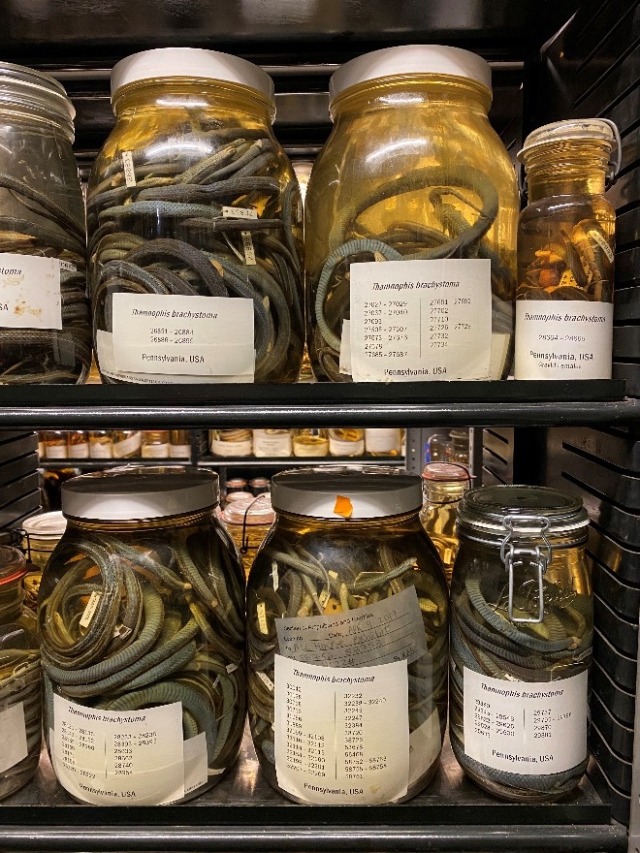
It’s a long arduous process making sure that all the specimens are back. Initially, our search to verify if the specimen was returned begins with the jars containing species from the location where the borrowed specimen was collected. This process takes time, and the pace is contingent upon how many specimens were requested per loan and how many specimens (and jars!) of a specific species from a specific place we have in the collection. For example, tracking the whereabouts of a loan of 50 eastern newts from Pennsylvania has taken us a few weeks because we have nearly 20 jars of newts from the state, each containing at least 100 specimens.

Jars of amphibians and reptiles preserved in fluid
Image 4: Before (top) and after (bottom) images of a selection of jars which we looked through to confirm the specimens were loaned out and for which we updated the jar labels. You can see in the bottom middle jar in the image on the right the loan slip and piece of orange tape which denotes specimens were loaned out from that jar.

If we emerge empty handed after examining all the jars of a specific species from a specific place, we then look in jars containing the same species collected from other locations. This process has resulted in finding almost 10 specimens previously deemed “missing” – some since the 1960s! On top of this process, we also record the catalogue number of every specimen in every jar we examine so we can update the jar labels with the specimen numbers (Image 4). This expedites finding specific specimens in the future and ensures that all specimens are placed in their correct jars. It’s a true labor of love and the process is a museum collection equivalent of an (ultra-ULTRA) marathon, not a sprint. When it all boils down though, I am just a librarian making sure that all my books (or specimens!) are where they ought to be.

Stevie Kennedy-Gold is the Collection Manager for the Section of Amphibians and Reptiles at Carnegie Museum of Natural History. Museum employees are encouraged to blog about their unique experiences and knowledge gained from working at the museum.

Related Content

Digital Developments: Why Archiving and Herpetology Go Hand-in-Hand

Do Snakes Believe in the Tooth Fairy?

A Head Above the Rest: Unearthing the Story of Our Leatherback Sea Turtle

Share this post!

  • Share on Twitter Share on Twitter
  • Share on Facebook Share on Facebook
  • Share on Pinterest Share on Pinterest
  • Share on LinkedIn Share on LinkedIn
  • Share on Reddit Share on Reddit
  • Share via Email Share via Email

Filed Under: Blog Tagged With: amphibians and reptiles, Science News, Stevie Kennedy-Gold

October 1, 2021 by wpengine

Meet the Fossil Detectives in the Basement

by Suzanne Mills and Albert Kollar

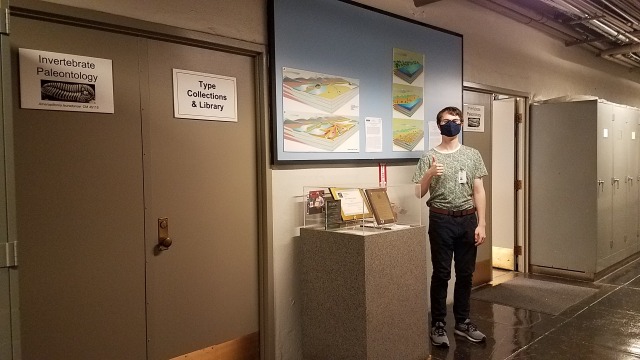
Gray metal storage cabinets march in rows across the concrete floor. The collection space has no windows and there is a constant hissing sound from the overhead air ducts. No matter, the staff is looking for clues of the geologic and paleontological past, or History of the Earth, through the vast collection of fossil invertebrates. The staff and volunteers of the Section of Invertebrate Paleontology (IP) are tasked to reorganize, preserve, and curate fossils through the leadership of the Collection Manager Albert Kollar.

Person in a hallway lined with gray cabinets
Collection Assistant Kevin Love at the doors of the Invertebrate Paleontology section.

On any given workday, you’ll find us hefting drawers full of fossil-bearing rocks and playing specimen-box Tetris to make fossils fit in the available cabinet space. We examine century-old inventory books, search out (usually Google) maps to find absconded valuables (historical fossil sites), and decipher written scripts in unfamiliar French and German for valuable geologic data.

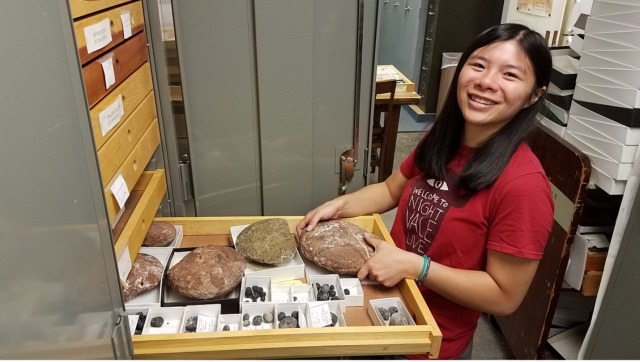
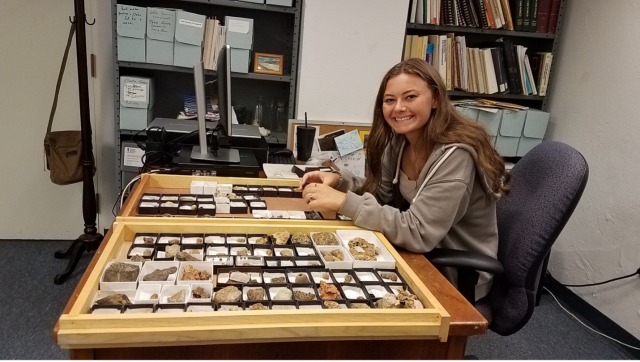
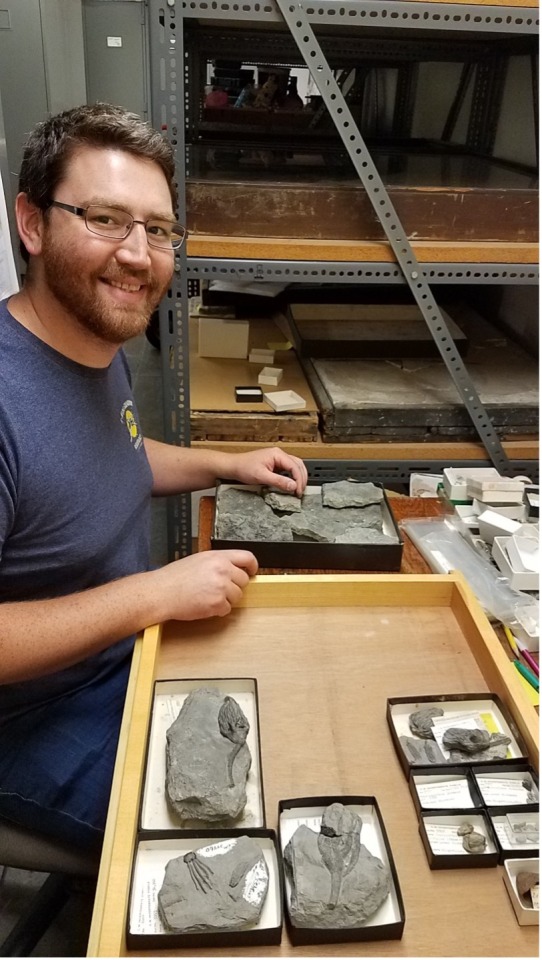
Long-term volunteers in IP include Rich Fedosick, a researcher assisting in the project to document the Carnegie building stones; John Harper, an expert on fossil snails taxonomy, Roman Kyshakevych, who is deciphering the famous Coppi collection from Italy; Tamra Schiappa, a paleontologist at Slippery Rock University who is updating fossil cephalopod identifications; and Vicky Sowinski, who performs collection support. Student researchers include collection assistant and graphic artist Kay Hughes, a 2021 Mount Holyoke College graduate who coauthored four peer-reviewed scientific publications produced by IP; and collection assistant Will Vincentt, who researched two Bayet collections, the Hunsruck Slate of Germany and Lyme Regis of England. Tara Pallas-Sheetz, a part-time assistant, has worked on various projects over the years.

Hear from some of our newest staff and summer volunteers in their own words below.

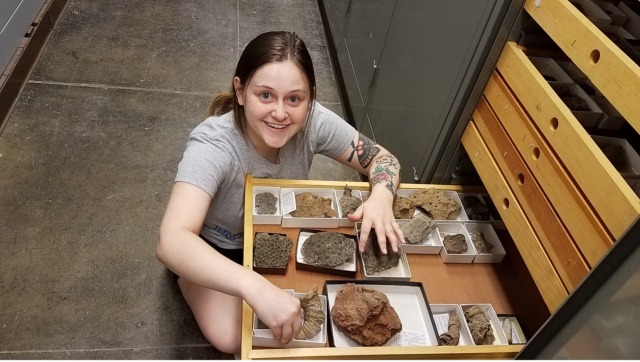
Woman with a drawer of coral fossils
Lizzie Begley with large fossil corals

Name: Lizzie Begley

About me: B.A. Anthropology Penn State 2021; masters candidate in Museum Studies and Non-profit Management certification in progress at Johns Hopkins University

Why IP: Working “behind the scenes” in IP has helped me develop a better sense of what it looks like to work in a museum such as the Carnegie. As an aspiring museum professional, experience behind gallery floors is invaluable as I work to find my place in the field. For this experience I couldn’t be more grateful and, honestly, couldn’t be having more fun!

woman with a drawer of fossil ammonites
Katie Golden with fossil ammonites

Name: Katie Golden

About me: B.S. Biology, Juniata College 2023 (expected)

Why IP: When I was in preschool, I told people I wanted to be a paleontologist when I grew up. Here in IP, I like exploring a part of the museum that most people don’t get to see. I particularly enjoy puzzle-piecing together fossils that need repair. The intricate ammonites, trilobites, and insects preserved in amber are especially beautiful. My favorite fossil organism is Anomalocaris.

Woman at a table with fossil corals
Tori Gouza with fossil corals

Name: Tori Gouza

About me: B.A. History and Anthropology, University of Pittsburgh 2023 (expected)

Why IP: I love working in IP. It is so exciting to be able to interact with others in the section and to learn what projects they are currently working on. Albert Kollar has encouraged not only discussion but also collaboration. It is great to converse with others who are passionate about their work.

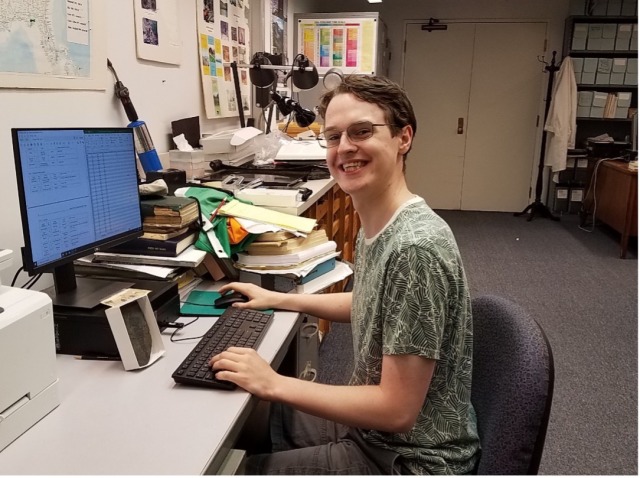
Man sitting at a computer in an office
Kevin Love enters data about a fossil eurypterid

Name: Kevin Love

About me: IP Collection Assistant; B.S. Geology and Ecology & Evolution summa cum laude, University of Pittsburgh 2021

Why IP: I like solving puzzles at work. I find invertebrate fossils aesthetically appealing, but the main reason I like this job is that I get to understand little enigmas from Earth’s past. I like solving historical questions and compiling more information about fossils in the collection.

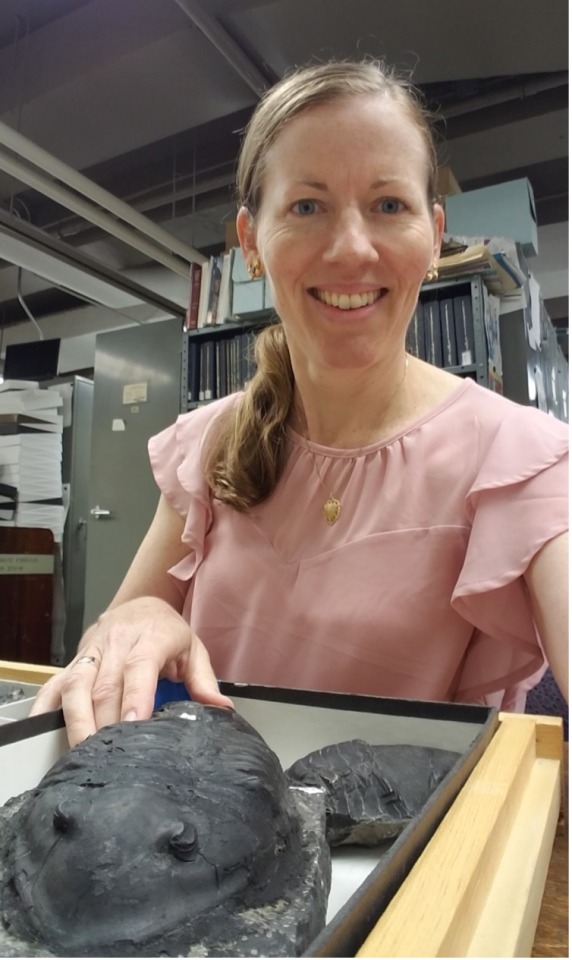
woman with a fossil trilobite
Suzanne Mills with fossil trilobite Isotelus gigas

Name: Suzanne Mills

About me: IP Collection Assistant, Professional Geologist, mom

Why IP: Every day is different when you work with a collection of 800,000 specimens. I may come across a 100-million-year-old ammonite sparkling with crystals inside, or a drawer full of trilobites acquired by the museum in 1903, when Andrew Carnegie was alive. I love that my work requires me to learn more about fossils which are beautiful, historical, and scientifically significant.

person with a drawer of fossil crinoids
Ellis Peet with fossil crinoids

Name: Ellis Peet

About me: B.S. Environmental Geoscience with Geology concentration, Slippery Rock University 2021

Why IP: The management and staff of IP are smart, kind, personable, and they take paleontology seriously. I also like the environment at IP because it smells like a library and limestone dust, which reminds me of the geology department at Slippery Rock.

Woman with a fossil trilobite
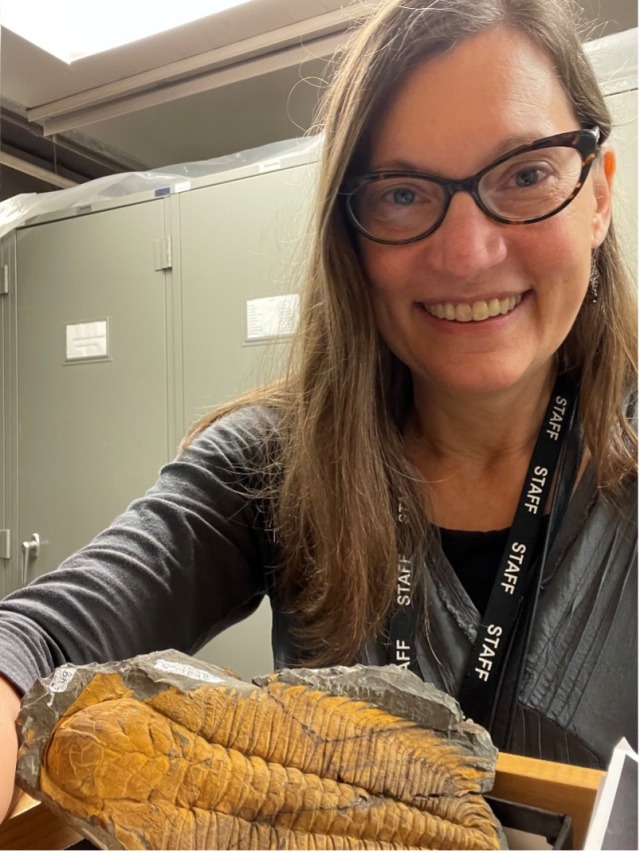
Joann Wilson with fossil trilobite Paradoxides spinosus from the Baron de Bayet collection.

Name: Joann Wilson

About me: Interpreter for the Department of Education, Carnegie Museum of Natural History

Why IP: Fossils inspire awe.  I enjoy unravelling the stories behind the individuals that discovered, studied and collected these breathtaking specimens.

Suzanne Mills is a Collection Assistant and Albert Kollar is Collections Manager in the Section of Invertebrate Paleontology at Carnegie Museum of Natural History. Museum employees are encouraged to blog about their unique experiences and knowledge gained from working at the museum.

Related Content

Smoking Fossils

From Collector to Director

Bayet and Krantz: 16 Words

Carnegie Museum of Natural History Blog Citation Information

Blog author: Mills, Suzanne; Kollar, Albert
Publication date: October 1, 2021

Share this post!

  • Share on Twitter Share on Twitter
  • Share on Facebook Share on Facebook
  • Share on Pinterest Share on Pinterest
  • Share on LinkedIn Share on LinkedIn
  • Share on Reddit Share on Reddit
  • Share via Email Share via Email

Filed Under: Blog Tagged With: Albert Kollar, invertebrate paleontology, Science News, Suzanne Mills

  • « Go to Previous Page
  • Page 1
  • Interim pages omitted …
  • Page 13
  • Page 14
  • Page 15
  • Page 16
  • Page 17
  • Interim pages omitted …
  • Page 43
  • Go to Next Page »

sidebar

About

  • Mission & Commitments
  • Directors Team
  • Museum History

Get Involved

  • Volunteer
  • Membership
  • Carnegie Discoverers
  • Donate
  • Employment
  • Events

Bring a Group

  • Groups of 10 or More
  • Birthday Parties at the Museum
  • Field Trips

Powdermill

  • Powdermill Nature Reserve
  • Powdermill Field Trips
  • Powdermill Staff
  • Research at Powdermill

More Information

  • Image Permission Requests
  • Science Stories
  • Accessibility
  • Shopping Cart
  • Contact
  • Visitor Policies
Stay in the loop! Sign up for our newsletter(s).
One of the Four Carnegie Museums | © Carnegie Institute | Privacy Policy | Terms of Use | Accessibility
Rad works here logo