• Skip to primary navigation
  • Skip to main content
  • Skip to primary sidebar

Carnegie Museum of Natural History

One of the Four Carnegie Museums of Pittsburgh

  • Visit
    • Buy Tickets
    • Visitor Information
    • Exhibitions
    • Events
    • Dining at the Museum
    • Celebrate at the Museum
    • Powdermill Nature Reserve
    • Event Venue Rental
    • Gift Cards
  • Learn
    • Field Trips
    • Educator Information
    • Programs at the Museum
    • Bring the Museum to You
    • Guided Programs FAQ
    • Programs Online
    • Climate and Rural Systems Partnership
  • Research
    • Scientific Sections
    • Science Stories
    • Science Videos
    • Senior Science & Research Staff
    • Museum Library
    • Science Seminars
    • Scientific Publications
    • Specimen and Artifact Identification
  • About
    • Mission & Commitments
    • Directors Team
    • Museum History
  • Tickets
  • Give
  • Shop

Pat McShea

April 18, 2022 by Erin Southerland

Using iNaturalist in the City Nature Challenge and beyond

by Patrick McShea

Participation in this year’s City Nature Challenge (CNC), April 28–May 1, 2023, is a great way to familiarize yourself with iNaturalist, an innovative cell phone app that powers the annual biological survey of metropolitan areas across the globe. Mastery of the easy-to-use technology during this self-paced bioblitz-style event can create positive outcomes long after the Pittsburgh CNC concludes and in places far beyond the event’s six county territory.          
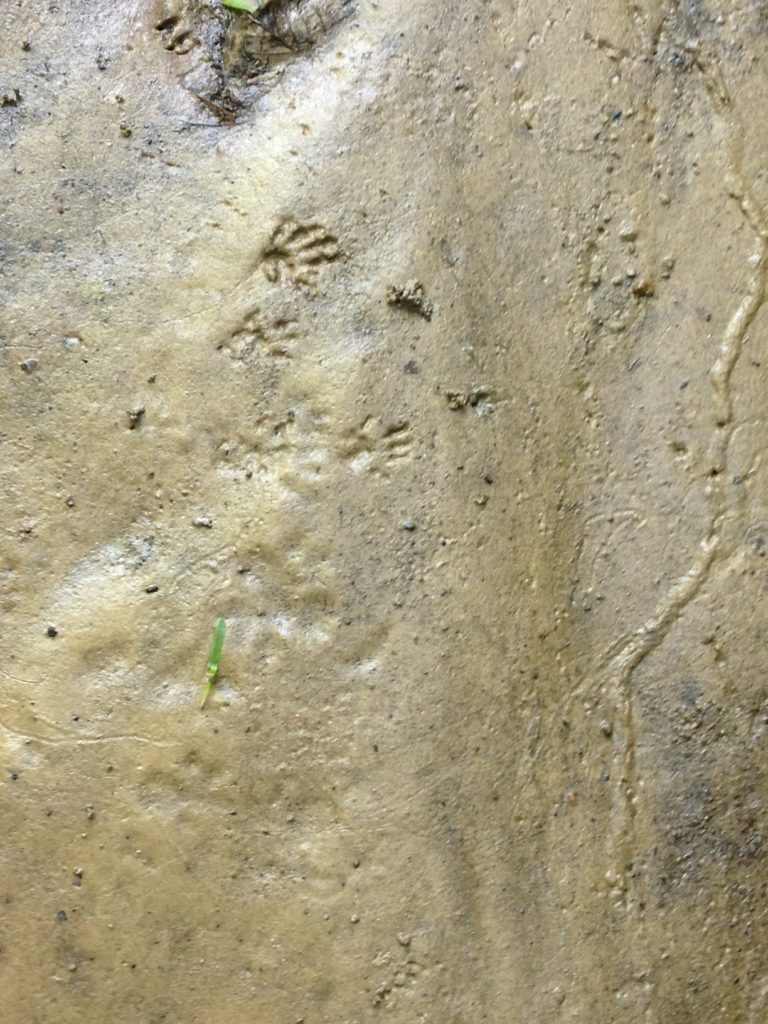
Raccoon tracks in the mud.
During the City Nature Challenge participants can identify observations, such as these raccoon tracks, or rely upon iNaturalist to identify them.

Although 2023 will be the sixth consecutive year for Carnegie Museum of Natural History to serve as a CNC city organizer agency, I didn’t become an active participant in the event until 2021. In 2021, I was among 446 participants who, in using our phone cameras to take and submit pictures, documented 7,045 observations of free-living plants, animals, and fungi in Allegheny, Armstrong, Beaver, Butler, Washington, and Westmoreland Counties. Our collective efforts verified and geo-referenced the presence of 1,219 different species at various locations in the surveyed territory.

My contributions, which came from four half-hour periods over as many days, amounted to only 29 observations, and for each of them I was able to include an accurate name of the observed subject in the submission form’s “What did you see?” line. iNaturalist, which is a joint initiative of the California Academy of Sciences and the National Geographic Society, functions amazingly well in identifying submitted images even when this question is ignored. The app provides users with impressive evidence of its image recognition capabilities by quickly supplying identification suggestions. This digital wizardry is only a starting point, however, because iNaturalist defines itself as “an online social network of people sharing biodiversity information to help each other learn about nature.” 

Whether an observation is tentatively identified by the observer or through the powerful software, higher levels of identification certainty occur hours, weeks, or even months later when other users, who are focused on identifying observations, verify, refine, or even challenge identifications. Consistent verification by such reviewers can raise observations to “research grade,” indicating possible use in future scientific investigations.

Because I didn’t pay close attention to the network aspects of iNaturalist during the CNC, appreciation for my phone’s transformation into far more than a multi-category field guide came months later and more than 500 miles to the northeast during an early fall vacation in the Adirondack Park.
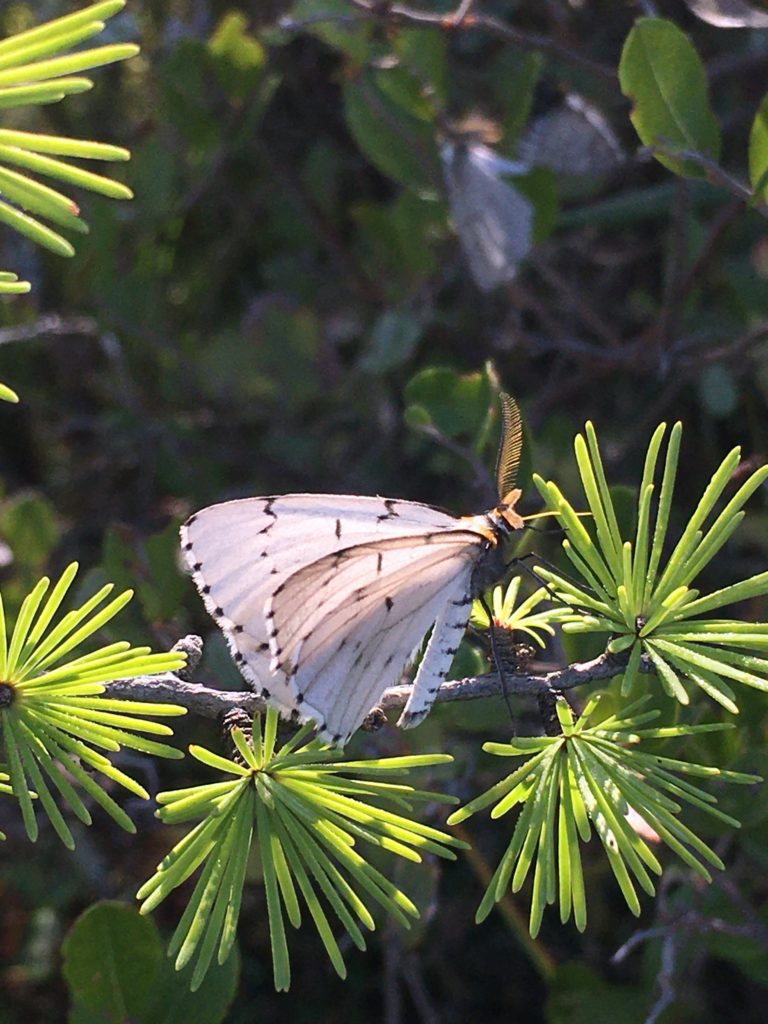
Moth on a branch.
The moth known commonly as the Chain-dotted Geometer on the Boreal Life Trail at the Paul Smith’s College Visitor Information Center.

On a sunny mid-September afternoon, while my wife and I watched for birds and pitcher plants along a bog-crossing boardwalk that is part of the unique 14,000-acre campus of Paul Smith’s College, we were frequently surrounded by white moths with delicate black markings. When one landed close by I took its picture, then immediately submitted it as an iNaturalist observation. “Genus Cingilia,” I saw on the phone screen within 30 seconds. 

Days later, when an email notification informed me that an observation reviewer had refined the identification to “Cingilia catenaria,” or the “Chain-dotted Geometer,” curiosity about the bog moths prompted a visit to BugGuide.net, a reliable site for information about insects and spiders in North America. Here a statement in the “Remarks” section of the species account raised an ecological question: “Locally abundant to the point of being a pest in some years, yet becoming increasingly rare over much of its former range in the Northeast.”

As I wondered whether the numerous bog moths had been a pest-level outbreak, I remembered someone who might be able to answer that question. The observation reviewer had identified herself on iNaturalist. Dr. Janet Mihuc is a professor at Paul Smith’s College who has been conducting a moth biodiversity survey on the college’s lands for the past six years. In an email exchange she was happy to discuss the bog moths and their role in the ecosystem.

I certainly consider C. catenaria common in our area. I am not aware of it being a pest but that may just be because our local bogs have no economic significance to humans so I doubt there is data on the amount of defoliation that the caterpillars can cause. Hopefully the caterpillars are an important food for migrant songbirds before they depart or for resident songbirds. Based on my data, adult moth species diversity peaks in July then drops steadily in August and September. I would expect caterpillar availability to show a similar trend.

Her generous sharing of information was completely inline with my experience as a CMNH educator asking museum scientists for clarification of concepts presented in current exhibits. The fact that the information exchange was brokered by a cell phone app did not diminish the learning that occurred.

Patrick McShea is an Educator at Carnegie Museum of Natural History. Museum employees blog about their unique experiences and knowledge gained from working at the museum.

Related Content

Evidence Counts For Absent Creatures: City Nature Challenge

Go For a Color Walk

Naturally Pittsburgh: Big Rivers and Steep Wooded Slopes

Carnegie Museum of Natural History Blog Citation Information

Blog author: McShea, Patrick
Publication date: April 18, 2022
Share this post!

  • Share on Twitter Share on Twitter
  • Share on Facebook Share on Facebook
  • Share on Pinterest Share on Pinterest
  • Share on LinkedIn Share on LinkedIn
  • Share on Reddit Share on Reddit
  • Share via Email Share via Email

Filed Under: Blog Tagged With: City Nature Challenge, Educator Resources, Pat McShea

March 31, 2022 by Erin Southerland

The Art of Making Fish Familiar

by Patrick McShea
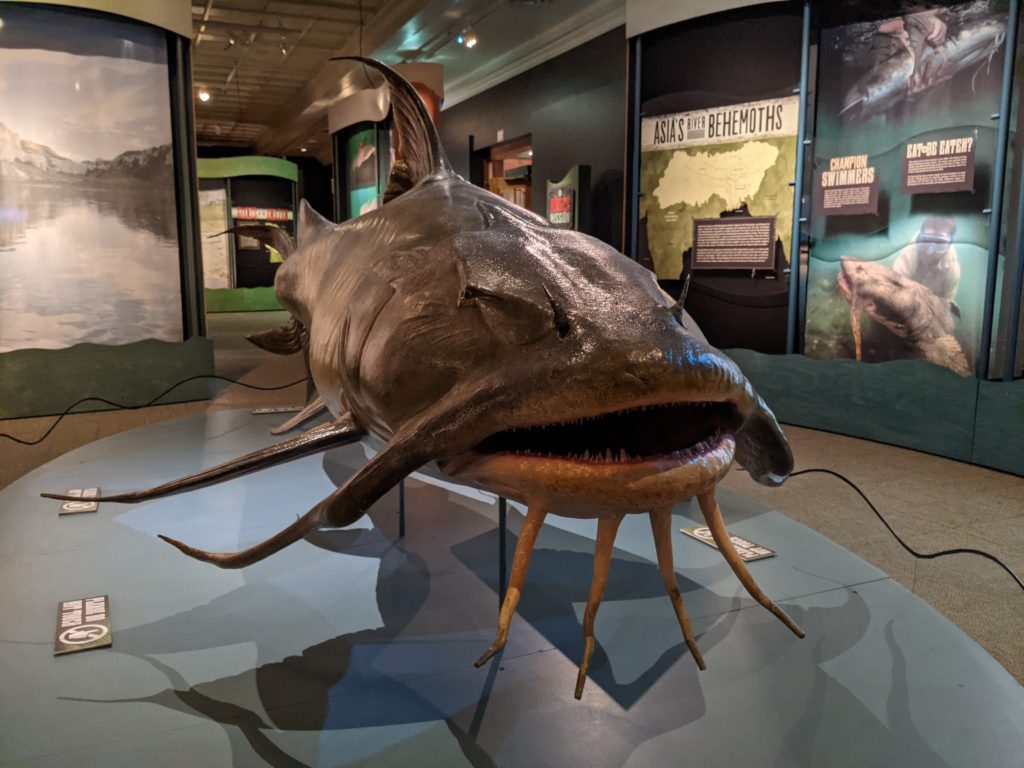
Sculpture of a monster fish in a museum exhibition

Fish in the wild are difficult to observe, even for the scientists who study them. Monster Fish: In Search of the Last River Giants, an exhibition traveled and developed by the National Geographic Society, encourages visitors to learn about this challenge from one such scientist, Dr. Zeb Hogan, host of the popular Nat Geo Wild television show.

In the exhibition, now on view in the R. P. Simmons Family Gallery until April 10, 2022, stunning life-size sculptures, evocative illustrations, and informative panels set the stage for Hogan’s appearance on several well-spaced video screens. Here, in clips with run times of a few minutes, Hogan presents on-the-water, and sometimes in-the-water, reports from six continents about conservation efforts that involve not only other scientists, but also the local people who rely on healthy fish populations for their food or livelihood.

Observing Fish in the Wild

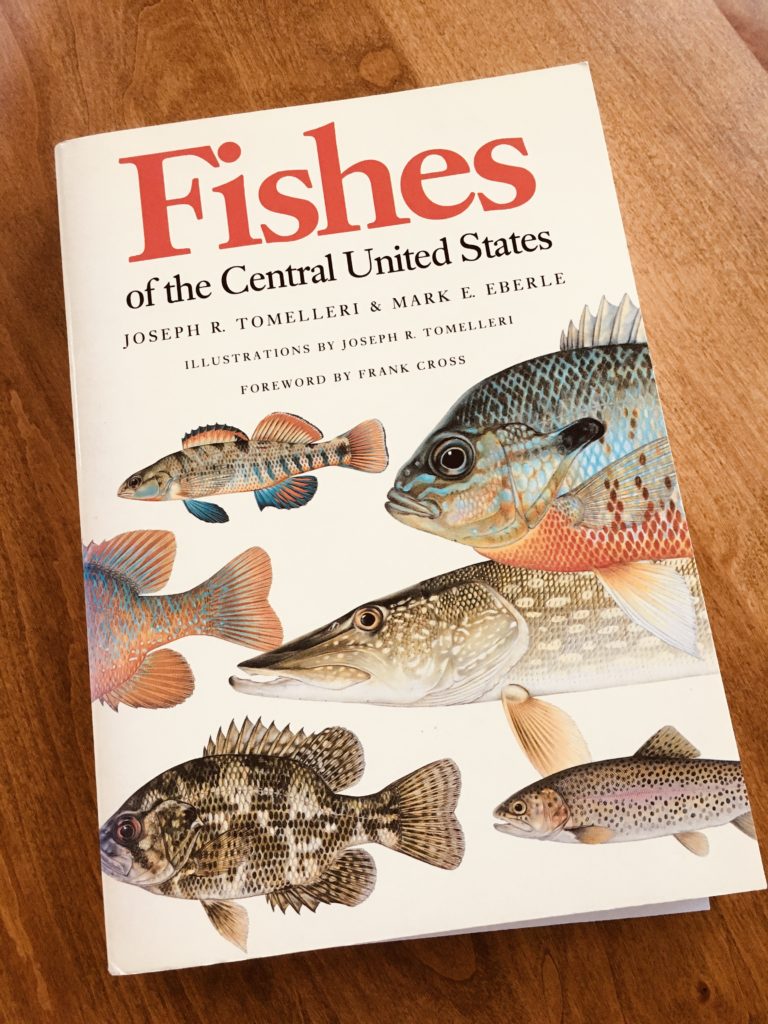
Away from the exhibition, the importance of images in sparking an interest in hard-to-observe wildlife can be noted at a scale where both the creatures involved, and the extravagance of their depictions, are much reduced. By personal example, much of my visual understanding of lesser known fish species in Pittsburgh’s rivers comes from viewing the scientifically accurate, full color, plates in Fishes of the Central United States (University Press of Kansas, 1990), a book illustrated and co-authored by Joseph R. Tomelleri.

Cover of the book "Fishes of the Central United States"

Over the past 36 years, the artist’s detailed portraits of our continent’s finned wildlife have appeared in over a thousand publications ranging from fishing magazines and field guides to outdoor clothing catalogues. Tomelleri’s career as fish artist began in Kansas in 1983 when he and other biology graduate students at Fort Hays State University wondered about the diversity of fish species in a stream that winds through the campus. The resulting student-driven investigation culminated in a publication titled, Big Creek and its Fishes, a work in which Tomelleri had responsibility for fish images. Because the full suite of physical characters that distinguish one fish species from another can rarely be captured in photographs, he used colored pencils in an attempt to accurately render every scale and fin ray.

As the artist’s attention to anatomical detail led to a professional career, his illustration process became standardized. Subjects are collected by seining, through the electrofishing techniques used by fish biologists, or by old-fashioned angling with rod and reel. A captured fish is immediately photographed to record natural colors, then depending upon size, preserved frozen or in a formalin solution that is later replaced with an ethanol solution.

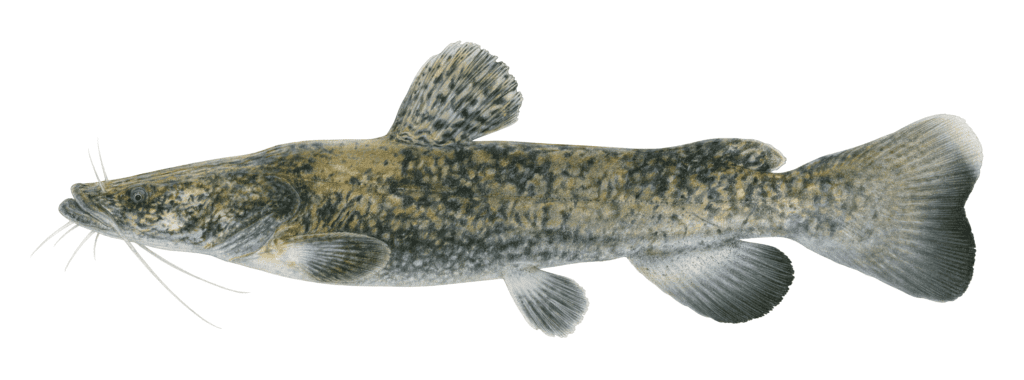
Although Tomelleri says the physical requirements for preservation have limited his experience with “monsters” to creatures three feet long or less, one species account in Fishes of the Central United States makes a case for the frightening aspects of fish that size. A description of Flathead Catfish, a species that recently brought attention to Pittsburgh’s rivers because of the enormous specimens caught and released by local anglers, includes a cautionary warning:

Flatheads breed in natural cavities of river banks, an instinct that leaves them susceptible to illegal hand fishing or “noodling.” Adept noodlers can recognize a big cat’s den by feeling the cleanly swept cavity floor and mound of silt or debris in front of the hole. One may assume that it is the bone-crushing bite of a 60-pound flathead that keeps the slightly squeamish stuck on the bank with rod and reel.

illustration of a flathead catfish
Flathead Catfish. Image credit: Joseph R. Tomelleri

Patrick McShea is an Educator at Carnegie Museum of Natural History. Museum employees are encouraged to blog about their unique experiences and knowledge gained from working at the museum.

Related Content

Fish and the Fourth of July?

Preserving Fossil Treasures: Eocene Fishes from Monte Bolca, Italy

Fish Story

Carnegie Museum of Natural History Blog Citation Information

Blog author: McShea, Patrick
Publication date: March 31, 2022

Share this post!

  • Share on Twitter Share on Twitter
  • Share on Facebook Share on Facebook
  • Share on Pinterest Share on Pinterest
  • Share on LinkedIn Share on LinkedIn
  • Share on Reddit Share on Reddit
  • Share via Email Share via Email

Filed Under: Blog Tagged With: Education, Monster Fish Exhibition, Pat McShea

March 28, 2022 by Erin Southerland

Learning From Misinterpretations

by Patrick McShea

Every job has its awkward moments, even work aiding museum visitors in their interpretation of exhibits. One memorable situation in that realm involved a father explaining skeletal bear remains to his three grade-school-aged children.

The setting was Discovery Basecamp during a busy December weekend in 2012. The exhibition had been established just two months earlier as an experiment in providing museum visitors with opportunities to examine authentic objects from the Educator Loan Collection, the enormous cross-discipline teaching collection that is managed to serve the needs of classroom teachers and other educators. In a section of well-lighted, first floor rear exhibit space, three free-standing racks of wire shelves held two dozen colorful toolboxes containing a wide range of natural history materials for visitors to examine, and the tops of five adjacent tables displayed large sturdy objects for close, hands-on inspection.

I was spending the day welcoming visitors to the space, and training a work-study student from the University of Pittsburgh and another from Carnegie Mellon University to do the same. We aimed to assist visitors in retrieving and returning toolboxes, and whenever asked, to answer questions. Listening to visitor conversations during that time was an important way to evaluate the success of the ongoing experiment. 

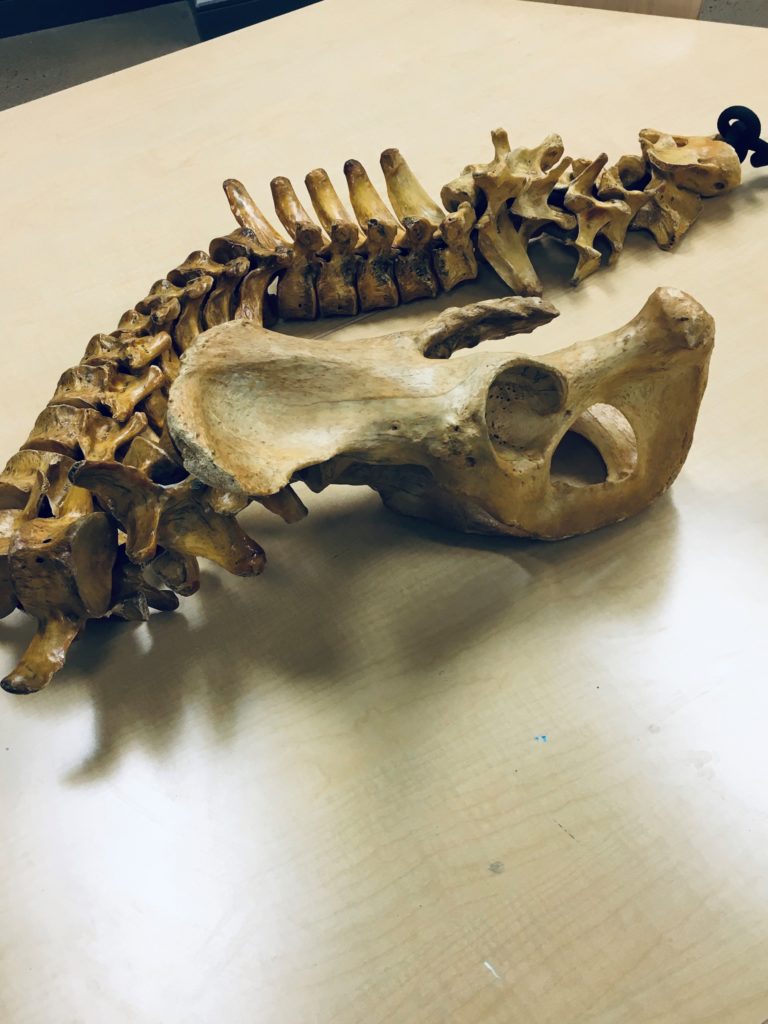
“Hey, let’s look at this,” I heard the father say as he gathered his children around a display table and picked-up one end of a yard-long, rope-linked strand of more than 20 large resin-coated vertebrae. “The tag says ‘bear,’ so let’s see if we can figure this out.” He stretched out the column on the tabletop, and moved both hands to its far end where an irregularly shaped shoebox-sized bone structure anchored the string. The structure, which was not identified on the simple paper tag, was the fused combination of the creature’s sacrum and hip bones, and the father’s unfamiliarity with mammal skeletal anatomy was immediately apparent. He mistook the bear’s butt-end for its skull, explaining to his children how the hip sockets were holes for the eyes, and that it was a shame the animal’s teeth were missing.

Bear vertebrae, sacrum, and hip bones on a table.
For anyone unfamiliar with mammal skeletal anatomy, hip sockets that once secured rounded femur heads might be confused with eye openings.

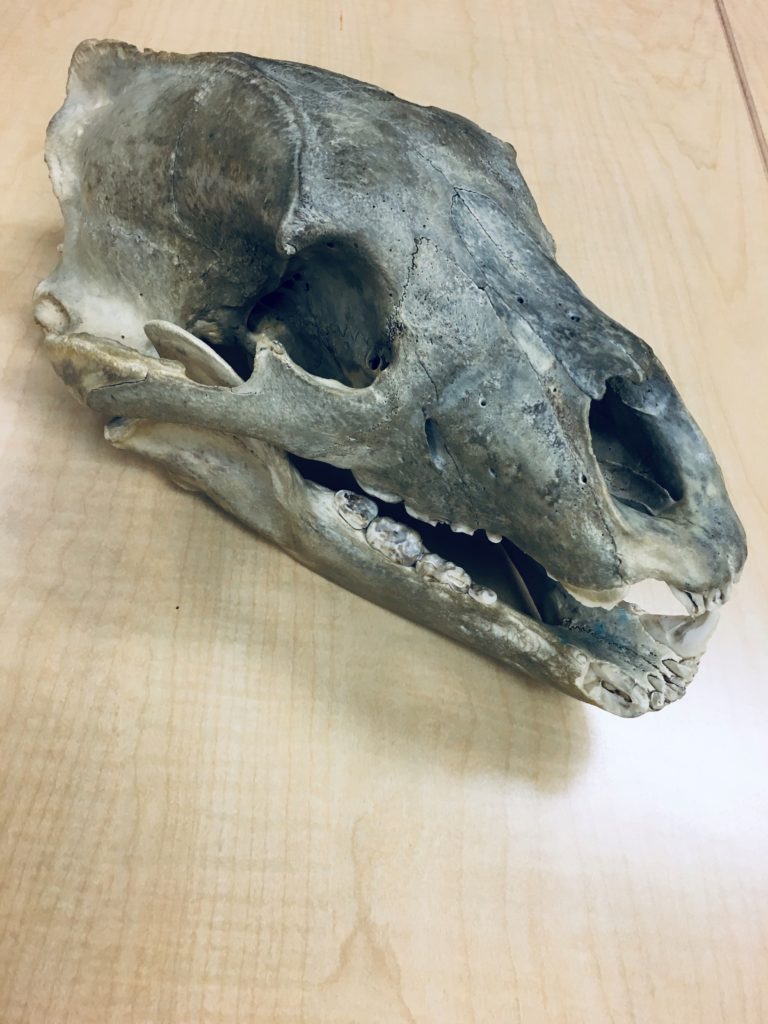
I didn’t correct him. Instead I explained to the work-study students that I’d be down in the loan program’s basement storage area for a few minutes. By the time I returned with a black bear skull, the attractions of the exhibition had pulled the family unit apart. All three children were engaged with toolboxes containing insect material, while their father was examining mineral samples on another table.

Bear skull on a table.
Discoloration and broken and missing teeth mark this American black bear jaw as a long-used teaching specimen.

I approached him holding out the bear skull and saying simply, “Our lack of labels might have caused some confusion a little earlier.” He looked at the skull, glanced back at the table with the vertebrae column, and then, to my great relief, laughed and accepted the skull from me. He called his children back to the original table, and with the skull as a visual aid, offered them a two-minute remedial lesson. I stood as far away from the table as possible.

Patrick McShea works in the Education and Visitor Experience department of Carnegie Museum of Natural History. Museum employees are encouraged to blog about their unique experiences and knowledge gained from working at the museum.

Related Content

Pitt Outreach Efforts Enriched with Museum Materials

March Mammal Madness and Middle School Science Class

African Artifacts: Back Story and Current Use

Carnegie Museum of Natural History Blog Citation Information

Blog author: McShea, Patrick
Publication date: March 28, 2022

Share this post!

  • Share on Twitter Share on Twitter
  • Share on Facebook Share on Facebook
  • Share on Pinterest Share on Pinterest
  • Share on LinkedIn Share on LinkedIn
  • Share on Reddit Share on Reddit
  • Share via Email Share via Email

Filed Under: Blog Tagged With: discovery basecamp, Education, Educator Loan Program, Pat McShea

March 11, 2022 by Erin Southerland

Tracking Pittsburgh’s Paddlefish

by Patrick McShea
Fake boat in a museum exhibition.

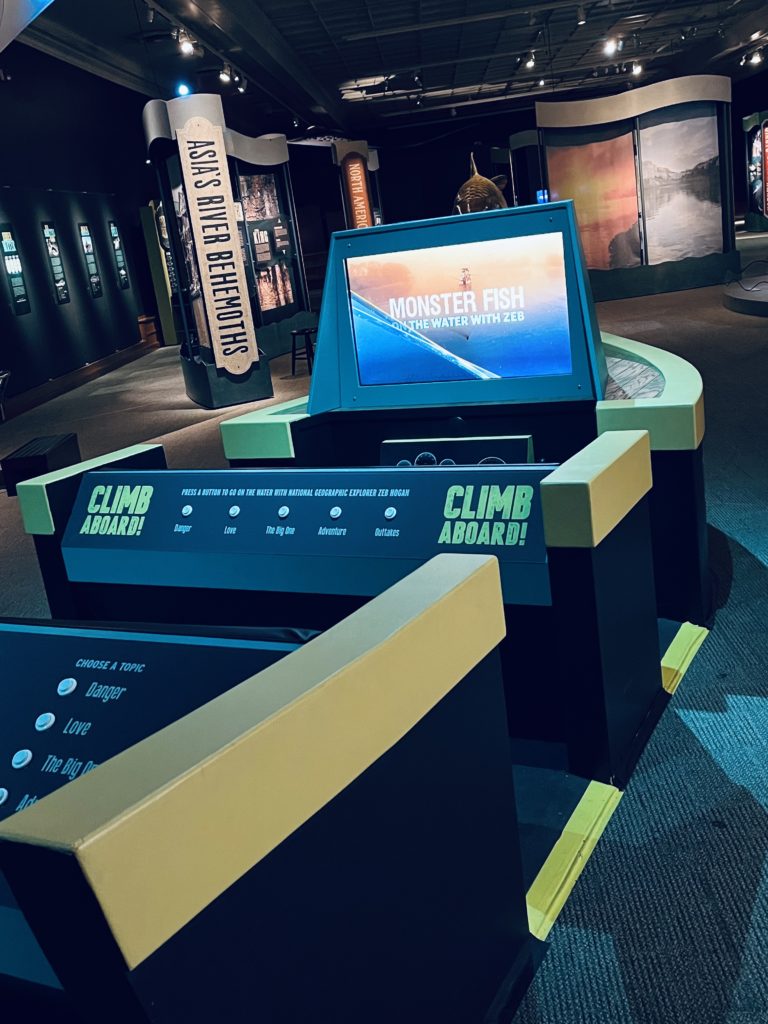
If your work involves the study of river fish, boats are essential tools. In Monster Fish: In Search of the Last River Giants, an exhibition developed and travelled by National Geographic, the vital role of watercraft as research platforms is acknowledged through an interactive display that resembles a boat. Here visitors are welcomed aboard a simulated 15-foot vessel to sit on bow-facing bench seats and watch on-the-water video clips of big fish and Dr. Zeb Hogan, host of the popular Nat Geo Wild show.

Small boat with large antennae on the water.

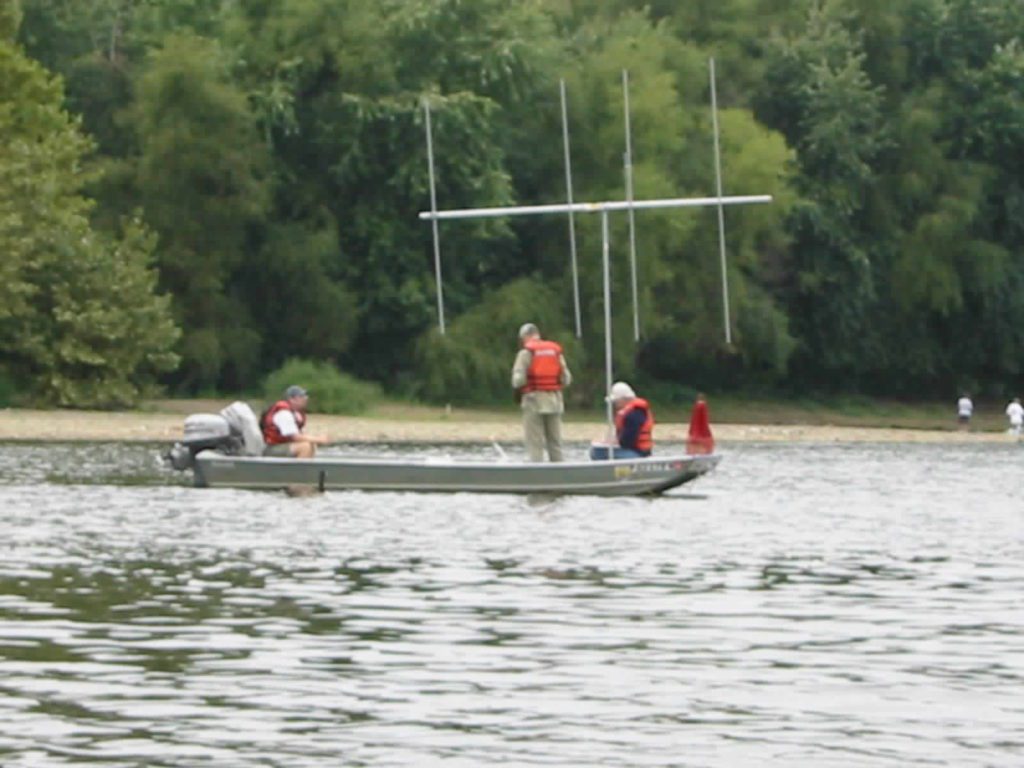
Back in 2002 and 2003, when fisheries biologist Patrick Barry and a small team of assistants relied upon a similar-sized boat to study the movements of American Paddlefish in Pittsburgh’s rivers, an antenna towered 15 feet above the craft.  “Other people on the rivers certainly noticed us when we were out on the water.” Barry explains, “The antenna made us pretty conspicuous.”  

There was nothing secret about the research, which was a collaborative effort involving the Pennsylvania Fish and Boat Commission, U.S. Geological Survey, U.S. Army Corps of Engineers, West Virginia Division of Natural Resources, California University of Pennsylvania, and Penn State University. There was, however, little local public knowledge about paddlefish, a native species that disappeared from the river system here in the 1920’s, and a creature whose fossil lineage dates back some 100 million years. Barry was then a fisheries science graduate student at Penn State, and his thesis research was intended to shed light on the limited success of paddlefish reintroduction efforts conducted by the PA Fish and Boat Commission during the early 1990s.

The project included targeted public outreach efforts. Barry created a bright yellow mini-poster bearing the headline “Have You Seen This Fish?” above a picture of his long-snouted thesis subject, and placed dozens of copies at marinas, boat launches, and fishing tackle shops along the sections of the Allegheny River and Ohio River in his study area. A pair of impressive paddlefish facts were shared below the picture – the creature’s potential to attain a length of seven feet, and a weight of up to 100 pounds – followed by a plea to release any paddlefish soon after capture, and to contact Barry with information about the circumstances of the catch.

Paddlefish sculpture in a museum.

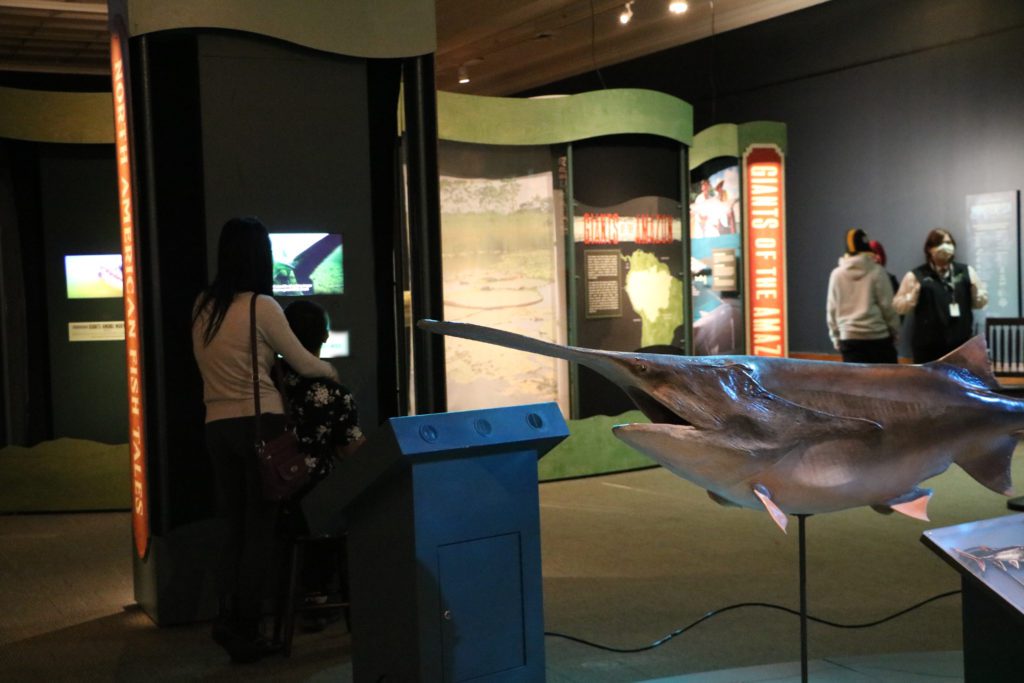
Visitors to Monster Fish are presented with far more information about the big river resident known to science as Polyodon spathula. A six-foot long American Paddlefish replica is the centerpiece of the exhibition’s North American sector, owing to the species’ wide distribution in most of the larger rivers in the Mississippi River Watershed. Off the model’s left flank is an information panel describing the eye-catching long bill as an extraordinary sensory organ, explaining the species’ plankton diet, and introducing a Yangtze River relative last seen in 2003, the Chinese Paddlefish. Off the fish’s right flank a video display titled “OPEN WIDE” shows how the creature’s widely opened mouth and comb-like bony interior function as an effective plankton-capturing screen.

The fish Barry worked with were far smaller than the exhibit model. Over the two years of his study he and his team released a total of 66 hatchery-reared juvenile paddlefish ranging, in “eye-to-tail length,” from 10 to 12 inches. Each had been fitted with pencil-thin battery-powered radio transmitters that weighed less than 2% of the fish’s body weight. Releases were staged in late September both years, and Barry’s goal, during the nine weeks following each event was to relocate, with the aid of the boat-mounted antenna, each fish every day. Each relocation, when recorded with the aid of a Global Positioning System (GPS) unit, added important information about dispersal distance, direction of movement, habitat preference, and overall survival.

Today Patrick Barry is Watershed Program Manager for the Bridger Teton National Forest in western Wyoming, where instead of relocating wandering fish, his daily goals are related to the implementation of policy and management of staff to provide clean water and sustainable forests for current and future needs. From his office in Afton, WY during a recent phone conversation he was happy to summarize his findings from Pittsburgh waters nearly two decades ago. He noted that days relocating tagged fish frequently stretched into nights of doing the same, and the routine during the study periods was to “get up the next day, and do it all over again.” 

He heard back from people who encountered his yellow mini-posters, and many of their reports reinforced a paddlefish behavior he had observed firsthand. “People in boats saw the fish in places where currents brought nutrient-rich waters up to the sunny surface, but these people were never in metal boats. They’d be in a fiberglass canoe, never an aluminum one. The long snout of the paddlefish contains sensors that can detect the electrical charge of anything metal in the water. You aren’t likely to see one if you’re in a metal-hulled boat.”

When asked about the long-term viability for paddlefish in Pittsburgh area waters, Barry pointed immediately to a longstanding gap in the species’ habitat requirements. “Historically the Pittsburgh’s rivers have been able to flood and recede, a cycle that creates gravel bars in some places. Paddlefish need gravel bars to spawn, and during the study we weren’t able to pinpoint a single suitable spawning spot it in the survey territory.”

Although Barry has worked professionally with our continent’s western trout and salmon species since his months on the water in Pittsburgh, his closing comments convey his continued fascination with paddlefish. “There’s a lot of current interest in the species’ sensory powers. A young paddlefish can detect the wingbeats of a single zooplankton in the water column and adjust its glide pattern to intercept and eat it.”

Patrick McShea works in the Education and Visitor Experience department of Carnegie Museum of Natural History. Museum employees are encouraged to blog about their unique experiences and knowledge gained from working at the museum.

Related Content

The Art of Making Fish Familiar

Rating River Residents On the Monster Scale

March Mammal Madness and Middle School Science Class

Carnegie Museum of Natural History Blog Citation Information

Blog author: McShea, Patrick
Publication date: March 29, 2022

Share this post!

  • Share on Twitter Share on Twitter
  • Share on Facebook Share on Facebook
  • Share on Pinterest Share on Pinterest
  • Share on LinkedIn Share on LinkedIn
  • Share on Reddit Share on Reddit
  • Share via Email Share via Email

Filed Under: Blog Tagged With: Monster Fish, Pat McShea

March 10, 2022 by Erin Southerland

March Mammal Madness and Middle School Science Class

by Patrick McShea

At one suburban Pittsburgh school, the tournament bracket sheets currently generating discussions have nothing to do with basketball. Since 2013, science teacher Christian Shane has strengthened science engagement among the seventh and eighth students he teaches at North Allegheny District’s Ingomar Middle School through participation in a group learning project designed by scientists and educators that borrows its organizational structure, timing, and alliterative name from the annual NCAA Division 1 Men’s Basketball Tournament.

March Mammal Madness is clearly a take on the far better known, March Madness, the branding name for the weeks-long college tournament whose single game elimination schedule, when plotted as a chart in advance of the start date, invites fans to use their background knowledge to predict, frequently as a bet or wager, the outcome of every game.

Participants in March Mammal Madness are also asked to make far-seeing predictions, but on theoretical battle encounters involving mainly mammals rather that basketball games. The online event began in 2013 as the idea of Dr. Katie Hinde, a researcher and Associate Professor at Arizona State University. Since its early days, tournament organizers have made great efforts to raise bracket-filling decisions beyond the realm of guess work through the creation of an extensive and easy to use website that is part of the Arizona State University Library system.  

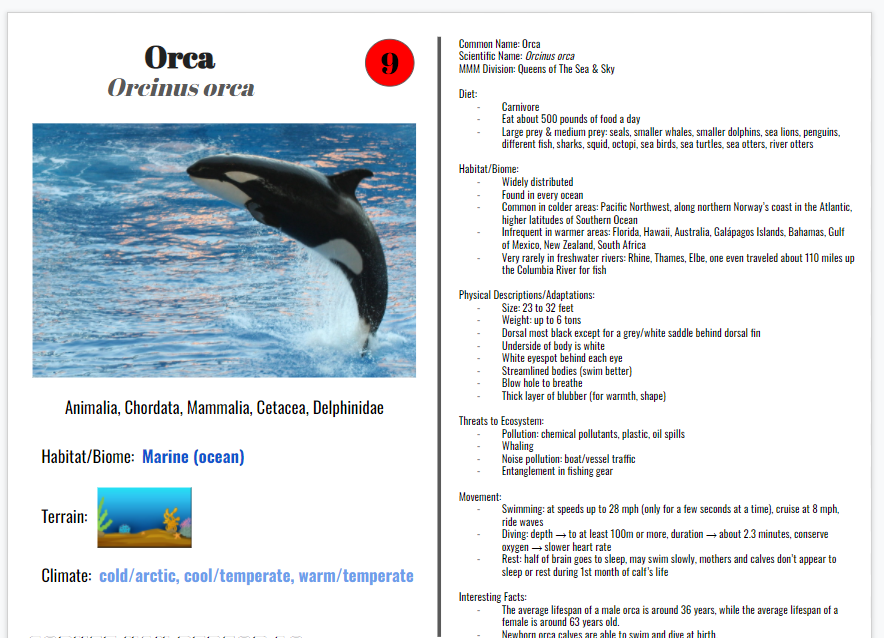
Once the creatures selected for the annual competition are announced in late February, participants of all ages and academic backgrounds can visit the site to locate a range of accurate and up-to-date information about each species. At Ingomar Middle School, Christian’s students used the site as an aid in creating a series of Animal Research Trading Cards for all 65 of this year’s combatants. In seventh grade classes, online research of some combatants, including black bear, grizzly bear, coyote, mountain lion, and beaver, was bolstered by firsthand examination of mammal skulls borrowed from the CMNH Educator Loan Collection.   

Playing card with the image of an orca and the following text: Orca Orcinus orca
Common Name: Orca Scientific Name: Orcinus orca MMM Division: Queens of The Sea & Sky
Diet:
Carnivore Eat about 500 pounds of food a day Large prey & medium prey: seals, smaller whales, smaller dolphins, sea lions, penguins, different fish, sharks, squid, octopi, sea birds, sea turtles, sea otters, river otters
Habitat/Biome:
Widely distributed Found in every ocean Common in colder areas: Pacific Northwest, along northern Norway's coast in the Atlantic, higher latitudes of Southern Ocean Infrequent in warmer areas: Florida, Hawaii, Australia, Galápagos Islands, Bahamas, Gulf of Mexico, New Zealand, South Africa Very rarely in freshwater rivers: Rhine, Thames, Elbe, one even traveled about 110 miles up the Columbia River for fish
Physical Descriptions/Adaptations:
Size: 23 to 32 feet Weight: up to 6 tons Dorsal most black except for a grey/white saddle behind dorsal fin Underside of body is white White eyespot behind each eye Streamlined bodies (swim better) Blow hole to breathe Thick layer of blubber (for warmth, shape)
Animalia, Chordata, Mammalia, Cetacea, Delphinidae
Habitat/Biome: Marine (ocean)
Threats to Ecosystem:
Pollution: chemical pollutants, plastic, oil spills Whaling Noise pollution: boat/vessel traffic Entanglement in fishing gear
Terrain:
Movement:
Swimming: at speeds up to 28 mph (only for a few seconds at a time), cruise at 8 mph, ride waves Diving: depth to at least 100m or more, duration about 2-3 minutes, conserve oxygen slower heart rate Rest: half of brain goes to sleep, may swim slowly, mothers and calves don't appear to sleep or rest during 1st month of calf's life
Climate: cold/arctic, cool/temperate, warm/temperate
Interesting Facts:
The average lifespan of a male orca is around 36 years, while the average lifespan of a female is around 63 years old. Newborn calves are able to swim and dive at birth
Orca Animal Research Trading Card

In summarizing his own recently completed bracket, Christian provides an example of an epic pinnacle encounter. “I went with the Alaska theme in picking Grizzly vs Orca, with Orca for the win! #TeamOrca.” Lest a battle example featuring two top-of-the-food-web predators gives a distorted view of the sound and fury of theoretical matches, this information from the “Frequently Asked Questions” section of the tournament website reminds participants that some matches wouldn’t make for good television:

The battles are NOT always “nature, red in tooth and claw.” Sometimes the winner “wins” by displacing the other at a feeding location, sometimes a powerful animal doesn’t attack because it is not motivated to.

Evidence that this year’s bracket has created middle school-level excitement among the scientists and educators at Carnegie Museum of Natural History arrived in a recent email reminder Curator of Mammals John Wible sent to colleagues participating in this year’s event:

Now in case you were befuddled by some of the common names used in the brackets (e.g., therapsid or pangolin) I have attached a listing of all the taxonomic names for the combatants. So for example, there are 8 species of pangolins and which one is the pangolin here . . . Smutsia gigantea, the giant pangolin from Africa.

In the first two rounds, I remind you that the location of the battle is in the home habitat of the higher seeded (with the lower number!) combatant. From round 3 on, there is one of four random environments for the battles announced before the battle.

Providing greater public insight into how scientists think about the world we all share is in fact one of the broader impacts of March Mammal Madness. Last year, in a research paper documenting the event’s development, reach, and benefits, the creative team responsible for March Mammal Madness offered this insight:

Scientists situate ourselves in the domain of data collection framed by hypotheses and predictions as we speculate about the world(s) around us. But fundamentally these are just grown-up words for ideas hewn from imagination and the creative combination of what is known to journey into the unknown. March Mammal Madness is collective, “performance science” – the stories of animals, told creatively with awe for the natural world. We celebrate species and the ecosystems they inhabit, the scientists who conduct studies, and the funders who make the research possible.  (https://elifesciences.org/articles/65066#s7)

As the March Mammal Madness tournament progresses, you’ll be able to follow some commentary from CMNH scientists and educators on Twitter @CarnegieMNH.

Teachers who would like to follow the overall tournament may also want to use #2022MMMk12 with their students for a more student-friendly twitter feed.

Patrick McShea works in the Education and Visitor Experience department of Carnegie Museum of Natural History. Museum employees are encouraged to blog about their unique experiences and knowledge gained from working at the museum.

Related Content

World Pangolin Day

March Mammal Madness 2019

Don’t Overlook the Lichens

Carnegie Museum of Natural History Blog Citation Information

Blog author: McShea, Patrick
Publication date: March 10, 2022

Share this post!

  • Share on Twitter Share on Twitter
  • Share on Facebook Share on Facebook
  • Share on Pinterest Share on Pinterest
  • Share on LinkedIn Share on LinkedIn
  • Share on Reddit Share on Reddit
  • Share via Email Share via Email

Filed Under: Blog Tagged With: Education, mammals, Pat McShea

March 10, 2022 by Erin Southerland

St. Patrick and Our Fear and Fascination With Snakes

by Patrick McShea

Through the lens of natural history, the legend of a Fifth Century Christian Missionary driving the snakes of Ireland into the sea has no factual basis. Ireland was snake-less territory long before the man now known to the world as Saint Patrick arrived on the scene, a condition attributable to the massive glacial ice sheet that covered the island and surrounding territories beginning approximately 26,000 years ago. In the centuries since the ice melted, as the Irish landscape became hospitable to various plants and animals, the surrounding cold Atlantic waters prevented the migration of snakes from nearby lands.

Colorful stained glass window depicting St. Patrick.
“Saint Patrick (stained glass)” by jcbwalsh is marked with CC BY-NC 2.0.

If St. Patrick’s enduring reputation as a reptile wrangler can be best explained by reference to religious symbolism, his legendary feat remains a testament to the long-standing fear and fascination humans have for snakes. Proof of this two-fold regard can also be found in the myths that persist in places where encounters with snakes are commonplace.

Colorful stylized snake
2022 logo for the St. Patrick’s Festival in Dublin, Ireland

In Pennsylvania, where 21 species of snakes are considered to be native, a considerable amount of misinformation about our legless neighbors has developed during the Commonwealth’s 235-year history. Most of myths can be easily addressed – hoop snakes, creatures capable of holding their tails in their mouths to roll down hills, simply do not exist; the source of the cucumber smell some people associate with copperheads might be a habitat odor created by the rot of decaying bark and other vegetation; and snakes are simply not physically equipped to dig their own extensive tunnel systems. 

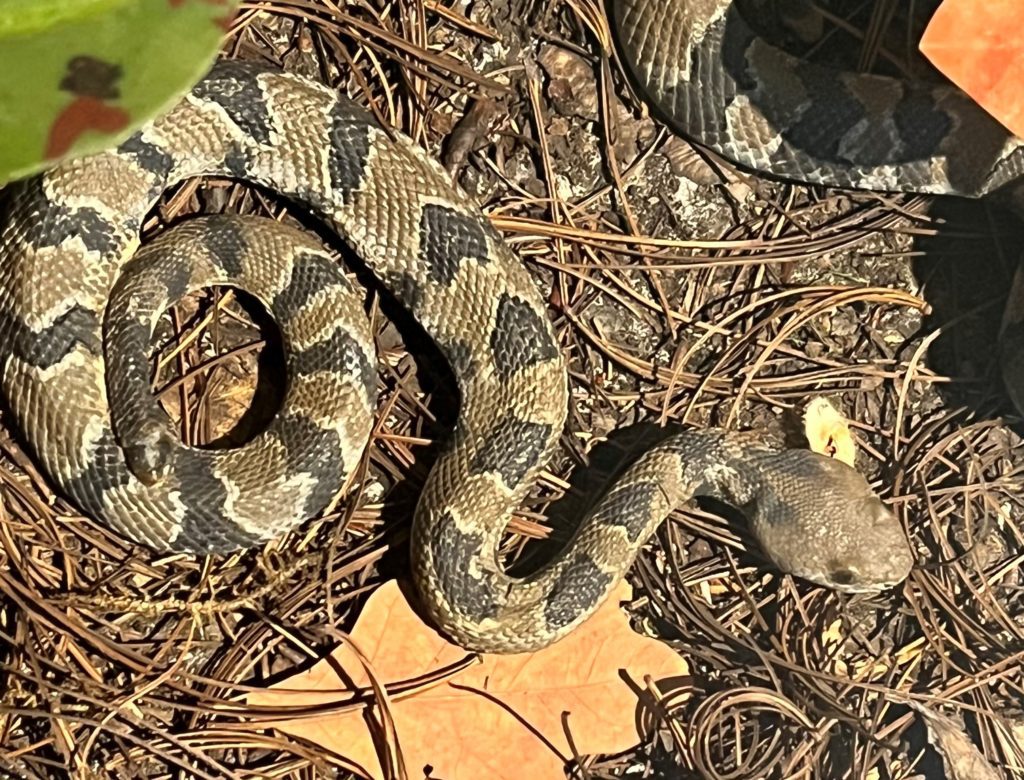
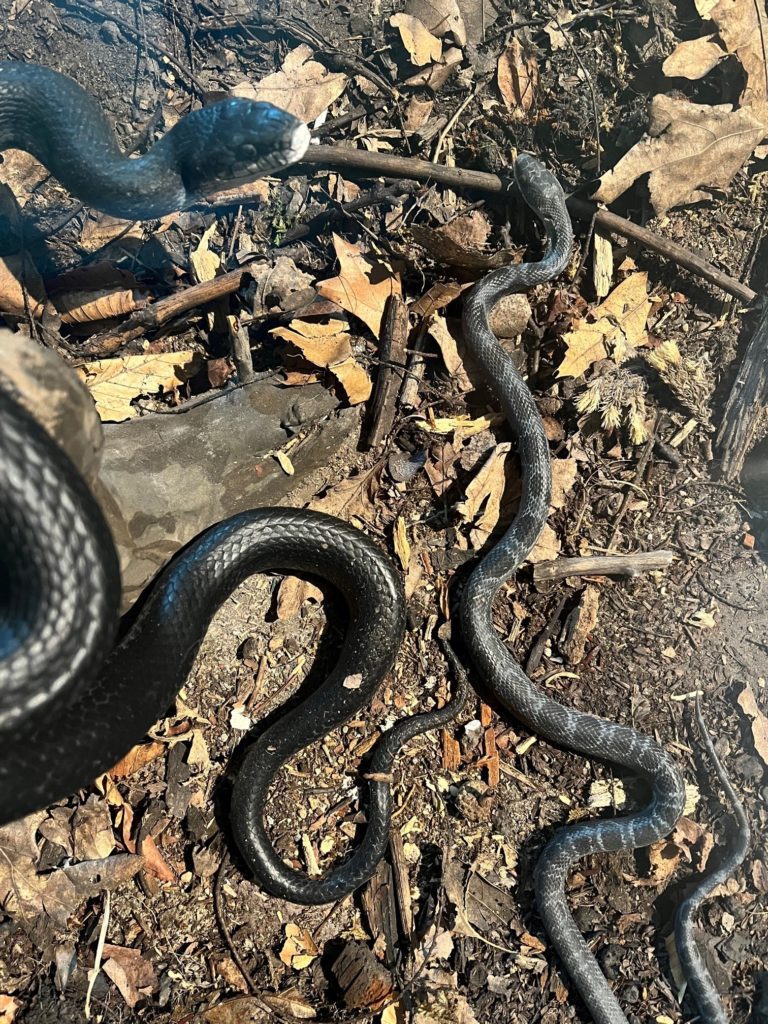
One particularly persistent myth involves interbreeding between timber rattlesnakes (Crotalus horridus), one of three venomous species found in Pennsylvania, and black rat snakes (Pantherophis alleghaniensis), a common species that frequently draws human attention because of its tree climbing abilities. Young black rat snakes have a banded pattern that has repeatedly led some human observers to speculate about rattlesnake ancestry.

Museum display of timber rattlesnakes.
In the display of Pennsylvania’s venomous snakes, a tiny button of a rattle is visible on the tail end of this nine-inch-long timber rattlesnake.

The Pennsylvania snake displays on the Daniel G. & Carole L. Kamin T. rex. Overlook are the perfect place to develop the type of memory image required identify a young black rat snake, and perhaps minimize the attendant anxiety of an unexpected future encounter. 

Museum display of black rat snakes.
A display of Pennsylvania’s non-venomous snakes includes a juvenile black rat snake (right) next to a larger and darker adult.

Patrick McShea works in the Education and Visitor Experience department of Carnegie Museum of Natural History. Museum employees blog about their unique experiences and knowledge gained from working at the museum.

Related Content

What is a Shamrock?

Section of Minerals and Earth Sciences Celebrates Being Lucky!

The Enduring Appeal of Snakes

Carnegie Museum of Natural History Blog Citation Information

Blog author: McShea, Patrick
Publication date: March 11, 2022

Share this post!

  • Share on Twitter Share on Twitter
  • Share on Facebook Share on Facebook
  • Share on Pinterest Share on Pinterest
  • Share on LinkedIn Share on LinkedIn
  • Share on Reddit Share on Reddit
  • Share via Email Share via Email

Filed Under: Blog Tagged With: Pat McShea, Science News

  • « Go to Previous Page
  • Page 1
  • Interim pages omitted …
  • Page 3
  • Page 4
  • Page 5
  • Page 6
  • Page 7
  • Interim pages omitted …
  • Page 15
  • Go to Next Page »

sidebar

About

  • Mission & Commitments
  • Directors Team
  • Museum History

Get Involved

  • Volunteer
  • Membership
  • Carnegie Discoverers
  • Donate
  • Employment
  • Events

Bring a Group

  • Groups of 10 or More
  • Birthday Parties at the Museum
  • Field Trips

Powdermill

  • Powdermill Nature Reserve
  • Powdermill Field Trips
  • Powdermill Staff
  • Research at Powdermill

More Information

  • Image Permission Requests
  • Science Stories
  • Accessibility
  • Shopping Cart
  • Contact
  • Visitor Policies
Stay in the loop! Sign up for our newsletter(s).
One of the Four Carnegie Museums | © Carnegie Institute | Privacy Policy | Terms of Use | Accessibility
Rad works here logo