• Skip to primary navigation
  • Skip to main content
  • Skip to primary sidebar

Carnegie Museum of Natural History

One of the Four Carnegie Museums of Pittsburgh

  • Visit
    • Buy Tickets
    • Visitor Information
    • Exhibitions
    • Events
    • Dining at the Museum
    • Celebrate at the Museum
    • Powdermill Nature Reserve
    • Event Venue Rental
    • Gift Cards
  • Learn
    • Field Trips
    • Educator Information
    • Programs at the Museum
    • Bring the Museum to You
    • Guided Programs FAQ
    • Programs Online
    • Climate and Rural Systems Partnership
  • Research
    • Scientific Sections
    • Science Stories
    • Science Videos
    • Senior Science & Research Staff
    • Museum Library
    • Science Seminars
    • Scientific Publications
    • Specimen and Artifact Identification
  • About
    • Mission & Commitments
    • Directors Team
    • Museum History
  • Tickets
  • Give
  • Shop

Pat McShea

January 27, 2022 by Erin Southerland

African Artifacts: Back Story and Current Use

by Patrick McShea

Teaching with African Artifacts at Pittsburgh Public Schools’ Gifted Center

At Pittsburgh Public Schools’ Gifted Center, Cheree Charmello Andrews has long used a set of handcrafted objects from the Educator Loan Collection of Carnegie Museum of Natural History to help her seventh and eighth grade students better understand the diverse Peoples of the African Continent. The K-8 school, which is in the city’s Elliot neighborhood, serves students throughout the school district whose Individual Education Plans (IEPs) identify them as gifted. Students visit the Center once a week to participate in innovative programs developed and presented by some two dozen faculty members.
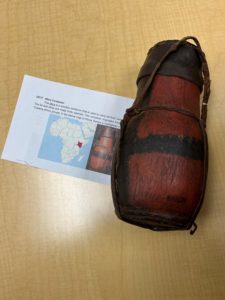
Wood and cowhide container on a table next to a piece of paper with information about it.
A wood and cowhide container represents the handwork of Kenya’s Samburu and Turkana ethnic groups.

The set of materials Cheree borrows can be broadly described as contemporary African Artifacts that reflect deep cultural history. Among the 18-item set are carved wooden figures, hammered aluminum utensils, ornate leather pouches, miniature masks in cast brass, a colorful hand-stitched story cloth, a canteen fashioned from a dried gourd, and even a fully functional set of dance bells, a musical instrument traditionally worn as ankle adornment. All the objects are sturdy enough for handling, and in-hand their educational power is enhanced when the name of the cultural group each represents is supplied – Senufo, Samburu, Turkana, Akamba, and Masai.
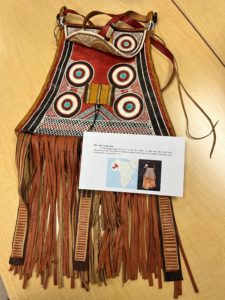
ornate leather bag with beading and fringe on a table accompanied by an information sheet
An ornate leather bag from Mali.

Preparing African Artifacts for the Educator Loan Collection

Some of the Masai and Samburu materials were purchased for educational use in the 1980s by a CMNH mammal curator performing fieldwork in Kenya. The acquisition history of the other objects is unknown, but the story of the small collection’s organization for education use is clear, and worth wider sharing. During the summer of 1992, then Cornell University sophomore Marcus McFerren was a work-study student in the CMNH Division of Education. When he expressed interest in preparing the African cultural objects in a storage cabinet for classroom use, the project became his principal work assignment. Marcus established personal connections with the librarians who then managed the African American Collection at the University of Pittsburgh’s Hillman Library, and with their assistance, created simple background information sheets for each object.

Person wearing a suit and glasses
Dr. Marcus McFerren was a work-study student at CMNH in 1992.

For the past 25 years, Marcus has been Dr. McFerren. He is a Board-Certified Dermatologist with a practice in Connecticut, who completed a PhD in Plant Biology at Cornell before he entered medical school. As a skilled ethnobotanist, he has conducted his own fieldwork at several locations in Africa. Six years ago, when Marcus visited the museum with his wife and two sons, he asked to see the educational materials he prepared so many years earlier. He’s due for an update because of recent upgrades. 
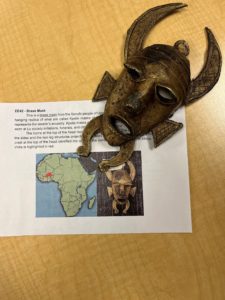
Brass mask on a table next to a piece of paper with information about it.
A brass mask from the Senufo People of Burkina Faso.

2021 Updates and Current Use

In the fall of 2021 two small teams of Duquesne University students created new labels for the African objects as a volunteer project for a seminar class titled, Science at the Service of Society. Labels now pair object images with simple maps marking their county of origin. Perhaps of greater importance, Cheree recently shared the story behind her use of the well-worn authentic objects. It’s a brief account that nonetheless encompasses art, natural history, and most of all, what skilled teachers can accomplish:

Years ago, I designed a class called #BlackMindsMatter in response to a beloved Black student who expressed that she felt her culture was consistently left out of the academic setting in any positive or substantial way. I began to use the museum boxes in my classroom as a way of helping students access a beautiful legacy that is not always included in Eurocentric curriculum. As a white woman, it can be challenging to help students connect to the vast diaspora of Black culture. I paired the artistic genius of old and new African art and artifacts with modern Black art. We explored the parallels between the older forms of African art with the work of historical and contemporary art and concluded that many artists had to be influenced by Black art and artifacts. It was illuminating and uplifting.

Cheree Charmello Andrews

Patrick McShea works in the Education and Visitor Experience department of Carnegie Museum of Natural History. Museum employees blog about their unique experiences and knowledge gained from working at the museum.

Related Content

Rising Through the Educator Ranks

Expanding the Scope of Environmental Education

Center Court Culture Sharing

Carnegie Museum of Natural History Blog Citation Information

Blog author: McShea, Patrick
Publication date: January 27, 2022
Share this post!

  • Share on Twitter Share on Twitter
  • Share on Facebook Share on Facebook
  • Share on Pinterest Share on Pinterest
  • Share on LinkedIn Share on LinkedIn
  • Share on Reddit Share on Reddit
  • Share via Email Share via Email

Filed Under: Blog Tagged With: Educator Loan Program, Educator Resources, Pat McShea

January 7, 2022 by Erin Southerland

Rating River Residents on the Monster Scale

by Patrick McShea
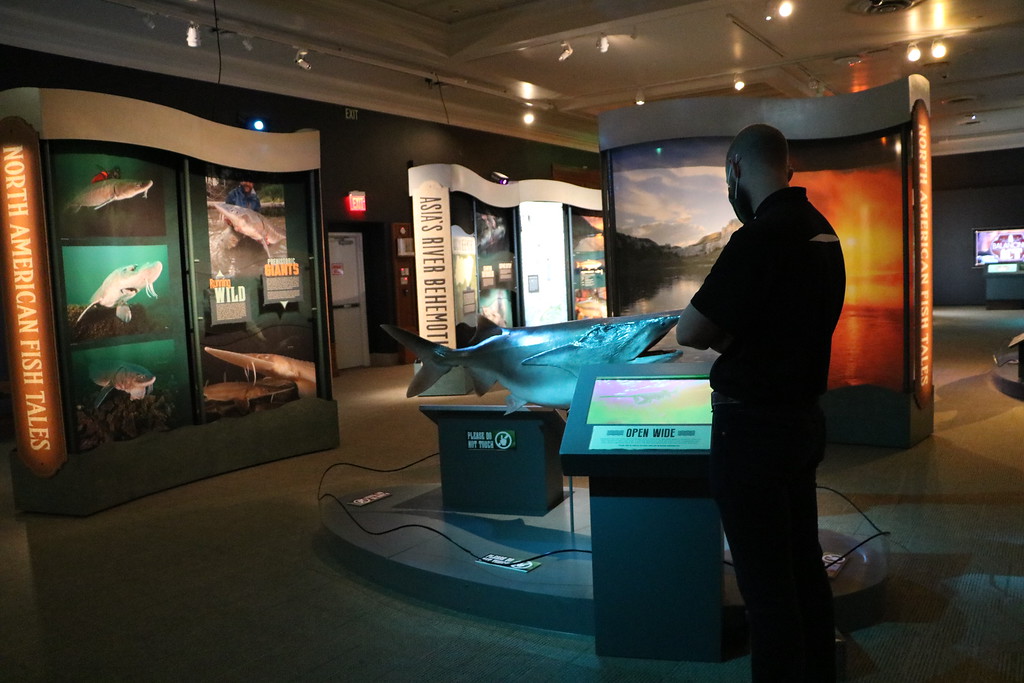
person standing in the exhibition Monster Fish

The world’s big river systems are a sub-topic of Monster Fish: In Search of the Last River Giants, an exhibition developed and traveled by National Geographic Museum, and now on view in the R.P. Simmons Family Gallery.

Species featured in the exhibition as life-size replicas continue to inhabit portions of the Mekong, Amazon, Ganges, Murray, and Mississippi River systems. Text panels, maps, and in-the-field video testimony by National Geographic Explorer Dr. Zeb Hogan repeatedly present the current state of these enormous finned residents as a measure of each freshwater network’s ecological health.

The message is certainly locally relevant. The Ohio River, which forms in Pittsburgh at the confluence of the Allegheny and Monongahela Rivers, drains the massive eastern flank of the Mississippi River Watershed. Visitors to Monster Fish from western Pennsylvania, northern West Virginia, or eastern Ohio will naturally wonder about the largest fish in our region’s flowing waters. Addressing such curiosity is second nature for Ryan Argo, a Technical Programs Manager for the Ohio River Valley Sanitation Corporation, a multi-state agency widely known in abbreviated form as ORSANCO. 

The 73-year-old organization works with member states on water quality improvements in the Ohio River Basin to ensure the river system can be a resource for drinking water, industrial supplies, and recreation, as well as habitat for a healthy and diverse aquatic wildlife community. Ryan’s work involves regular surveys of fish and aquatic invertebrate populations along the whole 981-mile length of the Ohio River as well as lower portions of significant tributaries.

person holding a large fish at night
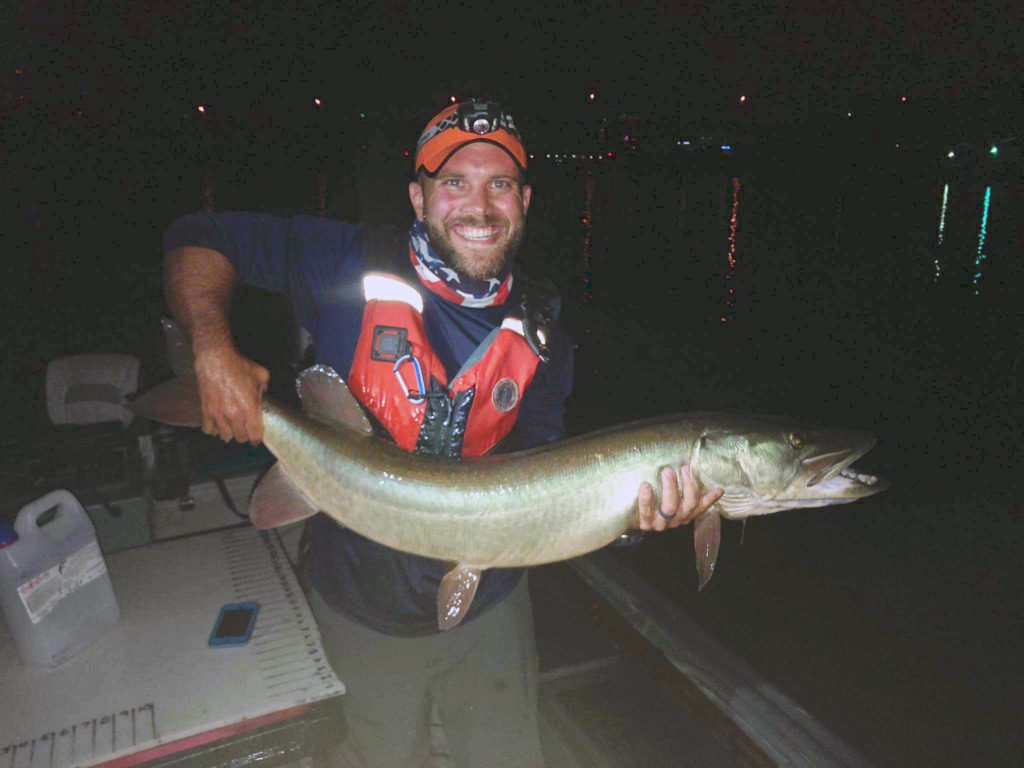
Ryan Argo holding Pittsburgh Muskellunge before releasing it un-harmed.

Speaking recently from ORSANCO’s Cincinnati headquarters, Ryan began a big fish conversation with a Pittsburgh reference. “During a survey on the lower Allegheny a couple years ago, we came upon a 50-inch-long muskellunge at a place well within sight of Downtown buildings. In that part of the river system, muskellunge are the top predator, and this one was waiting along shore in what seemed barely six inches of water to ambush its next meal.” That next meal could have been any one of a long list of fish species. Surveys document more than 120 species of fish in the Ohio River, a handful of which can approach monster standards in size. 

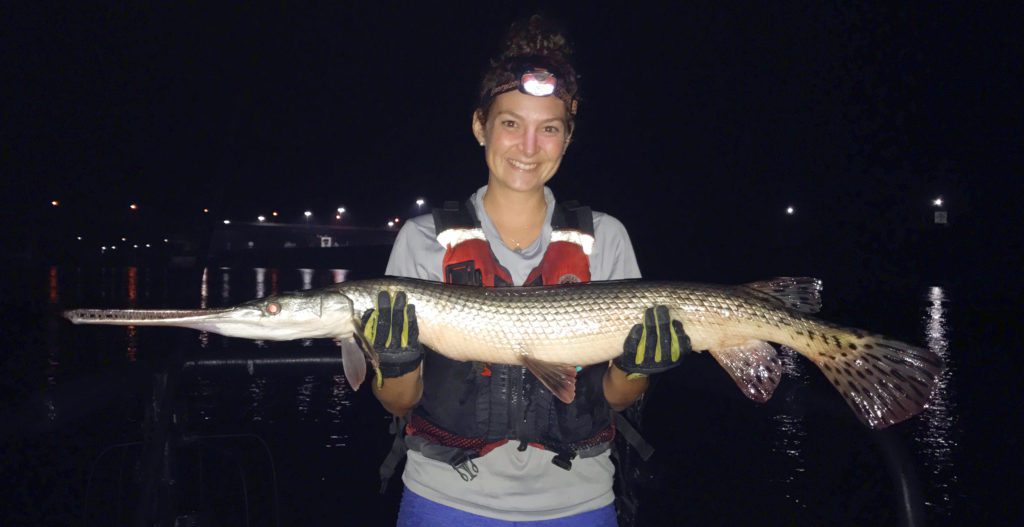
In addition to muskellunge, Ryan mentions American Paddlefish, Flathead and Blue Catfish, and a species of sucker known as Black Buffalo as Ohio River fish with potential to grow particularly large and can exceed 50 pounds. “Perhaps Long-nosed Gar should also be considered. They’re thin bodied, completely without bulk, but a twenty-pound gar can be a fish more than four feet long.”

person holding a large fish at night
ORSANCO seasonal biologist Vanessa Vest with Long-nosed Gar.

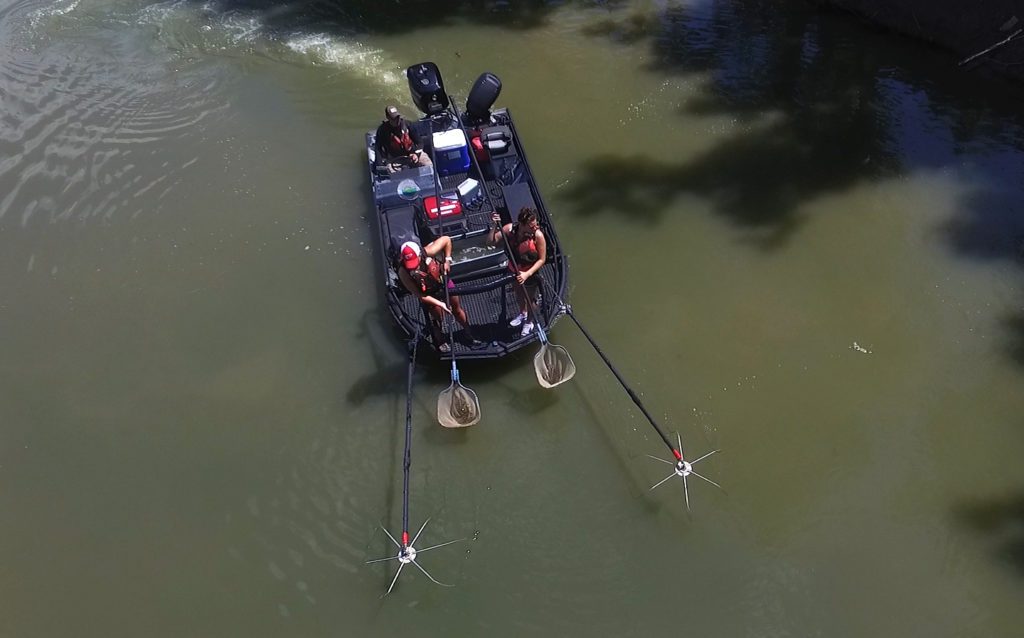
Ryan qualified his species selection by explaining that ORSANCO survey techniques generally involve near shore electrofishing, a practice that employs a weak direct electrical current to temporarily immobilize fish for easy capture. “Our surveys look at the entirety of fishery by sampling similar lengths of shoreline throughout the river system. The work documents not just species diversity, but also biomass. Species like paddlefish that tend to remain out in the main flow of the river don’t show-up much, so their presence is accounted for in other survey methods. The ongoing examination of the fish community tells us about the system’s health, and this information is shared with state and federal agencies.” 

people in a boat on a river
ORSANCO survey crew at work.

In explaining how much the river has changed from the time when its fish and freshwater mollusks were a vital food resource for the Native Peoples who lived along its banks, Ryan cites the Ohio’s binary geologic structure as important baseline information. “There’s the cool water, high gradient, upper river that’s draining a portion of the Appalachians. Then there’s the warm water, low gradient, lower river that wanders across glaciated terrain. Same river, but for fish, different habitat.”

Active management of both sections for navigation, which began in the 1820’s with a federally-funded snag removal, eventually produced the current system of 20 locks and dams that create a dependable main channel for commercial and recreational watercraft. “We know fish can move through,” Ryan explains, “but continuing discussions are important, especially as more dam sites become hydro-electricity generators. We want our native fish populations to be as robust as possible, and that means discussions about how locks operate, and how hydro plants operate.”  

After summarizing the Ohio River as a “large robust biologic system” that is always facing new emerging issues, Ryan concluded the conversation with an account of a big fish observation worthy of those Dr. Zeb Hogan shares in multiple Monster Fish videos.  

“Along the lower Ohio River there are some places where the remnants of old wicket dams still cling to the shore. During periods of high water, when these anchor points are submerged, the water flow over them creates an enormous standing wave, perhaps six feet high. Amidst this churning water I’ve seen big paddle fish and gar moving with ease, the way those species have been doing for thousands of years.”

Patrick McShea works in the Education and Visitor Experience department of Carnegie Museum of Natural History. Museum employees are encouraged to blog about their unique experiences and knowledge gained from working at the museum.

Related Content

Fish and the Fourth of July?

Educator Spotlight: Christian Shane

Lights Out for Birds

Carnegie Museum of Natural History Blog Citation Information

Blog author:
Publication date:

Share this post!

  • Share on Twitter Share on Twitter
  • Share on Facebook Share on Facebook
  • Share on Pinterest Share on Pinterest
  • Share on LinkedIn Share on LinkedIn
  • Share on Reddit Share on Reddit
  • Share via Email Share via Email

Filed Under: Blog Tagged With: Monster Fish, Pat McShea

November 4, 2021 by Erin Southerland

Pitt Outreach Efforts Enriched with Museum Materials

by Patrick McShea
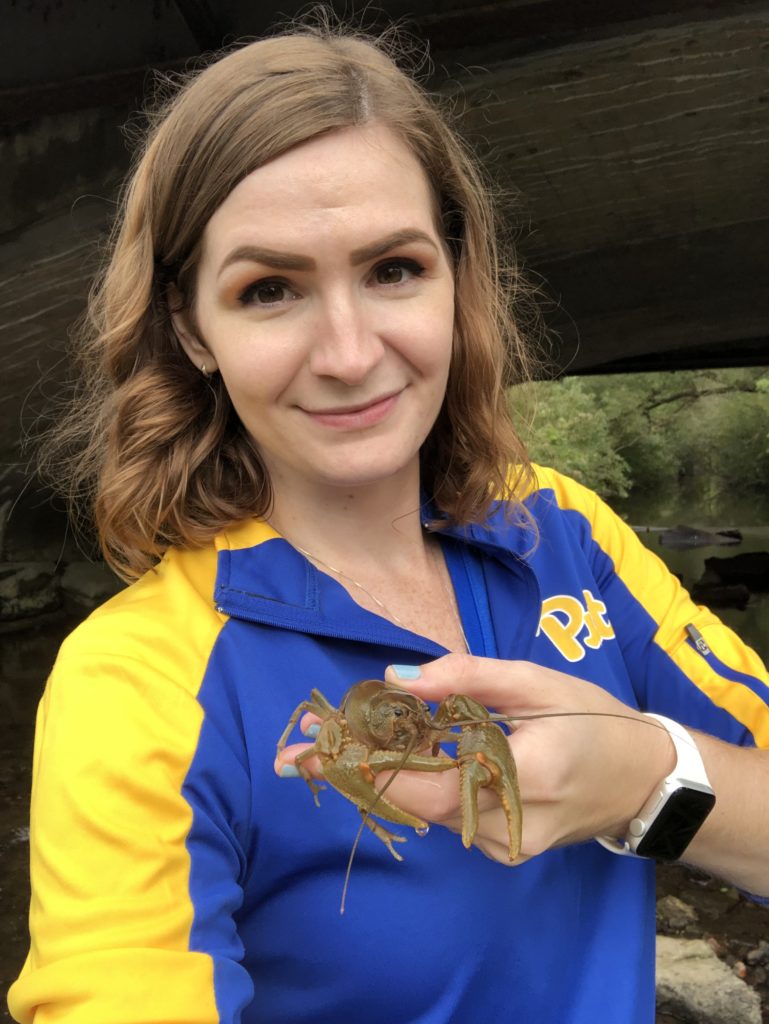
person outside holding a crawfish
Audrey Sykes

At the University of Pittsburgh’s Community Engagement Centers in the Hill District and Homewood, the field of natural history has been well represented in this year’s children’s programming because of the knowledge and enthusiasm of graduate student Audrey Sykes. While she pursues a Doctor of Education degree in Out of School Learning, Audrey also serves as Outreach Coordinator for the university’s Department of Biological Sciences. In that capacity she has repeatedly set-up shop on Saturday mornings in classroom or lab space at the Blakey Center, on Wylie Avenue, for programs broadly billed as a “STEAM Science Saturday” series for topical connections to science, technology, engineering, art, and math.

“The goal of Pitt Biology outreach is to help students further explore concepts taught in the classroom in their own neighborhood,” Audrey explains, “and most of my programs do that through bringing nature into the classroom.” Her programs are designed for students in third through fifth grade, and group sizes have varied from six to more than one hundred students. 

The West Liberty University graduate regularly utilizes materials from the museum’s Educator Loan Collection. She credits the authentic objects with “creating learning opportunities,” and her emailed requests to borrow materials often telegraph program plans. A question, months back, about the availability of a set of mammal skulls representing a carnivore, an herbivore, and an omnivore, indicated an upcoming hands-on investigation connecting tooth structure to diet. Likewise, a more recent request for wildlife-related objects to represent “seasonal cycles, nocturnal adaptations, and harvests” foretold fall programs designed to prime students to notice far more about late October than just Halloween decorations.

In considering how she coordinates her own schoolwork with the steady pace of outreach programs, Audrey concludes, “Everything I’m learning is immediately put into practice in the Outreach Program. Choosing the EdD program is one of the best decisions of my life.” Her dissertation project involves the ongoing development, evaluation, and modification of an aquatic eco-systems curriculum, titled Scales to Tails, at four rural high schools in Erie and Crawford County. Recently secured grant funding will enable an elementary version of the curriculum to also be developed. This will be received as good news by some of the participants in the STEAM Series programs at Blakey Center. Under Audrey’s guidance they’ve already tested some of the key activities.

Patrick McShea works in the Education and Visitor Experience department of Carnegie Museum of Natural History. Museum employees are encouraged to blog about their unique experiences and knowledge gained from working at the museum.

Related Content

Teaching in the Parks

Changing Seats in Changing Times

Rising Through the Educator Ranks

Carnegie Museum of Natural History Blog Citation Information

Blog author: McShea, Patrick
Publication date: November 4, 2021

Share this post!

  • Share on Twitter Share on Twitter
  • Share on Facebook Share on Facebook
  • Share on Pinterest Share on Pinterest
  • Share on LinkedIn Share on LinkedIn
  • Share on Reddit Share on Reddit
  • Share via Email Share via Email

Filed Under: Blog Tagged With: Education, Pat McShea, Pittsburgh

September 21, 2021 by wpengine

Lights Out for Birds

by Patrick McShea

As innately land-bound creatures, our comprehension of what goes on in the sky above us is limited. These short-comings are compounded when the sky grows dark. Our disconnection with what amounts to be an adjacent, but largely inaccessible ecosystem, presents a challenge to the organizers of a seasonal project to protect migrating songbirds.

Enormous numbers of birds pass over the Pittsburgh region each year during migration, northbound in the spring, and southbound in the fall. These passages occur during the night, and bright lighting can disorient the migrants’ finely-tuned sense of navigation, sometimes resulting in disabling or fatal window collisions. Lights Out Pittsburgh, is a voluntary program that encourages building owners and tenants to minimize this problem by turning off as much internal and external lighting as possible, nightly from midnight to 6:00 a.m. between September 1 and November 15.

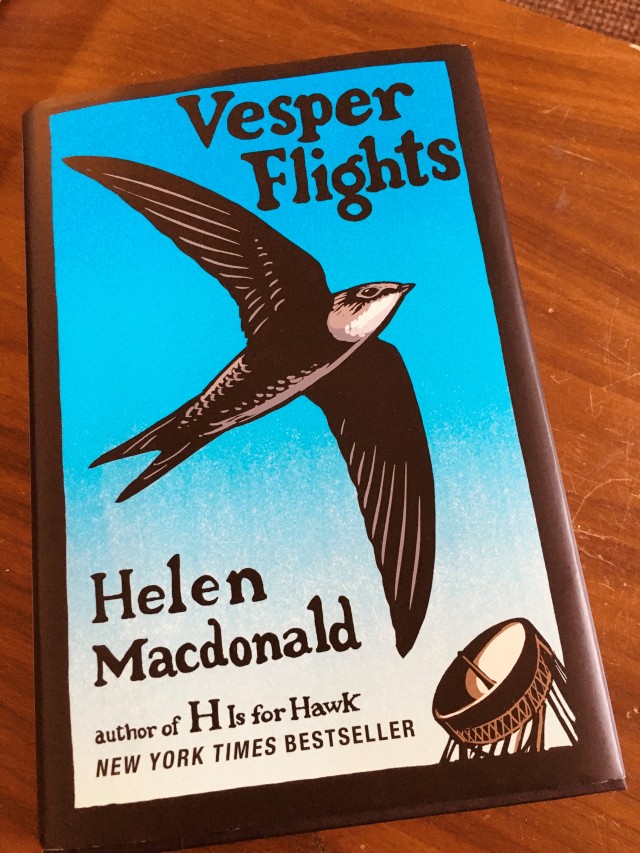
This fall, a group of organizations that includes the Building Owners and Managers Association of Pittsburgh, BNY Mellon, BirdSafe Pittsburgh, Carnegie Museum of Natural History, Pittsburgh Downtown Partnership, and the National Aviary announced their participation in the project. Long term, the sustainability of light reduction efforts will require greater appreciation of sky as ecosystem. To that end an essay in Vesper Flights, Helen Macdonald’s 2020 collection of nature writing and personal memoir, provides essential background information.

Cover of the book Vesper Flights by Helen Macdonald

In “High-Rise” the English naturalist, with Cornell Lab of Ornithology researcher Andrew Farnsworth as her guide, presents the 86th floor observation deck of Empire State Building as a portal for viewing a tiny slice of the northbound spring bird migration high above Manhattan. As Macdonald explains, by referencing the work of another researcher, the lofty vantage point is “a realm where the distinction between city and countryside has little or no meaning at all.”

From Vesper Flights by Helen Macdonald, Grove Press, 2020:

For every larger bird I see, thirty or more songbirds pass over. They are very small. Watching their passage is almost too moving to bear. They resemble stars, embers, slow tracer fire. Even through binoculars those at higher altitudes are tiny, ghostly points of light. I know that they have loose-clenched toes tucked to their chests, bright eyes, thin bones and a will to fly north that pulls them onward night after night. Most of them spent yesterday in central or southern New Jersey before ascending into darkness.

There are, of course, opportunities to make firsthand observations of the passage of migrating songbirds without a skyscraper as viewing platform. As night-flying migrants descend to lower altitudes just before dawn, their presence, numbers, and rough directional movement can be detected from quiet ground-level positions by listening for an irregular cadence of one and two syllable tweets and chips.

In a mid-Twentieth Century essay designed to guide parents in presenting the wonder of nature to their children, the renowned environmentalist Rachel Carson reflected upon this audio evidence of bird migration.

From The Sense of Wonder by Rachel Carson, Harper & Row, 1984 (a renewed copyright from 1956):

I never hear these calls without a wave of feeling that is compounded of many emotions – a sense of lonely distances, a compassionate awareness of small lives controlled and directed by forces beyond volition or denial, a surging wonder at the sure instinct for route and direction that so far has baffled human efforts to explain it.

Some dark early morning this fall, if you’re able to listen to the calls of descending migrants over the background buzz of crickets and the hum of traffic, you’re likely to become a stronger supporter of Lights Out Pittsburgh.

Patrick McShea works in the Education and Visitor Experience department of Carnegie Museum of Natural History. Museum employees are encouraged to blog about their unique experiences and knowledge gained from working at the museum.

Related Content

Bird Architecture on Human Infrastructure

Milestones at Powdermill’s Banding Lab

Teaching About Trees

Carnegie Museum of Natural History Blog Citation Information

Blog author: McShea, Patrick
Publication date: September 21, 2021

Share this post!

  • Share on Twitter Share on Twitter
  • Share on Facebook Share on Facebook
  • Share on Pinterest Share on Pinterest
  • Share on LinkedIn Share on LinkedIn
  • Share on Reddit Share on Reddit
  • Share via Email Share via Email

Share this post!

  • Share on Twitter Share on Twitter
  • Share on Facebook Share on Facebook
  • Share on Pinterest Share on Pinterest
  • Share on LinkedIn Share on LinkedIn
  • Share on Reddit Share on Reddit
  • Share via Email Share via Email

Filed Under: Blog Tagged With: Birds, birdsafe pittsburgh, Pat McShea, Science News, We Are Nature 2

September 7, 2021 by wpengine

Guiding a Local Focus On Climate Education

by Patrick McShea

During the last three days of July more than 330 educators from across the country gathered virtually to learn how to more effectively teach about a topic generating increasingly alarming headlines. The event, titled Summer Institute for Climate Change Education, operated with three principle hosts, Climate Generation, a St. Paul, Minnesota-based educational organization with a national reach, the Youth Climate Program of The Wilds Center in New York’s Adirondack State Park, and the Climate Office of NOAA, the National Oceanic and Atmospheric Administration.

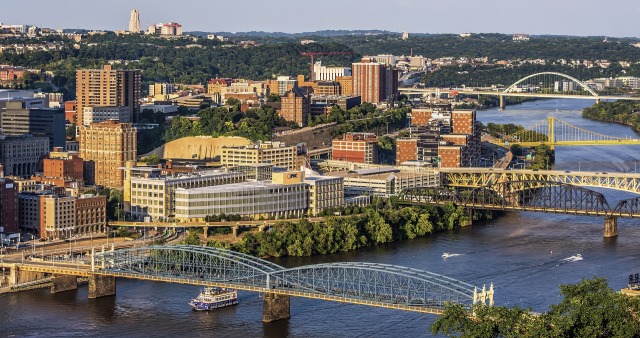
On the middle day of the Institute, participants remotely joined one of a dozen sub-region programs for a more local focus on discussions, resource sharing, and reviews of potential classroom activities. Pittsburgh was the center of one such sub-region, and the host for our region’s day-long program was Katie Modic, Executive Director of a small and innovative organization known as Communitopia.

City of Pittsburgh from above showing buildings, bridges, a river, and many trees.
Image by Bruce Emmerling from Pixabay.

Communitopia is a 12-year-old organization, whose ongoing efforts to slow climate change and create healthier communities through new media and project-based campaigns have been distilled into a three-word mission statement, “Making Green Mainstream.” The 501©3 nonprofit operation is well served by the experience Katie brings to her leadership position. She is a University of Wisconsin-Madison alumni (M.S. in Education, B.A. in Spanish and Anthropology), whose work experience since graduation includes a two-year Teach for America middle school assignment along the US/Mexico border in Donna, Texas, public school teaching experience in Colorado and Florida, international teaching experience in Rotterdam, the Netherlands, and the sharing of many of her first hand learning experiences with undergraduate education students as a professor at Central College in Pella, Iowa.

In planning the day’s schedule, Katie worked with staff from both Phipps Conservatory and Botanical Gardens and Carnegie Museum of Natural History. In carrying out her role as a Zoom screen host for a territory that encompassed nearly all of Pennsylvania, she was able to direct attention to the revision of Pennsylvania’s academic standards for science as a current issue relevant in every corner of the state.

Katie’s position that the standards revision process creates an opportunity to strengthen how climate is addressed in both Science Standards and those for Environment and Ecology is outlined on Communitopia’s website. During the Summer Institute she was able to explain how her opportunity observations were largely based upon her experience in working with students at Woodland Hills High School in Pittsburgh’s eastern suburbs. When biology teacher Margeaux Everhart invited Katie to present Communitopia’ s classroom program about the local impacts of climate change, the session sparked a student-driven grassroots movement that eventually led to the Woodland Hills School District adopting a formal Climate Action Plan.

For many of the educators who participated in the Pittsburgh-based day of Summer Institute programs, watching and listening as some of those students made Zoom speaking appearances was an inspiring and empowering experience.

Patrick McShea works in the Education and Visitor Experience department of Carnegie Museum of Natural History. Museum employees are encouraged to blog about their unique experiences and knowledge gained from working at the museum.

Related Content

Expanding the Scope of Environmental Education

Getting Started: A High School Intern’s Experience in the Herp Section

Bird Architecture on Human Infrastructure

Carnegie Museum of Natural History Blog Citation Information

Blog author: McShea, Patrick
Publication date: September 7, 2021

Share this post!

  • Share on Twitter Share on Twitter
  • Share on Facebook Share on Facebook
  • Share on Pinterest Share on Pinterest
  • Share on LinkedIn Share on LinkedIn
  • Share on Reddit Share on Reddit
  • Share via Email Share via Email

Share this post!

  • Share on Twitter Share on Twitter
  • Share on Facebook Share on Facebook
  • Share on Pinterest Share on Pinterest
  • Share on LinkedIn Share on LinkedIn
  • Share on Reddit Share on Reddit
  • Share via Email Share via Email

Filed Under: Blog Tagged With: Educator Resources, Educators, Pat McShea, We Are Nature 2

August 27, 2021 by wpengine

Fossil Matrix Under the Microscope

by Pat McShea

Museum visitors who approach the broad window of PaleoLab encounter an array of large fossilized bones. If not for the pair of microscope workstations positioned against the lab’s right wall, it would be easy to misinterpret the enormous jaws, ribs, vertebrae, and limb bones as evidence of a size bias in the science of vertebrate paleontology.

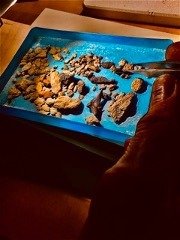
fossil matrix on a sorting tray
A scoop of fossil-bearing matrix on a sorting tray.

Small fossils have certainly made mighty contributions to our understanding of life during ancient time periods. Such fossils, which include loose teeth, small bones, and bone fragments, are the primary focus of some paleontological research. In other projects, where considerably larger fossilized creatures are the focus of study, the fossils of smaller creatures add information about species diversity, food webs, and even the climate conditions of ancient ecosystems. The sorting of fossil-bearing matrix that occurs under PaleoLab’s microscopes ensures that important discoveries will continue to occur.

The term matrix refers to the natural rock surrounding a fossil. In the case of fossil bones encased in rock, the matrix consists of the loose sediments that originally buried the bones, sediments that were later transformed into rock over long stretches of time by the pressure of other sediment layers deposited above them. When fossil-bearing rock layers erode, however, and loosened fossils are transported by water, wind, or other forces, the unconsolidated mix of surrounding materials in which the fossils eventually settle is also termed matrix.

In the field, paleontologists sometimes collect and screen loose matrix on site, using water to both separate floatable bits of plant debris and wash away soil, then sun-drying the resulting sludge for later screening. In the case of the matrix currently being sorted in PaleoLab, material eroded from a more than 50 million-year-old rock unit near Meridian, Mississippi was collected in bulk by CMNH paleontologists and brought back to Pittsburgh for washing and drying at the museum.

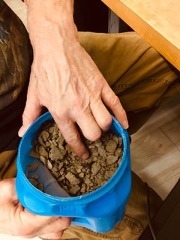
Container of fossil matrix with a person holding it.
Unsorted fossil-bearing matrix.

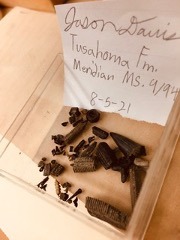
During a recent visit to PaleoLab, Scientific Preparator Dan Pickering pulled two containers from a shelf as “before” and “after” sorting examples. In the “before” container, a quart-sized plastic jug that once held ground coffee, a black, dime-sized shark tooth resting atop similar-sized irregular gray rock fragments hinted at the possible rewards for future sorting efforts. The considerably smaller and lighter “after” container bore not just an array of small marine fossils, including shark teeth and skate tooth plate fragments, but also the name and working notes of the sorter, CMNH volunteer Jason Davis.

fossils in a clear plastic container with a paper label
Fossils picked from matrix, with volunteer Jason Davis’ notes revealing that the material is from the lowermost Eocene (~55 million-year-old) Tuscahoma Formation of Mississippi.

Dan termed the recent finds typical for the current operation, but he also noted a now decades-old exciting discovery in matrix screened from a different, but adjacent Mississippi rock unit. In a scientific paper published in 1991, then-CMNH paleontologists K. Christopher Beard and Alan R. Tabrum described a tooth and jaw fragment from an early primate. The fossil was the first record of an early Eocene mammal in eastern North America, and because of its association with well-studied marine fossils, the find helped to better calibrate existing separate biochronologies of terrestrial and marine fossils.

Patrick McShea works in the Education and Visitor Experience department of Carnegie Museum of Natural History. Museum employees are encouraged to blog about their unique experiences and knowledge gained from working at the museum.

Related Content

The Bromacker Fossil Project Part III: Fossil Preparation

Pebble or Jaw?

Mesozoic Monthly: Nemicolopterus

Carnegie Museum of Natural History Blog Citation Information

Blog author: McShea, Patrick
Publication date: August 27, 2021

Share this post!

  • Share on Twitter Share on Twitter
  • Share on Facebook Share on Facebook
  • Share on Pinterest Share on Pinterest
  • Share on LinkedIn Share on LinkedIn
  • Share on Reddit Share on Reddit
  • Share via Email Share via Email

Share this post!

  • Share on Twitter Share on Twitter
  • Share on Facebook Share on Facebook
  • Share on Pinterest Share on Pinterest
  • Share on LinkedIn Share on LinkedIn
  • Share on Reddit Share on Reddit
  • Share via Email Share via Email

Filed Under: Blog Tagged With: Paleolab, paleontology, Pat McShea

  • « Go to Previous Page
  • Page 1
  • Interim pages omitted …
  • Page 4
  • Page 5
  • Page 6
  • Page 7
  • Page 8
  • Interim pages omitted …
  • Page 15
  • Go to Next Page »

sidebar

About

  • Mission & Commitments
  • Directors Team
  • Museum History

Get Involved

  • Volunteer
  • Membership
  • Carnegie Discoverers
  • Donate
  • Employment
  • Events

Bring a Group

  • Groups of 10 or More
  • Birthday Parties at the Museum
  • Field Trips

Powdermill

  • Powdermill Nature Reserve
  • Powdermill Field Trips
  • Powdermill Staff
  • Research at Powdermill

More Information

  • Image Permission Requests
  • Science Stories
  • Accessibility
  • Shopping Cart
  • Contact
  • Visitor Policies
Stay in the loop! Sign up for our newsletter(s).
One of the Four Carnegie Museums | © Carnegie Institute | Privacy Policy | Terms of Use | Accessibility
Rad works here logo