• Skip to primary navigation
  • Skip to main content
  • Skip to primary sidebar

Carnegie Museum of Natural History

One of the Four Carnegie Museums of Pittsburgh

  • Visit
    • Buy Tickets
    • Visitor Information
    • Exhibitions
    • Events
    • Dining at the Museum
    • Celebrate at the Museum
    • Powdermill Nature Reserve
    • Event Venue Rental
    • Gift Cards
  • Learn
    • Field Trips
    • Educator Information
    • Programs at the Museum
    • Bring the Museum to You
    • Guided Programs FAQ
    • Programs Online
    • Climate and Rural Systems Partnership
  • Research
    • Scientific Sections
    • Science Stories
    • Science Videos
    • Senior Science & Research Staff
    • Museum Library
    • Science Seminars
    • Scientific Publications
    • Specimen and Artifact Identification
  • About
    • Mission & Commitments
    • Directors Team
    • Museum History
  • Tickets
  • Give
  • Shop

Pat McShea

March 18, 2021 by wpengine

Center Court Culture Sharing

by Patrick McShea

In the final hour of a Saturday-long visit to the museum by a Kent State University class, a student who played high school basketball volunteered to read aloud to nine college classmates. “With that experience you’ll do a great job,” I explained as I handed her a paper bearing a single long paragraph, and then directed her toward a quiet corner of the exhibit hall to a practice the assignment.

While the majority of the 40-student class opted to spend the unscheduled block of time exploring the exhibits and visiting the museum shop, ten students had accepted my offer to guide them on a tour of the Alcoa Foundation Hall of American Indians.

The now 23-year-old exhibition is divided into quadrants with a different culture presented as a focal point in each, the Tlingit of the Northwest Coast, the Hopi of the Southwest, the Iroquois Nations of the Northeast, and the Lakota and their neighbors of the Great Plains. The twin themes of Native diversity and the continued vibrancy of Native cultures are repeatedly addressed in the hall’s displays. When I paused the group at the Lakota Winter Count display, and recruited the volunteer reader, I hoped to delve a little deeper into both themes.
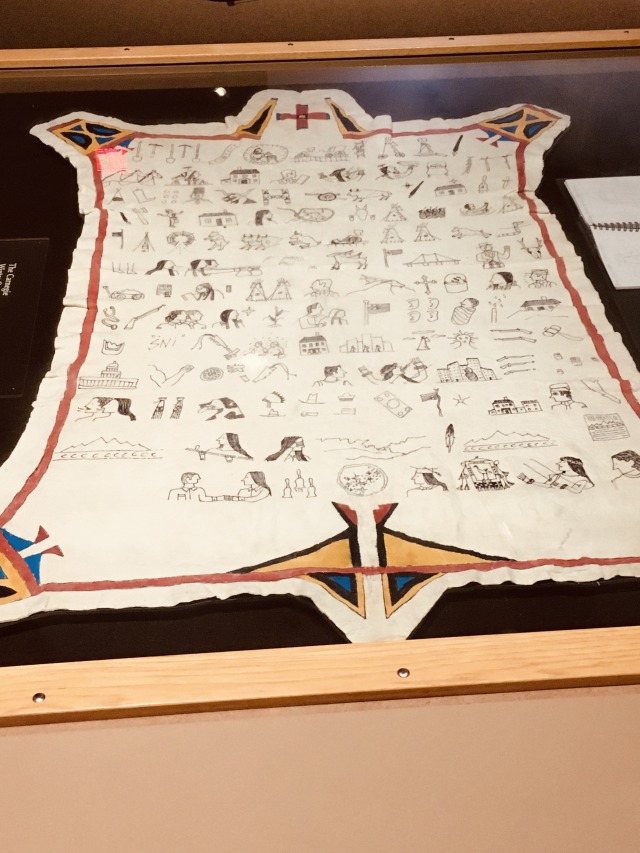
photograph of a winter count on display in the museum

Winter counts are a method by which groups of Lakota People record and remember their history through pictographs on a tanned animal hide or sturdy cloth. Each year, after leaders review important events and agree upon the previous year’s most significant occurrence, a new entry is added to the unique document. A designated count keeper holds the responsibility to annually recite, in sequence, the story behind each pictograph, and thereby orally pass along the group’s history to a listening audience.

The Winter Count on display, which covers a period of 125 years for the Sicangu Lakota people on the Rosebud Reservation in South Dakota, was created specifically for the exhibit by Dr. Thomas Red Owl Haukaas (Lakota/Creole). After summarizing the importance of winter counts for the students, I read aloud the artist’s explanation of his work from a nearby label: “My winter count is from a contemporary viewpoint. It purposely includes community and national events, men and women, fullbloods, and mixedbloods as an attempt to capture the richness and complexity of our tribe.”
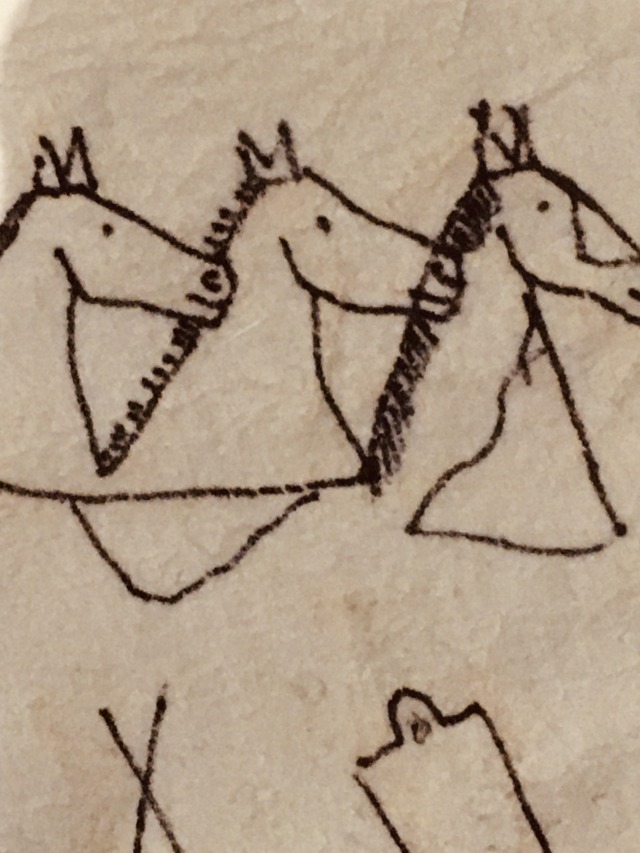
close up of winter count showing animals drawn in black on off-white background

The mention of contemporary viewpoint provided the opportunity to introduce another, albeit non-Native one, author Ian Frazier’s description of high school basketball star SuAnne Big Crow in On the Rez, his 2001 account of life on the Pine Ridge American Indian Reservation.

I called back the volunteer reader and provided background for the description of an event that might be judged worthy of winter count commemoration. “The quote you’re about to hear is pulled from a considerably longer story. It describes how in 1988, SuAnne Big Crow, who was then a 14-year-old basketball player from the Pine Ridge Reservation, transformed the racially charged playoff game atmosphere during pre-game warm-ups at a school in Lead, South Dakota, a white town located outside the reservation. Her actions were brave, clever, defiant, desperate, and heroic – all at the same time.”

“Swish!” by Targuman is licensed under CC BY-NC-ND 2.0.

As someone who experienced the intimidating atmosphere of away basketball games, the volunteer brought an authentic voice to her task, confidently reading Frazier’s account of SuAnne dribbling as she led her team onto the court of the “deafeningly loud” high school gym. Her voice shifted to a slightly higher register, however, when the narrative departed from normal pre-game procedure.

Then she stepped into the jump-ball circle at center court, in front of the Lead fans. She unbuttoned her warm-up jacket, took it off, draped it over her shoulders, and began to do the Lakota shawl dance. SuAnne knew all the traditional dances – she had competed in many powwows as a little girl – and the dance she chose is a young woman’s dance, graceful and modest and show-offy all at the same time.

The reader’s calmer voice returned where the account quoted the impressions of SuAnne’s surprised teammates, then turned higher as the action continued.

SuAnne began to sing in Lakota, swaying back and forth in the jump-ball circle, doing the shawl dance, using her warm-up jacket for a shawl. The crowd went completely silent. ‘All that stuff the Lead fans were yelling – it was like she reversed it somehow,’ a teammate said. In the sudden quiet, all you could hear was her Lakota song. SuAnne stood up, dropped her jacket, took the ball from Doni De Cory, and ran a lap around the court dribbling expertly and fast. The fans began to cheer and applaud. She sprinted to the basket, went up in the air, and laid the ball through the hoop, with the fans cheering loudly now. Of course, Pine Ridge went on to win the game.

The reader earned a sincere round of applause from her classmates for her efforts. I, in turn, felt a rewarding sense of accomplishment when she asked to keep the now deeply creased paper in her hands.

Patrick McShea works in the Education and Visitor Experience department of Carnegie Museum of Natural History. Museum employees are encouraged to blog about their unique experiences and knowledge gained from working at the museum.

Related Content

Museum Conservation: Cleaning the Kayak in Wyckoff Hall

A Steeler Prayer

Winter Wanderers on a Water Tower

Carnegie Museum of Natural History Blog Citation Information

Blog author: McShea, Patrick
Publication date: March 18, 2021
Share this post!

  • Share on Twitter Share on Twitter
  • Share on Facebook Share on Facebook
  • Share on Pinterest Share on Pinterest
  • Share on LinkedIn Share on LinkedIn
  • Share on Reddit Share on Reddit
  • Share via Email Share via Email

Share this post!

  • Share on Twitter Share on Twitter
  • Share on Facebook Share on Facebook
  • Share on Pinterest Share on Pinterest
  • Share on LinkedIn Share on LinkedIn
  • Share on Reddit Share on Reddit
  • Share via Email Share via Email

Filed Under: Blog Tagged With: Alcoa Foundation Hall of American Indians, anthropology, Pat McShea

March 11, 2021 by wpengine

Winter Wanderers On a Water Tower

On a late January afternoon, as I used binoculars to count roosting vultures on a water tower in a northern Pittsburgh suburb, the question of a friend and colleague echoed in my head. “What personal experience helped convince you that our climate is changing?”

Taiji Nelson, Senior Program Manager for the museum’s Climate and Rural Systems Partnership (CRSP), asked that question months earlier to begin a workshop session for educators about effectively engaging audiences in climate change discussions. He then spent 15 minutes fielding firsthand accounts from participants about extreme weather events, the spread of tree diseases, and the sudden appearance of previously unknown garden pests. When my vulture count reached double figures I silently vowed, “Next time Taiji’s going to hear about these birds.”

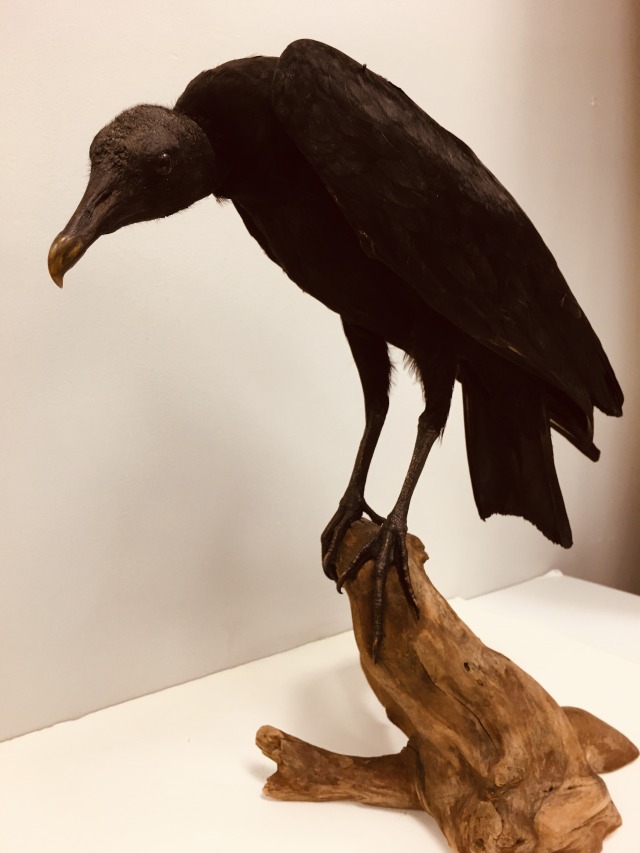
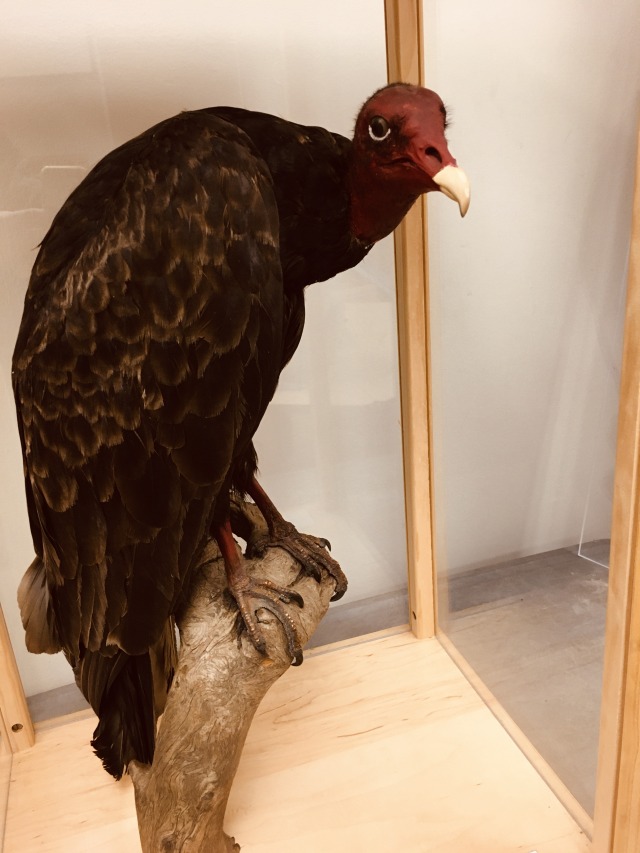
The birds, 17 Turkey Vultures and two Black Vultures, were the highlight of the three hours my wife Amy and I spent hiking and birdwatching. Black Vultures were a species we’d never before seen in western Pennsylvania. We’d frequently observed Turkey Vultures in the spring, summer, and fall, but our winter sightings of the species had been spotty. During the previous four winters we spotted a few Turkey Vultures who appeared to be spending the season in the Pittsburgh area instead of migrating further south. Before then, our year’s first sightings of these large soaring birds always occurred under mid-March skies.

Black Vulture taxidermy mount.
Turkey Vulture taxidermy mount.

Both species are scavengers who play vital roles in cleaning-up the carcasses of other animals in fields, forests, and along roadsides. Their slow, but steady northward range extension across eastern North America during the past four decades can be attributed to an increase in available food in the form of road-killed wildlife, the diminishing residues of DDT in regional food webs, and even a greater public acceptance of their presence. Warmer temperatures associated with global climate change have also played a role in the movement.

In a now 10-year-old essay on the All About Birds website of the Cornell Lab of Ornithology, author Jack Connor argues that a long term view of vulture movements suggests climate change contributed to a gradual, but for those paying attention, a certainly noticeable northward expansion.

“At each step the first vagrant birds were seen in spring and summer over a period of a year or two, a handful of nests were found a few years later, and soon, only 20 or 30 years after the first rarities appeared, the species had taken up permanent residency in an area where once it could not be found.”

One of the Black Vultures on the tower was not a completely anonymous wanderer. A rectangular red tag about twice the size of a playing card was affixed to its wing, and with the aid of a spotting scope, the figures H 73 could be clearly seen. Some internet searching by Amy, and the email response to her formal sighting report, established a previous, if only temporary, residency for the bird in the area around Martinsburg, West Virginia. The eastern panhandle town is home to the 167th Airlift Wing of the West Virginia Air National Guard, a unit that since 2018 has been working with the US Department of Agriculture in a study of Black Vulture movements aimed at reducing aviation hazards.

For more information about the Climate and Rural Systems Partnership, check out Carnegie Magazine.

Patrick McShea works in the Education and Visitor Experience department of Carnegie Museum of Natural History. 

Related Content

Backyard Black Bird Mystery

Teacher Profile: Emmanuelle Wambach

Ask a Scientist: Ravens and crows, what’s the difference? 

Carnegie Museum of Natural History Blog Citation Information

Blog author: McShea, Patrick
Publication date: March 11, 2021

Share this post!

  • Share on Twitter Share on Twitter
  • Share on Facebook Share on Facebook
  • Share on Pinterest Share on Pinterest
  • Share on LinkedIn Share on LinkedIn
  • Share on Reddit Share on Reddit
  • Share via Email Share via Email

Filed Under: Blog Tagged With: Birds, Pat McShea, wintertide

February 26, 2021 by wpengine

Teacher Profile: Emmanuelle Wambach

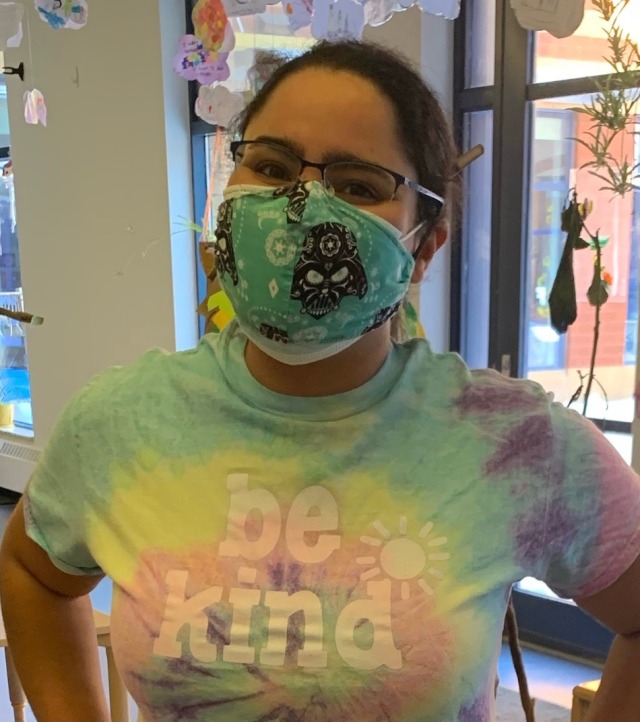
woman standing in front of a window wearing a face mask and a tie-dye t-shirt that says be kind

At the Jewish Community Center of Greater Pittsburgh (JCC), the youngest students direct much of their own learning. “We focus on the philosophy of the of the Reggio Emilia Approach,” explains Emmanuelle Wambach, referencing the innovative childhood learning model named for the northern Italian town where it was developed more than 60 years ago. Emmanuelle, who has worked at the JCC since 2018, currently teaches a dozen pre-school students at the Squirrel Hill facility. Back in November, when this group of three- and four-year-olds became interested in birds and bird eggs, she was determined to assist their exploration of the topic.

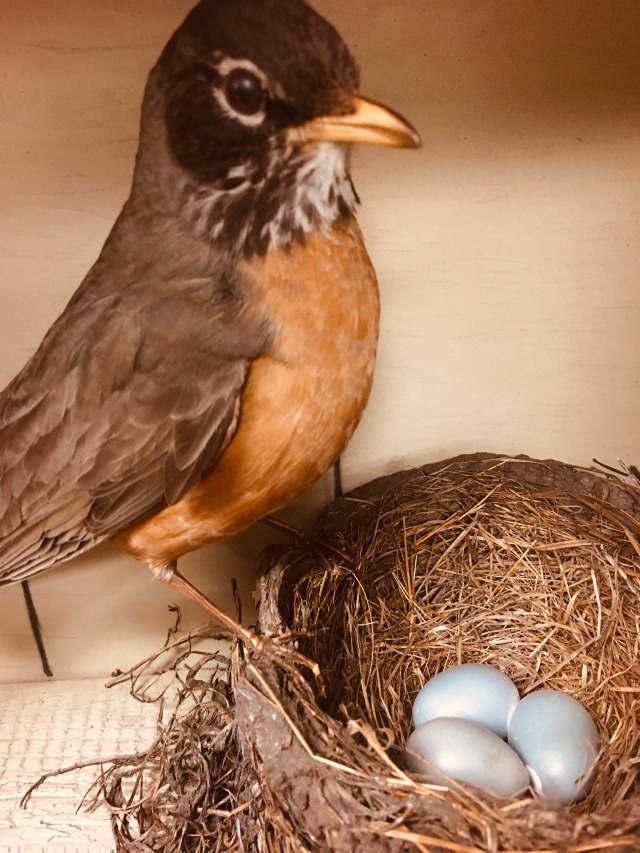
Through the museum’s Educator Loan Collection, she was able to borrow an encased taxidermy mount of an American Robin posed next to its nest and eggs, along with sturdy replicas of Bald Eagle, Golden Eagle, and Peregrine Falcon eggs. “There were some early discussions about the robin not being alive,” Emmanuelle recalls, “but we were able to make wonderful comparisons between the Peregrine Falcon and eagle eggs, and of course to the chicken eggs they were already familiar with.” The museum objects and the resulting discussions eventually led to group explorations of other resources such as the Audubon Society of Western Pennsylvania’s live camera feed documenting activity in and around the Bald Eagle nest in the Hays neighborhood of Pittsburgh.

taxidermy mount of a robin with nest and eggs

This example of an educator connecting with a helpful resource was far from a direct link, however, and actually hinged on artistic accomplishment. Emmanuelle holds a Master of Fine Arts from Indiana University of Pennsylvania, and in sharing her talents with ceramics she has taught classes at several Pittsburgh area locations. She learned about the museum loan program when she was teaching ceramics at an afterschool program and met a fellow artist who had borrowed taxidermy mounts for students to use as drawing models.

When asked about the impacts of the ongoing pandemic on her teaching, Emmanuelle notes a reduced class size of 12 instead of 16, and praises her students’ ability to “wear their masks well.“ Then after some refection she describes a system of mutual support that naturally developed between the young learners and those leading them. “I’m certain they’re helping me get through this difficult time. You have no idea how good it is to have a four-year-old greet you by saying, ‘Miss Emmanuelle, I’m so glad you’re here today!’”

Patrick McShea works in the Education and Visitor Experience department of Carnegie Museum of Natural History. Museum employees are encouraged to blog about their unique experiences and knowledge gained from working at the museum.

Related Content

Teaching About Trees

King’s Dream and Natural History

Ask a Scientist: Ravens and crows, what’s the difference?

Filed Under: Blog Tagged With: Education, Educators, Pat McShea, stewardship

February 2, 2021 by wpengine

Groundhog Architecture

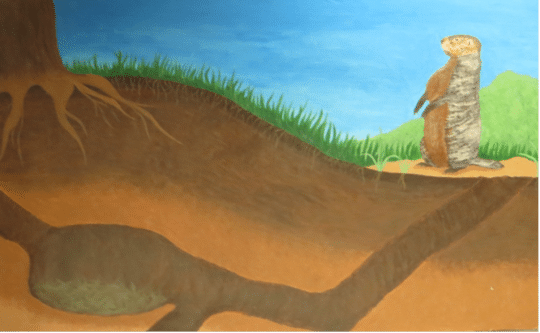
drawing of a groundhog standing out an opening of a tunnel with tunnel illustrated underground

Contrary to the pervasive myth that is revived for public amusement every February 2, groundhogs are not able to predict the approach of an early spring. If these large members of the squirrel family possess a notable skill, it’s in the field of excavation. The image above was created to provide a hint of the remarkable subterranean earthworks groundhogs construct in suitable habitat.

For the species known scientifically as Marmota monax, and whose common names include woodchuck and whistle pig, burrow digging is a solo effort. For a greater part of the year, burrow occupancy is limited to one groundhog per unit. Exceptions occur when males visit the burrows of females during a late winter breeding season, and consequently, following a 32-day gestation period, when females give birth to four to six kits. After approximately a dozen weeks of rapid development, these young disperse from their maternal burrow to dig their own lodging.

Groundhogs excavate a complex, multi-chambered burrow system in which the total length of tunnels can measure up to 65 feet. When digging a burrow groundhogs use their powerful short front legs, which are tipped with sturdy claws, to loosen soil and rocks. Loosened materials are then moved, by mouth, and deposited on the surface at the main entrance. The groundhog depicted in the illustration is standing on a distinctive subsoil-covered mound of excavated material. In a research study where several entrance mounds were removed and their soil and rock contents weighed, the average weight of these animal-built features was 275 pounds.

Typically, burrows include as many as four additional entrances, all unmarked by tell-tale signs of soil disturbance because groundhogs excavate these features from below the surface. Although the ankle-turning potential of these hidden holes is enough for some people to regret having groundhogs as neighbors, there are under-appreciated benefits to tolerating some patches of burrow-riddled property. On the coldest winter days and nights, the upper portions of groundhog burrows provide shelter to other forms of wildlife while the burrow’s owner, curled in a grass-lined chamber, remains suspended in a hibernation state a few feet below. Cottontail rabbits, for example are common squatters.

Patrick McShea works in the Education and Visitor Experience department of Carnegie Museum of Natural History. Museum employees are encouraged to blog about their unique experiences and knowledge gained from working at the museum.

Related Content

Groundhog Day 2020

Happy Groundhog Day! 

Happy Groundhog Day from Nature Lab

Filed Under: Blog Tagged With: Educator Resources, Museum from Home, Pat McShea

February 1, 2021 by wpengine

Teaching About Trees

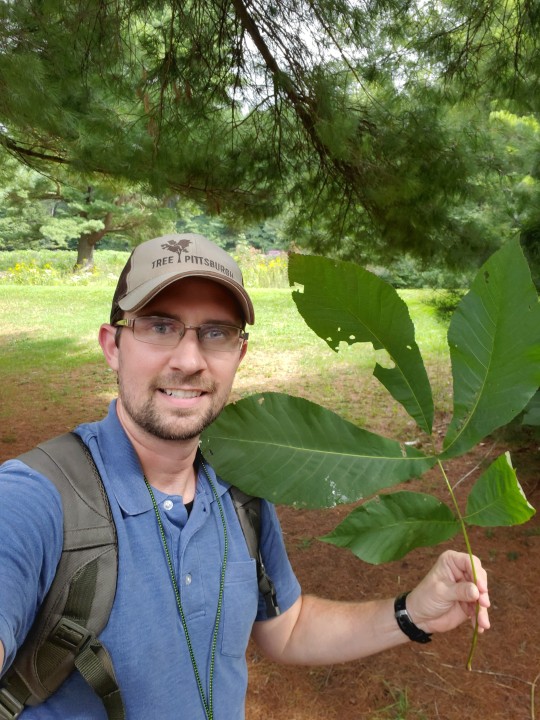
Joe Stavish doesn’t need any reflection time to summarize the impact of the COVID-19 pandemic on his work. “The new challenge to me as an outdoor educator is working with students who are watching a screen.” The Associate Director for Community Education at Tree Pittsburgh laments months spent planning and presenting programs in which students never have the opportunity to get their hands dirty. “If you’re limited to showing pictures,” he explains, “the wow factor just isn’t there.”

Joe Stavish holding a hickory leaf in pre-pandemic times.

Tree Pittsburgh is a 15-year-old non-profit organization dedicated to the restoration and protection of our region’s urban forest through tree planting and care, education, advocacy, and land conservation. Joe’s role, in the eight years he’s worked for Tree Pittsburgh, is to make sure the organization’s contact with communities it serves are as broad as possible. He kids about “cradle-to-the-grave” points of contact before listing near parallel audience segments, K-12 school classes, scout groups, youth groups, university students, neighborhood groups, adult classes, and garden clubs.

Some of the presentations he is involved with are part of formal programs, such as One Tree Per Child, a school-focused tree-planting initiative, or Explorer’s Guide, a collaborative effort with Pittsburgh’s Park Rangers for 4th and 5th grades that is scheduled to soon expand beyond its initial test audience in the City’s Northside neighborhoods. Other programs can currently be described as situational. “Teachers have been eager to have any type of virtual program we want to present.” Joe concedes in recognition of the ongoing and widespread problems with remote learning.

Although Joe is concerned about the limits of screen learning, I found the videos he directed me to on an Explorer’s Guide website to be very well done. Since 2018 Tree Pittsburgh has been headquartered in a riverside campus in Lawrenceville spacious enough to include what is termed a Heritage Tree Nursery. Much of a short video titled, The Life Cycle of a Tree, was shot in the nursery, a facility at the forefront of urban forestry. I never cried “Wow” while I watched the segment, but I learned a lot.

Patrick McShea works in the Education and Visitor Experience department of Carnegie Museum of Natural History. Museum employees are encouraged to blog about their unique experiences and knowledge gained from working at the museum.

Related Content

Ask a Scientist: How do you find rare plants?

King’s Dream and Natural History

Becoming a Science Educator

Filed Under: Blog Tagged With: Education, Educator Loan Program, Museum from Home, Pat McShea, stewardship

January 7, 2021 by wpengine

Teaching in the Parks

Allegheny County Park Rangers consider themselves to be ambassadors for a public asset whose value has increased during the ongoing COVID-19 pandemic: nine regional parks encompassing more than 12,000 acres of largely green space, laced with some 100 miles of multi-use trails.

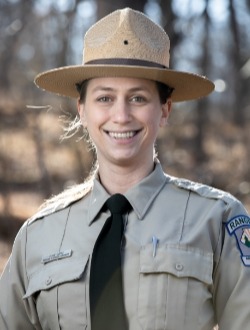
Allegheny County Park Ranger Elise Cupps in khaki shirt with black tie and tan hat
Ranger Elise Cupps. Photo credit: Allegheny County

For Elise Cupps being an ambassador for this unique resource involves teaching a variety of audiences, including school groups, scout units, garden clubs, and library patrons. The Robert Morris University (BS) and University of Pittsburgh (MA) alumna is a five-year veteran of a program just six years old, and as the Park Ranger’s Coordinator for Education and Outreach she makes regular use of the CMNH Educator Loan Program.

In many County parks, Ranger programs about owls and bats utilize taxidermy mounts borrowed from the museum. “We could just hold our hands apart to show the difference in size between a screech owl and a great horned owl,” Elise explains, “but it’s far more effective to have the preserved birds on display for the participants to inspect themselves.”

Campers at a Park Ranger program in pre-pandemic times inspect an American bison femur. Photo credit: Allegheny County

Other loans of museum materials enhance presentations that have ties to a specific park. Bison materials, including limb bones, hooves, and horn sheaths, for example, have been used for programs at South Park, where a small captive herd of the iconic prairie mammals have been a public attraction since the 1920s. Ranger programs about archaeology, which utilize authentic stone arrow points, adz heads, and fishing weights, make reference to a museum-led excavation in Boyce Park decades ago that documented how our region. was once the homeland of people known to science as the Monongahela.

During the past ten months, with the pandemic disrupting much of their planned program schedule, the Park Rangers paid close attention to their audience. “We’ve been fluid,” says Elise by way of summary. “We’ve made continual adjustments to meet the needs of groups – making live virtual presentations, sending pre-recorded videos, posting images and information on Facebook, sharing PowerPoint presentations – whatever it takes.”

Next week Elise will be borrowing a set of taxidermy mounts for upcoming programs about birds in winter. The means of program delivery has not been determined at this point, but it is a certainty that learning will occur.

Learn more about the Allegheny County Park Rangers.

Patrick McShea works in the Education and Visitor Experience department of Carnegie Museum of Natural History. Museum employees are encouraged to blog about their unique experiences and knowledge gained from working at the museum.

Related Content

Ask a Scientist: Ravens and crows, what’s the difference?

Milkweed Observations

“Quaran-Teened”: Closed Spaces, Open Minds

Filed Under: Blog Tagged With: Educator Loan Program, Educator Resources, Educators, Pat McShea, stewardship

  • « Go to Previous Page
  • Page 1
  • Interim pages omitted …
  • Page 7
  • Page 8
  • Page 9
  • Page 10
  • Page 11
  • Interim pages omitted …
  • Page 15
  • Go to Next Page »

sidebar

About

  • Mission & Commitments
  • Directors Team
  • Museum History

Get Involved

  • Volunteer
  • Membership
  • Carnegie Discoverers
  • Donate
  • Employment
  • Events

Bring a Group

  • Groups of 10 or More
  • Birthday Parties at the Museum
  • Field Trips

Powdermill

  • Powdermill Nature Reserve
  • Powdermill Field Trips
  • Powdermill Staff
  • Research at Powdermill

More Information

  • Image Permission Requests
  • Science Stories
  • Accessibility
  • Shopping Cart
  • Contact
  • Visitor Policies
Stay in the loop! Sign up for our newsletter(s).
One of the Four Carnegie Museums | © Carnegie Institute | Privacy Policy | Terms of Use | Accessibility
Rad works here logo