• Skip to primary navigation
  • Skip to main content
  • Skip to primary sidebar

Carnegie Museum of Natural History

One of the Four Carnegie Museums of Pittsburgh

  • Visit
    • Buy Tickets
    • Visitor Information
    • Exhibitions
    • Events
    • Dining at the Museum
    • Celebrate at the Museum
    • Powdermill Nature Reserve
    • Event Venue Rental
    • Gift Cards
  • Learn
    • Field Trips
    • Educator Information
    • Programs at the Museum
    • Bring the Museum to You
    • Guided Programs FAQ
    • Programs Online
    • Climate and Rural Systems Partnership
  • Research
    • Scientific Sections
    • Science Stories
    • Science Videos
    • Senior Science & Research Staff
    • Museum Library
    • Science Seminars
    • Scientific Publications
    • Specimen and Artifact Identification
  • About
    • Mission & Commitments
    • Directors Team
    • Museum History
  • Tickets
  • Give
  • Shop

Blogs from our Scientific Researchers

Carnegie Museum of Natural History is home to active research and vast scientific collections. Our scientific researchers regularly contribute to the blog at the museum.

November 17, 2023 by Erin Southerland

Tribal Museums Day and Promoting Indigenous Authors

by Amy L. Covell-Murthy 

The Association on American Indian Affairs (AAIA) celebrated its 100th anniversary in 2022, making it the oldest non-profit serving Indigenous Nations in the United States. Founded in 1922 to promote sovereignty and self-sufficiency by halting assimilation, termination, and allotment, the AAIA continues to advocate at a national level, while supporting grassroots level implementation of Tribal programs.

As part of our ongoing repatriation work at CMNH and as a member of AAIA, I attended the annual meeting in Shawnee, Oklahoma last week. I received training in the new regulations of the Native American Graves Protection and Repatriation Act, met Tribal and Institutional representatives who share in the same work that I do, and learned more about how the AAIA is helping to educate and advocate. One thing I am excited to share is that the AAIA declared December 2-9, 2023 as the 2nd Annual Tribal Museums Days and has created an interactive map of where participating museums are located.   If you would like to visit a Tribal Museum in person, the closest to Pittsburgh is the Onöhsagwë:de’ Cultural Center in Salamanca, New York. While the museum might not be open on the weekend, you can support them through their online gift shop. 

slide above a stage that has a photo of four people and the words: Associtation on American Indian Affairs, Ink & Impact: Our Stories Make a Difference

At the meeting, I was fortunate enough to be able to attend an Indigenous author event called Ink and Impact: Our Stories Make a Difference, which featured Angeline Boulley, Kim Rogers, Andrea L. Rogers, and Sara Elisabeth Sawyer. During the Q&A an audience member asked how we could help spread the word about their amazing books and other Indigenous works. They offered quite a few suggestions, including ordering a set of books to donate to a local library or classroom. My sister happens to be a reading teacher in Franklin, PA, so as a donation to her classroom in honor of Native American Heritage Month (which is in November!) she’ll be receiving Boulley’s Firekeepers Daughter and Warrior Girl Unearthed, and Sawyer’s Anumpa Warrior: Choctaw Code Talkers of World War I, as well as a few other books by Louise Erdrich. Another suggestion was to use our social media platforms to not only elevate Indigenous authors, but to also promote Indigenous owned book sellers.

So…. I am happy to promote Green Feather Book Company of Norman, Oklahoma. They were present all week at the meeting selling the books featured at the event and other Indigenous works. They have an easy online ordering feature, and you can buy all four of these author’s book here along with many others. 

Remember, if you can’t buy a copy, it costs nothing to request to borrow them through your local library. This also benefits the authors and spreads the word. Happy Reading!

Amy L. Covell-Murthy (she/her) is Archaeology Collection Manager/Head of the Section of Anthropology.

Related Content

Celebrating Indigenous Peoples’ Day 2023

Staff Favorites: Dolls in the Museum’s Care

Bringing a Little O-Gah-Pah to Pittsburgh

Carnegie Museum of Natural History Blog Citation Information

Blog author: Covell-Murthy, Amy L.
Publication date: November 17, 2023

Share this post!

  • Share on Twitter Share on Twitter
  • Share on Facebook Share on Facebook
  • Share on Pinterest Share on Pinterest
  • Share on LinkedIn Share on LinkedIn
  • Share on Reddit Share on Reddit
  • Share via Email Share via Email

Filed Under: Blog Tagged With: Alcoa Foundation Hall of American Indians, Amy Covell-Murthy, anthropology, Science News

November 9, 2023 by Erin Southerland

Museum Researchers Describe Five New Amphibian and Reptile Species in 2023

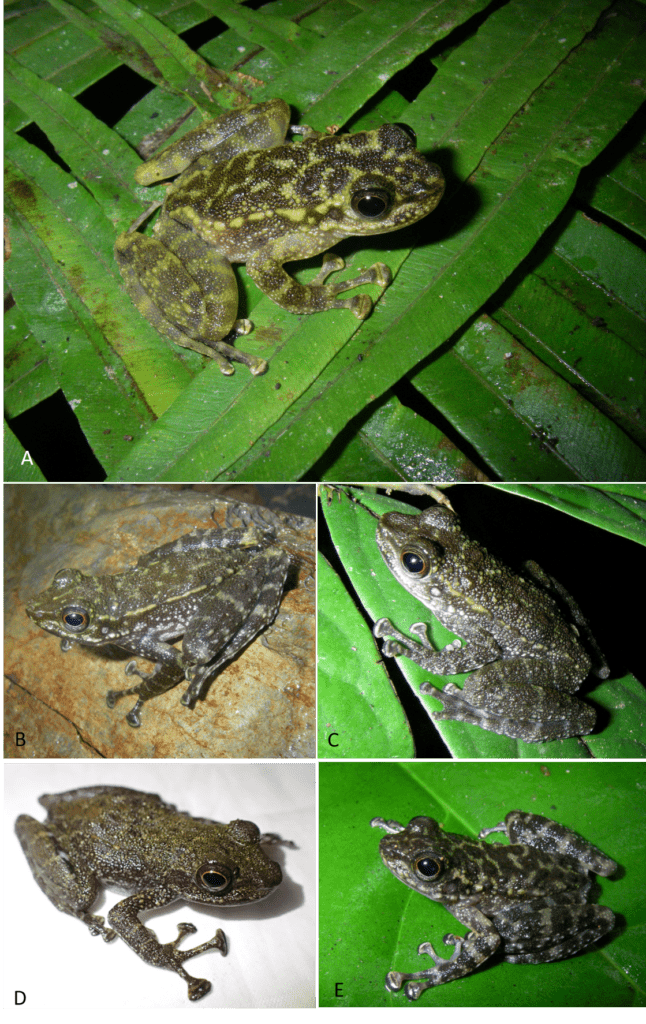
Five frogs in the genus Amolops: A: Amolops cremnobatus, B: A. tanfuilianae sp. nov., C: A. sengae sp. nov., D: A. kottelati sp. nov., E: A. attiguus sp. nov.
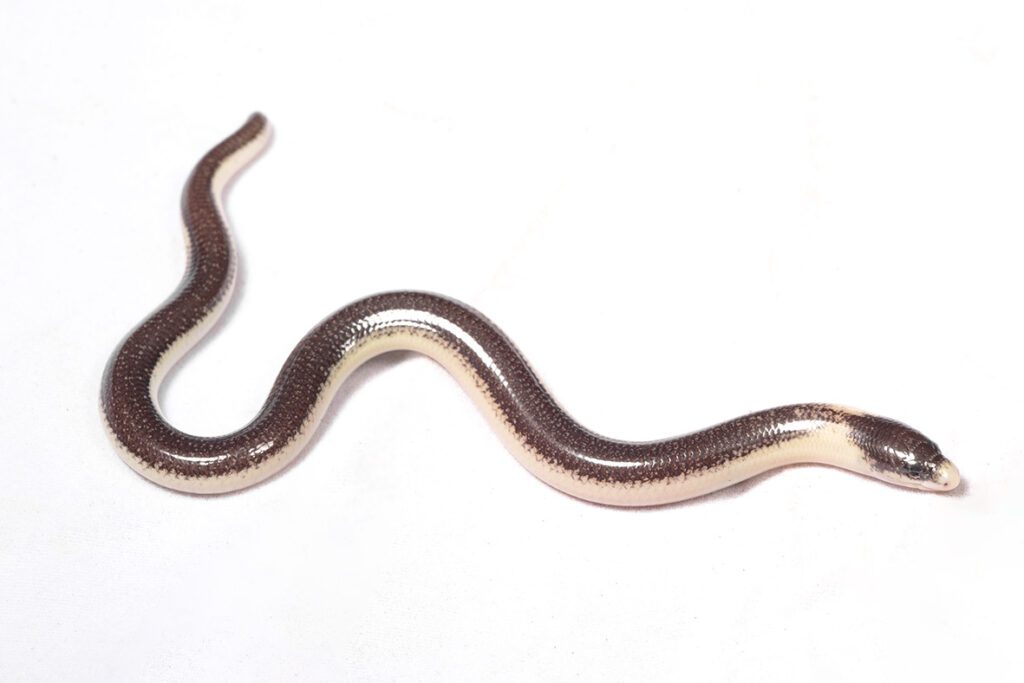
Acontias mukwando. Photo credit: Arthur Tiutenko.

Researchers in Carnegie Museum of Natural History’s (CMNH) Section of Amphibians and Reptiles celebrate five new species described in 2023. Associate Curator Dr. Jennifer Sheridan and an international research team describe four new species of Southeast Asian frogs in the genus Amolops in the journal Vertebrate Zoology. Collection Manager Mariana Marques and international colleagues describe a new species of legless skink (small lizard) from Angola in the African Journal of Herpetology. Both museum researchers are lead authors of their respective studies. 
 
Marques and Sheridan’s discoveries took place 6,000 miles apart on different continents, yet both provide new scientific insights about their respective regions. In the face of a worldwide decline in biodiversity due to human impact, the documentation of new-to-science species fills vital knowledge gaps for a better understanding of ecosystem health. The better scientists can document biodiversity, the better they understand the effects of biodiversity loss and how to identify future conservation goals. 
 
“Publishing five new species within less than three weeks is exciting for us and the museum,” said Sheridan. “Both discoveries required a combination of field work and research back at the museum. Mariana knew in the field that she had likely encountered an undescribed species, while in my case, these frogs were labeled as Amolops cremnobatus in the field because that’s what they looked like. Years later, once we started looking closely at numerous individuals collected by many researchers, we began to fully realize the diversity hidden in the Amolops genus.”

Dr. Jennifer Sheridan, Associate Curator of Amphibians and Reptiles.

Sheridan and researchers from Laos and North Carolina hypothesized that the Lao torrent frog Amolops cremnobatus, first described in 1998, is actually five species in the genus Amolops based on mitochondrial DNA analysis of specimens from Laos, Vietnam, and Thailand. Their paper in Vertebrate Zoology describes the four new species Amolops tanfuilianae, Amolops kottelati, Amolops sengae, and Amolops attiguus. 

“These are extremely cryptic species,” said Sheridan. “So, determining the differences is not as simple as ‘specimen A has different coloration than cremnobatus’ or anything like that.” The visual differences between adult specimens were small and included varied finger lengths and the number of vomerine teeth (used to capture and hold prey). Tadpole morphology (size, shape, and structure) was key; even though adults are collected more often than tadpoles for scientific study, tadpole information is important. Body length, presence or absence of glands, and other physical features in tadpoles provided crucial data to differentiate the new Amolops species. Molecular data including mtDNA and nuDNA analysis also revealed differences the research team needed to describe the four new species. The team recognizes that continued research in Thailand may reveal additional species. 

Meanwhile, Marques and an international team of researchers discovered the skink Acontias mukwando on Serra da Neve, an inselberg, or isolated, rocky outcrop, in Angola, one of the most ecologically diverse countries in Africa. Moveable eyelids and distinct coloration distinguish the new species, Acontias mukwando, from other species in the genus Acontias. The research team chose the species name in honor of the local Mukwando tribe to recognize their support and friendship during field work.

Both Sheridan and Marques used specimens from the collections of multiple other museums to fully determine how these newly described species are unique, and how they relate to their closest relatives. They relied on collections made by numerous researchers from multiple countries, highlighting the value of collaborative museum networks for understanding global biodiversity.

“Finding a specimen like Acontias is always exciting,” said Marques. “These animals spend most of their time under rocks and foliage, and they are not usually seen by people. There is so much we don’t know about them. Discovering that a member of a little-known group occurs on top of an equally obscure mountain was such an exciting mystery to solve. It was one of those rare ‘wow’ moments in your career as a scientist! My goal is to provide a solid and scientific overview of the fauna occurring in Serra da Neve, in order to support its conservation and contribute to the understanding of its rare biodiversity.”

CMNH’s Section of Amphibians and Reptiles maintains a collection of more than 230,000 specimens and ranks as the ninth largest amphibian and reptile collection in the United States. It includes 156 holotypes, the single type specimens upon which the descriptions and names of their respective species are based. 

Filed Under: Press Release Tagged With: amphibians and reptiles, herpetology, Jennifer Sheridan, Mariana Marques, Science News

September 22, 2023 by Erin Southerland

2023 Point Counts at Powdermill Avian Research Center

by Grace Muench

Since 2013, field technicians at Powdermill Avian Research Center have gathered data about breeding birds on the 2200-acre Powdermill Nature Reserve through point counts. This wildlife survey term denotes tallies of every bird detected by sight and sound by a single observer located at fixed, predetermined positions for specified time periods, along with rough estimates of each bird’s distance from the surveyor. On many days this summer I was the surveyor, and the experience was enriching. 

Powdermill is divided into ten sectors containing eight to eleven points, and during June and early July, I visited a different sector each day to conduct ten-minute point counts. I surveyed each sector twice, for a total of 190 different counts. Point counts can tell us about densities of birds in the immediate area, trends in the regional populations, species proclivity for a certain habitat, and more. Because Powdermill’s point count locations overlay plots from a vegetation survey that was completed at Powdermill in the mid-2000s, the paired data give us valuable information about the forest ecology on the reserve.

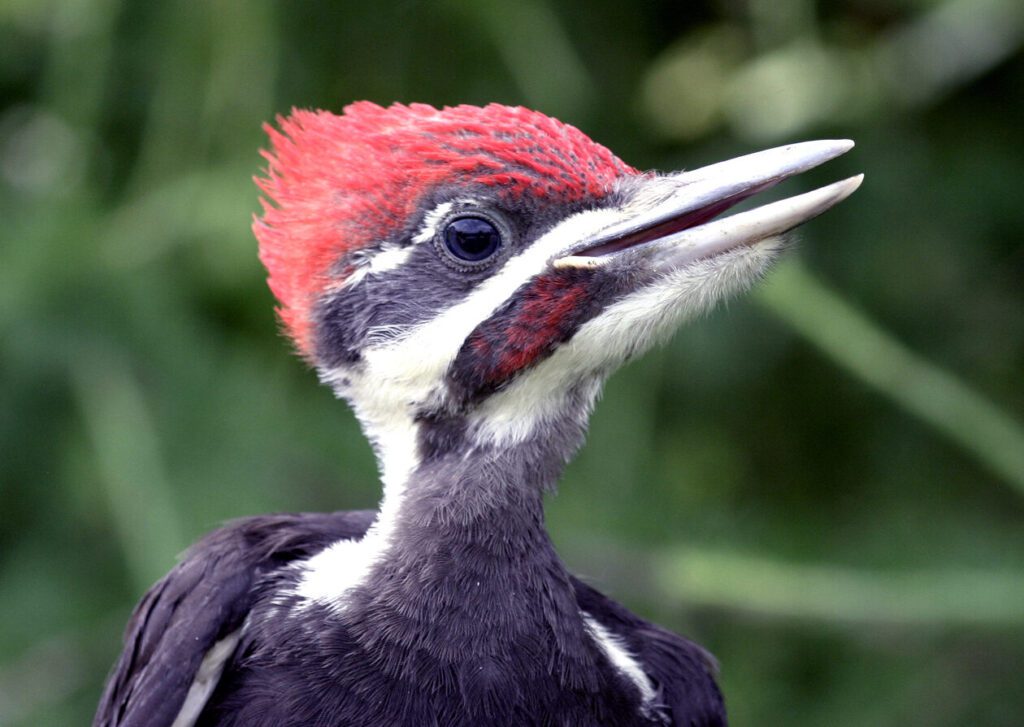
Pileated Woodpecker
Credit: Powdermill Nature Reserve, Carnegie Museum of Natural History

On the first day of point counts, the Porcupine Ridge trail acted as the main access corridor for many of the points in the sector. While walking along the trail to the last point of the day, I heard an unfamiliar noise. It sounded like several incessant hollow bark-like calls, and in the far distance I could hear Pileated Woodpeckers. Knowing that these woodpeckers primarily nest in dead trees, I began to search for nestlings. At the very top of an old, dead chestnut oak tree with almost no bark, I saw three heads poke out of a cavity, calling to the parents who were now close by and began acting defensively. While I had heard Pileated Woodpeckers in almost every sector this summer, this was the only nest that I observed, and it was the first of many incredible sightings. 

Shortly after completing surveys at every point in all ten sectors, I restarted from the beginning. The particular sector I surveyed on June 11 has about a one-mile-long hike uphill to get to the first point. Three quarters of a mile in, I saw some movement to my right and redirected my attention. A yearling black bear was running up and down a fallen tree, stopping only briefly to scratch himself. I could tell the bear was a yearling by the shape of the head, along with the long and slender legs making the bear look tall. The bear ran across the fallen tree two or three times before he noticed my presence. He very slowly turned himself to look in my direction, paused for a few seconds at most, and took off into the forest. 

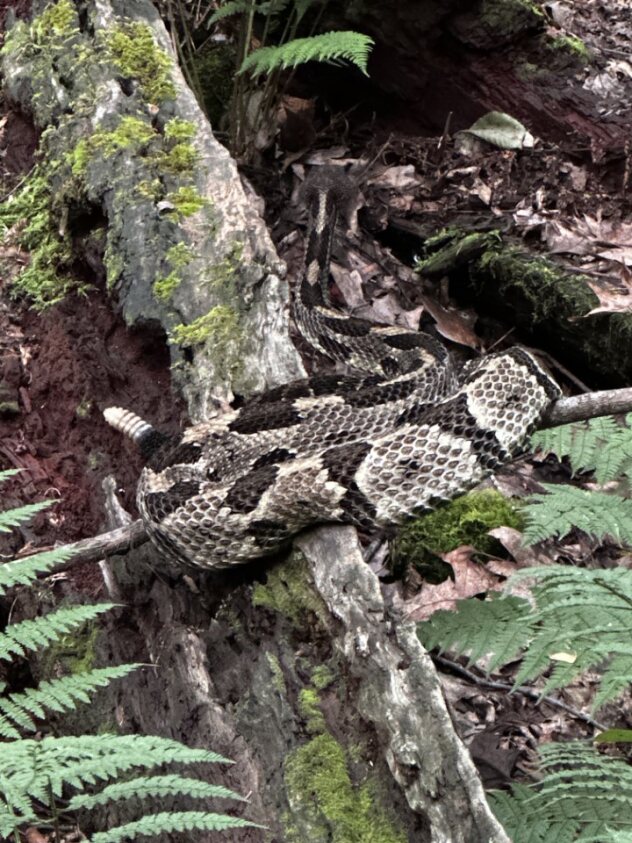
Pennsylvania is also home to the Timber Rattlesnake, which brings me to my next animal encounter. I was walking through a mountainous, hilly second growth forest. The understory was filled with green briar and stinging nettles, so I had my eyes on the ground to minimize the chances of being stuck or stung by these plants. The walk from one point to the next was about 250 meters, or 0.16 miles. There are often obstacles like fallen trees, some of which are easy to step over, but others I had to go around. As I approached a fallen tree, I heard an unfamiliar noise. Though unfamiliar, the rattling sound was unmistakable. A few meters down the fallen tree was a large, perfectly coiled dark phase Timber Rattlesnake. I estimated this snake was four to five feet long, and it was clear that there was a meal moving through the snake’s digestive tract. The snake had eight rattles, specialized hollow scales which are added, one layer at a time, each time the reptile sheds its skin. I was lucky to be able to observe the snake from a safe distance for a few minutes before I headed to the next point. 

timber rattlesnake
Credit: Grace Muench

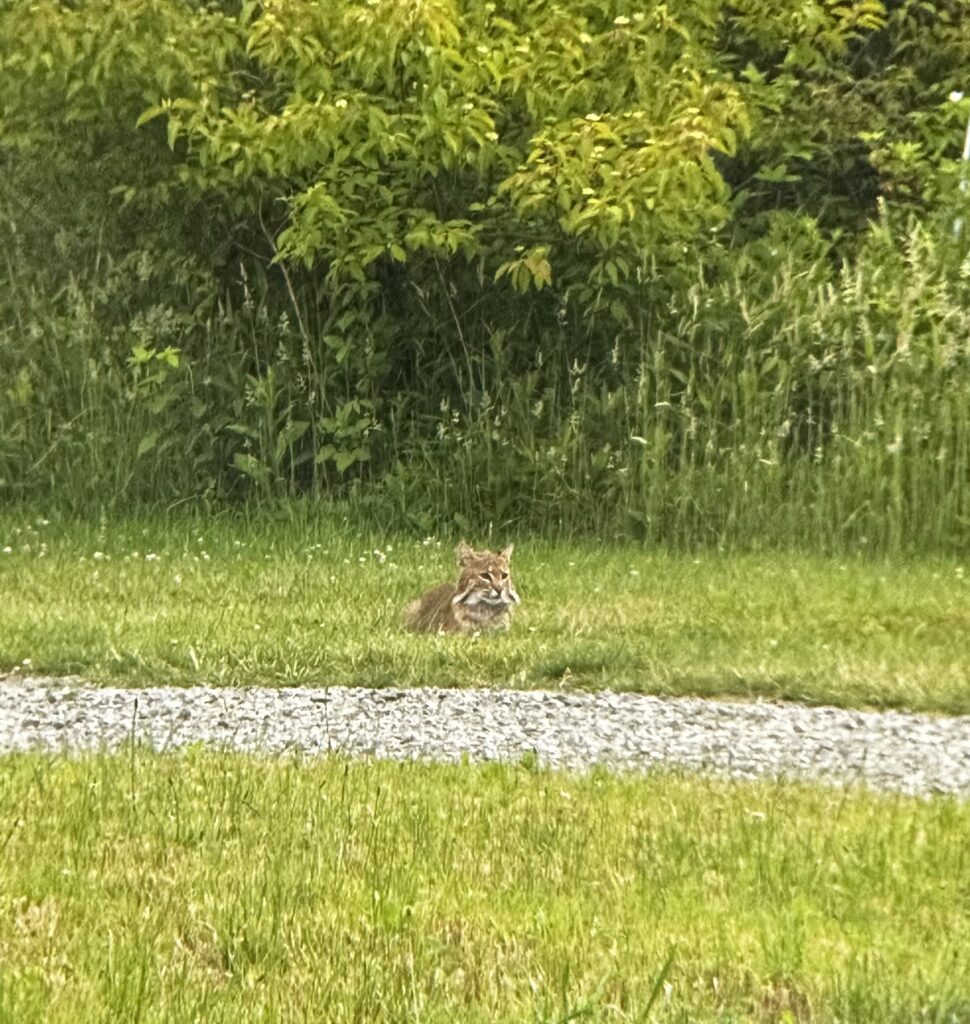
The last day of point counts was also one to remember. About halfway through the final point of the sector, something about 250 meters away made a noise that I can only describe as a woman screaming. Immediately, all birds stopped singing and flew up into the canopy. I knew this animal call. It was a bobcat! This scream is referred to as “caterwauling,” and the sound is produced primarily during the mating season. After hiking back down to the avian research center, I was lucky enough to spot a different bobcat! A relatively small bobcat was hiding next to a structure near the bird banding lab, stalking the eastern cottontails that were foraging in the grasses. After a few minutes of inching closer and closer to the rabbits, the bobcat pounced. The rabbits frantically ran in all different directions, and the bobcat was left empty-handed. 

bobcat laying in the grass
Credit: Grace Muench

After completing the 190 point counts, I rejoined the banding crew to finish the breeding season and to prepare for fall migration. I will always remember encountering and observing incredible wildlife, seeing my lifer Cerulean Warbler, and all that the Powdermill staff has taught me this summer. I can’t wait to learn more this fall!

Grace Muench is a Field Tech at Powdermill Avian Research Center.

Related Content

A Summer Internship at Powdermill

Tracking Migratory Flight in the Northeast

Hummingbird Lessons

Filed Under: Blog Tagged With: Grace Muench, Powdermill Nature Reserve, Science News

September 6, 2023 by Erin Southerland

Do No Harm: Dealing with Spotted Lanternflies

by Jonathan Rice

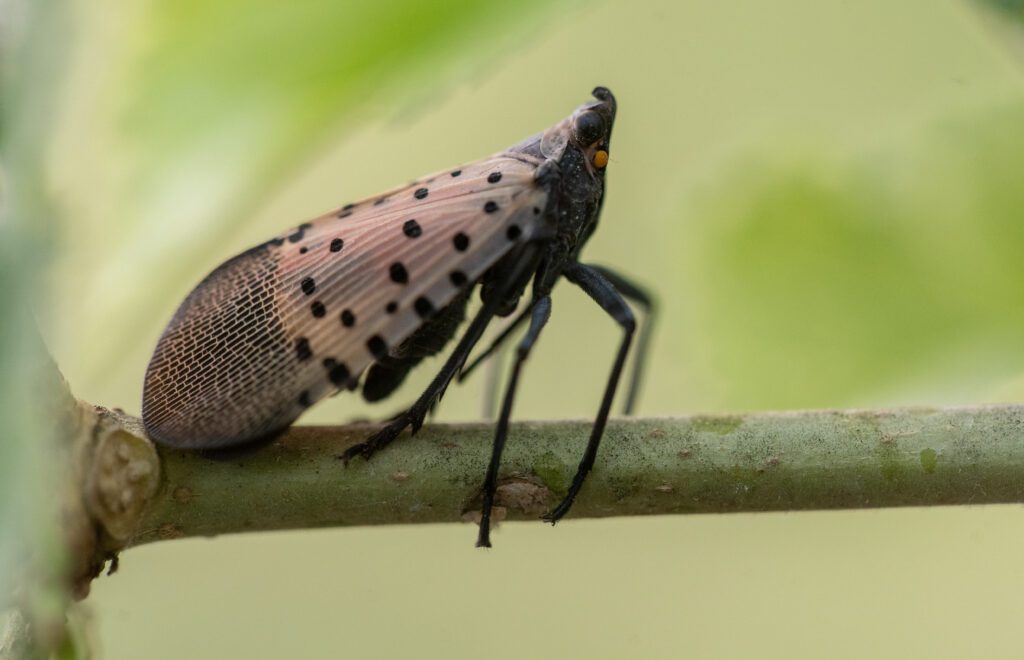
Spotted lanternflies are a “true bug,” cousins of the cicada and stink bug. Unlike our native bug species, these invasive bugs feed on a very wide variety of plants and don’t have enough native predators or parasites to keep their population in check. Their favorite food is tree-of-heaven (Ailanthus altissima), which is already widespread in our area. This means their population is exploding, and Pittsburghers are looking for ways to get rid of them. 

adult spotted lanternfly

There’s no special pesticide that targets the lanternflies. However, we can outsmart them. 

Spotted lanternflies display a unique behavior of climbing up tree trunks (or any other vertical surface), falling to the ground, and climbing up again. This is repeated many times throughout each stage of their life cycle.  By using this behavior to our advantage, we can trap spotted lanternflies. The best currently used traps include circle traps and oviposition traps, which corral the lanternflies so they can be contained and destroyed. You can make circle traps as a DIY project, or you can order them premade. 

Sticky traps: to stick or not to stick?

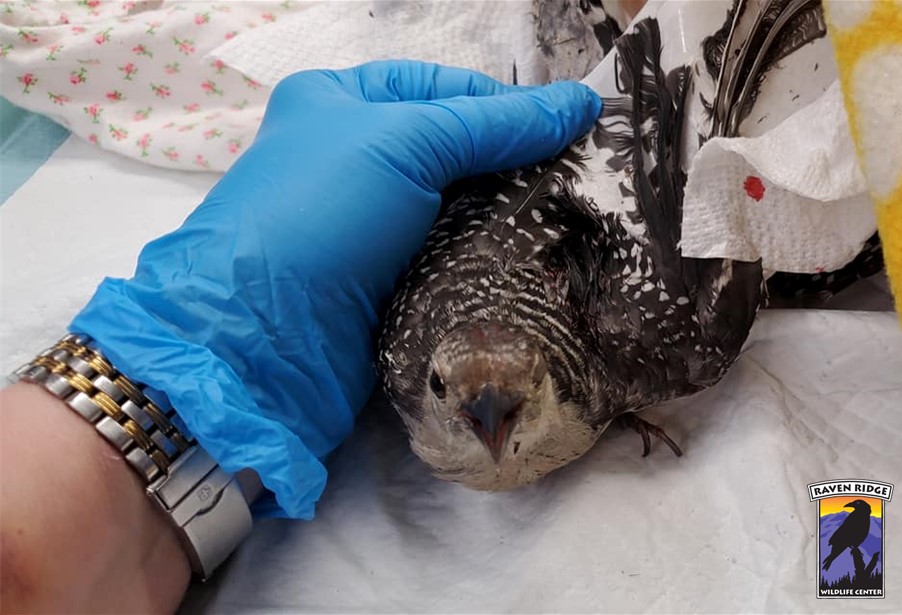
Although sticky traps (tape, sticky sheets, and glue traps) have been suggested in the past for spotted lanternfly control and are currently used by some landowners, these are extremely dangerous for birds. Sticky traps can kill many species of local birds that forage on tree trunks, including woodpeckers, nuthatches, and wrens. After the birds are stuck to the trap it becomes impossible for them to free themselves and they will die a slow and miserable death.

Woodpecker being treated for injuries from a sticky trap. Credit: Raven Ridge Wildlife Center.

If you find a live bird or mammal stuck to a lanternfly sticky trap, do not try to remove the bird yourself. Cover any remaining sticky areas on the trap with plastic wrap to reduce double sticking the bird (or yourself), remove the entire trap from the tree, and take it to the nearest wildlife rehabilitation center. If you must use a sticky trap, ensure it is covered with a wire mesh (hardware cloth or similar) to prevent anything larger than a lanternfly from touching it. Check sticky traps at least once a day to ensure no birds or mammals have been caught. 

Jonathan Rice is Urban Bird Conservation Coordinator at Powdermill Nature Reserve, Carnegie Museum of Natural History’s environmental research center.

Related Stories

Tracking Migratory Flight in the Northeast

A Summer Internship at Powdermill

Can’t Choose Just One: Asking an Entomologist to Name Their Favorite Native Species

Carnegie Museum of Natural History Blog Citation Information

Blog author: Rice, Jonathan
Publication date: September 6, 2023

Share this post!

  • Share on Twitter Share on Twitter
  • Share on Facebook Share on Facebook
  • Share on Pinterest Share on Pinterest
  • Share on LinkedIn Share on LinkedIn
  • Share on Reddit Share on Reddit
  • Share via Email Share via Email

Filed Under: Blog Tagged With: Anthropocene, Birds, Invertebrate Zoology, Jon Rice, liocf, Powdermill Nature Reserve, Science News

August 31, 2023 by Erin Southerland

The Nose that “Sees”

by Lisa Miriello

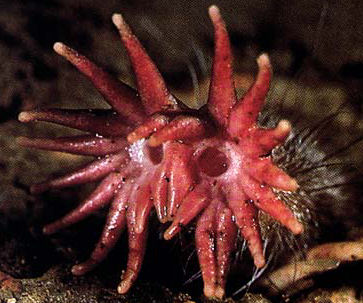
Despite the common name of the star-nosed mole (Condylura cristata), the 22 fleshy appendages at the end of its snout act more like an eye than a nose. These unique tentacles, or rays, are covered with more than 25,000 Eimer’s organs that hold over 100,000 nerve fibers (more than five times the number in the human hand) and are the most sensitive touch organs of any known mammal.

Given the mole’s poorly developed eyesight, the rays are far more useful for finding prey.

They are constantly moving and touching to identify what’s good to eat and what isn’t. Sensitive whiskers on the head and front feet also act as “feelers,” whether looking for food or navigating their way through dark underground tunnels.

close-up of the nose of a star-nosed mole
“mole-star-nosed-4” by Brandon Motz is licensed under CC BY 2.0

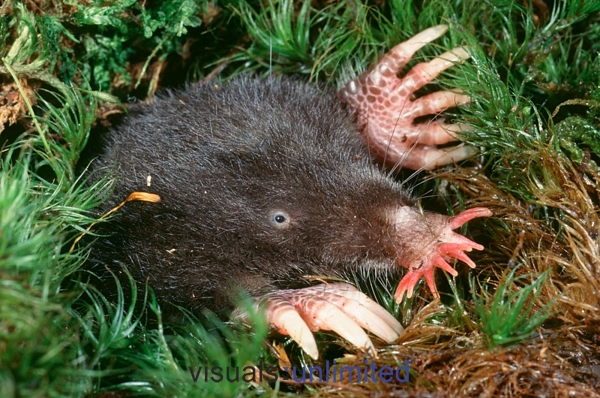
Found throughout much of eastern North America in low elevation areas with moist soils, star-nosed moles are one of three mole species found in Pennsylvania. Their preferred habitat consists of wetlands near streams, lakes, and swamps. The soft moist soil makes it easier to construct tunnels and underground chambers, and the mole’s short neck, powerful shoulders, and heavy claws make them efficient diggers. Shallow tunnels, often temporary, are used for traveling and foraging, while deeper, more permanent tunnels are used for resting, nesting, and escaping cold weather. Condylura is relatively safe from predators while underground but vulnerable to birds of prey, weasels, skunks, foxes, and snakes when out of their tunnels. 

The star-nosed mole is a voracious eater that consumes 50% or more of its body weight each day. More notably, it holds a Guinness World Record for the fastest eating mammal. 

Scientific studies have shown that Condylura can identify and eat prey in less than one-fifth of a second (200 milliseconds). That’s as many as five prey items per second, too fast for the human eye to follow.

Besides the worms, grubs, beetles, and other invertebrates found underground or on the surface, being near water gives them access to another hunting ground where they can find mollusks, aquatic insects, amphibians, and even small fish.

“star-nosed-mole-3” by gordonramsaysubmissions is licensed under CC BY 2.0.

Most moles can swim, but the star-nosed mole is the most aquatic of North American moles. 

Their dense waterproof coat and large paddle-like limbs make them well suited for swimming and diving. They’ve evolved to have twice the lung capacity of other moles, and their long tail, almost one-third the length of its body, acts as a rudder. More time is spent foraging in the water than on land, and they’ve been seen swimming under the ice in winter. This remarkable mole can even smell under water by blowing bubbles, then inhaling the same bubbles to capture the scent molecules inside. 

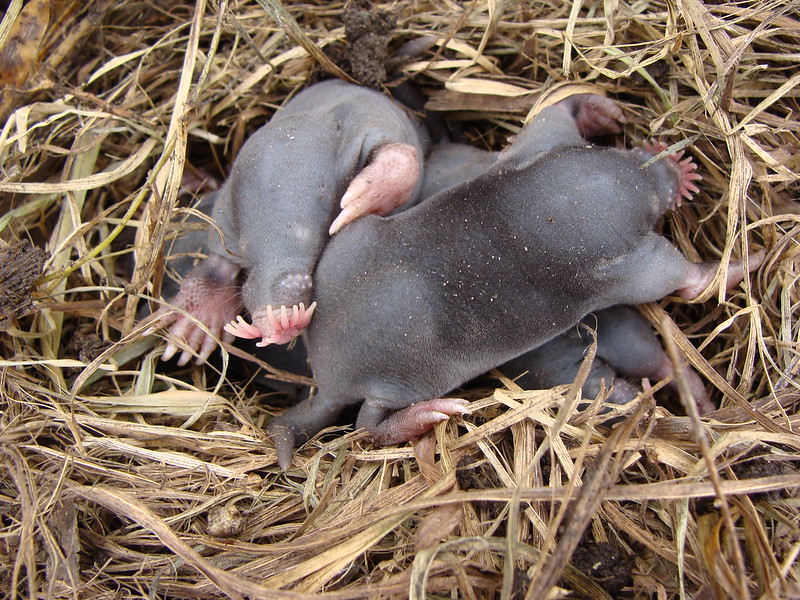
Not a great deal is known about the reproductive cycle of star-nosed moles. They’re more social than other moles, living in small colonies, and it’s believed that mating pairs stay together through the winter. Breeding season starts in early spring and the female produces only one litter a year, unless the first litter is unsuccessful. After a 45-day gestation period, two to seven pups are born in May and June. The newborns are blind and hairless with their tentacles folded against their snout. About two weeks later the eyes open and the tentacles unfurl and begin to function. The young develop rapidly and leave the nest after about four weeks, reaching full maturity at 10 months. The exact lifespan of this species is unknown but estimated to be 3-4 years in the wild.

“Baby star-nosed moles” by Hillbraith is Public Domain.

The extraordinary star-nosed mole stands out from other moles in many ways, and is certainly among the most unusual mammals in Pennsylvania. They’re not rare, but they’re not commonly seen even though they spend more time above ground than other moles. They’re active day and night, all year round, so keep your eyes peeled when you’re around water and if you’re lucky you might catch a glimpse of one.

Lisa Miriello is the Scientific Preparator for the Section of Mammals.

Related Content

The Woodchuck…or Groundhog?

Getting from the Fern Hollow Bridge to the Frick Family

World Pangolin Day 2023: The Mysterious Brain Bone

Carnegie Museum of Natural History Blog Citation Information

Blog author: Miriello, Lisa
Publication date: August 31, 2023

Share this post!

  • Share on Twitter Share on Twitter
  • Share on Facebook Share on Facebook
  • Share on Pinterest Share on Pinterest
  • Share on LinkedIn Share on LinkedIn
  • Share on Reddit Share on Reddit
  • Share via Email Share via Email

Filed Under: Blog Tagged With: Hall of North American Wildlife, liocf, Lisa Miriello, mammals, Science News

August 9, 2023 by Erin Southerland

Hummingbird Lessons

by Patrick McShea
A male Ruby-throated Hummingbird is handled gently during the banding process.

Banding hummingbirds is a routine procedure at Powdermill Avian Research Center (PARC). Ruby-throated Hummingbirds are common summer residents throughout western Pennsylvania, including the Ligonier Valley where PARC facilities occupy nearly 25 acres of diverse habitat within Powdermill Nature Reserve, the 2,200-acre field research station of Carnegie Museum of Natural History.

During the spring and fall migration seasons, Ruby-throated Hummingbirds are almost always on the top 10 list for highest numbers captured and banded. During the breeding season, they are proportionally represented among the various birds captured. PARC’s ornithologists open fine mesh nets before dawn and check them at regular intervals for several hours afterwards, carefully extracting the birds and bringing them to the lab for data collection, then safely releasing them to the wild without harm. 

Hummingbird bands are so small that the customary nine-digit band number is reduced to five digits with a letter prefix.

On a Friday morning in late May, the capture, examination, banding, and safe release of one of these tiny, iridescent, long-billed birds was remarkable because of the extra observers involved. Two dozen seventh grade students from West Hempfield Middle School, part of a larger, two-bus contingent participating in a day-long science-focused fieldtrip, were eyewitnesses to the multi-step process. 

The wildlife encounter made such a strong collective impression on these students that two hours later, following a working demonstration of the flight tunnel used to evaluate bird-safe window glass, and lunchbreak on the Reserve’s Nature Center grounds, the background chatter of multiple conversations markedly diminished when I mentioned hummingbirds.

“We’ll start our hike shortly,” I announced to the group as they assembled in a forest clearing for the day’s concluding session. “But before we look at some plants along the trail and micro-habitats along the stream, we’re going talk more about hummingbirds.” 

A Ruby-throated Hummingbird skull.

As a museum educator I frequently plan group opportunities for the close examination of authentic objects. In the case of the two-inch-long glass tube I then held aloft, an explanation of ground rules for the upcoming examination experience was required. The tube contained the skull of a Ruby-throated Hummingbird, and as I carefully removed the specimen and placed it in the palm of my right hand, I promised the students the same opportunity. “The skull can be safely exchanged by two transfer methods – gently dumping it from your open palm to your neighbor’s, or by picking it up by the beak and carefully placing it in the next person’s palm.” 

Our collective sharing was also presented as a group challenge. I concluded the handling instructions with an explanation about how this activity is normally reserved for teachers, rather than students, and the disclosure that with less than a week left in the school year, I considered them as reputably more responsible eighth graders rather than the seventh-grade class listed on the fieldtrip schedule. 

After placing the tiny skull in the palm of the student standing closest to me, I outlined for her and the waiting classmates a roughly 10-12 second procedure for an imaginative visual examination of the specimen. “Think about the bird you saw banded this morning. Consider the layers missing from the skull – the feathers, skin, muscles, and other tissues. Note especially, within the bone framework of the skull, the places where the eyes once were, space devoted to this creature’s sense of vision. And finally, before passing the skull to your neighbor, make a mental estimate of the space between the eyes, the nearly translucent bone case that contained the bird’s brain.”

Hand-to-hand circulation of the skull through the student group took a full seven minutes, time I spent relating information about Ruby-throated Hummingbirds from the Cornell Lab of Ornithology’s All About Birds website. Important points included how the species’ diet includes far more than nectar, with mosquitoes, gnats, fruit flies, small bees, and spiders being well documented prey items, and how six to ten days of construction work by the female bird results in an inch-deep, two-inch diameter, branch-top nest lined with plant down, held together with spider silk, and for concealment purposes, shingled with lichen chips. Migration was also addressed, with the statement that the hummingbird banded during the morning session might have just returned to western Pennsylvania after a winter spend as far south as Costa Rica. 

“My estimate, when I look at the hummingbird skull,” I volunteered, “is that the bird’s brain is the size of a couple grains of rice. What I find amazing is how that tiny brain can steer the bird over or around an enormous obstacle between where we’re standing now and the forests of Costa Rica – the Gulf of Mexico.”

When the hummingbird skull, no worse for a carefully conducted activity’s wear, was safely stowed in my shirt pocket, the trail hike to the edge of Powdermill Run proceeded.  A stand of trout lily, the mud chimney of a crayfish burrow, and the distinctive tree cavity chiseled by a Pileated Woodpecker were scenery highlights, but it was a discussion of Powdermill Run’s waters that reinforced the day’s hummingbird theme.

After a streamside question and answer session raised the level of understanding of aquatic food webs, and explanations were shared about how diverse invertebrate lifeforms are indicators of clean water, I brought up the question about where the flow in front of us was heading. Through question and response, one waterway supplying another, we assembled a continent-wide watershed, from Powdermill Run to the Gulf of Mexico, as one student called from the back of the group, “The territory crossed by a migrating hummingbird.”

Patrick McShea is an Educator at Carnegie Museum of Natural History.

Related Content

Tracking Migratory Flight in the Northeast

Ruffed Grouse or Scarlet Tanager: Debating the Pennsylvania State Bird

Building Birding Skills

Carnegie Museum of Natural History Blog Citation Information

Blog author: McShea, Patrick
Publication date: August 9, 2023

Share this post!

  • Share on Twitter Share on Twitter
  • Share on Facebook Share on Facebook
  • Share on Pinterest Share on Pinterest
  • Share on LinkedIn Share on LinkedIn
  • Share on Reddit Share on Reddit
  • Share via Email Share via Email

Filed Under: Blog Tagged With: Birds, liocf, Pat McShea, Powdermill Nature Reserve, Science News

  • « Go to Previous Page
  • Page 1
  • Interim pages omitted …
  • Page 3
  • Page 4
  • Page 5
  • Page 6
  • Page 7
  • Interim pages omitted …
  • Page 43
  • Go to Next Page »

sidebar

About

  • Mission & Commitments
  • Directors Team
  • Museum History

Get Involved

  • Volunteer
  • Membership
  • Carnegie Discoverers
  • Donate
  • Employment
  • Events

Bring a Group

  • Groups of 10 or More
  • Birthday Parties at the Museum
  • Field Trips

Powdermill

  • Powdermill Nature Reserve
  • Powdermill Field Trips
  • Powdermill Staff
  • Research at Powdermill

More Information

  • Image Permission Requests
  • Science Stories
  • Accessibility
  • Shopping Cart
  • Contact
  • Visitor Policies
One of the Four Carnegie Museums | © Carnegie Institute | Privacy Policy | Terms of Use | Accessibility
Rad works here logo