• Skip to primary navigation
  • Skip to main content
  • Skip to primary sidebar

Carnegie Museum of Natural History

One of the Four Carnegie Museums of Pittsburgh

  • Visit
    • Buy Tickets
    • Visitor Information
    • Exhibitions
    • Events
    • Dining at the Museum
    • Celebrate at the Museum
    • Powdermill Nature Reserve
    • Event Venue Rental
    • Gift Cards
  • Learn
    • Field Trips
    • Educator Information
    • Programs at the Museum
    • Bring the Museum to You
    • Guided Programs FAQ
    • Programs Online
    • Climate and Rural Systems Partnership
  • Research
    • Scientific Sections
    • Science Stories
    • Science Videos
    • Senior Science & Research Staff
    • Museum Library
    • Science Seminars
    • Scientific Publications
    • Specimen and Artifact Identification
  • About
    • Mission & Commitments
    • Directors Team
    • Museum History
  • Tickets
  • Give
  • Shop

Blogs from our Scientific Researchers

Carnegie Museum of Natural History is home to active research and vast scientific collections. Our scientific researchers regularly contribute to the blog at the museum.

August 4, 2023 by Erin Southerland

Staff Favorites: Dolls in the Museum’s Care

by the Section of Anthropology and Archaeology Staff and Volunteers

With the pink wave that is Barbie sweeping the theaters, we thought it would be a good opportunity to spotlight our doll collection. The Anthropology collection at CMNH holds more than three thousand dolls and it is our pleasure to take care of them. Historically and anthropologically speaking, dolls have always served cultural, spiritual, and societal purposes. Whether for entertainment, religion, or education, they can be found all over the world and have been around for thousands of years.

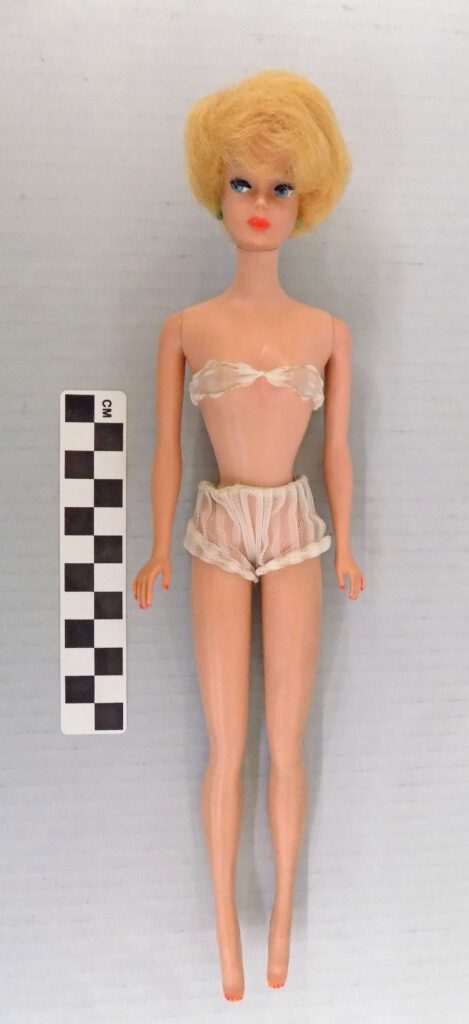
Barbie

Barbie doll
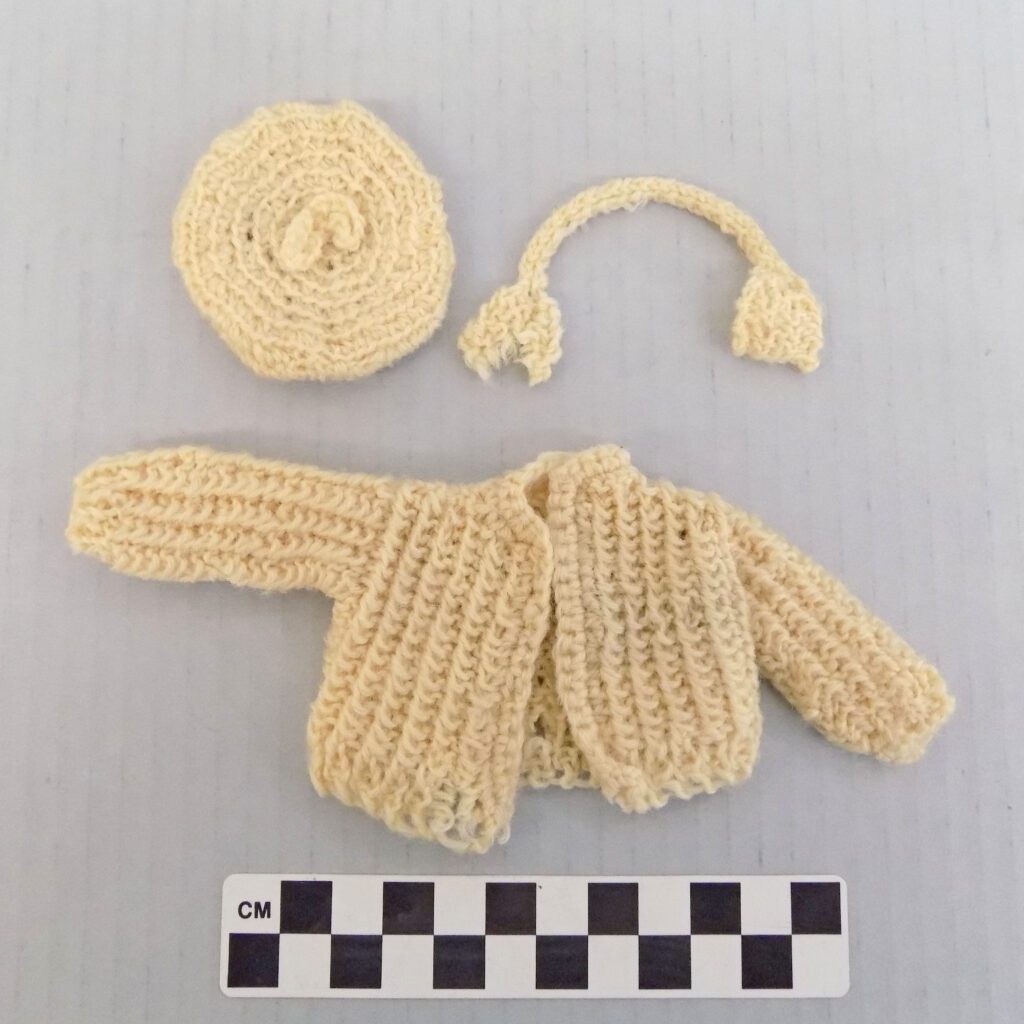
White hat, earmuffs, and sweater for a Barbie doll
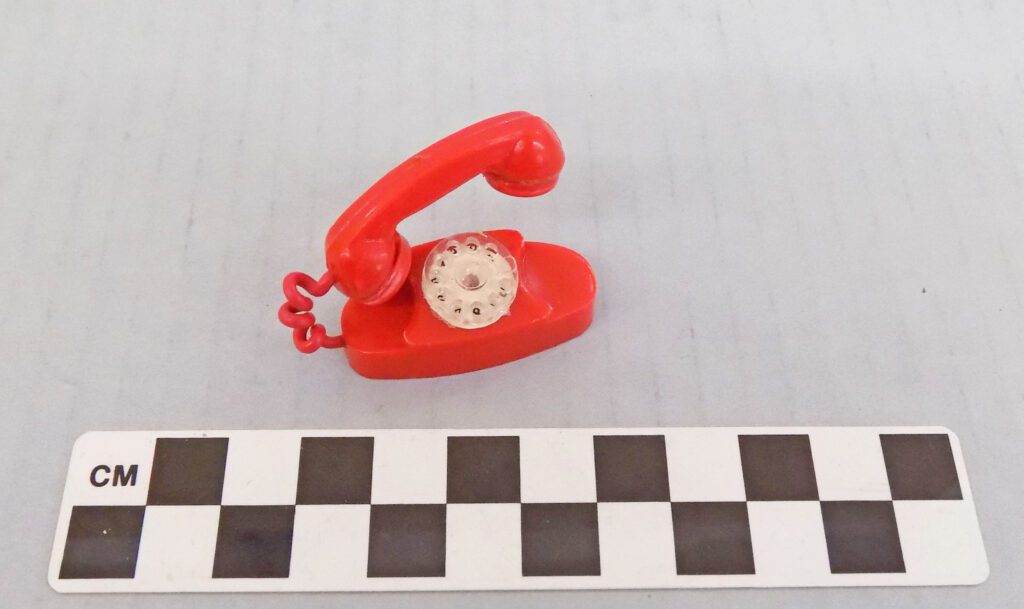
Barbie-sized red rotary telephone

“Hi Barbie! Until recently, our doll collection lacked any traces of Barbie. Then a close friend of the Section of Anthropology was kind enough to not only donate their beloved original doll but also the clothing that they had sewn for her. Barbie and Ken, as an astronaut, a rock star, a pregnant Midge, beach, or any other iteration, have impacted the lives of millions. Sadly, there has not been an archaeologist Barbie but the best part about playing with dolls is that I can easily pretend that the paleontologist version is diligently studying human culture instead of dinosaurs (Sorry, Dr. Lamanna). 

Individuality has always been important to me, so I have always been the biggest fan of Weird Barbie, upon whom I did my fair share of hair cutting and marker tattooing. And while we have only one Barbie at CMNH, we have plenty of other dolls in the collection that our staff and volunteers have chosen to write about. Please enjoy some of our favorites.” –Amy Covell-Murthy, Archaeology Collection Manager and Head of the Section of Anthropology

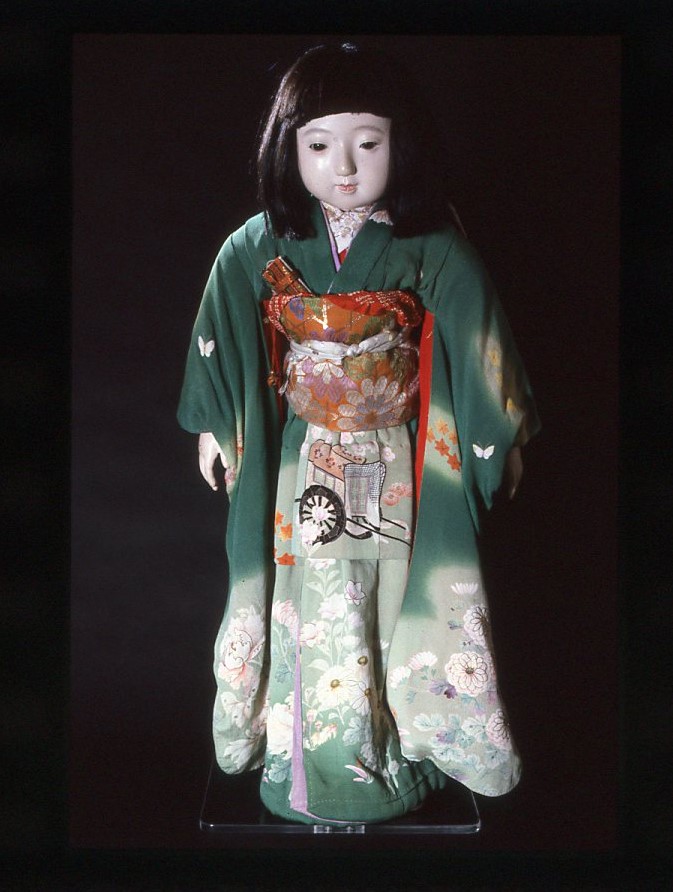
Miss Kochi the Friendship Doll

On January 14, 1929, complete with passport, steamer ticket, and a trunk full of accessories, Miss Kochi the friendship doll arrived in Pittsburgh to her new home at the museum. Representing the children of Kochi, the southernmost prefecture on the island of Shikoku in Japan, Miss Kochi crossed the Pacific  with 57 other friendship dolls who went to various cities within the United States. 

Created as part of a doll exchange program between the children of Japan and the U.S., Miss Kochi and her sister dolls were lovingly made with the hope of promoting peace between the two countries in the years leading up to World War II. Crafted by some of the most respected doll makers in Japan, the ambassador dolls, as they were also known, are all 85cm high. They have moveable arms and legs and real human hair. Each is dressed in a colorful kimono made of pure silk and accompanied by lacquered tea sets, furniture, and other accessories used in the celebration of Hinamatsuri, or Doll’s Day. Miss Kochi is dressed in a beautiful, embroidered, emerald green kimono with a red sash. 

“Miss Kochi is one of my favorite dolls in the collection because I love all the care and detail that was put into her outfit and tiny accessories. Additionally, the message of friendship and kindness that motivated her creation and eventual journey to Pittsburgh is charming and inspiring.” –Kristina Gaugler, Anthropology Collection Manager

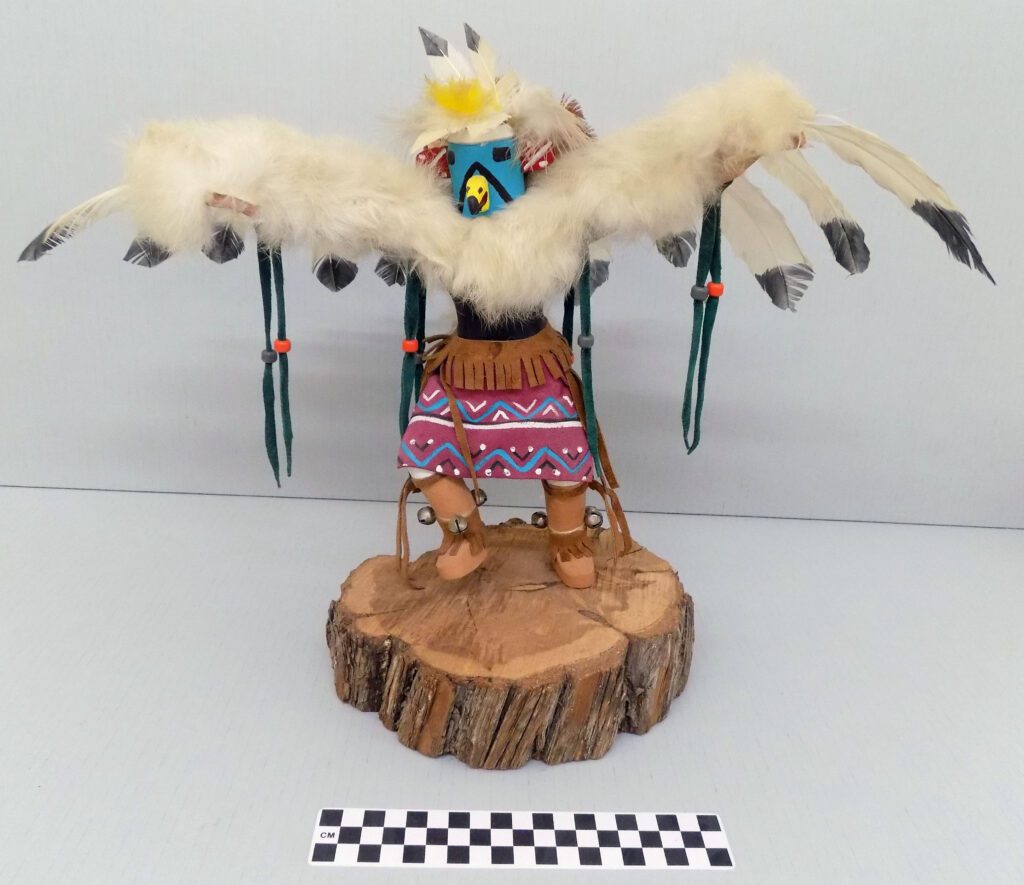
Eagle Kachina

eagle katsina

The Eagle Kachina holds special significance to both the Hopi and Zuni people, representing important spiritual and cultural aspects in their respective traditions.

To the Hopi people, the Eagle Kachina is considered a powerful and sacred being. It is associated with spiritual strength, protection, and a close connection to the divine. The eagle is revered for its ability to soar high in the sky, reaching great heights, and is seen as a messenger between the earthly world and the spiritual realms. During Hopi Kachina ceremonies, the Eagle Kachina is often portrayed by a dancer wearing an elaborate costume and a mask representing the eagle’s features. The dancer embodies the spirit of the Eagle Kachina and plays a significant role in ceremonial dances. 

For the Zuni people, the Eagle Kachina, also known as “Ko’kko,” holds similar importance. The Zuni Eagle Kachina represents the embodiment of the eagle spirit and is venerated for its connection to the heavens and its role as a messenger to the gods. The Zuni people view the Eagle Kachina as a symbol of power, courage, and wisdom, and it plays a crucial role in their rituals and religious practices. Like the Hopi, the Zuni also create intricate Kachina dolls, including the Eagle Kachina, as sacred objects representing the spirits and their significance in Zuni culture.

“I like the Eagle Kachina doll as it signifies all that is important to me as it is to the Hopi and Zuni, the spiritual connection to the natural world.”—Jim Barno, Archaeology Volunteer

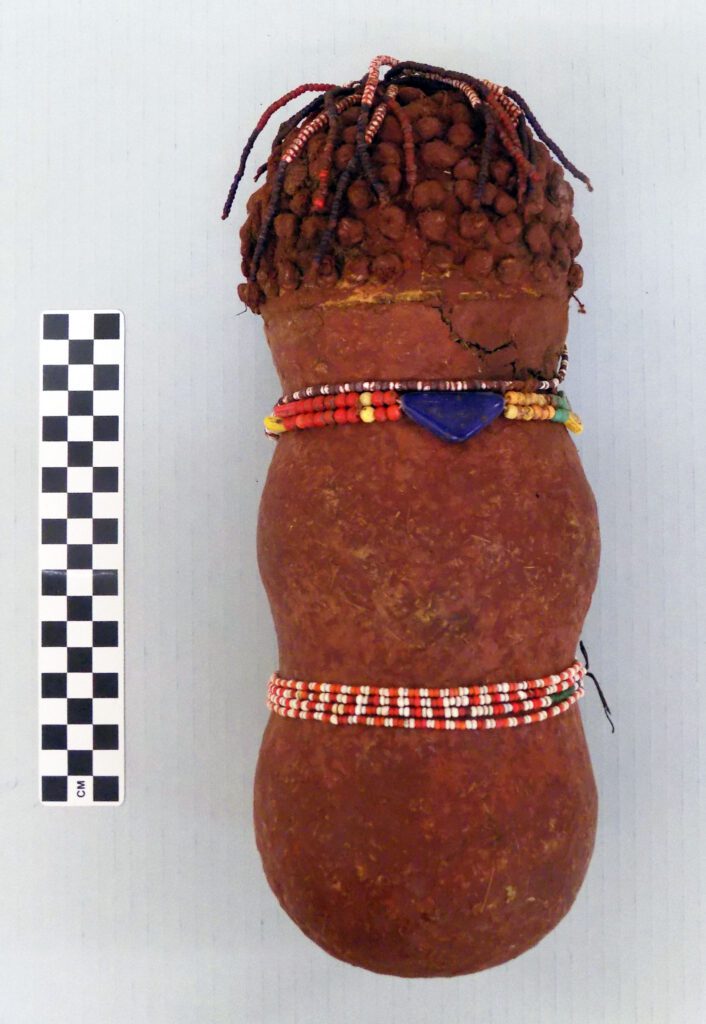
Calabash Gourd Doll

calabash gourd doll

To make this doll, a Tonga woman or girl from a village near Lake Kariba in Zimbabwe, would have filled calabash gourds with sand, seeds, or stone, and covered the gourds with mud, dung, and leaves, before decorating them with strands of beads. Dolls like this one were made by or given to Tonga girls around the ages of 10 to 13, as they approached puberty. The doll came into CMNH’s collection in 1967 as one of many objects from the Tonga people obtained through trade by Terence Coffin-Grey, a taxidermist who worked in natural history museums in Zimbabwe and the U.S., including at CMNH. This doll’s “hairstyle,” with tight balls made of mud and strands of beads, resembles that of some Tonga women of the time, based on photographs shared with CMNH by Coffin-Grey. CMNH has several other similar dolls of different sizes, shapes, and decorations, including some with fabric skirts.

“I chose this doll based on the recommendation of Amy Covell-Murthy and was immediately charmed and intrigued when I saw it. When I held it, I was struck by the weight of it, and I loved learning about this practice of doll-making shared between women and girls in a matrilineal society.” –Deirdre M. Smith, Assistant Curator

Talash Doll

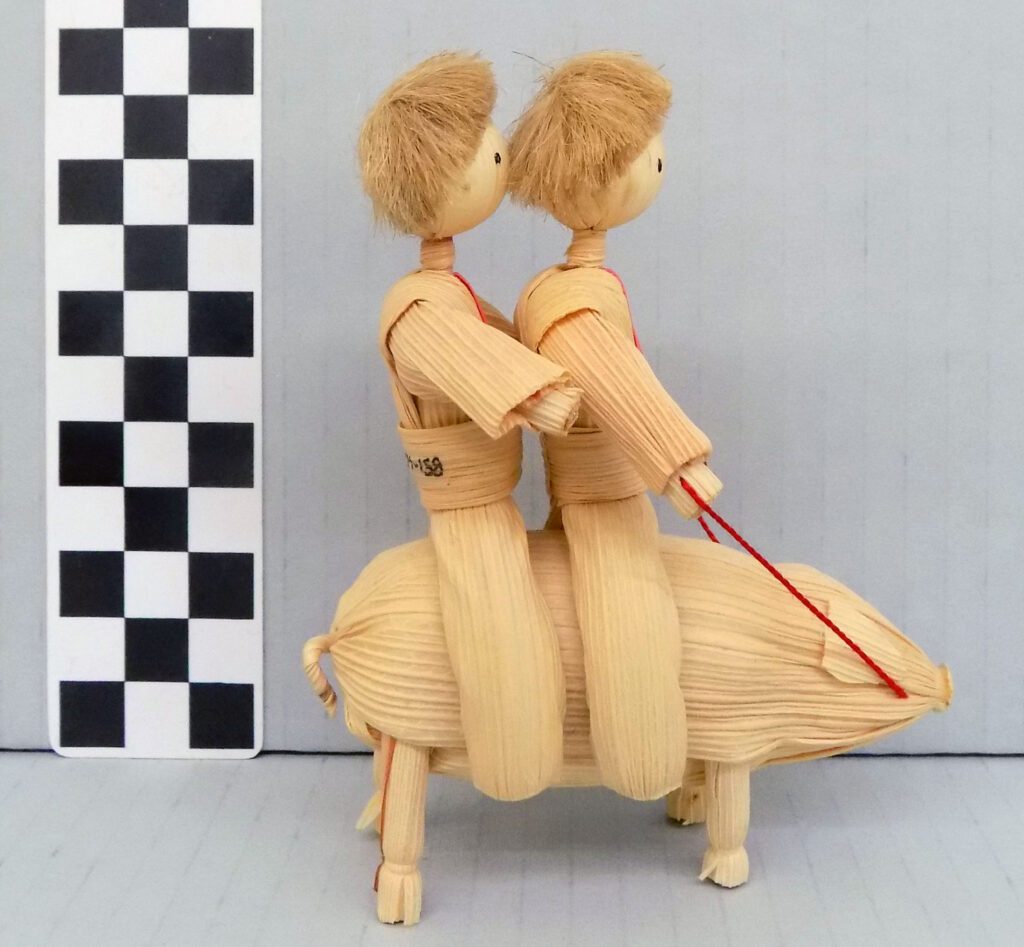
Talash and corn cob dolls

We are all a part of nature. Our ancestors created dolls for children using the natural materials around themselves. The tradition of making dolls from talash, the leaves wrapped around a corn cob, dates back many generations.

Talash is a very interesting material that is easy to work with, and the products made from it are very warm and beautiful. The husks of the corn would be removed in the fall after harvesting the corn. They would then be dried and stored in a dry place. The leaves come in different colors and shades, from white to brown. If necessary, the leaves could also be painted, sometimes with dyes made of onion peel or food coloring. To begin weaving, the middle leaves of cobs are often preferred for their strength and flexibility so as not to tear. The husks are also moistened with water to help give them more elasticity. The length of the strip up to 1 cm is in the middle. Strips that are uneven or ripped would be discarded.

This doll is of boys riding a pig, which highlights ordinary country life in a European village. Eastern Europe has a lot of rivers such as the Danube, Vistula, Dnipro, and others. The territory near the rivers is very large, and kids would help relatives graze pigs on these meadows, while also occasionally playing with them. 

“This doll showed me how people create interesting toys with simple natural things. This is part of our deep roots and traditions in Eastern Europe. I also like the fairy tale by Hans Christian Andersen called Swineherdand (The Swineherd), and for me this doll is reminiscent of that story.”—Lidiia Zadorozhna Ruban, Anthropology Library Volunteer

Balinese Tjili Doll

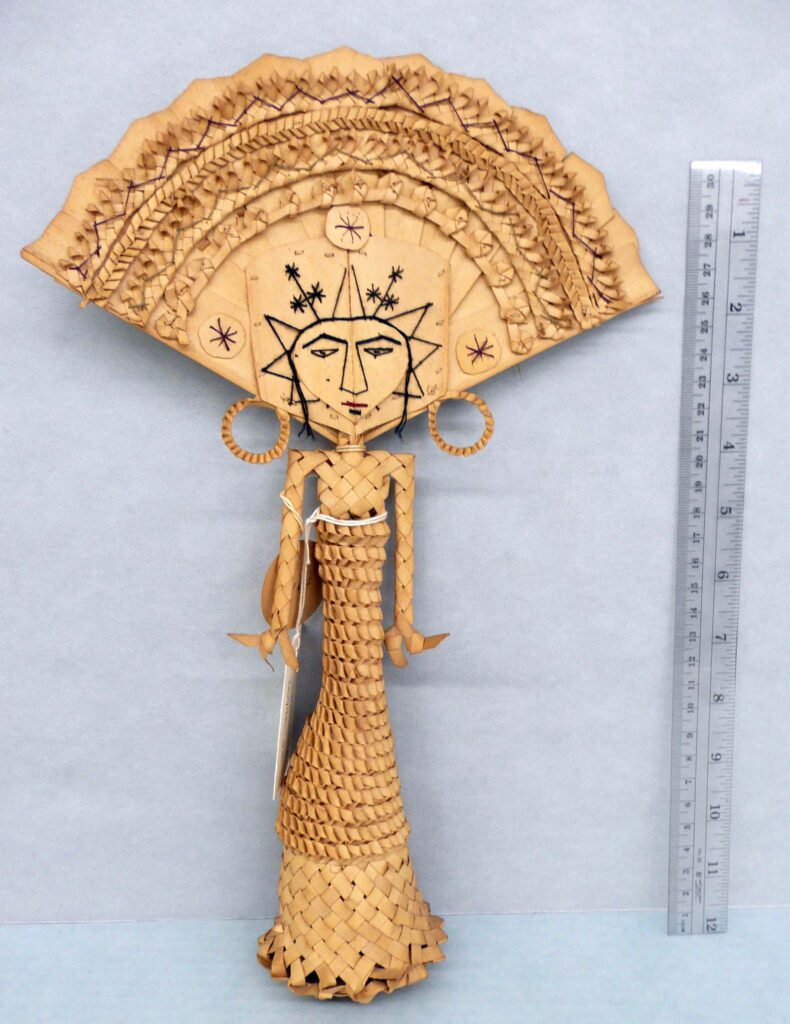
Balinese Tjili doll

This Balinese Tjili doll came to be a part of the Carnegie collection in 1980 through the donation of Dr. Betty J. Meggers, an international doll collector. Made in the image of Dewi Sri, Indonesia’s goddess of rice and fertility, figures like this doll symbolize fruitfulness and good harvests. 

“This doll caught my attention because of her intricate woven design and large, fan-like headdress that radiates like a setting sun. I believe her story shows how dolls can serve so many purposes and are beloved by different cultures all around the world.”—Lily Heistand, Anthropology Volunteer

Folklórico Dancer

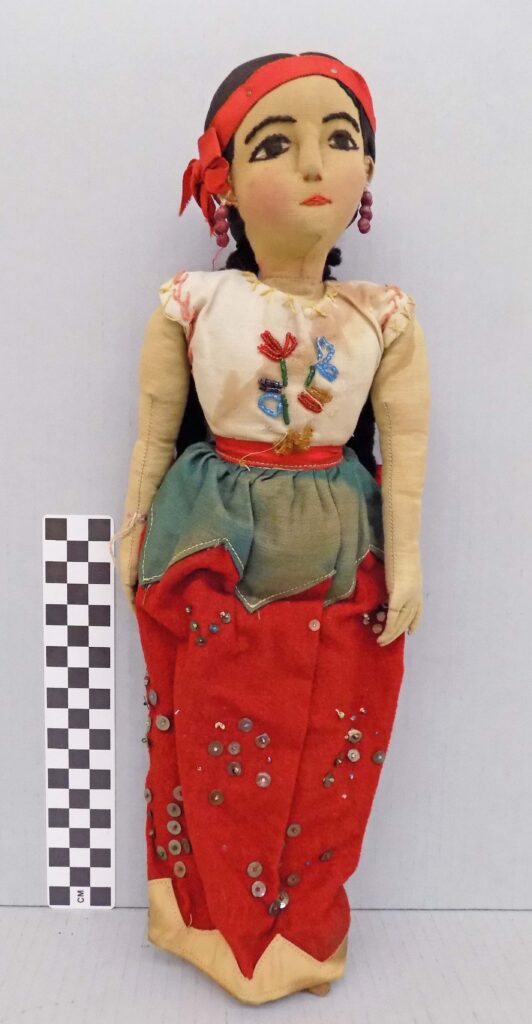
folklorico dancer doll
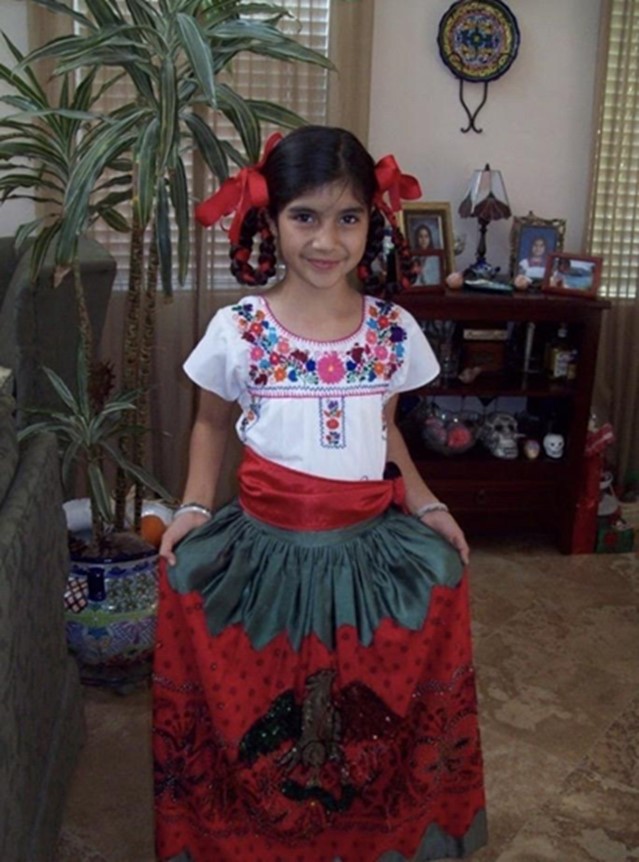
Young Matí wearing same dress style

This doll is a folklórico dancer! Made in Cuernavaca, Morelos, México, this doll joined the museum’s collection as a donation in March of 1950. She is made of wool and cotton and has black braids (trenzas folklóricas), a white embroidered blouse (blusa bordada), and a sequined red and green skirt (china poblana). All these components make her instantly recognizable as a ballet folklórico dancer (folk dancer). Her skirt is designed after one of the most recognizable traditional styles of dress in Mexico, la china poblana. China poblana skirts tend to be heavy as they are made with layers of embroidery using sequins and beads to depict the Mexican coat of arms of the eagle perched on a cactus with a snake in its mouth. Historically, this style of dress was popular in the state of Puebla, but nowadays it is typically worn by dancers when performing El Jarabe Tapatío, which is a dance from the state of Jalisco and México’s national dance. 

“I chose this doll because she beautifully represents my culture and my family. My abuelita embroidered a china poblana skirt that my mom performed in, and years later I also danced in it. This doll represents a tradition that ties together three generations of women in my family and the beauty of our cultural traditions.”—Matí Castillo, Fine Fellow, University of Pittsburgh

Angel of Mercy

Canadian Angel of Mercy doll

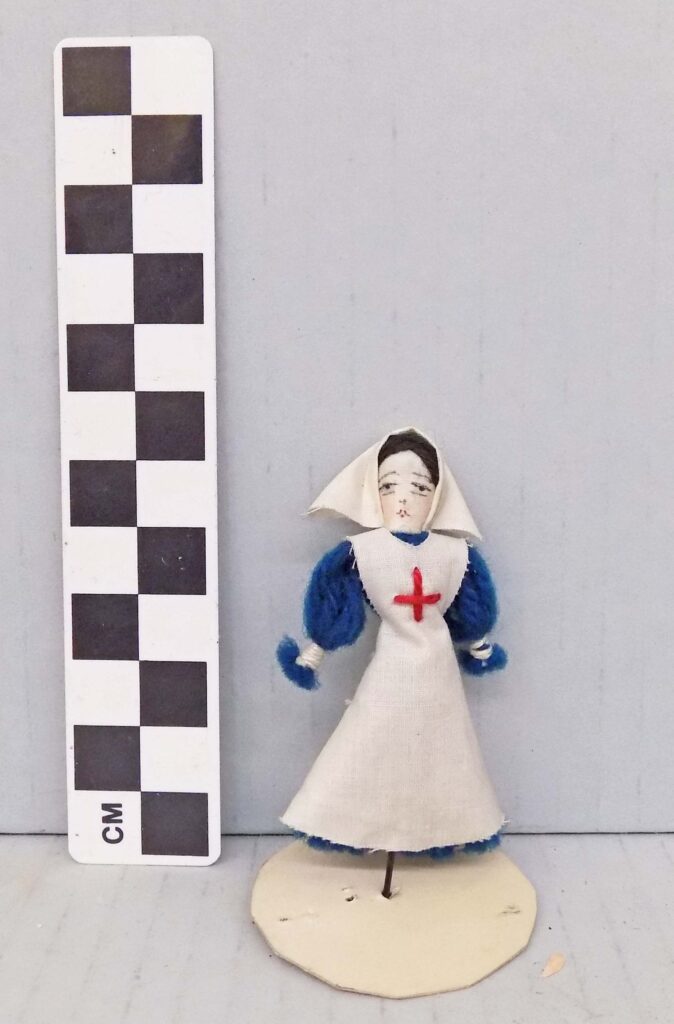
This doll is an “Angel of Mercy.” This nickname was affectionately given to the unsung heroes of the Great War, the nursing sisters, who worked long gruesome hours and attended to the needs of injured soldiers. The casualties of World War I were extensive, but the nurses worked tirelessly to aid in wound cleaning, bacterial-growth prevention, and even assist in emergency surgeries all while fearing for their own wellbeing. This doll was donated in 1918 by Mrs. Virginia Hayes Osburn along with many other ‘war woolies.’ These war woolies were dolls that were made by the Canadian Red Cross Vancouver during the Great War. According to the British Red Cross Museum and Archive, these “wooly” dolls were crafted by the Vancouver Prisoners of War Branch of the Canadian Red Cross to fundraise during World War I.

“I chose this Canadian Red Cross Nurse doll because though she is miniature, her face was expressive, and I wanted to research more about her because the other war woolies she was housed with were depictions of English monarchs; I wanted to tell her story as an unsung female hero of the Great War.”—Caitlin Erb, St. Laurance University Post-Baccalaureate Intern

A. Marque Character Doll

black and white photo of two character dolls
Isabeau de Baviere doll

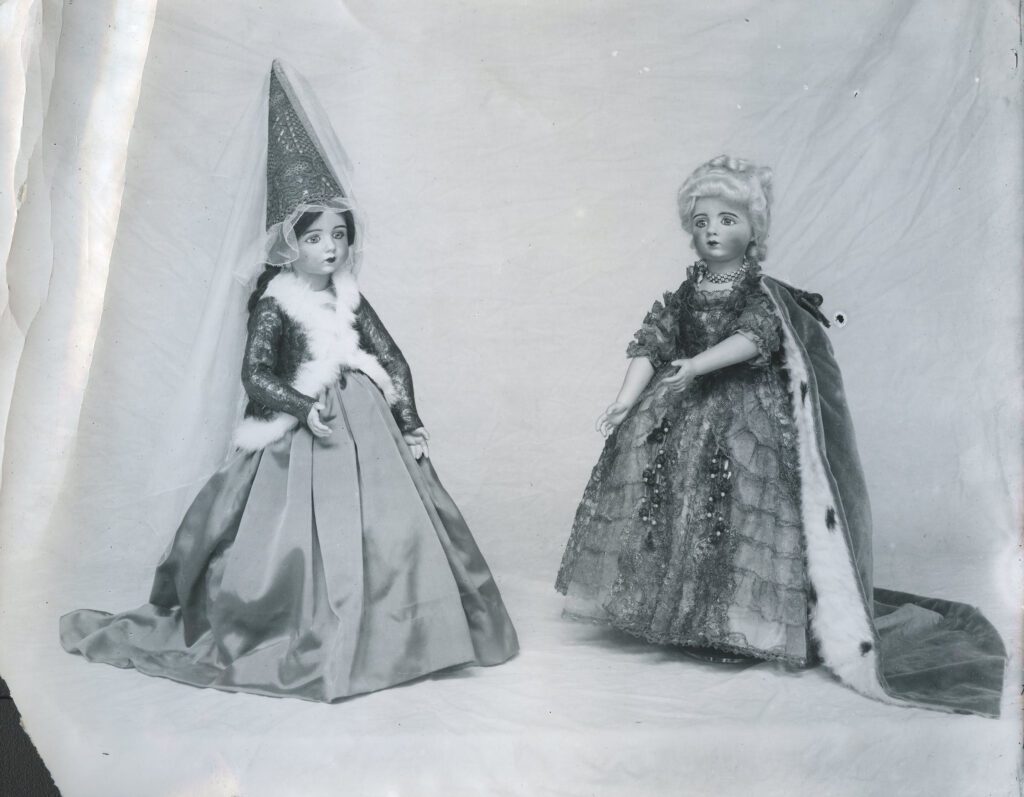
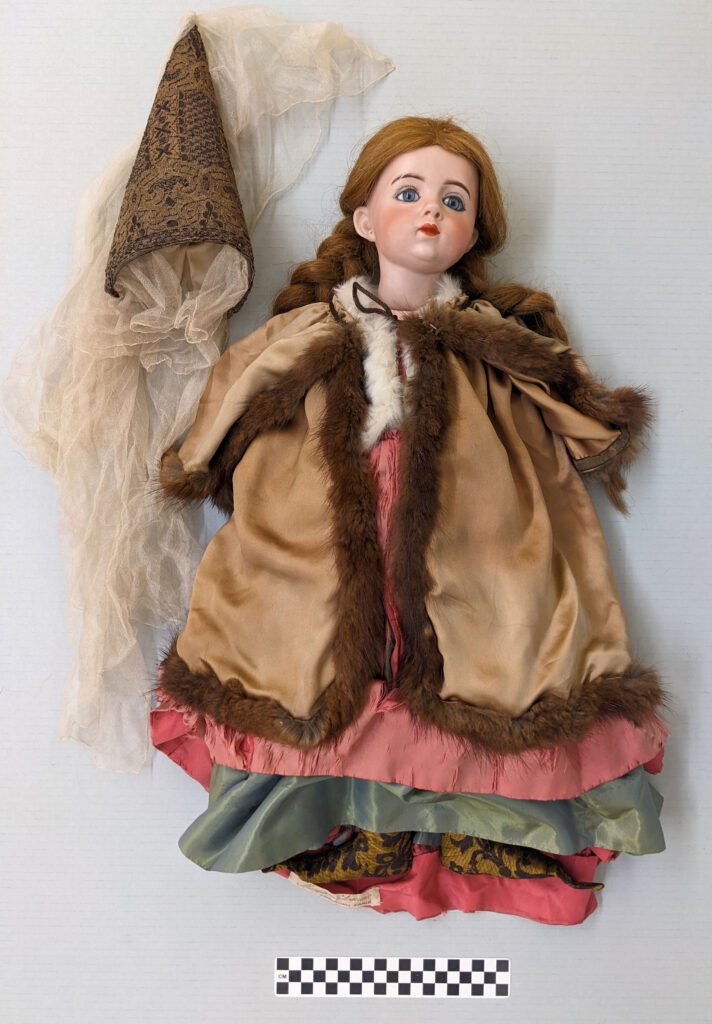
Fashion icon Isabeau de Bavière is one of the five queens that made their way to Carnegie Museum in 1916. After seeing a French character doll exhibit in the Metropolitan Museum in 1915, Herbert DuPuy wrote to the Director of Carnegie Museum, Dr. W.H. Holland, suggesting the addition of such wonderfully crafted dolls into Carnegie’s collection. Less than a year later, five A. Marque and thirty-five other character dolls from the Paris doll company S.F.B.J were part of the museum. 

Isabeau is a rare A. Marque bisque doll, fashioned after the queen of France reigning from 1371-1435, and dressed by the famous couture artist Margaine Lacroix. She gives a glimpse into the accurate historical fashion of the late fifteenth-century nobility. From her undergarments to the recognizable pointed hennin hat of the Medieval period, Isabeau directly copies portraits of the queen. 

“I chose this wonderful doll because of her fascinating history and design; the A. Marque dolls are some of the rarest dolls the museum currently owns, and one of my favorites to admire.”—Elizabeth R. Dragus, Anthropology Volunteer 

Kwakwa̱ka̱ʼwakw Woman

Kwakwa̱ka̱ʼwakw Woman doll
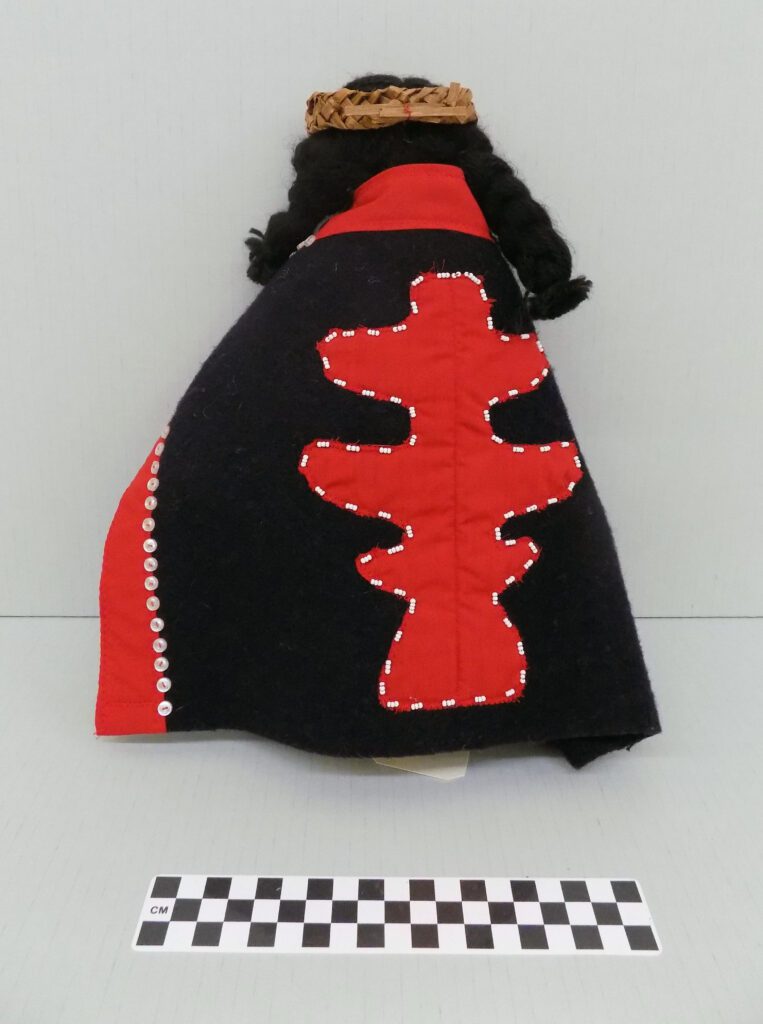
Kwakwa̱ka̱ʼwakw Woman doll back

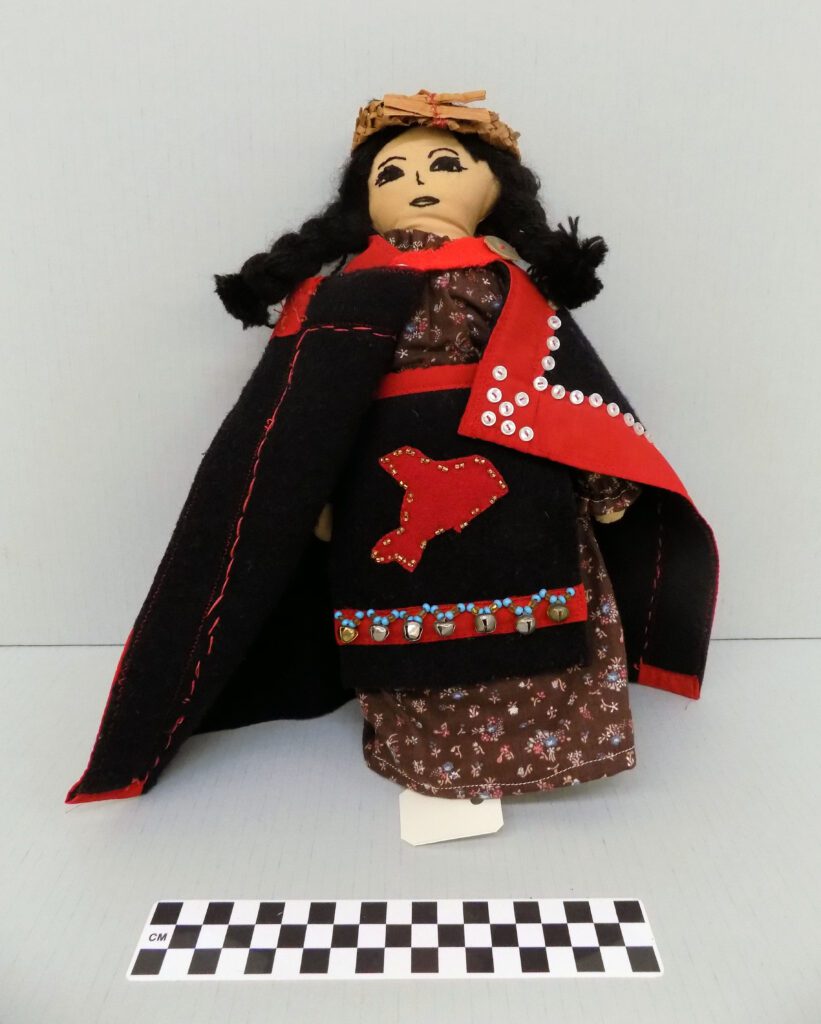
The Kwakwa̱ka̱ʼwakw Woman doll was donated by James B. Richardson III, (Carnegie Museum Anthropology Curator Emeritus), in memory of his mother Miriam Davenport Richardson. The doll was made by Debra Bell of the Nimpkish Band of the Kwakwa̱ka̱ʼwakw Nation located in Alert Bay, British Columbia. Debra Bell is one of a very few Northwest Coast Indigenous female doll makers. On a research expedition for Carnegie Museum of Natural History’s Alcoa Hall James Richardson purchased this doll in 1992.

Embroidered on the wool felt blanket is a “Tree of Life” design, symbolic of the coniferous forests of the Pacific Northwest which are full of Sitka spruce, Douglas fir,  yellow cedar, and western red cedar. Collectively, these tree species are the sustenance of Indigenous people, providing lumber for homes, fire for heat, homes for birds, and shelter for mammals. They also sustain waterways and breathe oxygen into the air.

A plaited cedar bark wreath adorns the doll’s head. Yellow cedar is considered the finest cedar in the region and used in traditional ceremonial objects. The tree is found in deep porous soil on slopes, around lakesides, and within estuaries. The oral history of yellow cedar in Northwest cultures derives from this story; “Raven asked a few young women what forest creature they were afraid of. The women replied, ’none.’  Raven then asked if the women were afraid of owls. The women exclaimed, ‘Yes, [they] were terrified of owls!’ Raven (being known as a trickster) hid in some bushes making owl sounds. The young women went running up the slopes. That is why yellow cedar is only found on slopes.” 

Most Northwest tribes believe humans can transform into animals and back again. The red felt killer whale applique embroidered with pairs of amber glass seed beads on the doll’s dress symbolizes one of these stories of human transformation. The killer whale is known as Natsilane and believed to be part of Earth’s creation. Natsilane was drowned by his brothers who wanted control of the world. Left to die, Natsilane was rescued by a sea otter and restored to his legitimate place as leader. Natsilane helped the sea otters find the safest hunting waters in return for saving his life.

The Northwest Coastal native Americans have a fiercely independent culture steeped in storytelling and deeply rooted in the infinite wisdom of nature.  All these attributes can be noted when viewing the Kwakwa̱ka̱ʼwakw Woman doll.

“I was taken by this doll’s face staring out from her collection box with blue glass paperweight eyes and painted eyelashes for numerous reasons. I had lived in Oregon and Washington states for a few years and was always caught by the breathtaking beauty of shorelines and forests. The doll reminded me of that majestic landscape in her blue wool button blanket. Although the button blanket did not appear in the Northwest culture until colonization, the deep color of the wool is reminiscent of the sea and sky in the area.”—Georgia Feild, Archaeology Volunteer and Museum Educator II   

Meskwaki Man

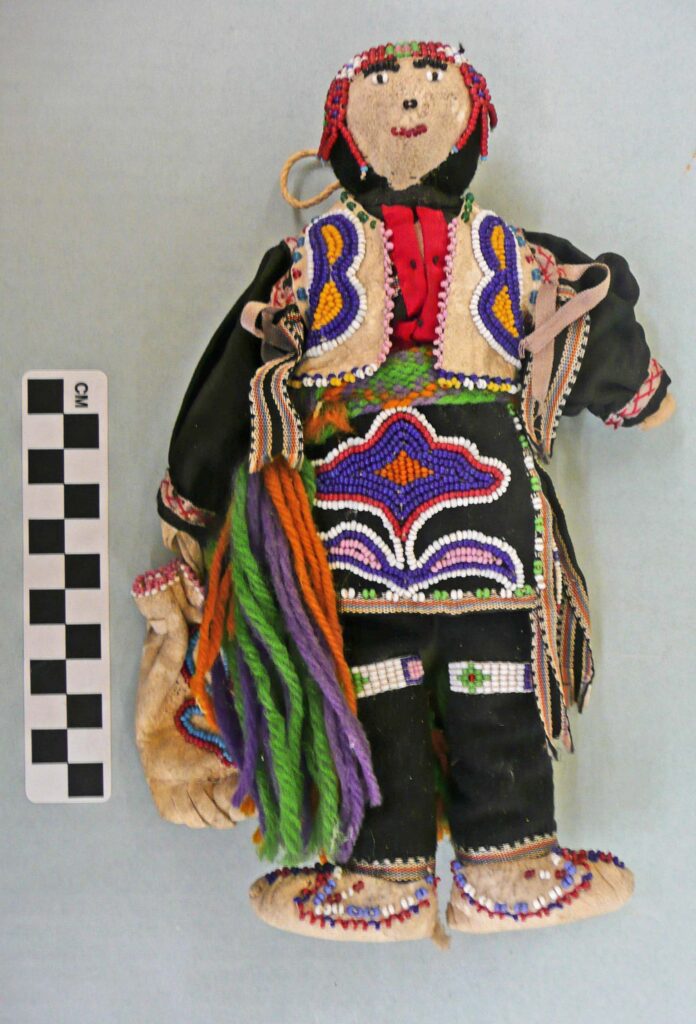
Meskwaki man doll in traditional clothing

“My favorite doll in the collection is the Meskwaki man in traditional clothing, probably made in the 1920s. Part of what caught my eye was the attention to detail. 

The man’s head, moccasins, and bag are made from brain-tanned deerskin, with simplified traditional sewn beadwork designs. His beaded headband is loom-woven, and his body is sewn of cotton muslin. 

He has a satin shirt with silk ribbons [like the ribbon shirts worn today], and wool trousers under his beaded aprons. Originally, men wore loincloths, beaded for special occasions, which evolved into aprons in the last half of the 19th century as men started wearing trousers. 

My favorite part of the outfit is the finger-woven sash. Finger-weaving is a form of oblique interlacing, a sort of wide, flat braid. I was first introduced to finger-weaving in the late 1960s, when I made finger-woven sashes in my dorm room for all my hippie college friends. Finger-weaving was and is found all over eastern North America, where the technique is used to create sash belts, garters, and bags. Colors, designs, and techniques differ in the different cultural areas. The people in the upper Midwest made wide bands which the men wrapped around their heads like turbans and adorned with feathers. [Southeastern men also wore turbans with feathers but preferred to use silk shawls.]

The earliest recorded piece extant of the technique comes from the Craig Mound in Spiro, Oklahoma, and dates to around 850-1450CE. It is currently in the collections of the National Museum of Natural History, Smithsonian Institution.”—Deborah Harding, Anthropology Collection Manager Emeritus 

First Lady Paper Doll

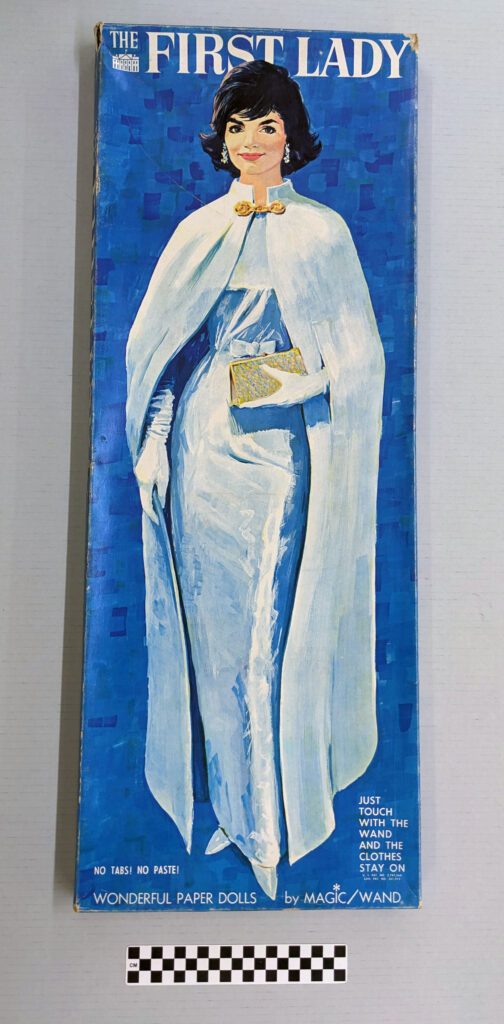
box for a First Lady paper doll
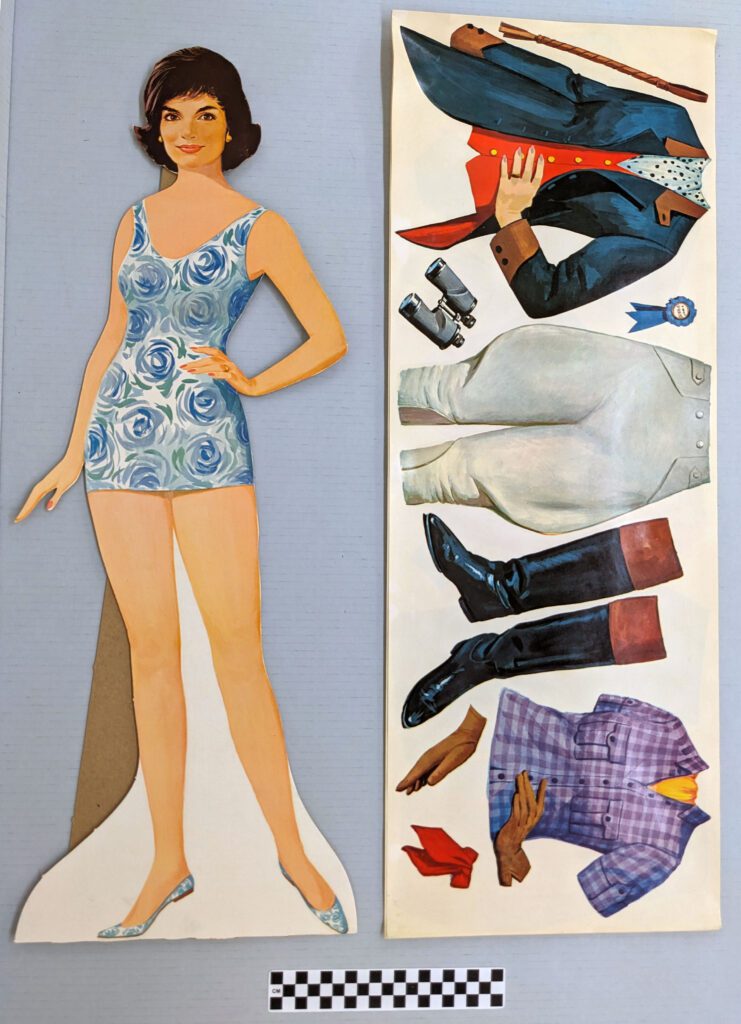
first lady paper doll

This supersized paper doll depicts fashion icon and First Lady Jackie O. It was donated by Dr. Betty Meggers. She and her mother collected dolls from around the world beginning at least as early as the 1930s. She donated more than 1,000 to the museum. As you can see from the box, this paper doll used a “magic wand” to keep the clothes on the doll – no tape or paste required!

“I used to love dressing, playing with, and making paper dolls. I chose paper dolls because they are universally accessible, all it takes to create one is paper and imagination. Manufactured paper dolls come from all over the world and provide people with the opportunity to see, play with, and learn about all different types of people, jobs, and cultures. They are also great for kids like me, who really love fashion. My grandma Kelley had a wonderful set of dolls and paper dolls that I would play with whenever I went to her house. I love the freedom of being able to dress the dolls however I wanted, to change their hair and outfits, and even to design new outfits of my own.”—Lisa Haney, Assistant Curator, Egypt on the Nile

Tibetan Buddhist Doll

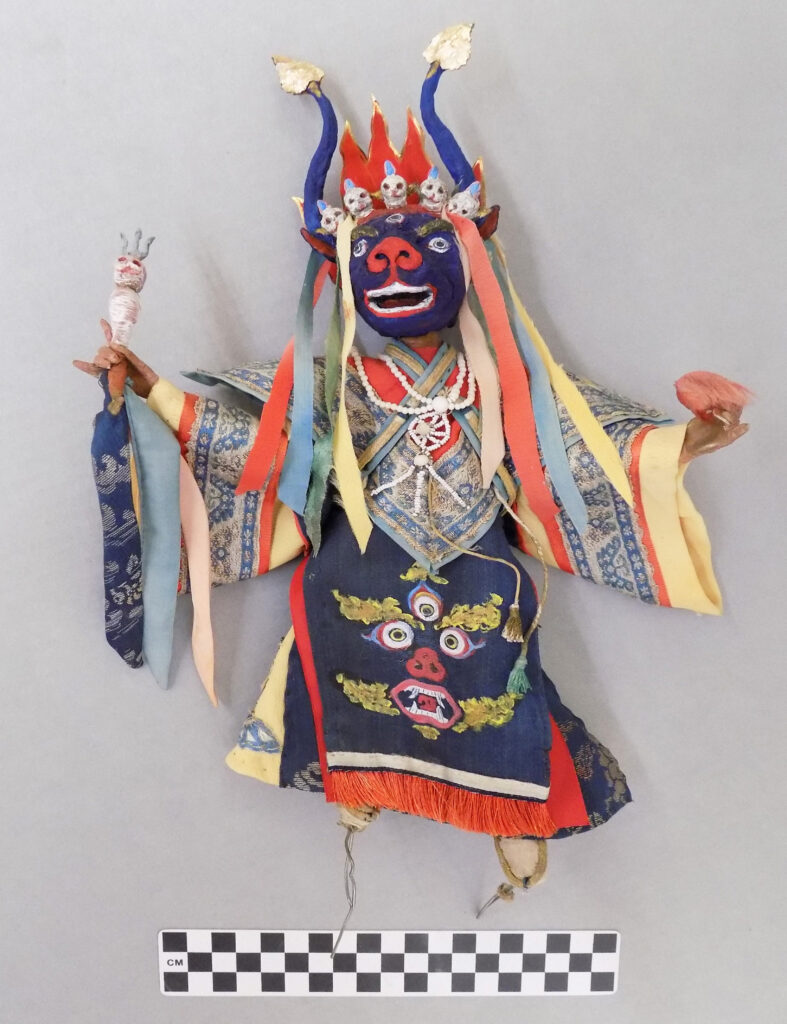
colorful doll of Yamantaka, Destroyer of the God of Death

Yamantaka, “Destroyer of the God of Death.” Not exactly a character you’d think of making into a doll to be used as a plaything, something to cuddle, or as a tool to teach children how to care for babies. However, to practitioners and students of Tibetan Buddhism, this type of doll serves as a visual reminder of the history, values, and lessons that are core to the culture. Although doll-making isn’t a traditional art form in Tibet, Yamantaka shows up in many other visual forms of Tibetan Buddhist art. This unusual doll from the museum’s collection showcases some handicrafts that aretraditional to the culture such as garment-making, tapestry, sculpting, painting, and beading.

Who was Yamantaka and why make a doll of him? The short version of the story is that there was a monk who became wrathful and took on the form of an enraged water buffalo. He caused death and destruction all over Tibet and became known as Yama, The God of Death. The people prayed for someone to stop him and restore peace. A bodhisattva (a deity who helps people) transformed himself into the form of an even bigger, scarier water buffalo to find Yama and convince him to change his ways. By stopping the God of Death, the bodhisattva became known as Yamantaka, the Destroyer of the God of Death. Yamantaka showed mercy on the repentant monk and reminded him to live by the Buddhist principles of compassion, self-control, detachment from ego, and wisdom-seeking. By exemplifying these qualities and restoring peace, Yamantaka was regarded as a protector of Buddhism. A legendary superhero. Someone deserving to have a doll, or rather an action figure, made in his likeness for future generations to aspire to.

“This doll stood out to me at first glance because of its vivid, striking visual impact. Then, as you let your eyes coast over all the details, you become aware that it is just as nuanced as it is bold. For example, the subtle metallic tips on the flames are equally important as the formidable facial expression. For every single thing you see there’s more to the story, and it’s probably not what you’d expect. The doll’s purpose was to preserve, teach, and remind people of the culture. Indeed, it inspired me to seek out and learn about the significance of Yamantaka’s story and, by extension, Tibetan Buddhist traditions and beliefs.”  -Jillian Hanna, Anthropology Volunteer 

Bye Barbie!

Many of our dolls have been used to augment traveling exhibitions and have served as research subjects. It is our great honor to care for them and learn from them. The next time you visit the museum, don’t forget to stop by the Alcoa Hall of American Indians and look for our dolls that are currently on exhibit. 

Related Content

Bringing a Little O-Gah-Pah to Pittsburgh

New Vision of Old Rock Art

Grass Baskets of the Chumash

Sources Consulted

 CMNH accession records

Transformations: Salmon, Bear, Raven, and Humans

Tonga, Britannica.com

Taxidermy Hall of Fame

Bruce Frank Primitive Art

Stichting Nationaal Museum van Wereldculturen

Tibetan Buddhist Art

The Rise of Yamantaka, Destroyer of the Lord of Death

British Red Cross. (2010). Small woolen doll dressed in French military uniform. British Red Cross collection online. https://museumandarchives.redcross.org.uk/objects/8999   

Flexon M. Mizinga, “Marriage and Bridewealth in a Matrilineal Society: The Case of the Tonga of Southern Zambia, 1900-1995,” African Economic History 28 (2000): 53-87.

Malaika P. Yanou, Mirjam Ros-Tonen, James Reed, and Terry Sunderland, “Local knowledge and practices among Tonga people in Zambia and Zimbabwe: A review,” Environmental Science & Policy 142 (April 2023): 68-78.

Wilfrid Laurier University. (2015). Angels of Mercy: Canadian Nurses in the Great War. Youtube. Retrieved July 27th, 2023. from https://www.youtube.com/watch?v=0zITLh6jPYY

Carnegie Museum of Natural History Blog Citation Information

Blog author: Covell-Murthy, Amy; Gaugler, Kristina; Barno, Jim; Smith, Deirdre M.; Zadorozhna Ruban, Lidiia; Heistand, Lily; Castillo, Matí; Erb, Caitlin; Dragus, Elizabeth R.; Feild, Georgia; Harding, Deborah; Haney, Lisa; Hanna, Jillian
Publication date: August 4, 2023

Share this post!

  • Share on Twitter Share on Twitter
  • Share on Facebook Share on Facebook
  • Share on Pinterest Share on Pinterest
  • Share on LinkedIn Share on LinkedIn
  • Share on Reddit Share on Reddit
  • Share via Email Share via Email

Filed Under: Blog Tagged With: Amy Covell-Murthy, anthropology, Kristina Gaugler, Lisa Haney, Science News, SWK2

July 17, 2023 by Erin Southerland

Tracking Migratory Flight in the Northeast

by Patrick McShea
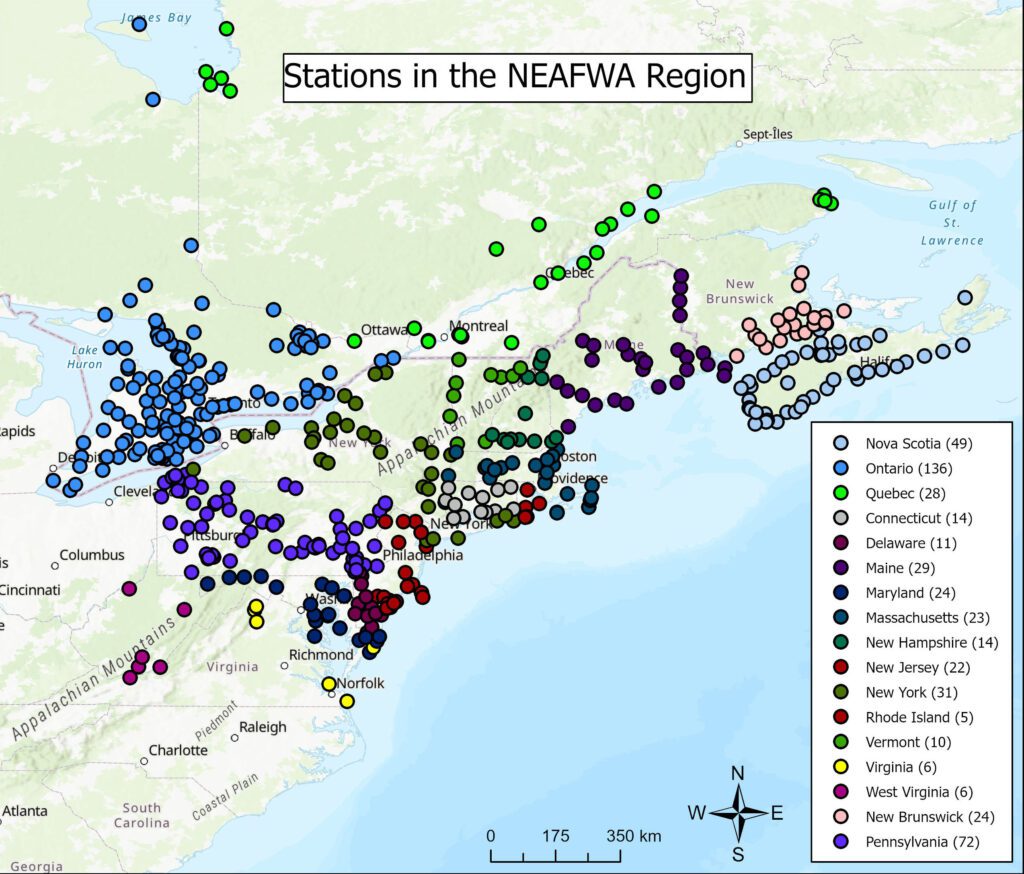
Map of northeastern US and southeastern Canada with dots representing Motus stations in the Northeast Association of Fish and Wildlife Agencies region

Explanations of networks benefit from maps or other graphic representations of linked participants. In the case of a recent bulletin describing regional growth within the international research network known as the Motus Wildlife Tracking System, the inclusion of a map helps ground updated information about the program to the landscape.

The collaborative effort, known informally as simply Motus, a Latin word for movement, was founded by the bird conservation organization, Birds Canada in 2014, and has grown to involve hundreds of partners among scientific and educational institutions, government agencies, and independent researchers.

The ground-breaking work of Motus involves the use of automated radio telemetry to track the migratory movements of free-flying birds, bats, and insects. After an animal under study is safely captured, fitted with a highly miniaturized transmitter, known as a nanotag, and released, the creature’s flight movements are electronically detected and recorded whenever it passes within nine miles of strategically placed antennas mounted on low, just-above-tree-canopy-height receiving stations.

Carnegie Museum of Natural History is a Motus partner through the work of staff at its Powdermill Avian Research Center who have installed 136 receiving stations from western Maryland through Maine and continue to monitor 50 receiving stations from southwestern Pennsylvania up through western New York along the Adirondack Mountains. 

Although Motus stations are in place across the Western Hemisphere landmass from Nunavut, Canada, to southern Chile, the world’s densest concentration of them is found in the thirteen U.S. states and five Canadian provinces that make up the network’s Northeast Collaboration. The 504 tower sites in this territory represent one third of the global total, and since 2017 have logged more than 170 million nanotag detections. This tracking has involved more than 4,700 tagged individuals of 147 species of birds contributing vital information to 194 different research projects.

Ongoing maintenance and technological upgrades will be necessary for the Northeast Motus Network to continue generating research findings that inform conservation initiatives. As Jon Rice, the Museum’s Urban Bird Conservation Coordinator explains, “As this network reports findings for museum research into both the survivorship of window collisions and stopover behavior for species of greatest conservation need, it simultaneously supports ongoing research for countless other projects in the western hemisphere. The real power of this technology isn’t captured by the map. It’s our ability to help our neighbors using the same resources we are using to perform our own novel research.”

Patrick McShea is an Educator at Carnegie Museum of Natural History.

Related Content

A Taste for Metal

Milestones at Powdermill’s Banding Lab

Ruffed Grouse or Scarlet Tanager: Debating the Pennsylvania State Bird

Carnegie Museum of Natural History Blog Citation Information

Blog author: McShea, Patrick
Publication date: July 17, 2023

Share this post!

  • Share on Twitter Share on Twitter
  • Share on Facebook Share on Facebook
  • Share on Pinterest Share on Pinterest
  • Share on LinkedIn Share on LinkedIn
  • Share on Reddit Share on Reddit
  • Share via Email Share via Email

Filed Under: Blog Tagged With: Birds, Jon Rice, parc, Pat McShea, Powdermill Nature Reserve, Science News

July 11, 2023 by Erin Southerland

Carnegie Museum of Natural History Awarded $225K Grant from Richard King Mellon Foundation to Lead Campaign Against Spread of Invasive Plant Species

Pittsburgh, Pennsylvania, July 11, 2023 — Thanks to a $225,000 grant from the Richard King Mellon Foundation, Carnegie Museum of Natural History (CMNH) will lead a collaborative education and outreach campaign to inspire local organizations and the public to act against the spread of invasive plant species across Pennsylvania and Central Appalachia. Partner organizations will include Audubon Society of Western Pennsylvania, Phipps Conservatory and Botanical Gardens, Pittsburgh Botanic Garden, and other organizations.

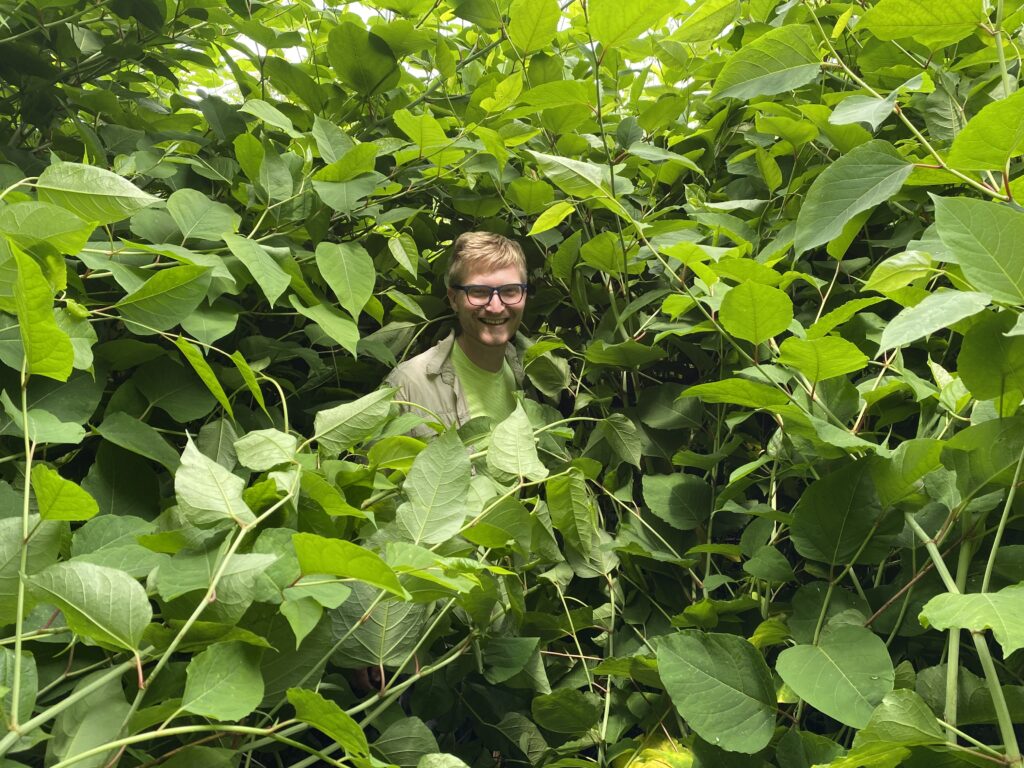
Associate Curator of Botany Mason Heberling with knotweed, an invasive plant.

CMNH cares for a collection of more than 550,000 plants specimens, the largest collection of Western Pennsylvanian plants in the world. The museum will leverage this collection and the scientific expertise of its own researchers and partner organizations to create and distribute a robust toolkit of resources designed to generate public awareness of invasive plants’ impact on local ecosystems and what people can do to slow their spread and prevent future introductions. Resources are anticipated to include museum exhibition content, digital assets, videos, maps, infographics, printed materials, and shared messaging that can be customized to the unique needs of each participating organization’s audience. The campaign will be distributed across a variety of outlets, including social media, printed handouts, and interpretive displays. 

“We’re grateful to the Richard King Mellon Foundation for this opportunity to convene the expertise of amazing colleagues in sister institutions to develop best practices for communicating about invasive species,” said Mason Heberling, CMNH’s Associate Curator of Botany. “We hope to cultivate an already growing audience and to empower the people of Western Pennsylvania to make a difference in the prevention and management of invasive species.”


The earliest record of knotweed (Reynoutria x bohemica) in the Pittsburgh region. The species now lines Pittsburgh’s three rivers, waterways, and roadsides. Collected in 1920.

The campaign will launch later in 2023 and continue through December of 2024, but the outcomes will continue well beyond that timeline. CMNH content will include a new interactive exhibit in the museum’s Hall of Botany and an exhibit at Powdermill Nature Reserve, the museum’s environmental research center located in the Laurel Highlands. CMNH will also create a free online repository for educational materials and curate a social media campaign linking the institutional partners to generate awareness and community participation across their respective networks of followers. “From weeds in your garden to invasive species in natural areas, the topic of introduced plants is not only a scientifically complex problem, but also a societally complex one,” added Heberling. “Many invasive plants were intentionally planted at first—and some continue to be planted—with environmental consequences often realized only decades later. Species invasions are one of the top drivers of biodiversity change, here in Pennsylvania and around the world.” 

About the Richard King Mellon Foundation
Founded in 1947, the Richard King Mellon Foundation is the largest foundation in Southwestern Pennsylvania, and one of the 50 largest in the world. The Foundation’s 2021 year-end net assets were $3.4 billion, and its Trustees in 2022 disbursed more than $152 million in grants and program-related investments. The Foundation focuses its funding on six primary program areas, delineated in its 2021-2030 Strategic Plan.

Filed Under: Press Release Tagged With: Botany, climate change, Mason Heberling, Science News

July 7, 2023 by Erin Southerland

Ruffed Grouse or Scarlet Tanager: Debating the Pennsylvania State Bird

by Pat McShea

Should a wildlife species representing a state reflect the creature’s abundance within the designated boundaries? Where state birds are concerned, the topic is now wide open for discussion because of an enlightening article in the spring issue of Living Bird, the quarterly publication of the Cornell Lab of Ornithology. 

In “What if the State Birds Were Determined by Data?” authors Matt Smith, an applications programmer for the Lab’s Macaulay Library, and Marc Devokaitis, associate editor for Living Bird, make a strong case for the “thought experiment” of revising such symbols. They trace the current arrangement to a campaign by the General Federation of Women’s Clubs in the 1920s that eventually resulted in a designated “bird of honor” for all 50 states, the District of Columbia, and the 13 provinces and territories of Canada.

Chief among the current system’s deficiencies are birds earning honors for multiple states. The Northern Cardinal, for example, holds the revered position in seven states, creating a red bird belt stretching westward from North Carolina and Virginia across West Virginia, Ohio, Kentucky, Indiana, and Illinois.

As remedy, Smith and Devokaitis suggest a more scientific selection process based upon millions of community science observation records in eBird, the vast and easily accessible electronic archive of bird sightings managed by Cornell Lab of Ornithology. Examination of this enormous data set, when paired with analysis of satellite-generated land-cover maps, reveals how the biogeographical conditions in many states favor the well-being of particular species. Selecting such species for recognition not only produces unique state bird designations, but also directs public attention to the ecosystem that supports the honored birds.

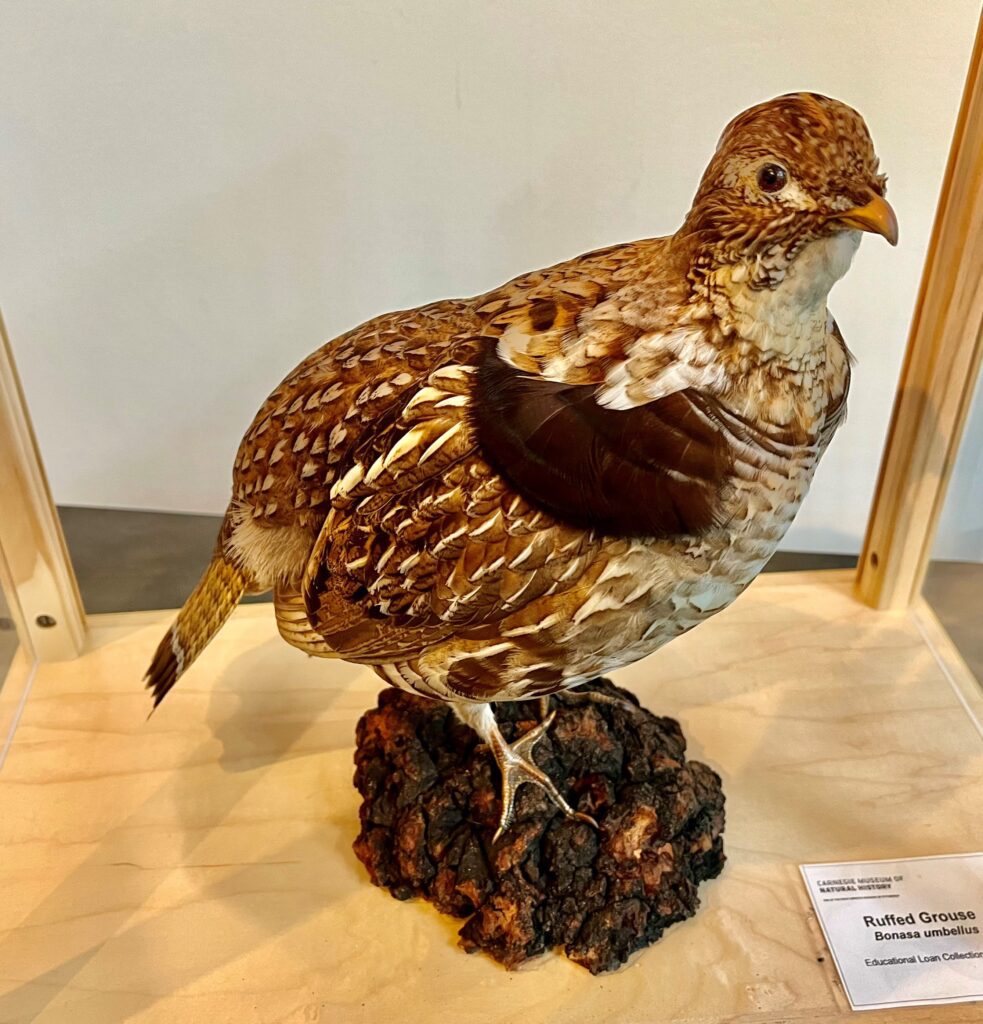
Here in Pennsylvania, where the Ruffed Grouse has reigned as our state bird since 1931, such data driven recommendations might seem unnecessary. No other state so honors the Ruffed Grouse, and the species’ collective value to Pennsylvania residents includes the gamebird’s historic importance as a food source and its current role as the focus of much upland sport hunting. 

ruffed grouse taxidermy mount
Ruffed Grouse taxidermy mount.

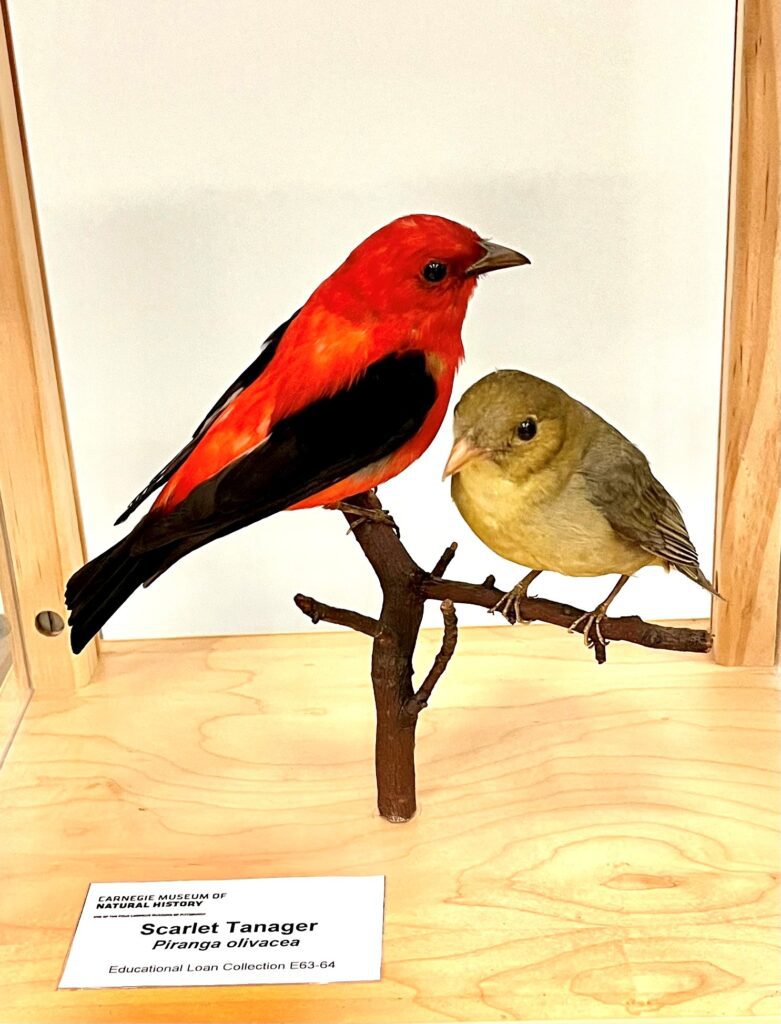
In a challenge to this status quo, documented observations and land cover conditions point to a smaller and brighter bird for state honors, the Scarlet Tanager. Pennsylvania, according to the reasoning behind the nomination, supports a greater breeding population of these songbirds than any other state. 

taxidermy mount of two scarlet tanagers
Pair of Scarlet Tanagers.

The species, whose descriptive name is an apt description of the male bird in breeding plumage, could certainly attract advocates. In All About Birds, the Cornell Lab of Ornithology’s encyclopedic online reference, the nominee’s description begins with its pure visual appeal: Male Scarlet Tanagers are among the most blindingly gorgeous birds in an eastern forest in summer, with blood-red bodies set off by jet-black wings and tail. Viewing expectations are quickly tempered by subsequent sentences, which, after noting the dark-winged female’s otherwise yellowish-green plumage, and the species overall preference for high tree canopies, recommends using the birds’ distinctive call as an aid to visually locate them. 

Whenever circumstances make it possible for such advice to be followed, there is great potential for the development of more ardent Scarlet Tanager fans. Gabi Hughes, Environmental Educator for the Audubon Society of Western Pennsylvania, recalls a spring when a male Scarlet Tanager would reliably sing from the woods just beyond the suburban Pittsburgh middle school campus where she was leading bird-focused activities with seventh grade students. By her estimate, over the course of multiple small group hikes, at least 80 seventh grade students saw and heard the bird, a creature introduced to them as a spring and summer resident of their neighborhood who had recently returned from wintering grounds as distant as Bolivia.

For Ruffed Grouse fans, declining populations, a trend attributable to reductions in the mixed forest stage habitat across Pennsylvania, as well as the species’ susceptibility to West Nile Virus, might be of far greater concern than a revision of symbolic honor. As a fallback position, Ruffed Grouse backers might even cite the specific wording of the relevant 1931 statute, making their case that “state game bird” should be regarded differently than “state bird.”

Pat McShea is an Educator at Carnegie Museum of Natural History.

Related Content

Building Birding Skills

Bird Architecture on Human Infrastructure

Why Do the King Penguins in Bird Hall Look So Different from Each Other?

Carnegie Museum of Natural History Blog Citation Information

Blog author: McShea, Patrick
Publication date: July 7, 2023

Share this post!

  • Share on Twitter Share on Twitter
  • Share on Facebook Share on Facebook
  • Share on Pinterest Share on Pinterest
  • Share on LinkedIn Share on LinkedIn
  • Share on Reddit Share on Reddit
  • Share via Email Share via Email

Filed Under: Blog Tagged With: Birds, Pat McShea, Science News

June 23, 2023 by Erin Southerland

From Collections User To Collections Manager

Introducing Mariana Marques, the New Collection Manager for the Section of Amphibians and Reptiles

by Mariana Marques
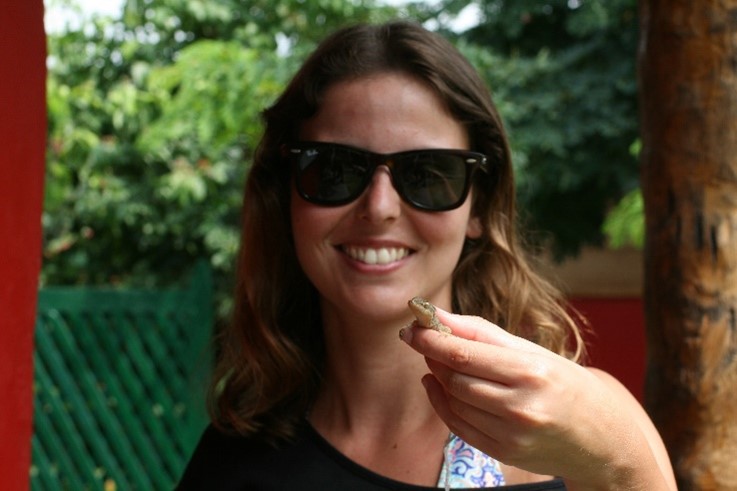
With a Hemidactylus greefii – São Tomé giant gecko, São Tomé island.

I’m not sure when I first entered in a natural history museum, but I know that these establishments have always been my favorite places to visit. I did my bachelor’s degree in biology in the University of Évora, a small and picturesque town in southern Portugal surrounded by one of the most biodiverse habitats of the Iberian Peninsula, the unique savanna-like ecosystem known as the “montado.” In the intervals between classes, I loved to go look for the critters that surrounded the university field station where most of my classes were held. I was lucky enough to be in one of the places with the highest diversity of amphibians and reptiles in the country, and in a natural and unspoiled area which meant that I could easily see good numbers of these animals. Being able to handle and study these animals in the field woke up my passion for herpetology, and I decided that I wanted to become a herpetologist.

I started to collaborate on projects in herpetology, and I was lucky enough to visit the outstanding collections of the Natural History Museum of Paris while I was an undergraduate. Most of the projects I was participating in had a strong taxonomic focus, and therefore specimens were the basis of my research. I had become specialized in measuring snout-vent length, counting scales, and describing the coloration of preserved lizards, frogs, and snakes from across the world. With these, I started to better understand the importance of historical labels, catalog numbers, old publications citing these specimens, and modern databases. 

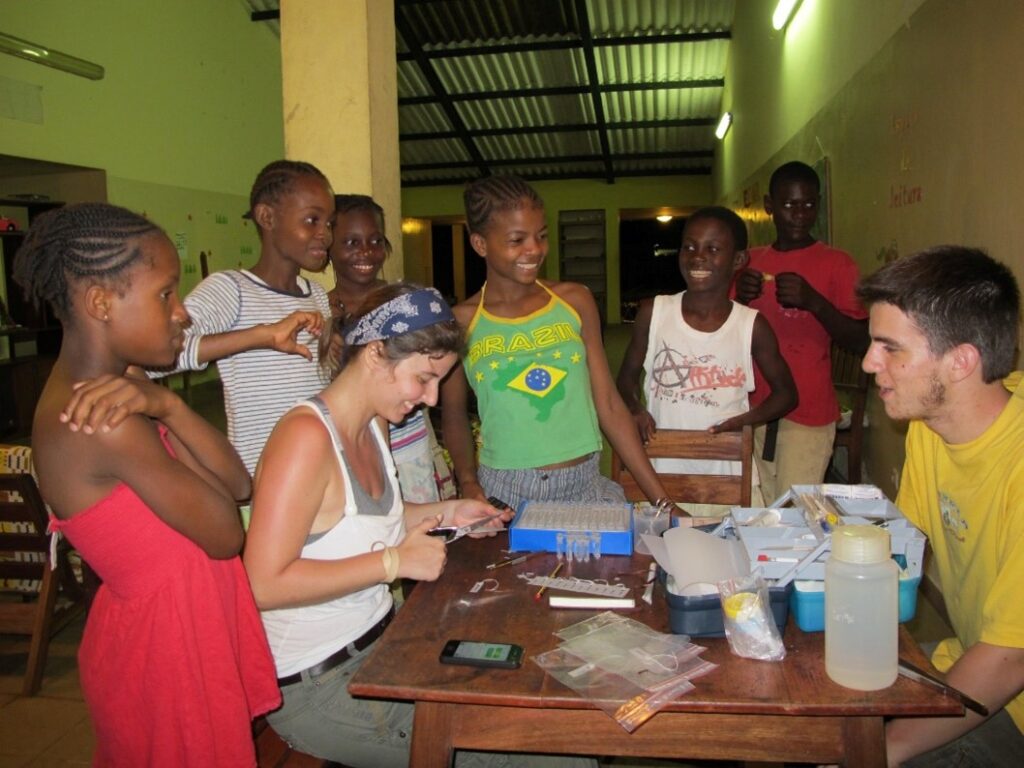
My path turned to Africa during master’s thesis work as I started working with the poorly known fauna of two Portuguese-speaking countries on the continent: Angola, in southwestern Africa, and São Tomé & Príncipe, an island nation in the Gulf of Guinea. For this work, I learned another new skill: specimen collecting. As an apprentice naturalist, I learned where to find species of interest, how to collect them safely, and how to prepare and fix them to become museum specimens. These new experiences gave me an increased appreciation of our collections and their importance. As an MSc and PhD student, I described species new to science, and catalogued and mapped herp diversity to support their conservation. 

Preparing specimens field tags in the company of the young future naturalists at Príncipe island.
Photo by: Luis M.P. Ceríaco, 2015.

Although I’ve visited many collections in Europe, Africa, and the US (including CMNH!), I was mostly based in Portugal. The Portuguese collections had suffered considerable neglect which made most of them almost unusable. However, taxonomists need collections, so together with colleagues, I embarked on the mission of rescuing those collections to make them accessible and usable for researchers. Through this process I learned how a collection should be housed, and best practices for collection management and care. I became a collections manager!

Starting from scratch. Listing all herpetological material at Instituto de Investigação Científica Tropical, Lisboa, Portugal. Photo by: Luis M.P. Ceríaco, 2014.

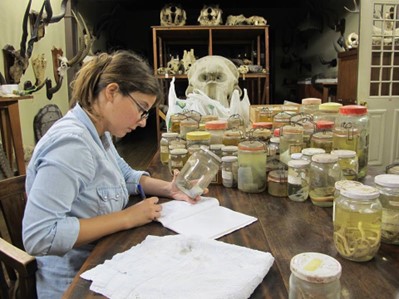
Currently, while I still love to do research, participate in fieldwork, and describe new species, I love to be taking care of specimens in old jars, making them accessible to researchers and to the public, telling stories about them, and ensuring they are preserved for generations to come. Natural history collections, such as the one we have at Carnegie Museum of Natural History, are fundamental tools for science and conservation, and new promising technologies are showing us that their potential is far beyond my traditional snout-vent length measuring and scale counting.

Becoming the Collection Manager of the Section of Amphibians and Reptiles of Carnegie Museum of Natural History is both a challenge and an honor. And what I find more curious about it, is that in 2018, when I visited the museum and used its collections for my own research, I remember saying to myself: this is a city where I could see myself living!

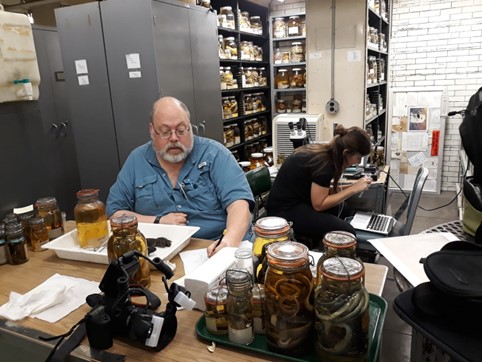
At Carnegie Museum of Natural History, Section of Amphibians and Reptiles in 2018, studying the Angolan material from Pulitzer Expedition, with Aaron Bauer and Luis Ceríaco. Photo by: Luis M.P. Ceríaco, 2018.

Mariana Marques is Collection Manager of Amphibians and Reptiles at Carnegie Museum of Natural History.

Related Content

A Deep Look Inside Reptiles and Amphibians

Sharing a City Park with a Resident Reptile

Is This What They Call Overkill? Toxin and Venom in the Herp World

Carnegie Museum of Natural History Blog Citation Information

Blog author: Marques, Mariana
Publication date: June 23, 2023

Share this post!

  • Share on Twitter Share on Twitter
  • Share on Facebook Share on Facebook
  • Share on Pinterest Share on Pinterest
  • Share on LinkedIn Share on LinkedIn
  • Share on Reddit Share on Reddit
  • Share via Email Share via Email

Filed Under: Blog Tagged With: amphibians and reptiles, herpetology, Mariana Marques, Science News, SWK2

June 15, 2023 by Erin Southerland

Wolverine: Status Check For a Tournament Champion

by Pat McShea
A wolverine taxidermy mount is a popular display in Discovery Basecamp.

Technology has revolutionized the work of wildlife biologists, but among those who study wolverines, long waits for field-collected information about these large members of the weasel family still occur. Because wolverines are known to patrol enormous home ranges, Cory Mosby, Furbearer Staff Biologist with Idaho’s Department of Fish and Game, relies upon strategically placed camera traps as effective monitoring tools. As he explained in a recent Zoom interview from his office in Boise, deep snow at high elevations can delay the retrieval of video and photographic evidence for months. “There’s a few places we placed cameras for over-the-winter wolverine studies where we weren’t able to retrieve the devices until July.”

Our discussion of wolverine research occurred just after the species received accolades as the 2023 champion of March Mammal Madness (MMM), the wide-reaching, ten-year-old educational project that masquerades as a tournament mimicking competition, but is in no way affiliated with, the NCAA college basketball tournament. The online event, founded and directed by Professor Katie Hinde of Arizona State University, challenges participants to predict outcomes for a widely branched bracket’s worth of hypothetical combative wildlife encounters. Reference material links on the MMM website encourage fans to make informed decisions, and as the tournament’s hypothetical encounters unfold, additional information about the combatants is shared via timely narrative reports. 

This year, any MMM fan who tracked the wolverine’s six victory championship campaign undoubtedly learned lots of information about this carnivore with solitary ways, a bone-crushing bite, and a fierceness sufficient to intimidate even bears and wolves.

On Zoom, much of Mosby’s information sharing focused on historic wolverine distribution. He explained how, by the 1930s, a species once found across much of the American West and even in sections of several Great Lakes states, was largely extirpated in the lower 48 states by predator control programs, landscape alteration, and unregulated hunting and trapping. However, during the nearly eight decades since, changes in public policies and attitudes eventually created conditions that enabled animals from western Canada to naturally re-colonize portions of four states – north-central Washington, northern and central Idaho, western Montana, and northwestern Wyoming.

In 2010, a proposed listing of these animals under the Federal Endangered Species Act prompted the establishment of the Western States Wolverine Conservation Project, a multi-year investigation in which essential early work, beginning in 2016, involved establishing baseline information about the numbers and movements of the animals under study. 

Cory Mosby placing a camera trap as part of wolverine monitoring effort in Idaho’s Centennial Mountains.

When presented with the question, “What do you wish the public knew about wolverines?” Mosby had a ready answer. “This might not align with popular opinion, but I wish more people realized that, as a species, at the moment, wolverines are quite secure. In Idaho today, wolverines occupy all available habitat. The population in the western U.S., the animals I’ve helped study, are on this continent, a southerly extension of a species found around the globe at northerly latitudes in suitable habitat. ‘Holarctic’ is the term that summarizes this enormous distribution.”

Mosby cites a warming climate as a big concern for wolverine populations in southernly latitudes, explaining how the same deep snow deposits that delay camera retrieval in project studies also allow female wolverines to catch sufficient kills as food for kits too young to forage on their own.

The wildlife biologist’s overall advice is to pay attention to both the local situation and the big picture. His career track, he relates, was influenced by the sudden realization of how small forces influence big systems. “I was a pre-med major at the University of Missouri taking lots of biology classes, and in one of them a visiting lecturer gave a presentation about how northern flying squirrels influence the health of entire forests by distributing spores as they feed on fungi. I realized then I wanted to work studying wildlife.”

Patrick McShea is an Educator at Carnegie Museum of Natural History.

Related Content

March Mammal Madness 2023: Learn and Win

March Mammal Madness and Middle School Science Class

World Pangolin Day 2023 – The Mysterious Brain Bone

Carnegie Museum of Natural History Blog Citation Information

Blog author: McShea, Patrick
Publication date: June 15, 2023

Share this post!

  • Share on Twitter Share on Twitter
  • Share on Facebook Share on Facebook
  • Share on Pinterest Share on Pinterest
  • Share on LinkedIn Share on LinkedIn
  • Share on Reddit Share on Reddit
  • Share via Email Share via Email

Filed Under: Blog Tagged With: mammals, Pat McShea, Science News

  • « Go to Previous Page
  • Page 1
  • Interim pages omitted …
  • Page 4
  • Page 5
  • Page 6
  • Page 7
  • Page 8
  • Interim pages omitted …
  • Page 43
  • Go to Next Page »

sidebar

About

  • Mission & Commitments
  • Directors Team
  • Museum History

Get Involved

  • Volunteer
  • Membership
  • Carnegie Discoverers
  • Donate
  • Employment
  • Events

Bring a Group

  • Groups of 10 or More
  • Birthday Parties at the Museum
  • Field Trips

Powdermill

  • Powdermill Nature Reserve
  • Powdermill Field Trips
  • Powdermill Staff
  • Research at Powdermill

More Information

  • Image Permission Requests
  • Science Stories
  • Accessibility
  • Shopping Cart
  • Contact
  • Visitor Policies
One of the Four Carnegie Museums | © Carnegie Institute | Privacy Policy | Terms of Use | Accessibility
Rad works here logo