• Skip to primary navigation
  • Skip to main content
  • Skip to primary sidebar

Carnegie Museum of Natural History

One of the Four Carnegie Museums of Pittsburgh

  • Visit
    • Buy Tickets
    • Visitor Information
    • Exhibitions
    • Events
    • Dining at the Museum
    • Celebrate at the Museum
    • Powdermill Nature Reserve
    • Event Venue Rental
  • Learn
    • Field Trips
    • Educator Information
    • Programs at the Museum
    • Bring the Museum to You
    • Guided Programs FAQ
    • Programs Online
    • Climate and Rural Systems Partnership
  • Research
    • Scientific Sections
    • Science Stories
    • Science Videos
    • Senior Science & Research Staff
    • Museum Library
    • Science Seminars
    • Scientific Publications
    • Specimen and Artifact Identification
  • About
    • Mission & Commitments
    • Directors Team
    • Museum History
  • Tickets
  • Give
  • Shop

collected on this day

September 29, 2020 by wpengine

Collected on this Day in 1967: Fall blooms rival those of spring

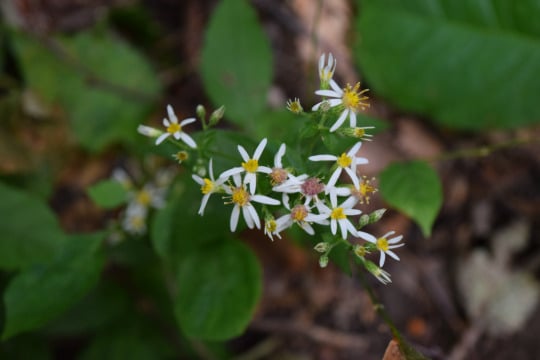
photo of aster flowers with white petals

In the northeastern United States, we often think of spring as a time for wildflowers.  But the fall is, too.  

It is easy to be distracted by the beautiful fall foliage, when our landscape turns brilliant shades of red, orange, and yellow.  But when many plants are shutting down for the winter, others are just kicking into gear.

Many wildflower species bloom well into fall, both in open areas and in the forest understory.  One group of plants are the fall blooming “asters.”  In same plant family as sunflowers and dandelions (Asteraceae), Aster was once a very large plant genus in our native North American flora (somewhere along the lines of >175 species!), but as we learned more about the evolutionary relationships of these plants, they have since been split into multiple genera (plural of genus). In fact, there is only one “true” Aster in Pennsylvania, Tatarian aster (Aster tataricus), which is actually not even native to Pennsylvania!  Regardless of the scientific name, these plants are commonly referred to as asters.  And they put on quite an autumn show in Pennsylvania.
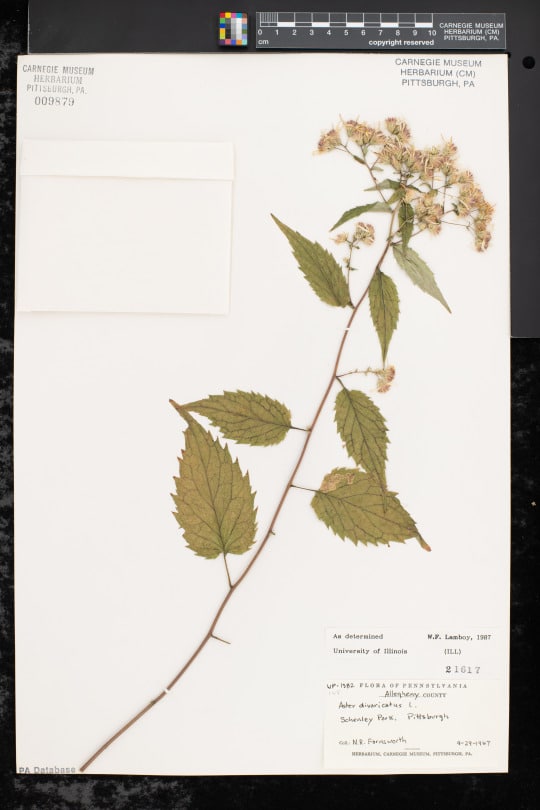
dried specimen of aster flower from Carnegie Museum of Natural History herbarium

Perhaps one of the most common woodland asters in Pennsylvania is white wood aster (Eurybia divaricata, formerly known as Aster divaricatus).  This specimen was collected September 29, 1967 by N.R. Farnsworth in Pittsburgh’s Schenley Park.  This species can still be found in Schenley Park, and many parks, woodlands, and wooded roadsides across Eastern North America.

Fall foliage is beautiful in Pennsylvania.  But don’t forget to look down at the flowers, too!

Find this white wood aster specimen here: https://midatlanticherbaria.org/portal/collections/individual/index.php?occid=11826562

Check back for more! Botanists at the Carnegie Museum of Natural History share digital specimens from the herbarium on dates they were collected. They are in the midst of a three-year project to digitize nearly 190,000 plant specimens collected in the region, making images and other data publicly available online. This effort is part of the Mid-Atlantic Megalopolis Project (mamdigitization.org), a network of thirteen herbaria spanning the densely populated urban corridor from Washington, D.C. to New York City to achieve a greater understanding of our urban areas, including the unique industrial and environmental history of the greater Pittsburgh region. This project is made possible by the National Science Foundation under grant no. 1801022.

Mason Heberling is Assistant Curator of Botany at Carnegie Museum of Natural History. Museum employees are encouraged to blog about their unique experiences and knowledge gained from working at the museum.

Related Content

Collected on This Day in 1944: Squarrose Goldenrod
Dandelion and Goldenrod Coloring Pages

Herbarium Specimens Hold More Information Than We Realize

Filed Under: Blog Tagged With: Botany, collected on this day, Hall of Botany, Mason Heberling, Museum from Home, Science News, Section of Botany

July 29, 2020 by wpengine

Collected on this Day in 1966: Santa Clauses

Christmas in July…”Santa Claus” floating in the air.

(Or I guess, technically Boxing Day in July, if that’s a thing.)

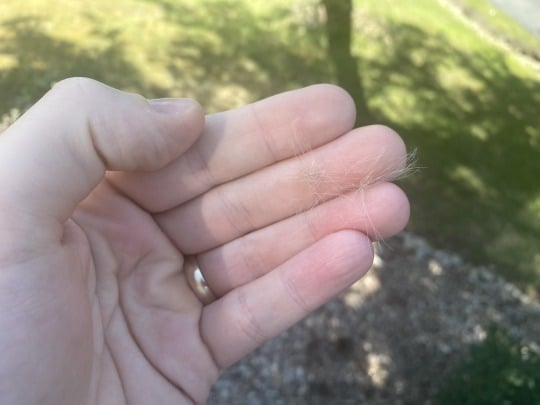
thistle seed fluff "Santa Claus" in hand

Make a wish!

Have you ever seen fluff floating by in the air, especially in late July, early August? Kids love chasing the fluff around, often referring to them as “Santas” or “Santa Clauses.”  You catch it, make a wish, and let them go again, floating away.

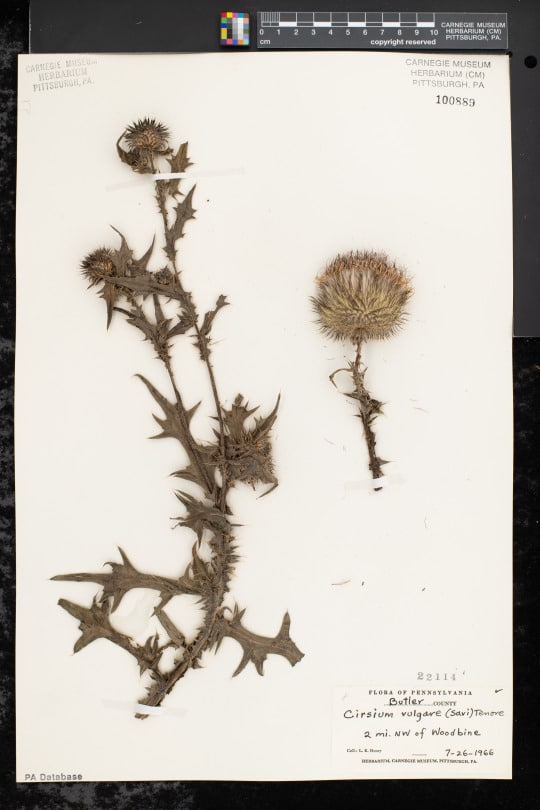
dried thistle specimen on herbarium sheet

These are seeds!  Most likely thistle seeds, like this specimen here.  Or other seeds that have similar “fluff”-like structures.  The botanical term for this “fluff” is pappus.  Pappus is a modified part of flowers in many species in the sunflower family, Asteraceae (think dandelion).  These structures help the seed disperse in the wind, floating away in the breeze, carrying the seed far away.  If you’ve tried to catch them, you know they float away in the air very easily. The seeds are small, and often times have already disconnected from the pappus when you catch them.

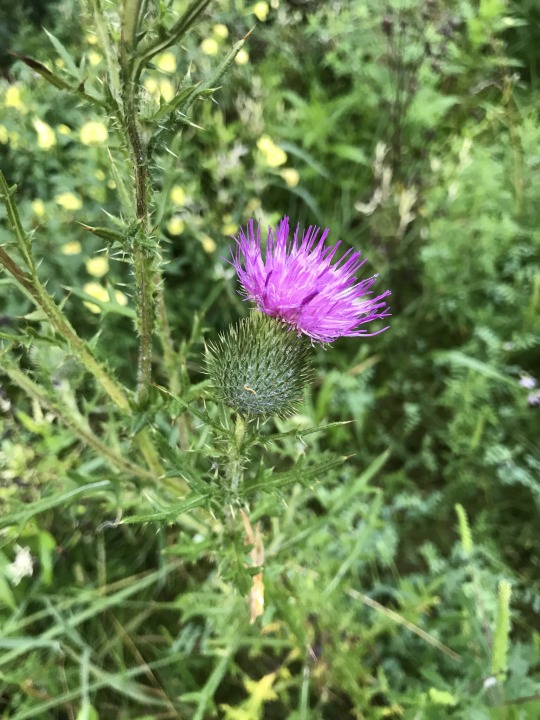
thistle

Check out the “Santa Claus” pappus on this specimen of bull thistle (Cirsium vulgare), collected on July 26, 1966 by Leroy Henry near Woodbine (Butler county), Pennsylvania.  Leroy Henry was a botany curator at the Carnegie Museum.  All species in the genus Cirsium are known as “thistles.”  They have distinctive spiny leaves and stems, with even more distinctive purple flower heads. There are native thistles, but many are introduced. Thistles are common in disturbed areas, and in and around agricultural fields across the country.  Bull thistle is native in Europe and Western Asia, but widely introduced across the world, including North America.  It is the national flower of Scotland, but the species is considered invasive in many places.

Keep an eye out for thistles, and “Santa Clauses.”  Don’t forget to make a wish.

Find this bull thistle specimens here.

Check back for more! Botanists at the Carnegie Museum of Natural History share digital specimens from the herbarium on dates they were collected. They are in the midst of a three-year project to digitize nearly 190,000 plant specimens collected in the region, making images and other data publicly available online. This effort is part of the Mid-Atlantic Megalopolis Project (mamdigitization.org), a network of thirteen herbaria spanning the densely populated urban corridor from Washington, D.C. to New York City to achieve a greater understanding of our urban areas, including the unique industrial and environmental history of the greater Pittsburgh region. This project is made possible by the National Science Foundation under grant no. 1801022.

Mason Heberling is Assistant Curator of Botany at Carnegie Museum of Natural History. Museum employees are encouraged to blog about their unique experiences and knowledge gained from working at the museum.

Related Content

Tulips in June?!

What’s So Special About Poinsettias?

Collected on this Day in 1984: Tobacco

Filed Under: Blog Tagged With: botany hall, collected on this day, Hall of Botany, Mason Heberling, Museum from Home, Science News, Section of Botany

June 8, 2020 by wpengine

Is that snow…in June?

Collected on this Day in 1942

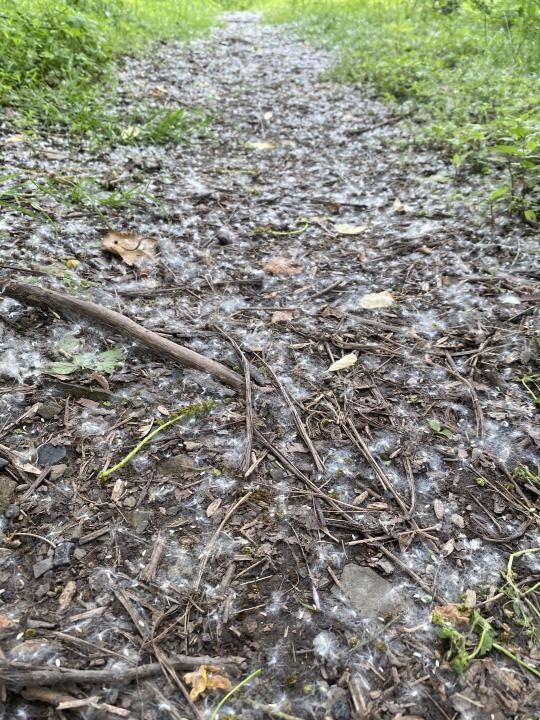
cottonwood seeds covering an outdoor trail

It can’t be snow, right? It’s summer!  Maybe that is cotton falling from the sky?  Well, kind of!  It is cottonwood seeds!

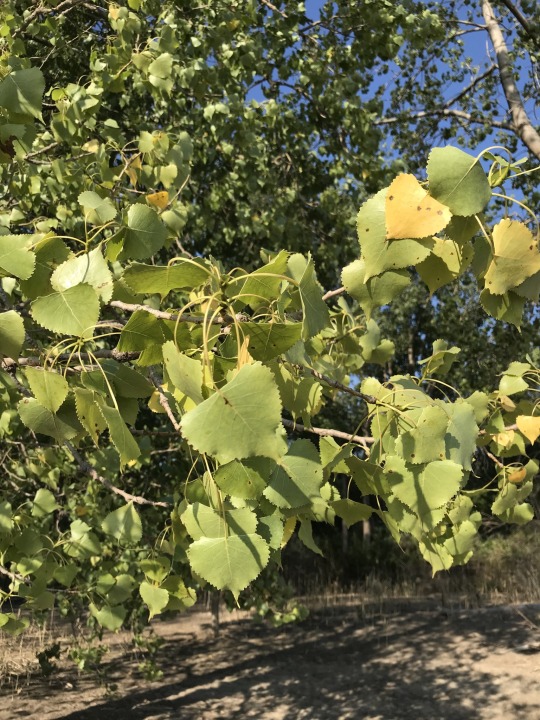
Perhaps you’ve seen little cotton-like white particles falling from the sky in early summer, especially around Pennsylvania’s rivers or lakes. It is a common site along the dunes of Presque Isle, for example, and in areas along southwestern PA’s rivers.  Aptly named, Eastern cottonwood (Populus deltoides) is a native tree found across the eastern United States that produces seeds that fall from high up in the canopy, attached to cotton-like strands.  These fibers act like mini-parachutes and allow the wind to widely distribute the seeds.

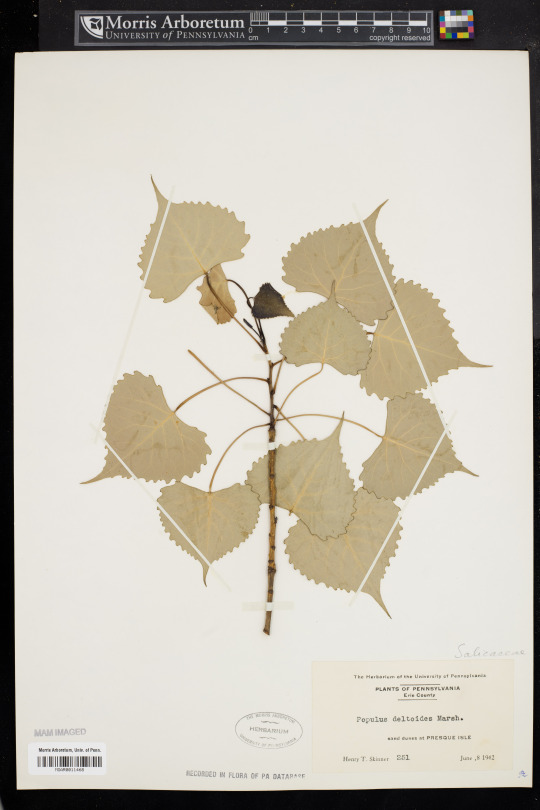
cottonwood herbarium sheet

This specimen of Eastern cottonwood was collected by Henry T. Skinner on June 8, 1942 on the sand dunes of Presque Isle, Erie. You might notice this specimen is not from the Carnegie Museum herbarium like most of these posts. But instead, this specimen is held at the Morris Arboretum (part of the University of Pennsylvania). Now that museum collections are being digitized, we can search for species of interest, or plants collected from certain places or by certain people, or more…that’s the power of specimen digitization.  The Mid-Atlantic Megalopolis Project, funded by the National Science Foundation, is digitizing nearly a million specimens across our region, including Carnegie Museum specimens.  This makes our collections all the more powerful, combining all specimens collected in the region and making them accessible to scientists and the public alike.

Find this and more Eastern cottonwood specimens from Presque Isle here.

photo of cottonwood

Check back for more! Botanists at the Carnegie Museum of Natural History share digital specimens from the herbarium on dates they were collected. They are in the midst of a three-year project to digitize nearly 190,000 plant specimens collected in the region, making images and other data publicly available online. This effort is part of the Mid-Atlantic Megalopolis Project (mamdigitization.org), a network of thirteen herbaria spanning the densely populated urban corridor from Washington, D.C. to New York City to achieve a greater understanding of our urban areas, including the unique industrial and environmental history of the greater Pittsburgh region. This project is made possible by the National Science Foundation under grant no. 1801022.

Mason Heberling is Assistant Curator of Botany at Carnegie Museum of Natural History. Museum employees are encouraged to blog about their unique experiences and knowledge gained from working at the museum.

Filed Under: Blog Tagged With: collected on this day, Hall of Botany, Mason Heberling, Museum from Home, Science News, Section of Botany

June 8, 2020 by wpengine

Tulips in June?!

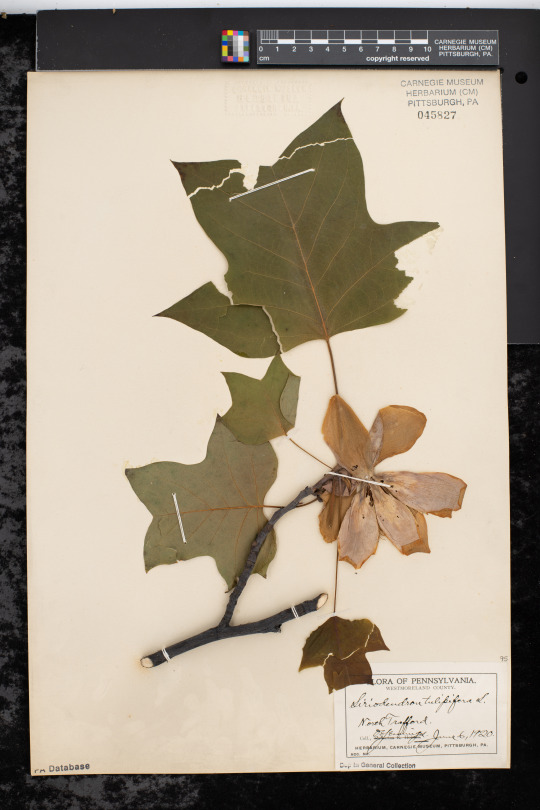
tulip tree specimen sheet

Collected on this Day in 1920

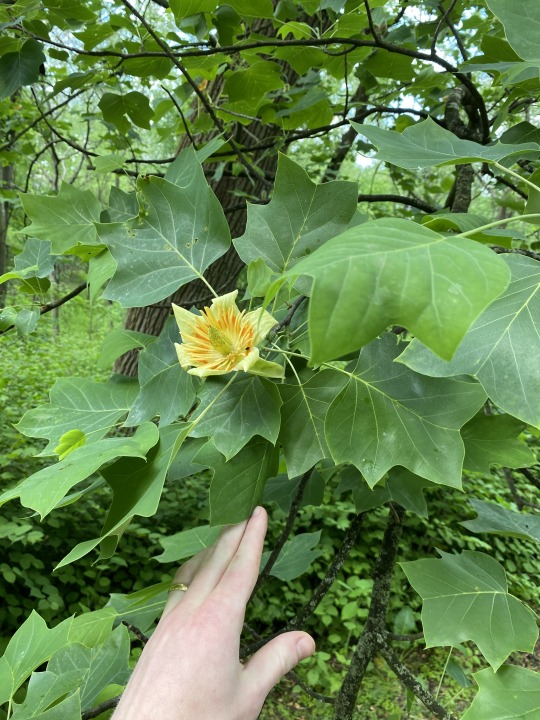
Your tulips may be long gone as spring has faded, but tulip trees are in full force! Although it’s hard to catch a glimpse of them way up in the canopy, tulip tree flowers are just as stunning. Completely unrelated to tulips, Liriodendron tulipifera (called tulip tree, tulip poplar, or sometimes yellow poplar) is named such because its leaves have a distinctive shape reminiscent of tulips.

photo of tulip trees with flower

Found across eastern North America, Tulip trees are one the tallest and fast-growing trees native to Pennsylvania, growing up to nearly 200 feet tall! Tulip trees are relatively shade intolerant and therefore are especially common in young forests (early successional). However, the species can still be found in older forests too. Its tall straight trunks can be impressive, and its wood is widely used by woodworkers, who often refer to it as “poplar.” The tree is not related to true poplars (Populusspecies), which are in the willow family, Salicaceae. Tulip trees are a member of the magnolia family (Magnoliaceae). This beautiful specimen was collected on June 6, 1920 near Trafford, Pennsylvania by Otto Jennings. Jennings was an influential botany curator at the museum for many years.

Find this stunning specimen here.

Check back for more! Botanists at the Carnegie Museum of Natural History share digital specimens from the herbarium on dates they were collected. They are in the midst of a three-year project to digitize nearly 190,000 plant specimens collected in the region, making images and other data publicly available online. This effort is part of the Mid-Atlantic Megalopolis Project (mamdigitization.org), a network of thirteen herbaria spanning the densely populated urban corridor from Washington, D.C. to New York City to achieve a greater understanding of our urban areas, including the unique industrial and environmental history of the greater Pittsburgh region. This project is made possible by the National Science Foundation under grant no. 1801022.

Mason Heberling is Assistant Curator of Botany at Carnegie Museum of Natural History. Museum employees are encouraged to blog about their unique experiences and knowledge gained from working at the museum.

Filed Under: Blog Tagged With: collected on this day, Hall of Botany, Mason Heberling, Museum from Home, Science News, Section of Botany

May 29, 2020 by wpengine

Plants with bladders?

Collected on this Day in 1940

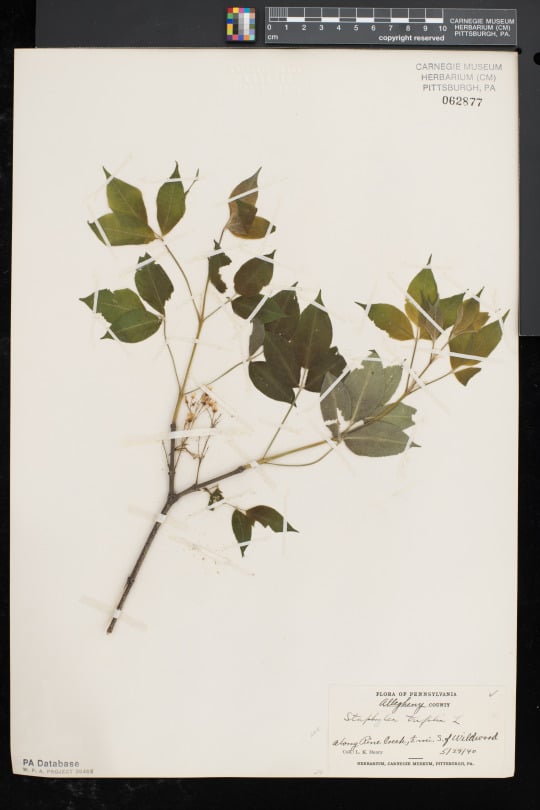
bladdernut specimen on herbarium sheet

This specimen was collected on May 29, 1940 by Leroy Henry along Pine Creek, north of Wildwood outside of Pittsburgh. Leroy Henry was a mycologist (studied fungi) and botanist who was curator at Carnegie Museum from 1937-1973.

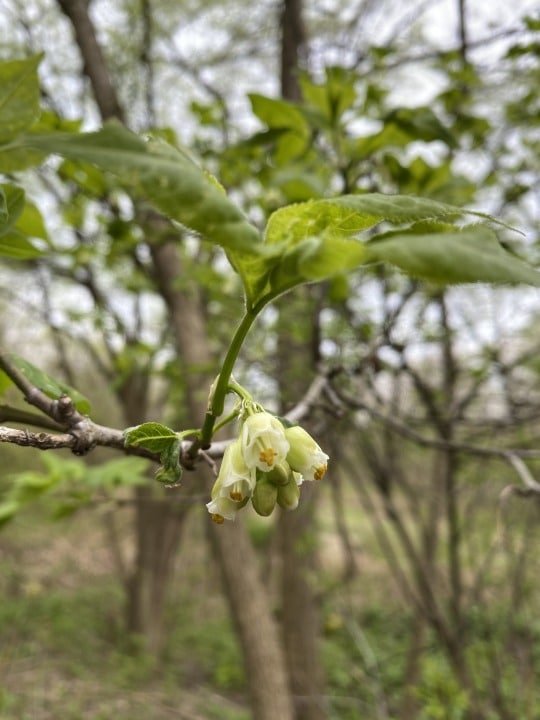
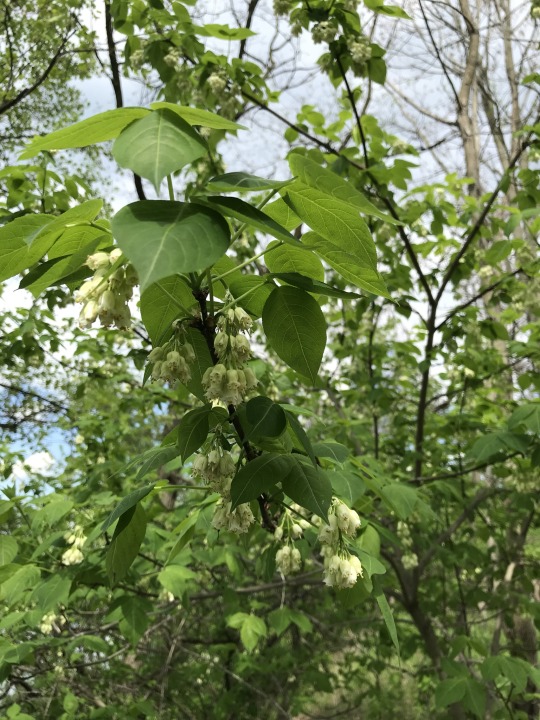
bladdernut flowers
bladdernut flowers

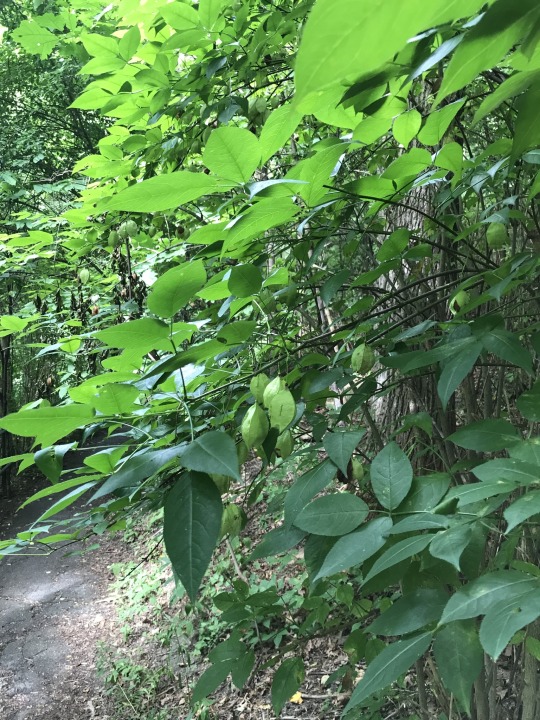
Aptly called “bladdernut” (Staphylea trifolia), this charismatic native understory shrub produces clusters of white flowers in the spring. These dangling flowers develop into striking bladder-like fruit. In each “bladder” pouch are seeds. These fruit often persist through fall and some linger through winter, though the plant is leafless.

bladdernut fruit

Bladdernut has a wide range across eastern North America, and can be found in relatively undisturbed forests in our area, often forming thickets.

Find this specimen here.

Check back for more! Botanists at the Carnegie Museum of Natural History share digital specimens from the herbarium on dates they were collected. They are in the midst of a three- year project to digitize nearly 190,000 plant specimens collected in the region, making images and other data publicly available online. This effort is part of the Mid-Atlantic Megalopolis Project (mamdigitization.org), a network of thirteen herbaria spanning the densely populated urban corridor from Washington, D.C. to New York City to achieve a greater understanding of our urban areas, including the unique industrial and environmental history of the greater Pittsburgh region. This project is made possible by the National Science Foundation under grant no. 1801022.

Mason Heberling is Assistant Curator of Botany at Carnegie Museum of Natural History. Museum employees are encouraged to blog about their unique experiences and knowledge gained from working at the museum.

Filed Under: Blog Tagged With: collected on this day, Hall of Botany, Mason Heberling, Museum from Home, Science News, Section of Botany

April 29, 2020 by wpengine

Collected on this Day in 1998: Spontaneous mints in your backyard

by Mason Heberling

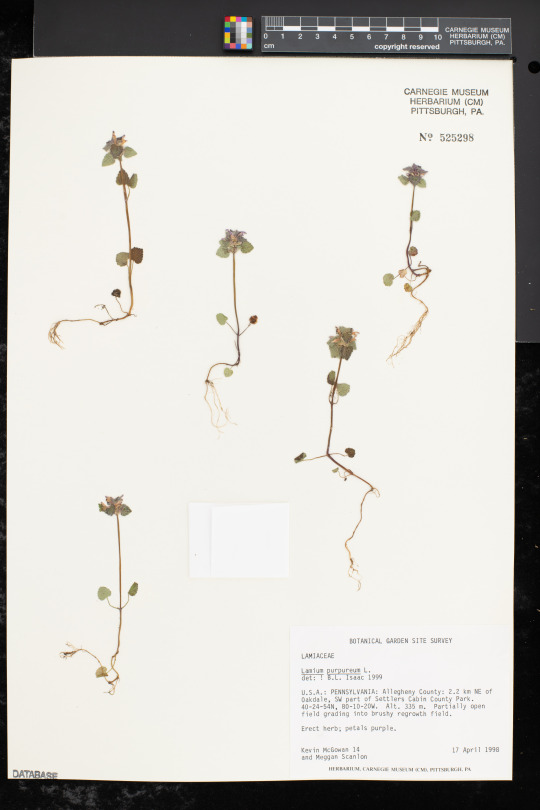
mint specimens on herbarium sheet

This specimen of purple dead-nettle  (Lamium purpureum) was collected on April 17, 1998 by Kevin McGowan and Meggan Scanlon near Settler’s Cabin County Park in Oakdale, PA on property that is now the Pittsburgh Botanic Garden.  As seen in the title of the specimen label, it was collected as part of a biological survey for the planning of the site, a large ongoing restoration of the formerly mined property.

Purple dead-nettle is probably in your backyard. Or if not, you likely don’t have to go far to find it in a lawn or sidewalk crack.   Some call it a “weed.” Or, in the case of in your lawn, “spontaneous vegetation” is a lighter hearted term. It is native to Europe and Asia but now widespread across the world, including North America.

Purple dead-nettle is not related to stinging nettle, despite the name.   It was named “dead-nettle” because is reminiscent to nettles (well, at least to whoever came up with the common name) but does not have stinging hairs.

Purple dead-nettle is in the mint family (Lamiaceae) with square stems often characteristic of mints.  Try rolling the stem between your fingers and you’ll notice the square stems.

The City Nature Challenge is just around the corner (April 30 – May 3, 2021)!

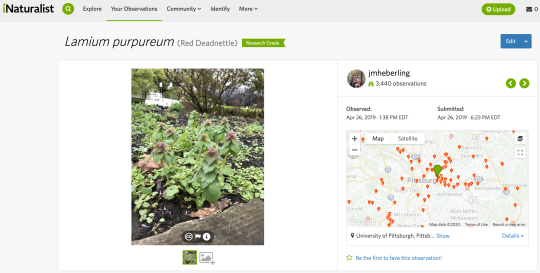
Lamium purpureum was the 9th most observed species in the Pittsburgh region for City Nature Challenge 2019.  Here’s an observation of purple dead-nettle from the 2019 challenge from the flower bed near the Dippy statue at the Carnegie Museum of Natural History.

The City Nature Challenge is a global event where cities come together to share the biodiversity seen in their urban areas. Your nature sightings are shared through the free community science platform, iNaturalist. If you have never used iNaturalist, the City Nature Challenge is a great way to introduce yourself to iNaturalist.  You’ll be hooked.

Past years have been (friendly) competitions among cities, competing for the most observations or species. But given the current pandemic, this year is different.  It is not about the number of observations you make. It is a celebration of nature, wherever you can safely be this year…which for most, is your backyard!  Or the sidewalk near your house. Or the parking lot. Or a local park. Or maybe even inside your house.

Keep a look out for purple dead-nettle.  You won’t have to go far! In City Nature Challenge Pittsburgh 2019, this species was the 9th most observed species!

Or if you can’t safely be outside, you can view other observations on iNaturalist.org at any time!  You can help identify photos or just click around and go for a virtual botanical hike around Pittsburgh!

Or look online at Carnegie Museum’s 185 herbarium specimens of purple dead nettle, going back to 1826 in England! Or this one growing 138 years ago collected in Beaver county.

However you can, there are plenty of ways to participate and connect with nature while staying safe!

Find this specimen of purple dead-nettle here.

Check back for more! Botanists at the Carnegie Museum of Natural History share digital specimens from the herbarium on dates they were collected. They are in the midst of a three-year project to digitize nearly 190,000 plant specimens collected in the region, making images and other data publicly available online. This effort is part of the Mid-Atlantic Megalopolis Project (mamdigitization.org), a network of thirteen herbaria spanning the densely populated urban corridor from Washington, D.C. to New York City to achieve a greater understanding of our urban areas, including the unique industrial and environmental history of the greater Pittsburgh region. This project is made possible by the National Science Foundation under grant no. 1801022.

Mason Heberling is Assistant Curator of Botany at the Carnegie Museum of Natural History. Museum employees are encouraged to blog about their unique experiences and knowledge gained from working at the museum.

Related Content

Collected on This Day in 1998: Common Chickweed

Spring Birds in Your Backyard

Botany Near Home

Carnegie Museum of Natural History Blog Citation Information

Blog author: Heberling, Mason
Publication date: April 17, 2020

Share this post!

  • Share on Twitter Share on Twitter
  • Share on Facebook Share on Facebook
  • Share on Pinterest Share on Pinterest
  • Share on LinkedIn Share on LinkedIn
  • Share on Reddit Share on Reddit
  • Share via Email Share via Email

Share this post!

  • Share on Twitter Share on Twitter
  • Share on Facebook Share on Facebook
  • Share on Pinterest Share on Pinterest
  • Share on LinkedIn Share on LinkedIn
  • Share on Reddit Share on Reddit
  • Share via Email Share via Email

Filed Under: Blog Tagged With: City Nature Challenge ID, collected on this day, Mason Heberling, Museum from Home

  • « Go to Previous Page
  • Page 1
  • Page 2
  • Page 3
  • Page 4
  • Page 5
  • Interim pages omitted …
  • Page 8
  • Go to Next Page »

sidebar

About

  • Mission & Commitments
  • Directors Team
  • Museum History

Get Involved

  • Volunteer
  • Membership
  • Carnegie Discoverers
  • Donate
  • Employment
  • Events

Bring a Group

  • Groups of 10 or More
  • Birthday Parties at the Museum
  • Field Trips

Powdermill

  • Powdermill Nature Reserve
  • Powdermill Field Trips
  • Powdermill Staff
  • Research at Powdermill

More Information

  • Image Permission Requests
  • Science Stories
  • Accessibility
  • Shopping Cart
  • Contact
  • Visitor Policies
One of the Four Carnegie Museums | © Carnegie Institute | Privacy Policy | Terms of Use | Accessibility
Rad works here logo