• Skip to primary navigation
  • Skip to main content
  • Skip to primary sidebar

Carnegie Museum of Natural History

One of the Four Carnegie Museums of Pittsburgh

  • Visit
    • Buy Tickets
    • Visitor Information
    • Exhibitions
    • Events
    • Dining at the Museum
    • Celebrate at the Museum
    • Powdermill Nature Reserve
    • Event Venue Rental
  • Learn
    • Field Trips
    • Educator Information
    • Programs at the Museum
    • Bring the Museum to You
    • Guided Programs FAQ
    • Programs Online
    • Climate and Rural Systems Partnership
  • Research
    • Scientific Sections
    • Science Stories
    • Science Videos
    • Senior Science & Research Staff
    • Museum Library
    • Science Seminars
    • Scientific Publications
    • Specimen and Artifact Identification
  • About
    • Mission & Commitments
    • Directors Team
    • Museum History
  • Tickets
  • Give
  • Shop

Educators

February 26, 2021 by wpengine

Teacher Profile: Emmanuelle Wambach

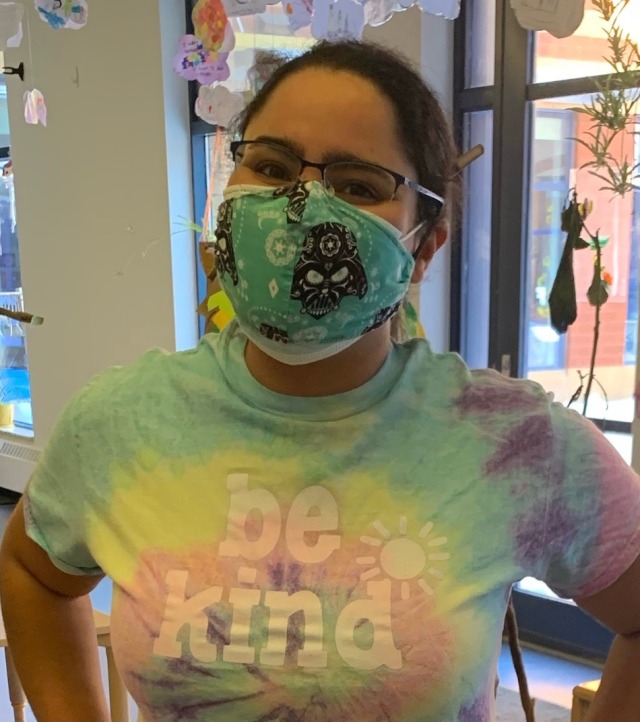
woman standing in front of a window wearing a face mask and a tie-dye t-shirt that says be kind

At the Jewish Community Center of Greater Pittsburgh (JCC), the youngest students direct much of their own learning. “We focus on the philosophy of the of the Reggio Emilia Approach,” explains Emmanuelle Wambach, referencing the innovative childhood learning model named for the northern Italian town where it was developed more than 60 years ago. Emmanuelle, who has worked at the JCC since 2018, currently teaches a dozen pre-school students at the Squirrel Hill facility. Back in November, when this group of three- and four-year-olds became interested in birds and bird eggs, she was determined to assist their exploration of the topic.

Through the museum’s Educator Loan Collection, she was able to borrow an encased taxidermy mount of an American Robin posed next to its nest and eggs, along with sturdy replicas of Bald Eagle, Golden Eagle, and Peregrine Falcon eggs. “There were some early discussions about the robin not being alive,” Emmanuelle recalls, “but we were able to make wonderful comparisons between the Peregrine Falcon and eagle eggs, and of course to the chicken eggs they were already familiar with.” The museum objects and the resulting discussions eventually led to group explorations of other resources such as the Audubon Society of Western Pennsylvania’s live camera feed documenting activity in and around the Bald Eagle nest in the Hays neighborhood of Pittsburgh.
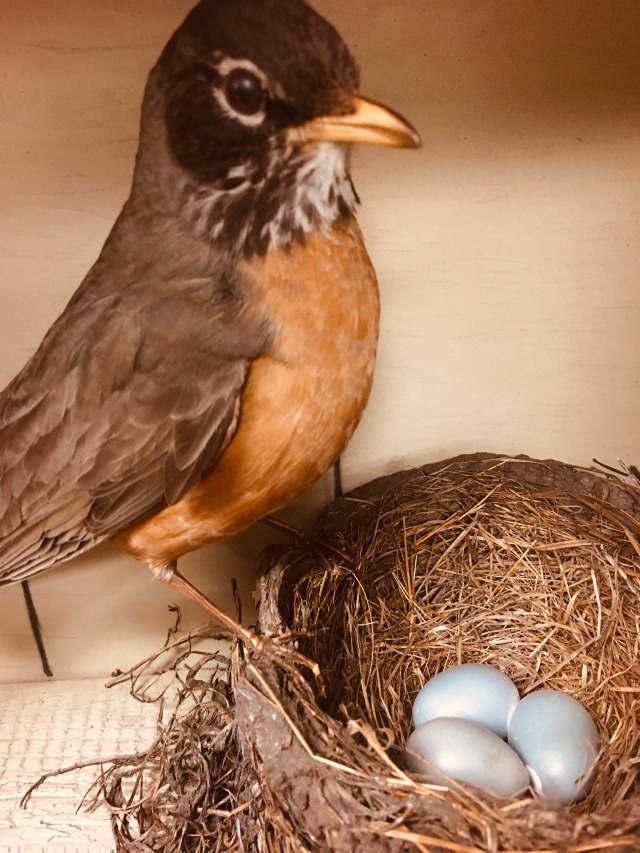
taxidermy mount of a robin with nest and eggs

This example of an educator connecting with a helpful resource was far from a direct link, however, and actually hinged on artistic accomplishment. Emmanuelle holds a Master of Fine Arts from Indiana University of Pennsylvania, and in sharing her talents with ceramics she has taught classes at several Pittsburgh area locations. She learned about the museum loan program when she was teaching ceramics at an afterschool program and met a fellow artist who had borrowed taxidermy mounts for students to use as drawing models.

When asked about the impacts of the ongoing pandemic on her teaching, Emmanuelle notes a reduced class size of 12 instead of 16, and praises her students’ ability to “wear their masks well.“ Then after some refection she describes a system of mutual support that naturally developed between the young learners and those leading them. “I’m certain they’re helping me get through this difficult time. You have no idea how good it is to have a four-year-old greet you by saying, ‘Miss Emmanuelle, I’m so glad you’re here today!’”

Patrick McShea works in the Education and Visitor Experience department of Carnegie Museum of Natural History. Museum employees are encouraged to blog about their unique experiences and knowledge gained from working at the museum.
Related Content

Teaching About Trees

King’s Dream and Natural History

Ask a Scientist: Ravens and crows, what’s the difference?

Filed Under: Blog Tagged With: Education, Educators, Pat McShea, stewardship

January 28, 2021 by wpengine

Super Science: She-Ra, the American Kestrel

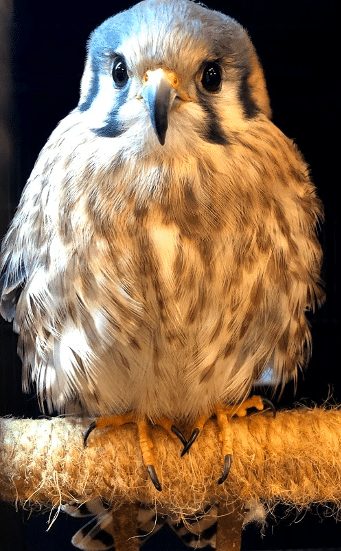
Hi, my name is She-Ra and I’m an American kestrel. A scientist might call me Falco sparverius because that’s my species’ scientific name, but my friends just call me She-Ra or sometimes RaRa as a nickname! I may look small, but I am not—I am big, I am brave, and I am important.

American Kestrel perched on rope and wood
I’m a beautiful bird!

Kestrels like me are a part of the falcon family and are closely related to bigger birds like peregrine falcons. All the other falcons are bigger than us, because we are the smallest member of the falcon family in North America, where we are also the most populous and widely distributed falcon species. This means that there are a lot of birds like me living in the wild!

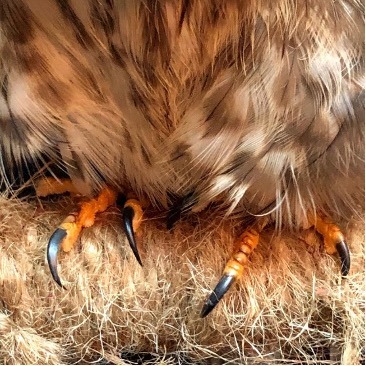
Falcons like me are raptors, or birds of prey, which means that we are meat eating birds. Wild kestrels will eat all sorts of insects, small rodents, lizards, and even smaller birds! We like to grab our prey with the sharp talons on our feet. Just like humans, some of us like to eat certain type of prey over others. My favorites are mice and bugs!

close up of American Kestrel talons
Look at my powerful talons!

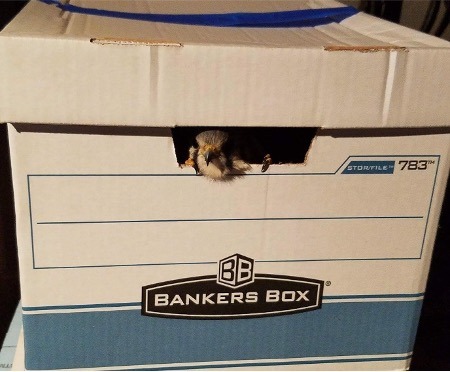
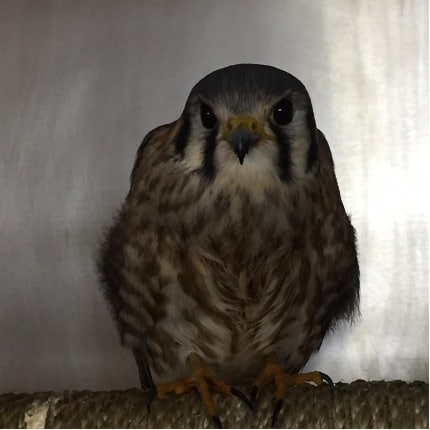
I live at Carnegie Museum of Natural History in Pittsburgh, Pennsylvania, but I used to live in the wild. But I can’t live in the wild anymore: four years ago, I was hit by a car and broke my wrist, which is in the top-central part of my wing. I was taken in by the nice humans at the West Virginia Raptor Rehabilitation Center after my accident, who nursed me back to health. But even after I got better, they realized that I was never going to be able to fly well enough again to survive in the wild—even though kestrels are fierce, we’re also tiny, and sometimes bigger birds of prey try to pick on us. If I returned to the wild, I wouldn’t be able to fly away from a bigger bird! I also wouldn’t be able hover in midair, which is something really cool that kestrels can do.

American Kestrel peeking out of a Bankers Box
These are photos of me on my first day at the rehab center. It was scary, but I’m happy the humans took care of me there!

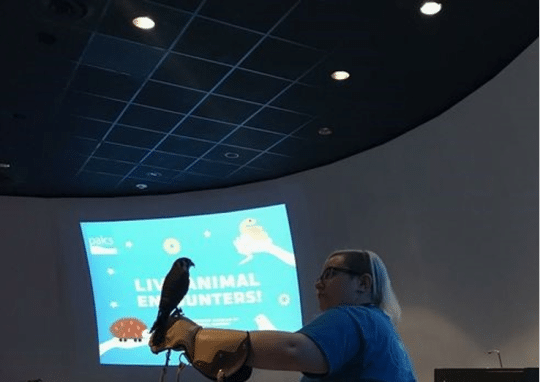
Because I couldn’t return to the wild, I needed somewhere to live, so I came to the museum, where my coworker humans take good care of me. Yes, I have coworkers because I am a bird with a job! I am an educational ambassador animal, which means I help my coworkers teach people about kestrels by appearing in Live Animal Encounters.

American Kestrel perched on the arm of a blonde person wearing a blue shirt
Here I am, doing a Live Animal Encounter with my coworker, Jo Tauber.

Coming to live at the museum took a lot of special planning, care and attention. I am protected by something called the Migratory Bird Treaty Act of 1918, as are all kestrels and over 1,000 other migratory bird species in North America. The museum needed to get special permits, which gave them permission to have me live here. There are even special permits for my coworkers, which grants them the great privilege of working with me!

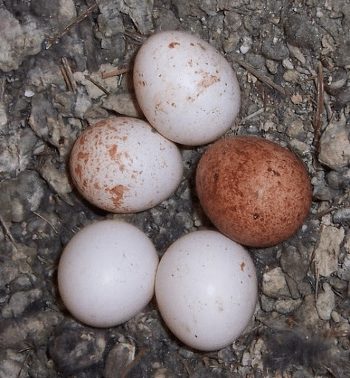
The Migratory Bird Treaty Act of 1918 is important because it keeps birds safe. It prohibits people from killing or injuring birds or removing them from the wild. There are special cases like mine, where a bird needs to live somewhere they can be cared for by humans, but they are an exception. Something you may be surprised to hear is that the Treaty Act also protects eggs and nests, and even things like feathers! That’s right—even taking a feather from a protected migratory bird out of the wild is prohibited!

These are kestrel eggs. Please leave them alone if you see them!

Even though kestrels are the most populous and widely spread falcon species, wild populations seem to be decreasing. No one is quite sure why there are fewer kestrels in the wild, but some possible reasons include human interference with our habitats, the use of pesticides, bigger birds preying on us more often, and road collisions (like what happened to me).

There are things you can do to help keep my wild relatives safe. One big thing is please don’t litter, especially on roads. Litter attracts delicious bugs and mice and kestrels might try to hunt them and get hit by a car. Another thing you can do is respect our space; if you see us in the wild, just leave us alone. If we seem to be sick or injured, please call the local game commission or a wildlife rehabilitation center, they have people that are trained to take care of us, much like my coworkers are trained to care for me.

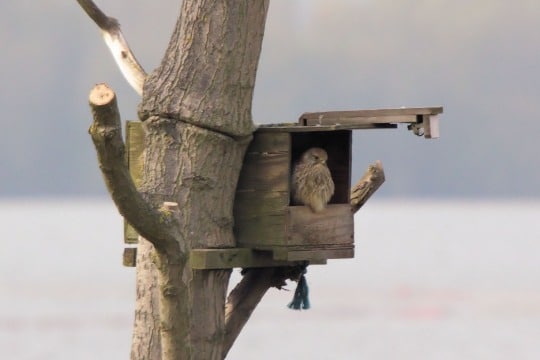
If you really feel like you want to do something more to help kestrels, look into building a nest box, which will give my wild relatives somewhere safe to lay their eggs and raise their babies. If you build a nest box, you can even monitor whether any kestrels come to use it and report that information. That will help scientists learn where kestrels are living and keep track of how many of us are in the wild!

This is an example of a nest box.

Thank you for taking the time to read my story! I hope you enjoyed learning about me and my relatives. Please check out the videos linked below. I am the star and they can teach you even more information about me!

Enrichment Time for She-Ra

Weighing She-Ra

To report injured kestrels, or other wildlife:

PA Game Commission Southwest Region: 724-238-9523

Humane Animal Rescue: 412-345-7300

Jo Tauber is the Gallery Experience Coordinator in CMNH’s Life Long Learning Department. Museum staff, volunteers, and interns are encouraged to blog about their unique experiences and knowledge gained from working at the museum.
Related Content

Bird Coloring Pages

Sensory Bin Idea: Flying animals bin

Detecting Objects with Invisible Waves: Using Radar, Sonar, and Echolocation to “See”

Filed Under: Blog Tagged With: Educators, Museum from Home, Taking Flight

January 21, 2021 by wpengine

Are You Pishing at Me? Winter Birding in Pennsylvania


Leaves have fallen and so has snow, low clouds shroud the blue sky in a drop-ceiling effect, and the frigid air either sits still or stings in gusty winds.  Winter can be a bleak and unforgiving season, yet some birds stick around the Pittsburgh area for the coldest months while others arrive here from more northern climates to spend the winter.  Why not head to the warmer south like other birds?  What food is there among the leafless trees?  Who are these hardy little things with wings?

In the forest, the birds work throughout the day.  Moving in mixed flocks high up in skeletal trees, chickadees and titmice often lead a band of woodpeckers and nuthatches.  The flock probes crevices in tree bark or lingering brown leaves on trees for overwintering insects as eggs, pupae, larvae, or adults.  Spiders are also important food items.  These invertebrate morsels are fat and protein-rich foods especially important for tiny birds to survive cold nights.

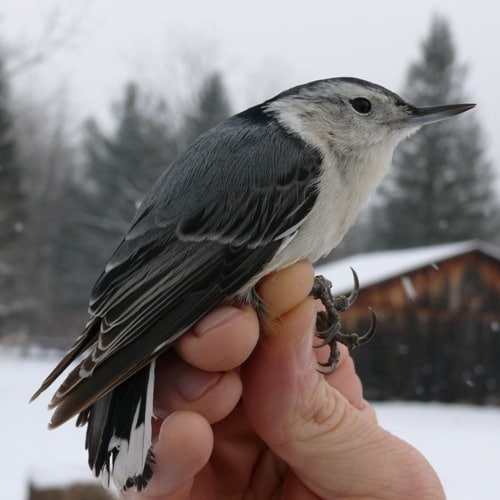
White-breasted Nuthatches are notable for scaling down tree trunks head-first.  Listen for a nasal “yank” call.
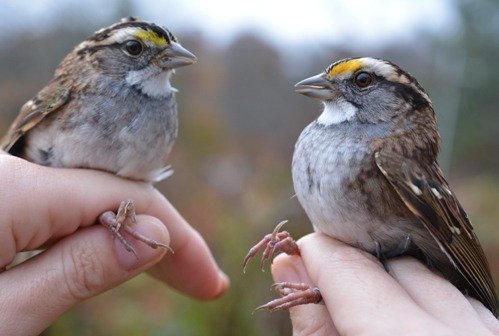
Two white-throated sparrows, with namesake white throats, but also notice the differing yellow and orange lores on these two birds.

The curious and taunting titmice and chickadees are agile fliers and keep watch for hunting hawks and owls, sending out warning calls to alert the foraging party of danger.  On the ground in protected thickets, a different flock searches for food in the forest’s leafy floor.  Resident song sparrows and tree sparrows are joined by white-throated sparrows and dark-eyed juncos from the boreal forests.  These birds avoid a long migration and the enormous energy toll it takes, choosing instead to scavenge for seeds and insects during the short winter days.  Their reward is first dibs on prime summer breeding territory—surely a distant memory to keep them warm during the long, cold winter nights.

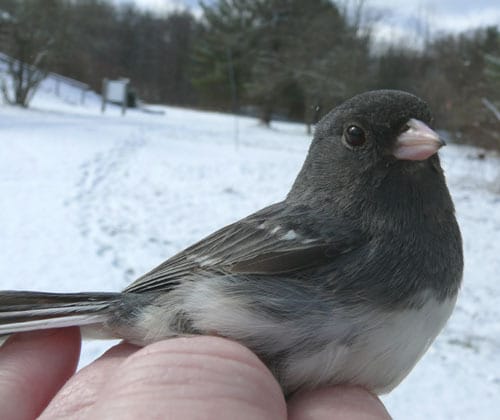
Dark-eyed Juncos are small birds with a gray back and white belly.  Also, notice the pink bill.

When Carolina wrens join these flocks, their trilling and warning calls are distinct.  For the naturalist, imitating the warning call of a bird like the wren can lure in a mixed winter flock for easier observation.  Relying on a type of voice distortion to lure birds is called “pishing.” It is a great skill for birders to master, and it’s useful year-round.  Pishing varies for the bird you want to attract, but usually has a short, staccato “p” straight into a loud “shhh” with variable inflections.  The idea of pishing is to attract birds with a warning call, a sort of call-to-arms which then triggers the formation of a tiny bird gang ready to chase off a predator.  The birds will often join in with their own warning calls and flit about nervously on nearby branches.  Observing the diversity of mixed flocks in the winter demonstrates the unique way these amazing animals work together to survive.

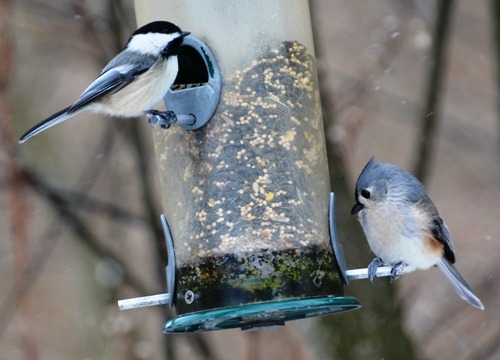
A Black-capped Chickadee (left) and Tufted Titmouse (right) at a feeder.  These two species often travel together.

Fall and winter are also the seasons for bird feeders, where hungry foragers can reliably find a banquet of millet, sunflower, and thistle seeds—even better when caked in suet.  Under some conditions feeding stations become colorful places.  The dull reddish-purple feathers of house finches and purple finches glow against a backdrop of snow, while goldfinches and cardinals ornament nearby trees.  Sparrows, titmice, wrens, and blue jays dip in and out at a feeder to fill up on seeds.  Chickadees come and peck at empty feeders, calling in a squeaky chant for a refill.

Aaron Young is a museum educator on Carnegie Museum of Natural History’s Outreach team. Museum staff, volunteers, and interns are encouraged to blog about their unique experiences and knowledge gained from working at the museum. Images from Powdermill Nature Reserve’s bird banding highlights. 
Related Content

Bird Safe Glass Installed at Carnegie Museums in Oakland

2020 Rector Christmas Bird Count

The Crows Are Back in Town

Filed Under: Blog Tagged With: Aaron S. Young, Birds, Educators, Museum from Home

January 15, 2021 by wpengine

Becoming a Science Educator

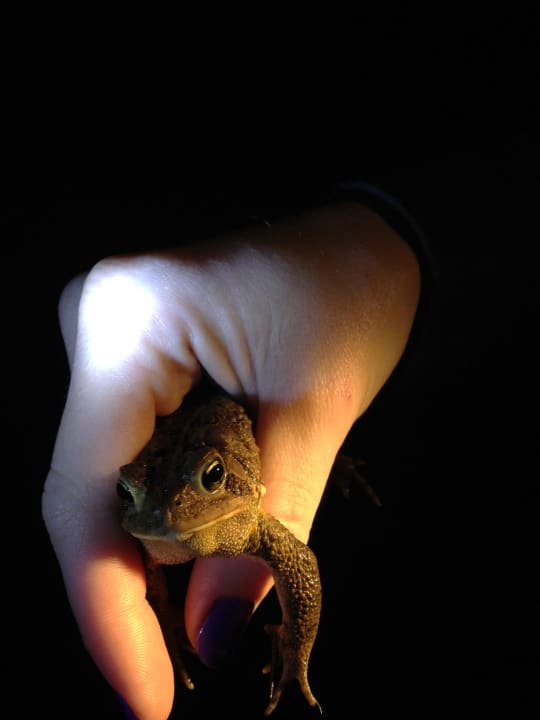
An American toad, similar to those found in the author’s childhood backyard.

Think back to when you were a child – what was your favorite way to learn how something works? Mine was to ask loads of questions and then jump in and get my hands dirty. I specifically remember catching toads in the backyard with my mom, asking questions about their appearance and where they lived. She would tell me about the myth of them giving you warts, that they might pee on your hand if they were scared, and how to hold them gently and then let them go.  Twenty years later, I became a research ecologist studying amphibian diseases, and I learned how to sharpen these inclinations into more robust skills: how to create focused questions and experiments, collect and analyze data, and present the findings to a range of audiences.

Today, I teach and design curriculum for home-school and summer camp programs at Carnegie Museum of Natural History. Fostering the learners’ own questions and devising hands-on ways to investigate them is the focus of my work. Science and nature provide unlimited opportunities for first-hand investigations, and the process of metamorphosis is one of my favorite examples.

An 8-year-old camper has likely learned about butterfly metamorphosis in school, and might be able to name the four stages: egg, caterpillar, pupa, and adult. Scientists call this four-stage process “complete metamorphosis,” a term whose qualifier invites one to wonder, “what is incomplete metamorphosis?” Enter the majestic dragonfly. Dragonflies also go through metamorphosis, but with only three stages: egg, nymph, and adult; their transformation is therefore termed “incomplete.” Noting this small difference suggests another question: what else is different about a dragonfly?

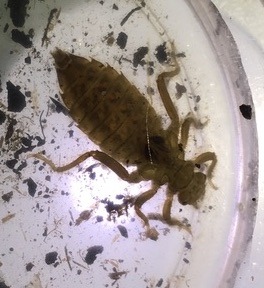
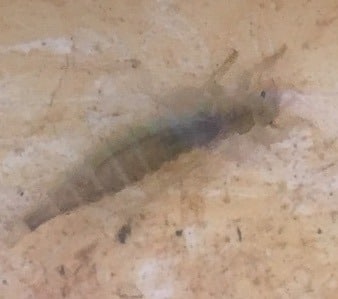
Above and below: Dragonfly nymphs collected and released in a Pittsburgh section of the Ohio River.
dragonfly nymph

Well those first two stages – eggs and nymphs – are in water! That is why they are part of the far larger group of aquatic macroinvertebrates, creatures with no backbone that can be seen without magnification and that live at least part of their life in water. Some dragonfly nymphs are impressive predators and can live for years in this aquatic phase, even though their adult lives last only a few weeks. In what ways, I challenge the 8-year-olds, is this transformation similar or different from that of a caterpillar and a butterfly?

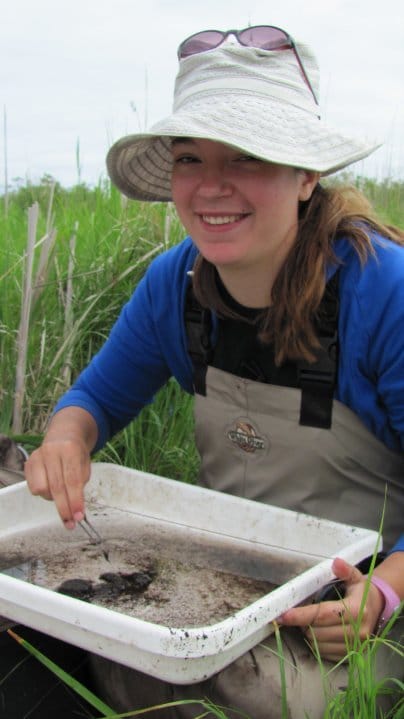
science educator Jenise Brown in a field looking through a tray of water
Jenise looking through a stream water sample for aquatic macroinvertebrates in a sorting tray.

After we’ve explored these questions, we make a trip behind the scenes to look at some insect specimens up close, and allow the students to directly ask the museum’s research scientists even more questions. Finally, we visit Powdermill Nature Reserve to get our hands muddy by looking for dragonfly nymphs and other aquatic macroinvertebrates in the research station’s namesake stream. And before we know it, we’ve done actual science: used the scientific method to gain understanding about the world around us!

I came to teaching from research science because I love building interactive experiences of the world around us like these into courses that can educate and inspire young people. This type of scientific inquiry is universal, and these practices can be adjusted for age. A class about dragonflies for a 12-year-old group, for example, might focus on data collection and include the presentation of our findings to the younger campers. Whatever the age level though…I get to get my hands dirty.

Jenise Brown is a Museum Educator with Carnegie Museum of Natural History. Museum staff, volunteers, and interns are encouraged to blog about their unique experiences and knowledge gained from working at the museum.
Related Content

We Are Nature: Living in the Anthropocene (Video)

Indiana Jones and the Rosetta Stone

Teaching in the Parks

Filed Under: Blog Tagged With: Education, Educators, Jenise Brown, Museum from Home

January 7, 2021 by wpengine

Teaching in the Parks

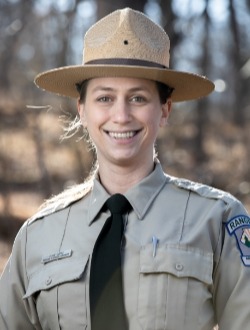
Allegheny County Park Rangers consider themselves to be ambassadors for a public asset whose value has increased during the ongoing COVID-19 pandemic: nine regional parks encompassing more than 12,000 acres of largely green space, laced with some 100 miles of multi-use trails.

Allegheny County Park Ranger Elise Cupps in khaki shirt with black tie and tan hat
Ranger Elise Cupps. Photo credit: Allegheny County

For Elise Cupps being an ambassador for this unique resource involves teaching a variety of audiences, including school groups, scout units, garden clubs, and library patrons. The Robert Morris University (BS) and University of Pittsburgh (MA) alumna is a five-year veteran of a program just six years old, and as the Park Ranger’s Coordinator for Education and Outreach she makes regular use of the CMNH Educator Loan Program.

In many County parks, Ranger programs about owls and bats utilize taxidermy mounts borrowed from the museum. “We could just hold our hands apart to show the difference in size between a screech owl and a great horned owl,” Elise explains, “but it’s far more effective to have the preserved birds on display for the participants to inspect themselves.”

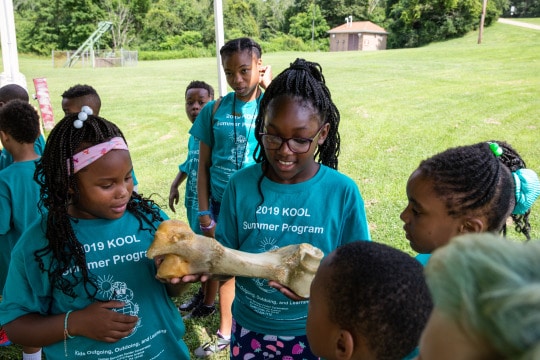
Campers at a Park Ranger program in pre-pandemic times inspect an American bison femur. Photo credit: Allegheny County

Other loans of museum materials enhance presentations that have ties to a specific park. Bison materials, including limb bones, hooves, and horn sheaths, for example, have been used for programs at South Park, where a small captive herd of the iconic prairie mammals have been a public attraction since the 1920s. Ranger programs about archaeology, which utilize authentic stone arrow points, adz heads, and fishing weights, make reference to a museum-led excavation in Boyce Park decades ago that documented how our region. was once the homeland of people known to science as the Monongahela.

During the past ten months, with the pandemic disrupting much of their planned program schedule, the Park Rangers paid close attention to their audience. “We’ve been fluid,” says Elise by way of summary. “We’ve made continual adjustments to meet the needs of groups – making live virtual presentations, sending pre-recorded videos, posting images and information on Facebook, sharing PowerPoint presentations – whatever it takes.”

Next week Elise will be borrowing a set of taxidermy mounts for upcoming programs about birds in winter. The means of program delivery has not been determined at this point, but it is a certainty that learning will occur.

Learn more about the Allegheny County Park Rangers.

Patrick McShea works in the Education and Visitor Experience department of Carnegie Museum of Natural History. Museum employees are encouraged to blog about their unique experiences and knowledge gained from working at the museum.
Related Content

Ask a Scientist: Ravens and crows, what’s the difference?

Milkweed Observations

“Quaran-Teened”: Closed Spaces, Open Minds

Filed Under: Blog Tagged With: Educator Loan Program, Educator Resources, Educators, Pat McShea, stewardship

December 7, 2020 by wpengine

“Quaran-Teened”: Closed Spaces, Open Minds

laptop keyboard

We are living in a time of drastic changes, uncertain futures, and confounding boundaries. The pandemic shook our core values by keeping everyone physically separated. Here at Carnegie Museum of Natural History, educators had to think outside-the-box for ways to keep staff connected and our audiences engaged. Creating virtual programs was no small feat, but a special group of young people embraced the changes.

A handful of museum educators with responsibility for summer camp programs pressed onward with a group of returning teen volunteers, including some who have been volunteering with CMNH for a several years. Creating virtual programs was no small feat as Online Museum sessions replaced in person camps. Our teens embraced the changes and helped participants feel comfortable in this new normal by providing positive energy and continual encouragement. As part of their transformation from classroom helpers to virtual instruction assistants, several teen volunteers developed insightful, natural history-related literature in the form of blog posts. The Museum is proud to introduce these keyboard warriors, our very first cohort of teenage volunteer bloggers. You may have already read some of these blogs, and there are more to come! Meet just a few of these promising young writers:

Claire Ianachione: Hi, my name is Claire Ianachione, and I am excited to be writing blogs for the museum. I love learning new things about history and sharing them with other people. I cannot wait to start sharing blogs and I hope people enjoy reading them.

Samhita Vasudevan: My name is Samhita Vasudevan, and I’m super excited to write blogs for the museum! In my free time, I enjoy baking, going on runs, listening to music, and watching movies. My favorite exhibits at the museum are the Hillman Hall of Minerals & Gems and the Art of the Diorama.

Caroline Lee: My name is Caroline Lee and I’ve been involved with Powdermill since I was 10. When I heard of this great opportunity to write blogs for the museum, I was very excited to start because while I love PNR and Carnegie Museums, I also love writing! In my free time I am a musician in my school marching band, and a member of the “Science Matters” club!

Niko Borish: A longtime admirer of natural science, I attended summer camp at Powdermill Nature Reserve several times before becoming a volunteer there. Though primarily interested in herpetofauna, I enjoy investigating all aspects of the natural world whenever I can. Currently a junior in high school, I plan to study environmental science in college.

Angela Wu: Most of my passions can be summarized by “I love to create.” I’m interested in software development and its many applications in a variety of fields, but I also create writings, drawings, paintings, and music (albeit not very well). In my spare time, I enjoy reading, writing, and eating Ramen.

Xavier Ramirez: I am a sophomore in high school. I enjoy acting, music, and STEM. Currently, I keep myself busy with writing and long games of Risk.

Teen volunteers are an integral part of making summer camp a meaningful experience for campers. While 2020 brought about some difficult challenges that radically changed the summer camp experience, we want to extend a big thank you to all of our teen volunteers who helped the program!

Sara Klingensmith is an Environmental Educator & Naturalist at Powdermill Nature Reserve and Brandon Lyle is a Museum Educator at Carnegie Museum of Natural History. Museum employees are encouraged to blog about their unique experiences and knowledge gained from working at the museum.
Related Content

Teaching About Teeth

Digital Developments: Why Archiving and Herpetology Go Hand-in-Hand

How-to Make Hatchable Dinosaur Eggs

Filed Under: Blog Tagged With: Educators, Museum from Home, volunteers

  • « Go to Previous Page
  • Page 1
  • Page 2
  • Page 3
  • Page 4
  • Page 5
  • Interim pages omitted …
  • Page 7
  • Go to Next Page »

sidebar

About

  • Mission & Commitments
  • Directors Team
  • Museum History

Get Involved

  • Volunteer
  • Membership
  • Carnegie Discoverers
  • Donate
  • Employment
  • Events

Bring a Group

  • Groups of 10 or More
  • Birthday Parties at the Museum
  • Field Trips

Powdermill

  • Powdermill Nature Reserve
  • Powdermill Field Trips
  • Powdermill Staff
  • Research at Powdermill

More Information

  • Image Permission Requests
  • Science Stories
  • Accessibility
  • Shopping Cart
  • Contact
  • Visitor Policies
One of the Four Carnegie Museums | © Carnegie Institute | Privacy Policy | Terms of Use | Accessibility
Rad works here logo