• Skip to primary navigation
  • Skip to main content
  • Skip to primary sidebar

Carnegie Museum of Natural History

One of the Four Carnegie Museums of Pittsburgh

  • Visit
    • Buy Tickets
    • Visitor Information
    • Exhibitions
    • Events
    • Dining at the Museum
    • Celebrate at the Museum
    • Powdermill Nature Reserve
    • Event Venue Rental
  • Learn
    • Field Trips
    • Educator Information
    • Programs at the Museum
    • Bring the Museum to You
    • Guided Programs FAQ
    • Programs Online
    • Climate and Rural Systems Partnership
  • Research
    • Scientific Sections
    • Science Stories
    • Science Videos
    • Senior Science & Research Staff
    • Museum Library
    • Science Seminars
    • Scientific Publications
    • Specimen and Artifact Identification
  • About
    • Mission & Commitments
    • Directors Team
    • Museum History
  • Tickets
  • Give
  • Shop

Blogs from our Scientific Researchers

Carnegie Museum of Natural History is home to active research and vast scientific collections. Our scientific researchers regularly contribute to the blog at the museum.

July 20, 2022 by Erin Southerland

Scientists Call for New Research Studying the Combined Effects of Climate Change and Urbanization on Body Size Across Species

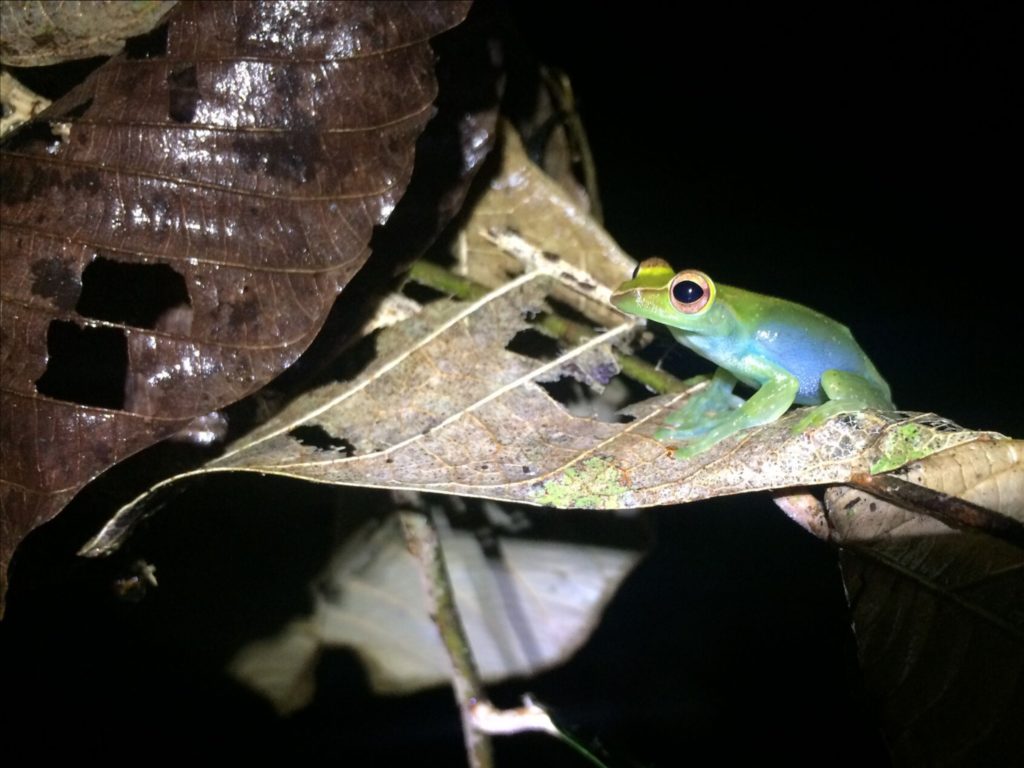
Rhacophorus dulitensis (jade tree frog). Photo by Dr. Jennifer Sheridan, Carnegie Museum of Natural History

Researchers from Carnegie Museum of Natural History have described impacts of climate change and land use on the size of organisms. Dr. Jennifer Sheridan, Assistant Curator of Amphibians and Reptiles, and Dr. Amanda Martin, post-doctoral researcher, review the causes that lead to changes in size as well as ecological interactions, while making the case for more research studying the combined effects of climate change and urbanization. The paper, entitled “Body size responses to the combined effects of climate and land use changes within an urban framework,” was published in in the journal Global Change Biology on June 27. 

Body size is considered one of the most important traits of an organism, affecting thermal regulation, mobility, reproductive output, and capacity to acquire resources. Over many generations, body sizes usually increase within lineages. Recent observations, however, show a decrease in size over relatively short time periods. This could have profound ramifications for individual organisms and ecosystems alike. For example, size-related reproductive success means that interacting populations in the same location will be dominated by smaller species, leading to long-term changes in predator-prey dynamics. Most research suggests climate change as the primary driver of changes in size, but emerging research indicates that land use—especially urbanization—may also contribute.  

Human-induced climate change has significantly altered temperatures since the 1950s, and temperature affects the size of organisms. At roughly the same time, the Earth has experienced rapid urbanization and a tripling of the human population. Unlike climate change, urbanization has been shown to cause an increase in size of some organisms due to the advantage size has on mobility, and the greater availability of food and other resources. Urbanization does not affect all organisms equally; however, and some species—including some birds—are unable to take advantage of food abundance in urban settings and have become smaller.

“There is a gap in the literature,” says Dr. Sheridan. “Given that climate change and urbanization are projected to continue their rapid growth, there is an urgency to understanding how their respective effects may be working in concert. Specimens from museum collections are a unique data source that can shed light on changes in size with respect to climate and land use changes over time.”  

Sheridan and Martin recommend several steps researchers can take to better understand biodiversity loss and ultimately work toward species conservation. These include expanding the taxonomic and geographic scope of research–including the use of museum collections; increasing the use of quantitative data—such as impervious surface area–over categorical data such as urban versus rural zones; and increasing the testing of climate change and land use interactions. Better understanding of the combined effects of climate change and urbanization is imperative for responding to rapid environmental change. 
Filed Under: Press Release Tagged With: Amanda Martin, amphibians and reptiles, climate change, Jennifer Sheridan, Science News

July 15, 2022 by Erin Southerland

A Deep Look Inside Reptiles and Amphibians

by Ian N. Roa

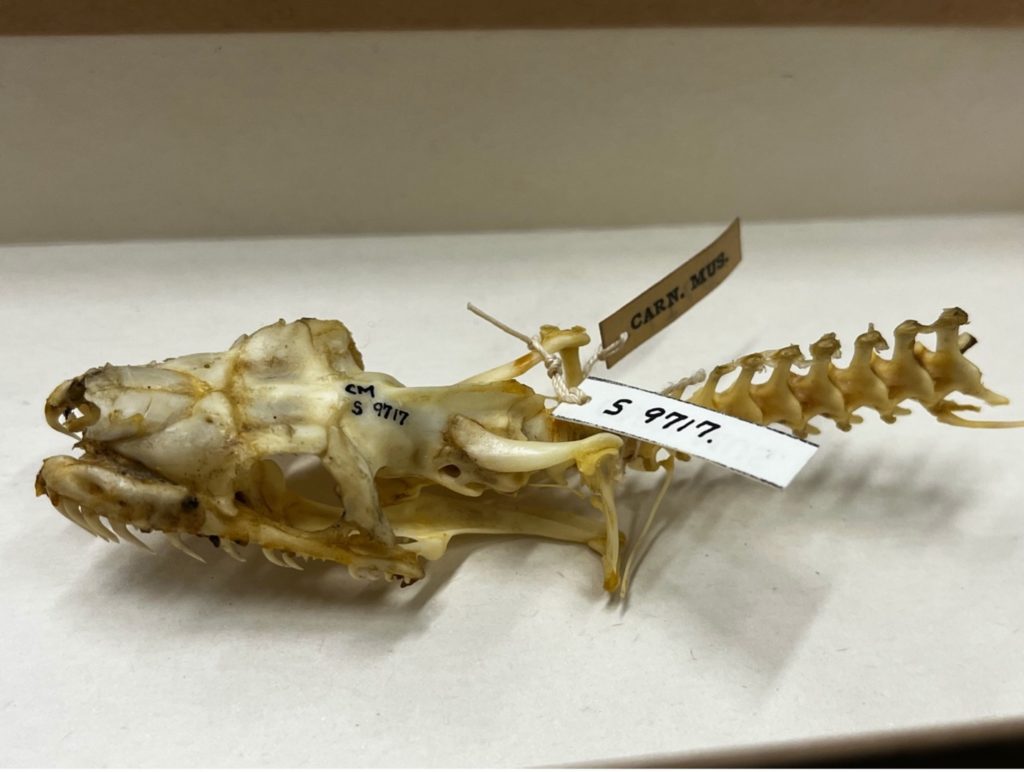
Fig. 1 – Head and neck portions of a Boa sp. skeleton.

Museums are integral to our communities because they are institutions that provide public education and outreach to better understand the world we live in. Visitors often think of museums in terms of displays, animal taxidermy mounts in dioramas, or jars of preserved amphibians, for example, but much of the important work of museums occurs behind the scenes. I developed a clear understanding of this situation through two different interactions with the Section of Amphibians and Reptiles at Carnegie Museum of Natural History.

I am an archaeology graduate student at the University of Pittsburgh (Pitt), and I met Stevie Kennedy-Gold, the Collection Manager for the Section of Amphibians and Reptiles, in 2019 when her assistance helped me answer a research question. I specialize in zooarchaeology, that is the of study animals in archeological contexts, in the Maya lowlands of western Belize. Unfortunately, due to the wet, humid climate of the jungle, preservation of bone is not always the greatest. There exists, however, a necklace made of vertebrae that was found still clutched in the hand of an ancient Maya elite. Based upon several characteristics of each vertebra, I knew the necklace was made up of reptile but could not deduce anything more specific. When I reached out to Stevie, she helped me figure out that the necklace was made of bones from numerous snakes! The significance of finding out what kind of animal the necklace was made from helps us to understand the ways humans interacted with their environment, in this case animals who share the same landscape. Even more exciting is the cosmological importance of the serpent to the Maya culture where the creatures primarily symbolize rebirth and renewal.

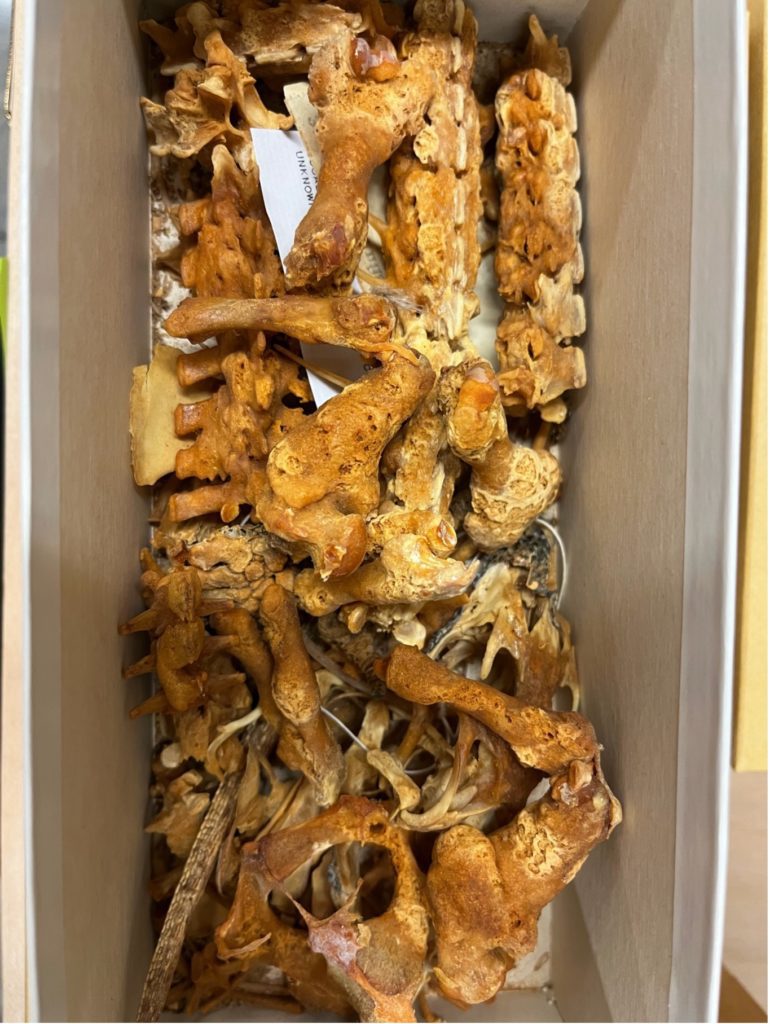
This positive experience of having my doctoral research aided by a museum collection convinced me of how important it is to make sure such resources are well managed for generations to come. When I reached out to Stevie for a second time, it was to offer my time in the Section of Amphibians and Reptiles for any project I could assist. When we got started, I was asked to help catalog the osteological inventory of reptiles and amphibians, which is fitting as Stevie has nicknamed me “the bone guy” for my specialty as a zooarchaeologist. The work involves locating each specimen, identifying which components of the skeleton are present, and noting any articulation or soft tissue (such as skin) that may be present. Any necessary steps for later upkeep to maintain preservation is also recorded, procedures such as cleaning skeletal pieces, removing dead dermestid beetles, and transferring specimens to new storage boxes. This experience has allowed me to further familiarize myself with diverse taxonomic groups and even inflammatory and autoimmune pathologies (Fig. 2)! 

Fig. 2 – Osteological inflammatory growth along the axial and appendicular parts of this squamate skeleton due to disease.

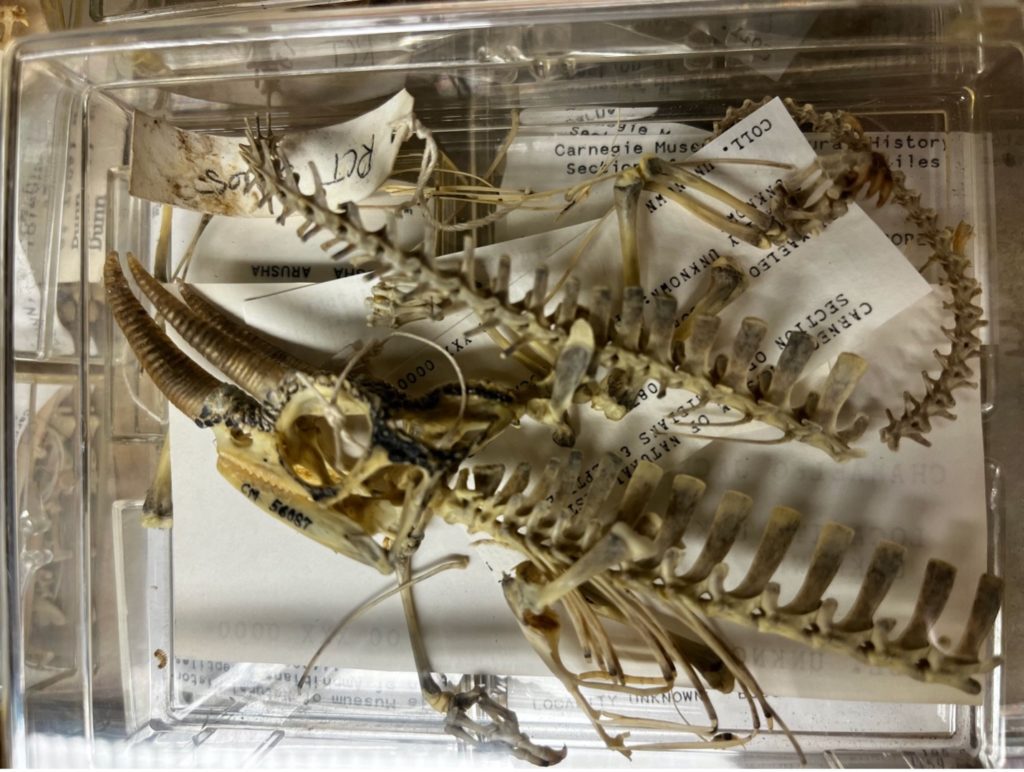
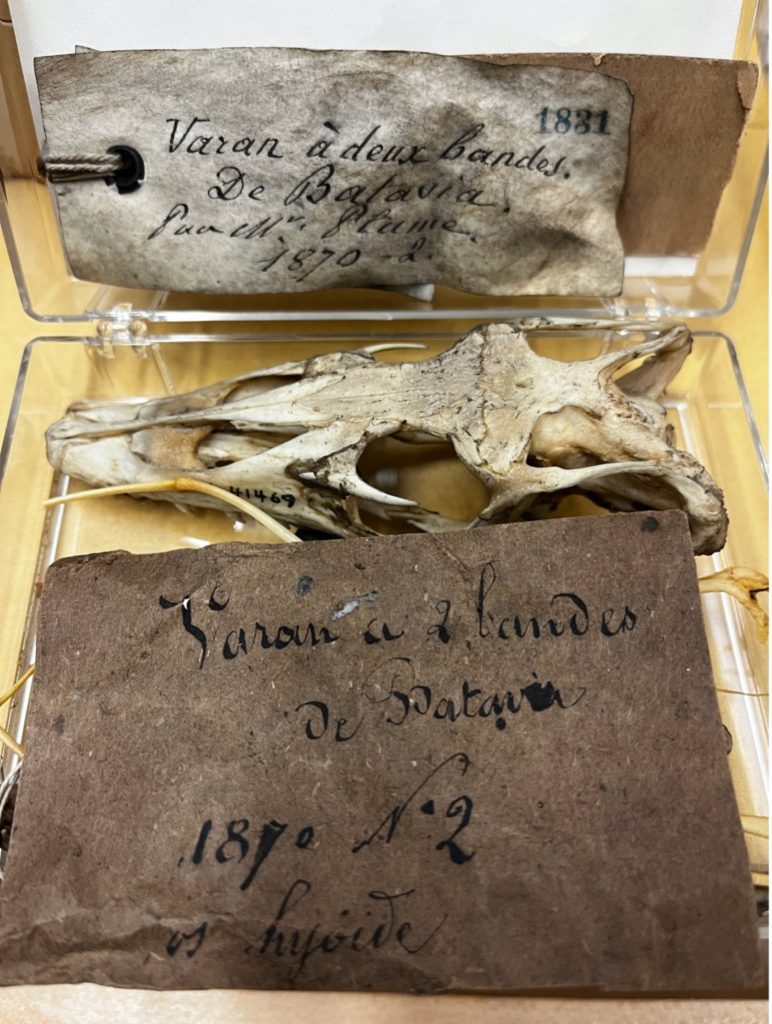
Though it is an arduous task to organize and record the entire osteological collection between Stevie, a couple of section work-studies, and myself, it is also a load of fun (or perhaps torturous levels of organization is my crazy idea of fun). No, really! As we go through each cabinet, drawer, and box we stumble across some really fantastic skeletons of lizards, snakes, crocodiles, turtles, and more (Fig. 3). One of my favorites was of an Asian water monitor (Varanus salvator), because it is the oldest specimen in the entire herpetology collection at CMNH, and even includes a beautiful hand-written record of this original skeleton.

Fig. 3 – Trioceros jacksonii, commonly known as the Jackson’s chameleon. The males are easily identified by the three large horns protruding from their faces.
Fig. 4 – Commonly known as the Asian water monitor (Varan salvator), this skeleton was collected in 1870 and is actually the oldest specimen in the collection, wet or dry.

Ian N. Roa is an archaeology graduate student at the University of Pittsburgh.

Related Content

A Head Above the Rest: Unearthing the Story of Our Leatherback Sea Turtle

Meet the Fossil Detectives in the Basement

Do Snakes Believe in the Tooth Fairy?

Carnegie Museum of Natural History Blog Citation Information

Blog author: Roa, Ian N.
Publication date: July 15, 2022

Share this post!

  • Share on Twitter Share on Twitter
  • Share on Facebook Share on Facebook
  • Share on Pinterest Share on Pinterest
  • Share on LinkedIn Share on LinkedIn
  • Share on Reddit Share on Reddit
  • Share via Email Share via Email

Filed Under: Blog Tagged With: amphibians and reptiles, Ian Roa, Science News

July 14, 2022 by Erin Southerland

A Trip to Grave Creek Mound

by Amy L. Covell-Murthy

It was my pleasure to organize a field trip for Anthropology and Anthropocene staff, students, and friends to the Grave Creek Mound Archaeological Complex in Moundsville, West Virginia. Our gracious host, Dr. Olivia Jones, who is the facility’s lead curator showed us around the complex while explaining the history of the facility and of the mound. She also provided us with plenty to explore on our own.

Maintaining a relationship between Carnegie Museum of Natural History and the Grave Creek Mound Complex has been a highlight of my responsibilities as collection manager over the past five years. Dr. Jones and I work hard to keep each other informed of current research and initiatives in our institutions, while sharing resources that pertain to the history of the region. 

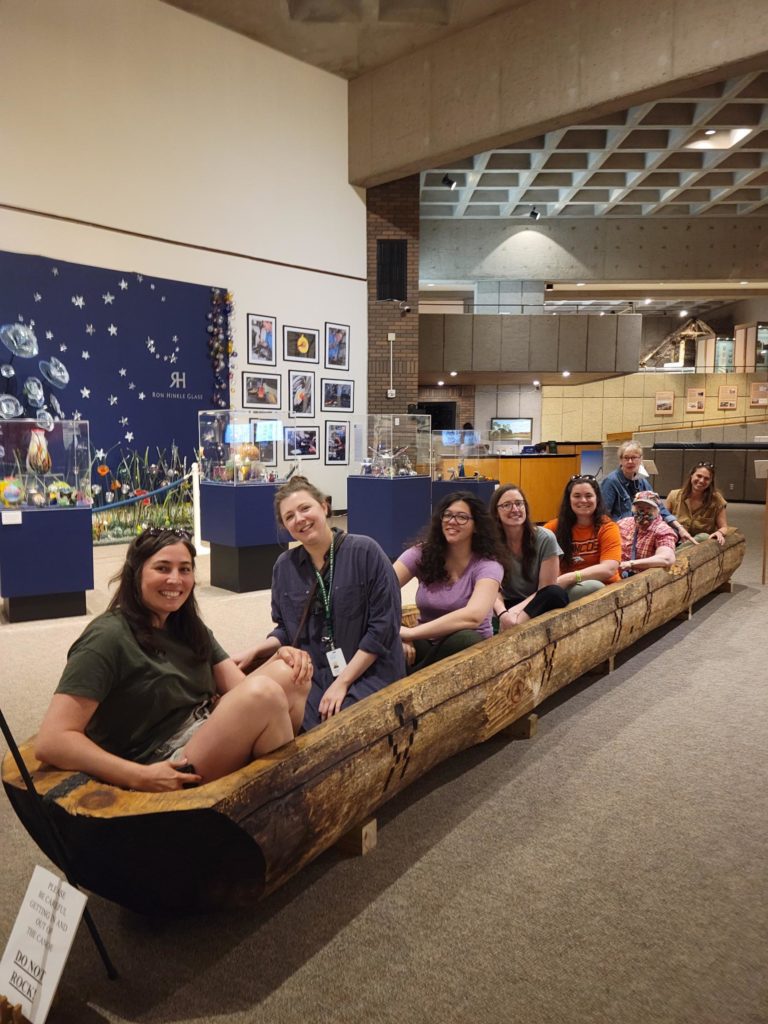
Group of people in a canoe in a museum
This picture shows the Carnegie crew posing in a dugout canoe that was commissioned from artists of the Seneca Nation/Onöhsagwë:de’ Cultural Center.

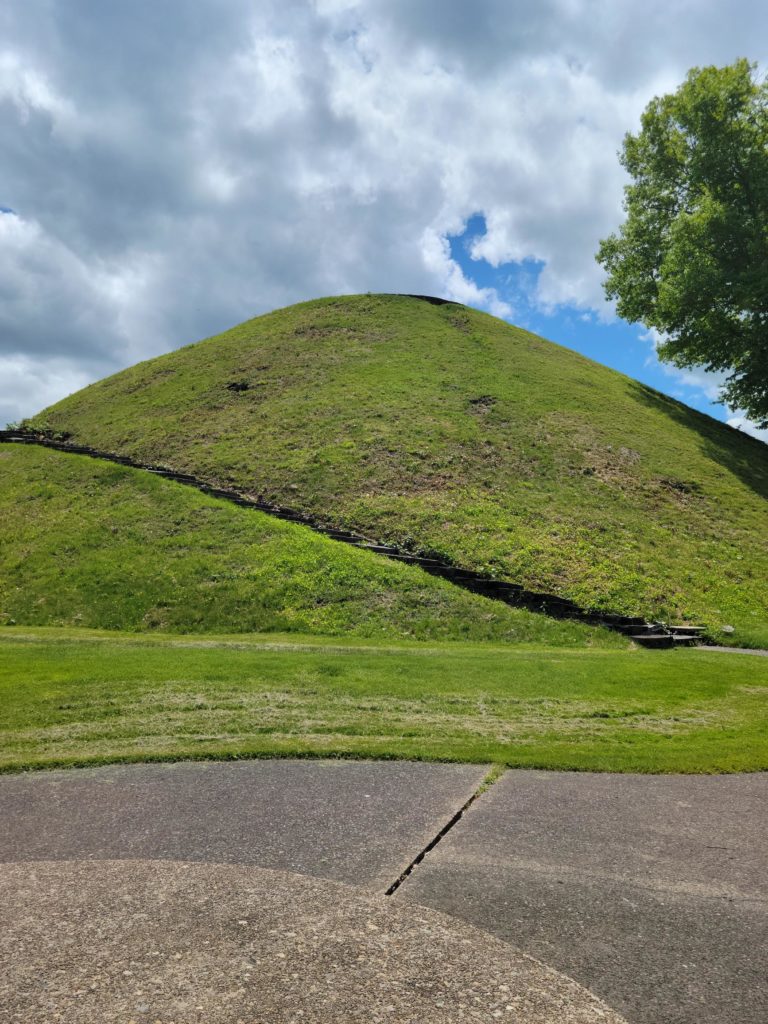
Adena is the name given by archaeologists to the mound building cultural group who developed around 2500 years ago in the Ohio River Valley and many of its major tributaries. The Grave Creek Mound, now located in the center of a town whose name references the structure, is one of the largest of the conical Adena burial mounds. Dr. Jones, curator Hank Lutton, and the staff of the Archaeological Complex work to maintain the integrity of this National Historic Landmark. According to their website, the mound was constructed between 250 and 150 B.C.E. and in 1838 it was measured as being 69 feet tall, and 295 feet in diameter. 

The Grave Creek Mound from a walkway near the base of the 2,000-year-old structure.

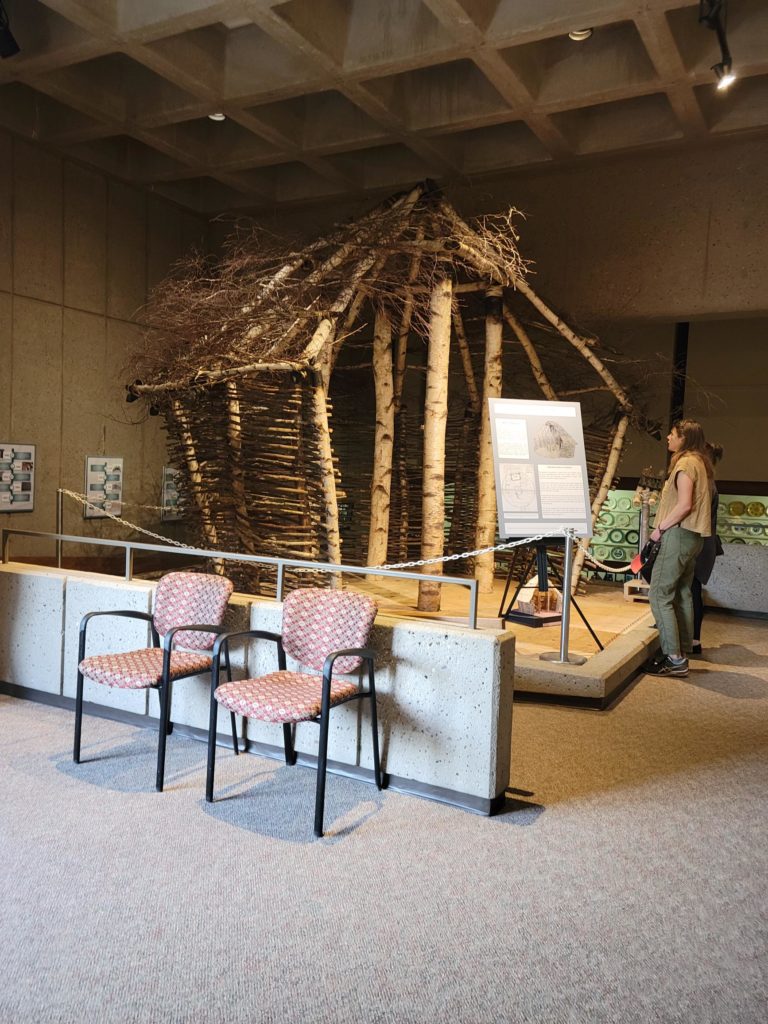
In addition to the mound, the complex consists of an archaeological research and collection facility, and the Delf Norona Museum, which interprets lifeways of the Adena people for the public. The museum, named for the author of the mound’s definitive history, opened its doors in 1978, and the research facility was constructed later in 2008. This facility is the repository for all of West Virginia’s State-owned collections and artifacts. 

Although our exhibits do not explain the arrangement, Carnegie Museum of Natural History once served as a repository for the State Museum of Pennsylvania for all cultural material excavated in Western Pennsylvania.  This material remains in our care at our collection facility and is used for research. As we try to reconcile our institutional past and bring equity and inclusion into our storytelling, these collections will help us interpret the pre-contact narratives of the region. 

Dr. Nicole Heller viewing the Adena Structure replica in the Delf Norona Museum. 

I am very lucky to be able to offer these educational experiences to my students and volunteers and I encourage those of you who can, to take the 90-minute drive from Pittsburgh to Moundsville, West Virginia to check out the Archaeology Complex. And the next time you find yourself in the North Eastern section of the Alcoa Hall of American Indians at CMNH, take some time to think about the mound builders who were here before the Haudenosaunee, Lenape, and Shawnee in Western Pennsylvania. 

Amy L. Covell-Murthy is the Collection Manager for the Section of Anthropology and Archaeology at Carnegie Museum of Natural History.

Related Content

Celebrating Indigenous Peoples’ Day

Grass Baskets of the Chumash

Queer Eye for Lakota Art

Carnegie Museum of Natural History Blog Citation Information

Blog author: Covell-Murthy, Amy L.
Publication date: July 14, 2022

Share this post!

  • Share on Twitter Share on Twitter
  • Share on Facebook Share on Facebook
  • Share on Pinterest Share on Pinterest
  • Share on LinkedIn Share on LinkedIn
  • Share on Reddit Share on Reddit
  • Share via Email Share via Email

Filed Under: Blog Tagged With: Amy Covell-Murthy, anthropology, archaeology, Science News

July 8, 2022 by Erin Southerland

Messages in Tardigrade Plastic Time Capsules

by Asia Ward
Person sitting at a table writing
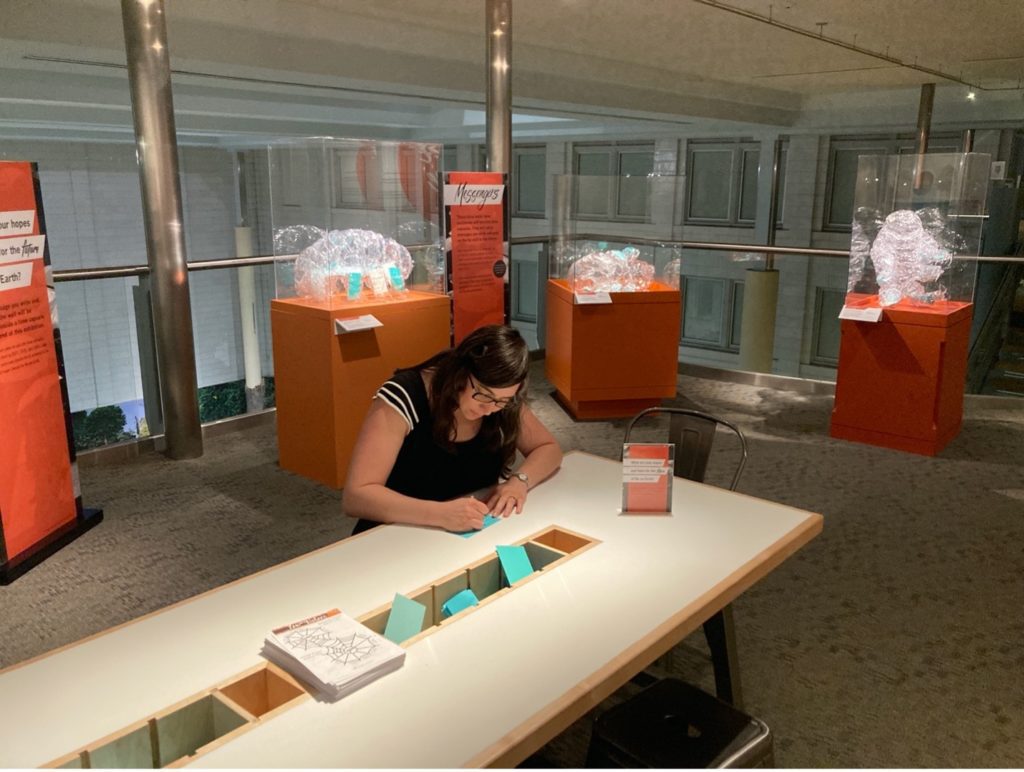
Messengers, time capsule installation by Asia Ward. Photo by Joe Grigar. 2022

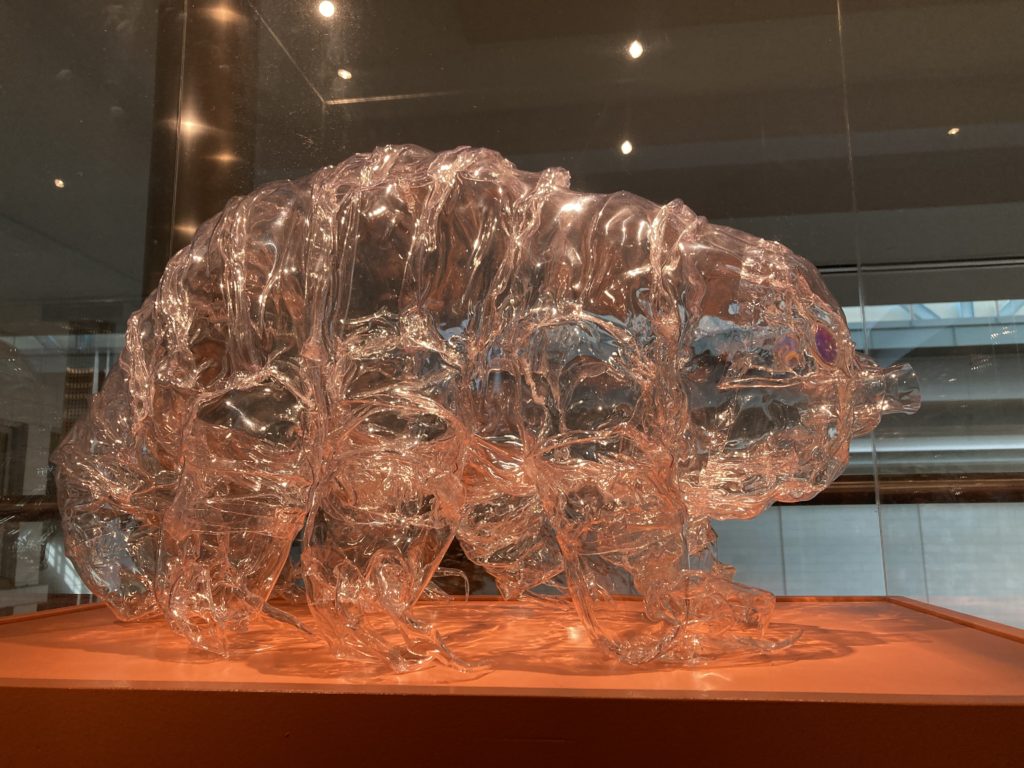
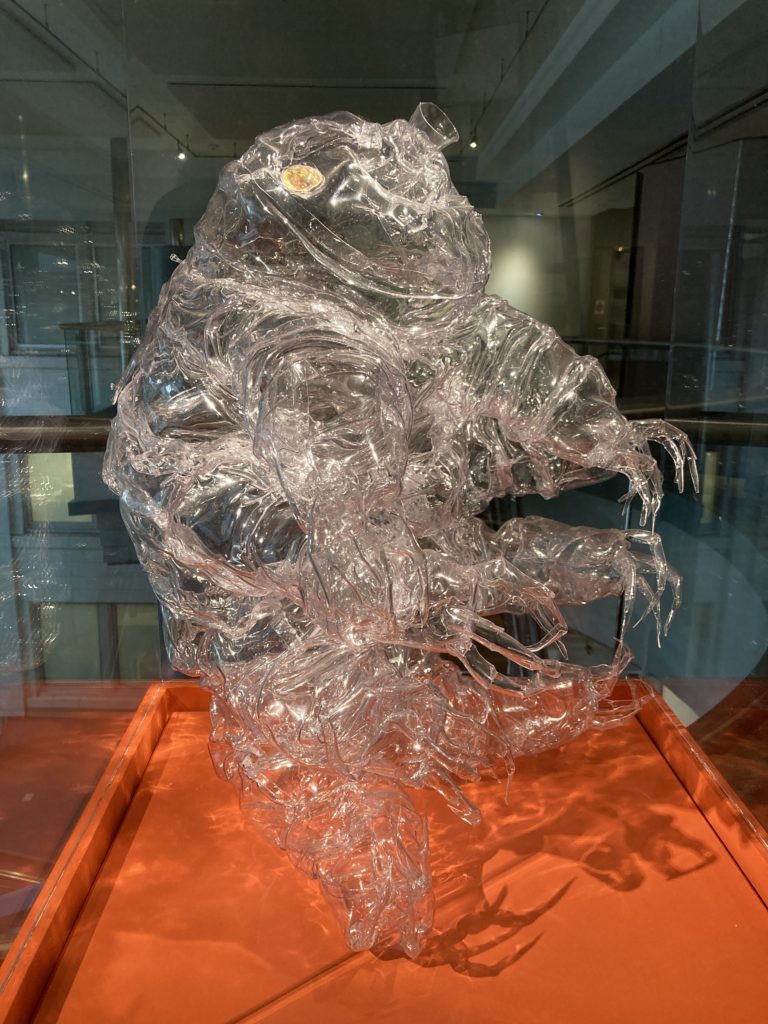
Have you seen the Tardigrade-shaped time capsule installation titled Messengers on the third-floor balcony in the Carnegie Museum of Natural History? I am the artist who fabricated those for the We Are Nature: A New Natural History exhibit experience.  My name is Asia Ward, and I’m a social practice and public sculpture artist who is also the Project Manager and Science Communicator for the We Are Nature project. 

Sometimes my two careers combine, as occurred during the time capsule interactive art installation. I was invited to contribute an art installation for the exhibition by Nicole Heller, the Associate Curator for Anthropocene Studies, and director of the We Are Nature project.

In my 14-year career as a science communicator for other organizations, I have worked with museums on prototyping interactive exhibits. The experience of contributing an art piece to a project I was also managing allowed me to get supporting departments involved in thinking about what an art installation could be. I generated the ideas for an interactive exhibit, and through group discussions and brainstorming with colleagues in the Education, Exhibition, Anthropology, and Anthropocene Studies departments, the final project concept was shaped. I then went to work sculpting large versions of Tardigrades out of recycled thermal plastic. Three time capsules were created as repositories for visitors’ thoughts about conditions in 2027, 2025, and 2095, years chosen for their potential to be a time of major change for life on Earth.

I created the Tardigrades to be transparent and hollow, with doors for the deposit of visitor messages. The installation runs from November 2021 until November 2022, and so far, out of all the interactive installations I have created, this has proven to be the most successful and the most surprising. 

sketches of tardigrades
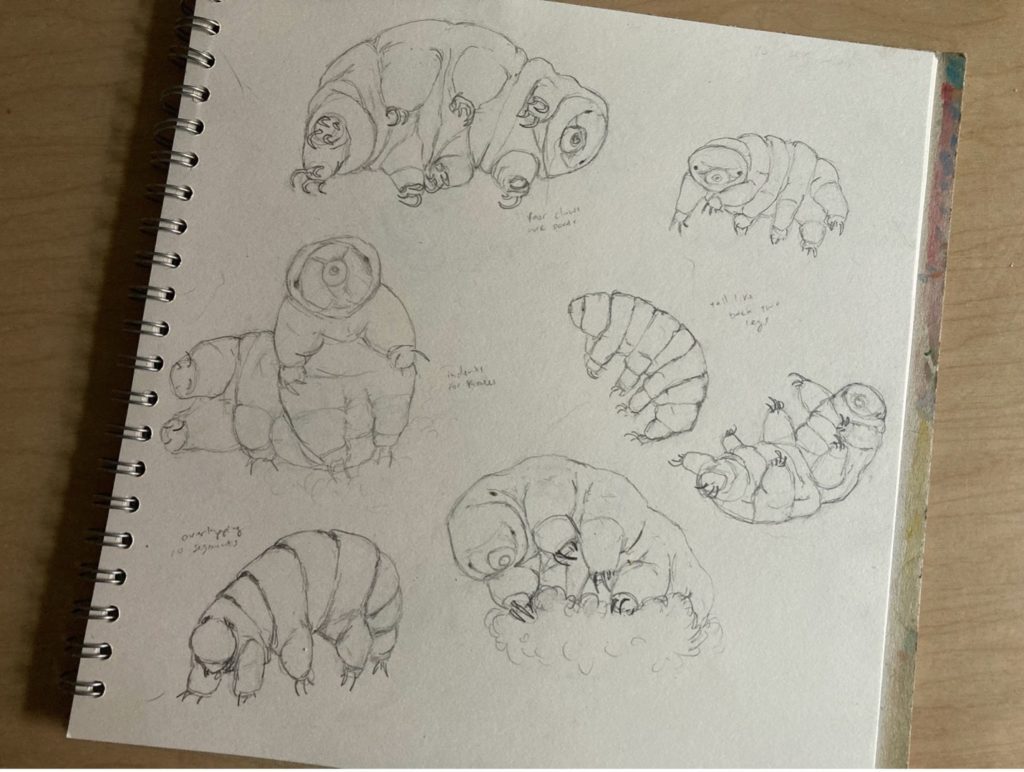
Tardigrade sketches for Messengers, by Asia Ward. Photo by Asia Ward. 2022

Why Tardigrades? 

Tardigrades, otherwise known as “Water bears” or “Moss Piglets” because of their 8-legged chubby resemblance of key features on bears or pigs, are well known around the globe for their survival skills. I can’t seem to do research on them without finding some new fantastic feat they’ve conquered, like being frozen for 30 years and brought back to life, or failing to survive impact from a crashed rocket on the moon. 

Tardigrades, which compare in size with a tiny rice grain, are microscopic creatures found almost everywhere on Earth, from your backyard to the top of a volcano or the ocean. 

I’ve found them by gathering some lichen from my backyard, soaking a section of lichen in water, and then examining the fluid under a microscope, and BAM! There they are, crawling around eating and pooping. I think they’re weirdly cute and very accessible. If you’re interested, there are some instructions online for doing your own research. 

I think what’s most inspiring about Tardigrades is how they have evolved to go into what is termed a tun state, becoming a dehydrated looking blob in a state of suspended animation in order to survive harsh environmental change, and then rehydrating when the environment is more to their liking. For these creatures, whose average life span is three to four months for some species, and a little more than 2 years for others, the ability to press “Pause” when things get tough, is unique. From my interpretation, the tardigrade’s time traveling ability makes them perfect messengers for future Earth. 

tardigrade sculpture
Two of three Tardigrades in Messengers, by Asia Ward. Photo by Asia Ward. 2022

Time Capsules as an Interactive Exhibit to Process the Anthropocene

Before the time capsules were fabricated, the installation required some thought as to how visitors could best approach the time capsules and feel invited to contribute a message for the future. I worked with the Exhibitions staff for a year to prototype different prompts and test their effectiveness on the floor with visitors. In collaborating with different departments, we realized that the Hub, where Messengers is located, should be a space where visitors can process what they’ve learned and express their feelings about the Anthropocene. The term Anthropocene is the name of the proposed current geological epoch when human activities dominate the functioning of the planetary system. This distinct geological time period is what We Are Nature: A New Natural History explores, using new interpretive panels in 15 existing exhibit areas and related art installations as focus points to help visitors learn more about the topic. 

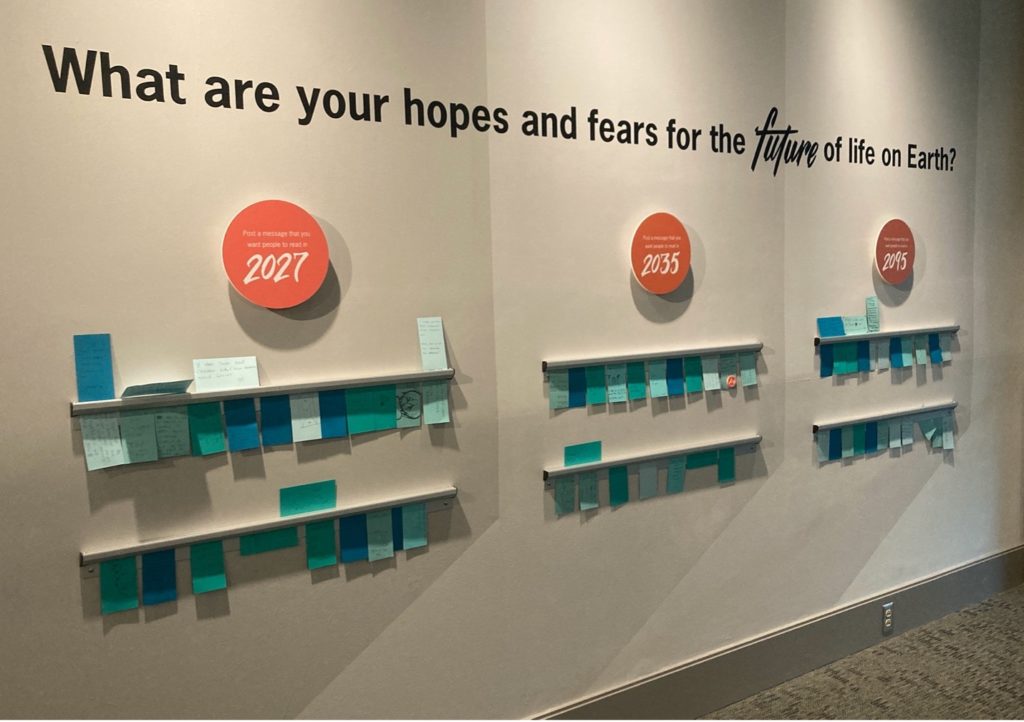
The final prompts and labels for the Messengers installation were part of what made it so successful. Every week, we get an average of 200-300 messages, many of them very serious, heartfelt, and earnest. An additional factor in its success is the message wall, where visitors can place their messages under the different year headers. During my observations, most visitors go directly to the message wall, reading from left to right every single message. The visitors might have come into the space because of the shiny and interesting looking Tardigrade sculptures, but they stay in the space and contribute because of the prompts and the messages that others have left. 

wall with handwritten messages for time capsules
Messenger prompts and visitor message wall, photo by Asia Ward. 2022

Message wall prompt: 

What are your hopes and fears for the future of life on Earth? 

Each Tardigrade has a designated year: 

  • Many climate scientists say we have until 2027 to take bold action to avoid climate disaster. If humans can keep global warming under 1.5°C (2.7° F), we reduce the risk of catastrophic heat and drought, food scarcity, flooding, and more. 
  • The United States set a goal to have 100% carbon-free energy production by 2035. Achieving this goal will require a major overhaul of the energy system, changing the way we power homes, businesses, and transportation to reduce pollution. 
  • Seven decades separate use from the 1950s, and seven decades separate us from the 2090s. The 1950s are known as the Great Acceleration. Some researchers look back at those years as a turning point when human activities and population growth became unsustainable, putting all life on Earth at risk. 

Visitors’ Feelings About the Future as Part of the Anthropocene Collection 

After reading thousands of messages, photographing and scanning them for documentation, some themes have emerged. 

2027 is within close reach, and messages intended for this time capsule tend to mention pop culture, current events, or personal daily events, worries, or desires. There are references to Netflix series, The Simpsons, comic book-based movies, shootings, the war in Ukraine, Biden, Trump, current unusual weather, COVID-19, the Roe v. Wade Supreme Court case, hashtags, and social media handles. Additionally, the same hopes and fears as well as advice from the other years are mentioned. 2027 also leans more into the hopeful. 

2035 contains more hopeful messages, with down to earth fears listed. In the hopeful range, messages list policy or government changes they would like to see and act towards, environmental and social justice, environmental regulation, being rich and famous, completing college and following their dreams, renewable energy and technology reversing Climate Change, climate disaster averted, no more species going extinct, and some general advice as to ‘be kind, compassionate, loving, accepting’ and to vote a certain way, recycle, pray, ‘believe in God.’ In the fear zone, messages list worry about having kids, kids’ future, escalating tension between countries and continued war, more deadly pandemics, natural environment extracted and wasted, too much government control, not enough regulation, and injustice for those with disabilities, women, and people of color. 

ten handwritten messages
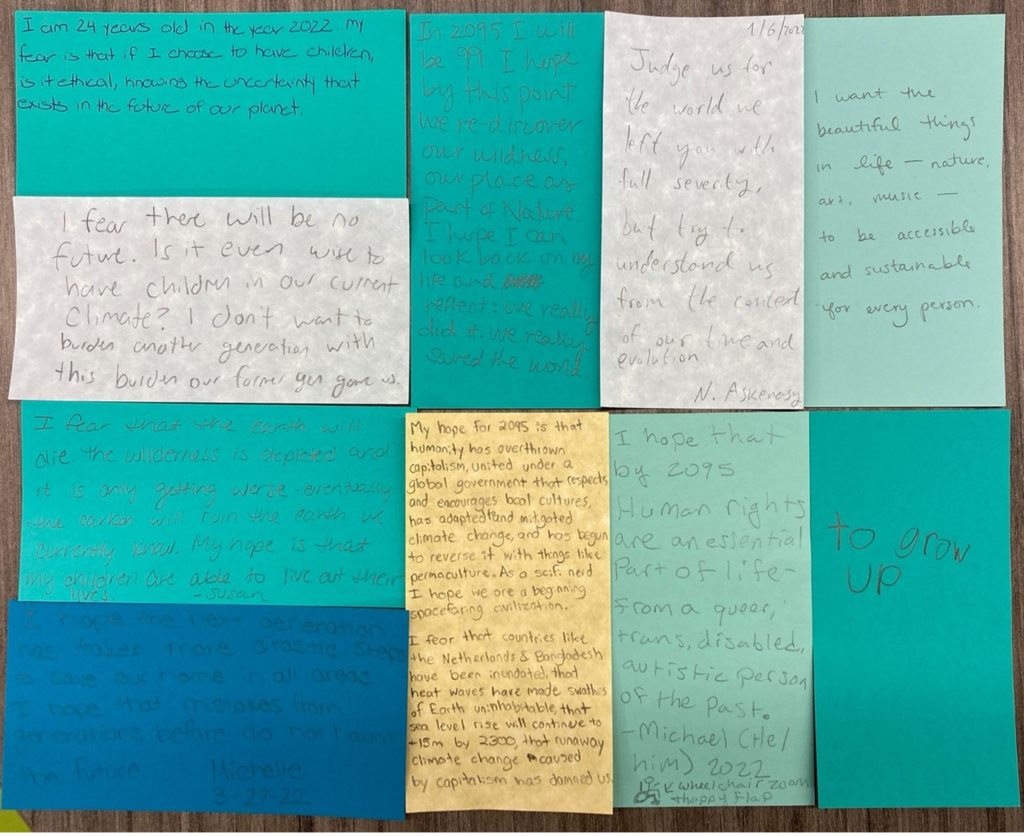
Sample of visitor messages for 2095 for Messengers. Photo by Asia Ward, 2022. 

The year with the most messages is 2095. That, for most of us, is far enough in the future where we will be dead, and the following generations will be the ones to read the messages. This batch tends to lead into the fantastical, but perhaps possible? (Dinosaurs coming back, flying cars, interplanetary colonies), the super hopeful (world peace, climate disaster averted, human and non-human rights as norm, world hunger solved) or super fatalistic (humans have killed themselves off with most of the planet’s life, the robots take over Matrix-style, suffocating capitalism or government control, poison by pollution and heightened injustice). There’s also advice about ‘being the change you want to see’ and apologies ‘for screwing you over.’ Personally, I think the reason 2095 has the most messages is because it’s far enough away that it’s easier to remove oneself from the complicated day to day systems we’re involved in (like politics, culture, ethics, and current events), and to see the systems from a bird’s eye view. 

What’s incredible about the messages, is that they come from all ages. From misspelled messages from kids just learning how to write and process the world around them, to older generations thinking back on their life and thinking forward for their grandkids. 

Observing visitors interacting and reading their messages has been the most rewarding experience I could have asked for as an artist and project manager. Visitors spend so much time there, reading others’ messages, then sitting to write down their thoughts. Families come in and it becomes a family activity, sitting around the table, silent in their writing. I’m glad they feel invited to share their thoughts about the future of life on Earth. I read through every message and prepare them for documentation so they can be included in our collection. There isn’t one reading session where I don’t leave both laughing and crying. 

Think about what your life will be like in 5, 13, 73 years. 

What are your hopes and fears for the future of life on Earth? 

If you would like to contribute to the time capsules, please visit before the We Are Nature: A New Natural History exhibit experience ends in November 2022. The message you write and post to the wall will be sealed inside a time capsule at the end of the exhibition. The capsules and all the messages will be preserved in the museum’s collection and opened in 2027, 2035, and 2095.

Thanks to the Gallery Experience Presenter Staff, the Natural History Interpreters, Events, Visitor Services, Education, Exhibitions, Anthropology, Anthropocene Studies, We Are Nature team, and the volunteers for your help making this installation possible. 

Asia Ward is a social practice artist. You can learn more about her work on her website AsiaWard.com.

References

Asia Ward website. Accessed June 2, 2022.

https://asiaward.com/

Bordenstein, Sarah. “Tardigrades (Water Bears).” Microbial Life Educational Resources. Accessed June 2, 2022. 

https://serc.carleton.edu/microbelife/topics/tardigrade/index.html

Carnegie Museum of Natural History website, Nature Crawl June 10th 2022 registration webpage. Accessed June 2, 2022 https://carnegiemnh.org/event/nature-crawl-21-june/

Carnegie Museum of Natural History website, We Are Nature: A New Natural History webpage. Accessed June 2, 2022. https://carnegiemnh.org/explore/we-are-nature-a-new-natural-history/#:~:text=Carnegie%20Museum%20of%20Natural%20History%20follows%20up%20its%20groundbreaking%202017,time%20to%20our%20own%20times.

Megumu Tsujimoto, Satoshi Imura, Hiroshi Kanda.  “Recovery and reproduction of an Antarctic tardigrade retrieved from a moss sample frozen for over 30 years.” Cryobiology. February 2016. Accessed June 2, 2022

https://www.sciencedirect.com/science/article/pii/S0011224015300134

Myriam Richaud, Emilie Le Goff, Chantal Cazevielle, Fumihisa Ono, Yoshihisa Mori, Naurang L. Saini, Pierre Cuq, Stephen Baghdiguian, Nelly Godefroy, Simon Galas. “Ultrastructural analysis of the dehydrated tardigrade Hypsibius exemplaris unveils an anhydrobiotic-specific architecture.” PubMed Central. March 9th, 2020. Accessed June 2, 2022.

https://www.ncbi.nlm.nih.gov/pmc/articles/PMC7062702/

O’Callaghan, Jonathan. “Hardy water bears survive bullet impacts- up to a point.” Science. March 18, 2021. Accessed June 2, 2022.

https://www.science.org/content/article/hardy-water-bears-survive-bullet-impacts-point

Waldman, Ariel. “Tested From Home: How to Find Tardigrades in Your Backyard!” YouTube Adam Savage’s Tested, Accessed June 2, 2022. https://www.youtube.com/watch?v=ccmnSXJG3QE

Wianecki, Shannon. “Hawaii’s mysterious water bears.” BBC, Travel. August 21st, 2016. Accessed June 2, 2022. 

https://www.bbc.com/travel/article/20160602-hawaiis-mysterious-water-bears

Wright, Jeremy. “Tardigrada water bears (Also: moss piglets).” Animal Diversity Web. Accessed June 2, 2022. 

https://animaldiversity.org/accounts/Tardigrada/#lifespan_longevity

Related Content

Water Bears: Why My Yard is Like the Moon

Hip and “Trashy” Ice Cream

Wonderment Returns

Carnegie Museum of Natural History Blog Citation Information

Blog author: Ward, Asia
Publication date: July 8, 2022

Share this post!

  • Share on Twitter Share on Twitter
  • Share on Facebook Share on Facebook
  • Share on Pinterest Share on Pinterest
  • Share on LinkedIn Share on LinkedIn
  • Share on Reddit Share on Reddit
  • Share via Email Share via Email

Filed Under: Blog Tagged With: Anthropocene, Asia Ward, Science News, We Are Nature 2

June 10, 2022 by Erin Southerland

Prozac and Caffeine in Our Wastewater: Effect on Freshwater Mollusks

by Tim Pearce

Chemicals in our medications, supplements, foods, and beverages often pass through our bodies and wind up in our wastewater. Antidepressants are one of the more common pharmaceuticals in wastewater, and in some samples, concentrations of the stimulant caffeine exceeded those of pharmaceuticals (Raj et al. 2021). Although treatment plants can remove more than 50% of caffeine, the enormous popularity of caffeine consumption by humans results in such large levels of this chemical in wastewater that caffeine is sometimes used as an indicator of human-caused pharmaceutical pollution. These chemicals, along with our vitamins and other food additives, can affect freshwater organisms.

In this blog, I focus on two common chemicals: Prozac (fluoxetine) and caffeine (e.g., coffee, tea). 

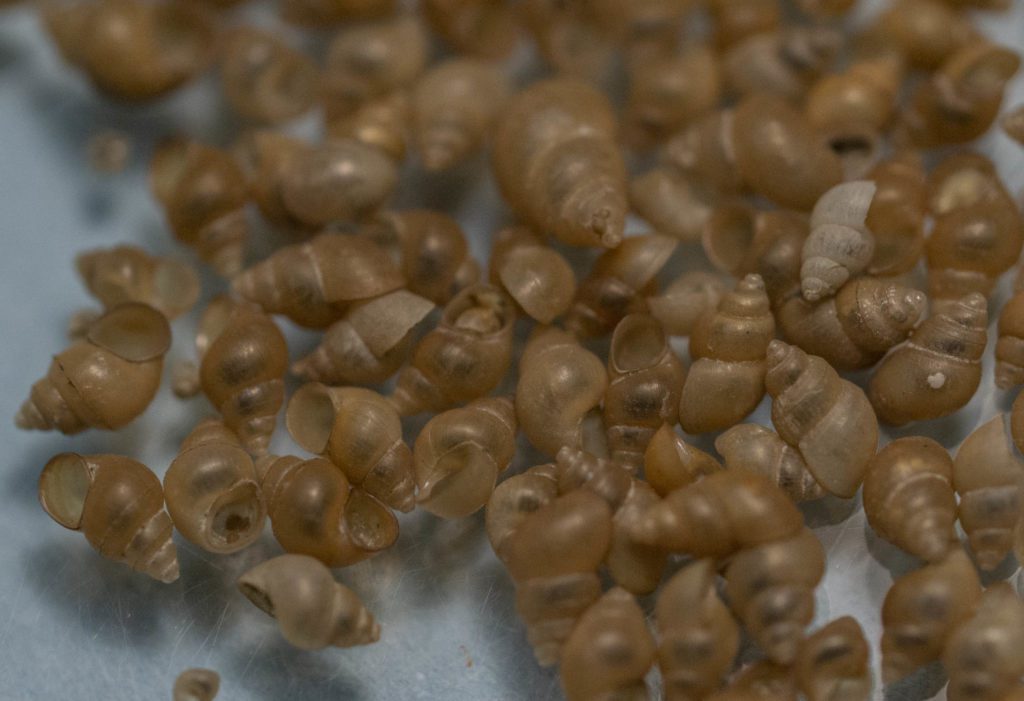
Prozac in low concentrations stimulates reproduction in marine and freshwater bivalves (Fong & Ford 2014), as well as in some freshwater snails, including the invasive New Zealand mud snail (Pomatopyrgus antipodarum). Interestingly, high concentrations of Prozac decreased reproduction in the snails. 

snail shells
Fig. 1. New Zealand mud snail, Potamopyrgus antipodarum. Found in Romania in 1950 (CM 63909). Shells average about 5 mm (0.2 inches) long. Photo by Ryan Utz.

Clams on Prozac release gametes or young (Fong & Ford 2014). Small freshwater pill clams (Sphaeriidae) brood their young, and Prozac stimulates the release of these brooded offspring. In freshwater mussels, Prozac stimulates release of their larvae. Our knowledge of this effect can be used to augment propagation efforts to support recovery of endangered freshwater mussel species, but only with a clear understanding of these fascinating creatures’ full reproductive cycle. As part of their development, freshwater mussel larvae temporarily attach themselves to the gills of fish. If Prozac in the water of a natural setting stimulated larval release at times when fish hosts were absent or the larvae were too immature to attach, then the Prozac would be counterproductive to mussel reproduction.

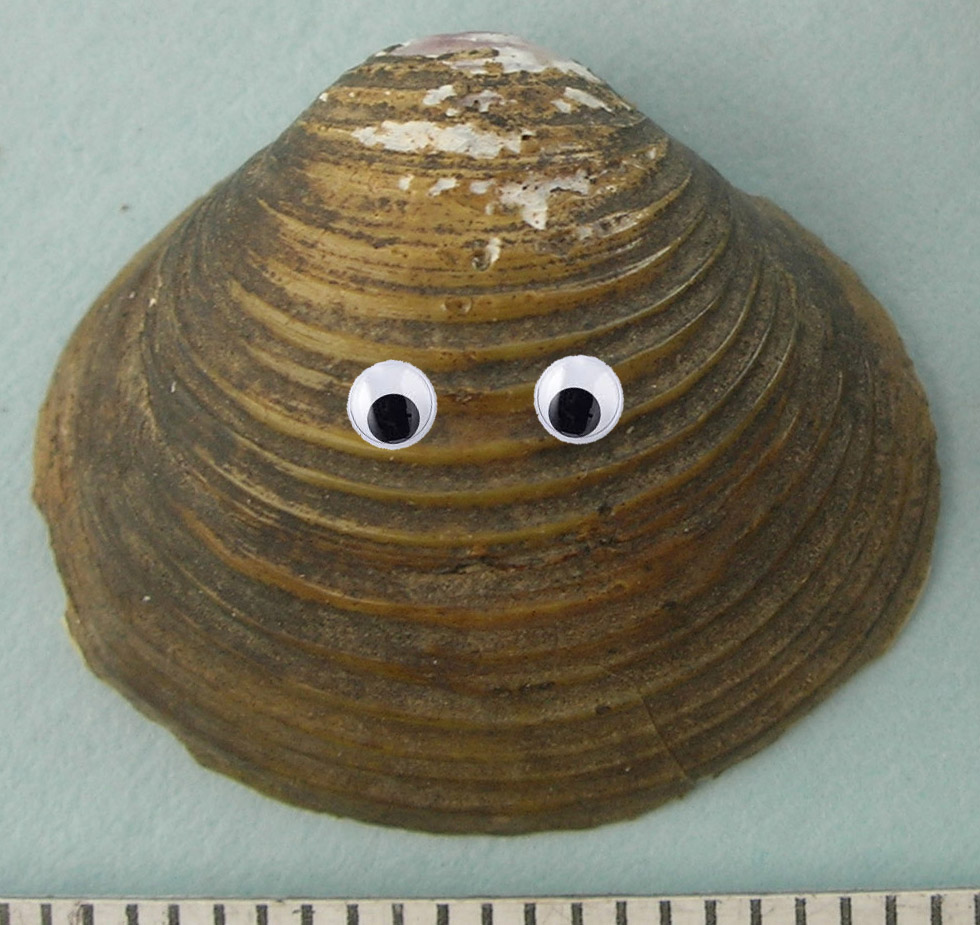
Caffeine negatively affects marine bivalves by inducing oxidative stress (Júnior et al. 2019), leading to degradation of cell membranes (Silvia et al. 2022). When exposed to environmentally relevant concentrations of caffeine, the freshwater clam Corbicula fluminea experienced physiological changes, including DNA damage (Aguirre-Martínez et al. 2015). Caffeine might have less effect on freshwater snails. One study on the freshwater snail Helisoma trivolvis showed little effect of caffeine on adult survival, but normal embryonic rotation in developing eggs was slowed at higher caffeine concentrations (Sanchez & Prezant 2016). (The caffeine used as a slug repellent in terrestrial agriculture is in much greater concentrations than that found in wastewater.)

clam shell with googly eyes
Fig. 2. Asian clam, Corbicula fluminea. Found in Westmoreland County, Pennsylvania in 1993 (CM 72879). Scale in mm. [Googly eyes Photoshopped in] Photo by Tim Pearce.

If you needed another reason to reduce your consumption of pharmaceuticals and caffeine, the fact that it affects reproduction in freshwater creatures could be a consideration.

These findings about anti-depressants in our wastewater give new meaning to the phrase, “Happy as a clam.”

Timothy A. Pearce, PhD, is the head of the mollusks section at Carnegie Museum of Natural History.

Literature Cited

Aguirre-Martínez, G.V., DelValls, A.T. & Martín-Diaz, M.L. 2015. Yes, caffeine, ibuprofen, carbamazepine, novobiocin and tamoxifen have an effect on Corbicula fluminea (Müller, 1774). Ecotoxicology and Environmental Safety, 120: 142–154.

Fong, P.P. & Ford, A.T. 2014. The biological effects of antidepressants on the molluscs and crustaceans: a review. Aquatic Toxicology, 151: 4-13.

Júnior, C.A.M., Luchiari, N.C. & Gomes, P.C.F.L. 2019. Occurrence of caffeine in wastewater and sewage and applied techniques for analysis: a review. Eclética Química Journal, 44(4): 11-26.

Raj, R., Tripathi, A., Das, S. & Ghangrekar, M.M. 2021. Removal of caffeine from wastewater using electrochemical advanced oxidation process: a mini review. Case Studies in Chemical and Environmental Engineering, 4: 100129.

Sanchez, D. & Prezant, R.S. 2016. Influence of diphenhydramine HCl and caffeine on embryonic development and adult reproductive success of the freshwater gastropod Helisoma trivolvis. American Malacological Bulletin, 34(2): 92-102.

Silvia, S., Cravo, A., Rodrigues, J., Correia, C. & Almeida, C.M.M. 2022. Potential impact of UWWT effluent discharges on Ruditapes decussatus: an approach using biomarkers. Advances in Environmental and Engineering Research, 2(2): doi:10.21926/aeer.2102015 [18 pp].

Related Content

Clams In the Concrete! How Old Is This Sidewalk?

Stalking the Freshwater Sponges of Western Pennsylvania

The Zebra Mussel and the Shopping Cart

Carnegie Museum of Natural History Blog Citation Information

Blog author: Pearce, Timothy A.
Publication date: June 10, 2022

Share this post!

  • Share on Twitter Share on Twitter
  • Share on Facebook Share on Facebook
  • Share on Pinterest Share on Pinterest
  • Share on LinkedIn Share on LinkedIn
  • Share on Reddit Share on Reddit
  • Share via Email Share via Email

Filed Under: Blog Tagged With: mollusks, Science News, Tim Pearce

June 8, 2022 by Erin Southerland

Bizarre Meat-Eating Dinosaur Joins “Rogues’ Gallery” of Giant Predators from Classic Fossil Site in Egypt’s Sahara Desert

Fossil Reveals First Evidence of Abelisaurid Dinosaurs Found in Bahariya Oasis
 
Carnivorous Dinosaur Group Known for Bulldog-like Faces, Tiny Arms, and Small Teeth

Illustration of dinosaurs in a desert oasis
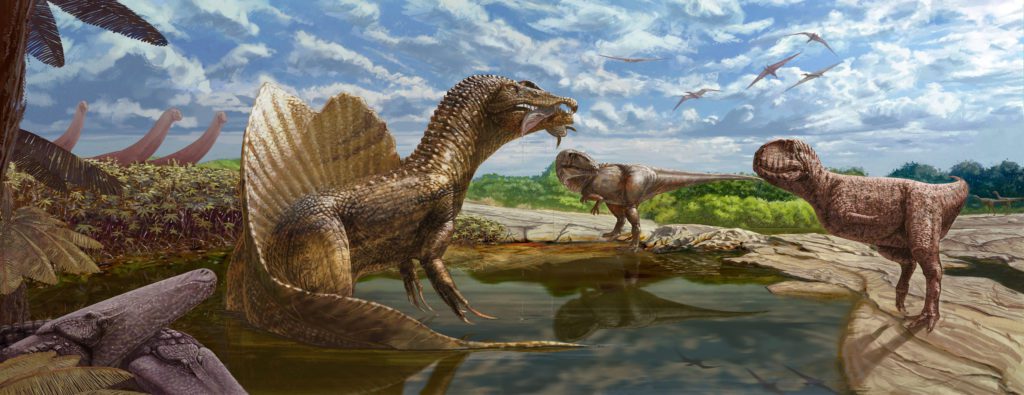
Reconstruction of the ecosystem of the Bahariya Oasis in the Sahara Desert of Egypt approximately 98 million years ago, showing the diversity of large theropods (predatory dinosaurs). The newly discovered, as-yet unnamed abelisaurid (right) confronts Spinosaurus (left center, with lungfish in jaws) and Carcharodontosaurus (right center), while two individuals of the crocodilian Stomatosuchus (left) look on. In the background, a herd of the sauropod (giant, long-necked herbivorous dinosaur) Paralititan (left) warily regard these predators and two individuals of another theropod, Bahariasaurus (far right), while a flock of a still-unnamed pterosaur (flying reptile) soars above. The vegetation is dominated by the mangrove-like tree fern Weichselia. Image by Andrew McAfee, Carnegie Museum of Natural History. 

[Pittsburgh, Pennsylvania] — An Egyptian-American team of researchers has announced the discovery of a new kind of large-bodied meat-eating dinosaur, or theropod, from a celebrated fossil site in Egypt’s Sahara Desert. The fossil of a still-unnamed species provides the first known record of the abelisaurid group of theropods from the Bahariya Formation, a rock unit in the Bahariya Oasis that dates to the middle Cretaceous Era (approximately 98 million years ago). In the early 20th century, this locality famously yielded the original specimens of a host of remarkable dinosaurs—including the colossal sail-backed fish-eater Spinosaurus—which were then destroyed in World War II. Abelisaurid fossils had previously been found in Europe and in many of today’s Southern Hemisphere continents, but never before from the Bahariya Formation. The team describes the Bahariya abelisaurid discovery in a paper published today in Royal Society Open Science. 
 
The study was led by Belal Salem of the Mansoura University Vertebrate Paleontology Center (MUVP) in Mansoura, Egypt, who is also a graduate student at Ohio University and a faculty member at Benha University. The research team also included Dr. Matt Lamanna, Mary R. Dawson Associate Curator and Head of Vertebrate Paleontology and lead dinosaur specialist at Carnegie Museum of Natural History (CMNH); Dr. Patrick O’Connor, Professor of Biomedical Sciences at Ohio University; Sanaa El-Sayed, a doctoral student at the University of Michigan and the MUVP’s former vice director; Dr. Hesham Sallam, a professor at the American University in Cairo (AUC) and Mansoura University and the founding director of the MUVP; and additional colleagues from Benha University and the Egyptian Environmental Affairs Agency. CMNH Vertebrate Paleontology Scientific Illustrator Andrew McAfee produced or assisted with most of the illustrations in the paper.

Person sitting at a desk holding a fossil
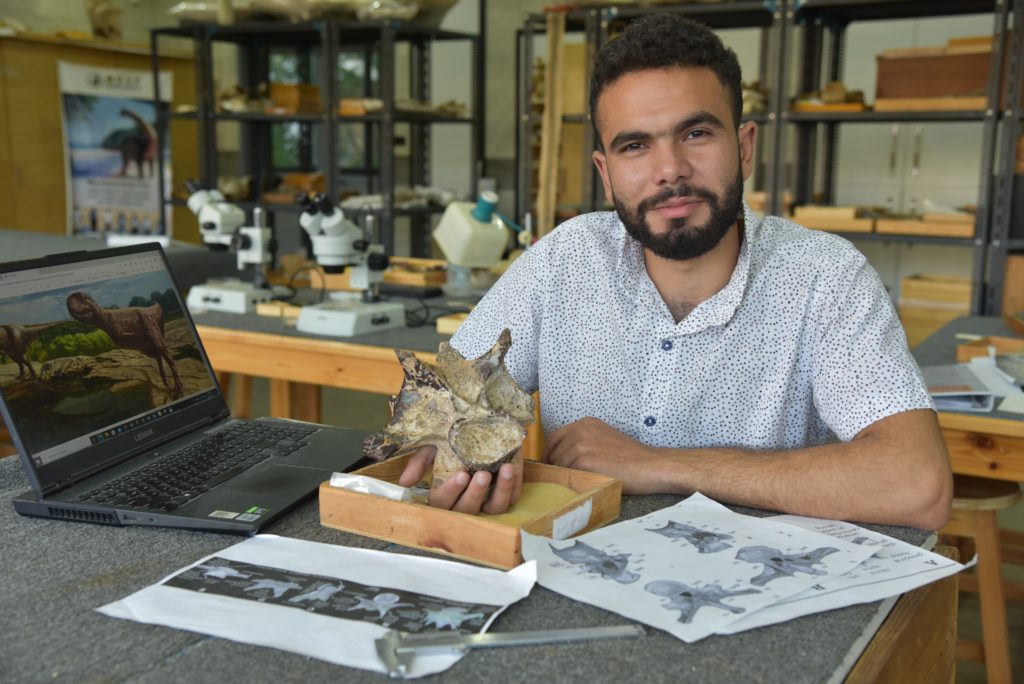
Study leader Belal Salem of the Mansoura University Vertebrate Paleontology Center (MUVP), Ohio University, and Benha University examines the roughly 98-million-year-old abelisaurid theropod neck vertebra discovered from the Bahariya Oasis that forms the basis of the new study. Photo by Hesham Sallam, American University in Cairo/MUVP. 

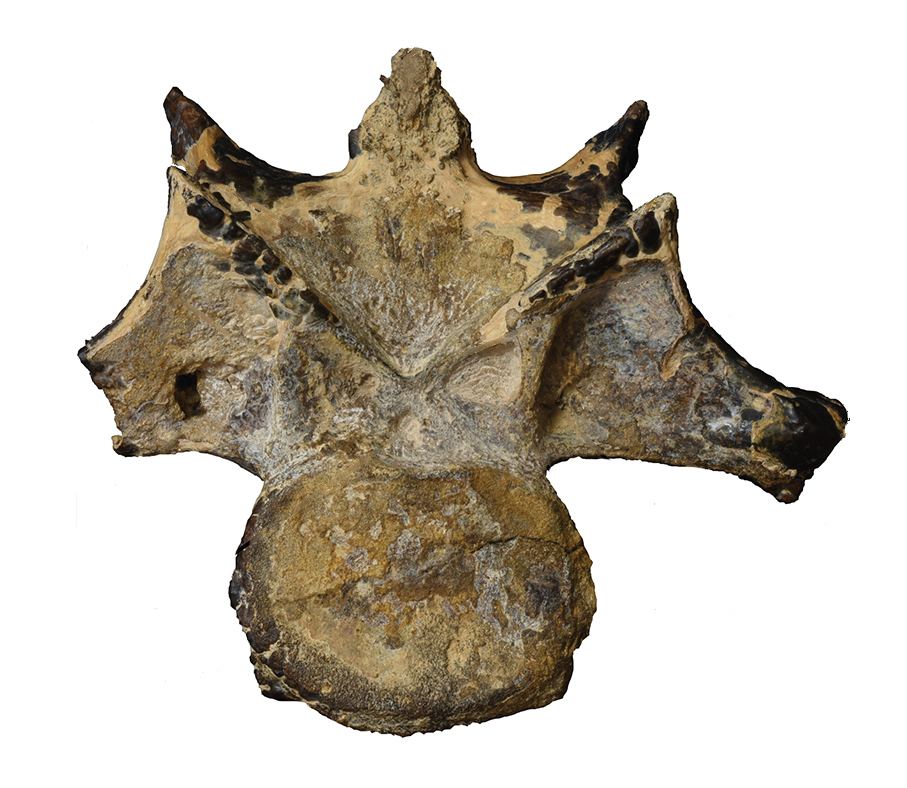
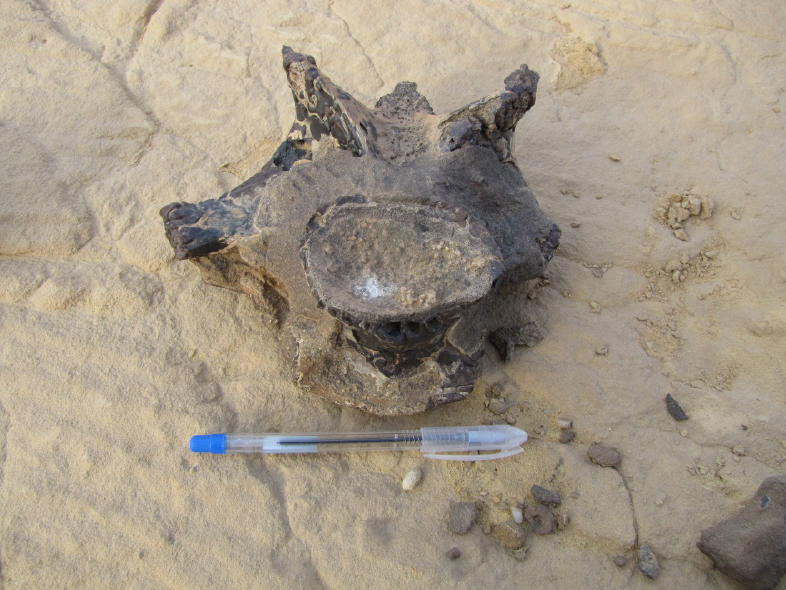
The fossil in question, a well-preserved vertebra from the base of the neck of a theropod, was recovered by a 2016 MUVP expedition to the Bahariya Oasis. The vertebra belongs to an abelisaurid, a kind of bulldog-faced, small-toothed, tiny-armed theropod that is estimated to have been roughly six meters (20 feet) in body length. Abelisaurids—most notably represented by the horned, demonic-looking Patagonian form Carnotaurus of Jurassic World and Prehistoric Planet fame—were among the most diverse and geographically widespread large predatory dinosaurs in the southern landmasses during the Cretaceous Period, the final time period of the Age of Dinosaurs. Along with Spinosaurus and two other giant theropods (Carcharodontosaurus and Bahariasaurus), the new abelisaurid fossil adds yet another species to the cadre of large predatory dinosaurs that roamed what is now the Egyptian Sahara roughly 98 million years ago. 
 
“During the mid-Cretaceous, the Bahariya Oasis would’ve been one of the most terrifying places on the planet,” says Salem. “How all these huge predators managed to coexist remains a mystery, though it’s probably related to their having eaten different things, their having adapted to hunt different prey.”

fossil vertebra
The abelisaurid neck vertebra from the Bahariya Oasis, Egypt that constitutes the first record of this dinosaur group from that classic fossil locality. The bone is shown in anterior view. Photo by Belal Salem, Mansoura University Vertebrate Paleontology Center/Ohio University/Benha University.

The new vertebra holds implications for the biodiversity of Cretaceous dinosaurs in Egypt and the entire northern region of Africa. It is the oldest known fossil of Abelisauridae from northeastern Africa, and shows that, during the mid-Cretaceous, these carnivorous dinosaurs ranged across much of the northern part of the continent, east to west from present day Egypt to Morocco, to as far south as Niger and potentially beyond. Spinosaurus and Carcharodontosaurus are also known from Niger and Morocco, and a close relative of Bahariasaurus has been found in the latter nation as well, suggesting that this fauna of large to gigantic theropods coexisted throughout much of northern Africa at this time.
 
The Site
 
The Bahariya Oasis is renowned within paleontological circles for having yielded the type specimens (the original, first-discovered, name-bearing fossils) of several extraordinary dinosaurs during the early 20th century, including, most famously, Spinosaurus. Unfortunately, all Bahariya dinosaur fossils collected prior to World War II were destroyed during an Allied bombing of Munich in 1944.
 
As a graduate student in the early 2000s, study co-author Matt Lamanna helped make the first dinosaur discoveries from the oasis since that infamous air raid, including the gargantuan sauropod (long-necked plant-eating dinosaur) Paralititan. “The Bahariya Oasis has taken on near-legendary status among paleontologists for having produced the first-known fossils of some of the world’s most amazing dinosaurs,” says Lamanna, “but for more than three quarters of a century, those fossils have existed only as pictures in old books.”

A group of people posing for a selfie in the desert
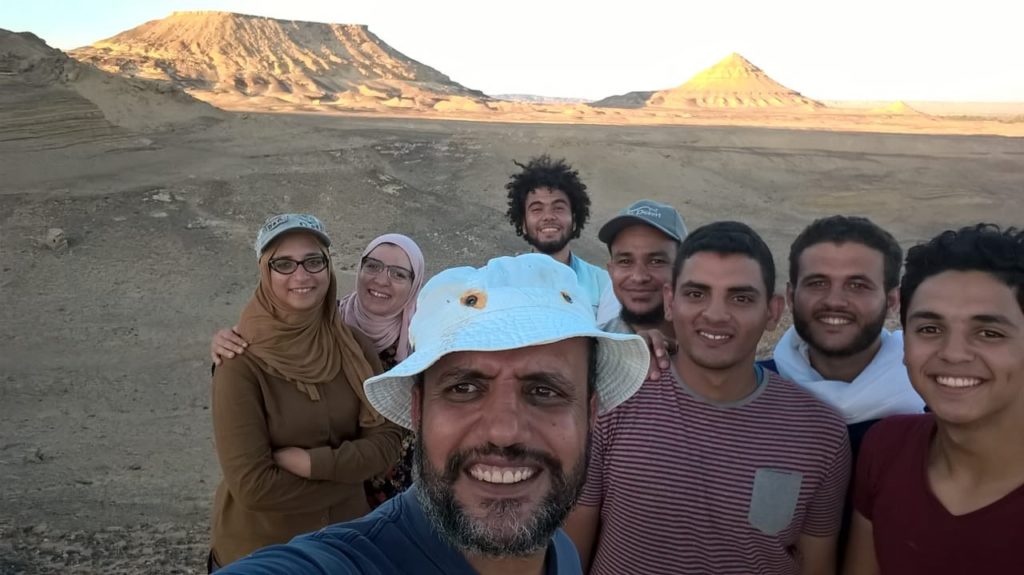
A Mansoura University Vertebrate Paleontology Center (MUVP) team exploring the Bahariya Oasis in 2018, including several authors of the new paper: Hesham Sallam (closest to camera), Sanaa El-Sayed (far left), and Belal Salem (farthest from camera). Photo by Hesham Sallam, American University in Cairo/MUVP.

Thankfully, discoveries made during recent expeditions led by researchers from AUC and MUVP—such as the new abelisaurid vertebra—are helping to restore the paleontological legacy of this classic site. These expeditions have recovered a wealth of additional fossils that the researchers plan to unveil in the near future.
 
As team member Sanaa El-Sayed, who co-led the 2016 expedition that collected the abelisaurid vertebra, explains, “this bone is just the first of many important new dinosaur fossils from the Bahariya Oasis.” 
 
The Bahariya Formation holds promise to shed further light on mid-Cretaceous African dinosaurs and the vanished ecosystems in which they once lived. Unlike more thoroughly explored rocks of the same age in Morocco that tend to yield isolated bones, the Bahariya Formation appears to preserve partial skeletons of dinosaurs and other land-living animals with a relatively high degree of frequency. The more bones that are preserved within the skeleton of a given fossil vertebrate species, the more paleontologists can generally learn about it. The propensity of the Bahariya Oasis for producing associated partial skeletons suggests that much remains to be learned from this historic locality.
 
“In terms of Egyptian dinosaurs, we’ve really just scratched the surface,” notes Hesham Sallam. “Who knows what else might be out there?”

Fossil vertebra set next to a pen for scale
The abelisaurid neck vertebra, approximately 98 million years old, as it was found in the field in the Bahariya Oasis during the 2016 Mansoura University Vertebrate Paleontology Center (MUVP)/Carnegie Museum of Natural History expedition funded by the National Geographic Society. Photo by Sanaa El-Sayed, University of Michigan/MUVP.

One Fossil
 
How can the discovery of a single neck vertebra lead researchers to conclude that the fossil belongs to a member of Abelisauridae, a kind of carnivorous dinosaur that has never been found in the Bahariya Formation before? The answer is remarkably simple: it is virtually identical to the same bone in other, better-known abelisaurids such as Carnotaurus and Viavenator from Argentina and Majungasaurus from Madagascar. Additionally, Belal Salem and his collaborators conducted a computer-based evolutionary study—known as a cladistic analysis—that confirmed the placement of the species represented by the new vertebra within Abelisauridae. As co-author Patrick O’Connor, who in 2007 published an exhaustive study of the vertebral anatomy of the abelisaurid Majungasaurus, explains, “I’ve examined abelisaurid skeletons from Patagonia to Madagascar. My first glimpse of this specimen from field photos left no doubt about its identity. Abelisaurid neck bones are just so distinctive.”
 
Research on the new abelisaurid vertebra was supported by a grant to Matt Lamanna from the National Geographic Society’s Committee for Research and Exploration, grants to Hesham Sallam from Mansoura University and the American University in Cairo intramural grant program, and a grant to Patrick O’Connor from the National Science Foundation.

Filed Under: Press Release Tagged With: Matt Lamanna, Science News, Vertebrate Paleontology

  • « Go to Previous Page
  • Page 1
  • Interim pages omitted …
  • Page 8
  • Page 9
  • Page 10
  • Page 11
  • Page 12
  • Interim pages omitted …
  • Page 43
  • Go to Next Page »

sidebar

About

  • Mission & Commitments
  • Directors Team
  • Museum History

Get Involved

  • Volunteer
  • Membership
  • Carnegie Discoverers
  • Donate
  • Employment
  • Events

Bring a Group

  • Groups of 10 or More
  • Birthday Parties at the Museum
  • Field Trips

Powdermill

  • Powdermill Nature Reserve
  • Powdermill Field Trips
  • Powdermill Staff
  • Research at Powdermill

More Information

  • Image Permission Requests
  • Science Stories
  • Accessibility
  • Shopping Cart
  • Contact
  • Visitor Policies
One of the Four Carnegie Museums | © Carnegie Institute | Privacy Policy | Terms of Use | Accessibility
Rad works here logo