• Skip to primary navigation
  • Skip to main content
  • Skip to primary sidebar

Carnegie Museum of Natural History

One of the Four Carnegie Museums of Pittsburgh

  • Visit
    • Buy Tickets
    • Visitor Information
    • Exhibitions
    • Events
    • Dining at the Museum
    • Celebrate at the Museum
    • Powdermill Nature Reserve
    • Event Venue Rental
    • Gift Cards
  • Learn
    • Field Trips
    • Educator Information
    • Programs at the Museum
    • Bring the Museum to You
    • Guided Programs FAQ
    • Programs Online
    • Climate and Rural Systems Partnership
  • Research
    • Scientific Sections
    • Science Stories
    • Science Videos
    • Senior Science & Research Staff
    • Museum Library
    • Science Seminars
    • Scientific Publications
    • Specimen and Artifact Identification
  • About
    • Mission & Commitments
    • Directors Team
    • Museum History
  • Tickets
  • Give
  • Shop

Blogs from our Scientific Researchers

Carnegie Museum of Natural History is home to active research and vast scientific collections. Our scientific researchers regularly contribute to the blog at the museum.

March 9, 2021 by wpengine

Section of Minerals and Earth Sciences Celebrates Being Lucky!

The etymology, or origin, of the word ‘luck’ is centuries old and has strong roots in minerals and mining. Although the exact origin is unknown, the verb “lukken,” meaning to “happen by chance” or “happen fortunately,” first appeared in Old English literature sometime in the mid 15th century and is thought to be associated with gambling. According to several sources, this meaning was likely borrowed from earlier Middle Dutch (“gheluc”) or Germanic (“gelücke”) speakers, who applied these words to good fortune and happiness associated with it.

Not long afterwards, beginning around the late 16th century, the traditional German miner’s greeting, “Glück auf!”, which translates to “luck to!” or “luck on!” became popular among many European miners. It describes a hope for good fortune to find ore that will bring riches, and was likely also directed to having luck in safety on their shift underground, since underground mining during that time was extremely dangerous.

The traditional German miner’s greeting, Glück auf.


The more modern term “luck of the Irish” also has likely origins in mining, since Irish immigrants and Irish American miners were considered to be some the most successful and famous prospectors during the gold and silver rush in the Western U.S. in the mid 1800s.

Miners sometimes encountered “unlucky” minerals underground that, at the time, were worthless and not considered pay dirt. Around the 1600s, silver miners in the Bohemia region of Czech Republic and Germany often encountered a dark and dense mineral that they referred to as “pechblende,” or bad-luck ore. This pechblende was actually the mineral uraninite, a major ore of the radioactive element uranium that would later become a hotly contested resource of developing nuclear nations.

Nowadays, good luck is linked to many minerals, including gold, mythical pots of which receive attention around St. Patrick’s Day. Gold is considered lucky because of its association with wealth and fortune, but did you know that the reason gold is used for money is linked to its mineralogy? Consider gold’s properties as a mineral: it’s very stable (doesn’t spontaneously burst into flames or corrode), melts at a relatively low temperature, and is easily malleable (hammered or pressed). Gold was an ideal candidate to be used as money for early civilizations. Matching all those requirements, plus being the right balance of rare, but not too rare, means that out of over 100 elements in the periodic table, gold hits the sweet spot for monetary value.
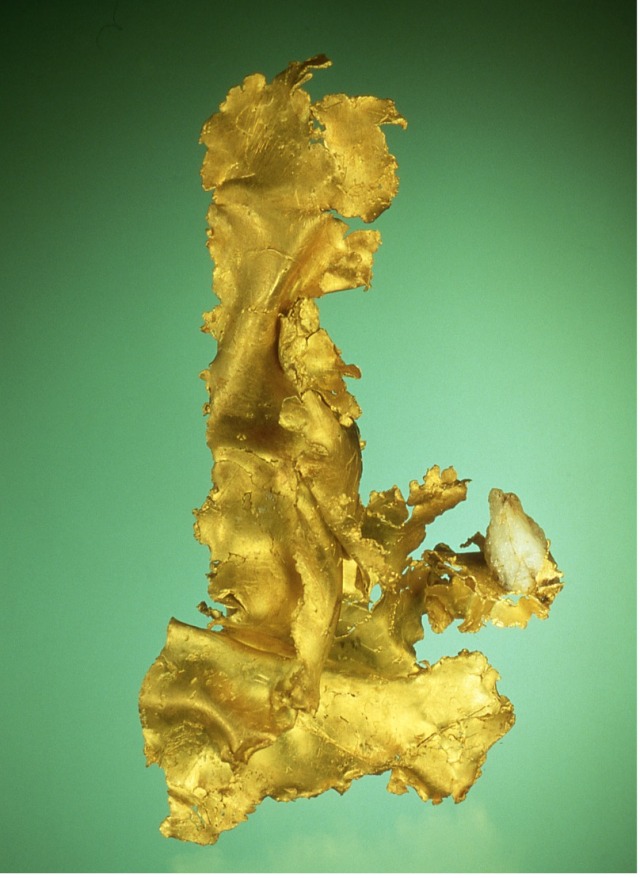
A 2.5 ounce leaf gold standing 12.5 cm tall from Tuolumne County, California, on display in the Masterpiece Gallery of Hillman Hall of Minerals and Gems. Photo: Harold and Erica Van Pelt.

Carla Rosenfeld is the Assistant Curator of Earth Sciences, Travis Olds is Assistant Curator of Minerals, and Debra Wilson is Collection Manager of Minerals at Carnegie Museum of Natural History. Museum employees are encouraged to blog about their unique experiences and knowledge gained from working at the museum.

Related Content

Ask a Scientist: Why do some minerals glow?

What’s a Shamrock?

The Connemara Marble: A Cross-Atlantic Connection Between Ireland and Pittsburgh

Share this post!

  • Share on Twitter Share on Twitter
  • Share on Facebook Share on Facebook
  • Share on Pinterest Share on Pinterest
  • Share on LinkedIn Share on LinkedIn
  • Share on Reddit Share on Reddit
  • Share via Email Share via Email

Carnegie Museum of Natural History Blog Citation Information

Blog author: Rosenfield, Carla; Olds, Travis; and Wilson, Debra
Publication date: March 9, 2021
Share this post!

  • Share on Twitter Share on Twitter
  • Share on Facebook Share on Facebook
  • Share on Pinterest Share on Pinterest
  • Share on LinkedIn Share on LinkedIn
  • Share on Reddit Share on Reddit
  • Share via Email Share via Email

Filed Under: Blog Tagged With: Carla Rosenfeld, Debra Wilson, minerals, Science News, Travis Olds

March 8, 2021 by wpengine
Collected on this Day in 1998

Spring is springing as we speak.

In the city and beyond.

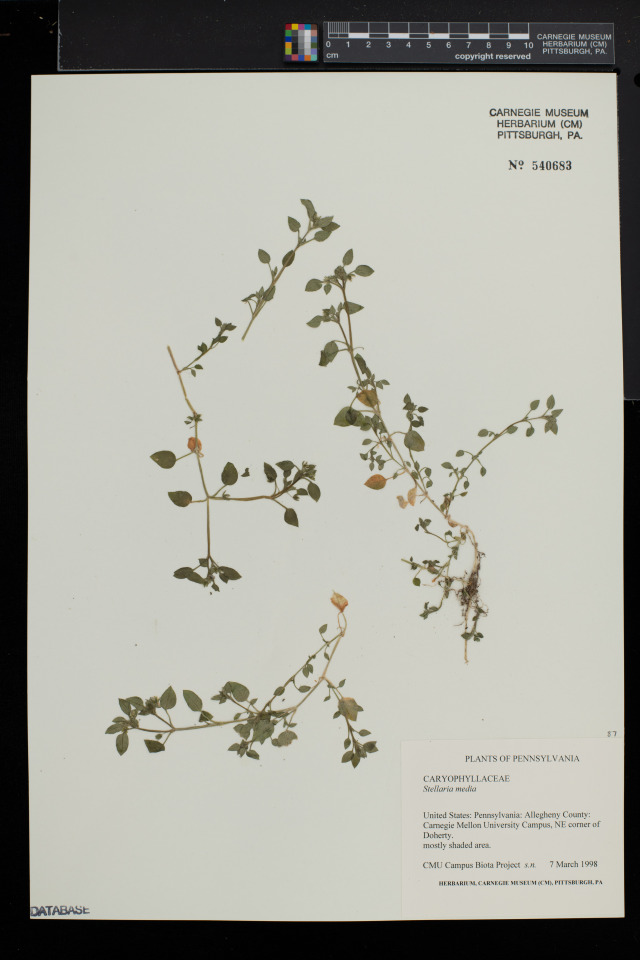
dried common chickweed specimen on herbarium sheet

This specimen of common chickweed (Stellaria media) was collected on the campus of Carnegie Mellon University, in Pittsburgh, in a “mostly shady area.” Though small, if you look closely you’ll encounter a charismatic tiny flower. Common chickweed is a familiar plant across the world, found in every continent (except perhaps Antarctica?). Like many cosmopolitan lawn weeds, it is native to “Eurasia.” The plant’s exact native range is unclear, but it is considered not native to North America.

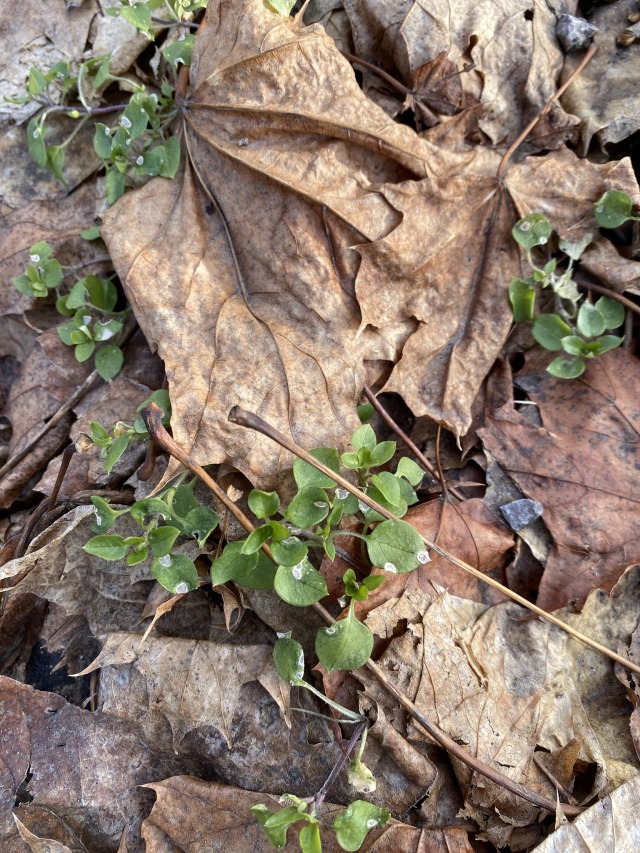
In Pennsylvania, common chickweed can be found in habitat ranging from urban lawns to forests. In some locations dense growth of the plant can form a mat along the ground. Common chickweed can be found just about year-round when snow isn’t on the ground, and like dandelion, the plant flowers throughout the year.

Stellaria media on January 30 in southwest Pennsylvania.

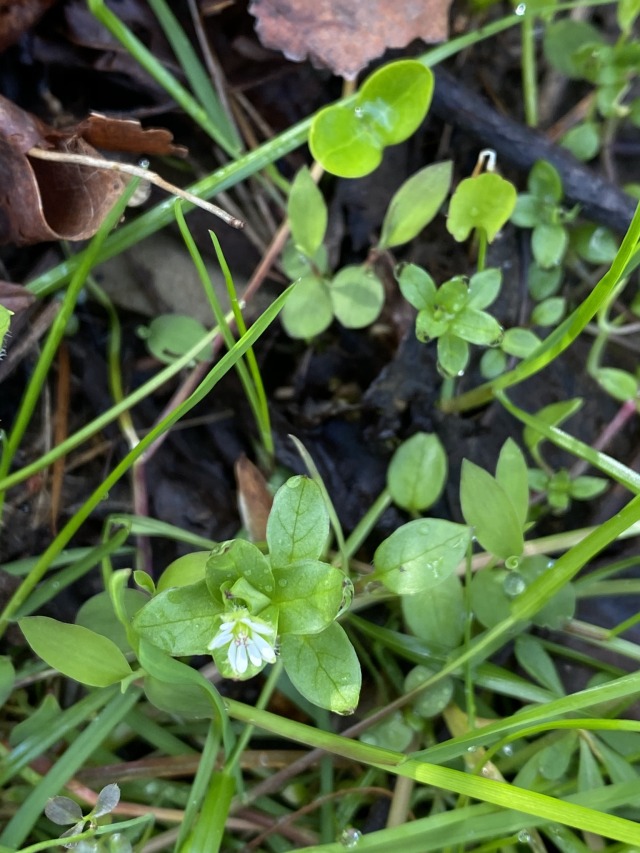
The tiny flowers now are also sending a signal – spring is on the way. For some plants, such as skunk cabbage and red maple, spring has already sprung.

Stellaria media on April 24 in southwest Pennsylvania.

This species is a good one to look out for during the upcoming City Nature Challenge!

Find this specimen and more here.

Check back for more! Botanists at the Carnegie Museum of Natural History share digital specimens from the herbarium on dates they were collected. They are in the midst of a three-year project to digitize nearly 190,000 plant specimens collected in the region, making images and other data publicly available online. This effort is part of the Mid-Atlantic Megalopolis Project (mamdigitization.org), a network of thirteen herbaria spanning the densely populated urban corridor from Washington, D.C. to New York City to achieve a greater understanding of our urban areas, including the unique industrial and environmental history of the greater Pittsburgh region. This project is made possible by the National Science Foundation under grant no. 1801022.

Mason Heberling is Assistant Curator of Botany at Carnegie Museum of Natural History. Museum employees are encouraged to blog about their unique experiences and knowledge gained from working at the museum.

Related Content

Collected On This Day in 1949: Honeysuckle

Collected On This Day in 1940: Plants with bladders?

Looking for Bugs in Your Yard! 

Share this post! 

  • Share on Twitter Share on Twitter
  • Share on Facebook Share on Facebook
  • Share on Pinterest Share on Pinterest
  • Share on LinkedIn Share on LinkedIn
  • Share on Reddit Share on Reddit
  • Share via Email Share via Email

Carnegie Museum of Natural History Blog Citation Information

Blog author: Heberling, Mason
Publication date: March 8, 2021
Share this post!

  • Share on Twitter Share on Twitter
  • Share on Facebook Share on Facebook
  • Share on Pinterest Share on Pinterest
  • Share on LinkedIn Share on LinkedIn
  • Share on Reddit Share on Reddit
  • Share via Email Share via Email

Filed Under: Blog Tagged With: Botany, City Nature Challenge, collected on this day, Mason Heberling, Science News

March 5, 2021 by wpengine
Follow Your Dreams, My 70 Years as an Archaeologist

Archaeology usually conjures up Indiana Jones as an example of the thrills and dangers of archaeological research. Archaeology is a relatively safe occupation, although there are exceptions, such as the archaeologist who stood on top of a Mayan pyramid who was struck by lightning. There are many fields of archaeology that focus on geographic areas and time periods, from hunters and gatherers over hundreds of thousands of years to the last 10,000 years of the rise of civilizations around the world. There are many cultural specialties in archaeology such as Egyptology, Classical archaeology, focusing on the Mediterranean Greek and Roman, Mayan, Inca, U.S. Southwest and so forth. A field represented in Pittsburgh is Biblical archaeology at the Pittsburgh Theological Seminary with its Kelso Museum of Near Eastern Archaeology. At the University of Pittsburgh in the Department of Anthropology there is a focus on Mexico, Central and South America, Eastern Europe, China, and Central Asia with currently over 30 graduate students and faculty conducting research in these regions.

The Section of Anthropology of the Carnegie Museum of Natural History, for over 100 years, has conducted archaeological research in Egypt, Israel, Central Asia, Caribbean, Costa Rica, Peru, the Upper Ohio Valley and holds collections from other areas of the Americas and the world though donations or purchase. The richness of the Section’s collections can be seen in Walton Hall of Ancient Egypt, Polar World: Wyckoff Hall of Arctic Life, and Alcoa Foundation Hall of American Indians.

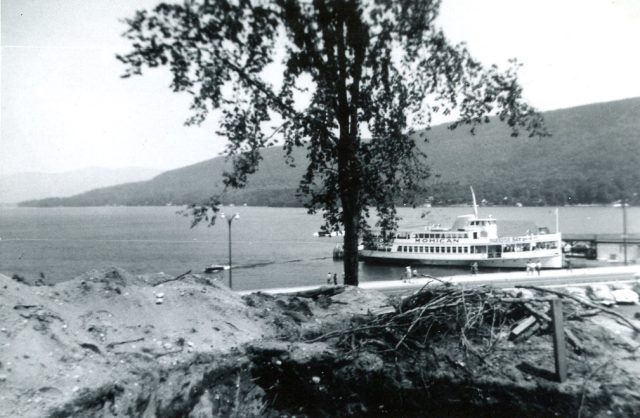
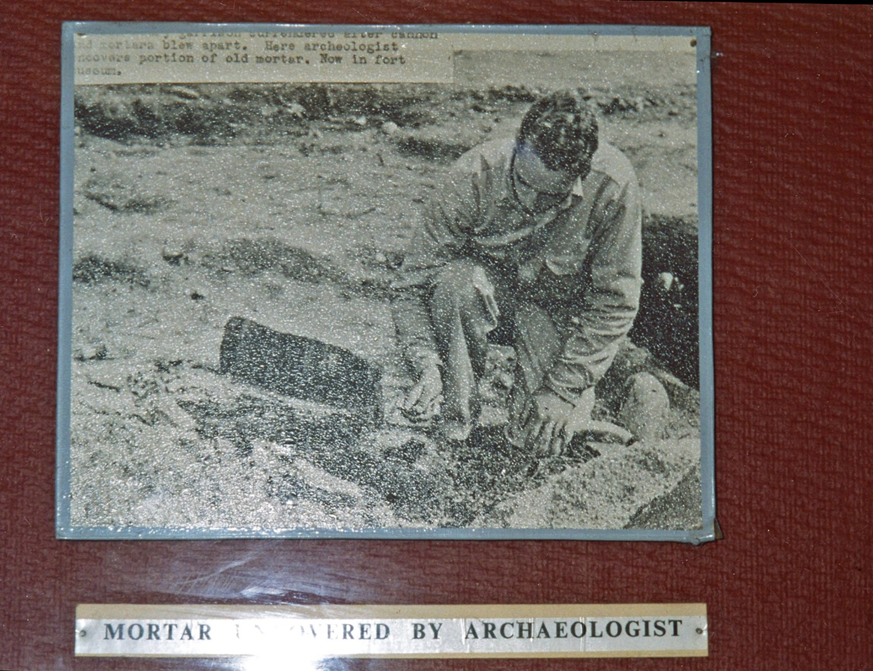
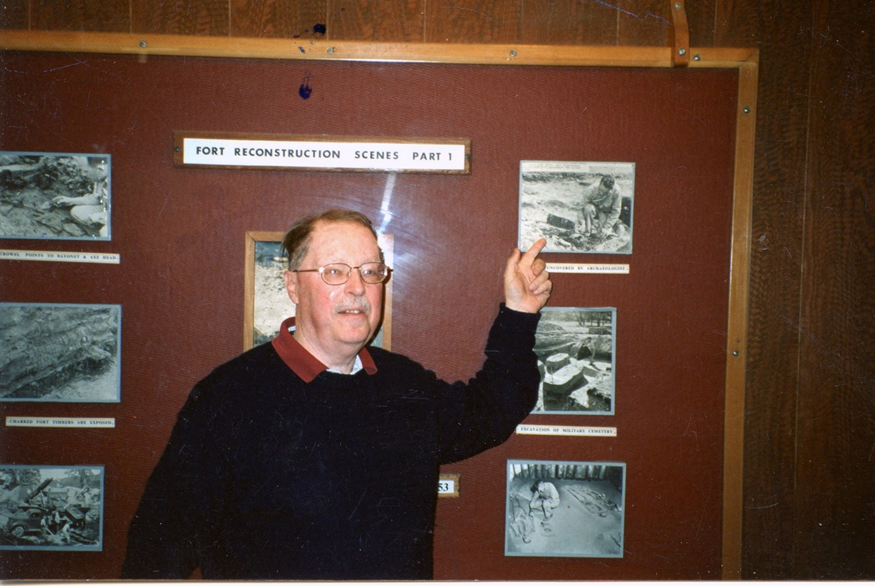
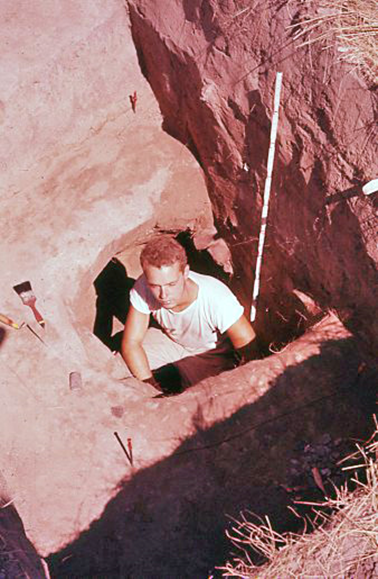
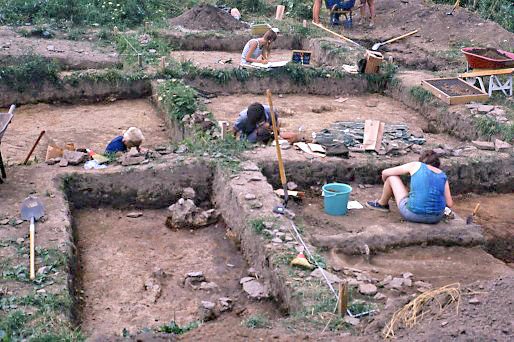
From an early age I wanted to be an archaeologist. My father was worried that archaeology wouldn’t provide much of a livelihood, so he arranged a visit with the director of the Peabody Museum at Harvard when I was a teenager. My father asked the director J. O Brew if one could make a living as an archaeologist and he answered, “it’s better if you’re independently wealthy.” This didn’t deter me from following my dream of becoming an archaeologist. My archaeological career is filled with luck and serendipity where seizing an offered archaeological opportunity or discovery of a significant artifact, not only guided my research, but where I worked. I have a parallel career in historic colonial sites and in prehistoric maritime adaptations. I became intrigued with archaeology at an early age visiting the Springfield Science Museum and joining a chapter of the Massachusetts Archaeological Society based at the museum. I went out on their excavations at sites in the Connecticut River Valley, one which was in 1957 in South Hadley where I learned how to uncover burials. From summering in the Lake George area of New York State I became interested in historic archaeology due to all the French and Indian War (1754-1763) forts in the region. In 1952 at age 16, I was a crew member for two summers at the excavations of Fort William Henry, made famous by James Fenimore Cooper’s novel The Last of the Mohicans.

Excavation of Fort William Henry at the Head of Lake George, New York 1952. (Photo Credit Dr. Richardson)

black and white photo of an archaeologist at work in a red frame

Fort William Henry was destroyed by French and Indian forces in 1757. In 1952, excavations and reconstruction of the fort began on what became a major tourist attraction. Photos show Dr. Richardson pointing to a photo of his 16-year-old self-excavating the site. (Photo Credit: Dr. David Watters)

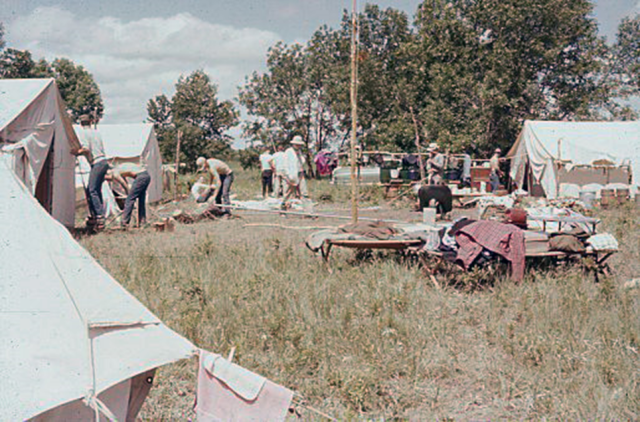
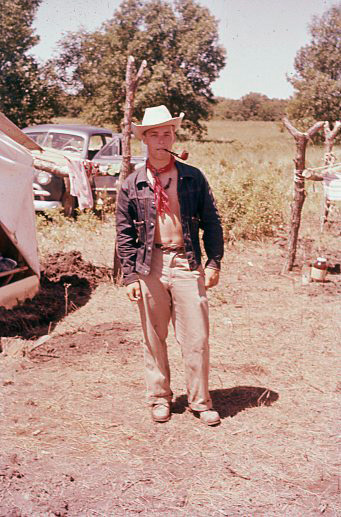
I also summered on Martha’s Vineyard where in 1954 I dug at a coastal site with an associate of the Martha’s Vineyard Museum which stimulated my desire to become a maritime archaeologist. At St. Lawrence University I majored in Sociology and Anthropology and in 1957 I wrote a letter to the Smithsonian Institution asking to go on one of their expeditions and was accepted on a crew that set up a tent camp on the Big Bend of the Missouri River in South Dakota excavating at the Black Partisan village site. While at SLU I also was a crew member in 1959 at the excavations of Johnson Hall in Johnstown, NY, the home of Sir William Johnson, the British Superintendent of Indian Affairs during the French and Indian War.

Smithsonian Institution camp on the Lower Brule Sioux (Lakota) Indian Reservation in South Dakota, 1957. (Photo Credit: Dr. Richardson)
Dr. Richardson in the Smithsonian Camp 1957. (Photo Credit: Warren Caldwell)
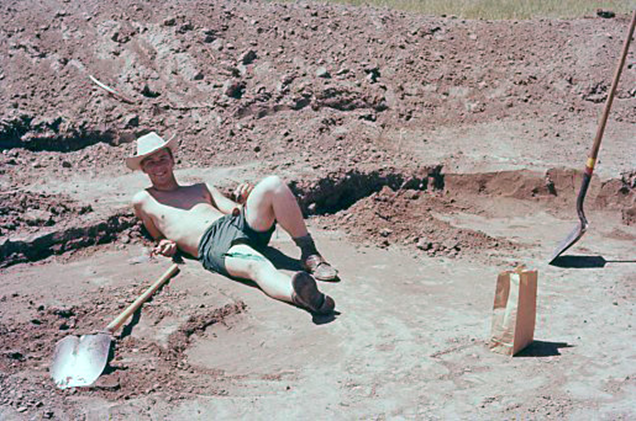
Dr. Richardson lounging at the Black Partisan Site, an excavation of an earth lodge at Lower Brule Reservation. (Photo Credit: Warren Caldwell)
Dr. Richardson excavating a food storage pit at the Black Partisan Site. (Photo Credit: Warren Caldwell)

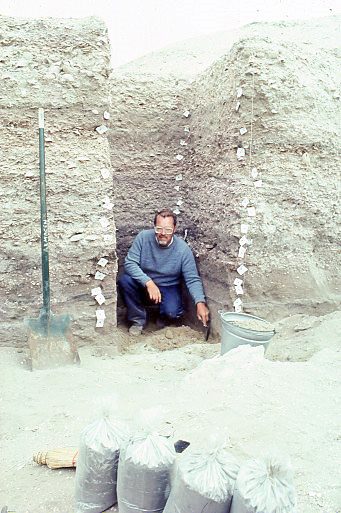
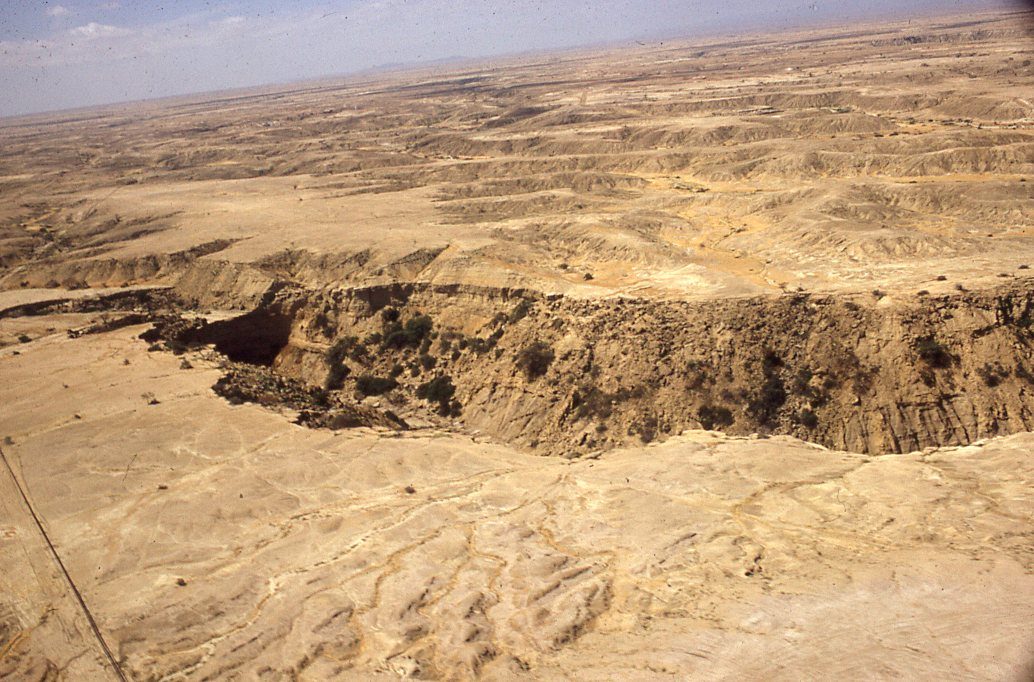
At Syracuse University for my master’s, I crewed in 1962-63 on 3 sites in up-state New York directed by William A. Ritchie, the State Archaeologist from the New York State Museum. I mentioned to him my interest in maritime archaeology and urged him to develop a research project on Martha’s Vineyard, which he did, excavating 6 sites from 1962-1966 on which I of course I participated. After Syracuse in 1963, I with my wife Judy went to the University of Illinois for my Ph.D. in northeastern U.S. archaeology, focusing on the maritime Vineyard. Here one of my advisors came out of his office and shouted down the hall to me “Jim, do you want to go to Peru?” To which I replied, “of course if you’re paying.” An excellent case of seizing the moment that fit well with my career goal of becoming a maritime specialist. In 1965 my wife Judy and I went to Talara, the second oldest operating oil field in the world after Drake well in western PA. Talara is 100 miles south of the Ecuadorian border and here I located an 8,000-year-old shell midden called Siches, which held evidence from warm and cold ocean fish and shellfish species. Based on the evidence at this coastal fishing and shellfish gathering society and other sites on the coast of Peru I and my colleague Dan Sandweiss, a Research Associate of the Section, developed the theory that this was evidence of a major shift in the change from a warm water to a cold water current washing the Peruvian north coast and the origins of El Niño around 5,800 years ago, the worldwide drought and flood disasters. My doctorate in 1969 was on the changing climate and coastal sites in the Talara region. I also dug in southern Peru at the Ring Site, an 10,500-year-old massive shell midden with cold water fish and shellfish. In addition, my students and I surveyed pyramid centers in the Talara area as well.

Dr. Richardson excavating Jackie Onassis’s property on Martha’s Vineyard in 1982. This site is called the Hornblower II Site. (Photo Credit: Jim Peterson)
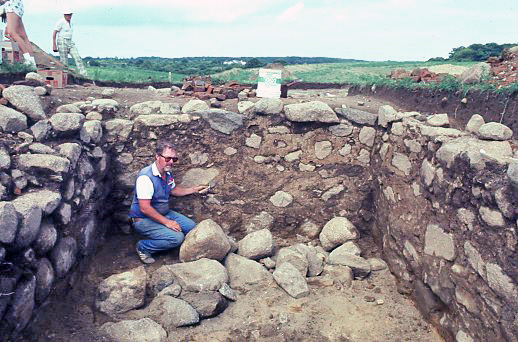
Dr. Richardson in the cellar hole of the John and Experience Mayhew House Site c.1672-1658 on Martha’s Vineyard in 1985. (Phot Credit: Jim Peterson)
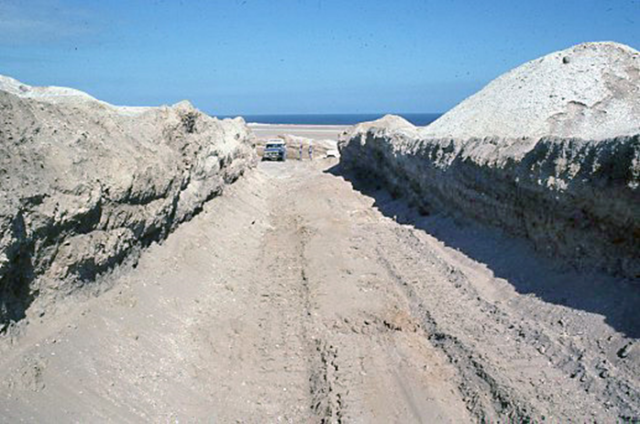
The Ring Site Ilo, Peru 1983 a 10,500-year-old Shell Midden. (Photo Credit: Dr. Richardson)
Dr. Richardson in the shell midden profile of the Ring Site, Peru. (Photo Credit: Daniel Sandweiss)
Aerial view of the Siches Site in the lower half of the photo, Talara, Peru (Photo Credit: Dr. Richardson)
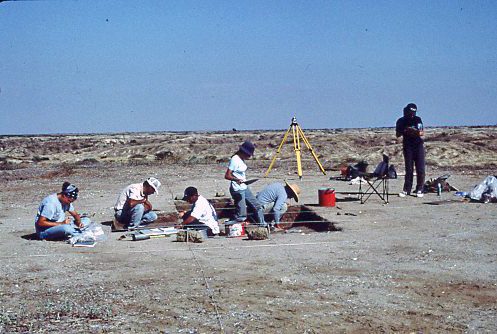
Excavation at the Siches Site, which provided evidence for the origins of the El Niño weather catastrophe in 5800bp (Photo Credit: Dr. Richardson)

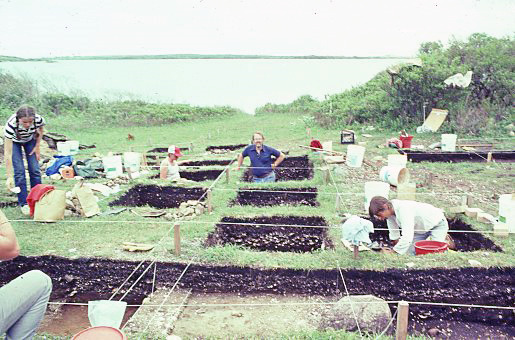
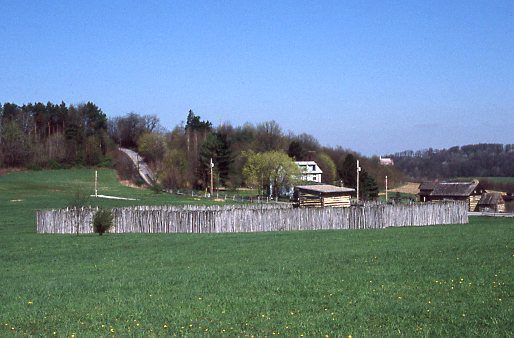
I did return to Martha’s Vineyard in the early 80’s excavating 2 shell middens and a Colonial house site of missionaries to the Wampanoag. In western Pennsylvania in 1970 I directed a field school for the University of Pittsburgh at the Revolutionary War site of Hanna’s Town in Westmoreland County, the first County Seat west of the Alleghenies. This town of 30 log cabins and a fort was destroyed by an Iroquois and British attack in 1782. Here we excavated Charles Foreman’s tavern.

Reconstructed Fort of the Hanna’s Town Site. (Photo Credit: Dr. Richardson)
1970 university of Pittsburgh Field School Excavation of Forman’s Tavern, Hanna’s Town, PA. (Photo Credit: Dr. Richardson)

I came to the University of Pittsburgh in 1967, retiring in 2009. While at Pitt serving as chairman, I was approached by then director Dr. Craig Black to take over the chair of the Section of Anthropology in 1978 and accepted a half-time position as chief curator until my retirement in 2006. The only thing that has changed in my retirements was receiving a salary! I am currently writing up some sites from my Peruvian and Martha’s Vineyard research and have a book in press on a colonial site on Martha’s Vineyard where I am a board member of the museum. I am also still involved with Pitt graduate students and in programs at the Carnegie Museum of Natural History, so little has changed in my archaeological career since I first put a shovel in the ground in 1952.

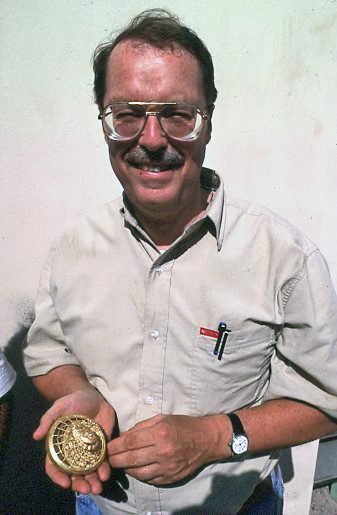
Dr. Richardson holding a gold spider from the Royal Moche Tombs of Sipan in Lambayeque, Peru 1990. (Photo Credit: Daniel Sandweiss)

Dr. James B. Richardson III is Curator Emeritus in the Section of Anthropology at Carnegie Museum of Natural History and University of Pittsburgh Anthropology Professor Emeritus. Museum employees are encouraged to blog about their unique experiences and knowledge gained from working at the museum.

Related Content

How I Became an Archaeologist

Pennsylvania Archaeology and You

Super Science Activity: Natural Paints

Carnegie Museum of Natural History Blog Citation Information

Blog author: Richardson, James
Publication date: March 5, 2021
Share this post!

  • Share on Twitter Share on Twitter
  • Share on Facebook Share on Facebook
  • Share on Pinterest Share on Pinterest
  • Share on LinkedIn Share on LinkedIn
  • Share on Reddit Share on Reddit
  • Share via Email Share via Email

Filed Under: Blog Tagged With: archaeology, Archaeology Extravaganza, James Richardson, Science News, Super Science Days

March 2, 2021 by wpengine
Collected on this Day in 1949

Honeysuckles will be back soon.

But this one never really left for the winter.

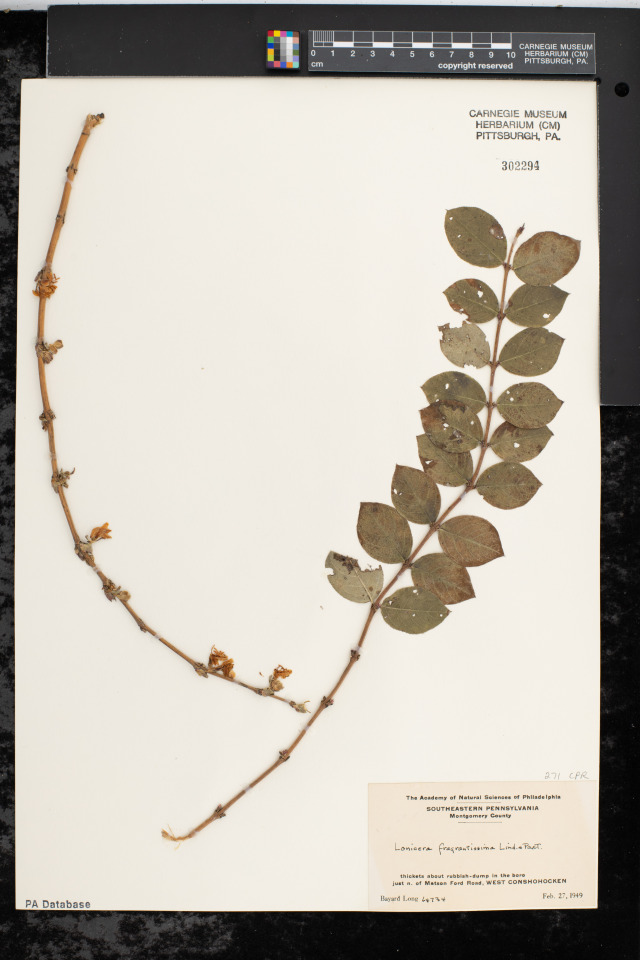
This specimen of winter honeysuckle (Lonicera fragrantissima) was collected in West Conshohocken, PA near the Schuylkill River outside of Philadelphia by Bayard Long. Collected flowering in a “rubbish-dump,” no less! Bayard Long (1885-1969) was a Philadelphia-area botanist and an active member of the Philadelphia Botanical Club (founded in 1891 and still exists today). He was a prolific collector and served as Curator of the Club’s Local Herbarium for 56 years (housed at the Academy of Natural Sciences). About 982 specimens collected by Long are preserved for the long haul in the Carnegie Museum herbarium.
Winter honeysuckle not only has a fun scientific name to say (“fragrantissima” rolls off the tongue) but is easy to identify among the many species in the honeysuckle genus (Lonicera in plant family Caprifoliaceae). That is, it has almost evergreen, thick leaves that partly persist into the winter, unlike any of the other shrub honeysuckles in Pennsylvania. (Emphasis on shrub, because the invasive vine Japanese honeysuckle – Lonicera japonica– also has persistent leaves through much or all of winter).

It is also known as “sweet breath of spring” for its aromatic flowers (hence its specific epithet, fragrantissima – think Bath and Body Works scent), which appear in late winter (and in this specimen!).

Introduced from China as an ornamental and often planted for its foliage, this species is now invasive in many states in the US. I must admit I don’t see it very often “escaped” outside of plantings in Western PA, but that doesn’t mean it doesn’t exist, or won’t escape in time, especially given it is problematic in other areas of the US.

So, you really shouldn’t plant it. Though Pennsylvania has native honeysuckles, the most abundant and common ones are introduced, affecting native vegetation and wildlife.

Find this specimen (and search for more) here.

Check back for more! Botanists at the Carnegie Museum of Natural History share digital specimens from the herbarium on dates they were collected. They are in the midst of a project to digitize nearly 190,000 plant specimens collected in the region, making images and other data publicly available online. This effort is part of the Mid-Atlantic Megalopolis Project (mamdigitization.org), a network of thirteen herbaria spanning the densely populated urban corridor from Washington, D.C. to New York City to achieve a greater understanding of our urban areas, including the unique industrial and environmental history of the greater Pittsburgh region. This project is made possible by the National Science Foundation under grant no. 1801022.

Mason Heberling is Assistant Curator of Botany at Carnegie Museum of Natural History. Museum employees are encouraged to blog about their unique experiences and knowledge gained from working at the museum.

Related Content

Ask a Scientist: How do you find rare plants?

Do Plants Have Lips? No, But One Genus Sure Looks Like it Does! 

How Do Trees Survive the Winter?

Filed Under: Blog Tagged With: Botany, collected on this day, Mason Heberling, Science News

March 1, 2021 by wpengine

Archaeological Adventures in Egypt

Hello! I am Dr. Lisa Saladino Haney, Assistant Curator at Carnegie Museum of Natural History and resident Egyptologist. An Egyptologist is someone who studies the history, material culture, architecture, religion, and writing of the ancient Egyptians – one of the ancient cultural groups living in Africa’s Nile Valley. Learning about ancient cultures helps us to better understand the world today and to appreciate the creativity and ingenuity of people who lived thousands of years ago. Archaeology is one technique that allows us to interact with and study the past and there are hundreds of archaeological sites and projects throughout the Nile Valley that constantly add to our understanding of what life was like.

Trying to determine some of my favorite archaeological sites from my travels in Egypt turned out to be an impossible task! Please join me on this photo exploration of a few of the many interesting archaeological sites in Egypt and learn where you can find more information about active archaeological excavations and other projects going on in those areas.

Saqqara

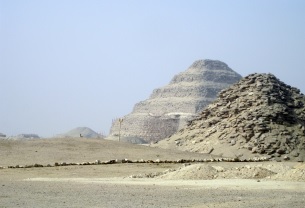
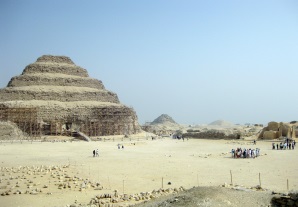
Saqqara is an important cemetery site associated with the ancient Egyptian capital city of Memphis, near modern Cairo. The cemeteries at Saqqara contain a number of tombs, both royal and private, including the famous Step Pyramid of the Third Dynasty Egyptian king, Djoser (ca. 2630-2611 BCE). The earliest burials at the site date to the creation of the ancient Egyptian state and it remained an important site through the Graeco-Roman Period.

Royal Tombs: The Step Pyramid of Djoser

The Step Pyramid of Djoser marks an important step in the development of the pyramid-shaped royal tomb. The complex was designed by the famous royal architect Imhotep, who would later become deified in ancient Egypt. You can see a bronze statue of Imhotep in Walton Hall of Ancient Egypt. A 14-year long restoration project at the site was just completed in 2020 which included strengthening the overall integrity of the structure by filling in gaps in its six rectangular mastabas as well work on the interior burial chamber and passages of the pyramid.

Check out some pictures from my visit to the Step Pyramid in 2011, early on in the restoration process, or, for a gallery of photos and more on the newly completed restoration, click here.

step pyramid

Views of the Step Pyramid at Saqqara showing the scaffolding used for the restoration project (photos by author).

Old Kingdom Mastabas: Tombs of Kagemni and Niankhkhnum and Khnumhotep

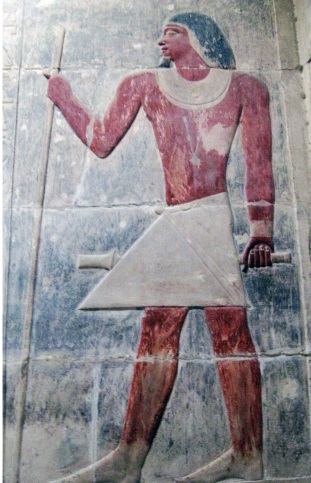
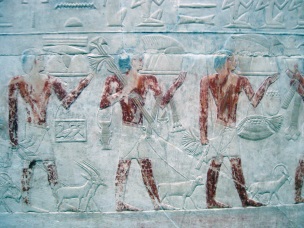
The Old Kingdom (ca. 2649-2150 BCE) mastabas at Saqqara are some of the most beautifully preserved and decorated tombs. Here are two of my favorites from my last visit. The tomb of Kagemni is the largest mastaba in the cemetery associated with the reign of the Sixth Dynasty king Teti (ca. 2323-2150 BCE). Kagemni was a Vizier, the highest position in the royal administration.

tomb decorations

tomb decorations

tomb decorations

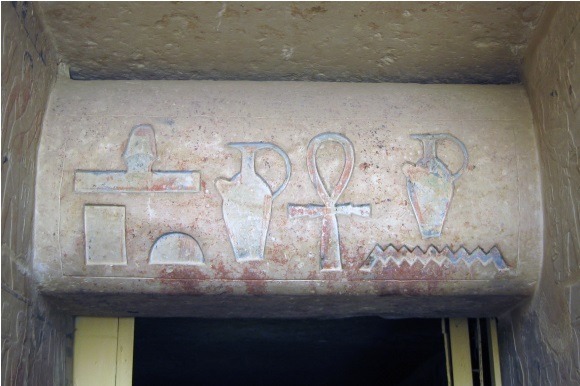
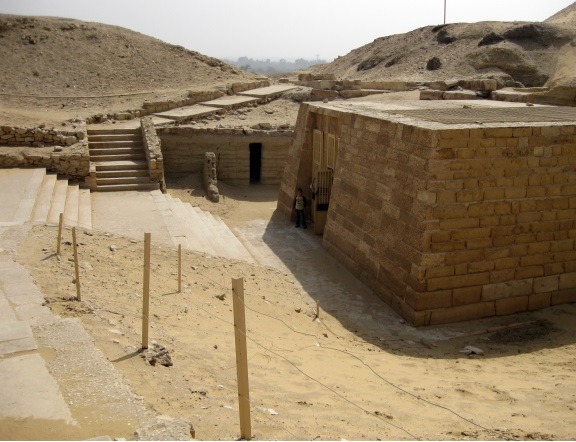
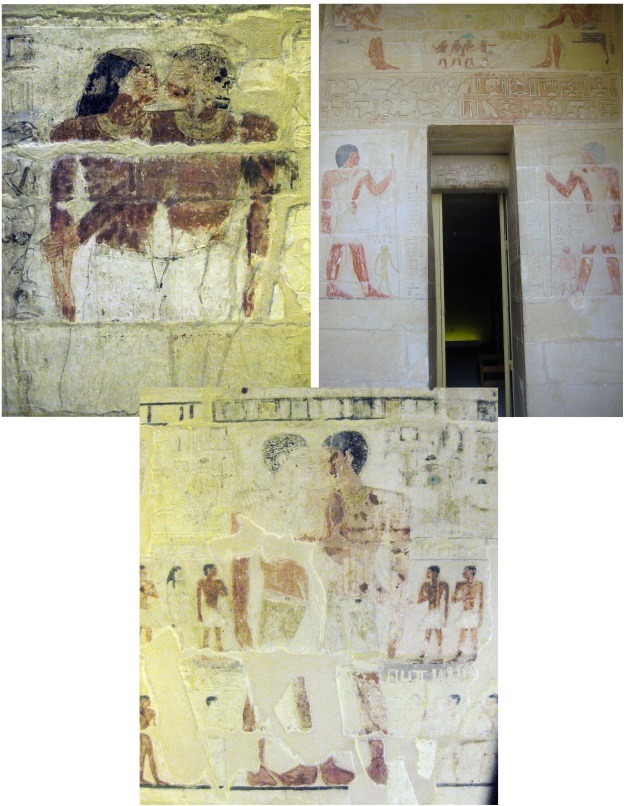
The tomb of Niankhkhnum and Khnumhoptep, also known as the tomb of the two brothers, dates to the late Fifth Dynasty and contains a number of exceptional scenes that underscore the closeness of the two men, both of whom served as overseers of the royal manicurists. Archaeologists uncovered a number of blocks from the tomb’s entrance repurposed in the nearby causeway of the pyramid complex of the late Fifth Dynasty king Unas (ca. 2353-2323 BCE). Thanks to the Egyptian Ministry of Tourism and Antiquities, you can now go on a virtual tour of the tomb!

Here you see the names of the two tomb owners, Niankhkhnum and Khnumhotep on a stone doorway inside their tomb as well the exterior of the mastaba (photos by author).
Scenes depicting Niankhkhnum and Khnumhotep inside their tomb (photos by author).
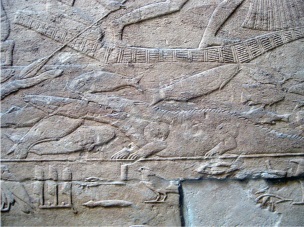
Images from the Tomb of Kagemni at Saqqara depicting the tomb owner himself, a parade of offering bearers bringing animals, plants, food, and other supplies to the deceased, and a scene taking place on the Nile where we get an underwater view of a crocodile eating a fish (photos by author).

Beni Hasan

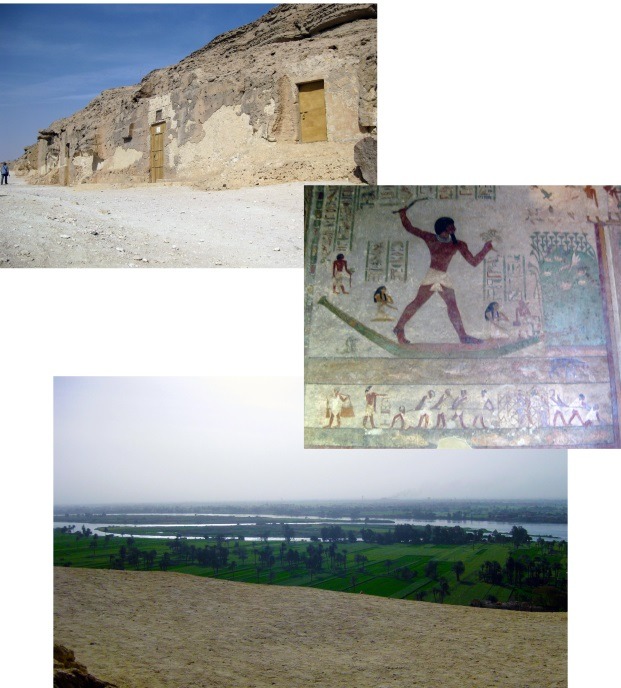
Beni Hasan is a cemetery site located in Middle Egypt, near the modern city of Minya, that was important during Egypt’s Middle Kingdom (ca. 2030-1640 BCE). During that time some of the most elite Egyptians were buried on the escarpment (desert cliff) with one of the most beautiful views of Nile Valley around! For more on excavations at Beni Hasan in the early 1900s visit the Griffith Institute and for a virtual tour of the tomb of Kheti at Beni Hasan visit the Egyptian Ministry of Tourism and Antiquities.

Top: A row of tomb entrances in the cliff face at Beni Hasan (photo by author). Middle: Image of the Nomarch Khnumhotep II fishing and fowling in his tomb (photo by author). Bottom: View of the Nile Valley from the tombs at Beni Hasan (photo by author).

Karnak

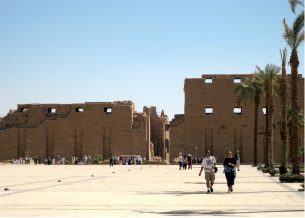
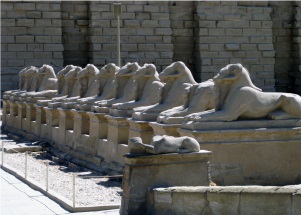
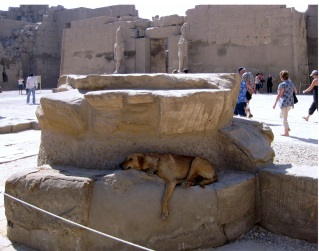
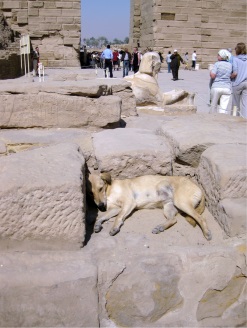
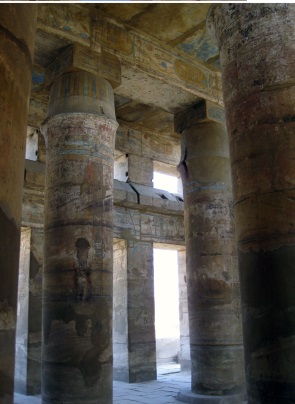
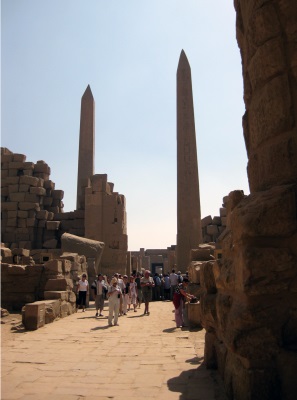
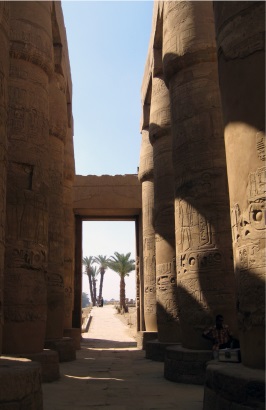
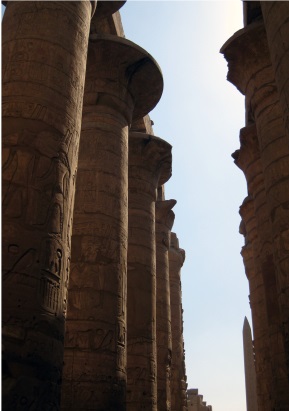
Karnak temple complex is one of the largest religious sites in the world. The first temple at the site was built during the Middle Kingdom (ca. 2030-1640 BCE) and the complex grew in size and complexity over time. The main temple at Karnak is dedicated to the Egyptian god Amun-Re, but there are smaller temples dedicated to Mut, Khonsu, and others. See if you can spot the snoozing pups in the pics below!

There are a number of ongoing excavations at Karnak that you can explore to learn more about the site. Check out this amazing minicourse on the Karnak Mut Precinct available on YouTube with Dr. Betsy Bryan, Alexander Badawy Chair of Egyptian Art and Archaeology and Director of Johns Hopkins’ excavations at the Mut Precinct.

temple ruins and palm trees in Egypt

Approach to Karnak Temple and processional way lined with Ram-headed sphinxes for the god Amun-Re (photos by author).

sleeping dogs in Egyptian ruins

Sleepy Karnak pups (photos by author).

columns, part of ancient Egyptian ruins

obelisks and other ruins in Egypt

view toward a temple exit

columns
Inside Karnak Temple: Festival Hall of Thutmose III, Obelisks, exit towards the Sacred Lake, columns in the Hypostyle Hall (photos by author).

Lisa Saladino Haney is Postdoctoral Assistant Curator of Egypt on the Nile at Carnegie Museum of Natural History. Museum employees are encouraged to blog about their unique experiences and knowledge gained from working at the museum.

Related Content

Egypt and the Nile

Tuscarora Nu Yah

Ancient Egypt Through its Pottery

Carnegie Museum of Natural History Blog Citation Information

Blog author: Haney, Lisa
Publication date: March 1, 2021

Share this post!

  • Share on Twitter Share on Twitter
  • Share on Facebook Share on Facebook
  • Share on Pinterest Share on Pinterest
  • Share on LinkedIn Share on LinkedIn
  • Share on Reddit Share on Reddit
  • Share via Email Share via Email

Filed Under: Blog Tagged With: ancient egypt, anthropology, archaeology, Archaeology Extravaganza, Lisa Haney, Science News, Super Science Days

February 25, 2021 by wpengine

How Do Trees Survive the Winter?

Winter brings cold winds, icy precipitation, long periods of below freezing temperatures – winter in the temperate zones takes a toll on all living things. Humans seek shelter, many animals hibernate, some insects may overwinter as eggs or life stages that are dormant. A walk in the forest in February clearly indicates that most plants become dormant and nearly inconspicuous during this time. For many plants, above ground portions die back so that the living parts, the root system, protected buds, and seeds persist below ground.

Slowing down physiologically offers a way to protect against the harshness of winter. But how do trees survive and persist in the often-harsh conditions? Trees can’t go below ground, as some smaller plants may; rather, trees encounter the winter, directly. Some trees can live hundreds (even thousands) of years making it difficult to imagine the extreme winter conditions that affect the tree over its lifetime. Trees persist, however, through the bitterness of deep winter. Most trees do ‘slow down’ during winter, and deciduous trees that lose their leaves shut down photosynthesis entirely. Trees with needles (evergreen trees) that are retained over winter can actually photosynthesize during the winter. Such productivity is not without risk: In addition to exposure to cold temperatures, trees can also experience water deficits because of frozen ground. Conifer needles might actually dry out, and turn brown during the winter if the trees are photosynthesizing and water is not available.

Ice and heavy snow certainly can damage trees, especially deciduous trees. Severe ice storms can cause branch breakage and may ultimately stress the tree sufficiently to cause death. A winter with heavy snow, ice and wind may mean that spring produces fewer leaves than expected. Conifers tend to have flexibility of sorts and pines, spruces, firs, and hemlock can tolerate heavy snow load and ice damage.

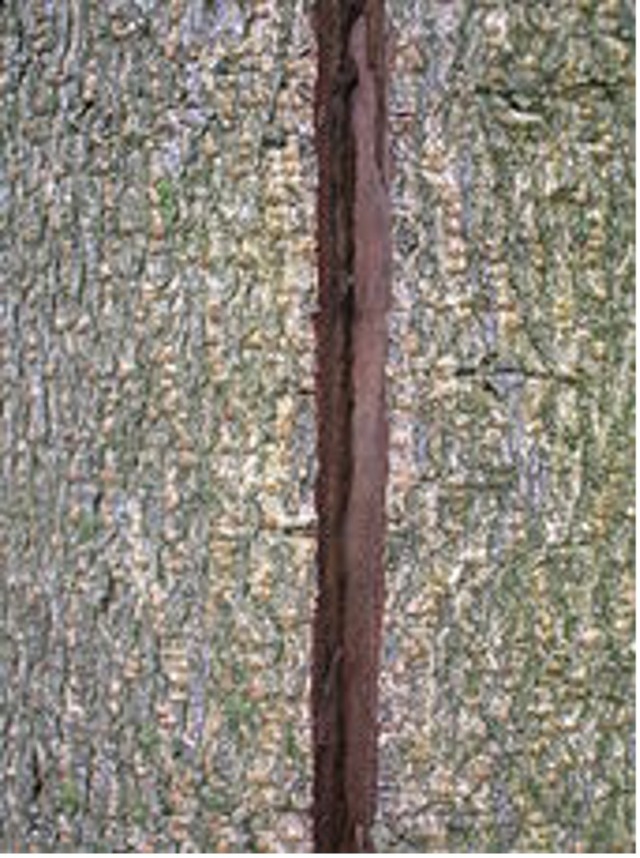
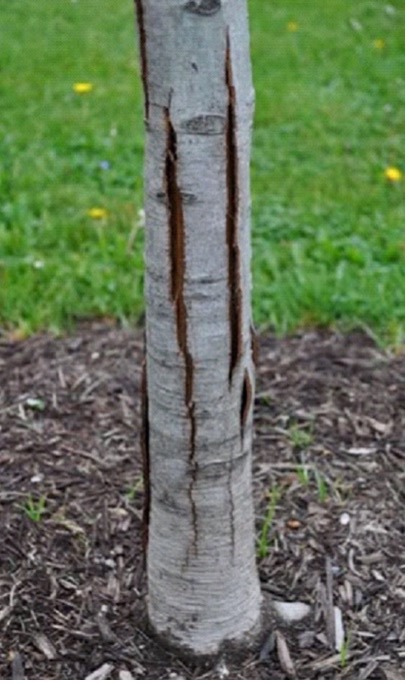
All trees have bark, and this protective covering serves as an insulator, protecting the vulnerable, living tissue just beneath the bark from cold and freezing. Bark also protects the tree from damage such as antler-rubbing, insects, or other physical and biological damage. However, bark can be vulnerable, too. Water (sap) inside the tree may freeze just beneath the bark, then rapidly thaw in bright winter sunshine. When repeated freezing, thawing, and re-freezing occurs, tissues beneath the bark will be damaged, dry out and crack. This process results in a very common looking tree damage known as frost cracking. The damage frequently occurs with thin barked trees, such as young maple, birch, beech, or many ornamental trees or fruit trees.

Frost cracks.
detail of a frost crack in a tree with rough bark

While the freezing-thawing cycle may cause problems for many trees, the same cycle in mid- to late-winter results in benefits for pancake lovers. At this time of year sap movement and production greatly increase in maples trees – and other trees that produce sap. Once temperatures start rising above freezing during the day, but remain frozen during the night, the sap may start to run and tapping the maple trees may begin.

Rose-Marie Muzika is the Director of Science and Research at Carnegie Museum of Natural History. Museum staff, volunteers, and interns are encouraged to blog about their unique experiences and knowledge gained from working at the museum.

Related Content

Ask a Scientist: What does a museum Science Director do?

Insect Metamorphosis: The Key To a Fresh New Start

A Taste for Metal

Filed Under: Blog Tagged With: Botany, Rose-Marie Muzika, Science News

  • « Go to Previous Page
  • Page 1
  • Interim pages omitted …
  • Page 19
  • Page 20
  • Page 21
  • Page 22
  • Page 23
  • Interim pages omitted …
  • Page 43
  • Go to Next Page »

sidebar

About

  • Mission & Commitments
  • Directors Team
  • Museum History

Get Involved

  • Volunteer
  • Membership
  • Carnegie Discoverers
  • Donate
  • Employment
  • Events

Bring a Group

  • Groups of 10 or More
  • Birthday Parties at the Museum
  • Field Trips

Powdermill

  • Powdermill Nature Reserve
  • Powdermill Field Trips
  • Powdermill Staff
  • Research at Powdermill

More Information

  • Image Permission Requests
  • Science Stories
  • Accessibility
  • Shopping Cart
  • Contact
  • Visitor Policies
Stay in the loop! Sign up for our newsletter(s).
One of the Four Carnegie Museums | © Carnegie Institute | Privacy Policy | Terms of Use | Accessibility
Rad works here logo