• Skip to primary navigation
  • Skip to main content
  • Skip to primary sidebar

Carnegie Museum of Natural History

One of the Four Carnegie Museums of Pittsburgh

  • Visit
    • Buy Tickets
    • Visitor Information
    • Exhibitions
    • Events
    • Dining at the Museum
    • Celebrate at the Museum
    • Powdermill Nature Reserve
    • Event Venue Rental
    • Gift Cards
  • Learn
    • Field Trips
    • Educator Information
    • Programs at the Museum
    • Bring the Museum to You
    • Guided Programs FAQ
    • Programs Online
    • Climate and Rural Systems Partnership
  • Research
    • Scientific Sections
    • Science Stories
    • Science Videos
    • Senior Science & Research Staff
    • Museum Library
    • Science Seminars
    • Scientific Publications
    • Specimen and Artifact Identification
  • About
    • Mission & Commitments
    • Directors Team
    • Museum History
  • Tickets
  • Give
  • Shop

Blogs from our Scientific Researchers

Carnegie Museum of Natural History is home to active research and vast scientific collections. Our scientific researchers regularly contribute to the blog at the museum.

May 18, 2021 by wpengine

Queer Eye for Lakota Art

by Vuk Vuković

As a queer individual, I am in constant search of such representation in works of art and art institutions. However, Carnegie Museum of Natural History (CMNH) was the last place I expected to find it.

In the last decade, there has been a push for art institutions to acknowledge queer identities within their galleries. From Tate’s Queer Lives and Art to Art 50 Years After Stonewall at Columbus Museum of Art, art institutions are gradually responding to the public outcry for queer visibility. Although it seems like these initiatives are contemporary, queerness has always been around, especially in institutions centering their work around humans. However, due to stigma, their identities were hidden from the public eye, stored away in warehouses, or worse, placed in the galleries with no context.

During my visit to CMNH’s Section of Anthropology at the “Annex” (the informal name for the Edward O’Neill Research Center), I was astounded by the richness of the collection that represents people in places ranging from the Latin American shores to the deserts of the Arab world. However, the work of art that caught my attention was a five-part panel by Thomas Haukaas, a contemporary Lakota artist. As a non-Lakota and non-Native person, I examine Lakota self-representation without claiming to participate in it myself. Instead, I focus on Lakota culture by citing sources created by members of the tribe and their allies. In Eye Candy (2008), the first panel (Figure 1) depicts a human hand situated next to the rainbow color palette. On the left side, eleven boxes are symmetrically distributed on the page and filled with different colors. Five out of eleven colors (red as a focal point) appear on the right side of the image that portrays a hand in a gesture that demands the viewer to stop. I regard the hand as a signal for viewers to pause and immerse themselves with the strikingly diverse pictorial elements, especially as other panels invite the viewer to look closely.
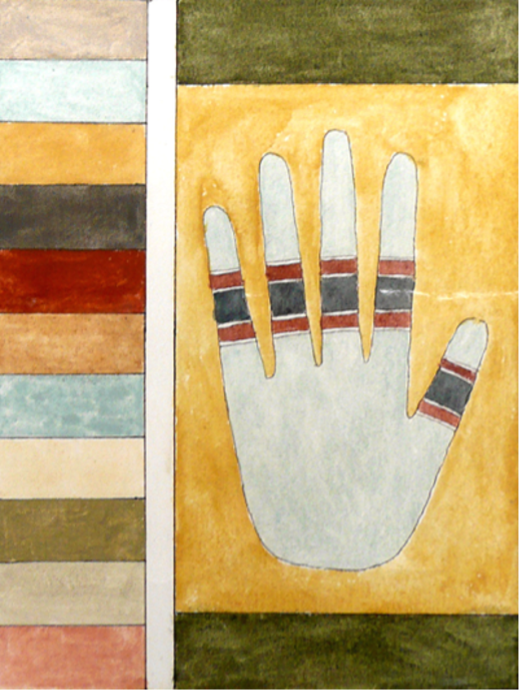
Figure 1. Thomas Haukaas, Eye Candy, 2008 (Photograph © Deborah Harding, provided by Carnegie Museum of Natural History)

The second, third, and fifth panels (Figure 2) portray several patterned horses – an animal that became a symbol of freedom and representation of many Native American cultures.¹ I grew up admiring the relationship horses had with the land through the animated film Spirit: Stallion of the Cimarron (2002). In the film, Spirit is set free from a U.S. army camp by a Native American man called Little Creek, who attempts to lead him back into the Lakota village. To a kid growing up in Montenegro, a small Mediterranean country in Europe, this was a film about the quest for freedom. As I am writing the blog post, I realize the visual elements Haukaas uses are easily interchangeable with the idea of running free as the horses in his work do. In Eye Candy, he uses the horses to express the diversity and inclusive practices of Lakota people. By applying subtle visual elements, Haukaas alludes to winyanktehca or winkte – “a term traditionally applied to male-bodied or biologically male individuals who did not identify as male or men.”² In contemporary Lakota culture, winkte is mostly used to refer to a homosexual man.³ While their status varied in historical records, most accounts treated the winkte as regular community members.⁴
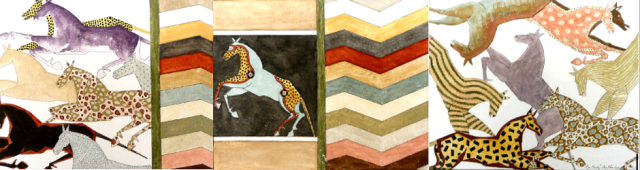
Figure 2. Thomas Haukaas, Eye Candy, 2008 (Photograph © Deborah Harding, provided by Carnegie Museum of Natural History)

The fourth panel (Figure 3) brings the work together as it combines all sections into one abstract form. I find the ambiguity of this panel to be an overarching connection because the queer community is diverse and fluid, but when it comes together, it is as striking as this panel. However, queer art is not always abstract as artists such as Andy Warhol and Keith Haring are explicit about queerness in their works.

Figure 3. Thomas Haukaas, Eye Candy, 2008 (Photograph © Deborah Harding, provided by Carnegie Museum of Natural History)

As someone who has traveled across four continents and worked in different cultural settings, I am always on the lookout for queer representation, but my favorite encounters are when those representations find me.

Figure 4. Thomas Haukaas, Eye Candy, 2008 (Photograph © Deborah Harding, provided by Carnegie Museum of Natural History)

Vuk Vuković is a PhD student in the History of Art and Architecture at the University of Pittsburgh and an intern in the Section of Anthropology and Archaeology at Carnegie Museum of Natural History. Museum employees and volunteers are encouraged to blog about their unique experiences and knowledge gained from working at the museum.

References

[1]Richard Koepke, Harnessing the Force: A Manual for Weary Seekers (Bloomington: AuthorHouse, 2011), 11.
[2] Robert Allen Warrior, The World of Indigenous North America (New York: Routledge, 2015), 1,442.
[3] Beatrice Medicine, “Directions in Gender Research in American Indian Societies: Two Spirits and Other Categories,” Online Readings in Psychology and Culture, 3 (1), (2002): 4, https://doi.org/10.9707/2307-0919.1024.
[4] Sabine Lang, Men as Women, Women as Men: Changing Gender in Native American Cultures (Austin: University of Texas Press, 2010), 118.

Related Content

Center Court Culture Sharing

How I Became an Archaeologist

Archaeological Adventures in Egypt

Carnegie Museum of Natural History Blog Citation Information

Blog author: Vuković, Vuk
Publication date: May 18, 2021
Share this post!

  • Share on Twitter Share on Twitter
  • Share on Facebook Share on Facebook
  • Share on Pinterest Share on Pinterest
  • Share on LinkedIn Share on LinkedIn
  • Share on Reddit Share on Reddit
  • Share via Email Share via Email

Share this post!

  • Share on Twitter Share on Twitter
  • Share on Facebook Share on Facebook
  • Share on Pinterest Share on Pinterest
  • Share on LinkedIn Share on LinkedIn
  • Share on Reddit Share on Reddit
  • Share via Email Share via Email

Filed Under: Blog Tagged With: anthropology, Native Americans, Science News

May 17, 2021 by wpengine

The Story of Oil in Western Pennsylvania: What, How, and Why?

by Hannah Smith

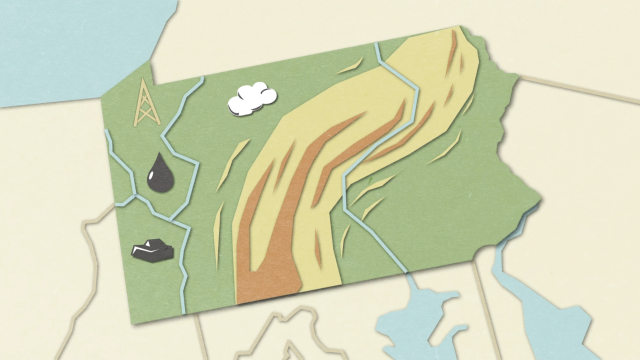
State of Pennsylvania in green with illustrations of coal, oil, rivers, clouds, forest, and an electrical tower.

I am a fries-on-salad, haluski dinner, dairy farm heritage kind of Western Pennsylvanian. I grew up near Venango and Crawford County and had a rural childhood. I went to a small school with about 300 kids in K-6th grade. Around 4th grade, I remember taking a field trip to Titusville, Pennsylvania. I remember seeing the familiar road signs and buildings as our bus gassed along the back roads. I had family in the Titusville and Oil City area, so it was a familiar route to take with my parents. I remember thinking, even at that young age, that the area looked worn and just, well, tired. But I was too young to grasp how this tired little town’s geology had changed the global economy and course of human history. When I was older, I pursued a degree in geology and began to understand more about my local community.

Our field trip took us to Titusville, Pennsylvania to visit Drake’s Well, the first commercial oil well in the United States. The site is named after the well’s driller, Edwin L. Drake who in 1859 struck oil outside of Titusville for the Seneca Oil Company. The company took the name from the Seneca Nation, one of the original Five Nations of the Haudenosaunee or Iroquois Confederacy, who had long made use of the resource Drake sought by skimming naturally-occurring slicks of petroleum, or unrefined oil, from the surface of local waters. These Indigenous people, who were removed from their native lands in the 1700s, 1800s, and 1900s, did not benefit from the Seneca Oil Company.

In the early 1800s oil was an unwanted by-product from salt wells (wells used to mine salt), and before that, a traditional medicine. In small doses, oil was used to treat respiratory diseases, epilepsy, scabies, and other ailments¹. Even today, chemicals made from the refining of petroleum are responsible for many of our modern medicines. Ointments, antihistamines, antibacterials, cough syrups, and even aspirin are created from chemical reactions created from petrochemicals².

However, the purpose of Drake’s Well was to produce oil for refining into kerosene for lamps, and thereby provide an alternative to the whale oil then used to illuminate homes and workplaces. Salt wells used water to dissolve salt source rock, and then carry the resulting brine through piping to the surface where it would be evaporated to leave salt as a solid residue. Although this method works for producing salt, it was far less efficient for producing oil. Productive oil drilling required new techniques, and one of Drake’s most important innovations was the “drive pipe,” sections of cast iron pipe driven into the shaft to protect the drill bit from water and cave-ins. Through experimentation and innovation, on August 27, 1859, Drake struck oil when his drill reached a depth of 69.5 feet.

While Drake’s Well was not the most productive, or largest oil well, the Titusville site is globally significant because it kick-started the petroleum drilling revolution that eventually changed global economies and environments. While Edwin Drake lived a hard life even after his discovery, he is still considered the father of the modern petroleum practices and industry³.

When my field trip class arrived at the Drake’s Well Museum I remember seeing an odd looking wooden building with an awkward chimney-like structure on one side. We were led through single-file so everyone could get a look at the steel machinery used in the drill, and the pipes that dispersed oil into wooden barrels clustered in the building. In my 10-year-old brain there is no way I could properly fathom that this discovery was related to many of the comforts and conveniences I took for granted in my life, such as cars, heating, electricity, plastics, medicines, and even the asphalt roads that we drove on. Why was Titusville special? More specifically, why did western Pennsylvania have oil in the ground?

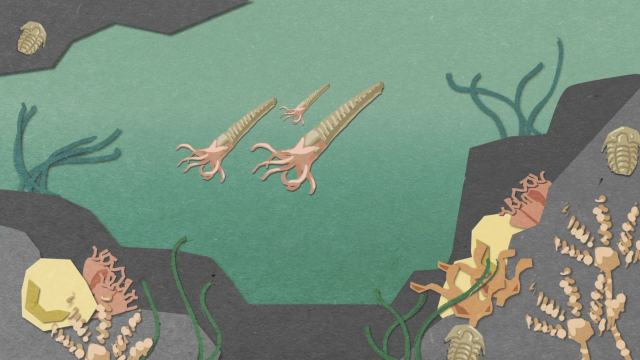
Illustration of the sea floor with various sea creatures including coral and ammonites.

From about 490 to 360 million years ago, during the span of geological time known as the Ordovician Period and Devonian Period, most of what is now Pennsylvania was an ocean basin teeming with life. Pre-Appalachian Mountains systems eroded over time and deposited sediment of sand, silt, and mud that mixed on the seafloor with the dead plant material.  Currents at the ocean bottom were minimal, leaving the accumulating sediments and organic material relatively undisturbed and oxygen-free.  Without oxygen, bacteria that normally break down organic material could not act.  A thick, black, anoxic ooze formed, preserving the organic material.  Over millions of years, forces caused by plate tectonics generated enough heat and pressure to compact the sediments into rock and “cook” the organic material into petroleum.

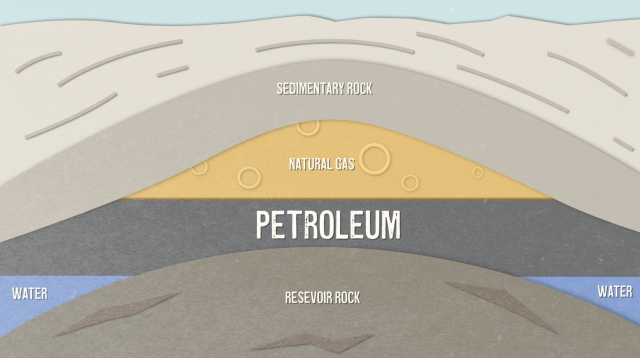
If you’re from western Pennsylvania, you’ve probably heard of the Marcellus and Utica shales. The natural gas extracted from these rock units formed in a similar way to petroleum but was subjected to a much longer period of heat and pressure.

Illustration of rock layers labeled from top to bottom: sedimentary rock, natural gas, petroleum, reservoir rock. Water is labeled to the left and right of the reservoir rock.

With Edwin Drake’s success, and layers of oil-bearing rock relatively close to the surface, Titusville boomed. The year Drake drilled his first oil well, Titusville only had 250 residents. However, by 1865 the population increased to 10,000. Nearby Pithole City, now a ghost town, had 50 hotels during the oil peak of the area around 1866. This boom was short lived as other drilling companies began operations in the area and excess production lowered oil prices. Companies picked up to look elsewhere almost as quickly as they appeared⁵. While Titusville boomed and busted, the oil industry itself was growing. Drake drilled for a product to compete with whale oil, but the oil industry underwent phenomenal growth because the demand for its product grew as a lubricant for engines and many other types of machines, a resource for heating on a distributed scale, and as a refined fuel for developing motorized vehicles. Two World Wars during the first half of the 20th Century and the population explosion of the 1950s further increased demand for petroleum. During the Century’s latter half advancements in oil drilling technology made ocean drilling platforms a reality, and with them an increase in oil production as well as an increase in negative impacts due to devastating oil spills.

As of 2016, the world consumed over 97 million barrels daily⁶. So what does combusting 97 million barrels of oil a day, a resource from below the surface, mean for the Earth’s atmosphere? The burning of fossil fuels produces greenhouse gases such as carbon dioxide, methane, nitrous oxide, and fluorinated gases. Greenhouse gases absorb heat from the sun that the earth’s surface reflects back out into the atmosphere, similar to how a blanket traps in body heat. Burning fossil fuels causes climate change by increasing the total amount of greenhouse gases in the atmosphere, thickening the “blanket” around the earth, and increasing the global average temperature. According to the International Energy Agency (IEA), in 2019 greenhouse gas CO₂ emissions totaled 33 gigatons, or 1 billion metric tons, or about the weight of 1.5 billion school buses⁸. Climate change is responsible for increased frequency and severity of weather disasters, wildfires, and flooding, to name a few negative impacts. The abundant CO₂ in our atmosphere equilibrates with and diffuses into our oceans, causing the water to become more acidic and eroding the calcium carbonate structures of coral and other marine organisms. Climate change does not just affect wildlife, it also affects the lives of Pennsylvanians. In Pennsylvania climate change is likely to lead to increasing home insurance rates, higher taxes to replace infrastructure, longer allergy seasons, increasing heat stroke rates in citizens, rising food costs due to crops damaged by erratic weather and higher temperatures, and decreasing water quality and availability due to large storms causing water contamination⁷.

Early organisms were buried by sediment 488 to 360 million years ago and altered into petroleum by heat and pressure. For thousands of years, Earth’s petroleum reserves were largely untouched. Innovator Edwin Drake changed petroleum’s role by successfully drilling the first commercial oil well in North America that August day in 1859. Petroleum became a global commodity, eventually fueling a fast paced modern life. Now in the 21st century, the burning of fossil fuels, such as petroleum, is causing worldwide rapid climate change.

illustration of wheel with three images on the edges: a drop of oil, a cloud, and a lump of coal.

When I was on that field trip to Drake’s Well in 4th grade, we did not discuss the global or local implications of petroleum. This resource is responsible for many of the  day to day conveniences that have come to define contemporary life, but it also feeds environmental change  that is forcing  a “new normal,” and will cause an existential threat to humanity. I could not have fathomed that this global resource had its start in my own family’s backyard. I think that Drake’s Well is a good reminder that Earth-changing innovations can happen anywhere. I don’t think Drake could have predicted the scale to which his discovery would change society and the environment over the next 160 years, in the same way that most people do not realize how their small individual actions are affecting the larger social-ecological systems, and sustainability of all life on Earth. Although individual actions can negatively affect Earth, they can also be positive. Who knows, the next innovation to combat anthropogenic climate change may be happening in your backyard. Wind and solar farms have been developing and growing throughout Pennsylvania since 2007, providing an alternative option for electric energy use.

I started having more appreciation for the Earth Sciences as I got older. This eventually led me to obtaining a bachelor’s degree in geology, interning with the National Park Service at the Hagerman Fossil Beds in Idaho, and working in mapping for a few years before returning to school for illustration and design in hopes to marry the sciences and arts together. While obtaining my geology degree I met my now husband who has a Master’s in Structural Geology, and worked in the natural gas field for five years before making the switch to environmental geology. Our family’s income was supported by the fossil fuels industry for a time, and therefore we understand a decent amount of the ethics and controversy that is in the industry. However we are both very invested in the earth sciences and look forward to more sustainable tech preserving a better environment for the future.

Hannah Smith is an intern in the Section of Anthropocene Studies. Museum employees are encouraged to blog about their unique experiences and knowledge gained from working at the museum.

References:

1 Early Medicinal Uses of Petroleum 2015 https://daily.jstor.org/petroleum-used-medicine/

2 Modern Uses for Petroleum in Medicine 2019 https://context.capp.ca/articles/2019/feature_petroleum-in-real-life_pills

3 Drake’s Well History of Petroleum 2016 https://www.aoghs.org/petroleum-pioneers/american-oil-history/

4 Description of petroleum formation 2014 http://elibrary.dcnr.pa.gov/GetDocument?docId=1752503&DocName=ES8_Oil-Gas_Pa.pdf

5 The boom and bust cycle of the oil industry 2015 https://www.nytimes.com/2015/04/23/business/energy-environment/oil-makes-a-comeback-in-pennsylvania.html

6 World Oil Statistics 2016-Current https://www.worldometers.info/oil/

7 List of the Effects of Climate Change on People and how to protect yourself 2019 https://blogs.ei.columbia.edu/2019/12/27/climate-change-impacts-everyone/

8 International Energy Agency 2019 https://www.iea.org/articles/global-co2-emissions-in-2019

9 Drake’s Well Museum https://www.drakewell.org/

10 Seneca-Iroquois National Museum https://www.senecamuseum.org/

11 Seneca Nation Oil Process in New York State https://nyhistoric.com/2013/10/seneca-oil-spring/

Related Content

Understanding Fossil Fuels through Carnegie Museums’ Exhibits

What Does Climate Change Mean for Western PA Farmers?

Is Plastic Natural?

Carnegie Museum of Natural History Blog Citation Information

Blog author: Smith, Hannah
Publication date: May 17, 2021

Share this post!

  • Share on Twitter Share on Twitter
  • Share on Facebook Share on Facebook
  • Share on Pinterest Share on Pinterest
  • Share on LinkedIn Share on LinkedIn
  • Share on Reddit Share on Reddit
  • Share via Email Share via Email

Share this post!

  • Share on Twitter Share on Twitter
  • Share on Facebook Share on Facebook
  • Share on Pinterest Share on Pinterest
  • Share on LinkedIn Share on LinkedIn
  • Share on Reddit Share on Reddit
  • Share via Email Share via Email

Filed Under: Blog Tagged With: Anthropocene, Hannah Smith, Science News, stewardship

May 10, 2021 by wpengine

Natural History Discoveries

by Vanessa Verdecia

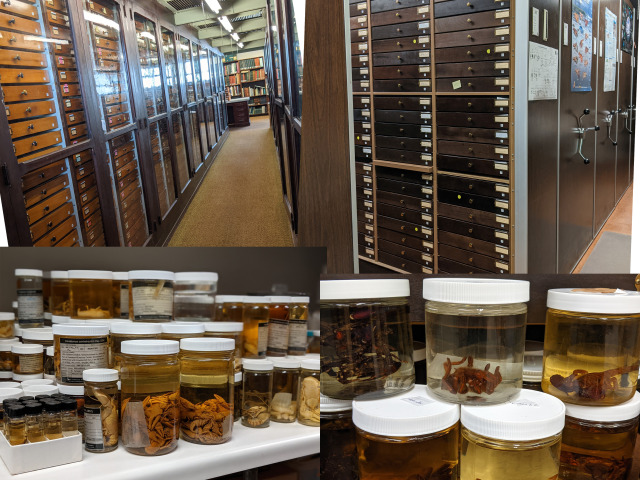
Collage of photos from the Section of Invertebrate Zoology. The top two photos show cabinets of drawers. The bottom two photos show jars of specimens preserved in liquid.

“Why do you collect so many?” That’s a common question we get from people who experience a glimpse into the Invertebrate Zoology collection at Carnegie Museum of Natural History. The Invertebrate Zoology collection, which consists of mostly insects, but also includes crayfish, spiders, and other invertebrates like millipedes and centipedes, is the largest collection at CMNH.

There are several reasons why we collect so many specimens. Nature is not always easy to interpret, even for the most knowledgeable scientists. In fact, an expert’s knowledge develops in part from time spent looking at many specimens, an unparalleled experience which helps create an accurate understanding of complicated species. So, one of the reasons we collect so many is to have enough material to look at and make informed decisions regarding species determinations. Some species can have significant variations across individuals. Having a lot of material also allows scientists to sacrifice some specimens for dissections or for use in molecular studies.

Another important reason for collecting so many is to create records of species occurring across as many geographical regions as possible and at different times of the year. By sampling and re-sampling, there is more data available to be analyzed and used to arrive at stronger conclusions. Having a historical collection is important for research that looks at species composition over time. Such collections help to answer questions about how biodiversity has been affected by climate change and other factors over time.

Collections as Scientific Tools

For these reasons, the insect collection at the Carnegie is an incredible scientific tool. We get many requests to borrow specimens, requests to visit the collection to gather data from the specimens, and requests for images of published specimens that are designated as types and deposited at CMNH. Type specimens are among the most scientifically valuable specimens, and the Invertebrate Zoology collection holds tens of thousands of specimens in type series that are referenced in scientific research and provide comparison material during the discovery of new species.

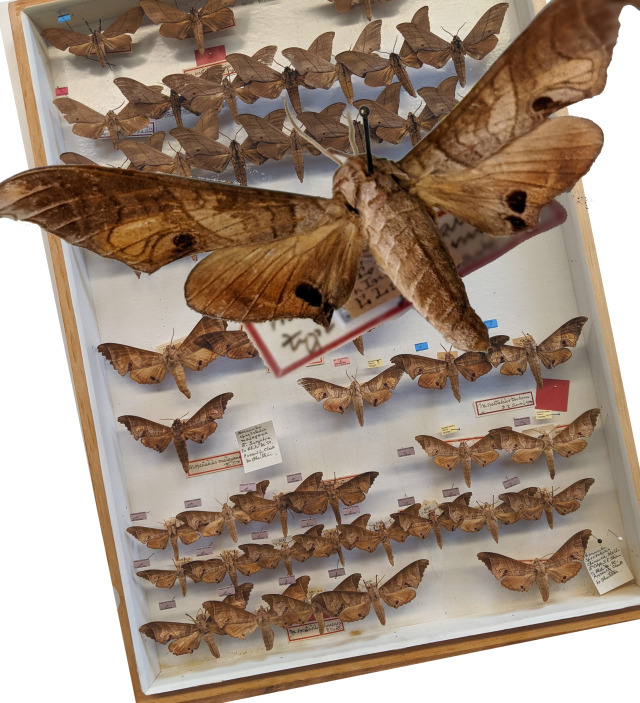
Drawer full of moth specimen with a larger moth over top.
Marumba drawer with types.

This background information leads to a nice little story for me to share. Sometimes requests for collection access come with a very special “thank you.” A request for images of type specimens in the Sphingidae (hawkmoths) collection earlier this year led to a publication that included new species, and instead of the usual acknowledgment, one of the authors named a new species after me—Marumba verdeciae. This type of taxonomic work, which involves making detailed observations related to the form and structures on the new specimens, requires the use of published museum specimens for comparative reference. Without access to the types, researchers would not be able to verify their discoveries, since comparison to the type material is essential in confirming the new species.

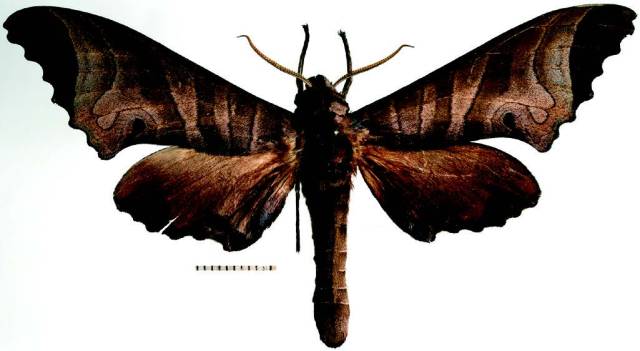
specimen of the moth Marumba verdeciae
Marumba verdeciae. Image from original description. Eitschberger, U. and H.B. Nguyen. 2021. Erster Schritt zur Revision des Marumba saishiuana auct. Artenkomplexes (nec Okamoto, 1924) (Lepidoptera, Sphingidae). Neue Entomologische Nachrichten 75: 123-327

Naming Species

Biological species are given a Latin name in the form of a genus and species. Placement of a species in a given genus is based on a biological relationship, but the species name is unique. There should be a section in the published work that explains the root of the name, which is often based on a Latin descriptive term related to a distinct feature of the species. However, sometimes a new species is dedicated to a person. In the case of Marumba verdeciae, the genus (Marumba) already existed, and one of the new species was dedicated to me as recognition of the effort I put into locating and imaging type specimens needed as a reference for the research the authors were doing with this group of moths. People might have a species dedicated to them for various reasons, which range from participating in or facilitating the research, to achieving prominence as an expert in a group of organisms. The species name verdeciae is a Latin conjugation of my last name, Verdecia.

The focus of this story, however, should be the importance of CMNH collections, and other museum collections across the world. In this case, the researchers in Germany needed to reference type specimens deposited at CMNH in order to complete their research. But CMNH scientists also need to borrow and request images of type specimens deposited at other museums when doing their research. Strong collaboration between scientists is very important. As stewards of our collections, we are not only maintaining the specimens for our use, but for use by the entire scientific community.

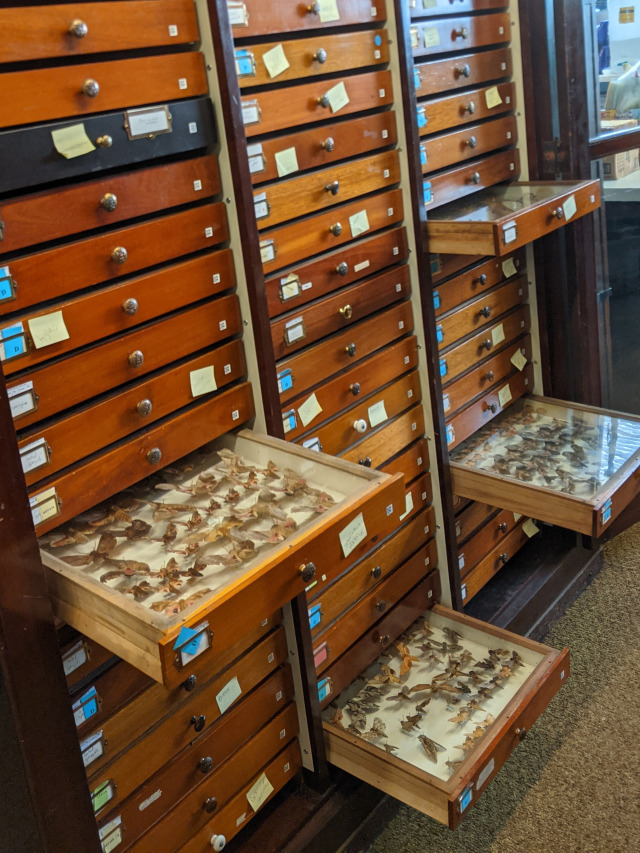
Cabinet of drawers with four drawers open showing specimens preserved inside.
Columns of Sphingidae protem.

Although it is an honor to have a new species named after me, the next step is the most exciting—the ongoing use of the new published work to hunt for specimens of the newly described species in our own collection. We have a vast collection in Invertebrate Zoology, and the moths and butterflies (Lepidoptera) comprise about 2/3 of the entire collection. There are many drawers with specimens that are not curated and there are over 100 drawers of mixed Sphingidae that, depending upon the geographical represented, might include some of the new species of Marumba. When new research like this is published, it allows curatorial staff to go into their collections to curate specimens, and update identifications. The Invertebrate Zoology collection is a work in progress, with many specimens waiting to be curated, and many discoveries yet to be made.

Vanessa Verdecia is Scientific Preparator in the museum’s Invertebrate Zoology Section. Museum employees are encouraged to blog about their unique experiences and knowledge gained from working at the museum.

Related Content

How to Prepare Insect Specimens

Ask a Scientist: What is a caterpillar database?

Garden for the Birds (or bees, or butterflies, or creepy crawlies, or you get the picture)…

Carnegie Museum of Natural History Blog Citation Information

Blog author: Verdecia, Vanessa
Publication date: May 10, 2021

Share this post!

  • Share on Twitter Share on Twitter
  • Share on Facebook Share on Facebook
  • Share on Pinterest Share on Pinterest
  • Share on LinkedIn Share on LinkedIn
  • Share on Reddit Share on Reddit
  • Share via Email Share via Email
  • Share on Twitter Share on Twitter
  • Share on Facebook Share on Facebook
  • Share on Pinterest Share on Pinterest
  • Share on LinkedIn Share on LinkedIn
  • Share on Reddit Share on Reddit
  • Share via Email Share via Email

Filed Under: Blog Tagged With: insects, Invertebrate Zoology, Science News, SWK2, Vanessa Verdecia

April 29, 2021 by wpengine

Water Bears: why my yard is like the moon

by Tim Pearce

Water bears, also known as tardigrades or moss piglets, are microscopic animals, famous for being cute and nearly indestructible. Looking a bit like the Michelin Man with eight claw-tipped legs, they can survive extreme highs and lows of temperature and pressure, and ionizing radiation. They are among the few animal groups that can completely dry up into suspended animation, a process called anhydrobiosis, and tardigrades can survive dried up for decades. Tardigrades have even survived in outer space (see “Tardigrade” in Wikipedia for more amazing feats).

Large ones can be 1 mm (1/25 inch) long, but most species are less than half that long. They live in many environments, and can often be found in moss and lichen. I even saw some tardigrades digesting the waste stream during an open house at ALCOSAN, Pittsburgh’s sewage treatment plant.

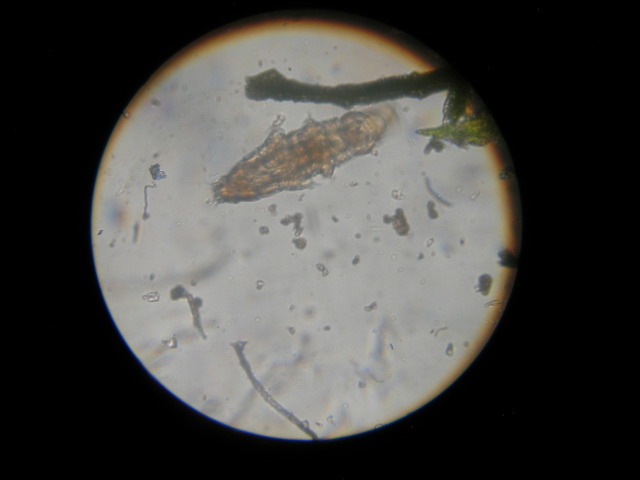
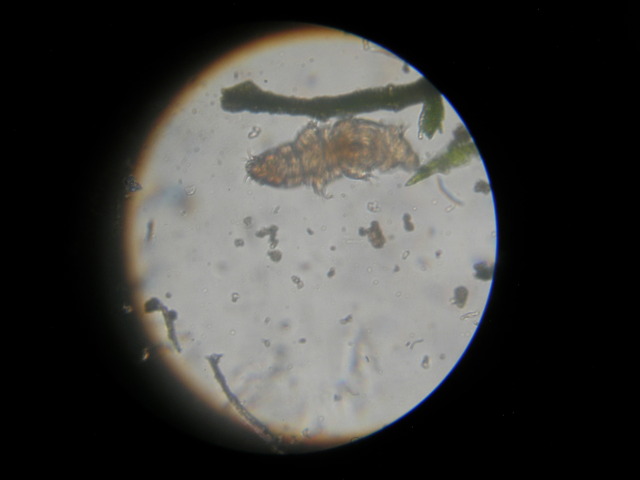
To practice for the 2021 City Nature Challenge, I looked for tardigrades in my back yard. I scraped up a bit of moss, shook it in some water, and then examined the settled material under a microscope. Within a few minutes, I had found the tardigrade illustrated here! I also saw nematodes and rotifers, two other common microscopic organisms. I just checked iNaturalist, and no tardigrades have been reported from Pittsburgh, so mine will be the first!

image of a tardigrade
Two shots of the tardigrade from my back yard in Squirrel Hill, Pittsburgh, 20 Apr 2021. Head is to the right. Animal is 0.6 mm long.

How does finding tardigrades make my yard like the moon? You might remember in 2019 an Israeli lunar probe crashed on the moon. Part of its payload was dehydrated tardigrades, which evidently have been scattered across a section of the lunar surface. My yard is like the moon because they both have tardigrades!

Examining the world of the small can yield big contributions. I encourage you to participate in the City Nature Challenge, and pay attention to tiny things.

Tim Pearce is the head of the mollusks section at Carnegie Museum of Natural History. Museum employees are encouraged to blog about their unique experiences and knowledge gained from working at the museum.

Related Content

Naturally Pittsburgh: Big Rivers and Steep Wooded Slopes

Go For a Color Walk

Evidence Counts for Absent Creatures – City Nature Challenge

Carnegie Museum of Natural History Blog Citation Information

Blog author: Pearce, Timothy
Publication date: April 29, 2021

Share this post!

  • Share on Twitter Share on Twitter
  • Share on Facebook Share on Facebook
  • Share on Pinterest Share on Pinterest
  • Share on LinkedIn Share on LinkedIn
  • Share on Reddit Share on Reddit
  • Share via Email Share via Email

Filed Under: Blog Tagged With: City Nature Challenge, mollusks, Science News, Tim Pearce

April 23, 2021 by wpengine

University of Michigan Helps Solve Century Old Fossil Mystery – Part 1: Stearns and Bayet. The Dispute

by Joann Wilson and Albert Kollar

“I am reluctantly, arriving at the opinion, that I am the victim of an imposition for which I hold you responsible.” –Frederick Stearns in a letter to Ernest Bayet, March 27, 1889

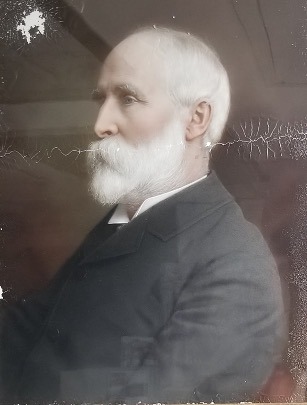
Frederick Stearns, date unknown. Permission of the University of Michigan Stearns Collection.

In 1903, Andrew Carnegie purchased the world-famous Bayet fossil collection for the Carnegie Museum. Since that time some invertebrates in the massive 130,000 specimen collection have been thoroughly studied, but the documents that arrived with the fossil shipment remained largely unexamined. Reasons for this neglect are understandable. The collection’s accompanying letters, lists, journals, and other documents were written primarily in French, German, and Italian, and in what has been described as “an impenetrable hand.”

Translation of the documents into English was a critical step in making them better known to researchers and the public. As part of Albert Kollar’s multiyear project to restudy the invertebrate portion of the Bayet Collection, that difficult task is ongoing thanks to volunteer Lucien Schoenmakers, a resident of the Netherlands.

The translated documents bring some life to the people behind the famous fossils, and our series begins with one of them, Frederick Stearns.

Which gets us back to the letter excerpted above. One wonders what Ernest Bayet thought in the spring of 1889 when he opened it. Bayet, who would become secretary to the cabinet of Leopold II, and Frederick Stearns of Detroit, Michigan, a retired pharmaceutical executive, business owner, and renowned fossil collector, had settled on a sizable trade deal. Stearns was to send over “1000 species of fossils” from the United States. In return, Bayet was to ship “5500 species of shells.”

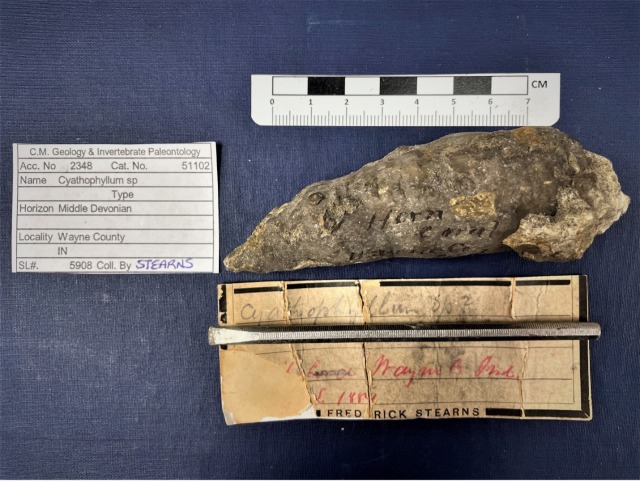
One of the Frederick Stearns fossils in the Bayet Collection at the Carnegie Museum of Natural History: Horn Coral, Cyathophyllum, CM# 51102. On the bottom is an original Frederick Stearns label that survived crossing the Atlantic Ocean twice.

Stearns had shipped his lot of fossils, but by spring of 1889, he had yet to receive a shipment from Bayet. Fuming, he wrote, “to obtain legal redress through the advice of the American Minister at Brussels. Failing in this I stand ready to spend 2500 francs or even 5000 francs if necessary, to advertise you, and your way of doing things to the Scientific World. In doing which I shall at least have the satisfaction of check mating any similar future operations of the sort with other persons as credulous of your honor and integrity.” In current figures, Stearns was willing to spend $15,000-$30,000.

Stearns ended, “with this for warning, I subscribe myself indignantly etc.” After this letter, no more correspondence is known to exist between the two men. Did Bayet send his lot? As part of Albert’s project to investigate the individuals behind the Bayet Collection, we wondered, was it possible to solve this mystery over a century later?

Research into Stearns revealed that he collected more than fossils and shells. Carol Stepanchuk, Collection Outreach Program Coordinator for the Stearns Collection of Musical Instruments at the University of Michigan, provided a valuable starting point. With her guidance, and a hunch that Stearns may have left his other collections to the University of Michigan, we reached out across the Ann Arbor campus to Jennifer Bauer, Research Museum Collection Manager at the University’s Museum of Paleontology. Jennifer added Taehwan Lee, the museum’s Mollusk Collection Manager, to the search. After many months, our story has a happy ending. Jennifer and Taehwan located over 5000 specimens in the U-M collections, donated by Frederick Stearns, with “Bayet” as collector. Thanks to museum collections records and the amazing team at U-M, we now know that Ernest Bayet did send his shells!

In Part 2 of our series, we will take a look at the unusual path that brought Frederick Stearns into contact with Ernest Bayet and fossil collecting. As John Carter, former Curator of the Section of Invertebrate Paleontology at Carnegie Museum of Natural history, once wrote about the Bayet Collection, “The best measure of the worth of this treasure trove, however, is not its size but its uniqueness. Many of the individual collections, all made in the nineteenth century, are essentially irreplaceable, because similar specimens from the same collecting localities are no longer available.”

Many thanks to the generous contributions of Carol Stepanchuk, Collection Outreach Coordinator for the U-M Stearns Collection of Musical Instruments, Joseph Gascho, Associate Professor at the U-M School of Music and Director of the Stearns Collection of Musical Instruments, Jennifer Bauer, Research Collection Manager at the U-M Museum of Paleontology, Taehwan Lee, Mollusk Collection Manager at the U-M Zoology Museum and volunteer Lucien Schoenmakers for meticulous language translation.

Joann Wilson is an Interpreter for the Education Department at Carnegie Museum of Natural History and Albert Kollar is Collections Manager for the Section of Invertebrate Paleontology. Museum employees are encouraged to blog about their unique experiences and knowledge gained from working at the museum.

Related Content

Behind the Scenes with the Baron de Bayet and L.W. Stilwell Collection, Part 1: Crossing the Atlantic with a Boatload of Fossils

Mary Anning: For the Love of the Blue Lias

Carnegie’s Cactus

Carnegie Museum of Natural History Blog Citation Information

Blog author: Wilson, Joann; Kollar, Albert
Publication date: April 23, 2021

Share this post!

  • Share on Twitter Share on Twitter
  • Share on Facebook Share on Facebook
  • Share on Pinterest Share on Pinterest
  • Share on LinkedIn Share on LinkedIn
  • Share on Reddit Share on Reddit
  • Share via Email Share via Email

Share this post!

  • Share on Twitter Share on Twitter
  • Share on Facebook Share on Facebook
  • Share on Pinterest Share on Pinterest
  • Share on LinkedIn Share on LinkedIn
  • Share on Reddit Share on Reddit
  • Share via Email Share via Email

Filed Under: Blog Tagged With: Albert Kollar, invertebrate paleontology, Joann Wilson, Science News

April 20, 2021 by wpengine

An Illuminating Tale of Tracking Turtles

by Amanda K. Martin

*All research was conducted under approved permits from by IACUC, ODNR, and Metroparks. Do not try this at home with local wildlife. Photos by A. Martin unless noted otherwise.

Where do eastern box turtles go? When I started my graduate schooling in Dr. Karen Root’s lab at Bowling Green State University in Ohio, I was quite intrigued by this question. To address it, I conducted a study of box turtle movements in the Oak Openings Region, the distinctive landscape of oak savannas, woodlands, and wet prairies that stretches across seven counties in Northwest Ohio and Southeast Michigan.

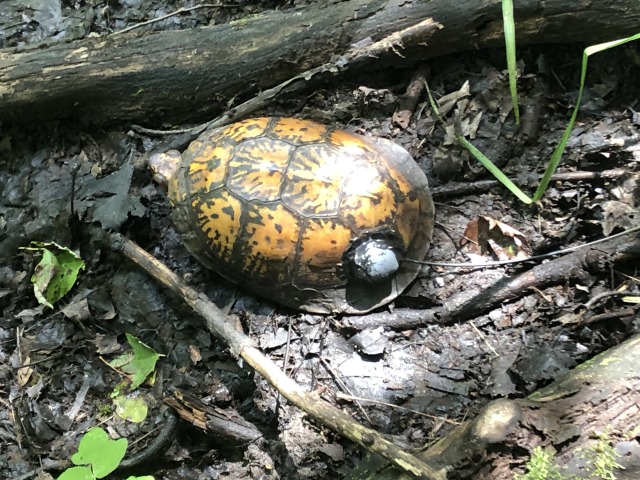
A method called radio telemetry was vital to my work. I walked around under the forest canopy searching for individuals (female or male) and whenever I found one, typically sitting still on the ground, I would pick it up while wearing gloves. In order to track its movements, I attached a radio transmitter onto the carapace (upper shell) using a special type of glue (Fig. 1A). After about a month of searching, I was able to track box turtles at two locations in the Toledo Metroparks system, six individuals in Oak Openings Preserve, and three individuals in Secor Metroparks.

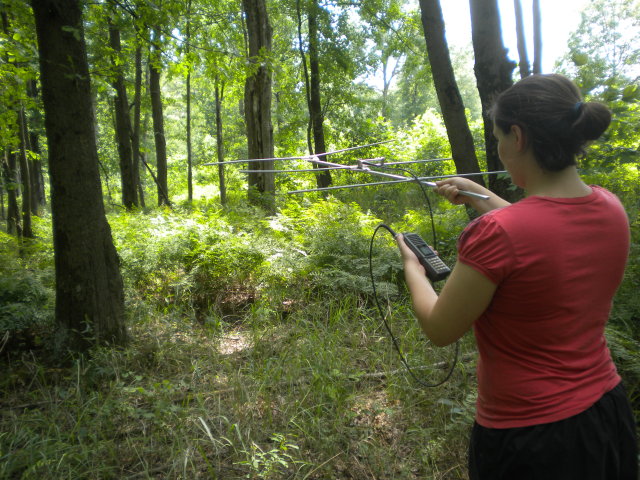
Two to three times a week, I would travel to these local parks and track each turtle using a silver three-pronged antenna and attached receiver. This portable combination detects the signal frequency produced by the transmitter on the tagged turtles, generating a “beeping” sound as it receives the electronic pulse. Guided by “beeps” I could re-find each turtle within an hour (Fig. 1B) depending on how dense the forest understory was. If I walked in the wrong direction, the noise would fade away and become quieter, but as I moved closer to the turtle’s location, the “beeping” sound would get louder and more frequent until I reached the turtle. Sometimes I would walk right past an individual sitting quietly in the leaf litter or under a log as their shell is often highly camouflaged to blend with the sunlit and shadowed patterns of a forest floor. One nice aspect of tracking box turtles with radio telemetry is that they do not run away very quickly, so they are easy to follow!

turtle on the ground among sticks and leaves
woman holding an antenna and receiver in the woods
Fig. 1A (top) and Fig. 1B (bottom): A box turtles with a transmitter (A) tracked by A. Martin using radio telemetry (antenna and receiver; B) in Oak Openings Region, Ohio, USA. Photo by S. Martin (B).

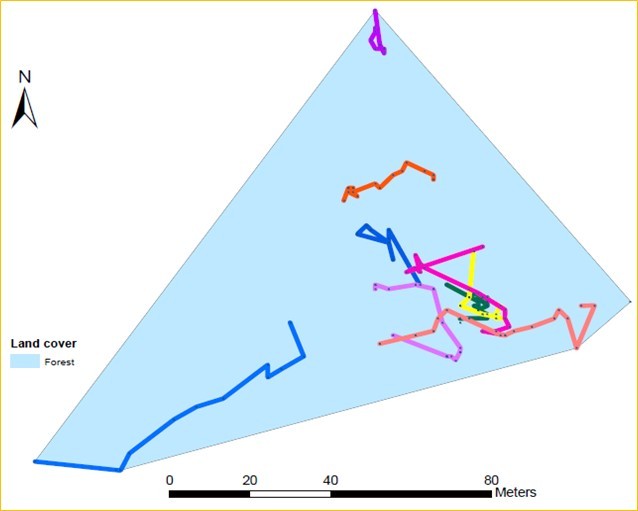
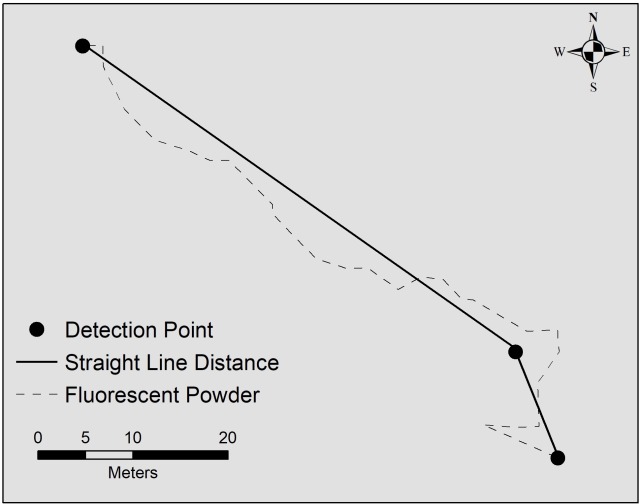
Radio telemetry is an excellent method for re-locating individuals, and provides a snapshot of where the individual is at a given time. With long-term tracking over the active season (mid-March to early November), researchers can better understand movements within a turtle’s home range, the area the animal regularly travels to meet its daily requirements, including food, shelter, and thermoregulation. Home ranges are estimated by drawing an outline around the outermost locations where a turtle was detected throughout the year, and assuming that the individual uses the area inside this boundary (Fig. 2A). Each time a turtle was found, I recorded the GPS coordinates of its location, and could then measure how far the turtle traveled by drawing a straight line between each location point. However, turtles may not always travel in a straight line, but rather follow an indirect route between detection points (Fig. 2B), so this method likely underestimates actual travel distance.

blue diagram showing box turtle home range
diagram showing box turtle distance traveled
Fig. 2A (top) and Fig. 2B (bottom): Box turtle home range (blue area) with daily movements (each color represents one day of travel) using fluorescent powder (A) and an example of an estimated distance traveled (solid black straight line) and actual distance traveled (dotted black curvier line) between location points (black circles; B).

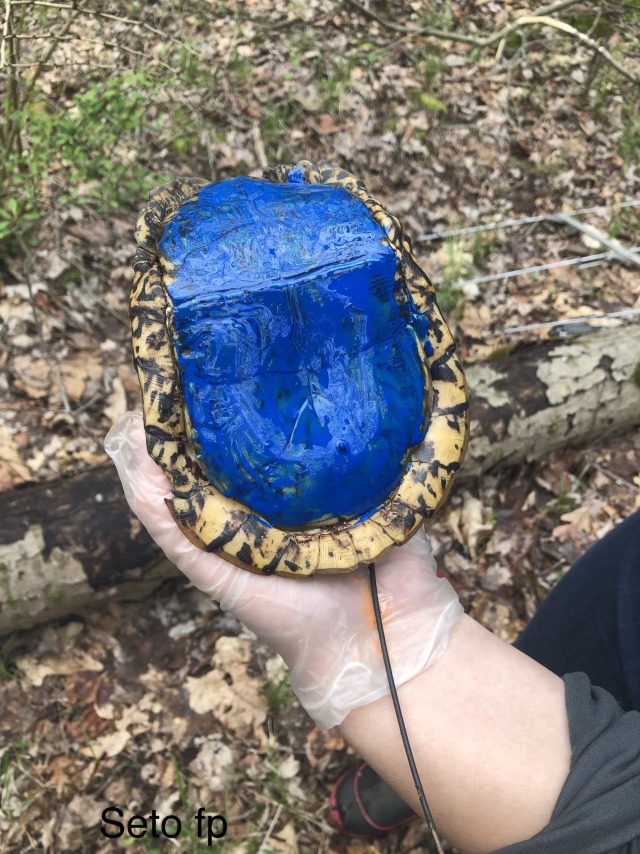
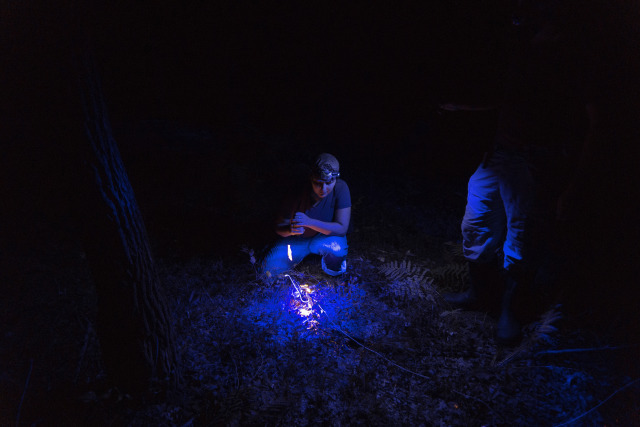
A research technique involving fluorescent powder can produce a far more accurate picture of daily box turtle movements. Non-toxic fluorescent powder is applied to the turtle’s plastron (underside; Fig. 3A) which then leaves a distinct trail as the turtle travels throughout its environment. At night, with the use of an ultraviolet light (Fig. 3B) these trails can then be illuminated, traced, and mapped. Since box turtles tend to travel near or over the same pathways, and because individual home ranges frequently overlap, multiple powder colors are required for some tracking studies.

I used multiple colors (red, blue, yellow, orange) for different days and individuals. The results of my tracking work using this technique demonstrated that box turtles traveled 32 meters per day, with females traveling slightly less than males, and that 95% of movements were less than 6 meters.

box turtle held in a person's hand
two people at night in the forest illuminated by blue light
woman with a ruler in the forest
Fig. 3A (top), Fig. 3B (middle), and Fig. 3C (bottom): A freshly painted plastron of a male box turtle (A), A. Martin with a field assistant illuminating the fluorescent powder trail with an ultraviolet light (B, photo by A. Kappler), and A. Martin measuring leaf litter along a box turtle’s pathway (C).

Tracking animals with fluorescent powder is more laborious than radio telemetry but demonstrates fine scale movement patterns not detected by radio telemetry. The frequent use of short movements, for example, is likely related to thermoregulation requirements (the need to move in and out of cool, shady patches), or encounters with multiple obstacles ranging from small to large logs, dense shrubs, and trees. Radio telemetry provides an estimation of home range size, while fluorescent powder tracking provides details on how that home range is utilized. In tandem, these research tools can provide important information on habitat use for local land managers, who can facilitate preservation of these reptiles.

For more information on this project, including data on eastern garter snake movements, check out Chapter 4 of my dissertation.

Amanda K. Martin is a Post-doctoral Researcher in Section of Amphibians and Reptiles. Museum employees are encouraged to blog about their unique experiences and knowledge gained from working at the museum.

Related Content

Turtle Bottoms

A Wood Turtle at Powdermill

Ask a Scientist: How does climate change affect turtle behavior?

Carnegie Museum of Natural History Blog Citation Information

Blog author: Martin, Amanda K.
Publication date: April 20, 2021

Share this post!

  • Share on Twitter Share on Twitter
  • Share on Facebook Share on Facebook
  • Share on Pinterest Share on Pinterest
  • Share on LinkedIn Share on LinkedIn
  • Share on Reddit Share on Reddit
  • Share via Email Share via Email

Share this post!

  • Share on Twitter Share on Twitter
  • Share on Facebook Share on Facebook
  • Share on Pinterest Share on Pinterest
  • Share on LinkedIn Share on LinkedIn
  • Share on Reddit Share on Reddit
  • Share via Email Share via Email

Filed Under: Blog Tagged With: Amanda Martin, amphibians and reptiles, herpetology, Science News

  • « Go to Previous Page
  • Page 1
  • Interim pages omitted …
  • Page 17
  • Page 18
  • Page 19
  • Page 20
  • Page 21
  • Interim pages omitted …
  • Page 43
  • Go to Next Page »

sidebar

About

  • Mission & Commitments
  • Directors Team
  • Museum History

Get Involved

  • Volunteer
  • Membership
  • Carnegie Discoverers
  • Donate
  • Employment
  • Events

Bring a Group

  • Groups of 10 or More
  • Birthday Parties at the Museum
  • Field Trips

Powdermill

  • Powdermill Nature Reserve
  • Powdermill Field Trips
  • Powdermill Staff
  • Research at Powdermill

More Information

  • Image Permission Requests
  • Science Stories
  • Accessibility
  • Shopping Cart
  • Contact
  • Visitor Policies
Stay in the loop! Sign up for our newsletter(s).
One of the Four Carnegie Museums | © Carnegie Institute | Privacy Policy | Terms of Use | Accessibility
Rad works here logo