• Skip to primary navigation
  • Skip to main content
  • Skip to primary sidebar

Carnegie Museum of Natural History

One of the Four Carnegie Museums of Pittsburgh

  • Visit
    • Buy Tickets
    • Visitor Information
    • Exhibitions
    • Events
    • Dining at the Museum
    • Celebrate at the Museum
    • Powdermill Nature Reserve
    • Event Venue Rental
    • Gift Cards
  • Learn
    • Field Trips
    • Educator Information
    • Programs at the Museum
    • Bring the Museum to You
    • Guided Programs FAQ
    • Programs Online
    • Climate and Rural Systems Partnership
  • Research
    • Scientific Sections
    • Science Stories
    • Science Videos
    • Senior Science & Research Staff
    • Museum Library
    • Science Seminars
    • Scientific Publications
    • Specimen and Artifact Identification
  • About
    • Mission & Commitments
    • Directors Team
    • Museum History
  • Tickets
  • Give
  • Shop

Blogs from our Scientific Researchers

Carnegie Museum of Natural History is home to active research and vast scientific collections. Our scientific researchers regularly contribute to the blog at the museum.

February 24, 2021 by wpengine

Mesozoic Monthly: Nasutoceratops

Although much of the Western world recognizes January 1 as the first day of the new year, many other cultures around the globe celebrate Lunar New Year, an alternate calendar system based on the cycles of the moon. Lunar New Year began on February 12 this year, ushering in, according to repeating cycles of the traditional Chinese zodiac, the Year of the Ox. While bovines hadn’t evolved by the Mesozoic Era, there were plenty of dinosaurs that could be compared to an ox. So, in honor of Lunar New Year, this month’s Mesozoic Monthly features Nasutoceratops titusi, a ceratopsian with a rounded nose and curving, bull-like horns!
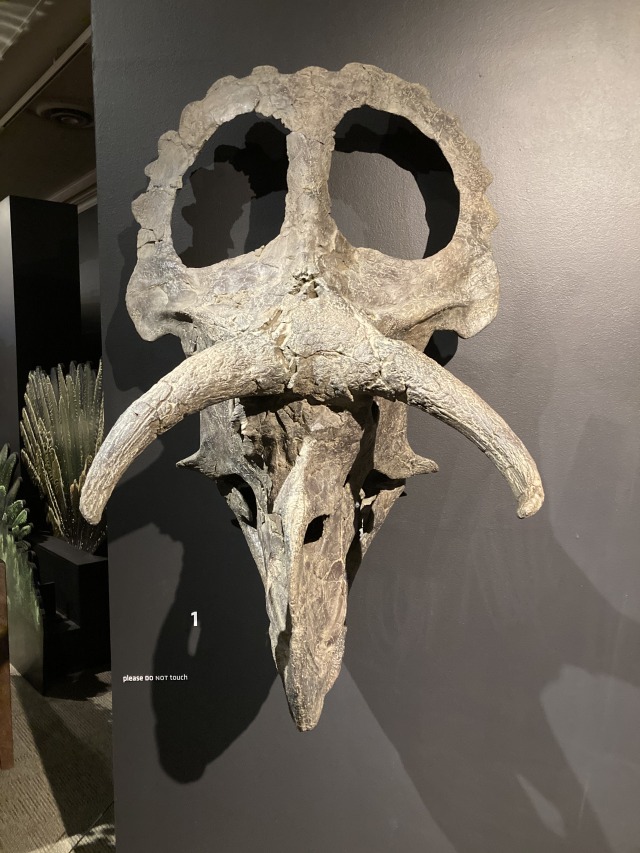
An anterior (head-on) view of the skull of Nasutoceratops, clearly displaying its most iconic features: the frill and horns. You can view this skull in the temporary exhibition Dinosaur Armor at Carnegie Museum of Natural History until July 5, 2021.

Ceratopsian dinosaurs are famous for their huge, elaborate skulls adorned with ornate frills and large horns. Several different bones make up these unique structures. If you haven’t taken an anatomy class, you may not have realized that your skull is made up of several bones that fuse together as you age (fun fact: baby humans have more bones than adults, and this is why!). The horns above a ceratopsian’s eye arise from the postorbitals, bones that sit right behind the eye hole in the skull. The frill is made of two types of bones: the parietals, which make up the central part of the frill, and the squamosals, which act as the corners. Humans actually have both of these bones: the parietal is the large bone at the crown of your head, and the squamosal is fused into the temporal bones above your ears. The bones that form the nose horn of a ceratopsian are aptly named nasals, and we have them too, supporting the cartilage structure of our noses. Of course, our bones are shaped markedly different from those of Nasutoceratops, but the fact that we (and all other vertebrates, aka animals with backbones) have similar skeletal compositions is a feature we inherited from our most recent common ancestor.

Life restoration of a herd of Nasutoceratops providing a convenient perch for a flock of enantiornithine birds in what’s now southern Utah roughly 75 million years ago. Artwork by Harrison Keller Pyle. You can find more of Keller Pyle’s work on DeviantArt under kepyle2055.

The skulls of ceratopsians are huge: they grow as long as one third of their body length! The skull of Nasutoceratops was almost five feet (1.5 meters) long, and although we don’t have many bones from the rest of its body, paleontologists estimate that the animal was almost 15 feet (4.5 meters) long. But Nasutoceratops wasn’t even the largest ceratopsian! The most famous ceratopsian, Triceratops, has a skull that can reach a whopping 8.2 feet (2.5 meters) long, but even that isn’t the largest. The largest skull of all dinosaurs belongs to Pentaceratops (sometimes called Titanoceratops), a ceratopsian with an absolutely massive 8.7 foot (2.7 meter) skull!
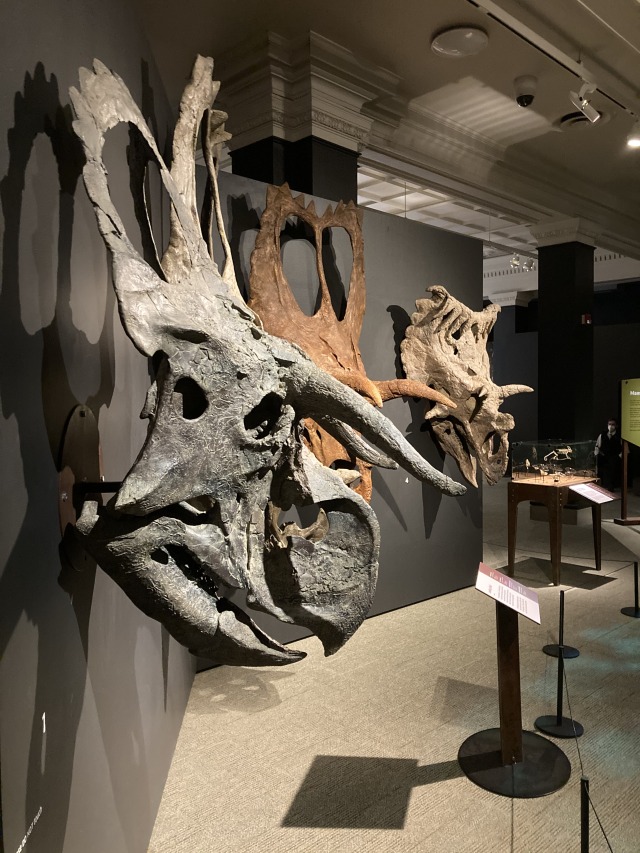
You can view the skull of Nasutoceratops (foreground) alongside those of other ceratopsians (including Utahceratops and Kosmoceratops, mentioned below) in the temporary exhibition Dinosaur Armor at Carnegie Museum of Natural History until July 5, 2021.

Nasutoceratops shared its environment with several other species of ceratopsian, including Kosmoceratops richardsoni and Utahceratops gettyi. Each of these had very different-looking headgear. Nasutoceratops, as previously mentioned, had bull-like horns and a big round nose. Kosmoceratops, in contrast, had weird horns at the top of its frill that curled forward and down, almost like it had bangs, and Utahceratops had short postorbital and nasal horns but a large frill surrounded by spikes. Since all these ceratopsian species lived together, it’s likely that the unique skull ornamentation of different species helped with intra-species recognition (in addition to other functions such as sexual signaling or defense from predators). This meant that each animal could regard shared cranial features as a way to tell who was part of their species. These visual cues might have been especially important for ceratopsians born during the Year of the Ox – according to the Chinese zodiac, “oxen” have poor communication skills, so clear and direct signaling is crucial!

Lindsay Kastroll is a volunteer and paleontology student working in the Section of Vertebrate Paleontology at Carnegie Museum of Natural History. Museum staff, volunteers, and interns are encouraged to blog about their unique experiences and knowledge gained from working at the museum.

Related Content

Ask a Scientist: What kind of dinosaur is a megaraptorid?
Mesozoic Monthly: Dreadnoughtus

A Visit to the Mammoth Site, Hot Springs, SD

Filed Under: Blog Tagged With: dinofest, Dinosaur Armor, dinosaurs, Lindsay Kastroll, Science News, Vertebrate Paleontology

February 18, 2021 by wpengine

New Moth Species Marumba verdeciae Named for CMNH Scientific Preparator

Specimens from Carnegie Museum of Natural History are frequently cited in the research papers of scientists from all over the world.  For researchers, access to these vital materials comes through the assistance of museum staff who are familiar with the physical organization of the collections, and this routine service is generally recognized in the “Acknowledgements” section of any resulting publications. A far rarer form of “thank you” occurred this month when German entomologist Ulf Eitschberger, the first author of a 200-page paper revising  a species complex of a sphinx moth known from multiple localities across southeast Asia, named one of the resulting new species for Vanessa Verdecia, Scientific Preparator in the CMNH Section of Invertebrate Zoology.

image
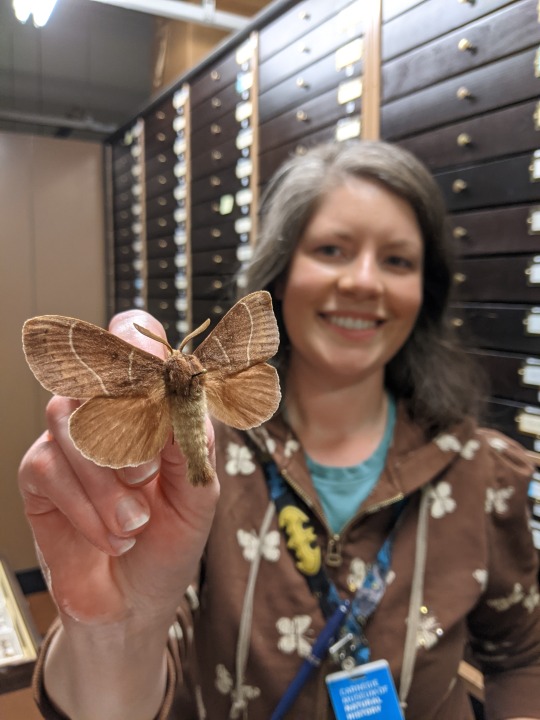
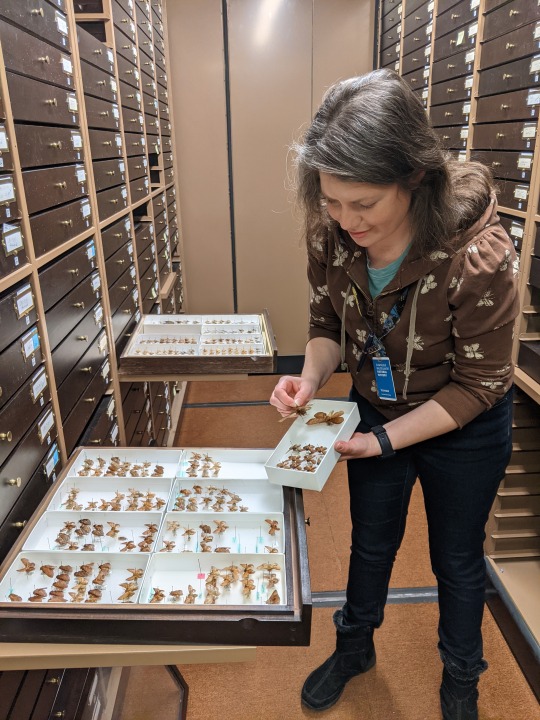
Vanessa checking specimens in a collection storage unit.

Vanessa assisted Ulf in his study of the Marumba saishiuana species complex by taking images of specimens from the museum’s collection and sharing them with him via email. This process involved searching for and verifying many relevant type specimens in the IZ collection because Ulf needed to view images of numerous moths within the Marumba genus for his research.

The type locality for Marumba verdeciae is Qingchenhou Shan, in Sichuan, China.  There were an additional 52 male specimens collected at the same site, between May and June of 2005, which need to be studied further. The new publication makes no mention of M. verdeciae collected at other sites, and at this time the female of the species is unknown.

image
The assistance of Vanessa Verdecia allowed a researcher in Germany to evaluate pinned insects in Pittsburgh.

Vanessa is pleased with the recognition. As she explains, “I feel honored to have this beautiful species dedicated to me as the Sphingidae are one of my favorite groups of moths and a part of the collection I enjoy working in. It was my pleasure to search for these specimens and provide the images necessary for this revision and ongoing work by this researcher.”

For reference the full citation of the publication is below:

“Erster Schritt zur Revision des Marumba saishiuana auct. Artenkomplexes (nec Okamoto, 1924) (Lepidoptera, Sphingidae)”

[TRANSLATION: “First step in revising the Marumba saishiuana species complex (Okamoto, 1924) (Lepidoptera, Sphingidae)”]

Authors:  Ulf Eitschberger & Hoa Binh Nguyen

Journal: Neue Entomologische Nachrichten 75: 123-327, Marktleuthen (Februar 2021)

Patrick McShea works in the Education and Visitor Experience department of Carnegie Museum of Natural History. Museum employees are encouraged to blog about their unique experiences and knowledge gained from working at the museum.

Related Content

Ask a Scientist: Why do moths love lamps?

The Significance of Raising Caterpillars

One-Spotted Variant Instars

Filed Under: Blog Tagged With: Invertebrate Zoology, moths, Science News, Vanessa Verdecia

February 17, 2021 by wpengine

Introducing Matt Brandley, the Herpetology Collection’s New Science Communicator and Research Associate

Every herpetologist has an origin story – a time in their life when they realize that they want to spend their time studying the lives of amphibians and reptiles. For many, the love of herpetology started early, often after the spark of seeing their first salamander or snake in the wild. My path to herpetology, particularly a love of reptiles, developed more slowly.

Holding a juvenile Japanese four-lined rat snake (Elaphe quadrivirgata) on the remote island of Tadanae in the Izu Island Archipelago. Although this species lives throughout Japan, the species on the small, uninhabited island grow at least 50% larger than other populations. My research with Japanese collaborators determined that this body size difference is an adaptation to eating seabird eggs and evolved within the past 10,000 years.

I had known for a long time that I wanted to study evolutionary biology. I’ve always loved both history and biology, and what better career than to study the history of life itself?  It wasn’t until a high school job at a pet shop that I became fascinated by the diversity of colors, body types, and behaviors among amphibian and reptile species. It helped that I had grown up in Oklahoma whose East-West gradient of forest to arid habitat is home to an evolutionarily diverse array of frogs, salamanders, lizards, and snakes. Perhaps even better, as a student of the University of Oklahoma, I had access to the herpetology collection at the Sam Noble Oklahoma Museum of Natural History. Being able to freely roam the aisles of the museum collection was a dream come true.

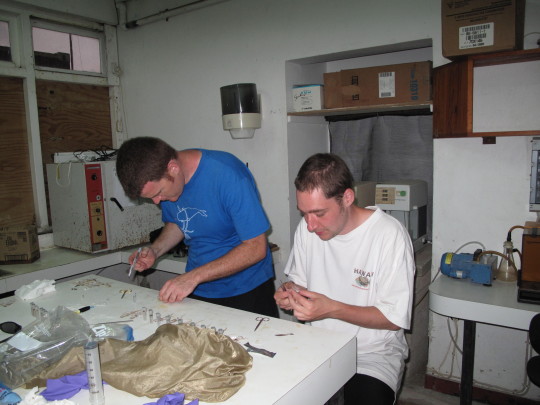
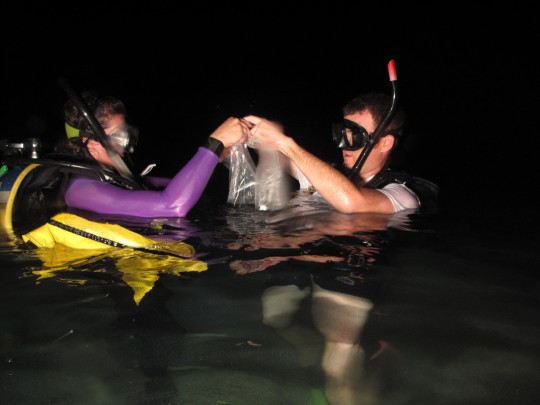
Preserving gecko specimens with Alex Dornburg (UNC Charlotte) on the island of Curaçao. Our research is studying how the introduced non-native tropical house gecko (Hemidactylus mabouia) is outcompeting and displacing the native leaf-toed gecko (Phyllodactylus martini). Before we preserve specimens and accession them into a museum collection, we take a tissue sample for DNA analysis.

As my education progressed from an undergraduate internship at the Smithsonian Museum of Natural History, to Bachelors, Master’s, and PhD degrees, so did the breadth of my research interests. Over the years, I’ve studied how different groups of skinks are related in evolutionary time and what geological processes influenced where these groups of lizards live on the planet; what ecological pressures led to the loss of limbs over 25 separate times in lizard evolutionary history; and what genetic changes underlie the evolution of live birth from egg-laying ancestors. My research has allowed me to conduct fieldwork in Australia, China, Curaçao, Mexico, and Japan, at locations ranging from deserts to remote islands. In 2015, I was honored to play a role in the training of new herpetologists by authoring four chapters on reptile fossil history, amphibian diversity and systematics, reptile diversity and systematics, and biogeography in the Herpetology textbook (4th Ed., Oxford University Press).

Comparing fish with Teresa Iglesias (Okinawa Institute of Science and Technology) in Okinawa for a project on the evolution of fish. As a certified scientific SCUBA diver, I consider myself an honorary marine biologist when I assist my ichthyologist friends with their research.

After working as a scientist in Australia for 10 years, I’m excited to join the skilled staff of the Section of Amphibians and Reptiles at Carnegie Museum of Natural History. The museum collection will allow me to continue research on the evolution of lizards, including changes to the lizard skeleton during the evolution of a snake-like body form, and the phylogeny and biogeography of skinks.

Through blogs and social media, I look forward to sharing updates on my research and the stories behind some of the 230,000 specimens of amphibians and reptiles in Carnegie Museum’s herpetology collection.

Matt Brandley is a Science Communicator and Research Associate in the Section of Amphibians and Reptiles at Carnegie Museum of Natural History. Museum employees are encouraged to blog about their unique experiences and knowledge gained from working at the museum.

Related Content

Ask a Scientist: What is a pitfall trap (for herpetology)?

Nerding Out Over Masting, or Why Unusual Plant Reproduction Excites Animal Ecologists

A Head Above the Rest: Unearthing the Story of Our Leatherback Sea Turtle

Filed Under: Blog Tagged With: amphibians and reptiles, herpetology, Science News

February 10, 2021 by wpengine

Do plants have lips? No, but one genus sure looks like it does!

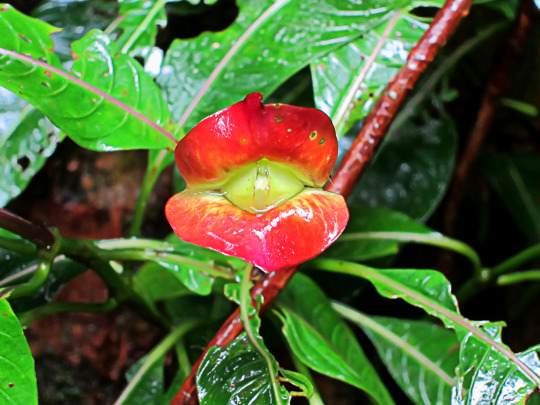
close up of bright red bracts of Palicourea elata, a plant nicknamed hot lips

Pucker up! Hot lips, Palicourea elata, is a tropical tree found in the rain forests of Central and South America with bright red lips, I mean bright red bracts – modified or specialized leaves at the base of the flower. The bright red bracts evolved to attract pollinators, including hummingbirds and butterflies, and they will eventually spread open to reveal the plant’s flowers. Interestingly, this plant’s flower does not give off a scent, and relies on visual cues to attract its pollinators.

Palicourea elata is part of an important group of plants in the coffee family (Rubiaceae), and it has more to offer than what the eye can see. Species in the Palicourea and the related Psychotria genus have also been shown to have antimicrobial, anti-inflammatory, and psychedelic properties. It is also used as traditional medicine among the Amazon peoples to treat aches, arthritis, infertility, and impotency.

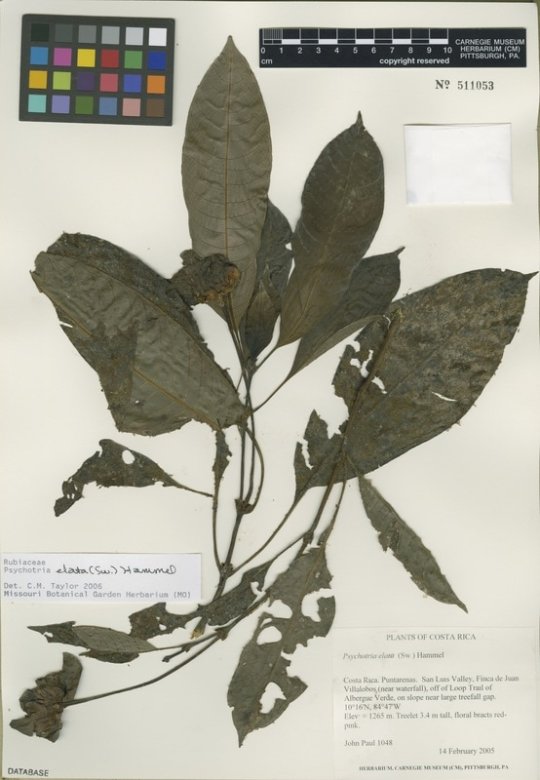
Let’s revisit a “Collected on this Day” specimen from February 14, 2005.

herbarium specimen of Palicourea elata

Though this mounted specimen doesn’t show off its striking flower, it was collected on Valentine’s Day, so that’s pretty romantic! As one of more than half a million specimens in the Carnegie Museum herbarium, this preserved plant is notable for being collected as part of the PhD research at the nearby University of Pittsburgh by John Paul, now a professor at the University of California, San Francisco.

P. elata has become endangered due to deforestation in its native range, and the International Union for Conservation of Nature, or IUCN, has reported that one-tenth of all the Psychotria species are considered threatened.

How can you help species of concern? Log your plant and animal observations into a community-based science platform, such as iNaturalist (like Hot Lips’ page). While you might not have Hot Lips in your backyard, iNaturalist can help you monitor plant and wildlife species, common or endangered. Your observations inform conservation practitioners on changes to a species range, population, behavior, phenology, etc.

Log your observations on iNaturalist the next time you’re in nature!

Heather Hulton VanTassel is Assistant Director of Science and Research at Carnegie Museum of Natural History. Mason Heberling is Assistant Curator of Botany at Carnegie Museum of Natural History. Museum employees are encouraged to blog about their unique experiences and knowledge gained from working at the museum.

Related Content

Ask a Scientist: How do you find rare plants?

Collected in June 1830: Strawberry Bush

Finding Resilience Through Plant Love

Filed Under: Blog Tagged With: Botany, Heather Hulton VanTassel, Mason Heberling, Science News

February 9, 2021 by wpengine

For Some Snails, Reproduction is a Jab Well Done

Some land snails possess darts in their reproductive systems. During courtship, one or both partners jab the other partner with the dart, which some observers have likened to Cupid’s arrow. If the dart misses or otherwise fails to stab the partner, then courtship and mating stop, unfinished. And we’re not talking about tiny darts; in one species the dart is a fifth the length of the creature’s body!

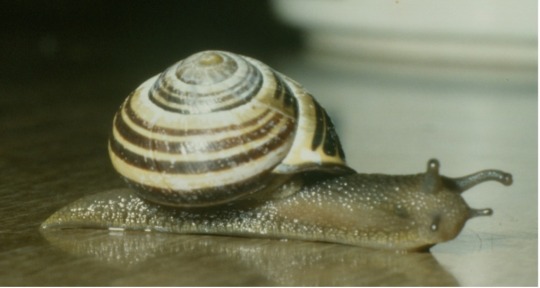
Dart-bearing (not shown) hermaphroditic snail, Cepaea nemoralis (family Helicidae). Shell ca 2 cm diam. 

In those species studied, the dart appears to deliver hormones into the partner to increase the chance of paternity. Most land snails are hermaphrodites (both male and female within one individual). During mating, sperm enters the partner’s copulation pouch, which is not a safe haven because digestive processes begin! The hormones help the sperm escape that pouch so they can find their way to the fertilization chamber.

Note that in these land snails, the dart is used during courtship before copulation. These land snails are not using the dart to transfer sperm, a behavior known as traumatic insemination in some other creatures such as saccoglossans (relatives of sea slugs), some flatworms, and bed bugs.

Dart-bearing snails that you might know include the escargot snails (family Helicidae), the large native snails in southwestern USA (Xanthonychidae), and some of the large native slugs of eastern North America (Philomycidae). Note that the Polygyridae, the larger land snails in eastern North America, lack a dart.

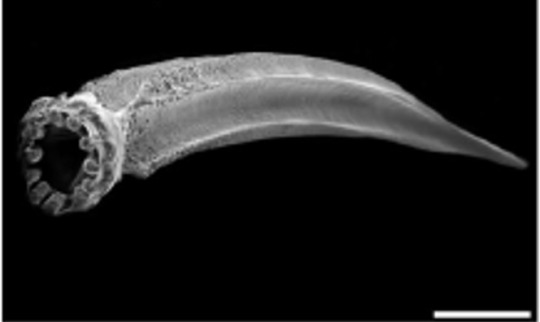
Love dart of Cepaea hortensis. Scale bar is 0.5 mm. Image from Wikimedia Commons, from Koene & Schulenburg (2005).

The dart is formed in a structure called a dart sac, and after the dart is used, a new one grows after about a week. While many species have a single dart sac, some snail groups possess two, four, or even more dart sacs, so presumably they can mate again without waiting for the single dart to re-grow.

A mystery: most groups of land snails lack darts in the reproductive system, although multiple, relatively un-related groups of snails possess darts. Two explanations exist for this diversity of having or lacking darts: (1) the ancestor of all land snails possessed a dart, and then evolutionarily the dart was lost in most groups, or (2) the ancestor lacked a dart, and then a dart was acquired independently in multiple lineages.

Some snail biologists favor the ancestral dart idea, although others (e.g., Tompa 1980) favor the independent origin idea. I like the independent origin idea because of dramatic differences among darts: in some groups, the dart is made of calcium carbonate, in others it is chitin, and in still others it is cartilaginous. I hold that in evolution, it is sometimes easier to start over from scratch than to change fundamental building materials. Nevertheless, most snail biologists agree that the ancestor to the superfamily Helicoidea, which contains the familiar escargot snails, had at least one dart (e.g., Schileyko 1989), but whether it was one dart that proliferated into multi-dart forms or vice versa remains unresolved.

One way to solve this mystery could be to examine molecular processes used in forming and deploying the dart. If all dart-possessing land snails use similar biochemical pathways to form and deploy their darts, those similarities would be consistent with the ancestral dart idea. On the other hand, if love darts of different groups rely on different biochemistry to form and deploy, that would suggest multiple independent origins of darts, with their apparently similar shapes and functions being due to convergent evolution.

Meanwhile, snails continue reproducing, and for those that use a dart, I say, “A jab well done!”

References

Koene, J.M. & Schulenburg, H. 2005. Shooting darts: co-evolution and counter-adaptation in hermaphroditic snails. BMC Evolutionary Biology 5(25): 13 pp. https://doi.org/10.1186/1471-2148-5-25

Schileyko, A.A. 1989. Taxonomic status, phylogenetic relations and system of the Helicoidea sensu lato (Pulmonata). Archiv für Molluskenjunde 120: 187-236.

Tompa, A.S. 1980. The ultrastructure and mineralogy of the dart from Philomycus carolinianus (Pulmonata: Gastropoda) with a brief survey of the occurrence of darts in land snails. Veliger 23: 35-42.

Tim Pearce is the head of the mollusks section at Carnegie Museum of Natural History. Museum employees are encouraged to blog about their unique experiences and knowledge gained from working at the museum.

Related Content

Ask a Scientist: Are slugs just snails with their shells taken off?

Nerding Out Over Masting, or Why Unusual Plant Reproduction Excites Animal Ecologists

The Story of a Beetle, a Dolphin, and Some Remarkable Genitalia

Filed Under: Blog Tagged With: mollusks, Science News, snails, Tim Pearce

February 8, 2021 by wpengine

A Taste for Metal

Motus tower in a field with a hill behind it

Powdermill Nature Reserve researchers are using radio technology to track songbirds marked with grain-of-rice-sized nanotags as they migrate North and South through our region each year. Tracking these birds requires a network of automated radio receiving stations, termed Motus stations, tuned to listen for nanotags affixed to the birds under study as they fly by. Motus is Latin for movement. The name serves to acknowledge the importance of tracking animal movement in ecological studies. The same Motus stations that track songbirds also track nano tagged bats, butterflies, or dragonflies.

Over 100 of these Motus Stations have been installed in the Northeast US with over 30 in Western Pennsylvania alone. These stations have tracked songbirds as they travel from Canada to Central and South America, providing critical data for researchers to make discoveries about migratory behavior, stop over site importance, and impacts of weather events on migration of birds, bats, and insects.

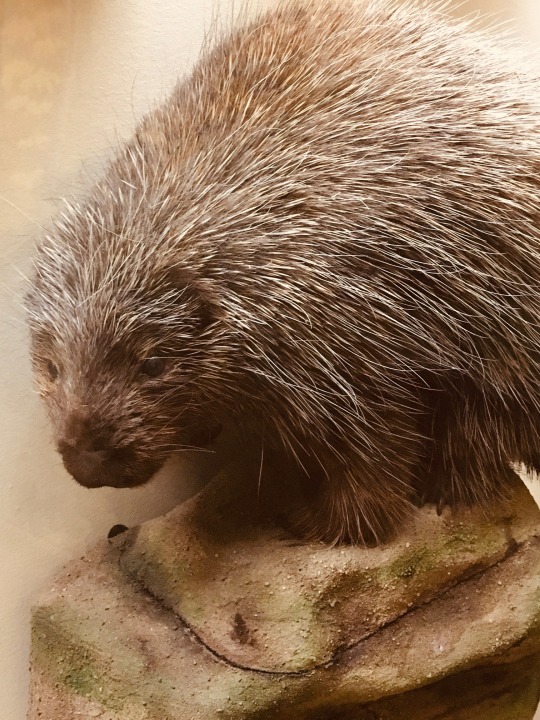
Porcupine taxidermy mount.

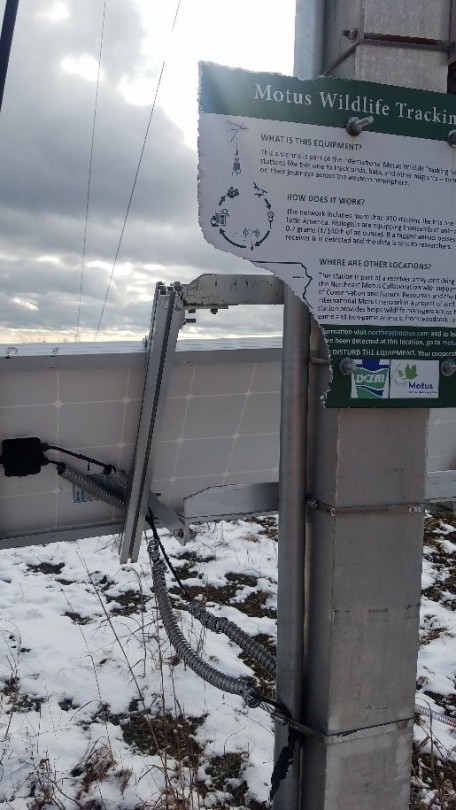
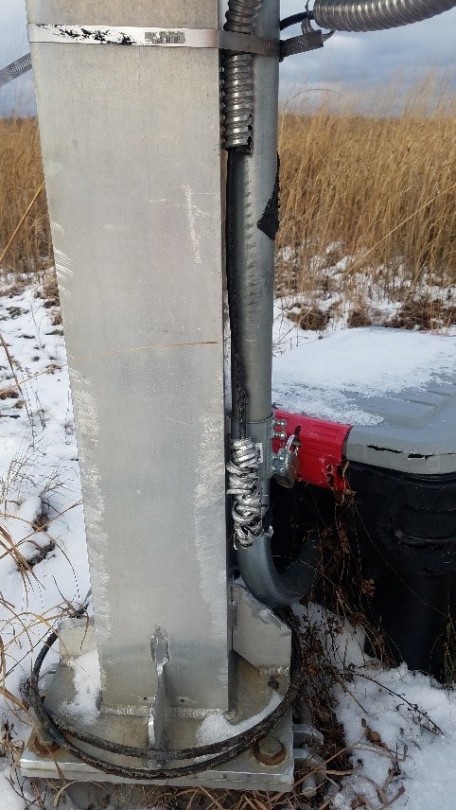
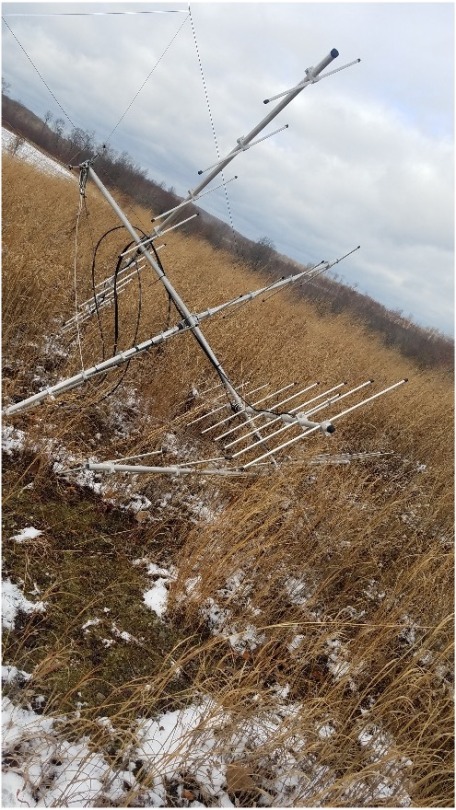
Maintaining these stations often requires fixing issues related to wind, snow, or ice, but one station on a State Game Land here in Western PA has been regularly decommissioned by porcupines! The local porcupines detect salt in the metals used to construct the station and can’t help but chew through all manner of equipment. On three recent occasions, destroyed equipment had to be replaced after the porcupines chewed through plastic boxes, flexible metal tubing, steel turnbuckles, aluminum informational signs, solar panels, coaxial cabling, and even the steel tower itself!

detail of Motus station with part of the sign on it missing
detail of damaged Motus tower
fallen Motus tower in a field with snow

Plans have been made to tear down the station and rebuild it to be “porky proof.” To do this a different structure will be used to hold the equipment well off the ground, and anti-climb baffles will be attached to keep the porcupines from getting to the equipment.

Jon Rice is the Urban Bird Conservation Coordinator at Carnegie Museum of Natural History’s Powdermill Nature Reserve. Museum employees are encouraged to blog about their unique experiences and knowledge gained from working at the museum.

Related Content

Bird Safe Glass Installed at Carnegie Museums

Keeping Birds Safe with GIS and Citizen Science

Before Powdermill Nature Reserve

Filed Under: Blog Tagged With: Birds, Jon Rice, Science News

  • « Go to Previous Page
  • Page 1
  • Interim pages omitted …
  • Page 20
  • Page 21
  • Page 22
  • Page 23
  • Page 24
  • Interim pages omitted …
  • Page 43
  • Go to Next Page »

sidebar

About

  • Mission & Commitments
  • Directors Team
  • Museum History

Get Involved

  • Volunteer
  • Membership
  • Carnegie Discoverers
  • Donate
  • Employment
  • Events

Bring a Group

  • Groups of 10 or More
  • Birthday Parties at the Museum
  • Field Trips

Powdermill

  • Powdermill Nature Reserve
  • Powdermill Field Trips
  • Powdermill Staff
  • Research at Powdermill

More Information

  • Image Permission Requests
  • Science Stories
  • Accessibility
  • Shopping Cart
  • Contact
  • Visitor Policies
Stay in the loop! Sign up for our newsletter(s).
One of the Four Carnegie Museums | © Carnegie Institute | Privacy Policy | Terms of Use | Accessibility
Rad works here logo