• Skip to primary navigation
  • Skip to main content
  • Skip to primary sidebar

Carnegie Museum of Natural History

One of the Four Carnegie Museums of Pittsburgh

  • Visit
    • Buy Tickets
    • Visitor Information
    • Exhibitions
    • Events
    • Dining at the Museum
    • Celebrate at the Museum
    • Powdermill Nature Reserve
    • Event Venue Rental
    • Gift Cards
  • Learn
    • Field Trips
    • Educator Information
    • Programs at the Museum
    • Bring the Museum to You
    • Guided Programs FAQ
    • Programs Online
    • Climate and Rural Systems Partnership
  • Research
    • Scientific Sections
    • Science Stories
    • Science Videos
    • Senior Science & Research Staff
    • Museum Library
    • Science Seminars
    • Scientific Publications
    • Specimen and Artifact Identification
  • About
    • Mission & Commitments
    • Directors Team
    • Museum History
  • Tickets
  • Give
  • Shop

Erin Southerland

November 8, 2023 by Erin Southerland

Turtle-Centered Learning

by Patrick McShea

This fall, for elementary students in the Meadville area, visits to the school library became opportunities to learn more about turtles. Beth Heuchert, Elementary Librarian for three buildings in northwestern Pennsylvania’s Crawford Central School District, was the force behind the collective concentration on the shelled reptiles. She selected The Book of Turtles, a new work by Sy Montgomery and Matt Patterson (Clarion Books, an imprint of HarperCollins Publishers, 2023), to be the focal point for September library sessions. Then, to establish three-dimensional, and in some cases touchable, extensions for the book’s 39 pages of colorful illustrations, she borrowed a wide range of turtle-related materials from the museum’s Learning Collection. 
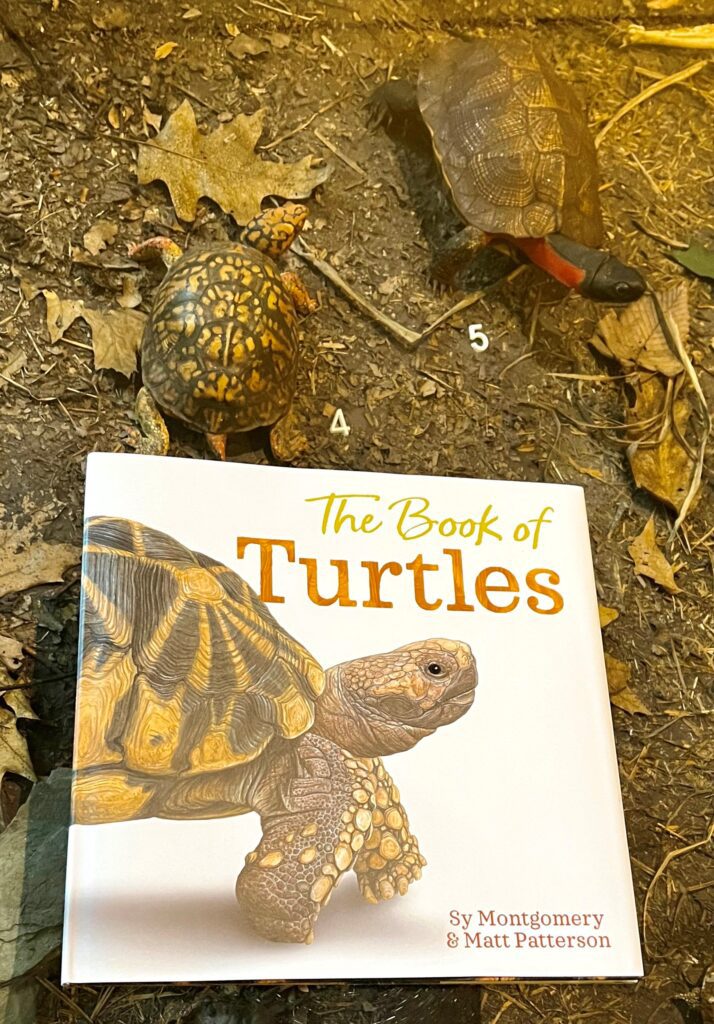
In the museum’s Turtles of Pennsylvania display on the Kamin Overlook, an eastern box turtle (4) and wood turtle (5) flank a copy of The Book of Turtles.

In explaining her joint use of children’s literature and museum materials, Beth outlined multiple activity strands for engaging a wide age range of young learners. 

With the Kindergarten and grade 1, I read aloud a story book about a turtle, Truman, by Jean Reidy, followed by The Book of Turtles–which I read over a couple of classes. Students looked at and got to touch the sea turtle shell and model, along with the turtle taxidermy mounts in the cases. Students shared what they noticed about the turtles and what facts they remembered. Then they drew their own turtles (adding patterns) or colored in a picture of an Eastern box or sea turtle.

With grades 2 through 6, I tried out something new involving centers in the library. We read The Book of Turtles as a group, and then the students went to their tables where they worked while taking turns to examine copies of the book. Two of the centers were ‘research’ tables. These spaces featured materials from the museum along with other books on turtles.

The complementary resources enabled students to write down or draw what they observed, answer questions, and generate lots more questions about turtles for future research. Other centers were set up to encourage Independent Reading, and a Read and Create Center where students made turtles out of LEGOS, created origami turtles, turtle-themed tangrams, or turtle images with standard drawing materials.
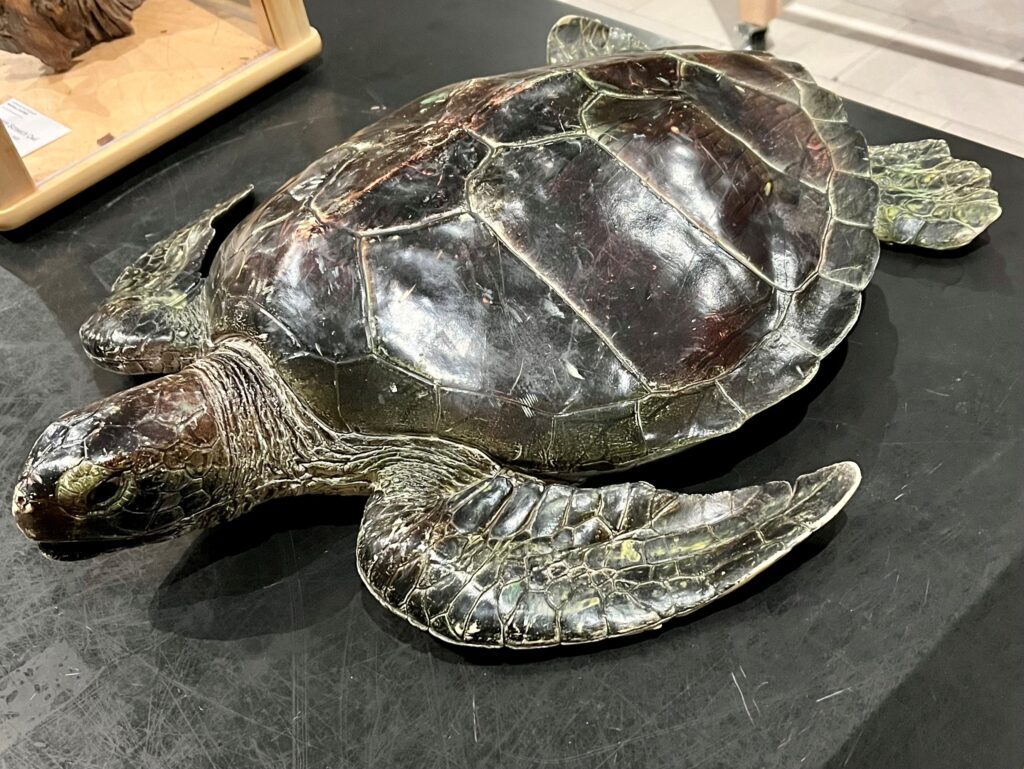
As part of the school loan, a sturdy plastic model of a green turtle represented ocean-dwelling turtle species.

Connections between freshwater turtle shells from the museum and a full-page turtle skeleton illustration in the featured book were particularly important. In combination, the touchable specimens and the detailed image provided reinforcing lines of evidence for interpreting the spine and ribs as inseparable bone components of a turtle’s shell. 

A cultural link between the museum materials and The Book of Turtles also deserves mention. The work’s concluding illustration, a full-color depiction of turtle bearing a vegetated island atop its shell, is captioned with a broad historical reference: Ancient stories from around the world tell us how people believed the Earth was carried on the back of a turtle. For some students, the statement provided a perfect segway into the exploration of an older turtle-focused book, Thirteen Moons on Turtle’s Back, by Joseph Bruchac and Jonathan London, with illustrations by Thomas Locker.
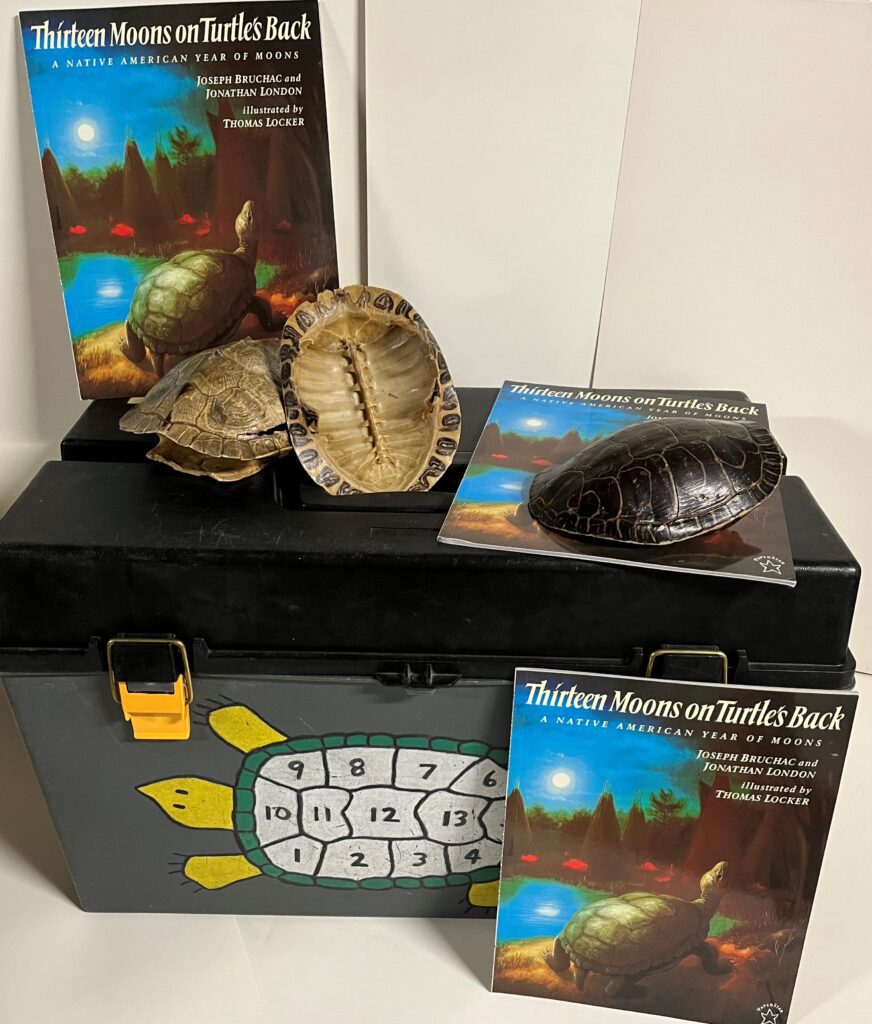
The Thirteen Moons on Turtle’s Back toolbox.

By dedicating the now 31-year-old work “To the children of Turtle Island,” the authors honor the shelled reptile’s foundational role in Native American legend. The poetic text, in conjunction with a concluding page titled, “A note about this book,” draws reader attention to another aspect of turtle anatomy, the thirteen large scales that create the outer surface of a turtle’s carapace or upper shell. As the book note explains, Many Native American people look at Turtle’s back as a sort of calendar, with its pattern of thirteen large scales standing for the thirteen moons in each year.

A colorfully illustrated toolbox bearing turtle shells and twenty copies of the book was part of the loan from the museum. The books’ use, under the direction of a skilled elementary school librarian, pushed turtle activities into interdisciplinary territory where students learned something about how changing seasons and the passage of time are marked in Native America cultures.

Learn more about this classroom-enriching program.

Patrick McShea is an educator at Carnegie Museum of Natural History.

Related Content

Box Turtle Time Capsule

Museum Connections to a College Lab

Wolverine: Status Check For a Tournament Champion

Carnegie Museum of Natural History Blog Citation Information

Blog author: McShea, Patrick
Publication date: November 8, 2023
Share this post!

  • Share on Twitter Share on Twitter
  • Share on Facebook Share on Facebook
  • Share on Pinterest Share on Pinterest
  • Share on LinkedIn Share on LinkedIn
  • Share on Reddit Share on Reddit
  • Share via Email Share via Email

Filed Under: Blog Tagged With: Education, Pat McShea, turtles

October 19, 2023 by Erin Southerland

Museum Connections to a College Lab

by Patrick McShea
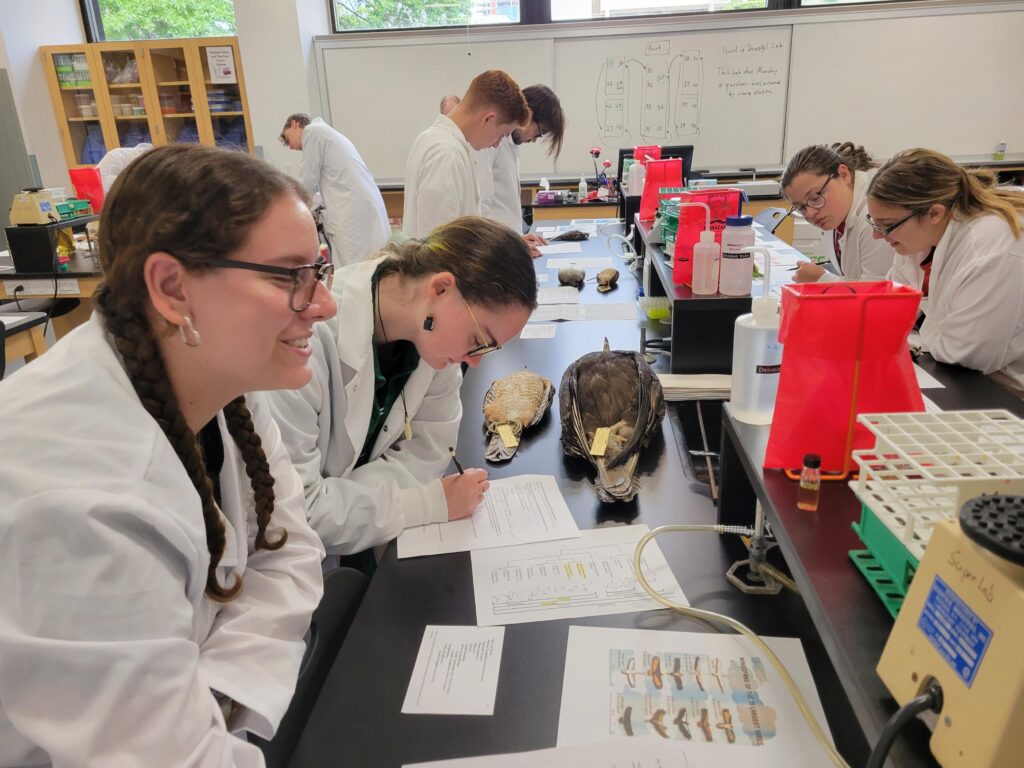
students in lab coats working at tables

During a recent Vertebrate Diversity Lab at Duquesne University, Dr. Brady Porter’s students closely examined preserved wildlife material on five rows of tables. Weeks earlier, Brady arranged to borrow a variety of vertebrate specimens from Carnegie Museum of Natural History; lizards, snakes, and turtles preserved whole in jars of alcohol, a set of mammal skulls presenting strikingly different dental formulas, and birds preserved in the flat and ridged form known as study skins.

As the manager of the museum’s Educator Loan Collection, I provided 15 bird study skins for the lab. When I expressed curiosity about how the preserved birds would be received by a college audience, Brady invited me to observe the encounter.

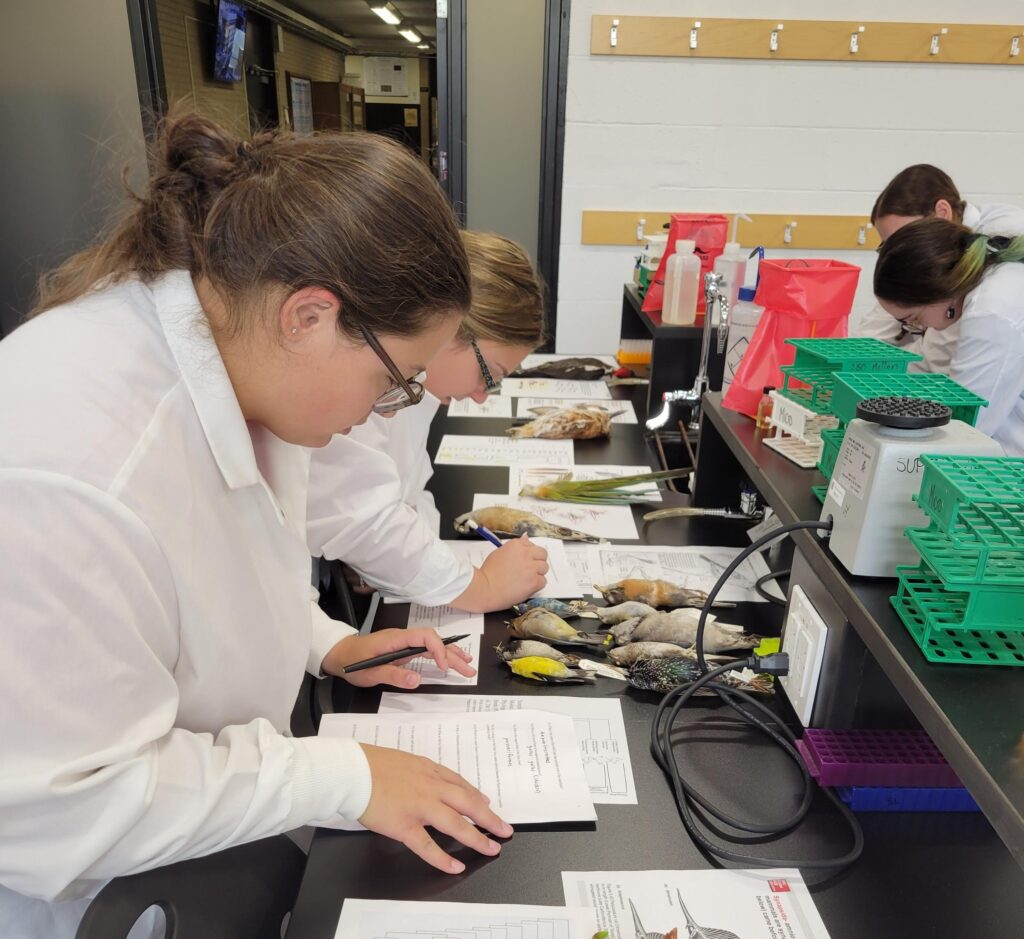
students looking at bird study skins on a lab table

What I observed was an exceptional blend of instruction and inquiry. As the students circulated, singly or in pairs, among the specimen-rich workstations, Brady also moved about the lab, answering individual questions, and providing pointed suggestions in a voice clearly audible to every member of the class. While I watched two students gently check a pied-billed grebe study skin for the presence or absence of the stiff facial feathers known as bristles, for example, I listened to Brady’s advice to a student at an adjoining table who had just picked-up an opossum jaw. “It might be easier to do the dental formula on one side and then double it. And look carefully at every place a tooth could be because teeth can fall out.”

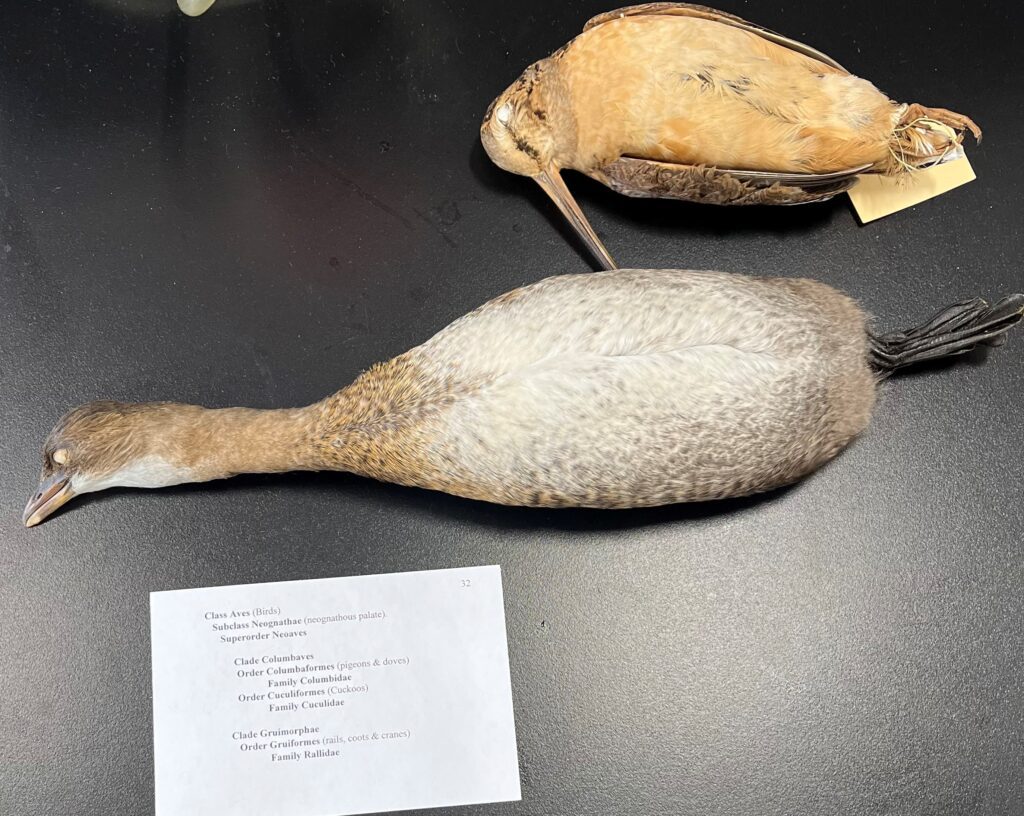
grebe and woodcock study skins on a table
Study skins – American Woodcock (top) and Pied-billed Grebe (bottom)

No caveats were necessary for the bird study skins, where worksheet questions directed students to look for and interpret the functional importance of such features as the sharp talons and distinctive hooked beaks of raptors, and the tiny, but fully functional feet of hummingbirds. Some questions served to remind the students about how whole suites of physical features were historically used to create the detailed chart of relationships that is the vertebrate classification system. Here the pied-billed grebe, a species so adapted to aquatic life that mated pairs construct floating nests, provided a tactile reference point for a question directed several levels back in the classification chart. “What is the name of the bird Clade that includes most of the waterbirds?”

During an hour-long observation of the lab, it was clear how much the professor-directed learning experience was dependent upon the authentic materials. Had photographs or digital images been used as substitutes, they would not have conveyed all the information embodied in the preserved birds. In less structured situations, however, the usefulness of study skins as teaching aids fades. 

At the museum, visitors encounter 21 study skins displayed amidst nearly 300 life-like taxidermy mounts in Bird Hall. 

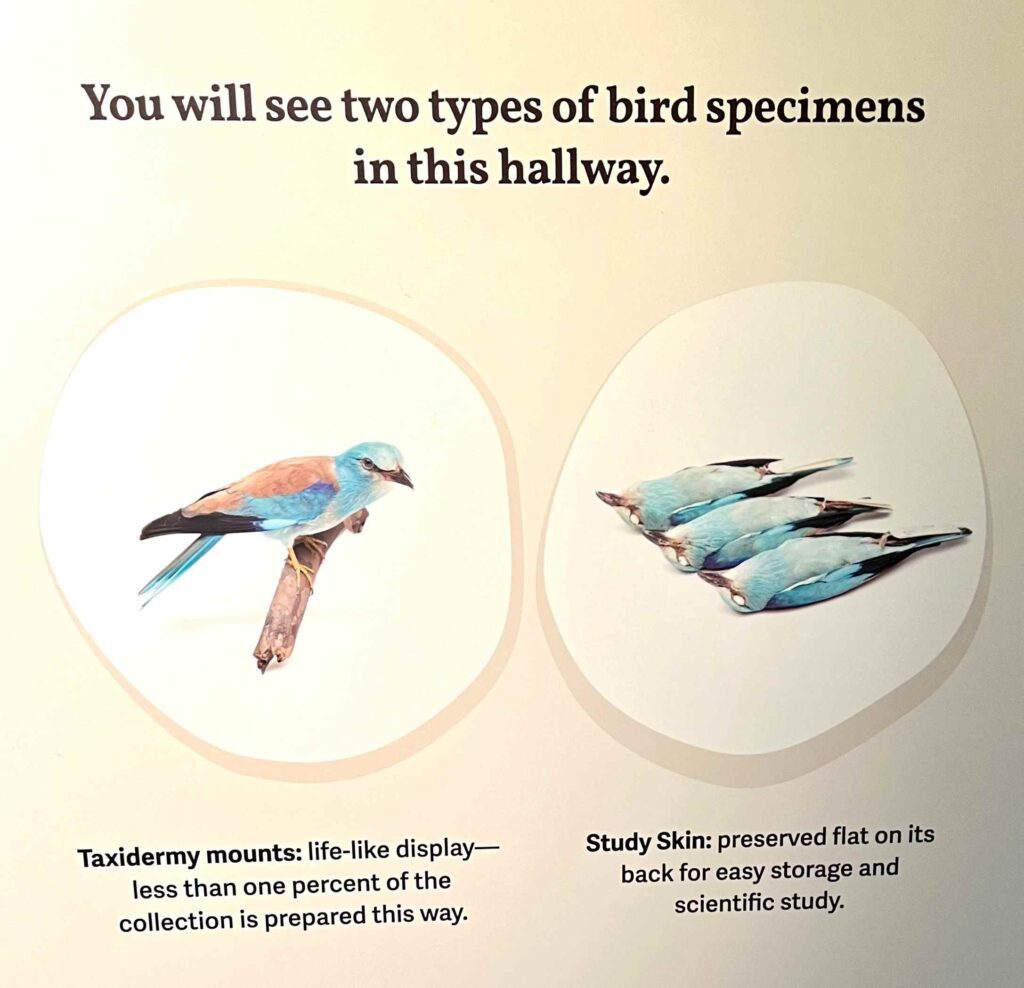
Museum label that explains study skins. Text says "You will see two types of bird specimens in this hallway. Taxidermy mounts: life-like display, less than one percent of the collection is prepared this way. Study skin: preserved flat on its back for easy storage and scientific study." There are illustrations of both study skins and a taxidermy mount.

On the Grand Staircase side of the long narrow exhibition, an informational panel introduces the two types of bird specimens, summarizes their difference, and notes how ratio of preservation forms is completely reversed behind-the-scenes. 

In explaining the usefulness of bird study skins to elementary and middle school audiences, I have long relied upon an explanation of theoretic researchers visiting the CMNH Section of Birds to gather data for a study about wing length variation in a species with a wide geographic range. “They’d have a difficult time working with taxidermy mounts.” I’d explain. “One mount might have been prepared with the wings fully open, another with them partially open, and a third with folded wings. With the standardized preparation method and form of study skins, those researchers would get accurate comparable measurements.”

My visit to the Duquesne University biology lab has added a more student-focused detail to the explanation: “Lots of the physical characteristics used for classification can be observed by examining bird study skins, and in a future class you might have an opportunity to be a close observer.”

Patrick McShea is an Educator at Carnegie Museum of Natural History.

Related Content

Hispanic Heritage Month Scavenger Hunt: Three Birds and a Butterfly

What’s Up With the Dead Birds?

2023 Point Counts at Powdermill Avian Research Center

Carnegie Museum of Natural History Blog Citation Information

Blog author: McShea, Patrick
Publication date: October 19, 2023

Share this post!

  • Share on Twitter Share on Twitter
  • Share on Facebook Share on Facebook
  • Share on Pinterest Share on Pinterest
  • Share on LinkedIn Share on LinkedIn
  • Share on Reddit Share on Reddit
  • Share via Email Share via Email

Filed Under: Blog Tagged With: Birds, Education, Pat McShea

October 6, 2023 by Erin Southerland

Hispanic Heritage Month Scavenger Hunt: Three Birds and a Butterfly

by Patrick McShea

Hispanic Heritage Month creates an opportunity to consider how we share some forms of winged wildlife with Spanish-speaking regions far to our south. At this time of year, many bird species that are widely considered to be Pennsylvania residents are in the process of a long seasonal migration to warmer climates.

This migratory behavior pattern, established long ago in each species’ evolutionary history, occurs every fall, and reverses with northward movement in the spring. Just as we might consider the wild creatures who spend summers with us to be ours, the people at the Caribbean, Central American, and South American locations where these creatures pass the months of our Pennsylvania winter might consider the winged seasonal visitors to be theirs.

An informal walk to locate three migratory birds and one migratory butterfly among the exhibition halls of Carnegie Museum of Natural History is a good way build background knowledge about wildlife sharing. Recognition of such sharing is a step toward understanding more about other cultures.

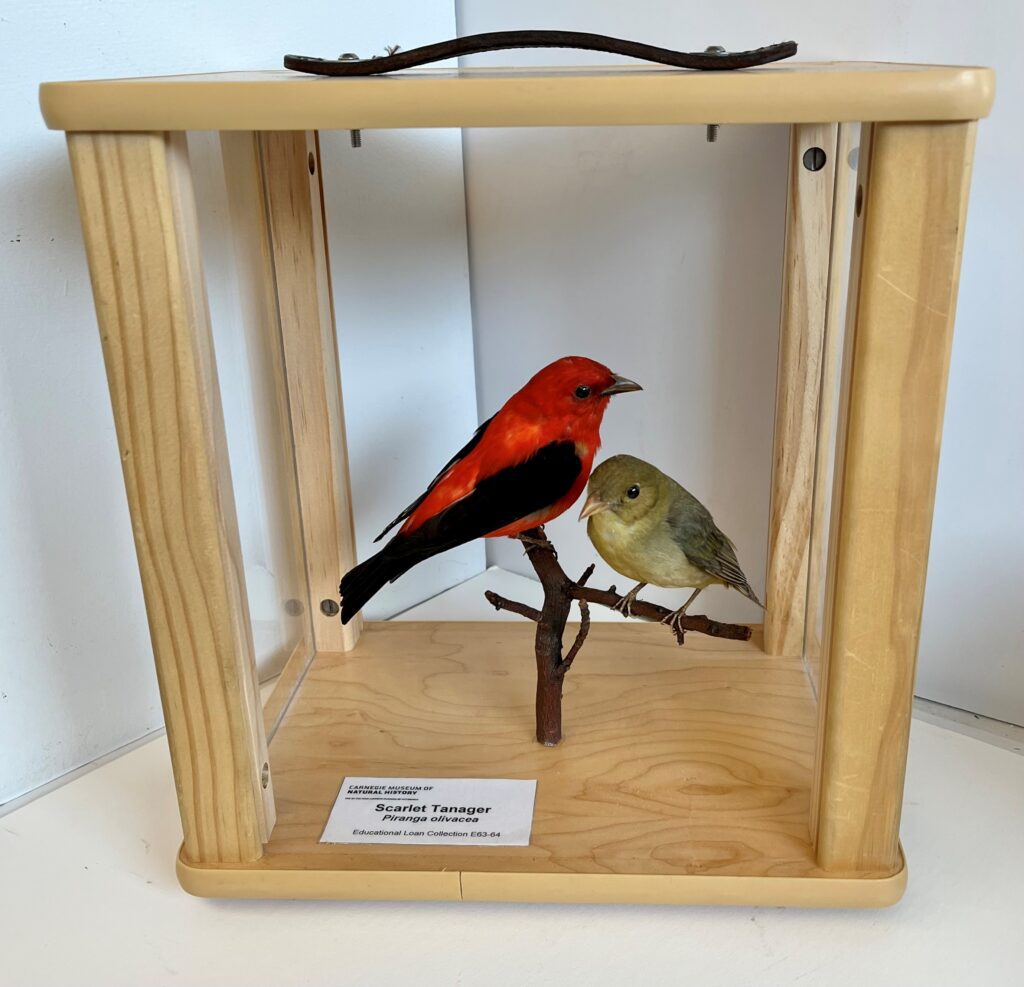
Stop #1: Scarlet Tanager (known in Spanish as Piranga Escarlata)

taxidermy mount of two scarlet tanagers

Within the interactive space known as Discovery Basecamp, the Scarlet Tanager’s bright plumage should be easy to locate among other encased bird taxidermy mounts. As the species account in All About Birds states: Male Scarlet Tanagers are among the most blindingly gorgeous birds in an eastern forest in summer, with blood-red bodies set off by jet-black wings and tail.

Recent population studies, which included lots of community science generated data, indicate that Pennsylvania supports more breeding pairs of Scarlet Tanagers than any other state. 

Because this species feeds and nests high in the tree canopy, learning to recognize their distinctive song is a good way to spot one. If this technique enables you to spot a bright red male or yellowish-green female, remember that for some months of the year the bird you’re watching might reside in forests as far away as Bolivia. 

Stop #2: Monarch Butterfly (known in Spanish as Mariposa Monarca)

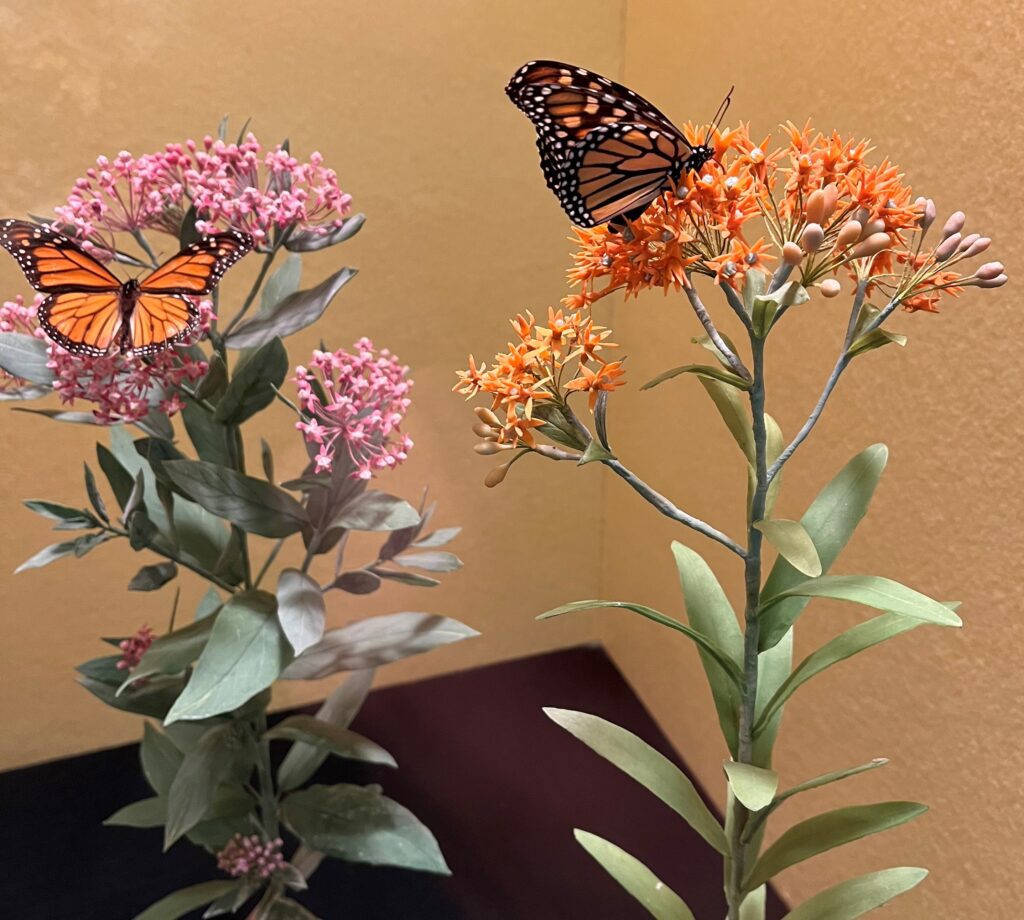
diorama of a monarch butterfly on a milkweed plant

The familiar orange and black monarch butterfly flitting across your neighborhood in the fall might be embarking on an incredible journey from field edges in Pennsylvania to the cool and relatively moist habitat of oyamel fir forests in Mexico’s Sierra Madre Mountains. The seasonal movement of monarchs across the North American continent is one of the longest migrations of any insect. In full cycle, however, it differs from bird migration in reliance upon multiple generations. 

The long southbound fall journey is completed by some of the individual butterflies who embark upon it. These butterflies initiate northward migration in the spring, but no individuals complete the roundtrip journey. Northbound female monarchs lay eggs for a subsequent generation to continue the migration to our region. 

Female monarchs lay eggs on the leaves of milkweed plants, the food source for the caterpillars that hatch within days. The display in the Hall of Botany depicts two of the eleven species of milkweed native to Pennsylvania.

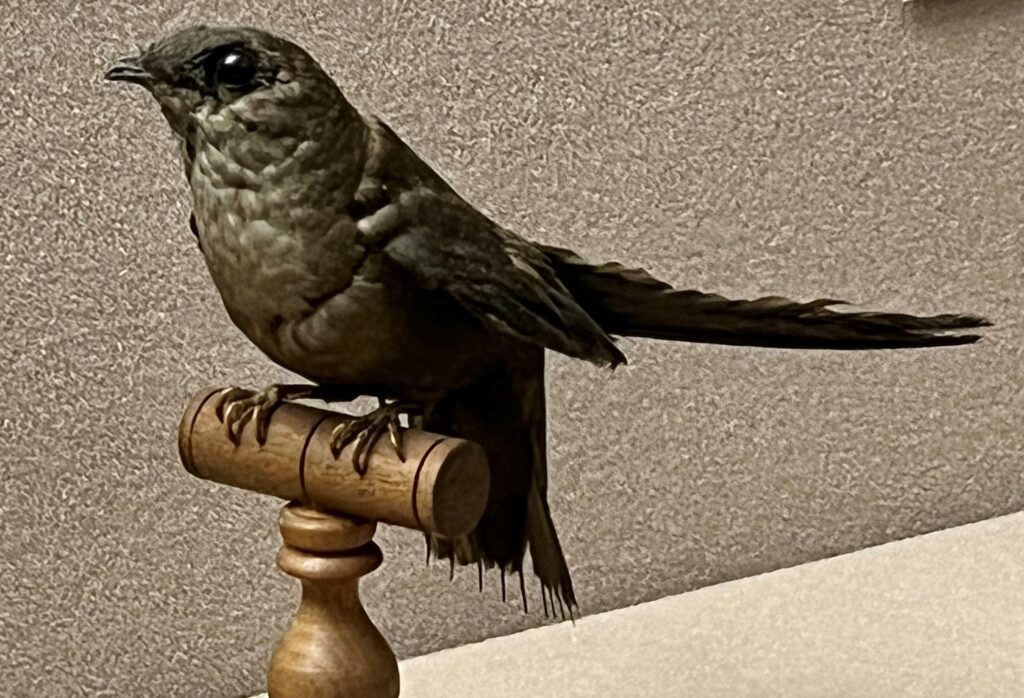
Stop #3: Chimney Swift (known in Spanish as Vencejo de Chimenea)

In urban, suburban, and even rural areas of southwestern Pennsylvania, the high-pitched twittering cries of circling Chimney Swifts create a soundtrack for summer days. The birds’ aerial maneuvers are a mix of rapid wing beats and dynamic glides, and much of the action relates to feeding. Chimney Swifts eat on the wing, using their unusually large mouths to capture up to 5,000 flying insects per day.

When the birds disappear from our skies in the fall, they undertake a journey of thousands of miles to the upper reaches of South America’s Amazon Basin, in Peru, Ecuador, and Brazil, where they spend much of the winter. 

In our region, the species roosted and nested in hollow trees before the proliferation of chimneys that accompanied the European colonization of North America. The species is so physically adapted to life on the wing that it is unable to perch upright for long. Note the protruding tail feather shafts on the taxidermy mount. These stiff braces help the bird to hold resting positions against the interior vertical surfaces of chimneys or hollow trees.

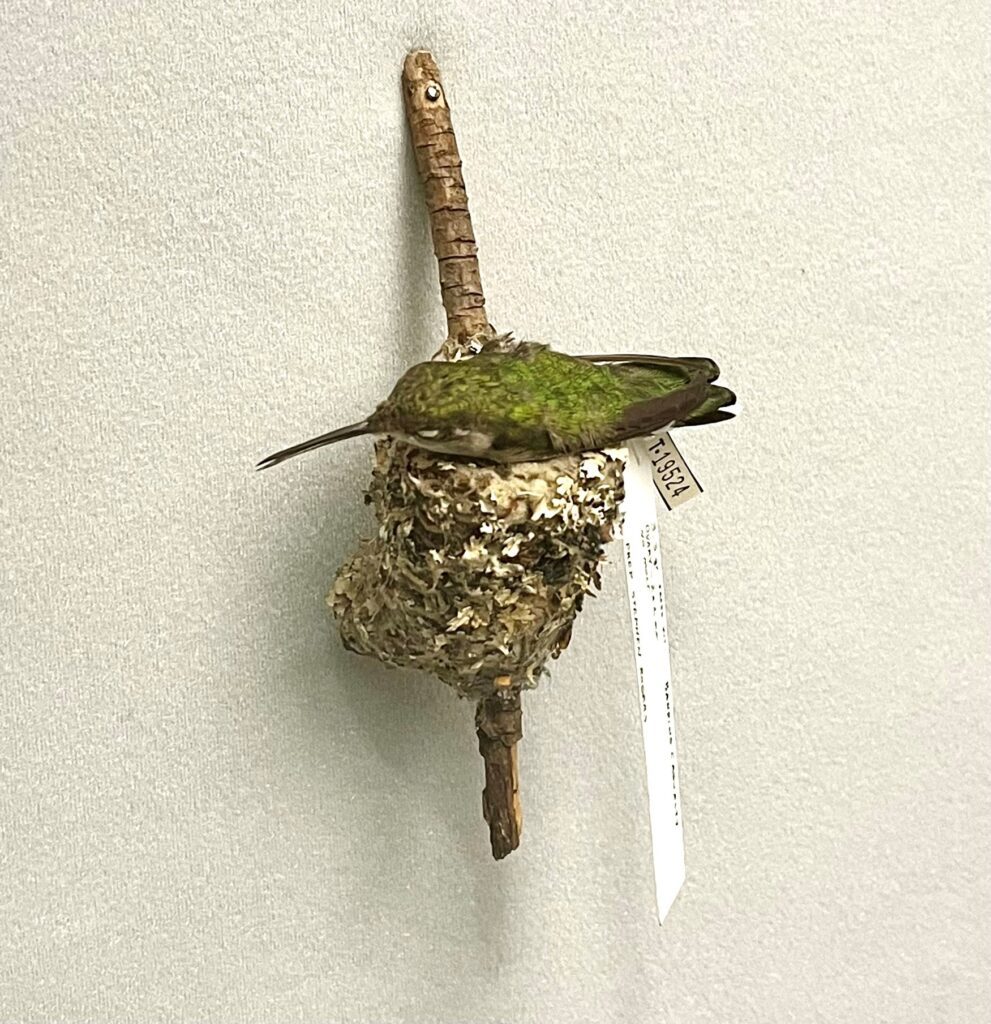
Stop #4: Ruby-throated Hummingbird (known in Spanish as Colibri Gorjirrubi)

Although there is a Ruby-throated Hummingbird taxidermy mount immediately adjacent to the Chimney Swift mount, the specimen pictured above is located elsewhere in Bird Hall. This female bird, displayed on a nest, is in “study skin” form. Study skins lack the glass eyes and life-like poses of taxidermy mounts, and their uniform flatness facilitates both storage and scientific study. Most of the 190,000 birds in the museum’s scientific collection (including many from Spanish-speaking regions of the world) are in study skin form.

From May through December, Ruby-throated Hummingbirds attract our attention when they visit some of the flowers we tend, or feeders placed specifically to attract the birds. The species’ diet also includes mosquitoes, gnats, fruit flies, small bees, and spiders. On their breeding grounds, six to ten days of construction work by the female bird results in an inch-deep, two-inch diameter, branch-top nest lined with plant down, held together with spider silk, and for concealment purposes, shingled with lichen chips. 

Their annual southward migration includes passage over or around the Gulf of Mexico to reach wintering grounds that stretch southward from Mexico’s Yucatan Peninsula to Costa Rica. 

Maps indicating breeding ranges, wintering grounds, and the migration corridors between those locations are critically important tools for understanding the movements of migratory wildlife within and between continents. Much of the information about the birds profiled in this activity comes from species accounts of All About Birds, an encyclopedic online resource maintained by the Cornell Lab of Ornithology. In each account, a species’ continental-scale migration movements are depicted on color-coded maps. 

Another notable facet of the website maintained by Cornell Lab of Ornithology is the availability of education materials in Spanish. 

Patrick McShea is an Educator at Carnegie Museum of Natural History.

Carnegie Museum of Natural History Blog Citation Information

Blog author: McShea, Patrick
Publication date: October 6, 2023

Share this post!

  • Share on Twitter Share on Twitter
  • Share on Facebook Share on Facebook
  • Share on Pinterest Share on Pinterest
  • Share on LinkedIn Share on LinkedIn
  • Share on Reddit Share on Reddit
  • Share via Email Share via Email

Location key:

Stop #1: Discovery Basecamp

Stop #2: Hall of Botany

Stop #3: Bird Hall

Stop #4: Bird Hall

Filed Under: Blog Tagged With: Education, Hispanic Heritage Month, Pat McShea, scavenger hunt

October 2, 2023 by Erin Southerland

Celebrating Indigenous Peoples’ Day 2023

by Amy Covell-Murthy

Indigenous Peoples’ Day is observed in the City of Pittsburgh alongside Columbus Day, and I would like to suggest some ways to observe the holiday for those who do not claim Indigenous heritage. In a state with no habitable federally recognized Indigenous land, Native people are all too often seen as existing only in the past. While educating yourself on the Indigenous history of the region is an important part of observing the holiday, it’s also important to recognize that many First Nations people live, work, and play in the Greater Pittsburgh Area. Indigenous Peoples’ Day should not be a memorial, but a recognition of the important history and cultural heritage of those who are the past, present, and future caretakers of this land. Here are some things you can do to respectfully celebrate on October 9, 2023. 

Educate Yourself

Learn about the people who have called Pittsburgh home. Many different cultural groups have occupied the Upper Ohio River Valley including but not limited to the Delaware/Lenape, the Haudenosaunee, the Shawnee, and the Wyandotte. The Osage Nation also claims origin in the Ohio River Valley, and you can learn about all these nations on their official websites. I also suggest hitting up your local library to check out books on these groups as well as the cultural traditions and ancestors who came before them. This region was home to those who are often referred to as the Adena, Hopewell, and Monongahela. But keep in mind, we have no idea what they called themselves. Here are some resources: 

Haudenosaunee Confederacy

Delaware Tribe

Eastern Shawnee Tribe of Oklahoma

Wyandotte Nation

Osage Nation

Educate Yourself Some More

Learn about the history that may have been left out of your primary and secondary school curriculums. You may be unaware of the atrocities that Indigenous people faced in the State of Pennsylvania. Many First Pennsylvanians were forced from their homelands and infected with unfamiliar diseases by colonizers. Later the first assimilation school was created in Carlisle, PA and used as a model for 24 more of these institutions whose primary goal was to force Indigenous children to abandon their Native languages and customs. In the 1960s, the building of the Kinzua Dam forced Seneca Nation citizens to move into the State of New York, breaking the 1794 Treaty of Peace and Friendship. Indigenous communities thrive despite these events and institutions, but it is important to recognize and not try to hide these gruesome parts of our shared American history. You can find more information about these examples on these websites: 

Kinzua Dam (Seneca-Iroquois National Museum)

The Lenape and Colonization (Delaware State Parks Adventure Blog)

Carlisle Indian School Project

Support Local Indigenous Groups

The Council of Three Rivers American Indian Center (COTRAIC) is a regional intertribal nonprofit that promotes the socio-economic development of the Native American community and others who experience the same type of economic difficulties in the Greater Pittsburgh metropolitan area. One way to support them is to plan to attend their annual Pow Wow that is held in Dorseyville, just outside of Pittsburgh, in late September. Learn more about their Early Childhood Education, Native American Elders, Veterans, and Employment programs at COTRAIC.org and on their Facebook page.

I’d like to highlight COTRAIC’s Singing Winds Food Pantry this year. Learn more, donate, or sign up to receive help meeting your personal and family food needs.

Honor the Land

Planting Native Pennsylvanian plants is a wonderful way to honor our connection to the Earth and to provide food and shelter for the diverse species who live here. You can learn about how Indigenous People use trees, ferns, flowers, vegetables, fruits, and grasses to enhance their quality of life. The Pennsylvania Department of Conservation and Natural Resources and the Audubon Society of Western Pennsylvania offer suggestions for those who are interested:

Landscaping with Native Plants

List of Western PA Native Plants

Attend an Online or In Person Event

Many cities around the United States hold events to celebrate Indigenous Peoples’ Day. A quick Google search can point you in the right direction. I’m going to be learning from visiting scholar Dr. Jessie Ryker Crawford on October 9 at noon in Carnegie Museum of Natural History’s Earth Theater for the Moriarty Science Seminar. Dr. Ryker-Craford’s program is titled, “Academia and Indigenous Communities: Opening the Doors to Collaborative Research and Community-Driven Projects.” 

You can find a calendar of events hosted by the National Museum of the American Indian here.                                           

Support Indigenous Artists, Authors, Film Makers, and Musicians

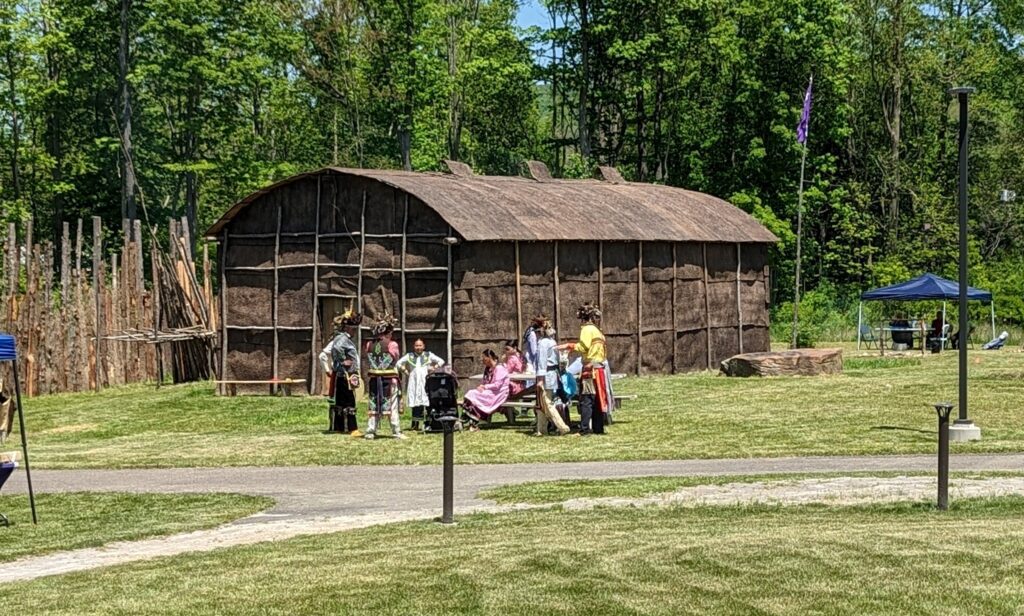
longhouse at Seneca Iroquois National Museum
Longhouse Replica Dedication Ceremony at the Onöhsagwë:de’Cultural Center on May 27, 2023.

You have so many options! The Sundance Institute has released a guide to the Indigenous works at the 2023 Sundance Film Festival. The website of Carnegie Library of Pittsburgh offers staff picks and lists of Indigenous authors. The Canadian Broadcasting Corporation released a list of Indigenous musical artists to watch out for in 2023. My personal favorite is Hayley Wallis (What a voice!). Vogue featured 21 Indigenous Artists to watch out for from this year’s Santa Fe Indian Market. The list includes fashion designers, painters, beaded and metal jewelry designers, sculptors, and textile artists. You can also support Indigenous artists by purchasing art through the online gift shop of the Seneca Iroquois National Museum/Onöhsagwë:de’ Cultural Center or take a drive up to purchase something in person and see the new longhouse that they’ve built behind the museum.   

Help Change Derogatory Mascots and Place Names

Sign petitions, attend community forums, and advocate for the changing of harmful stereotypes and offensive signage in our community.  From the Cleveland Guardians to Hemlock Hollow Road, there are many instances of this happening around us. The National Congress of American Indians offers resources to help end the era of harmful mascots.

Jersey, helmets, photos, and more in a display about the Haudenosaunee Nationals.
Haudenosaunee Nationals Lacrosse Team exhibit at the Onöhsagwë:de’ Cultural Center.

Also, learn about the Haudenosaunee Nationals Lacrosse Team, who hope to make it to the 2028 Olympics! Learn about how they changed their name in 2022 to reflect their collective identity and donate to help them reach their goals if you are able!

Consider Donating Time or Resources

The Seneca Iroquois National Museum/ Onöhsagwë:de’ Cultural Center is only a few hours drive from Pittsburgh and occasionally may be looking for volunteers. Check their website and follow their social media accounts for more information.


View this profile on Instagram


SINM (@senecairoquoisnationalmuseum) • Instagram photos and videos

If you are able, here are just a few organizations who can use your help:

Native American Agriculture Fund

NDN Collective

Association of American Indian Affairs

Advancing Indigenous People in STEM

So, join me once again in unlearning some Columbus Day myths and celebrating the cultural diversity of Indigenous People throughout the history of our region. Remember that the best places to start educating yourself are the local libraries and museums. Carnegie Museum of Natural History offers guided tours of our cultural halls that strengthen the messages we wish to share with the community. Visit the Alcoa Hall of American Indians to learn more about the Tlingit, Lakota, Hopi, and Haudenosaunee, and keep in mind that there are so many other Indigenous groups, traditions, nations, and organizations for you to explore on your own!

Amy L. Covell-Murthy (she/her) is Archaeology Collection Manager/Head of the Section of Anthropology.

Related Content

Bringing a Little O-Gah-Pah to Pittsburgh

New Vision of Old Rock Art

Staff Favorites: Dolls in the Museum’s Care

Carnegie Museum of Natural History Blog Citation Information

Blog author: Covell-Murthy, Amy
Publication date: October 2, 2023

Share this post!

  • Share on Twitter Share on Twitter
  • Share on Facebook Share on Facebook
  • Share on Pinterest Share on Pinterest
  • Share on LinkedIn Share on LinkedIn
  • Share on Reddit Share on Reddit
  • Share via Email Share via Email

Filed Under: Blog Tagged With: Amy Covell-Murthy, anthropology

September 22, 2023 by Erin Southerland

2023 Point Counts at Powdermill Avian Research Center

by Grace Muench

Since 2013, field technicians at Powdermill Avian Research Center have gathered data about breeding birds on the 2200-acre Powdermill Nature Reserve through point counts. This wildlife survey term denotes tallies of every bird detected by sight and sound by a single observer located at fixed, predetermined positions for specified time periods, along with rough estimates of each bird’s distance from the surveyor. On many days this summer I was the surveyor, and the experience was enriching. 

Powdermill is divided into ten sectors containing eight to eleven points, and during June and early July, I visited a different sector each day to conduct ten-minute point counts. I surveyed each sector twice, for a total of 190 different counts. Point counts can tell us about densities of birds in the immediate area, trends in the regional populations, species proclivity for a certain habitat, and more. Because Powdermill’s point count locations overlay plots from a vegetation survey that was completed at Powdermill in the mid-2000s, the paired data give us valuable information about the forest ecology on the reserve.

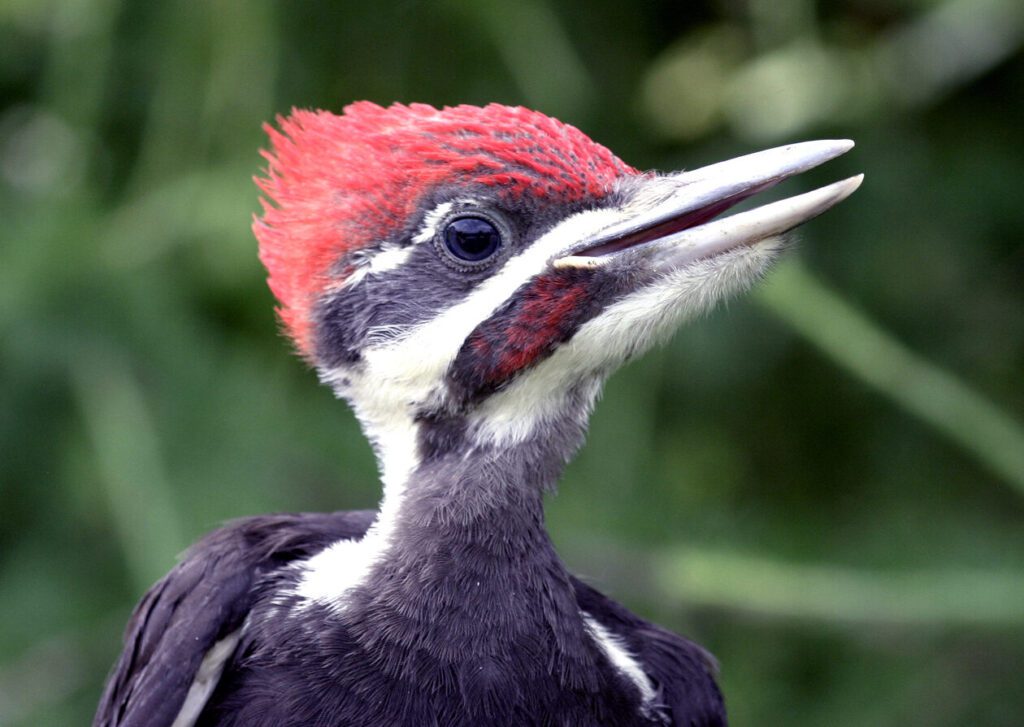
Pileated Woodpecker
Credit: Powdermill Nature Reserve, Carnegie Museum of Natural History

On the first day of point counts, the Porcupine Ridge trail acted as the main access corridor for many of the points in the sector. While walking along the trail to the last point of the day, I heard an unfamiliar noise. It sounded like several incessant hollow bark-like calls, and in the far distance I could hear Pileated Woodpeckers. Knowing that these woodpeckers primarily nest in dead trees, I began to search for nestlings. At the very top of an old, dead chestnut oak tree with almost no bark, I saw three heads poke out of a cavity, calling to the parents who were now close by and began acting defensively. While I had heard Pileated Woodpeckers in almost every sector this summer, this was the only nest that I observed, and it was the first of many incredible sightings. 

Shortly after completing surveys at every point in all ten sectors, I restarted from the beginning. The particular sector I surveyed on June 11 has about a one-mile-long hike uphill to get to the first point. Three quarters of a mile in, I saw some movement to my right and redirected my attention. A yearling black bear was running up and down a fallen tree, stopping only briefly to scratch himself. I could tell the bear was a yearling by the shape of the head, along with the long and slender legs making the bear look tall. The bear ran across the fallen tree two or three times before he noticed my presence. He very slowly turned himself to look in my direction, paused for a few seconds at most, and took off into the forest. 

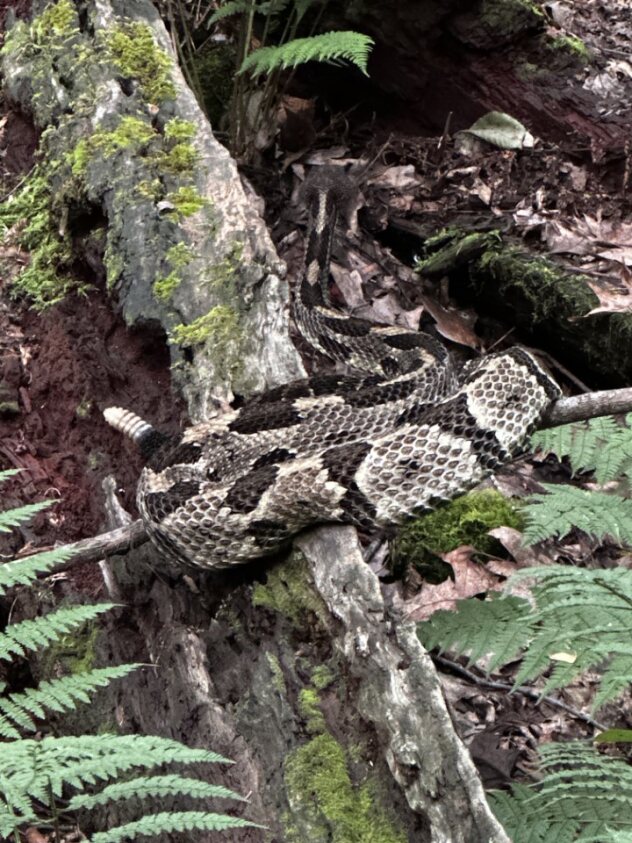
Pennsylvania is also home to the Timber Rattlesnake, which brings me to my next animal encounter. I was walking through a mountainous, hilly second growth forest. The understory was filled with green briar and stinging nettles, so I had my eyes on the ground to minimize the chances of being stuck or stung by these plants. The walk from one point to the next was about 250 meters, or 0.16 miles. There are often obstacles like fallen trees, some of which are easy to step over, but others I had to go around. As I approached a fallen tree, I heard an unfamiliar noise. Though unfamiliar, the rattling sound was unmistakable. A few meters down the fallen tree was a large, perfectly coiled dark phase Timber Rattlesnake. I estimated this snake was four to five feet long, and it was clear that there was a meal moving through the snake’s digestive tract. The snake had eight rattles, specialized hollow scales which are added, one layer at a time, each time the reptile sheds its skin. I was lucky to be able to observe the snake from a safe distance for a few minutes before I headed to the next point. 

timber rattlesnake
Credit: Grace Muench

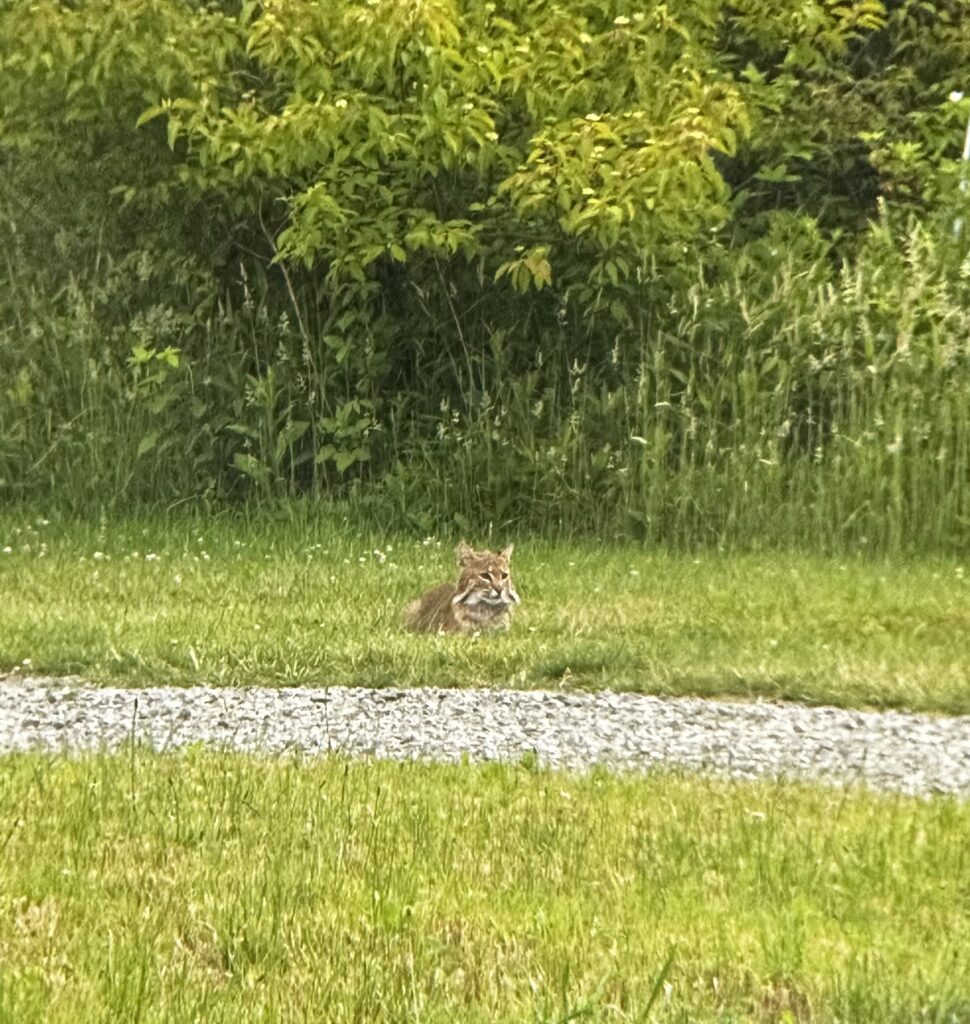
The last day of point counts was also one to remember. About halfway through the final point of the sector, something about 250 meters away made a noise that I can only describe as a woman screaming. Immediately, all birds stopped singing and flew up into the canopy. I knew this animal call. It was a bobcat! This scream is referred to as “caterwauling,” and the sound is produced primarily during the mating season. After hiking back down to the avian research center, I was lucky enough to spot a different bobcat! A relatively small bobcat was hiding next to a structure near the bird banding lab, stalking the eastern cottontails that were foraging in the grasses. After a few minutes of inching closer and closer to the rabbits, the bobcat pounced. The rabbits frantically ran in all different directions, and the bobcat was left empty-handed. 

bobcat laying in the grass
Credit: Grace Muench

After completing the 190 point counts, I rejoined the banding crew to finish the breeding season and to prepare for fall migration. I will always remember encountering and observing incredible wildlife, seeing my lifer Cerulean Warbler, and all that the Powdermill staff has taught me this summer. I can’t wait to learn more this fall!

Grace Muench is a Field Tech at Powdermill Avian Research Center.

Related Content

A Summer Internship at Powdermill

Tracking Migratory Flight in the Northeast

Hummingbird Lessons

Filed Under: Blog Tagged With: Grace Muench, Powdermill Nature Reserve, Science News

September 7, 2023 by Erin Southerland

We Get Questions: Climate Change, Hope, and Action

by Patrick McShea
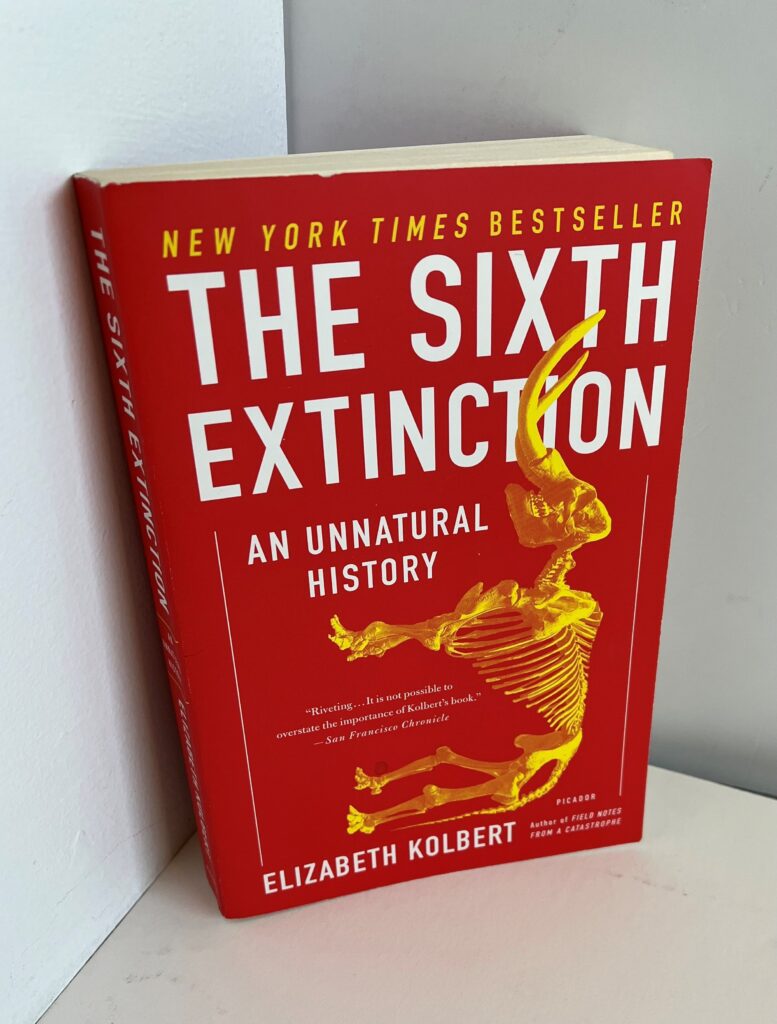
a paperback copy of the book "The Sixth Extinction"

“Tell me what gives you hope?” The student’s question during a high school environmental science class in March left me scrambling to deliver a clear and honest answer. “Tell me,” she added for emphasis, “because I really want to know.”

Ten students had just listened to me explain the cascade of negative effects associated with the increasing acidification of ocean waters. The frightful phenomenon is on a scale proportional to and correlated with the climate altering changes in Earth’s atmosphere. My presentation was a summary of a single chapter in The Sixth Extinction, science writer Elizabeth Kolbert’s landmark 2014 book exploring warning signs of a coming human-induced extinction event as destructive as the five previous episodes documented in the fossil record.

In “The Sea Around Us,” a chapter whose title pays homage Rachel Carson’s best-selling 1951 book by that name, Kolbert frames her ocean report with an explanation of a vital large-scale chemical interaction:

Ocean covers seventy percent of the earth’s surface, and everywhere that water and air come into contact there’s an exchange. Gases from the atmosphere get absorbed by the ocean and gases dissolved in the ocean are released into the atmosphere. When the two are in equilibrium, roughly the same quantities are being dissolved as are being released. Change the atmosphere’s composition, as we have done, and the exchange becomes lopsided: more carbon dioxide enters the water than comes back out. 

Much of the chapter consists of Kolbert’s account of her visit with scientists studying marine life in a bay of the Tyrrhenian Sea where water chemistry has long been impacted by carbon dioxide-rich discharges from submerged volcanic vents. The narrative helped the students understand how researchers use models to make predictions, and that ecological models are not always computer simulations. In a summary of acidification impacts in the study area, Kolbert notes limpet shells bearing “deep lesions through which their owner’s putty-colored bodies can be seen.” Perhaps my sharing of this type of graphic detail spurred the student’s urgent question about hope.

My answer, which lacked quotable coherence, involved trees. Speaking directly to the questioning student, but addressing the entire class, I explained how for more than a decade my New Year’s resolution has been simply to learn more about trees, and that months earlier a New York Times profile of renowned medical biochemist and botanist Diana Beresford-Kroeger had been particularly instructive. Her endorsement of global forest restoration to mitigate the effects of climate change is clear, and some of her research has identified biochemical connections between forests and the sea.

Although I’m not certain my answer alleviated the student’s concerns, I’ll lead with trees if the question of hope comes up again. However, because of a subsequent encounter with another student’s direct question, my answer will also include a human element. 

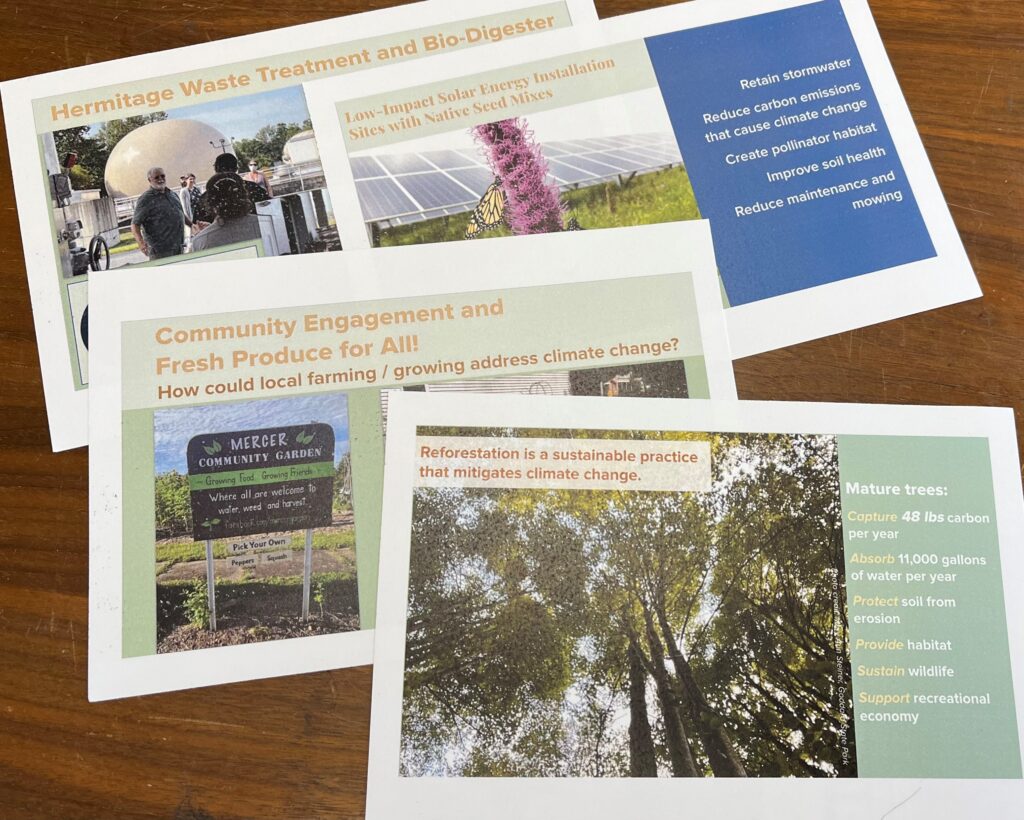
CRSP Project Climate Cards are designed as discussion prompts.

In early April, in collaboration with staff of the Mercer County Conservation District, I was one of two museum educators who spent a morning at that organization’s Munnell Run Farm headquarters assisting teams of local high school students in building climate change background knowledge as preparation for competition in the state-wide Envirothon. As encouragement for full participation in discussions, we relied upon colorful issues-focused information cards that were co-developed with partner organizations during the Climate and Rural Systems Partnership project. The climate cards were effective tools, but in one session a student with deep interest in climate change issues used a direct question to announce her enthusiasm for short cutting the process: “What should I do? I’m sold on all this, so tell me, as a high school student, right now, this month, this year, what should I be doing?”

I advised her to become as well informed as possible about climate change issues so she could better recognize solutions and mitigation efforts, and more effectively represent herself, her school, her family, and her community at relevant hearings or other public meetings. What I couldn’t articulate was that her engaged stance was something I could later point to as a sign of hope. 

Carnegie Museum of Pittsburgh offers free membership for teens. For additional information please visit the teen membership info page.

Patrick McShea is an educator at Carnegie Museum of Natural History.

Related Content

Hummingbird Lessons

Wolverine: Status Check for a Tournament Champion

Building Birding Skills

Carnegie Museum of Natural History Blog Citation Information

Blog author: McShea, Patrick
Publication date: September 7, 2023

Share this post!

  • Share on Twitter Share on Twitter
  • Share on Facebook Share on Facebook
  • Share on Pinterest Share on Pinterest
  • Share on LinkedIn Share on LinkedIn
  • Share on Reddit Share on Reddit
  • Share via Email Share via Email

Filed Under: Blog Tagged With: Anthropocene, CRSP, Pat McShea

  • « Go to Previous Page
  • Page 1
  • Interim pages omitted …
  • Page 6
  • Page 7
  • Page 8
  • Page 9
  • Page 10
  • Interim pages omitted …
  • Page 25
  • Go to Next Page »

sidebar

About

  • Mission & Commitments
  • Directors Team
  • Museum History

Get Involved

  • Volunteer
  • Membership
  • Carnegie Discoverers
  • Donate
  • Employment
  • Events

Bring a Group

  • Groups of 10 or More
  • Birthday Parties at the Museum
  • Field Trips

Powdermill

  • Powdermill Nature Reserve
  • Powdermill Field Trips
  • Powdermill Staff
  • Research at Powdermill

More Information

  • Image Permission Requests
  • Science Stories
  • Accessibility
  • Shopping Cart
  • Contact
  • Visitor Policies
Stay in the loop! Sign up for our newsletter(s).
One of the Four Carnegie Museums | © Carnegie Institute | Privacy Policy | Terms of Use | Accessibility
Rad works here logo