• Skip to primary navigation
  • Skip to main content
  • Skip to primary sidebar

Carnegie Museum of Natural History

One of the Four Carnegie Museums of Pittsburgh

  • Visit
    • Buy Tickets
    • Visitor Information
    • Exhibitions
    • Events
    • Dining at the Museum
    • Celebrate at the Museum
    • Powdermill Nature Reserve
    • Event Venue Rental
    • Gift Cards
  • Learn
    • Field Trips
    • Educator Information
    • Programs at the Museum
    • Bring the Museum to You
    • Guided Programs FAQ
    • Programs Online
    • Climate and Rural Systems Partnership
  • Research
    • Scientific Sections
    • Science Stories
    • Science Videos
    • Senior Science & Research Staff
    • Museum Library
    • Science Seminars
    • Scientific Publications
    • Specimen and Artifact Identification
  • About
    • Mission & Commitments
    • Directors Team
    • Museum History
  • Tickets
  • Give
  • Shop

Erin Southerland

December 13, 2023 by Erin Southerland

A Three Rivers Waterkeeper Biocube

As frontline defenders for water protection in Pittsburgh and Southwestern Pennsylvania, staff of Three Rivers Waterkeeper patrol and monitor for pollution in our waterways by using high quality monitoring and sampling technologies to collect water samples. Our work contributes to the enormous efforts by watershed organizations to monitor water quality data in our region.
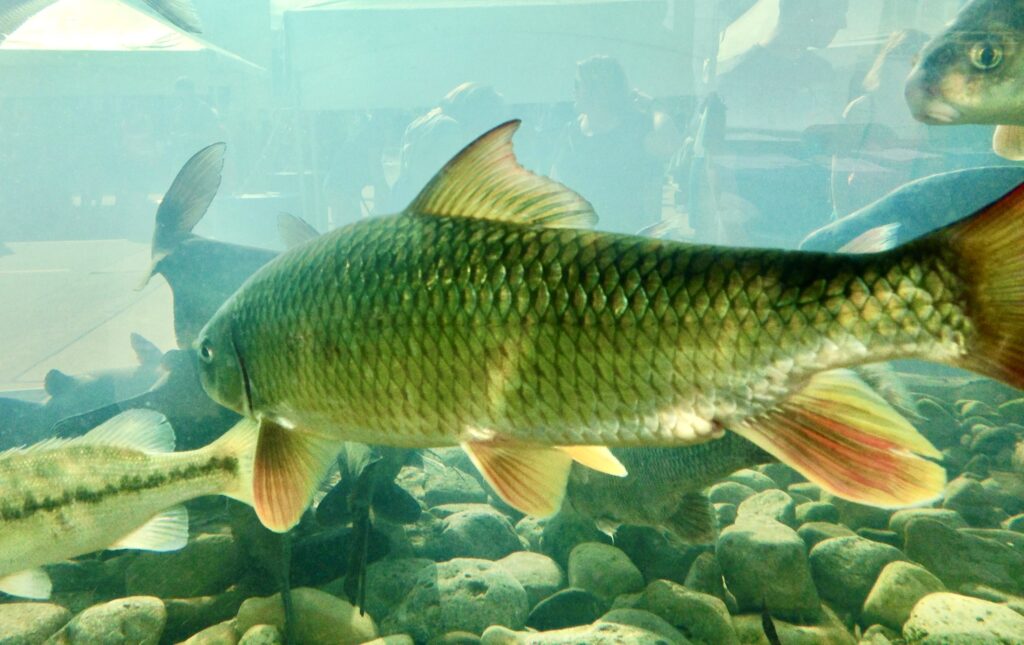
A river redhorse might be a finned visitor to a temporarily submerged Three Rivers Waterkeeper biocube. The presence of this species, pictured here in a display tank setup by the Ohio River Valley Water Sanitation Commission, is evidence of a healthy river system.

Wildlife observations occur so regularly in our work that the thought experiment about where best to place and monitor a biocube creates a dilemma. Over the modern history of our region, mass industrialization polluted our waterways, and our rivers became devoid of aquatic life. Fortunately, with the implementation of the 1972 Clean Water Act and subsequent clean water laws at the local, state, and federal levels, community organizations have been able to hold polluters accountable. As a result, we have seen wildlife come back to our rivers – including our national bird, the Bald Eagle. On or along the Allegheny River alone, the US Forest Service has documented rich species diversity, including over 50 mammals, 200 birds, 25 amphibians, 20 reptiles, 80 fishes, and 25 freshwater mussels. 
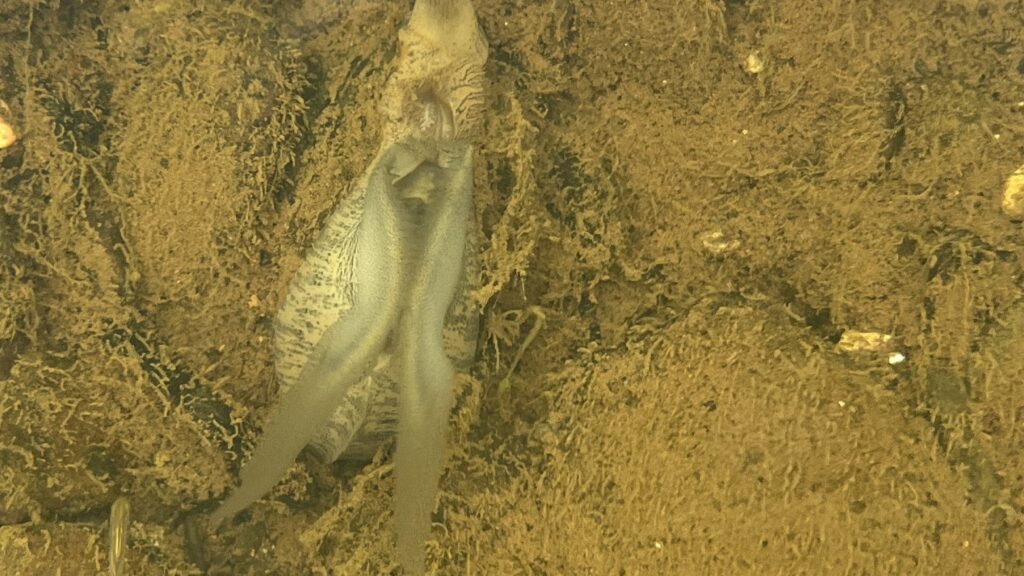
Visible in this picture of the freshwater mussel known as the plain pocketbook (Lampsilis cardium) is the fleshy lure the shelled creature relies upon to attract fish close enough to be showered with a cloud of tiny parasitic larvae. The larvae attach to fish gills for several weeks before dropping off as fully formed miniature mussels.

We settled on a type of location rather than a specific one, the deltas formed by local tributary streams as the enter one of the three rivers referenced in our organization’s name. During the cycle of a full year on one of these patches of water-shaped land, a biocube might be fully submerged during some weeks, and shaded by riparian vegetation during other times. A list of likely plants and animals found temporarily within the cube’s bounds might very well include:
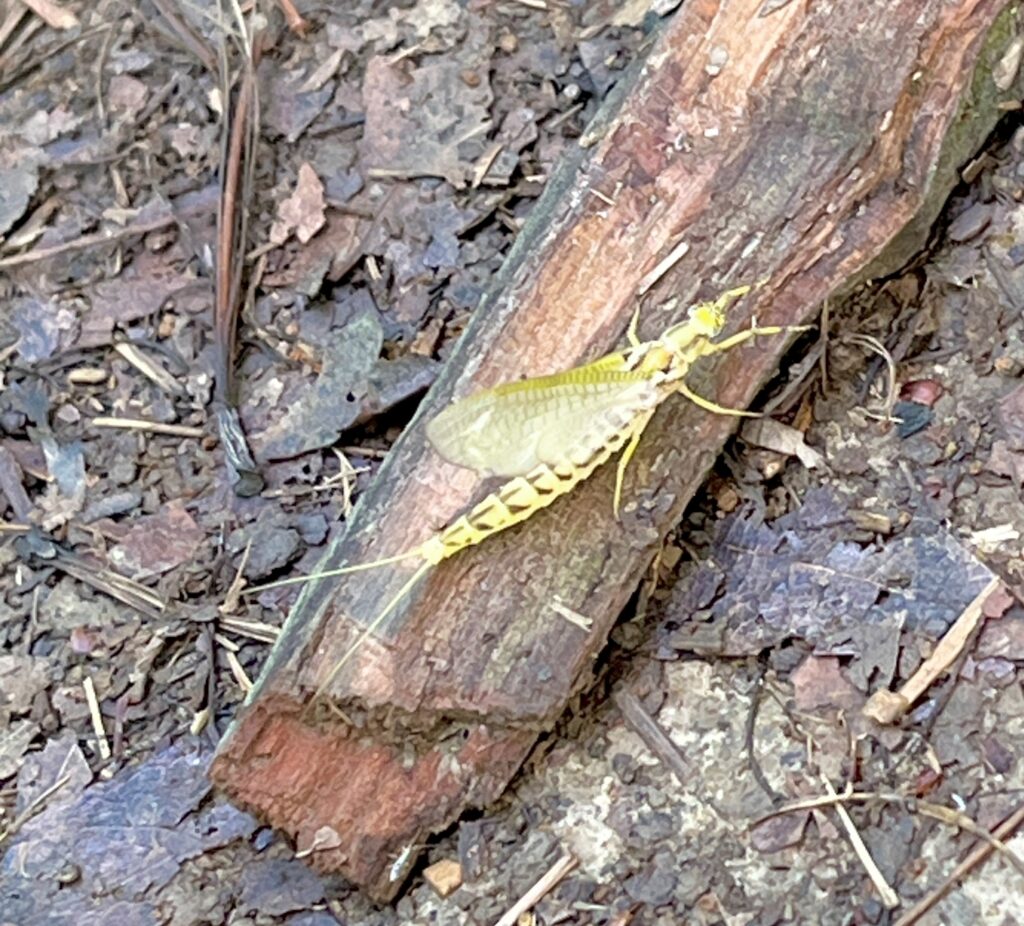
This giant mayfly (Hexagenia limbate) resting on a section of Allegheny River shoreline will have a brief breeding life of just a few days. Much of its earlier life as an aquatic nymph was spent burrowing in river bottom mud.
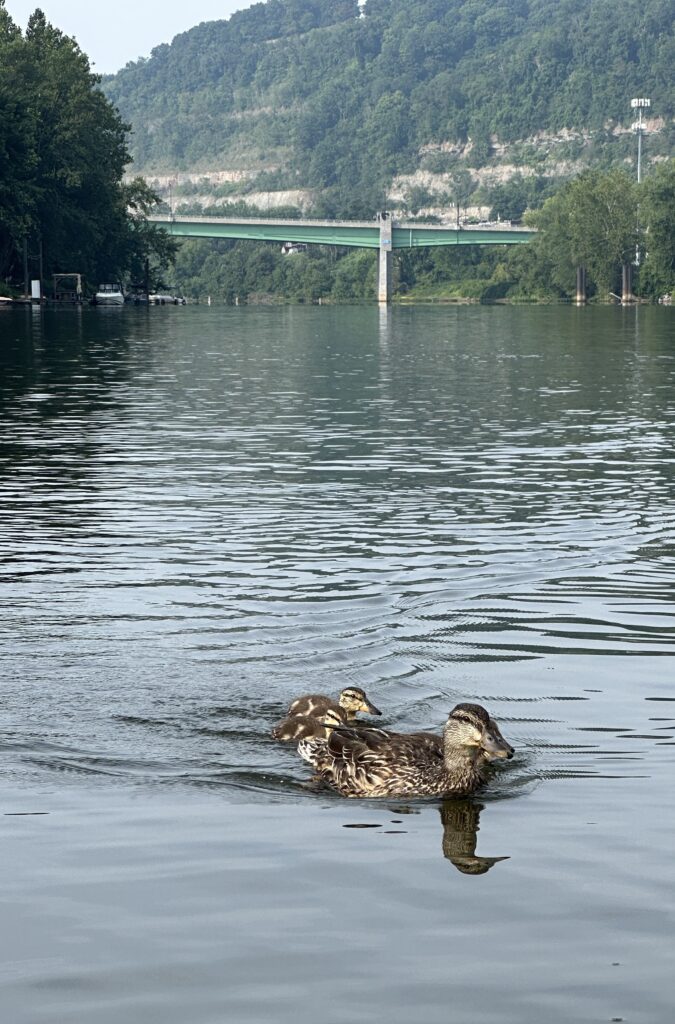
A Mallard hen and ducklings here represent the range of birds, including Great Blue Herons, Bald Eagles, Spotted Sandpipers, and of course other waterfowl species, who might investigate the space within a well-placed stream delta biocube during their routine feeding forays.
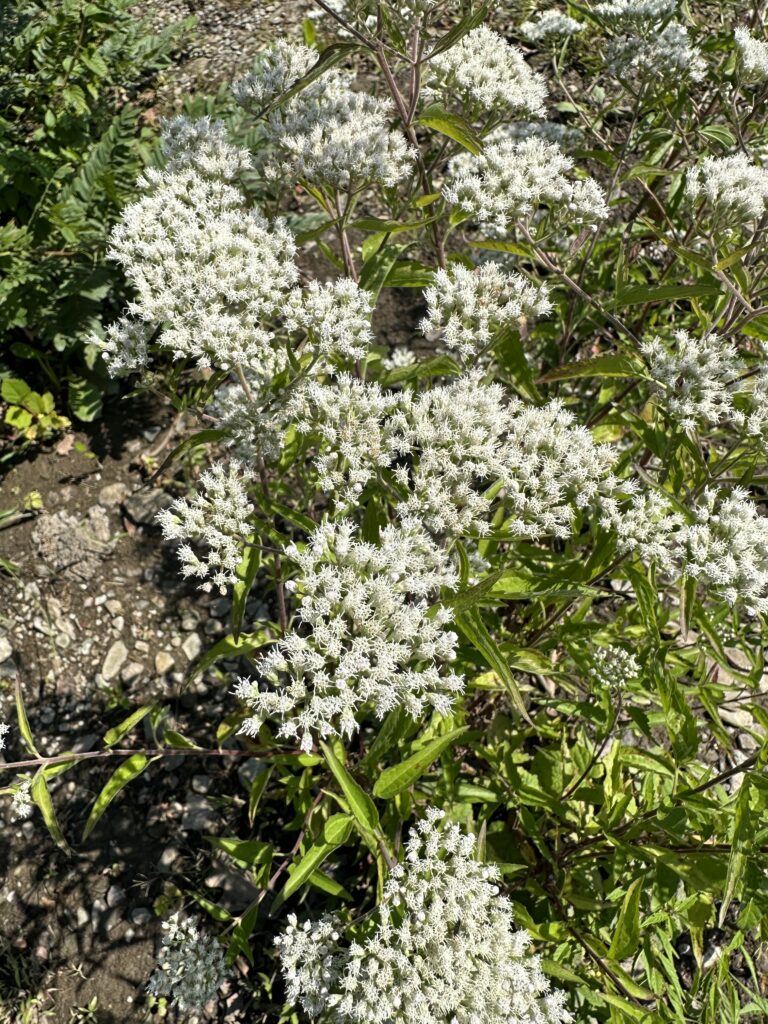
Late boneset (Eupatorium serotinum) is a native Pennsylvania plant that loves growing close to bodies of water in wet soil.  The plant, pictured here on a stream delta along the Ohio River near Conway, blooms late in the summer and into the fall, providing pollen and nectar at a time when there are few options for species that need it.
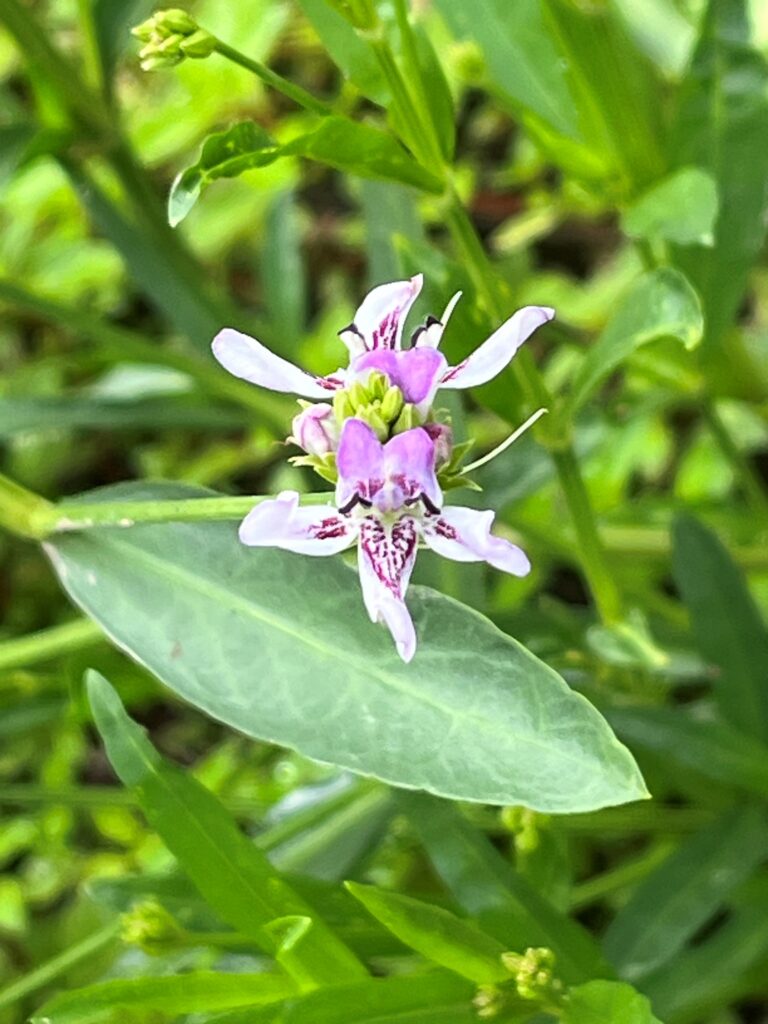
The temporary submergence of stream deltas by rising river waters does not hinder Water Willow (Justicia americanus). The early-summer blooming plant is well adapted to fluctuating water levels, and the network of its root system helps to minimize riverbank erosion.

Related Content

A Tree Pittsburgh Biocube

Life in One Cubic Foot

Naturally Pittsburgh: Big Rivers and Steep Wooded Slopes

Carnegie Museum of Natural History Blog Citation Information

Blog author: Three Rivers Waterkeeper; Carnegie Museum of Natural History
Publication date: December 13, 2023
Share this post!

  • Share on Twitter Share on Twitter
  • Share on Facebook Share on Facebook
  • Share on Pinterest Share on Pinterest
  • Share on LinkedIn Share on LinkedIn
  • Share on Reddit Share on Reddit
  • Share via Email Share via Email

Filed Under: Blog Tagged With: Anthropocene, Education, Exhibits, life in one cubic foot, Pittsburgh

December 1, 2023 by Erin Southerland

Birds in “Twelve Days of Christmas”: a Museum Search

by Patrick McShea

The Twelve Days of Christmas

When a traditional song about Christmas gifts reaches young ears, the centuries-old lyrics naturally prompt questions. If you’ve been on the receiving end of inquiries such as “What’s a partridge?”, a museum visit can provide identity information for the abundance of birds mentioned in the “Twelve Days of Christmas.”

Although the birds cited below aren’t precise matches for European species of the song, locating these feathered references can renew your own appreciation for what might be an overly familiar tune. 

Inspiration and informational reference for the re-interpretation of several exhibits comes from a 2018 American Ornithological Society blog post by Bob Montgomerie, an evolutionary biologist at Queens University in Kingston, Ontario. Dr. Montgomerie’s post is titled “Three French Hens.”

A Partridge in a Pear Tree

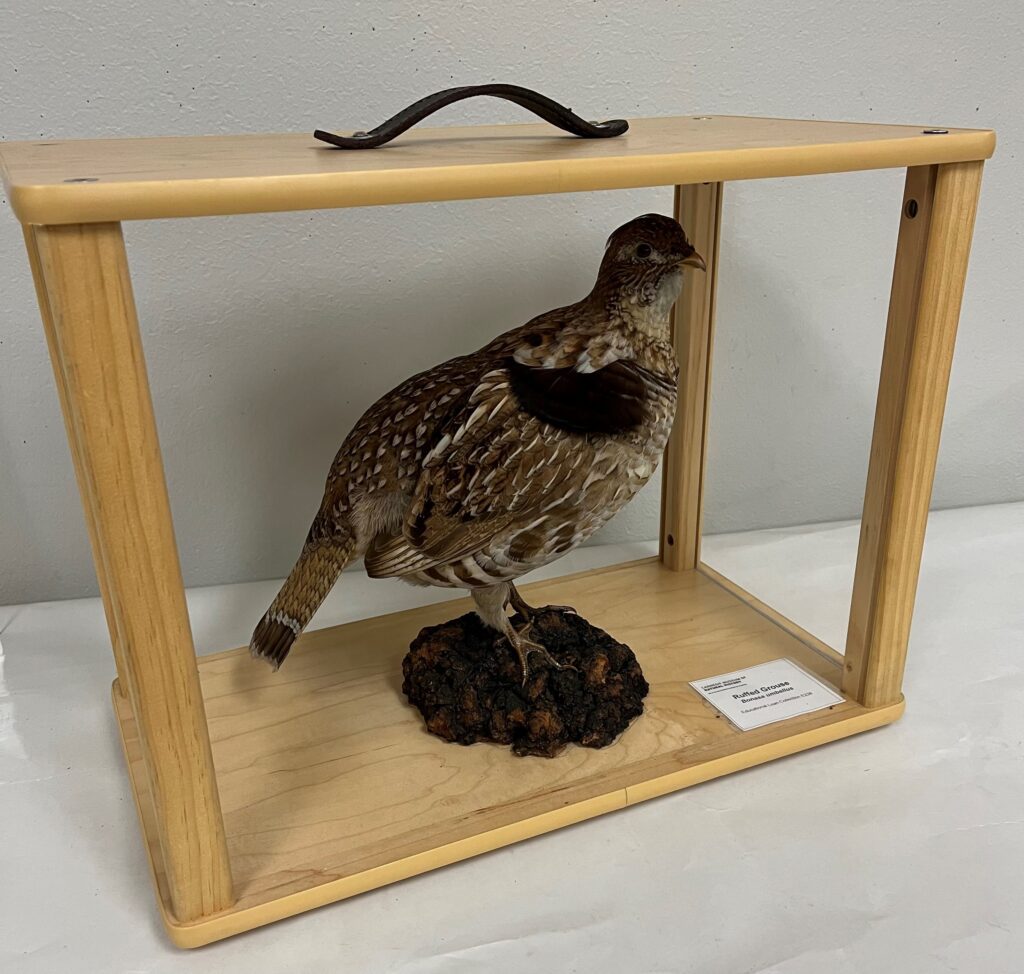
Ruffed Grouse taxidermy mount in Discovery Basecamp.

In Pennsylvania, the Ruffed Grouse has reigned as state bird since 1931. The species’ collective value to Pennsylvania residents includes the gamebird’s historic importance as a food source and its current role as the focus of much upland sport hunting. The bird referenced in the song might well have been the Red-legged Partridge, a European species known to science as Alectoris rufa, however, the Ruffed Grouse is a decent substitute because the bird, which is known to perch in trees occasionally, is routinely called “partridge” in Maine and other portions of the northeast.

Two Turtle Doves 

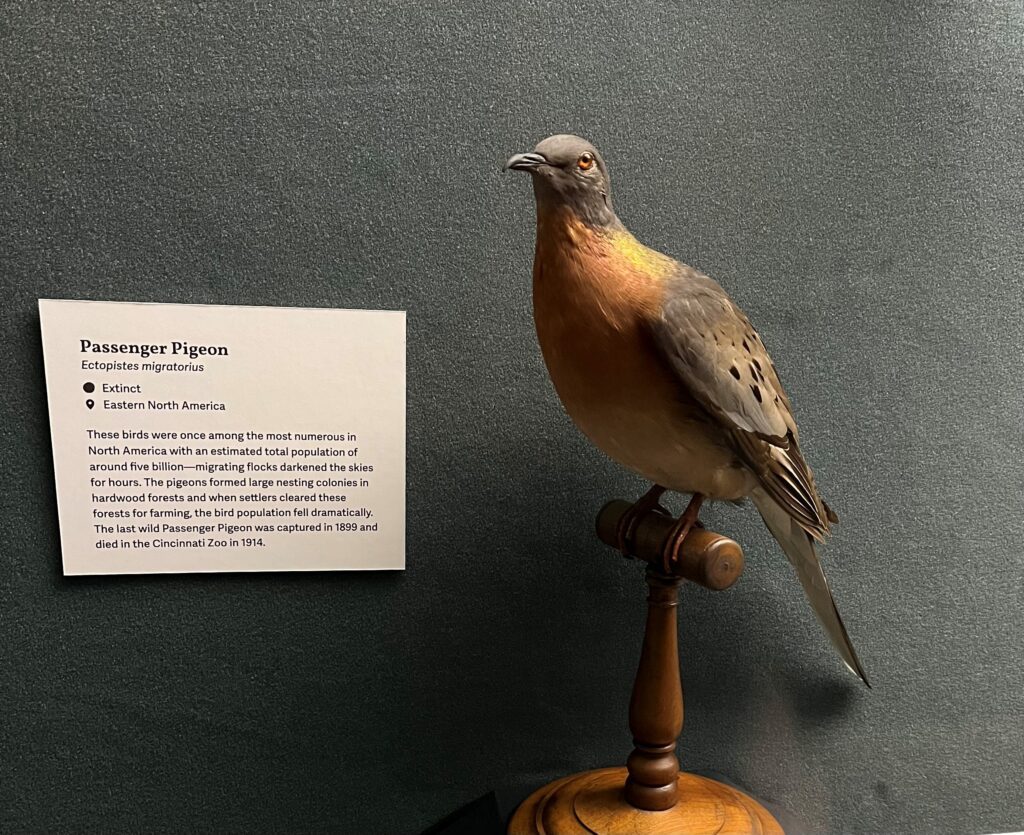
Passenger Pigeon taxidermy mount in Bird Hall

The European Turtle Dove, Streptopelia turtur, is a member of the bird family of doves and pigeons known as Columbidae. Generally, the smaller species in the family are called doves, and the larger species ae called pigeons. The Passenger Pigeon is the most notable family member on display at the museum. 

Passenger Pigeons were once so abundant in eastern North America that flocks darkened the skies for hours when the birds migrated to access seasonal feeding areas and nesting sites. 

Sustainable use of the birds by humans did not continue into the 19th Century. By mid-century, Passenger Pigeons became an unregulated commodity in the rapidly expanding American economy, with the country’s growing railroad network and parallel telegraph system providing unprecedented means for sharing word of flock locations, transporting hunters to those sites, and shipping harvested birds to distant markets.

Three French Hens

The song reference is to a specific breed of domestic chicken. There are no domestic chickens on display in the museum, but the species is usually well-represented in the food selections offered within the building’s dining areas. Some scientists have speculated that our current reliance on domestic chickens as a global source of protein for human consumption might someday leave deposits of chicken bones as an identifying mark of the Anthropocene, a proposed name for the current geologic age, viewed as the period during which human activity has been the dominant influence on climate and the environment.

Four Calling Birds

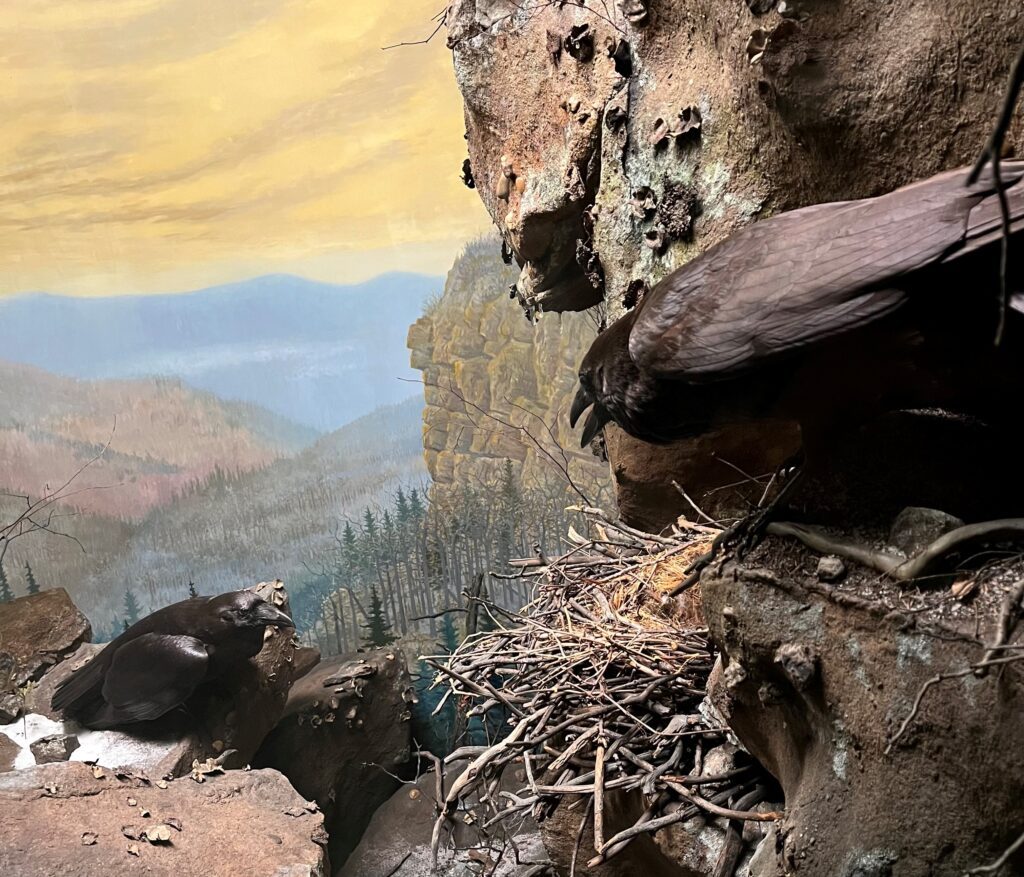
Northern Raven taxidermy mount in a diorama of its habitat

If we use the cited author’s research finding, (The original ‘colly bird’ was the Eurasian Blackbird (Turdus merula) as ‘colly’ meant ‘black’ as in ‘coaly,’ and is why border collies bear that name.) the Northern Ravens in an Art of the Diorama display can fill this slot. Another candidate is the American Crow, a species frequently observed passing over the museum building at dusk during winter evenings, heading to local roosts in scattered flocks that number in the thousands. Ornithologists explain the birds’ collective behavior as taking advantage of a “heat island effect,” a base temperature in a city that is five or more degrees warmer than the surrounding countryside. 

Five Golden Rings

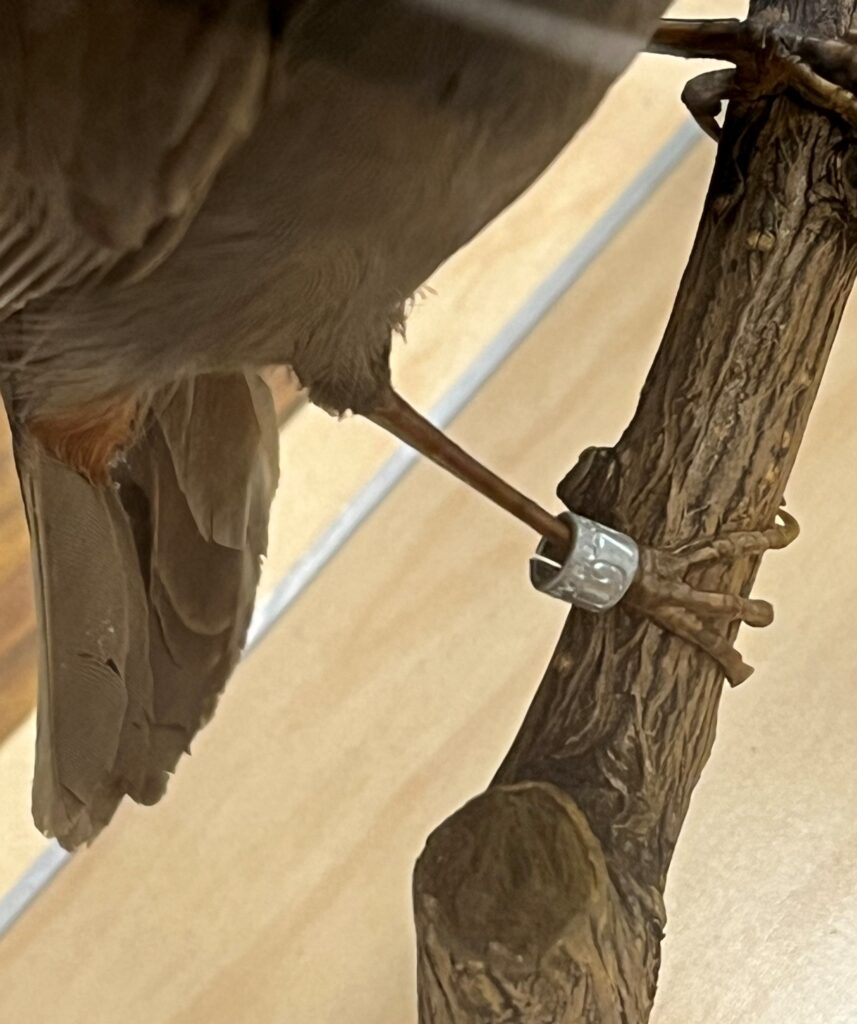
Close-up of a bird band on bird taxidermy mount

“Five golden rings” might also have a bird connection. Dr. Montgomerie’s post mentions both Gold Finches and Ring-necked Pheasants as possible references, but the museum’s long history of bird banding at Powdermill Nature Reserve, the location of Powdermill Avian Research Center (PARC), allows a different approach. Bird banding is a research practice that involves capturing wild birds, marking them with numbered leg bands, and releasing them unharmed. In some parts of the world this centuries’ old effort to verify bird movements through recovered birds is called “ringing.” It is admittedly a stretch between gold rings and aluminum bands, but for a close look at the latter, check the tabletops in Discovery Basecamp for an encased taxidermy mount of a Gray Catbird bearing one of the lightweight markers on its right leg.

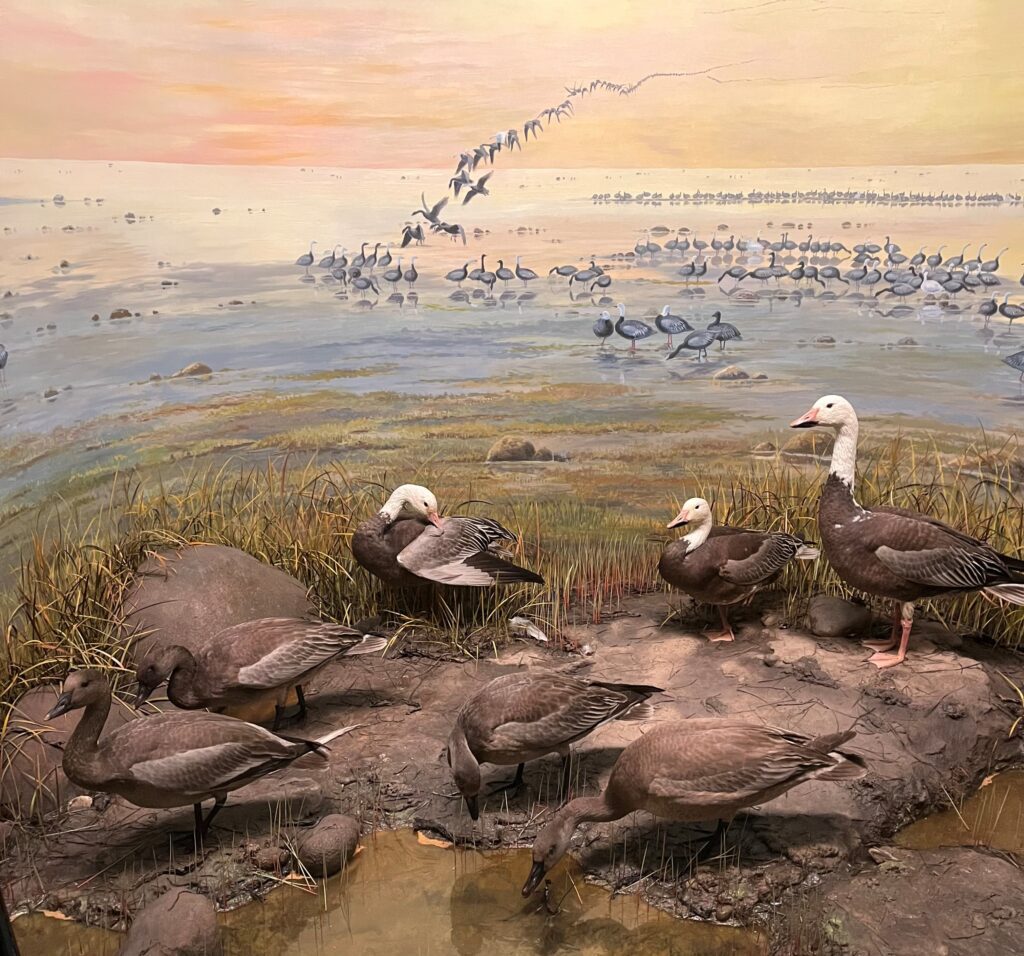
Six Geese A-laying

goose taxidermy mounts in a museum diorama

Although the lyric refers to a domestic variety, a scene focused on an enormous gathering of a wild species in The Art of the Diorama demonstrates the eventual outcome of “geese a-laying” – more geese. Here Blue Geese, a variety of Snow Geese with dark plumage, are shown gathering near James Bay in preparation for a continent-crossing migration. The dark-headed geese in the foreground are young of the year, the most recent product of “Snow Geese a-laying.”

Seven Swans A-swimming

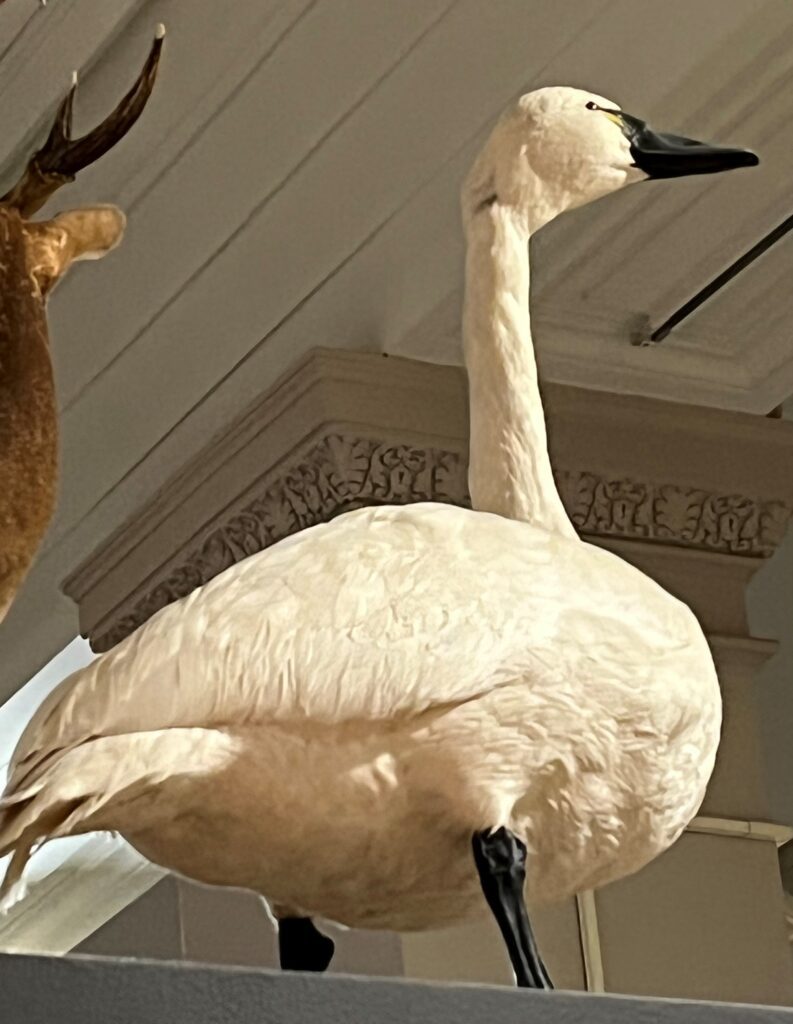
taxidermy mount of a tundra swan

A lone Tundra Swan watches over Discovery Basecamp from a high perch. Thousands of these birds fly, rather than swim, across Pennsylvania spring and fall during seasonal migrations between Arctic nesting grounds and wintering territory along the Chesapeake Bay. Their fall passage over western Pennsylvania, announced by flock calls some people describe as “like the baying of distant hounds,” generally occurs between mid-November and early December.

Patrick McShea is an Educator at Carnegie Museum of Natural History.

Related Content

Collected On Christmas Eve 1883: Mistletoe

2022 Rector Christmas Bird Count Results

A Perfect Mineral for the Christmas Season

Carnegie Museum of Natural History Blog Citation Information

Blog author: McShea, Patrick
Publication date: December 1, 2023

Share this post!

  • Share on Twitter Share on Twitter
  • Share on Facebook Share on Facebook
  • Share on Pinterest Share on Pinterest
  • Share on LinkedIn Share on LinkedIn
  • Share on Reddit Share on Reddit
  • Share via Email Share via Email

Filed Under: Blog Tagged With: Birds, Christmas, Education, Holidays, Pat McShea, Science News

November 30, 2023 by Erin Southerland

What’s in a Name? Japanese Knotweed or Itadori

by Rachel Reeb
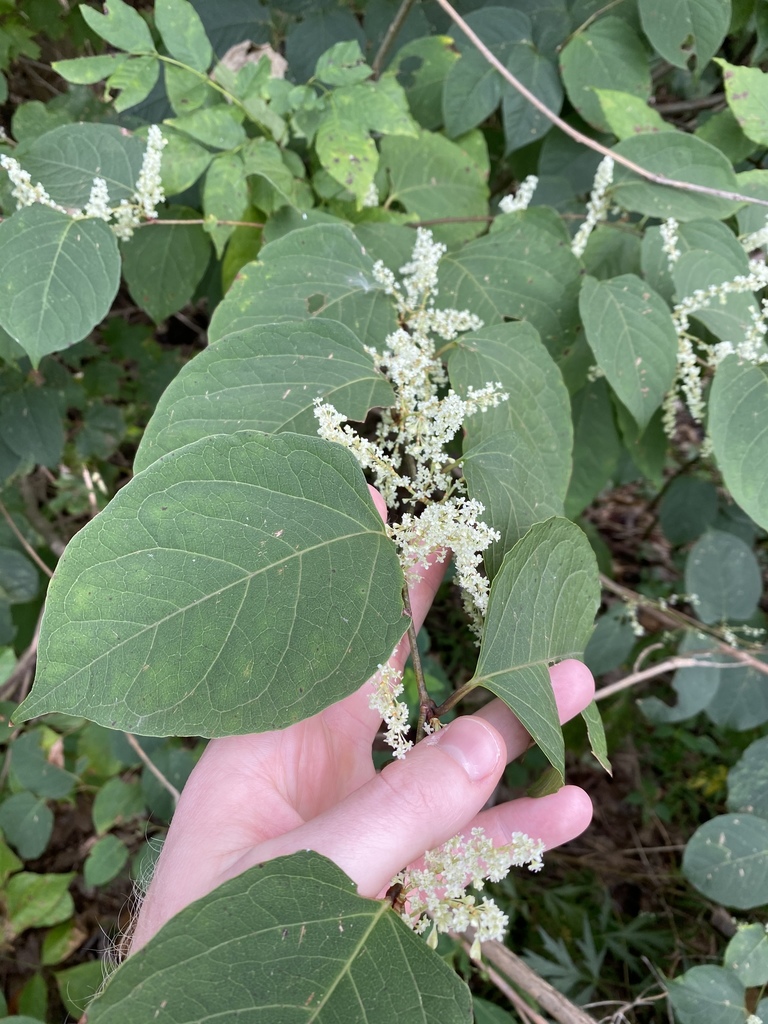
hand holding a Japanese knotweed plant

We name what we notice, adopting or creating vocabulary to reflect all that our senses regularly engage.

Where multiple names exist in the same language for the same subject, nuance reigns. In Japan, for example, a historical collection of words referring to Reynoutria japonica (synonym: Fallopia japonica), the plant known commonly as itadori or Japanese knotweed, totaled to 689 terms. Some words referenced the plant’s shape and structure, others its sour taste, medicinal properties, seasonal appearance, or supporting habitat. Several dozen terms even noted audio characteristics, referencing the sound produced by the snapping of the plant’s stem.

Though the plant has deep cultural and ecological ties to its home range of Japan, Taiwan, China, and Korea, most of these connections are lost in its introduced range of western Pennsylvania, where it is considered to be an unwelcome invasive species. Information about how differently itadori is regarded in different parts of the world forces us to appreciate the diversity of human attitudes towards plants. Why are plant species perceived positively by some people, but negatively by others? To explore this question, a research paper documenting the rich cultural and ecological history of itadori in Japan (“Fallopia japonica (Japanese Knotweed) in Japan: Why Is It Not a Pest for Japanese People,” M. Shimoda and N. Yamasaki, 2016) made the journal club reading list for the scientists and educators involved in the collaborative Invasive Plant Species Education and Outreach Campaign funded by the Richard King Mellon Foundation.

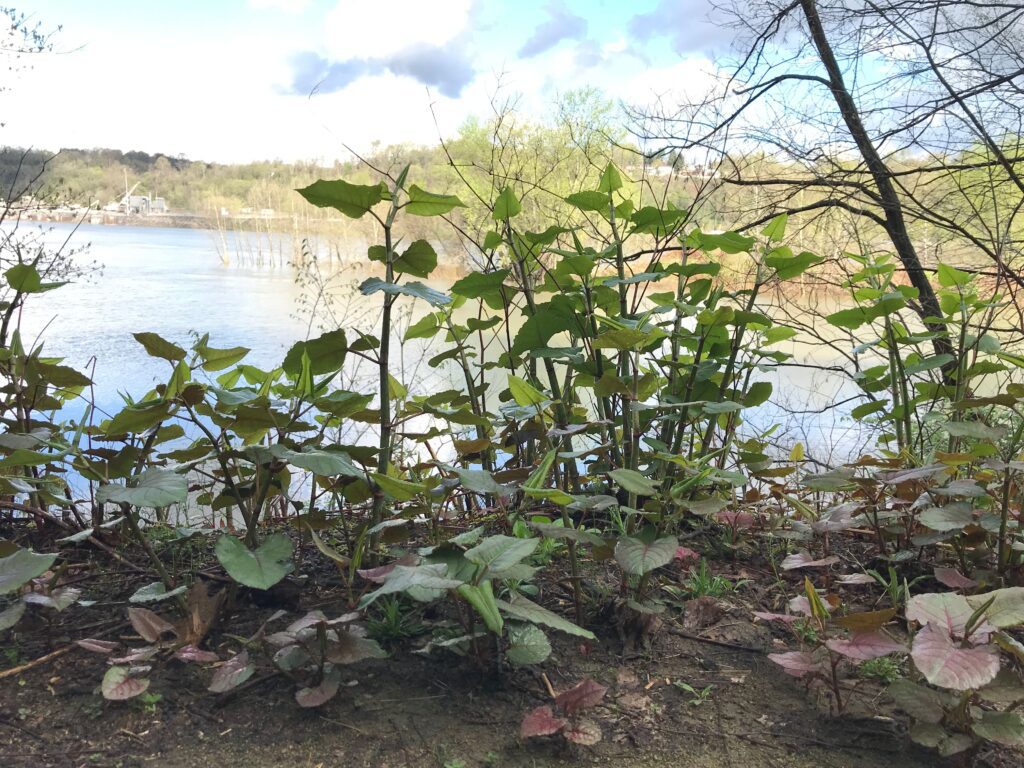
Along the Allegheny River near Braeburn, Westmoreland County, spring growth of a knotweed stand that will block the view of the water by late June.

Itadori, or Japanese knotweed, has co-evolved with the humans, plants, and animals living in its home range for thousands of years. It’s no wonder that there are so many names for this plant in Japan, where people have co-existed with itadori and passed down their knowledge of the species over generations. Throughout history, humans found many uses for itadori in food, medicine, floral arrangements, and even as a children’s toy! 

Today, in Japan, itadori commonly grows around lawns and roadsides, but it is not considered to be a pest because it can easily be mowed and managed. In comparison, itadori was introduced to western Pennsylvania in the early 1900s, making our collective experience with the plant relatively recent by botanical standards. 

People widely planted itadori in ornamental gardens across the continent, but did not anticipate that it would escape cultivation and become established in nature. Here, many of the natural ‘checks and balances’ that stabilized itadori populations in the home range have been lost, including its insect pests, fungi, and plant competitors. Humans also lack deep ties to itadori in the introduced range, and consider it to be more detrimental than it is useful. The fast-growing plant often causes structural damage to buildings, is extremely expensive to manage, and displaces many of the native plants and animals we have formed connections with.

Thousands of years from now, itadori is likely to form new ecological and cultural connections in its introduced environment of Pennsylvania. What new names might we use to describe it, as our relationship to this plant evolves over time?

Rachel Reeb is a postdoctoral research fellow in the Section of Botany at Carnegie Museum of Natural History and content creator and project manager for the Invasive Species Awareness Campaign.

Related Content

Celebrating the Weed That Engulfed Western Pennsylvania?

Collected On This Day in 1989: Japanese Knotweed

Collected On This Day in 1930: Common Reed

Carnegie Museum of Natural History Blog Citation Information

Blog author: Reeb, Rachel
Publication date: November 30, 2023

Share this post!

  • Share on Twitter Share on Twitter
  • Share on Facebook Share on Facebook
  • Share on Pinterest Share on Pinterest
  • Share on LinkedIn Share on LinkedIn
  • Share on Reddit Share on Reddit
  • Share via Email Share via Email

Filed Under: Blog Tagged With: Botany, Rachel Reeb, Science News, Uprooted

November 21, 2023 by Erin Southerland

Art and the Animal

by Deirdre M. Smith

The Society of Animal Artists is an association of international artists who depict nonhuman animals and wildlife scenes in 2-D and 3-D media. Founded in 1960, today there are 500 members living in 25 countries. The Society hosts an annual exhibition called Art and the Animal, and this year’s 63rd edition kicked off at the Stifel Fine Arts Center of the Oglebay Institute in Wheeling, West Virginia. The Society sought nearby artists and scholars to serve as judges and reached out to CMNH. As an art historian whose research often intersects with animal studies (including the question of whether nonhuman animals themselves can be called artists), I jumped at the opportunity to learn more about the Society and see their latest exhibition.

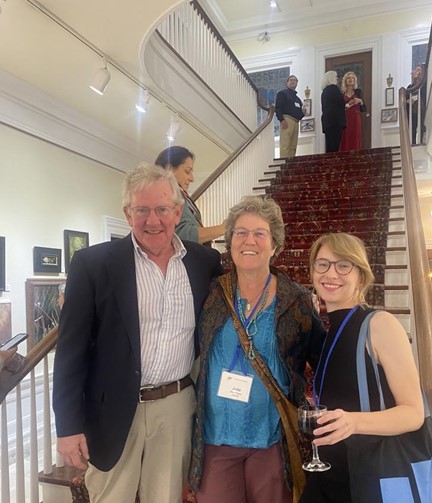
The author with fellow judges Larry Barth and Julie Zickefoose at the artists’ reception for Art and the Animal. Photograph by Walter Matia.

My fellow judges were Larry Barth and Julie Zickefoose, both accomplished animal artists themselves. Larry is an award-winning carver of birds in wood, and Julie paints and writes on birds and other animals, often in watercolor. I was interested to learn that both artists have connections to CMNH. Larry volunteered in the Section of Birds in the mid-1970s, and both artists have sketched study skins from the section’s collection. One of Larry’s impressively-detailed carvings, depicting a Ruffed Grouse, is on display today at Powdermill Nature Reserve. 

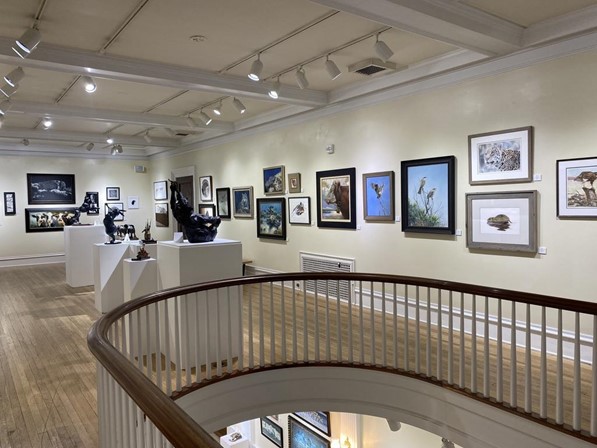
A view of second floor galleries of the Stifel Fine Arts Center during Art and the Animal. Photograph by author.

The exhibition featured 116 works by as many artists. Nonhuman animal subjects was the overarching theme, but within that domain artists turned their attention to diverse species: from house cats to cheetahs, dairy cows to zebras, snakes, bears, a southern stingray, and many, many birds: avocets, falcons, herons, owls, penguins, woodcocks, a Eurasian hoopoe, the list goes on. The choices of style and medium were equally varied, from highly detailed, realistic paintings, to decorative cut paper compositions, and from humorous works to ones alluding to the precarious lives of all animals under present environmental crises.

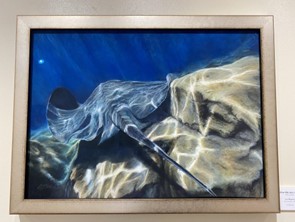
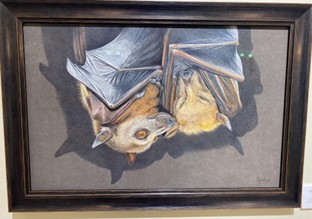
Works from the exhibit: Left, Lisa Nugent’s Follow Me Into the Sea, a depiction of a southern stingray in soft pastels, which was selected for an Award of Excellence. Right, Elke Gröning’s Cozy Cuddling, a colored pencil image of two little red flying-fox bats. Photographs by author. 

Works from the exhibit: Left, Lisa Nugent’s Follow Me Into the Sea, a depiction of a southern stingray in soft pastels, which was selected for an Award of Excellence. Right, Elke Gröning’s Cozy Cuddling, a colored pencil image of two little red flying-fox bats. Photographs by author. 

The judges were tasked with selecting up to eight works that stood out overall for “Awards of Excellence,” as well as four cash prizes. After lunch with Renée Bemis (President), Kim Diment (Vice President), and Wes Siegrist (Executive Director), where the bias against sculptors in the “fine arts” and apple foraging in Appalachia were topics of conversation, we began what ended up being a three-and-and-half-hour-long process of tough deliberations. We were instructed by the leadership of the Society not to let our opinions about a species impact our judgment, and to initially not look at the names of the artists. Otherwise, we were free to use our own best sense as to which works stood out as superlative. As judges we found ourselves balancing assessment of the artist’s technique, choice of medium, the extent to which they had accurately and compellingly captured their animal subject, with the overall visual and conceptual appeal of the work. Some of our most intense conversations and disagreements concerned bird anatomy (something Larry and Julie are expert in), what it means and matters to be “realistic,” and whether artists were bringing fresh perspectives to the genre of animal art.

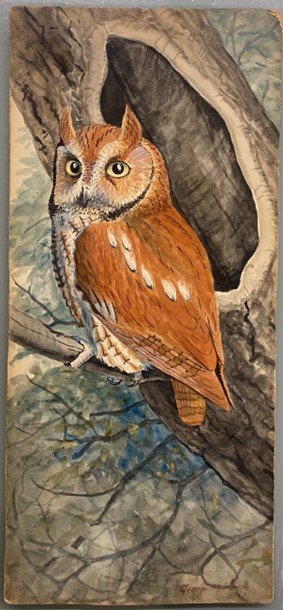
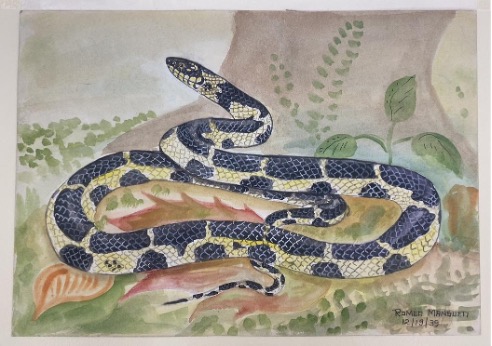
Examples of work from the Carnegie Museum of Natural History’s Natural History Art collection. Left, a screech owl painted by George Miksch Sutton, ornithologist and former CMNH staff member. Right, a field sketch of a snake by Romeo Mansueti from 1939, who eventually became a professor at the Chesapeake Biological Laboratory at the University of Maryland. Photographs by author.

I felt primed for the task of judging the competition because I had spent the summer with CMNH volunteer Elizabeth Dragus going through each object in the museum’s Natural History Art collection, which features hundreds of naturalist illustrations made by artists, scientists, and several former CMNH staff between the nineteenth and twentieth centuries. Established in the early 1970s as the M. Graham Netting Animal Portraiture Collection, it is a treasure trove of images and sculptures of birds, fish, insects, mammals, and reptiles. Several artists in the collection are members of the Society.

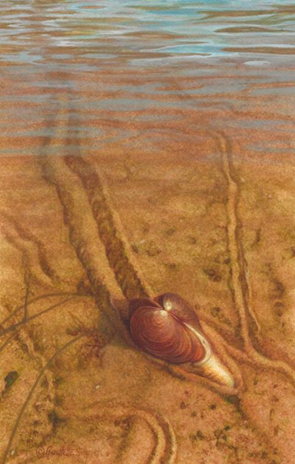
Rachelle Siegrist’s Nature’s Incredible Water Filter, a watercolor painting of a freshwater mussel. Image credit, the Society of Animal Artists.

One work that received much commentary from the judges, and eventually an Award of Excellence, was Rachelle Siegrist’s Nature’s Incredible Water Filter, a petite (6 x 4 in.) charmer of a watercolor painting depicting a freshwater mussel leaving a trail in sand. The only bivalve subject in the whole show, the work equally stood out for the way the artist captured the patterns on the surface of the water above the mussel. In the statement that accompanies the image in the exhibition catalog, Siegrist shares details on the lives of freshwater mussels: their ability to filter bacteria and pollutants, their role as an “indicator species,” and the rising threat of extinction that these organisms face. 

Animals of other species are the most enduring subjects of human image-making, stretching back to the oldest surviving image in a cave, the “Sulawesi pig.” Humans have made images of other animals in order to worship, marvel at, allegorize, objectify, and study them. Siegrist’s little painting demonstrates the power that this primordial practice of taking the time and effort to make an image of another animal can hold: she offers the viewer the opportunity to pause and contemplate a little being whose life might otherwise go unnoticed, or be inaccessible, and develop a new relationship to it through her act of representation. 

Deirdre M. Smith is an Assistant Curator at Carnegie Museum of Natural History.

Carnegie Museum of Natural History Blog Citation Information

Blog author: Smith, Deirdre M.
Publication date: November 21, 2023

Share this post!

  • Share on Twitter Share on Twitter
  • Share on Facebook Share on Facebook
  • Share on Pinterest Share on Pinterest
  • Share on LinkedIn Share on LinkedIn
  • Share on Reddit Share on Reddit
  • Share via Email Share via Email

Filed Under: Blog Tagged With: Deirdre Smith, Science News

November 17, 2023 by Erin Southerland

Tribal Museums Day and Promoting Indigenous Authors

by Amy L. Covell-Murthy 

The Association on American Indian Affairs (AAIA) celebrated its 100th anniversary in 2022, making it the oldest non-profit serving Indigenous Nations in the United States. Founded in 1922 to promote sovereignty and self-sufficiency by halting assimilation, termination, and allotment, the AAIA continues to advocate at a national level, while supporting grassroots level implementation of Tribal programs.

As part of our ongoing repatriation work at CMNH and as a member of AAIA, I attended the annual meeting in Shawnee, Oklahoma last week. I received training in the new regulations of the Native American Graves Protection and Repatriation Act, met Tribal and Institutional representatives who share in the same work that I do, and learned more about how the AAIA is helping to educate and advocate. One thing I am excited to share is that the AAIA declared December 2-9, 2023 as the 2nd Annual Tribal Museums Days and has created an interactive map of where participating museums are located.   If you would like to visit a Tribal Museum in person, the closest to Pittsburgh is the Onöhsagwë:de’ Cultural Center in Salamanca, New York. While the museum might not be open on the weekend, you can support them through their online gift shop. 

slide above a stage that has a photo of four people and the words: Associtation on American Indian Affairs, Ink & Impact: Our Stories Make a Difference

At the meeting, I was fortunate enough to be able to attend an Indigenous author event called Ink and Impact: Our Stories Make a Difference, which featured Angeline Boulley, Kim Rogers, Andrea L. Rogers, and Sara Elisabeth Sawyer. During the Q&A an audience member asked how we could help spread the word about their amazing books and other Indigenous works. They offered quite a few suggestions, including ordering a set of books to donate to a local library or classroom. My sister happens to be a reading teacher in Franklin, PA, so as a donation to her classroom in honor of Native American Heritage Month (which is in November!) she’ll be receiving Boulley’s Firekeepers Daughter and Warrior Girl Unearthed, and Sawyer’s Anumpa Warrior: Choctaw Code Talkers of World War I, as well as a few other books by Louise Erdrich. Another suggestion was to use our social media platforms to not only elevate Indigenous authors, but to also promote Indigenous owned book sellers.

So…. I am happy to promote Green Feather Book Company of Norman, Oklahoma. They were present all week at the meeting selling the books featured at the event and other Indigenous works. They have an easy online ordering feature, and you can buy all four of these author’s book here along with many others. 

Remember, if you can’t buy a copy, it costs nothing to request to borrow them through your local library. This also benefits the authors and spreads the word. Happy Reading!

Amy L. Covell-Murthy (she/her) is Archaeology Collection Manager/Head of the Section of Anthropology.

Related Content

Celebrating Indigenous Peoples’ Day 2023

Staff Favorites: Dolls in the Museum’s Care

Bringing a Little O-Gah-Pah to Pittsburgh

Carnegie Museum of Natural History Blog Citation Information

Blog author: Covell-Murthy, Amy L.
Publication date: November 17, 2023

Share this post!

  • Share on Twitter Share on Twitter
  • Share on Facebook Share on Facebook
  • Share on Pinterest Share on Pinterest
  • Share on LinkedIn Share on LinkedIn
  • Share on Reddit Share on Reddit
  • Share via Email Share via Email

Filed Under: Blog Tagged With: Alcoa Foundation Hall of American Indians, Amy Covell-Murthy, anthropology, Science News

November 10, 2023 by Erin Southerland

A Tree Pittsburgh Biocube  

by Patrick McShea

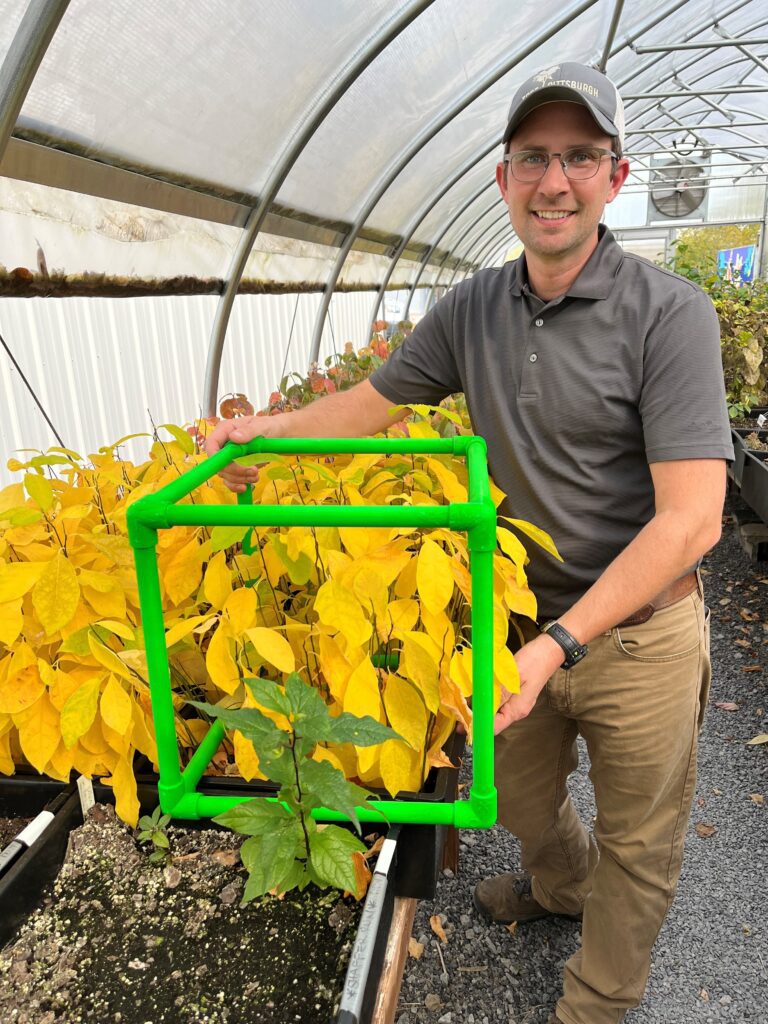
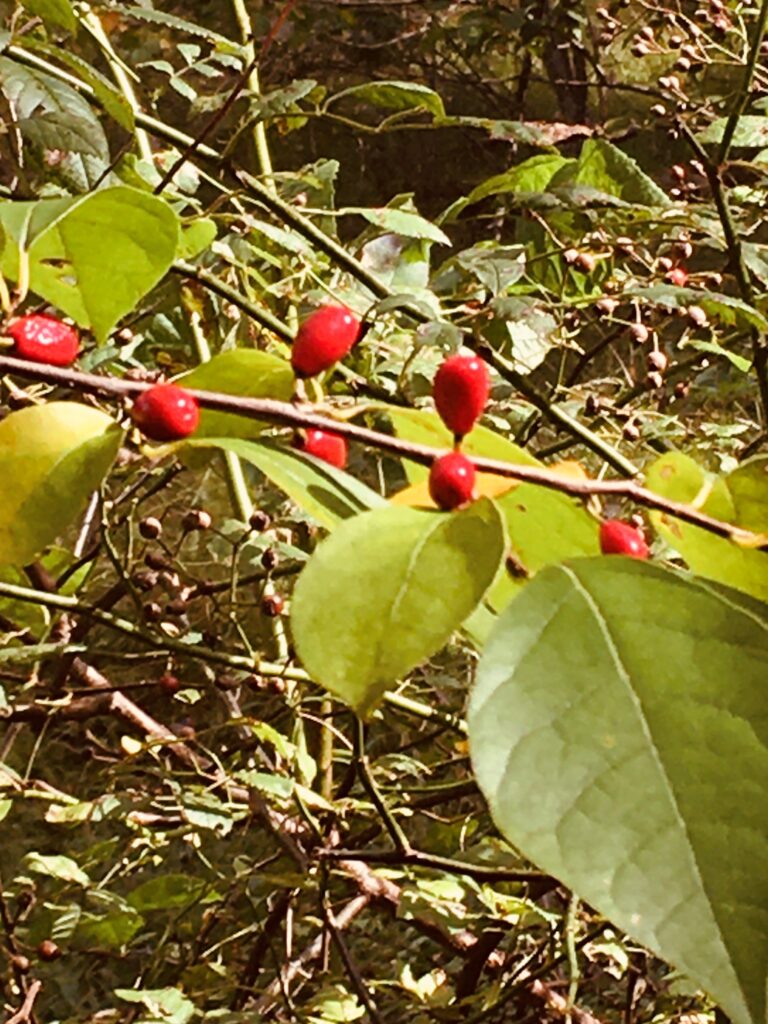
On a late October afternoon, Joe Stavish, Director of Education for Tree Pittsburgh, uses a biocube in one of the organization’s greenhouses to show off the golden fall foliage of northern spicebush saplings. If the cube could accompany one of these native shrubs when it’s planted in a local park as part of forest understory restoration, the open-sided green frame might document a surprising variety of wildlife.

During the early weeks of spring, northern spicebush again adds bright color to forest landscapes when its leafless branches bear tiny gold flowers whose nectar and pollen provides critical nourishment for a host of native bees. Close attention to blossom visitors within the biocube could lead to the documentation of dozens of insect species at this stage. 

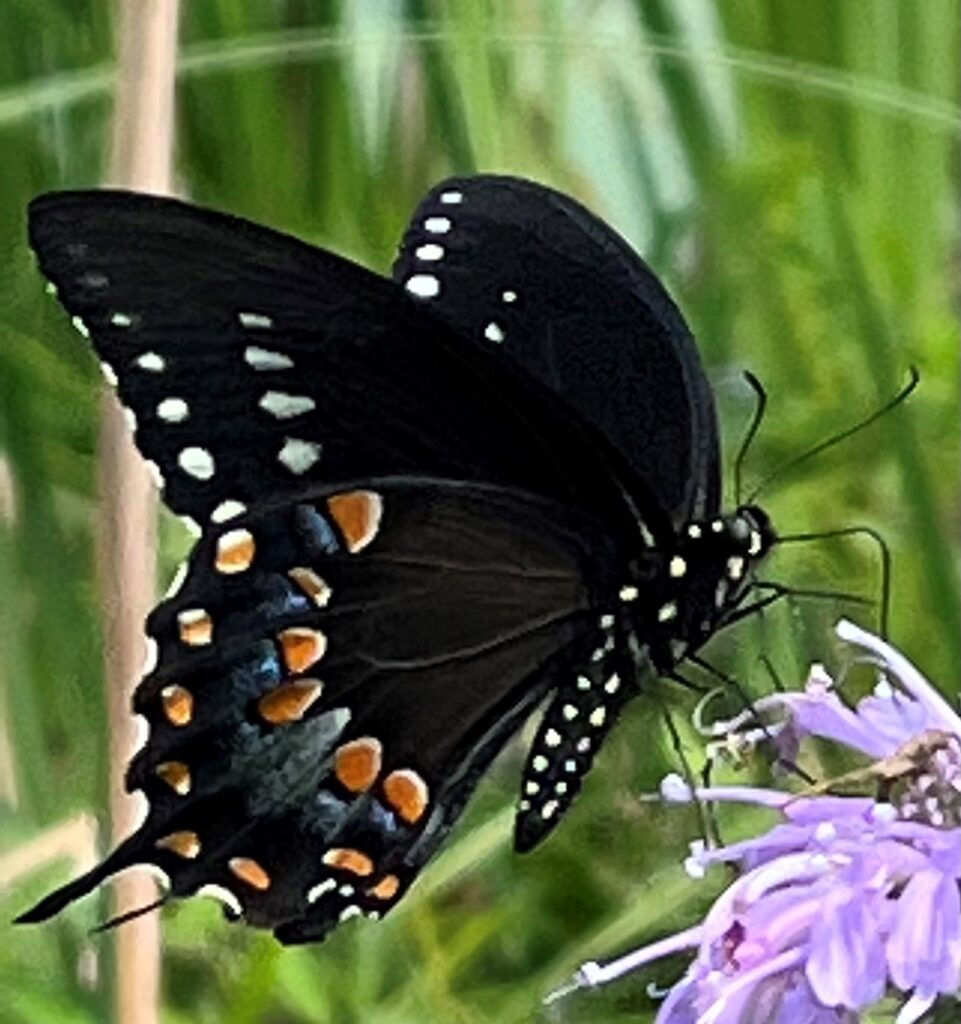
Early spring observations might also detect what appears to be a narrow, two-inch-long dead leaf attached to one of the shrub’s twigs. This is the over-wintering chrysalis of the spicebush swallowtail, a butterfly whose caterpillars are known to favor the spicebush leaves as a food source. After the plant is fully leafed, observation of spicebush foliage within the biocube might produce a sighting of the caterpillar’s distinctive fifth instar or larval stage. 

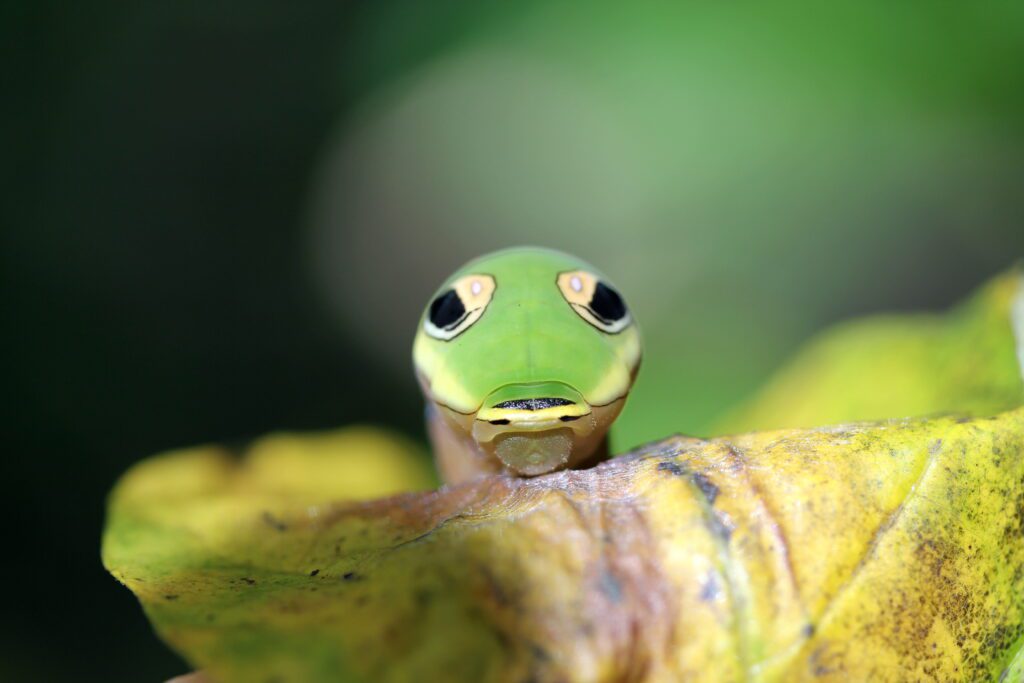
The broad head of the caterpillar at this stage sports two false eye spots, markings that might provide some predator protection by contributing to an overall visual impression of a small alert snake. 

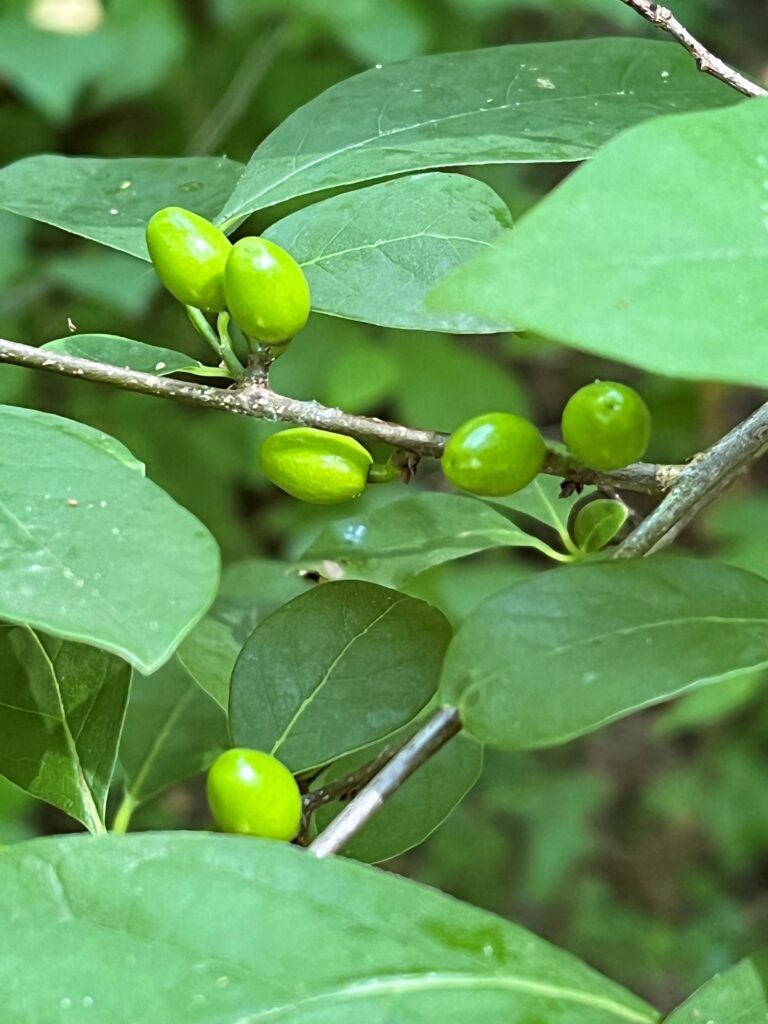
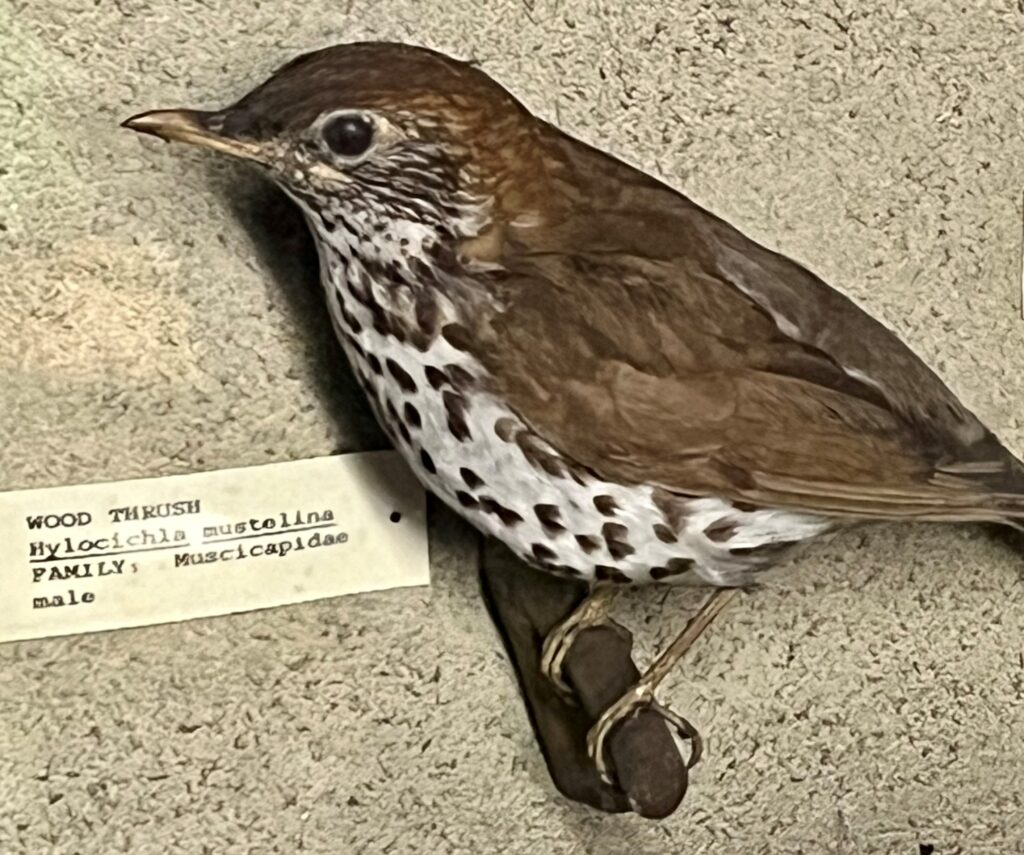
In late summer and early fall, when the ripening of the plant’s fruit is signaled by a green to red color change, the biocube would likely have some avian visitors. The ripened fruits are an important seasonal food source for Wood Thrush and other migrating songbirds. In actions that would likely occur outside the bounds of the biocube, these birds contribute to overall health of northern spicebush in our forests by spreading the plants’ seeds in their droppings.

Patrick McShea is an Educator at Carnegie Museum of Natural History.

Related Content

Life in One Cubic Foot

How-to Make a Biocube

Teaching About Trees

Carnegie Museum of Natural History Blog Citation Information

Blog author: McShea, Patrick
Publication date: November 10, 2023

Share this post!

  • Share on Twitter Share on Twitter
  • Share on Facebook Share on Facebook
  • Share on Pinterest Share on Pinterest
  • Share on LinkedIn Share on LinkedIn
  • Share on Reddit Share on Reddit
  • Share via Email Share via Email

Filed Under: Blog Tagged With: Education, liocf, Pat McShea

  • « Go to Previous Page
  • Page 1
  • Interim pages omitted …
  • Page 5
  • Page 6
  • Page 7
  • Page 8
  • Page 9
  • Interim pages omitted …
  • Page 25
  • Go to Next Page »

sidebar

About

  • Mission & Commitments
  • Directors Team
  • Museum History

Get Involved

  • Volunteer
  • Membership
  • Carnegie Discoverers
  • Donate
  • Employment
  • Events

Bring a Group

  • Groups of 10 or More
  • Birthday Parties at the Museum
  • Field Trips

Powdermill

  • Powdermill Nature Reserve
  • Powdermill Field Trips
  • Powdermill Staff
  • Research at Powdermill

More Information

  • Image Permission Requests
  • Science Stories
  • Accessibility
  • Shopping Cart
  • Contact
  • Visitor Policies
Stay in the loop! Sign up for our newsletter(s).
One of the Four Carnegie Museums | © Carnegie Institute | Privacy Policy | Terms of Use | Accessibility
Rad works here logo