• Skip to primary navigation
  • Skip to main content
  • Skip to primary sidebar

Carnegie Museum of Natural History

One of the Four Carnegie Museums of Pittsburgh

  • Visit
    • Buy Tickets
    • Visitor Information
    • Exhibitions
    • Events
    • Dining at the Museum
    • Celebrate at the Museum
    • Powdermill Nature Reserve
    • Event Venue Rental
  • Learn
    • Field Trips
    • Educator Information
    • Programs at the Museum
    • Bring the Museum to You
    • Guided Programs FAQ
    • Programs Online
    • Climate and Rural Systems Partnership
  • Research
    • Scientific Sections
    • Science Stories
    • Science Videos
    • Senior Science & Research Staff
    • Museum Library
    • Science Seminars
    • Scientific Publications
    • Specimen and Artifact Identification
  • About
    • Mission & Commitments
    • Directors Team
    • Museum History
  • Tickets
  • Give
  • Shop

Press Release

June 12, 2024 by Erin Southerland

Celebrate 125 Years Since the Discovery of Dippy with Carnegie Museum of Natural History

Celebrate the 125th anniversary of the discovery of Carnegie Museum of Natural History’s beloved Diplodocus carnegii (Dippy) this July at the museum. The public is invited to enjoy events all month long for all ages, including a special Super Science Saturday for families, a 21+ night, a day filled with talks by paleontologists and other Dippy experts,  and much more. 

Named Diplodocus carnegii  to honor Andrew Carnegie’s support for the expedition that found it, Dippy proved too massive to be housed in the original exhibition halls, necessitating the expansion of Carnegie’s museum — sometimes referred to as “the house that Dippy built” by people of the day. Arguably the most seen dinosaur fossil in the world, Dippy’s many plaster replicas have thrilled museumgoers in London, Berlin, Madrid, Vienna, St. Petersburg, Paris, Bologna, La Plata, and Mexico City, while the genuine article has delighted millions here in Pittsburgh.   

“We’re so excited to celebrate the 125th anniversary of discovery of our iconic ‘mascot’ Diplodocus carnegii in this way,” says the museum’s senior dinosaur paleontologist and co-chair of research Dr. Matt Lamanna. “Dippy is a dinosaurian celebrity, not only for its incalculable scientific significance but also for its extraordinary cultural impact.” 

Events Celebrating Dippy’s 125th Anniversary

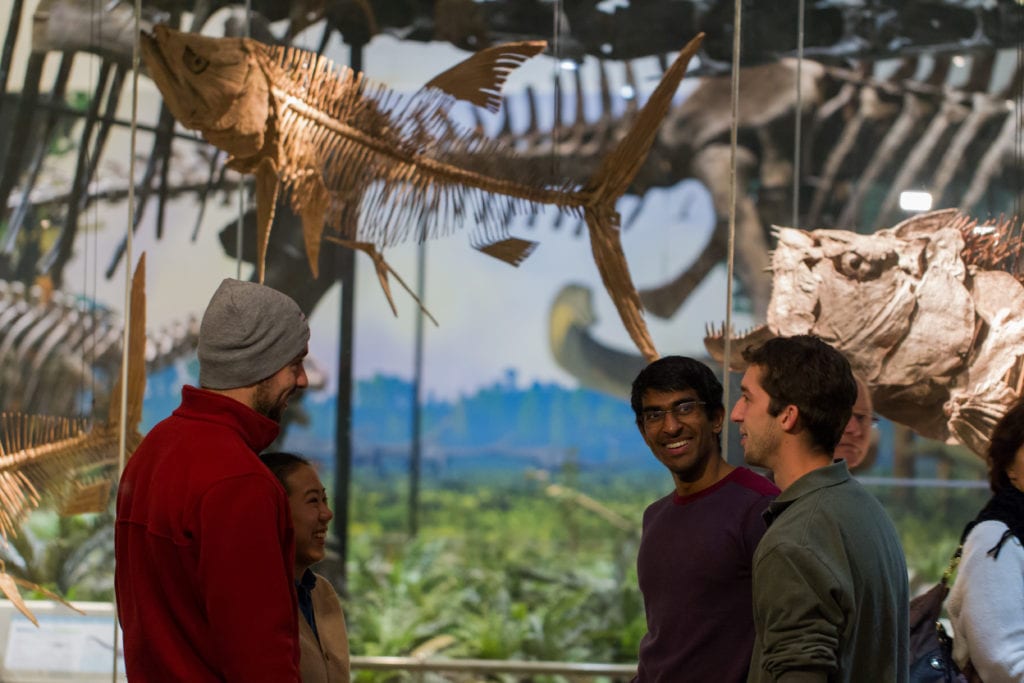
Photo credit: Joshua Franzos, Treehouse Media

Discovering Dippy: The Dinosaur That Changed the World 
July 12, 2024 
10:00 a.m. – 5:00 p.m. 
Pay what you wish 

Become an expert on the past, present, and future of research about Pittsburgh’s favorite dinosaur – the one and only Dippy! Talks by leading scientists, historians, and museum professionals will get you acquainted with a whole new side of Carnegie Museum of Natural History’s beloved mascot.  

Dippy’s Birthday Party for Members 
July 12, 2024 
6:00 – 9:00 p.m. 
Free for Carnegie Museums of Pittsburgh members 

Carnegie Museums of Pittsburgh members are invited to a birthday celebration for everyone’s favorite dinosaur, Diplodocus carnegii (Dippy). Enjoy birthday treats, face painting, and other family-friendly activities in honor of a Pittsburgh icon with an international impact. Dinosaur-themed clothing and costumes are encouraged! 

Super Science Saturday: Dippy’s Jurassic World 
July 13, 2024 
12:00 – 4:00 p.m. 
Free with museum admission 

Join us for a Jurassic celebration in honor of the 125th anniversary of the discovery of Dippy! Hear about the most recent dino discoveries and ask museum staff your most pressing questions about the plants and animals that inhabited one of the most fascinating—and popular—geological periods in our Earth’s history. 

Teen Night: Dippy 125 
July 18, 2024 
5:00 – 8:00 p.m. 
Free to everyone ages 13–18 

Teens (ages 13–18) are invited to Carnegie Museum of Natural History for a fun night in honor of the 125th anniversary of the discovery of our most famous dinosaur, Diplodocus carnegii! Join us for Jurassic-themed activities, learn what made the discovery of Dippy such an important event, and enjoy a snack in the teens-only lounge. 

Dippy & Friends (Virtual Event) 
July 23, 2024 
7:00 – 8:00 p.m. 
Pay what you wish 

We’re throwing a ‘gotcha day’ party for Dippy! Join Dr. Matt Lamanna, Mary R. Dawson Curator of Vertebrate Paleontology, to learn about Apatosaurus, Stegosaurus, Allosaurus, and other amazing animals that shared Dippy’s world some 150 million years ago in what’s now the Rocky Mountain region of North America. 

Dippy’s Rockstar Bash After Dark (21+) 
July 26, 2024 
6:00 – 10:00 p.m. 
$24 ($19 for members) 

From our beloved Dippy to dazzling gems and magnificent architecture – Carnegie Museum of Natural History is full of rockstars! Celebrate the 125th anniversary of Dippy’s discovery at a 21+ bash in the “house that Dippy built.” Meet the museum’s outstanding scientists as they share rarely viewed specimens. Enjoy pop-up musical performances throughout the evening.  

For more information, visit https://carnegiemnh.org/explore/dippy-125/.  

### 

Filed Under: Press Release

March 5, 2024 by Erin Southerland

Carnegie Museum of Natural History Announces Kathy Hollis as Inaugural Director of Collections Care and Access

Kathy Hollis, Director of Collections Care and Access at Carnegie Museum of Natural History.

Following an international search, Carnegie Museum of Natural History (CMNH) welcomes Kathy Hollis as its inaugural Director of Collections Care and Access. The new leadership position exemplifies the museum’s strategic commitment to future-proofing its historic collections of approximately 22 million specimens and objects and making them more accessible to scientists and students around the world, as well as to visitors in Pittsburgh. Hollis officially joined CMNH on March 4, 2024.  

Since 2011, Hollis served as the Collection Manager for Paleobiology at the Smithsonian National Museum of Natural History in Washington, DC. In this role, she developed and implemented the collections management strategy for the National Fossil Collection, which includes some 40 million specimens. In addition to overseeing large collections acquisitions, moves, and facility upgrades, she managed numerous digitization projects. Prior to her time at the Smithsonian, Kathy served in several collections roles at the University of Colorado Museum of Natural History, where she received her M.S. in Museum and Field Studies. She also holds an M.S. in Geology from the Ohio State University and a B.A. in Geology from the College of Wooster.  

Hollis will report directly to Gretchen Baker, Daniel G. and Carole L. Kamin Director of Carnegie Museum of Natural History and Vice President of Carnegie Museums of Pittsburgh. She will manage staff across all the museum’s collecting areas: Anthropology, Botany, Mineralogy, Herpetology, Malacology, Mammalogy, Ornithology, Invertebrate Zoology, Invertebrate Paleontology, Paleobotany, and Vertebrate Paleontology. Hollis will lead initiatives to make the collections more accessible for research and public engagement and will also oversee conservation, archives, database systems, and registration. 

“The diversity of collections held in natural history museums can be dizzying—from pinned insects to dinosaur bones to human remains. And the issues in managing them are equally complex.” said Baker “This position emerged as a priority during our recent strategic planning process. We were looking for a leader to help us realize a future-forward vision for this historic collection and to knit together a novel cross-disciplinary team. We are thrilled to have found Kathy and can’t wait to welcome her to CMNH.”  

“I am honored to join CMNH’s incredible team dedicated to the values of scientific inquiry, shared experience, and sense of wonder and curiosity about our world,” said Hollis. “I am eager to help support the museum’s commitment to strong collections stewardship so that the collections in the museum’s care are accessible to the communities we serve. Having grown up along the Ohio River, I’m also excited to return to the Ohio River valley and call Pittsburgh home!” 

Filed Under: Press Release Tagged With: Science News

February 28, 2024 by Erin Southerland

Carnegie Museum of Natural History presents The Stories We Keep: Conserving Objects from Ancient Egypt

March 9, 2024-March 9, 2025 

Ancient Egyptian Objects Return to View, Museum Invites Visitors to Step Behind the Scenes and Follow the Conservation of More than 80 Ancient Objects

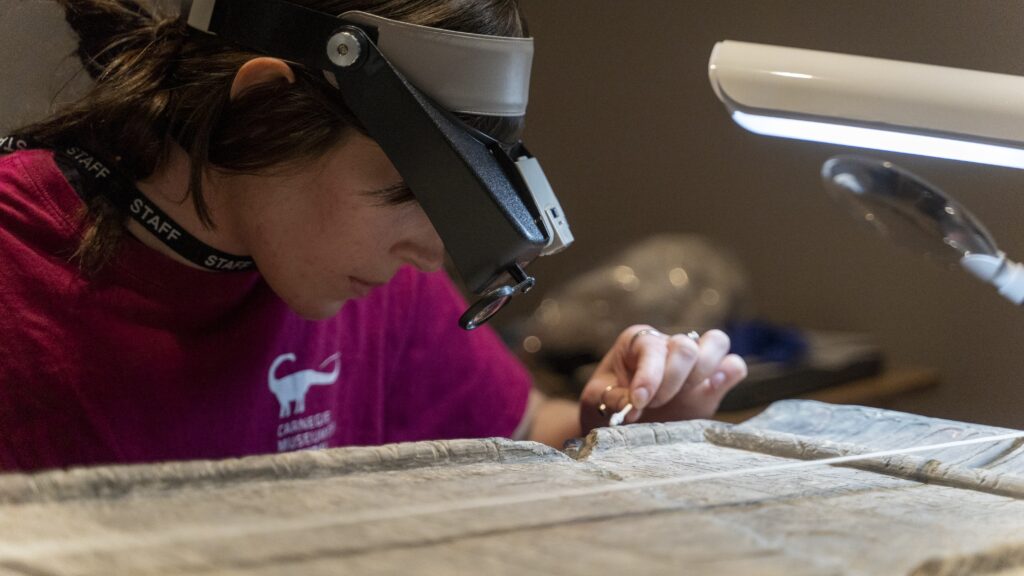
person removing soot from an ancient Egyptian artifact

Carnegie Museum of Natural History presents The Stories We Keep: Conserving Objects from Ancient Egypt. The new exhibition, produced in house, opens the curtain on behind-the-scenes work and puts the art and science of artifact conservation centerstage. It also marks the return to public view of ancient Egyptian objects after the museum closed Walton Hall of Ancient Egypt in 2023 for necessary conservation. Opening March 9th and on view for one year, The Stories We Keep invites visitors to see these objects—cared for by the museum for more than a century—in a new light and to witness the work that will preserve them for future generations. 

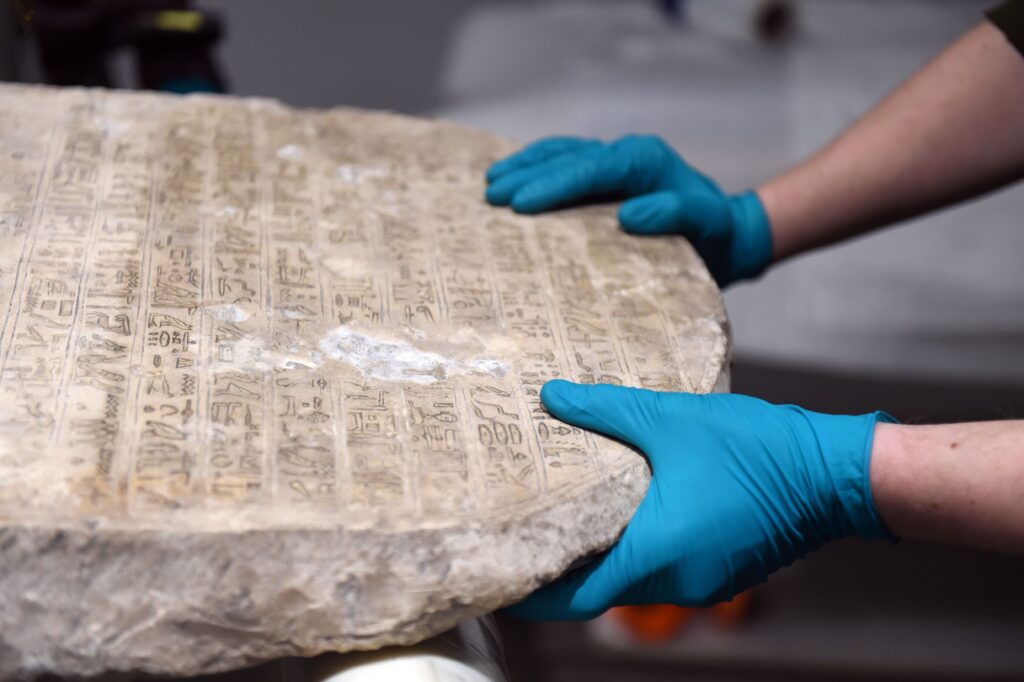
pair of gloved hands holding an artifact

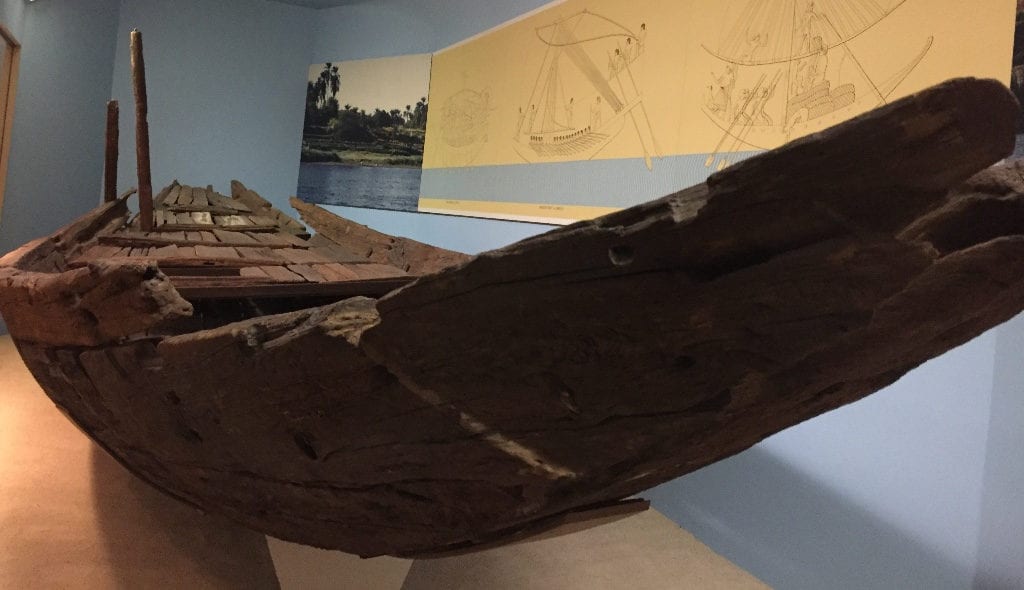
Every object in the museum’s care has stories to tell, about its creation and original use, its journey to Pittsburgh, and about the lives of those in ancient Egypt. The Stories We Keep features more than 80 items from ancient Egypt—including the 4,000-year-old Dahshur boat, one of only four in the world. CMNH invites visitors to engage with these objects like never before, have conversations with museum conservators, observe the care and restoration of objects in real time, and attempt the work themselves by reassembling replicas of ancient objects created with the assistance of 3D scanners.

Museum conservators will hold daily demonstrations and answer visitor questions about the objects and conservation tactics. Visitors can also submit questions by using a QR code, and the conservation team will address select entries in a video series accessible on the museum’s website and social media channels.


“We know how interested visitors are in ancient Egypt,” said Sarah Crawford, Director of Exhibitions and Design. “This exhibition allows visitors to satisfy their curiosity and watch as our Conservation team carries out their vital work caring for these ancient Egyptian items. We hope our fans gain new insights into these beloved objects and an appreciation for the hard work, dedication, and talent of our colleagues who safeguard them.”

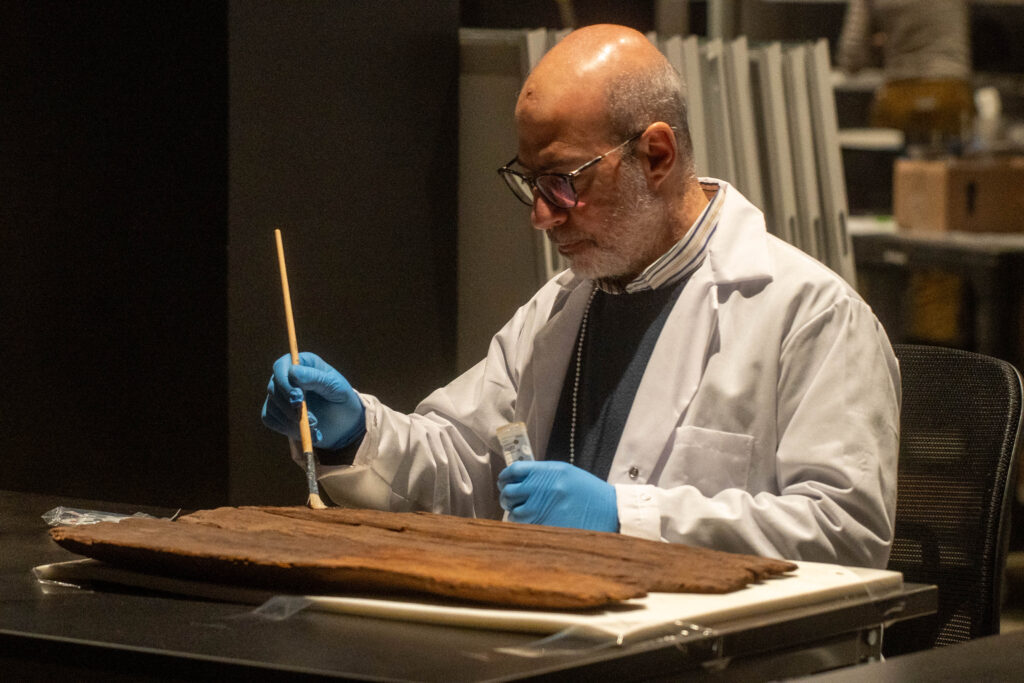
person using a brush on a piece of wood

The exhibition will prominently feature the Dahshur boat, one of four funerary boats still in existence from Egypt’s 12th Dynasty. In 2023, CMNH recruited Egyptian conservator Dr. Mostafa Sherif, an expert on ancient wood restoration, to treat the boat. He joins senior conservator Gretchen Anderson, who oversees the museum’s conservation operations, and project conservator Annick Vuissoz, who arrived at the museum last month to manage the ongoing conservation of 650 ancient Egyptian objects in CMNH’s care.

“This is an entirely new experience for visitors,” said Dr. Lisa Haney, Assistant Curator and Egyptologist. “It connects us to ancient people in a new way, encouraging us to think differently about our own everyday objects and the stories they tell. We hope to create new connections between the past and the present and highlight the science that helps preserve those connecting threads.”

 
The Stories We Keep is free with museum admission and runs until March 9, 2025. General museum admission costs $25 for adults, $20 for adults 65 and older, $15 for children aged 3-18 or students with valid student IDs, and $12 after 3 p.m. on weekdays. Admission is free for members and children aged 2 and younger. More information is available at CarnegieMNH.org.  

Filed Under: Press Release Tagged With: ancient egypt, anthropology, egypt, Science News, The Stories We Keep

February 21, 2024 by Erin Southerland

Carnegie Museum of Natural History Researchers Describe Seven New Species of African Skinks

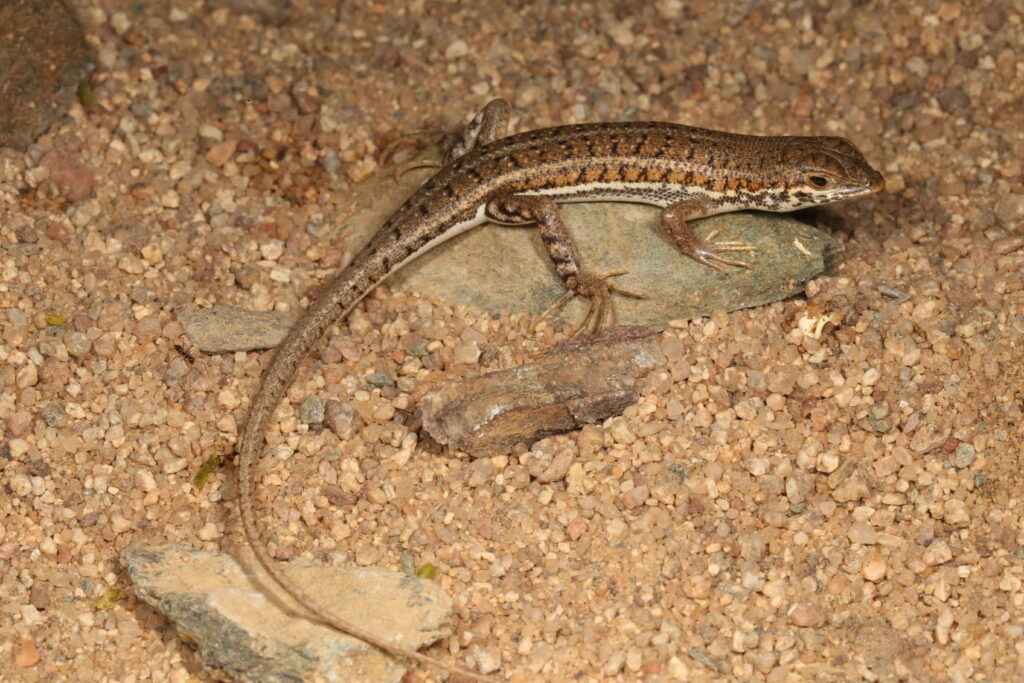
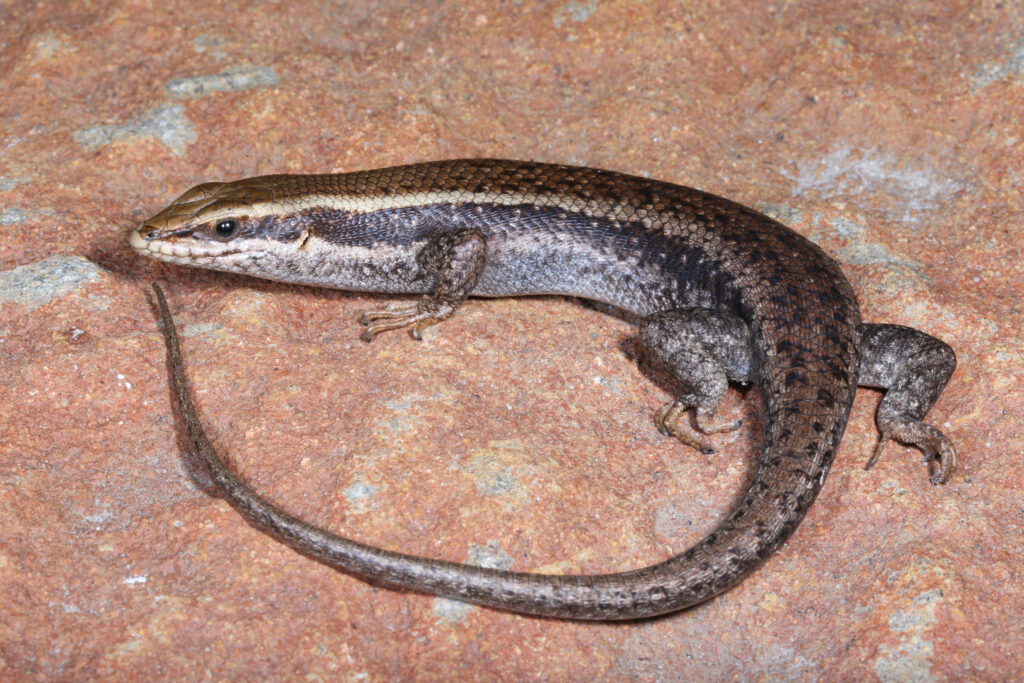
Trachylepis wilsoni. Photo credit: Luis Ceríaco.

Researchers from Carnegie Museum of Natural History (CMNH) and international colleagues describe seven species of skinks from the African nation of Angola that are new to science. In a study recently published in Bulletin of the American Museum of Natural History, the research team review all the occurring species of the genus Trachylepis in Angola and conclude there are seven new species.  

Two of the new species names, Trachylepis attenboroughi (“Attenborough’s Skink”) and Trachylepis wilsoni (“Wilson’s Wedge-snouted Skink”) honor iconic naturalists David Attenborough and Edward O. Wilson, respectively. The other names honor the late French herpetologist Roger Henri Bour, Angolan herpetologists Suzana A. Bandeira and Hilária Valério, the Angolan chieftain Mwene Vunongue (1800–1886), and the Ovahelelo ethnolinguistic group in gratitude for supporting and welcoming the research team and permitting them to study fauna of their lands.  

“It is an honor to name two new species after Sir Attenborough and E.O. Wilson,” said Mariana Marques, CMNH Collection Manager for the Section of Amphibians and Reptiles. “Both naturalists played a crucial role in my academic and professional paths, and their legacy definitely sparked my passion for African wildlife. We hope that naming two species in recognition of such inspirational naturalists can raise awareness worldwide that there are still new species to be discovered and described while many others are becoming extinct before they are even discovered. We are in a race against time to save our biodiversity, we cannot preserve what we do not know.” 

Trachylepis attenboroughi. Photo credit: Luis Ceríaco.

“It’s equally important to acknowledge the people of Angola,” said CMNH Research Associate and CIBIO/BIOPOLIS Researcher Luis Ceríaco. “We owe so much to them, including scientists who have contributed vital knowledge of the country’s beautiful biodiversity and the people who live on this land and who welcomed us and supported these endeavors. Both Suzana and Hilária started participating in this project as students, and now they are both leaders in their respective fields in Angola. They are training a new generation of Angolan biologists and conservationists. Honoring them with these two new species is a way to celebrate the new generation of African naturalists!”  

The description and naming of new species provides critical insights for biologists, contributes to our understanding of the evolutionary processes that shaped today’s biodiversity, and updates the catalogue of life on Earth. As biodiversity grows ever more vulnerable on a worldwide scale, a clear understanding of the real number of species and their distribution is fundamental to developing effective conservation plans.  

Angola, a country in southwestern Africa, is one of the most biodiverse countries on the continent, with high levels of endemism, or species that occur nowhere else in the world. This diversity is due to the county’s geographic position and wide diversity of biomes—including tropical rainforests, savannahs, and deserts, providing the specific habitats for species to adapt and speciate. Angolan biodiversity serves as a trove of new scientific knowledge, due in part to the armed conflicts that have engulfed the country for more than four decades, impeding research. 

In addition to Marques and Ceríaco, the research team includes Diogo Parrinha, CIBIO/BIOPOLIS PhD Candidate; Arthur Tiutenko, Friedrich-Alexander University of Erlangen/Nuremberg Assistant Professor; Jeffrey Weinel, American Museum of Natural History Postdoctoral Fellow; Brett Butler, Universidad Nacional Autónoma de Mexico PhD Candidate; and Aaron Bauer, Villanova University, Professor.  

Filed Under: Press Release Tagged With: amphibians and reptiles, herpetology, Luis Ceriaco, Mariana Marques, Science News

February 20, 2024 by Erin Southerland

Robert T. Downs Wins 2023 Carnegie Mineralogical Award 

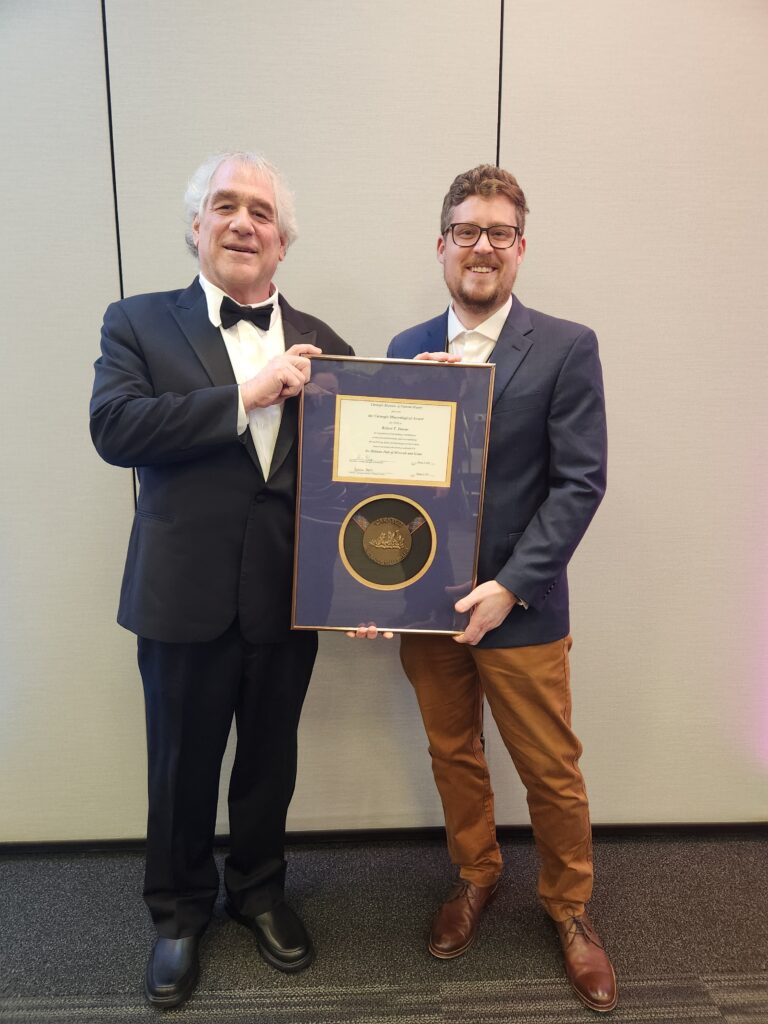
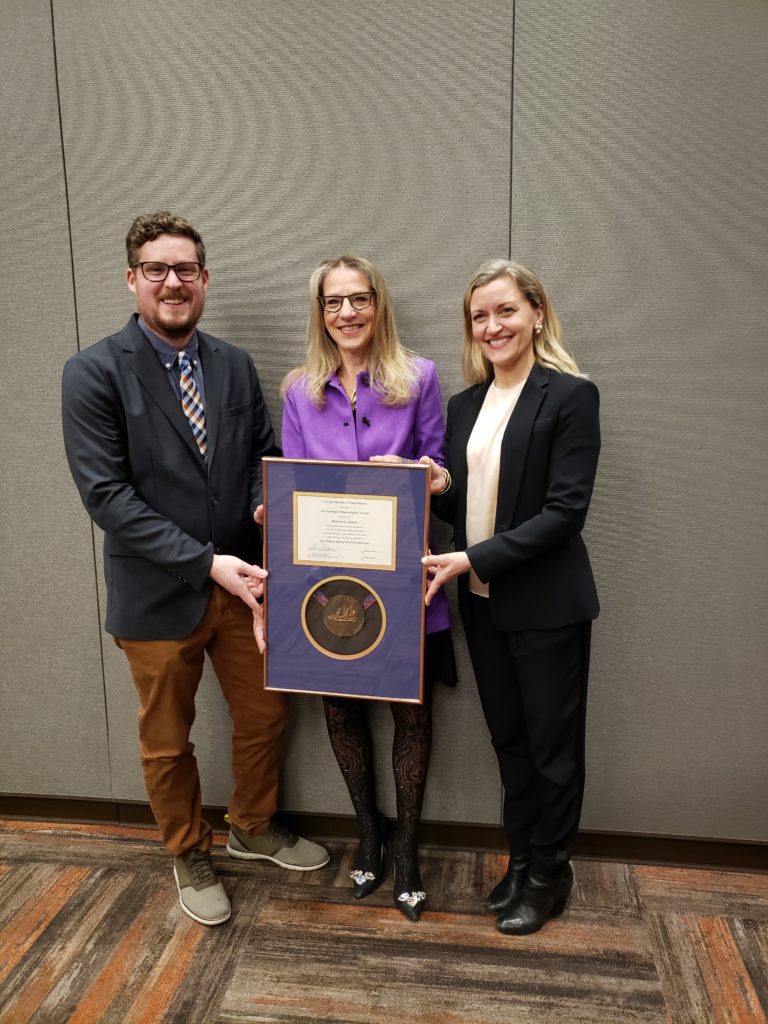
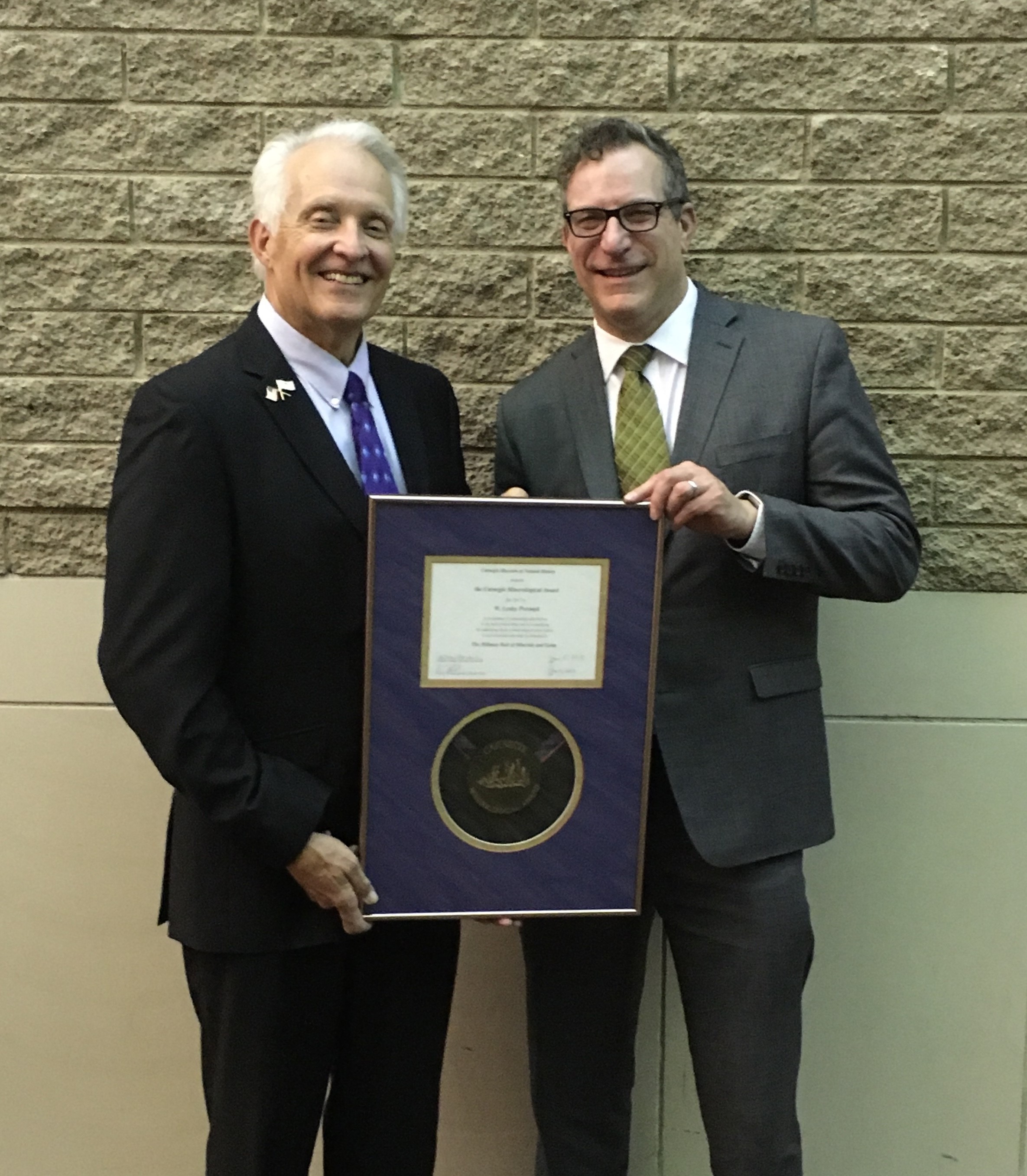
two people posing for the camera holding a framed award
Robert T. Downs, 2023 Carnegie Mineralogical Award Winner, and Travis Olds, Assistant Curator of Minerals at Carnegie Museum of Natural History. 

Carnegie Museum of Natural History (CMNH) is pleased to announce Robert T. Downs as winner of the 2023 Carnegie Mineralogical Award. The award honors outstanding contributions in mineralogical preservation, conservation, and education. 

Robert T. Downs is Professor Emeritus in the Department of Geosciences at The University of Arizona. Over the course of his career, he has taught thousands of students, published more than 300 peer-reviewed papers, and co-authored three books.  

“In his long career, Bob has influenced countless students and people from all walks of life through his lectures and publications, and as one of his supporters best put it, his influence on the mineralogy community is unique, lasting and profound. Congratulations, Bob,“ said Travis Olds, Assistant Curator of Minerals at Carnegie Museum of Natural History. 

Among his many achievements, Downs developed and continues to curate the RRUFF mineralogical database, one of the most widely used open-access mineral databases in the world, which has fundamentally changed how mineralogical data is kept and shared. The Raman spectra, X-ray diffraction, and chemistry data within RRUFF help mineral researchers identify specimens on Earth and beyond. Downs was a principal investigator on the Mars rover Curiosity, part of the Mars Science Laboratory mission. In 2023, he was second author on a paper in JGR Planets that summarizes a survey of 161 probable or confirmed Martian minerals and suggests that mineral diversity on Mars is an order of magnitude less than on Earth.  

Downs also prioritized making mineral education accessible to the public. He led the development of the popular, new University of Arizona Alfie Norville Gem & Mineral Museum in Tucson. 

“I found that the beauty of minerals was rivaled by the beauty of the math that described their crystal structures and the bonding of their atoms,” said Downs. “I am so thankful for a life in mineralogy that provided me the excitement of discovery and feel honored to receive the award.” 

Olds presented the award to Downs on February 10, 2024, at the Tucson Gem and Mineral Show. 
 
Carnegie Museum of Natural History established the Carnegie Mineralogical Award, funded by the Hillman Foundation, in 1987. 
 
Nominations are now being accepted for the 2024 Carnegie Mineralogical Award, and the deadline is November 15, 2024. Eligible candidates include educators, private mineral enthusiasts and collectors, curators, museums, mineral clubs and societies, mineral symposiums, universities, and publications. For information, contact Travis Olds, Assistant Curator, Section of Minerals & Earth Sciences, at 412-622-6568 or oldst@carnegiemnh.org.  
 
Past recipients include: 

2022 Willliam B. “Skip” Simmons, Jr. 
2021 Barbara Lee Dutrow, PhD. 
2020 John C. Medici, PhD. 
2019 John F. Rakovan, PhD. 
2018 Dudley P. Blauwet 
2017 W. Lesley Presmyk 
2016 Anthony R. Kampf, PhD. 
2015 George Harlow, PhD. 
2014 Bryon N. Brookmyer 
2013 Gloria A. Staebler 
2012 George W. Robinson, PhD. 
2011 Jeffrey E. Post, PhD. 
2010 The Rochester Mineralogical Symposium 
2009 Peter K.M. Megaw, PhD. 
2008 Frank C. Hawthorne, PhD. 
2007 Jeffrey A. Scovil 
2006 Richard C. Whiteman 
2005 June Culp Zeitner 
2004 Joel A. Bartsch, PhD. 
2003 Eugene S. Meieran, Sc.D. 
2002 Terry C. Wallace, Jr., PhD. 
2001 Wendell E. Wilson, PhD. 
2000 F. John Barlow, Sc.D. (honorary)  
1999 Sterling Hill Mining Museum  
1998 Robert W. Jones 
1997 Bryan K. Lees 
1996 Cornelis (Kase) Klein, PhD. 
1995 Marie E. Huizing 
1994 The Mineralogical Record 
1993 Cornelius S. Hurlbut, Jr., PhD. 
1992 Carl A. Francis, PhD. 
1991 Miguel A. Romero Sanchez, PhD. 
1990 Paul E. Desautels 
1989 Frederick H. Pough, PhD. 
1988 John Sinkankas, DHL. (honorary) 
1987 The Tucson Gem & Mineral Society 

Filed Under: Press Release Tagged With: mineralogical award, minerals, Science News, Travis Olds

November 9, 2023 by Erin Southerland

Museum Researchers Describe Five New Amphibian and Reptile Species in 2023

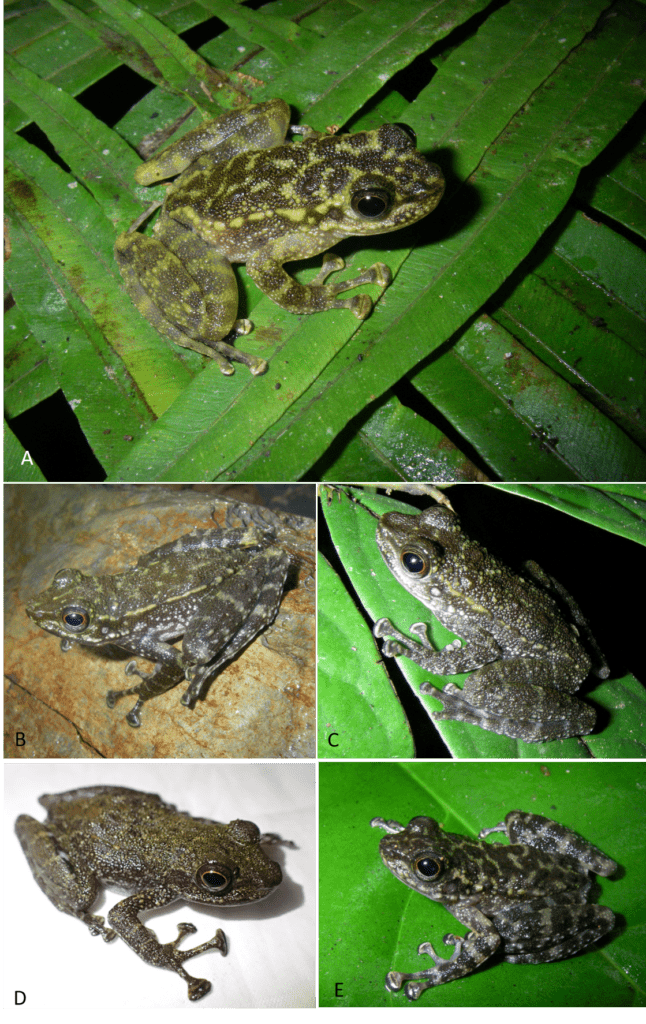
Five frogs in the genus Amolops: A: Amolops cremnobatus, B: A. tanfuilianae sp. nov., C: A. sengae sp. nov., D: A. kottelati sp. nov., E: A. attiguus sp. nov.
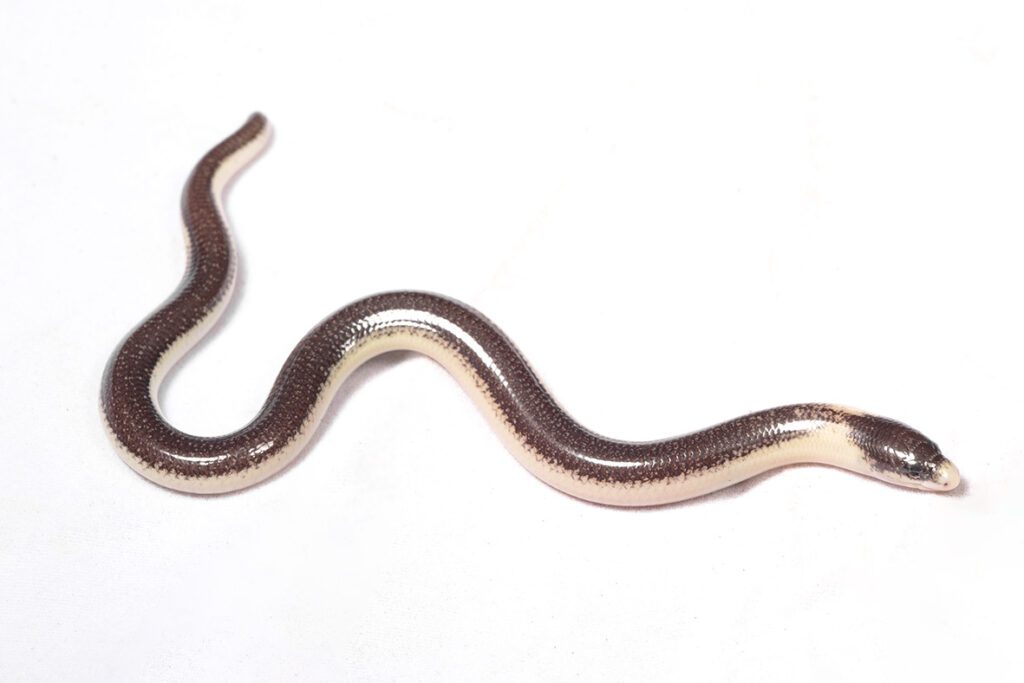
Acontias mukwando. Photo credit: Arthur Tiutenko.

Researchers in Carnegie Museum of Natural History’s (CMNH) Section of Amphibians and Reptiles celebrate five new species described in 2023. Associate Curator Dr. Jennifer Sheridan and an international research team describe four new species of Southeast Asian frogs in the genus Amolops in the journal Vertebrate Zoology. Collection Manager Mariana Marques and international colleagues describe a new species of legless skink (small lizard) from Angola in the African Journal of Herpetology. Both museum researchers are lead authors of their respective studies. 
 
Marques and Sheridan’s discoveries took place 6,000 miles apart on different continents, yet both provide new scientific insights about their respective regions. In the face of a worldwide decline in biodiversity due to human impact, the documentation of new-to-science species fills vital knowledge gaps for a better understanding of ecosystem health. The better scientists can document biodiversity, the better they understand the effects of biodiversity loss and how to identify future conservation goals. 
 
“Publishing five new species within less than three weeks is exciting for us and the museum,” said Sheridan. “Both discoveries required a combination of field work and research back at the museum. Mariana knew in the field that she had likely encountered an undescribed species, while in my case, these frogs were labeled as Amolops cremnobatus in the field because that’s what they looked like. Years later, once we started looking closely at numerous individuals collected by many researchers, we began to fully realize the diversity hidden in the Amolops genus.”

Dr. Jennifer Sheridan, Associate Curator of Amphibians and Reptiles.

Sheridan and researchers from Laos and North Carolina hypothesized that the Lao torrent frog Amolops cremnobatus, first described in 1998, is actually five species in the genus Amolops based on mitochondrial DNA analysis of specimens from Laos, Vietnam, and Thailand. Their paper in Vertebrate Zoology describes the four new species Amolops tanfuilianae, Amolops kottelati, Amolops sengae, and Amolops attiguus. 

“These are extremely cryptic species,” said Sheridan. “So, determining the differences is not as simple as ‘specimen A has different coloration than cremnobatus’ or anything like that.” The visual differences between adult specimens were small and included varied finger lengths and the number of vomerine teeth (used to capture and hold prey). Tadpole morphology (size, shape, and structure) was key; even though adults are collected more often than tadpoles for scientific study, tadpole information is important. Body length, presence or absence of glands, and other physical features in tadpoles provided crucial data to differentiate the new Amolops species. Molecular data including mtDNA and nuDNA analysis also revealed differences the research team needed to describe the four new species. The team recognizes that continued research in Thailand may reveal additional species. 

Meanwhile, Marques and an international team of researchers discovered the skink Acontias mukwando on Serra da Neve, an inselberg, or isolated, rocky outcrop, in Angola, one of the most ecologically diverse countries in Africa. Moveable eyelids and distinct coloration distinguish the new species, Acontias mukwando, from other species in the genus Acontias. The research team chose the species name in honor of the local Mukwando tribe to recognize their support and friendship during field work.

Both Sheridan and Marques used specimens from the collections of multiple other museums to fully determine how these newly described species are unique, and how they relate to their closest relatives. They relied on collections made by numerous researchers from multiple countries, highlighting the value of collaborative museum networks for understanding global biodiversity.

“Finding a specimen like Acontias is always exciting,” said Marques. “These animals spend most of their time under rocks and foliage, and they are not usually seen by people. There is so much we don’t know about them. Discovering that a member of a little-known group occurs on top of an equally obscure mountain was such an exciting mystery to solve. It was one of those rare ‘wow’ moments in your career as a scientist! My goal is to provide a solid and scientific overview of the fauna occurring in Serra da Neve, in order to support its conservation and contribute to the understanding of its rare biodiversity.”

CMNH’s Section of Amphibians and Reptiles maintains a collection of more than 230,000 specimens and ranks as the ninth largest amphibian and reptile collection in the United States. It includes 156 holotypes, the single type specimens upon which the descriptions and names of their respective species are based. 

Filed Under: Press Release Tagged With: amphibians and reptiles, herpetology, Jennifer Sheridan, Mariana Marques, Science News

September 28, 2023 by Erin Southerland

CARNEGIE MUSEUM OF NATURAL HISTORY PRESENTS LIFE IN ONE CUBIC FOOT

Pittsburgh, September 28, 2023 — This fall and holiday season, Carnegie Museum of Natural History (CMNH) presents Life in One Cubic Foot. The exhibition follows the research of Smithsonian scientists and photographer David Liittschwager as they discover what a cubic foot of land or water—a biocube—reveals about the diversity of life on the planet. CMNH will present Life in One Cubic Foot from October 14, 2023 through January 7, 2024. The exhibition is organized by the Smithsonian Institution Traveling Exhibition Service (SITES) in collaboration with the Smithsonian’s National Museum of Natural History.

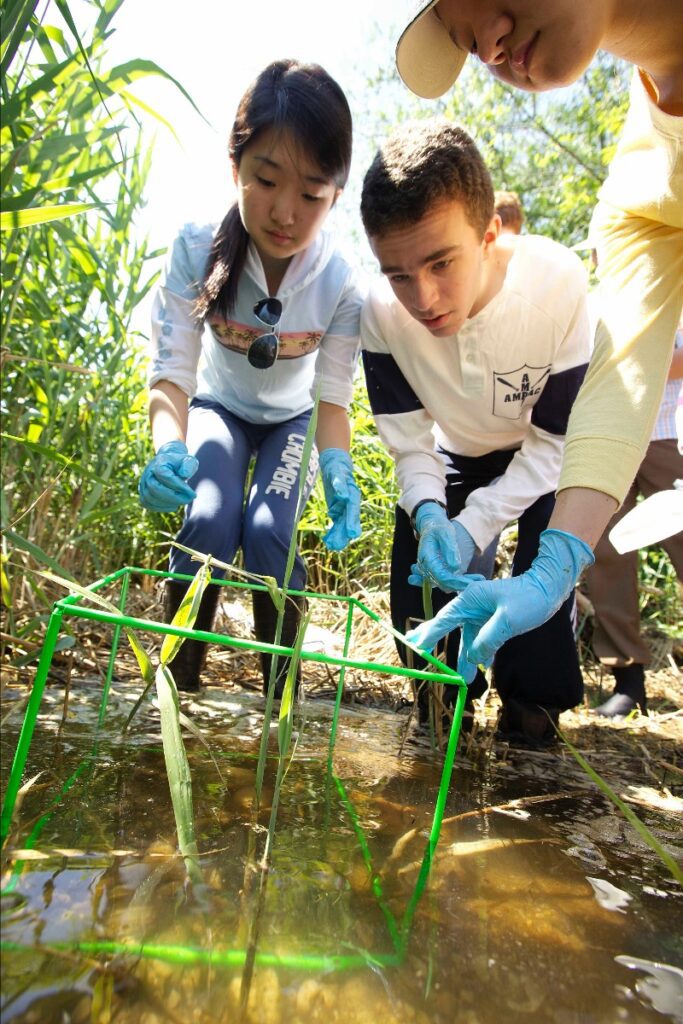
DNA Learning Center students exploring one cubic foot of Cold Springs Harbor in New York. © David Liittschwager

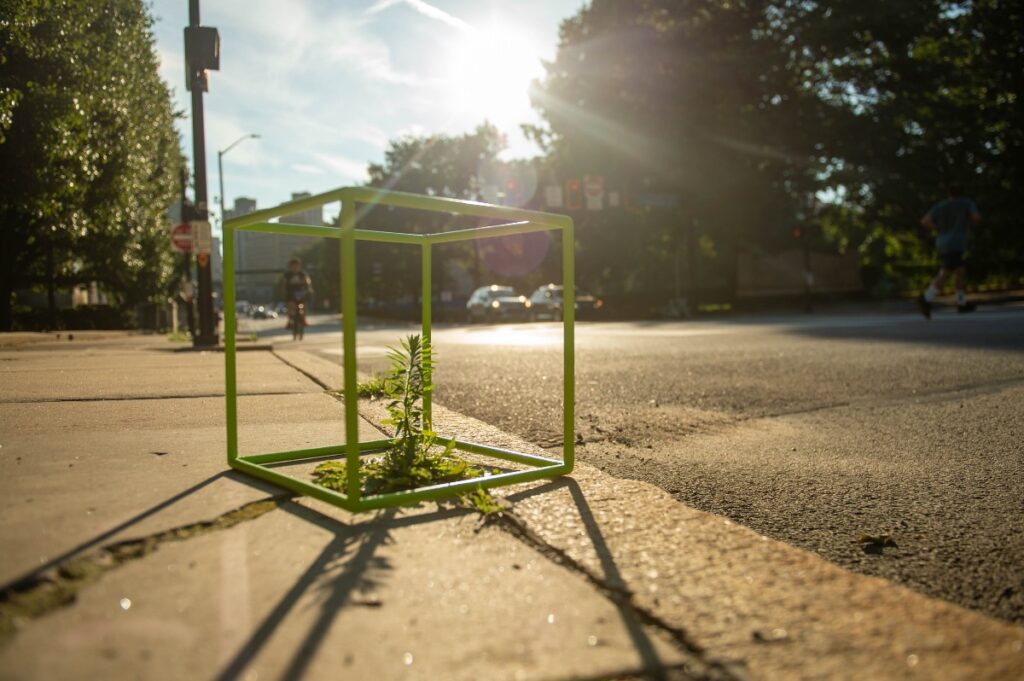
A biocube—the tool at the heart of the exhibition—is a one-by-one-by-one-foot framed cube that organisms from the surrounding environment can enter and pass through. Biocubes featured in the exhibition were placed in environments across the globe to learn what forms of life, both known and unknown, could be found during a 24-hour period. In addition to exploring life through the exhibition, visitors are also invited to participate in citizen science and uncover the biodiversity in their own backyards by creating and monitoring their own biocubes. 

Life in One Cubic Foot explores life from exotic environments, like the coral reefs of French Polynesia and the alien mid-water ocean off the coast of California, to more familiar locales, like New York City’s Central Park. The exhibition features hundreds of different organisms—ranging in size from the head of a pin to the full one-cubic-foot biocubes—in collages of photographs, models, interactive elements, and exhibition videos. CMNH will include a special section of the exhibition that focuses on the biodiversity of Pittsburgh and western Pennsylvania. 

A biocube in Pittsburgh’s Oakland neighborhood, near the museum. @ Matt Unger, Carnegie Museum of Natural History

Biocubes in the exhibition were not only used by scientists to explore what is already known about life on Earth but also to spotlight how much biodiversity remains for aspiring scientists to discover. Scientists estimate that there are more than one million species still unknown or unnamed by scientists. Environmental changes—like climate change and other human-made forces—affect life around the world, both discovered and yet unidentified. Global efforts to understand the impact of these changes and answer questions about how to manage the complex dynamics of wildlife and natural resources will improve as scientists fill knowledge gaps in the tree of life. 

“We hope visitors will experience wonder and curiosity about the diversity of life around the world and especially in their favorite parks and along their daily commutes,” said Gretchen Baker, the Daniel G. and Carole L. Kamin Director of Carnegie Museum of Natural History. “We encourage them to investigate life outside the walls of our museum, in their own familiar and cherished places. The better we understand life on Earth, the better we recognize its vulnerabilities and the pressing challenges it faces.” 

The exhibition is free with museum admission and runs until January 7, 2024. General museum admission costs $25 for adults, $20 for adults 65 and older, $15 for children aged 3-18 or students with valid student IDs, and $12 after 3 p.m. on weekdays. Admission is free for members and children aged 2 and younger. More information is available at CarnegieMNH.org. 

SITES has been sharing the wealth of Smithsonian collections and research programs with millions of people outside Washington, D.C., for more than 70 years. SITES connects Americans to their shared cultural heritage through a wide range of exhibitions about art, science, and history, which are shown wherever people live, work and play. For exhibition description and tour schedules, visit sites.si.edu. 

The Smithsonian’s National Museum of Natural History is connecting people everywhere with Earth’s unfolding story. The museum is one of the most visited natural history museums in the world. Opened in 1910, the museum is dedicated to maintaining and preserving the world’s most extensive collection of natural history specimens and human artifacts. For more information, visit naturalhistory.si.edu.

Filed Under: Press Release Tagged With: climate change

July 11, 2023 by Erin Southerland

Carnegie Museum of Natural History Awarded $225K Grant from Richard King Mellon Foundation to Lead Campaign Against Spread of Invasive Plant Species

Pittsburgh, Pennsylvania, July 11, 2023 — Thanks to a $225,000 grant from the Richard King Mellon Foundation, Carnegie Museum of Natural History (CMNH) will lead a collaborative education and outreach campaign to inspire local organizations and the public to act against the spread of invasive plant species across Pennsylvania and Central Appalachia. Partner organizations will include Audubon Society of Western Pennsylvania, Phipps Conservatory and Botanical Gardens, Pittsburgh Botanic Garden, and other organizations.

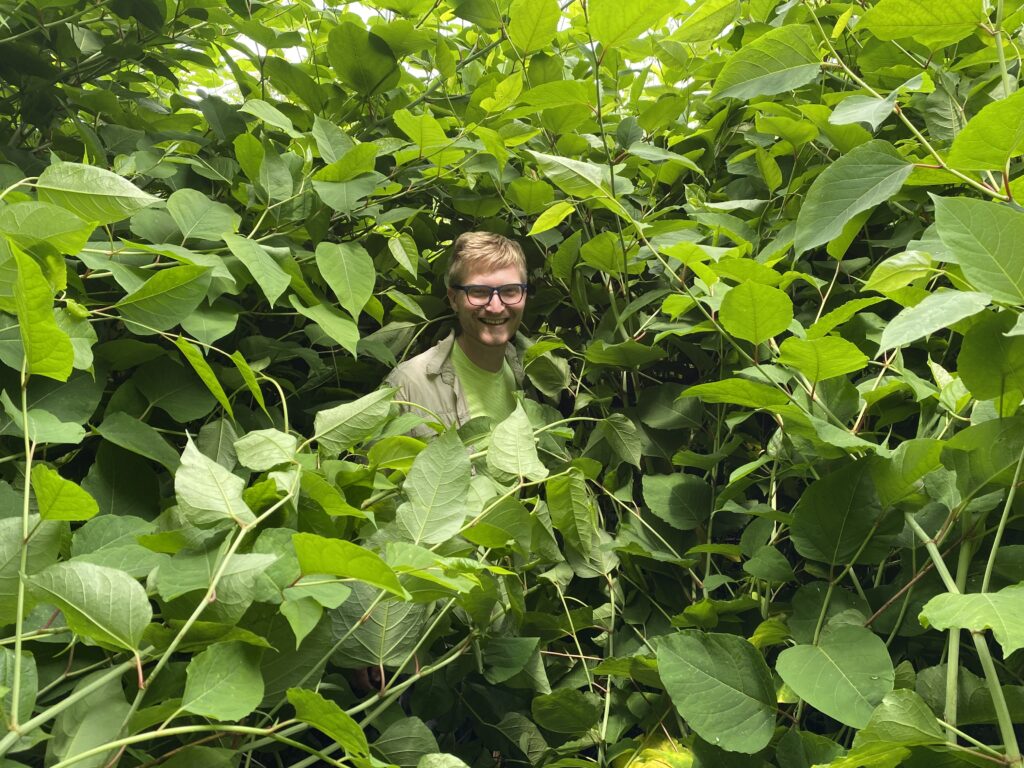

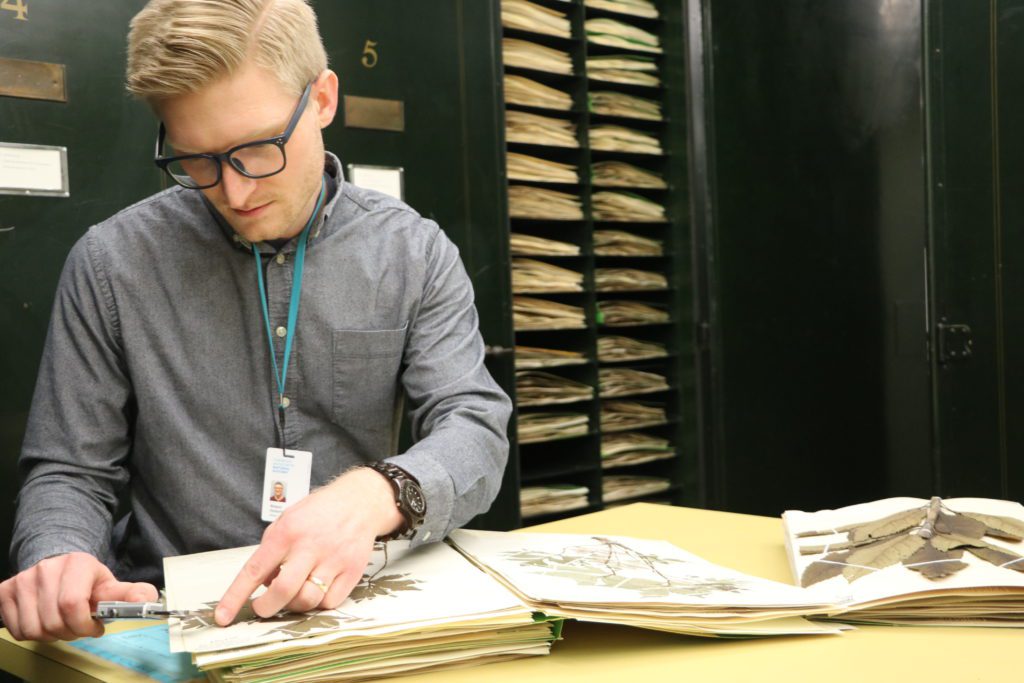
Associate Curator of Botany Mason Heberling with knotweed, an invasive plant.

CMNH cares for a collection of more than 550,000 plants specimens, the largest collection of Western Pennsylvanian plants in the world. The museum will leverage this collection and the scientific expertise of its own researchers and partner organizations to create and distribute a robust toolkit of resources designed to generate public awareness of invasive plants’ impact on local ecosystems and what people can do to slow their spread and prevent future introductions. Resources are anticipated to include museum exhibition content, digital assets, videos, maps, infographics, printed materials, and shared messaging that can be customized to the unique needs of each participating organization’s audience. The campaign will be distributed across a variety of outlets, including social media, printed handouts, and interpretive displays. 

“We’re grateful to the Richard King Mellon Foundation for this opportunity to convene the expertise of amazing colleagues in sister institutions to develop best practices for communicating about invasive species,” said Mason Heberling, CMNH’s Associate Curator of Botany. “We hope to cultivate an already growing audience and to empower the people of Western Pennsylvania to make a difference in the prevention and management of invasive species.”

The earliest record of knotweed (Reynoutria x bohemica) in the Pittsburgh region. The species now lines Pittsburgh’s three rivers, waterways, and roadsides. Collected in 1920.

The campaign will launch later in 2023 and continue through December of 2024, but the outcomes will continue well beyond that timeline. CMNH content will include a new interactive exhibit in the museum’s Hall of Botany and an exhibit at Powdermill Nature Reserve, the museum’s environmental research center located in the Laurel Highlands. CMNH will also create a free online repository for educational materials and curate a social media campaign linking the institutional partners to generate awareness and community participation across their respective networks of followers. “From weeds in your garden to invasive species in natural areas, the topic of introduced plants is not only a scientifically complex problem, but also a societally complex one,” added Heberling. “Many invasive plants were intentionally planted at first—and some continue to be planted—with environmental consequences often realized only decades later. Species invasions are one of the top drivers of biodiversity change, here in Pennsylvania and around the world.” 

About the Richard King Mellon Foundation
Founded in 1947, the Richard King Mellon Foundation is the largest foundation in Southwestern Pennsylvania, and one of the 50 largest in the world. The Foundation’s 2021 year-end net assets were $3.4 billion, and its Trustees in 2022 disbursed more than $152 million in grants and program-related investments. The Foundation focuses its funding on six primary program areas, delineated in its 2021-2030 Strategic Plan.

Filed Under: Press Release Tagged With: Botany, climate change, Mason Heberling, Science News

June 7, 2023 by Noelle Swart

Carnegie Museum of Natural History Presents Chirp, Chitter, Caw: Surrounded by Birdsong

This summer, Carnegie Museum of Natural History invites visitors of all ages to experience the audio exhibition Chirp, Chitter, Caw: Surrounded by Birdsong, created in partnership with artists Chris Hoff and Sam Harnett, founders of The World According to Sound. The new visitor experience runs July 1 through September 4, 2023, in the museum’s iconic Bird Hall and adjoining R.P. Simmons Family Gallery. It is free with museum admission.

Stylized banner that reads "Chirp, Chitter, Caw! Surrounded by Birdsong" Above the words there are speech bubbles with musical notes and various lines. On the right there's a woodpecker taxidermy mount.

Visitors can relax in a listening lounge, mimic unusual bird calls, and stroll down Bird Hall to hear sonic snapshots created by Hoff and Harnett. Featured sounds include the low rumble of the Southern Cassowary, the mimicry of the Superb Lyrebird, and the rhythmic knocks of the Pileated Woodpecker. The experience tunes audiences into the world of birdsong to discover the beauty and complexity of avian communication that surrounds us.

“We were so excited when Chris and Sam approached us about bringing this experience to Pittsburgh,” said Sarah Crawford, the museum’s Director of Exhibitions and Design. “Our audiences love Bird Hall and are always eager for bird programming, whether they’re exploring our displays, following the research and bird banding at our Powdermill Avian Research Center in the Laurel Highlands, or demonstrating their familiarity and passion for the region’s birds on social media. I can’t wait for them to experience the incredible artistry of Chris and Sam. The museum’s birds will never look—or sound—the same.”

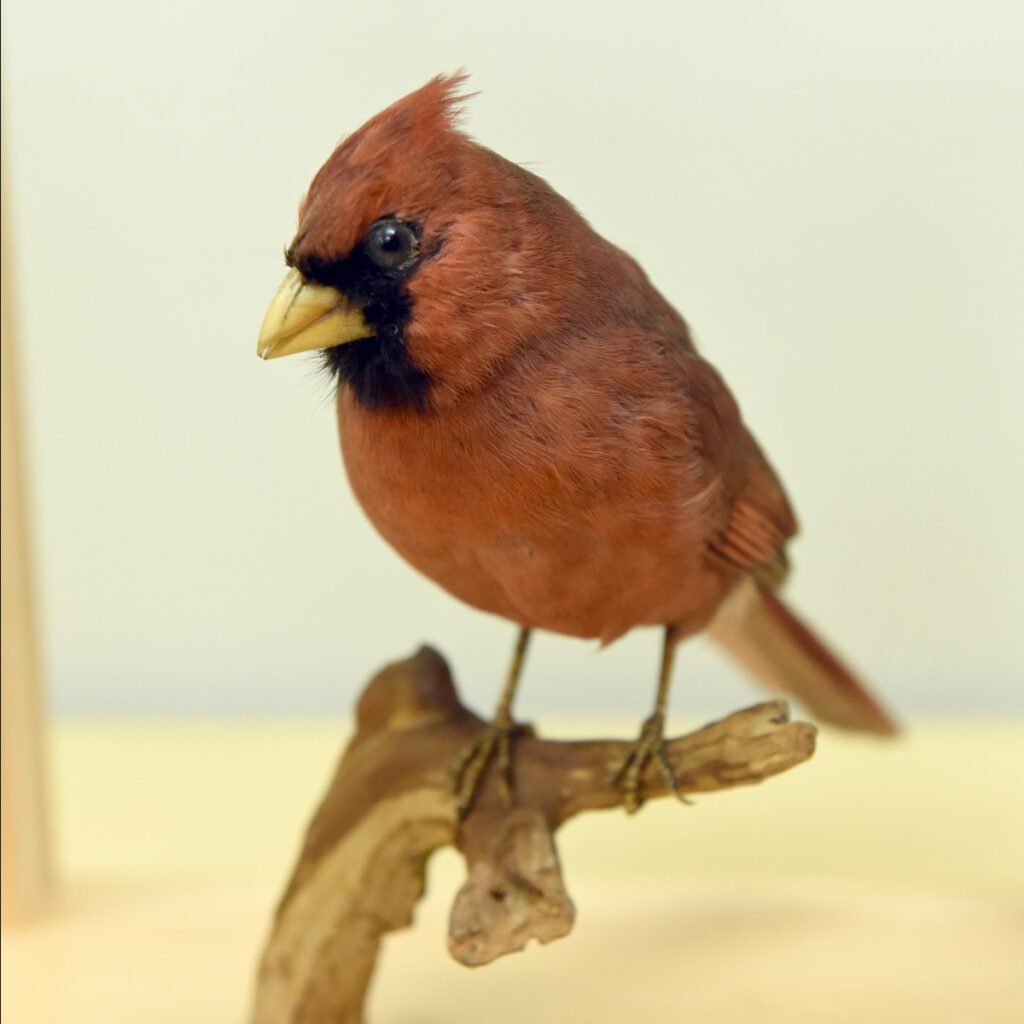
Northern Cardinal taxidermy mount
Northern Cardinal at Carnegie Museum of Natural History. Photo by Matt Unger. 

The exhibition is free with museum admission and runs until September 4, 2023. General museum admission costs $25 for adults, $20 for adults 65 and older, $15 for children aged 3-18 or students with valid student IDs, and $12 after 3 p.m. on weekdays. Admission is free for members and children aged 2 and younger. More information is available at CarnegieMNH.org.

Filed Under: Press Release Tagged With: Anthropocene, Anthropocene Section, Anthropocene Studies, Nicole Heller

April 10, 2023 by Erin Southerland

Researchers Call for New Conservation Paradigm that Embraces Positive Contributions of Land Stewardship

In a new study published by the journal Nature Sustainability, researchers call for a revised conservation paradigm that recognizes human and natural systems as inextricably intertwined and co-evolving and acknowledges the potentially positive roles that people play in generating ecosystem health through land stewardship. The researchers—representing Carnegie Museum of Natural History, Stanford University, and the Santa Cruz Mountains Stewardship Network—argue that revised conservation and sustainability science paradigms are integral to adapting to climate change and other anthropogenic stresses. Current frameworks—while recognizing the damaging impacts of society on nature and the positive contributions of nature to people’s wellbeing—gloss over people’s positive contributions to nature. This ignores the variability, complexity, and mutually constitutive states of culture, society, and ecologies. The researchers collaborated with the Santa Cruz Mountains Stewardship Network (SCMSN), located in a biodiversity “hot spot” and urban population center, as a case study assessment that incorporates land stewardship alongside other ecosystem health metrics and illuminates the challenges and opportunities for similar frameworks. 
 
Historically, people lose access to land when it is set aside for conservation, ceasing land stewardship altogether due to the assumption that human activities can only diminish the biodiversity and health of wildlands. Recently, a return to diverse forms of stewardship—including using fire, harvesting timber, raising animals, and cultivating local food—has earned attention because of the benefits to managing ecosystem health in the face anthropogenic stresses, like invasive species and climate change. For example, in California, low-intensity grazing is useful for reducing invasive plants, while Indigenous cultural burning and restoration forestry are important tools for reducing the impacts of large, severe fires that are increasing with climate change. The researchers concede that challenges lie in identifying appropriate metrics to express stewardship geospatially and study its effects. Land stewardship is relationship-based, place-based, and dynamic. It is not easily classified, mapped, or quantified, and often occurs on private lands or in private contexts that are hard to study. Understanding and embracing the social-ecological complexities of land stewardship will prove critical for the future of conservation science.
 
“The threat and urgency of climate change and biodiversity loss is real, and as a society, we are not going to solve these problems without transformational shifts in our thinking and doing in all fields of practice.” said Dr. Nicole Heller, lead author and Associate Curator of Anthropocene Studies at Carnegie Museum of Natural History.  “For too long, conservation science has promoted a worldview that eschews people from nature, ignoring valuable knowledge and mutually beneficial relationships people have with land and other species. This injustice has especially been the case with Indigenous populations and others with long cultural histories of stewardship in a specific place. The emerging paradigm shift, recognizing the value of land stewardship to ecosystem health, raises many interdisciplinary research questions and indicates an opportunity for more investment in caring for land stewards and land stewardship as part of protecting Nature. Re-thinking people and their possibility to be in good relationships with the land could be a game changer for sustainability.”
 
The study reflects one of Carnegie Museum of Natural History’s strategic commitments: to align research and programming around the “We Are Nature” concept, recognizing that humans are an inextricable part of nature—a powerful yet fragile relationship that has evolved over thousands of years.  The museum debuted the We Are Nature podcast in 2022—the first season of which focused on local and regional climate action, including land stewardship—as a follow-up and companion to We Are Nature visitor experiences in the museum in 2017 and 2021. 
 
In addition to Dr. Heller, the paper’s authors include Dr. Kelly McManus Chauvin, Jasper Ridge Biological Preserve and Department of Biology, Stanford University; Dylan Skybrook, Santa Cruz Mountains Stewardship Network; and Dr. Anthony Barnosky, Jasper Ridge Biological Preserve, Stanford University and Department of Integrative Biology, University of California, Berkley. Additional information about the study and SCMSN, including a conversation with the researchers, is available at Stanford News. 

Filed Under: Press Release Tagged With: Anthropocene, Anthropocene Section, Anthropocene Studies, climate change, Nicole Heller

February 16, 2023 by Erin Southerland

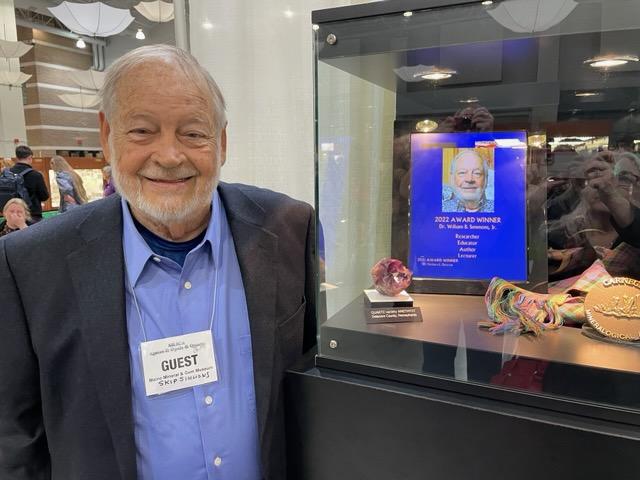
William B. “Skip” Simmons, Jr. Wins 2022 Carnegie Mineralogical Award

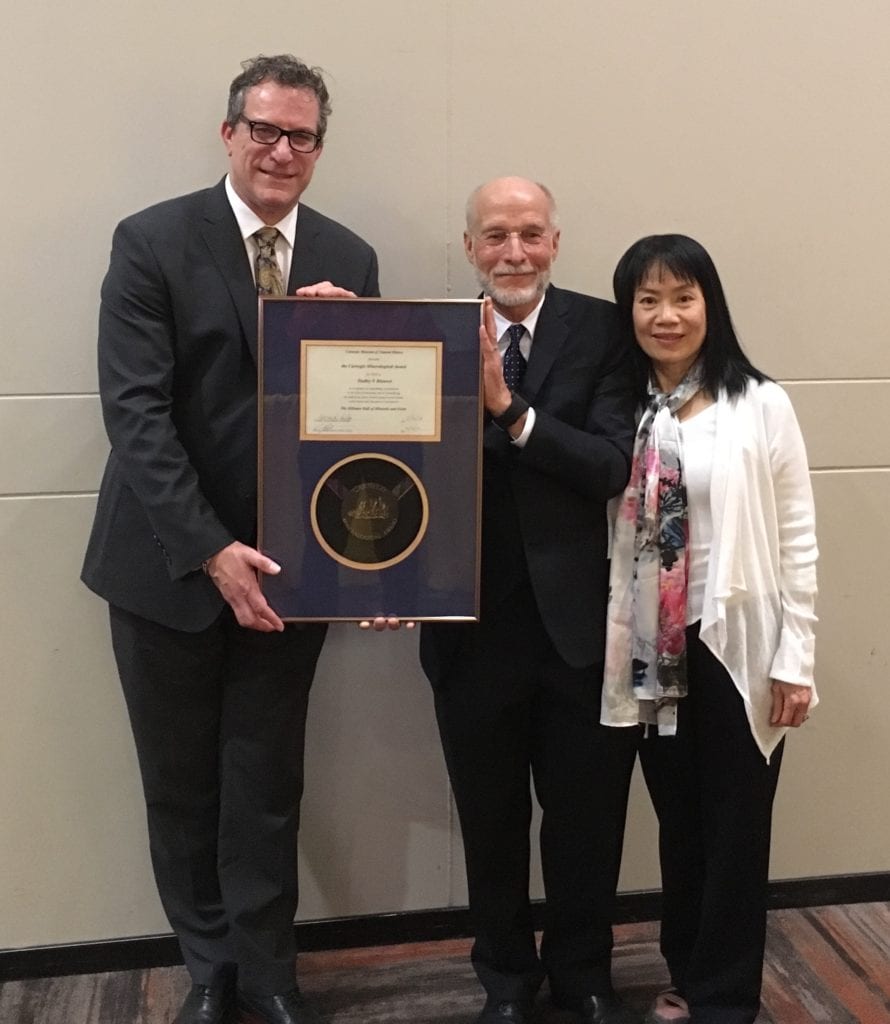
Willliam B. “Skip” Simmons, Jr.

Carnegie Museum of Natural History (CMNH) is pleased to announce William B. “Skip” Simmons, Jr. as winner of the 2022 Carnegie Mineralogical Award. The award honors outstanding contributions in mineralogical preservation, conservation, and education. 

Simmons taught mineralogy at the University of New Orleans for more than 42 years, where he formed the Mineralogy, Petrology, Pegmatology (MP2) research group. Following his retirement from the University of New Orleans, Simmons relocated the MP2 research group and laboratory to the Maine Mineral and Gem Museum, where he currently serves as the research director.

Simmons’ research primarily focuses on pegmatite mineralogy and petrogenesis. A pegmatite is a type of igneous rock that contains technologically and economically important minerals mined for rare-earth elements such as lithium, beryllium, and tantalum. His lifelong passion for pegmatite mineralogy began in middle school when his mother took him to collect at the McKinney pegmatite in Spruce Pine, NC, and he shared that passion with others throughout his career. 

“I prioritized visiting and collecting at pegmatites worldwide and involved students and colleagues whenever possible,” says Simmons of his teaching career. “I have taken students to study pegmatites in Brazil, Namibia, and Madagascar, as well as in the US, and have involved students in research projects whenever possible. Many of the students presented this research at the Rochester Mineralogical Symposium.”

“Dr. Simmons is an extraordinarily accomplished mineralogist, who for decades has been a leading authority on pegmatology, a specialized field of study focused on the mineralogy, petrology, and geochemistry of pegmatites,” says Travis Olds, Assistant Curator of Minerals, Section of Minerals and Earth Sciences at Carnegie Museum of Natural History. “His research regarding pegmatite formation has revealed some groundbreaking results, including the modeling of near-surface pegmatites that indicates that some of the world’s largest crystals have a much shorter growing time than previously thought – just a few months or years, rather than millions of years. During his more than 45-year career, Skip has influenced thousands, engaging professionals, students, mineral enthusiasts, and people from all walks of life through seminars, distinguished lectures, and publications that explore and expand our understanding of pegmatites.”

Simmons has more than 500 research publications to his name, including 21 new mineral descriptions and five mineral discreditations, and he recently co-authored the paper, “A Proposed New Mineralogical Classification System for Granitic Pegmatites.”

Simmons’ research includes extensive geochemical analyses of pegmatitic tourmaline and other associated gem minerals. He co-edited the “Tourmaline” issue of Lithographie and served as lead editor and author of the “Rubellite” issue. Additionally, he developed a week-long Pegmatite Workshop in Maine that has run for 21 years; the second edition of the textbook he co-authored for the workshop, Pegmatology, was published in 2022.

“Skip shares his love of minerals and pegmatites with anyone who shows interest,” says Carl Francis, Curator of the Maine Mineral and Gem Museum and the 1992 Carnegie Mineralogical Award winner. 

Olds presented the award to Simmons on February 11, 2023, at the Tucson Gem and Mineral Show.

Carnegie Museum of Natural History established the Carnegie Mineralogical Award, funded by the Hillman Foundation, in 1987.

Nominations are now being accepted for the 2023 Carnegie Mineralogical Award, and the deadline is November 15, 2023. Eligible candidates include educators, private mineral enthusiasts and collectors, curators, museums, mineral clubs and societies, mineral symposiums, universities, and publications. For information, contact Travis Olds, Assistant Curator, Section of Minerals & Earth Sciences, at 412-622-6568 or oldst@carnegiemnh.org. 

Past recipients include:
2021 Barbara Lee Dutrow, PhD.
2020 John C. Medici, PhD.
2019 John F. Rakovan, PhD.
2018 Dudley P. Blauwet
2017 W. Lesley Presmyk
2016 Anthony R. Kampf, PhD.
2015 George Harlow, PhD.
2014 Bryon N. Brookmyer
2013 Gloria A. Staebler
2012 George W. Robinson, PhD.
2011 Jeffrey E. Post, PhD.
2010 The Rochester Mineralogical Symposium
2009 Peter K.M. Megaw, PhD.
2008 Frank C. Hawthorne, PhD.
2007 Jeffrey A. Scovil
2006 Richard C. Whiteman
2005 June Culp Zeitner
2004 Joel A. Bartsch, PhD.
2003 Eugene S. Meieran, Sc.D.
2002 Terry C. Wallace, Jr., PhD.
2001 Wendell E. Wilson, PhD.
2000 F. John Barlow, Sc.D. (honorary) 
1999 Sterling Hill Mining Museum
1998 Robert W. Jones
1997 Bryan K. Lees
1996 Cornelis (Kase) Klein, PhD.
1995 Marie E. Huizing
1994 The Mineralogical Record
1993 Cornelius S. Hurlbut, Jr., PhD.
1992 Carl A. Francis, PhD.
1991 Miguel A. Romero Sanchez, PhD.
1990 Paul E. Desautels
1989 Frederick H. Pough, PhD.
1988 John Sinkankas, DHL. (honorary)
1987 The Tucson Gem & Mineral Society

Filed Under: Press Release

January 24, 2023 by Erin Southerland

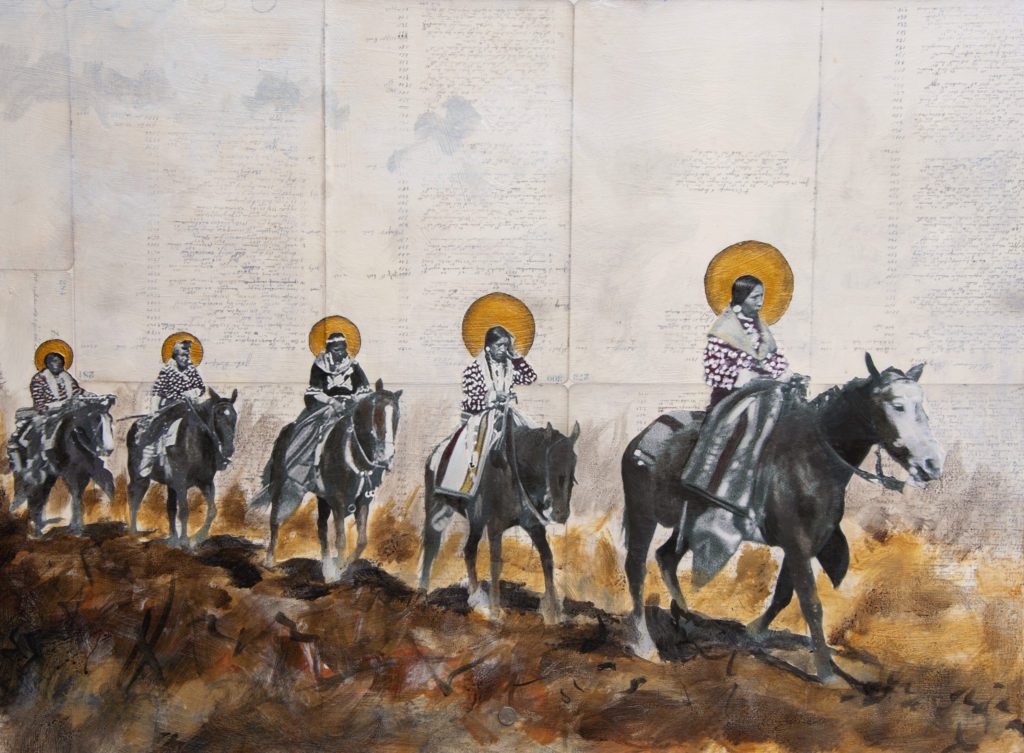
CARNEGIE MUSEUM OF NATURAL HISTORY PRESENTS APSÁALOOKE WOMEN AND WARRIORS FEBRUARY 4 – MAY 29, 2023

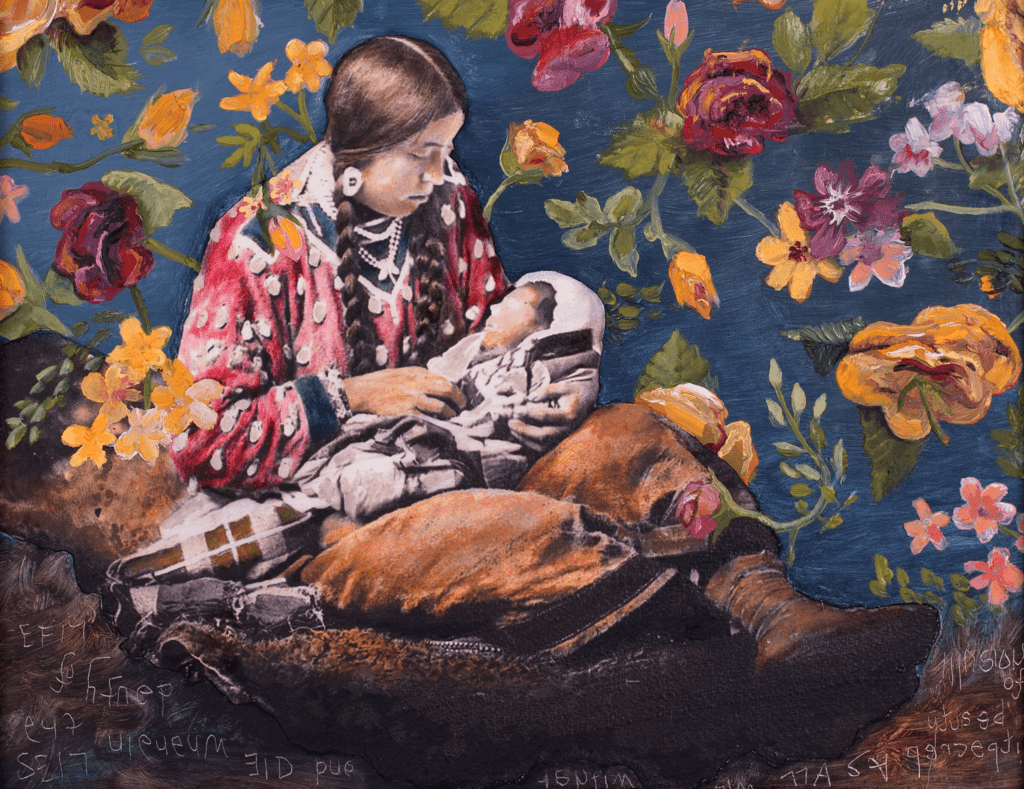
© Ben Pease – Wherein Lies the Beauty of Life. Acrylic and oil painting by contemporary artist Ben Pease portrays an Apsáalooke woman in a traditional dress covered with elk teeth, holding her baby. To Pease, flowers represent divinity and beauty in many religions.

Carnegie Museum of Natural History invites visitors of all ages to experience the bravery, artistry, and extravagance of the Apsáalooke [ap-SAH-loo-gah] people of the Northern Plains—also known as the Crow. Opening February 4, 2023, Apsáalooke Women and Warriors is created and curated by The Field Museum and celebrates the Apsáalooke people’s daring feats in battle, unparalleled horsemanship, and innovative beadwork—all centered around and protected by women. Alongside historical war shields and regalia, contemporary Native American art highlights how this bravery and artistry is alive today. 

Apsáalooke Women and Warriors explores the history, values, and beliefs of this Native American community known for their matriarchal society and honors the tradition of “counting coup,” or performing acts of bravery. Visitors will learn about Apsáalooke origins, cultural worldviews, and the powerful roles that both women and warriors hold in the community through a unique mix of traditional objects and contemporary Native American pieces from the perspective of Field Museum guest curator Nina Sanders. 

“We are honored to share this compelling and vital exhibition with Pittsburgh,” said Gretchen Baker, the Daniel G. and Carole L. Kamin Director of Carnegie Museum of Natural History. “Curator Nina Sanders and numerous collaborators have woven together rich historical accounts with contemporary stories through stunning objects and visuals. This is a profound exhibition that highlights and invites connection to often hidden narratives—those of women and Indigenous Native American cultures.” 

© Ben Pease – Sacred Under the Cliff of Yellowstone. Acrylic painting by Ben Pease contributor to the Apsáalooke Women and Warriors Exhibition at the Field Museum.

The exhibition features war shields that play important roles in Apsáalooke culture. Warriors make the war shields, while women are keepers of the shields. Visitors will have the opportunity to draw connections with the shield owners’ stories and their craftsmanship and imagery. 
 
“The shields inspire us, they remind us that people have the ability to defy the laws of physics and change the course of nature and history. The shields represent superhuman potential and divine intervention” says Sanders, who is a descendant of one of the shields, meaning one of her ancestors made the shield. “The shields were used in and out of battle—every part of the shield manifests the needed supernatural aid required for the warrior to succeed and survive in battle. For example, you will see one with a hawk squirrel because the man might have needed the strength to move quickly through the forest, depending on their role in battle.” 
  
Along with the shields, the exhibition also displays horse regalia, a nine-foot-tall modern tipi, and over 20 works of contemporary art, including paintings, photography, unique beadwork, and high-end fashion.  
 
Apsáalooke Women and Warriors also highlights Apsáalooke gender roles and offers visitors a glimpse into an egalitarian society. The three genders include bía (woman), bachee(í) (man), and batee (two-spirited). Apsáalooke women are the keepers and influencers of the Apsáalooke way of life. Women, as well as men, were allowed to choose their partners. Men are responsible for protecting the women so that they carry on as life-givers, culture keepers, and foundations of the family and community. Sanders further explains, “In the community, people who identify as LGBTQ are considered two-spirited, imbued with the qualities and characteristics of all genders. We have many stories about exceptional batee people who counted coup or made beautiful works of art.” 
 
Apsáalooke Women and Warriors is jointly organized by the Field Museum and the Neubauer Collegium for Culture and Society at the University of Chicago.
 
The exhibition is free with museum admission and runs until May 29, 2023. General museum admission costs $25 for adults, $20 for adults 65 and older, $15 for children aged 3-18 or students with valid student IDs, and $12 after 3 p.m. on weekdays. Admission is free for members and children aged 2 and younger. More information is available at CarnegieMNH.org. 

Filed Under: Press Release

November 1, 2022 by Erin Southerland

Carnegie Museum of Natural History Launches New “We Are Nature” Podcast Series, Exploring Natural Histories and Livable Futures

Series Introduces Listeners to Climate Action Conversations and Strategies in Southwestern Pennsylvania

Featuring Interviews with Radiolab’s Jad Abumrad and US House Candidate Summer Lee

Hosted and Produced by Pittsburgh-Based Artist and Filmmaker Michael Pisano

cover art for the We Are Nature podcast

Carnegie Museum of Natural History (CMNH) announces the launch of its new podcast series, We Are Nature, with the first episodes available now. The new series, comprised of 11 regular episodes and several bonus episodes, features 30 interviews with museum researchers, organizers, policy makers, farmers, and science communicators about climate action in Southwestern Pennsylvania. The goal of the series is to share how humans can create–and are already working towards–a livable, just, and joyous future. 

The series is created, produced, and hosted by Pittsburgh-based filmmaker and environmental educator Michael Pisano. Science communicator and former CMNH program manager Taiji Nelson joins as co-host and co-producer. Field reporters Di-ay Battad, David Kelley, and Jamen Thurmond round out the production crew. 

The first episode, entitled “This Is an Emergency, Not an Apocalypse,” featuring interviews with Radiolab creator Jad Abumrad and CMNH Curator of Anthropocene Studies Dr. Nicole Heller, is available now along with a bonus episode, “We Can Fix This,” delving into effective climate change communication strategies. The second episode, “Steel City,” featuring an interview with US House of Representatives Candidate Summer Lee, will be available on November 4.  

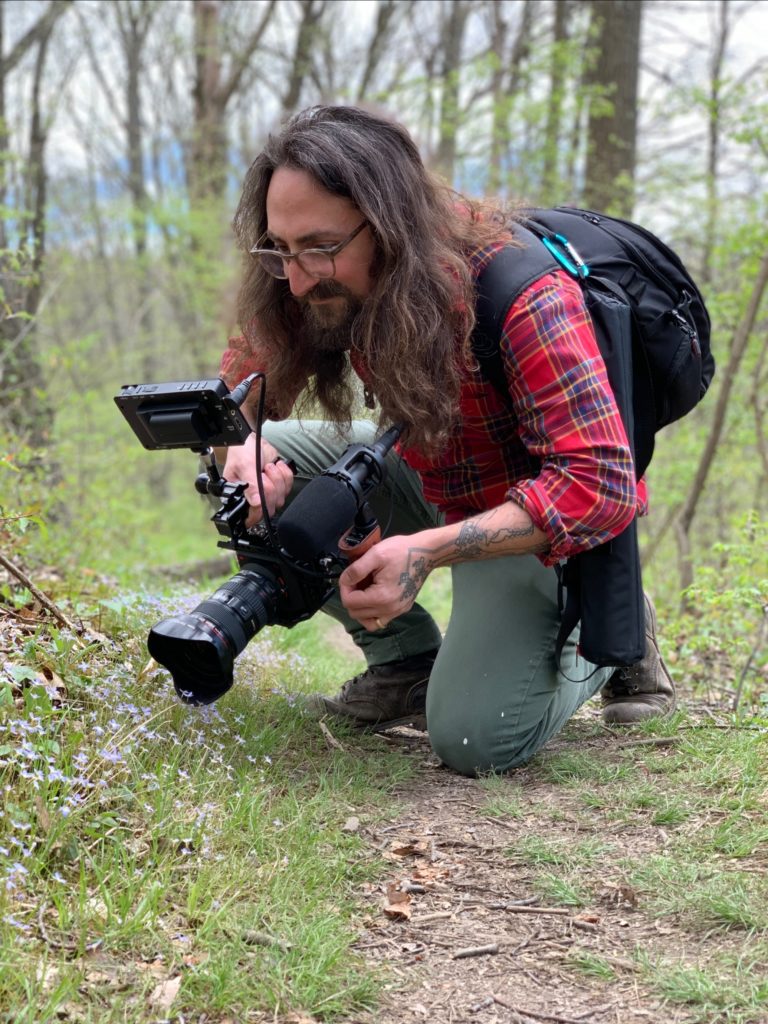
person crouched down outdoors holding a camera
Host and Producer Michael Pisano
person posing for a photo with a bicycle
Producer and Co-Host Taiji Nelson

“These stories show many diverse ways people are working together on the frontlines of climate change mitigation, adaptation, and justice,” said Pisano. “You’ll hear from people who grow our food, protect our greenspaces, and fight polluting industries. For me, their stories are a vital reminder that we aren’t doomed, and that getting involved with local issues like air quality is connected to making a difference globally.”
 
All episodes will be available at https://carnegiemnh.org/learn/we-are-nature-podcast/ and on Apple Podcasts, Amazon Music, Spotify, and Stitcher. The podcast We Are Nature follows CMNH’s successful A Is for Anthropocene podcast series and builds upon the museum’s We Are Nature exhibition series. 
 
About the Hosts and Contributors
 
Host Michael Pisano’s first career aspiration was to be a dinosaur. Thirty-five-ish years later, he makes films about sustainability and solidarity. He also makes fantasy games about collaboration in the face of doom. Michael fell in love with Pennsylvania’s forests as an undergrad at Carnegie Mellon and has called Pittsburgh home for nearly 20 years since. In We Are Nature, his experiences as a teacher, documentary filmmaker, and climate justice organizer meet his passions for ecology and natural history; as a host, Michael works to draw connections between science, history, ethics, and a livable future.
www.pisanofilms.com
 
Producer and Co-host Taiji Nelson studies Learning Sciences and Human Development at the University of Washington (Seattle), but lived in Pittsburgh from 2006-2022 and grew up in the Allegheny National Forest. He is passionate about developing ways to promote solidarity between the environmental movement and other justice movements, and facilitating learning environments that help people answer big questions about taking action toward climate justice.

Filed Under: Press Release Tagged With: Anthropocene, climate change, Michael Pisano, podcast, Science News, Taiji Nelson, We Are Nature, We Are Nature 2

July 20, 2022 by Erin Southerland

Scientists Call for New Research Studying the Combined Effects of Climate Change and Urbanization on Body Size Across Species

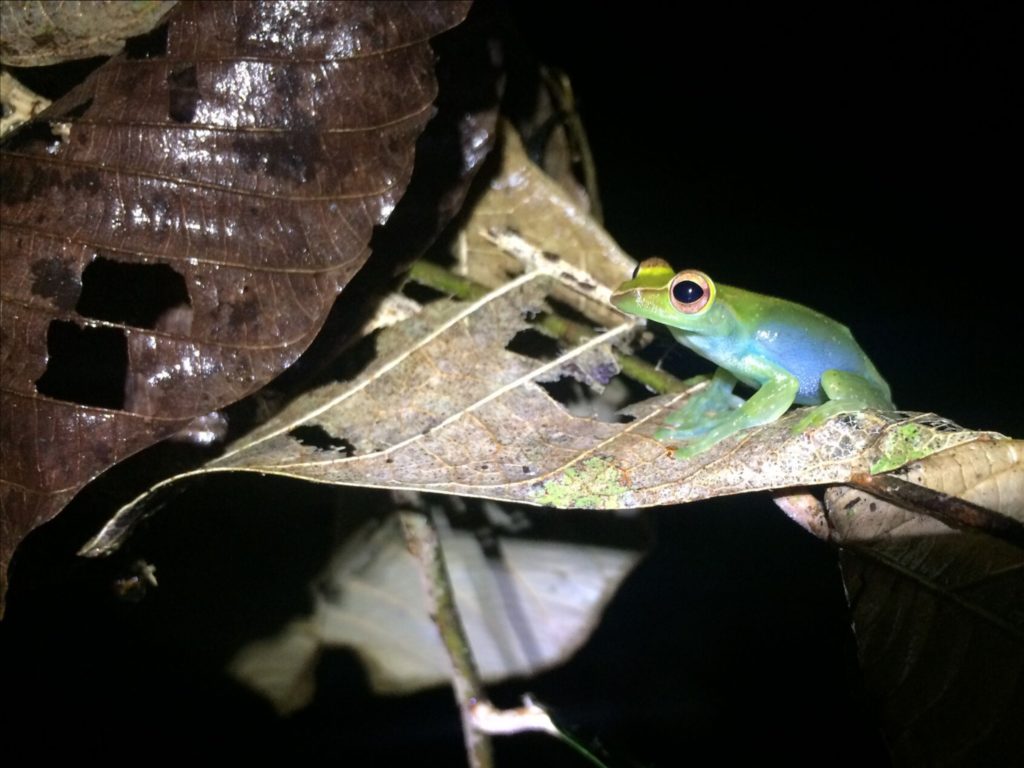
Rhacophorus dulitensis (jade tree frog). Photo by Dr. Jennifer Sheridan, Carnegie Museum of Natural History

Researchers from Carnegie Museum of Natural History have described impacts of climate change and land use on the size of organisms. Dr. Jennifer Sheridan, Assistant Curator of Amphibians and Reptiles, and Dr. Amanda Martin, post-doctoral researcher, review the causes that lead to changes in size as well as ecological interactions, while making the case for more research studying the combined effects of climate change and urbanization. The paper, entitled “Body size responses to the combined effects of climate and land use changes within an urban framework,” was published in in the journal Global Change Biology on June 27. 

Body size is considered one of the most important traits of an organism, affecting thermal regulation, mobility, reproductive output, and capacity to acquire resources. Over many generations, body sizes usually increase within lineages. Recent observations, however, show a decrease in size over relatively short time periods. This could have profound ramifications for individual organisms and ecosystems alike. For example, size-related reproductive success means that interacting populations in the same location will be dominated by smaller species, leading to long-term changes in predator-prey dynamics. Most research suggests climate change as the primary driver of changes in size, but emerging research indicates that land use—especially urbanization—may also contribute.  

Human-induced climate change has significantly altered temperatures since the 1950s, and temperature affects the size of organisms. At roughly the same time, the Earth has experienced rapid urbanization and a tripling of the human population. Unlike climate change, urbanization has been shown to cause an increase in size of some organisms due to the advantage size has on mobility, and the greater availability of food and other resources. Urbanization does not affect all organisms equally; however, and some species—including some birds—are unable to take advantage of food abundance in urban settings and have become smaller.

“There is a gap in the literature,” says Dr. Sheridan. “Given that climate change and urbanization are projected to continue their rapid growth, there is an urgency to understanding how their respective effects may be working in concert. Specimens from museum collections are a unique data source that can shed light on changes in size with respect to climate and land use changes over time.”  

Sheridan and Martin recommend several steps researchers can take to better understand biodiversity loss and ultimately work toward species conservation. These include expanding the taxonomic and geographic scope of research–including the use of museum collections; increasing the use of quantitative data—such as impervious surface area–over categorical data such as urban versus rural zones; and increasing the testing of climate change and land use interactions. Better understanding of the combined effects of climate change and urbanization is imperative for responding to rapid environmental change. 

Filed Under: Press Release Tagged With: Amanda Martin, amphibians and reptiles, climate change, Jennifer Sheridan, Science News

June 8, 2022 by Erin Southerland

Bizarre Meat-Eating Dinosaur Joins “Rogues’ Gallery” of Giant Predators from Classic Fossil Site in Egypt’s Sahara Desert

Fossil Reveals First Evidence of Abelisaurid Dinosaurs Found in Bahariya Oasis
 
Carnivorous Dinosaur Group Known for Bulldog-like Faces, Tiny Arms, and Small Teeth

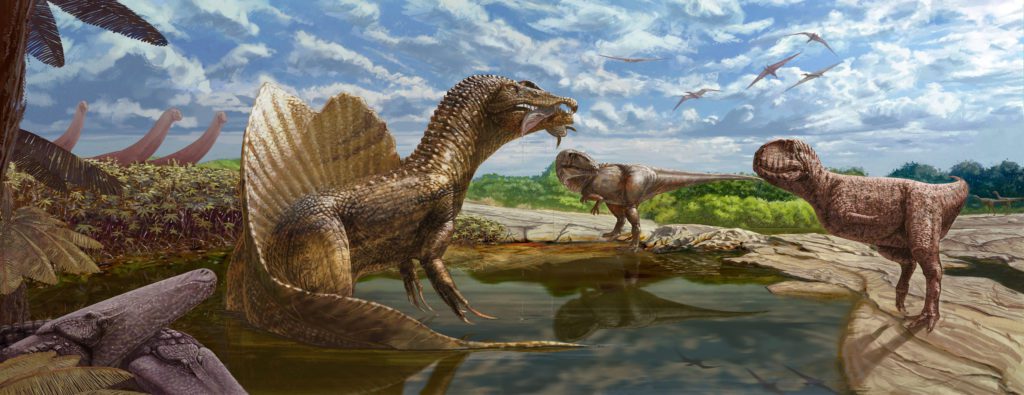
Illustration of dinosaurs in a desert oasis
Reconstruction of the ecosystem of the Bahariya Oasis in the Sahara Desert of Egypt approximately 98 million years ago, showing the diversity of large theropods (predatory dinosaurs). The newly discovered, as-yet unnamed abelisaurid (right) confronts Spinosaurus (left center, with lungfish in jaws) and Carcharodontosaurus (right center), while two individuals of the crocodilian Stomatosuchus (left) look on. In the background, a herd of the sauropod (giant, long-necked herbivorous dinosaur) Paralititan (left) warily regard these predators and two individuals of another theropod, Bahariasaurus (far right), while a flock of a still-unnamed pterosaur (flying reptile) soars above. The vegetation is dominated by the mangrove-like tree fern Weichselia. Image by Andrew McAfee, Carnegie Museum of Natural History. 

[Pittsburgh, Pennsylvania] — An Egyptian-American team of researchers has announced the discovery of a new kind of large-bodied meat-eating dinosaur, or theropod, from a celebrated fossil site in Egypt’s Sahara Desert. The fossil of a still-unnamed species provides the first known record of the abelisaurid group of theropods from the Bahariya Formation, a rock unit in the Bahariya Oasis that dates to the middle Cretaceous Era (approximately 98 million years ago). In the early 20th century, this locality famously yielded the original specimens of a host of remarkable dinosaurs—including the colossal sail-backed fish-eater Spinosaurus—which were then destroyed in World War II. Abelisaurid fossils had previously been found in Europe and in many of today’s Southern Hemisphere continents, but never before from the Bahariya Formation. The team describes the Bahariya abelisaurid discovery in a paper published today in Royal Society Open Science. 
 
The study was led by Belal Salem of the Mansoura University Vertebrate Paleontology Center (MUVP) in Mansoura, Egypt, who is also a graduate student at Ohio University and a faculty member at Benha University. The research team also included Dr. Matt Lamanna, Mary R. Dawson Associate Curator and Head of Vertebrate Paleontology and lead dinosaur specialist at Carnegie Museum of Natural History (CMNH); Dr. Patrick O’Connor, Professor of Biomedical Sciences at Ohio University; Sanaa El-Sayed, a doctoral student at the University of Michigan and the MUVP’s former vice director; Dr. Hesham Sallam, a professor at the American University in Cairo (AUC) and Mansoura University and the founding director of the MUVP; and additional colleagues from Benha University and the Egyptian Environmental Affairs Agency. CMNH Vertebrate Paleontology Scientific Illustrator Andrew McAfee produced or assisted with most of the illustrations in the paper.

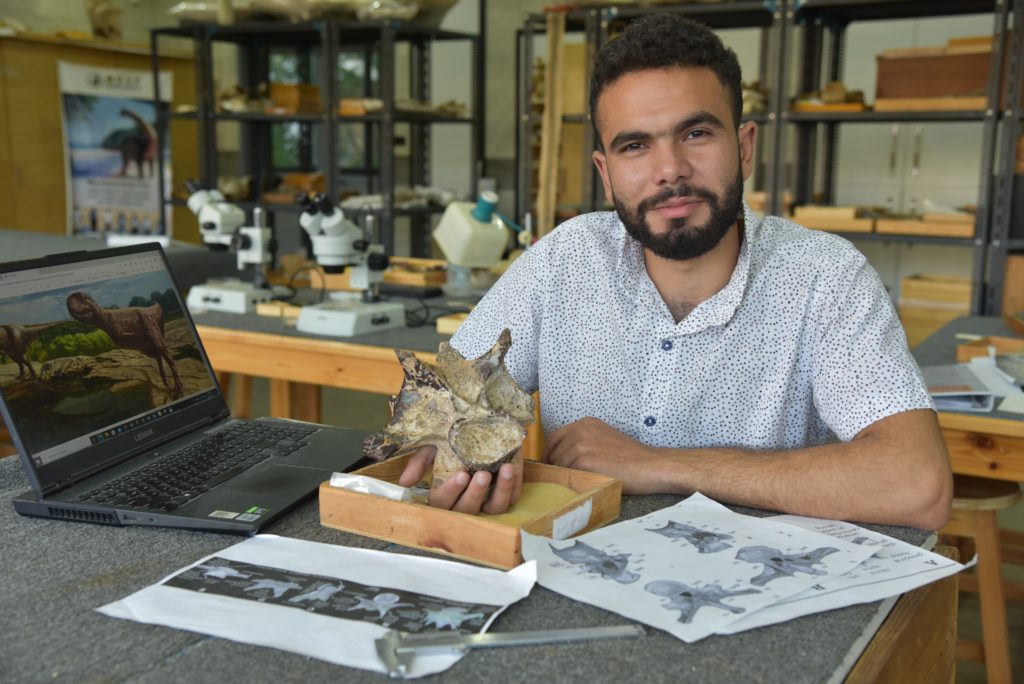
Person sitting at a desk holding a fossil
Study leader Belal Salem of the Mansoura University Vertebrate Paleontology Center (MUVP), Ohio University, and Benha University examines the roughly 98-million-year-old abelisaurid theropod neck vertebra discovered from the Bahariya Oasis that forms the basis of the new study. Photo by Hesham Sallam, American University in Cairo/MUVP. 

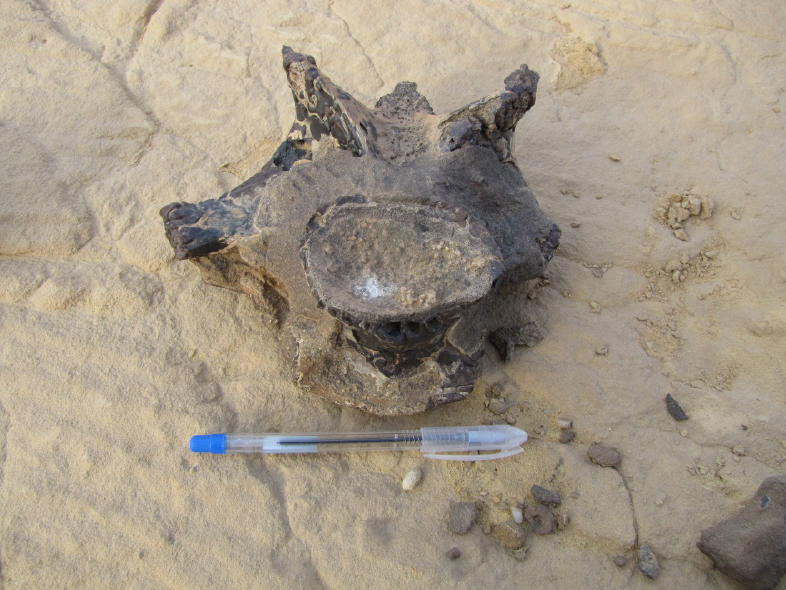
The fossil in question, a well-preserved vertebra from the base of the neck of a theropod, was recovered by a 2016 MUVP expedition to the Bahariya Oasis. The vertebra belongs to an abelisaurid, a kind of bulldog-faced, small-toothed, tiny-armed theropod that is estimated to have been roughly six meters (20 feet) in body length. Abelisaurids—most notably represented by the horned, demonic-looking Patagonian form Carnotaurus of Jurassic World and Prehistoric Planet fame—were among the most diverse and geographically widespread large predatory dinosaurs in the southern landmasses during the Cretaceous Period, the final time period of the Age of Dinosaurs. Along with Spinosaurus and two other giant theropods (Carcharodontosaurus and Bahariasaurus), the new abelisaurid fossil adds yet another species to the cadre of large predatory dinosaurs that roamed what is now the Egyptian Sahara roughly 98 million years ago. 
 
“During the mid-Cretaceous, the Bahariya Oasis would’ve been one of the most terrifying places on the planet,” says Salem. “How all these huge predators managed to coexist remains a mystery, though it’s probably related to their having eaten different things, their having adapted to hunt different prey.”

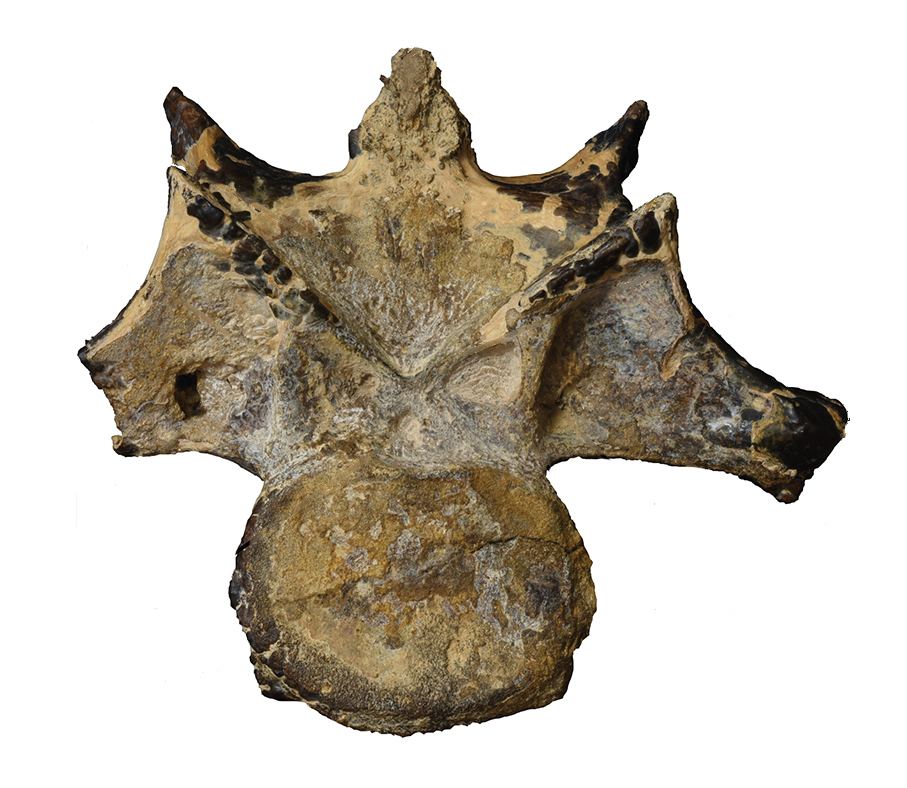
fossil vertebra
The abelisaurid neck vertebra from the Bahariya Oasis, Egypt that constitutes the first record of this dinosaur group from that classic fossil locality. The bone is shown in anterior view. Photo by Belal Salem, Mansoura University Vertebrate Paleontology Center/Ohio University/Benha University.

The new vertebra holds implications for the biodiversity of Cretaceous dinosaurs in Egypt and the entire northern region of Africa. It is the oldest known fossil of Abelisauridae from northeastern Africa, and shows that, during the mid-Cretaceous, these carnivorous dinosaurs ranged across much of the northern part of the continent, east to west from present day Egypt to Morocco, to as far south as Niger and potentially beyond. Spinosaurus and Carcharodontosaurus are also known from Niger and Morocco, and a close relative of Bahariasaurus has been found in the latter nation as well, suggesting that this fauna of large to gigantic theropods coexisted throughout much of northern Africa at this time.
 
The Site
 
The Bahariya Oasis is renowned within paleontological circles for having yielded the type specimens (the original, first-discovered, name-bearing fossils) of several extraordinary dinosaurs during the early 20th century, including, most famously, Spinosaurus. Unfortunately, all Bahariya dinosaur fossils collected prior to World War II were destroyed during an Allied bombing of Munich in 1944.
 
As a graduate student in the early 2000s, study co-author Matt Lamanna helped make the first dinosaur discoveries from the oasis since that infamous air raid, including the gargantuan sauropod (long-necked plant-eating dinosaur) Paralititan. “The Bahariya Oasis has taken on near-legendary status among paleontologists for having produced the first-known fossils of some of the world’s most amazing dinosaurs,” says Lamanna, “but for more than three quarters of a century, those fossils have existed only as pictures in old books.”

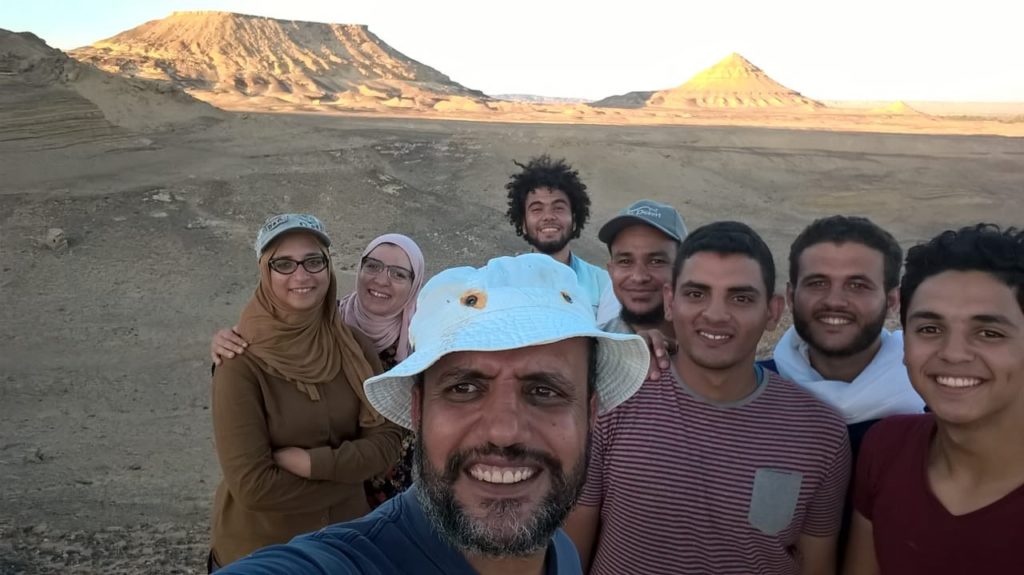
A group of people posing for a selfie in the desert
A Mansoura University Vertebrate Paleontology Center (MUVP) team exploring the Bahariya Oasis in 2018, including several authors of the new paper: Hesham Sallam (closest to camera), Sanaa El-Sayed (far left), and Belal Salem (farthest from camera). Photo by Hesham Sallam, American University in Cairo/MUVP.

Thankfully, discoveries made during recent expeditions led by researchers from AUC and MUVP—such as the new abelisaurid vertebra—are helping to restore the paleontological legacy of this classic site. These expeditions have recovered a wealth of additional fossils that the researchers plan to unveil in the near future.
 
As team member Sanaa El-Sayed, who co-led the 2016 expedition that collected the abelisaurid vertebra, explains, “this bone is just the first of many important new dinosaur fossils from the Bahariya Oasis.” 
 
The Bahariya Formation holds promise to shed further light on mid-Cretaceous African dinosaurs and the vanished ecosystems in which they once lived. Unlike more thoroughly explored rocks of the same age in Morocco that tend to yield isolated bones, the Bahariya Formation appears to preserve partial skeletons of dinosaurs and other land-living animals with a relatively high degree of frequency. The more bones that are preserved within the skeleton of a given fossil vertebrate species, the more paleontologists can generally learn about it. The propensity of the Bahariya Oasis for producing associated partial skeletons suggests that much remains to be learned from this historic locality.
 
“In terms of Egyptian dinosaurs, we’ve really just scratched the surface,” notes Hesham Sallam. “Who knows what else might be out there?”

Fossil vertebra set next to a pen for scale
The abelisaurid neck vertebra, approximately 98 million years old, as it was found in the field in the Bahariya Oasis during the 2016 Mansoura University Vertebrate Paleontology Center (MUVP)/Carnegie Museum of Natural History expedition funded by the National Geographic Society. Photo by Sanaa El-Sayed, University of Michigan/MUVP.

One Fossil
 
How can the discovery of a single neck vertebra lead researchers to conclude that the fossil belongs to a member of Abelisauridae, a kind of carnivorous dinosaur that has never been found in the Bahariya Formation before? The answer is remarkably simple: it is virtually identical to the same bone in other, better-known abelisaurids such as Carnotaurus and Viavenator from Argentina and Majungasaurus from Madagascar. Additionally, Belal Salem and his collaborators conducted a computer-based evolutionary study—known as a cladistic analysis—that confirmed the placement of the species represented by the new vertebra within Abelisauridae. As co-author Patrick O’Connor, who in 2007 published an exhaustive study of the vertebral anatomy of the abelisaurid Majungasaurus, explains, “I’ve examined abelisaurid skeletons from Patagonia to Madagascar. My first glimpse of this specimen from field photos left no doubt about its identity. Abelisaurid neck bones are just so distinctive.”
 
Research on the new abelisaurid vertebra was supported by a grant to Matt Lamanna from the National Geographic Society’s Committee for Research and Exploration, grants to Hesham Sallam from Mansoura University and the American University in Cairo intramural grant program, and a grant to Patrick O’Connor from the National Science Foundation.

Filed Under: Press Release Tagged With: Matt Lamanna, Science News, Vertebrate Paleontology

April 7, 2022 by Erin Southerland

Early Placental Mammal Evolution Prioritized Brawn over Brains

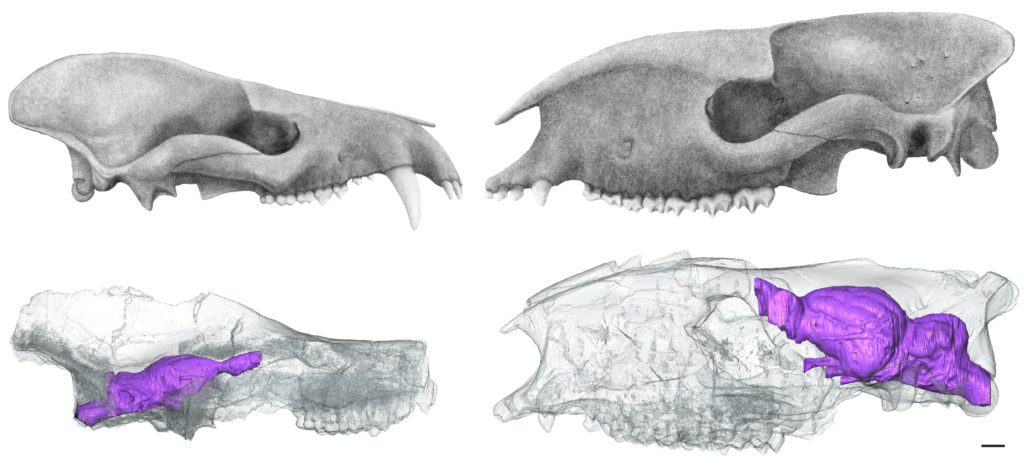
Crania and virtual endocasts inside the translucent cranium of the Paleocene mammal Arctocyon (left) and the Eocene mammal Hyrachyus (right). Credit: Ornella Bertrand and Sarah Shelley. 

An international research team, including scientists from Carnegie Museum of Natural History (CMNH), authored a new study published this month in the prestigious journal Science finding that early placental mammals developed bigger bodies before developing proportionally bigger brains after the extinction of the dinosaurs. Modern mammals have the largest ratio of brain to body size, or encephalization, among vertebrates, and it has long been contended that this ratio emerged in the early stages of mammalian evolution. The study, “Brawn before brains in placental mammals after end-Cretaceous extinction,” finds that mammals prioritized increased body size to enhance survival in the first 10 million years following dinosaur extinction. 

CMNH research associate Dr. Sarah Shelley and curator of mammals Dr. John Wible contributed to the study, led by Dr. Ornella C. Bertrand, postdoctoral fellow at the University of Edinburgh. The team analyzed CT scans on newly discovered fossils from the Paleocene, the epoch 10 million years after the mass extinction. The team learned that relative brain sizes of mammals initially decreased because their body sizes increased at faster rates. Their findings also suggest that mammals in this period retained advanced senses of smell, leaving the other senses—including vision—to adapt later, suggesting that size and smell were more important for survival than intelligence.  

“Because modern mammals are so intelligent, many assumed that large brains enabled mammalian survival after the extinction,” said Wible. “However, it appears our modern brain is much more recent than we anticipated, arriving on the scene in the Eocene epoch, another 10 million years later. It’s very possible that large brains might have proven impediments to survival in the post-dinosaur world.”   

Illustration of two prehistoric mammals.
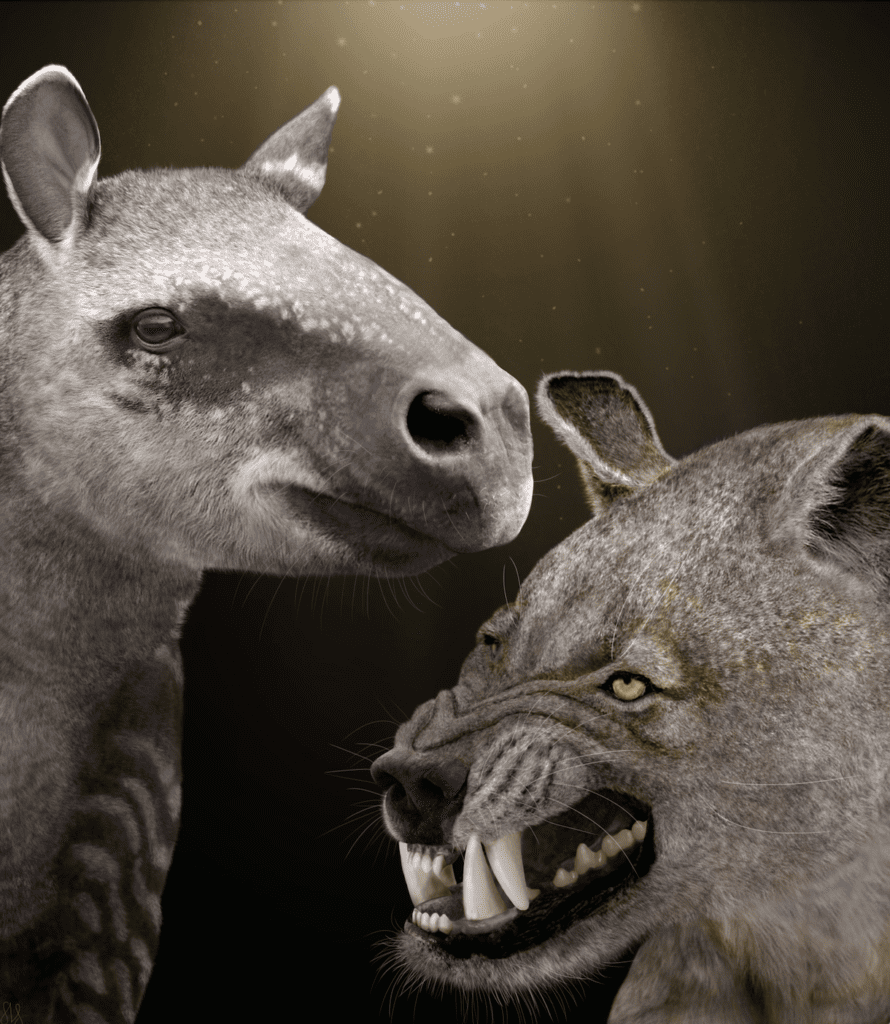
Reconstruction of the Eocene mammal Hyrachyus modestus, a rhinoceros-tapir ancestor (left) and the Paleocene mammal Arctocyon primaevus, a carnivorous predator most closely related to the group including living pigs, sheep and other even-toed ungulates (right).Credit: Sarah Shelley.

In the Eocene, about 54.8 to 33.7 million years ago, multiple placental mammal lineages independently developed larger relative brain sizes as extinction survivors filled niches vacated by departed species. Brains continued to grow as competition surged in crowded ecosystems.  

Timeline 

  • 66 million years ago: Cretaceous ends with mass extinction, including dinosaurs.
  • 66 million-56 million years ago: Paleocene. Placental mammals evolve larger bodies, but not larger brains. 
  • 55 million-34 million years ago: Eocene. Most modern mammal lineages appear, including ones with larger relative brain sizes.  


Shelley and Wible were involved in all aspects of the study, including CT scanning of fossils, data analysis, and writing. Shelley contributed original art to the accompanying illustrations and figures. 

About Science


Science has been at the center of important scientific discovery since its founding in 1880—with seed money from Thomas Edison. Today, Science continues to publish the very best in research across the sciences, with articles that consistently rank among the most cited in the world. In the last half century alone, Science published the entire human genome for the first time, never-before seen images of the Martian surface, and the first studies tying AIDS to human immunodeficiency virus.

Filed Under: Press Release Tagged With: John Wible, mammals

March 9, 2022 by Erin Southerland

Pittsburgh Launches Spring 2022 Lights Out Program to Protect Migratory Birds

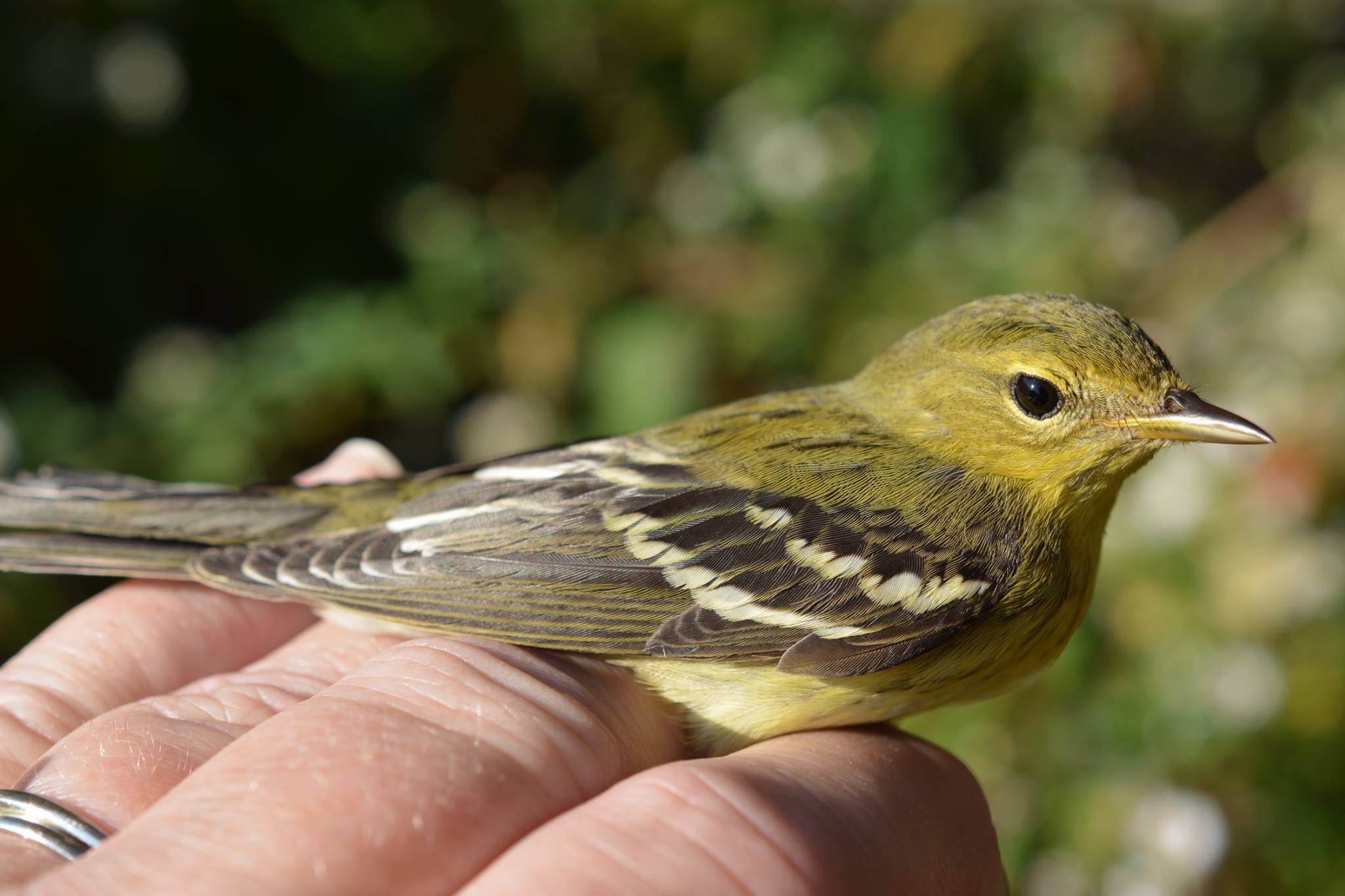
Yellow, gray, and white bird on a hand outdoors.
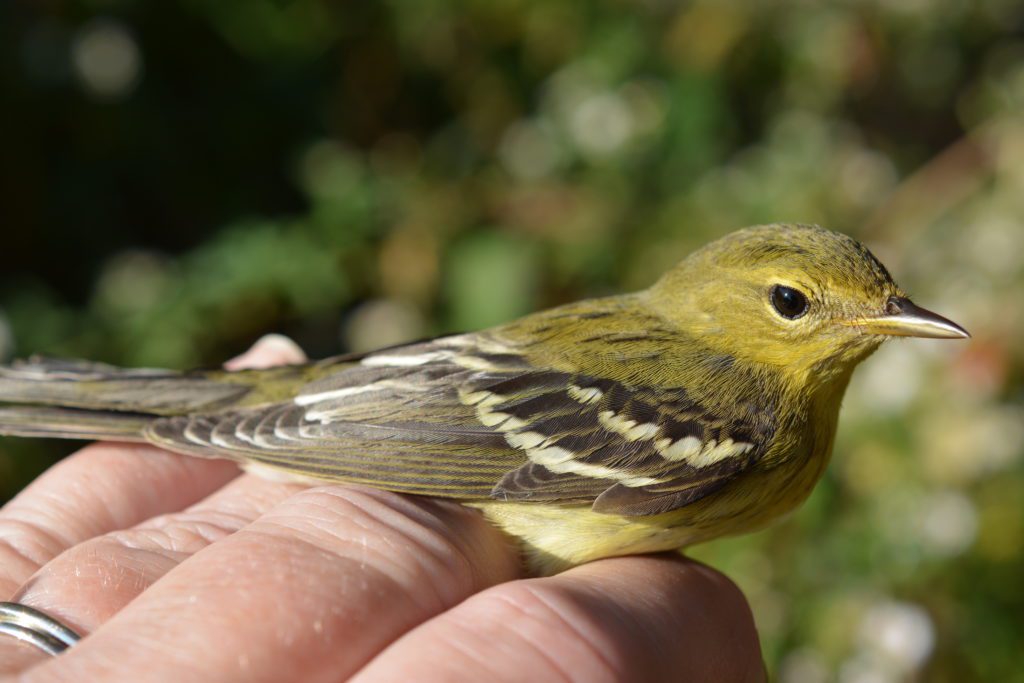
Blackpoll Warbler

Carnegie Museum of Natural History’s BirdSafe Pittsburgh program announces the Spring 2022 Lights Out Pittsburgh campaign. Lights Out Pittsburgh, an endeavor launched in September 2021 by BNY Mellon, the Building Owners and Managers Association of Pittsburgh, Carnegie Museum of Natural History, the National Aviary, and Pittsburgh Downtown Partnership, encourages owners of businesses and homes to turn off lights during peak migration hours, reducing bird window collisions and disorientation caused by artificial light in the night sky. Lights Out Pittsburgh seeks to build on the momentum of its successful fall campaign that recruited 75 buildings to join the movement. 
 
More than 100,000 birds pass over the Pittsburgh region each year during fall and spring migrations, and research indicates that window collisions and disorientation brought about by bright lights are leading causes of bird fatalities. Lights Out Pittsburgh invites partners to join a growing national community of businesses and residences by turning off as much internal and external building light as possible—particularly in upper floors and lobbies—during the hours between midnight and 6 a.m. from March 15 to May 31. 

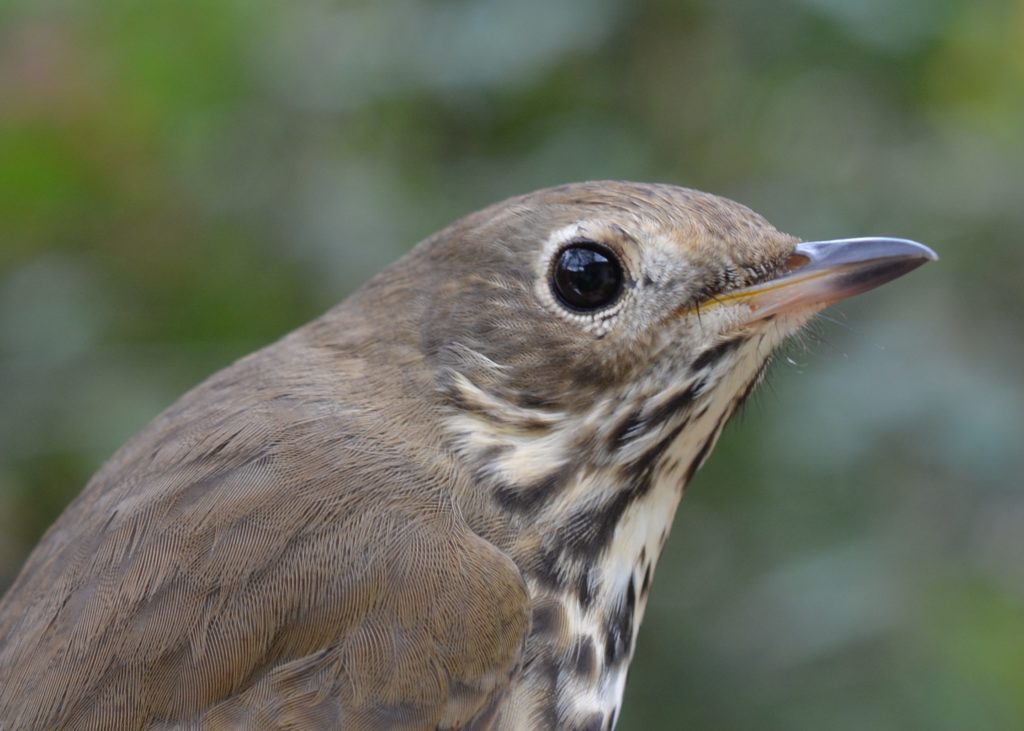
Close up of a pale brown bird with a black and white striped throat.
Hermit Thrush

“Bringing a Lights Out program to Pittsburgh last fall culminated a long-time professional goal,” said Jonathan Rice, Urban Bird Conservation Coordinator at Carnegie Museum of Natural History and manager of BirdSafe Pittsburgh. “Now it’s time to build on that. Eight years of research has shown us where birds collide in our city. This Lights Out program is the first step in making Pittsburgh a safer place for birds stopping over during migration, or who live here year-round.”
 
Lights Out Pittsburgh‘s Spring 2022 campaign will mitigate avian fatalities as migratory birds head to their summer destinations. BNY Mellon, Carnegie Mellon University, Carnegie Science Center, Eleven Stanwix, House Building, Law & Finance Building, Point Park University, Union Trust Building, United Steelworkers’ Building, 100 Ross, 20 Stanwix, 600 Waterfront, and other buildings have pledged to turn off unnecessary lighting from midnight to 6 a.m. Others can join by visiting birdsafepgh.org. 
 
“I am proud that BNY Mellon initiated this movement in the city of Pittsburgh,” said Christina Bencho of BNY Mellon. “Each year it becomes increasingly important that we use our reach, market influence, and resources to support environmental, social, and governance (ESG) issues. As one of the largest building owners in the city, this is a topic we felt passionate about moving forward.”
 
Since 2014, BirdSafe Pittsburgh has coordinated volunteers to monitor key neighborhoods during migration periods, collecting data documenting bird fatalities and providing care to birds with injuries caused by window collisions. BirdSafe Pittsburgh will document the Lights Out initiative’s progress on reducing bird mortalities.
 
The collaborative effort to save birds on their migratory journeys continues to grow as businesses and residents join the pledge to turn off unnecessary lights from midnight to 6 a.m. during peak seasonal migration periods. All are welcome and encouraged to participate. For more information about the Pittsburgh area Lights Out initiative or volunteering for BirdSafe Pittsburgh, visit birdsafepgh.org.

###
BNY Mellon is a global investments company dedicated to helping its clients manage and service their financial assets throughout the investment lifecycle. Whether providing financial services for institutions, corporations or individual investors, BNY Mellon delivers informed investment and wealth management and investment services in 35 countries. As of June 30, 2021, BNY Mellon had $45.0 trillion in assets under custody and/or administration, and $2.3 trillion in assets under management. BNY Mellon can act as a single point of contact for clients looking to create, trade, hold, manage, service, distribute or restructure investments. BNY Mellon is the corporate brand of The Bank of New York Mellon Corporation (NYSE: BK). Additional information is available on www.bnymellon.com. Follow us on Twitter @BNYMellon or visit our newsroom at www.bnymellon.com/newsroom for the latest company news.

About BOMA Pittsburgh – Since 1919, the Building Owners & Managers Association of Pittsburgh has been helping owners and managers of commercial real estate maintain safe, efficient properties in Western PA. We do this through state and local advocacy, fostering professional connections through networking events, organizing members to serve in the local community, and training the next generation of commercial real estate leaders. BOMA Pittsburgh is proudly Federated with BOMA International, and our members operate over 31 million square feet of commercial real estate. 

Carnegie Museum of Natural History, one of the four Carnegie Museums of Pittsburgh, is among the top natural history museums in the country. It maintains, preserves, and interprets an extraordinary collection of millions of objects and scientific specimens used to broaden understanding of evolution, conservation, and biodiversity. Carnegie Museum of Natural History generates new scientific knowledge, advances science literacy, and inspires visitors of all ages to become passionate about science, nature, and world cultures. More information is available by calling 412.622.3131 or by visiting the website, https://carnegiemnh.org.

About the National Aviary – The one and only National Aviary celebrates 70 years of saving birds and protecting habitats in 2022. Located on Pittsburgh’s historic Northside since its founding in 1952, the National Aviary is home to 500 birds representing more than 150 diverse species from around the world, many of them threatened or endangered in the wild. The National Aviary’s large walk-through habitats create an intimate, up-close interaction between visitors and free-flying birds, including opportunities to hand-feed and to meet many species rarely found in zoos. Hours of operation are 10:00 a.m. – 5:00 p.m. daily except for Tuesdays. For tickets and more information visit aviary.org.

About the Pittsburgh Downtown Partnership The Pittsburgh Downtown Partnership (PDP) is a dynamic, nonprofit organization comprised of business and community leaders, property owners, civic organizations, foundations, and residents who provide energy, vision, and advocacy for Downtown Pittsburgh. Working collaboratively with its partners, the PDP strives to create a positive Downtown experience for residents, workers and visitors alike. The PDP’s strategic initiatives include clean and safe services, transportation, and economic development and advocacy. For more information, visit www.DowntownPittsburgh.com, follow us on Twitter at http://twitter.com/downtownpitt and “like” us on Facebook. 

Filed Under: Press Release Tagged With: Birds, birdsafe pittsburgh, Luke DeGroote, Science News

February 15, 2022 by Erin Southerland

DR. BARBARA LEE DUTROW WINS THE 2021 CARNEGIE MINERALOGICAL AWARD

Three people holding the framed 2021 Carnegie Mineralogical Award
Dr. Barbara Lee Dutrow (center) receives the 2021 Carnegie Mineralogical Award from Gretchen Baker, Daniel G. and Carole L. Kamin Director of Carnegie Museum of Natural History (right) and Travis Olds, Assistant Curator of Minerals at Carnegie Museum of Natural History (left).
Carnegie Museum of Natural History (CMNH) is pleased to announce Dr. Barbara Lee Dutrow as winner of the 2021 Carnegie Mineralogical Award. The award honors outstanding contributions in mineralogical preservation, conservation, and education.
 
Dutrow’s career spans more than four decades, and at the heart of it lies a passion for teaching mineralogy. In the mid-1990s she re-imagined how mineralogy could be taught by placing the mineral sciences in the context of Earth and planetary processes to re-invigorate the field and inspire university-level students to study mineralogy. She continues to develop integrative lab exercises and lecture materials and makes most of them freely available to the global mineralogical community through the On the Cutting Edge teaching resource collection. Dr. Dutrow is Professor of Geology at Louisiana State University. 
 
Dutrow is also an advocate for diversity and women in mineralogy. She never had a female science teacher after eighth grade and encourages women to enter the field. She finds serving as a mentor rewarding, and over 80% of her mentees have been female or from underrepresented groups. 
 
“Dr. Barbara Dutrow is well deserving of the 2021 Carnegie Mineralogical Award,” said Travis Olds, Assistant Curator of Minerals, Section of Minerals and Earth Sciences at CMNH. “She has made countless educational contributions to the Mineral-Science community and has provided more than 30 years of service to professional organizations that promote and educate people about the mineralogical sciences. Barb has also been a long-standing mentor to many women scientists and those from underrepresented groups studying mineralogy. Not only has she had a wonderfully accomplished educational career, but she has also done impactful and insightful scientific work on minerals and their role in Earth processes.”
 
“I am remarkably fortunate because my passion for minerals and mineral sciences evolved into a rewarding career of education and research,” said Dutrow. “Much of my professional and personal life is intertwined with minerals and their incredible importance in the world.”
 
Gretchen Baker, Daniel G. and Carole L. Kamin Director of Carnegie Museum of Natural History, presented the award to Dr. Dutrow on February 12, 2022 at the Tucson Gem and Mineral Show.
 
Carnegie Museum of Natural History established the Carnegie Mineralogical Award, funded by the Hillman Foundation, in 1987.
 
Nominations are now being accepted for the 2022 Carnegie Mineralogical Award, and the deadline is November 15, 2022. Eligible candidates include educators, private mineral enthusiasts and collectors, curators, museums, mineral clubs and societies, mineral symposiums, universities, and publications. For information, contact Travis Olds, Assistant Curator, Section of Minerals & Earth Sciences, at 412-622-6568 or oldst@carnegiemnh.org.
 
Past recipients include:
2020 John C. Medici, PhD.
2019 John F. Rakovan, PhD.
2018 Dudley P. Blauwet
2017 W. Lesley Presmyk
2016 Anthony R. Kampf, PhD.
2015 George Harlow, PhD.
2014 Bryon N. Brookmyer
2013 Gloria A. Staebler
2012 George W. Robinson, PhD.
2011 Jeffrey E. Post, PhD.
2010 The Rochester Mineralogical Symposium
2009 Peter K.M. Megaw, PhD.
2008 Frank C. Hawthorne, PhD.
2007 Jeffrey A. Scovil
2006 Richard C. Whiteman
2005 June Culp Zeitner
2004 Joel A. Bartsch, PhD.
2003 Eugene S. Meieran, Sc.D.
2002 Terry C. Wallace, Jr., PhD.
2001 Wendell E. Wilson, PhD.
2000 F. John Barlow, Sc.D. (honorary) 
1999 Sterling Hill Mining Museum
1998 Robert W. Jones
1997 Bryan K. Lees
1996 Cornelis (Kase) Klein, PhD.
1995 Marie E. Huizing
1994 The Mineralogical Record
1993 Cornelius S. Hurlbut, Jr., PhD.
1992 Carl A. Francis, PhD.
1991 Miguel A. Romero Sanchez, PhD.
1990 Paul E. Desautels
1989 Frederick H. Pough, PhD.
1988 John Sinkankas, DHL. (honorary)
1987 The Tucson Gem & Mineral Society

Filed Under: Press Release

February 1, 2022 by Erin Southerland

STUDY CALLS FOR “EXCITING NEW ERA” OF INCREASED USE OF PLANT SPECIMENS AS TRAIT DATA SOURCES

Dr. Mason Heberling, Assistant Curator of Botany at Carnegie Museum of Natural History. 

A new review by Dr. Mason Heberling, Assistant Curator of Botany at Carnegie Museum of Natural History (CMNH), cites diverse studies to synthesize past and current uses of plant specimens as trait data sources and to advocate for “an exciting new era” of potential future applications, bolstered by technology and digitization. The review, “Herbaria as big data sources of plant traits,” will be published as the most recent John M. Coulter Review and featured cover article in the February edition of the University of Chicago Press’s International Journal of Plant Sciences. The prestigious Coulter Review provides scientists in the forefront of their fields the opportunities to share insights on the latest developments of plant biology.

Cover of the February 2022 issue of International Journal of Plant Sciences.

Thanks to the digitization of museum specimens, more than 3,000 active herbaria worldwide, including CMNH’s herbarium, serve as increasingly connected scientific resources documenting botanical diversity through time and space. With 396 million specimens and counting, these collections represent all formally described plant species—an ongoing effort of many thousands of botanists on every continent for over four centuries. However, these specimens are only recently being recognized for their potential as sources of extensive data on plant functional traits. 

Traditionally, herbaria and collections have been used for a handful of disciplines, including taxonomy and systematics, floristics and biogeography, species identification, scientific vouchers, and education. However, recent applications of herbaria data demonstrate a scientific relevance that diversifies beyond these original uses. They include the extraction of genetic material from century-old specimens to quantify changing plant-insect interactions. New molecular methods like next-generation sequencing make the extraction of genetic material from herbarium specimens possible in the developing field of “museomics,” or genomics exclusively studying organisms found in museum collections. Such molecular advances provide new insights into extinct species and detect genetic changes of introduced species as they spread across the landscape. Herbarium applications unanticipated—and unimagined—even a few decades ago are now mainstream. 

“As an ecologist coming into the herbarium for the first time, I was struck by the richness and enormity of information in these collections, and much of it is unrealized outside of taxonomy,” Heberling writes. “Tapping into specimens for trait data is by no means new but spread across many studies and often on smaller scales. I spent years compiling these uses of specimens as sources for trait data and staring at specimens, asking, ‘What information can we get from the many millions of decades-old specimens collected across the globe?’ This review aims to foster an exciting new era for herbaria.”

However, scientists often discount herbarium specimens as unreliable because modern utilizations may test hypotheses for which the data were not originally intended. While conceding validity to these points, Heberling argues that “preconceived assumptions about data suitability for use can stifle innovation” and suggests retroactive and proactive solutions to potential herbaria limitations, including addressing collector bias, validating herbarium-derived trait measurements, addressing microsite variation, and solutions to collecting. 

Heberling proposes new collection practices that will require a new scientific culture surrounding herbaria with significant digital, physical, and human resource infrastructural investment for transformative change. “It is an exciting time for collections,” he concludes. “Bolstered by more than a decade of digitization and emerging initiatives, the role of herbaria in modern research should only strengthen. Herbaria should be embraced as centers for functional trait research, with their uses as diverse as the specimens they house.”

The International Journal of Plant Sciences has a distinguished history of publishing research in the plant sciences since 1875. IJPS presents high quality, original, peer-reviewed research from laboratories around the world in all areas of the plant sciences. Topics covered range from genetics and genomics, developmental and cell biology, biochemistry and physiology, to morphology and anatomy, systematics, evolution, paleobotany, plant-microbe interactions, and ecology. The International Journal of Plant Sciences established the John M. Coulter Review, in 2012 in honor of John Merle Coulter (1851–1928), who joined the University of Chicago in 1896 as the first Head Professor of Botany.

Filed Under: Press Release Tagged With: Botany, Mason Heberling

January 11, 2022 by Erin Southerland

NEW FOSSIL SPECIES NAMED FOR CARNEGIE MUSEUM OF NATURAL HISTORY PALEONTOLOGIST

Shashajaia bermani honors David S Berman, Curator Emeritus of Vertebrate Paleontology

Shashajaia bermani fossil jaw, photograph (above) and interpretive drawing (below).

An international team of researchers announced a new fossil species of an early mammal relative named for paleontologist Dr. David S Berman, who served as curator of Vertebrate Paleontology at Carnegie Museum of Natural History (CMNH) for 44 years. Berman, now Curator Emeritus of Vertebrate Paleontology, retired in 2014. The fossil, Shashajaia bermani, is from a bonebed co-discovered by Berman in 1989 in what is now southeastern Utah’s Bears Ears National Monument. Berman’s decades of research in southeastern Utah helped demonstrate the need for the creation of the monument in 2016. A paper on the new fossil species was recently published in Royal Society Open Science. 
 
The name Shashajaia bermani means “Berman’s bear heart.” The genus name Shashajaia is derived from the Navajo shash (bear) and ajai (heart). 
 
“As a pending honor it was a well-kept secret that took me by complete surprise when officially revealed,” said Berman. “From my own perspective, such recognitions are only seldom acknowledged by closest colleagues and collaborators in a leading academic journal for all to see. My sincerest thanks to all who considered my career worthy of this honor, although I must confess that I had the benefit of many talented and tireless collaborators; thanks again to them.”

Dr. David S Berman in Bears Ears National Monument, Utah, 2012.

“Dave’s passion for fossil hunting has inspired generations of paleontologists working in the southwestern U.S.,” said Adam Huttenlocker, lead author on the paper, “and I’m grateful for his mentorship and collegial support over the years.”
 
The new species of synapsid (a group of vertebrates that include mammals and their ancestors) is based on partial jaws with teeth that indicate the species is one of the oldest and most anatomically primitive members of the group Sphenacodontoidea. The group includes the mammal-like reptiles known as therapsids and the sail-backed Dimetrodon.
 
The research team used 2D morphometrics to quantitatively analyze tooth size and shape, inferring tooth function and diet of mammal ancestors. The Shashajaia bermani jaw fossils show that the most recent common ancestor of Dimetrodon and therapsids evolved large, canine-like teeth by the Late Carboniferous (approximately 300 million years ago). The tooth and jaw structures indicate Shashajaia bermani ambushed prey smaller than itself that it could catch and swallow with minimal struggle.
 
“Dave Berman has been at times my supervisor, my mentor, a colleague, and a friend during my 42-year career in the Section of Vertebrate Paleontology at Carnegie Museum of Natural History,” said Amy Henrici, Collection Manager of Vertebrate Paleontology. “I am thrilled to be part of the team honoring him with this unique fossil from Bears Ears National Monument, Utah, where Dave cut his teeth in paleontology as a graduate student in the late 1960s.” 
 
Berman’s work with his PhD advisor Peter Vaughn in this region dates back to 1963 and helped to demonstrate the paleontological value of creating Bears Ears National Monument. Their research contributed to the following language in the 2016 Monument Proclamation 9558 under President Obama: “…research conducted in the Bears Ears area is revealing new insights into the transition of vertebrate life from reptiles to mammals and from sea to land. Numerous ray-finned fish fossils from the Permian Period have been discovered, along with other late Paleozoic Era fossils, including giant amphibians, synapsid reptiles, and important plant fossils.”
 
The research team that discovered and described Shashajaia bermani includes Adam Huttenlocker of the Department of Integrative Anatomical Sciences at the University of Southern California and the Section of Vertebrate Paleontology at Carnegie Museum of Natural History, Suresh Singh of the School of Earth Sciences at the University of Bristol, Amy Henrici of the Section of Vertebrate Paleontology at Carnegie Museum of Natural History, and Stuart Sumida of the Department of Biology at California State University and the Section of Vertebrate Paleontology at Carnegie Museum of Natural History.
 
“Our group wanted to acknowledge Dave’s seminal work both on animals from this group, as well as on animals from around the world of similar age,” said Sumida. “Perhaps as important as any of it, the makeup of the team that honored Dave demonstrates his influence on multiple generations of paleontologists.”

Filed Under: Press Release

December 7, 2021 by Erin Southerland

New Mineral Named For Carnegie Museum of Natural History Scientist

Yellow oldsite blades with blue stanleyite and white szomolnokite on asphaltum. Horizontal field of view is 0.7 millimeters. Photo by Dr. Anthony Kampf.

Carnegie Museum of Natural History announces the naming of the new mineral Oldsite after Dr. Travis Olds, the museum’s Assistant Curator of Minerals. The International Mineralogical Association (IMA) verified the mineral, which was accepted in October 2021 by an international team of scientists. Oldsite is named in recognition of Olds’ contributions to uranium minerology. 

Collected at Utah’s North Mesa mines near Temple Mountain, Oldsite forms from the interaction of air and water with uranium and iron-sulfide ores in the humid underground environment, leading to crystalline deposits on the surfaces of mine walls. Oldsite occurs as tiny yellow, rectangular blades measuring up to 0.3 millimeters in length. The crystals are thin and brittle and dissolve in water. 

The holotype specimen of Oldsite, or original specimen to be named, is held in the collections of the Natural History Museum of Los Angeles County. Its chemical formula is K2Fe2+[(UO2)(SO4)2]2(H2O)8.

“I’m honored to be the namesake of such a fascinating mineral,” said Olds. “My research focuses on descriptive minerology, particularly minerals containing uranium, which has been my passion since I knew I wanted to become a mineralogist. Oldsite is unique because it helps us fill in some puzzle pieces about how uranium behaves in the environment. The way its atoms connect to each other in the crystal structure tells us about the conditions that led to its formation. This information can be useful to help keep uranium out of drinking water, or to clean up nuclear waste.”

Dr. Travis Olds, Assistant Curator of Minerals at Carnegie Museum of Natural History

The research team that discovered and described Oldsite includes Dr. Jakub Plášil from the Czech Republic’s Institute of Physics ASCR, Dr. Anthony R. Kampf of the Natural History Museum of Los Angeles County, Dr. Chi Ma of California Institute of Technology, and German mineralogist Joy Desor. 

About Travis Olds

Olds is assistant curator of minerals at Carnegie Museum of Natural History’s Section of Minerals and Earth Sciences. He obtained his B.S. in chemistry from Michigan Technological University in 2012 and received his Ph.D. from the University of Notre Dame in 2017, where he explored the mineralogy and crystallography of the radioactive elements uranium and neptunium. From 2017-2019 Olds conducted post-doctoral research at Washington State University, as a part of the U.S. Department of Energy-funded Actinide Ceramic Materials Laboratory, which investigates the materials science of nuclear fuel. His research focuses on the structure-property relationships of minerals and materials, employing spectroscopic, diffraction and particle scattering techniques to study them at the atomic scale. Olds has discovered or been involved in the description of 24 new minerals, of which 21 contain uranium.

Filed Under: Press Release Tagged With: minerals and gems, Travis Olds

September 14, 2021 by Erin Southerland

Carnegie Museum of Natural History to Host National Geographic Society’s Monster Fish Exhibition

Monster Fish: In Search of the Last River Giants is based on the popular Nat Geo WILD show hosted by Dr. Zeb Hogan featuring rare, giant freshwater fish from around the world 

Exhibition runs October 8, 2021-April 10, 2022 

Man holding a Giant Eurasian Trout in a river
Dr. Zeb Hogan with 46-inch Giant Eurasian Trout in the Üür River, Mongolia.
Image courtesy Brant Allen.

[September 14, 2021 – Pittsburgh, Pennsylvania] — Carnegie Museum of Natural History invites visitors to dive beneath the surface of the world’s rivers in the National Geographic Society exhibition Monster Fish: In Search of the Last River Giants, opening October 8. The interactive exhibition, based on the popular Nat Geo WILD show Monster Fish, includes five extraordinary, life-size sculptures of monster fish as well as videos and hands-on interactive activities for all ages.  

Monster Fish takes visitors on a journey to river basins around the world to learn about colossal fish and the people who depend on them. Through detailed maps, sculptures, and custom illustrations, the exhibition showcases close to 20 fish species and their diverse freshwater ecosystems. In addition to highlighting the biology of each species, the exhibition depicts the cultural ties between the fish and local people. From mythical tales and storied traditions to threats and conservation efforts, visitors will leave with a greater understanding of the connection between humans and fish. Dr. Zeb Hogan, aquatic ecologist, National Geographic Explorer and host of the Nat Geo WILD series Monster Fish, has spent nearly two decades searching for and studying the rare, large freshwater fish species profiled in the exhibition.  

“In this hands-on exhibition, visitors travel to storied river basins and come face-to-face with the fish through beautiful life-size sculptures and interactives,” said Sarah Crawford, Director of Exhibitions at Carnegie Museum of Natural History. “Monster Fish supports the museum’s commitment to explore the interconnectedness of life on earth. The story of these fascinating fish has become so intertwined with that of humans—from sport fishermen as environmental stewards to scientists who seek to research and protect the fish. For thousands of years, people have been fascinated by these freshwater giants, as will the visitors to this exhibit.” 

“This fascinating exhibition is a trip around the world with one of National Geographic’s Explorers in search of bizarre and extraordinary species of freshwater fish,” said National Geographic’s vice president of Public Experiences, Kathryn Keane. “Zeb Hogan shows us that despite their size, these fish are an increasingly fragile link in some of the most important freshwater ecosystems on Earth.” 

Monster Fish features several interactive elements and games designed to provide visitors with opportunities to learn about how monster fish grow; how scientists study them; and how anglers and others can help these fish survive. In “Monster Size Me,” visitors maneuver a marble through a circular obstacle course, avoiding threats like invasive species and dams and seeking ways to grow areas like protected habitats. In “Minnow or Monster,” groups can step onto a large scale to see their equivalent weight in monster fish. The “Go Fish” game invites children to use magnetic fishing poles to catch fish and then place them into a chute for release back into the river. A model boat serves as a theater, which guests can climb aboard to view five video shorts featuring Hogan talking about what it is like to search the world for monster fish. 

Model of a giant fish in a museum display
Photo by Rebecca Hale/National Geographic.

Hogan’s Nat Geo WILD series Monster Fish is currently in its seventh season. In each episode, Hogan immerses himself in a local culture, where fishing is often more than a sport or even a profession — it’s a way of life. He tastes the regional cuisine, mingles at fish markets, listens to the harrowing stories of native fishermen and sleeps where his local guides do. For more information on the series, visit www.natgeowild.com. 

In accordance with CDC guidelines, visitors are required to wear masks and encouraged to purchase timed tickets in advance at  carnegiemnh.org/buy-tickets. For more information about safety procedures, including timed ticketing, visit  carnegiemuseums.org/welcome-back. 

Monster Fish tickets may be purchased in addition to regular museum admission and cost $5 for adults and $3 for members, children, students, and adults over the age of 65. Carnegie Museum of Natural History’s presentation of Monster Fish is sponsored by Highmark Blue Cross Blue Shield and Dollar Bank, with support from Pennsylvania Virtual Charter School.

About the National Geographic Society 

The National Geographic Society is a global nonprofit organization that uses the power of science, exploration, and storytelling to illuminate and protect the wonder of our world. Since 1888, National Geographic has pushed the boundaries of exploration, investing in bold people and transformative ideas, providing more than 14,000 grants for work across all seven continents, reaching 3 million students each year through education offerings, and engaging audiences around the globe through signature experiences, stories and content. To learn more, visit www.nationalgeographic.org. 

Filed Under: Press Release

March 31, 2021 by Erin Southerland

RESEARCHERS ANNOUNCE “RESURRECTION” OF SKINK SPECIES

Philippine species Brachymeles burksi bears unique evolutionary lineage distinguishing it from other skinks

 
Discovery intensifies need for conservation

Holotype specimen of Brachymeles burksi in the Carnegie Museum of Natural History collection. 

An international team of researchers announces the “resurrection” of the Philippine skink species Brachymeles burksi. The species, originally named in 1917 by Edward Harrison Taylor, was recategorized in 1956 as Brachymeles bonitae and has not been considered its own species since. In a paper published by the Philippine Journal of Systematic Biology, colleagues from Carnegie Museum of Natural History, Sam Noble Museum at the University of Oklahoma, University of Texas Rio Grande Valley, Philippine National Museum, and University of Kansas conclude that B. burksi represents a distinct evolutionary lineage making it a unique species.

Skinks, among the most diverse groups of lizards, are generally recognized for their small legs and, in most cases, lack of a pronounced neck.  The holotype, or single specimen upon which a new description and species name are based, of B. burksi is held in the herpetology collection at Carnegie Museum of Natural History (CMNH). 

“We are really lucky here at CMNH to have an incredible collection of 157 holotypes, many from the Philippines,” says Jennifer Sheridan, CMNH’s Curator of Amphibians and Reptiles. “My collaborators and I have worked on amphibians and reptiles of Southeast Asia for several decades, and I was excited to be invited to be part of this work. Southeast Asia has a high rate of new species description, which means that there are lots of species that haven’t yet been officially named and thus, whose conservation status cannot be assessed.”

The team confirmed that B. burksi is not only different from B. bonitae, but also confined to the islands of Marinduque and Mindoro, whereas B. bonitae is found on the much larger island of Luzon. “This means that B. burksi actually has quite a small geographic distribution,” Sheridan says, “which in turn means that populations on Marinduque and Mindoro are of even greater conservation concern than previously thought.”

Unlike B. bonitae, B. burksi has fewer presacral vertebrae, as well as fewer axilla–groin scale rows and paravertebral scale rows. Further, B. burksi represents a distinct evolutionary lineage from B. bonitae. 

When scientists examine organisms, especially from groups that have variable morphologies, they sometimes reclassify species. Sheridan says, “Think of it as having two groups of individuals, A and B. Group A was described in 1839, and in 1917, scientists found group B and named it as a new species. Then in 1956 scientists said wait, group B individuals look the same as species A, so group B gets lumped with group A. Our recent work shows that actually, A and B are different, based on a combination of genetics, morphology, and geographic distribution.”

The Philippines, an archipelago of more than 7,100 islands, is recognized globally as a megadiverse nation and a biodiversity hotspot. Understanding of the diversity of Philippines amphibians and reptiles has increased significantly in the last decade thanks in part to closer analysis of poorly understood species complexes that are erroneously thought to be one species. This study, and others like it that identify and species-level diversity, will prove critical to developing effective conservation strategies for the Philippines. 

Filed Under: Press Release Tagged With: amphibians and reptiles, herpetology, Jennifer Sheridan

February 16, 2021 by Erin Southerland

Dr. John C. Medici Wins the 2020 Carnegie Mineralogical Award

Dr. Medici holding a self-collected stalactitic pyrite.

Carnegie Museum of Natural History is pleased to announce Dr. John C. Medici, of Ostrander, Ohio, as winner of the 2020 Carnegie Mineralogical Award. The award honors outstanding contributions in mineralogical preservation, conservation, and education.

An avid field collector for over 50 years, Medici has preserved exceptional specimens from around the United States. Medici specializes in minerals of Ohio and the Herkimer district of New York but has collected in over half of the states in the US and many sites in Ontario and Quebec. He offers many of his best specimens at discounted prices or by donation to numerous museums, many of which are on display for the public to enjoy. 

John’s articles and photos of his specimens have appeared in every major mineral magazine, including The Mineralogical Record and Rocks & Minerals, and he co-authored two chapters in the book American Mineral Treasures. He has been a featured speaker at numerous mineral symposia including The Dallas Mineral Collecting Symposium, the Friends of Mineralogy Midwest Mineralogical Symposium, and the Rochester Mineralogical Symposium, and has won awards for his self-collected specimens at national and regional gem and mineral shows. 

“John Medici is an excellent choice for the 2020 Carnegie Mineralogical Award,” said Travis Olds, Assistant Curator of Minerals, Section of Minerals and Earth Sciences at Carnegie Museum of Natural History. “His contribution to the mineral community has been significant, but his greatest contribution to specimen mineralogy is his dogged pursuit of top-quality specimens in the field, specimens that would otherwise be destroyed by industry or nature.”

With the cancellation of the Tucson Gem & Mineral Show, where the award is normally presented, due to COVID-19, the award presentation was held virtually and will be posted on Carnegie Museum of Natural History’s website. There is also an announcement on TheRock.show Carnegie Museum of Natural History Booth.

Carnegie Museum of Natural History established the Carnegie Mineralogical Award, funded by the Hillman Foundation, in 1987.

Nominations are now being accepted for the 2021 Carnegie Mineralogical Award, and the deadline is December 1, 2021. Eligible candidates include educators, private mineral enthusiasts and collectors, curators, museums, mineral clubs and societies, universities, and publications. For information, contact Travis Olds, Assistant Curator, Section of Minerals & Earth Sciences, at 412-622-6568 or oldst@carnegiemnh.org.

Past recipients include:
2019 John F. Rakovan, PhD.
2018 Dudley P. Blauwet
2017 W. Lesley Presmyk
2016 Anthony R. Kampf, PhD.
2015 George Harlow, PhD.
2014 Bryon N. Brookmyer
2013 Gloria A. Staebler
2012 George W. Robinson, PhD.
2011 Jeffrey E. Post, PhD.
2010 The Rochester Mineralogical Symposium
2009 Peter K.M. Megaw, PhD.
2008 Frank C. Hawthorne, PhD.
2007 Jeffrey A. Scovil
2006 Richard C. Whiteman
2005 June Culp Zeitner
2004 Joel A. Bartsch, PhD.
2003 Eugene S. Meieran, PhD.
2002 Terry C. Wallace, Jr., PhD.
2001 Wendell E. Wilson, PhD.
2000 F. John Barlow, PhD.
1999 Sterling Hill Mining Museum
1998 Robert W. Jones
1997 Bryan K. Lees
1996 Cornelis (Kase) Klein, PhD.
1995 Marie E. Huizing
1994 The Mineralogical Record
1993 Cornelius S. Hurlbut, Jr., PhD.
1992 Carl A. Francis, PhD.
1991 Miguel A. Romero Sanchez, PhD.
1990 Paul E. Desautels
1989 Frederick H. Pough, PhD.
1988 John Sinkankas, PhD.
1987 The Tucson Gem & Mineral Society

Filed Under: Press Release

February 9, 2021 by Erin Southerland

Surprising Study Reveals that Common Potoo Bird Is Migratory

Common Potoo, Nyctibius griseus 
© Fernando Cipriani
A team of scientists from Carnegie Museum of Natural History’s Powdermill Nature Reserve and Museu de Microbiologia do Instituto Butantan in Brazil recently documented migratory movements by a large and charismatic bird species long thought to be sedentary across its extensive South American range. The species under study, the Common Potoo, known scientifically as Nyctibius griseus, is an abundant, cryptically colored, nocturnal bird found in open woodland and savannah habitat from Nicaragua south to Uruguay and northern Argentina. The research findings, which were published in Ibis, the International Journal of Avian Studies, represent the first time any species of Potoos have been shown to migrate.
 
According to Luke DeGroote, research coordinator at the Powdermill Avian Research Center, and the publication’s lead author, the lack of previous knowledge about the species’ seasonal movements is both surprising and understandable—surprising because the charismatic bird is popular among the public and understandable because the species is effectively camouflaged when at rest.
 
As DeGroote explained in a blog post summarizing the study’s findings: “Their plumage, structure and posture allow them to masquerade as broken branches or stumps; a feat they sometimes attempt in the open, bold as brass on fenceposts and bottles. Notches in their eyelids allow them to watch intruders with eyes closed or nearly so.”
 
The role of citizen science in the study is of particular significance. The research largely charted movement of Common Potoos southward on the continent to a temperate zone in the austral (Southern Hemisphere) summer to breed, and then their return to a more equatorial area (such as the Amazon) in the austral winter. Much of the data documenting the movements of Common Potoos came from eBird, an online reporting system coordinated by the Cornell Lab of Ornithology and the National Audubon Society, and WikiAves, a similar Brazilian public domain resource.
 
As DeGroote explains, “Data from citizen scientists is becoming more robust and could allow scientists to uncover more hidden migrations, habitat requirements, status and trends to conserve birds within South America.”
About Powdermill Nature Reserve
Powdermill Nature Reserve, the environmental research center of Carnegie Museum of Natural History, has been dedicated to its mission of research, education, and conservation for more than 50 years. It is a place for scientists, for students, and for families who are interested in the natural world. The Powdermill bird migration research program is home to the one of the longest continually running bird banding stations in the United States. A wide variety of public education programs serve children and adults. Researchers from around the world conduct diverse long- and short-term scientific studies in herpetology, botany, invertebrate zoology, and ornithology. The Powdermill Avian Research Center (PARC) is part of Powdermill Nature Reserve.

Filed Under: Press Release Tagged With: Birds, Luke DeGroote, Powdermill Nature Reserve

February 2, 2021 by Erin Southerland

Free and Open Sharing of Biodiversity Data Promises New Era of Research

Analysis of more than 4,000 studies published over the past 15 years makes case for ongoing development of the next generation of research

 
Contributions of amateur citizen scientists and natural history museums emphasized

Miami mist (Phacelia purshii) observed in Upper Burrell Township, PA, USA by J. Mason Heberling. Photo via iNaturalist (CC BY 4.0)
Herbarium specimen of Miami mist (Phacelia purshii) collected from Upper Burrell Township, PA, USA by J. Mason Heberling.

Carnegie Museum of Natural History (CMNH) announces a study published in Proceedings of the National Academy of Sciences (PNAS) providing comprehensive analysis and review of more than 4,000 peer-reviewed studies published between 2003 and 2019 that make use of data mediated by the Global Biodiversity Information Facility (GBIF), the world’s largest biodiversity data network. The study, written in coordination with GBIF by Mason Heberling, CMNH Curator of Botany, and Scott Weingart, Program Director of Digital Humanities at Carnegie Mellon University, provides an evidence base for the ongoing development of the next generation of biodiversity-related research.
 
While the accessibility of global biodiversity information has surged in the past 20 years—thanks to widespread funding initiatives for museum specimen digitization and the emergence of large-scale public participation in community science with applications like iNaturalist and programs like the City Nature Challenge—scientific impacts of consolidated biodiversity data networks had not yet been quantified. The authors conclude the global aggregation of these diverse data sources empowers research at scales otherwise not possible, “launching biodiversity sciences into a new era.” 
 
“The possibilities of a sustainable future urgently depend on this integration of biodiversity data,” says Heberling. “The good news is biodiversity science has made great strides towards data access, thanks to a community ranging from research universities, to natural history museum collections, to amateur citizen scientists making observations on day hikes. Though far from over, the impact to date has been profound, resulting in more than two peer-reviewed studies published per day, cutting across taxonomic, disciplinary, geographical, and socio-economic boundaries.” 
 
By analyzing the research uses of the GBIF’s biodiversity data network, the authors report on the emerging roles of open-access data aggregation in the development of increasingly diverse, global research. These results indicate a new biodiversity science landscape centered on big data integration, informing ongoing strategic initiatives of biodiversity data aggregation across diverse fields, including environmental sciences and policy, evolutionary biology, conservation, and human health.
 
Coordinated through its Secretariat in Copenhagen, the GBIF network of participating countries and organizations provides data-holding institutions around the world with common standards and open-source tools that enable them to share information about where and when species have been recorded. 
 
Cited by more than 200 studies, Carnegie Museum of Natural History has made nearly a million specimen records publicly available through GBIF to date. This number is actively growing, as the digitization of more than 20 million museum objects continues.

Filed Under: Press Release Tagged With: Botany, Mason Heberling

January 13, 2021 by Erin Southerland

Carnegie Museum of Natural History Announces New Lineup of Virtual Experiences

two dinosaurs on exhibit
World premiere exhibition Dinosaur Armor at Carnegie Museum of Natural History

Virtual visitors can enjoy four interactive field trips featuring dinosaurs, Egyptian artifacts, wildlife, and regional natural wonders

Plus, activities led by guest experts, Live Animal Encounters, and birthday parties

Carnegie Museum of Natural History announces the launch of a growing library of virtual experiences, including four virtual field trips, available to educators and individuals around the world. Experiences are available now, with more products slated in the months ahead, to meet the growing demand for high-quality, educational online programming.

The virtual field trip of the world premiere exhibition Dinosaur Armor, released in fall of 2020, is already well-received by teachers and students alike. “The field trip today was awesome! The kids enjoyed it, were engaged, and had fun,” said Jane Camp, Supervisor of Student Events at PA Cyber, “I know they knew a lot, but they also learned a lot. The content was thorough and well-presented, and I loved that it looked like we were right there in the museum with you next to the exhibits. It was one of the best virtual programs I have seen so far.”

“Our goal was to offer digital counterparts to our most popular onsite experiences,” said Laurie Giarratani, Director of Education and Lifelong Learning. “I’m so impressed with the ingenuity displayed by our educators and their creative solutions for bringing these personal, onsite programs to life virtually. I’d like to thank our earliest participants for taking the time to give us feedback.  Listening to input from teachers, parents and kids helped us create the best experiences possible. We are truly bringing the museum to your computer, tablet, or phone.” 

In addition to Dinosaur Armor, groups can take virtual tours of the museum’s Halls of Wildlife and Walton Hall of Ancient Egypt, or join expert naturalists at Powdermill Nature Reserve, the museum’s environmental research center. Groups can book via the museum’s Virtual Field Trips webpage, and individuals interested in joining a group can find upcoming dates in the museum’s event listings.

orange and yellow bird sitting on a gloved hand
Mango the sun conure

Hour-long virtual group programs feature Guest Experts who lead groups in themed activities tailored to the needs of each group that books a program. All Guest Expert programs are based on broad themes including Dinosaurs, Ancient Egypt, and Animal Tales. 
 
The museum’s virtual experiences library also includes birthday parties and weekly Live Animal Encounters. Birthday parties, designed for ages 7–12 but adaptable to any interested age, guide party attendees through the work lives of real paleontologists and Egyptologists with activities and party favors. They are available to book online now. 
 
Virtual Live Animal Encounters launched last summer as a way to enjoy the museum’s popular Live Animal Encounters from home. They take place every Wednesday at 1:30 p.m. featuring a rotating cast of critters from the museum’s Living Collection, including Quilliam Penn the African pygmy hedgehog, Gouda and Pepper Jack the skunks, and Mango the sun conure.

Filed Under: Press Release

January 11, 2021 by Erin Southerland

Researchers Announce World’s First Dinosaur Preserved Sitting on Nest of Eggs with Fossilized Babies

An attentive oviraptorid theropod dinosaur broods its nest of blue-green eggs while its mate looks on in what is now Jiangxi Province of southern China some 70 million years ago. Artwork by Zhao Chuang, PNSO.

A multinational team of researchers has announced a first for the world of paleontology: a dinosaur preserved sitting atop a nest of its own eggs that include fossilized babies inside. The scientific paper describing the discovery was recently published in the journal Science Bulletin. The primary authors are Drs. Shundong Bi, professor at Indiana University of Pennsylvania and research associate at Carnegie Museum of Natural History (CMNH), and Xing Xu, paleontologist at the Institute of Vertebrate Paleontology and Paleoanthropology in Beijing. The research team also includes CMNH co-interim director and lead dinosaur paleontologist Dr. Matt Lamanna. CMNH scientific artist Andrew McAfee produced illustrations for the paper.
 
“Dinosaurs preserved on their nests are rare, and so are fossil embryos. This is the first time a non-avian dinosaur has been found, sitting on a nest of eggs that preserve embryos, in a single spectacular specimen,” explains Dr. Bi.
 
The fossil in question is that of an oviraptorosaur, a group of bird-like theropod dinosaurs that thrived during the Cretaceous Period, the third and final time period of the Mesozoic Era (commonly known as the ‘Age of Dinosaurs’) that extended from 145 to 66 million years ago. CMNH’s famous “Chicken from Hell,” Anzu wyliei, is another type of oviraptorosaur. However, whereas Anzu is part of the largely North American oviraptorosaur subgroup Caenagnathidae, the new fossil is a member of another major subgroup, the Oviraptoridae, which has thus far been found only in Asia. The new specimen was recovered from uppermost Cretaceous-aged rocks, some 70 million years old, in Ganzhou City in southern China’s Jiangxi Province.
 
The fossil consists of an incomplete skeleton of a large, presumably adult oviraptorid crouched in a bird-like brooding posture over a clutch of at least 24 eggs. At least seven of these eggs preserve bones or partial skeletons of unhatched oviraptorid embryos inside. The late stage of development of the embryos and the close proximity of the adult to the eggs strongly suggests that the latter died in the act of incubating its nest, like its modern bird cousins, rather than laying its eggs or simply guarding its nest crocodile-style, as has sometimes been proposed for the few other oviraptorid skeletons that have been found atop nests.

The ~70-million-year-old fossil in question: an adult oviraptorid theropod dinosaur sitting atop a nest of its eggs. Multiple eggs (including at least three that contain embryos) are clearly visible, as are the forearms, pelvis, hind limbs, and partial tail of the adult. Photo by Shundong Bi, Indiana University of Pennsylvania.

“This kind of discovery—in essence, fossilized behavior—is the rarest of the rare in dinosaurs,” explains Dr. Lamanna. “Though a few adult oviraptorids have been found on nests of their eggs before, no embryos have ever been found inside those eggs. In the new specimen, the babies were almost ready to hatch, which tells us beyond a doubt that this oviraptorid had tended its nest for quite a long time. This dinosaur was a caring parent that ultimately gave its life while nurturing its young.”
 
The team also conducted oxygen isotope analyses that indicate that the eggs were incubated at high, bird-like temperatures, adding further support to the hypothesis that the adult perished in the act of brooding its nest. Moreover, although all embryos were well-developed, some appear to have been more mature than others, which in turn suggests that oviraptorid eggs in the same clutch might have hatched at slightly different times. This characteristic, known as asynchronous hatching, appears to have evolved independently in oviraptorids and some modern birds.

Skeletal reconstruction of the adult oviraptorid showing preserved bones (in white). Artwork by Andrew McAfee, Carnegie Museum of Natural History.

One other interesting aspect of the new oviraptorid specimen is that the adult preserves a cluster of pebbles in its abdominal region. These are almost certainly gastroliths, or “stomach stones,” rocks that would have been deliberately swallowed to aid the dinosaur in digesting its food. This is the first time that undoubted gastroliths have been found in an oviraptorid, and as such, these stones may provide new insights into the diets of these animals.
 
Says Dr. Xu, “It’s extraordinary to think how much biological information is captured in just this single fossil. We’re going to be learning from this specimen for many years to come.”

Filed Under: Press Release

January 6, 2021 by Erin Southerland

Gretchen Baker Named Director of Carnegie Museum of Natural History

PITTSBURGH, Pa.—Carnegie Museums of Pittsburgh announced today that Gretchen Baker has been appointed the Daniel G. and Carole L. Kamin Director of Carnegie Museum of Natural History. Currently managing director for museum experience at the Lucas Museum of Narrative Art in Los Angeles, California, Baker previously served as vice president of exhibitions for the Natural History Museums of Los Angeles County (NHMLAC), which include the Natural History Museum in Exposition Park, La Brea Tar Pits in Hancock Park, and the William S. Hart Museum in Newhall, California. She began her career as a member of the scientific research staff at the Field Museum in Chicago, Illinois, where she would eventually become deputy director of exhibitions. She will join the museum on April 1, 2021. 

“Gretchen Baker brings to this key role an impressive range of experiences and interests that embrace art as well as science—an excellent qualification for leading a museum of natural history that shares its splendid facility with a distinguished museum of art,” said Carnegie Museums President and CEO Steven Knapp. “She also brings strong skills in communication, collaborative leadership, and community engagement. Under her guidance, this great institution will make new strides toward its goal of becoming the world’s most relevant natural history museum.”

Baker’s tenure at the Field Museum began deep in the collections and in the Ecuadorian Amazon, where she pursued ethnobotanical research and contributed to the early groundbreaking work of the museum’s environmental and conservation programs. Her passion for communicating science to the public led her to the museum’s exhibitions team, where she held several roles including content developer and, eventually, deputy director of exhibitions. In those roles, Baker produced more than 60 exhibitions, oversaw touring exhibitions at nearly 100 venues around the world, and co-authored an exhibition master plan that served as the foundation for the Field Museum’s recently completed $250-million campaign. 

At NHMLAC, Baker led a 40-person team that created and managed exhibitions, gardens, a live-animal program, and the indoor and outdoor exhibitions at La Brea Tar Pits. Her work there focused on broadening representation and access, including co-curation with artists and Indigenous communities; building novel institutional partnerships; and creating permanent and traveling exhibitions presented in both English and Spanish. She also introduced science storytelling experiences using virtual reality (VR) and augmented reality (AR) and implemented the first significant exhibition renewal in decades at the museum at La Brea Tar Pits. Baker is currently managing director for museum experience at the Lucas Museum of Narrative Art, the 300,000-square-foot museum and 11-acre park under construction in Los Angeles’ Exposition Park.

“My passion is connecting people to the stories of our planet. The story may be that of dinosaurs, of an ancient human civilization, or the living nature in city parks,” Gretchen Baker said. “The story is also the urgency of creating a sustainable future together, and I am energized by Carnegie Museum of Natural History’s aspiration to be the most relevant natural history museum in the world. Relevance is really a very intimate thing—to find a way to relate big topics to each individual with whom we engage, to make them meaningful.”

“This is my dream job. And I’m thrilled to be joining Carnegie Museums of Pittsburgh, such a beloved institution of both art and science that matters so much to Pittsburgh and the world.” 

“Gretchen is a collaborative, inclusive leader, who truly values and respects different perspectives and continuously invites new voices to the table in co-creation,” said Lori Bettison-Varga, president and director of the Natural History Museums of Los Angeles County. “This kind of leadership is what makes museums relevant and Gretchen helped strengthen our museums’ connections to L.A.’s diverse communities.” 

Baker received her BA in biology and anthropology from Kenyon College in Gambier, Ohio, and undertook graduate studies in landscape architecture at the University of California, Berkeley, College of Environmental Design. 

Carnegie Museums worked with Koya Leadership Partners on the search for a new director of Carnegie Museum of Natural History, through which a search committee spoke with a strong and diverse group of candidates.  

Filed Under: Press Release

April 23, 2020 by Kathleen

EARTH WEEK AT HOME WITH CARNEGIE MUSEUM OF NATURAL HISTORY

bird from powdermill

Carnegie Museum of Natural History invites nature lovers of all ages to an online Earth Week celebration featuring a short film festival in collaboration with Film Pittsburgh, the return of the City Nature Challenge, and a special episode of their environmentally focused podcast, A Is for Anthropocene: Living in the Age of Humanity. The Earth Week festivities kick off April 21 and last for the rest of the month.

Earth Day Film Festival

In collaboration with Film Pittsburgh, the museum is hosting a free online Earth Day Film Festival from April 21-30. The festival includes four short films from Studio Birthplace, a creative studio focused on environmentally and socially conscious content. The following films will be available at carnegiemnh.org/explore/earth-day-film-festival.

Sleepless/Repeat Until Death
A Mongolian miner takes his sick daughter away from the heavily polluted city to see the shaman. Upon finding a new home with the reindeer herders in the forest, he learns that this world too, is changing. Directed and written by Jorik Dozy and Sil van der Woerd.

Birthplace
Birthplace tells the symbolic story of a man arriving on a perfect earth, who encounters his nemesis in the form of ocean trash. Directed and Written by Sil van der Woerd and Jorik Dozy.

Terraform
Featuring Novo Amor and Ed Tullett. Lifted from “Heiress.” Directed by Jorik Dozy and Sil van der Woerd.

Epoch
A group of children find themselves awake in the middle of the night in a world that is slowly falling apart. Epoch serves as a statement on the current state of our world and how we will leave it for our children. Directed by Sil van der Woerd and Jorik Dozy.

City Nature Challenge

The City Nature Challenge encourages everyone to get outside, while practicing social distancing, and embrace the healing power of nature. Using the free iNaturalist app, participants work together with others around the world to document biodiversity. The first part of the challenge runs from April 24–27, and participants document as many different species of plants and animals as they can in iNaturalist. From April 28–May 3, the online community works together to identify species photographed and uploaded to iNaturalist from the 24th – 27th. For more details, visit the 2020 Pittsburgh City Nature Challenge project at iNaturalist.

“E is for Earth Day” Special Podcast Episode

Carnegie Museum of Natural History continues the second season of its award-winning podcast A is for Anthropocene: Living in the Age of Humanity with a special Earth Day episode on April 22. The podcast intersects perspectives in science, art, and philosophy to examine what it means to live in the Anthropocene, the proposed name of the current era when human activity has profoundly impacted the planet. In a special Earth Day episode called “E is For Earth Day,” hosts Sloan MacRae and Steve Tonsor interview Grant Ervin, Pittsburgh Chief Resilience Officer, and Nicole Heller, the museum’s Curator of Anthropocene Studies. Listen to the Earth Day Special at anthropoceneliving.org or via all major podcast players.

Filed Under: Press Release

April 23, 2020 by Kathleen

CARNEGIE MUSEUM BOTANIST WINS ECOLOGICAL SOCIETY OF AMERICA GEORGE MERCER AWARD FOR YOUNG SCIENTISTS

Mason Heberling of Carnegie Museum of Natural History and Caitlin McDonough MacKenzie at University of Maine awarded for climate change research 

George Mercer Award recognizes outstanding, recently published, ecological research by young scientists

Mason Heberling, Assistant Curator of Botany at Carnegie Museum of Natural History. Photo credit: Joshua Franzos, Treehouse Media

[Pittsburgh, Pennsylvania, April 16, 2020] — The Ecological Society of America (ESA) named co-authors Mason Heberling, Assistant Curator of Botany at Carnegie Museum of Natural History, and Caitlin McDonough MacKenzie, postdoctoral fellow at University of Maine, recipients of the George Mercer Award that recognizes excellence in recent ecological research by scientists aged 40 years or younger at time of publication. Heberling and McDonough MacKenzie, who share the award with the more senior co-authors Richard Primack of Boston University, Susan Kalisz of the University of Tennessee, Knoxville, and Jason Fridley of Syracuse University, compared historical observations collected by Henry David Thoreau with new observations to show effects of climate change on spring wildflowers and trees.  The study, entitled “Phenological mismatch with trees reduces wildflower carbon budgets,” appeared in the scientific journal Ecology Letters in February 2019. The study demonstrated that trees are responding more rapidly to climate change than wildflowers, and this is having a negative effect on wildflower energy budgets.

ESA describes the research as “creative and powerful integration of historical records and contemporary experiments covering many species.” ESA goes on to note that Heberling and his colleagues “tell a convincing and important scientific story with notably clear writing and compelling visuals.”

“It is an immense honor to share this prestigious award with Caitlin and co-authors,” said Heberling. “We didn’t even know each other when we were collecting our separate datasets, but with serendipity and word-of-mouth, our projects came together to reveal findings that were exciting, surprising, and alarming at the same time. I am humbled to receive this award that celebrates a rich legacy of previous winners who have greatly influenced and inspired the field of ecology. I still can’t quite believe it.”

The research team compared Thoreau’s observations in Concord, Massachusetts to photosynthetic data collected by Heberling in a forest in Fox Chapel, Pennsylvania, near Pittsburgh, as part of a multi-year field experiment. Heberling adapted these measurements to calculate how temperature-driven shifts in trees leafing out has impacted wildflowers from Thoreau’s time until now.

The combined analysis shows that small differences in the responses of wildflowers versus trees to a warming climate could be harming wildflower abundance and growth already, with greater effects in coming years. The innovative study shows how phenological mismatches between trees and wildflowers can impact plant physiology and energy budgets and suggests future experiments and observations that can be carried out.

“The research of Mason and his colleagues presents an innovative approach to understanding the shifts in plant response, and therefore changes in the plant community, with changing climate,” said Rose-Marie Muzika, Director of Science and Research at Carnegie Museum of Natural History.  “It exemplifies the creative scientific direction of Carnegie Museum of Natural History by reaching into the past and studying the present to provide a potential glimpse into the future.”

The Ecological Society of America (ESA) is a nonpartisan, nonprofit organization of scientists founded in 1915 to promote ecological science by improving communication among ecologists; raise the public’s level of awareness of the importance of ecological science; increase the resources available for the conduct of ecological science; and ensure the appropriate use of ecological science in environmental decision making by enhancing communication between the ecological community and policy-makers.

Filed Under: Press Release Tagged With: Mason Heberling

April 23, 2020 by Kathleen

CARNEGIE MUSEUM OF NATURAL HISTORY LAUNCHES AT-HOME SUPER SCIENCE DAYS IN APRIL

Miley the Blue-Tongued Skink with an Easter egg.

Pittsburgh, PA – Carnegie Museum of Natural History invites young nature lovers and their families to participate in a free week of Super Science Days, featuring spring activities to do with kids from home. Super Science Days kick off April 6 on the museum’s website and Facebook, Instagram, and Twitter channels @CarnegieMNH.

Hosted by the museum’s Lifelong Learning department, Super Science Days include Spring-o Bingo, DIY Whipped Cream Eggs, DIY String Eggs, bird’s nest crafts, and other scientific celebrations of spring.

“The Super Science Egg-cellent Egg Hunt is a beloved tradition for our museum team and visitors alike.  While we are going to miss the joy of welcoming families to the museum this year, we look forward to sharing our favorite spring-themed activities for you to try at home,” says Director of Education Laurie Giarratani, “We’ve really enjoyed working on creative content for virtual engagement and are excited to connect with our community in a new way this year.”

All activities will be listed at https://carnegiemnh.org/explore/super-science-saturday-activities/.

For more information about how to engage from home with Carnegie Museum of Natural History, visit carnegiemnh.org.

Filed Under: Press Release Tagged With: Super Science Saturday

April 23, 2020 by Kathleen

NEW GENUS AND SPECIES OF 290-MILLION-YEAR-OLD CASEID DESCRIBED BY CARNEGIE MUSEUM OF NATURAL HISTORY RESEARCHERS AND INTERNATIONAL COLLEAGUES

Martensius bromackerensis illustrated by Andrew McAfee.

[Pittsburgh, Pennsylvania, March 31, 2020] — Carnegie Museum of Natural History announces the discovery of Martensius bromackerensis, a basal synapsid from the Late Paleozoic (Early Permain, Artinskian) from 283.5­­ to 290.1 million years ago. The discovery, published today in a paper entitled “New Primitive Caseid (Synapsida, Caseasauria) from the Early Permian of Germany,” names the caseid in honor of Dr. Thomas Martens, retired curator at Germany’s Gotha Museum der Natur and discoverer of the famed Bromacker Quarry, site of many notable fossil discoveries. The paper’s authors include lead author David S Berman, Curator Emeritus at Carnegie Museum of Natural History and colleagues Hillary C. Maddin at Carleton University, Ontario; Amy C. Henrici, Collection Manager at Carnegie Museum of Natural History; Stuart Sumida at California State University, San Bernardino; Diane Scott at University of Toronto at Mississauga, Ontario, and Robert R. Reisz at University of Toronto at Mississauga.

The four well-preserved fossil skeletons, discovered between 1995–2006 at the Bromacker Quarry in Germany’s Thuringian Forest, provide comprehensive knowledge of skeletal morphology, suggesting an insectivorous juvenile dentition that was replaced in adults by a dentition suggestive of an omnivorous diet, though features of the skeleton indicate it was herbivorous. The researchers theorize that a juvenile diet of insects provided a source of bacteria to the gut to aid in processing the presumed adult diet of cellulose-rich, high-fiber plants, roots, and tubers that would have been otherwise difficult to digest. Caseids are an extinct family of pre-dinosaur synapsids, a group that later gave rise to mammals.

“This is an incredible find,” said Amy Henrici, research team member and Collection Manager of Vertebrate Paleontology at the Carnegie. “It has been theorized that among caseids, insectivores evolutionarily preceded herbivores. Martensius suggests this transition may have occurred ontogenetically, or within its lifespan.”

This discovery underscores a 50-year association with Carnegie Museum of Natural History for lead author and Curator Emeritus David Berman, who, along with Henrici, began expeditions to Germany’s Bromacker Quarry in 1993 after the reunification. Another milestone discovery by the team in 2010 led to the describing of Fedexia striegeli, a new genus and species of amphibian found on FedEx property near the Pittsburgh International Airport.

“This has been a highlight of my career as a vertebrate paleontologist,” said Berman. “When the Bromacker excavation was begun in 1993 by an international team of colleagues that included Thomas Martens and me, we never anticipated the great number and variety of discoveries we would make and report on in about three dozen prominent scientific publications. What’s been most personally gratifying are the connections made with the many renowned scientists who have joined Dr. Martens and me to make the Bromacker project so highly successful.”

Filed Under: Press Release Tagged With: Amy Henrici, Vertebrate Paleontology

April 23, 2020 by Kathleen

JOHN F. RAKOVAN WINS THE 2019 CARNEGIE MINERALOGICAL AWARD

Stephen Tonsor, Daniel G. and Carole L. Kamin Interim Director of Carnegie Museum of Natural History (left) and Travis Olds, Assistant Curator of Minerals at Carnegie Museum of Natural History (right), presenting John F. Rakovan Ph.D (center) with the 2019 Carnegie Mineralogical Award.

Carnegie Museum of Natural History is pleased to announce John F. Rakovan, Professor of Geology & Environmental Earth Science at Miami University, as the winner of the prestigious 2019 Carnegie Mineralogical Award. The Carnegie Mineralogical Award honors outstanding contributions in mineralogical preservation, conservation, and education. Stephen Tonsor, Daniel G. and Carole L. Kamin Interim Director of Carnegie Museum of Natural History, presented the award.

An eminent leader in the field of minerology, Rakovan is beloved by students and colleagues for his celebrated generosity of time and expertise. He shares his extensive personal mineral collection for use with educational exhibits at mineral shows and symposia and to illustrate scientific articles. His list of publications is prolific, particularly his work with Rocks & Minerals magazine, where he has served as Executive Editor since 2001. His recent research on the Ram’s Horn, an exquisite half-pound specimen of wire gold that is considered the world’s rarest form of gold, has been covered by National Geographic, Mining.com, and Phys.org.

“John is regarded as one of America’s most prominent mineralogists by many. It will come as no surprise to his colleagues that he is the recipient of the Carnegie Mineralogical Award,” said Travis Olds, newly appointed Assistant Curator of Minerals at Carnegie Museum of Natural History. “He embodies all the qualities we desire for a recipient of the award, including excellence in science education and commitment to mineral preservation and conservation.”

Rakovan accepted the award, which includes a $3,000 cash prize, at the 2020 Tucson Gem and Mineral Show, held February 13-16, 2020. As the Mineralogical Society of America’s (MSA) liaison to the Tucson show, John is a fixture in the MSA booth, meeting the public and promoting membership as well as MSA publications and programs.

“From a young age mineral collecting led to an interest in science, and science education opened doors that I never thought possible,” said Rakovan. “Heartfelt thanks to Carnegie Museum of Natural History and to those who nominated me for this award. I feel very fortunate to have had the opportunity to pursue my passion for minerals and mineralogy as a career, and I am grateful to the people who have helped make this possible.”

Carnegie Museum of Natural History established the Carnegie Mineralogical Award, funded by the Hillman Foundation, in 1987.

Nominations are now being accepted for the 2020 Carnegie Mineralogical Award, through Dec. 1. Eligible candidates include educators, private mineral enthusiasts and collectors, curators, museums, mineral clubs and societies, universities, and publications. For information, contact Debra L. Wilson, Collection Manager of Section of Minerals, at 412-622-3391 or wilsond@carnegiemnh.org.

Past recipients include:
2018 Dudley P. Blauwet
2017 W. Lesley Presmyk
2016 Anthony R. Kampf, PhD.
2015 George Harlow, PhD.
2014 Bryon N. Brookmyer
2013 Gloria A. Staebler
2012 George W. Robinson, PhD.
2011 Jeffrey E. Post, PhD.
2010 The Rochester Mineralogical Symposium
2009 Peter K.M. Megaw, PhD.
2008 Frank C. Hawthorne, PhD.
2007 Jeffrey A. Scovil
2006 Richard C. Whiteman
2005 June Culp Zeitner
2004 Joel A. Bartsch, PhD.
2003 Eugene S. Meieran, PhD.
2002 Terry C. Wallace, Jr., PhD.
2001 Wendell E. Wilson, PhD.
2000 F. John Barlow, PhD.
1999 Sterling Hill Mining Museum
1998 Robert W. Jones
1997 Bryan K. Lees
1996 Cornelis (Kase) Klein, PhD.
1995 Marie E. Huizing
1994 The Mineralogical Record
1993 Cornelius S. Hurlbut, Jr., PhD.
1992 Carl A. Francis, PhD.
1991 Miguel A. Romero Sanchez, PhD.
1990 Paul E. Desautels
1989 Frederick H. Pough, PhD.
1988 John Sinkankas, PhD.
1987 The Tucson Gem & Mineral Society

Filed Under: Press Release

April 23, 2020 by Kathleen

Carnegie Museum of Natural History Awarded $200,000 NSF Grant to Study Ecological Disruptions on Trees and Wildflowers as Result of Climate Change

Mason Heberling, Assistant Curator of Botany at Carnegie Museum of Natural History

Pittsburgh, PA—Carnegie Museum of Natural History announces a National Science Foundation award of $645,767 for a three-year collaborative research project undertaken by the museum, the University of Pittsburgh, and Boston University to study the phenological mismatches between trees and wildflowers mediated by climate change and invasive plants. Carnegie Museum of Natural History will receive $198,178 for the project.

The research team includes Mason Heberling, Assistant Curator of Botany at Carnegie Museum of Natural History; Richard Primack, Professor of Biology at Boston University; and Sara Kuebbing, Assistant Professor of Biological Sciences at the University of Pittsburgh. The study expands the scope of a previous collaboration that cited observations recorded by Henry David Thoreau to shed insight on the effects of climate change on the seasonal timing of flowering and leaf outs of wildflowers.

Previous research by members of these research groups suggests the timing of leaf out of overstory trees may shift faster than understory wildflowers in response to warmer spring temperatures. Such mismatches in leaf out timing of various plant species might reduce wildflower populations and impact forest diversity. In addition to climate change, non-native shrubs with extended spring and autumn phenologies have increasingly invaded forests and contributed to these mismatches.

Direct measurements of climate-induced phenological mismatches between interacting species are rare, and natural history collections have emerged as critical resources. The project will combine data from these collections, including digitized herbarium specimens from around the world, with field and lab experiments to understand the consequences of global change on forest ecology and wildflower species. Study sites include those managed by Allegheny Land Trust, Audubon Society of Western PA, and Powdermill Nature Reserve, the field station of Carnegie Museum of Natural History.

“Natural history collections have never been more relevant,” said Dr. Heberling. “They uniquely position us to study these relationships across a century of change and worldwide. Combining museum specimens with new fieldwork, we are poised to better understand the past and predict future impacts to forests.”

The study exemplifies the museum’s commitment to major pillars outlined in its 2020-2022 strategic plan: a focus on world-class ecological research and public awareness of the Anthropocene, the proposed name of the current geological epoch of profound human impact on the planet.

The project includes coordination with the museum’s public-facing and educational channels, including social media, public lectures, on-site museum activities, and workshops for K-12 educators integrating forest monitoring and local examples of climate change into school curricula.

“This work epitomizes our mission as a forum for understanding our rapidly changing world,” said Steve Tonsor, Daniel G. and Carole L. Kamin Interim Director of Carnegie Museum of Natural History. “It focuses on the intersection of ecology and the Anthropocene and delivers these findings not only to experts in the scientific community, but also to educators and to our museum public at large. For public engagement on climate change, it is especially important that we study systems like this in our own backyards. Congratulations to Mason and his colleagues for launching this vital and timely project.”

Since 2015, Carnegie Museum of Natural History has been awarded $2.5 million in National Science Foundation Funds for projects including the Climate and Rural Systems Partnership, STEM education programs, and the preservation of the herpetology collection.

The National Science Foundation is an independent federal agency that promotes the progress of science by funding scientific research and education. Funds from federal agencies like the National Science Foundation support initiatives, exhibitions, educational programs, and research at all four Carnegie Museums of Pittsburgh and further Carnegie Museums’ mission of making arts, sciences, and humanities accessible to all.

Filed Under: Press Release

April 23, 2020 by Kathleen

Carnegie Museum of Natural History Welcomes Travis Olds as New Assistant Curator of Minerals

Travis Olds

Pittsburgh, PA — Following an international search, Carnegie Museum of Natural History welcomes Dr. Travis Olds as the new assistant curator of the internationally renowned minerals collection. Olds officially started at the museum on December 30, 2019 and is already at work. Among Olds’ first duties will be the presentation of the Carnegie Mineralogical Award at the Tucson Gem and Mineral Show on February 15, 2020.

Olds joins the museum from Washington State University, where he was a post-doctoral research associate who led research efforts for the Actinide Ceramic Materials Laboratory. Prior to that, he completed his PhD at the University of Notre Dame studying the mineralogy and crystal chemistry of uranium. To date, Olds has discovered or been involved in the description of 19 new minerals recognized by the International Mineralogical Association Commission on New Minerals, Nomenclature and Classification.

“Many of the new minerals contain uranium, and they are helping us to better understand the nuclear fuel cycle, from mining of ore to remediation of the mine and disposal of used nuclear fuel,” says Olds. “Another example of our new finds is hydroxyl pyromorphite, a mineral that helps to keep lead out of drinking water.”

Olds’ research interests align with the museum’s Anthropocene initiative, the study of our current geological epoch in which humans have profound planetary impact. He aims to uncover a deeper understanding of the interactions between minerals and humans and how researchers can use knowledge of mineral structures to create better materials and processes for environmental and technological benefit.

“We’re thrilled to welcome Travis to our distinguished team of researchers,” said Steve Tonsor, Daniel G. and Carole L. Kamin Interim Director of Carnegie Museum of Natural History. “Our mineral collection is among the world’s best, and our institution’s scientific work in this field enjoys a celebrated legacy. Travis, whose work zeroes in on the intersections of humans and minerals, positions us to build on this legacy and achieve new relevance.”

“Mineralogy and minerals are a crucial facet to everything we do, especially in the fields of technology, environmental science, and medicine,” says Olds.

Carnegie Museum of Natural History received funding support for the search from the Hillman Foundation, Inc.

ABOUT THE SECTION OF MINERALS

The Section of Minerals at Carnegie Museum of Natural History includes more than 30,000 specimens, with over 1,300 on display in Hillman Hall of Minerals and Gems. Acquisitions include an outstanding suite of minerals from the former Soviet Union, a historically important suite of nearly 5,000 Pennsylvania minerals formerly owned by the Academy of Natural Sciences in Philadelphia, and more than 2,700 Pennsylvania minerals acquired from the Bryon Brookmyer collection. Overall, approximately one third of the minerals in the collection are from Pennsylvania, and it is the most comprehensive Pennsylvania collection in the world. The section also houses a gem collection of about 2,000 pieces and a collection of meteorites.

Hillman Hall of Minerals and Gems opened in September 1980 after a decade of planning and exhibit-quality specimen acquisition made possible by the generosity of Henry L. Hillman and The Hillman Foundation Inc. The Hillman Foundation later established an endowment for Hillman Hall of Minerals and Gems to provide for continuing improvement of and operating support for the mineral program. This contribution also provided funding for a mineral conservation and preservation laboratory and a permanent curatorial position.

ABOUT THE CARNEGIE MINERALOGICAL AWARD

The Carnegie Mineralogical Award honors outstanding individuals or groups whose contributions in mineralogical preservation, conservation, and education match the ideals advanced in Carnegie Museum of Natural History Hillman Hall of Minerals and Gems. Established in 1987 through the generosity of The Hillman Foundation Inc., the award consists of a bronze medallion, a certificate of recognition, and a $3,000 cash prize. The award is presented each February during the Tucson Gem and Mineral Show.

Filed Under: Press Release

June 17, 2019 by Erin Southerland

Carnegie Museum of Natural History Announces June 21 Celebrate Pride After Dark Event Is Free

sauropod statue with rainbow scarf

Carnegie Museum of Natural History announced today that its Celebrate Pride After Dark event on June 21 will be free to the public, thanks to a generous contribution from board member Dr. Richard Moriarty. The event runs from 6 p.m. to 10 p.m. and is for adults 21 and over.

The museum encourages attendees to register in advance at afterdark.carnegiemnh.org, as After Dark events often sell out. Attendees are invited to make pay-what-they-can contributions at the event in lieu of entrance fees. The museum will offer refunds to customers who already purchased advance tickets, unless those customers wish their payments to be applied as donations.

“We are grateful to Dr. Moriarty for helping us make this event free for the LGBTQ-plus community and its allies,” said Dr. Eric Dorfman, Daniel G. and Carole L. Kamin Director of Carnegie Museum of Natural History. “Our goal is to be more than merely welcoming to this community. We hope they view us as relevant to their lives, as actively supportive, and as their museum.”

“After Dark is one of the best parties in town,” said Dr. Richard Moriarty, “What an excellent continuation of Pride Month celebrations. I am honored and pleased to be able to make this event more accessible to the community.”

group of people with fossils in background

Featuring cocktails and science, Celebrate Pride After Dark will put diversity, inclusion, and learning centerstage. Assistant Curator of Birds Dr. Chase Mendenhall will offer a “Sex Ed” discussion focusing on the surprising roles that sex, gender, and identity play in nature. Pittsburgh favorite OUTrageous Bingo will present its trademark hilarious games. The museum will also host representatives from PERSAD, Allies for Health and Wellbeing, REELQ, and other organizations to engage the public. Attendees can participate in a scavenger hunt through the galleries and contribute suggestions for a drag name for “Dippy,” the museum’s celebrated Diplodocus fossil, statue, and mascot.

Launched in 2014, After Dark is the museum’s popular adults-only series that offers audiences 21 and over the chance to explore the museum after hours and to take part in pop culture-themed activities that highlight specific topics of the museum’s science, research, and collections. After Dark events frequently sell out with crowds of more than 2,000.

Free tickets for the June 21 Celebrate Pride After Dark are available at afterdark.carnegiemnh.org on a first-come, first-served basis. Walk-up tickets will be available at the event, pending availability. Carnegie Museum of Natural History’s After Dark series is sponsored by Dollar Bank, Green Mountain Energy, Microsoft, MINI of Pittsburgh, Sundance Vacations, and Wilson-McGinley, Inc.

Filed Under: Press Release

February 27, 2019 by Erin Southerland

Tree Frog Survival May Be Threatened by Traffic Noise

tree frog on a leaf at night

New research by a Carnegie Museum of Natural History curator and her student shows that deforestation and increased road infrastructure may cause tree frogs in Borneo to increase the volume of their calls. The call of Kurixalus chaseni, a small brown and green tree frog, grew louder in response to playback of traffic noise. Such a change in call volume may be harmful to tree frog populations in the years to come. The study, entitled Effects of traffic noise on vocalisations of the rhacophorid tree frog Kurixalus chaseni (Anura: Rhacophoridae) in Borneo, was published in Raffles Bulletin of Zoology.

In September 2017, Yeo Zhi Yi, a student at Yale-NUS College (YNC) in Singapore, designed an experiment under the mentorship of Jennifer Sheridan, Rea Curator of Amphibians and Reptiles at Carnegie Museum of Natural History, who was an assistant professor at YNC and instructor of the Conservation Biology class. Yeo played recorded traffic noise from portable speakers to tree frogs at Danum Valley in Sabah, Malaysia during a class field trip. He observed that, unlike other frogs that shifted the frequency of their calls in particularly noisy settings, the tree frogs shifted the amplitude of their calls, the first time such a response has been seen in frogs.

“Calling louder is actually much more energetically expensive than calling at a higher frequency, and research shows that an increase of 3 decibels, like we saw in our frogs, doubles the energetic cost of calling,” says Sheridan.

Given the continuing expansion of road networks across the region, the increased biological cost of calling could make this species vulnerable to reduced growth and survival in areas that are within earshot of roads, even if those areas are technically protected. While legislation can protect specific areas from development, those same areas cannot be protected from noise pollution. This study helps demonstrate the indirect impacts that deforestation and road networks can have on wildlife.

“I was brainstorming research ideas for the class and read up on how different anthropogenic noises affected wildlife. This sparked my curiosity to find out whether traffic noise could affect calling frogs in more pristine habitats such as those in Danum Valley, but I wasn’t sure if my experiment would work,” says Yeo Zhi Yi.

“Zhi Yi came up with a simple and elegant experiment, but with acoustic research, you never know whether you’re going to see a response in a previously-unstudied species. I figured he had maybe a 50-50 chance of seeing any response at all, and I don’t think either of us expected to see a shift in amplitude but not frequency,” says Sheridan.

Research completed prior to this study suggests that anthropogenic noise can decrease foraging efficiency, increase anti-predator behavior, and alter mate attraction and territorial defense in many species, including frogs. For frogs, most data on traffic noise impacts comes from temperate regions or the neotropics, with little insight on the impacts of traffic noise within tropical Southeast Asia. Southeast Asia faces the highest rate of deforestation in the world, along with a rapid expansion of road networks, increasing the urgency of understanding the indirect impacts of this expanding infrastructure.

Learn More about the Study

Effects of traffic noise on vocalisations of the rhacophorid tree frog Kurixalus chaseni (Anura: Rhacophoridae) in Borneo

Abstract: Transportation networks are currently growing at rapid rates, and the increase in roads can have detrimental effects on biodiversity. Increases in anthropogenic noise have been demonstrated to negatively impact several types of behaviour across taxa, as well as to mask key elements of vocalisations required for communication. While much information has been collected for species in temperate regions, fewer data are available for Southeast (SE) Asian species. Given that SE Asia has the highest rate of deforestation, which is the largest driver of road expansion, more data are needed on the impacts of traffic noise on SE Asian species. To that end, we exposed calling tree frogs (Kurixalus chaseni) to traffic noise to determine the impacts of two levels (low and high) of anthropogenic noise on dominant frequency, mean amplitude, and signal rates. While there was no observed impact of exposure to low traffic noise, we observed an increase in mean call amplitude when frogs were exposed to high traffic noise.

Increased amplitude is energetically expensive compared to changes in frequency or signal rate, which indicates that increased traffic noise may have negative impacts on long-term fitness in this species. We encourage further studies on the relationship between traffic noise and reproduction in this and other species across the region.

Filed Under: Press Release

February 27, 2019 by Erin Southerland

Carnegie Museum of Natural History Announces $700,000 USDA Contract Award to Identify Non-native Insects

display of beetles

Carnegie Museum of Natural History announced today that the United States Department of Agriculture’s (USDA) Animal and Plant Health Inspection Service (APHIS) has awarded a five-year contract to the Biodiversity Services Facility (BSF), the public service arm of its internationally renowned Section of Invertebrate Zoology. The $700,000 contract continues the museum’s work of screening thousands of raw insect trap samples submitted to the BSF by the USDA for the express purpose of identifying and tracking non-native forest and crop pests.

Specializing in bark beetle identification, project leader Robert Androw screens samples against the USDA’s National Priority Pest List, as well as an ever-increasing target list of invasive species. As part of this work, trap samples are also screened for any newly introduced or previously undetected pests. In the past few years, the BSF program has been instrumental in detecting a number of new pests, recording them for the first time at either the national or state levels, and then alerting the USDA to these potential new problem species.

“We are providing critical support for the USDA’s efforts to identify and protect against potentially devastating invasive species,” says Robert Androw, primary identifier for the BSF.  “We’re proud to know our work is valued on a national level.”

The museum’s BSF team, comprised of Androw, James Fetzner, Vanessa Verdecia, Hillary Fetzner, and John Wenzel, will process almost 6,000 trap samples annually for the next five years, collected in regions ranging from Maine to Georgia and as far west as Kansas. Non-priority specimens from the traps are retained by the BSF to enhance and build the museum’s celebrated invertebrate zoology collection, which currently houses over 13 million prepared insect specimens. This is the third such contract awarded to Carnegie Museum of Natural History. The first was in 2008.

Filed Under: Press Release

February 19, 2019 by Erin Southerland

Winner of Carnegie Mineralogical Award—Dudley P. Blauwet

three people in a row, two of them holding a framed award
Dudley Blauwet (with his wife Muy at his side) accepting the 2018 Carnegie Mineralogical Award from Eric Dorfman, the Daniel G. and Carole L. Kamin Director of Carnegie Museum of Natural History.

Carnegie Museum of Natural History is pleased to announce Dudley P. Blauwet of Mountain Minerals International, as the winner of the prestigious 2018 Carnegie Mineralogical Award. The Carnegie Mineralogical Award honors outstanding contributions in mineralogical preservation, conservation, and education.

Blauwet has traveled extensively in Asia, Africa, and other remote locations for over three decades. He has weathered blizzards and earthquakes, braved war-torn areas, and encountered numerous travel mishaps. He still struggles with bouts of malaria after contracting it over 25 years ago. Blauwet’s willingness to go where many mineral dealers will not travel has led to his acquisition of highly unique mineral specimens, and he is known as the leading expert on minerals from Pakistan.

Stories of his travels and mineral acquisitions have been featured in publications like Mineral News, Gems & Gemology, Colored Stone, Lithographie,  ExtraEnglish Lapis, The Mineralogical Record, and Rocks & Minerals. His article, “The Absolute, Truly Ultimate Trip from Hell in Several Parts” in Mineral News won the Friends of Mineralogy Award for Best Article for 2011.

“Dudley has been referred to as the most intrepid and ethical mineral dealer who has faced numerous hazards in acquiring minerals for collectors and museums,” says Debra Wilson, Collection Manager, Section of Minerals, at Carnegie Museum of Natural History. “His many accomplishments and involvement in the mineral community make him a great addition to our list of Carnegie medalists.”

Blauwet accepted the award, which includes a $3,000 cash prize, at the 2019 Tucson Gem and Mineral Show, held February 14-17, 2019. Blauwet regularly attends and gives lectures at gem and mineral shows, symposia, and mineral society meetings in the U.S. He also frequently donates minerals to major museums including the Smithsonian and the GIA Museum.

Carnegie Museum of Natural History established the Carnegie Mineralogical Award, funded by the Hillman Foundation, in 1987.

Nominations are now being accepted for the 2019 Carnegie Mineralogical Award, through Dec. 1. Eligible candidates include educators, private mineral enthusiasts and collectors, curators, museums, mineral clubs and societies, universities, and publications. For information, contact Debra L. Wilson, Collection Manager of Section of Minerals, at 412-622-3391 or wilsond@carnegiemnh.org. For a nomination form, visit Minerals at Carnegie Museum of Natural History.

Past recipients include:
2017 W. Lesley Presmyk
2016 Anthony R. Kampf, PhD.
2015 George Harlow, PhD.
2014 Bryon N. Brookmyer
2013 Gloria A. Staebler
2012 George W. Robinson, PhD.
2011 Jeffrey E. Post, PhD.
2010 The Rochester Mineralogical Symposium
2009 Peter K.M. Megaw, PhD.
2008 Frank C. Hawthorne, PhD.
2007 Jeffrey A. Scovil
2006 Richard C. Whiteman
2005 June Culp Zeitner
2004 Joel A. Bartsch, PhD.
2003 Eugene S. Meieran, PhD.
2002 Terry C. Wallace, Jr., PhD.
2001 Wendell E. Wilson, PhD.
2000 F. John Barlow, PhD.
1999 Sterling Hill Mining Museum
1998 Robert W. Jones
1997 Bryan K. Lees
1996 Cornelis (Kase) Klein, PhD.
1995 Marie E. Huizing
1994 The Mineralogical Record
1993 Cornelius S. Hurlbut, Jr., PhD.
1992 Carl A. Francis, PhD.
1991 Miguel A. Romero Sanchez, PhD.
1990 Paul E. Desautels
1989 Frederick H. Pough, PhD.
1988 John Sinkankas, PhD.
1987 The Tucson Gem & Mineral SocietySla

Filed Under: Press Release

February 4, 2019 by Erin Southerland

Botanists Use Data Collected by Thoreau to Uncover Unexpected Effects of Climate Change

pink slipper orchid

A new study featuring historical observations collected by the philosopher and author Henry David Thoreau, combined with new observations, shows that spring wildflowers may face challenges in a warming climate. Researchers at Carnegie Museum of Natural History, Boston University, University of Maine, Syracuse University, and University of Tennessee, Knoxville recently published the study in the scientific journal, Ecology Letters,revealing that understory wildflowers are less responsive to climate change than the trees above them.

Conservation biologists Richard Primack and Caitlin McDonough MacKenzie at Boston University approached Mason Heberling, Assistant Curator of Botany at Carnegie Museum of Natural History, with scientific observations initiated by Thoreau in Concord, Massachusetts in the 1850s. The data includes tree and wildflower leaf out dates measured for 37 separate years between 1852 to 2018.

Primarily as a result of human activities, temperatures in Concord have warmed by 3 degrees Celsius over the past century. Over this same time period, tree and wildflower leaf out dates have shifted significantly.

“Wildflowers are now leafing out about one week earlier than 160 years ago, but the trees are leafing out two weeks earlier. Understory wildflowers need the sunny conditions before the trees leaf out for their energy budgets, but we didn’t know how a shadier spring would affect these plants on the ground,” says Caitlin McDonough MacKenzie.

The research team compared Thoreau’s observations to photosynthetic data collected by Heberling, and Susan Kalisz, at the University of Tennessee, Knoxville, in a forest in Fox Chapel, Pennsylvania, near Pittsburgh, as part of a multi-year field experiment. Heberling adapted these measurements to calculate how temperature-driven shifts in trees leafing out has impacted wildflowers from Thoreau’s time until now.

The combined analysis shows that small differences in the responses of wildflowers versus trees to a warming climate could be harming wildflower abundance and flowering already, with greater effects in coming years.

“Combining our work from Pittsburgh with Thoreau’s data revealed an overlooked, yet critical, implication of how our changing climate is affecting native wildflowers beloved by so many people, right here at home,” says Mason Heberling.

As the climate warms, the window of time between wildflower emergence and tree leaf out will likely shorten, leaving wildflowers less time to photosynthesize in the spring. Current climate models predict a 2.5 to 4.5 degrees Celsius temperature increase in the northeastern U.S. by 2080, potentially more than double the temperature increase we have seen over the past century. What does this mean for the future of forests and wildflowers? Further studies are ongoing, but we may see fewer wildflowers in the future.

Read the full paper in Ecology Letters.

Heberling, J.M., McDonough MacKenzie, C., Fridley, J.D., Kalisz, S. & Primack, R.B. 2019. Phenological mismatch with trees reduces wildflower carbon budgets. Ecology Letters, in press. doi: 10.111/ele.13224 https://onlinelibrary.wiley.com/doi/10.1111/ele.13224

Richard Primack, a co-author of the study, will be speaking at Carnegie Museum of Natural History on Monday, February 11that noon as part of the R.W. Moriarty Science Seminar series. R.W. Moriarty Science Seminars are free and open to the public.

 This research was partly based upon work supported by the National Science Foundation under Awards No. DBI-1612079 to M. Heberling, and DEB-1457531 and DEB-144552 to S. Kalisz. Any opinions, findings, and conclusions or recommendations expressed in this material are those of the author(s) and do not necessarily reflect the views of the National Science Foundation.


Filed Under: Press Release Tagged With: Botany, Mason Heberling

September 28, 2018 by Erin Southerland

Avian Researchers Awarded Funds to Study Species of Greatest Conservation Need in the Mid-Atlantic Region

Luke DeGroote in the field at a MOTUS station.

Avian researchers at the Carnegie Museum of Natural History’s Powdermill Nature Reserve have received funding from the U.S. Fish and Wildlife Service of approximately $200,000 for the grant proposal “Overcoming Geographic and Temporal Barriers to Identifying Landscape-scale Habitat Use of Multiple SGCN in the Mid-Atlantic Region Using Nanotag Technology.”

The grant also funds the placement of nanotags on several Species of Greatest Conservation Need (SGCN). Nanotags are digitally coded radio transmitters the size of a bean that are detected by a Motus station when an animal passes within nine miles. Together nanotags and Motus stations have been used to uncover remarkable migratory journeys such as a Gray-cheeked Thrush’s 46-hour, 2200-mile, non-stop flight from Colombia to Ontario.

“The eight species targeted for conservation action in this grant are of particularly grave concern, and the information we gain about them will help us better conserve them and the landscapes they need. But the expanded Motus network this grant provides will allow conservation agencies and researchers to learn about dozens of other declining and imperiled species of birds, bats and migratory insects that travel through the East, about whose movements we know little or nothing,” said author and researcher Scott Weidensaul, one of the founders of the Northeast Motus Collaboration.

DeGroote and his team will be placing nanotags on two SGCN, the American Woodcock and Wood Thrush. The nanotags and Motus stations will help researchers determine the effect of bird collisions with windows on behavior and long-term survival. It is estimated that 600 million birds die every year from collisions in the US alone.

“Many of us have seen a bird hit a window and later fly off, but we have no idea what the long-term repercussions of that collision are,” says Luke DeGroote, “Using this newly available technology, we’ll be able to determine, for the first time, if we’re underestimating the threat windows pose to birds.”

These funds are part of a larger allocation of funds by the Department of the Interior through the State Wildlife Service Grants Program and Tribal Wildlife Grant Program, which awards funds to Native American Tribes and State Wildlife Grants.

Filed Under: Press Release

September 12, 2018 by Erin Southerland

Carnegie Museum of Natural History Welcomes First Curator of the Anthropocene

Scientist Nicole Heller

Carnegie Museum of Natural History is pleased to welcome Nicole Heller, the world’s first Curator of the Anthropocene, to the museum. The Anthropocene is our current epoch, in which humans have become a dominant influence structuring the Earth system. As Curator of the Anthropocene, Dr. Heller works with various museum sections to tell the story of this epoch, discussing both the positive and negative ways that humans are changing the planet, how biotic organisms are responding, and what this may mean for the future.

The public will have the opportunity to get to know Dr. Heller at two exciting events this autumn.

On September 26, she will be part of a panel discussion called “Environmental Institutions: Representing Nature in the Anthropocene” with Reid Frazier, Energy Reporter, The Allegheny Front and State Impact Pennsylvania, and Heather Houser, Associate Professor of English, University of Texas-Austin. Dan Kubis, Associate Director, University of Pittsburgh Humanities Center will host the discussion in the Carnegie Museum of Art Lecture Hall at 7 p.m. This event is free and open to the public. Free tickets are available at https://www.eventbrite.ca/e/environmental-institutions-representing-nature-in-the-anthropocene-tickets-49228115619.

In October, Dr. Heller will host a Book and Tour with Tomas Matza, Assistant Professor in Anthropology at the University of Pittsburgh. The pair will discuss a recently published essay collection titled Future Remains: A Cabinet of Curiosities for the Anthropocene at the Carnegie Museum of Natural History on October 25, 2018 at 6 p.m. The event is free and open to the public, however, RSVPs are required via the museum’s Meetup group at https://www.meetup.com/Carnegie-Museum-of-Natural-History-meetups/events/254078727/.

At both events, Dr. Heller will feature some of her recent research, which focuses on the question of how to promote biodiversity in human dominated landscapes and in the face of increasing habitat loss, novel species introductions, and climate change. Her research over the past two decades has led her to challenge many traditional conservation practices that promote a separation of humans from nature. In contrast, her work focuses on integrated, climate-adapted practices designed to promote the natural resilience of ecosystems for improved biodiversity and human community outcomes.

Dr. Heller also researches how to effectively communicate about environmental challenges, for which she was honored with a Google Science Communication Fellowship among other awards. There is hope for improvement in the environmental challenges we face, and Dr. Heller likes to tell those stories to help inspire action and positive change. The Anthropocene is an epoch with complex, human-driven problems that require nuanced solutions. The more openly we can discuss these issues and the interconnections with our social values and needs, the more easily we will be able to find and implement solutions that improve the environment for all types of people and other living beings. Heller hopes to facilitate this discussion through her work at Carnegie Museum of Natural History.

Filed Under: Press Release

August 8, 2018 by Erin Southerland

Carnegie Museum of Natural History Wins Breastfeeding Friendly Place Award

breastfeeding area

Carnegie Museum of Natural History has won the Twenty-Second Annual Breastfeeding Friendly Place Award 2018 awarded by the Allegheny County Health Department WIC Program.

The Breastfeeding Friendly Place Awards recognize public places, workplaces, and other places that support breastfeeding mothers with spaces outside of the home to feed their babies.

“We are committed to making our museum a comfortable and inclusive environment for all visitors,” said Dr. Eric Dorfman, Daniel G. and Carole L. Kamin Director of Carnegie Museum of Natural History.  “We were thrilled and honored to be recognized, yet again, for having a breastfeeding friendly place.” This marks the second time Carnegie Museum of Natural History has won this award with the first time being in 2016.

The breastfeeding area is private and conveniently located near the child-friendly interactive exhibition Discovery Basecamp. It is marked by a sign that says “Baby-friendly Privacy Area.” Within it, there are two alcoves with comfortable chairs and pillows as well as a bean bag chair for older siblings. Mothers don’t have to stray far from the kid-friendly exhibition to nurse comfortably, creating a more convenient museum experience for families with small children.

Pittsburgh artist and illustrator Ashley Cecil recently helped the museum update the space by designing new wallpaper. Cecil specializes in illustrating the ways the natural world and its inhabitants are interconnected, and created wallpaper depicting various mother animals breastfeeding their babies.

The award ceremony will be held on August 13 during the 10th Annual Village for Kids event from 12-4 p.m. at the Renzie Park Bandshell in McKeesport. At 2:45 p.m. Senator Brewster will read the Governor’s Proclamation and awards will be given out following the proclamation. Dr. Eric Dorfman will be accepting the award for the museum.

Filed Under: Press Release

August 1, 2018 by Erin Southerland

Powdermill Nature Reserve sets Pollinator Festival

butterfly on a flower
Photo credit: Joe Stavish

Three speakers will highlight the annual Pollinator Festival at Powdermill Nature Reserve on Saturday, August 11, 2018.  Mark Slater, horticulturist and environmental educator with Reading Community College, will present “Plants versus Animals, a study in cooperation and competition.” Andrea Kautz, Staff Entomologist at Powdermill Nature Reserve, will present a program on the pollinator project at the Flight 93 Memorial, and Luke DeGroote, Avian Ecologist at Powdermill, will speak about hummingbirds as pollinators.

The event, which is free and open to the public, will include sales of honey and bee products, as well as a large plant sale that will emphasize native plants that attract pollinators.

Many people aren’t aware that, besides honey bees, there are hundreds of other important pollinators that play a vital role in the pollination of food crops. Attracting these insects and birds to the garden requires plants that act as larval host plants as well as nectar sources. People who attend the festival will learn about the most recent research on the plants most likely to draw beneficial pollinators to private and public gardens.

Powdermill has six gardens that focus on specific plant communities: a butterfly garden, a rain garden, a barrens, a wetland, a woodland path, and an herb garden.  Perennials from the mid-Atlantic region are featured in ecological habitats; the herb garden has plants from the worldwide temperate flora. Martha Oliver, horticulturist of The Primrose Path in Scottdale and designer of Powdermill’s gardens will be on hand to lead tours.

The festival is on the grounds of Powdermill Nature Reserve, from 10a.m.-3p.m. on Saturday, August 11, 2018.

For more information, contact Cokie Lindsay, lindsayc@carnegiemnh.org.

Filed Under: Powdermill, Press Release

July 3, 2018 by Kathleen

Grant Supports Digitization of Specimens in Carnegie Museum of Natural History’s Herbarium

Oldest Allegheny County specimen collected in 1869Caltha palustris collected in 1874

 Carnegie Museum Herbarium specimens: (left) the oldest Allegheny County specimen collected in 1869 (right) Caltha palustris collected in 1874

Sanguinaria canadensis specimen

Sanguinaria canadensis specimen collected in 1905

Botanists from Carnegie Museum of Natural History (Pittsburgh, PA) received funding from the US National Science Foundation (NSF) totaling $173,614 to partner with the ongoing Mid-Atlantic Megalopolis (MAM) Project. Along with students and volunteers, Mason Heberling, Postdoctoral Research Fellow, and Bonnie Isaac, Collection Manager, of the Botany Department will be working with the team to digitize nearly 190,000 plant specimens in the museum’s collection to better understand plant life in urban environments. This three-year project begins August 1, 2018.

Carnegie Museum’s Herbarium (CM) is the major botanical facility in the Upper Ohio Valley region and ranks among the top 25 herbaria in North America. In addition to large holdings from the region dating back to the 1800s, the more than 540,000 vascular plant specimens include worldwide geographic and taxonomic representation.

The Mid-Atlantic Megalopolis (MAM) Project includes specimens from 13 institutions in Pennsylvania, New York, New Jersey, Delaware, Maryland, and District of Columbia. According to the MAM Project website, “The data mobilized in this effort will help us achieve a better scientific understanding of living urban systems, a critical need for urban planners, restoration ecologists, environmental engineers, (landscape) architects, and conservationists engaged in creating more sustainable and better designed cities, including the constructed and restored natural environments of our urban areas.”

The initial MAM Project’s focus was on the densely-populated urban corridor from Washington, D.C. to New York City. This funding to the Carnegie Museum of Natural history substantially expands the project’s scope by adding the unique industrial and environmental history of the Greater Pittsburgh Region. The addition of the Carnegie Museum Herbarium will increase the number of digitized specimens in the MAM Project by more than 25% (nearly 190,000 plant specimens).

A digital herbarium will be publicly available online, making plant specimens in the Carnegie Museum of Natural History, and the information within, accessible to researchers worldwide. Along with high-resolution images for nearly 190,000 plant specimens at the Carnegie Museum of Natural History, the project will mobilize additional data, including who collected the specimen, where it was collected it (including GPS coordinates), when it was collected, and more.

The project also funds activities that enhance the ongoing Anthropocene initiatives at the Carnegie Museum of Natural History, including programs in invasive species management, education of nature in the city, and museum exhibition. Taken together, this project will improve scientific and public understanding of urban environments, highlighting sustainability and the future of this increasingly common biome in the current era of environmental change.

Filed Under: Press Release, Scientific Sections Tagged With: Bonnie Isaac, Botany, Mason Heberling

May 16, 2018 by Erin Southerland

INTERNATIONAL MUSEUM DAY 2018

Visitors invited to enjoy special programming in honor of ICOM International Museum Day

Visitors in Grand Staircase

Carnegie Museum of Natural History will participate in ICOM International Museum Day on Friday, May 18, 2018.

Carnegie Museum of Natural History is hosting a full day of special programming for all ages. The events reflect the 2018 ICOM International Museum Day theme “hyperconnected museums: new approaches, new publics.”

Nineteen museum researchers will be in the galleries throughout the afternoon to answer questions and connect visitors to nature in new and exciting ways.

Two additional programs will be presented at the museum and livestreamed on Facebook. At 12:30 p.m., geologist Albert Kollar from Carnegie Museum of Natural History and manager of architecture Alyssum Skjeie from Carnegie Museum of Art will discuss the architecture of the Oakland museum complex. At 1:30 p.m., Carnegie Museum of Natural History’s Live Animal Encounter will debut the newest member of the living collection—a lesser tamandua (anteater) named Antonio.

“We are excited to join other museums around the world in celebrating new ways to connect our visitors to nature,” said Dr. Eric Dorfman, the Daniel G. and Carole L. Kamin Director of Carnegie Museum of Natural History. “By offering programs in our museum as well as livestreaming these events on Facebook, we are reaching our core audience as well as new digital audiences in our local and international communities.”

The International Council of Museums (ICOM) invites cultural institutions of all types around the world to join in this celebration and shift their approach to their collections by exploring all the connections that tie them to their communities, cultural landscapes, and natural environments. In 2017, International Museum Day garnered record-breaking participation with more than 36,000 museums hosting events in some 157 countries and territories.

Schedule of activities at the Carnegie Museum of Natural History

Live Animal Encounter: Debuting Antonio the Anteater
Earth Theater ($2 per person) and via Livestream
May 18, 1:30 p.m.

Antonio the anteater will make his debut for ICOM International Museum Day! Join Living Collection Manager Mallory Vopal in person or online to meet Antonio. He’s a fiery, young, lesser tamandua, a species native to South America. His tongue is over 12 inches long and he has a very distinctive smell, find out why these two traits are helpful to Antonio at his public debut. Watch the livestream on the Carnegie Museum of Natural History Facebook page.

Architecture and Geology in the Grand Staircase
Grand Staircase and via Livestream
May 18, 12:30 p.m.

Listen to geologist Albert Kollar and manager of architecture Alyssum Skjeie discuss the stone architecture of our Oakland museum complex live from the Grand Staircase. Learn the stories behind the stones from architect’s imagination to the building we see today. Watch the livestream on the Carnegie Museum of Art Facebook page.

Meet the Researchers
Carnegie Museum of Natural History
May 18, 12:15-5 p.m.
Free with admission

12:15-12:45 P.M.

Albert Kollar, Collection Manager for Invertebrate Paleontology, in the Grand Staircase
Geologist Albert Kollar will be in the Grand Staircase to share information about his current research on the architectural stones used in our museum building. He will be traveling to Croatia, France, Italy, and Ireland to further study the origin of the beautiful stonework here in Oakland.

1:00-2:00 P.M.

Andrew McAfee, Scientific Illustrator, in Dinosaurs in Their Time
Andrew works in vertebrate paleontology to produce illustrations of dinosaurs based on the facts researchers can gather from fossils, bones, and educated guesses. He’ll be doing a live drawing demonstration and answering questions about scientific illustration.

Bonnie Isaac, Collection Manager of Botany, in Hall of Botany
Bonnie manages the museum herbarium (collection of dried plants). She’s an expert in rare plants and ecology. Ask her about Prenanthes crepidinea, a plant in the dandelion family that she proved could be removed from the Pennsylvania endangered species list.

1:00-3:00 P.M.

Catherine Giles, Curatorial Assistant of Invertebrate Zoology, in Third Floor Exhibition Foyer
Catherine completed her Masters in Sustainability at Chatham University where she researched Lepidoptera(butterfly and moth) monitoring in the southwest region of Pennsylvania. She can introduce you to the unique characteristics of invertebrates housed on the third floor.

Debra Wilson, Collection Manager of Minerals and Gems, in Wertz Gallery: Gems & Jewelry in Hillman Hall of Minerals and Gems
Debra’s love of minerals and gems began with photographing them in the 1980s and traveling with her husband Marc to learn more about them at gem and mineral shows around the country. Debra will gladly tell you all kinds of stories about the minerals and gems in Hillman Hall and Wertz Gallery.

1:30-2:30 P.M.

Bob Androw, Project Coordinator-BSF/Scientific Preparator, in Grand Staircase
Bob’s main interests lie in the taxonomy, distribution and life histories of the Cerambycidae(longhorned beetles) and Scarabaeidae(scarab beetles). In his role as coordinator of the Biodiversity Services Facility (BSF), he is responsible for processing USDA trap samples to identify invasive species, in particular bark beetles. Be sure to ask Bob about these insect threats to our environment.

1:30-3:00 P.M.

John Rawlins, Curator of Invertebrate Zoology, in Third Floor Exhibition Foyer
John has a wide variety of professional interests but primarily researches butterflies and moths. He and his staff even raise their own Lepidoptera(butterflies and moths) at the museum.

Jim Fetzner, Assistant Curator of Invertebrate Zoology, in Third Floor Exhibition Foyer
Jim’s research digs into the conservation and population genetics of freshwater crayfish. He’s recently worked with endangered and rare populations in Missouri, Mississippi, and Arkansas.

2:00-3:00 P.M.

Nicole Heller, Curator of the Anthropocene, in We Are Nature
Nicole is the world’s first Curator of the Anthropocene. Her research revolves around promoting biodiversity as we see the impacts of climate change and other ways humans have altered ecosystems. If you’re curious about climate change, chat with Nicole.

Matt Lamanna, Assistant Curator of Vertebrate Paleontology, in Dinosaurs in Their Time
Matt is our principal dinosaur researcher. He’s discovered multiple new dinosaur species on his expeditions around the world to places like Antarctica, Greenland, Egypt, and Australia. He always has fun stories to tell about his expeditions and discoveries.

John Wible, Curator of Mammals, in Hall of African Wildlife and Hall of North American Wildlife
John is particularly curious about evolutionary relationships between extinct and living mammals. Ask him how he uses skulls to learn about these relationships.

Steve Rogers, Collection Manager of Amphibians and Reptiles/Birds, in Bird Hall
In addition to his experience in collection management, Steve has 40 years of experience in taxidermy. Ask him anything you’ve ever wanted to know about scientific preparation and preservation of animals on display.

Timothy Pearce, Assistant Curator of Mollusks, outside Earth Theater
Timothy has a special affinity for snails and clams. His current research involves the distribution of land snails in the northeastern United States, especially Pennsylvania. He cares for over 1.8 million clam and snail specimens here at the museum, ask him about his favorite species.

3:00-4:00 P.M.

Amy Covell, Curatorial Assistant in Anthropology, Alcoa Foundation Hall of American Indians
Amy has worked at the museum for over ten years and is particularly skilled in working with and preserving fragile artifacts. Ask her about her favorite pieces in the Hall of American Indians.

Mason Heberling, Postdoctoral Research Associate in Botany, in We Are Nature
Mason’s research focuses on looking at invasive species traits over time based on herbarium data. Invasive species have a profound impact on the environment, ask him why.

Gretchen Anderson, Conservator, Collection Care and Conservation, in Hall of North American Wildlife Temporary Visible Conservation Lab
Since 2009, Gretchen has worked to improve the environmental conditions of the museum and to preserve the exhibits and specimens. Ask her anything you want to know about museum conservation.

3:30-4:30 P.M.

Bob Androw, Project Coordinator-BSF/Scientific Preparator, in Grand Staircase
Bob’s main interests lie in the taxonomy, distribution and life histories of the Cerambycidae(longhorned beetles) and Scarabaeidae (scarab beetles). In his role as coordinator of the Biodiversity Services Facility (BSF), he is responsible for processing USDA trap samples to identify invasive species, in particular bark beetles. Be sure to ask Bob about these insect threats to our environment.

3:00-5:00 P.M.

Robert Davidson, Collection Manager of Invertebrate Zoology, in Third Floor Exhibition Foyer
Robert’s research is currently focused on Carabidae(Coleoptera), also known as ground beetles. He’s the person to ask about the local Carabidaeof Pennsylvania and West Virginia, but he’s also traveled all over the world to do fieldwork.

4:00-5:00 P.M.

Suzanne McLaren, Chair of Collections, in Hall of African Wildlife and Hall of North American Wildlife
Suzanne first began working in the Section of Mammals in 1977. Her research is focused primarily on mammals in the eastern United States, especially our own backyard of Pennsylvania and West Virginia.

Erin Peters, Assistant Curator of Science and Research, in Walton Hall of Ancient Egypt
Erin specializes in Roman Egypt and is currently part of a research project to create an architectural and archeological picture of the ancient city of Antinoupolis. She’s completed three seasons of field research in Egypt and can answer your questions about what you see on display in Egypt Hall as well as what she’s learned on her travels.

Filed Under: Press Release

March 26, 2018 by wpengine

Press Event: Motus Wildlife Tracking Workshop

bird with an electronic tracker
Nanotag on a Yellow-bellied Sapsucker

Avian researchers around the country are flocking to Carnegie Museum of Natural History’s Powdermill Nature Reserve on April 6 to 8 to learn about the new Motus Wildlife Tracking System for monitoring birds.

The workshop at Powdermill – a museum field station where researchers study natural wildlife and plants in this region – teaches participants about the revolutionary Motus system that tracks wildlife movements.

For more than five decades, Powdermill researchers have tracked changes in bird populations through the bird-banding program. However, fewer than one in 1,000 birds can be re-identified at another location once they fly away from Powdermill. With this Motus technology, radio-frequency nanotags are attached to even small bird species. The nanotags, about the size of a black bean, emit an electronic coded signal, and each individual is different. Sensors can detect wildlife with the nanotags within a 9-mile radius. The results are remarkable: Out of 47 nanotags Powdermill workers recently placed on five bird species, 17 birds – 36 percent – were re-detected later.

Workshop participants – including two from Smithsonian’s Migratory Bird Center – will set up a Motus station, and some will attach nanotags to live birds. Attendees will learn about how researchers use the Motus network, and its limitations. The event at Powdermill, located about 55 miles southeast of Pittsburgh in a mountainous area, offers many photo and interview opportunities.

Who:
Carnegie Museum of Natural History’s Powdermill Avian Research Center

When:
Friday, April 6 at 5 p.m. To Sunday, April 8 at 2 p.m.

Where:
Powdermill Nature Reserve
1795 Route 381
Rector, PA 15677

Workshop Details for Researchers:

The Motus Wildlife Tracking System has revolutionized how we record animal movements in nature. Powdermill Avian Research Center (www.powdermillarc.org) is pleased to announce that it will be hosting a workshop on Motus technology beginning 5pm Friday April 6th, and ending 2pm Sunday April 8th.  The workshop will be held at Powdermill Nature Reserve, the field station of the Carnegie Museum of Natural History (Pittsburgh) located in the beautiful mountains of Western Pennsylvania near Rector. The workshop is aimed towards those with little or no experience utilizing nanotags and the Motus Wildlife Network.  Participants will gain hands on experience setting up a Motus station and attaching nanotags to live birds (for participants sub-permitted to band birds). Presentations will focus on project planning, examples of how the network has been used for research, and limitations of the technology.  Workshop registration is $50 and includes meals Friday evening through Sunday afternoon, and shared housing in modest cabins on property free of charge (bring your own linens).   If you wish to stay elsewhere, standard accommodations are available at several nearby hotels for approximately $100 per night. Participants will be responsible for their own transportation.

Workshop Schedule:
PARC Motus Workshop Schedule (subject to change in inclement weather)
Friday (PNR Nature Center)
5 pm: Introductions & Intro to Motus
6 pm: Dinner
7 pm: Presentation – Motus station equipment

Saturday
6:30 am @ PNR Nature Center:
Grab and go breakfast at PNR Nature Center

7 am – 10 am @ PARC:
Small groups – attaching transmitters to birds, on the ground tracking

10am-11:45am @ Crisp Field:
Begin Motus station build

12pm – 1:15pm @ PNR Nature Center:  Lunch

1:30pm @ Crisp Field:
Resume and complete Motus station build

4pm @  PNR Nature Center:
Presentations – Project planning, Motus station site selection, ordering transmitters

6pm @ PNR Nature Center: Dinner

7pm-8pm @ PNR Nature Center:
Metadata & data – tag registration, station registration, station data uploads.

Sunday
6:30 am @ PNR Nature Center:
Grab and go breakfast

7 am – 11:30am @ PARC:
Small groups – hands on experience with attaching nanotags, tag registration, building antennas & sensorgnomes

12 pm @ PNR Nature Center: Lunch

1pm-2pm @ PNR Nature Center:
Facebook live Q&A on PNR Facebook Page

man standing on a metal tower
Jon Rice putting up a tower

Filed Under: Press Release

February 9, 2018 by wpengine

Winner of Carnegie Mineralogical Award–W. Lesley Presmyk

Les Presmyk winning the 2017 Carnegie Mineralogical Award
Les Presmyk accepting the 2017 Carnegie Mineralogical Award from Eric Dorfman

Carnegie Museum of Natural History is pleased to announce W. Lesley Presmyk, a retired mining engineer in Arizona, as the winner of the prestigious 2017 Carnegie Mineralogical Award. The Carnegie Mineralogical Award honors outstanding contributions in mineralogical preservation, conservation and education.

Presmyk has spent 44 years working with hard rock and coal, and recently retired. His accomplishments include managing the Red Cloud Mine project, consulting on the San Francisco Mine and Rushy Creek Mine, and working on other specimen-collecting mining projects. Presmyk is the co-author of the 2012 book “Collecting Arizona: State of Mines, Legacy of Minerals,” and a contributing author for the 2008 book “American Mineral Treasures.” He has written many articles for “The Mineralogical Record” and “Rocks & Minerals.”

“Les Presmyk is an excellent choice for the 2017 Carnegie Mineralogical Award,” says Debra L. Wilson, Collection Manager of Minerals and Gems. “He has a deep reverence and passion for the stewardship of minerals and the mineral world, and has been called a luminary figure in Arizona mineralogy.”

Presmyk will accept the award, which includes a $3,000 cash prize, at the 2018 Tucson Gem and Mineral Show, held Feb. 8-11; Presmyk will be attending the prestigious show for the 55th consecutive time, and he is vice president of the show’s board of directors. Presmyk also was one of the original inductees into the Mineralogical Society of Arizona’s Hall of Fame, and he served as president. He also served as chairman of the Flag Mineral Foundation’s Board of Directors, and got the A.L. Flag Distinguished Service Award in 2002.

Presmyk has been involved with many community-service organizations and projects over the years, including serving as chair of the Gilbert Parks and Recreation Board since 2011, and serving as vice-chair of the Dignity Foundation Board.

Carnegie Museum of Natural History established the Carnegie Mineralogical Award, funded by the Hillman Foundation, in 1987.

Nominations are now being accepted for the 2018 Carnegie Mineralogical Award, through Dec. 1. Eligible candidates include educators, private mineral enthusiasts and collectors, curators, museums, mineral cubs and societies, universities and publications. For information, contact Debra L. Wilson, Collection Manager of Section of Minerals, at 412-622-3391 or wilsond@carnegiemnh.org. For a nomination form, visit Minerals at Carnegie Museum of Natural History.

Past recipients include:

2016 Anthony R. Kampf, PhD.
2015 George Harlow, PhD.
2014 Bryon N. Brookmyer
2013 Gloria A. Staebler
2012 George W. Robinson, PhD.
2011 Jeffrey E. Post, PhD.
2010 The Rochester Mineralogical Symposium
2009 Peter K.M. Megaw, PhD.
2008 Frank C. Hawthorne, PhD.
2007 Jeffrey A. Scovil
2006 Richard C. Whiteman
2005 June Culp Zeitner
2004 Joel A. Bartsch, PhD.
2003 Eugene S. Meieran, PhD.
2002 Terry C. Wallace, Jr., PhD.
2001 Wendell E. Wilson, PhD.
2000 F. John Barlow, PhD.
1999 Sterling Hill Mining Museum
1998 Robert W. Jones
1997 Bryan K. Lees
1996 Cornelis (Kase) Klein, PhD.
1995 Marie E. Huizing
1994 The Mineralogical Record
1993 Cornelius S. Hurlbut, Jr., PhD.
1992 Carl A. Francis, PhD.
1991 Miguel A. Romero Sanchez, PhD.
1990 Paul E. Desautels
1989 Frederick H. Pough, PhD.
1988 John Sinkankas, PhD.
1987 The Tucson Gem & Mineral Society

Filed Under: Press Release

January 30, 2018 by wpengine

New Egyptian dinosaur reveals ancient link between Africa and Europe!

color drawing of a dinosaur on a beach
Life reconstruction of the new titanosaurian dinosaur Mansourasaurus shahinae on a coastline in what is now the Western Desert of Egypt approximately 80 million years ago. Image credit: Andrew McAfee, Carnegie Museum of Natural History.


group of scientists standing around an excavation site
The all-Egyptian field team from the Mansoura University Vertebrate Paleontology initiative that found and collected the new titanosaurian dinosaur Mansourasaurus shahinae with the plaster ‘jackets’ containing the fossil skeleton at the discovery site. From left to right: Dr. Hesham Sallam, Mr. Yassin El Saay, Mr. Farahat Ibrahim, Ms. Mai El-Amir, Ms. Sanaa El-Sayed, Ms. Iman El-Dawoudi, Mrs. Sara Saber. Photo credit: Mansoura University.


two researchers working in the sand
Student Mai El-Amir (left) and Professor Hesham Sallam (right) of Mansoura University prepare to glue bones of the new titanosaurian dinosaur Mansourasaurus shahinae in the field. Dr. Sallam led the research that discovered and named the new dinosaur. Photo credit: Sanaa El-Sayed, Mansoura University.


jaw bone still incased in rock
The left dentary, or lower jaw bone, of the new titanosaurian dinosaur Mansourasaurus shahinae as it was found in rock of the Upper Cretaceous-aged (~80 million-year-old) Quseir Formation of the Dakhla Oasis, Egypt. Photo credit: Hesham Sallam, Mansoura University.

When it comes to the final days of the dinosaurs, Africa is something of a blank page. Fossils found in Africa from the Late Cretaceous, the time period from 100 to 66 million years ago, are few and far between. That means that the course of dinosaur evolution in Africa has largely remained a mystery. But in the Sahara Desert of Egypt, scientists have discovered a new species of dinosaur that helps fill in those gaps: Mansourasaurus shahinae, a school-bus-length, long-necked plant-eater with bony plates embedded in its skin.

The fossilized remains of Mansourasaurus were unearthed by an expedition undertaken by the Mansoura University Vertebrate Paleontology (MUVP) initiative, an effort led by Dr. Hesham Sallam of the Department of Geology at Mansoura University in Mansoura, Egypt. Sallam is the lead author of the paper published today in the journal Nature Ecology and Evolution that names the new species. The field team included several of his students, many of whom—Ms. Iman El-Dawoudi, Ms. Sanaa El-Sayed, and Mrs. Sara Saber—also participated in the study of the new dinosaur. The creature’s name honors both Mansoura University and Ms. Mona Shahin for her integral role in developing the MUVP. According to Sallam, “The discovery and extraction of Mansourasaurus was such an amazing experience for the MUVP team. It was thrilling for my students to uncover bone after bone, as each new element we recovered helped to reveal who this giant dinosaur was.”

“Mansourasaurus shahinae is a key new dinosaur species, and a critical discovery for Egyptian and African paleontology,” says Dr. Eric Gorscak, a postdoctoral research scientist at The Field Museum and a contributing author on the study. Gorscak, who began work on the project as a doctoral student at Ohio University, where his research focused on African dinosaurs, adds, “Africa remains a giant question mark in terms of land-dwelling animals at the end of the Age of Dinosaurs. Mansourasaurus helps us address longstanding questions about Africa’s fossil record and paleobiology—what animals were living there, and to what other species were these animals most closely related?”

Late Cretaceous dinosaur fossils in Africa are hard to come by—much of the land where their fossils might be found is covered in lush vegetation, rather than the exposed rock of dinosaur treasure troves such as those in the Rocky Mountain region, the Gobi Desert, or Patagonia. The lack of a Late Cretaceous fossil record in Africa is frustrating for paleontologists since, at that time, the continents were undergoing massive geological and geographic changes. During the earlier years of the dinosaurs, throughout much of the Triassic and Jurassic periods, all the continents were joined together as the supercontinent of Pangaea. During the Cretaceous Period, however, the continents began splitting apart and shifting towards the configuration we see today. Historically, it hasn’t been clear how well-connected Africa was to other Southern Hemisphere landmasses and Europe during this time—to what degree Africa’s animals may have been cut off from their neighbors and evolving on their own separate tracks. Mansourasaurus, as one of the few African dinosaurs known from this time period, helps to answer that question. By analyzing features of its bones, Sallam and his team determined that Mansourasaurus is more closely related to dinosaurs from Europe and Asia than it is to those found farther south in Africa or in South America. This, in turn, shows that at least some dinosaurs could move between Africa and Europe near the end of these animals’ reign. “Africa’s last dinosaurs weren’t completely isolated, contrary to what some have proposed in the past,” says Gorscak. “There were still connections to Europe.”

Mansourasaurus belongs to the Titanosauria, a group of sauropods (long-necked plant-eating dinosaurs) that were common throughout much of the world during the Cretaceous. Titanosaurs are famous for including the largest land animals known to science, such as Argentinosaurus, Dreadnoughtus, and Patagotitan. Mansourasaurus, however, was moderate-sized for a titanosaur, roughly the weight of an African bull elephant. Its skeleton is important in being the most complete dinosaur specimen so far discovered from the end of the Cretaceous in Africa, preserving parts of the skull, the lower jaw, neck and back vertebrae, ribs, most of the shoulder and forelimb, part of the hind foot, and pieces of dermal plates. Says study coauthor and dinosaur paleontologist Dr. Matt Lamanna of Carnegie Museum of Natural History, “When I first saw pics of the fossils, my jaw hit the floor. This was the Holy Grail—a well-preserved dinosaur from the end of the Age of Dinosaurs in Africa—that we paleontologists had been searching for for a long, long time.”

Also contributing to the Mansourasaurus research were experts on African paleontology from other institutions in Egypt and the US. MUVP student Iman El-Dawoudi played a particularly important role in the analysis of the new titanosaur, making numerous observations on its skeleton. “The combined effort of multiple institutions across the globe, not to mention the absolutely key role played by students on the project from the field, to the laboratory, to the final analysis and writeup of the results, exemplifies the collaborative nature of expeditionary sciences today,” notes Dr. Patrick O’Connor, study coauthor and professor of anatomy at the Ohio University Heritage College of Osteopathic Medicine.
Funding for the Mansourasaurus study was provided by grants from Mansoura University, the Jurassic Foundation, the Leakey Foundation, the National Geographic Society/Waitt Foundation, and the National Science Foundation (NSF).

“The discovery of rare fossils like this sauropod dinosaur helps us understand how creatures moved across continents, and gives us a greater understanding of the evolutionary history of organisms in this region,” says Dena Smith, a program director in NSF’s Division of Earth Sciences, which partially funded the laboratory portion of the research.

Scientific discoveries are often compared to finding the last missing puzzle piece to complete a picture; Gorscak says that since so little is known about African dinosaurs, Mansourasaurus is better likened to an earlier step in the puzzle-solving process. “It’s like finding an edge piece that you use to help figure out what the picture is, that you can build from. Maybe even a corner piece.”

“What’s exciting is that our team is just getting started. Now that we have a group of well-trained vertebrate paleontologists here in Egypt, with easy access to important fossil sites, we expect the pace of discovery to accelerate in the years to come,” says Sallam.

LINK TO PAPER IN NATURE ECOLOGY AND EVOLUTION (active after embargo lifts)
http://dx.doi.org/10.1038/s41559-017-0455-5?

LINK TO ADDITIONAL MEDIA IMAGES AND CAPTIONS
https://www.dropbox.com/sh/gsmhipe784od5vd/AACFZeCFQJSxbMv7DYlhJjora?dl=0

CONTACT INFORMATION FOR RESEARCH TEAM
Dr. Hesham Sallam, Mansoura University: +2 01024147988, sallam@mans.edu.eg, sallam.muvp@gmail.com
Dr. Eric Gorscak, The Field Museum: 740.408.0794, egorscak@fieldmuseum.org
Dr. Matt Lamanna, Carnegie Museum of Natural History: 412.578.2696, 412.592.3361, lamannam@carnegiemnh.org
Dr. Patrick O’Connor, Ohio University: 740.593.2110, oconnorp@ohio.edu

CONTACT INFORMATION FOR EXPERTS NOT INVOLVED WITH THE STUDY
Dr. Verónica Díez Díaz, Museum für Naturkunde Berlin: diezdiaz.veronica@gmail.com
Dr. Michael D’Emic, Adelphi University: 516.877.4210, mdemic@adelphi.edu
Dr. Philip Mannion, Imperial College London: +44 (0)20 7594 6404, p.mannion@imperial.ac.uk

Filed Under: Press Release

January 18, 2018 by wpengine

Alliance Keeping Birds Safe in Pittsburgh

volunteers planting native trees

Carnegie Museum of Natural History is leading the way on conserving Western Pennsylvania’s feathered residents and this is bringing Pittsburgh national recognition.

Carnegie Museum of Natural History has brought together seven environmental organizations for a synergistic bird-conservation program known as the Allegheny Bird Conservation Alliance (ABCA). The participating groups are: Western Pennsylvania Conservancy, Allegheny Land Trust, National Aviary, Audubon Society of Western Pennsylvania, Humane Animal Rescue Wildlife Center, Pittsburgh Parks Conservancy and American Bird Conservancy.

This collaborative effort has made Pittsburgh an Urban Bird Treaty City, a designation from the U.S. Fish & Wildlife Service for cities that bring together many partners to help preserve migratory birds. The designation recognizes a city for bird-friendly factors such as hazard reduction, citizen science and educational outreach. https://www.fws.gov/birds/grants/urban-bird-treaty.php

“Our efforts to make Pittsburgh a more livable city for birds have resulted in Pittsburgh being designated as an Urban Bird Treaty City exactly 100 years after the signing of the Migratory Bird Treaty Act,” says Luke DeGroote, Avian Research Coordinator for the museum. “Carnegie Museum of Natural History recognizes how beneficial birds are to our environment, and the enjoyment they bring to our lives.”

Along with the museum, the participating groups recruited 122 volunteers to restore 2.4 acres of Dead Man’s Hollow Conservation Area in McKeesport by removing invasive species, and plant 387 native trees and shrubs. The groups also have provided native plants to 80 homeowners to help them improve their backyard habitats, and provided materials to reduce bird collisions with windows at 90 homes; they also provided and installed the window film at the Frick Environmental Center at Frick Park.

Matt Webb, Urban Bird Conservation Coordinator for the museum, coordinated volunteer efforts for BirdSafe Pittsburgh, a window-collision monitoring program; Since the inception of the program, 81 volunteers have found 1038 birds that ran into windows, 250 of which were alive and taken to the Humane Animal Rescue Wildlife Center.

Filed Under: Press Release

December 15, 2017 by wpengine

Carnegie Museum of Natural History to Receive Fossilized Ticks

tick caught in amber

Our modern furry friends aren’t the only animals that have endured the invasive bites of ticks. As it turns out, the pests may have fed on feathered dinosaurs, too—and now, we have the evidence in amber tick fossils.

Carnegie Museum of Natural History is excited to receive some prehistoric Deinocroton draculi (“Dracula’s terrible tick”) specimens—including one engorged in blood, which researchers may identify as a dinosaur’s. Albert Kollar, invertebrate paleontologist and collection manager in the Section of Invertebrate Paleontology, will be adding the donated fossils to the Oakland museum’s collection.

“Fossil like these are rare in the fossil record,” says Kollar, who has done research on invertebrate fossils and field work around the United States and other countries. “The addition of Cretaceous ticks in amber associated with feather dinosaurs adds an important group of specimens into the Invertebrate Paleontology collection at Carnegie Museum of Natural History.”

The fossils come from the Southeast Asian nation of Myanmar, where Spanish researchers from the Instituto Geologico y Minero de Espana in Madrid discovered ticks encased in Burmese amber from the middle Cretaceous Period—about 100 million years. Their discoveries included the new Dracula species, and one specimen is about eight times larger than its fellow ticks because it is so engorged with blood. The scientists also discovered specialized skin-beetle larvae attached to the legs of two Dracula ticks. Since these larvae feed on tough organic matter like skin, hair and feathers, the researchers suspect these ticks fed on feathered dinosaurs.

It is significant that these fossils were found in amber, which is fossilized tree resin that hardens over time into plastic. But extracting dinosaur DNA from amber only has happened in the movie “Jurassic Park.” Could the discovery of the ticks, and perhaps traces of dinosaur blood, lead us a step closer to a real-life version of the movie?

Scott Anderson—a co-author of the study, published in Nature Communications—donated the specimens to Carnegie Museum of Natural History. Anderson is a Pittsburgh-area geologist and amber collector.

tick's legs and underside shown from the bottom

Filed Under: Press Release

November 20, 2017 by wpengine

Carnegie Museums Participate in First Ever Museum Store Sunday

gift store at Carnegie Museum of Natural History
Carnegie Museums of Pittsburgh will participate in the first ever Museum Store Sunday, which encourages Pittsburghers to start their holiday shopping at their favorite cultural institutions.

On November 26, Carnegie Museums of Art and Natural History, the Andy Warhol Museum, and Carnegie Science Center will offer discounts, special products, and entertainment in their stores, which feature unique, carefully selected items for adults and children.

“Whether it is toys that encourage a love of science and art or sustainable products for adults that were made locally, the products in our stores are thoughtfully curated and mission driven. Many of these products are a way to bring the wonder and learning visitors experience at the museum home with them,” said Lori Braszo, General Manager of Retail Operations of Carnegie Museums of Pittsburgh. “Additionally, it invites visitors to be thoughtful in their holiday shopping by supporting institutions they love while checking off boxes on their holiday shopping lists.”

Museum Store Sunday was spearheaded by the Museum Store Association, a nonprofit, international association that advances the success of cultural commerce, to follow in the footsteps of other shopping holidays like Small Business Saturday and Black Friday.

Shoppers do not have to purchase admission to the museums to shop in the stores on Museum Store Sunday, and there will be a 30-minute parking grace period in the Oakland parking garage and a 45-minute parking grace period in the Carnegie Science Center’s lot. Free street parking is also available on Sundays.

“The general public already loves shopping in museum stores because they know they can find something different,” says Julie Steiner, president of the MSA board of directors. “Museum Store Sunday gives people a chance to support their local museums, find unique holiday gifts, and enjoy an entertaining and educational experience at favorite museums.”

On Museum Store Sunday, more than 450 museum stores representing 50 states, seven countries, and three continents will offer relaxing, inspired shopping inside museums and cultural institutions, including many Pittsburgh museums.

Several Carnegie Museums will have programming and live music in their stores to celebrate. Additionally, Carnegie Museum Members receive a 20% holiday discount through December 3.

For more information, visit the local Museum Store Sunday event page on Facebook.

Filed Under: Press Release

October 16, 2017 by wpengine

We Are Nature Opens at Carnegie Museum of Natural History

recyclable materials representing the We Are Nature exhibiton

Carnegie Museum of Natural History will explore the Anthropocene in a new exhibition created by the in-house exhibitions team entitled We are Nature: Living in the Anthropocene opening October 28.

The Anthropocene is the concept that human activity has had a profound and pervasive impact on the planet, such that its effects will be present in the fossil record millions of years from now.

“The Anthropocene is an emerging topic that museums are approaching globally, but this is the first time it has been the central focus of an exhibition in North America,” said Dr. Eric Dorfman, the Daniel G. and Carole L. Kamin Director of Carnegie Museum of Natural History. “Its intersection of science and culture gives us a distinctive lens through which we can examine the interconnectedness of humanity and nature.”

We Are Nature was designed and curated by Carnegie Museum’s staff and features a wide variety of specimens from the hidden collections that tell the story of humans’ impact on the planet.

Visitor experience is at the core of the exhibition, which is reflected in the distinct spaces built into the gallery. The entrance is designed to introduce the Anthropocene as a geological era and a cultural concept. Visitors then move into a larger area that presents evidence of the Anthropocene with data and specimens like coal and slag that connect to our region’s industrial history and taxidermy birds and mammals affected by human activity. The exhibition ends with spaces designed to help visitors process new information and inspire action with information and individual measures we can take to help the environment with community-level actions that scale up collective impact.

We Are Nature also includes interactive exhibits, like a virtual tour of our historic Alcohol House and a “human diorama” visitors can explore. The exhibition invites visitors to vote on the next celebrity animal extinction, share their reactions to the Anthropocene, and contribute their own voice to an important and timely conversation about conservation.

“Visitor experience and reactions are a huge piece of this exhibition,” said Becca Shreckengast, director of exhibition experience. “In some ways, We Are Nature is like a lab for exhibiting the Anthropocene. We plan to continually evaluate visitors input and use it to further evolve the concepts we display in the gallery.”

Carnegie Museum of Natural History has embraced the Anthropocene as one of its major strategic themes, using the concept as the basis for a stream of multidisciplinary research and the subject for a major topic for visitor engagement through exhibitions and programming. This summer, The Grable Foundation awarded Carnegie Museum of Natural History a $100,000 grant that will help the museum develop educational programming about the Anthropocene. The museum will hire a curator of the Anthropocene in January of 2018.

The museum is exploring the Anthropocene not only as a geological era, but also as a major theme across Carnegie Museums of Pittsburgh through programming and the Carnegie Nexus initiative.

“While we are perhaps best known as the keepers of prehistoric fossils and turn of the century taxidermy, the museum is also an active research institution that contributes cutting-edge information to the larger scientific community,” Dr. Jo Ellen Parker, president and CEO of Carnegie Museums of Pittsburgh,  said. “Focusing on the Anthropocene helps us to convey to our visitors how we are using our famous collections in a way that is relevant to modern science, which is at the core of our mission within the Carnegie Museums of Pittsburgh commonwealth.”

We Are Nature is presented by Highmark, with leadership support provided by Colcom Foundation. Major support is provided by The Charity Randall Foundation, with additional support by Ronald J. and Mary Ann Zdrojkowski and John K. Orndorff, Jr.

We Are Nature: Living in the Anthropocene opens  in conjunction with a wide variety of events including an international conference for museum leaders and a public screening of Before The Flood—a documentary about climate change directed by Fisher Stevens, who will be on site for a public panel discussion.

Highmark logoThe Charity Randall Foundation logo

Filed Under: Press Release

October 16, 2017 by wpengine

Kwel’ Hoy: We Draw the Line! Exhibition Opens at Carnegie Museum of Natural History

exhibition artwork for Kwel’ Hoy

Carnegie Museum of Natural History will host the traveling exhibition Kwel’ Hoy: We Draw the Line!, which explores the struggle of indigenous leadership to protect water, land, and our collective future.

The exhibition, created by the nonprofit The Natural History Museum and the House of Tears Carvers of Lummi Nation, opens October 25 and features a hand-carved totem pole that has been traveling across the country to raise awareness about threats to the environment and public health.

The totem pole was made by the House of Tears Carvers of Lummi Nation. The Lummi, also known as Lhaq’temish or People of the Sea, are the original inhabitants of Washington’s northernmost coast and southern British Columbia.

“Kwel’ Hoy: We Draw the Line! is a wonderfully modern and timely exhibition that not only celebrates the successful conservation efforts of indigenous people, but also tells the story of how we as humans impact our environment,” said Dr. Eric Dorfman, the Daniel G. and Carole L. Kamin Director of Carnegie Museum of Natural History. “It stands alone as an impactful museum experience but also complements our in-house exhibition We Are Nature, which examines the interconnectedness of humanity and nature.”

The totem pole at the center of Kwel’ Hoy: We Draw the Line!  has been traveling across the United States and Canada for the past five years. The exhibition also features a collection of artifacts collected along the route of the Totem Pole Journey such as a 150-year-old pipe, a jar of river water contaminated with coal ash, and a collectively created mural.

“As the pole travels, it draws a line between dispersed but connected concerns, helping to build an unprecedented alliance of tribal and non-tribal communities as they stand together to advocate for a sustainable relationship between humanity and the natural world,” said Beka Economopoulos, executive director of the nonprofit The Natural History Museum. “Charged with the stories of resilience they have picked up on their journey across the country, they connect the museum—and the museum public—to the living universe in which they are enmeshed.”

The Natural History Museum is a mobile and pop-up museum initiated by Not An Alternative, a collective of artists, scientists, and scholars.

Carnegie Museum of Natural History will partner with The Natural History Museum and the House of Tears Carvers of Lummi Nation to host two events that celebrate the opening of the exhibition on October 23 and 25.

On October 23, there will be a free event in the CMOA Theater that will be led by a delegation of Tribal elders and leaders: Jewell James (Lummi), Doug James (Lummi), Freddie Lane (Lummi), Faith Spotted Eagle (Yankton Sioux), Reuben George (Tsleil-Waututh), Valine Crist (Haida), and Judith LeBlanc (Caddo).

The event will involve blessings, talks, and a short film screening, and there will be video projections and a mobile pop-up exhibit on stage.

On October 25, acclaimed master carver Jewell Praying Wolf James and Doug James of the House of Tears Carvers will take part in a totem pole blessing ceremony led by Faith Spotted Eagle (Yankton Sioux), marking the openings of the 2017 ICOM NATHIST Conference: The Anthropocene Natural History Museums in the Age of Humanity as well as the opening of the exhibition.

The blessing will take place at 8:30 a.m. in the museum’s Sculpture Courtyard. Photographers and reporters are welcomed to attend.

Filed Under: Press Release

October 2, 2017 by wpengine

Carnegie Museum of Natural History to Host Esteemed Panel and Screen New Documentary About Climate Change

Before the Flood movie poster

Carnegie Museum of Natural History is partnering with National Geographic and the Leonardo DiCaprio Foundation to spark a conversation about climate change with an event on October 28.

The museum will host a free screening of National Geographic’s blockbuster documentary Before the Flood and host a panel featuring the film’s director and representatives from National Geographic and The Leonardo DiCaprio Foundation (LDF).

Before the Flood, the climate change feature documentary produced and directed by Academy Award-winning filmmaker Fisher Stevens alongside producer, Academy Award-winning actor, environmental activist, and U.N. Messenger of Peace Leonardo DiCaprio, premiered last October on National Geographic in 171 countries and 45 languages as well as commercial-free on streaming and digital services, reaching over 60 million people worldwide and surpassing a record-setting 1 billion minutes viewed.

Museum directors from around the world are expected to attend the screening as part of the 2017 International Council of Museums NATHIST (ICOM NATHIST) Conference, which will be hosted by Carnegie Museum of Natural History October 25–29.

“The key theme of the conference is how natural history museums can tell the story of humanity altering the environment, so we are thrilled to team up with National Geographic and The Leonardo DiCaprio Foundation,” said Dr. Eric Dorfman, the Daniel G. and Carole L. Kamin Director of Carnegie Museum of Natural History. “Carnegie Museums of Pittsburgh believes that climate change is one of the most pressing issues of our time and that it is museums’ role to facilitate important conversations through exhibitions and programming.”

Carnegie Museum of Natural History’s screening on October 28 will be open to the public and will be preceded by the panel discussion with the filmmakers at 4 p.m.

Before the Flood’s award-winning director Fisher Stevens and National Geographic’s Vice President of Public Experiences Kathryn Keane will be at the museum for the panel discussion where they will join Dr. Dorfman and Dr. Stephen J. Tonsor, the director of science and research at Carnegie Museum of Natural History.

“I hope people will come away from seeing Before the Flood with a better understanding of how urgently a sustained, global response to climate change is needed,” said Stevens. “This is one of the most important issues facing mankind.”

Carnegie Museums of Pittsburgh is addressing the issue of climate change and humanity’s impact on nature through various programs and exhibitions about the Anthropocene—the proposed current geological and cultural time period sometimes called the “age of humanity.”

The screening will coincide with the opening of We Are Nature: Living in the Anthropocene, a new exhibition about the delicate interconnectedness of humanity and the planet. Created in-house by Carnegie Museum of Natural History, the exhibition invites visitors to break down global issues like climate change and pollution into individual actions and hope to define humans’ place in a changing world.

ICOM NATHIST’s 2017 conference, entitled Natural History Museums in the Age of Humanity, is also addressing the Anthropocene with a group of scholars and museum professionals that make up the international museum organization.

Before the Flood is presented by National Geographic.
About the Panelists
Fisher Stevens
Fisher Stevens is the Academy Award®-winning producer of The Cove. He has been in the entertainment business for over 30 years. His versatility in the industry is evident from his wide range of credits, from acting to producing to directing, and from film to television to theater and working with the United Nations.

Stevens recently co-directed Bright Lights: Starring Carrie Fisher and Debbie Reynolds for HBO (nominated for two Emmy Awards), directed Before the Flood with Leonardo DiCaprio, produced Sky Ladder: The Art of Cai Guo-Qiang (the opening-night documentary at Sundance 2016), produced Louie Psihoyos’ Racing Extinction (the Emmy nominated film and his follow-up to the Oscar®-winning documentary The Cove), and co-directed and produced the Netflix Original Mission Blue about oceanographer Sylvia Earle (nominated for three Emmy Awards, winning one for best editing).

As an actor, Stevens was most recently seen in the Coen brothers’ Hail, Caesar! and Wes Anderson’s The Grand Budapest Hotel. He has had a recurring arc on “The Night Of,” the HBO acclaimed miniseries starring John Turturro, and is currently seen on HBO’s “Vice Principals,” a comedy series with Danny McBride and Walton Goggins, and NBC’s “The Blacklist.”

Kathryn Keane
Kathryn Keane is the vice president of public experiences at National Geographic and has overseen the development of many important exhibitions and initiatives of the National Geographic Society, a nonprofit dedicated to funding exploration, education, experiences, and storytelling initiatives that promote a better understanding of our world.

Dr. Eric Dorfman
Dr. Eric Dorfman is the Daniel G. and Carole L. Kamin Director of Carnegie Museum of Natural History and the president of ICOM NATHIST. He oversees strategic initiatives, operations, and research at Carnegie Museum of Natural History. He is an active advocate for natural and cultural heritage and has published books on natural history and climate change, as well as children’s fiction and scholarly articles on museology and ecology. He is a member of the ICOM Ethics Committee, and in 2013, he published the ICOM Code of Ethics for Natural History Museums. He is also a registered ICOM mediator, chairs the ICOM NATHIST Wildlife Trafficking Working Group, and is a member of ICOM’s Museum Definition Working Group.
Dr. Stephen J. Tonsor
Dr. Stephen J. Tonsor received his PhD in Biology from University of Chicago. He serves as director of science and research at Carnegie Museum of Natural History. Before joining the museum in 2015, Dr. Tonsor applied quantitative evolutionary genetics and study of form and function in both the laboratory and the field to understand how organisms adapt to changing climates. More recently he has turned his attention to research at a meta-level: understanding the integration knowledge through across scientific disciplines, the arts, and humanities, toward a synthesis that considers the meaning of human existence.

Introducing the film:

Karl Burkart
Karl Burkart is the director of innovation, media, and technology at the Leonardo DiCaprio Foundation. Since 2008, the Leonardo DiCaprio Foundation has committed over $80 million in grants to environmental projects across six areas: wildlife and landscape conservation, marine life and ocean conservation, climate change, innovative solutions, indigenous rights, and the California program. LDF’s grantees and partners are currently active on every continent and in every ocean.


Filed Under: Press Release

September 15, 2017 by wpengine

Carnegie Museum of Natural History Celebrates Living Longer and Better

grandfather reading with grandson

Throughout the month of September, Carnegie Museum of Natural History is celebrating Pittsburghers living longer and better through cultural engagement.

The museum will offer a series of programming, ranging from dancing to specialized tours, that is geared towards visitors who are 45 and older.

“Our museum is a comfortable and enriching place for everyone, from fourth graders on field trips to older adults interested in the natural sciences,” said Dr. Eric Dorfman, the Daniel G. and Carole L. Kamin Director of Carnegie Museum of Natural History. “We are excited to offer a thoughtful new set of programming for our visitors who are 45 and older.”

The month kicks off with a Grandparents Day celebration on September 10, which will feature activities and programs for grandparents to enjoy with their grandchildren, like traditional games and crafts from different cultures. All activities will be free with museum admission.

On September 22, the museum will hold a Harvest Moon Event, which will be an adult-only night at the museum with a doo wop band, swing dancing, special gallery tours, classic cocktails, a car cruise, and more.

The month of programming closes on September 27 with A Wonderful Wednesday at Carnegie Museum of Natural History, which will be a full day of adult programming that focuses on the history of the museum and Pittsburgh.

“These events are a great way for Pittsburghers to reflect on the museum of their childhood and experience it in a new way,” said Chelsey Pucka, director of Lifelong Learning at Carnegie Museum of Natural History. “This month’s adult programming takes a deeper dive into the science of our institution and indulges in the nostalgia of our deep and fascinating history.”

In September, the museum is also launching new in-depth tours with elevated content and flexible pacing that are ideal for groups of older adults. Tours will be available year round. In addition, the museum is using the social media platform of Meetup to launch other social programs.

September programming at Carnegie Museum of Natural History is an extension of Carnegie Museums of Pittsburgh’s efforts to provide inclusive and unique museum experiences for the greater Pittsburgh area.

For more information, please visit our website.

Filed Under: Press Release

September 15, 2017 by wpengine

Renovated Cenozoic Gallery Reopens at Carnegie Museum of Natural History

Carnegie Museum of Natural History’s exhibition hall about the Cenozoic Era will reopen this month with a new look, new features, and new scientific information.

Rebranded and renamed Age of Mammals: The Cenozoic Era, the gallery will reopen on August 27, 2017 and will invite visitors to discover more about the unique prehistoric mammals that lived millions of years ago.

“The Cenozoic is a fascinating time period, and we are excited that the renovated hall will educate our visitors on the ancient ancestors of today’s mammals,” said Dr. Eric Dorfman, the Daniel G. and Carole L. Kamin Director of Carnegie Museum of Natural History. “Like all four Carnegie Museums of Pittsburgh, our museum is always looking for areas to improve and innovate, and this transformed gallery space is a new entity for long-time visitors to rediscover.”

The renovation was made possible by a generous gift from Joe and Kathy Guyaux, who will be honored at a private ribbon cutting event at 10:30 a.m. on August 27, 2017.

Age of Mammals: The Cenozoic Era documents the evolutionary history of mammals over 66 million years. Highlights include specimens from the Pleistocene, including a fossil skeleton of a Columbian mammoth and skeletons of a saber-toothed cat, dire wolf, and giant ground sloth.

New additions to the gallery include a space to introduce visitors to the time period, new scientific illustrations that show what specimens would have looked like in their prehistoric habitats, and fresh paint and new gallery design, which bring a modern and exciting look to the space.

There will also be a new touchable exhibit that explains the evolution of horse hooves and new labels with updated scientific information about what scientists are now discovering about prehistoric mammals.

Also reopening with new signage and logos will be the adjacent Bonehunters’ Quarry, a popular exhibit where kids can “dig” for fossils at a recreation of Dinosaur National Monument in Utah.

Photographers and members of the media are welcome to attend the hall’s private ribbon cutting at 10:30 a.m. on August 27, 2017. Please RSVP to bodenlosk@carnegiemnh.org.

Filed Under: Press Release

September 15, 2017 by wpengine

Carnegie Museum of Natural History Home to Rescued Animals

brightly colored sun conure birdAnimals that were once injured or abandoned have found a new home in Carnegie Museum of Natural History’s living collection, and visitors can now meet them at daily Live Animal Encounters.
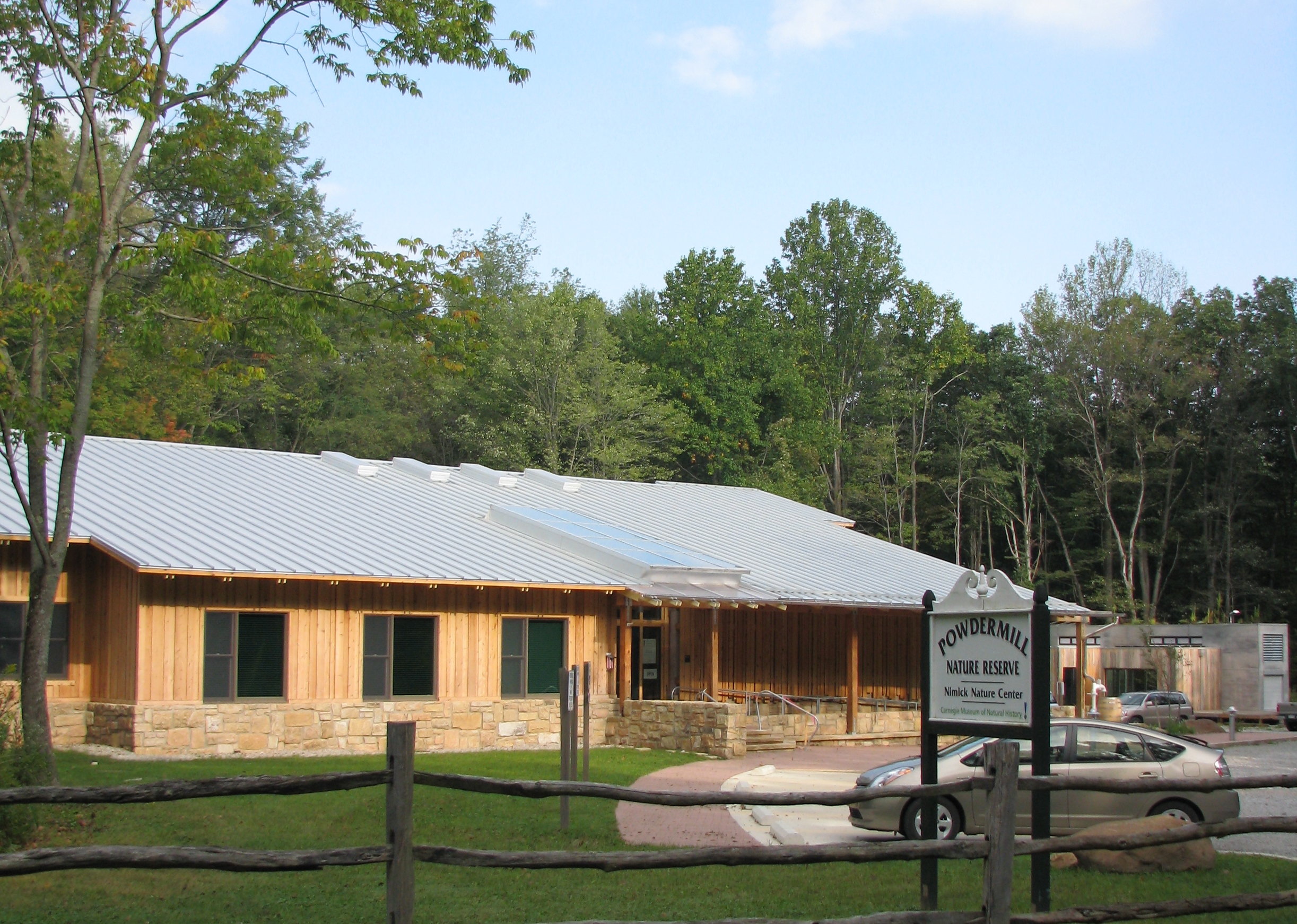
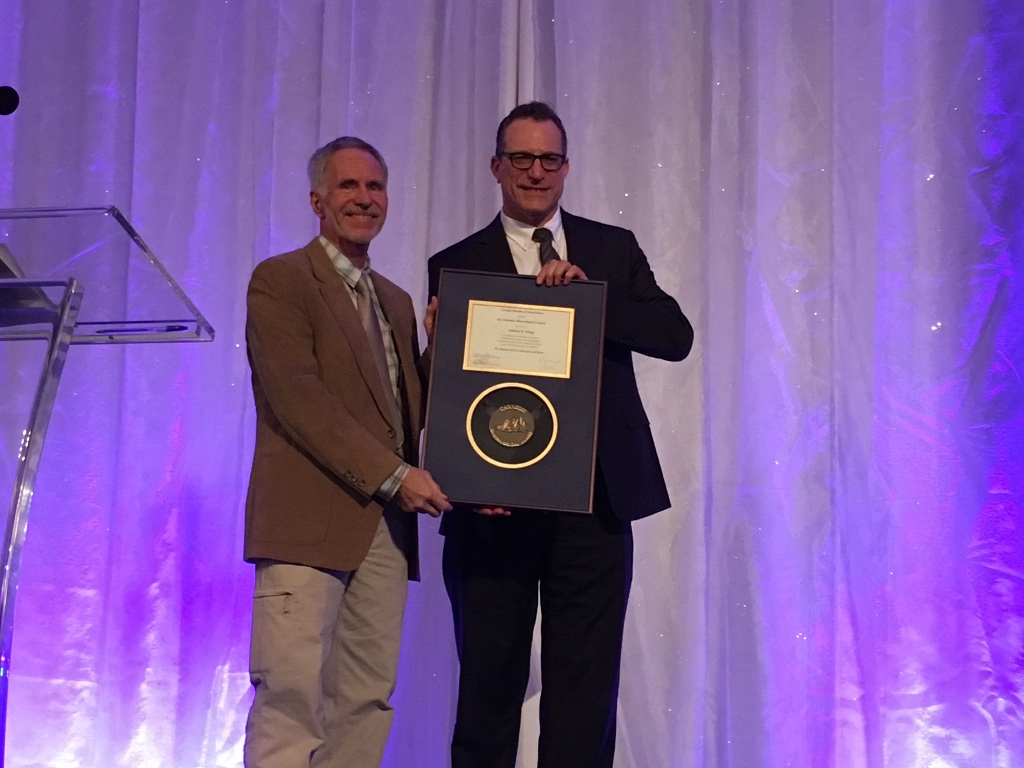
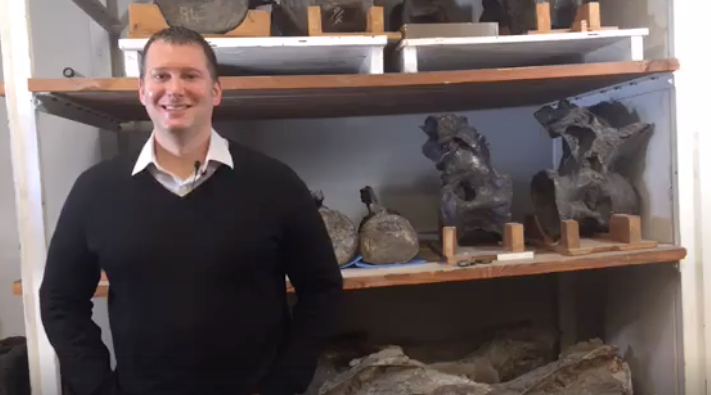
Live Animal Encounters introduces visitors to the museum’s living collection, which features live mammals, birds, and reptiles—some of which were rescued from unusual situations and are cared for by trained staff at the museum.

“As a museum, we have proactively looked for opportunities to use our expertise and space to provide a home for local wildlife that cannot survive in the wild,” said Mallory Vopal, the gallery experience manager who oversees the live animal program. “We hope that in addition to helping individual animals, we can also help educate our visitors about different local species or pets and how human behavior might impact them.”

The museum’s living collection includes more than 30 animals, from a pair of baby skunks to an iguana and even a python and a sun conure.

The brightly colored sun conure, which is a type of small parrot, was rescued in late 2016 from an animal hoarding situation in the Brookline neighborhood of Pittsburgh. Museum staff heard about the situation on the local news and worked with Humane Animal Rescue and the Parrot Education, Adoption, and Rehoming League to bring the conure into the collection and nurse it back to health.

The museum also worked with Humane Animal Rescue to bring a Russian tortoise into the collection. The tortoise was found walking down a city street in Lawrenceville, and Humane Animal Rescue asked if the museum could give it a new home. Vopal said they were glad to accept and that the tortoise is thriving.

The museum also has fostered a close working relationship with the West Virginia Raptor Rehabilitation Center, who has done outreach work at the museum. Vopal is currently working with the the center, which rehabilitates and releases injured or orphaned birds of prey, to bring a screech owl, an American kestrel, and a red-tailed hawk into the museum’s care that are not able survive in the wild.

Other animals in the collection were acquired through USDA licensed breeders, but even some of them had health issues that the museum’s expertise helped remediate, like a leopard tortoise with a deformed or “pyramided” shell due to an improper diet.

“We strive to provide the highest level of care for our living collection,” said Chelsey Pucka, director of lifelong learning at Carnegie Museum of Natural History. “The comfort and well being of the animals is always a top priority.”

Visitors are now able to meet the museum’s rescue animals and many others at Live Animal Encounters—which are held daily in the museum’s Earth Theater. Each encounter features several different animals handled by experienced museum educators, who teach visitors about animal habitats, interesting behaviors, and exciting scientific studies.

“This dynamic program aligns with Carnegie Museums of Pittsburgh’s mission to inspire and educate inquisitive adults and children through unique museum experiences,” said Dr. Eric Dorfman, the Daniel G. and Carole L. Kamin Director of Carnegie Museum of Natural History. “Our hope is that Live Animal Encounters will foster a love of nature and an interest in advocacy for our visitors.”

Each day features different animals, so repeat visitors can experience something new with each visit and so educators can best accommodate the comfort, health, and availability of the animals.

To grow the living collection, Carnegie Museum of Natural History staff worked with the Pennsylvania Game Commission and the U.S. Fish and Wildlife Service to obtain proper licensing and permits.

Live Animal Encounters take place at 1:30 p.m. each day in the museum’s Earth Theater. Admission is $2 per person.

Filed Under: Press Release

September 15, 2017 by wpengine

Three New Appalachian Crayfish Species Named by Carnegie Researcher

A Carnegie Museum of Natural History researcher and his colleagues described three new species of North American crayfish in a paper published this year.


Dr. James Fetzner Jr., assistant curator in the Section of Invertebrate Zoology, contributed to an article entitled “A case of Appalachian endemism: Revision of the Cambarus robustus complex (Decapoda: Cambaridae) in the Kentucky and Licking River basins of Kentucky, USA, with the description of three new species.”

Published in the scientific journal Zootaxa, the article details how researchers discovered the existence of three new species of crayfish where only one was previously thought to exist. Zootaxa publishes studies specifically related to the discovery of new species.


Researchers determined the presence of these new species by collecting specimens from the wild and measuring their physical and genetic differences back in the laboratory.

“Because we were already aware of some physical differences in these crayfish among the geographic areas included in the study, it was not a stretch to hypothesize that they might be distinct species,” Dr. Fetzner said.


“The original species, Cambarus robustus, is known from larger streams and rivers throughout most of the eastern United States, especially in and around the Appalachian Mountains,” he said. “These are big, robust looking crayfish. There are some slight differences in their overall appearance and claw shape from stream to stream, which has made some researchers over the years think that there might be some additional undescribed species present in the complex.”


The article notes that the diversification of the three new species, named Cambarus guenteri, Cambarus taylori, and Cambarus hazardi, likely occurred because of geographic changes in the region. Among these, “stream piracy,” which is the theft or diversion of water from one stream by another, is cited as a possible primary contributor.

The other authors included on the article are Dr. Zachary J. Loughman of the Department of Natural Sciences and Mathematics at West Liberty University in West Liberty, West Virginia; Dr. Sujan M. Henkanaththegedara of the Department of Biological and Environmental Sciences at Longwood University in Farmville, Virginia; and Roger F. Thoma of the Midwest Biodiversity Institute in Hilliard, Ohio.

As part of the research team, Dr. Fetzner was responsible for conducting the genetic analyses that were used to differentiate these new species.


“Carnegie Museum of Natural History is proud to have contributed to this study, which will give researchers and conservationists a deeper understanding of these new species,” said Dr. Eric Dorfman, the Daniel G. and Carole L. Kamin Director of Carnegie Museum of Natural History. “Carnegie Museums of Pittsburgh strives to push our understanding of the natural world and biodiversity forward as part of its mission.” 


Funding for the study was provided by the Virginia Department of Game and Inland Fisheries, the West Liberty University Faculty Development Grant Program, and West Virginia Challenge Fund Summer Undergraduate Research Experience.


The full article can be found online at biotaxa.org.

Filed Under: Press Release

September 15, 2017 by wpengine

The Grable Foundation Awards $100,000 Programming Grant

The Grable Foundation awarded Carnegie Museum of Natural History a $100,000 grant that will help the museum develop educational programming about the Anthropocene.

The Anthropocene is the concept that human activity has had such a profound and pervasive impact on the planet that its effects will be present in the fossil record millions of years from now, thus warranting a dedicated geological era. The Anthropocene will be a major theme going forward at the museum, which is strategically positioning itself to address modern global issues.

“This generous grant helps us build an important educational piece of our Anthropocene programming,” said Dr. Eric Dorfman, the Daniel G. and Carole L. Kamin Director of Carnegie Museum of Natural History. “We are engaging our core audiences in an important, timely topic that is a natural fit for the museum’s mission.”

The grant will allow the museum to create programming and a local network of educators as part of a project that will span three years.

Using funds from the grant, the museum will work to convene a network of schools and informal learning and community-based organizations to examine the concept of the Anthropocene. After establishing the network, the museum will work collaboratively with its partners to develop informal learning resources that address common priorities for child and family engagement.

Carnegie Museum of Natural History will use these co-designed resources to provide professional development for school teachers, community organization representatives, and museum educators around Anthropocene concepts.

“Working with a network of educators will allow us to mold the museum’s expertise into the best possible programming,” said Laurie Giarratani, director of education at Carnegie Museum of Natural History. “The Grable Foundation’s grant will help us achieve key initiatives that will elevate our content.”

Over the course of the project, these activities will structure an iterative design process for resource development, ensuring that connections are made across classrooms and informal learning environments and that museum programs are responsive to community needs.

In October, the museum will launch an entire exhibition around the Anthropocene entitled We Are Nature. The exhibition will utilize pieces of the museum’s collection to analyze and discuss humanity’s impact on the environment.

All four Carnegie Museums of Pittsburgh explored the concept of the Anthropocene this year when they collaborated on the first iteration of Carnegie Nexus—an initiative that taps the intellectual assets of the museums as they collaborate to present insightful, multi-disciplinary programming on ideas that impact us all.

The Grable Foundation strives to help children and youth become independent, caring, contributing members of society by supporting programs critical to a child’s successful development in southwestern Pennsylvania.

Filed Under: Press Release

May 11, 2017 by wpengine

Powdermill to Host Latin American Graduate Students

Powdermill Nature Reserve
Powdermill Nature Reserve, the environmental research center of Carnegie Museum of Natural History in Rector, Pennsylvania, will host 16 international students this month for a workshop on temperate forest ecology.

Graduate students from the Instituto de Ecologica (INECOL) in Xalapa, Mexico will arrive at Powdermill on April 23, where they will stay and take classes through May 6.

“This is a great opportunity to share our facilities and expertise with international students,” said John Wenzel, director of Powdermill Nature Reserve. “These are incredibly bright students, and we are excited to work with them.”

The 16 graduate students are from Latin American countries including Colombia, Ecuador, Peru, and Mexico. They each have their particular area of interest such as habitat loss, agro-industrial waste management, disturbed ecosystems, and taxonomy and systematics of macrofungi.

Powdermill staff and several university guest professors will teach forest succession, GIS methods in ecology, animal-plant interactions, aquatic monitoring, limnology, amphibian ecology, and data analysis during the workshop.

During their stay at Powdermill, students will visit the National Aviary for a behind-the-scenes tour and Carnegie Museum of Natural History to meet with curatorial staff. They will also travel to Raystown Lake for a hands-on limnology lesson with Juniata College professors.

This workshop was made possible by a grant from the Myles D. Sampson Family Fund of The Community Foundation of Westmoreland County.

Filed Under: Press Release

March 2, 2017 by wpengine

Winner of the 2016 Carnegie Mineralogical Award Announced

Anthony Kampf, winner of the 2016 Carnegie Mineralogical Award
Carnegie Museum of Natural History Director Eric Dorfman (right) presents Anthony Kampf (left) with the Carnegie Mineralogical Award.

Carnegie Museum of Natural History is pleased to announce that Anthony (Tony) R. Kampf, PhD, is the winner of the 2016 Carnegie Mineralogical Award. Carnegie Museum of Natural History’s Director Eric Dorfman, PhD, presented the award to Kampf on February 12, 2017 during the Saturday night awards banquet at the Tucson Gem and Mineral Show. The Carnegie Mineralogical Award honors outstanding contributions in mineralogical preservation, conservation, and education and is considered one of the most prestigious awards in the field of mineralogy.

“Dr. Kampf has consistently provided a high level of service to the amateur and professional mineral communities. I am very pleased to see him honored as the recipient of the 2016 Carnegie Mineralogical Award,” said Marc Wilson, curator of collections of the Section of Minerals at Carnegie Museum of Natural History.

Kampf spent his entire 40-year career at the Natural History Museum of Los Angeles County. He currently holds the position of curator emeritus of the Mineral Sciences Department.

Kampf has guided the Mineral Sciences Department to national and international prominence in the areas of exhibition, collections, public programing, and research. His first major assignment at the museum was the final planning and installation of Gem and Mineral Hall, which opened in 1978 and is one of the best in the country.

Kampf oversaw a nearly tenfold increase in size and a significant increase in importance of the museum’s gem and mineral collection, principally by bringing in major donations and making important purchases. He established an effective support group and provided extensive public programming. He also planned and led many gem and mineral tours all over the world. He has also been a consulting editor of The Mineralogical Record (since 1995), Rocks & Minerals (since 1980), Gems & Gemology (since 1981), Mineralogical Magazine (since 2015), and American Mineralogist (1992-1995).

He has served on the board of directors of The Mineralogical Record, Inc. since 1983. He has been a member of the Society of Mineral Museum Professionals (and its predecessor, the Mineral Museums Advisory Council) since 1977, serving as a member of its board for most of that time. He has been a member of the Friends of Mineralogy since 1972, serving on the board of directors from 1978 to 1994, as vice president in 1980, and as president in 1981 and 1982. He served as the United States’ delegate to the International Mineralogical Association Commission on Museums from 1992 to 2008 and has served as the United States’ delegate to the Commission on New Minerals, Nomenclature, and Classifications since 2008.

Kampf has authored more than 320 publications and has about 30 more awaiting publication. Nearly 200 of these are from the last 10 years, and the vast majority are peer-reviewed scientific papers. His research is mostly in the areas of descriptive mineralogy, crystal chemistry, and structural crystallography, focusing on the characterization of new or inadequately described minerals. He has now described 185 new mineral species.

The Carnegie Mineralogical Award was established in 1987 by Carnegie Museum of Natural History and underwritten by The Hillman Foundation. Previous recipients of the Carnegie Mineralogical Award include:

2015 Dr. George Harlow
2014 Bryon N. Brookmyer
2013 Gloria A. Staebler
2012 Dr. George W. Robinson
2011 Dr. Jeffrey E. Post
2010 The Rochester Mineralogical Symposium
2009 Dr. Peter K.M. Megaw
2008 Dr. Frank C. Hawthorne
2007 Jeffrey A Scovil
2006 Richard C. Whiteman
2005 June Culp Zeitner
2004 Dr. Joel A. Bartsch
2003 Dr. Eugene S. Meieran
2002 Dr. Terry C. Wallace, Jr.
2001 Dr. Wendell E. Wilson
2000 Dr. F. John Barlow
1999 Sterling Hill Mining Museum
1998 Robert W. Jones
1997 Bryan K. Lees
1996 Dr. Cornelis (Kase) Klein
1995 Marie E. Huizing
1994 The Mineralogical Record
1993 Dr. Cornelius S. Hurlbut, Jr.
1992 Dr. Carl A. Francis
1991 Dr. Miguel A. Romero Sanchez
1990 Paul E. Desautels
1989 Dr. Frederick H. Pough
1988 Dr. John Sinkankas
1987 The Tucson Gem & Mineral Society

Nominations are now being accepted for the 2017 Carnegie Mineralogical Award. Private mineral enthusiasts and collectors, educators, curators, mineral clubs and societies, museums, universities, and publications are eligible. For a nomination form, go to http://www.carnegiemnh.org/minerals/award.html, or contact Marc L. Wilson by phone at 412.622.3391 or by email at wilsonm@carnegiemnh.org.

Filed Under: Press Release

February 17, 2017 by wpengine

New Scientist Streaming Series a Free Resource for Schools

Dr. Matt Lamanna

Carnegie Museum of Natural History launched a new streaming series that broadcasts scientists to schools across the country using Facebook Live.

The new live video series leverages technology to share scientific information and give classrooms and Facebook users a behind-the-scenes look at museum collections while learning about science from museum experts.

“This series is helping us achieve one of our primary institutional goals, which is to educate the public,” said Dr. Eric Dorfman, director of Carnegie Museum of Natural History. “By utilizing technology, we are reaching wider audiences in schools, not just in Pittsburgh but across the country.”

Teachers, students, and the public can tune into the series for free by simply visiting the museum’s Facebook page at the planned time. The videos are also posted on Facebook to view anytime for those unable to watch live.

Paleontologist Dr. Matt Lamanna kicked off the series with a live stream on January 26 from the Big Bone Room at Carnegie Museum of Natural History. Dr. Lamanna discussed Diplodocus carnegii and what it is like to be a paleontologist in a video viewed more than 5,000 times. Matt received more than 75 questions from viewers, including questions from students in schools in Pittsburgh, Indiana, Ohio, and New York.

“This was a great way to reach a large audience of students all at once,” said Dr. Lamanna. “Seeing all of the questions pour in from aspiring scientists was an exciting start to this new project.”

Future live streams will feature other experts from the museum’s scientific sections who will share their specialized knowledge and show off pieces of the museum’s hidden collection.

The museum’s next live stream will be with botanist Bonnie Isaac on February 15 at 10:30 a.m. Tune in at facebook.com/carnegiemnh.

Filed Under: Press Release

January 20, 2017 by wpengine

Symposium Planned to Celebrate Redisplay of Iconic Diorama

Lion Attacking a Dromedary Exhibit

Carnegie Museum of Natural History partnered with the University of Pittsburgh to organize a symposium to celebrate the redisplay of an iconic museum diorama.

Visitors are invited to a free, day-long symposium on January 28 that will explore the history and context of the diorama Lion Attacking a Dromedary, formerly known as Arab Courier Attacked by Lions. The museum partnered with the University of Pittsburgh to provide 150 free tickets to the symposium, which will include general admission for the museum to enable attendees to view the unveiling of the diorama’s new display.

“Over the course of the past year, we have worked to attain a better understanding of the history, context, and construction of the diorama,” said Dr. Eric Dorfman, director of Carnegie Museum of Natural History. “We are thrilled to share our research with the public through the symposium and a new, prominent display for Lion Attacking a Dromedary.”

The diorama, made by a famous French naturalist named Edouard Verreaux in the mid-1800s (part of the company called Maison Verreaux), depicts a dramatic scene in which lions are attacking a courier on camelback. Carnegie Museum of Natural History acquired it from the American Museum of Natural History in 1898. This year, museum leaders renamed the diorama a translation of its original French title, Lion Attaquant un Dromadaire.

The symposium is the first of a four-part series on the diorama and will bring together scholars from the Museums of Art and Natural History and faculty from the University of Pittsburgh’s departments of French and Italian, Global Studies, and History of Art and Architecture, as well as the Muslim Association of Greater Pittsburgh. Dates of future events will be announced in the coming weeks.

“This series is an opportunity to explore one of the museum’s most iconic pieces,” said Dr. Erin Peters, joint assistant curator of science and research at Carnegie Museum of Natural History and lecturer in History of Art and Architecture at the University of Pittsburgh. “Partnering with the University of Pittsburgh helps us provide context to this complicated diorama and explore its rich history.”

Morning sessions will focus on the historical and intellectual contexts of the diorama, and afternoon sessions will focus on the museum process and discussion. The diorama’s new display near the Carriage Drive entrance of the museum will be revealed at 12 p.m.

In April, the museum announced plans to remove the diorama from its display for restoration and research. The project was funded with a gift from the Guyaux family, who also provided support for the recent gift store renovation.

“This exciting opportunity would not be possible without the generous donation from Joe and Kathy Guyaux,” said Dr. Dorfman. “Their support helped us to achieve a deeper understanding of an iconic piece in our collection and share that information with our visitors.”

Filed Under: Press Release

January 12, 2017 by wpengine

Amazing Butterflies Opening at Carnegie Museum of Natural History


Carnegie Museum of Natural History invites visitors to become a butterfly at a new, interactive exhibition this winter.

Amazing Butterflies opens January 21 and will run through April 23, 2017. The immersive and highly interactive exhibition combines the fun of a playground with fascinating facts about one of the most interesting creatures on Earth—butterflies.

“This exhibition brings one of our most popular collections to life,” said Eric Dorfman, director of Carnegie Museum of Natural History. “It is an educational and fun way to learn about the lifecycle of butterflies.”

Visitors will learn about caterpillars, butterflies, and their environments as they wander through a giant maze where challenges and activities are around each corner. Tall blades of grass and giant leaves make visitors feel like they are a tiny insect in a massive outdoor landscape.

Amazing Butterflies features exciting exhibits like a butterfly zip line, a climbable spiderweb, and a giant caterpillar entry tunnel. Parents and children can play games to learn about nectar, lifecycles, and mating, and they can even climb into their own pupa pods as they make their way through the maze.

“What makes this exhibition special is that children are learning through play and interaction,” said Becca Shreckengast, director of exhibition experience at Carnegie Museum of Natural History. “Amazing Butterflies is an immersive adventure that families can enjoy together.”

Programming to accompany Amazing Butterflies will pollinate all corners of the museum. Sections of the museum’s vast butterfly collections will be displayed, butterfly merchandise will be sold in the gift store, and the museum will plan special events and programs to run in tandem with the exhibition.

Minotaur Mazes of Seattle created Amazing Butterflies with scientific input and interpretation from the Natural History Museum in London.

Carnegie Museum of Natural History’s run of Amazing Butterflies is sponsored by Dollar Bank and Baierl Subaru.

Filed Under: Press Release

January 9, 2017 by wpengine

NEH Funds Development of Ancient Egyptian Exhibit at Carnegie Museum of Natural History

Ancient Egyptian Boat

Carnegie Museum of Natural History received a grant from the National Endowment for the Humanities (NEH) that will fund the development of an immersive virtual experience centered on the museum’s ancient Egyptian funerary boat.

The museum was awarded a $29,962 Humanities Digital Projects for the Public grant, which NEH developed to support projects that contribute to public engagement in the humanities through digital platforms.

The grant will fund the initial research and planning stages of an on-site immersive virtual experience that will simulate a journey on the Nile in the royal funerary boat of pharaoh Senwosret III (c. 1887-1848 BCE).

“This is an opportunity for us to utilize technology and plan an engaging new exhibit around a fascinating piece of our Egyptian collection,” said Dr. Eric Dorfman, director of Carnegie Museum of Natural History. “This grant ensures that we will have the proper scholarship and expertise we need on the front end of the project.”

The boat, which was discovered outside of Cairo in the Dashur pyramid complex, is currently on display in Walton Hall of Ancient Egypt. Egyptologists believe that the boat, one of four discovered at Dashur, was used in funerary rituals to transport the pharaoh’s body across the Nile where it was mummified and buried.

“The Carnegie boat can provide museum visitors a tangible connection to how the ancient Egyptians viewed life, death, and the afterlife as extensions of the natural world,” said Dr. Erin Peters, an assistant curator of science and research at Carnegie Museum of Natural History.

The museum plans to use the immersive virtual experience as a centerpiece for Egypt on the Nile, a new exhibition Carnegie Museum of Natural History is developing that will explore the parallels between the natural and human history of ancient Egypt and the modern world. The exhibition is being planned for 2020-2021.

Created in 1965 as an independent federal agency, the National Endowment for the Humanities supports research and learning in history, literature, philosophy, and other areas of the humanities by funding selected, peer-reviewed proposals from around the nation. Additional information about the National Endowment for the Humanities and its grant programs is available at: www.neh.gov.

“NEH provides support for projects across America that preserve our heritage, promote scholarly discoveries, and make the best of America’s humanities ideas available to all Americans,” said NEH Chairman William D. Adams. “We are proud to announce this latest group of grantees who, through their projects and research, will bring valuable lessons of history and culture to Americans.”

Any views, findings, conclusions, or recommendations expressed in this report do not necessarily represent those of the National Endowment for the Humanities.

Filed Under: Press Release

December 5, 2016 by wpengine

Carnegie Museum of Natural History Renovates Gift Store

newly renovated gift shop at Carnegie Museum of Natural HistoryCarnegie Museum of Natural History has completed a dynamic, environmentally conscious renovation of its gift store that combines vintage dioramas, a dinosaur display, and merchandise. The first-floor gift shop is located near the entrance of Benedum Hall of Geology.

In keeping with the museum’s emphasis on conservation, museum staff restored existing dioramas and repurposed antique cabinets and other fixtures for displaying merchandise. The museum also moved Jane, its juvenile T.rex, to center stage and museum conservators brought three wildlife dioramas out of storage and restored them for display in the renovated store.

“A love of nature is at the core of Carnegie Museum of Natural History’s mission, which is why our new gift store was designed with conservation in mind,” said Dr. Eric Dorfman, director of Carnegie Museum of Natural History. “By reducing our own consumption, we hope to spark a conversation about the inherent value of nature and what steps we can take together to create a healthier planet.”

The store’s layout was adjusted to feature a kid-friendly section with toys, educational games, and apparel as well as an adult section with unique, curated merchandise and a few products created in-house that can only be bought at Carnegie Museum of Natural History.

“We want every aspect of our museums to engage and excite our visitors,” said Dr. Jo Ellen Parker, president and CEO of Carnegie Museums of Pittsburgh. “The new Museum of Natural History store does this so well by sharing the wonders and important lessons of the natural world along with the great fun of exploration at every age.” The store renovation coincides with the return of the holiday trees and Presepio at Carnegie Museum of Art; a host of holiday-themed events at Carnegie Museums of Art and Natural History; and the opening of The Café Carnegie, the Oakland museums’ new restaurant, which will celebrate its grand opening in January.

The opening celebration for the renovated Museum of Natural History store is December 9 through 11 and will feature kids’ activities, live music performed by Allderdice String Quartet and Jazz Band, and special trunk shows by three local artisan makers: Laurel Burkhart, Ashley Cecil, and Kim Fox of Worker Bird.

Ashley Cecil is a Pittsburgh-based artist and illustrator specializing in paintings of flora and fauna. She’s currently the artist in residence at Carnegie Museum of Natural History, creating art inspired by nature and exploring the nexus of art and science. Several of her prints, note cards, and scarves will be sold in the gift store, as well as her new coloring poster. Proceeds from the poster will benefit BirdSafe Pittsburgh, a partnership between eight local conservation organizations, including Carnegie Museum of Natural History, that are working to research and reduce local bird mortality caused by glass collisions.

Filed Under: Press Release

November 29, 2016 by wpengine

Daniel and Carole Kamin Donate $5 Million to Carnegie Museum of Natural History

Daniel and Carole Kamin Donate $5 Million to Carnegie Museum of Natural HistoryPittsburgh philanthropists Daniel and Carole Kamin made a $5 million gift that will permanently endow Carnegie Museum of Natural History’s director position.

The gift will be given in installments over several years and will fund the museum director’s position currently held by Dr. Eric Dorfman, which will be renamed the Daniel G. and Carole L. Kamin Director of Carnegie Museum of Natural History to recognize the Kamins’ gift.

“Throughout the history of Carnegie Museums, generous support from donors like the Kamins enables our organization to thrive and grow into a far-reaching family of museums that plays a vital role in advancing art, science, and education,” said Dr. Jo Ellen Parker, President and CEO of Carnegie Museums of Pittsburgh. “This specific gift celebrates the Kamins’ commitment to supporting our leadership team and the outstanding work of Carnegie Museum of Natural History.”

“We are pleased to be able to support an iconic and historic Pittsburgh institution,” said Carole Kamin. “We hope our contribution will continue the tradition of excellence exemplified by Dr. Dorfman, who is leading the museum in an exciting and positive direction.”

The Kamins have strong ties to Carnegie Museums of Art and Natural History. Dan and Carole Kamin have been involved with the museums for a combined total of over 100 years. Carole is a long-time Carnegie Museum of Natural History board member. She is also a member of the Executive Committee of the Discoverers Club and a member of Carnegie Museum of Art’s Women’s Committee. She has worked as a buyer/manager for both the Carnegie Museum of Art and Natural History gift shops, working at the Natural History store for over 20 years. Carole is currently the Chair of the Carnegie Museum of Natural History Merchandising Committee.

As the Daniel G. and Carole L. Kamin Director of Carnegie Museum of Natural History, Dr. Dorfman oversees research, exhibitions, and visitor experiences at the museum.

“The Kamins’ generosity comes not just in financial contributions, but their willingness to lend their time and expertise to the museum as well,” Dr. Dorfman said. “Their support is invaluable,and they continue to be great friends to the museum in many ways.”

Filed Under: Press Release

October 11, 2016 by wpengine

Carnegie Museum of Natural History’s Director Speaks on Global Crisis of Wildlife Trafficking

White rhino (Ceratotherium simum) from the Pilanesberg Game Reserve, North West Province, South Africa, Africa

Carnegie Museum of Natural History’s Director Eric Dorfman is leading an international call for natural history museums to do their part to stop the global crisis of wildlife trafficking.

Wildlife trafficking is one of the top international illegal trade practices surpassed only by narcotics, counterfeiting, and human trafficking. It has been recognized as a growing source of funding for terrorist’s groups, and has resulted in increased poaching activities as well as thefts from museums and zoos.

“Illicit wildlife trafficking poses ethical and logistical problems for natural history museums today,” Dr. Dorfman said. “However, we can work together to be a force in counteracting this crisis.”

Dr. Dorfman spoke on the subject at the World Association of Zoos and Aquariums conference in Puebla, Mexico on October 10. This coincided with the International Council of Museums releasing a white paper, Natural History Museums and Wildlife Trafficking: A Framework for Global Action, on October 4 which outlines steps that natural history museums can take to curb trafficking.

The paper was published by the International Council of Museums Committee for Museums and Collections of Natural History Wildlife Trafficking Working Group, which Dorfman chairs. It outlines how natural history museums are uniquely positioned to stop wildlife trafficking through communication, partnerships, improved documentation and identification, and public awareness.

Experts estimate that wildlife trafficking is estimated to be worth at least $19 billion each year. The demand for wildlife items has greatly damaged and depleted natural resources in affected areas. The black market is turning more regularly to museum collections. A rhinoceros horn, valued at €500,000, was stolen from the National Museum Archive at Balheary Road in Swords County Dublin in April 2013, and 17 rare monkeys were stolen from the Beauval Zoo in France last year.

Dr. Dorfman has been the president of the ICOM Committee for Museums and Collections of Natural History (ICOM NATHIST) since 2013. He is a member of the ICOM Ethics Committee, and in 2013 published the ICOM Code of Ethics for Natural History Museums. He is also a registered ICOM mediator and is a member of ICOM’s Museum Definition Working Group. His PhD, from The University of Sydney, concerned scale-dependent resource use of cormorants in central and eastern Australia. Before this, he worked on the behavioral ecology porpoise in Monterey Bay, California. Dorfman publishes on natural history, museum operations, public programming, and the ecology of wetland birds. He is currently editing a book entitled The Future of Natural History Museums, due for publication in 2017.

Filed Under: Press Release

September 23, 2016 by wpengine

Carnegie Museum of Natural History receives Grant to Preserve and Display Important Reptile and Amphibian Collection

Bookcases full of specimens stored in jars of alcohol

Carnegie Museum of Natural History was awarded a $499,224 grant by the National Science Foundation to preserve collections stored in the museum’s historic Alcohol House and create two new exhibits.

The Alcohol House is a three-story storage space in the museum that is not open to the public. It is home to more than 200,000 reptile and amphibian specimens that are jarred and preserved in alcohol. Researchers and scientists collected the specimens from more than 170 countries over the past 100 years and still use them today for important biodiversity research.

“This is an opportunity to optimize and share one of the museum’s most historic and fascinating collections,” Eric Dorfman, director of Carnegie Museum of Natural History, said. “The specimens in the Alcohol House are critical resources that help us understand the importance of conservation and the impact human activity has on environments.”

The Alcohol House boasts 148 holotypes (specimens that forever define a species, usually the first or the most complete discovered); it includes specimens of five extinct and 78 critically-endangered species; and it features one of the world’s largest collection of turtles. The collection includes large historical holdings from areas that have suffered deep environmental change or those areas in the midst of great changes, like the tropical forests of Africa, the Amazon, and South East Asia.

“With ongoing habitat destruction and increased limitations on collecting around the world, the value of this irreplaceable resource will only continue to increase with time,” says José Padial, the museum’s William and Ingrid Rea Assistant Curator of Amphibians and Reptiles.

Grant funds will be used to make critical environmental upgrades that will ensure the long-term preservation of the massive collection. The money will also enable the museum to create two exhibits – one inside the Alcohol House for behind-the-scenes tours and a larger exhibit in the galleries.

Museum educators will team up with teens from City Charter High School and Pittsburgh Science and Technology Academy to create educational materials for the new exhibits.

The National Science Foundation is an independent federal agency that promotes the progress of science by funding scientific research, education, and projects.

Filed Under: Press Release

September 6, 2016 by wpengine

Women of Vision: National Geographic Photographers on Assignment Exhibition

young woman holding a red scarf
Stephanie Sinclair/National Geographic

Women of Vision: National Geographic Photographers on Assignment will open at Carnegie Museum of Natural History on September 24, 2016. Highlighting the influential photography of 11 award-winning female photojournalists, the traveling exhibition is sponsored by The PNC Financial Services Group, Inc. (NYSE: PNC) and will be in Pittsburgh until January 8, 2017. Women of Vision features nearly 100 photographs, including moving depictions of far-flung cultures, compelling illustrations of conceptual topics such as memory and teenage brain chemistry, and poignant images of social issues like child marriage and 21st-century slavery. In addition to the photographs, visitors will have an opportunity to learn how National Geographic magazine picture editors work closely with the photographers to select images and tell a story. Video vignettes will present first-person accounts that reveal the photographers’ individual styles, passions, and approaches to their craft.

Carnegie Museum of Natural History will host a free panel discussion with photographers featured in the exhibition on September 22 at 6 p.m. at the Carnegie Library Lecture Hall. Registration is required. Members of the public can register for the event online.

“For the last decade, some of our most powerful stories have been produced by a new generation of photojournalists who are women. These women are as different as the places and the subjects they have covered, but they all share the same passion and commitment to storytelling that has come to define National Geographic,” said Kathryn Keane, vice president of National Geographic Exhibitions. “The exhibition reaffirms the Society’s position as a respected leader in the field of photography.”

“Women of Vision is an incredibly inspiring exhibition that captures a wide range of emotions, experiences, and cultures,” said Scott Cunningham, regional managing director of PNC Wealth Management. “It celebrates the courage, talent, and commitment of these 11 photojournalists, who recognize and demonstrate the importance and power of art to educate, create awareness, and drive change.”

The exhibition underscores National Geographic’s history of documenting the world through photography and its ongoing commitment to supporting photographers as important and innovative storytellers who can make a difference with their work.
“Women of Vision” was curated by then-National Geographic Senior Photo Editor Elizabeth Krist, who had the challenging task of choosing a selection of images to best represent the broad portfolios of the 11 extraordinary photographers:

  • Pulitzer Prize winner and MacArthur Fellow Lynsey Addario is widely admired for her conflict coverage in Afghanistan, Iraq, Lebanon, Darfur, and the Congo. Featured assignment work includes images that document human rights issues, particularly the plight of women and families in conflict zones.
  • Kitra Cahana explores important social, anthropological, and spiritual themes. Born in Miami, but raised in Canada and Sweden, Kitra earned her BA in Philosophy from McGill University and her MA in Visual and Media Anthropology from the Freie Universitat in Berlin. She has won a first prize from World Press Photo, a TED Fellowship, and the ICP Infinity Award. Her work includes images taken on assignment for NGM’s important feature on the teenage brain and culture in the United States.
  • Jodi Cobb has worked in over 65 countries and produced 30 NGM stories, including “21st -Century Slaves,” which was among the most popular stories in the magazine’s history. Cobb was the only photographer to penetrate the geisha world, which resulted in her Pulitzer Prize-nominated book, “Geisha: The Life, the Voices, the Art.” She was also the first photographer to document the hidden lives of the women of Saudi Arabia and among the first to travel across China when it reopened to the West. She has received numerous accolades, including repeated honors from the National Press Photographers Association, Pictures of the Year, and World Press Photo, as well as receiving the 2012 Missouri Honor Medal for Distinguished Service in Journalism. Cobb was also the first woman to be named White House Photographer of the Year.
  • Diane Cook is a leading landscape photographer whose work is in numerous collections, including the Museum of Fine Arts in Houston, the San Francisco Museum of Modern Art, the Museum of Photographic Arts in San Diego, and the L.A. County Museum in Los Angeles. Cook often works collaboratively with her husband Len Jenshel. Their NGM stories have covered New York’s elevated park the High Line, Mount St. Helens, Green Roofs, the Na’Pali Coast of Hawaii, the US-Mexico border, and Grand Staircase-Escalante National Monument.
  • Carolyn Drake is the recipient of a Guggenheim Fellowship, a Fulbright Fellowship, the Lange Taylor Documentary Prize, a World Press Photo award, and was a finalist for the Santa Fe Prize. She has spent years documenting the cultures of Central Asia and life in western China’s Uygur region.
  • A Knight Fellow and passionate advocate for visual arts education, Lynn Johnson has covered a wide range of assignments for NGM, producing images for 21 stories on subjects including vanishing languages and challenges facing human populations in Africa and Asia. Johnson has also participated in photo camps in Chad, Botswana, and at the Pine Ridge reservation. She has received several awards including the Robert F. Kennedy Journalism Award for Coverage of the Disadvantaged.
  • Beverly Joubert is a National Geographic Explorer-in-Residence, filmmaker, photographer, and co-founder of the Big Cat Initiative. Together with her husband, Dereck Joubert, they have been documenting the plight of African wildlife for over 30 years. Her images have appeared in more than 100 magazines worldwide (including NGM), and the Jouberts have co-authored several books and scientific papers. The Jouberts have produced over 25 television documentaries and a feature film, “The Last Lions” (2011), which has reached over 350 million people worldwide. These films have received many awards from around the globe including seven Emmys, a Peabody, Panda Awards, and conservation accolades including the World Ecology Award, an induction into the American Academy of Achievement, and the Presidential Order of Meritorious for their conservation work in Botswana. In 2011 ’60 Minutes’ (CBS) did a profile on their lives, documenting their film and conservation work in Africa.
  • Erika Larsen studies cultures with strong ties to nature. She published a 2009 story in NGM on the Sami reindeer herders of Scandinavia, an assignment which grew out of her own documentary work for which she lived and worked within the culture for over four years. Larsen received a BFA and MFA from Rochester Institute of Technology and is the recipient of a Fulbright Fellowship and a New Jersey State Arts Council Fellowship. Erika’s photography has been exhibited at the National Portrait Gallery and the Sami Ájtte Museum in Sweden.
  • Stephanie Sinclair’s decade-long project on child marriage has earned global recognition, including three World Press Photo awards and prestigious exhibitions on Capitol Hill, at the United Nations, and at the Whitney Biennial in New York. Scenes from Yemen and from polygamist families in the Fundamentalist Church of the Jesus Christ of Latter-Day Saints will also be displayed.
  • A celebrated figure in the photographic community, Maggie Steber has worked in over 62 countries and her images have earned several prestigious honors, including the Leica Medal of Excellence and World Press Photo awards. NGM has published her essays on Miami, the African slave trade, the Cherokee Nation, sleep, soldiers’ letters, Dubai, and a story on the science of memory that featured a touching sidebar on Steber’s mother Madje and her struggle with dementia.
  • Amy Toensing began her prolific career covering the White House and Congress for the New York Times. She has created portraits of unforgettable people around the world while shooting NGM stories in Papua New Guinea, Puerto Rico, the Jersey Shore, and Tonga. For the three years, she documented Aboriginal Australia for a story that was published in the June 2013 issue of NGM. Toensing is also committed to teaching photography to kids in underserved communities. She has worked with Somali and Sudanese refugees in Maine and Burmese refugees in Baltimore and recently traveled to Islamabad to teach young Pakistanis.

Women of Vision is organized and traveled by the National Geographic Society. PNC Financial Services is the Presenting National Tour Sponsor for Women of Vision. Major local support has been provided by Highmark with additional support by Point Park University.
Full details on the exhibition, including photo galleries and links to related National Geographic magazine content, are available at wovexhibition.org

About the National Geographic Society
The National Geographic Society is a global nonprofit membership organization driven by a passionate belief in the power of science, exploration, and storytelling to change the world. It funds hundreds of research and conservation projects around the globe each year. With the support of our members and donors, it works to inspire, illuminate, and teach through scientific expeditions, award-winning journalism, education initiatives, and more. For more information, visit www.nationalgeographic.com

About PNC
This exhibition is supported by PNC and The PNC Foundation, which receives its principal funding from The PNC Financial Services Group, Inc. PNC is one of the largest diversified financial services institutions in the United States, organized around its customers and communities for strong relationships and local delivery of retail and business banking; residential mortgage banking; specialized services for corporations and government entities, including corporate banking, real estate finance and asset-based lending; wealth management; and asset management. For information about PNC, visit www.pnc.com.

Filed Under: Press Release

August 2, 2016 by wpengine

Grant Positions Powdermill Nature Reserve to Become Appalachian Research Hub

yellow and brown song bird

Carnegie Museum of Natural History received a grant of $700,000 from the Richard King Mellon foundation for its environmental research center Powdermill Nature Reserve.

The grant will expand Powdermill’s capacity as a center for research and education focused on the Appalachian ecosystem. The funding will provide two years of support for a series of research projects that will incorporate emerging technologies as tools for research and enhance the profile of Powdermill as the premier ecological research center in the region.

“This grant will help our center become a nationally important biological field station that chronicles the Appalachian ecosystem using new technology and programs to better understand terrestrial and aquatic species,” Powdermill Director John Wenzel said.

Powdermill staff will utilize cutting edge technology, such as drone imaging and radio frequency nanotags, to study and protect local animal, insect, and plant populations. The focal species groups that will be studied are birds, pollinators, salamanders, and forest trees.

“As this grant strengthens our scientific activities, Powdermill will accordingly improve its educational outreach regarding pressing environmental issues of interest to concerned citizens,” said Wenzel.

Among the projects connecting modern technologies to studies of biodiversity is “nanotag” radio telemetry of migratory birds. Tiny radio beacons are attached to birds and track their migration as they fly by special sensory towers. The towers log the tagged birds in a central database, allowing scientists to track birds from South America to Canada without recapturing the bird. According to Wenzel, only about one in a thousand of Powdermill’s traditionally banded birds will be recaptured.

“The others are essentially lost from scientific study,” Wenzel said. “This new technology will greatly increase the effectiveness of Powdermill’s work, and we now provide a critical link in the network of sensor stations between South America and Canada.”

Carnegie Museum of Natural History established Powdermill in 1956 in Rector, Pennsylvania to serve as a field station for long-term studies of natural populations—their life histories, behaviors, and ecological relationships. Staff is currently studying resident and migratory birds, the distribution and abundance of amphibians and reptiles, plant ecology and pollinators.

Filed Under: Press Release

June 6, 2016 by wpengine

Carnegie Museum Of Natural History to Open National Geographic’s 50 Greatest Photographs Exhibition

A chimp reaches out to Jane Goodall from behind the bars of his cage in an African zoo Brazzaville, Republic of the Congo 1991. Photo by Michael Nichols

On June 18, Carnegie Museum of Natural History will open the traveling exhibition “50 Greatest Photographs of National Geographic,” which showcases some of National Geographic’s most compelling photographs. From Steve McCurry’s unforgettable Afghan girl to Michael Nichols’ iconic image of Jane Goodall and a chimpanzee to Thomas Abercrombie’s never-before-seen view of Mecca, the exhibition includes some of National Geographic magazine’s most-remembered and celebrated photographs from its more-than-120-year history.

“In many ways our scientists and National Geographic photographers have a lot in common,” said Eric Dorfman, museum director. “In their own ways, they explore the natural world and bring back discoveries to share with us and through their work deepen our understanding and connection to nature.”

In addition to seeing the photographs as they appeared in the magazine, visitors to the exhibition will learn the stories behind the photos and more about the photographers themselves. For some images, visitors will be able to see the “near frames” taken by the photographer: the sequence of images made in the field before and after the perfect shot.

The National Geographic Society is one of the world’s largest nonprofit scientific and educational organizations and one of the world’s leading organizers of large-scale, traveling exhibitions. Since it launched “Tutankhamun and the Golden Age of the Pharaohs” in 2004, National Geographic has organized two more Egyptian-themed exhibitions, “Tutankhamun: The Golden King and the Great Pharaohs” and “Cleopatra: The Search for the Last Queen of Egypt.” Other exhibitions National Geographic has organized include the four-city U.S. tour of “Afghanistan: Hidden Treasures from the National Museum, Kabul.” National Geographic also offers a broad selection of stunning photography exhibitions to museums and venues around the world. For more information, visit www.nationalgeographic.com.

Filed Under: Press Release

May 13, 2016 by wpengine

R. W. Moriarty Science Seminar: Free Lecture Series A Diverse Vertebrate Fossil Bone Bed from the Halgaito Formation of Southeastern Utah

On May 23, Amy Henrici, collection manager and scientific preparator, Vertebrate Paleontology, will review over five decades of paleontological expeditions as part of Carnegie Museum of Natural History’s free lecture series at noon in the museum’s Earth Theater.

These expeditions, one most recently by the Carnegie Museum of Natural History (1989-present), have yielded a highly diverse assemblage of at least 16 species of fishes, sharks, amphibians, and reptiles. The fossils occur in the Rico and Halgaito formations, which span the Late Pennsylvanian-Early Permian boundary and were deposited on a low relief coastal plain, which experienced occasional marine incursions and was bisected by fluvial channels.

The bone bed covers an area of roughly 84 square feet and is densely packed with partially articulated skeletons and isolated bones, which most likely accumulated as a lag deposit at the mouth of a tributary to a main stream channel during a flood event. The large concentration of fossils necessitated the excavation of the bone bed in large blocks, using the century-old technique of encasing them in a plaster and burlap jacket. Once at the museum, the blocks were opened, and the bones were exposed, stabilized, and identified.

The lecture is a part of the R.W. Moriarty Science Seminar Series, a free lecture series established in March of 2010 by Dr. Richard Moriarty, a retired pediatrician and a former Associate Clinical Professor of Pediatrics at the University of Pittsburgh School of Medicine. Currently, Moriarty is president of the Carnegie Discoverers, a volunteer group that supports Carnegie Museum of Natural History in promoting its cultural, scientific, and educational missions and in developing new audiences for the institution.

Filed Under: Press Release

April 26, 2016 by wpengine

Scientists Unveil Sarmientosaurus, a New Titanosaurian Dinosaur from Argentina

Paleontologists have discovered a new species of dinosaur that yields a wealth of insights into the biology and behavior of titanosaurs, the dinosaur group that includes the most massive land animals that have ever existed. Named Sarmientosaurus musacchioi, the new creature is represented by a single fossil specimen that includes an essentially complete, exquisitely-preserved skull—arguably the best yet found for any titanosaur—as well as part of the neck. The article describing the discovery appears today in the well-known, freely-accessible journal PLOS ONE.

The Sarmientosaurus skull and neck were unearthed in southern Chubut Province, Argentina, in the central part of the wild, windswept region known as Patagonia. The fossils were found in rocks laid down during the middle of the Cretaceous Period (the third and final period of the Mesozoic Era, or Age of Dinosaurs), roughly 95 million years ago. The specimen was discovered by the leader of the study, paleontologist Dr. Rubén D. F. Martínez of the Laboratorio de Paleovertebrados of the Universidad Nacional de la Patagonia San Juan Bosco (UNPSJB) in the city of Comodoro Rivadavia, Argentina. US-based members of the research team include paleontologist Dr. Matt Lamanna of Carnegie Museum of Natural History in Pittsburgh, Pennsylvania and paleobiologists Dr. Lawrence Witmer and Ryan Ridgely of the Ohio University Heritage College of Osteopathic Medicine in Athens, Ohio. Rounding out the team are several other Argentine scientists, including geologist Gabriel Casal of the UNPSJB, paleontologist Dr. Fernando Novas of the Museo Argentino de Ciencias Naturales in Buenos Aires, and Dr. Javier Martínez and Javier Vita, medical professionals in Comodoro Rivadavia who conducted CT (computed tomographic or ‘CAT’) scans of the Sarmientosaurus bones. “Discoveries like Sarmientosaurus happen once in a lifetime,” says study leader Martínez. “That’s why we studied the fossils so thoroughly, to learn as much about this amazing animal as we could.”

Titanosaurs are an important but mysterious group of dinosaurs. They are a type of sauropod, the huge, long-necked, long-tailed plant-eaters that many people think of when they hear the word “dinosaur.” Comprising more than 60 named species, titanosaurs lived on every continent and ranged in size from the weight of a cow to at least the weight of the biggest sperm whale. They were the most common large herbivores in the Southern Hemisphere landmasses during the Cretaceous. Despite their remarkable species richness and diversity in body size, many aspects of titanosaur anatomy, evolution, behavior, and ecology are not well understood. This is due in large part to the fact that skulls of these animals—which are fundamental for deciphering critical aspects of their biology—are exceedingly rare. Of the 60-plus named titanosaurs, only four (Nemegtosaurus, Rapetosaurus, Tapuiasaurus, and now Sarmientosaurus) are represented by nearly or even reasonably complete skulls. “Titanosaurs included the biggest land animals ever, so we want to know as much about them as we can,” notes Dr. Lamanna. “But to truly understand a creature, you need to have its head. And because titanosaur skulls are super-rare, lots of important aspects of how these dinosaurs lived and behaved have really been anybody’s guess.”

Although Sarmientosaurus itself was not particularly large by titanosaurian standards, its skull casts crucial new light on many facets of the biology of these sauropod dinosaurs. It provides scientists with their first good look at the head of an anatomically ‘primitive’ titanosaur, offering new information on the origins and evolutionary relationships of these animals. Furthermore, the team’s CT-based analyses of the Sarmientosaurus skull have yielded some of the most comprehensive information to date regarding the brain and senses of titanosaurs, or indeed, any sauropods. As is typical of sauropods, the brain of Sarmientosaurus was small relative to its enormous body, but its sensory capabilities outstripped those of most other sauropods, with a large eyeball and good vision and an inner ear better tuned for hearing low-frequency airborne sounds than other titanosaurs. Moreover, the balance organ of the inner ear indicates that this dinosaur probably habitually held its head with the snout facing downward, which may in turn suggest that it fed primarily on low-growing plants. According to Prof. Witmer, an expert on cranial anatomy, “The Sarmientosaurus skull is beautifully-preserved, which meant that we could tease out a ton of information. It was really exciting for us to work through the CT scan data because it gave us a glimpse into the biology and lifestyle of this animal like we rarely get with dinosaurs.”

The comparatively primitive architecture of the Sarmientosaurus skull and teeth contrasts that of the more ancient Tapuiasaurus, indicating that titanosaurs with radically different cranial and dental forms coexisted for much of the Cretaceous. This underscores the ecological and anatomical diversity of these sauropods, especially in the Southern Hemisphere continents. Sarmientosaurus is also the first non-avian (i.e., non-bird) dinosaur to preserve a bizarre structure in the neck that Dr. Martínez and team have interpreted as an extremely elongate bony tendon. The function of this structure remains unknown.
Sarmientosaurus musacchioi is named for the town of Sarmiento in Chubut Province, which is close to the discovery site. The species name honors the late Dr. Eduardo Musacchio, a paleontologist and professor at the UNPSJB who was a friend to Dr. Martínez and other members of the team.
A media event to announce the discovery will be held at Carnegie Museum of Natural History at 10:30 AM US Eastern time. Drs. Martínez, Lamanna, and Witmer will be on hand to address questions and give interviews; also, life-sized, scientifically accurate, 3D-printed replicas of the skull and reconstructed brain endocast of Sarmientosaurus will be available for viewing and photography. The article will be published in PLOS ONE at 2 PM Eastern and is under strict embargo until that time.

Martinez and Lamanna with Sarmientosaurus Skull

For comment, contact:
Rubén D. F. Martínez, PhD, Universidad Nacional de la Patagonia San Juan Bosco (Argentina), rudaframartinez@gmail.com, 54-0297-4843057
Matthew C. Lamanna, PhD, Carnegie Museum of Natural History (USA), LamannaM@carnegiemnh.org, 412-578-2696 / 412-592-3361
Lawrence M. Witmer, PhD, Ohio University (USA), witmerL@ohio.edu, 740-591-7712

Further information and resources:
PLOS ONE article (open-access; freely available after 2 PM EDT, April 26, 2016): http://dx.plos.org/10.1371/journal.pone.0151661
Still images, animations, and interactive 3D digital model for download (with captions and credits): https://www.dropbox.com/sh/in3tupno91h0haw/AACJmvc05hB7fk5tkeNcwgCBa?dl=0
YouTube animation of the Sarmientosaurus skull and brain endocast: https://www.youtube.com/watch?v=Zb8e5ffEC74
Interactive Sketchfab animation of the Sarmientosaurus skull: https://skfb.ly/MKOP
Interactive Sketchfab animation of the transparent Sarmientosaurus skull showing the brain endocast inside: https://skfb.ly/MKLO
Interactive Sketchfab animation of the Sarmientosaurus brain endocast: https://skfb.ly/MKKH
Twitter: @CarnegieMNH
Hashtag: #TitanoSkull

Filed Under: Press Release

April 21, 2016 by wpengine

Restoration and Research Planned for Iconic Diorama

Carnegie Museum of Natural History will relocate and restore one of its most iconic pieces – The Arab Courier – this year and design new interpretive signage for the work.

The 1867 diorama depicts a dramatic scene in which lions are attacking a North African courier on camelback. The piece is a rare three-dimensional example of the romantic “Orientalism” artistic style, which had its heyday in the mid to late 19th century. It remains today a signature piece in the museum’s collection.

“The Arab Courier is as at least as much a work of art as it is a scientific or cultural representation,” Eric Dorfman, director of Carnegie Museum of Natural History, said. “It is so well loved that we’re moving it to a more prominent site and its relevance to visitors of both the Museum of Art and Natural History make its new location ideal.”

When the glass panels of the diorama are temporarily detached during the move, the museum will take the opportunity to restore the diorama and perform additional research.

“We plan to do a CAT scan to explore a long-standing rumor surrounding the diorama,” said Steve Tonsor, director of science and research. “We’ve known for ages that there are unidentified human teeth in the mannequin’s head, and this is an opportunity to discover whether there might also be other bone fragments.”

The diorama was made by a French company in the mid-1800s called Maison Verreaux. It was rare for taxidermists even in that era to use human remains in dioramas, and this new display will provide context to the evolving methods used by taxidermists over the years, as well as the current ethical standards used today. The diorama also shows two extinct Barbary lions, giving museum staff another avenue to explore regarding ethics and wildlife conservation.

Carnegie Museum of Natural History follows the ethical standards and guidelines set by the museum’s Ethics Committee and the International Council of Museums Code of Ethics for Natural History Museums.

The renovated diorama will be launched toward the end of this year, and will include information about the CAT scan as well as programming to offer more details about the history of this iconic diorama.

Museum diorama of lions attacking a man on a camel

Filed Under: Press Release

March 14, 2016 by wpengine

Carnegie Museum of Natural History Breaking the Mold on Ways to Study Climate Change

Scientist working with fossils

Pittsburgh, Pa… Albert Kollar, Section of Invertebrate Paleontology, introduced students from Shady Side Academy Middle School to an extensive fossil trilobite collection from sites around the world to explain scientific theories of climate, extinction, and evolution. Students had the opportunity to break rocks that contained fossils, learn about evolution and extinction from the section’s fossil collection, and touch fossil fuel rocks such as coal and Marcellus Shale.

“Trilobites are popular with kids of any age and belong to a group of animals called arthropods that include horseshoe crabs and insects,” said Mr. Kollar.

Mr. Kollar used fossils from different periods of the Paleozoic era to show how trilobites changed and evolved over millions of years.

The trilobites that the students touched and held come from the ancient rocks found today in the Czech Republic, France, Sweden, British Columbia, Missouri, New Mexico, New York, Utah, and Pennsylvania- the home of the 390 million year old state fossil of Pennsylvania.

During the annual spring fieldtrip to the museum on March 11, about 70 students in grade 6 participated in art and natural history activities that work in conjunction with science curriculum at Shady Side Academy.

“We’ve been studying fossils and geological time … what Albert’s doing here relates directly to what we’re doing in the classroom,” said Matt Brunner, a Shady Side Academy earth science teacher. “They’re not just looking at fossils, but seeing how they’re used in the real world.”

Arriving at the Section of Invertebrate Paleontology lab, the students received a fossil coloring book to teach them about rocks and fossils in the Pittsburgh area. The class then split into smaller groups, each getting their own try at identifying rocks and fossils from Pennsylvania or making molds of different fossils from the collection with Plaster of Paris.

In the past 12 years, hundreds Shady Side Academy students in grade 6 earth science have passed through the Section of Invertebrate Paleontology fossil and geology programs, some have even gone on to study at top geology schools in the country.

Filed Under: Press Release

February 26, 2016 by wpengine

Free Admission in March at Carnegie Museums of Art and Natural History

Carnegie Museums of Art and Natural History invite all visitors to enjoy free admission to the museums from 3 to 8 p.m. every Thursday in March. Parking is $6 per car after 3 p.m. Free Thursday Nights in March are made possible by the Buncher Family Foundation. A cash bar will be available.

On View at Carnegie Museum of Natural History

Pterosaurs: Flight in the Age of Dinosaurs. R. P. Simmons Family Gallery, January 30-May 22, 2016.

Organized by the American Museum of Natural History in New York, this blockbuster exhibition explores when pterosaurs ruled the skies. Visitors will learn how they moved on land in the air, how they hunted, and what scientists have discovered recently about their amazing head crests. There are several interactive exhibits in which visitors can fly like a pterosaur, experiment with aerodynamics, and study pterosaur bones under an inspection scope. There is an additional charge for this temporary exhibition. Price is $5 adults and $3 children.

Small Wonders: The World of Cryptocrystalline Quartz. Wertz Gallery: The microscopic crystals in this type of quartz form a beautiful yet durable structure that has lent itself to many uses in human culture.

Art of the Diorama. Explore a series of restored dioramas that feature the early 20th century museum methods used to create lifelike scenes from the natural world

Discovery Basecamp provides hands-on activities, interactive learning, and the opportunity to study real specimens with many tools for observation. There is also a baby-friendly privacy area for breastfeeding mothers.

On View at Carnegie Museum of Art

Silver to Steel: The Modern Designs of Peter Muller-Munk

Silver to Steel is the untold story of one of the preeminent designers of the mid-20th century. A German émigré to the US who moved to Pittsburgh in 1935, Peter Muller-Munk (1904–1967) was a brilliant silversmith, a pioneering industrial designer and educator, and a visionary spokesperson for his profession. Silver to Steel is the first retrospective of his four-decade career, and it situates Muller-Munk among the most influential designers of his generation.

The Propeller Group: The Living Need Light, The Dead Need Music

Created by artist collective The Propeller Group, the video installation follows brass band musicians, spiritual mediums, professional criers, and street performers through the mournful and euphoric public ceremonies of a multi-day wake: a set of colorful rituals that resonate with funeral traditions in New Orleans and other parts of the “global south.”

Teenie Harris Photographs: Great Performances Offstage

Teenie Harris Photographs: Great Performances Offstage , celebrates performances of all kinds as produced or experienced by Pittsburgh’s African American community between ca. 1935 and ca. 1980. Whether it was a star showcase production from Harlem’s Apollo Theater, or a Sunday school nativity pageant, Teenie Harris was there to photograph the anticipation, excitement, and showmanship of a great performance.

HACLab Pittsburgh: Imagining the Modern

The city of Pittsburgh encountered modern architecture through an ambitious program of urban revitalization in the 1950s and ’60s. Through hundreds of photographs, and through archival film, media clippings, and ephemera, HACLab Pittsburgh: Imagining the Modern untangles Pittsburgh’s complicated relationship with modern architecture and urban planning.

Jane Haskell’s Modernism: A Pittsburgh Legacy

Artist, collector, advocate patron; Jane Haskell (1923–2013) was an influential presence in Pittsburgh for more than 40 years. Her own artwork, as well as the objects she collected and commissioned for her home, reveal her particular take on Modernism. Haskell helped Carnegie Museum of Art (CMOA) collect more than 50 works that reflect crucial international developments in abstract art over the course of the 20th century, Jane Haskell’s Modernism presents these important works, highlighting her impact at CMOA and illuminates her legacy in Pittsburgh’s art community.

Filed Under: Press Release

February 23, 2016 by wpengine

Live from Antarctica! Eric Dorfman will host a live public video conference in Oakland with Dr. Matt Lamanna

Live from Antarctica

Eric Dorfman, Director of Carnegie Museum of Natural History, will be in person to host a live video conference with Matt Lamanna, paleontologist and principal dinosaur researcher, currently in Antarctica on expedition.

Thursday, March 10, 2016, 6–7:00 p.m.

Forbes Digital Plaza in Oakland, 3815 Forbes Avenue, Pittsburgh, PA 15213

Live from Antarctica! Eric Dorfman, Director of the Carnegie Museum of Natural History, will be on location at Forbes Digital Plaza in Oakland to host a live public video conference with Matt Lamanna, paleontologist and principal dinosaur researcher currently on expedition in Antarctica.

This is a free community event to encourage the general public, students, and others to ask Dr. Lamanna questions about his discoveries and experiences as he hunts for dinosaur fossils with a team of experts in Antarctica. Dr. Lamanna, will be aboard the research vessel Nathaniel B. Palmer and projected live to the 10′ x 8′ foot high-resolution screen in Forbes Digital Plaza. He will answer questions from the live audience about his discoveries and what it is like to be in Antarctica on expedition. There will be other fun surprises for the audience as well.

Dr. Lamanna has led several expeditions throughout his career. Now with new technology he is able to communicate via video conference and provide updates on his findings from the field. For additional information on this expedition, please visit antarcticdinos.org.

Recently Dr. Lamanna received international press coverage when he and an international team of experts, completed work describing a plant-eating dinosaur from Argentina that is one of the largest animals to ever roam the earth’s surface. It weighed 40,000 – 60 ,000 kg (44 – 66 tons) and was named Notocolossus gonzalezparejasi.

Filed Under: Press Release

February 17, 2016 by wpengine

Student from Mary Queens wins Carnegie Museum of Natural History Pennsylvania Junior Academy of Science Award

Ethan Schroeder, an eighth grade student at Mary Queen of Apostles School, is the 2016 recipient of the Carnegie Museum of Natural History Pennsylvania Junior Academy of Science (PJAS) Award. PJAS is a statewide educational organization designed to stimulate and promote interest in science through the development of research investigations for junior and senior and high school students.

Three rounds compromise each yearly competition: individual school competition, regions, and then a final round held yearly at Penn State University. The Carnegie Museum of Natural History Award is presented at the PJAS semi-finals level at the Region 7 annual meeting, which serves Allegheny and Westmoreland counties. Ethan won for his project, “Recycled Water Drugs Affect Pollinator and Vector Arthropods”. The award recognizes outstanding student projects and was presented to Ethan on February 6 by Chair of Collections Suzanne McLaren. This award supports Carnegie Museum of Natural History’s goals to make science a relevant and important part of people’s everyday lives, to help people identify themselves as users of scientific principles, and to encourage our communities to actively steward the Earth and its resources.

Ethan developed an experiment to test whether drugs that make their way into drinking water would affect certain kinds of insects. Ethan tested his hypothesis on pollinators as well as the common house fly. Judges felt that the design of the experiment was clever, that Ethan was not afraid of addressing flaws in his experiment and effectively presented the work to demonstrate his understanding of the experimental process. The judges were also impressed with Ethan’s poise as well as his command of the subject during the question-and-answer period.

Ethan’s project was chosen from among the top zoology entries from seventh and eighth grade students representing 74 schools throughout Region 7. Each project must illustrate the student’s understanding of scientific methods and include data collected from a scientific experiment. Details of each experiment are presented orally to a panel of judges and the other entrants. To be eligible for the Carnegie Museum of Natural History PJAS Award, a student must be recommended by consensus of a panel of judges. McLaren served as one of two judges for the session in which Ethan presented his project. Representing the museum, McLaren then serves as final arbiter and selects the winner from the judges’ recommendations for all Zoology sessions involving seventh and eighth graders, which are based on the merits and uniqueness of the project.

McLaren, who has been selecting the Carnegie PJAS winners since 1984, enjoys the opportunity to present the award during the ceremony at the close of the day. “I like the fact that PJAS students present their results orally, as a professional researcher would.” says McLaren. “The students who win the award are always so visibly excited. That always makes my day.”

The Carnegie PJAS Award winner receives a Certificate of Excellence, free admission for the student and his family to Carnegie Museum of Natural History and Carnegie Museum of Art, and a gift certificate to the museum stores. In addition to winning the Carnegie Museum of Natural History PJAS Award, Ethan’s project received a First Place Award from the PJAS Region 7 judges. He proceeds to the Junior Academy of Science State Finals at Penn State University in May.

Ethan is the son of Edward and Maryellen Schroeder of Tarentum. Mrs. Cheryl Kestner, who teaches Science at Mary Queen of Apostles School, was Ethan’s sponsor.

The Pennsylvania Junior Academy of Science (PJAS) is a statewide organization of junior and senior high school students designed to stimulate and promote interest in science among its members through the development of research projects and investigations. More information is available at http://www.pjas.net.

Filed Under: Press Release

February 8, 2016 by wpengine

Carnegie Museum of Natural History Announces the Winner of the 2015 Carnegie Mineralogical Award

George Harlow, PhD, winner of the 2015 Carnegie Mineralogical AwardCarnegie Museum of Natural History is pleased to announce that George Harlow, PhD is the winner of the 2015 Carnegie Mineralogical Award. Carnegie Museum of Natural History’s Director Eric Dorfman will present the award to Harlow on February 13, 2016 during the Saturday night Awards Banquet at the Tucson Gem and Mineral Show. The Carnegie Mineralogical Award honors outstanding contributions in mineralogical preservation, conservation, and education and is considered one of the most prestigious awards in the field of mineralogy.
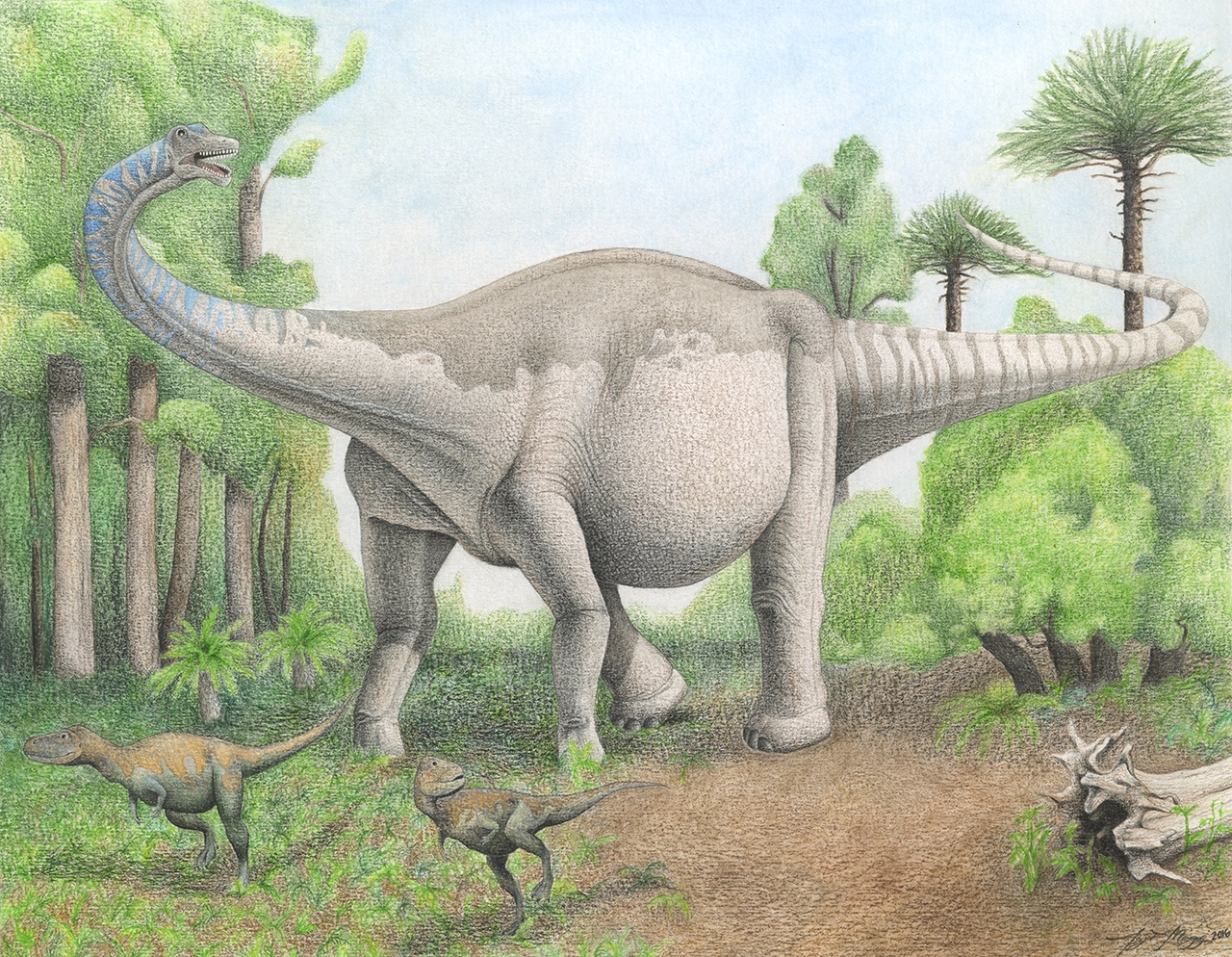

“Dr. George Harlow has dedicated his career to furthering the science of Mineralogy and nurturing the mineral collection, exhibits and outreach programs of the American Museum of Natural History. I am very pleased to see him honored as the recipient of the 2015 Carnegie Mineralogical Award,” says Marc L. Wilson, Collection Manager and Head of the Section of Minerals at Carnegie Museum of Natural History.

Harlow has spent his entire career (38 years) at the American Museum of Natural History in New York City. He currently holds the position of Curator of the Department of Earth and Planetary Sciences. His most recent concentration of academic research has been on the mineralogy, geology, and genesis of jadeite deposits in Mesoamerica. His previous research on the mineralogy of diamonds not only resulted in scholarly publications, but also led to a special traveling exhibit for the museum (The Nature of Diamonds) and an accompanying book. This major exhibition which opened at American Museum of Natural History in 1997 was extended to August 1998 and traveled to six other museums in the United States, Canada, and Japan.

Harlow is an active supporter of the science of mineralogy through an amalgam of outlets: publications, lectures, teaching, exhibit development, mentoring, and leadership in professional societies. He recently became the Vice President of the Mineralogical Society of America in 2016.

As a consistent leader in the advancement of collection computerization, Harlow has imaged and documented over 60,000 specimens at American Museum of Natural History for their new database and web presence that he is spearheading. Additionally, during his tenure, the collection has grown from 40,000 to approximately 116,000 specimens.

The Carnegie Mineralogical Award was established in 1987 by Carnegie Museum of Natural History and underwritten by Hillman Foundation. Previous recipients of the Carnegie Mineralogical Award include:

2014
Bryon N. Brookmyer
2013
Gloria A. Staebler
2012
Dr. George W. Robinson
2011
Dr. Jeffrey E. Post
2010
The Rochester Mineralogical Symposium
2009
Dr. Peter K.M. Megaw
2008
Dr. Frank C. Hawthorne
2007
Jeffrey A Scovil
2006
Richard C. Whiteman
2005
June Culp Zeitner
2004
Dr. Joel A. Bartsch
2003
Dr. Eugene S. Meieran
2002
Dr. Terry C. Wallace, Jr.
2001
Dr. Wendell E. Wilson
2000
Dr. F. John Barlow
1999
Sterling Hill Mining Museum
1998
Robert W. Jones
1997
Bryan K. Lees
1996
Dr. Cornelis (Kase) Klein
1995
Marie E. Huizing
1994
The Mineralogical Record
1993
Dr. Cornelius S. Hurlbut, Jr.
1992
Dr. Carl A. Francis
1991
Dr. Miguel A. Romero Sanchez
1990
Paul E. Desautels
1989
Dr. Frederick H. Pough
1988
Dr. John Sinkankas
1987
The Tucson Gem & Mineral Society

Nominations are now being accepted for the 2016 Carnegie Mineralogical Award. Private mineral enthusiasts and collectors, educators, curators, mineral clubs and societies, museums, universities, and publications are eligible. For a nomination form, go to http://www.carnegiemnh.org/minerals/award.html or contact by mail: Marc L. Wilson, Minerals and Gems, Carnegie Museum of Natural History, 4400 Forbes Ave., Pittsburgh, PA 15213-4080, by phone at 412.622.3391, or by email at WilsonM@carnegiemnh.org.

Filed Under: Press Release

January 20, 2016 by wpengine

Pterosaurs: Flight in the Age of Dinosaurs

pterosaurs exhibiton

Carnegie Museum of Natural History will feature the largest pterosaur exhibition ever mounted in the United States running from January 30 to May 22, 2016. Pterosaurs, on loan from American Museum of Natural History in New York, highlights the latest research by Museum scientists and leading paleontologists around the world. It features rare pterosaur fossils and casts as well as life-size models, videos, and interactive exhibits that immerse visitors in the mechanics of pterosaur flight, including a motion sensor-based interactive that allows you to use your body to “pilot” two species of pterosaurs through virtual prehistoric landscapes.

“Most people find it very interesting to learn that Pterosaurs were not dinosaurs,” said Eric Dorfman, Director of the Carnegie Museum of Natural History. “They were close relatives of dinosaurs and the first back-boned animals to evolve powered flight.”

Interactive Exhibits

Several interactive exhibits help visitors see the world from a pterosaur’s-eye view. In Fly Like a Pterosaur, visitors can “pilot” two species of flying pterosaurs over prehistoric landscapes complete with forest, sea, and volcano in a whole-body interactive exhibit that uses motion-sensing technology. For a different perspective on flight, visitors can experiment with the principles of pterosaur aerodynamics in an interactive virtual wind tunnel that responds to the movements of their hands. Five iPad stations offer visitors the inside scoop on different pterosaur species—Pteranodon, Tupuxuara, Pterodaustro, Jeholopterus, and Dimorphodon —with animations of pterosaurs flying, walking, eating and displaying crests; multi-layered interactives that allow users to explore pterosaur fossils, behavior, and anatomy; and video clips featuring commentary from curators and other experts.

Unique Ability to Fly

Focusing on pterosaurs’ unique ability to fly, the exhibition also draws comparisons between pterosaurs and living winged vertebrates: birds and bats. Pterosaurs needed to generate lift just like birds and bats, but all three animal groups evolved the ability to fly independently, developing wings with distinct aerodynamic structures. The short film “Adapted for Flight” offers viewers a look at the basic principles of pterosaur flight and aerodynamics. A spectacular pterosaur fossil cast known as Dark Wing, on view for the first time outside of Germany, features preserved wing membranes and reveals long fibers that extended from the front to the back of this Ramphorhynchus pterosaur’s wings to form a series of stabilizing supports. These muscle fibers probably helped pterosaurs adjust the tension and shape of their wings.

Diversified Sizes and Head Crests

“Perhaps the most surprising discovery of this exhibit is the staggering variations we see among pterosaurs,” said Matthew Lamanna, Assistant Curator of Paleontology. “Not just variation in body shapes and in size, some ranged from the size of a bird to that of a plane, but also in the extravagant crests found on the heads of some of these creatures.”

When pterosaurs first appeared more than 220 million years ago, the earliest species were about the size of a modern seagull, but the group evolved into an array of species ranging from pint-size to truly gargantuan, including species that were the largest flying animals ever to have existed. Diversifying into more than 150 species of all shapes and sizes spreading across the planet over a period of 150 million years. Full-size models will be displayed including one of the largest and one of the smallest pterosaur species ever found: the colossalTropeognathus mesembrinus, with a wingspan of more than 25 feet, soaring overhead and the sparrow-sizeNemicolopterus crypticus, with a wingspan of 10 inches. Visitors can marvel at a full-size model of a 33-foot-wingspan Quetzalcoatlus northropi—the largest pterosaur species known to date—and the fossil remains of a giant pterosaur unearthed in Romania just two years ago, which point to a new species that was even stronger and heavier than Quetzalcoatlus.

Fossils

The exhibition features dozens of casts and replicas of fossils from the American Museum of Natural History collection and from museums around the world in addition to eight real fossil specimens, including a spectacular cast fossil that has never before been exhibited outside of Germany and the cast remains of an unknown species of giant pterosaur unearthed in Romania in 2012 by scientists working in association with the American Museum of Natural History.

Preservation

For paleontologists, pterosaurs present a special challenge: their thin and fragile bones preserve poorly, rendering pterosaur fossils even rarer than those of dinosaurs and other prehistoric animals. Several exhibits break down the fossilization process to show how the composition of pterosaur bones affects their potential for preservation. Visitors will also find out about conditions that produce particularly valuable fossils and view an exquisitely preserved three-dimensional fossil of Anhanguera santanae. The pterosaur, which died and fell into a lagoon in Brazil 110 million years ago, was buried by fine sediment and the mud formed a hard shell called a nodule around the remains, protecting and preserving the pterosaur for posterity.

Lifestyles: From Land to Air

Since pterosaur fossils are extremely scarce, and their closest living relatives—crocodiles and birds—are vastly different, even the most elementary questions of how these extinct animals flew, fed, mated, and raised their young are still mysteries. But recent discoveries have provided new clues to their behavior. Like other flying animals, pterosaurs spent part of their lives on the ground. Visitors will see a fossil track way from Utah that reveals pterosaurs walked on four limbs and may have congregated in flocks. A cast of the first known fossil pterosaur egg, found in China in 2004, shows that pterosaur young were likely primed for flight soon after hatching. What did pterosaurs eat? An interactive display shows their feeding habits varied widely, ranging from Pteranodon diving for fish, to Jeholopterus chasing insects through the air, to Pterodaustro straining food from water like a modern flamingo. A one-of-a-kind fossil treasure shows a Pteranodon’s last meal—the remains of a fish stuck in its mouth, preserved for 85 million years.

Pterosaurs likely lived in a range of habitats. But pterosaur fossils most easily preserved near water, so almost all species known today lived along a coast. The exhibition features a large diorama showing a re-creation of a dramatic Cretaceous seascape based entirely on fossil evidence and located at the present-day Araripe Basin in northeast Brazil. Two Thalassodromeus pterosaurs with impressive 14-foot wingspans swoop down to catch Rhacolepis fish in their toothless jaws, while a much larger Cladocyclus fish chases a school of Rhacolepis up to the surface. In the background, visitors will see an early crocodile and a spinosaurid dinosaur, which shared the habitat with pterosaurs.

Other fossils and casts offer additional clues about how pterosaurs lived and behaved. These include a fossil cast of Sordes pilosus, the first species to show that pterosaurs had a fuzzy coat and were probably warm-blooded, just like birds and bats, and even some dinosaurs. A gallery display illustrates the incredible variety of pterosaur crests—from the dagger-shaped blade that juts from the head of Pteranodon longiceps to Tupandactylus imperator’s giant, sail-like extension. Visitors can consider the many theories scientists have about how crests might have been used: for species recognition, sexual selection, heat regulation, steering through the air, or some combination of these functions.

Pterosaurs: Flight in the Age of Dinosaurs is organized by the American Museum of Natural History, New York (www.amnh.org). Locally, this exhibition is supported by Highmark Blue Cross Blue Shield, Dollar Bank, Pennsylvania Leadership Charter School, Baierl Subaru, Dunkin’ Donuts, and Bill Few Associates Wealth Management.

Filed Under: Press Release

January 18, 2016 by wpengine

Paleontologists Announce Discovery of New Dinosaur Notocolossus, One of the Largest Known Land Animals

Researchers have discovered a gigantic new species of dinosaur that is among the largest yet known to science. Named Notocolossus gonzalezparejasi, the new creature provides key information about the hind foot of giant titanosaurs, which are widely regarded as the most massive land animals that have ever existed. Notocolossus was described from fossil bones belonging to the back, tail, forelimb, and pelvis, plus a complete ankle and foot. The paper describing the discovery appears today in Scientific Reports, a freely-accessible journal from the publishers of Nature.

The two described fossil skeletons of Notocolossus were unearthed in southern Mendoza Province, Argentina, from rocks laid down late in the Cretaceous Period, roughly 86 million years ago. Both specimens were discovered by the study leader and project director, Argentine paleontologist Dr. Bernardo González Riga of CONICET (the Consejo Nacional de Investigaciones Científicas y Técnicas), IANIGLA, and the Laboratorio de Dinosaurios of the Facultad de Ciencias Exactas y Naturales of the Universidad Nacional de Cuyo (UNCUYO) in Mendoza Province. Other members of the research team include Dr. Matt Lamanna of Carnegie Museum of Natural History in Pittsburgh, USA, and three other Argentine paleontologists: Leonardo Ortiz David and Juan Pedro Coria of CONICET-IANIGLA and the UNCUYO Laboratorio de Dinosaurios and Dr. Jorge Calvo of the Centro Paleontológico Lago Barreales of the Universidad Nacional del Comahue in Neuquén Province.

According to Dr. González Riga, “Giant titanosaurs were the heaviest terrestrial creatures that ever lived. But the hind feet of these dinosaurs—which are critical for understanding how they stood and moved—were not completely known until now. Now we have new evidence that helps to solve this mystery.”

Titanosaurs are an important but puzzling group of dinosaurs. They are a type of sauropod, the huge, long-necked, long-tailed plant-eaters that many people think of when they hear the word “dinosaur.” Comprising more than 60 named species, titanosaurs lived on every continent and ranged in size from the weight of a cow to at least the weight of the heaviest humpback whales. They were the most common large herbivores in the Gondwanan (i.e., Southern Hemisphere) continents during the Cretaceous Period, the third and final time period of the Mesozoic Era, or Age of Dinosaurs. Despite their extraordinary species richness and diversity in body size, many aspects of titanosaur anatomy, evolution, behavior, and ecology are not well understood. This is due largely to the fact that most of these dinosaurs are known from woefully incomplete fossils, a situation that—with only a few exceptions, such as the still-unnamed species unveiled last week at New York’s American Museum of Natural History—is particularly pronounced in giant titanosaurs. Says Dr. Lamanna, “Most of the very biggest titanosaurs are known from just a few bones, which has made it really hard for paleontologists to learn much about them.”

Notocolossus is no exception in this regard; nevertheless, evidence suggests that it was among the largest titanosaurs, and therefore one of the heaviest land animals, yet discovered. Although the incompleteness of the skeleton of the new sauropod has prevented scientists from making precise estimates of its size, its humerus, or upper arm bone, is 1.76 m (5 ft 9 in) in length, which is longer than that of any other titanosaur for which this bone is known, including other giants such as Dreadnoughtus, Futalognkosaurus, and Paralititan. If, as is likely, the body proportions of Notocolossus were comparable to those of better preserved titanosaurs, the new beast was probably around 25–28 m (82–92 ft) in length and may have weighed between 40,000 and 60,000 kg (44–66 short tons, as much as roughly 9–13 zoo elephants put together). The gargantuan size and Argentinean location of the new titanosaur were the inspiration for its genus name, Notocolossus, which translates to “southern giant.” The species name is in honor of Jorge González Parejas, a Mendoza-based lawyer who has made significant contributions to the protection of that region’s paleontological heritage.

The enormous sizes attained by gigantic sauropods have generated a great deal of interest in the biology of these dinosaurs. Notocolossus is the first truly giant titanosaur for which the hind foot skeleton is known in its entirety. Interestingly, its foot shows anatomical peculiarities relative to those of other titanosaurs—such as an exceptionally short and robust, uniform construction—that may well be adaptations for supporting its extraordinary bulk. Moreover, the foot of the new creature contains a small number of bones, underscoring the fact that titanosaurs had the most reduced toes of all sauropods. Why these huge creatures apparently shrunk their toes remains a puzzle, but it stands in stark contrast to the evolutionary trend observed in another group of colossal land animals – the Proboscidea, which includes elephants and their close relatives. Rather than decreasing their number of toe bones, proboscideans actually increased the number of bones in their feet over the course of their evolution. The hind feet of elephants and sauropods show that these creatures evolved different skeletal strategies for support ing their massive bodies. “Now that we have the whole foot of a giant titanosaur, we can learn more about how these dinosaurs were able to carry more weight around than any other land animal in the history of life,” notes Dr. González Riga. “Argentina was truly the land of giants during the Cretaceous – and Notocolossus gives us new evidence on how these giants got so big.”

Notocolossus life reconstruction. Credit: Taylor Maggiacomo, Carnegie Museum of Natural History and Carnegie Mellon University


For more information, contact:

Universidad Nacional de Cuyo (Argentina)

Dr. Bernardo González Riga (first author and study leader)
CONICET, Laboratorio de Dinosaurios, Universidad Nacional de Cuyo, Mendoza, Argentina
bgonriga@yahoo.com.ar
bgonzalez@fcen.uncu.edu.ar
54-9-261-6376665 (mobile)
54-9-261-4325484 (office)

Prof. Damian Berridy
Secretario de Relaciones Institucionales y Comunicación, Facultad de Ciencias Exactas y Naturales, Universidad Nacional de Cuyo, Mendoza, Argentina
damianberridy@gmail.com
Carnegie Museum of Natural History (USA)

Dr. Matthew Lamanna (second author)
Section of Vertebrate Paleontology, Carnegie Museum of Natural History, Pittsburgh, Pennsylvania, USA
412-592-3361 (mobile)
412-578-2696 (office)
lamannam@carnegiemnh.org

Kathleen Bodenlos
Director of Marketing, Carnegie Museum of Natural History, Pittsburgh, Pennsylvania, USA
412-622-3361 (office)
bodenlosk@carnegiemnh.org

Filed Under: Press Release

sidebar

About

  • Mission & Commitments
  • Directors Team
  • Museum History

Get Involved

  • Volunteer
  • Membership
  • Carnegie Discoverers
  • Donate
  • Employment
  • Events

Bring a Group

  • Groups of 10 or More
  • Birthday Parties at the Museum
  • Field Trips

Powdermill

  • Powdermill Nature Reserve
  • Powdermill Field Trips
  • Powdermill Staff
  • Research at Powdermill

More Information

  • Image Permission Requests
  • Science Stories
  • Accessibility
  • Shopping Cart
  • Contact
  • Visitor Policies
One of the Four Carnegie Museums | © Carnegie Institute | Privacy Policy | Terms of Use | Accessibility
Rad works here logo