• Skip to primary navigation
  • Skip to main content
  • Skip to primary sidebar

Carnegie Museum of Natural History

One of the Four Carnegie Museums of Pittsburgh

  • Visit
    • Buy Tickets
    • Visitor Information
    • Exhibitions
    • Events
    • Dining at the Museum
    • Celebrate at the Museum
    • Powdermill Nature Reserve
    • Event Venue Rental
    • Gift Cards
  • Learn
    • Field Trips
    • Educator Information
    • Programs at the Museum
    • Bring the Museum to You
    • Guided Programs FAQ
    • Programs Online
    • Climate and Rural Systems Partnership
  • Research
    • Scientific Sections
    • Science Stories
    • Science Videos
    • Senior Science & Research Staff
    • Museum Library
    • Science Seminars
    • Scientific Publications
    • Specimen and Artifact Identification
  • About
    • Mission & Commitments
    • Directors Team
    • Museum History
  • Tickets
  • Give
  • Shop

Enjoy the Museum from Home via our Blog

Can't make it to the museum in person? We've done our best to help cultivate resources for you to enjoy from home. Activities for the whole family, different ways to experience our exhibitions and more are included in these blogs.

November 18, 2020 by wpengine

Seldom seen—archaeological textiles in the eastern United States

In my very first “Introduction to Anthropology” class, the professor, a cultural anthropologist, tried to steer us away from archaeology by telling us it was a childish pursuit for those who liked to play in the mud and hunt for treasure. That sounded like it was right up my alley.  I ended up spending my summers and an internship term working in Plymouth, Massachusetts, doing historical archaeology.  In addition, I also spent a lot of time in the collections of the college anthropology museum, found that I especially loved working with textiles and basketry, and eventually learned to weave both.

Working in the eastern United States, it’s hard to find archaeological textiles; the very world is against it. Acid soils and a temperate climate create conditions where little organic material survives to be studied, except in the rare instances of charred material or pieces in contact with copper, or still rarer, textiles deposited in dry caves. Even then the evidence is usually fragile and fragmentary.

What eastern archaeologists find is a lot of pottery, and luckily for us, much of it has been impressed with cordage or fabric. As part of the pottery making process, clay coils were consolidated by being beaten with a wooden paddle, a tool frequently wrapped with cordage or fabric. This technique may have initially developed to create decoration, but the resulting roughened surface also made for a better grip, and the increased surface area caused pots to heat quicker in cooking.

Archaeologists study the long-vanished textiles by making durable impressions of pottery surfaces with modeling clay or dental impression material. The information revealed through the thorough study of such impressions is not limited to the determination of just what type of cord or textile was used in making the original object.

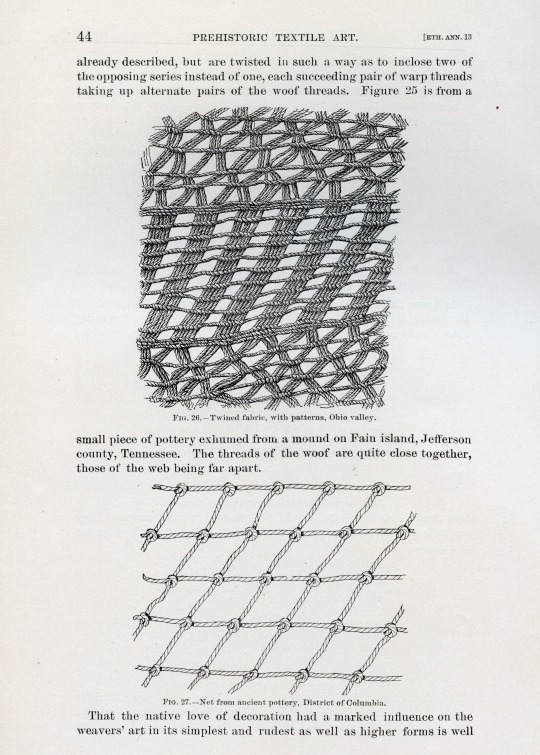
The making of pottery impressions to look at textiles was first published by the pioneering archaeologist, W.H. Holmes, in “Prehistoric Textile Art of the Eastern United States.” Holmes started his scientific career as an illustrator, and included schematic drawings of the textile structures in his article.
image
Textile illustrations by Holmes.

When I worked at what is now the Florida Museum of Natural History, I got interested in the earliest pottery found in Florida, from what is known as the Orange culture. Dating from about 1500 BCE, these distinctive pieces were thick and very simply decorated. Their most interesting feature, at least to me, was that the clay pot bottoms had been pounded flat on matting, and the applied force made deep impressions. At least three different techniques were used, with variations and patterns within each, including several different matting materials.
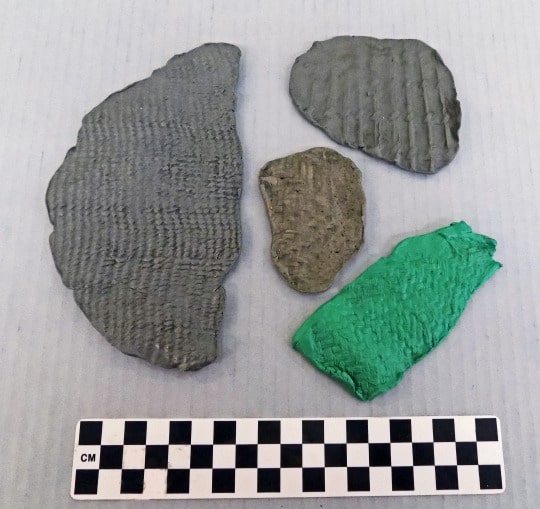
Mat impressions from flat-bottomed pots, Tick Island, Volusia County, FL.

In one instance, a thick pot sherd had a smooth top surface, but a deep dent in the bottom; evidence the potter hadn’t removed a small pebble that was under the mat before the pot making.

Many studies have been done since W.H. Holmes, looking at such things as direction of the twist in cordage—a majority of right-handed or left-handed twist could indicate a culture-wide preference. Similar twist types in neighboring geographic areas might indicate related cultural or kin groups, while different twist types could indicate a cultural boundary. The type of material used [soft fiber, hard rods, flat cane-like splints] may indicate cultural preference, or perhaps the materials available in the immediate environment.

One study by Dr. Penelope Drooker, Mississippian Village Textiles at Wickliffe, introduced me both to some incredible textile impressions in pottery and the information that can be gleaned from them. Drooker’s work also analyzed and illustrated some textiles preserved in dry caves of eastern Tennessee, part of the Cherokee people’s ancestral lands. Among the materials she studied were skirts and bags from the Cliffty Creek Cave, artifacts now housed at the Smithsonian Institution. Working with the Museum of the Cherokee Indian in Cherokee, NC, I was able to re-introduce members of the tribe to one of the oldest weaving techniques of their ancestors. A few tribal members have visited the Smithsonian to photograph Cliffty Creek Cave pieces [as have I], and are now making skirts for use in festivals and pageants. Several are making decorated bags for their own use, and for sale.
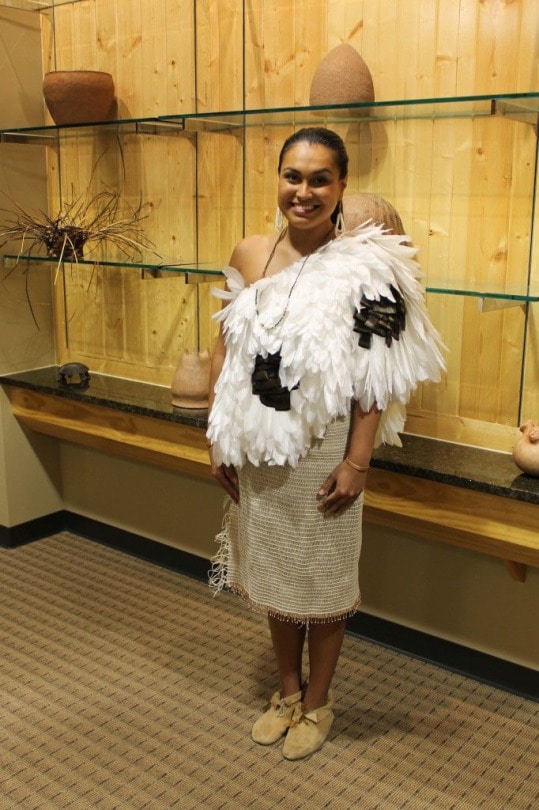
Kara Martin McKinney wearing reproduction of Cliffty Creek Cave skirt, and reproduction woman’s feather cape. Image Credit: Scott McKie, reporter for the Cherokee One Feather weekly newspaper in Cherokee, NC.

One of the great things about textiles or pottery is that you could spend your entire life studying them, and still not learn all that these materials embody–techniques, cultural traditions, and art, all rolled into one. My grandfather, who kept his faculties up to his death in his mid-90s, said, “The day you stop learning is the day you start to die.” I try to live by that.

Deborah Harding is the Collection Manager of the Section of Anthropology at Carnegie Museum of Natural History. Museum employees are encouraged to blog about their unique experiences and knowledge gained from working at the museum.

References and further reading:

Drooker, Penelope Ballard 1992  Mississippian village textiles at Wickliffe,  University of Alabama Press: Tuscaloosa and London

Holmes, W. H. 1896 “Prehistoric Textile Art of the Eastern United States” Thirteenth Annual Report of the Bureau of American Ethnology to the Secretary of the Smithsonian Institution 1891–1892, Government Printing Office Washington, pages 3–46.

Milanich, Jerald T. and Charles H. Fairbanks 1980 Florida Archaeology Academic Press: New York

Petersen, James B [editor] 1996 A most indispensable art: native fiber industries from Eastern North America, University of Tennessee Press: Knoxville

http://www.phmc.state.pa.us/portal/communities/archaeology/native-american/early-middle-woodland-period.html

Related Content

The Unseen Museum: Ka’apor Necklace
Super Science: The Virtual Amazon

Ancient Egypt Through its Pottery

Filed Under: Blog Tagged With: anthropology, Deborah Harding, Museum from Home, Science News

November 13, 2020 by wpengine

Collected on this Day 105 years ago

So long, leaves.

Autumn has fallen.

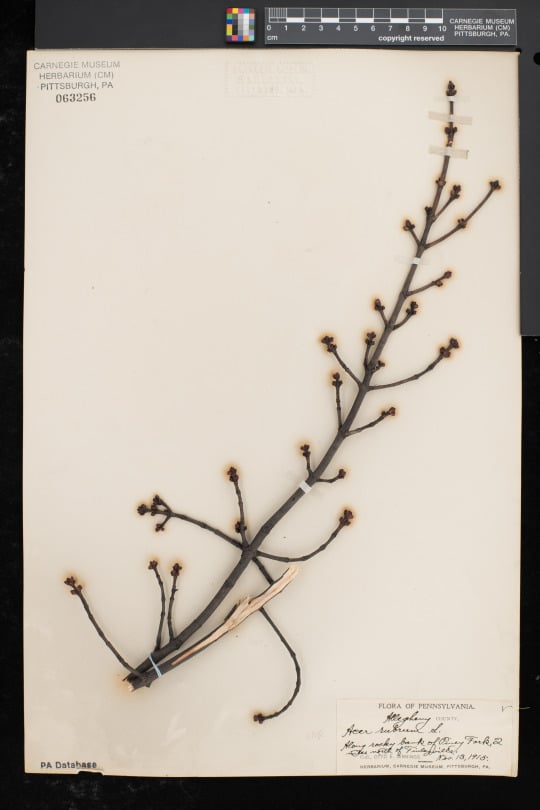
specimen of red maple on herbarium sheet

This specimen of red maple (Acer rubrum) was collected on November 13, 1915 by Otto Jennings near Finleyville, Pennsylvania (about 30 miles south of Pittsburgh).  Jennings was an influential botany curator (and biology professor at University of Pittsburgh and director of Carnegie Museum, among many other roles through his many decades career at the museum).

Just imagine how beautifully red these leaves must have been.   And you’ll have to imagine because this specimen is just twigs!

But upon closer look, the twigs have a lot to admire.  As with other deciduous trees in Pennsylvania, the buds are primed and ready.  In spring (as early as March for red maple!), these buds will swell and flowers will emerge.  Leaves will follow.

But first, we wait it out through winter.

Pay attention to tree buds this winter. They have a lot to say.

Find this red maple specimen here (along with 512 others!).

Check back for more! Botanists at the Carnegie Museum of Natural History share digital specimens from the herbarium on dates they were collected. They are in the midst of a three-year project to digitize nearly 190,000 plant specimens collected in the region, making images and other data publicly available online. This effort is part of the Mid-Atlantic Megalopolis Project (mamdigitization.org), a network of thirteen herbaria spanning the densely populated urban corridor from Washington, D.C. to New York City to achieve a greater understanding of our urban areas, including the unique industrial and environmental history of the greater Pittsburgh region. This project is made possible by the National Science Foundation under grant no. 1801022.

Mason Heberling is Assistant Curator of Botany at Carnegie Museum of Natural History. Museum employees are encouraged to blog about their unique experiences and knowledge gained from working at the museum.

Related Content

Collected On This Day 98 Years Ago (Chestnuts)

Who Likes Teaberry? Collected 56 Years Ago

Ask a Scientist: How do you find rare plants?

Filed Under: Blog Tagged With: Botany, botany hall, collected on this day, Hall of Botany, Mason Heberling, Museum from Home, Science News

November 12, 2020 by wpengine

Places to Visit During a Pandemic

Pandemic got your down? Don’t know what to do with your family on the weekend? Nature might be the answer!  During the pandemic places with enough space have been hard to find, but I’ve found the following three outdoor destinations to be perfect for keeping 6 feet apart.

1. Moraine State Park

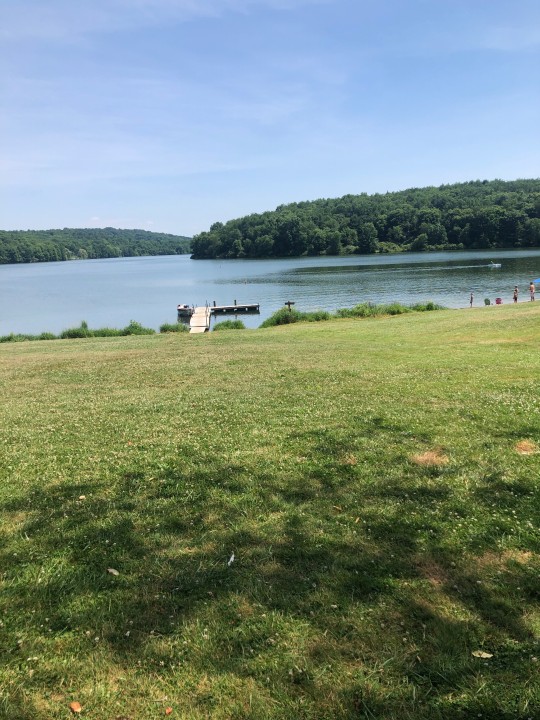
Moraine has something for the whole family to enjoy, from swimming to hiking. Lake Arthur, the park’s centerpiece, is much bigger than expected from looking at the park map! My family always loves fishing at Moraine because there are plenty of fish for us to catch, from bluegills to bass. Besides fishing another one of our favorite activities to do at Moraine is geocaching! If you are not familiar with geocaching, I highly suggest it. This outdoor interactive challenge is basically a “treasure” hunt hike! Participants can bring small toys or trinkets to switch out with the ones you discover within the small hidden containers, or caches. To reach these caches, you need to plug coordinates into a GPS unit and follow them to your destination. The activity is great for kids because sometimes hikes can be hard with small children, and the trinkets in the caches are a great way for them to stay engaged.  We plan for the day and pack a big lunch with lots of snacks. Maintaining social distancing at Moraine is easy because the park has tons of picnic areas to choose from.  Due to the pandemic we have visited there a lot more this summer!

lake with a dock on a sunny day

2. Keystone Safari

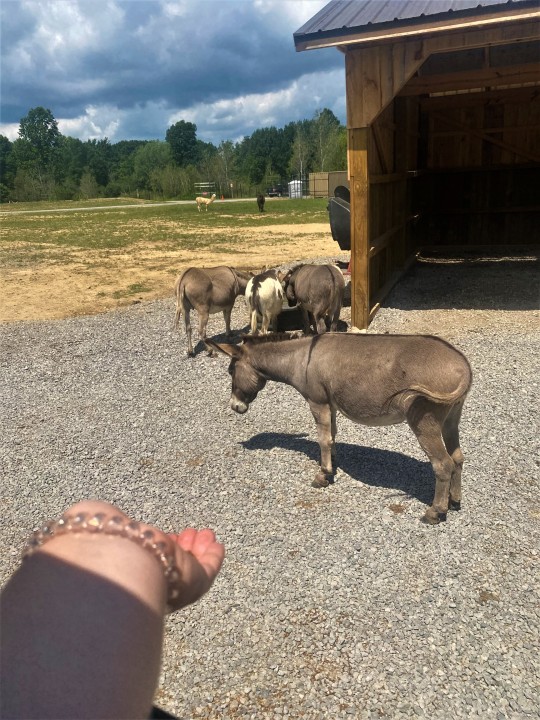
Keystone Safari is a place I never heard of until this year when my sister purchased a house about a mile away. I wished I had known about it sooner! It is a huge zoo near Grove City where you can encounter all sorts of different animals from the tiniest butterfly to the tallest giraffe. You can feed those animals if you do the walk-through park which has all sorts of other amenities such as ziplines. This year, due to COVID-19 the park added a feature where you can drive through a separate area of the park and feed all sorts of animals as they walk up to your vehicle. We decided to try it out since it was the ultimate social distancing activity!  It was such a cool experience. The park provides a bucket of food for you as you drive through the safari, and as you put your hand out with food the animals will walk right up to you. My niece is 3 and could not stop smiling and giggling the whole time! This was undoubtedly one of our favorite activities during the pandemic.

hand reaching out towards donkeys

3. Neighborhood Walks

Sometimes people forget they can enjoy nature right outside their own front door. Neighborhood walks are an out-of-the-house activity the whole family can get involved in, especially during the pandemic. Every time I walk around my neighborhood, I notice new things in nature. Whether the sighting is an interesting bird or a scary looking spider, I always learn something new. Sometimes, if you are lucky enough to snap a good picture, you can use an app called iNaturalist to help identify unknown life forms. The app is free and easy to use. You upload a picture, and other nature enthusiasts can help identify it!  My family uses this app all the time, especially for flowers and different spiders we see around our neighborhood. It makes a walk around your neighborhood ten times more fun. This is a great activity and fully compliant with COVID-19 guidelines.

During the pandemic everyone has been trying new things. Exploring new places in nature has been my favorite one and it is something people of all ages can enjoy. I love finding new places to go and cannot wait to discover more social distance friendly activities. Hopefully others can enjoy these places too!

Claire Ianachione is a Teen Volunteer in the Education Department. Museum employees, volunteers, and interns are encouraged to blog about their unique experiences and knowledge gained from working at the museum.

Related Content

The 12,000-Year Journey of the Cheeseburger

Looking for Bugs in Your Yard

Fantastic Beasts and Where to Find Them in Real Life

Filed Under: Blog Tagged With: Claire Ianachione, Education, Museum from Home

November 11, 2020 by wpengine

Veterans Day

cover of the book Birding Babylon: A Soldier's Journal from Iraq by Jonathan Trouern-Trend

Every November, Veterans Day reminds us to acknowledge the sacrifice of fellow workers who have served in our Nation’s military. In recent years, I’ve found books can sometimes create enough common ground for such recognitions to go beyond the simple statement, “Thank you for your service.”

Birding Babylon, a pocket-sized Sierra Club book published in 2006, enabled me to learn more about CMNH Finance Manager Brian Nusida’s service as a Marine Squad Leader during two combat tours in Iraq. The book is a simple compilation of bird sighting blog posts by Sergeant First Class Jonathan Trouern-Trend, of the Connecticut National Guard, during his year-long deployment to Iraq. After reading the book, I left the copy on Brian’s desk while dropping off a routine expense report. “I didn’t know the names,” Brian reported the next time we passed in a museum hallway, “but I recognized some of the birds.” The exchange was the first of an ongoing series of conversations that have allowed me to begin understanding both the risks he faced and the responsibilities he shouldered as an American soldier.

In our most recent exchange Brian updated me on the fate of the Birding Babylon copy. “The book you left for me is currently in Afghanistan although I cannot say with who or their branch of service. I believe 3 Marines and a soldier have had that book with them over there. Some even signed the first flap before returning it. It’s a well-traveled book.”

A book I borrowed from Carnegie Library sparked a conversation with Security Guard David Lanier about his Air Force service decades ago in Vietnam. In the spring of 2018 when the Pittsburgh Arts and Lectures series brought author and University of Southern California professor Viet Thanh Nguyen to speak at Carnegie Music Hall, I prepared for the event by reading one of his recent books titled, Nothing Ever Dies: Vietnam and the Memory of War. Within that scholarly work, as part of a discussion of Zippo Lighters as icons of American military involvement in Vietnam, Nguyen refers to a 2007 publication titled Vietnam Zippos: American Soldiers’ Engravings and Stories (Sherry Buchanan, University of Chicago Press). The library had a copy of the book, and one morning when I set the copy on the counter of the Security Console to sign-out some keys, Dave took note of the cover and immediately reached for it saying, “Hey! I had one of those.” Once again, the book served as an ice breaker for later conversations about risk and responsibility of military service.

More than twenty-four years ago, Carnegie Magazine set a standard for broad sharing of information about the past service of museum employees in an article by freelance writer Mike Sajna, titled, From the Sands of Iwo Jima to Carnegie Museums: Our Guards in World War II. You can read the article here.

Patrick McShea works in the Education and Visitor Experience department of Carnegie Museum of Natural History. Museum employees are encouraged to blog about their unique experiences and knowledge gained from working at the museum.

Related Content

What Does Climate Change Mean for Western PA Farmers?

Teaching in a Pandemic

Filed Under: Blog Tagged With: Museum from Home, Pat McShea

November 9, 2020 by wpengine

Thanksgiving and Nutritional Mineralogy

by Travis Olds

We each have plenty to be thankful and hopeful for this year, but did you know that our traditional American Thanksgiving feast “with all the fixings,” would not be possible without minerals or the people who mine, process, and manufacture the mineral-related materials found in our kitchens?

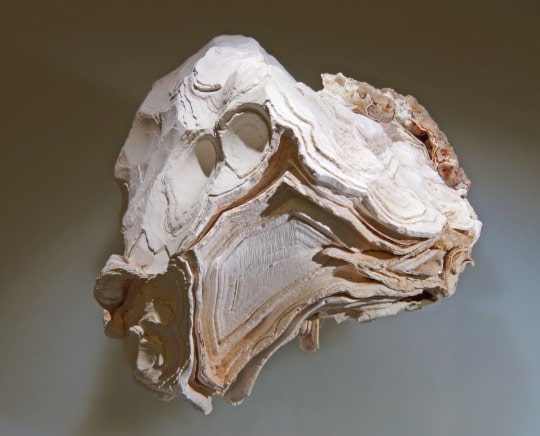
Kaolinite
Kaolinite. Photo Credit: Debra Wilson

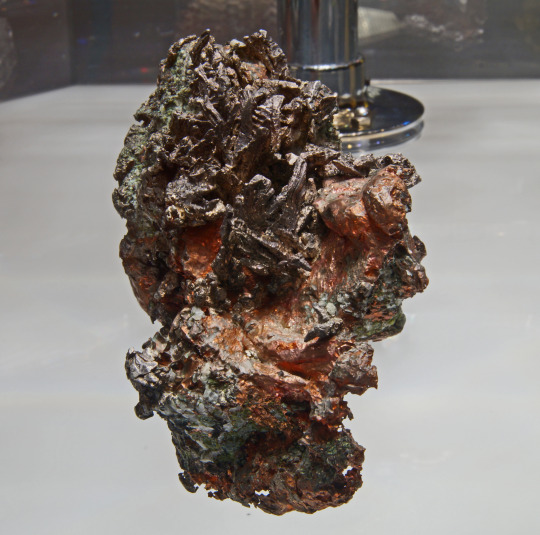
You should thank miners, in part, for the kaolinite clay used to make the fine porcelain china or ceramic plates at your dinner table. When kaolinite is fired in the factory, it partially melts, and crystals of an aluminum-silicate mineral called mullite that hold the ceramic together and give it high heat resistance form on cooling. Also, whether you eat and serve food with silver, steel, or aluminum utensils, extensive work and energy were needed to extract and refine the silver, iron, or aluminum metal necessary for their creation. Silver ore, for example, usually contains many other elements, including lead, zinc, copper, and gold, which can require lengthy chemical or electrochemical processes to separate.

silver on copper
Silver on copper. Photo credit: Debra Wilson

There might also be some unwanted mineral interactions occurring at the dinner table. If your gluttonous Uncle Ned consumes too much salt (sodium) with his gravy and potatoes (high in oxalate) this year, his body may begin to form kidney stones; which are biologically formed minerals made up of crystals of the phosphate mineral struvite and the calcium oxalate mineral whewellite. These biominerals, which can form when your bladder isn’t fully emptied after a sodium or oxalate-rich meal, can be extremely painful, so be sure to drink plenty of water with your meal. Large crystals take time to grow and drinking more water can reduce the concentration of sodium and oxalate in your body, slowing growth of the kidney stones.

Turkey meat, the mainstay of many Thanksgiving meals, also depends heavily on minerals. Did you know that turkeys actually need to swallow small rocks and pebbles, which are made of minerals, in order to digest their food? “Gastroliths,” or stomach stones, are used by other species of birds, reptiles, amphibians, worms, whales, and even some fish to crush their food and provide more nutrients! Fortunately, we humans have a variety of enzymes and strong stomach acids to break down nutrients in the food we eat.

A surprising amount of nutritional science is applied to raising turkeys; their diet is closely monitored and controlled for proper protein and “mineral” content so that they grow large. You have likely heard the term “mineral” applied to many of our dietary items as well, from mineral water, to a variety of products being fortified with vitamins and minerals, or even the advice that it’s important to maintain a healthy balance of minerals in your diet. The term is somewhat misleading because “minerals” in this sense typically refers to individual atomic elements such as potassium or iron, or to other compounds containing these elements, rather than actual minerals in the strict sense. To a mineralogist like me, minerals are naturally occurring crystalline solids made from a specific combination of elements.

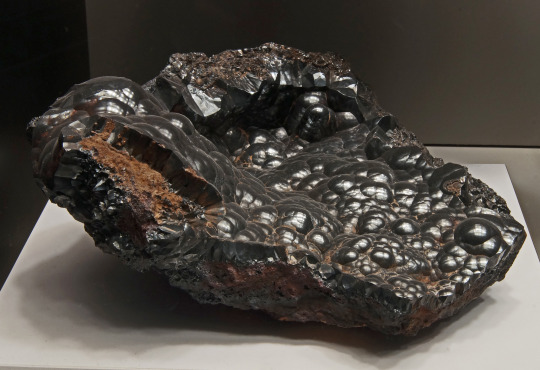
hematite
Hematite. Photo credit: Debra Wilson

Most often, the elements essential for our diet have been pre-digested, extracted or processed by another plant or animal, or have been chemically separated from a mineral source that makes it easier for our bodies to absorb. For example, most rice and cereal in the U.S. is fortified with B-vitamins and iron with a coating of finely ground nutrient powder. While the source of iron used in the fortifying powder varies, it all originates with the iron-oxide minerals hematite and goethite. Plants, bacteria, or stomach acids break down these minerals into iron cations that are easier for our body to process.

Thanksgiving vegetable dishes deserve special attention because plants can be the best sources for certain nutrients. In many cases, fruits and veggies grown on the farm also need help with their diet. Feldspar minerals present in soil hold on strongly to certain elements like K, more commonly known as potassium, making it hard for plants to extract this element. Farmers address this problem by using fertilizers like manure, containing predigested and readily absorbed phosphorous, nitrogen, and potassium, to produce a bountiful harvest

This year, please extend a bit of thankfulness to minerals, but mostly give thanks and recognition to the people that work hard to make your Thanksgiving possible; be it a miner, factory worker, your grocer, butcher, farmer, doctor, or all those working behind the scenes and on the front lines that keep us happy, healthy, and well fed.

Travis Olds is Assistant Curator of Minerals at Carnegie Museum of Natural History. Museum employees are encouraged to blog about their unique experiences working at the museum.

Related Content

Ask a Scientist: What is biogeochemistry? 

Why Do Leaves Change Color?

Beauty From the Ashes

Carnegie Museum of Natural History Blog Citation Information

Blog author: Olds, Travis
Publication date: November 9, 2020

Share this post!

  • Share on Twitter Share on Twitter
  • Share on Facebook Share on Facebook
  • Share on Pinterest Share on Pinterest
  • Share on LinkedIn Share on LinkedIn
  • Share on Reddit Share on Reddit
  • Share via Email Share via Email

Filed Under: Blog Tagged With: gems and minerals, Hillman Hall of Minerals and Gems, minerals, minerals and gems, Museum from Home, Science News, Section of Minerals, Travis Olds

November 9, 2020 by wpengine

The Surrounding Trees Whispered with Their Leaves

A fictional short story about a new era of inter-being communication and earth healing from past human mistakes.

two children on bicycles riding on a path in the woods

As a transdisciplinary scholar, I am always pushing myself to experiment with new ways of communicating and exploring ideas. This summer, I was invited with my long-term collaborator, Tomas Matza, associate professor of Anthropology at University of Pittsburgh, to contribute to a Post-Covid Fantasies blog series published by the journal American Ethnologist. The prompt was to “propose imagined or speculative future scenarios for how things could be better in a post-covid world than previously.”

Writing this fantasy illustrated to me the power of speculative fiction for confronting the complexity of the Anthropocene. Anthropocene problems – climate change, biodiversity loss, pandemics – are overwhelming. How are we possibly going to solve the myriad of challenges that we all face living on a crowded, hot planet? It’s hard enough these days just to go to the grocery store!  But with speculative fiction – or imagining futures, we can transcend the practical affairs of “real life” and let our minds wander freely. We can explore unthinkable changes and fantastical scenarios.

For me one of the most surprising aspects of the pandemic experience was how it caused society to stop, at least for a while. The sudden downturn in consumerism, production, travel, and consequently large drops in carbon emissions, was remarkable and unprecedented (documented in the scientific literature here and here). It made me wonder…how will society change in the 21st century? How might people in the future look back at the world today and see it from a radically different perspective? What will trigger the changes that result in our society becoming sustainable? Rather than being through incremental policy work and gradual change, perhaps it will come in a most unexpected way – a giant jump forward – caused by interspecies mingling beyond our wildest dreams?

I hope you enjoy our fantasy, and the other contributions in this series. And I encourage you to write your own post-covid fantasy! What do you imagine for the future?

Nicole Heller is Curator of Anthropocene Studies at the Carnegie Museum of Natural History. Museum employees are encouraged to blog about their unique experiences working at the museum.

Related Content

Anthropocene Living Room (Video)

The Inequity of Summer Heat

From the Allegheny to Our Kitchen Sinks

Filed Under: Blog Tagged With: Anthropocene, Anthropocene Living Room, Museum from Home, Nicole Heller, Science News

  • « Go to Previous Page
  • Page 1
  • Interim pages omitted …
  • Page 5
  • Page 6
  • Page 7
  • Page 8
  • Page 9
  • Interim pages omitted …
  • Page 26
  • Go to Next Page »

sidebar

About

  • Mission & Commitments
  • Directors Team
  • Museum History

Get Involved

  • Volunteer
  • Membership
  • Carnegie Discoverers
  • Donate
  • Employment
  • Events

Bring a Group

  • Groups of 10 or More
  • Birthday Parties at the Museum
  • Field Trips

Powdermill

  • Powdermill Nature Reserve
  • Powdermill Field Trips
  • Powdermill Staff
  • Research at Powdermill

More Information

  • Image Permission Requests
  • Science Stories
  • Accessibility
  • Shopping Cart
  • Contact
  • Visitor Policies
Stay in the loop! Sign up for our newsletter(s).
One of the Four Carnegie Museums | © Carnegie Institute | Privacy Policy | Terms of Use | Accessibility
Rad works here logo