• Skip to primary navigation
  • Skip to main content
  • Skip to primary sidebar

Carnegie Museum of Natural History

One of the Four Carnegie Museums of Pittsburgh

  • Visit
    • Buy Tickets
    • Visitor Information
    • Exhibitions
    • Events
    • Dining at the Museum
    • Celebrate at the Museum
    • Powdermill Nature Reserve
    • Event Venue Rental
    • Gift Cards
  • Learn
    • Field Trips
    • Educator Information
    • Programs at the Museum
    • Bring the Museum to You
    • Guided Programs FAQ
    • Programs Online
    • Climate and Rural Systems Partnership
  • Research
    • Scientific Sections
    • Science Stories
    • Science Videos
    • Senior Science & Research Staff
    • Museum Library
    • Science Seminars
    • Scientific Publications
    • Specimen and Artifact Identification
  • About
    • Mission & Commitments
    • Directors Team
    • Museum History
  • Tickets
  • Give
  • Shop

Enjoy the Museum from Home via our Blog

Can't make it to the museum in person? We've done our best to help cultivate resources for you to enjoy from home. Activities for the whole family, different ways to experience our exhibitions and more are included in these blogs.

August 24, 2020 by wpengine

Mesozoic Monthly: Gryposaurus

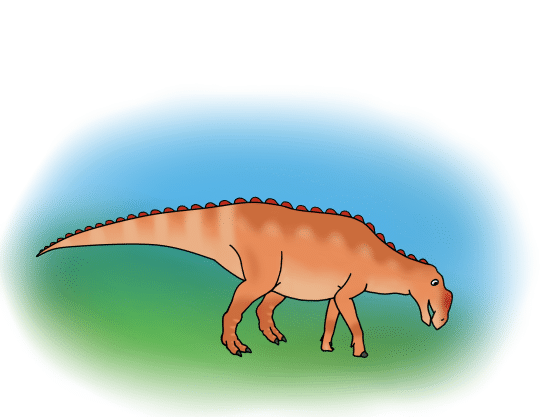
The Late Cretaceous-aged (~75 million-year-old) large-nosed North American hadrosaur (aka duck-billed dinosaur) Gryposaurus by ginjaraptor on DeviantArt.

Anyone who frequents the Pittsburgh area is familiar with ‘Pittsburghese,’ the regional dialect given full voice in what was once voted America’s ugliest accent (a fact that does not diminish our pride for it). One of my personal favorite Pittsburghese words is “nebby,” which translates to “nosy” for any non-local readers. “Nebby” can be used in a variety of contexts: the distant relative asking prying questions about your love life at Thanksgiving dinner is nebby, the pet cat trying to crawl under the bathroom door to see what you’re doing is nebby, and even the statue of Carnegie Museum of Natural History mascot Dippy the Diplodocus, silently judging your driving on Forbes Avenue, is nebby. We can assume other dinosaurs were nebby too, since so many had huge noses to stick into things. One of the biggest noses in the fossil record belongs to Gryposaurus notabilis, the star of this edition of Mesozoic Monthly.

Gryposaurus belongs to a group of dinosaurs called hadrosaurs, which are commonly referred to as duck-billed dinosaurs. Hadrosaurs were herbivores that got their nickname from the flat, toothless, somewhat duck-like beaks at the tips of their jaws. These beaks were used to bite through tough vegetation so that it could be ground up by the numerous teeth embedded in the rear half of the jaws. There are two main groups of hadrosaurs, both of which are featured in CMNH’s Dinosaurs in Their Time exhibition. Probably the more famous group is the Lambeosaurinae, known for their distinctive head crests that housed extra-long nasal passages. Virtually everyone can recognize the incredible backward-curving crest of Parasaurolophus (featured multiple times in the Jurassic Park franchise), and visitors to CMNH will also know the helmet-like crest of Corythosaurus. The second group is the Saurolophinae (traditionally known as the Hadrosaurinae), which typically lack bony crests. You can find a simulated carcass of the saurolophine Edmontosaurus (lovingly known to those of us in CMNH’s Section of Vertebrate Paleontology as “Dead Ed”) between the two imposing Tyrannosaurus skeletons in Dinosaurs in Their Time.
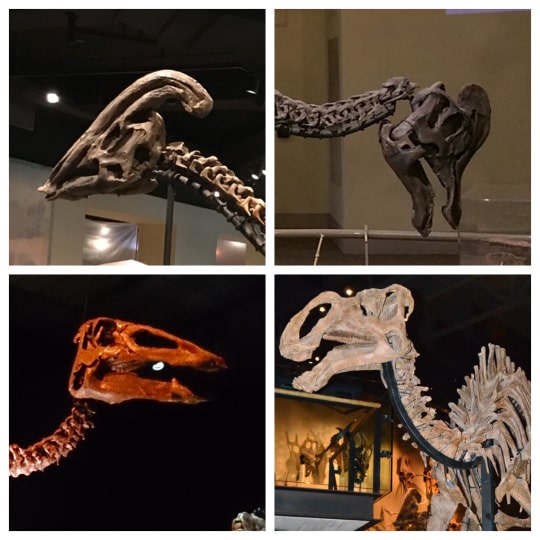
A gallery of hadrosaur heads. Top left: the lambeosaurine Parasaurolophus at the Field Museum of Natural History in Chicago (photo by the author). Top right: the lambeosaurine Corythosaurus at Carnegie Museum of Natural History (photo from Wikimedia Commons). Bottom left: the saurolophine Edmontosaurus at the Houston Museum of Natural Science (photo from Wikimedia Commons). Bottom right: the saurolophine Gryposaurus at the Natural History Museum of Utah in Salt Lake City (photo from Wikimedia Commons).

As a crestless hadrosaur, Gryposaurus was a saurolophine. Despite its lack of crest, its skull still had pizzazz: its nasal bone arched dramatically, giving the impression of a ‘Roman nose’ (which is very noticeable if you compare the skulls of Edmontosaurus and Gryposaurus in the image above). The name Gryposaurus notabilis means “notable hooked-nose lizard” in homage to this feature. G. notabilis is the type species of Gryposaurus; type species are typically the first ones to be named in a genus, and therefore become the reference to which all new specimens that may belong to that genus are compared. The other species (such as G. monumentensis, shown in the photo montage above) are similar enough to the type species that they can be referred to the genus Gryposaurus, but they differ in too many ways to be assigned to G. notabilis itself.

Occasionally, paleontologists will revisit a fossil species or genus and decide that it is either too similar to another to justify its own name or that certain specimens are too different to be grouped under the same name. Kritosaurus, another saurolophine with a ‘Roman nose,’ has fallen victim to both of these circumstances. It was originally considered its own genus, but was subsequently revisited by paleontologists who decided that it was so similar to Gryposaurus that the two genera were lumped together under the name Gryposaurus (when combining taxonomic groups, the first name that was published is the one that gets used). However, later paleontologists reviewed the evidence again and split a single species of Kritosaurus back out of Gryposaurus. The famous sauropod (giant long-necked herbivorous dinosaur) Brontosaurus underwent a similar series of changes over the years: originally, it and Apatosaurus were considered different animals, but after a review they were lumped together under Apatosaurus. Recently, the two were split apart again and the name Brontosaurus was revived (to the delight of fans of that name around the world).

It is not uncommon in paleontology for species to be lumped or split based on new or revisited evidence. When you consider that the decision to name new fossil species is often based on fragmentary, highly incomplete skeletons, you can see why it might be difficult to get things right the first time! These changes sometimes give people the impression that paleontologists “can’t make up their minds” or “contradict themselves,” but we must remember two things. First, that science is meant to change based on new evidence. Second, there have been thousands of paleontologists over the course of history, and every one of them is an individual person who can draw their own conclusions based on the same evidence. Although the resulting changes can disappoint fans of a specific animal or hypothesis, revision is normal and beneficial for the field as a whole. Scientists are supposed to be nebby – it’s how we make new discoveries!

Lindsay Kastroll is a volunteer and paleontology student working in the Section of Vertebrate Paleontology at Carnegie Museum of Natural History. Museum staff, volunteers, and interns are encouraged to blog about their unique experiences and knowledge gained from working at the museum.

Related Content

Mesozoic Monthly: Aspidorhynchus
Ah, Snap! Dino Named for Marvel’s Thanos

Jurassic Days: Specimen Scavenger Hunt

Filed Under: Blog Tagged With: dinosaurs in their time, Educator Resources, Lindsay Kastroll, Mesozoic Monthly, Museum from Home, Science News, Section of Vertebrate Paleontology

August 21, 2020 by wpengine

The Bromacker Fossil Project Part IX: The Dissorophoid Amphibians Tambachia, Rotaryus, and Georgenthalia, Capable Travelers

New to this series? Read The Bromacker Fossil Project Part I, Part II, Part III, Part IV, Part V, Part VI, Part VII, and Part VIII.

The Dissorophoidea are a group of ancient amphibians that were common about 290 million years ago, when the animals fossilized in the Bromacker quarry were alive. The group consists of small to medium-sized water- and land-dwelling vertebrates (animals with backbones) that ate invertebrates (e.g., dragonflies, cockroaches, and millipedes) and vertebrates smaller than themselves. Most scientists agree that modern amphibians (frogs, salamanders, and the reclusive, worm-like, subterreanean caecilians) had their origins among the dissorophoids. Three disssorophoid species are currently known from the Bromacker quarry, and at least one and possibly two more are yet to be described. Two of the described species, Tambachia trogallas and Rotaryus gothae, are members of the dissorophoid subgroup Trematopidae, and the other, Georgenthalia clavinasica, is a member of the subgroup Amphibamiformes. All of them inhabited the terrestrial realm and most likely only returned to water to breed.

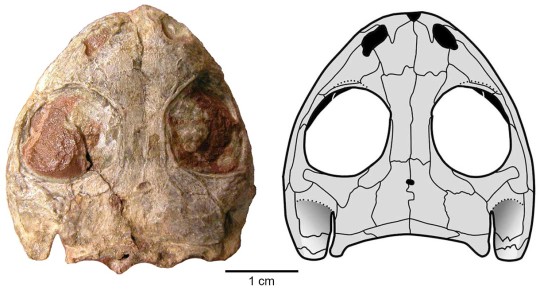
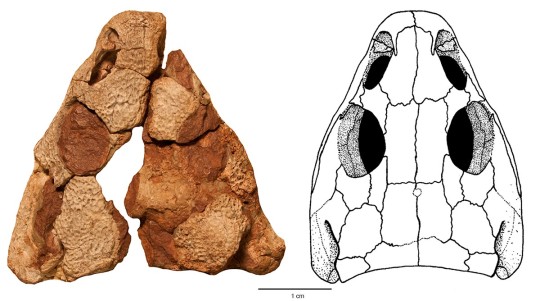
Photograph (left) and reconstruction (right) of the skull of the holotype and only known specimen of Tambachia trogallas in dorsal (= top) view. Photograph by the author (2013) and reconstruction by Stuart Sumida, modified from Sumida et al. (1998).

The first trematopid discovered in the Bromacker quarry was found by Thomas Martens in 1980, and it is represented by a poorly preserved skull and skeleton. Stuart Sumida, as lead author of the scientific paper presenting it, coined the name Tambachia trogallas. Tambachia refers to the Tambach Formation, the rock unit preserving the Bromacker fossils, which in turn is named after the nearby village of Tambach, which is now merged with the adjacent town Dietharz to become Tambach-Dietharz. “Trogallas” is from the Greek “trogo,” meaning munch or nibble, and “allas,” meaning sausage, in reference to all of the bratwurst consumed during Bromacker field seasons by the authors of the Tambachia publication (Stuart, Dave Berman, and Thomas). The state where the the quarry is located, Thuringia, is famous for its bratwurst and rightly so. A hot bratwurst for lunch was always welcomed when we experienced what Thomas called “Scandanavian summers,” which were cold and rainy. The then-Bürgermeister (mayor) of Tambach-Dietharz, who also was a butcher, was so thrilled by the name that he hosted an annual bratwurst lunch featuring brats that he’d made. This tradition was carried on by subsequent Bürgermeisters, though they had to buy the featured main course.

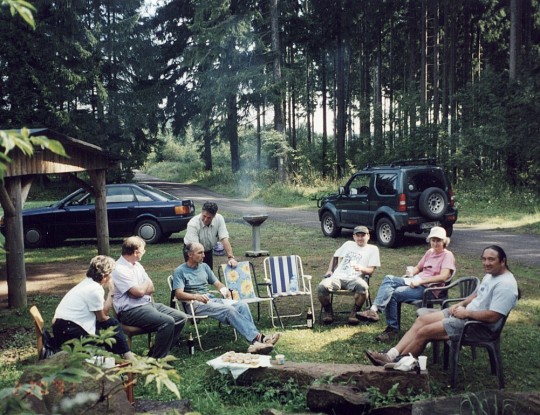
Bratwurst lunch in the Thuringian Forest close to the Bromacker quarry. Seated are (from left to right) unknown, Rainer Samietz (then Director of the Museum der Natur Gotha, now retired), Thomas Martens, Johannes Müller (then field assistant and now Professor at Museum für Naturkunde, Berlin), the author, and Stuart Sumida. The Bürgermeister is standing behind Thomas. His bratwurst grill, which he transported in his SUV, is between the vehicles. Photo by Dave Berman (2002).

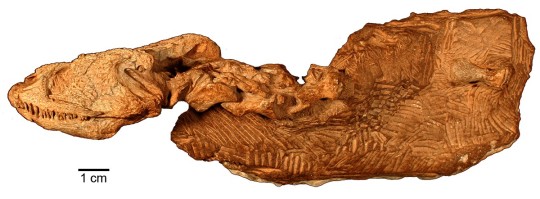
Skull and partial skeleton of Rotaryus gothae in left lateral (= side) view. Photograph by the author, 2008.

When Rotaryus gothae was found in 1998, only part of the skull was exposed, so we took out a large block expecting a complete skeleton to be preserved, as typically occurs at the Bromacker. Once I began preparing the specimen, however, I was extremely disappointed to find that only a small portion of the body of the animal was present. At least we had the skull, the most scientifically important part of the skeleton. Dave led the scientific study of Rotaryus, and he named it in honor of the Gotha Rotary Club, an organization that generously provided financial support for Bromacker fieldwork. Dave sent the head of the Gotha Rotary Club three choices for the fossil’s name, and the members voted on which one to use.

At the time that Tambachia and Rotaryus were named and described in scientific publications in 1998 and 2011, respectively, trematopids were known only from the USA. Their presence at the Bromacker added to the growing list of animals previously thought to only inhabit North America, such as Diadectes and Seymouria. In hindsight, it is not surprising that trematopids also had a more cosmopolitan distribution, because although they are amphibians, their skeletons were strong enough to support their body out of water and withstand the effects of gravity, thus enabling them to disperse to far corners of the world (though hypotheses of such dispersal assume that no physical or climatic barriers prevented movement).

I was the lucky person who discovered, in 2002, the amphibamiform Georgenthalia clavinasica. I recall lifting up a block of rock that I had loosened with a hammer and chisel and seeing two ghostly eye openings staring back at me. The rest of the skeleton was preserved with the skull, but unfortunately all bone beyond the skull was extremely eroded from groundwater and had the consistency of mashed potatoes.

Photograph (left) and reconstruction (right) of the skull of Georgenthalia clavinasica in dorsal (= top) view. Both by Jason Anderson, 2007.

After Tambachia was named, the Bürgermeister of the nearby village of Georgenthal, whose boundaries included the Bromacker quarry, approached Dave about naming a fossil after his village. Dave then asked Jason Anderson, a colleague from the University of Calgary and the project’s lead researcher, to name it Georgenthalia. Jason created clavinasica from the Latin “clavis” for key, and “nasica” for nostril, in reference to the fossil’s keyhole-shaped nostril, a unique feature that differentiates Georgenthalia from all other amphibamiforms.

Jason, as lead author of a 2008 scientific publication, concluded that the relationship of Georgenthalia to other amphibamiforms was uncertain. Computer algorithms are used to analyze relationships of organisms by tabulating the proportion of unique characteristics shared between the members of the group under study. A group of organisms that share unique characters is called a clade, and members of a clade are considered to be more closely related to each other than they are to members of other clades. These relationships are depicted in a diagram of relatedness called a cladogram.

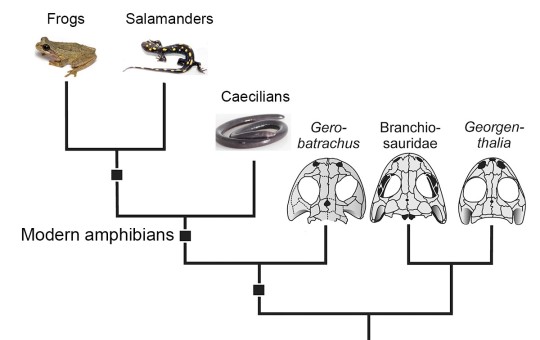
A 2019 study by dissorophoid expert Rainer Schoch (Curator, Naturkunde Museum Stuttgart) that investigated the ancestry of modern amphibians revealed Georganthalia as a member of a clade that also includes modern amphibians (see figure below). The fossil Gerobatrachus, however, is more closely related to modern amphibians than it is to the clade consisting of Georgenthalia and Branchiosauridae (a group of aquatic amphibamiforms). This indicates that although Georgenthalia (along with Branchiosauridae) is in the clade containing modern amphibians, it is not directly ancestral to them.

Cladogram showing the relationship of Georgenthalia (far right) to modern amphibians. Cladogram modified from Schoch (2019); images of modern amphibians from Wikimedia Commons.

Stay tuned for my next post, which will feature yet another terrestrial amphibian, a fossil from a locality in Tambach-Dietharz.

If you would like to learn more about Tambachia, Rotaryus, or Georgenthalia, please follow the links below.

Tambachia

Rotaryus

Georgenthalia

Amy Henrici is Collection Manager in the Section of Vertebrate Paleontology at Carnegie Museum of Natural History. Museum employees are encouraged to blog about their unique experiences and knowledge gained from working at the museum.

Keep Reading

The Bromacker Fossil Project Part X: Tambaroter carrolli, an Amphibian with a Wedge-Shaped Head 

Filed Under: Blog Tagged With: Amy Henrici, Museum from Home, Science News, Section of Vertebrate Paleontology, The Bromacker Fossil Project, Vertebrate Paleontology

August 20, 2020 by wpengine

First ever American Malacological Society virtual meeting, 13-14 July 2020

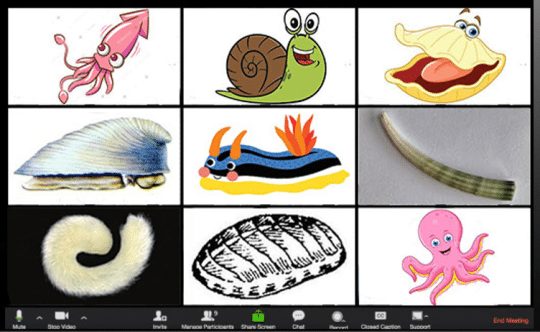
nine cartoon mollusks in a grid

During two days in mid-July the American Malacological Society (AMS) held its 86th annual meeting over Zoom because of COVID-19 concerns. The occasion marked the first time the organization, whose members study mollusks, convened the gathering virtually. Attendance was greater than recent in-person AMS meetings, perhaps because of the low cost of the event (no travel or accommodation costs) and its appeal to people who shun air travel for its immense carbon footprint. There were more than 150 participants, 49 formal presentations, and 18 posters. Remarkably, thirteen presentations were by students.

As usual I enjoyed hearing about my colleagues’ research, rejuvenating old friendships and making new ones, and simply talking with people who already know that mollusks are vitally important. One surprising piece of information I learned from colleagues is that Carnegie Museums of Pittsburgh are ahead of other museums (e.g., Field Museum, University of Florida Museum) in re-opening to the public. Bravo to CMP!

The talk I presented summarized a publication I co-authored with Heather Hulton Van Tassel, Assistant Director of Science and Research at CMNH.  The presentation, titled Is acid precipitation a factor in the decline of the terrestrial tiger snail, Anguispira alternata, in northeastern North America?, “was well-received and elicited some insightful questions. You can hear a 12-minute recording of the talk here:

Current plans are to hold next year’s AMS meeting in Nova Scotia, but if the COVID-19 virus remains a threat, and with the successful outcome of this year’s meeting, we might gather virtually.

Timothy A. Pearce, PhD, is the head of the mollusks section at Carnegie Museum of Natural History. Museum employees are encouraged to blog about their unique experiences and knowledge gained from working at the museum.

Related Content

Ask a Scientist: What is the biggest snail? 

Snail Extinction – Bad Situation Getting Worse

Warm Those Heart Cockles

Filed Under: Blog Tagged With: Museum from Home, Science News, Section of Mollusks, Tim Pearce

August 17, 2020 by wpengine

Traub Flea Data Books

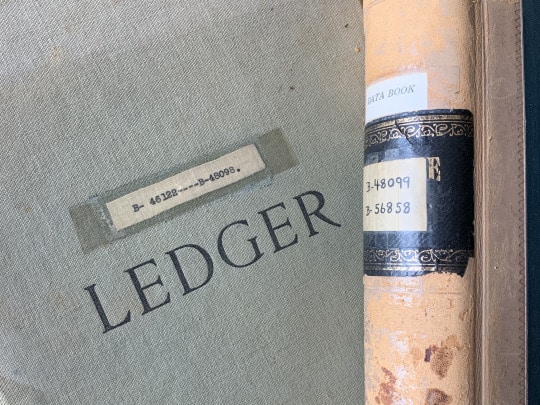
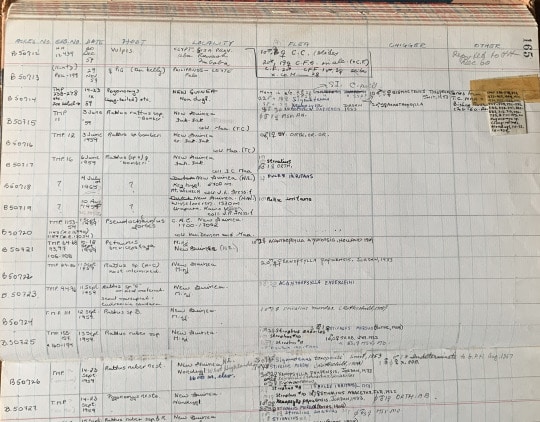
With work-from-home restrictions in place, I’ve been transcribing the handwritten field notes (Figures 1-2) of world-renowned flea expert Robert Traub into a digital database. Between 1995 and 1997, Traub donated most of his collection to CMNH. Materials housed in the Traub collection span the globe, from the middle east to central America to islands in the pacific and beyond. The notebook I’m currently transcribing dates back to the mid-1900s, with records from particular field expeditions to Pakistan and Mexico.

Figure 1. Some of the notebooks written by Robert Traub containing information on his flea specimens.
Figure 2. One of the pages from a Traub notebook illustrating the specimen data it contains. Eventually, all of this data will be transcribed into electronic format so it can be searched and shared.

This type of retroactive data capture allows us to put standard locality information on specimens formerly associated with just an identification or data code number. This process also allows us to verify and update taxonomic names as necessary. While it’s not nearly as fun as field work, data capture and transcribing are still an important part of collections work.

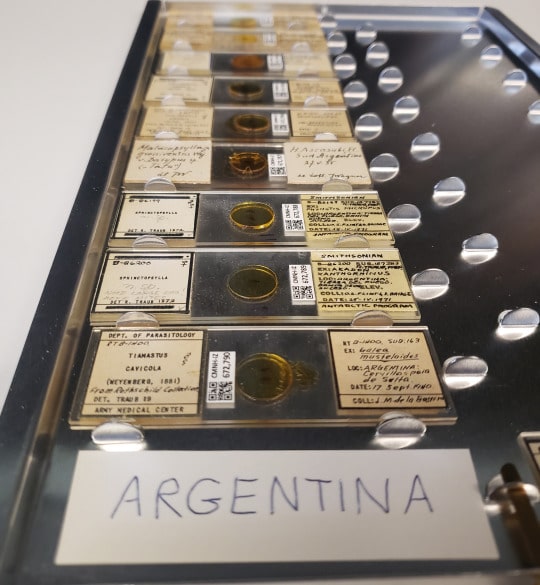
The Traub collection is estimated to contain nearly 75,000 specimens mounted on glass slides (Figure 3), with 5,000 associated genitalic dissections. The enormous collection is housed in antique cabinetry as well as modern Eberbach cabinets. Almost 7,000 of these specimens only have a data code; thus, my digitization efforts and subsequent labeling continue!

Figure 3. Several slides from the Traub Flea collection.

Since I started working in IZ nearly three years ago, I have had the distinct privilege of working with different taxa every few months. From Lepidoptera, to Odonata, to Coleoptera, to Arachnida, and now Siphonaptera, these tasks serve as beautiful reminders of the diversity of life here on planet Earth.

Catherine Giles is Curatorial Assistant in the Section of Invertebrate Zoology at Carnegie Museum of Natural History. Museum employees are encouraged to blog about their unique experiences and knowledge gained from working at the museum.

Related Content

Moth Meme Science

Working with the Type Collection

A Bumble’s Blog and Bumble “Weee” Catapult Craft

Filed Under: Blog Tagged With: Catherine Giles, Invertebrate Zoology, Museum from Home, Science News, Section of Invertebrate Zoology

August 11, 2020 by wpengine

Delving into Lepidoptera Life History Studies

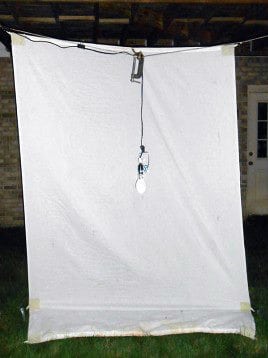
For a number of years now in the Section of Invertebrate Zoology (IZ), we have been rearing larvae (= caterpillars) of different species of Lepidoptera (moths & butterflies) for both fun and research. This summer, given the ongoing COVID-19 pandemic and the need for everyone to isolate, I have taken to collecting and rearing a number of different species at home that were collected at a bug sheet in my own back yard (Figure 1).

Figure 1. A set up “bug sheet” used to attract insects at night.

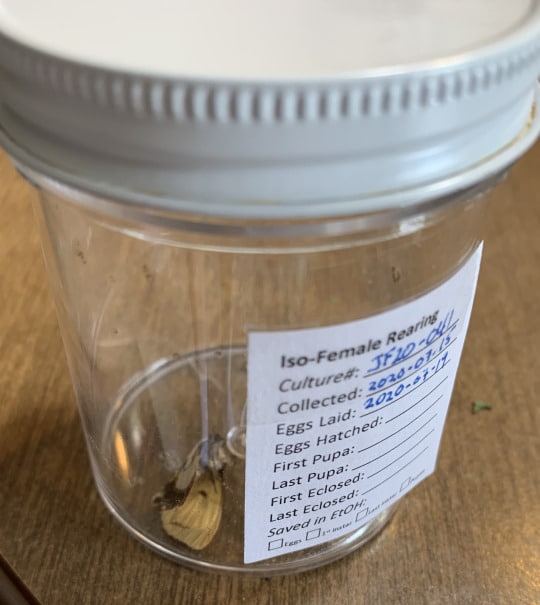
Female moths are collected live and held in a plastic jar we call a “live jar” (Figure 2), until they lay eggs. If eggs are laid, and they are fertile, they usually hatch in about 7-10 days. This gives you enough time to identify the female adult to species (a recent field guide to moths and butterflies is a good place to start) so you can find out information on its preferred food source(s), or host plant(s), before the little larvae hatch are start searching around for food. If the eggs do hatch, rearing the resulting little caterpillars is a fun way to break up the tedium of being cooped-up at home for so long and is a nice way to bring Nature indoors.

Figure 2. Plastic “live jar” used to hold female moths until they lay eggs for rearing.

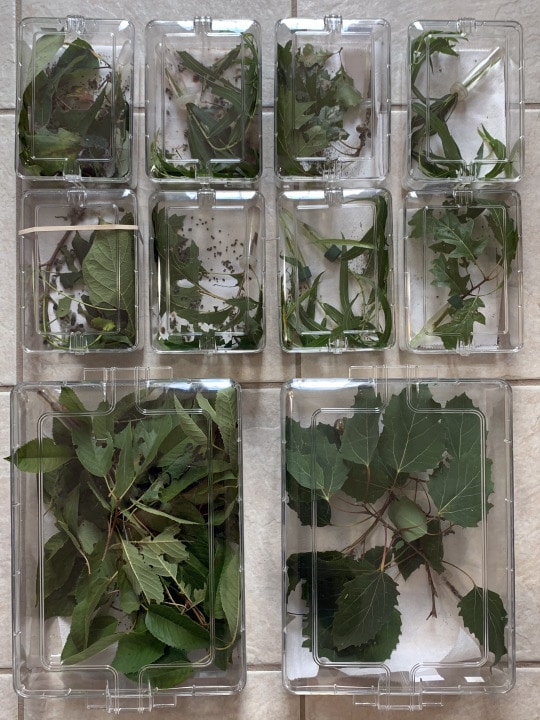
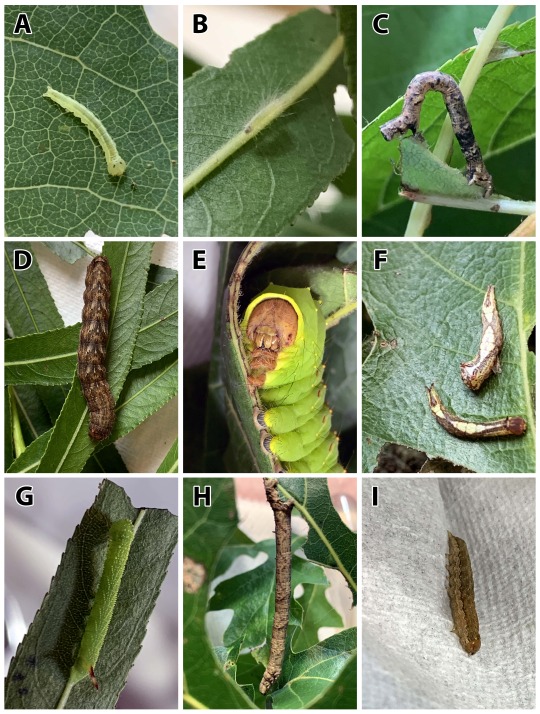
We have a little bit of experience rearing caterpillars at home. As you may know from a previous IZ blog post, my son and I reared some caterpillars that were not yet known to science, which resulted in a small publication. Right now, we have caterpillars of ten different species at various developmental stages. I check on them daily, making sure to keep their containers clean, and provide them with enough food to eat from their preferred host plant (Figure 3). It is amazing how quickly these little guys grow and change, all in the matter of a few short weeks. I try to capture images of them as they develop (see Figure 4), so they can be used on our websites, in blog posts (such as this one), or in eventual scientific publications that may result from the work.

Figure 3. Clear plastic rearing chambers containing caterpillar cultures, each started from eggs laid by a single female moth (= iso-female culture). Host plants include Maple, Willow, Oak, Sassafras, Cherry and Poplar.
Figure 4. Images of various species of caterpillars currently being reared by the author at home. A.) Early instar of Gluphisia septentrionis (Notodontidae), B.) Early instar of Acronicta dactylina (Noctuidae), C.) Later instar of Metarranthis sp. (Geometridae), D.) Last instar of Lithophane disposita (Noctuidae), E.) Later instar of Antheraea polyphemus (Saturniidae), F.) Two different early instars of Heterocampa obliqua (Notodontidae), G.) Early instar of Paonias excaecata (Sphingidae), H.) Last instar of Besma quercivoraria (Geometridae), I.) Later instar of an unknown caterpillar that was found on host plant food obtained for other caterpillars. The species will be determined when the adult moth emerges from the pupa later in the summer.

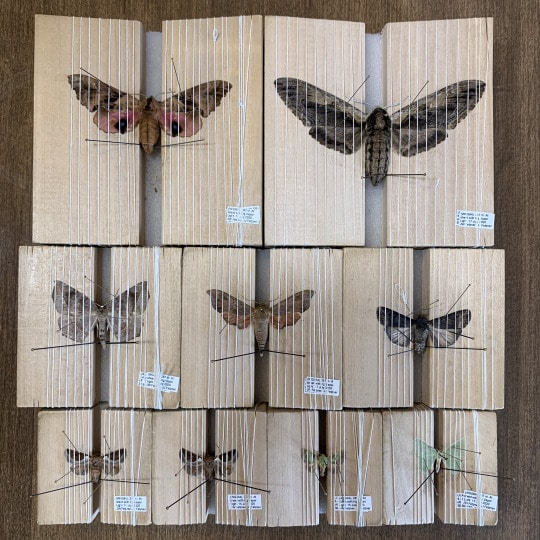
Once the females have laid eggs, they usually die as a result, having completed their task in the moth’s life cycle.  The females are then pinned, and the wings are usually spread on wooden blocks until they dry, so that the specimens can be easily identified and examined by experts in the future (Figure 5).  They then receive data labels that includes information on the specific locality and date of collection, method of collection, and the collector name(s).

Figure 5. Moths that have been pinned with their wings spread to aid in identification. Note the data labels have been associated with each specimen (lower right of each block).

My son and I are looking forward to watching our little menagerie of caterpillars progress throughout the summer, eventually completing their life cycle and becoming adult moths. I’m glad that we are able to give you a glimpse of our progress to date and hope you have enjoyed seeing some of these diverse little spineless wonders. Hopefully, when we can all return to our normal outdoor activities, you will have a newfound appreciation for these amazing insects when you encounter them out in the wild.

James W. Fetzner Jr. is Assistant Curator of Invertebrate Zoology at Carnegie Museum of Natural History. Museum staff, volunteers, and interns are encouraged to blog about their unique experiences and knowledge gained from working at the museum.

Related Content

Ask a Scientist: What are Murder Hornets?

Bug Bonanza: Virtual Bug Display

Is This Butterfly Blue or Green?

Filed Under: Blog Tagged With: Invertebrate Zoology, James Fetzner, Museum from Home, Science News, Section of Invertebrate Zoology

August 10, 2020 by wpengine

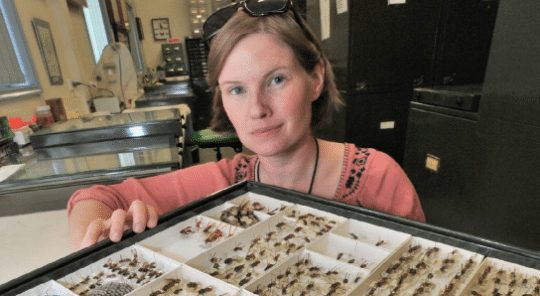
Meet Ainsley Seago, New Associate Curator of Invertebrate Zoology

Dr. Ainsley Seago (pictured with Vespula germanica, one of Australia’s many, many invasive species). Photograph by Jude Keogh.

Dr. Ainsley Seago studies the evolutionary history of beetles, from systematics and diversification of Staphylinoidea (rove, carrion, and fungus beetles) to the evolution of iridescence in Curculionoidea (weevils and their relatives). She has used everything from rotting squid traps to synchrotron radiation to better understand beetles in all their glory, but believes that the most important tool of all is a strong museum collection. Dr. Seago is thrilled to work with the CMNH collection and exhibit teams to bring the museum’s outstanding invertebrate collection to a wider audience, while using it to support research in Pittsburgh, the US, and beyond.

Dr. Seago is originally from Tacoma, WA,  and has just returned to the U.S. after 12 years in Australia.

Abstract of recent research (bearing in mind that I have a very loose grasp on what 8th graders are up to these days)

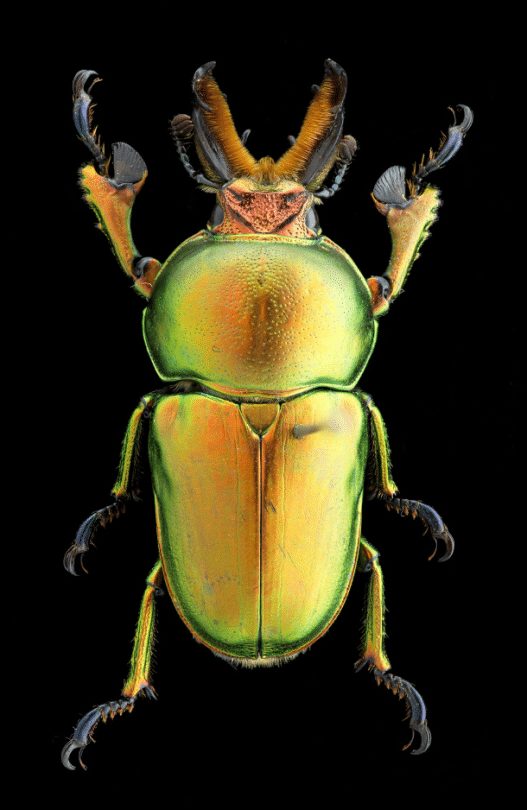
Australian stag beetle, Lamprima aurata (Coleoptera: Lucanidae). Photograph by Lauren Drysdale.

Among the world’s beetle species are hundreds of “living jewels,” insects with stunning jewel-like colors or shining golden armor. These so-called structural colors arise from nanoscale patterns in the exoskeleton, from variations in the thickness of chitin layers to intricate three-dimensional crystal lattices. Because they’re made by fixed structures and not chemical pigments, these types of insect color last indefinitely– even through fossilization.

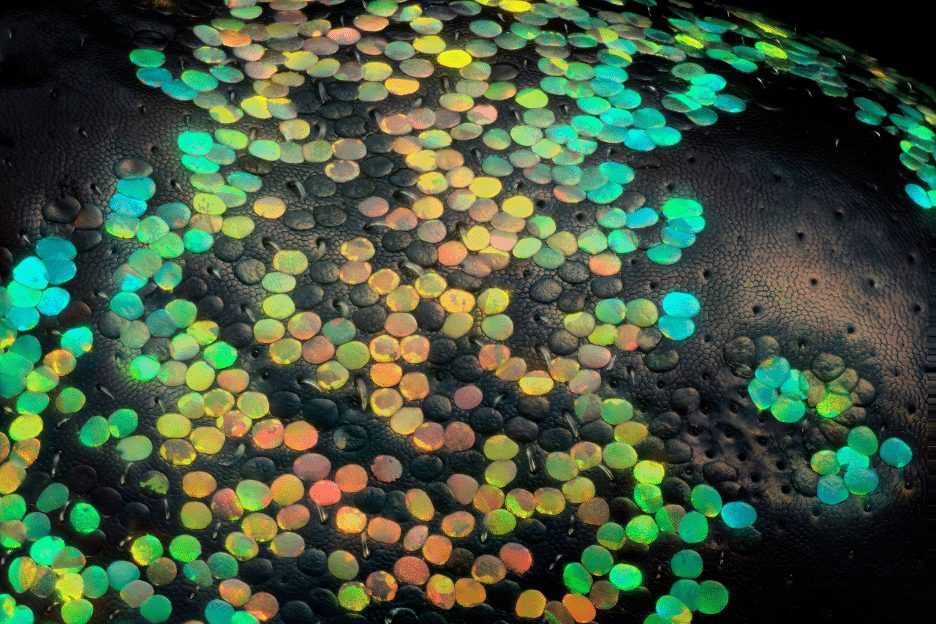
Within the last 20 years, scientists have learned that several species of weevils (not to mention butterflies and longhorn beetles)  make their glittering, sequin-like colors with microscopic lattices called three-dimensional photonic crystals. We have also learned that these photonic crystals can generate different colors depending on how tightly spaced they are. However, the evolutionary origins of this type of iridescence have never been explored.

Iridescent scales of Pachyrhynchus orbifer (Coleoptera: Curculionidae). Photograph by Ainsley Seago.

Working with researchers from Yale-NUS (Singapore) and the Australian National Insect Collection (Canberra), I have conducted the first ever research placing a wide variety of photonic crystal structures from across the weevil family tree in an evolutionary (“phylogenetic”) context. The surprising result was that these crystals, found in hundreds of species of weevils, all derive from a single ancestral origin. Although three-dimensional photonic crystals have evolved repeatedly in insects, they appear to have evolved only once in weevils. The weevil lineages that gained these iridescent crystals then diversified rapidly, suggesting that the jewel-like colors aren’t just beautiful, they also confer a distinct evolutionary advantage.

Related Content

Meet Lisa Haney, New Postdoctoral Assistant Curator of Egypt on the Nile

Meet Amanda Martin, New Postdoctoral Research in the Section of Amphibians and Reptiles

Bug Bonanza: Jumping Spiders

Filed Under: Blog Tagged With: Ainsley Seago, Museum from Home, Science News, Section of Invertebrate Zoology

  • « Go to Previous Page
  • Page 1
  • Interim pages omitted …
  • Page 9
  • Page 10
  • Page 11
  • Page 12
  • Page 13
  • Interim pages omitted …
  • Page 26
  • Go to Next Page »

sidebar

About

  • Mission & Commitments
  • Directors Team
  • Museum History

Get Involved

  • Volunteer
  • Membership
  • Carnegie Discoverers
  • Donate
  • Employment
  • Events

Bring a Group

  • Groups of 10 or More
  • Birthday Parties at the Museum
  • Field Trips

Powdermill

  • Powdermill Nature Reserve
  • Powdermill Field Trips
  • Powdermill Staff
  • Research at Powdermill

More Information

  • Image Permission Requests
  • Science Stories
  • Accessibility
  • Shopping Cart
  • Contact
  • Visitor Policies
Stay in the loop! Sign up for our newsletter(s).
One of the Four Carnegie Museums | © Carnegie Institute | Privacy Policy | Terms of Use | Accessibility
Rad works here logo