• Skip to primary navigation
  • Skip to main content
  • Skip to primary sidebar

Carnegie Museum of Natural History

One of the Four Carnegie Museums of Pittsburgh

  • Visit
    • Buy Tickets
    • Visitor Information
    • Exhibitions
    • Events
    • Dining at the Museum
    • Celebrate at the Museum
    • Powdermill Nature Reserve
    • Event Venue Rental
  • Learn
    • Field Trips
    • Educator Information
    • Programs at the Museum
    • Bring the Museum to You
    • Guided Programs FAQ
    • Programs Online
    • Climate and Rural Systems Partnership
  • Research
    • Scientific Sections
    • Science Stories
    • Science Videos
    • Senior Science & Research Staff
    • Museum Library
    • Science Seminars
    • Scientific Publications
    • Specimen and Artifact Identification
  • About
    • Mission & Commitments
    • Directors Team
    • Museum History
  • Tickets
  • Give
  • Shop

Blogs from our Scientific Researchers

Carnegie Museum of Natural History is home to active research and vast scientific collections. Our scientific researchers regularly contribute to the blog at the museum.

June 4, 2021 by wpengine

Collected on this Day in 1982: One specimen isn’t always enough!

Archiving biological variation.

by Mason Heberling

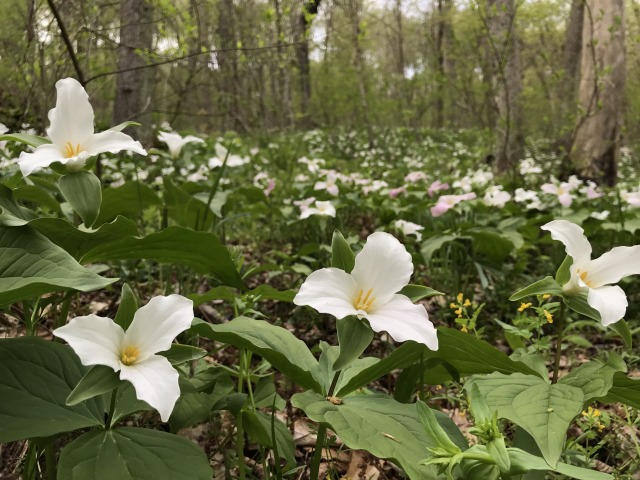
Flowering trillium in the woods

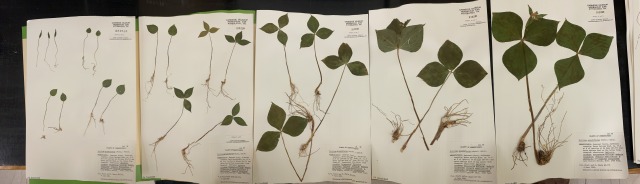
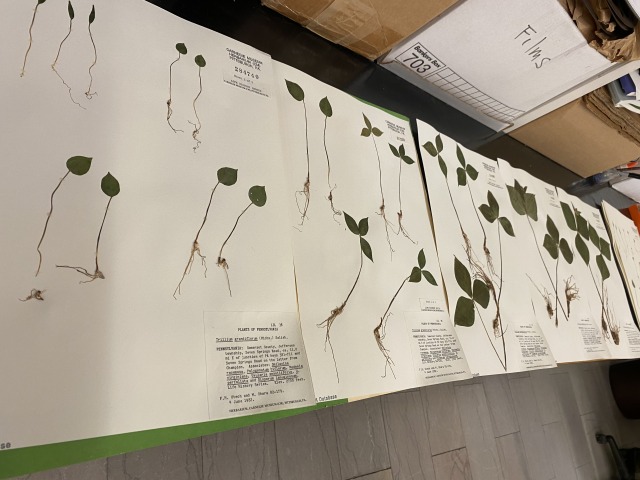
Five herbarium sheets with specimens of trillium on them arranged with the smallest leaves on the left and largest on the right.

This specimen is not a specimen but a set of five specimens! Same species (large flowered trillium, Trillium grandiflorum). Same site (in Somerset county, PA). All collected on same date (June 4, 1982) by Frederick H. Utech and Masashi Ohara.

We know that one specimen of every species is not enough. Having many specimens of many species, across many sites, and through time are necessary to document what organisms lived where, when, how far species ranges extend, and how these change through time. We study these specimens to understand biodiversity and biodiversity change across many scales.

But why collect that many vouchers of the same species, from the same site, on same date? One reason might be to send “duplicate” vouchers to other herbaria, both to help other collections expand their holdings, to get expert opinions on identification, and/or to protect against (unlikely but very possible) damage that may happen in one herbarium (like fire, flood, insect damage – oh my!).

But that isn’t what happened here. All specimens are stored together at Carnegie Museum of Natural History.

Voucher series of trillium herbarium specimen sheets.

So why? Well, it is simple, but quite genius, really. Utech and Ohara collected a “life history” voucher series. That is, these specimens each show different stages of the species’ development from small cotyledon-bearing seedlings just germinating above ground, to one leaved plants, to small to large three leaved juvenile trilliums that have not yet flowered, to large adult plants with flowers.

Utech and Ohara, along with Shoichi Kawano, pioneered this method of collecting and advocated for its importance in a 1984 essay in the Journal of Phytogeography and Taxonomy. Historically, plant specimens are collected with a major specific purpose in mind – to document the plant was there at a given time. To do that, botanists of course collect specimens that are best for identification, such that others can verify the species. For most species, that means plants tend to be collected when they are adults and reproductive (with flowers and/or fruits). Specimens without reproductive organs (called “vegetative” specimens) are generally viewed as less useful for this purpose and often avoided.

But Utech and others found that this standard approach, though useful for some research, did not cut it for their work. As organismal biologists studying the life history, ecology, and life cycle of species, they found many species were not well represented in herbarium collections.

Many species, like trillium, have distinct life stages from seedling to juvenile to adult. Many species form overwintering leaves or juvenile leaves that differ dramatically, even unrecognizably, from “typical” adult specimens.

So there’s good reasons to collect across life history and across individuals within a population. Biological collections are all about archiving biodiversity in its many forms, whether across deep time with fossils, across species, within species, or even within populations at a specific site.

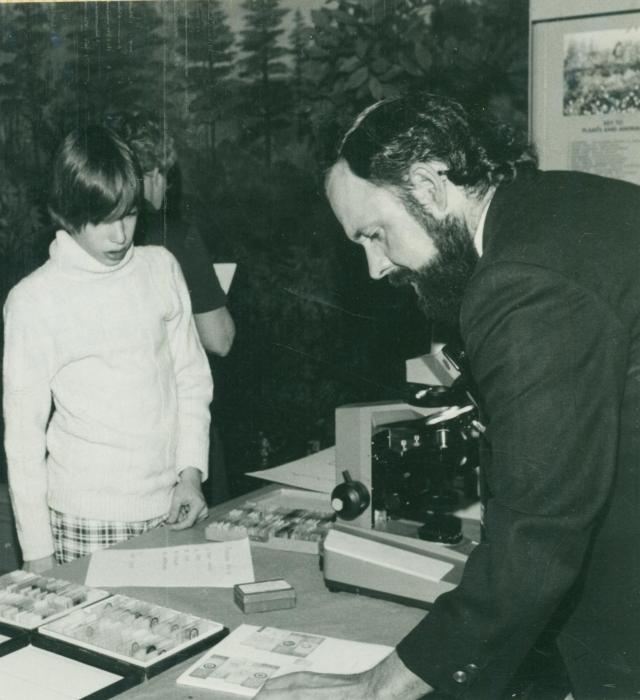
Man at a table of plant specimens talking to a child about them.
Dr. Frederick H. Utech, past curator at Carnegie Museum, at a member’s night in 1979.

Dr. Utech (1943-2021) was a curator at the museum from 1976 until 1999. He was then a research botanist at the nearby Hunt Institute for Botanical Documentation until his retirement in 2011, notably contributing to three volumes of the Flora of North America project. More than 23 thousand specimens in the Carnegie Museum herbarium were collected by him. Dr. Utech passed away earlier this year but his legacy lives on. You can find his obituary here.

Inspired by the method of life history series and the need for new perspectives in the way we collect, CMNH Botany staff are working to promote and expand these ideas. We are presenting some of these ideas at the Society of Herbarium Curators annual meeting later this summer.

Find many more specimens (24,662 to be exact!) collected by Dr. Utech (including other life history series vouchers) here.

Check back for more! Botanists at the Carnegie Museum of Natural History share digital specimens from the herbarium on dates they were collected. They are in the midst of a three-year project to digitize nearly 190,000 plant specimens collected in the region, making images and other data publicly available online. This effort is part of the Mid-Atlantic Megalopolis Project (mamdigitization.org), a network of thirteen herbaria spanning the densely populated urban corridor from Washington, D.C. to New York City to achieve a greater understanding of our urban areas, including the unique industrial and environmental history of the greater Pittsburgh region. This project is made possible by the National Science Foundation under grant no. 1801022.

Mason Heberling is Assistant Curator of Botany at Carnegie Museum of Natural History. Museum employees are encouraged to blog about their unique experiences and knowledge gained from working at the museum.

Related Content

Collected On This Day: September 6

Ask a Scientist: How do you find rare plants?

Do Plants Have Lips? No, But One Genus Sure Looks Like it Does!

Carnegie Museum of Natural History Blog Citation Information

Blog author: Heberling, Mason
Publication date: June 4, 2021

Share this post!

  • Share on Twitter Share on Twitter
  • Share on Facebook Share on Facebook
  • Share on Pinterest Share on Pinterest
  • Share on LinkedIn Share on LinkedIn
  • Share on Reddit Share on Reddit
  • Share via Email Share via Email

Share this post!

  • Share on Twitter Share on Twitter
  • Share on Facebook Share on Facebook
  • Share on Pinterest Share on Pinterest
  • Share on LinkedIn Share on LinkedIn
  • Share on Reddit Share on Reddit
  • Share via Email Share via Email

Filed Under: Blog Tagged With: Botany, collected on this day, Mason Heberling, plants, Science News, We Are Nature 2

May 27, 2021 by wpengine

Leaping Slugs! Did that Slug Just Jump?

by Timothy A. Pearce

Some species of slugs and snails can thrash their tail from side to side, twitching with such vigor that the creatures seem to jump. In some cases, they can become airborne briefly. I don’t know whether this behavior can properly be called jumping, but given that slugs are the quintessential slow-moving animals (slugs gave their name to the word sluggish), the vigorous twitching is certainly an un-slug-like behavior.

In contrast to slugs, snails keep their internal organs (guts) within the shell on their back and they have a strong, nimble, muscular foot. Slugs, which evolved from snails, have hollowed out their foot to accommodate their guts, since they no longer have a convenient shell for that purpose. Because the slug’s foot contains the guts, it is no longer as nimble as the foot of a snail.

The transition from snails (with external shells) to slugs (with internal or no shells) goes through an intermediate stage called a semi-slug, in which the animal has an external shell too small to accommodate the body. The guts are partly in the shell and partly in a hump on the semi-slug’s back. In the semi-slug form, the foot is still strong, nimble, and muscular. Many semi-slugs persist around the world today; in the United States, we have one species in the Smokey Mountains and several species in the Pacific Northwest.

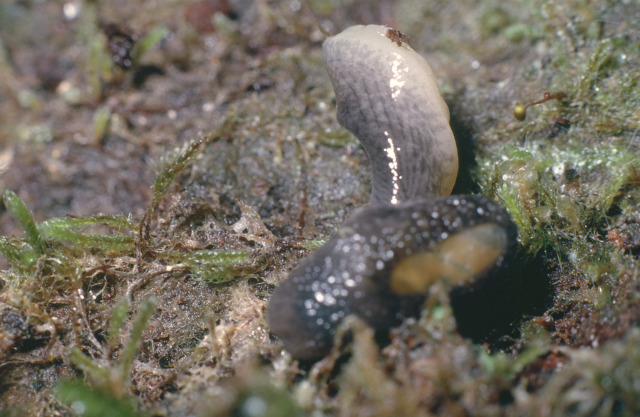
Semi-slug with its body twisted as it thrashes its tail.
Figure 1. Hemphillia semi-slug thrashing its tail so the body flops about (photo: T.A. Pearce).


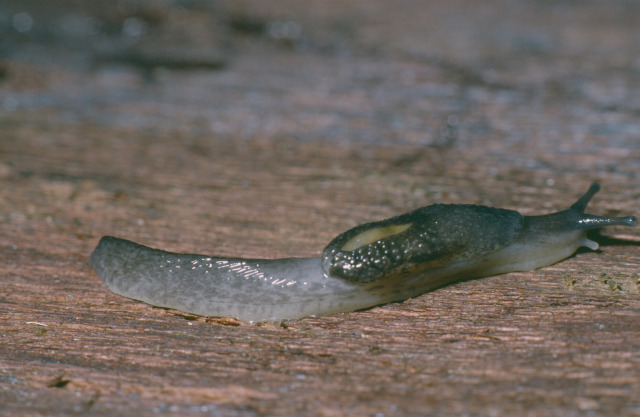
Semi-slug crawling across a piece of wood.
Figure 2. Hemphillia semi-slug crawling in typical slug-like motion (photo: T.A. Pearce).

The semi-slugs in the Pacific Northwest, in the genus Hemphillia, are commonly known as jumping slugs, although they are not commonly seen. The yellowish shell is visible through a slit in the mantle, and the internal organs are contained in a hump on the back. When I have found them, sometimes they will thrash the tail from side to side or twist it into a corkscrew shape and flop about like a fish out of water (Figure 1). In my experience, the Hemphillia slugs will “jump” for a second or two, then they crawl away at a normal slug’s pace (i.e., sluggishly) (Figure 2).

When I was in Madagascar (off the east coast of Africa), I saw a semi-slug of an unknown species on a leaf about a meter above the ground. When I reached to grab the semi-slug, it vigorously thrashed its tail, propelling itself off the leaf and safely into the vegetation below, not to be found.

A jumping snail (Ovachlamys fulgens) originally from southern Japan, arrived in North America in the past few years.The jumping snail sustains its vigorous jumping for a longer period of time than do the Hemphillia jumping slugs I saw in Washington State, and it covers more ground with its antics. See a video of the snail jumping here.

Why do they jump? First, let me say “why” questions are some of the hardest to answer in science. Science can never prove something to be true, we can only prove some things to be false (falsifying). To answer “why,” we try to think of all the possible answers, then set about testing each one, falsifying as many as we can. The remaining possibility (or possibilities) is our best guess at the truth, but we don’t know for sure because we are not guaranteed to have thought of all the possibilities.

The answer to why they jump has not yet been thoroughly studied, but people have speculated. The most common thought is that the slugs and snails likely jump to startle predators. A hungry predator that saw a tasty morsel flopping about might want it for lunch, but when the gastropod stops flopping, the predator might not be able to find it (and meanwhile the slug or snail surreptitiously crawls away). The jumping snails in the video jumped in response to prodding, and the semi-slug on a leaf evaded my grasp by jumping; both consistent with the idea that jumping could be an adaptation against predation.

Why don’t more snails jump? There are way more species of snails than semi-slugs, and although some semi-slugs jump, I am aware of only one snail that jumps. Jumping is therefore more common in semi-slugs than in snails. If jumping is an anti-predator adaptation, and given that the reduced shells of semi-slugs offer less protection from predators, I speculate that semi-slugs benefit from an additional anti-predator strategy.

Here is another mystery that I believe has not been studied: how can these gastropods jump If their mucus sticks them to the substrate? Snails and slugs are famous for their tenacious slime, by which they stick so firmly that they can crawl upside down on the undersides of objects. The answer might be that the jumping species have less slimy mucus, but I suspect that the answer involves variability in the mucus itself. Mucus changes its stickiness depending on how much pressure is applied. That is how snails can move (when they are stuck to the surface). My guess is that the jumping species can rapidly reduce the stickiness of their mucus when it is time to jump.

After the past year, when time sometimes seemed to crawl slowly by, it seems appropriate to write about leaping slugs and snails. And here is a bonus joke:

A jumping slug could jump higher than the Empire State Building.

That’s because the Empire State Building can’t jump.

Tim Pearce is the head of the mollusks section at Carnegie Museum of Natural History. Museum employees are encouraged to blog about their unique experiences and knowledge gained from working at the museum.

Related Content

Ask a Scientist: Are Slugs Just Snails with Their Shells Taken Off?

What’s So Good About Being a Slug?

Ask a Scientist: Can a Snail Mate with a Slug?

Carnegie Museum of Natural History Blog Citation Information

Blog author: Pearce, Timothy
Publication date: May 27, 2021

Share this post!

  • Share on Twitter Share on Twitter
  • Share on Facebook Share on Facebook
  • Share on Pinterest Share on Pinterest
  • Share on LinkedIn Share on LinkedIn
  • Share on Reddit Share on Reddit
  • Share via Email Share via Email

Share this post!

  • Share on Twitter Share on Twitter
  • Share on Facebook Share on Facebook
  • Share on Pinterest Share on Pinterest
  • Share on LinkedIn Share on LinkedIn
  • Share on Reddit Share on Reddit
  • Share via Email Share via Email

Filed Under: Blog Tagged With: mollusks, Science News, Tim Pearce

May 26, 2021 by wpengine

Can’t Touch This

by Andrea Kautz

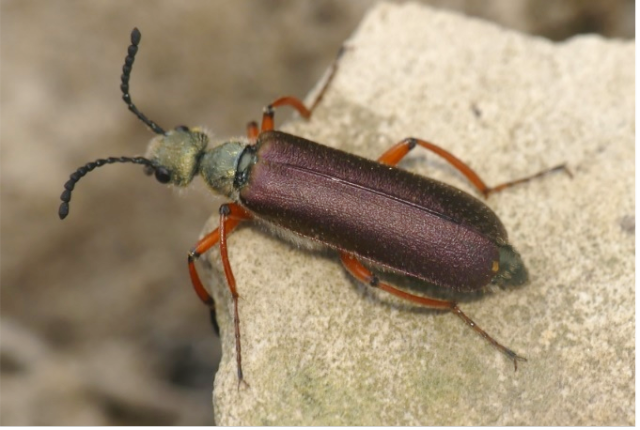
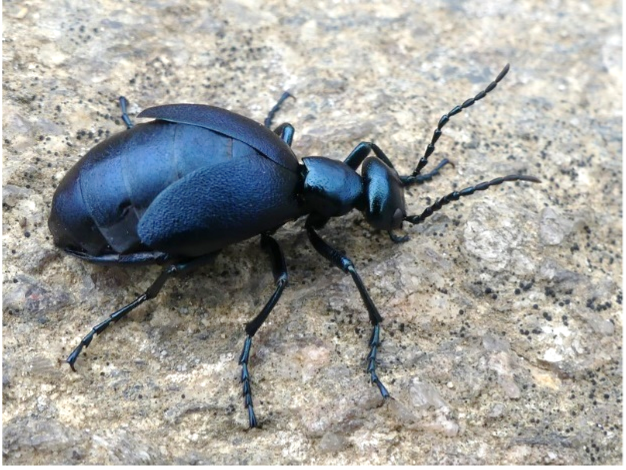
From the name of them, you may guess “blister beetles” are insects you might not want to handle. However, they sure are beautiful to look at! We’ve been noticing blister beetles out and about at Powdermill over the last week or so. Some fly around clumsily, while other flightless species scurry among the leaf litter. Beetles in this family (Meloidae) secrete a defensive substance called cantharidin, a skin irritant that can cause blistering. They are also very toxic when consumed, and can be fatal for livestock if present in the hay supply.

Multi-colored blister beetle on a rock.
Shiny blue blister beetle on a rock.
Two different genera of blister beetles that are common in SW Pennsylvania: Lytta (top) and Meloe (bottom). Top image credit: Shaun Pogacnik. Bottom image credit: Christian Grenier.

Blister beetles are parasites, mostly in the nests of ground-nesting bees and wasps. Watch this short video clip to learn more about their life cycle. Spoiler alert: In this species, the newly hatched beetle larvae clump together and attract a male bee using a fragrance, and then transfer to the female he mates with, ultimately gaining access to her nest, where they feed on both the pollen provisions and the bee larvae themselves!

Whether larvae or adults, these striking beetles certainly have a fascinating dark side. There is always more than meets the eye when it comes to entomology!

Andrea Kautz is a Research Entomologist at Carnegie Museum of Natural History’s Powdermill Nature Reserve. Museum employees are encouraged to blog about their unique experiences and knowledge gained from working at the museum.

Related Content

A Little Harbinger of Spring…

Oh Deer, That’s a Lot of Parasites!

Fourth of July and the Firefly

Carnegie Museum of Natural History Blog Citation Information

Blog author: Kautz, Andrea
Publication date: May 26, 2021

Share this post!

  • Share on Twitter Share on Twitter
  • Share on Facebook Share on Facebook
  • Share on Pinterest Share on Pinterest
  • Share on LinkedIn Share on LinkedIn
  • Share on Reddit Share on Reddit
  • Share via Email Share via Email

Share this post!

  • Share on Twitter Share on Twitter
  • Share on Facebook Share on Facebook
  • Share on Pinterest Share on Pinterest
  • Share on LinkedIn Share on LinkedIn
  • Share on Reddit Share on Reddit
  • Share via Email Share via Email

Filed Under: Blog Tagged With: Andrea Kautz, beetles, Powdermill, Powdermill Nature Reserve, Science News

May 19, 2021 by wpengine

Reading Results: CNC Final Phase

by Patrick McShea

Whether you participated in the recent City Nature Challenge (CNC) or not, the results of the Pittsburgh Region’s broadest annual citizen science biological survey might be of interest.

The visually rich and geographically referenced compilation is a record of 1,219 different species of free-living plants, animals, and fungi documented, via the iNaturalist phone app, by 446 observers within six southwestern Pennsylvania counties during four mid-spring days. It’s a site where anyone with an interest in local natural history can spend a lot of time exploring.

Participation in Pittsburgh’s 2021 CNC was 16% lower than during the 2020 event, a reduction resulting in a similar-sized decline in total observations, yet only a 10% drop in the total number of different organisms documented. This year’s event was held April 30 – May 3, nearly a full week later in the spring than the 2020 CNC, a modification that might have increased the likelihood for some organisms to be observed.

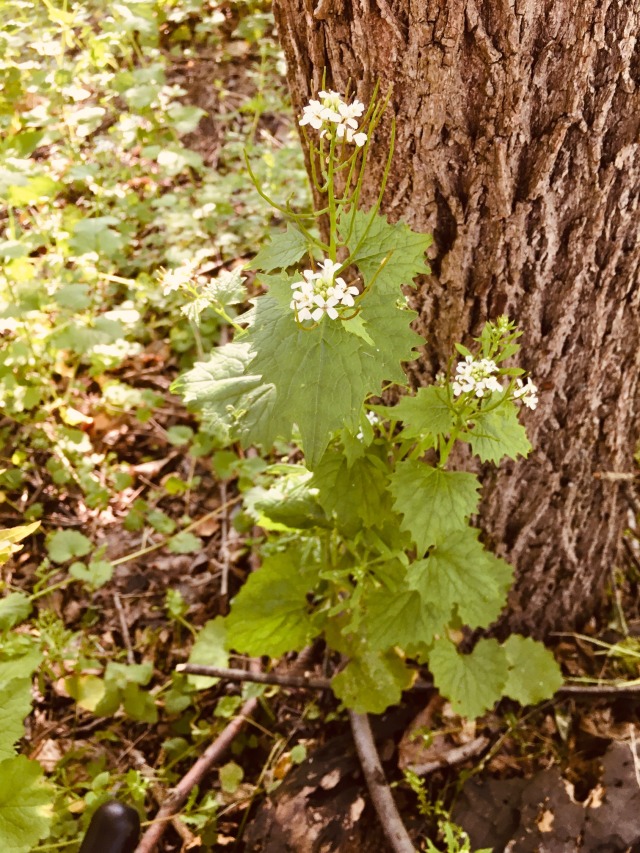
A flowering garlic mustard plant growing at the base of a black walnut tree.

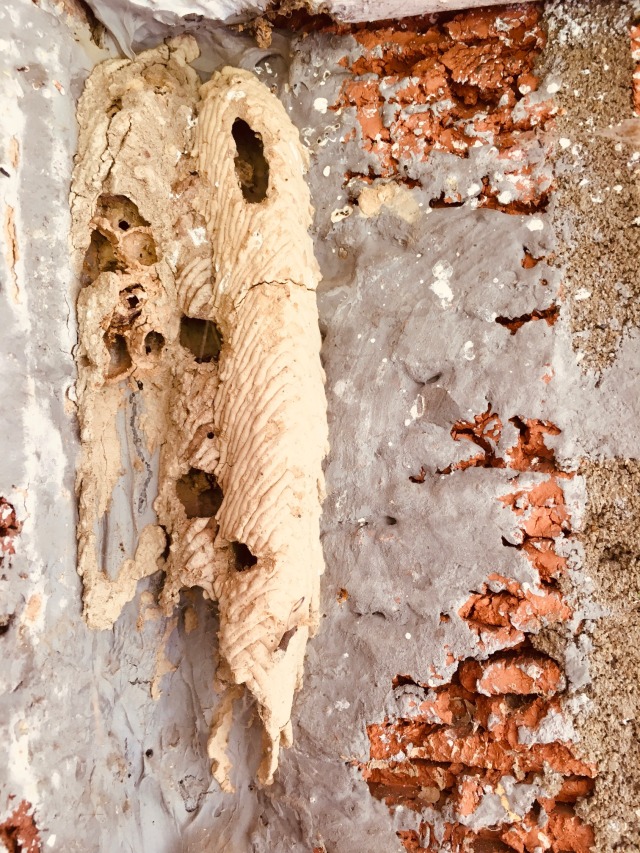
Garlic mustard (Alliaria petiolata), a highly invasive plant introduced to North America in the mid-1800s for its herbal value and erosion control properties, was the most commonly documented organism, accounting for 98 of the Pittsburgh Region’s 7,045 total observations. On the results page, where visitors can further explore every documented species, there’s information to be gleaned beyond the common and scientific names of each entry. Far down the rankings, for example, all four images of organ-pipe mud-dauber nest chambers show the wasp-build tubes attached to human-built walls, and both seal salamander images appear to be illuminated by flashlight or headlamp.

Tubular nests built by the organ pipe mud dauber, a wasp species that preys upon spiders.

As a category, plants, and frequently their blossoms, account for over half the total species documented. Birds, which included some migrants passing through the Pittsburgh region, led the vertebrate class with 111 species documented. Mammals followed with 21 documented species, and documented species for amphibians and reptiles numbered 16 and 13, respectively. 197 species of insects were documented, as were 137 species of fungi.

Participation levels are also carefully recorded in the results, with CMNH’s own Mason Heberling, Assistant Curator of Botany, leading the pack with 403 recorded observations of 208 different species. He explains his level of activity as a response to the scientifically sound parameters established by the CNC organizers. “Because it is roughly the same time each year, I have made a habit of going back to the same several sites each year, mostly ones that are convenient and nearby to me, and ironically, ones I don’t often get to as much as I wish I could.  I do that with hopes of after going back to the same handful of sites around the same time, year after year, we can look at year-to-year and longer-term differences.”

And CMNH’s own Bonnie Isaac, Collection Manager in Botany, was among 397 identifiers who contributed time and background knowledge during a critical six-day second phase of the CNC to review and identify the observations of other participants. In fact, Bonnie identified 872 observations during the challenge. Within the operations of the iNaturalist app, observations with GPS coordinates that are identified by two separate reviewers are termed “Research Grade,” meaning they can contribute to the data sets of future studies. Nearly 54% of the Pittsburgh Region’s CNC observations earned the research grade mark this year, a very slight increase over last year’s mark.

Through the CNC and other citizen science survey projects, the contributions of observers and identifiers enables the powerful image recognition software of the iNaturalist platform to increasingly transform our phones into broad spectrum field guides. As you scroll and click through this year’s CNC results it’s also worth reflecting upon what is both gained and lost through a digital interface.

In a 2015 New York Times essay titled Identification Please, naturalist Helen Macdonald pays homage to the low-tech field guide by first calling out their flaws:

Out in the field, birds and insects are often seen briefly, at a distance, in low light or half-obscured by foliage; they do not resemble the tabular arrangements of paintings in guides, where similar species are brought together on a plain background on the same page, all facing one way and bathed in bright, shadowless light so they may be easily compared.

She later explains the great value of field guides in preparing our eyes and minds for what we hope to observe:

Field guides made possible the joy of encountering a thing I already knew but had never seen before.

Patrick McShea works in the Education and Visitor Experience department of Carnegie Museum of Natural History. Museum employees are encouraged to blog about their unique experiences and knowledge gained from working at the museum.

Related Content

Cities are Not Biological Deserts

Naturally Pittsburgh: Big Rivers and Steep Wooded Slopes

Water Bears: Why My Yard is Like the Moon

Carnegie Museum of Natural History Blog Citation Information

Blog author: McShea, Patrick
Publication date: May 19, 2021

Share this post!

  • Share on Twitter Share on Twitter
  • Share on Facebook Share on Facebook
  • Share on Pinterest Share on Pinterest
  • Share on LinkedIn Share on LinkedIn
  • Share on Reddit Share on Reddit
  • Share via Email Share via Email

Share this post!

  • Share on Twitter Share on Twitter
  • Share on Facebook Share on Facebook
  • Share on Pinterest Share on Pinterest
  • Share on LinkedIn Share on LinkedIn
  • Share on Reddit Share on Reddit
  • Share via Email Share via Email

Filed Under: Blog Tagged With: City Nature Challenge, Education, Educator Resources, Pat McShea, Science News

May 18, 2021 by wpengine

Queer Eye for Lakota Art

by Vuk Vuković

As a queer individual, I am in constant search of such representation in works of art and art institutions. However, Carnegie Museum of Natural History (CMNH) was the last place I expected to find it.

In the last decade, there has been a push for art institutions to acknowledge queer identities within their galleries. From Tate’s Queer Lives and Art to Art 50 Years After Stonewall at Columbus Museum of Art, art institutions are gradually responding to the public outcry for queer visibility. Although it seems like these initiatives are contemporary, queerness has always been around, especially in institutions centering their work around humans. However, due to stigma, their identities were hidden from the public eye, stored away in warehouses, or worse, placed in the galleries with no context.

During my visit to CMNH’s Section of Anthropology at the “Annex” (the informal name for the Edward O’Neill Research Center), I was astounded by the richness of the collection that represents people in places ranging from the Latin American shores to the deserts of the Arab world. However, the work of art that caught my attention was a five-part panel by Thomas Haukaas, a contemporary Lakota artist. As a non-Lakota and non-Native person, I examine Lakota self-representation without claiming to participate in it myself. Instead, I focus on Lakota culture by citing sources created by members of the tribe and their allies. In Eye Candy (2008), the first panel (Figure 1) depicts a human hand situated next to the rainbow color palette. On the left side, eleven boxes are symmetrically distributed on the page and filled with different colors. Five out of eleven colors (red as a focal point) appear on the right side of the image that portrays a hand in a gesture that demands the viewer to stop. I regard the hand as a signal for viewers to pause and immerse themselves with the strikingly diverse pictorial elements, especially as other panels invite the viewer to look closely.

Figure 1. Thomas Haukaas, Eye Candy, 2008 (Photograph © Deborah Harding, provided by Carnegie Museum of Natural History)

The second, third, and fifth panels (Figure 2) portray several patterned horses – an animal that became a symbol of freedom and representation of many Native American cultures.¹ I grew up admiring the relationship horses had with the land through the animated film Spirit: Stallion of the Cimarron (2002). In the film, Spirit is set free from a U.S. army camp by a Native American man called Little Creek, who attempts to lead him back into the Lakota village. To a kid growing up in Montenegro, a small Mediterranean country in Europe, this was a film about the quest for freedom. As I am writing the blog post, I realize the visual elements Haukaas uses are easily interchangeable with the idea of running free as the horses in his work do. In Eye Candy, he uses the horses to express the diversity and inclusive practices of Lakota people. By applying subtle visual elements, Haukaas alludes to winyanktehca or winkte – “a term traditionally applied to male-bodied or biologically male individuals who did not identify as male or men.”² In contemporary Lakota culture, winkte is mostly used to refer to a homosexual man.³ While their status varied in historical records, most accounts treated the winkte as regular community members.⁴

Figure 2. Thomas Haukaas, Eye Candy, 2008 (Photograph © Deborah Harding, provided by Carnegie Museum of Natural History)

The fourth panel (Figure 3) brings the work together as it combines all sections into one abstract form. I find the ambiguity of this panel to be an overarching connection because the queer community is diverse and fluid, but when it comes together, it is as striking as this panel. However, queer art is not always abstract as artists such as Andy Warhol and Keith Haring are explicit about queerness in their works.

Figure 3. Thomas Haukaas, Eye Candy, 2008 (Photograph © Deborah Harding, provided by Carnegie Museum of Natural History)

As someone who has traveled across four continents and worked in different cultural settings, I am always on the lookout for queer representation, but my favorite encounters are when those representations find me.

Figure 4. Thomas Haukaas, Eye Candy, 2008 (Photograph © Deborah Harding, provided by Carnegie Museum of Natural History)

Vuk Vuković is a PhD student in the History of Art and Architecture at the University of Pittsburgh and an intern in the Section of Anthropology and Archaeology at Carnegie Museum of Natural History. Museum employees and volunteers are encouraged to blog about their unique experiences and knowledge gained from working at the museum.

References

[1]Richard Koepke, Harnessing the Force: A Manual for Weary Seekers (Bloomington: AuthorHouse, 2011), 11.
[2] Robert Allen Warrior, The World of Indigenous North America (New York: Routledge, 2015), 1,442.
[3] Beatrice Medicine, “Directions in Gender Research in American Indian Societies: Two Spirits and Other Categories,” Online Readings in Psychology and Culture, 3 (1), (2002): 4, https://doi.org/10.9707/2307-0919.1024.
[4] Sabine Lang, Men as Women, Women as Men: Changing Gender in Native American Cultures (Austin: University of Texas Press, 2010), 118.

Related Content

Center Court Culture Sharing

How I Became an Archaeologist

Archaeological Adventures in Egypt

Carnegie Museum of Natural History Blog Citation Information

Blog author: Vuković, Vuk
Publication date: May 18, 2021

Share this post!

  • Share on Twitter Share on Twitter
  • Share on Facebook Share on Facebook
  • Share on Pinterest Share on Pinterest
  • Share on LinkedIn Share on LinkedIn
  • Share on Reddit Share on Reddit
  • Share via Email Share via Email

Share this post!

  • Share on Twitter Share on Twitter
  • Share on Facebook Share on Facebook
  • Share on Pinterest Share on Pinterest
  • Share on LinkedIn Share on LinkedIn
  • Share on Reddit Share on Reddit
  • Share via Email Share via Email

Filed Under: Blog Tagged With: anthropology, Native Americans, Science News

May 17, 2021 by wpengine

The Story of Oil in Western Pennsylvania: What, How, and Why?

by Hannah Smith

State of Pennsylvania in green with illustrations of coal, oil, rivers, clouds, forest, and an electrical tower.

I am a fries-on-salad, haluski dinner, dairy farm heritage kind of Western Pennsylvanian. I grew up near Venango and Crawford County and had a rural childhood. I went to a small school with about 300 kids in K-6th grade. Around 4th grade, I remember taking a field trip to Titusville, Pennsylvania. I remember seeing the familiar road signs and buildings as our bus gassed along the back roads. I had family in the Titusville and Oil City area, so it was a familiar route to take with my parents. I remember thinking, even at that young age, that the area looked worn and just, well, tired. But I was too young to grasp how this tired little town’s geology had changed the global economy and course of human history. When I was older, I pursued a degree in geology and began to understand more about my local community.

Our field trip took us to Titusville, Pennsylvania to visit Drake’s Well, the first commercial oil well in the United States. The site is named after the well’s driller, Edwin L. Drake who in 1859 struck oil outside of Titusville for the Seneca Oil Company. The company took the name from the Seneca Nation, one of the original Five Nations of the Haudenosaunee or Iroquois Confederacy, who had long made use of the resource Drake sought by skimming naturally-occurring slicks of petroleum, or unrefined oil, from the surface of local waters. These Indigenous people, who were removed from their native lands in the 1700s, 1800s, and 1900s, did not benefit from the Seneca Oil Company.

In the early 1800s oil was an unwanted by-product from salt wells (wells used to mine salt), and before that, a traditional medicine. In small doses, oil was used to treat respiratory diseases, epilepsy, scabies, and other ailments¹. Even today, chemicals made from the refining of petroleum are responsible for many of our modern medicines. Ointments, antihistamines, antibacterials, cough syrups, and even aspirin are created from chemical reactions created from petrochemicals².

However, the purpose of Drake’s Well was to produce oil for refining into kerosene for lamps, and thereby provide an alternative to the whale oil then used to illuminate homes and workplaces. Salt wells used water to dissolve salt source rock, and then carry the resulting brine through piping to the surface where it would be evaporated to leave salt as a solid residue. Although this method works for producing salt, it was far less efficient for producing oil. Productive oil drilling required new techniques, and one of Drake’s most important innovations was the “drive pipe,” sections of cast iron pipe driven into the shaft to protect the drill bit from water and cave-ins. Through experimentation and innovation, on August 27, 1859, Drake struck oil when his drill reached a depth of 69.5 feet.

While Drake’s Well was not the most productive, or largest oil well, the Titusville site is globally significant because it kick-started the petroleum drilling revolution that eventually changed global economies and environments. While Edwin Drake lived a hard life even after his discovery, he is still considered the father of the modern petroleum practices and industry³.

When my field trip class arrived at the Drake’s Well Museum I remember seeing an odd looking wooden building with an awkward chimney-like structure on one side. We were led through single-file so everyone could get a look at the steel machinery used in the drill, and the pipes that dispersed oil into wooden barrels clustered in the building. In my 10-year-old brain there is no way I could properly fathom that this discovery was related to many of the comforts and conveniences I took for granted in my life, such as cars, heating, electricity, plastics, medicines, and even the asphalt roads that we drove on. Why was Titusville special? More specifically, why did western Pennsylvania have oil in the ground?

Illustration of the sea floor with various sea creatures including coral and ammonites.

From about 490 to 360 million years ago, during the span of geological time known as the Ordovician Period and Devonian Period, most of what is now Pennsylvania was an ocean basin teeming with life. Pre-Appalachian Mountains systems eroded over time and deposited sediment of sand, silt, and mud that mixed on the seafloor with the dead plant material.  Currents at the ocean bottom were minimal, leaving the accumulating sediments and organic material relatively undisturbed and oxygen-free.  Without oxygen, bacteria that normally break down organic material could not act.  A thick, black, anoxic ooze formed, preserving the organic material.  Over millions of years, forces caused by plate tectonics generated enough heat and pressure to compact the sediments into rock and “cook” the organic material into petroleum.

If you’re from western Pennsylvania, you’ve probably heard of the Marcellus and Utica shales. The natural gas extracted from these rock units formed in a similar way to petroleum but was subjected to a much longer period of heat and pressure.

Illustration of rock layers labeled from top to bottom: sedimentary rock, natural gas, petroleum, reservoir rock. Water is labeled to the left and right of the reservoir rock.

With Edwin Drake’s success, and layers of oil-bearing rock relatively close to the surface, Titusville boomed. The year Drake drilled his first oil well, Titusville only had 250 residents. However, by 1865 the population increased to 10,000. Nearby Pithole City, now a ghost town, had 50 hotels during the oil peak of the area around 1866. This boom was short lived as other drilling companies began operations in the area and excess production lowered oil prices. Companies picked up to look elsewhere almost as quickly as they appeared⁵. While Titusville boomed and busted, the oil industry itself was growing. Drake drilled for a product to compete with whale oil, but the oil industry underwent phenomenal growth because the demand for its product grew as a lubricant for engines and many other types of machines, a resource for heating on a distributed scale, and as a refined fuel for developing motorized vehicles. Two World Wars during the first half of the 20th Century and the population explosion of the 1950s further increased demand for petroleum. During the Century’s latter half advancements in oil drilling technology made ocean drilling platforms a reality, and with them an increase in oil production as well as an increase in negative impacts due to devastating oil spills.

As of 2016, the world consumed over 97 million barrels daily⁶. So what does combusting 97 million barrels of oil a day, a resource from below the surface, mean for the Earth’s atmosphere? The burning of fossil fuels produces greenhouse gases such as carbon dioxide, methane, nitrous oxide, and fluorinated gases. Greenhouse gases absorb heat from the sun that the earth’s surface reflects back out into the atmosphere, similar to how a blanket traps in body heat. Burning fossil fuels causes climate change by increasing the total amount of greenhouse gases in the atmosphere, thickening the “blanket” around the earth, and increasing the global average temperature. According to the International Energy Agency (IEA), in 2019 greenhouse gas CO₂ emissions totaled 33 gigatons, or 1 billion metric tons, or about the weight of 1.5 billion school buses⁸. Climate change is responsible for increased frequency and severity of weather disasters, wildfires, and flooding, to name a few negative impacts. The abundant CO₂ in our atmosphere equilibrates with and diffuses into our oceans, causing the water to become more acidic and eroding the calcium carbonate structures of coral and other marine organisms. Climate change does not just affect wildlife, it also affects the lives of Pennsylvanians. In Pennsylvania climate change is likely to lead to increasing home insurance rates, higher taxes to replace infrastructure, longer allergy seasons, increasing heat stroke rates in citizens, rising food costs due to crops damaged by erratic weather and higher temperatures, and decreasing water quality and availability due to large storms causing water contamination⁷.

Early organisms were buried by sediment 488 to 360 million years ago and altered into petroleum by heat and pressure. For thousands of years, Earth’s petroleum reserves were largely untouched. Innovator Edwin Drake changed petroleum’s role by successfully drilling the first commercial oil well in North America that August day in 1859. Petroleum became a global commodity, eventually fueling a fast paced modern life. Now in the 21st century, the burning of fossil fuels, such as petroleum, is causing worldwide rapid climate change.

illustration of wheel with three images on the edges: a drop of oil, a cloud, and a lump of coal.

When I was on that field trip to Drake’s Well in 4th grade, we did not discuss the global or local implications of petroleum. This resource is responsible for many of the  day to day conveniences that have come to define contemporary life, but it also feeds environmental change  that is forcing  a “new normal,” and will cause an existential threat to humanity. I could not have fathomed that this global resource had its start in my own family’s backyard. I think that Drake’s Well is a good reminder that Earth-changing innovations can happen anywhere. I don’t think Drake could have predicted the scale to which his discovery would change society and the environment over the next 160 years, in the same way that most people do not realize how their small individual actions are affecting the larger social-ecological systems, and sustainability of all life on Earth. Although individual actions can negatively affect Earth, they can also be positive. Who knows, the next innovation to combat anthropogenic climate change may be happening in your backyard. Wind and solar farms have been developing and growing throughout Pennsylvania since 2007, providing an alternative option for electric energy use.

I started having more appreciation for the Earth Sciences as I got older. This eventually led me to obtaining a bachelor’s degree in geology, interning with the National Park Service at the Hagerman Fossil Beds in Idaho, and working in mapping for a few years before returning to school for illustration and design in hopes to marry the sciences and arts together. While obtaining my geology degree I met my now husband who has a Master’s in Structural Geology, and worked in the natural gas field for five years before making the switch to environmental geology. Our family’s income was supported by the fossil fuels industry for a time, and therefore we understand a decent amount of the ethics and controversy that is in the industry. However we are both very invested in the earth sciences and look forward to more sustainable tech preserving a better environment for the future.

Hannah Smith is an intern in the Section of Anthropocene Studies. Museum employees are encouraged to blog about their unique experiences and knowledge gained from working at the museum.

References:

1 Early Medicinal Uses of Petroleum 2015 https://daily.jstor.org/petroleum-used-medicine/

2 Modern Uses for Petroleum in Medicine 2019 https://context.capp.ca/articles/2019/feature_petroleum-in-real-life_pills

3 Drake’s Well History of Petroleum 2016 https://www.aoghs.org/petroleum-pioneers/american-oil-history/

4 Description of petroleum formation 2014 http://elibrary.dcnr.pa.gov/GetDocument?docId=1752503&DocName=ES8_Oil-Gas_Pa.pdf

5 The boom and bust cycle of the oil industry 2015 https://www.nytimes.com/2015/04/23/business/energy-environment/oil-makes-a-comeback-in-pennsylvania.html

6 World Oil Statistics 2016-Current https://www.worldometers.info/oil/

7 List of the Effects of Climate Change on People and how to protect yourself 2019 https://blogs.ei.columbia.edu/2019/12/27/climate-change-impacts-everyone/

8 International Energy Agency 2019 https://www.iea.org/articles/global-co2-emissions-in-2019

9 Drake’s Well Museum https://www.drakewell.org/

10 Seneca-Iroquois National Museum https://www.senecamuseum.org/

11 Seneca Nation Oil Process in New York State https://nyhistoric.com/2013/10/seneca-oil-spring/

Related Content

Understanding Fossil Fuels through Carnegie Museums’ Exhibits

What Does Climate Change Mean for Western PA Farmers?

Is Plastic Natural?

Carnegie Museum of Natural History Blog Citation Information

Blog author: Smith, Hannah
Publication date: May 17, 2021

Share this post!

  • Share on Twitter Share on Twitter
  • Share on Facebook Share on Facebook
  • Share on Pinterest Share on Pinterest
  • Share on LinkedIn Share on LinkedIn
  • Share on Reddit Share on Reddit
  • Share via Email Share via Email

Share this post!

  • Share on Twitter Share on Twitter
  • Share on Facebook Share on Facebook
  • Share on Pinterest Share on Pinterest
  • Share on LinkedIn Share on LinkedIn
  • Share on Reddit Share on Reddit
  • Share via Email Share via Email

Filed Under: Blog Tagged With: Anthropocene, Hannah Smith, Science News, stewardship

  • « Go to Previous Page
  • Page 1
  • Interim pages omitted …
  • Page 16
  • Page 17
  • Page 18
  • Page 19
  • Page 20
  • Interim pages omitted …
  • Page 43
  • Go to Next Page »

sidebar

About

  • Mission & Commitments
  • Directors Team
  • Museum History

Get Involved

  • Volunteer
  • Membership
  • Carnegie Discoverers
  • Donate
  • Employment
  • Events

Bring a Group

  • Groups of 10 or More
  • Birthday Parties at the Museum
  • Field Trips

Powdermill

  • Powdermill Nature Reserve
  • Powdermill Field Trips
  • Powdermill Staff
  • Research at Powdermill

More Information

  • Image Permission Requests
  • Science Stories
  • Accessibility
  • Shopping Cart
  • Contact
  • Visitor Policies
One of the Four Carnegie Museums | © Carnegie Institute | Privacy Policy | Terms of Use | Accessibility
Rad works here logo