• Skip to primary navigation
  • Skip to main content
  • Skip to primary sidebar

Carnegie Museum of Natural History

One of the Four Carnegie Museums of Pittsburgh

  • Visit
    • Buy Tickets
    • Visitor Information
    • Exhibitions
    • Events
    • Dining at the Museum
    • Celebrate at the Museum
    • Powdermill Nature Reserve
    • Event Venue Rental
    • Gift Cards
  • Learn
    • Field Trips
    • Educator Information
    • Programs at the Museum
    • Bring the Museum to You
    • Guided Programs FAQ
    • Programs Online
    • Climate and Rural Systems Partnership
  • Research
    • Scientific Sections
    • Science Stories
    • Science Videos
    • Senior Science & Research Staff
    • Museum Library
    • Science Seminars
    • Scientific Publications
    • Specimen and Artifact Identification
  • About
    • Mission & Commitments
    • Directors Team
    • Museum History
  • Tickets
  • Give
  • Shop

Blogs from our Scientific Researchers

Carnegie Museum of Natural History is home to active research and vast scientific collections. Our scientific researchers regularly contribute to the blog at the museum.

September 9, 2020 by wpengine

Snails in the Desert

Land snails are leaky bags of water that survive on dry land. Snails lose water through evaporation, and because mucus is more than 90% water, they must expend water just to move, gliding on their silvery slime trails. Most land snails occur in moist environments where they can readily replenish lost water. But some snails live in the desert or other arid areas! How is that even possible?

Several strategies help snails survive in arid situations. For example, some close their aperture with a door or with a mucus sheet, some have small apertures or modify their growth direction to make better seals, some have mucus that inhibits evaporation, and some manage moisture loss by choice of microhabitats.
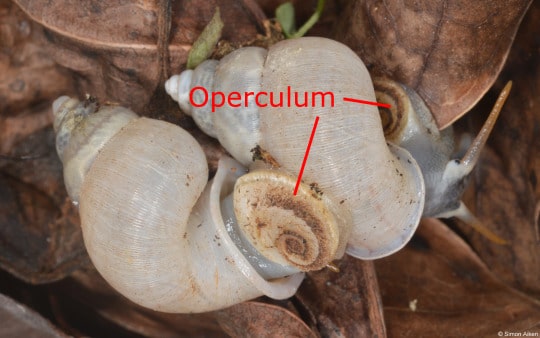
Fig. 1. Two Clydonopoma poloense snails from Dominican Republic showing their opercula. (Photo by S.P. Aiken with permission.)

An operculum, or door, closes the shell in some land snails (Fig. 1), although most land snails lack one. The operculum is attached to the rear of the snail’s tail; when the snail pulls into its shell, the tail withdraws last and positions the operculum to make a tight seal. In addition to protecting the snail from water loss, it also protects from predators.
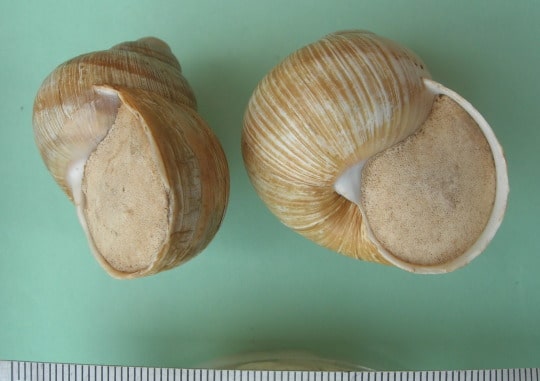
Fig. 2. Two Helix pomatia edible snails from Russia (CM154077) with apertures closed by an opaque epiphragm. (Photo by T.A. Pearce.)

Snails that don’t have an operculum can cover the aperture with a mucus sheet called an epiphragm. In most snails, the epiphragm is thin and clear, but in some species, the epiphragm can be thick and opaque (Fig. 2). During dry periods, snails can form an epiphragm over the aperture or they can make a tight mucus seal between the aperture edges and substrates such as a rock or plant. The seal helps to retard evaporative water loss. Some snails in the desert remain sealed under a rock for years before a rainstorm wakes them.
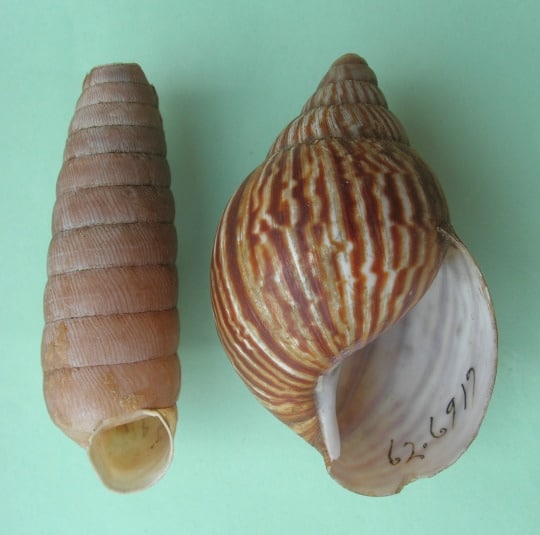
Fig. 3. Coelocentrum gigas from Guatemala CM62.8574 (left); Achatina zebra from Africa CM62.6917 (right). Land snails in drier areas tend to have relatively smaller apertures like the shell on the left. Shells pictured are 8 and 8.5 cm tall, respectively. (Photo by T.A. Pearce.)

Snails of arid areas usually have a relatively small aperture (Fig. 3). The smaller surface-area-to-volume ratio reduces moisture loss through evaporation. Just like you would lose less heat (on a cold day) with your parka zipped up and your hood cinched around your face, the snail loses less water with less of its skin exposed, as in the case of a smaller aperture.
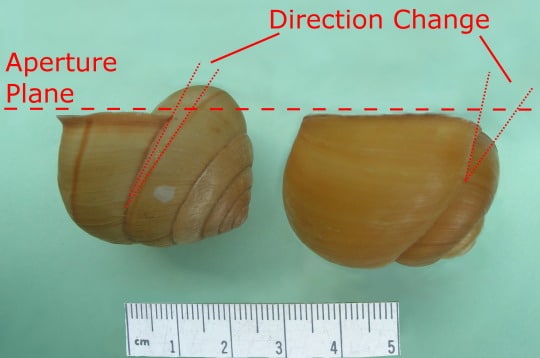
Fig. 4. Ganesella fusca (left) from Japan (CM106167) and Zachrysia guanensis (right) from Cuba (CM152889). Land snails in drier areas tend to have greater change in direction of growth when reaching full size, allowing the plane of the aperture to make a closer seal with flat surfaces. (Photo by T.A. Pearce.)

As growing snails approach their final size, many dip the direction of shell growth toward the shell base (Fig. 4). This results in the plane of the aperture making a tighter seal on a flat surface. Snails of arid areas tend to have shells that make tighter seals on flat surfaces than snails of moister areas.
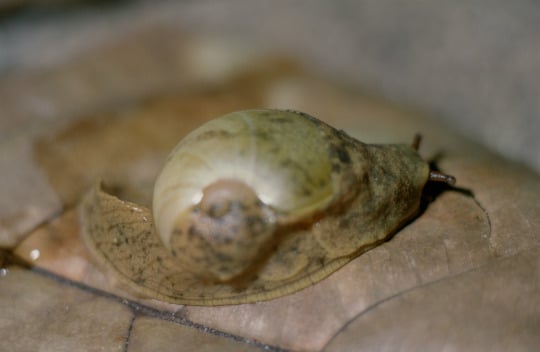
Fig. 5. Urocyclid semi-slug from a dry area in N Kenya. (Photo by T.A. Pearce.)

The mucus of some species retards evaporation. Snails produce different kinds of mucus, for example, the mucus they glide upon to move, sticky or distasteful mucus when irritated, and mucus on their skin that can retard evaporation. One day when I was traveling in northern Kenya during the dry season after at least 6 months without rain, I was surprised to find a semi-slug (a gastropod whose shell is too small to fit the entire body) resting among some dry leaves and soil (Fig 5). It must have had special mucus covering the body that retarded water loss, allowing this species to survive many months of aridity.

Finally, snails influence their moisture loss by choosing their microhabitats. Some snails burrow underground during hot, dry weather to escape the heat. Other snails crawl under moist logs or descend deep into rock piles to avoid the harshest weather.

Why would snails even choose to live in the desert? I’m not sure anyone knows the answer for sure. My guess is that snails might live in a desert because it allows them to escape predators or competitors who can’t or don’t want to live there.

How do they do it? Snails survive in the desert by leaking water a bit more slowly than snails in moist areas.

Timothy A. Pearce, PhD, is the head of the mollusks section at Carnegie Museum of Natural History. Museum employees are encouraged to blog about their unique experiences and knowledge gained from working at the museum.


Related Content

Ask a Scientist: What is the biggest snail?

The Tell-Snail Heart

Happy Ctenophore Day!

Filed Under: Blog Tagged With: Museum from Home, Science News, Section of Mollusks, Tim Pearce

September 9, 2020 by wpengine

From the Allegheny to our Kitchen Sinks

There are more than 326 million trillion gallons of water on our planet. Our bodies are made up of around 60% water. Even the air that we breathe has water vapors in it. Water is everywhere, but the water we can use is limited. According to the National Groundwater Association, the Earth is made up of about 71% water. Out of that, 99.7% is trapped in oceans, icecaps, soil, and the atmosphere. That leaves us with around 0.3% of the Earth’s water to use and drink. The same water that all living and nonliving things have used again and again since water has been on the planet.

drawing of people drinking water

Every morning I go downstairs to the kitchen and pour myself a glass of cold water from a water filter. Without a second thought, I drink the water because I consider this water to be safe. After all, the porous, activated carbon filters absorb various chemicals, including chlorine, lead, and mercury, which ‘purifies’ the water. Furthermore, I don’t have to worry about what could be in the water, because I know that the water is thoroughly cleaned before it enters the house. But how is it cleaned? Where does this water come from and what does it go through in order to splash into my kitchen sink?

Let’s start with a broader concept: rivers. Most major cities can be found along rivers: Paris along the Seine River, London along the River Thames, Seoul along the Han River, and New York along the Hudson River. This is no surprise, as communities need fresh, drinking water as an essential part of building a city. Pittsburgh is no different. In fact, in Pittsburgh, two rivers, the Monongahela and the Allegheny form a third, the Ohio, which on its passage through Pennsylvania, West Virginia, Ohio, Kentucky, Indiana, and Illinois, is the primary water source for over five million people. Within the city, the Allegheny River provides us, the people of Pittsburgh, with fresh water that we use on a daily basis.

illustration of the water cycle: condensation, precipitation, runoff, evaporation

If my water comes from the Allegheny River, what’s the difference between drinking tap water and river water? That’s where the Pittsburgh Water and Sewer Authority, or the PWSA, enters the picture. PWSA is the organization in charge of providing quality water throughout the city of Pittsburgh. The organization’s drinking water system “contains approximately 965 miles of water lines, five reservoirs, and 11 tanks with a water storage capacity of 455 million gallons” (pgh2o.com). And their process for making clean water looks like this. First, the collected river water is coagulated using ferric chloride, potassium permanganate, carbon, and catatonic polymer, which react to the polluting particles in the water, causing them to stick and clump together. The water is then taken through the filtration process, where it flows through pulverized anthracite coal and sand to remove any of the remaining particles. Afterwards, the water is disinfected with sodium hypochlorite, a type of chlorine compound that is used to remove microbial particles. Lastly, once the water has been completely purified, fluoride, the processed form of a naturally occurring mineral, is added back into the water as recommended by the Center for Disease Control to prevent tooth decay.

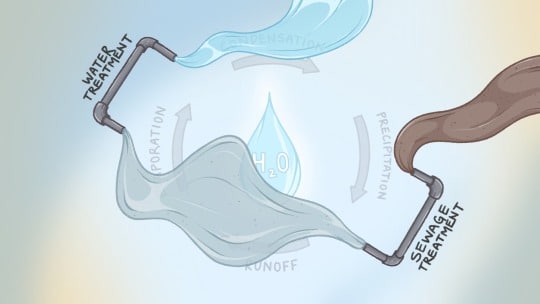
image of sewage treatment and water treatment over water cycle

As complex as this purification process is, it isn’t perfect. The quality of the water that we receive is affected by what we put into it and there are countless compounds that cannot be completely filtered out by the processes used in water treatment plants. For example, trace amounts of dioxane, a likely human carcinogen from plastic manufacturing runoff, can be found in Pittsburgh’s own water system. Moreover, as of 2019, the PWSA has introduced orthophosphate in order to reduce lead levels, originating from the city’s ancient water pipes, in our tap water. In the end, all the water treatment plants can do is clean the water, test for contaminants, and research new ways to produce and deliver as clean a product as possible. The rest is up to us, the community. It’s up to us to be cautious of how we treat water by watching what we flush, preventing littering, or even reducing plastic use to reduce both microplastics and plastic production.

Water treatment is a growing process; new methods to remove previously unfilterable chemicals are constantly being discovered. With this in mind, think about your relationship with water. How do you treat it? What kind of objects do you flush down the toilet? What are your direct and indirect interactions with our water system? All of our actions matter. Because what we put into the river, will eventually come back to us.

Daniel Noh is an intern for the Center for Anthropocene Studies, Carnegie Museum of Natural History. Museum employees are encouraged to blog about their unique experiences and knowledge gained from working at the museum.
Resources

https://blogs.scientificamerican.com/guest-blog/the-purest-of-them-all/

https://www.portpitt.com/pages/monongahela-river

https://www.wpxi.com/news/what-you-need-to-know-about-pittsburghs-three-rivers/739536503/

http://www.orsanco.org/river-facts/

https://coolcosmos.ipac.caltech.edu/ask/67-How-much-water-does-Earth-have-#:~:text=There%20are%20more%20than%20326,in%20ice%20caps%20and%20glaciers

Related Content

The Inequity of Summer Heat

Hip and “Trashy” Ice Cream

Finding Nature in Your Local Streams

Filed Under: Blog Tagged With: Anthropocene, Anthropocene Living Room, Anthropocene Section, Anthropocene Studies, Daniel Noh, Museum from Home, Science News

September 9, 2020 by wpengine

Canada Goose

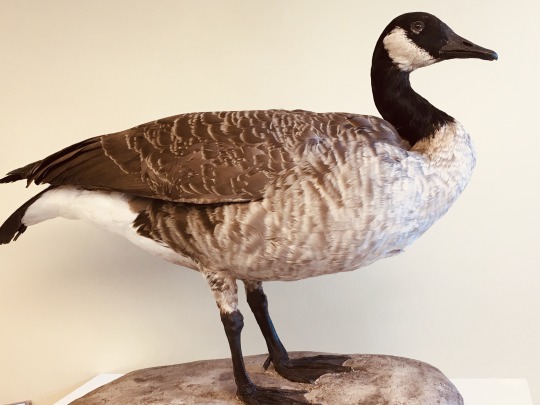
taxidermy mount of Canada Goose

When I think of September and waterfowl, my first thoughts go to the Canada Goose (notice I did not say Canadian Goose which is actually an incorrect name of the bird – there are of course “Canadian Canada Geese”). Nevertheless, my thoughts go to the “American Canada Goose” which seems to be everywhere near water come early fall, and the sounds of them honking puts a little flutter in those Pennsylvanians who hunt. September 1 was the first day of the resident Goose season which runs through September 25th.

Eighty years ago, Canada Geese almost never spent the summer in Pennsylvania. W.E. Clyde Todd, the first curator in the Section of Birds at the Carnegie Museum, kept meticulous records of the comings and goings of many birds in Western Pennsylvania. He has the distinction of the longest tenure of any employee at the museum, having started as a field collector in 1898 and retired and became emeritus curator in 1944. Even after retiring, he continued to come to the museum almost daily until his death in 1969. Mr. Todd, who lived most of his life in Beaver, published the landmark book Birds of Western Pennsylvania in 1940. Several paragraphs in the chapter on the Canada Goose mention early arrivals of the species from the north where they spent the summer as well as late migration to the north where they bred after having spent the winter roaming Pennsylvania fields and waterways. He mentions in the account that the first breeding of American Canada Goose did not occur until 1937 when a few pinioned geese released a few years earlier were successful in breeding in the state.

Today the Canada Goose is almost TOO prevalent for many residents. County and state parks, farm ponds, golf courses, and lawns adjacent to the three rivers seem to be very littered with “fertilizer” which prevents people from running barefoot on the lawns. There are actually professional Geese Police who use Border Collies to chase the geese away from unwanted areas, especially those where lethal means cannot be used. Loud noises have also been used, but as soon as the noises cease or the Border Collies leave, the geese return to foul the lawns and make the water “foul” also. Goose droppings contribute to over fertilization of ponds and lakes causing algal blooms which can be harmful to native fish, invertebrates, and the natural ecosystems of our waterways

Hunting is the only guaranteed method of keeping the resident Canada Goose population in check, of course only in areas where hunting is safe and legal. Hunting can reduce the negative impacts of a species that was not historically a year-round resident. In areas where the practice is safe, legal, and well-regulated, hunting can help to restore ecosystems, reduce local nuisances, provide nutritious food, and get people outdoors! Although the nuisance goose season has liberal bag limits, populations of the birds continue to increase.

Goose recipes can be found on the web using a simple Google Search. There are those who love the taste of a well-prepared bird, and those who think the meat is unfit for human consumption. Make a friend with a goose hunter and you can decide yourself.

Biography of Mr. Todd: https://sora.unm.edu/sites/default/files/journals/auk/v087n04/p0635-p0649.pdf

Book review: https://sora.unm.edu/sites/default/files/journals/auk/v057n04/p0579-p0595.pdf

Canada Goose sounds: https://www.allaboutbirds.org/guide/Canada_Goose/sounds

Stephen Rogers is Collection Manager in the Section of Birds at Carnegie Museum of Natural History. Museum employees are encouraged to blog about their unique experiences and knowledge gained from working at the museum.
Related Content

Lazarus Bird

Bird Watching Bonus

Ask a Scientist: Ravens and Crows, What’s the Difference?

Filed Under: Blog Tagged With: Birds, Hall of Birds, Science News, Section of Birds, Stephen Rogers

August 24, 2020 by wpengine

Mesozoic Monthly: Gryposaurus

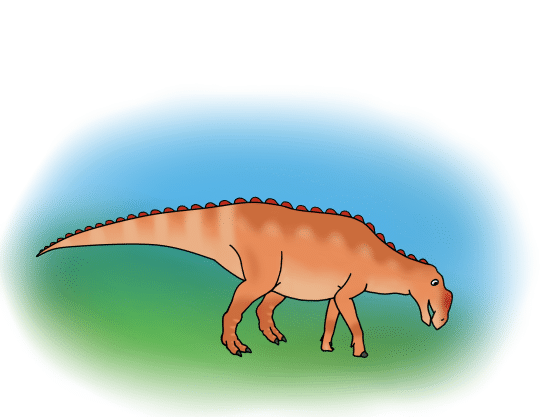
The Late Cretaceous-aged (~75 million-year-old) large-nosed North American hadrosaur (aka duck-billed dinosaur) Gryposaurus by ginjaraptor on DeviantArt.

Anyone who frequents the Pittsburgh area is familiar with ‘Pittsburghese,’ the regional dialect given full voice in what was once voted America’s ugliest accent (a fact that does not diminish our pride for it). One of my personal favorite Pittsburghese words is “nebby,” which translates to “nosy” for any non-local readers. “Nebby” can be used in a variety of contexts: the distant relative asking prying questions about your love life at Thanksgiving dinner is nebby, the pet cat trying to crawl under the bathroom door to see what you’re doing is nebby, and even the statue of Carnegie Museum of Natural History mascot Dippy the Diplodocus, silently judging your driving on Forbes Avenue, is nebby. We can assume other dinosaurs were nebby too, since so many had huge noses to stick into things. One of the biggest noses in the fossil record belongs to Gryposaurus notabilis, the star of this edition of Mesozoic Monthly.

Gryposaurus belongs to a group of dinosaurs called hadrosaurs, which are commonly referred to as duck-billed dinosaurs. Hadrosaurs were herbivores that got their nickname from the flat, toothless, somewhat duck-like beaks at the tips of their jaws. These beaks were used to bite through tough vegetation so that it could be ground up by the numerous teeth embedded in the rear half of the jaws. There are two main groups of hadrosaurs, both of which are featured in CMNH’s Dinosaurs in Their Time exhibition. Probably the more famous group is the Lambeosaurinae, known for their distinctive head crests that housed extra-long nasal passages. Virtually everyone can recognize the incredible backward-curving crest of Parasaurolophus (featured multiple times in the Jurassic Park franchise), and visitors to CMNH will also know the helmet-like crest of Corythosaurus. The second group is the Saurolophinae (traditionally known as the Hadrosaurinae), which typically lack bony crests. You can find a simulated carcass of the saurolophine Edmontosaurus (lovingly known to those of us in CMNH’s Section of Vertebrate Paleontology as “Dead Ed”) between the two imposing Tyrannosaurus skeletons in Dinosaurs in Their Time.

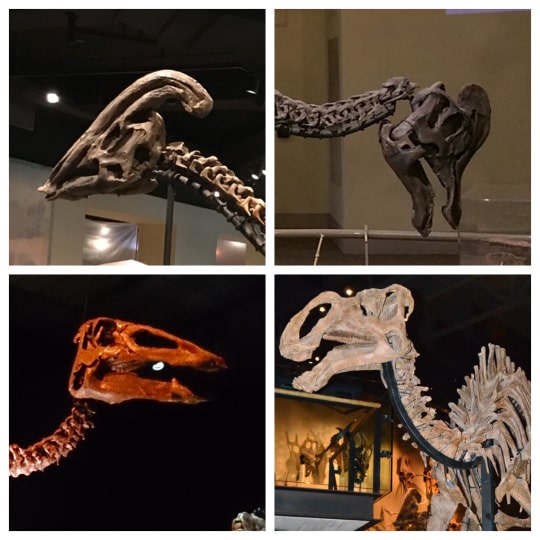
A gallery of hadrosaur heads. Top left: the lambeosaurine Parasaurolophus at the Field Museum of Natural History in Chicago (photo by the author). Top right: the lambeosaurine Corythosaurus at Carnegie Museum of Natural History (photo from Wikimedia Commons). Bottom left: the saurolophine Edmontosaurus at the Houston Museum of Natural Science (photo from Wikimedia Commons). Bottom right: the saurolophine Gryposaurus at the Natural History Museum of Utah in Salt Lake City (photo from Wikimedia Commons).

As a crestless hadrosaur, Gryposaurus was a saurolophine. Despite its lack of crest, its skull still had pizzazz: its nasal bone arched dramatically, giving the impression of a ‘Roman nose’ (which is very noticeable if you compare the skulls of Edmontosaurus and Gryposaurus in the image above). The name Gryposaurus notabilis means “notable hooked-nose lizard” in homage to this feature. G. notabilis is the type species of Gryposaurus; type species are typically the first ones to be named in a genus, and therefore become the reference to which all new specimens that may belong to that genus are compared. The other species (such as G. monumentensis, shown in the photo montage above) are similar enough to the type species that they can be referred to the genus Gryposaurus, but they differ in too many ways to be assigned to G. notabilis itself.

Occasionally, paleontologists will revisit a fossil species or genus and decide that it is either too similar to another to justify its own name or that certain specimens are too different to be grouped under the same name. Kritosaurus, another saurolophine with a ‘Roman nose,’ has fallen victim to both of these circumstances. It was originally considered its own genus, but was subsequently revisited by paleontologists who decided that it was so similar to Gryposaurus that the two genera were lumped together under the name Gryposaurus (when combining taxonomic groups, the first name that was published is the one that gets used). However, later paleontologists reviewed the evidence again and split a single species of Kritosaurus back out of Gryposaurus. The famous sauropod (giant long-necked herbivorous dinosaur) Brontosaurus underwent a similar series of changes over the years: originally, it and Apatosaurus were considered different animals, but after a review they were lumped together under Apatosaurus. Recently, the two were split apart again and the name Brontosaurus was revived (to the delight of fans of that name around the world).

It is not uncommon in paleontology for species to be lumped or split based on new or revisited evidence. When you consider that the decision to name new fossil species is often based on fragmentary, highly incomplete skeletons, you can see why it might be difficult to get things right the first time! These changes sometimes give people the impression that paleontologists “can’t make up their minds” or “contradict themselves,” but we must remember two things. First, that science is meant to change based on new evidence. Second, there have been thousands of paleontologists over the course of history, and every one of them is an individual person who can draw their own conclusions based on the same evidence. Although the resulting changes can disappoint fans of a specific animal or hypothesis, revision is normal and beneficial for the field as a whole. Scientists are supposed to be nebby – it’s how we make new discoveries!

Lindsay Kastroll is a volunteer and paleontology student working in the Section of Vertebrate Paleontology at Carnegie Museum of Natural History. Museum staff, volunteers, and interns are encouraged to blog about their unique experiences and knowledge gained from working at the museum.
Related Content

Mesozoic Monthly: Aspidorhynchus

Ah, Snap! Dino Named for Marvel’s Thanos

Jurassic Days: Specimen Scavenger Hunt

Filed Under: Blog Tagged With: dinosaurs in their time, Educator Resources, Lindsay Kastroll, Mesozoic Monthly, Museum from Home, Science News, Section of Vertebrate Paleontology

August 24, 2020 by wpengine

Protecting Plant Specimens from Decomposing

It takes a lot of time and care to keep our collections and specimens out of harm’s way. A TikTok viewer asked us on a video of mounting a herbarium specimen, “How do you protect it from decomposing?” and we sought to answer that question, but it would certainly take more than 150 characters. From start to finish, the process can take anywhere from 7 days to weeks, depending on the amount of specimens that we receive. We have roughly 533,000 specimens, and that number continues to grow. Here’s a look at what steps we take to ensure they will last and be preserved for use in the future.

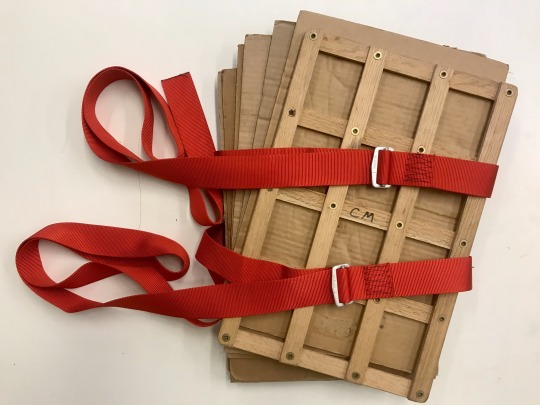
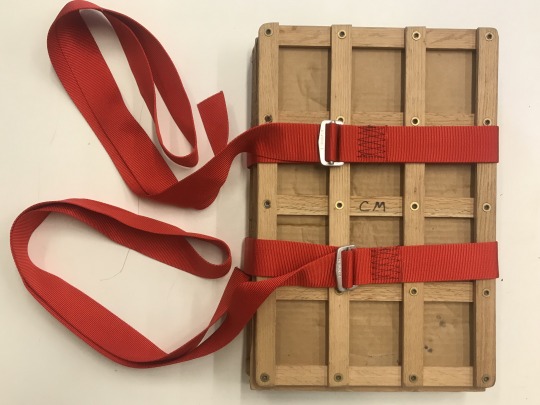
First, we press the new fresh plants between sheets of newspaper and corrugated cardboard and use cam straps to bundle them as tightly as possible.

stack of boards secured with red straps
cardboard, wooden boards, and red cam straps

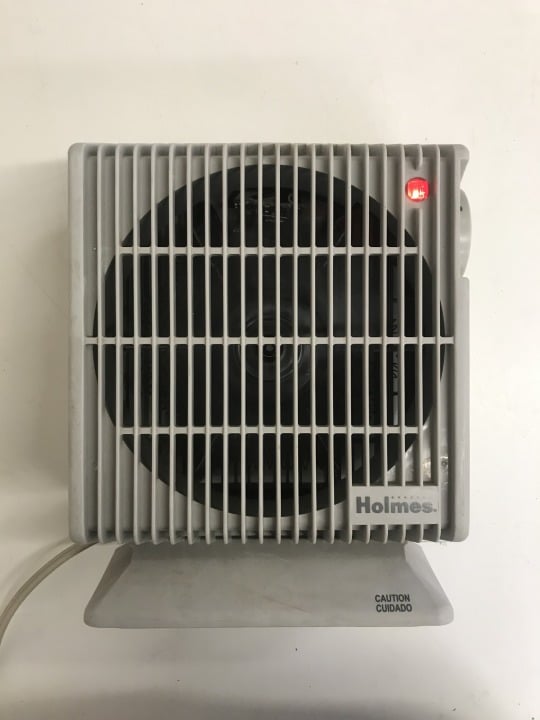
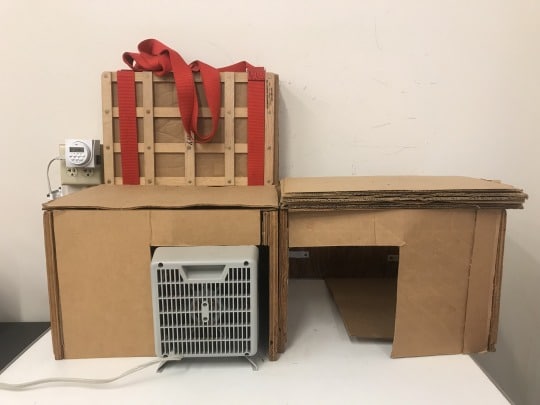
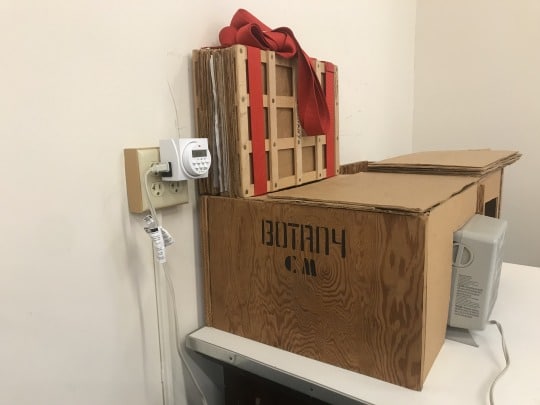
We dry them rapidly with a box crafted by Bonnie and Joe Isaac.  A small space heater forces warm dry air between the pieces of cardboard. The quick drying is essential to preserving the colors of plants we collect. Quick drying also makes it less likely a plant specimen will rot, mold, or have browning of leaves than if it were just drying at room temperature for several days or weeks. Our method usually dries them in 72 hours or less.

detail of space heater
box setup for quick drying of plant specimens
side view of box setup for quick drying of plant specimens

After they are pressed, we place the specimens in a freezer for at least 24 hours. This will be their first freeze: it is done to get rid of any living pests that may be hiding in the material.

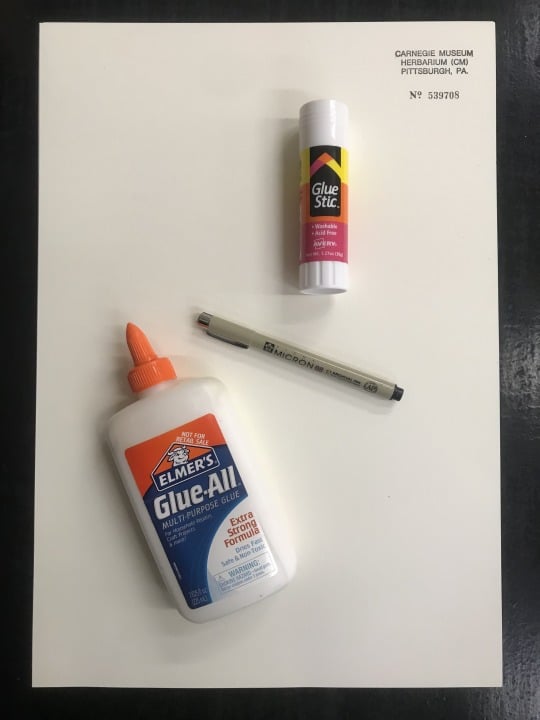
Next, we mount dried plant specimens onto cotton fiber neutral pH archival acid free paper.  The basic Elmer’s glue we use to stick the specimens to the paper is also acid free and good for archival use, as well as the paper and ink used on the data labels. After they are mounted, they will meet with the freezer for at least another 24 hours, assuring any pests that were able to survive the last freeze will be eliminated.

mounting tools: Elmer's Glue-All, archival pen, Glue Stic

Their data are then entered into our database, and we take high resolution photos so that we can post the images alongside their data for use.

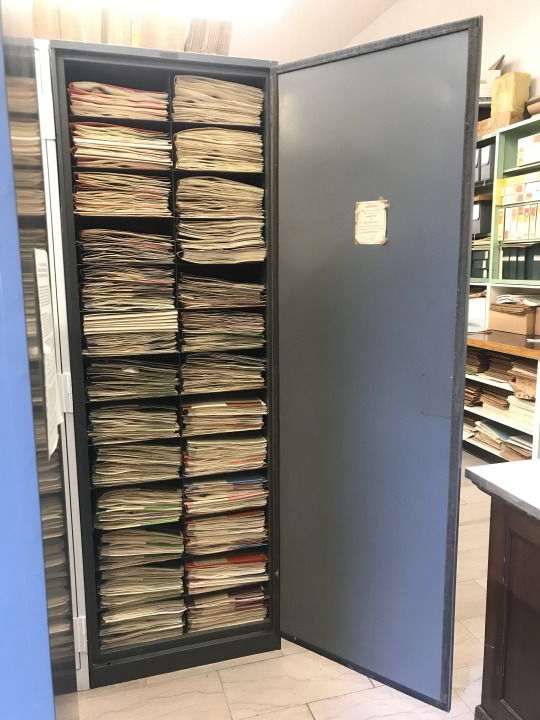
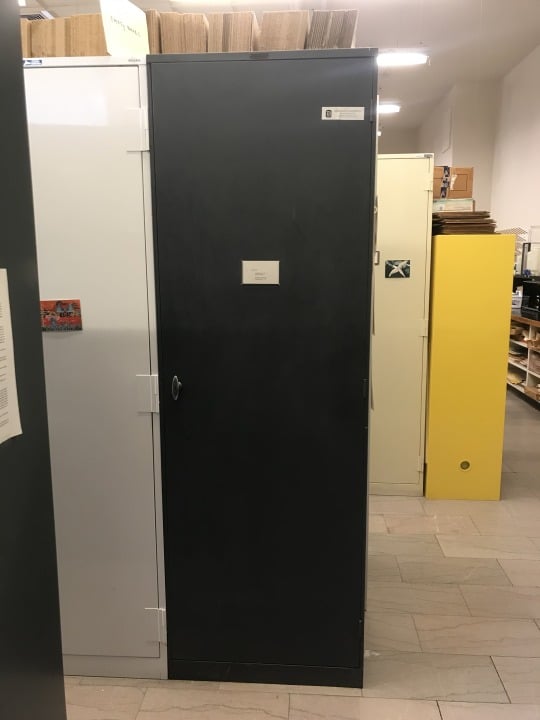
Finally, the metal cases we store them in are light tight and airtight, preventing exposure to UV light, insects and pests, humidity, water, and in some cases fire damage. UV light can be the most harmful to the fading and quality of specimens. The longer things are on display the more faded the colors can become, which is part of why behind the scenes collections are so important.

open cabinet full of stacked plant specimens
closed metal cabinets

Maintaining and protecting the collections that we house is a full time labor of love. You see these specimens through so many steps and look closely at each item. You learn their names, their attributes, where they are from, and you share these tiny joys with everyone else when you are able to display these beautiful works of nature and art. So maybe another answer to the question “How do you protect it from decomposing?” is… you just love it a little extra.

Sarah Williams is Curatorial Assistant in the Section of Botany at Carnegie Museum of Natural History. Museum employees are encouraged to blog about their unique experiences and knowledge gained from working at the museum.
Related Content

Going Digital for Nature

Collected on this Day in 1966: Santa Clauses

Museum Conservation: Cleaning the Kayak in Wyckoff Hall of Arctic Life

Filed Under: Blog Tagged With: Botany, Hall of Botany, Sarah Williams, Science News, Section of Botany

August 21, 2020 by wpengine

The Bromacker Fossil Project Part IX: The Dissorophoid Amphibians Tambachia, Rotaryus, and Georgenthalia, Capable Travelers

New to this series? Read The Bromacker Fossil Project Part I, Part II, Part III, Part IV, Part V, Part VI, Part VII, and Part VIII.

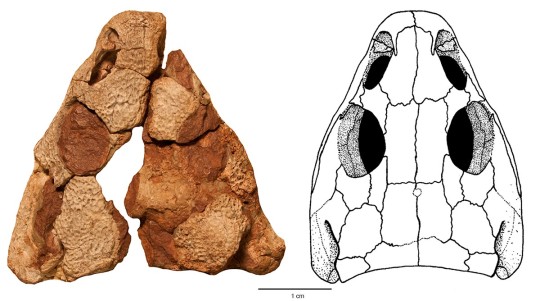
The Dissorophoidea are a group of ancient amphibians that were common about 290 million years ago, when the animals fossilized in the Bromacker quarry were alive. The group consists of small to medium-sized water- and land-dwelling vertebrates (animals with backbones) that ate invertebrates (e.g., dragonflies, cockroaches, and millipedes) and vertebrates smaller than themselves. Most scientists agree that modern amphibians (frogs, salamanders, and the reclusive, worm-like, subterreanean caecilians) had their origins among the dissorophoids. Three disssorophoid species are currently known from the Bromacker quarry, and at least one and possibly two more are yet to be described. Two of the described species, Tambachia trogallas and Rotaryus gothae, are members of the dissorophoid subgroup Trematopidae, and the other, Georgenthalia clavinasica, is a member of the subgroup Amphibamiformes. All of them inhabited the terrestrial realm and most likely only returned to water to breed.

Photograph (left) and reconstruction (right) of the skull of the holotype and only known specimen of Tambachia trogallas in dorsal (= top) view. Photograph by the author (2013) and reconstruction by Stuart Sumida, modified from Sumida et al. (1998).

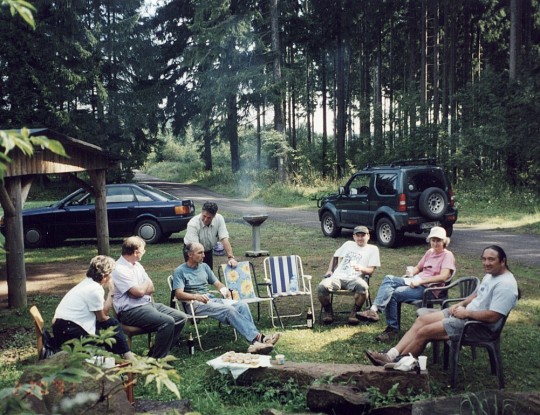
The first trematopid discovered in the Bromacker quarry was found by Thomas Martens in 1980, and it is represented by a poorly preserved skull and skeleton. Stuart Sumida, as lead author of the scientific paper presenting it, coined the name Tambachia trogallas. Tambachia refers to the Tambach Formation, the rock unit preserving the Bromacker fossils, which in turn is named after the nearby village of Tambach, which is now merged with the adjacent town Dietharz to become Tambach-Dietharz. “Trogallas” is from the Greek “trogo,” meaning munch or nibble, and “allas,” meaning sausage, in reference to all of the bratwurst consumed during Bromacker field seasons by the authors of the Tambachia publication (Stuart, Dave Berman, and Thomas). The state where the the quarry is located, Thuringia, is famous for its bratwurst and rightly so. A hot bratwurst for lunch was always welcomed when we experienced what Thomas called “Scandanavian summers,” which were cold and rainy. The then-Bürgermeister (mayor) of Tambach-Dietharz, who also was a butcher, was so thrilled by the name that he hosted an annual bratwurst lunch featuring brats that he’d made. This tradition was carried on by subsequent Bürgermeisters, though they had to buy the featured main course.

Bratwurst lunch in the Thuringian Forest close to the Bromacker quarry. Seated are (from left to right) unknown, Rainer Samietz (then Director of the Museum der Natur Gotha, now retired), Thomas Martens, Johannes Müller (then field assistant and now Professor at Museum für Naturkunde, Berlin), the author, and Stuart Sumida. The Bürgermeister is standing behind Thomas. His bratwurst grill, which he transported in his SUV, is between the vehicles. Photo by Dave Berman (2002).

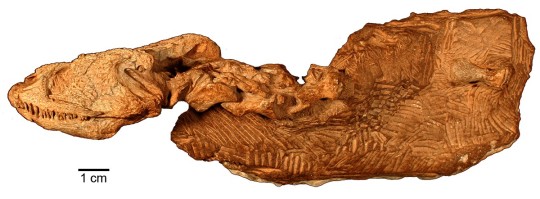
Skull and partial skeleton of Rotaryus gothae in left lateral (= side) view. Photograph by the author, 2008.

When Rotaryus gothae was found in 1998, only part of the skull was exposed, so we took out a large block expecting a complete skeleton to be preserved, as typically occurs at the Bromacker. Once I began preparing the specimen, however, I was extremely disappointed to find that only a small portion of the body of the animal was present. At least we had the skull, the most scientifically important part of the skeleton. Dave led the scientific study of Rotaryus, and he named it in honor of the Gotha Rotary Club, an organization that generously provided financial support for Bromacker fieldwork. Dave sent the head of the Gotha Rotary Club three choices for the fossil’s name, and the members voted on which one to use.

At the time that Tambachia and Rotaryus were named and described in scientific publications in 1998 and 2011, respectively, trematopids were known only from the USA. Their presence at the Bromacker added to the growing list of animals previously thought to only inhabit North America, such as Diadectes and Seymouria. In hindsight, it is not surprising that trematopids also had a more cosmopolitan distribution, because although they are amphibians, their skeletons were strong enough to support their body out of water and withstand the effects of gravity, thus enabling them to disperse to far corners of the world (though hypotheses of such dispersal assume that no physical or climatic barriers prevented movement).

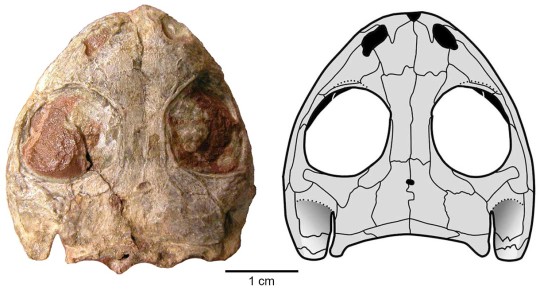
I was the lucky person who discovered, in 2002, the amphibamiform Georgenthalia clavinasica. I recall lifting up a block of rock that I had loosened with a hammer and chisel and seeing two ghostly eye openings staring back at me. The rest of the skeleton was preserved with the skull, but unfortunately all bone beyond the skull was extremely eroded from groundwater and had the consistency of mashed potatoes.

Photograph (left) and reconstruction (right) of the skull of Georgenthalia clavinasica in dorsal (= top) view. Both by Jason Anderson, 2007.

After Tambachia was named, the Bürgermeister of the nearby village of Georgenthal, whose boundaries included the Bromacker quarry, approached Dave about naming a fossil after his village. Dave then asked Jason Anderson, a colleague from the University of Calgary and the project’s lead researcher, to name it Georgenthalia. Jason created clavinasica from the Latin “clavis” for key, and “nasica” for nostril, in reference to the fossil’s keyhole-shaped nostril, a unique feature that differentiates Georgenthalia from all other amphibamiforms.

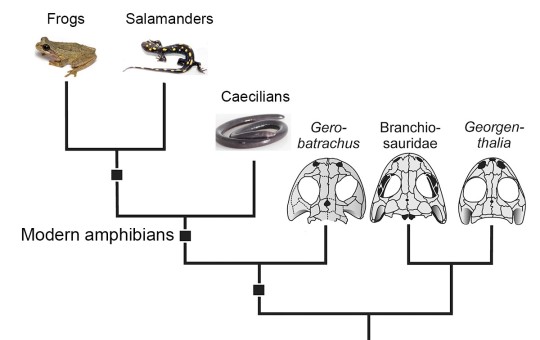
Jason, as lead author of a 2008 scientific publication, concluded that the relationship of Georgenthalia to other amphibamiforms was uncertain. Computer algorithms are used to analyze relationships of organisms by tabulating the proportion of unique characteristics shared between the members of the group under study. A group of organisms that share unique characters is called a clade, and members of a clade are considered to be more closely related to each other than they are to members of other clades. These relationships are depicted in a diagram of relatedness called a cladogram.

A 2019 study by dissorophoid expert Rainer Schoch (Curator, Naturkunde Museum Stuttgart) that investigated the ancestry of modern amphibians revealed Georganthalia as a member of a clade that also includes modern amphibians (see figure below). The fossil Gerobatrachus, however, is more closely related to modern amphibians than it is to the clade consisting of Georgenthalia and Branchiosauridae (a group of aquatic amphibamiforms). This indicates that although Georgenthalia (along with Branchiosauridae) is in the clade containing modern amphibians, it is not directly ancestral to them.

Cladogram showing the relationship of Georgenthalia (far right) to modern amphibians. Cladogram modified from Schoch (2019); images of modern amphibians from Wikimedia Commons.

Stay tuned for my next post, which will feature yet another terrestrial amphibian, a fossil from a locality in Tambach-Dietharz.

If you would like to learn more about Tambachia, Rotaryus, or Georgenthalia, please follow the links below.

Tambachia

Rotaryus

Georgenthalia

Amy Henrici is Collection Manager in the Section of Vertebrate Paleontology at Carnegie Museum of Natural History. Museum employees are encouraged to blog about their unique experiences and knowledge gained from working at the museum.
Keep Reading

The Bromacker Fossil Project Part X: Tambaroter carrolli, an Amphibian with a Wedge-Shaped Head 

Filed Under: Blog Tagged With: Amy Henrici, Museum from Home, Science News, Section of Vertebrate Paleontology, The Bromacker Fossil Project, Vertebrate Paleontology

  • « Go to Previous Page
  • Page 1
  • Interim pages omitted …
  • Page 29
  • Page 30
  • Page 31
  • Page 32
  • Page 33
  • Interim pages omitted …
  • Page 43
  • Go to Next Page »

sidebar

About

  • Mission & Commitments
  • Directors Team
  • Museum History

Get Involved

  • Volunteer
  • Membership
  • Carnegie Discoverers
  • Donate
  • Employment
  • Events

Bring a Group

  • Groups of 10 or More
  • Birthday Parties at the Museum
  • Field Trips

Powdermill

  • Powdermill Nature Reserve
  • Powdermill Field Trips
  • Powdermill Staff
  • Research at Powdermill

More Information

  • Image Permission Requests
  • Science Stories
  • Accessibility
  • Shopping Cart
  • Contact
  • Visitor Policies
Stay in the loop! Sign up for our newsletter(s).
One of the Four Carnegie Museums | © Carnegie Institute | Privacy Policy | Terms of Use | Accessibility
Rad works here logo