• Skip to primary navigation
  • Skip to main content
  • Skip to primary sidebar

Carnegie Museum of Natural History

One of the Four Carnegie Museums of Pittsburgh

  • Visit
    • Buy Tickets
    • Visitor Information
    • Exhibitions
    • Events
    • Dining at the Museum
    • Celebrate at the Museum
    • Powdermill Nature Reserve
    • Event Venue Rental
  • Learn
    • Field Trips
    • Educator Information
    • Programs at the Museum
    • Bring the Museum to You
    • Guided Programs FAQ
    • Programs Online
    • Climate and Rural Systems Partnership
  • Research
    • Scientific Sections
    • Science Stories
    • Science Videos
    • Senior Science & Research Staff
    • Museum Library
    • Science Seminars
    • Scientific Publications
    • Specimen and Artifact Identification
  • About
    • Mission & Commitments
    • Directors Team
    • Museum History
  • Tickets
  • Give
  • Shop

Blogs from our Scientific Researchers

Carnegie Museum of Natural History is home to active research and vast scientific collections. Our scientific researchers regularly contribute to the blog at the museum.

December 15, 2020 by wpengine

An Indigenous Presence: Cultural Survivance and Contemporary American Indian Art & Design

Museum exhibitions, especially those featuring cultural items, can sometimes give the impression of cultures or peoples frozen in time. Behind the scenes, however, CMNH is a flurry of active research and knowledge production. Work to link our collections and exhibitions to the present moment is vital.

As an art historian who studies modern and contemporary art, I often think about the connections over time and space between historic objects. Lately, I’ve been thinking about many of the American Indian belongings we have on display in Alcoa Hall, and contemporary art. This contemplation reveals the influence American Indian artists have exerted and continue to exert on the American art world.

In the early 20th century, Indian artists were instrumental in the formation of American modernism. Artists such as Awa Tsireh (San Ildefonso Pueblo), the members of the Kiowa Five (Spencer Asah, James Auchiah, Jack Hokeah, Stephen Mopope, Monroe Tsatoke and Lois Smoky), Angel De Cora (Ho-Chunk), and potter Maria Martinez (San Ildefonso Pueblo) influenced the growing trends of abstraction and patterning that defined modernist painting in the United States. These artists, along with other American Indian artists and artisans helped establish the US as a growing center of modernism in competition with Europe. Despite having their contributions and innovations undercut or co-opted by Euro-American artists and collectors, Native artists continued to produce artwork as acts of survivance. Survivance, a concept developed by cultural theorist Gerald Vizenor, is an expression of active presence. The term denotes a response to the attempted cultural and physical genocide of Native peoples in the United States that is beyond simple survival, but involves acts of resistance that declare a dynamic presence – often combining traditional ways of knowing with contemporary technologies that are specific to an individual or tribal affiliation.

Later in the century, Native artists continued to define the American art scene. Artists like Fritz Scholder (Luiseno), Kevin Red Star (Apsáalooke), Edgar Heap of Birds (Cheyanne and Arapaho), and Jaune Quick-to-See Smith (Salish) continued (and continue) to challenge the mythology of the Indian in American imaginary.  These artists, whose creations have been collected and exhibited by major museums across the country, also view their art as a form of resistance. Their work can therefore be understood as acts of survivance.

Contemporary American Indian artists are still grappling with the politics of representation, regularly fighting stereotypes while also working to preserve the cultural knowledge that the settler state tried to destroy through forced assimilation. Because of these complicated and often violent histories, it is important that, most of us, as descendants of settlers, think critically about Native inspired designs in the objects or clothing we buy. Instead of coopting from indigenous cultures, shop from companies that employ Native designers. Better yet, buy directly from Native artists who are demonstrating how traditional knowledge and ways of making are thriving in the 21st century. Featured below are just a few of the artists whose work is connected to the cultural forms and belongings on display in Alcoa Hall. Many of them also have great items for sale on their websites – just in time to find some special holiday gifts!

image
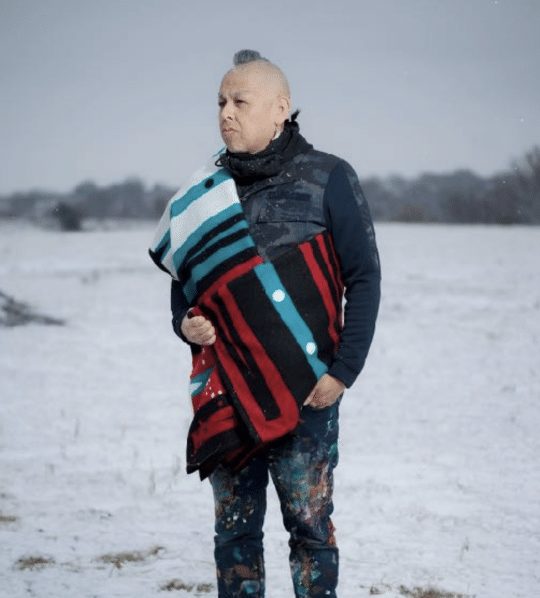
Bunky Echo-Hawk. Image credit: Ryan Redcorn

Bunky Echo-Hawk (Pawnee and Yakima) is a painter and designer who has worked with companies such as Nike and Pendleton to design Plains Indian inspired products and fundraise for Native organizations. His eye-catching and exciting work plays with indigenizing popular culture and addressing environmental racism while reinterpreting Plains Indian oral history and record keeping traditions, like winter counts, through his live painting performances. To learn more about winter counts, visit the display in Alcoa Hall featuring the Carnegie Winter Count by Dr. Thomas Red Owl Haukaas. Echo-Hawk was also the subject of a recent episode of American Masters, the PBS documentary series. Check out his website to browse some of the great prints and stickers he has for sale.

Bethany Yellowtail

Bethany Yellowtail (Apsáalooke and Northern Cheyenne) is the brilliant designer behind B. Yellowtail, a fashion brand launched in 2015. Her work is intimately connected with her social justice work in Indian Country. Her website features indigenously designed goods as well as her own collections – inspired by Apsáalooke traditions, like elk tooth dresses and ribbon skirts. Her clothing functions as wearable art that demonstrates the power and resilience of Native women and matrilineal cultural systems. I’ve purchased some of their cloth face masks – the proceeds of which benefit Native communities suffering from COVID-19. I’m confident you’ll find something you love on B. Yellowtail’s website.

John Isiah Pepion (Blackfoot) understands the ceremonial importance of making artwork, including its healing power. Pepion’s paintings, drawings, and designs are inspired by traditional practices such as winter counts and ledger drawings. Ledger art dates to the 1850s, when ledger books became one of the primary materials available to Plains Indians, especially to those imprisoned in forts as prisoners of war during the 19th-century Indian wars, without access to traditional materials like bison hides. Pepion’s work in this medium serves as cultural preservation, keeping him and his artwork tied to Blackfoot history and to Blackfoot ancestral lands. His website features original artwork, prints, and all sorts of items with his designs including scarves, stationery, blankets, and jewelry.

image
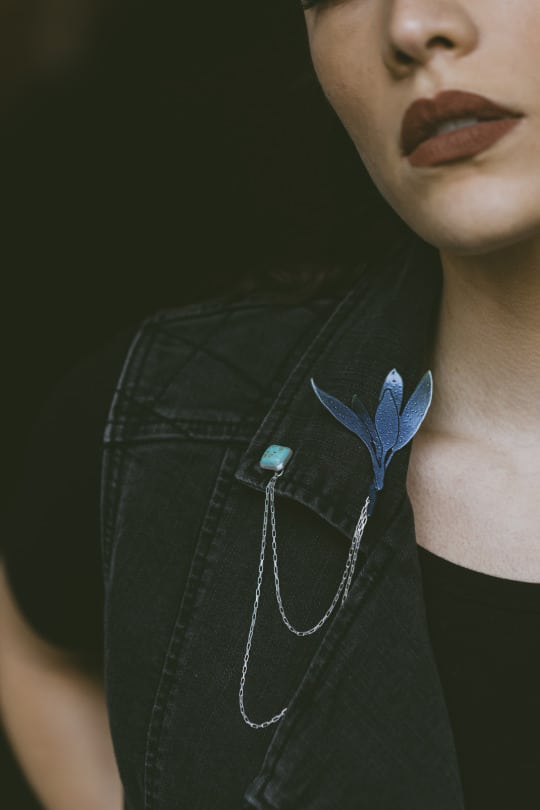
Sage Protection Pin by Margaret Jacobs. Image credit: Taylor Robinson.

Margaret Jacobs (Akwesasne Mohawk) is a sculptor and jewelry designer who works primarily in steel and pewter. Her forms are primarily abstract, but the material represents not only strength and resistance, but also references the history of Mohawk iron workers, featured in Alcoa Hall. Her abstract forms play between the organic and man-made, connecting color and shape with storytelling and family histories. You can find her sculpture or jewelry, which truly functions as wearable art, on her website.

It is important to note that Carnegie Museum of Natural History, and much of Western Pennsylvania, is on the traditional lands and waterways of the Seneca, Lenape (Delaware), and the people we refer to as the Monongahela (their autonym is currently unknown). These lands and waters were also important to the Shawnee, Wyandotte, and Osage nations. These lands carry the histories of these people from before their forced removal and through their struggles and triumphs for survivance well into the present moment. To find out more about the Seneca Nation (including about Seneca artists) visit the Seneca-Iroquois National Museum or Ganondagan Seneca Art & Culture Center. To learn more about the Lenape, go to the Delaware Nation or the Delaware Tribe of Indians. Or visit the Museum of Indian Culture, in Allentown, PA.

Jessica Landau has a joint appointment as Assistant Curator of Anthropology and Archaeology at Carnegie Museum of Natural History and as a Lecturer in Curatorial Studies in the History of Art & Architecture at University of Pittsburgh. Museum employees are encouraged to blog about their unique experiences and knowledge gained from working at the museum.

Related Content

Seldom Seen – Archaeological Textiles in the Eastern US

Americal Eel

Museum Conservation: Cleaning a Kayak

Filed Under: Blog Tagged With: anthropology, Jessica Landau, Museum from Home, Science News

December 14, 2020 by wpengine

Oh deer, that’s a lot of parasites!

by Andrea Kautz

When a permitted hunter harvested a deer from Powdermill Nature Reserve in mid-November, I took the opportunity as an entomologist to inspect the hide for parasites. I was not surprised to find deer ticks and deer keds on the animal, but I was surprised by how many parasites there were, and the presence of two additional species of ticks not previously known from Powdermill.

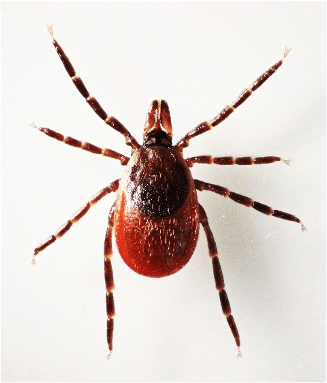
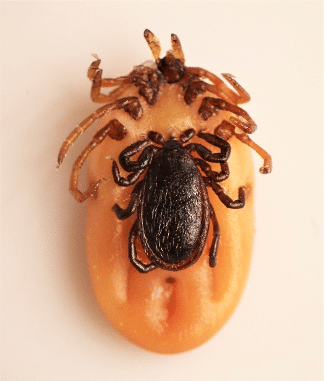
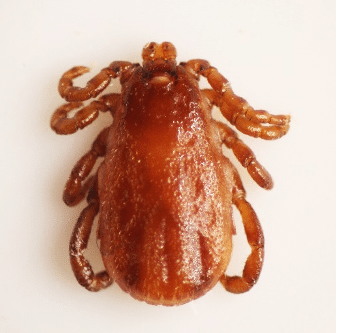
Deer ticks (Ixodes scapularis) are infamous to most Pennsylvanians as the main vectors of Lyme disease. Over 300 deer ticks were found on this single deer, so that should give you an idea of how they can be so abundant, especially in areas with high deer densities. Adult females (Picture 1) were mostly found attached to the skin, in the process of becoming engorged with blood. Many adult males were also found on the deer, but since they don’t require a blood meal, what were they doing on a host? It turns out, a deer is a great place to locate a mate! While the female is attached for days feeding on blood, a male can easily locate and mate with her by inserting his mouthparts into an opening on her ventral side. Many of the females removed from the deer had a male attached (Picture 2).

deer tick
female deer tick with male deer tick attached

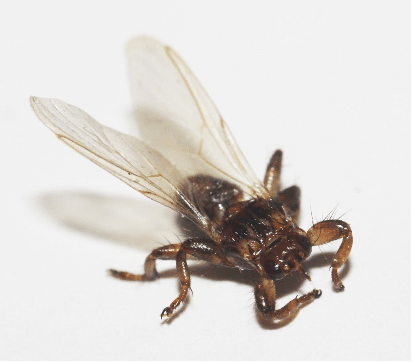
Deer keds (Lipoptena cervi) are sometimes called tick flies because of their resemblance to ticks (both are flattened dorsoventrally), but they behave rather differently. Keds move much faster than ticks, and don’t remain attached for long periods of time while feeding. They are indeed true flies, in the same group of insects as the typical house fly, but they remove their wings once they locate a host, to make it easier to move within the dense hair. The adult females and males both feed on blood, and the female carries one larva at a time internally, giving birth to a mature larva ready to pupate. This is rare among insects, which typically lay many eggs at one time. About 450 keds were collected off this one deer, so the strategy seems to be working for them!

deer ked

Winter ticks (Dermacentor albipictus) are closely related to the more familiar American dog tick (Dermacentor variabilis), but have a different life cycle. While most ticks utilize different hosts throughout their life cycle (feeding on three different animals as a larva, nymph, and adult), winter ticks spend their whole life on a single host, most commonly a deer, elk, or moose. They can be a serious problem for moose when infestations are severe. Three males of this species were collected off the deer. Although the winter tick has a broad distribution across North America, this trio represents the first Powdermill record.

winter tick

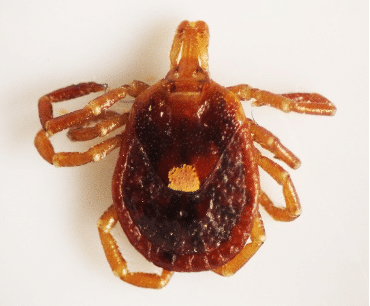
The fourth and final parasite recovered from the deer was a single female Lone Star tick (Amblyomma americanum). Easily recognized by the white dot on the back of adult females, Lone Star ticks are found across the eastern U.S. and use a variety of mammals and birds as hosts. This is our first time encountering this species at Powdermill as well!

Lone Star tick

Penn State is conducting a citizen science project called PA Parasite Hunters to learn more about deer parasitology and vector-borne diseases, so the keds and ticks we collected will be sent there in order to contribute to these important studies.

Andrea Kautz is a Research Entomologist at Carnegie Museum of Natural History’s Powdermill Nature Reserve. Museum employees are encouraged to blog about their unique experiences and knowledge gained from working at the museum.

Related Content

An Annual Return to My Bug-Loving Roots

Bobcats

Ask a Scientist: What are murder hornets?


Carnegie Museum of Natural History Blog Citation Information

Blog author: Kautz, Andrea
Publication date: December 14, 2020

Share this post!

  • Share on Twitter Share on Twitter
  • Share on Facebook Share on Facebook
  • Share on Pinterest Share on Pinterest
  • Share on LinkedIn Share on LinkedIn
  • Share on Reddit Share on Reddit
  • Share via Email Share via Email

Filed Under: Blog Tagged With: Andrea Kautz, insects, Museum from Home, Powdermill Nature Reserve, Science News

December 10, 2020 by wpengine

Ice and Snow: The effects of temperature

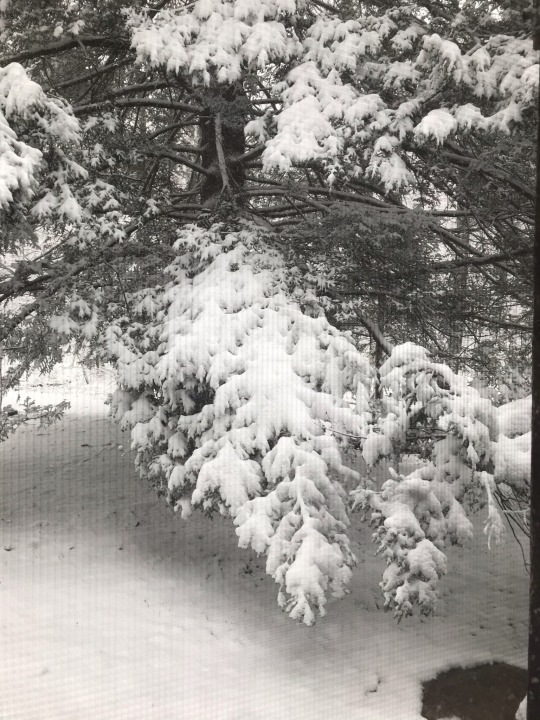
Winter is coming! The temperature is dropping. The first snow fall in the Laurel Highlands was gorgeous. The snow was hanging on the trees and piling up around the cabin we were staying in. Driving home to Pittsburgh in the storm was not so fun, reminding me of scenes from Game of Thrones and my childhood. By the next morning the beauty of the snow was already receding as the temperatures climbed in Pittsburgh.

Snow laden pine tree at Powdermill Nature Reserve. December 1, 2020.

Full disclosure, I love winter – but then I am from Minnesota where one either embraces the cold and snow or hibernates for the long cold days. We celebrate winter in Minnesota. The St. Paul Winter Carnival began in 1887, when some east coast journalists claimed that the state was as inhabitable as Siberia. The annual festival developed its own legend with events like ice skating, a night parade, a full-sized ice palace, and an ice sculpting contest. It can be magical. The carnival is in January – often the coldest time of the year, with sub-zero temperatures and bitter cold winds. However, occasionally there is a thaw.

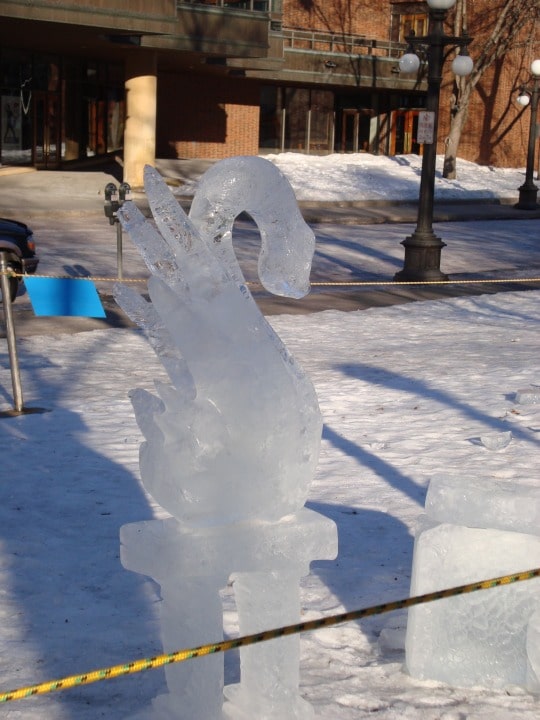
The ice sculpting contest is in held in Rice Park, across from the Courthouse and St. Paul Public Library (yes, it is one of the Carnegie Libraries). Dozens of intricate sculptures are carved each year. When I lived in the city, I used to walk across the park daily on my way to work from my bus stop. It was fascinating to watch the sculptures take form. Artists would use hot water to build blocks of ice into the basic form, then use chain saws, chisels and more hot water to carve and sculpt. My favorites were the fanciful forms that were crystal clear. Standard practices changed during the heat wave of 2008. Temperatures rose to the mid 30’s during the day and refreeze each night. With each passing day the sculptures deformed and lost definition. That year the judging did not take place.

Within a few days this elegant swan went from a crystal-clear sculpture to the distorted image you see here. What a little warmth will do! The extreme and fluctuating temperatures that we experience during the winter months pose a challenge. Have you ever wondered why potholes develop or why slabs of the sidewalk tilt? What we think of as the ground freezing is mostly the water in the ground freezing. As this happens the water expands (think ice cubes). As the temperature warms up, above 32 degrees Fahrenheit, the ground subsides. Of course, it does not do this in a uniform manner – some areas freeze faster and thaw faster than others. Rocks and soil shift. The hard surface of the road or sidewalk is dislodged. The concrete slab tilts or the pothole develops. Of course, heavy traffic from cars and trucks just aggravates the situation. The more often the temperature fluctuates between freezing and thawing – the worse the problem is and the more damage to your car as you hit that pothole.

As the Objects Conservator at the Carnegie Museum of Natural History, I do not have to worry too much about these kinds of extreme temperature fluctuations. Most of the collections under my care are quite happy at the same temperatures that we humans find comfortable. Most materials are stable enough to survive moderate fluctuations, which can be maintained using heating and air-conditioning.

Gretchen Anderson is a conservator and the head of the Section of Conservation at Carnegie Museum of Natural History. Museum employees are encouraged to blog about their unique experiences and knowledge gained from working at the museum.

Related Content

Staying Connected to Nature in the Winter Months

Collected in 1840: Holly

A Perfect Mineral for the Christmas Season

Filed Under: Blog Tagged With: Gretchen Anderson, Museum from Home, Science News

December 10, 2020 by wpengine

Staying Connected to Nature in the Winter Months

December brought in a thick blanket of snow, and Pittsburgh looked like a winter wonderland. As I write, from my chair looking out into the wonderland, I am reminded of the beauty that nature has to offer and the splendor of Pittsburgh’s seasonal climate. While all I want to do today is curl up with a good book next to a fire sipping a hot drink, I am aware that too much indoor time is not the best for my wellbeing as it can reinforce the “winter blues.”

I personally find that getting outdoors is the best way to re-center, reconnect, and restore my wellbeing. As described by Bratman et al. (2012), “for hundreds of years and across many cultures of the world, influential traditions in science, philosophy, poetry, and religion have emphasized the role that nature plays in providing feelings of wellbeing. In the modern era of scientific enterprise, a large body of work has demonstrated the importance of nature to human physical health, characterizing the numerous ways in which people depend on the natural environment for security in the supply of food, water, energy, climate stability, and other material ingredients of well-being.”

However, while beautiful, winter can make it difficult to get out and get reconnected with nature. So, how do I get out in nature during the winter months? Here are some tricks that I use to keep a hike comfortable during the colder months:

1.     Stay local! The days are short, and there are limited daylight hours – if you stay local, you get to make the most of the shorter days. Staying local also allows shorter outdoor time commitments if it’s too cold, too wet, or there’s just not enough time in the day.

2.     Layer up! We produce a lot of heat when we are active, and we might need to add or take away layers while outside. Layering up (or having layers available) allows us to maintain a more comfortable temperature while outdoors.

3.     Protect your feet! This is a big one for me. My feet’s comfort are my gauge for how long I can stay out. Good socks (or layered socks) with waterproof boots or shoes can really make an outdoor adventure in winter enjoyable. If you are really into the winter hiking, snow shoes or shoes with ice spikes might be necessary for the more adventurous types.

4.     Eat! Bring snacks and keep your metabolism going. Being outdoors in colder weather requires a lot of energy; so bring those snacks! Don’t be afraid of those Christmas cookies if you’re outside burning all those calories!

5.     Be Cautious! Do your homework on where you are going and bring a friend if possible. Knowing the terrain ahead of time and looking up the safest route(s) can help you make the most of your trip. Having someone with you is also important for both safety and overall enjoyment.

Sometimes, it’s just not possible to hike safely during the winter months. Poor road conditions can make hiking sites inaccessible, and extreme temperatures and weather can create hazards. Sometimes, you just don’t have the time, or you are feeling under the weather. Well, there are little ways that you can still reconnect with “nature” indoors. You can grow indoor plants, watch nature TV or programs, read about nature, or even paint/draw nature. Get creative on how you bring the outdoors inside.

If you are feeling the winter blues or you feel out of sorts – try reconnecting with nature. It could be the boost to your wellbeing that you need to get through the indoor season.

Heather Hulton VanTassel is Assistant Director of Science and Research at Carnegie Museum of Natural History. Museum employees are encouraged to blog about their unique experiences and knowledge gained from working at the museum.

Bratman et al. (2012). 118–136. New York Academy of Sciences. doi: 10.1111/j.1749-6632.2011.06400.x.

Related Content

Woodlands in White

What Do Bugs Do During the Winter?

Ask a Scientist: How do you find rare plants? 

Filed Under: Blog Tagged With: Heather Hulton VanTassel, Museum from Home, Science News

December 9, 2020 by wpengine

The Bromacker Fossil Project Part XII: Tambacarnifex unguifalcatus, the Tambach executioner

New to this series? Read The Bromacker Fossil Project Part I, Part II, Part III, Part IV, Part V, Part VI, Part VII, Part VIII, Part IX, Part X, and Part XI. 

Holotype specimen of Tambacarnifex unguifalcatus, preserved in couterparts. Photographs by Dave Berman, 2010.

Tambacarnifex unguifalcatus was discovered by Thomas Martens and his father Max in 1995 in the same pocket of fossils from which the first-discovered specimen of the herbivorous basal synapsid Martensius bromackerensis was recovered. Because numerous fossil animals were jumbled together, Thomas and Max weren’t able to collect individual specimens from the bone pocket using our standard technique of surrounding a specimen in a plaster and burlap jacket. Instead, they collected all the individual pieces of rock that contained bone or at least appeared to contain bone, as most rock pieces were coated in goopy mud. Thomas cleaned the rock pieces with water to reveal the bone, and then pieced together the various specimens.

He eventually sent us the specimen that became the holotype of Tambacarnifex, along with pieces that he thought might go with it. Dave and I spent hours piecing together the remainder of the skeleton, and we searched the collections at the Museum der Natur, Gotha for missing pieces in subsequent field seasons. The majority of the specimen was recovered, but the skull, a few vertebrae, and distal finger and toe bones are missing. A rock piece with the greater portion of a lower jaw with teeth was also collected from the bone pocket, though it couldn’t be associated with the skeleton and may represent a second individual. A lot of bone was lost from the specimen, but impressions of missing bone were preserved, which proved useful for identifying wrist and ankle bones, among others. Dave used a white pencil to color in the bone impressions so they would stand out for study and in photographs of the specimen. Ultimately, we realized that Martensius and Tambacarnifex were preserved one on top of the other, though separated by several inches of rock.

The lower jaw piece of Tambacarnifex unguifalcatus. Photograph by Dave Berman, 2008.

The teeth of Tambacarnifex preserved in the lower jaw are strongly recurved and flattened side-to-side, which, along with other features preserved in the skeleton, indicate it is a member of the basal synapsid group (family) Varanopidae and in the subfamily Varanopinae. The Varanopidae have been likened to the actively predaceous modern monitor lizards in the family Varanidae, hence the similar name. Varanopids were the most diverse and longest-surviving basal synapsids, being known from the Late Carboniferous–Middle Permian (~309–260 million years ago) of North America, Europe, Asia, and Africa. With their sharp, recurved teeth and a gracile skeleton, scientists think varanopids were agile predators, at least compared to other animals of their time. They range from about 12–78 inches in length, with the smallest ones probably being insectivorous and the larger ones carnivorous. Tambacarnifex has an estimated body size of about 35 inches, and as a medium-sized varanopid with gracile limbs it would have been an agile carnivore, preying on on any of the Bromacker vertebrates that it could catch.

An articulated but incompletely preserved series of 11 vertebrae of Tambacarnifex unguifalcatus. Notice that the neural spines are low and subrectangular, so it is unlikely that they supported a sail, as occurs in some other basal synapsids such as Dimetrodon teutonis. The front of the animal is to the left. Photo by Dave Berman, 2008.

Unlike Dimetrodon teutonis, the other apex predator at the Bromacker, Tambacarnifex has broad, low neural spines that alternate in height. It differs from other varanopines in the shape and anterior inclination of its neural spines and in having greatly elongated and recurved bony claw supports in its hands and feet. The generic name Tambacarnifex was coined in reference to its position in the food chain: “Tamba,” for the Tambach Basin, which the holotype inhabited, and the Latin “carnifex,” meaning executioner, for its role as an apex predator. “Unguifalcatus” was derived from the Latin “unguis,” nail or claw, and “falcatus,” meaning sickle-shaped, in reference to the long, strongly recurved bony claw supports.

Incomplete front (left) and hind (right) feet of Tambacarnifex unguifalcatus. Notice the extremely long bony claw supports preserved on the first, third, and fourth fingers of the front foot and the fourth toe of the hind foot. I–V refer to finger and toe numbers. Photos by Dave Berman, 2008.

Illustration of Tambacarnifex unguifalcatus consuming a Dimetrodon teutonis carcass. Outline drawing by Matt Celeskey, colored (with permission) by Carnegie Museum of Natural History Vertebrate Paleontology Scientific Illustrator Andrew McAfee.

Stay tuned for the final post of this series, which will summarize what we’ve learned about the Bromacker. Click here if you would like to download your own copy of the outline drawing of Tambacarnifex consuming Dimetrodon to color in. The paper describing Tambacarnifex unguifalcatus can be viewed by clicking here.

Amy Henrici is Collection Manager in the Section of Vertebrate Paleontology at Carnegie Museum of Natural History. Museum employees are encouraged to blog about their unique experiences and knowledge gained from working at the museum.

Related Content

Ask a Scientist: What is it like to discover a new species? 

Mesozoic Monthly: Gargoyleosaurus

Cephalopod Fossils from Lyme Regis, England

Filed Under: Blog Tagged With: Amy Henrici, dinosaurs in their time, Museum from Home, Science News, Vertebrate Paleontology

December 1, 2020 by wpengine

Digital Developments: Why Archiving and Herpetology Go Hand-in-Hand

This field notebook from 1945 belonged to Paul Walker. It contains observations and specimen measurements, all of which are organized by date.

Careers in librarianship are often depicted as quiet, solitary positions that allow ample time for reading on the job. Images associated with archival librarianship (a career usually pertaining to the collection, preservation, and management of historically relevant materials) get even more visually specific than the first, for they frequently involve mahogany framed spaces filled to the brim with dusty, leather-bound, centuries-old texts. Though whimsical, these notions about texts and their caretakers cause people to overlook a critical part of archival work: digital management of texts and data.

Our society’s emphasis on the importance of technological advances and virtual storage has not only advanced the librarian’s ability to scan and virtually distribute texts and documents with ease; it has also gone so far as to set the expectation that archival texts will be digitized, or converted into a digital form. This digitization both protects data from being lost to physical damage and, through mechanisms like databases, helps interested people gain greater levels of insight into the exciting and unique collections that exist around the world.

While libraries have always housed a wide range of texts and items from a variety of professional fields, the level of priority placed on digitizing archival collections has ultimately allowed for even more crossover between people of different professional backgrounds. My job in the Section of Amphibians and Reptiles is a prime example of this. Though I have been entrusted with caring for and scanning the section’s 20th-century field notebooks, my area of expertise is not herpetological by any means. I come from a strictly literary background, with my research focusing on 19th-century magazines for children. How, then, do these professional paths intersect?

Paper is not the only archival material that needs to be scanned. The museum is home to large flatbed scanners made for digitizing delicate materials like this one, a 1957 skin sample of a Black Rat Snake.

Apart from the fact that I have handled older texts before, my background and the needs of the Section of Amphibians and Reptiles exist in harmony because of a mutual recognition of the value of accessibility. While working with archival databases through transcription-based volunteer projects and past research positions, I learned that accessibility is as much about small details as it is about sharing the museum’s materials with other institutions and, ultimately, the public. For example, if my scans are too dark or are surrounded by too much black space, the readability of the document may be affected and people with limited access to printer ink may not be able to make copies of the material. Digitization may appear to simply prevent a loss of information, but the need for accessibility causes it to take on new meaning. As a future archivist, I prioritize scan quality and the organization of digital files so that museum employees and the public alike can always find and use these important scientific materials with ease. Though we come from different fields, the Section of Amphibians and Reptiles consistently prioritizes its concern with the use of these materials in the long run as well.

These tools are just some of the necessary pieces of equipment used to handle texts and materials during digitization. Pictured (from left to right): brushes for removing dust and dirt, a metal tool for the delicate removal of metal objects like staples and paperclips, plastic paperclips for keeping pages together without the risk of rust, a sponge for soot removal, and nitrile gloves for safely handling negatives and photos.

I am grateful that I am continuing to learn about the relevance of scientific specializations like herpetology to other fields. Likewise, I am glad that my understanding of librarianship continues to intersect with fields that I may not otherwise encounter. Perhaps, then, popular depictions of librarians and archivists can begin to recognize their preoccupation not only with reading and quieting patrons, but also with collaborating across disciplines to expand people’s access to information.

Ren Jordan is a Curatorial Assistant in the Section of Amphibians and Reptiles. Museum staff, volunteers, and interns are encouraged to blog about their unique experiences and knowledge gained from working at the museum.

Related Content

The Enduring Appeal of Snakes

Ask a Scientist: What is the creepiest specimen in the Alcohol House? 

A Holotype with a History

Filed Under: Blog Tagged With: amphibians and reptiles, herpetology, Museum from Home, Ren Jordan, Science News

  • « Go to Previous Page
  • Page 1
  • Interim pages omitted …
  • Page 23
  • Page 24
  • Page 25
  • Page 26
  • Page 27
  • Interim pages omitted …
  • Page 43
  • Go to Next Page »

sidebar

About

  • Mission & Commitments
  • Directors Team
  • Museum History

Get Involved

  • Volunteer
  • Membership
  • Carnegie Discoverers
  • Donate
  • Employment
  • Events

Bring a Group

  • Groups of 10 or More
  • Birthday Parties at the Museum
  • Field Trips

Powdermill

  • Powdermill Nature Reserve
  • Powdermill Field Trips
  • Powdermill Staff
  • Research at Powdermill

More Information

  • Image Permission Requests
  • Science Stories
  • Accessibility
  • Shopping Cart
  • Contact
  • Visitor Policies
One of the Four Carnegie Museums | © Carnegie Institute | Privacy Policy | Terms of Use | Accessibility
Rad works here logo